The key takeaway: Art activities for kids go beyond creativity—they’re cognitive powerhouses. Research highlights they boost problem-solving, motor skills, and emotional resilience by merging play with learning. A study from Academia.edu shows structured art practices enhance adaptability and critical thinking. Simple materials like crayons or recycled items unlock these benefits, proving you don’t need fancy tools to spark transformative growth. Start small, think big.
Stuck on screen-free fun that sparks creativity and learning? 🎨 Our guide to art activities for kids turns everyday items into magical masterpieces! 🌟 From messy finger-painting to genius 3D crafts, discover how simple projects boost motor skills, confidence, and wild imagination—no art degree required! 🧠✨ Whether it’s transforming cardboard tubes into zoo animals or experimenting with shaving cream marbling, these ideas blend learning with laughter. 🐾💥 Dive into sensory play, color theory, and eco-friendly creations—all designed to nurture problem-solving superpowers and emotional expression. Ready to unlock secrets behind developmental benefits while turning chaos into calm? Let’s turn “I’m bored” into “Look what I made!” 🎯🎨
Why Are Art Activities So Important For Your Child?
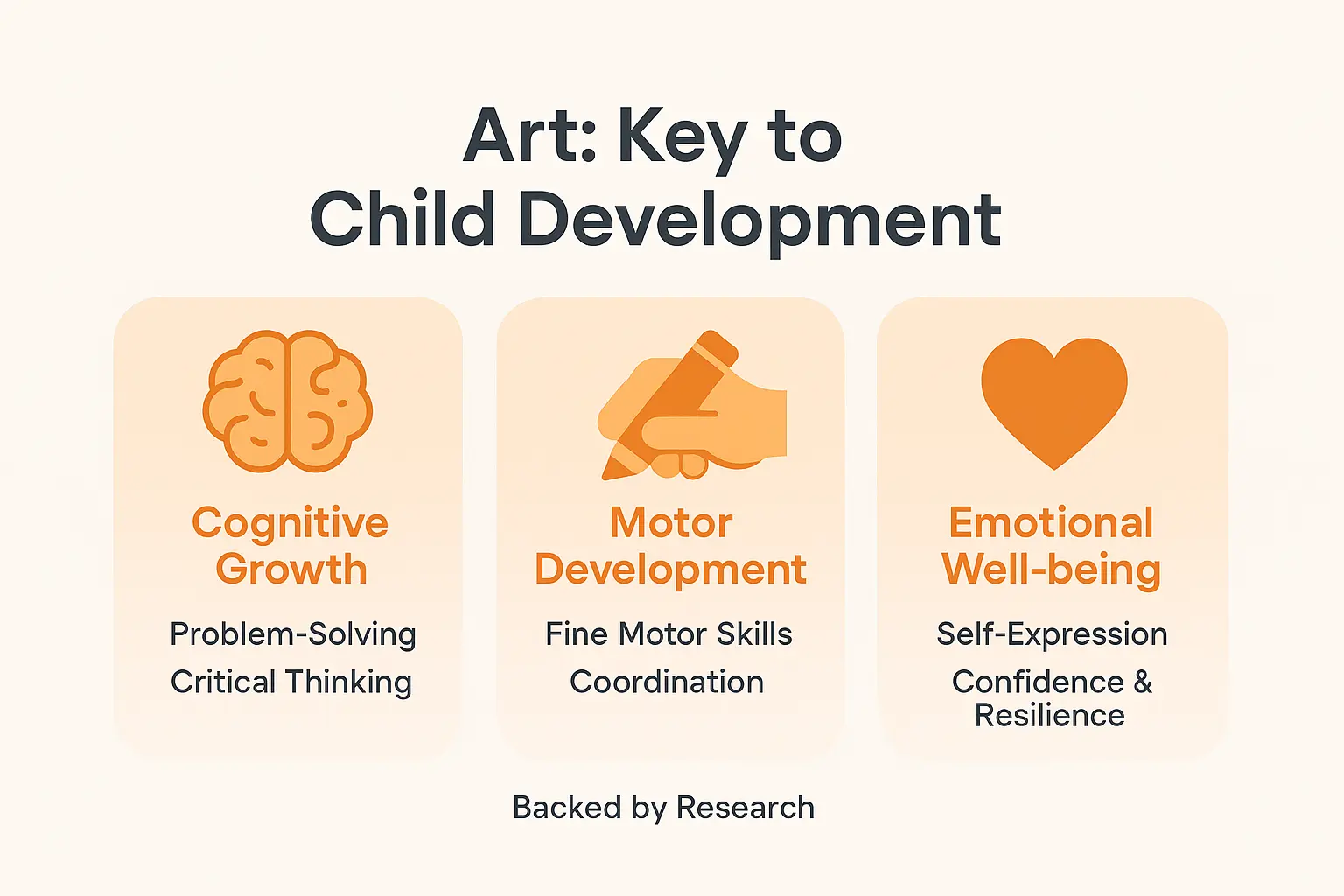
Looking for a way to fill a rainy afternoon that doesn’t involve screens? 🎨 Art activities for kids are more than just fun—they’re a powerhouse for development. Let’s break down why creativity matters.
“Art is a fundamental tool for a child’s cognitive, emotional, and social development, stimulating problem-solving, emotional intelligence, and resilience in a playful way.”
Cognitive growth starts here. When your child sketches or builds with clay, they’re not just playing—they’re problem-solving and thinking critically. Studies show these activities boost neural connections, making learning easier later in life. Ever watched a toddler figure out how to hold a crayon? That’s fine motor skills in action, improving coordination and hand-eye control.
Art is also a safe space for emotions. Kids express feelings through colors or clay, building confidence and emotional awareness. A child who paints their joy or frustration learns to navigate complex emotions early. And here’s the kicker: research highlights art’s role in teaching kids to collaborate and share ideas, turning solo play into social skills practice.
Need proof? Studies show art activities enhance resilience and creativity. Whether it’s a scribble or a sculpture, every project shapes their brain, heart, and future. Time to grab the glitter glue? ✨
Easy art ideas you can do today with everyday items
Painting and coloring fun for little hands
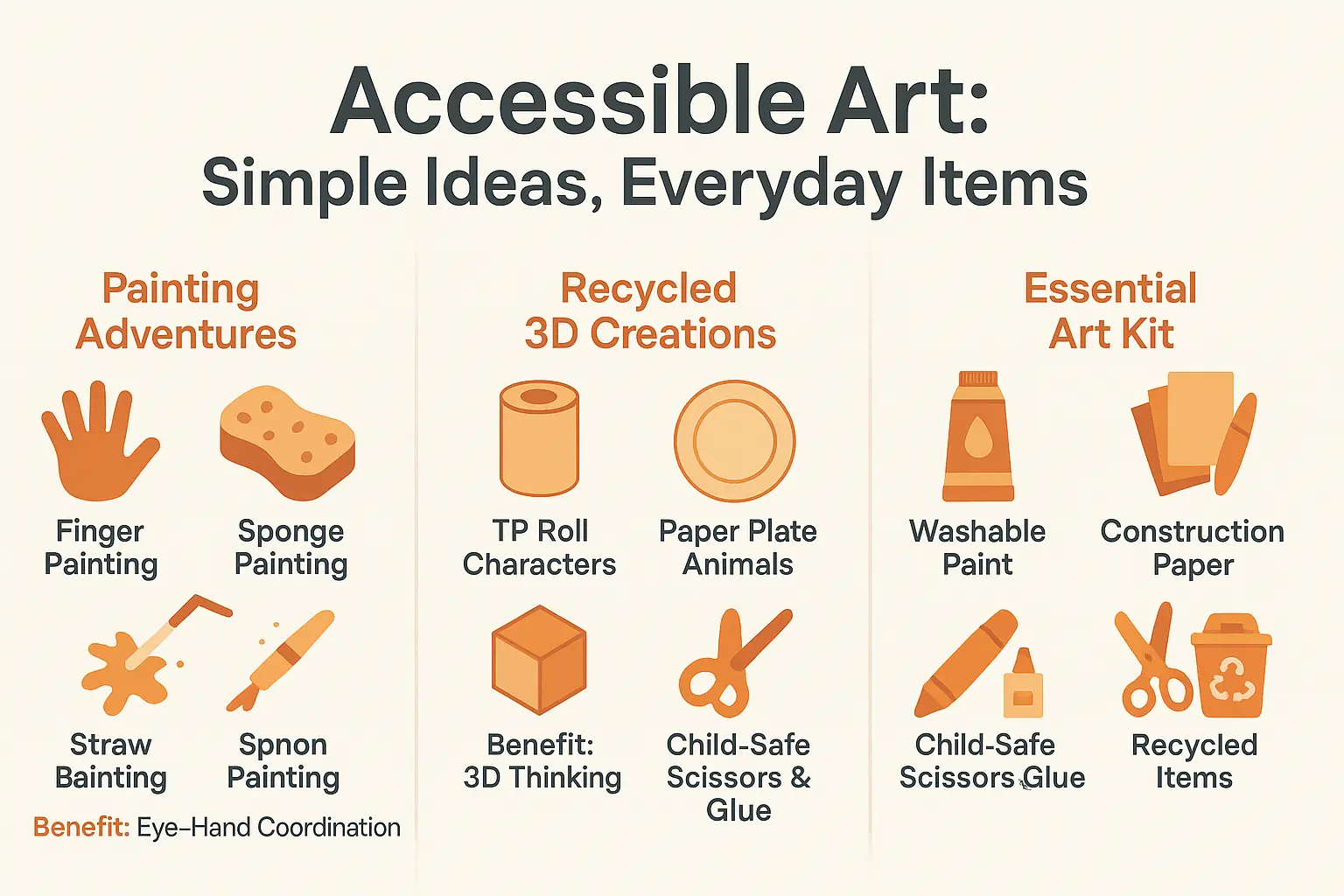
Art doesn’t need fancy tools! Let’s explore 3 playful ways to get creative with paint:
- Finger painting: Smudge colors with fingers for sensory play. Perfect for ages 2+. Boosts hand-eye coordination and emotional expression. Try adding texture with sand or glitter in homemade paint!
- Sponge painting: Dip kitchen sponges in washable paint, cut into shapes, and stamp on paper. Creates cool textures while developing fine motor skills. Circles become flowers, squares make city skylines – let kids experiment!
- Blown straw painting: Drip paint on paper, then blow through a straw to spread colors. Watch patterns explode! Fun for ages 4+. Add googly eyes to finished “monster” designs for extra laughs.
These activities use household items and explore even more painting activities that grow creativity. No art degree required! 👐
Simple 3D crafts from your recycling bin
Turn trash into treasure! Here’s how to build 3D art from recyclables:
- Toilet paper roll characters: Paint rolls, add paper cutouts for ears/tails, and create lions, elephants, or robots. Builds spatial thinking and eco-awareness. Try making a caterpillar with multiple connected rolls!
- Paper plate animals: Paint plates and glue on felt/marker details to make owls, frogs, or pandas. Simple but powerful for imagination. Turn plates into tropical fish with tissue paper fins or a ladybug with pom-pom dots.
These crafts cost almost nothing but teach kids to see possibilities in ordinary objects. A great way to spark storytelling too! Use creations as characters in pretend play adventures 🌟
Getting started: your essential (and simple) art supply kit
Ready to begin? Here’s your no-stress list:
- Non-toxic washable paint
- Construction paper in various colors
- Crayons and markers
- Kid-safe scissors and glue
- Recycled materials like cardboard tubes, paper plates, and old magazines
Store supplies in a shoebox for instant access. Let kids help gather materials – crumpled paper makes great textured collages! With these basics, you’re set! No need for fancy stores – just grab what you’ve got and start creating. Art’s magic is in the doing, not the spending 🎨
Explore a world of creativity: our top art activities for kids
Ever wondered how art sparks magic in little brains? 🧠✨ Simple creative projects don’t just keep kids busy—they build critical cognitive, emotional, and social skills. Let’s dive into hands-on ideas that turn everyday materials into developmental powerhouses!
| Activity Idea | Main Materials | Key Developmental Benefit |
|---|---|---|
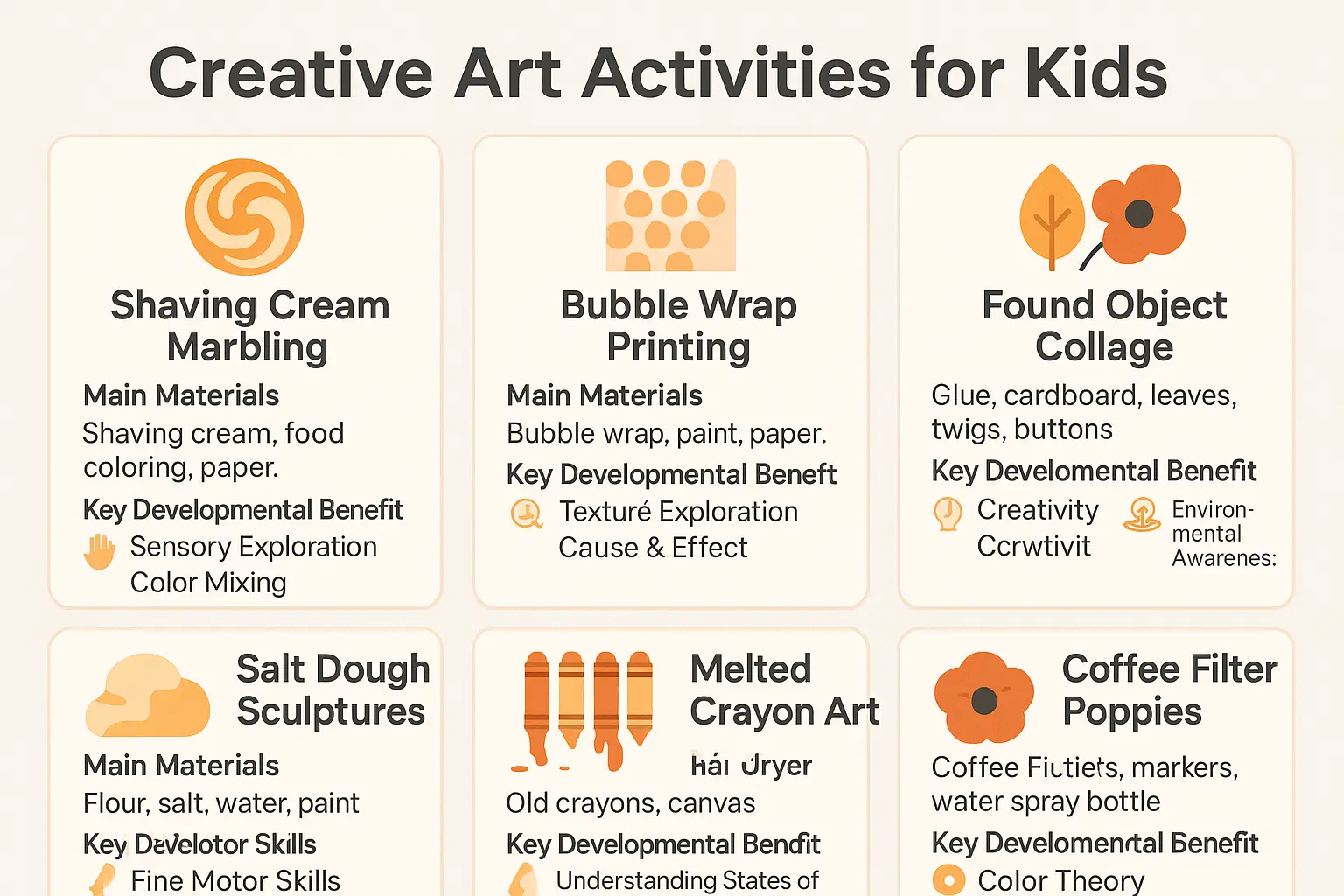
| Shaving Cream Marbling | Shaving cream, food coloring, paper | Boosts sensory exploration & color mixing |
| Bubble Wrap Printing | Bubble wrap, paint, paper | Teaches texture discovery & cause-and-effect |
| Found Object Collage | Glue, cardboard, leaves, twigs, buttons | Builds creativity & environmental awareness |
| Salt Dough Sculptures | Flour, salt, water, paint | Strengthens fine motor skills & 3D creation |
| Melted Crayon Art | Old crayons, canvas, hair dryer (with supervision) | Explains states of matter & color blending |
| Coffee Filter Poppies | Coffee filters, markers, water spray bottle, pipe cleaners | Teaches color theory (bleeding) & fine motor skills |
Why stick to basics? Each activity hides hidden superpowers! Shaving cream marbling? It’s a science lab in disguise—watch kids gasp as colors swirl 🧪. Bubble wrap printing? Sensory learning meets cause-and-effect experiments. Found object collages? They turn trash into treasure while teaching eco-consciousness 🌍.
Salt dough sculptures? They prep tiny hands for writing. Melted crayon art? A crash course in physics (melting points!) with zero textbooks. Coffee filter poppies? Art blended with color theory basics, no art school needed! Remember: process > perfection. Let kids get messy—it means they’re learning through play 🎨.
Want more ideas? Check out our full guide to creative activities—no app downloads needed, just instant inspiration via WhatsApp! Ready to turn snack-time crumbs into collages or bath-time bubbles into art? The next Picasso might be in your living room, armed with glue and confidence 💫.
How Art Boosts Your Child’s Development Step-by-Step
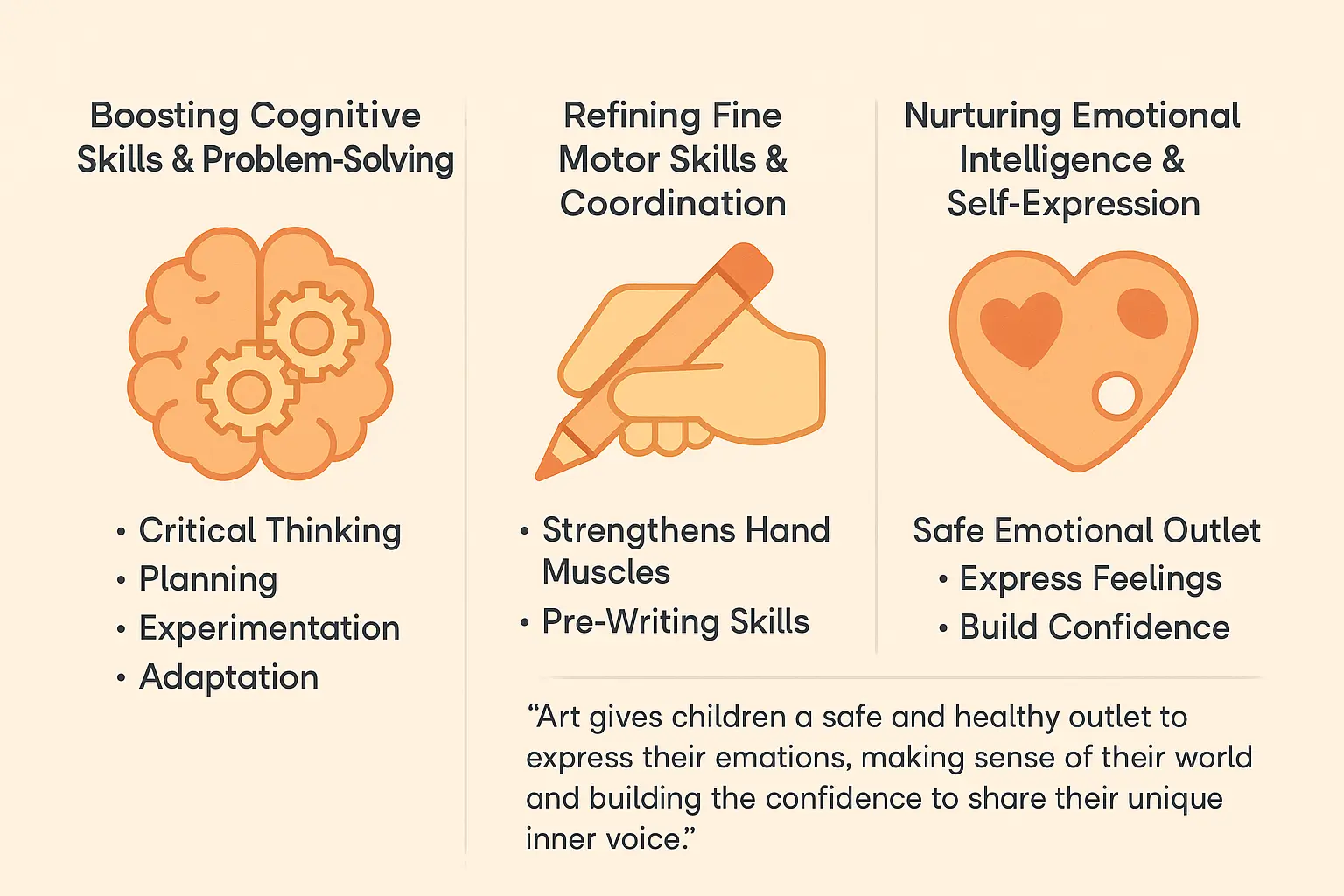
Boosting Cognitive Skills And Problem-Solving
Ever wondered how art shapes young minds? 🧠 Mixing colors teaches color theory basics. Building 3D structures develops spatial reasoning. These activities train kids to think critically when solving challenges like “How to balance this sculpture?” or “What happens when I blend blue and yellow?” 🎨 This hands-on learning strengthens problem-solving muscles that transfer to academics and daily life. For example, creating a cardboard castle teaches structural planning, while pattern stamping builds sequencing skills that support math concepts later.
Refining Fine Motor Skills And Coordination
Grabbing crayons, snipping paper, or molding clay strengthens tiny hand muscles. ✋ These movements build the fine motor control needed for future writing skills. Try these coordination boosters:
- Cutting playdough snakes with safety scissors
- Painting with Q-tips for grip practice
- Gluing sequins for precision work
- Stringing beads onto yarn for finger dexterity
- Using child-safe hole punches to create paper confetti
Each activity secretly prepares little hands for pencil mastery through playful practice. Even squishing clay or tearing paper into confetti builds hand strength that makes writing feel effortless later.
Nurturing Emotional Intelligence And Self-Expression
Art gives kids a safe space to process feelings they can’t yet verbalize. 🌈 As Dr. Michael Yogman explains, “Art gives children a safe and healthy outlet to express their emotions, making sense of their world and building the confidence to share their unique inner voice.”
“Art gives children a safe and healthy outlet to express their emotions, making sense of their world and building the confidence to share their unique inner voice.
Watch how scribbling angry red marks or drawing bright rainbow worlds helps them navigate complex feelings while developing emotional awareness. Clay modeling offers tactile relief for anxious energy, while collaborative murals teach emotional sharing. Even simple finger painting lets kids externalize emotions through texture and color choices.
Want to see these benefits firsthand? Start with age-appropriate projects like watercolor resist art for toddlers or shadow puppet crafting for school-age kids. The key is letting children lead the creative process while you provide safe, supportive materials. 🌟
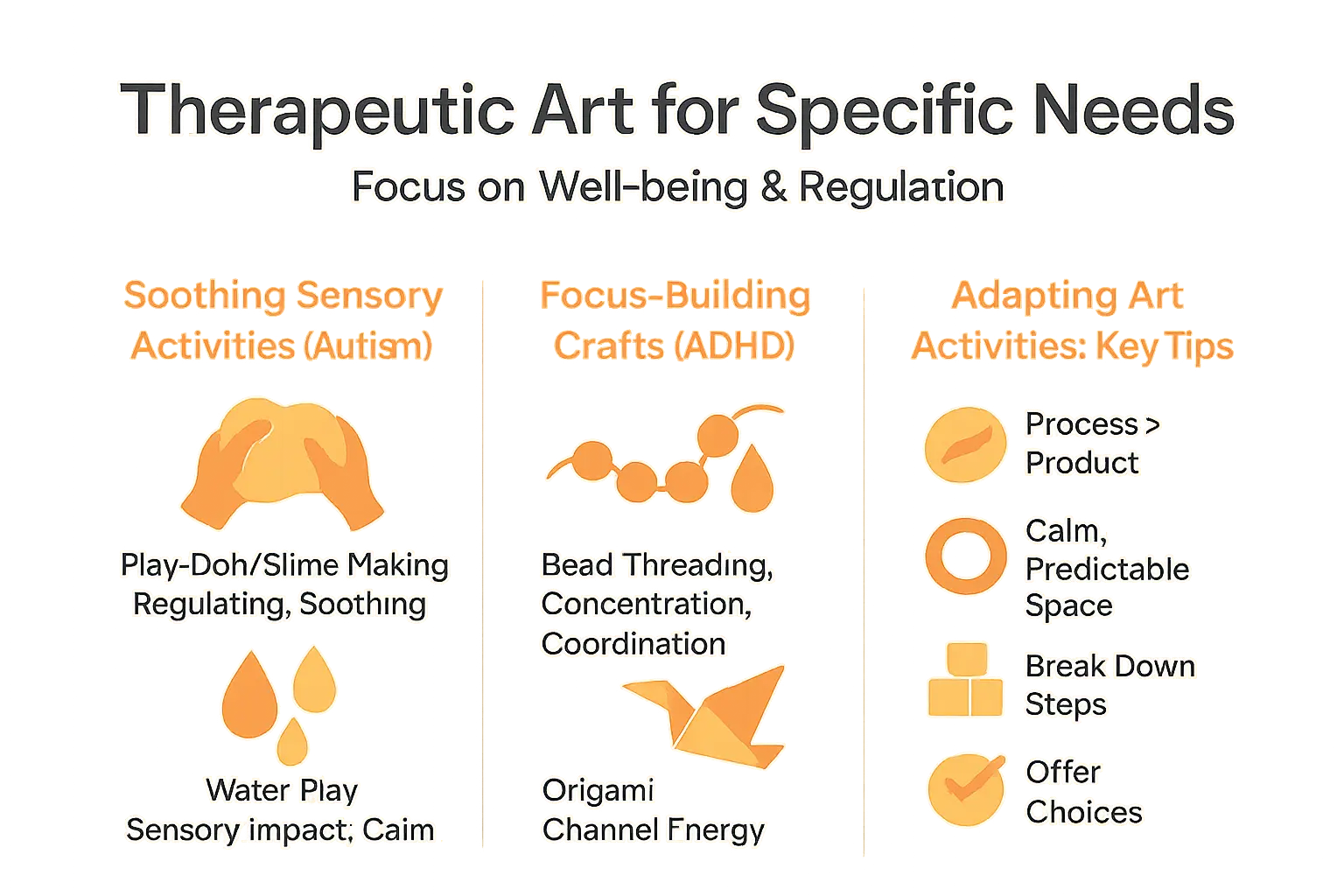
Therapeutic Art: Creative Activities For Kids With Specific Needs
Art isn’t just fun—it’s a powerful way to support kids with autism, ADHD, or sensory needs. 🌈 These simple ideas help with emotional regulation, focus, and motor skills while keeping creativity at the center of play. By matching activities to your child’s strengths, you create a space where self-expression and skill-building happen naturally.
Soothing Sensory Activities For Children With Autism
Hands-on art offers calming sensory input for kids who need tactile or visual stimulation. ✨
- Play-doh or slime making: Kneading these materials regulates sensory input. Add glitter or beads for extra visual appeal and texture variety.
- Colored water play: Mix food coloring with water. Add floating sponges or cups for texture exploration. The gentle splashing sounds add a soothing auditory element.
- Salt and watercolor magic: Sprinkle salt on wet watercolor to create unique textures. Combines touch, sight, and sound in one activity, helping kids stay grounded.
These activities build fine motor skills while reducing sensory overload. 🧠 The repetitive motions and varied textures help children self-regulate during stressful moments, especially when they’re feeling overwhelmed by their environment.
Focus-Building Crafts For Kids With ADHD
Step-by-step crafts teach task completion and concentration. 🔍
- Bead threading: Develops hand-eye coordination. Start with large beads, then try smaller ones. The rhythmic motion helps focus energy on one task.
- Basic origami: Follow sequences to build confidence. Start with stars or boats. The clear steps teach patience and goal-oriented thinking.
- DIY fidget tools: Use rubber bands or rice-filled balloons. Helps maintain focus during transitions. These tools give restless hands a purposeful task.
Structured projects give immediate satisfaction. 🎯 Completing each step builds momentum, making focus feel achievable in daily routines. For example, finishing a fidget tool creates pride while offering a practical way to channel excess energy.
Tips For Adapting Art Activities
Customize creative time to fit your child’s needs:
- Process over product: Celebrate the act of creating, not the final result. Messy play matters! Let kids experiment without pressure to “get it right.”
- Quiet workspace: Pick a calm area with all supplies ready. Minimize distractions. Use a timer to gently guide transitions between steps.
- Break tasks down: Use small steps to avoid overwhelm. Visual guides (like printed diagrams) help kids follow instructions easily.
- Offer choices: Let kids pick 2-3 options. Builds decision-making confidence without overloading them with too many options.
Adapt, don’t overthink. 🎨 These tweaks make art time work for every child’s unique needs—no perfection required. Whether you’re making slime or folding paper boats, the goal is connection, calm, and creative freedom.
Ready to unleash your child’s inner artist?
Art activities aren’t just about making pretty pictures. 🖌️ They’re powerful tools for cognitive growth, emotional expression, and social connection. From scribbling to sculpting, every messy masterpiece builds confidence, fine motor skills, and problem-solving superpowers.
Here’s the best part: there’s no “wrong” way to create. Whether it’s finger-painting on paper or molding clay creatures, the magic lies in the process, not the product. Let kids lead the way—they’ll surprise you with their genius!
Ready to dive in? Grab a crayon, some recycled materials, or that half-finished craft box in the closet. 🎨 No fancy supplies needed—just curiosity and a dash of bravery. Trust your gut, and let creativity flow.
And once the masterpiece is done, you can continue the journey by exploring more art-themed adventures and stories. Imagine your child as the hero of tales where their artwork comes alive—thanks to AI-powered storytelling via WhatsApp. No apps, no stress. Just pure, personalized magic. ✨
Art opens doors to imagination, and imagination fuels lifelong learning. So, what are you waiting for? The next Picasso—or the next bedtime story—starts today. 🌟
Art activities for kids spark growth, creativity, and joy! Simple materials like crayons or recycled items fuel learning through play. Grab supplies, embrace the mess, and let imagination thrive. 🎨 Start today—turn art into moments of discovery and connection! ✂️ Explore art-themed adventures post-masterpiece at [art-themed adventures](https://tellmestories.ai/themes/art/). Focus on the process, not perfection—it’s about curiosity, not results!
FAQ
Looking for fun art ideas to spark creativity in kids? 🎨
Let’s dive into easy wins! Start with finger painting for sensory play, recycled crafts using toilet paper rolls or paper plates, or blown straw painting for messy fun. For 3D creations, try salt dough sculptures or found-object collages with leaves and buttons. Bonus tip: Keep it simple with everyday items like crayons, glue, and old magazines. Time to start crafting! ✨
What creative activities keep kids engaged and entertained? 🎨✂️
Think beyond the basics! Try DIY art kits with themed supplies (like ocean-themed collages), collaborative murals where kids add their brushstrokes, or sensory bins with textured materials. For techy twists, explore digital art apps or DIY slime making. Pro tip: Mix structured projects (like origami) with open-ended play to balance focus and freedom. You can’t go wrong with variety!
What art activities suit 4-year-olds best? 🧒
At this age, keep it super simple! Focus on motor skill development with play-doh modeling (rolling snakes or squishing shapes) or crayon tracing on textured paper. Try stamp art with bubble wrap or tear-and-paste collages using colored paper scraps. Safety first: Use child-safe scissors and non-toxic glue. These activities build hand-eye coordination while keeping it playful. 🌈
Need 12 art activities that build literacy skills? 📚
Art and language go hand-in-hand! Try these literacy-boosting ideas: 1. Storybook illustration (draw characters from favorite tales) 2. Alphabet stamping with magnetic letters 3. DIY word magnets (paint letters on bottle caps) 4. Nature journaling (label leaf sketches) 5. Feelings face collages (glue magazine emotions) 6. Shape sorting with DIY cardboard puzzles 7. Letter weaving (create name banners) 8. Storytelling with paper puppets 9. Color-word matching games (paint chips + labels) 10. Sensory letter trays (trace letters in shaving cream) 11. Family tree art (label branches with names) 12. Rhyming picture cards (draw rhyming object pairs) Check out our art-themed adventures for more inspiration!
How do creative art activities benefit child development? 🌱
Art is a supercharged learning tool! It boosts: – Cognitive growth: Problem-solving during sculpture building – Motricité fine: Scissor skills from collage work – Emotional expression: Color choices mirroring moods – Social skills: Collaborative murals teach teamwork As Dr. Michael Yogman says, “Art gives children a safe outlet to express emotions, building confidence to share their unique voice.” Plus, studies show it enhances resilience and critical thinking through playful experimentation. 🧠
What are 5 popular art examples for young creators? 🎨
Let’s break it down: 1. Painting (finger, sponge, or watercolor techniques) 2. Sculpture (play-doh, salt dough, or recycled materials) 3. Collage (magazine cutouts, fabric scraps, or nature finds) 4. Drawing (tracing, doodling, or guided sketching) 5. Textile arts (weaving with cardboard looms or fabric painting) Each activity builds different skills—painting for sensory exploration, sculpture for spatial reasoning, etc. Pro tip: Rotate materials weekly to keep it fresh!
What easy art activities work for 7-year-olds? 🧒
Seven-year-olds thrive on variety! Try: – Melted crayon art (supervised hair dryer fun) – Origami basics (start with paper frogs) – DIY slime (add glitter for sensory magic) – Shadow puppet theater (cardboard cutouts + flashlights) – Recycled robots (cardboard + bottle cap faces) These projects improve task completion and fine motor skills while feeling like play. For extra challenges, introduce pattern drawing or basic weaving on cardboard frames.
What are fun creative play activities? 🎭
Think imaginative + hands-on combos! Try: – Sensory bins (rice + toy animals + scoops) – Pretend play (DIY costumes from old clothes) – Loose parts play (create creatures from buttons/twigs) – Shadow art (build scenes with cardboard cutouts) – Musical instrument crafting (DIY shakers with rice + containers) These activities blend art and play for holistic development. For quiet time, try mindful coloring mandalas or texture rubbings under nature items.
What fun art activities can kids enjoy at home? 🏠
Transform your home into an art studio! Try: – Coffee filter poppies (markers + water magic) – Bubble wrap printing (paint + texture discovery) – DIY friendship bracelets (thread + pattern practice) – Shaving cream marbling (swirl colors on water) – Cardboard looms (weave yarn for wall art) All you need are basics from your essential art kit—paint, glue, paper. For rainy days, check our creative activities guide for 50+ ideas. Time to start creating! 🕊️