The essential takeaway: Creative activities aren’t just fun—they’re foundational for kids’ brain development. Harvard research shows play builds neural pathways linked to problem-solving, motor skills, and emotional expression. By embracing open-ended crafts (like cardboard-box inventions or nature-based art), parents nurture curiosity and resilience. Even simple projects spark 21st-century skills: 85% of teachers agree creativity boosts academic engagement. Ready to turn everyday moments into brain-building adventures?
Battling the “I’m bored” blues while screens eat up their attention? 🚫📱 This guide to creative activities for kids is your secret weapon to spark curiosity and ditch the digital scroll – think messy masterpieces with cardboard tubes, epic marble mazes, and science experiments that double as magic shows. 💥 From boosting fine motor skills to nurturing problem-solving superpowers, we’ll show you how to turn snack-time scraps into genius projects (yes, even that leftover spaghetti can become a noodle sculpture!). 🌟 Ready to unlock the magic of real-world play that keeps them hooked for hours? 🎯
Why Creative Activities Are More Than Just Fun And Games
The Building Blocks Of A Brilliant Mind
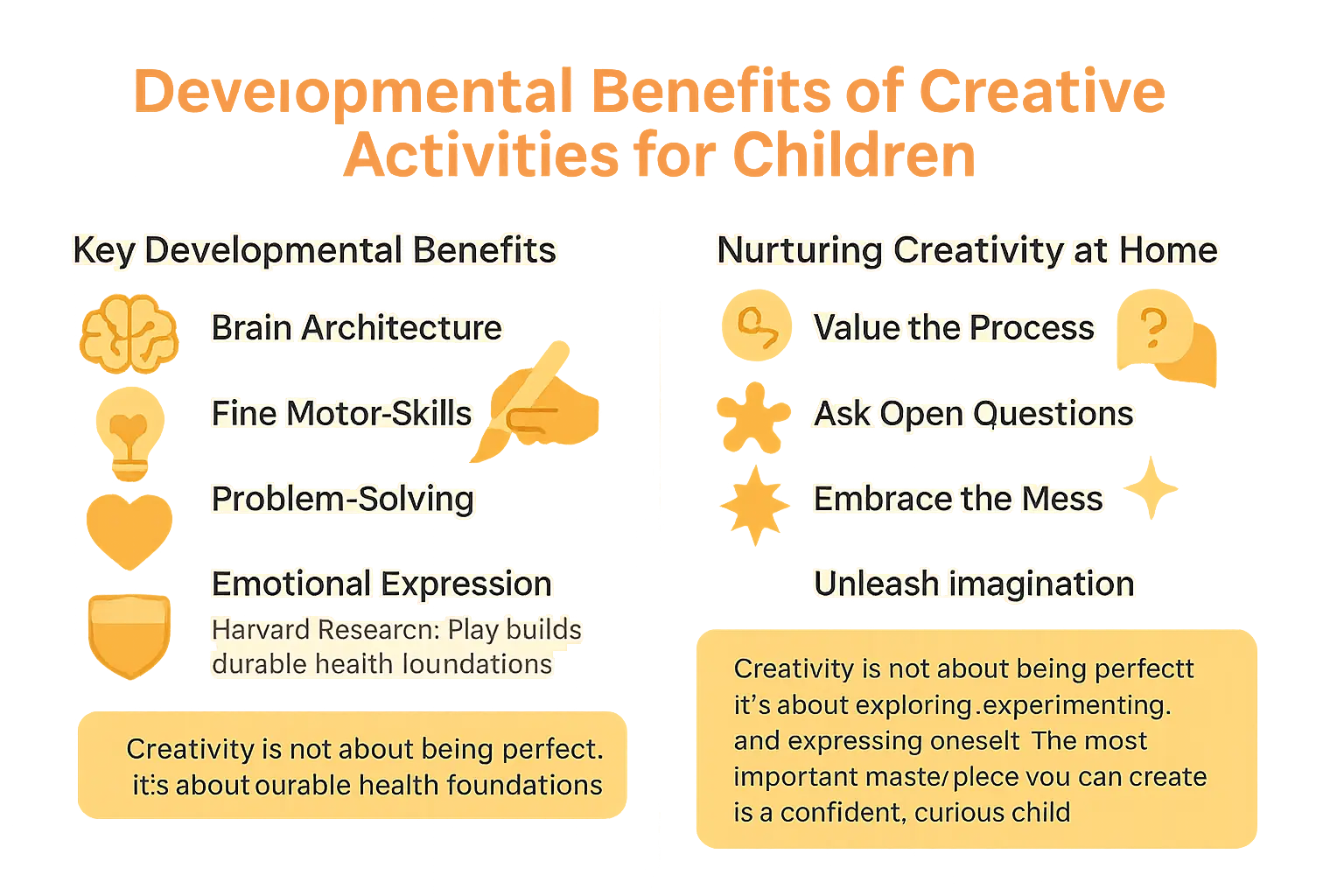
Creative play isn’t just about keeping kids busy—it’s about building brains. 🧠 When children engage in art, construction, or imaginative play, they’re developing essential skills. For example, using scissors or painting with small brushes strengthens fine motor skills, improving hand-eye coordination.
Problem-solving gets a workout too. Think about a child trying to balance blocks or mix paint colors. They’re learning to experiment, adapt, and think critically—all while having fun. According to research from Harvard University, these activities lay the foundation for lifelong cognitive flexibility and resilience.
Emotional expression matters too. Art lets kids “talk” about feelings they can’t yet express in words. A scribble might represent joy, frustration, or curiosity—it’s their personal language. 🎨
Fostering A Creative Mindset In Your Home
Creativity thrives in environments where kids feel safe to explore. Here’s how to set the stage:
- Celebrate the process, not the product. A lopsided clay bowl is a win if it taught balance and persistence.
- Ask open-ended questions like, “What made you choose those colors?” instead of “I love your cat drawing!”
- Embrace messiness. A little glitter on the couch is a small price for a big creative leap. ✨
- Minimize instructions. Let kids invent their own rules for building a cardboard castle or creating a “new” planet.
Creativity is not about being perfect; it’s about exploring, experimenting, and expressing oneself. The most important masterpiece you can create is a confident, curious child.
Need inspiration? Try these quick wins:
- Set up a “create zone” with recycled materials and washable paints.
- Play “what if” games: “What if clouds were made of marshmallows?”
- Let them “teach” you their process. Explaining choices boosts metacognition. 💡
Awesome arts and crafts for little hands
Getting started with simple materials
Why spend money when your home is already a creativity goldmine? 🏠 Let’s turn “boring” stuff into magical tools! Here’s how:
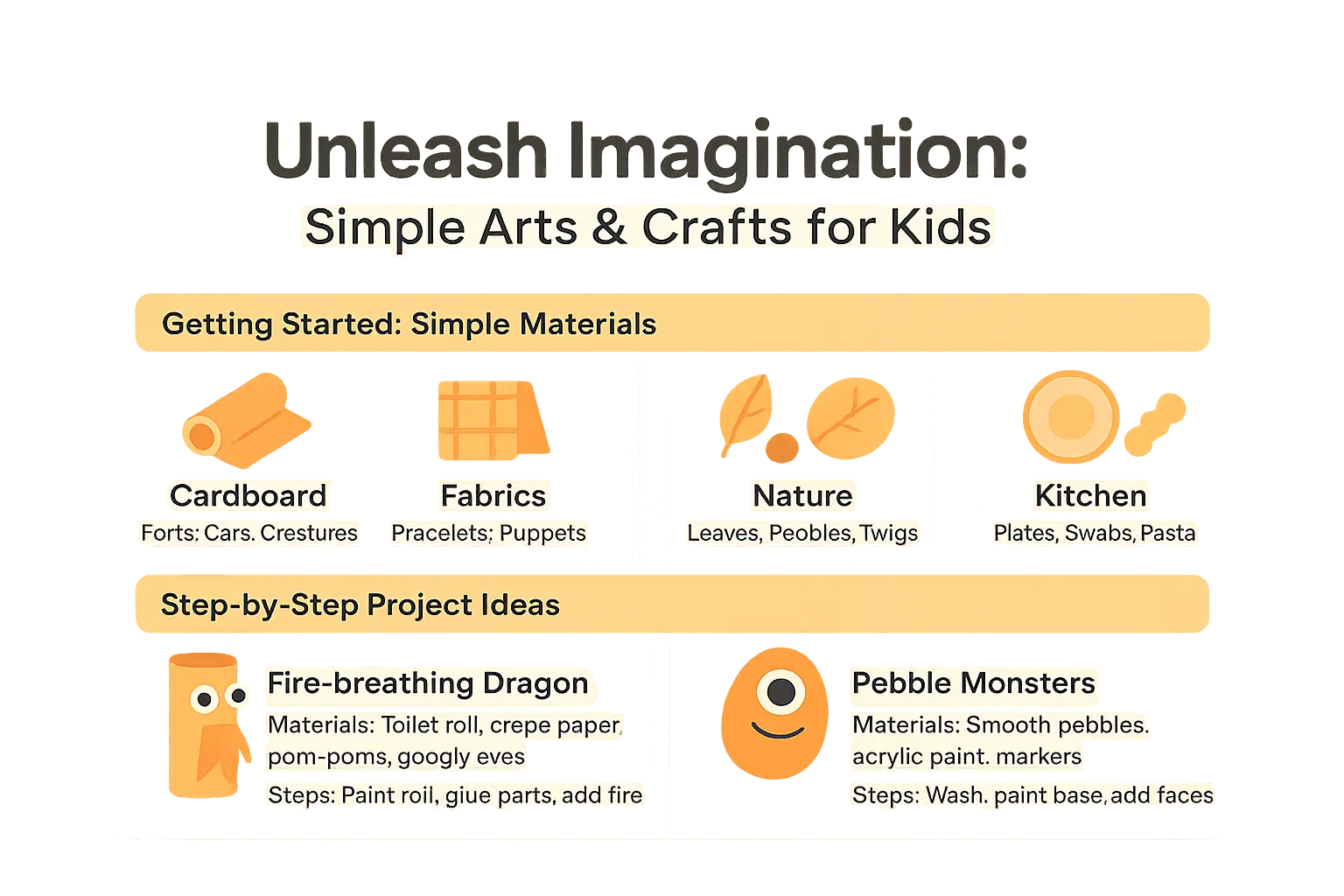
- Cardboard & tubes: Build forts, rocket ships, or fantasy creatures—scissors and imagination are your only limits!
- Fabrics & threads: Turn old T-shirts into puppets or braided friendship bracelets (snip strips for instant tassels).
- Nature’s palette: Use leaves for leaf-stamped art, twigs for tiny picture frames, or flowers for natural dyes.
- Kitchen stash: Cotton swabs = dot-painting brushes; pasta shapes = textured collages. Even cereal boxes become robot armor!
Pro tip: Add buttons, bottle caps, or straws for extra flair. Bonus? This teaches eco-friendly habits while slashing screen time. 🌱
Step-by-step project ideas
Let’s craft! These projects mix simplicity with serious fun—no Pinterest-perfect results needed. 🧒
Fire-breathing dragon
Transform a toilet paper roll into a fiery friend! Here’s how:
- Wrap the roll in construction paper (go bold: neon green, electric purple).
- Glue on oversized pom-poms for eyes and smaller ones for nostrils.
- Stuff red/orange tissue paper inside the roll—this is the “fire!”
- Blow into the bottom—watch the flames whoosh! 🔥
Pro tip: Let kids paint the roll instead of wrapping. For wings, glue a paper plate cut in half. More dragon ideas await!
Pebble monsters
Turn stones into silly monsters in 3 easy steps:
- Paint smooth pebbles with vibrant acrylics (try neon shades!).
- Dab white dots with cotton swabs for eyes—no steady hand needed.
- Draw mouths with markers: zigzags, hearts, or even tiny fangs!
Kids can build monster families and stage epic adventures! For extra fun, hide creations in the garden for friends to find. Check these stories to pair with your pebble pals. 🦸♀️
Bonus activity: Rainbow blow-painting
Science + art = magic! Here’s how:
- Drop food coloring in a plate, add water and dish soap.
- Blow with a straw to create swirling patterns.
- Press paper onto the design—voilà, abstract art!
Perfect for exploring color mixing. Use the art to make personalized cards or book covers!
Why stress over complex activities? These ideas use zero new supplies, boost fine motor skills, and spark joy. Plus, they’re ideal for ages 3-6—the golden age for tactile learning. Ready to craft? 🚀
Creative activities for kids by age group
 Creative activities for kids” style=”max-width:100%;height:auto;”>
Finding the perfect fit for your child
Every child develops at their own pace. What captivates a toddler might not interest a school-aged kid – and that’s totally normal! 🌟 The key? Observe their curiosity and match activities to their current skills.
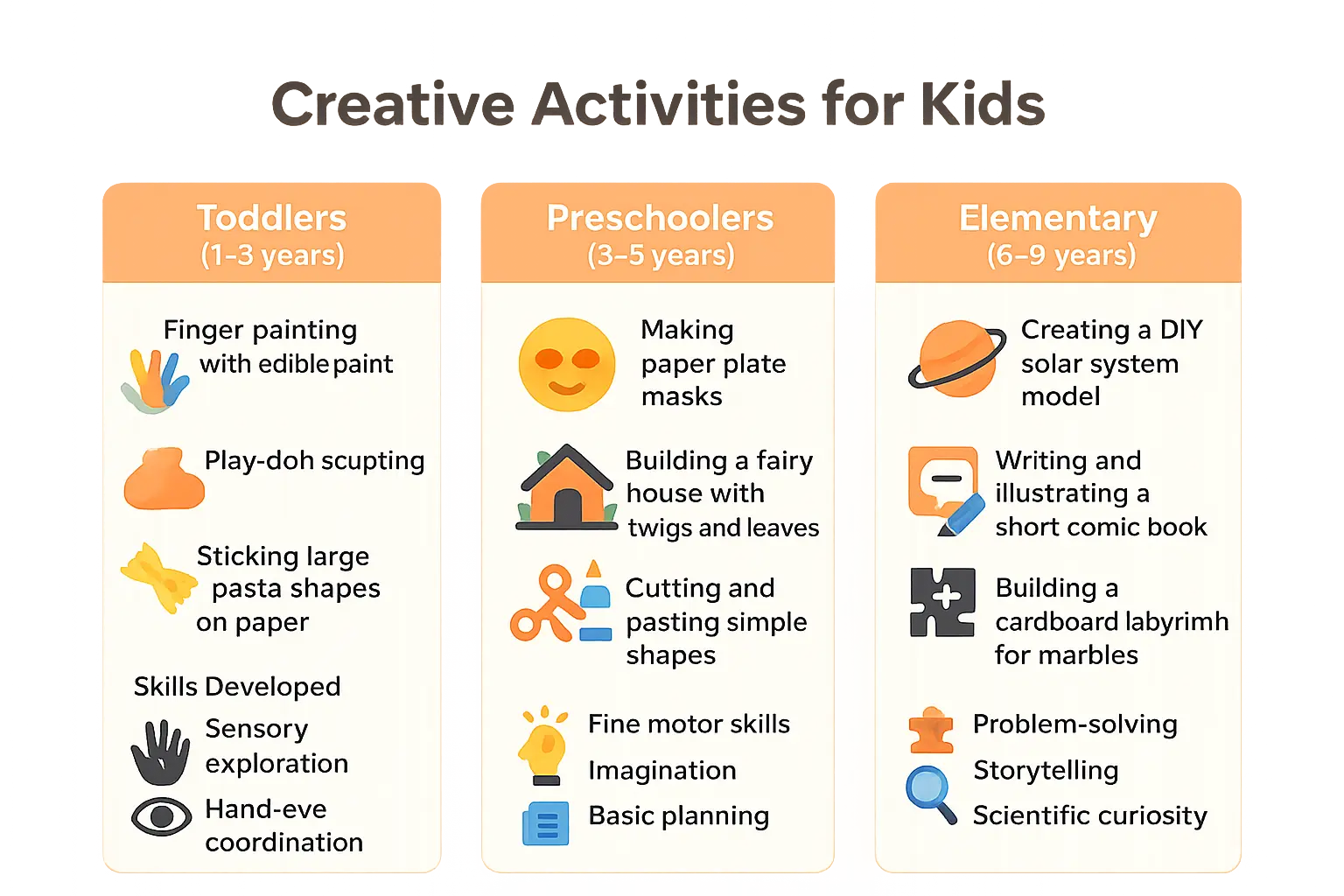
This table breaks down age-appropriate projects, balancing creativity with developmental milestones. No more guesswork – just pick what suits your little one’s stage!
| Age Group | Activity Ideas | Skills Developed |
|---|---|---|
| Toddlers (1-3 years) | Finger painting with edible paint Play-doh sculpting Sticking large pasta shapes on paper |
Sensory exploration Hand-eye coordination |
| Preschoolers (3-5 years) | Making paper plate masks Building a fairy house with twigs and leaves Cutting and pasting simple shapes |
Fine motor skills Imagination Basic planning |
| Elementary (6-9 years) | Creating a DIY solar system model Writing and illustrating a short comic book Building a cardboard labyrinth for marbles |
Problem-solving Storytelling Scientific curiosity |
Why stick to rigid categories? Because toddlers’ brains crave sensory input, while older kids thrive on complex challenges. A 2-year-old might love squishing paint, but a 7-year-old’s hands are ready for scissors and storytelling! 🎨
Let’s get specific: Toddlers benefit from textured materials like crinkly foil or squishy stress balls to boost sensory development. Preschoolers’ fairy houses? Add pinecones or acorns collected from a walk – nature’s free creativity boosters! For elementary kids, weaving in storytelling with their favorite book characters makes learning feel like play. 📚
Remember: these are guidelines, not rules. Watch your child’s reactions. If your 4-year-old adores marble runs (typically for older kids), let them explore! Curiosity is the ultimate indicator of readiness. 🎯
Pro tip: Combine materials from different sections for mixed-age siblings! A toddler can squish play-doh while their school-aged sibling builds a 3D sculpture on top of it. This sparks collaboration – the big kid teaches creativity, the little one shares unfiltered joy. Win-win! 🍪
Ready to transform your home into a creativity hub? Let’s dive into actionable ideas next!
Beyond the paintbrush: Exploring other forms of creative expression
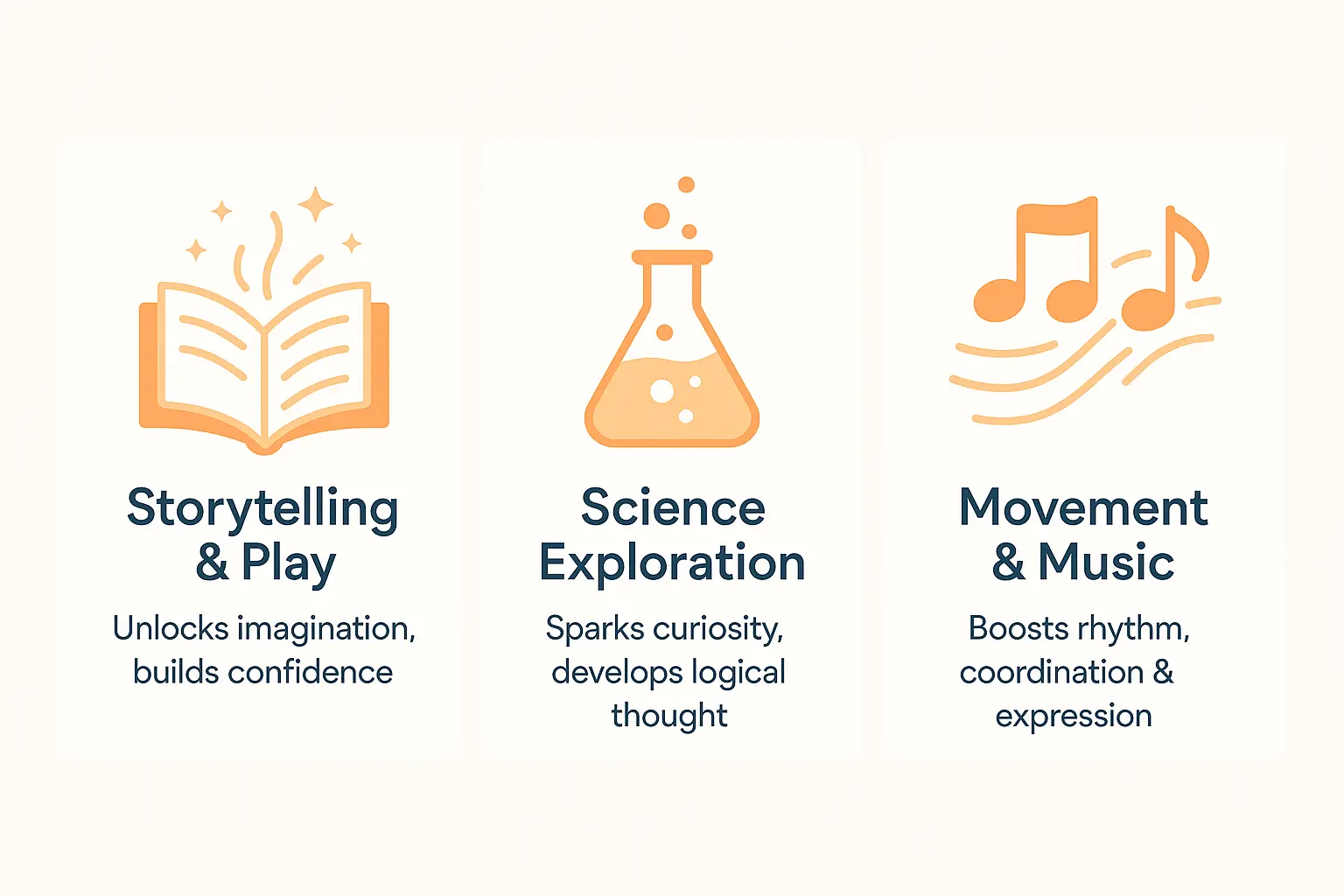
Storytelling and imaginative play
Storytelling isn’t just about words—it’s about creating worlds where your child shines. 🌟 Try the “Mysterious Creature” game: each player draws part of a fantasy animal, folds the paper, and passes it on. The result? A hilarious mix of tails, wings, and scales your child can name and narrate adventures for.
Take it further with a “Magic Storybook” project. Grab an empty notebook, add family photos, magazine cutouts, and their drawings to craft a visual tale. This hands-on approach boosts narrative skills while making creativity tangible. Personalized tales from Tellmestories let them star in their own adventures, turning bedtime into an interactive experience. As one parent shared:
“Storytelling breathes life into imagination, allowing children to explore new worlds, understand complex emotions, and discover their own voice in the universe of possibilities.”
Simple science experiments that wow
Science time! Freeze a small toy dino in a colorful ice block. Hand your kid salt, warm water, and a spoon—they’ll dig like real archaeologists. 🦴 For sensory magic, mix cornstarch, shaving cream, and food coloring for “cloud snow” they can mold into shapes.
Try another classic: the vinegar-volcano reaction! Build a mini volcano with clay or cardboard, add baking soda, then pour in vinegar. The fizzy eruption teaches chemical reactions while sparking joy. These aren’t just messy fun—they build curiosity and logical thinking. As highlighted by UNICEF’s play-based learning activities, even toddlers thrive when they touch, smell, and experiment. Older kids? They’ll ask “why” nonstop—your cue to explain density or chemical reactions.
Movement and music games
Kids need to move! Try “Balloon Volleyball”: hit balloons back and forth to upbeat tunes. 🏐 Or make DIY instruments—turn oatmeal containers into drums, rice in bottles become shakers. 🥁
Level up with “Musical Freeze Dance Adventures.” When music stops, shout a challenge: “Strike a yoga pose!” or “Balance on one foot like a flamingo!” This sharpens focus and body awareness. Ready for more? Explore even more creative activities—like “Dance Storytime” where they act out scenes from their latest personalized story. Pro tip: Use a flashlight dance party where they follow colored light patterns for extra sensory fun. 🌈
Tips for a successful and stress-free creative session
Setting up your creative space
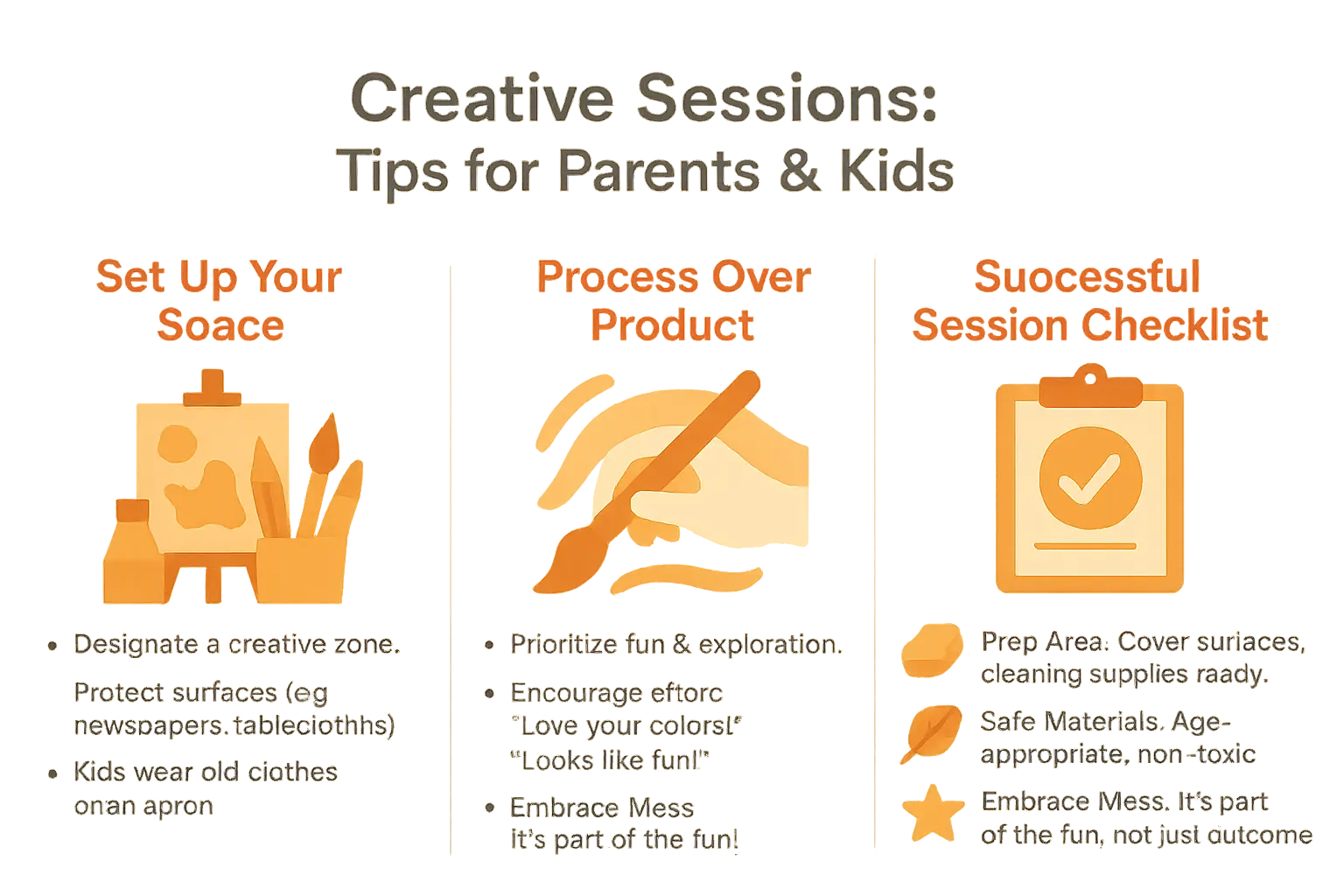
Create a dedicated art zone using a kitchen table, living room corner, or under a dining table. This contains mess and creates clear boundaries for creativity. For younger kids, consider floor space with easy material access. Older children might enjoy organized storage for independence.
Protect surfaces with newspapers, plastic sheets, or washable smocks. Use wipe-clean surfaces and keep cleaning supplies accessible. A portable caddy with wipes and a waterproof tablecloth speeds up cleanup between sessions.
Let kids wear old clothes or non-toxic smocks. Plastic aprons provide full protection without complicating cleanup. This reduces stress about mistakes, letting creativity flow freely.
It’s about the journey, not the destination
Focus on the creative process, not the final product. Celebrate colorful chaos! A “messy masterpiece” often means active learning about colors, shapes, and textures.
Praise effort with phrases like “I love how you mixed those colors!” or “You worked hard on those details!” Explore guides for discussing art with children to enhance conversations. Ask open questions like “What inspired your design?”
- Prepare the space: Cover surfaces and keep cleaning supplies handy
- Choose age-appropriate materials: Ensure everything is safe and non-toxic
- Embrace the mess: See it as a sign of fun and learning
- Focus on praise for effort: Compliment their hard work and choices
Stay relaxed and enjoy the process with your child. Your positive energy encourages free exploration. Shared laughter becomes memories more valuable than any artwork. These moments develop fine motor skills, creativity, and imagination through joyful learning.
Sparking creativity every day
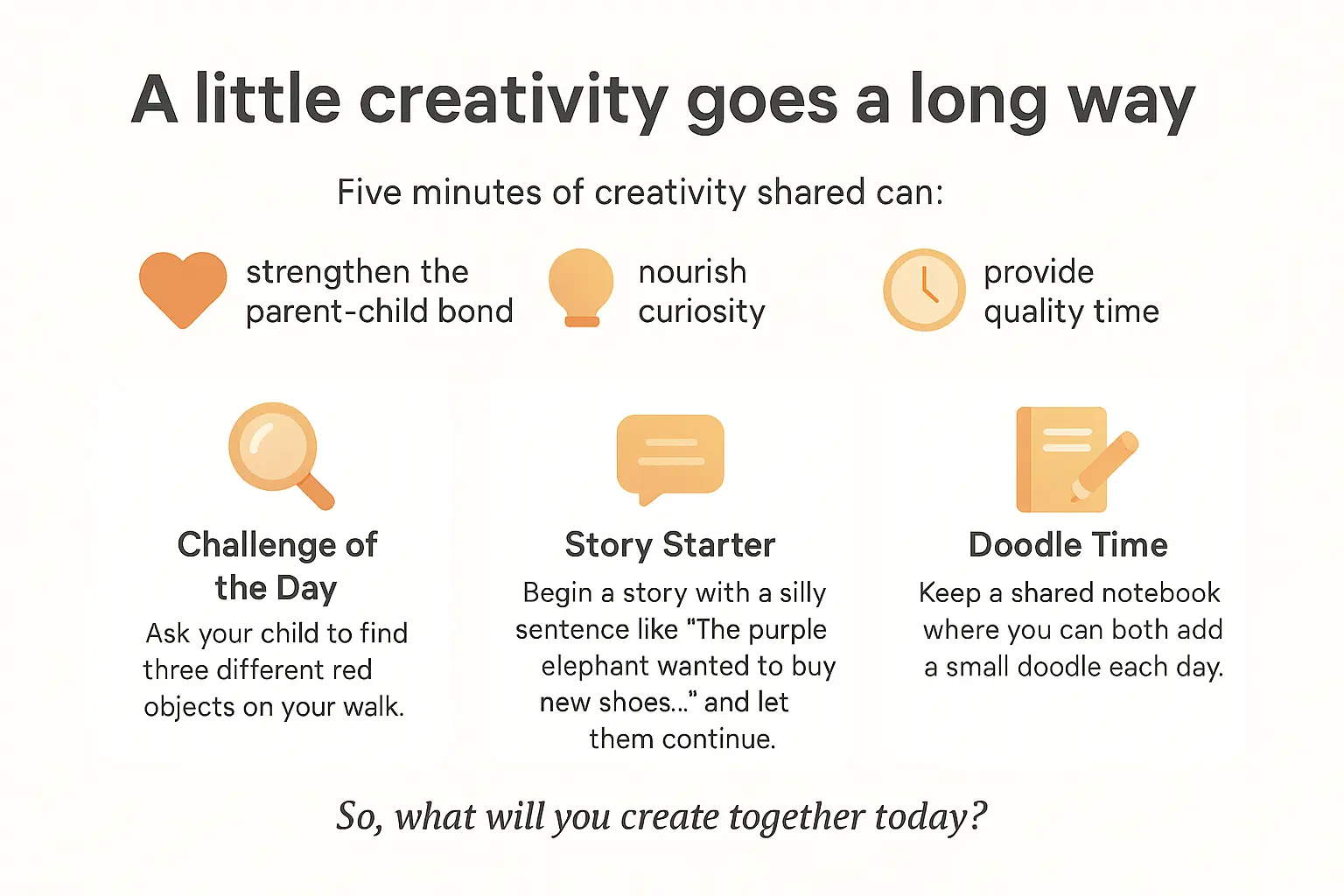
A little creativity goes a long way
Think creativity requires special tools or big projects? Think again! 🌟 Everyday moments hold hidden creative potential. A simple walk becomes a treasure hunt. A rainy day transforms into a storytelling session. These small sparks keep imagination alive without overwhelming busy schedules.
Why wait for craft time? Turn meal prep into culinary art by arranging food into funny shapes. Use bath time for bubble painting with edible ink. Even bedtime stories become interactive adventures when you co-create them.
Remember: 5 minutes of shared creativity beats 30 minutes of forced activity. Try these quick ideas:
- Challenge of the Day: Ask your child to find three different red objects on your walk
- Story Starter: Begin with “The purple elephant wanted to buy new shoes…” and let them continue
- Doodle Time: Keep a shared notebook for daily 2-minute drawing exchanges
These tiny creative habits build strong neural pathways. They sharpen fine motor skills through marker grip during drawings. They boost language development during improvised storytelling. Most importantly, they create joyful memories while nurturing essential life skills.
So, what will you create together today? 🎨✨ The world’s your canvas!
Creativity isn’t limited to art supplies—it’s in everyday moments. Whether cooking, walking, or bedtime stories, small sparks of imagination nurture curiosity and connection. Embrace playful challenges, shared doodles, or storytelling starters. These moments build skills and bonds. So, what will you create together today? 🌟
FAQ
What are some awesome creative activities for kids?
🎨 Here’s the fun stuff! Toddlers love sensory play with edible paint or kinetic sand. Preschoolers thrive on building cardboard forts, making nature collages, or crafting pebble monsters with markers. For older kids (6+), try DIY solar system models, writing short stories, or building marble mazes from shoeboxes. The key? Let them lead the way! Kids learn through hands-on exploration, whether it’s scribbling, sculpting, or inventing imaginary worlds. Time to start? Grab those supplies and let the magic happen!
What are fun creative play ideas for kids?
🎭 Think beyond toys! Stage a “dino excavation” by freezing plastic dinosaurs in ice blocks and giving kids tools (salt, warm water) to free them. Turn bath time into art with edible paint made from shaving cream + food coloring. For imaginative play, try the “magic box challenge”—give a cardboard box and ask, “What will you transform it into?” (A spaceship? A robot?). Pro tip: Add music to craft time for double the creativity boost!
What are some super fun activities for kids?
🎉 Try these crowd-pleasers:
- Musical balloon volleyball: Keep balloons in the air to upbeat tunes 🎵.
- Obstacle course: Use couch cushions, hula hoops, and chairs for crawling/jumping.
- Storytelling cards: Mix character, problem, and solution cards to invent silly tales.
- DIY instruments: Turn oatmeal containers into drums or pasta + water bottles into maracas 🥁.
Bonus: These activities require zero fancy supplies but deliver maximum giggles!
What are creative indoor activities for kids?
🏠 When it’s rainy, try:
- Shadow puppet theater: Use paper bags, socks, or construction paper to create characters.
- Indoor camping: Drape blankets over furniture for a fort, add flashlights and a “campfire” (red/orange tissue paper).
- Sensory bins: Fill a container with dried beans, plastic animals, and spoons/spoons for pretend archaeology.
- Recycled robots: Glue bottle caps, cardboard tubes, and buttons onto a cereal box.
Pro tip: Embrace the mess—creative mess = brainpower in action!
Can you give an example of creative play?
✨ Check this out: The “mystery box” challenge! Give kids a cardboard box and ask, “What’s hidden inside?” They’ll use paint, stickers, or yarn to decorate it, then fill it with treasures (shells, trinkets) and hide it for a friend to find. This combines problem-solving, storytelling, and art. Another example? Nature scavenger hunts—ask kids to find “something wiggly, something sparkly, something that tells a story” on a walk. These activities turn ordinary moments into creative adventures!
What are the best home-based creative activities?
🏡 You don’t need fancy stuff! Try:
- Storytime twist: Let kids illustrate a story using family photos + funny captions.
- Kitchen science: Make “alien slime” with cornstarch + food coloring or grow beans in a jar 🌱.
- Toy doctor: Fix broken toys with tape/glue, explaining how engineers problem-solve.
- Recycled fashion: Turn old clothes into superhero capes or jewelry.
Remember: The goal is process over product. A “messy” masterpiece teaches more than a perfect craft!
What are some unique creative ideas for kids?
🌟 Think outside the box!
- Chalk murals: Let kids draw huge masterpieces on driveways, then photograph them to “save” the art.
- Emotion jars: Fill jars with water, glitter, and food coloring—swirl to calm down.
- Shadow puppets: Use cardboard and flashlights to stage plays.
- Textured rubbings: Place coins, leaves, or buttons under paper and rub with crayons.
These ideas blend creativity with emotional expression—perfect for curious minds!
How can I boost my child’s creativity?
🧠 Science-backed tips:
- Ask “what if?” questions: “What if cars had wings? How would you draw one?”
- Supply open-ended toys: Blocks, Magnatiles, or loose parts (buttons, pipe cleaners) spark imagination.
- Embrace boredom: Let kids solve “I’m bored” by inventing games with couch cushions.
- Think aloud: Model creativity by saying, “Hmm, I’ll turn this egg carton into a caterpillar!”
Research shows unstructured play builds neural pathways—so give them time to daydream!
What’s the best activity for child development?
🎯 The winner? Unstructured imaginative play! Whether it’s building blanket forts, hosting tea parties for stuffed animals, or pretending to be explorers, this free-form play teaches problem-solving, empathy, and confidence. Pair it with 30 minutes of art time weekly (try pebble monsters or DIY slime) and 15 minutes of storytelling. Why? It balances structured creativity with spontaneous exploration—the perfect combo for growing brains!