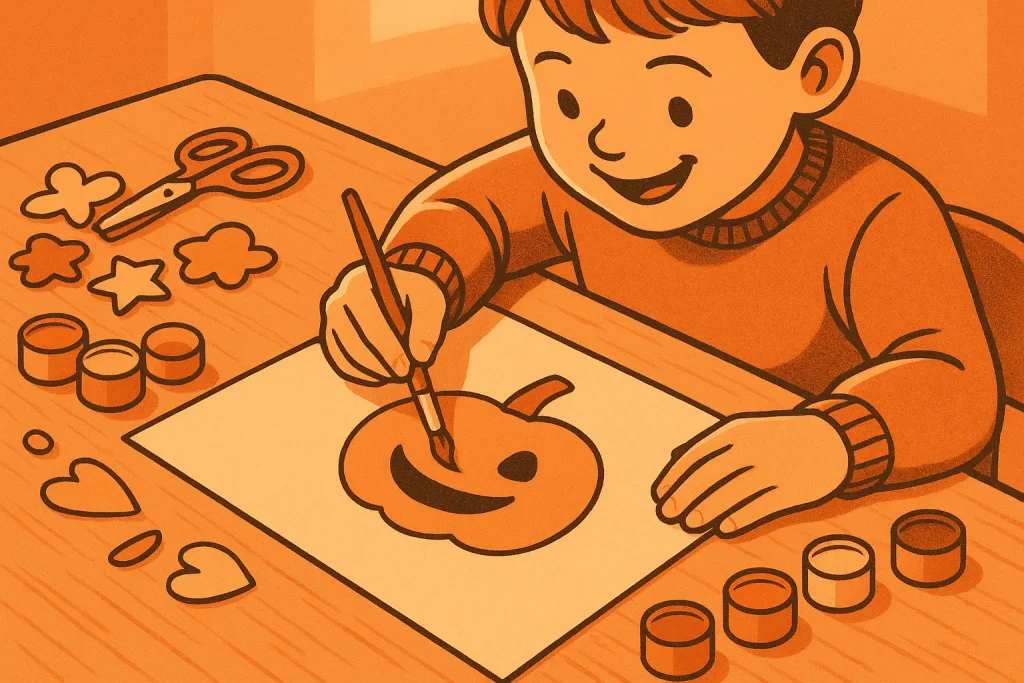
The bottom line: Creative activities boost critical thinking, emotional health, and motor skills. Harvard research shows these moments aren’t just fun—they build essential brain architecture. Even simple projects like building with LEGO or painting on rocks strengthen planning, resilience, and emotional regulation, proving creativity is a powerful tool for lifelong learning. 🧠✨
Screen time overload? We’ve all been there – kids glued to devices while creativity slips away. 🎨 Creative activities for kids aren’t just boredom-busters; they’re brain-boosting superpowers! 🚀 Explore 25+ ideas using everyday items – think cardboard-tube dragons, homemade playdough, sock-puppet theaters. 💡 These DIY crafts and imaginative play hacks build problem-solving skills, emotional regulation, and fine motor mastery. Spoiler alert: Harvard research calls creative play “serious business” for growing brains, building neural pathways with simple projects! 🧠✨ Bonus: Kinetic sand or friendship bracelets keep little hands busy and calm. Ready to craft magic? Let’s begin! ✨
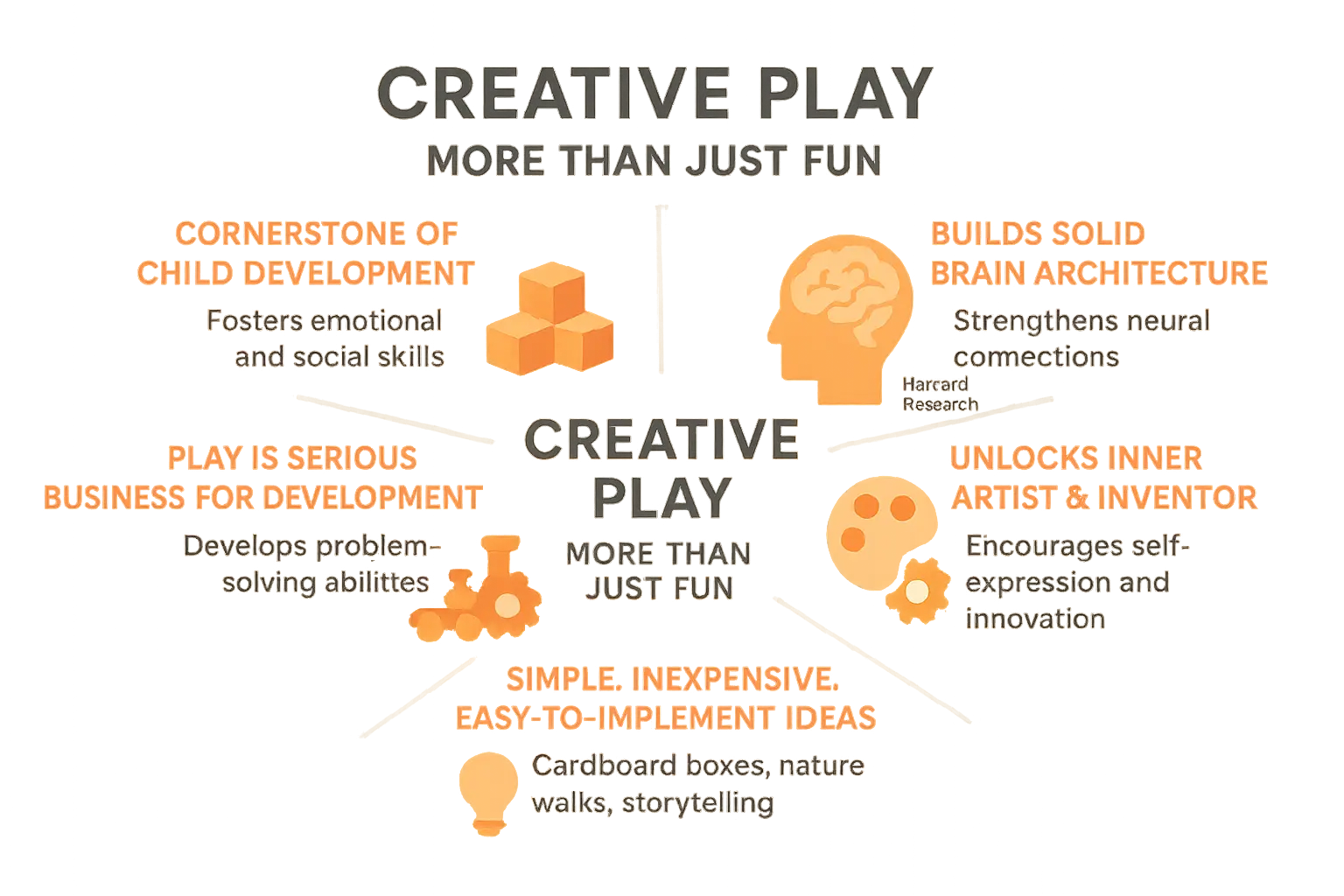
Why creative activities are more than just fun and games 🎨
Running out of ideas to keep your kids engaged without screen time? What if you knew simple crafts could boost brain development and life skills? Creative play isn’t just about entertainment – it’s a powerful tool shaping young minds.
Experts confirm: playtime builds brain architecture. The Center on the Developing Child at Harvard University explains that creative activities strengthen neural connections critical for emotional regulation, problem-solving, and learning readiness. These moments aren’t “just play” – they’re foundational learning experiences.
Here’s the good news: you don’t need fancy supplies. Everyday materials unlock amazing opportunities. Transform cardboard boxes into rocket ships, use old t-shirts for weaving projects, or create musical instruments from kitchen items. These activities naturally develop motor skills through cutting, gluing, and manipulating textures while nurturing creativity.
For younger kids, try sensory play with homemade playdough or creating texture collages. Older kids might enjoy designing secret codes with paper wheels or engineering mini obstacle courses from couch cushions. Storytelling with handmade characters builds narrative understanding – a skill Tellmestories’ WhatsApp platform also nurtures through personalized tales.
Remember, the magic happens in the process, not the product. When your child turns toilet paper rolls into telescopes or crafts fairy houses from pinecones, they’re developing spatial awareness, planning skills, and emotional expression. These hands-on experiences create neural pathways that structured learning alone can’t replicate.
Ready to transform ordinary moments into developmental milestones? Let’s explore practical ideas that will make your living room their favorite learning lab! 🌟
The amazing developmental benefits of being creative
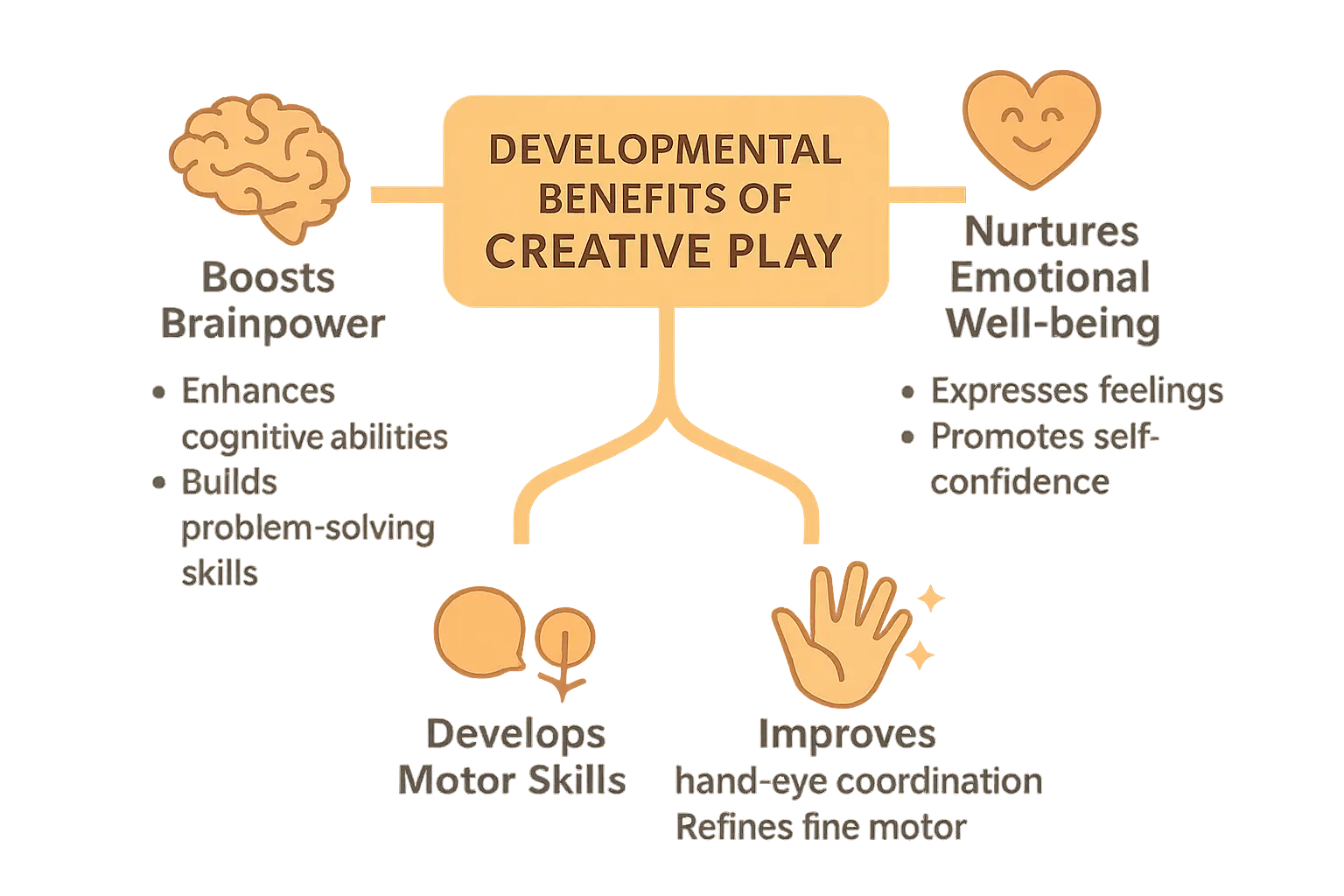
Boosts brainpower and problem-solving skills
When kids stack blocks or plan a collage, they’re not just playing—they’re building critical thinking muscles. These activities teach planning skills and logical thinking as kids test ideas and adapt when plans fail. For example, a child building a LEGO bridge learns to adjust their design when it collapses. Using everyday materials like cardboard boxes or recycled items challenges kids to innovate, turning ordinary objects into extraordinary creations. Every failed tower or misaligned sticker teaches kids to try again—a skill that lasts a lifetime. Even simple tasks like sorting supplies build decision-making, proving that creativity isn’t just art—it’s everyday problem-solving.
“Creative play isn’t just about making something pretty; it’s about making connections in the brain, fostering resilience, and learning to think outside the box.”
Nurtures emotional expression and well-being
Art becomes a safe space for kids to process émotions. A scribbled storm might mean a child’s frustration, while bright colors could signal joy. This practice builds emotional intelligence and empathy as they learn to name feelings through creativity. For instance, a child drawing a family scene might work through changes like a new sibling, visualizing complex emotions. Services like Tellmestories take this further by letting parents create personalized adventures where children star as heroes, making emotional storytelling accessible anytime via WhatsApp.
According to the New York Times Wirecutter article, pediatrician Dr. Michael Yogman emphasizes how creative projects help kids “navigate emotions in healthy ways.” Simple tasks like painting or crafting let them focus, reducing stress reduction and improving emotional regulation. Projects like making friendship bracelets let kids express emotions while connecting with adults.
Develops fine motor skills and coordination
Pinching playdough, grasping crayons, or threading beads strengthens tiny hand muscles. These actions build motricity fine—the foundation for future tasks like writing or tying shoes. Newborns start with reflexive grasping, toddlers develop a pincer grip by age 1, and 3-year-olds handle child-safe scissors with growing precision.
Daily activities turn these skills into habits. Sorting buttons with tweezers, building with oversized LEGO, or using clothespins to clip shapes onto a cardboard ring all refine hand-eye coordination. As Wirecutter notes, tools like Magpads (magnetic boards) combine creativity with motor practice, letting kids lift metallic beads to form letters—supporting pre-writing skills. This early exposure to forming shapes directly supports letter and number recognition, blending motor development with cognitive growth.
Easy and fun arts and crafts you can do today
Painting and drawing with a twist
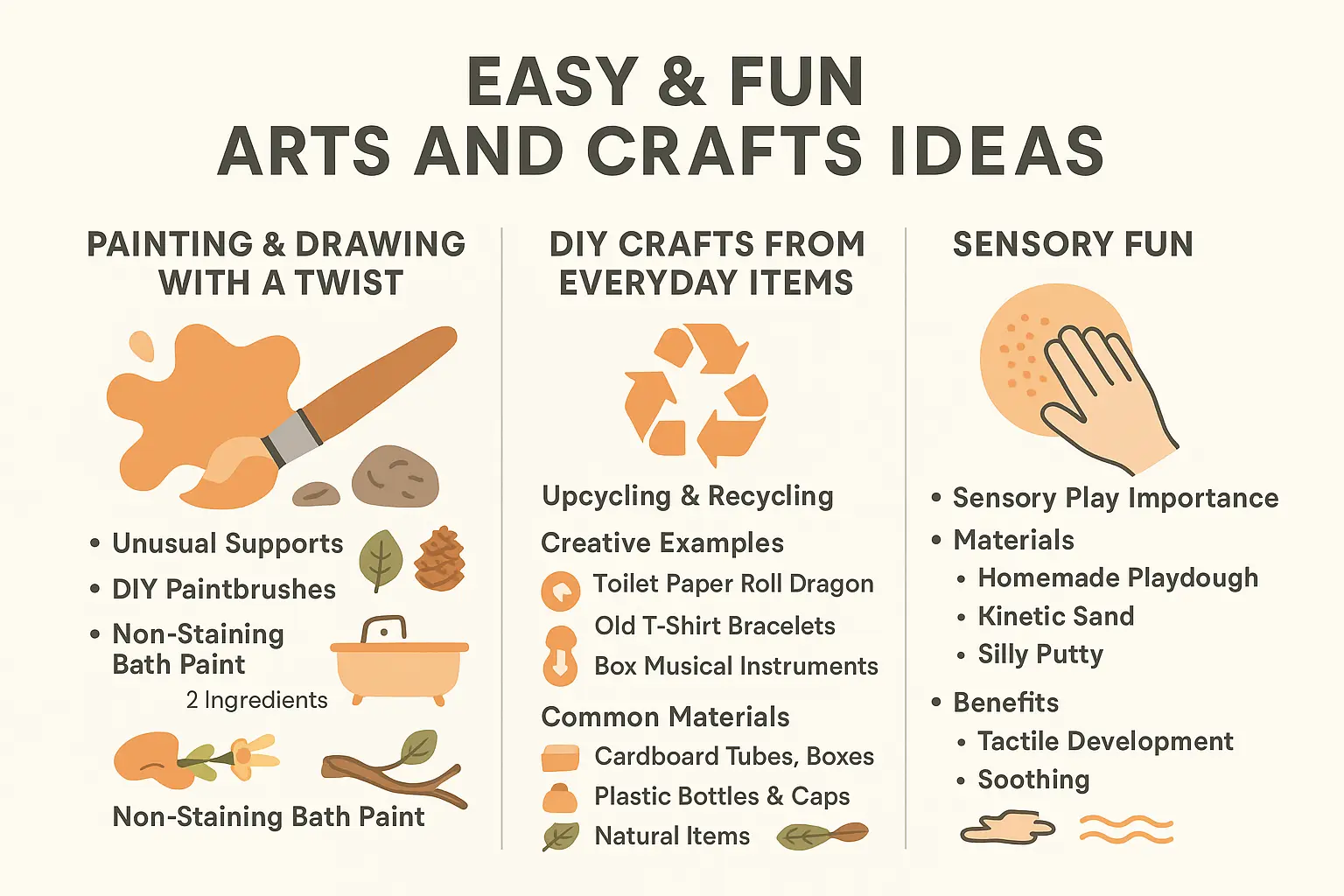
Ready to turn ordinary items into extraordinary art tools? 🎨 Forget traditional brushes – grab pinecones, leaves or clothespins to create unique textures. Ever tried painting on rocks? Tree bark? Cardboard tubes? These unexpected canvases spark creativity while teaching texture recognition. Bonus hack: Crumple plastic wrap for stamping cool patterns on paper!
Here’s the secret sauce: Mix yogurt with food coloring for non-staining bath paint. It’s edible, safe, and washes away with ease – perfect for toddlers! Pair with DIY paintbrushes made from sticks + flower petals. Warning: This might become your kid’s favorite way to “clean up” after messy playtime. Try mixing colors directly on paper for abstract art magic!
DIY crafts from everyday items ♻️
Before tossing that toilet paper roll or plastic bottle, consider this: 87% of household items can become creative gold. Transform cardboard tubes into dragon cracheur de feu with paint + pipe cleaner flames. Turn bottle caps into musical shakers with dried beans inside. Flip plastic containers into mini gardens with soil and small plants.
- Old cardboard tubes and boxes
- Used plastic bottles and caps
- Fabric scraps and old t-shirts
- Natural items like leaves, sticks, and pinecones
If you’re looking for more inspiration on what to create with household items, check out these amazing craft ideas. Bonus tip: Those old t-shirts become instant bracelets with just scissors and twisting action. Don’t forget – egg cartons make perfect caterpillars when painted and glued together!
Sensory materials for hands-on fun
Why settle for regular play when you can engage every sense? Sensory play isn’t just messy fun – it’s brain-building magic. Kinetic sand molds like magic, oobleck (cornstarch + water) defies physics, and homemade playdough hides learning in every squish. Pro tip: Add essential oils to your sensory bins for extra sensory stimulation.
Here’s what happens when kids touch and feel: 70% better memory retention, improved motor skills, and stress relief that rivals adult yoga. Try making “slime” with glue + contact solution or create color-changing potions using baking soda + vinegar. Pro tip: These activities work best when adults participate – bonus bonding time included! For tactile learning, mix cooked spaghetti with water for a safe, squishy texture experience.
Want science-backed benefits? Sensory play develops neural pathways while teaching cause-and-effect. 92% of early childhood educators recommend it for emotional regulation. Best of all? You’re building creativity while making memories – no fancy toys required. Just grab those household items and start creating!
| Activity | Prep Time (approx.) | Mess Level | Key Skills Developed |
|---|---|---|---|
| DIY Fire-Breathing Dragon | 10-15 min | Medium | Imagination, Fine Motor Skills |
| Rock Painting | 5 min | Medium | Creativity, Fine Motor Skills |
| Indoor Obstacle Course | 15 min | Low | Gross Motor Skills, Problem-Solving |
| Friendship Bracelets | 5 min | Low | Fine Motor Skills, Concentration |
| Homemade Play-Doh | 15 min | Medium | Sensory Exploration, Measurement |
| Sock Puppets | 10 min | Low | Storytelling, Emotional Expression |
| Paper Airplanes | < 5 min | Low | Aerodynamics, Fine-Tuning |
Need a quick activity hack for your little ones? This cheat sheet makes choosing easy! Skip the stress about prep time or mess – just pick based on your current energy level. Perfect for rainy days or post-school creative time ✨
Each activity balances fun with development: DIY dragons build storytelling and coordination, rock painting encourages artistic expression, and indoor obstacle courses boost physical strength with strategy. Even friendship bracelets improve focus through patterns!
Bookmark this page for fast access! From 5-minute paper planes to 15-minute play-doh, everything uses household basics – no special shopping required 🎉
Pro tip: Mix activities! Combine sock puppets with obstacle courses for storytelling + movement. Trust us – your kids will be too busy having fun to notice they’re learning! 🚀
Imaginative play to build new worlds
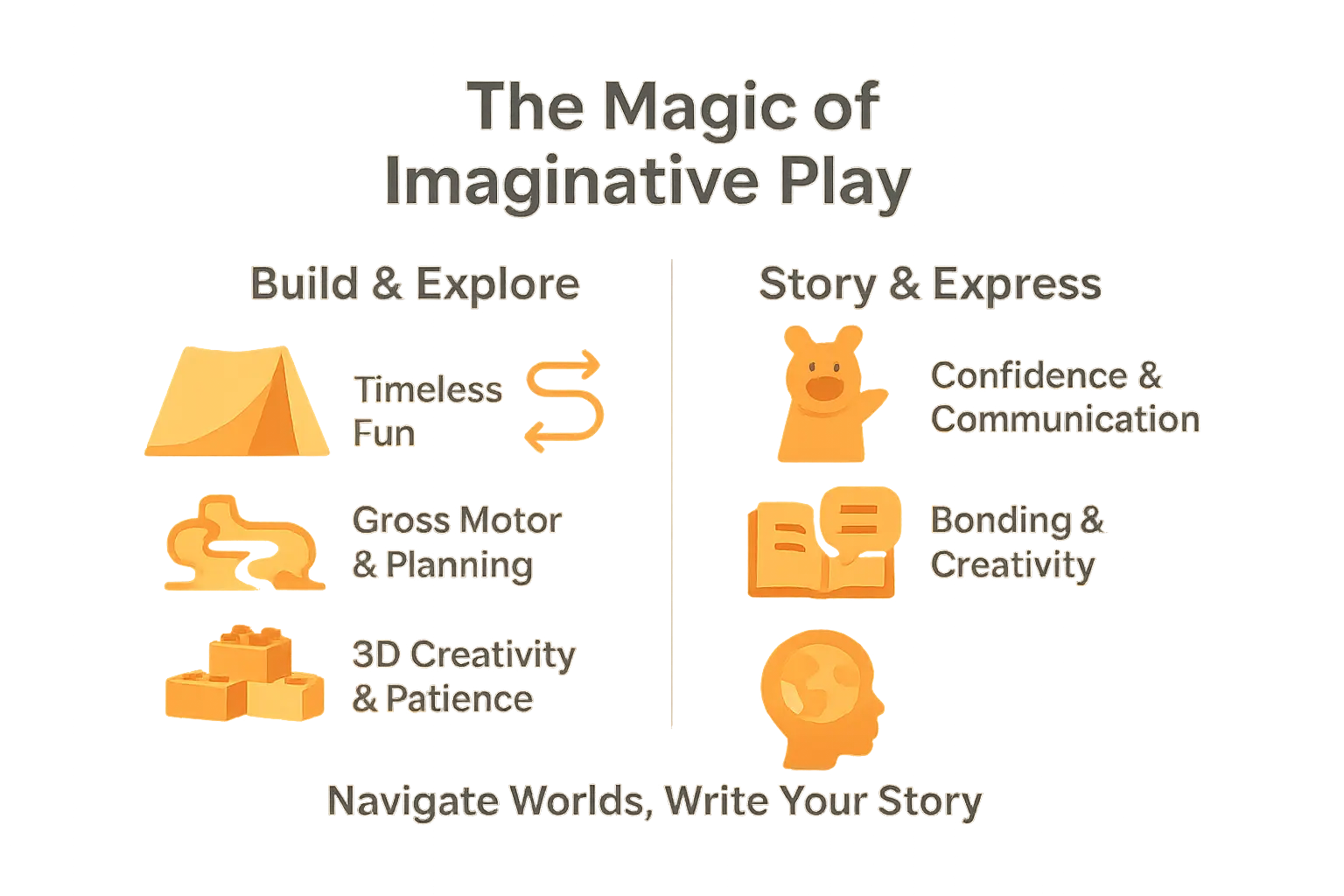
Let’s build something!
Transform your living room into a castle or spaceship using blankets, pillows, and chairs. This classic activity builds spatial awareness as kids test balance and structure—every collapsing tower becomes a hands-on lesson in physics basics. Collaborative fort-building also nurtures teamwork as siblings negotiate roles and share materials.
Create obstacle courses with floor tape or cushions. Crawling through “lava” zones or hopping on “stepping stone” pillows boosts gross motor skills. It’s a mini-Olympics that sharpens coordination and risk assessment while strengthening core muscles through crawling and jumping. Add a “rescue mission” twist by asking kids to carry a stuffed animal through the course—doubling as empathy practice!
Building toys like LEGO or Magna-Tiles elevate creativity. 3D construction kits develop patience and fine motor control. Kids grasp geometry basics by turning blocks into rockets or castles, refining hand-eye coordination with every piece they connect. For example, Magna-Tiles’ magnetic pieces teach shape recognition, while LEGOs’ tiny bricks improve precision for future engineers.
Storytelling and performance
Turn mismatched socks into puppets! Paper bag characters or sock theaters let kids explore emotions and social roles. These activities build self-confidence as they express ideas without fear of judgment. Try themed puppet shows—like a “superhero training day” or “underwater treasure hunt”—to spark narrative thinking.
“Through imaginative play, a child learns to navigate the world, understand different perspectives, and write their own story, one adventure at a time.”
Personalized storytelling adds magic. Whether crafting tales about puppet adventures or using custom stories where your child stars as the hero, this practice strengthens language skills and emotional intelligence. Tellmestories’ WhatsApp platform creates magical narratives in seconds—just send a voice note describing their interests. Imagine a story where they’re a pirate navigating a jellybean sea or a scientist saving a rainforest with talking monkeys!
This creative play blends art and fun for families. The AI remembers your child’s favorite characters and learning milestones, turning bedtime into interactive adventures. Parents can even upload photos to include pets or stuffed animals in stories, merging reality with fantasy. A bedtime routine featuring a personalized tale about “how the cat learned to fly” becomes a cherished family ritual.
From pillow forts to personalized tales, these activities turn ordinary moments into growth opportunities. Simple materials and big imaginations unlock endless learning through play—proving the best lessons often come with playful giggles. Combine a cardboard-box castle with a story where the “dragon under the stairs” needs their help, and you’ve got a full day of developmental fun!
Creative Solutions For Every Situation
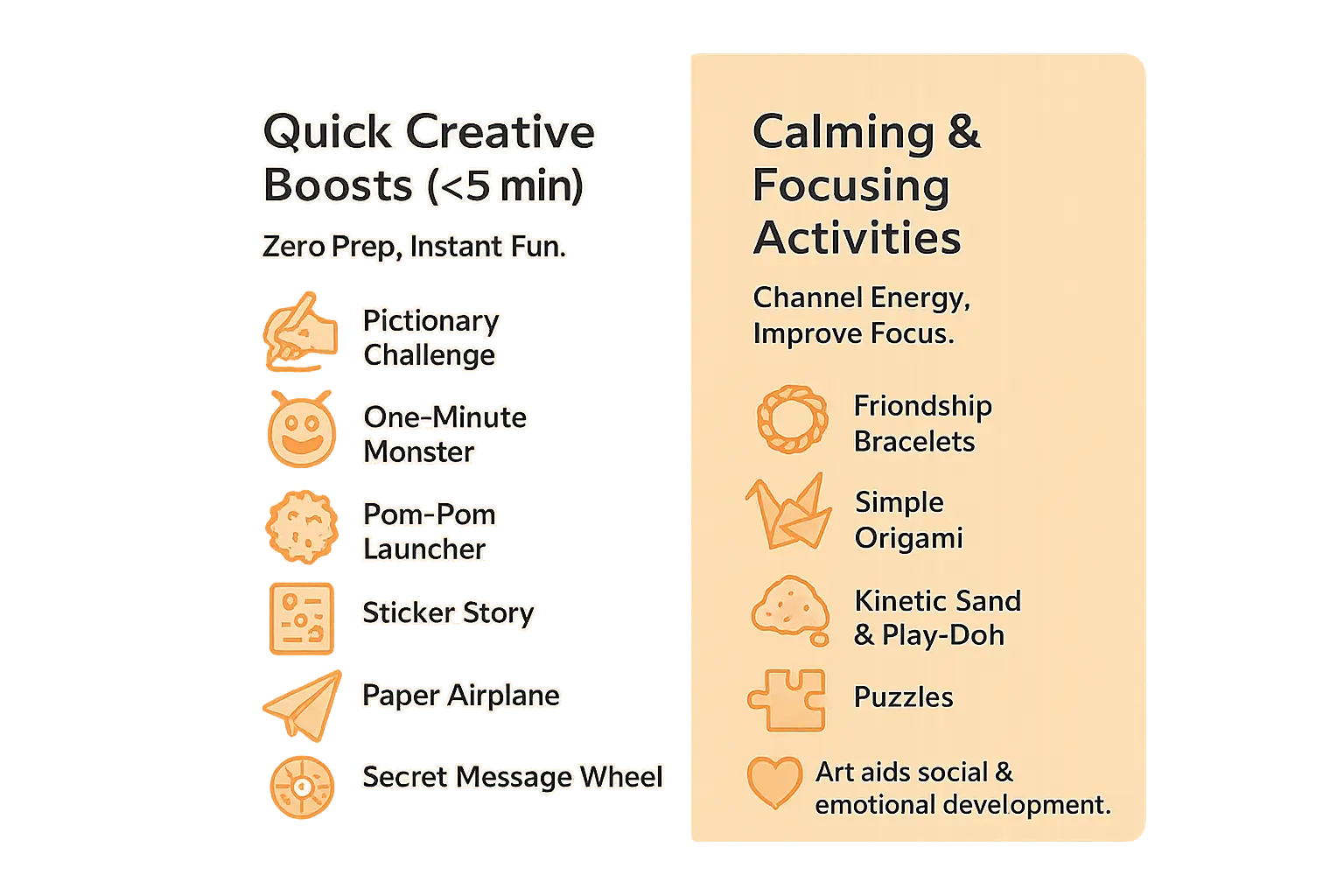
Quick Creative Boosts (Under 5 Minutes) ⚡
Need to spark creativity in a flash? These no-prep ideas turn tiny moments into big adventures. Pro tip: Use everyday objects – cereal boxes make epic canvases, and old magazines hide secret collage materials!
- Pictionary Challenge: One person draws, the other guesses. Boosts communication & quick thinking. Try reverse pictionary – guess the word from abstract shapes!
- One-Minute Monster: Draw the silliest monster in 60 seconds. Sparks wild imagination! Add drama: “This creature eats broccoli but loves bubble baths!”
- Pom-Pom Launcher: Use a pool noodle slice + balloon for instant fun. Sharpens motor skills. Variation: Create a target from egg cartons for extra challenge!
- Sticker Story: Build a visual tale with stickers. Encourages narrative creativity. Upgrade: Use seasonal stickers or create mystery stories (“Where did the dinosaur sticker go next?”)
Even 3 minutes of creative play can transform restless energy into focus. No materials? No problem – grab paper + pens and go! Bonus: Draw with fingers on foggy windows or use sidewalk chalk on driveways.
Calming And Focusing Activities For Active Minds
For kids with boundless energy or focus struggles, these activities channel energy into mindful progress:
- Braiding friendship bracelets – repetitive motions ease anxiety. Start with 3 colors, progress to 10+ for complex patterns
- Simple origami – teaches patience + hand-eye coordination. Try folding paper frogs that jump or boats that float
- Kinetic sand play – tactile therapy for sensory seekers. Build mini cities or castle moats
- Jigsaw puzzles – builds persistence + pattern recognition. Choose themed sets like space or underwater worlds
Research shows art-based activities help kids develop emotional regulation skills. Recent studies highlight how creative play strengthens social-emotional learning through hands-on exploration. Pro tip: Let kids choose their favorite colors – color psychology shows blues/greens promote calmness.
These activities work like mental yoga – the focused repetition creates calm while building fine motor strength. Perfect for winding down after busy days! For extra calmness, add soft music or nature sounds during art time.
Embrace the mess and make some memories
Creativity shapes young minds. The activities we’ve shared aren’t just fun—they’re development powerhouses. From problem-solving to motor skills, these experiences outshine structured lessons. The magic ingredient? Imagination, not perfection. A cardboard box, crayons, or even rain puddles spark creativity without fancy tools.
Let’s address the elephant in the room: the mess. Yes, glue might stick to the cat or paints stain walls. But here’s the secret: those “oops” moments fuel learning. Splashing, squishing, and experimenting teach resilience, teamwork, and adaptability. Focus on shared laughter and curiosity, not fridge-worthy art.
“The goal of creative activities isn’t a perfect masterpiece—it’s the joy in the process, the confidence gained, and the happy memories you build together.”
- Key Takeaway 1: Creativity boosts critical thinking, emotional health, and motor skills.
- Key Takeaway 2: Everyday items work perfectly—no pricey materials needed.
- Key Takeaway 3: Celebrate the process, not perfection. Playtime’s all about fun!
Grab a cereal box, open your paints, or transform rain into play. No idea is too simple—let your child’s imagination lead. Ready to embrace the chaos? Happy crafting! 😊
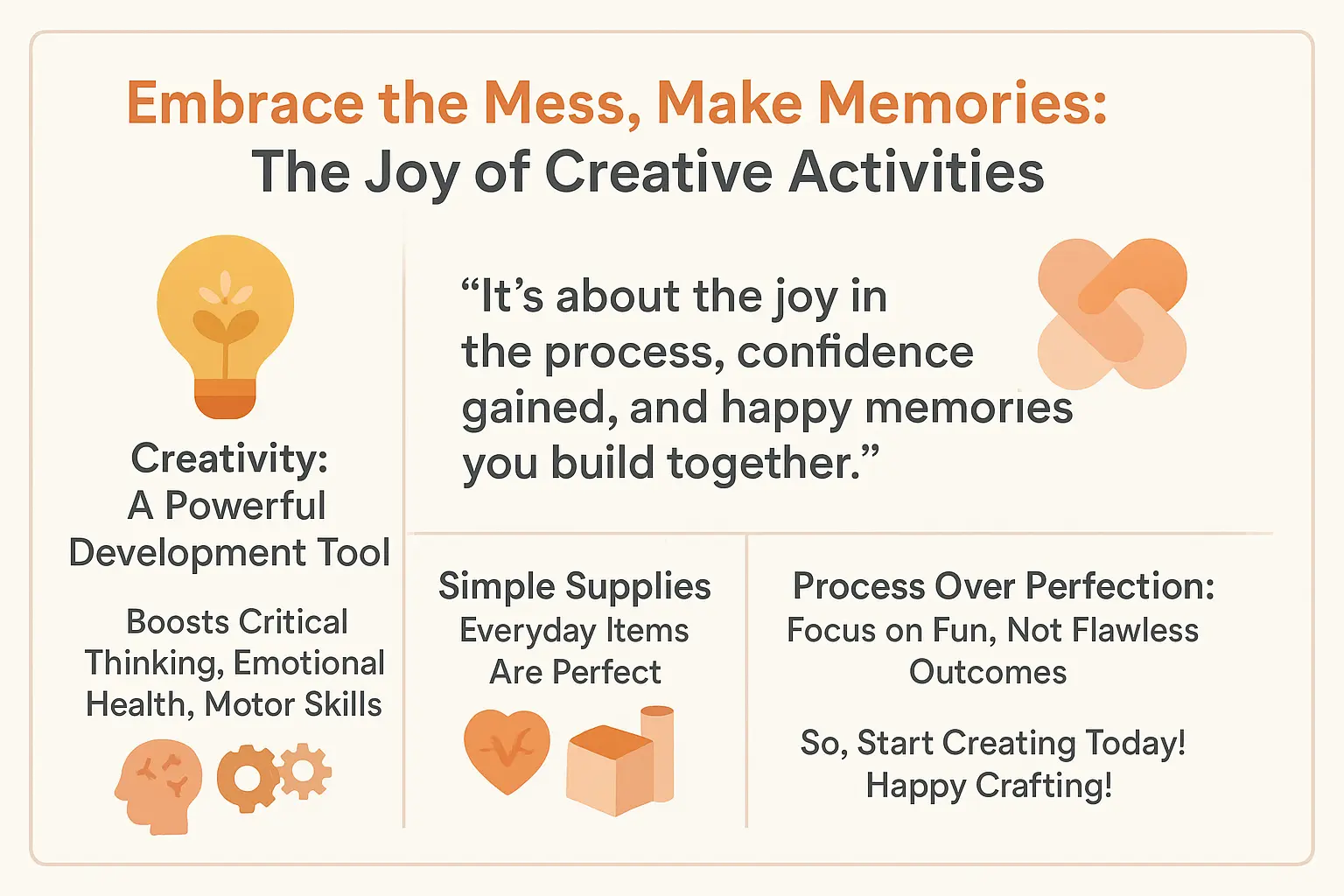
Creativity fuels growth! 🌟 Embrace the mess—focus on joy, not perfection. Experts say, “Process > perfection: it’s about confidence, not masterpieces.”
- Boosts critical thinking, emotional health, motor skills.
- Use everyday items like cardboard or bottles.
- Focus on the process, not the result.
Ready to craft? Happy crafting! 😊
FAQ
What exactly counts as a creative activity for kids? 🎨
Think of anything that sparks imagination and hands-on exploration! Creative activities for children include painting on unexpected surfaces like rocks or cardboard tubes, building forts with blankets, crafting with recycled materials (like turning toilet paper rolls into fire-breathing dragons), or even storytelling with sock puppets. These activities focus on the process, not perfection, letting kids experiment, problem-solve, and express themselves freely. Bonus? They’re often low-cost and use stuff you already have at home!
Need quick ideas for fun creative activities? ✂️
Time to get crafting! Try these easy wins:
- DIY paintbrushes made from clothespins and leaves
- Pom-pom launchers using pool noodles and balloons
- Secret message wheels with paper plates and markers
- Homemade non-staining bath paint (just 2 ingredients!)
- Friendship bracelets with old t-shirt strips
These projects take 15 minutes max to prep and balance creativity with sensory fun. Perfect for busy parents!
What are some go-to activities for keeping kids entertained? 🧸
Keep it simple but engaging! Try:
- Kids’ charades with picture cards
- DIY obstacle courses using couch cushions
- Sticker storytelling (create scenes with reusable stickers)
- Paper airplane aerodynamics challenges
- Crayon resist art with watercolors
These require minimal setup and maximize laughter while building skills like coordination and creative thinking.
What can kids create in under 45 seconds? ⏱️
Speedy creativity is totally possible! Try:
- 1-minute monster drawings (draw the silliest monster in 60 seconds)
- Paper airplane races (fold, decorate, and test flight patterns)
- Sticker scenes (build a story with 3-5 stickers in a minute)
- Impromptu puppet shows (use socks + 10-second scriptwriting)
These “instant creativity” ideas prove you don’t need hours to spark joy – just grab materials and GO!
What does creative play look like in action? 🧩
Think beyond coloring books! Creative play examples include:
- Building marble runs with cardboard tubes
- Creating “mud soup” kitchens with natural items
- Designing cardboard arcade games with markers and tape
- Engineering bridges with spaghetti and marshmallows
- Choreographing dance routines to favorite songs
These open-ended activities encourage kids to test ideas, adapt when things fail, and celebrate problem-solving wins.
What are the 5 big categories of creative works? 🌟
While creativity comes in endless forms, here are 5 popular types:
- Visual Arts: Drawing, painting, or collaging
- Construction: LEGO builds, fort-making, or cardboard inventions
- Performing Arts: Puppet shows, dance parties, or improv games
- Literary: Storytelling with picture prompts or journaling adventures
- Design: Fashioning clothes from old materials or inventing board games
Each category develops different skills while letting kids explore their interests!