Quick summary: Stories for 4-year-olds are more than just bedtime routines—they’re brain boosters! They build vocabulary, empathy, and creativity through relatable tales. Research shows 40% of math concepts can be playfully introduced this way. Try personalized adventures where your child stars as the hero; it’s learning disguised as magic! ✨
Ever felt like finding the perfect bedtime story for your 4-year-old is like searching for a needle in a haystack? 😩 Here’s the good news: stories for 4 year olds aren’t just fun—they’re brain boosters! 🌟 These tales build language skills, spark empathy, and turn tiny minds into creativity machines. We’ll cover why rhymes lock in memory, how classic stories teach emotions, and why personalized adventures—like custom tales where they team up with a dragon—are game-changers. Oh, and we’ll show you how to create magic straight from WhatsApp (no apps needed!). Ready to make bedtime legendary? 💤
Why stories are pure magic for your 4-year-old
Let’s be real for a sec—finding the perfect stories for 4-year-olds can feel like searching for a golden needle in a haystack, right? 😅
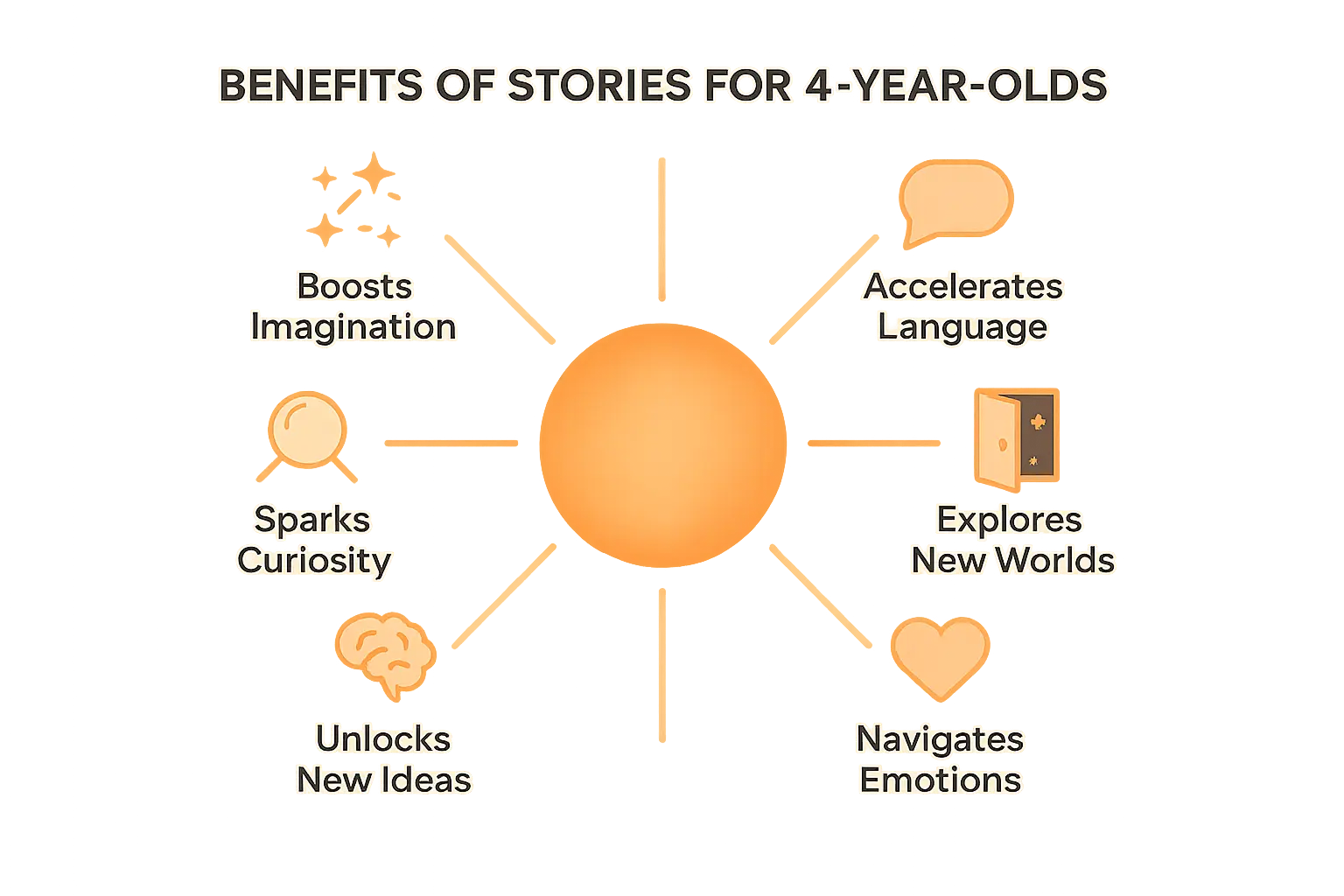
But here’s the thing: This age is pure magic. Their brains? Supercharged. They’re soaking up words, making connections, and asking “why” about literally everything. And guess what? Stories are the ultimate tool to fuel this curiosity while teaching life lessons like sharing and compromise.
Think of stories as tiny time capsules that pack BIG lessons. Like how “The Ugly Duckling” shows kindness matters, or how “The Very Hungry Caterpillar” sneaks in counting and problem-solving. These tales aren’t just about putting your little one to bed—they’re shaping how they see the world.
Here’s the kicker: At 4, their imagination is wild. A stick becomes a sword, a cardboard box? A spaceship. Stories tap into this creativity, helping them explore emotions and values safely. They’ll meet characters who solve problems, face fears, or learn to share—skills they’ll mimic in real life.
And hey, if you’re a busy parent (aren’t we all?), personalized stories via WhatsApp? Total game-changer. No app downloads, just record a voice note and BAM—your child’s the hero of a tale about courage or teamwork. Plus, the AI remembers their favorite themes—how cool is that?
Ready to dive deeper? Let’s unpack how specific stories boost skills like empathy and resilience next. 🚀
More than just fun: how stories boost your child’s development
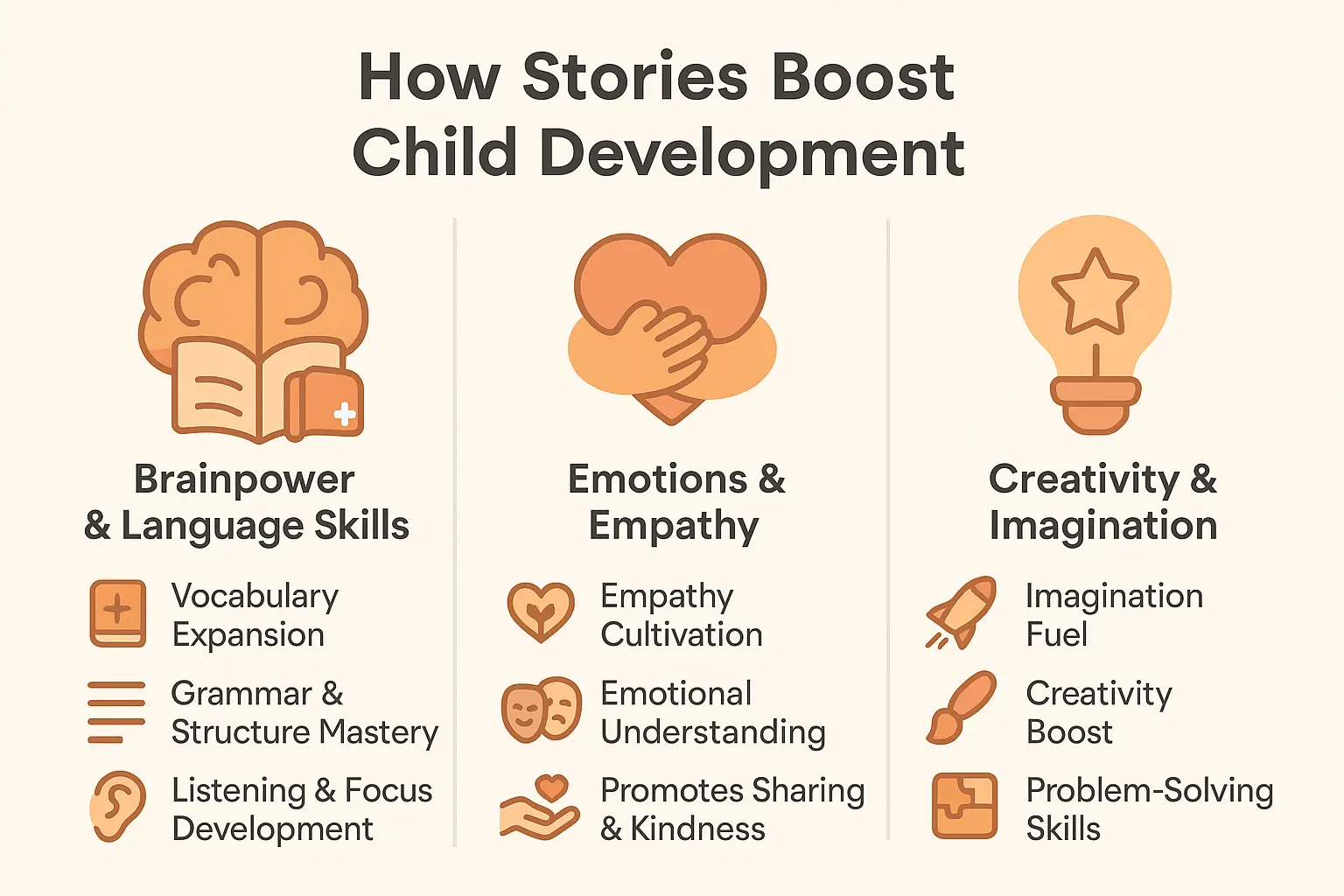
Boosting their brainpower and language skills
Ever wondered what’s happening in that little head during storytime? Let me tell you—it’s like a mental gym! 🧠 When you read about “the grumpy squirrel who lost his nut” or “the brave duckling learning to swim,” you’re actually giving their language skills a super-boost. These stories use words they might not hear every day, like “adventure” or “problem-solving.”
Here’s the cool part: these tales naturally teach grammar basics. When a character says, “I went to the park and played with my friends,” they’re learning about past tense without even realizing it! And guess what? Studies from Stanford University show some stories can even be a playful gateway to foundational math concepts. Think about “The Very Hungry Caterpillar” showing counting through fruit, or “Giraffe the Builder” teaching shapes through construction adventures.
Growing a big heart: understanding emotions and empathy
Picture this: Your child’s face falls just like the little bear’s when his toy disappears. That’s empathy in action! 🐻 When stories show characters sharing cookies or apologizing after fights, your little one learns these social skills through play-by-play action.
Think about “The Ugly Duckling” or “The Three Little Pigs.” These classic tales show powerful lessons about kindness and friendship that stick better than any lecture ever could. When the wolf finally changes his ways in “The Big Bad Wolf and his Magic Vacuum Cleaner!”, your child sees that even grumpy characters can learn to compromise. And in “The Giving Tree,” they explore the beauty of generosity through a tree’s unconditional love for a little boy.
Sparking a world of creativity and imagination
Have you ever seen a cardboard box become a spaceship? That’s imagination at work! 🚀 When your child hears about flying dragons or singing trees, they’re building mental muscles for creative thinking. This isn’t just daydreaming—it’s serious brain training!
Check out how “Penny the Penguin’s Big Adventure” or “The Magic Nightlight” let their mind wander into magical worlds. This kind of storytelling isn’t just fun—it’s preparing them for real-life problem-solving. This is a fantastic way to nurture their imagination while making bedtime extra special. Watch how they start creating their own endings or inventing characters—proof their creativity engine is revving up!
The Secret Recipe For A Perfect 4-Year-Old Story
So, what are the magic ingredients? What should you look for? Think of it like baking a cake. You need the right ingredients for it to be a success 🍰.
“A good story for a 4-year-old isn’t about complex plots; it’s about a simple journey with a lot of heart, making them feel safe, understood, and curious for more.”
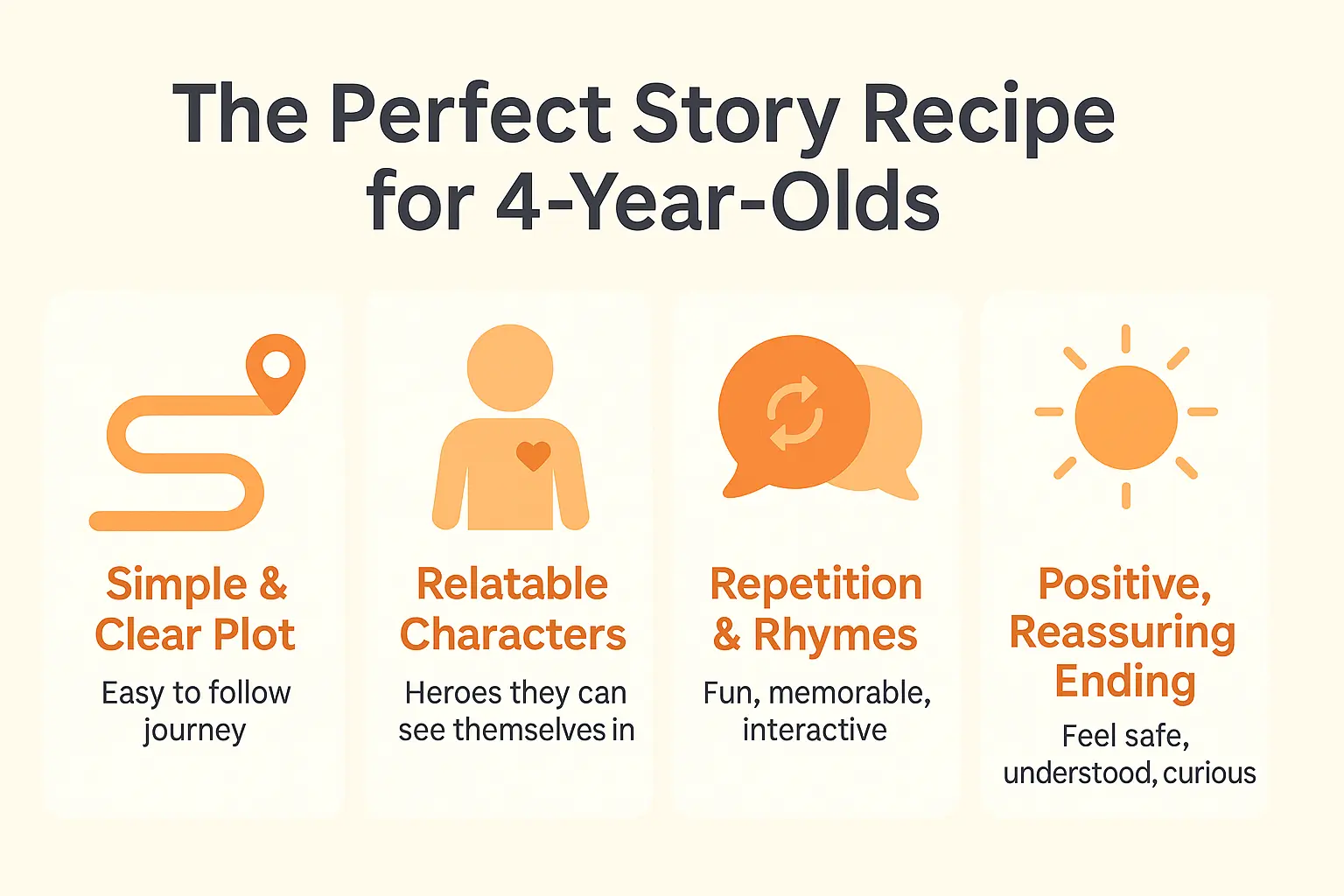
Let’s break it down. Here’s what makes stories stick with little ones:
- A simple and clear plot: Easy for them to follow from start to finish.
- Relatable characters: Heroes they can see themselves in.
- Lots of repetition or rhymes: It’s fun and helps them remember!
- A happy and reassuring ending: To make them feel safe and sound.
Relatable characters? Think animals, toys, or kids facing tiny dilemmas – like sharing toys or conquering bedtime fears. A predictable plot? Think “The Very Hungry Caterpillar” – same structure every time, just new foods! 🦋
Repetition isn’t just catchy – it’s brain-building. When they shout “Again!” after “Brown Bear, Brown Bear,” they’re wiring their memory. Rhymes? They’re secret agents for language skills, teaching sound patterns without flashcards.
Happy endings? Non-negotiable. Even “The Three Little Pigs” ends with pigs outsmarting a wolf – no scary cliffhangers here! 🏠
Why does this work? Because 4-year-olds need stories that mirror their world. A tale about a shy bunny learning to share feels like their own life – just with cuter ears. Keep it simple, repeat the catchphrases, and always, always wrap it up with a hug (even if the characters are dragons). 💫
Remember: Their brains aren’t built for twists. They want to shout the next line, point at familiar pictures, and fall asleep knowing everything turned out okay. Now go sprinkle those ingredients into your next storytime!
A Treasure Chest of Story Ideas for Your Little Listener
Ready for some inspiration? Here are some types of stories that are always a big hit with 4-year-olds, and what they secretly teach. Let’s dive in! 🌟
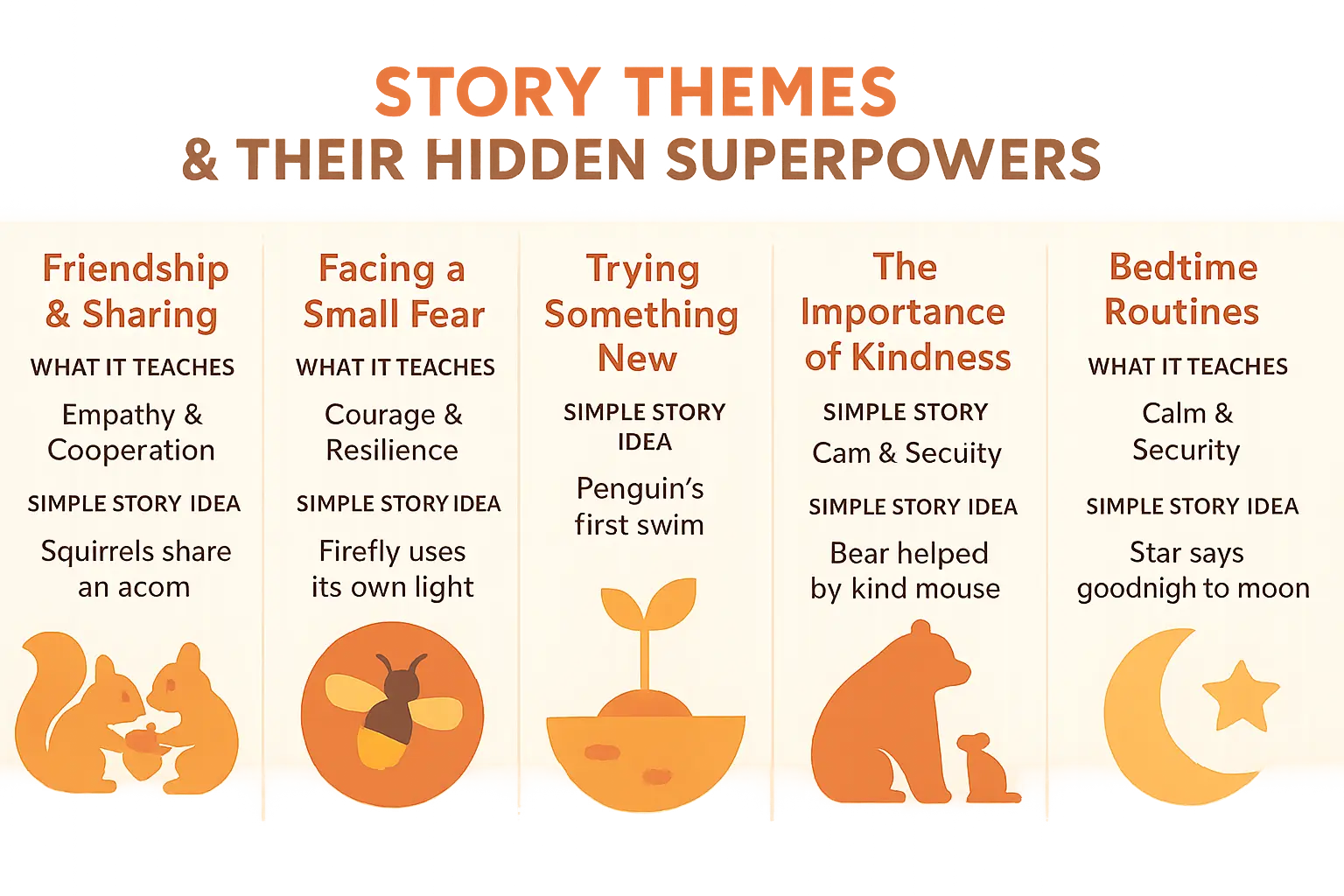
| Story Theme | What It Teaches | A Simple Story Idea |
|---|---|---|
| Friendship & Sharing | Teaches empathy, cooperation, and compromise. | A tale of two little squirrels who have only one acorn and must figure out how to share it. |
| Facing a Small Fear | Builds courage and shows that it’s okay to be scared. | The story of a little firefly who is afraid of the dark and learns to use his own light. |
| Trying Something New | Encourages curiosity and a growth mindset. | An adventure about a young penguin who is nervous to take his first swim. |
| The Importance of Kindness | Teaches compassion and how small good deeds make a big difference. | A story about a grumpy bear whose day is turned around by a kind mouse. |
| Bedtime Routines | Creates a sense of calm, security, and predictability. | The journey of a little star getting ready for bed by saying goodnight to the moon and clouds. |
These themes are just the beginning! Fairy tales like “The Three Little Pigs” or rhyming stories like “The Very Hungry Caterpillar” are superstars for engagement. Animal stories? Huge hit! Stories with repetition, like “The Very Busy Spider”, help kids predict what comes next, making them feel like storytelling pros!
What works for 4-year-olds builds on the foundation for stories for 3-year-olds. At 4, stories can tackle complex emotions—like handling jealousy if a sibling gets more ice cream. As they grow, explore stories for 5-year-olds to keep the magic going!
Pro tip: Use voice notes on WhatsApp to create custom stories! Describe the theme, and let AI craft a tale where your child is the hero. No tech skills needed—just pure imagination. 🌈
Stories are tiny life lessons wrapped in fun. Whether it’s a penguin learning to swim or a firefly conquering fear, these adventures help kids navigate big feelings.

How to become your child’s favorite storyteller (no acting degree required!)
Bring the story to life with your voice
You don’t need acting skills to create magical moments during storytime! Your voice is your most powerful tool. Try this: use a squeaky voice for the mouse and a deep rumble for the bear. Whisper secrets! A volume shift can turn reading into an adventure.
Pause dramatically before big reveals – you’ll have them gripping blankets with suspense! Want a pro tip? Vary your speed too. Rush through action scenes like “The car zoomed super fast!” then slow way down for “The treasure was… HIDDEN!” This rhythm keeps them locked in and teaches story flow.
Make it a conversation
Storytime shouldn’t be a monologue. Be a conversation guide! Here’s how to turn pages into dialogue:
- Ask “what if…” questions to spark imagination
- Let them point to pictures and name what they see
- Encourage finishing repetitive sentences together
- Ask how characters might feel
Try “What do you think happens next?” or “Why did she do that?” These interactive elements boost curiosity, critical thinking, and observation. When they ask “What’s that?” about a new word? Turn it into a game! “I think this is a… (dramatic pause) S-T-A-R! Say it with me: STAAAAR! Now let’s find more stars on this page!”
The magic of a story routine
A consistent story routine does more than ease bedtime. It helps your child’s brain prepare for sleep while building emotional connections. Reading at the same time nightly creates associations with safety and comfort.
Find inspiration everywhere – from fairy tales to real-life heroes, with resources like NASA showing how a girl who loved counting became the math genius that launched astronauts into space! Consistency matters – whether sharing classic tales or personalized adventures where they’re the hero.
Create a “storytime signal” – maybe a special blanket or stuffed animal that becomes their reading buddy. This visual cue gets them excited for your storytelling time. Before long, they’ll bring their story buddy to you, ready for adventure!
What if the perfect story was made just for them?
After a long day of tantrums and toddler questions, what if I told you the best story isn’t written yet? 🤫 Imagine a tale where your kid isn’t just the audience—they’re the hero. A story that grows with them, teaches them to share, and makes bedtime fun again. That’s where Tellmestories comes in.
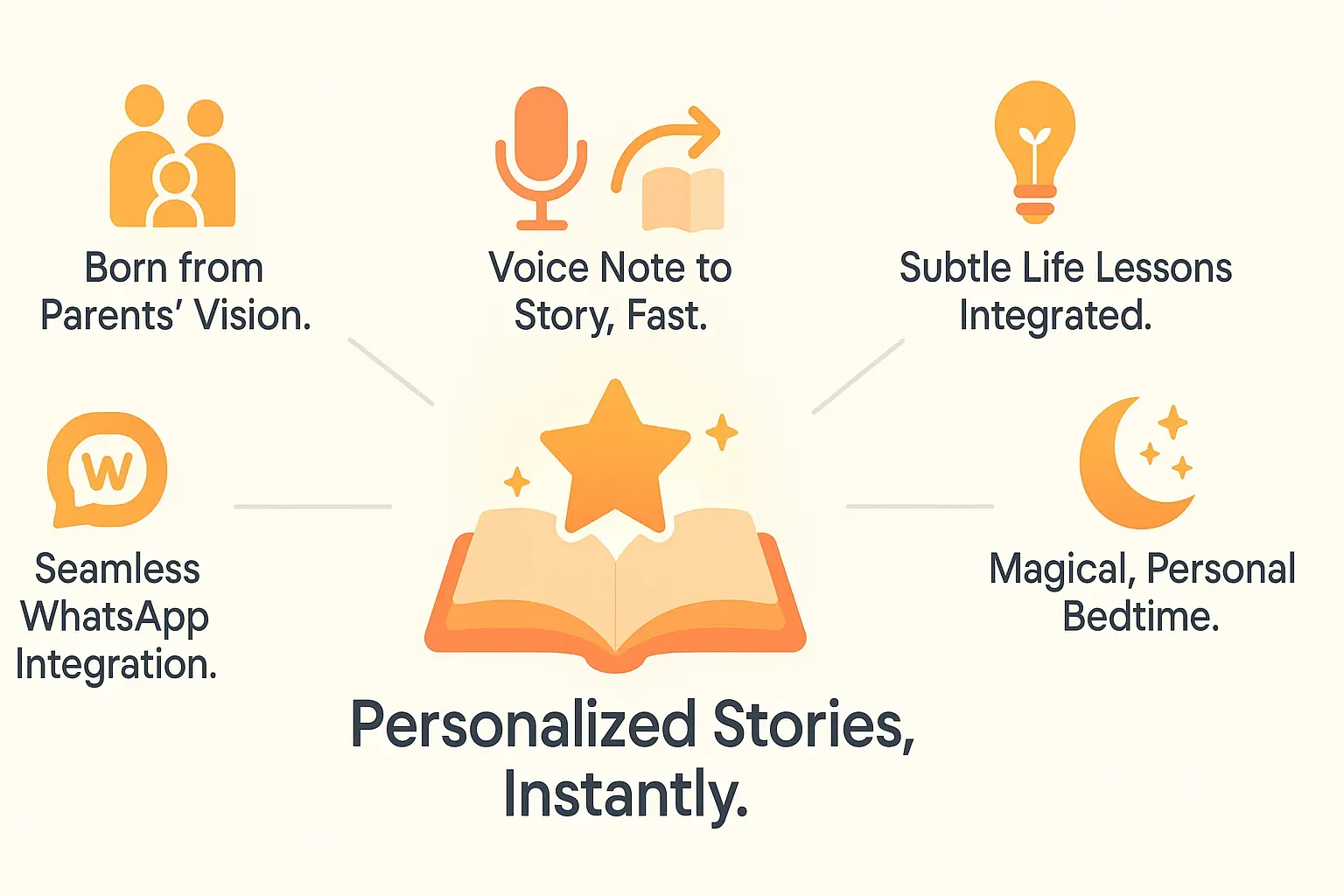
Created by Alex (dad to Anja, 3, and Ellie, 1) and Julien (CTO), this WhatsApp-based service turns your voice notes into magical adventures. No app downloads, no screen time drama—just tap, speak, and watch your child’s imagination light up. You say, “Tell a story about my son Leo and his dinosaur truck going to space!” and boom: 5 minutes later, Leo’s racing aliens in a rocket-powered dump truck. 🚀
We created Tellmestories to solve a real parent problem: making bedtime stories magical and personal. Now, we’re sharing that magic with families everywhere.
Here’s the cool part: the AI remembers. Mention Leo’s best friend Mia or his fear of the dark, and future stories will include them. Teaching sharing? It’ll craft tales where Leo teams up with alien pals to fix their spaceship. Need to tackle bedtime resistance? Stories like “Anja’s Moonlight Picnic” sneak in sneaky lessons about good sleep habits while keeping things fun.
Think of it as storytelling meets parenting hacks. No more repeating the same old tales. No more “But make it different!” complaints. Just instant, personalized adventures that grow with your kid’s favorite themes. Curious how it works? Spoiler: it’s all in WhatsApp. 👀 Let’s dive deeper…
Your next story adventure is just a moment away
Stories aren’t just words on a page—they’re bridges to connection, learning, and magic. When you read with your 4-year-old, you’re not just sharing a tale. You’re teaching them about kindness, curiosity, and how to navigate tricky feelings. Even a simple story about a shy squirrel learning to share can spark big conversations. And let’s be real: those cozy moments matter more than perfect grammar or plot twists.
Whether you’re re-reading their favorite book for the 100th time, narrating a silly story with funny voices, or building a brand-new adventure, you’re giving your child something priceless: your attention. That’s the real secret sauce. The rest? Well, that’s where Tellmestories steps in to make it effortless.
- It’s all in WhatsApp: No app downloads—just open a chat.
- Voice-to-story creation: Speak your idea, and let AI do the rest.
- Smart memory: The AI remembers your child’s favorite characters and lessons.
- Educational focus: Stories that teach potty training, sharing, or bedtime routines, all while sparking joy.

So go on—open a chat, pick a theme, or just hit record. Your next adventure is a voice note away. Happy storytelling! ✨
Stories are gateways to connection, learning, and imagination! With Tellmestories, magical tales are just a voice note away. 🎈
- WhatsApp-ready: No app, just magic in your pocket.
- Voice-to-story: Create stories by speaking!
- Smart stories: AI remembers their favorites.
- Hidden lessons: Kindness, courage, curiosity—wrapped in fun!
Grab a book or your phone—adventure awaits! Happy storytelling! ✨
FAQ
What are the best books for 4-year-olds?
Oh, this is such a fun question! 📚 For 4-year-olds, you’ll want books with vibrant pictures, engaging rhythms, and relatable characters. Classics like The Very Hungry Caterpillar (for counting and colors) or Guess How Much I Love You (for heartwarming connection) are super popular. Stories like Goodnight Moon, The Ugly Duckling, or The Three Little Pigs also hit the sweet spot. The key? Books that spark giggles, curiosity, or let them shout along during repetitive lines! “Again!” is a win, trust me 😉
What’s the most popular story kids love right now?
Okay, let’s talk legends! 🌟 While trends come and go, fairy tales like Winnie the Pooh or The Three Little Pigs are timeless. But if we’re talking “most famous,” The Very Hungry Caterpillar is up there – it’s a total classic! Stories with universal themes (friendship, adventure, silly animals) tend to stick around. Think Guess How Much I Love You for cozy feels or The Ugly Duckling for emotional growth. These stories? They’ve got staying power! 💫
Do stories need to teach lessons?
Listen, stories don’t have to be moral lessons, but they often sneak in life skills anyway! 🌱 At 4, kids absorb stuff like empathy (hello, The Ugly Duckling!) or kindness (The Giving Tree). They’re learning about friendship, feelings, and problem-solving without even realizing it. That said, it’s totally fine to read just for giggles too – not every book needs a “message.” The main thing? Sharing joy and imagination together! 🐻
Is my 4-year-old ready to start reading?
Let’s clear this up: 4-year-olds are pre-readers! 📖 They’re building the basics – recognizing letters (maybe even their name!), flipping pages “the right way,” and babbling story parts during play. They might “read” a book by memorizing the words you’ve read aloud, which is super smart! Actual reading? That kicks in later, but right now, it’s all about making letters and books feel like friends. Keep it playful! 🧸
What reading level are 4-year-olds at?
Picture this: 4-year-olds are like language sponges! 🧽 They’re nailing basic sentence structure, naming 1,000+ words, and recognizing some letters (maybe even their name!). They’ll follow simple stories with clear beginnings/middles/ends and start pointing out familiar words like “stop” or “mom.” Developmentally? They’re all about repetition – that’s why they beg for the same bedtime story every night! Think of this as “Level 1” – laying the foundation for reading adventures ahead. 🚀
What are top book picks for preschoolers?
Let’s make a list! ✨ Here’s what preschoolers devour:
- Guess How Much I Love You (cozy love vibes)
- The Very Hungry Caterpillar (counting + life cycle fun)
- Goodnight Moon (perfect for winding down)
- The Very Busy Spider (interactive page with tactile elements)
- The Ugly Duckling (empathy + transformation)
Look for books with bold art, simple text, and opportunities for them to shout guesses or actions. Bonus points if it makes them say “Again!” 😄
What’s the #1 children’s book of all time?
Oof, tough one! 🏆 But if we’re talking stats, The Very Hungry Caterpillar by Eric Carle is a mega-hit – over 50 million copies sold! Why? It’s got rhythm, counting, and that holey page they love poking. Close runners-up? Guess How Much I Love You (for those warm fuzzies) and Goodnight Moon (bedtime routine MVP). These aren’t just books – they’re cultural touchstones! 📚✨
Need a cool story idea for kids?
Let’s brainstorm! 🌈 Try these themes:
- Friendship drama: Two squirrels sharing one acorn (sneaky lesson in cooperation!)
- Overcoming fears: A firefly afraid of the dark learning to shine (brave hearts FTW!)
- Trying new things: A penguin nervous to swim – enter teamwork!
- Kindness chain: A grumpy bear’s day turned around by a tiny mouse (awww!)
Pro tip: Add repetition (“Again and again and again!”) or silly voices for characters. Kids eat that stuff up! 🐾
How does storytelling work in kindergarten?
Kindergarten storytelling is about making books come alive! 🎭 Think interactive read-alouds where you pause to ask “What’ll happen next?” or let them finish rhyming lines. Use flannel boards for Three Little Pigs or act out Wheels on the Bus with arm movements. Stories should be short, with predictable patterns – think Five Little Monkeys or Brown Bear, Brown Bear. It’s not just fun – it’s building listening skills, vocabulary, and making reading feel like a team sport! 🧩