The key takeaway: Stories for 5-year-olds are developmental powerhouses, boosting language, empathy, and creativity. They immerse kids in imaginative worlds where relatable characters and clear morals teach emotional resilience and complex thinking. As one expert notes, these tales act as “safe spaces” for exploring feelings, turning bedtime into a foundation for lifelong learning and connection.
Tired of the same bedtime story loop? 🤯 For 5-year-olds, stories for 5 year olds aren’t just entertainment—they’re developmental power tools. At this age, short attention spans meet wild curiosity, making the perfect tale a sweet spot of adventure, giggles, and learning. Dive in to discover how stories boost language, teach emotional superpowers (like empathy!), and turn storytime into a treasure chest of memories 🌟 Plus, you’ll uncover secret ingredients for picking tales that spark creativity, tackle bedtime battles, and even slip in math basics without anyone noticing. Ready to transform reading time into a daily adventure your kid will crave? 📚✨
Why stories are pure magic for 5-year-olds
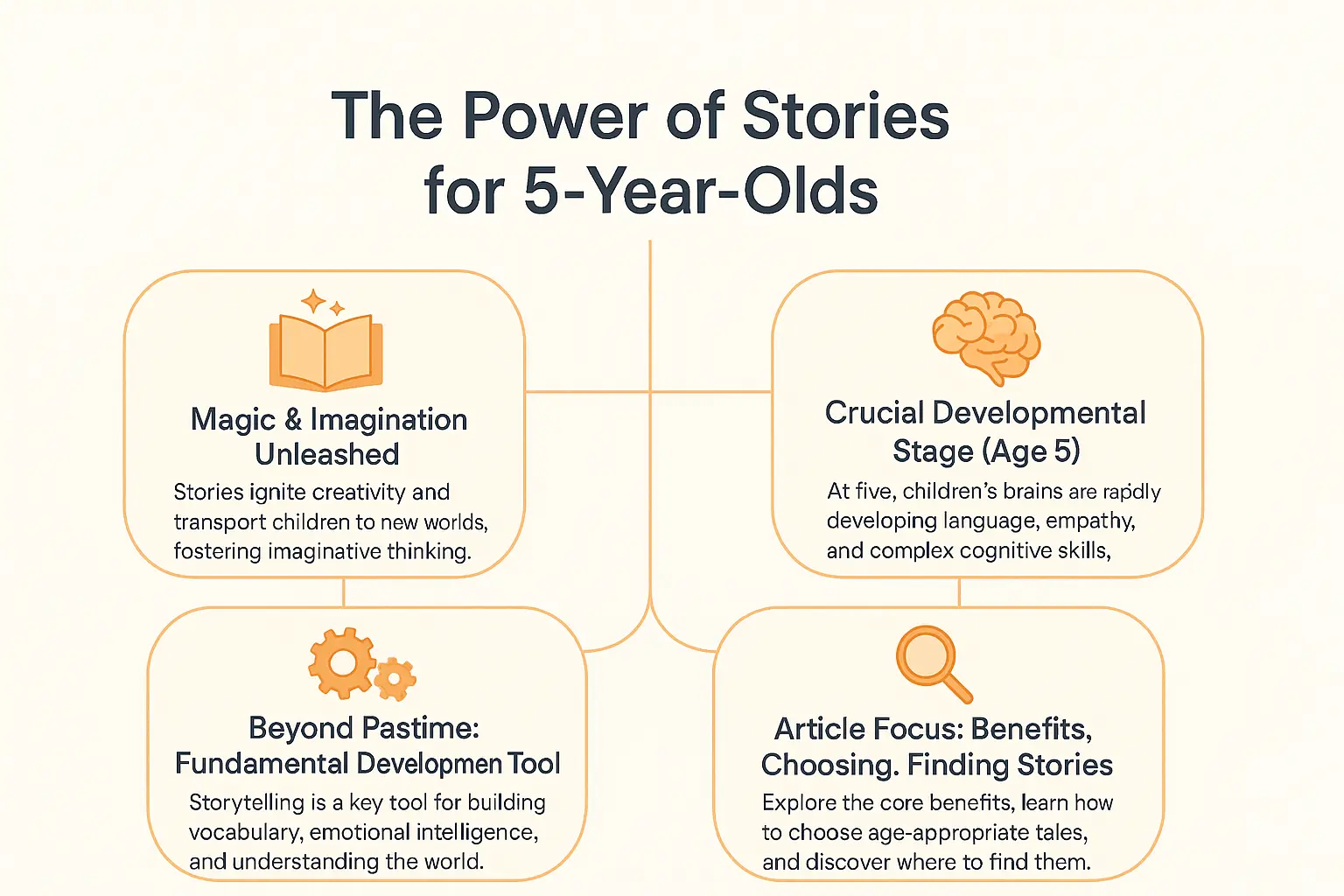
✨ Ever noticed how a 5-year-old’s eyes light up when you say “Let’s read a story”? That’s not just excitement—it’s brain development in action! 🧠
This age is a sweet spot: kids graduate from toddlerhood but aren’t ready for chapter books. Stories bridge that gap, acting as supercharged tools for growth. But how exactly?
- Cognitive Boost: Stories spark imagination, helping kids visualize abstract concepts. 🎨
- Language Gym: New words pop up in context—no flashcards needed! 🗣️
- Social Skills: Characters’ struggles teach empathy and conflict resolution. 🤝
Imagine turning bedtime into a developmental power hour. With Tellmestories, parents simply send a voice note on WhatsApp, and AI crafts tales where their child is the hero. 🦸♂️
Why does this matter? Because stories aren’t just “cute.” They’re neuroscience-approved engines. Brain scans show storytelling activates more neural pathways than picture books alone. 🧬
Ready to unlock this magic? Spoiler: It’s simpler than you think. 🚀
Pro Tip: Tailor stories to your 5-year-old’s obsessions—dinosaurs, unicorns, you name it. The more personal, the deeper the learning. 🦕✨
| Traditional Reading | Personalized Stories |
|---|---|
| Passive listening | Active imagination |
| Generic characters | Child as protagonist |
| Fixed narratives | Evolving with child’s interests |
Next stop: How stories shape young minds 🔍
The developmental superpowers of storytelling
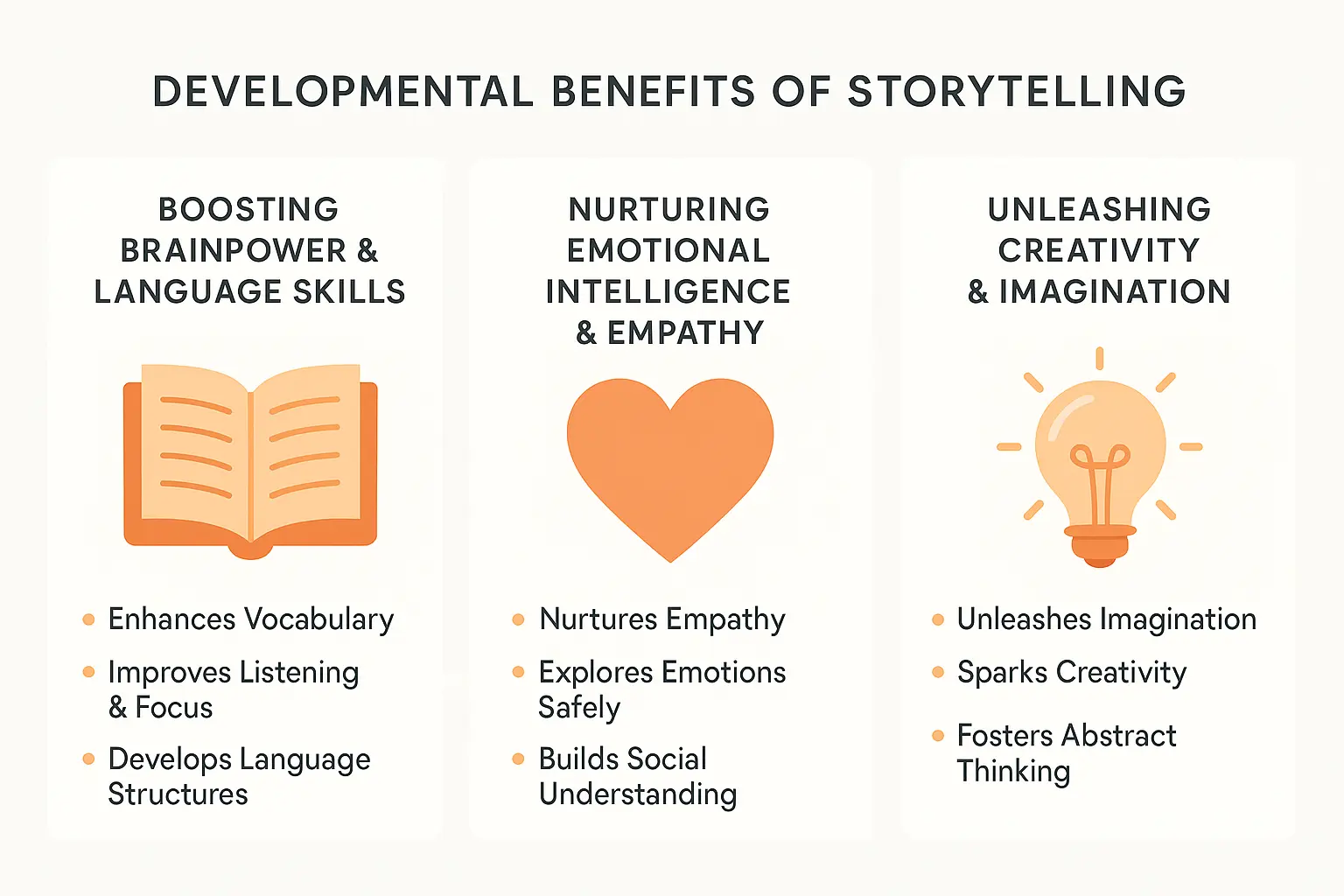
Ever wondered how bedtime stories might be secretly shaping your child’s future? 🌟 Beyond the cozy moments, storytelling holds transformative power for 5-year-olds. Let’s unpack how these tales boost cognitive development, nurture emotional intelligence, and spark imagination—all while your little one is captivated by a talking bear or a daring robot adventure! 🧸🚀
Boosting brainpower and language skills
Hearing stories isn’t just about listening—it’s a full workout for your child’s brain. Each tale introduces complex sentence structures, expanding vocabulary exponentially. Imagine your kid learning words like “adventure” or “mysterious” without even realizing they’re learning! 🤯
Stories are a safe space for children to explore complex emotions and social situations, building empathy and resilience one page at a time.
Regular storytelling also sharpens listening skills and concentration. When kids follow a plot, they’re not just passive listeners—they’re predicting outcomes, connecting dots, and absorbing grammar naturally. This sets the stage for language acquisition and future reading success. 📚
Nurturing emotional intelligence and empathy
Stories let kids walk in a character’s shoes—even if those shoes belong to a timid bear named Benny! 🐻 When Benny overcomes his fear of the dark, your child learns to name their own worries (“I feel scared at night too!”) and explore solutions (“What if Benny uses a nightlight?”).
This process builds empathy by exposing them to diverse perspectives. Whether it’s a lonely dragon or a shy puppy, children practice recognizing emotions and imagining how others feel. Over time, this translates to better social skills and emotional resilience. 💖
Unleashing creativity and imagination
Ever seen your kid turn a cardboard box into a spaceship? That’s creativity in action—and stories are the fuel. When they hear about flying pancakes or grumpy clouds, their brains fire up abstract thinking, visualizing scenarios that don’t exist in real life. 🌈
This isn’hui just about daydreaming. Abstract thinking helps kids solve problems (“How would a time-traveling sloth fix a broken clock?”) and think outside the box. Plus, when they start inventing their own tales, they’re flexing storytelling muscles that’ll serve them for life. 🧠✨
The recipe for a perfect story for your 5-year-old
Finding the sweet spot: length and plot
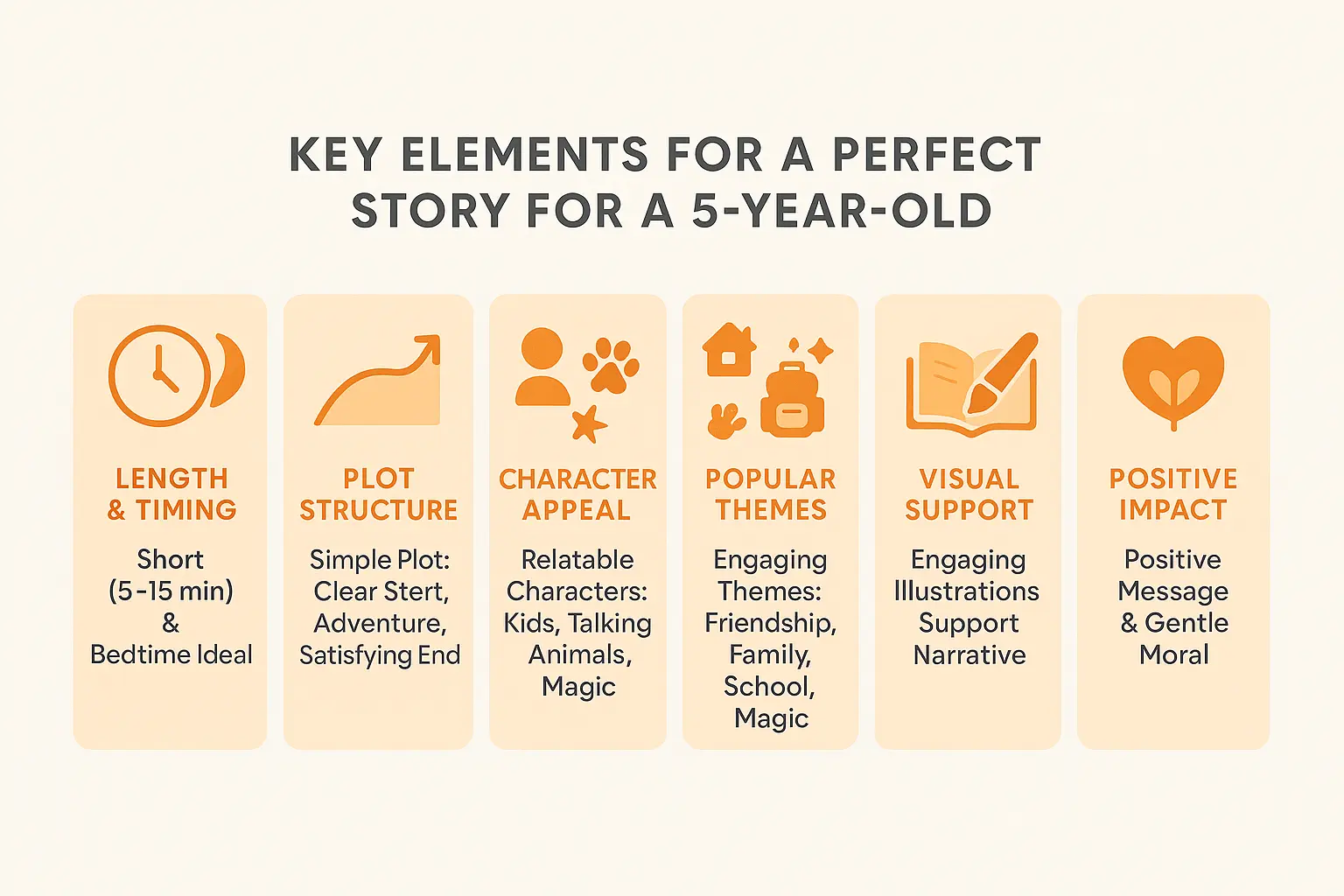
Why do 5-year-olds zone out during long stories? 🧐 Their focus peaks at 5-15 minutes—perfect for bedtime stories or quick read-alouds. Think of stories like Snoozarella or Le Petit Lapin: short, snappy, and packed with action.
Structure matters! Start with a relatable scene (a playground, a rainy day), introduce a small conflict (lost toy? Scared of the dark?), and resolve it simply. Avoid complex twists. For example, a story where Girafe le Constructeur fixes a broken swing teaches problem-solving while keeping it light. A clear arc—like a lost toy found under the bed—builds cause-and-effect understanding, a key skill at this age.
Characters and themes that click
What makes a character unforgettable? 🤔 Kids bond with figures they recognize: talking animals (a shy turtle?), curious kids, or magical beings. Themes like friendship (Llama Llama navigating first-day-of-school nerves) or family (Mercy Watson’s pancake adventures) hit home. Check your story’s recipe:
- A clear and simple plot with a satisfying resolution
- Relatable characters who experience familiar emotions
- Engaging illustrations that support the narrative
- A positive message or a gentle moral lesson
Take T-Rex Danny learning to share or Princess Sophia solving a garden mystery. These tales mix fun with lessons on kindness or courage. Stories with photos of real kids (like Bluey and Bingo) spark instant connections. Even classics like Boucle d’Or et les Trois Ours adapt well—imagine a modern version where Goldilocks tries out coding! 🌟
Stories aren’t just entertainment—they’re brain boosters! From vocabulary jumps to empathy growth, the right tale turns bedtime into a developmental power hour. Need instant magic? ✨ Try Dragon Dreams for creativity or Le Roi Lion for emotional resilience. Ready to craft your own? 🎉
A world of stories: exploring popular types and themes
Five-year-olds thrive on stories that match their curiosity and developmental needs. 💡 These narratives aren’t just entertainment – they build listening skills, foster creativity, and teach emotional understanding through engaging plots. Let’s explore how different narratives shape young minds while making bedtime magical.
From timeless fairytales to modern tales
Classic tales like Goldilocks or The Gingerbread Man remain popular for good reasons. 🕰️ These stories feature clear moral lessons through simple structures – perfect for teaching right from wrong. Their repetitive patterns help language development while talking animals and magical elements keep little ones engaged, conveying universal truths about kindness and courage.
Modern stories tackle contemporary challenges like first days at school or eco-consciousness. 🌍 They mirror real-life situations while nurturing imagination. Tellmestories’ AI-powered WhatsApp service creates these personalized adventures in seconds, turning abstract concepts into relatable narratives. Parents can even upload photos to create characters that look just like their child!
Stories for every occasion
Storytime becomes powerful when addressing specific milestones. 🎒 The right stories about school can turn first-day fears into excitement. Our WhatsApp-based generator creates custom tales showing kids what to expect – from meeting teachers to sharing toys. Audio narration by professional voice actors makes these stories accessible for early readers.
Did you know stories can make math fun? 🧮 Research from Stanford’s DREME project shows children’s books that incorporate counting and patterns help develop numerical understanding. Imagine your little one learning shapes through a dragon’s treasure hunt or practicing sequencing with a pirate adventure! Educational stories can also address practical needs like potty training through engaging narratives.
Find the perfect story type for your child
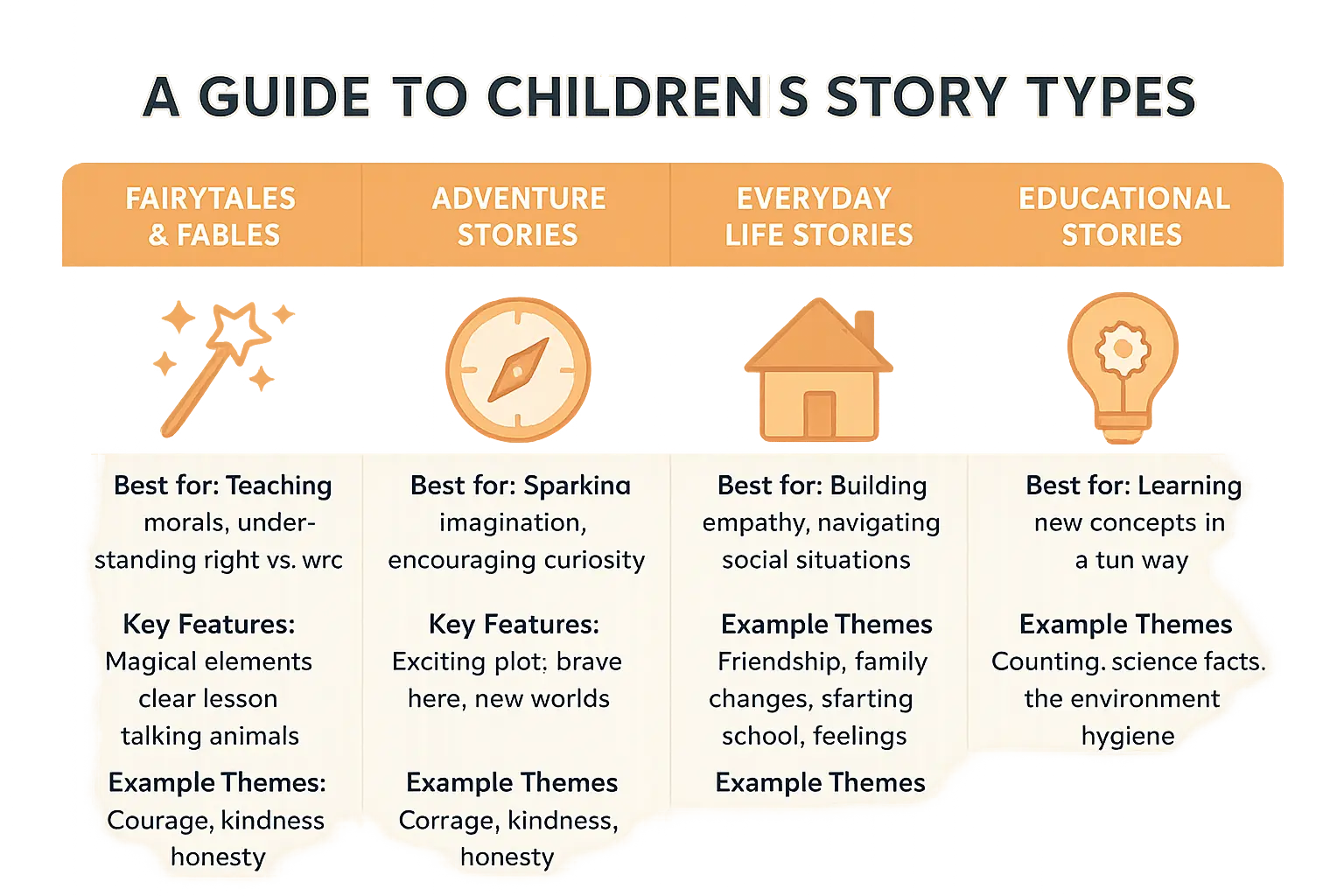
Confused where to start? 🤔 Let’s break down popular categories in this handy guide:
| Story Type | Best for… | Key Features | Example Themes |
|---|---|---|---|
| Fairytales & Fables | Teaching morals | Magic elements, talking animals | Courage, kindness, honesty |
| Adventure Stories | Sparking imagination | Exciting plots, brave heroes | Exploration, problem-solving |
| Everyday Life Stories | Building empathy | Relatable characters | Friendship, family changes |
| Educational Stories | Learning concepts | Informative narratives | Counting, science facts |
Each story type develops different skills. Adventure tales boost creativity, while everyday stories build social understanding through character perspectives. Educational adventures make learning numbers or environmental awareness exciting! 📚 The smart learning memory feature remembers your child’s preferences across stories.
Our voice-to-story feature lets you describe any theme and get a custom tale instantly. Whether your child loves dinosaurs or needs help with bedtime routines, we turn your ideas into personalized adventures. Stories can be downloaded as PDFs or ordered as physical books – perfect for lasting memories!
Where to find the best stories in the digital age
Beyond the bookshelf: audio and interactive stories
Storytelling has evolved far beyond physical bookshelves. Audio stories and interactive digital formats now offer fresh ways to engage young minds, especially for stories for 5-year-olds. These formats aren’t just about convenience—they’re proven tools for language development and emotional growth.
Audio story podcasts are perfect for car rides or quiet time. Platforms like Spotify or Apple Podcasts host countless options, from educational tales to adventurous quests. As highlighted by publications like Wired, these podcasts blend entertainment with learning, making them ideal for developing listening skills and imagination. Soundscapes in episodes build narrative visualization—a key skill for early literacy.
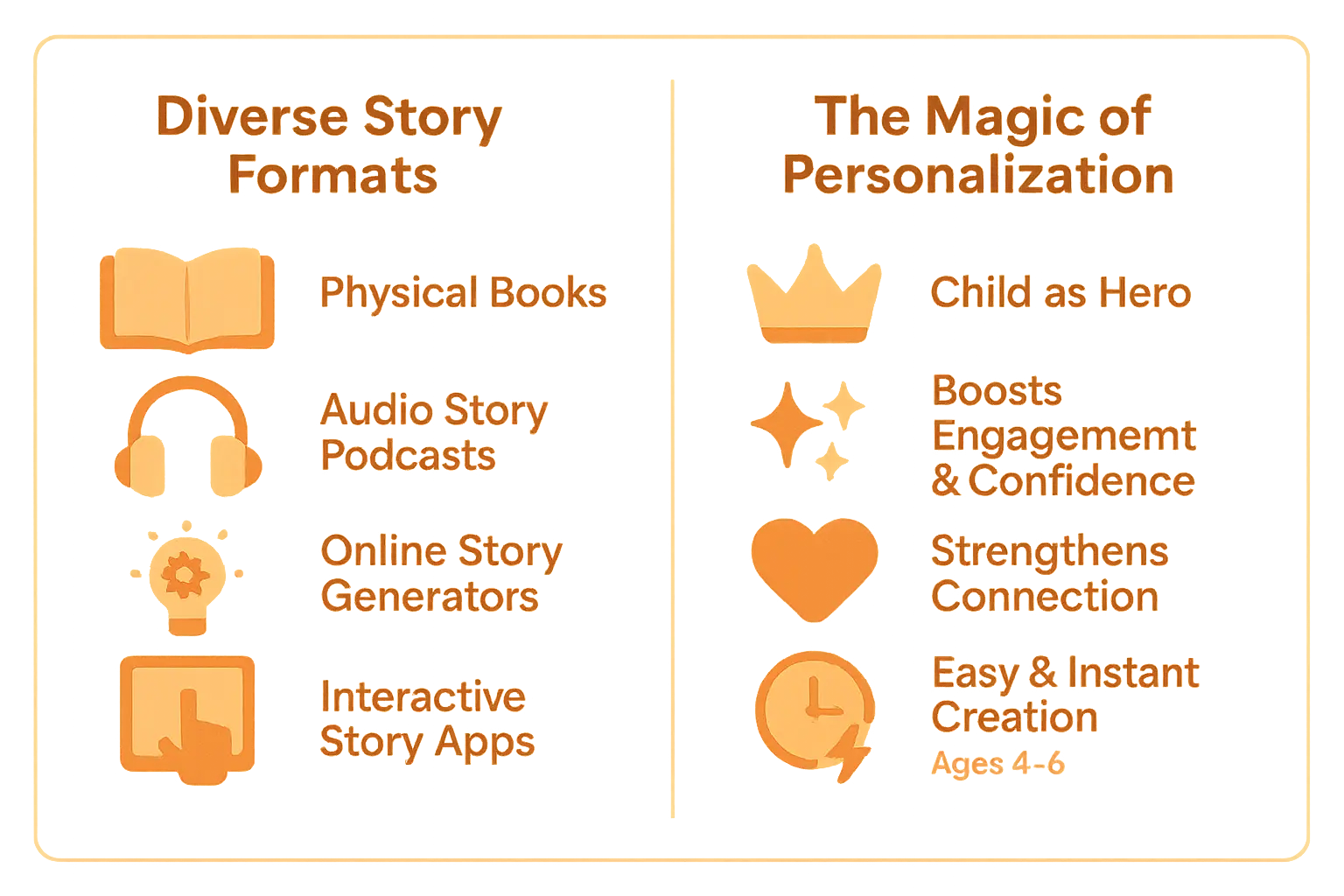
- Physical books from libraries or bookstores
- Audio story podcasts for on-the-go listening
- Online story generators for instant, new tales
- Interactive story apps on tablets or phones
Interactive apps let kids “choose their own adventure.” These formats boost linguistic development through dynamic narration and repetition. Some apps even let children record their voices, turning them into storytellers while building verbal confidence.
The unique magic of personalized stories
What if your child could star in their own adventure? Personalized stories transform kids into heroes, making narratives deeply relevant to their lives. With AI-powered platforms, family photos can become custom story characters, bridging imagination and reality.
Imagine crafting a tale in minutes via a voice note, with AI adapting to your child’s name, interests, and developmental stage. Stories for a 4-year-old might focus on bedtime routines, while stories for a 6-year-old could explore school transitions. The AI remembers preferences, so each story builds on previous themes, creating a personalized journey.
These stories boost confidence as kids see themselves as protagonists. Features like audio narration and physical book options add convenience. By integrating life lessons like empathy or creativity, they prepare children for real-world challenges—tools for social and cognitive growth in a digital-first world.
Making story time an unforgettable family ritual
Tips for a truly interactive reading session
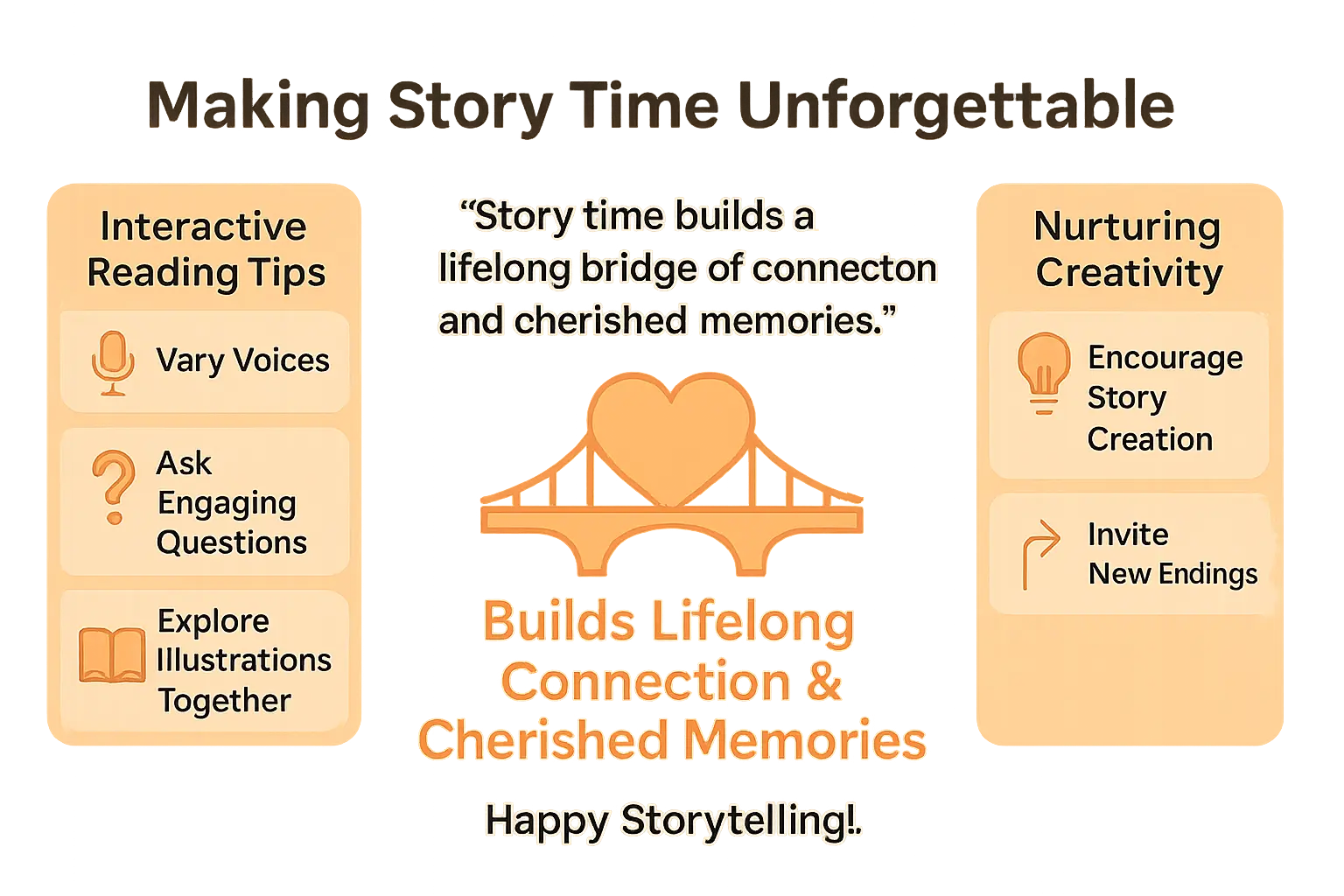
Use distinct voices for characters. 🎭 Try a squeaky voice for a mouse or a deep rumble for a bear. This brings stories to life and boosts engagement.
Pause to ask questions like, “What do you think happens next?” or “How would you solve this?” 🤔 This sparks curiosity and critical thinking.
Explore illustrations together. Point at details and ask, “What colors do you see?” or “What’s hiding here?” 🔍 Visual analysis strengthens observation skills.
- Act out actions (jumping, hiding) to make stories memorable. Physical movement captivates young minds!
- Let kids choose the story. This builds decision-making skills and ownership of the experience. 📚
- Repeat favorite lines. Repetition strengthens memory and language skills while sharing laughs at silly phrases.
From listener to creator
Encourage kids to invent new endings or draw their own story scenes. “What if the dragon became the hero?” 🐉 This nurtures creativity and problem-solving.
Try story接力: Each family member adds a sentence. Example: Parent starts, “Once upon a time, a cat found a key…” Then your child says, “The key opened a door to a jungle…”
The simple act of reading a story together every day creates more than just a routine; it builds a lifelong bridge of connection and cherished memories.
Remember, the magic isn’t in the book—it’s in the time of quality you share. 💖 Snuggle close and discuss characters’ feelings (“Was the wolf mean or lonely?”) to build emotional understanding. 🧠❤️
Happy storytelling! 🌟 By making stories a daily adventure, you’re crafting a curious, empathetic thinker ready to explore life’s big questions.
Stories for 5-year-olds are more than bedtime routines—they build language skills, empathy, and creativity. Whether classic fairytales or personalized adventures, they forge emotional bonds and spark imagination. Keep reads simple, interactive, and curiosity-driven. The best tales? Shared moments that blend learning with laughter, creating memories lasting far beyond childhood. Happy storytelling!
FAQ
Looking for a great book to read to 5-year-olds? 📚
For 5-year-olds, picture books with vibrant illustrations and simple rhythms work best! Classics like “The Very Hungry Caterpillar” or “Where the Wild Things Are” are timeless for a reason—they mix fun visuals with easy-to-follow tales. Short stories about animals, daily routines, or magical adventures (like “Pete the Cat” or “Frog and Toad”) keep little minds hooked. Pro tip: Let them pick the book—ownership boosts engagement! 🌟
What makes a story really popular among kids? 🌟
Popular stories for 5-year-olds often blend relatable characters and universal themes like friendship, courage, or humor. Think “The Gruffalo” (clever little mouse outwits big creatures!) or “Charlotte’s Web” (heartwarming animal bond). Stories with repetition (like “Brown Bear, Brown Bear”) or interactive elements (lift-the-flap books) also top the charts. Bonus points if the story sparks imagination—like a rocket ride to space or a talking truck’s day! 🚀
What reading skills should 5-year-olds have? 📖
At 5, kids typically recognize some letters, simple sight words (like “cat” or “dog”), and basic story structures. They might “read” by retelling the plot using pictures or memorized phrases! Focus on shared reading—snuggle up and ask questions like, “What do you think happens next?”. Every child grows at their own pace, so celebrate progress over perfection. If they’re flipping pages and pointing at words? You’re winning! 👏
Where can you find free kids’ books online? 📱
You can dive into free digital stories on platforms like:
- Storyline Online: Famous actors narrate award-winning books (think Matthew McConaughey reading “The Snowy Day”).
- Oxford Owl: Loads of leveled reading adventures, sorted by age and interest.
- Libby: Borrow free eBooks from your local library with just a library card.
Pro tip: Download stories for offline reading during car rides or waiting rooms. Instant storytelling magic! ✨
Need help choosing the right story? 5 tips! 🧭
Time to pick the perfect book! 🎯 Here’s how:
- Match their world: Books about school, siblings, or favorite hobbies (dinos, princesses, superheroes!) = instant connection.
- Keep it short: Aim for 5-15 minute reads—little attention spans love quick wins!
- Check the visuals: Bright, expressive illustrations make stories pop (think “The Book with No Pictures”).
- Seek hidden lessons: Look for themes like kindness (“The Rainbow Fish”) or problem-solving (“The Pigeon Wants a Puppy!”).
- Let them lead: If they’re obsessed with trucks? Go all-in on construction stories! Passion fuels curiosity. 💡
Top bedtime story picks for sleepyheads 🌙
Wind down with calming classics like:
- “Guess How Much I Love You”: Gentle bedtime ritual vibes.
- “The Runaway Bunny”: A soothing back-and-forth between a little bunny and his mom.
- “The Pout-Pout Fish”: Wiggly, rhyming fun that ends with a smile.
- “Llama Llama Red Pajama”: A sweet nod to nighttime routines.
Pro tip: Dim the lights and add soft voices to turn storytime into a sleepy ritual. 🛏️
What makes a storybook a bestseller? 🏆
Superstar books hit the trifecta: simple language, universal themes, and unforgettable characters. “The Very Hungry Caterpillar” teaches counting and days of the week with a cute, hungry bug. “Where the Wild Things Are” lets kids explore big emotions through imaginative play. Even “Green Eggs and Ham” keeps readers hooked with rhyme and repetition. Timeless stories grow with kids—read them now, then again at 7 or 9! 📈
Creative story ideas kids absolutely love 🧠
Let their imagination run wild with:
- Animal heroes: A shy sloth who saves the jungle with slow-and-steady wisdom.
- Magical mishaps: A kid turns their sibling into a jellybean—but how to fix it?
- Problem-solving quests: A robot pup learns kindness to join a robot pack.
- Everyday wins: A shy kid overcomes fears to join a school play.
Need inspiration? Use their favorite toy as the main character—suddenly, the story’s personal and unstoppable! 🧸
Storytelling in kindergarten: What’s the big deal? 🌈
Storytelling in kindergarten isn’t just fun—it’s developmental gold! It builds:
- Language skills: New words pop up in context (e.g., “hibernate” while reading about bears).
- Emotional intelligence: Stories like “The Color Monster” help name complex feelings.
- Focus practice: Following a plot boosts attention span.
- Empathy: Walking in a character’s shoes teaches understanding (e.g., a story about a shy new friend).
Make it interactive! Ask, “What would YOU do?” or mimic character voices. Suddenly, you’re not just reading—you’re co-creating magic. 🌟