The essential takeaway: Tween stories (9-12 years) should ditch simple morals for nuanced themes that mirror real-life struggles. These tales spark critical thinking while tackling identity, friendship, and growth through relatable characters like Wonder’s Auggie or The Last Kids on Earth’s quirky heroes. Bonus? 80% of educators say such narratives boost empathy and problem-solving skills—proving stories aren’t just fun, they’re life tools. 📚💡
Tired of stories that are either babyish or way too intense for your 9-12-year-old? 😩 Stories for tweens live in that tricky middle ground—where dragons and drama collide, and “moral lessons” take a backseat to messy, real-life dilemmas. This guide spills the tea on why nuanced tales (think: dragon bonds in The Inheritance Cycle or body-positivity in Mani Semilla) hook their wild imaginations. Genres like fantasy or realistic fiction become secret weapons, sparking empathy, resilience, and heated dinner debates on loyalty, identity, or aliens totally stealing their lunch 🤯 Whether your kid’s into dystopian heists or spy games, we’ve got the cheat code swapping eye-rolls for “OMG, SAME!” moments. 📚✨
What exactly is a ‘tween’ and why do their stories matter so much?
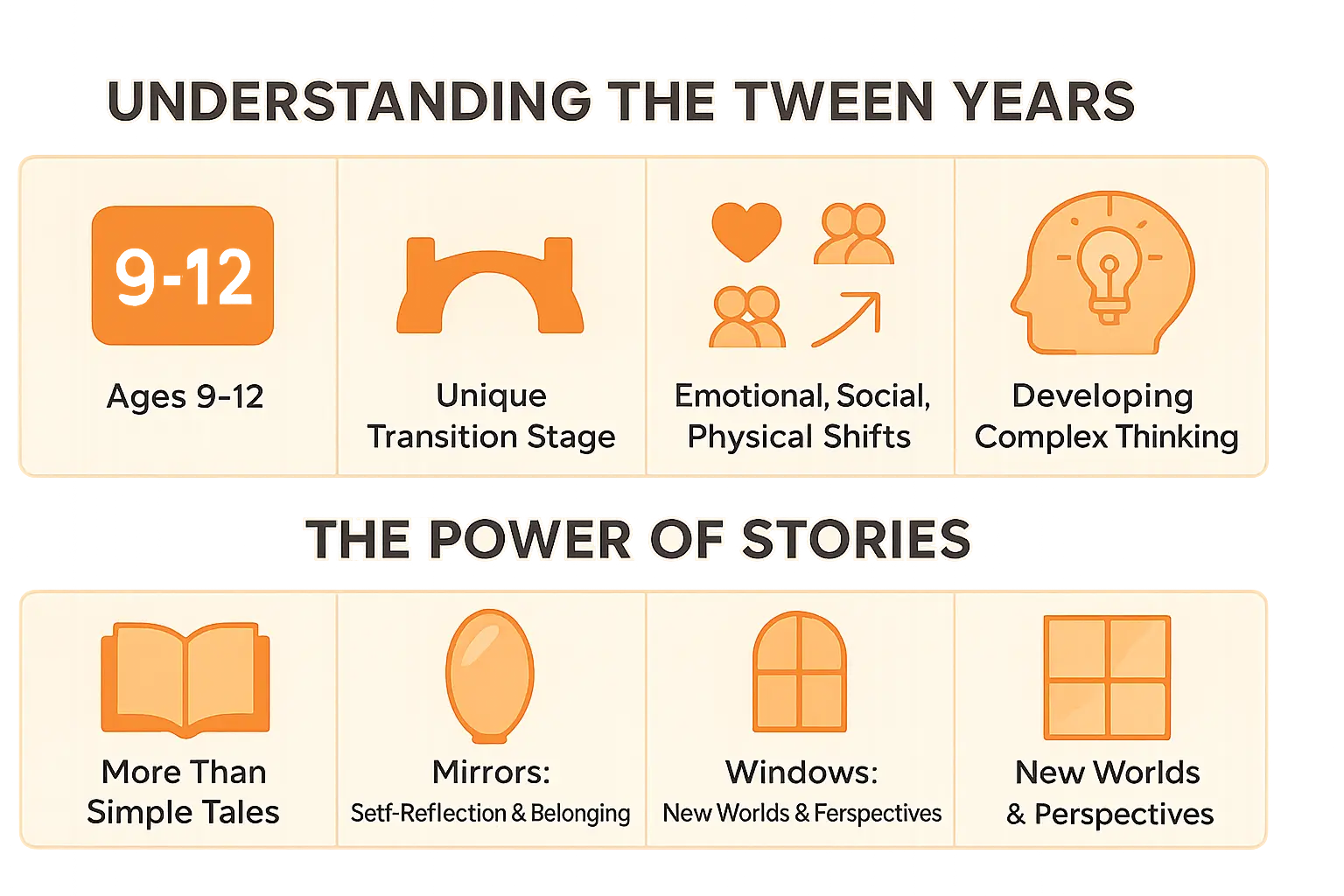
Ever wondered what makes the 9-12 age range so special? This is when everything changes! It’s the bridge between childhood and adolescence – deeper thinking, physical changes, and identity exploration. Their brains start handling abstract ideas while emotions go into “enhanced” mode! 😅 Think of it as a time when they start questioning everything, from why homework has to exist to whether pineapple belongs on pizza (spoiler: it does).
For parents, this stage feels chaotic. Here’s the secret weapon: stories! They’re not just bedtime tales – they’re mirrors showing tweens their own experiences and windows opening new perspectives. These become safe spaces for exploring big feelings without real-world pressure. Whether it’s figuring out why best friends suddenly feel like strangers or dealing with the drama of group projects, stories provide blueprints for navigating life.
Imagine stories helping your child navigate tricky friendships or discover who they want to become. We’re talking tales tackling first crushes, hidden talents, or standing up for what’s right. The best part? They’re wrapped in adventures that make reading feel exciting, not like homework! Stories where they solve mysteries with their unique skills or befriend magical creatures who teach them about loyalty and courage. It’s learning in disguise 🎩📚!
Personalized stories grow with your child. This journey starts early with tales available for kids as young as 8. Picture your child as the hero solving puzzles or saving the day with their unique skills! When kids see their name in the plot, suddenly reading becomes a personal mission – like finding a secret message just for them.
Stories aren’t just entertainment. They’re tools giving your child ways to understand themselves and the world while keeping them engaged with reading. It’s like having a mentor in book form – sparking conversations about friendship and identity without feeling like a lecture. Whether they’re laughing at a character’s misadventures or cheering for their victories, these stories make growing up feel less scary and more like an epic quest. That’s smart storytelling! 📚✨
Moving Beyond the “Moral of the Story”: The Power of Nuance and Realism
Ever noticed how tweens roll their eyes at obvious morals? 🙄 They’re craving stories that respect their intelligence and help them navigate their evolving identities. Let’s unpack why nuance isn’t just better—it’s essential for tweens’ emotional growth.
Relatable Characters: Flaws and All
Tweens don’t need perfect heroes. They want characters who stumble, doubt, and grow. Take Auggie Pullman from Wonder—his struggles with facial differences mirror real insecurities. Or Kestra Dahr in Seraphina, torn between human and dragon worlds. Even The Last Kids on Earth mixes zombie-slaying with friendship drama. These characters aren’t role models—they’re mirrors. Plain Jane and the Mermaid takes this further, using mermaid myths to reflect body image struggles tweens face daily.
Realistic Challenges, Even in Fantasy
Even magical worlds tackle down-to-earth issues. In The Inheritance Cycle, Eragon faces moral gray areas, like balancing revenge and justice. The Storm Runner lets tweens laugh while navigating family trauma. Meanwhile, An Ember in the Ashes ties sword fights to real-world power dynamics, showing how rebellion can feel both heroic and risky. The key? Emotions stay real, even when the setting doesn’t.
No Easy Answers—Just Thoughtful Questions
Great stories ask “What would YOU do?” instead of shouting conclusions. And Then, Boom! explores poverty through poetry, leaving readers with empathy, not a checklist. Snowglobe questions surveillance in dystopian South Korea, sparking privacy debates. Meanwhile, The Enigma Girls blends WWII code-breaking with modern ethics, proving that historical stories can spark today’s conversations. As one expert says:
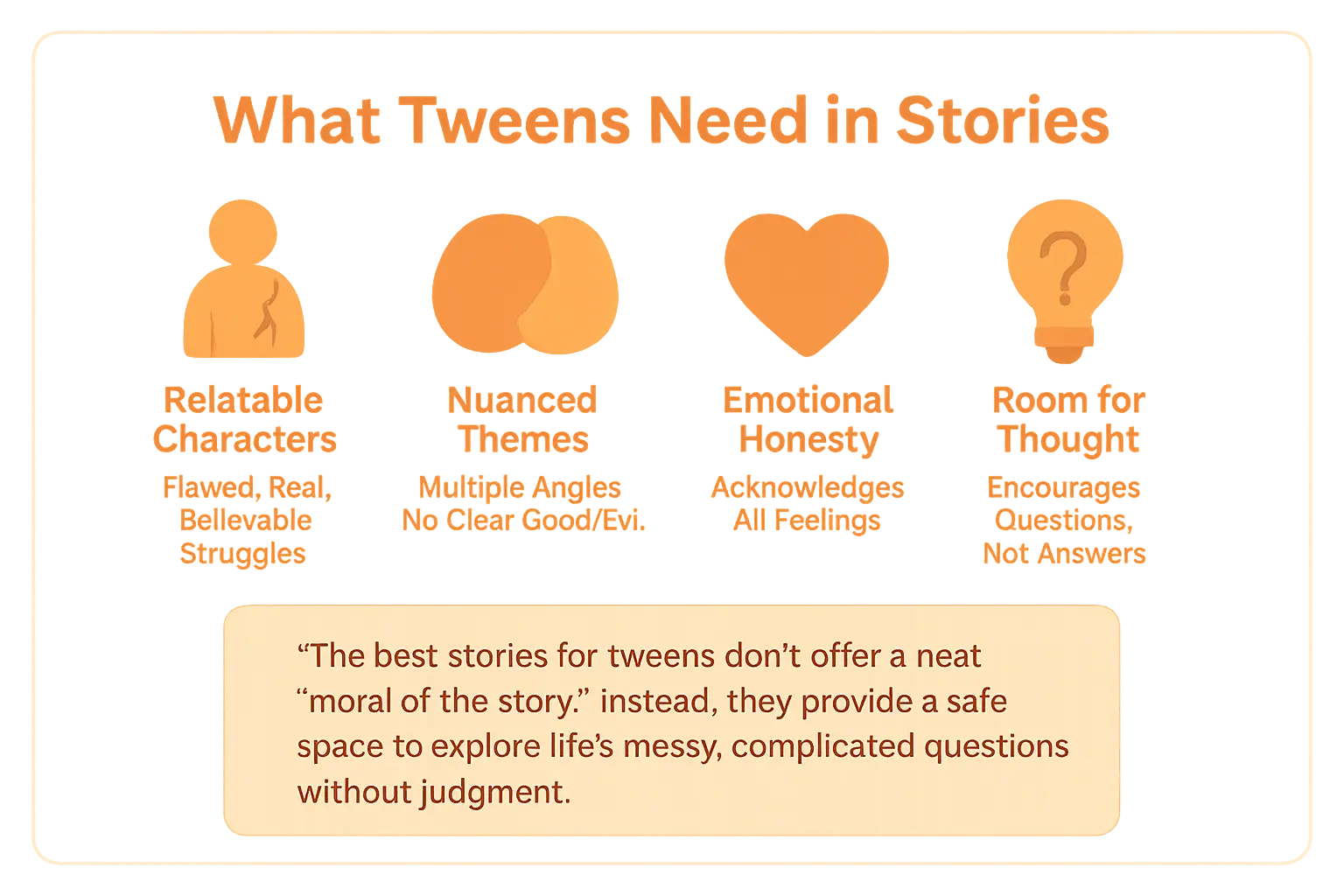
“The best stories for tweens don’t offer a neat ‘moral of the story.’ Instead, they provide a safe space to explore life’s messy, complicated questions without judgment.”
What Makes a Great Story for Tweens?
- Relatable characters: Flawed heroes facing believable struggles, like Auggie Pullman’s journey with self-acceptance.
- Nuanced themes: Topics explored from multiple angles—like An Ember in the Ashes blurring heroism and rebellion.
- Emotional honesty: Acknowledges feelings like jealousy, just like Mani Semilla’s take on puberty and social media pressures.
- Room for thought: Encourages questions—The Trickster’s Duet does this with spies and prophecies that challenge right-and-wrong thinking.
Exploring the big themes: identity, friendship, and growing up
Why identity matters in tween stories
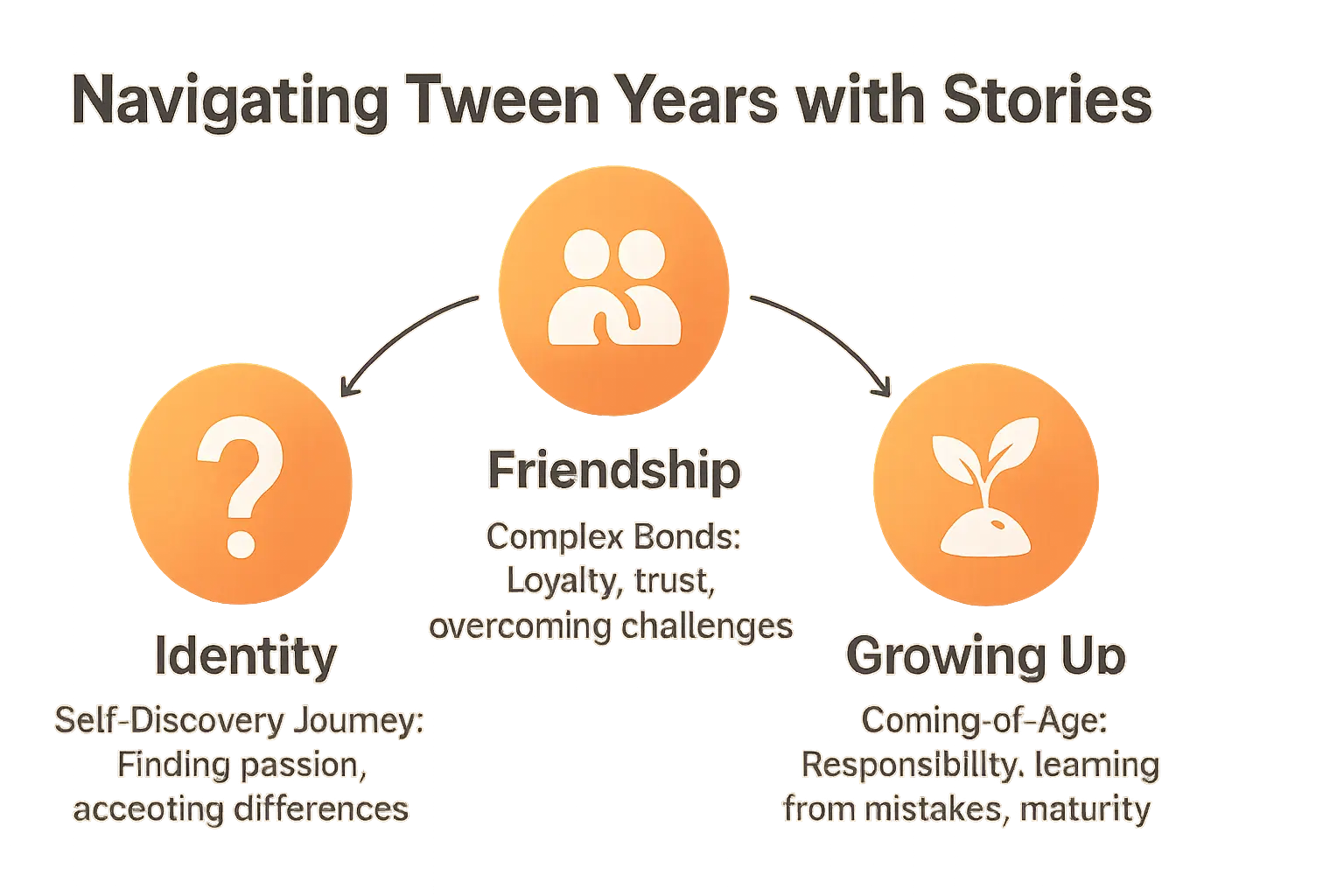
When you’re a tween, everything feels like a question. Who am I? What makes me special? Why do I like what I like? The best stories don’t give answers – they help explore these questions. They show characters discovering what makes them unique.
Some stories follow kids finding their voice through art, sports, or standing up for what they believe in. Others show characters learning to love what makes them different. These journeys help tweens see that figuring yourself out is a lifelong adventure – and that’s totally normal.
Reading stories about exploring identity can be like holding up a mirror to your own experiences. You realize that everyone’s figuring things out, and that’s part of growing up.
Friendship: more than just schoolyard drama
Let’s be real – friendships change during the tween years. Old friendships feel different. New connections form. And sometimes, you’re just plain confused about where you fit in. Stories help make sense of all this.
Great books show characters dealing with loyalty, navigating shifting friendships, and learning what real trust looks like. They might show two friends working through a misunderstanding, or someone standing up for what’s right even when it’s hard.
These narratives offer great examples of characters navigating the ups and downs of friendship. They show that having different friends at different times doesn’t mean anyone did anything wrong – it’s just part of life.
Personal growth: the real coming-of-age magic
Some of the most powerful stories are those where characters grow through challenges. They might face loss, take on new responsibilities, or learn from big mistakes. These aren’t lectures – they’re journeys we experience alongside the characters.
Take series like Ranger’s Apprentice – the main character starts as a teenager learning the ropes, but ends up developing amazing skills and confidence. These stories show that growing up isn’t about becoming perfect, but about learning to handle life’s curveballs.
What makes these stories special is that they don’t just tell tweens how to act. They show characters working through problems, making choices, and changing in realistic ways. That’s how real personal growth happens – one small step at a time.
A Parent’s Guide to the Best Genres for Your Tween
Choosing the perfect story for your 9-12-year-old can feel like solving a puzzle with missing pieces. Let’s get real: no single genre works for every child! Books for this age group aren’t just entertainment – they’re mirrors reflecting your child’s personality and windows into new perspectives. These stories tackle identity, friendship, and personal growth with the nuance tweens deserve, avoiding preachy lessons while sparking genuine conversations.
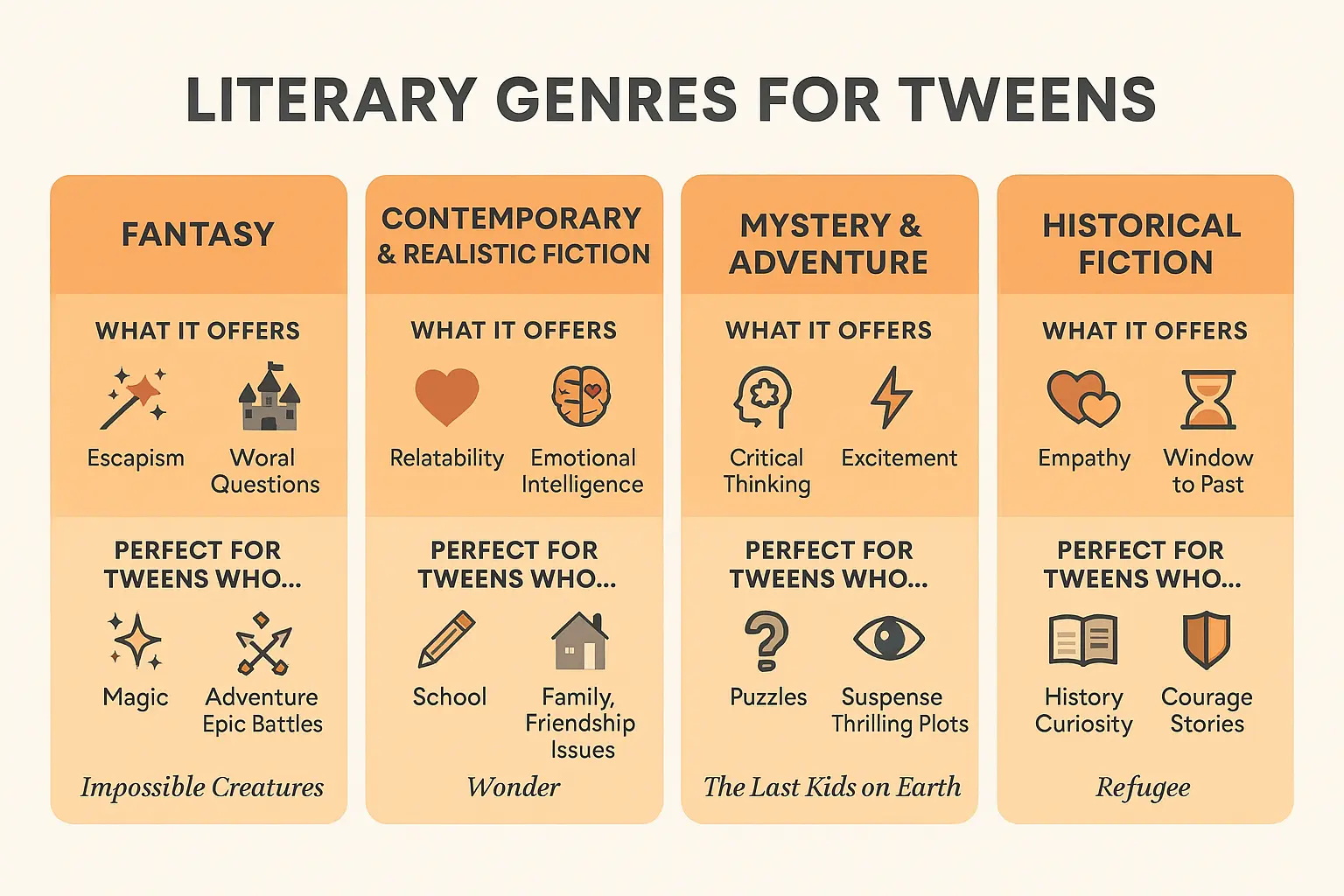
Let’s break down what makes each genre special:
| Genre | What It Offers | Perfect For Tweens Who… | Example from Bestseller Lists |
|---|---|---|---|
| Fantasy | Escapism, world-building, and moral exploration through epic quests where good vs evil isn’t always black-and-white. | Crave magic adventures and identifying with characters discovering hidden strengths. | Impossible Creatures by Katherine Rundell |
| Contemporary & Realistic Fiction | Relatable emotional journeys and real-life problem-solving without sugarcoating tough situations. | Experience school drama, family changes, or friendship challenges firsthand. | Wonder by R.J. Palacio |
| Mystery & Adventure | Critical thinking and problem-solving wrapped in plots that make bedtime sneak-reading irresistible. | Can’t resist puzzles, secret codes, or racing to solve mysteries before the heroes. | The Last Kids on Earth series by Max Brallier |
| Historical Fiction | Empathy and perspective through time-travel storytelling that makes history breathe. | Want to walk in someone else’s shoes across different eras while avoiding dry textbooks. | Refugee by Alan Gratz |
Here’s the hidden gold in these genres: Fantasy adventures like Impossible Creatures let kids explore moral gray areas through magical worlds. When your child sees characters wrestle with power, they’re really learning about responsibility and self-acceptance. Contemporary stories like Wonder become safe spaces to process social struggles through relatable characters without feeling cornered by advice. Mystery series secretly sharpen analytical skills during pure “just for fun” reading sessions. Historical fiction makes abstract concepts like courage tangible – suddenly, resilience isn’t a textbook word but a lived experience.
The real magic happens when your child recognizes themselves in characters facing realistic challenges – whether it’s friendship dilemmas, identity discovery, or navigating shifting social circles. These stories become conversation starters about values without sounding like lectures. And here’s a pro tip: let them explore freely! That mystery fanatic might surprise you by binging historical fiction next. Whether they’re solving fictional crimes or walking in historical figures’ shoes, these stories create those “aha!” moments that shape their worldview – and yours too.
It’s not just books: exploring new ways to hear a good story
Who said stories only live in books? In today’s world, stories for tweens come in all shapes and sizes! Let’s dive into how audio adventures and interactive tales are reshaping the way young minds experience storytelling. 🎧
Why audio stories and podcasts rock for tweens
Imagine your child’s imagination running wild while you’re stuck in traffic. That’s the magic of audio stories! These sound adventures are perfect for car rides, bedtime, or screen-free entertainment. They work differently than reading – your child’s brain paints the scenes while they listen.
Looking for quality options? You can find many great podcasts for kids, like ‘Story Seeds’, which pairs kids with authors to create stories together. Did you know 40% of kids say audio stories make their imagination work harder than videos?
Interactive tales: where the magic happens
Now picture your child making choices that change the story! Interactive stories let tweens become decision-makers. They’re like those “choose your own adventure” books but supercharged. Every click shapes the plot – would you sneak past the dragon or try to befriend it?
This isn’t just fun – it’s brain food! When kids decide what happens next, they’re building critical thinking skills. They learn consequences, practice decision-making, and boost creativity all at once. Think of it as mental gym training!
- Audio Stories & Podcasts: Boost listening skills and imagination, perfect for screen-free entertainment.
- Interactive Stories: Put the tween in the driver’s seat, developing critical thinking and decision-making.
- Personalized Tales: Modern tools allow for creating unique stories where your child is the main character, making the experience incredibly personal and engaging.
And guess what? These formats aren’t just cool – they’re backed by science. 43% of kids show better comprehension after listening to stories, and 1 in 5 listeners actually starts reading more books! 📚
Want to see these formats in action? 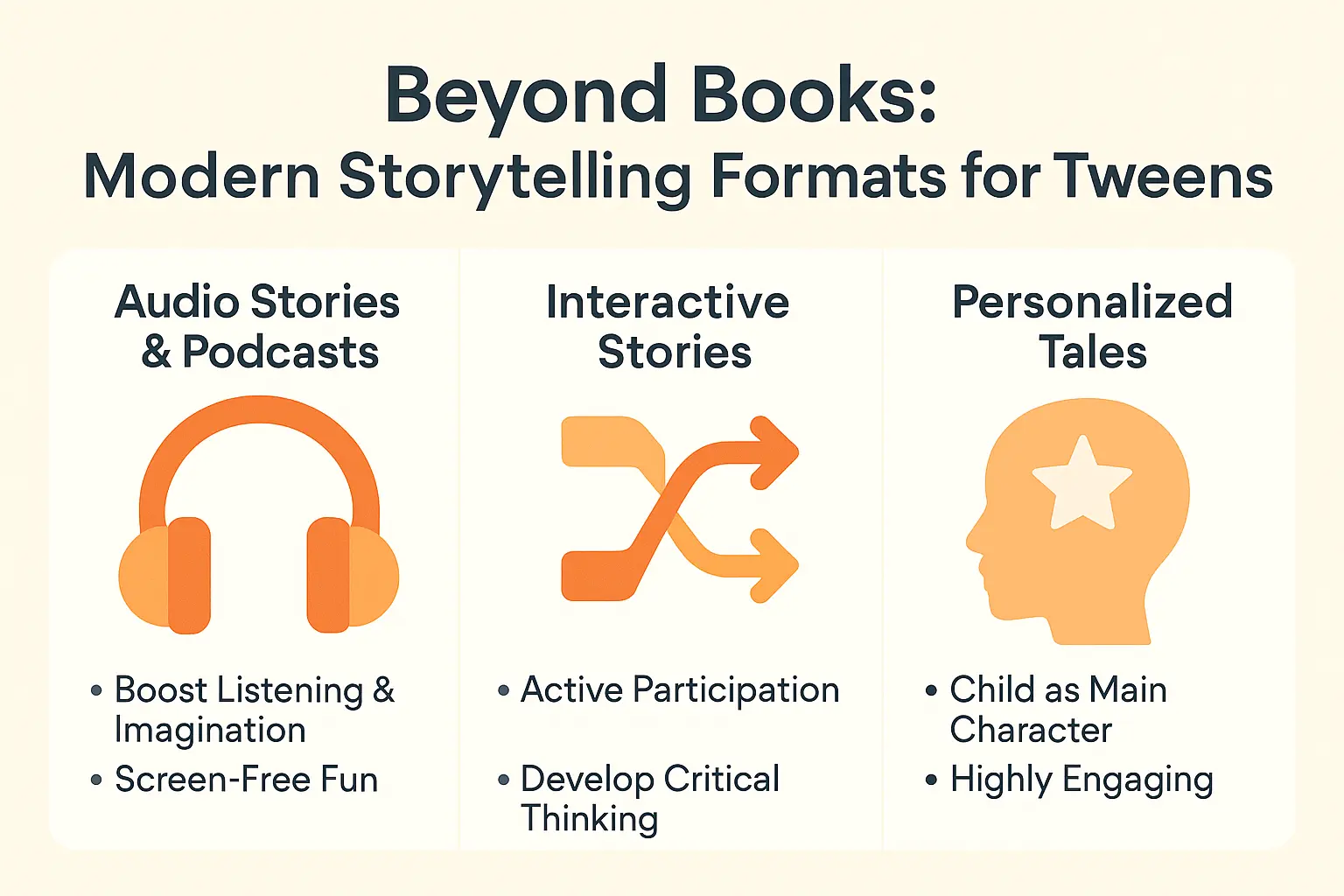
How stories can help tweens tackle tough topics with care
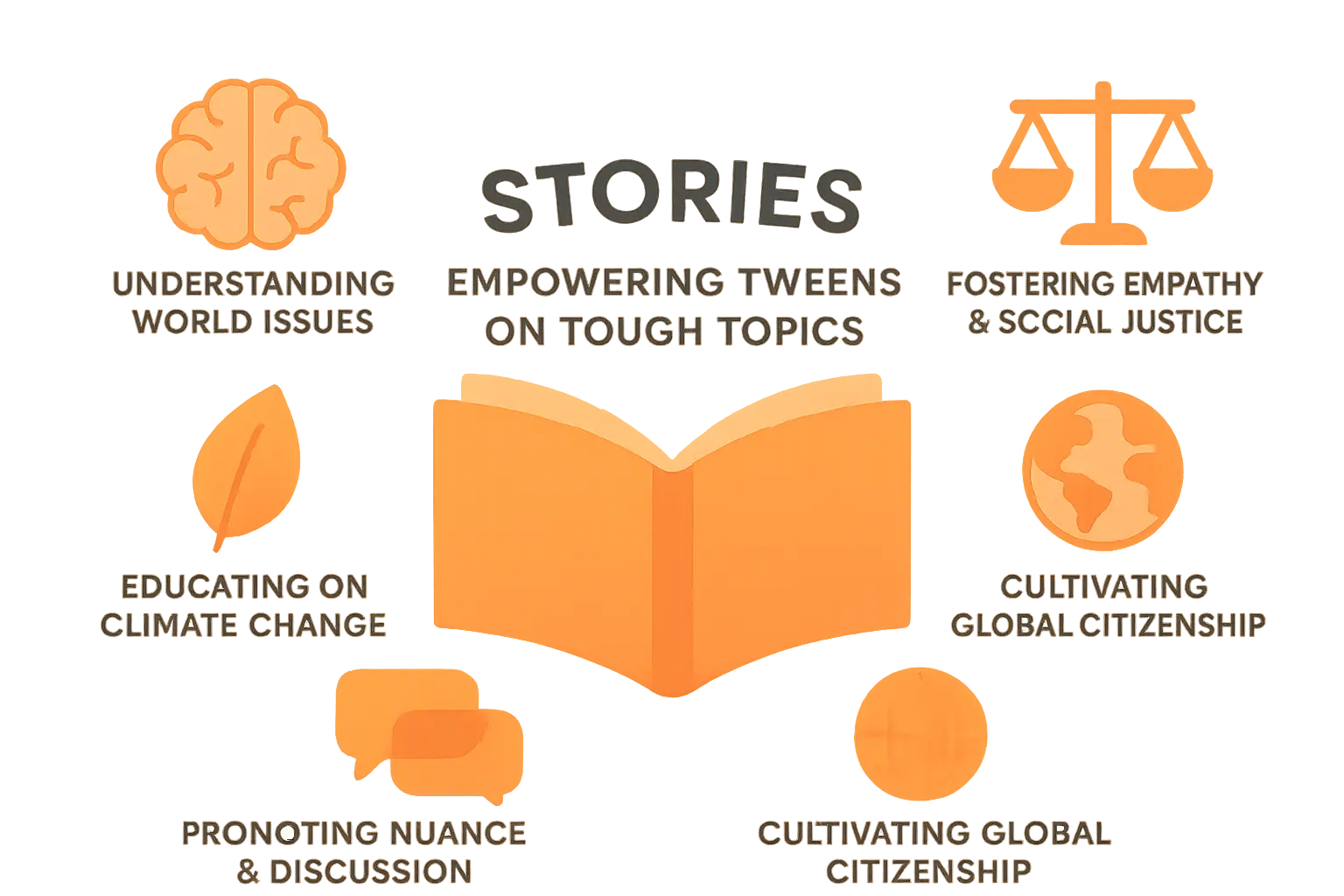
Hey there! 🌟 Let’s talk about how stories can be powerful tools for tweens. They tackle heavy topics like social justice and climate change through relatable characters, not preachy lessons. Ready? Let’s dive in!
Why social justice themes matter
How do you explain systemic racism to 12-year-olds? The Color of a Lie nails it! This 2025 Scott O’Dell Award winner sets the story in 1955 Levittown, where Calvin’s family “passes” as white to survive. It’s history with a modern twist – showing racial realities through human struggles, not lectures.
Climate change stories that inspire action (not panic!)
Climate anxiety is real, but these books educate youth about climate change without doom-scrolling:
- Haven Jacobs Saves the Planet – Eco-anxiety meets community action
- Turn the Tide – Plastic bans + family support = real change
- The First Rule of Climate Club – Saving the world, one middle school at a time
They show tweens they can create change without feeling crushed by the problem. 🌱
Balance is everything
Sensitive topics need care. Great stories aren’t political rants – they’re human adventures. Think of them as training wheels for big ideas! When we read about Calvin’s tough choices or climate warriors fighting plastic, we’re getting life lessons through epic storytelling.
“Stories are a powerful tool. They can introduce tweens to complex real-world issues with empathy and care, fostering a sense of global citizenship without overwhelming them.”
What makes these stories special? They let kids explore tough topics through relatable characters, sparking conversations about identity and friendship. That’s smart reading! 📘✨
Your Role As A Parent: Turning Story Time Into Connection Time
You’ve picked the perfect story. But guess what? The real magic starts after the last page. 📚✨
Great stories for tweens aren’t just about adventure—they’re conversation starters. They open doors to identity, friendship, and tough choices. Ditch generic questions like “Did you like it?” and try these:
- “Which character did you relate to the most, and why?”
- “If you could change one part of the story, what would it be?”
- “This story reminded me of… Does it remind you of anything?”
Tellmestories makes this easy: create personalized tales via WhatsApp, no app needed. Instant stories, built around their interests. 🚀
Stories act as a bridge to real-life emotions. When they discuss a character’s struggles, you’re tapping into their own experiences—like a friendship mirroring their social circle. Need a shortcut? Voice notes generate stories that evolve with their personality. Created by parents who saw how stories helped their kids fall asleep, it’s designed to deepen your family’s connection. 🤝
Next time, lean into pauses. Ask “What would YOU have done?” or “Why do you think they chose that?” You’re not just reading—you’re building trust, one question at a time. Because when stories become conversations, you’re not just a parent—you’re their favorite co-adventurer. 🌟
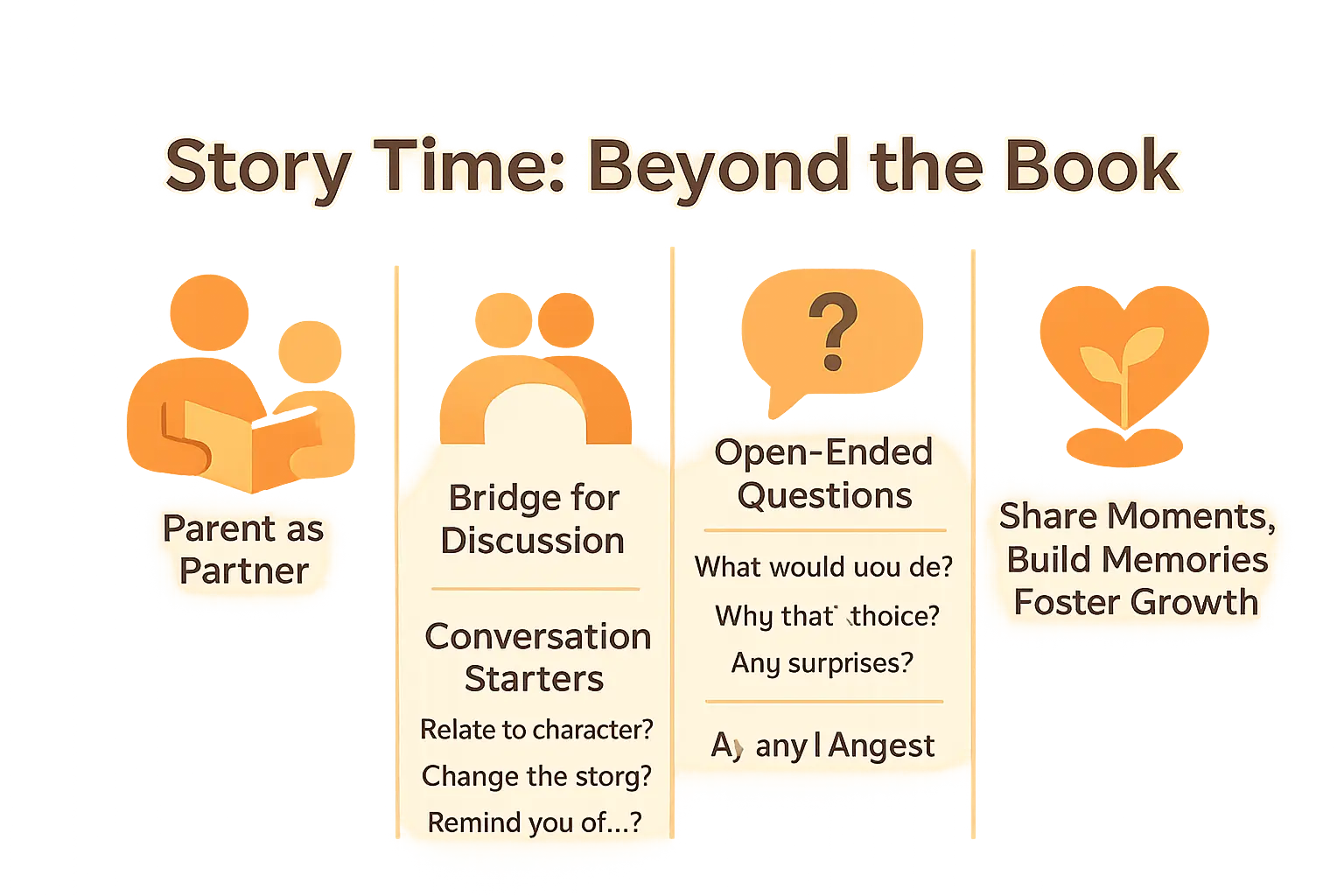
Stories are more than entertainment—they’re compasses guiding tweens through the messy, magical journey of growing up. By choosing nuanced tales and sparking open conversations, you’re not just sharing books; you’re building trust, empathy, and connection. So, dive into their world. Listen. Discuss. And remember: every story is a chance to say, “You’re not alone.” Happy reading! ✨
FAQ
What are popular books for 12 year olds?
You’ve got so many awesome options for 12-year-olds! 📚 Some big crowd-pleasers include “Wonder” by R.J. Palacio – that book just gets better and better in my opinion. “Percy Jackson & the Olympians” by Rick Riordan is always a hit with its mix of mythology and modern adventure. And you can’t go wrong with “The Hunger Games” by Suzanne Collins for those who love intense, thought-provoking stories. Don’t forget “Refugee” by Alan Gratz if you’re looking for powerful historical fiction that really sticks with you. I think these are the best starting points – what do you think? 😊
What are some popular books for tweens?
Oh, where do I start? 🤔 The amazing thing about tweens (those 9-12 year olds) is that they’re ready for stories that really get them thinking! “Diary of a Wimpy Kid” by Jeff Kinney is an absolute classic – who doesn’t love Greg’s hilarious misadventures? For those who want something more intense, “Divergent” by Veronica Roth is super popular. And let me tell you about “The Crossover” by Kwame Alexander – that verse novel just grabs you by the heart! I find that tweens absolutely devour series like “Harry Potter” and “Percy Jackson” once they get hooked. What’s your personal favorite? 📖
What are good fantasy books for tweens?
Oh man, fantasy is where it’s at! 🐉 Let me share some of my top picks for tweens. “His Dark Materials” by Philip Pullman is just mind-blowing with its alternate worlds and talking animals. “Impossible Creatures” by Katherine Rundell? Absolute gem – I’m telling you, those magical creatures will steal your heart! Don’t miss “The Inheritance Cycle” by Christopher Paolini for that classic dragon-and-hero vibe. And the “Seraphina” series by Rachel Hartman? So good for tweens who love their fantasy with a side of dragons who actually have brains! The cool thing about these books is they’re not just about magic – they help tweens explore big questions about right and wrong. You’ll see what I mean!
What series should a 12 year old read?
Alright, let’s talk series! 📚✨ For those who love their mystery with a side of adventure, “The Ranger’s Apprentice” by John Flanagan is my go-to recommendation. “Land of Stories” by Chris Colfer? So fun with its fairy tale twists! And don’t even get me started on “Percy Jackson & the Olympians” – those books are like a party in book form! Newer series like “The Last Kids on Earth” by Max Brallier are super popular with the 12-year-old crew too. The idea is to find a series that grabs their interest and keeps them coming back for more. After all, isn’t that what reading should be all about? 💡
What is the most popular book for an 11 year old?
You know what’s super interesting? 🤔 The most popular books for 11-year-olds often become the books that stick with them for life! “Wonder” by R.J. Palacio just keeps getting more popular, and I totally get why – it’s all about kindness and fitting in. “The Crossover” by Kwame Alexander is another one that’s really resonating with this age group right now. And oh my gosh, don’t even try to stop the love for “Diary of a Wimpy Kid” – those books are like comfort food for the soul! I think these books work so well because they tackle big life questions in ways that feel real and relatable. What’s your 11-year-old always asking for? 📖
What should a 12 year old’s reading age be?
Let me explain something that might surprise you! 😊 While most 12-year-olds are reading at about a 6th-7th grade level, the truth is that what matters most is what they’re enjoying. Some might be ready for books aimed at older teens, while others prefer stories written for younger kids – and that’s totally normal! The key is finding books that challenge them just enough without making them feel frustrated. You’ll see that many popular books for tweens are actually written with 8-12 year olds in mind, which makes perfect sense. Honestly, I think the best “reading level” is the one where they’re turning pages because they just have to know what happens next!
What is the most popular book for middle schoolers?
Okay, let’s talk middle school favorites! 🎒 “The Hate U Give” by Angie Thomas just keeps getting more and more popular – it’s powerful, real, and makes you think. “All American Boys” by Jason Reynolds and Brendan Kiely? Another one that’s making big waves in schools. And don’t even get me started on how much I love “Ghost” by Jason Reynolds for middle schoolers – that book is so relatable! I’m seeing more and more of these books starting important conversations, which is exactly what middle schoolers need. What do you think makes a book really click with this age group? 💭
Is the summer I Turned pretty appropriate for 12 year olds?
Great question! 🌞 “The Summer I Turned Pretty” by Jenny Han is definitely more for teens, in my opinion. The book deals with some pretty mature topics like first romances, body image, and complex family dynamics. While I know some 12-year-olds might be ready for those themes, I’d say it’s more appropriate for 13+ generally. But hey, you know your kid best! If they’re asking for it, maybe start a conversation about what they’re curious about. After all, every tween is different, right? 🤗
What is the best book in the world for tweens?
Oh wow, that’s a tough one! 🤷♀️ The truth is there’s no one “best” book because tweens are all so different. But I can share some of the ones that just keep coming up again and again! “Wonder” by R.J. Palacio is like the gold standard for teaching kindness. “Percy Jackson & the Olympians” rocks for those who love adventure with a side of mythology. And “The Crossover” by Kwame Alexander? Just wow, especially if you love poetry. What makes these books special is they help tweens navigate those tricky growing-up feelings while keeping them totally hooked. So what’s your personal favorite? 📚