The essential takeaway: Story formats combine narrative structures (like the three-act setup) and genres to craft compelling tales. They help writers organize ideas and meet reader expectations, ensuring stories resonate emotionally. Joseph Campbell’s Hero’s Journey, used in 70% of Hollywood blockbusters, shows how classic frameworks spark timeless adventures.
Ever felt stuck wondering why some stories hook readers while others fall flat? 🤔 Story formats might be the secret sauce! These frameworks blend structure and creativity to craft tales that resonate—whether you’re building a thriller with a Fichtean curve or a fantasy epic using the hero’s journey, they’re the hidden gears behind every page-turner. Dive in to decode timeless blueprints like three-act magic, Freytag’s pyramid, and interactive digital storytelling to turn ideas into gripping adventures. Learn how to match your plot, genre, or even tech-driven innovations with the perfect format! Ready to craft stories that stick? 🚀
What are story formats and why do they matter?
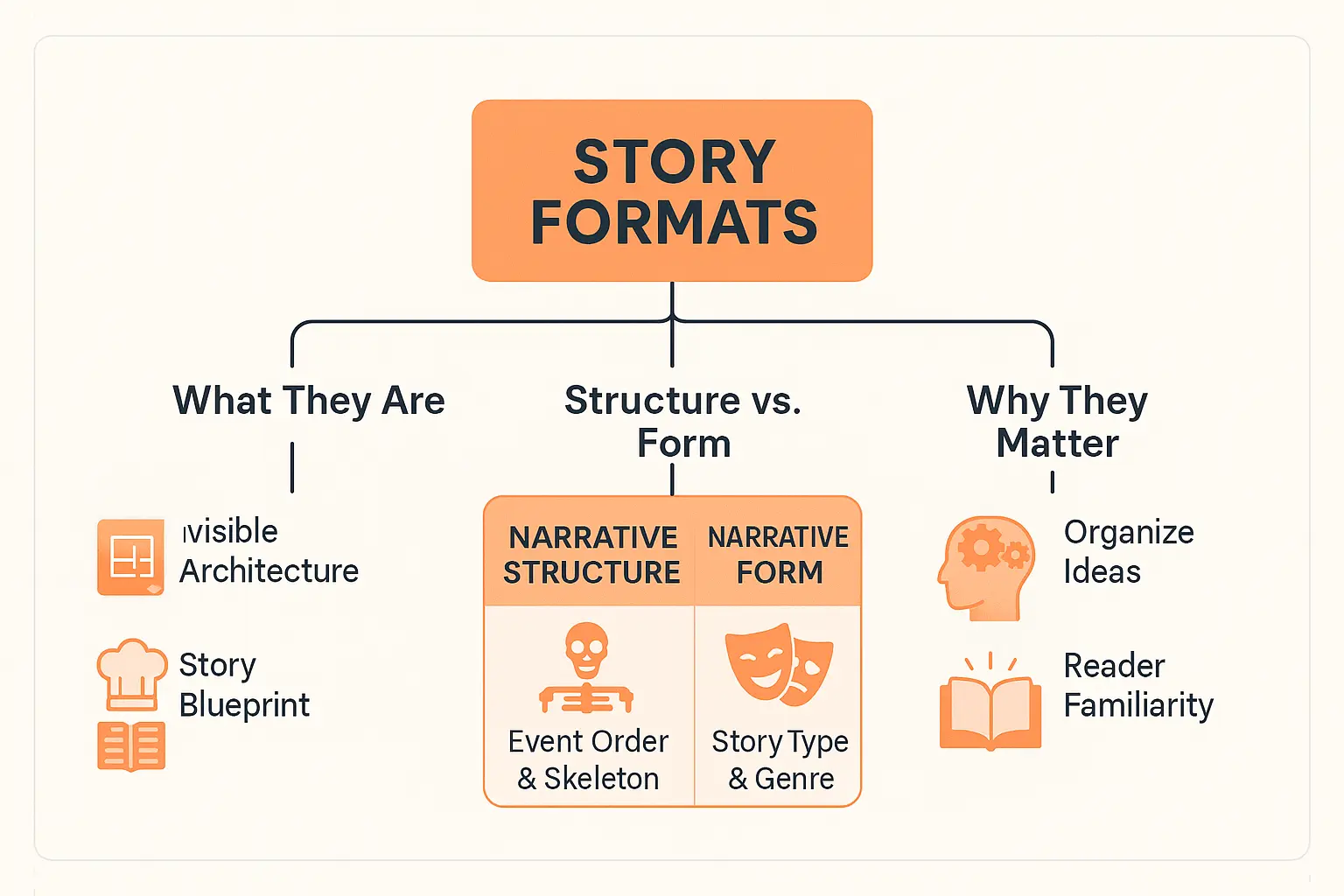
Ever wondered why some stories stick with us for years while others fade instantly? 🧐 It’s not just luck—it’s story formats. Think of them as the secret sauce that turns ideas into unforgettable adventures. Whether it’s a fairy tale or a detective mystery, these formats are the invisible blueprints shaping how we tell—and experience—stories. Story formats give writers and readers a shared roadmap, like a map guiding travelers.
Let’s break it down: narrative structure is the skeleton (classic “beginning, middle, end” setup), while narrative form is the genre (adventure, fantasy, mystery). They’re like the recipe and ingredients of storytelling—both matter, but they play different roles. For example, a detective story’s structure might follow a “clue → red herring → climax → resolution” pattern, while its mystery form builds suspense from the first page.
Story formats are the invisible architecture that holds a narrative together, guiding the reader’s emotions and expectations from the first page to the last.
Why should we care? Because humans are wired for stories. 🧠✨ Formats help writers organize ideas without stifling creativity, and help readers connect the dots effortlessly. Imagine explaining potty training to a 3-year-old—without a story format, it’s random sentences. With one? Suddenly, the child becomes the hero of their own bathroom adventure. That’s the magic of structure and form working together. Even in adult storytelling, formats like the “hero’s journey” help authors craft tales that resonate worldwide.
Ready to dive deeper? We’ll explore popular story structures, how genres like detective tales captivate minds, and why personalized stories matter (hint: services like Tellmestories make this easier than ever). Formats aren’t creativity killers—they’re tools to supercharge it. Let’s get started! 🚀
The Fundamental Elements Of Narrative Structure
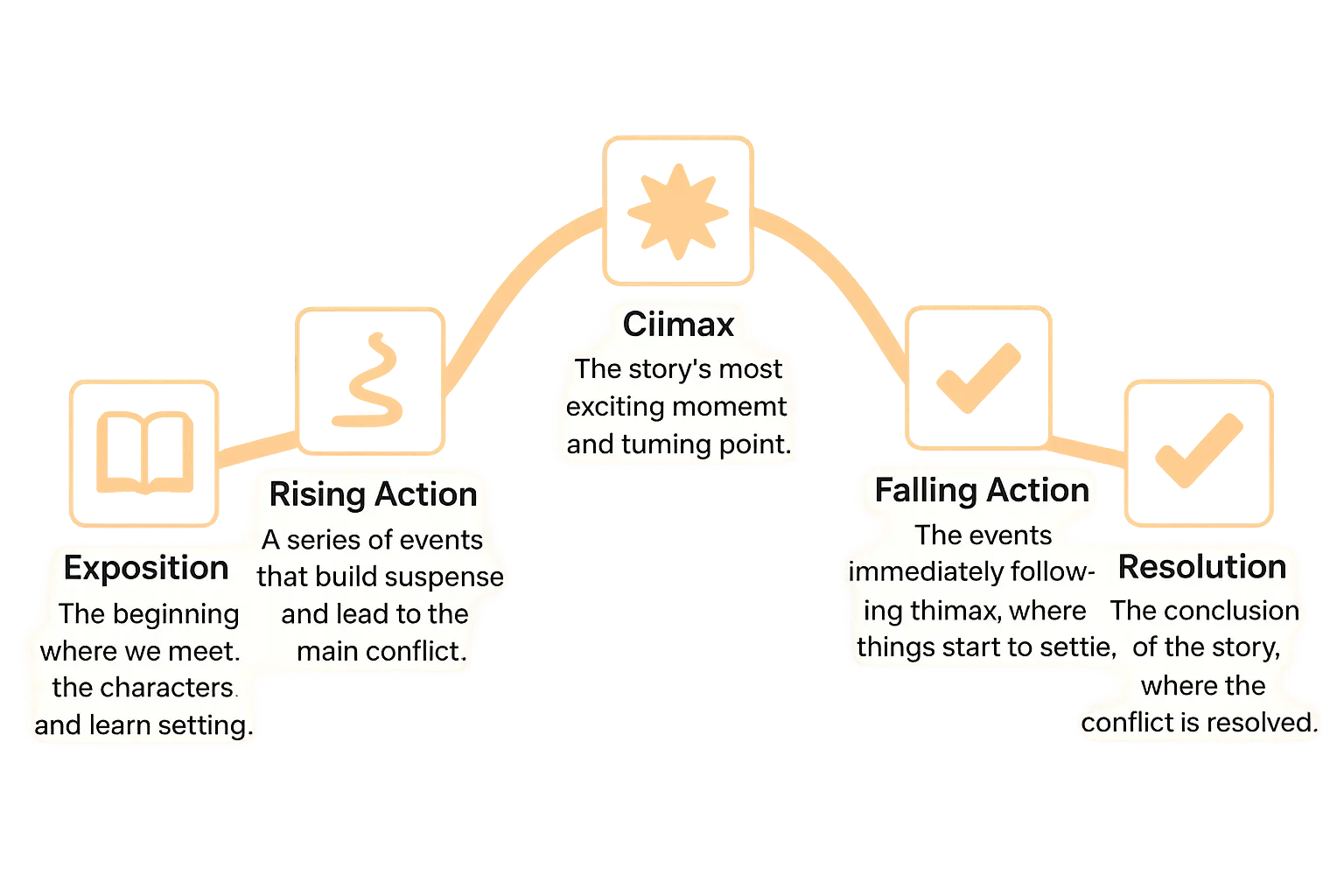
Ever felt that “wait, what happens next?” moment while reading? That’s narrative structure at work! 🎩 Let’s break down the 5 key elements that transform chaos into compelling stories. These pillars guide emotional journeys, whether you’re telling a bedtime tale or scripting an epic.
Exposition: Setting The Scene
This is your story’s foundation 🌟 – introducing characters, setting, and normalcy before drama strikes. Think of Frodo’s peaceful Shire life before the One Ring disrupts everything. It’s the calm before the chaos begins.
Rising Action: Building The Tension
Here’s where small issues snowball into crises 🌶️. Harry Potter’s quiet Hogwarts year turning into a Voldemort showdown shows how tension escalates. Each challenge hooks readers, making them wonder, “How will they fix THIS?”
Climax: The Turning Point
The heartbeat moment ❤️🔥 – Katniss volunteering for her sister in The Hunger Games changes everything. This is the “no turning back” choice where heroes confront fears, shaping the story’s outcome.
Falling Action: Winding Down
After the rollercoaster comes the cooldown 🛤️. Like Frodo realizing Middle-earth feels different post-Ring destruction, this phase shows consequences while letting readers catch their breath.
Resolution: The Final Outcome
Time to tie loose ends 🎬. Dorothy’s “there’s no place like home” moment isn’t just a catchphrase – it’s the story’s lesson made tangible, showing how the journey changed everything.
- Exposition: The beginning where we meet the characters and learn the setting.
- Rising Action: A series of events that build suspense and lead to the main conflict.
- Climax: The story’s most exciting moment and turning point.
- Falling Action: The events immediately following the climax, where things start to settle.
- Resolution: The conclusion of the story, where the conflict is resolved.
These elements aren’t just classroom theory – they’re the DNA of every story that’s ever kept you hooked. From detective plots to fantasy adventures, mastering them helps you craft narratives that feel… well, story-like. 🗝️
Popular story structures explained
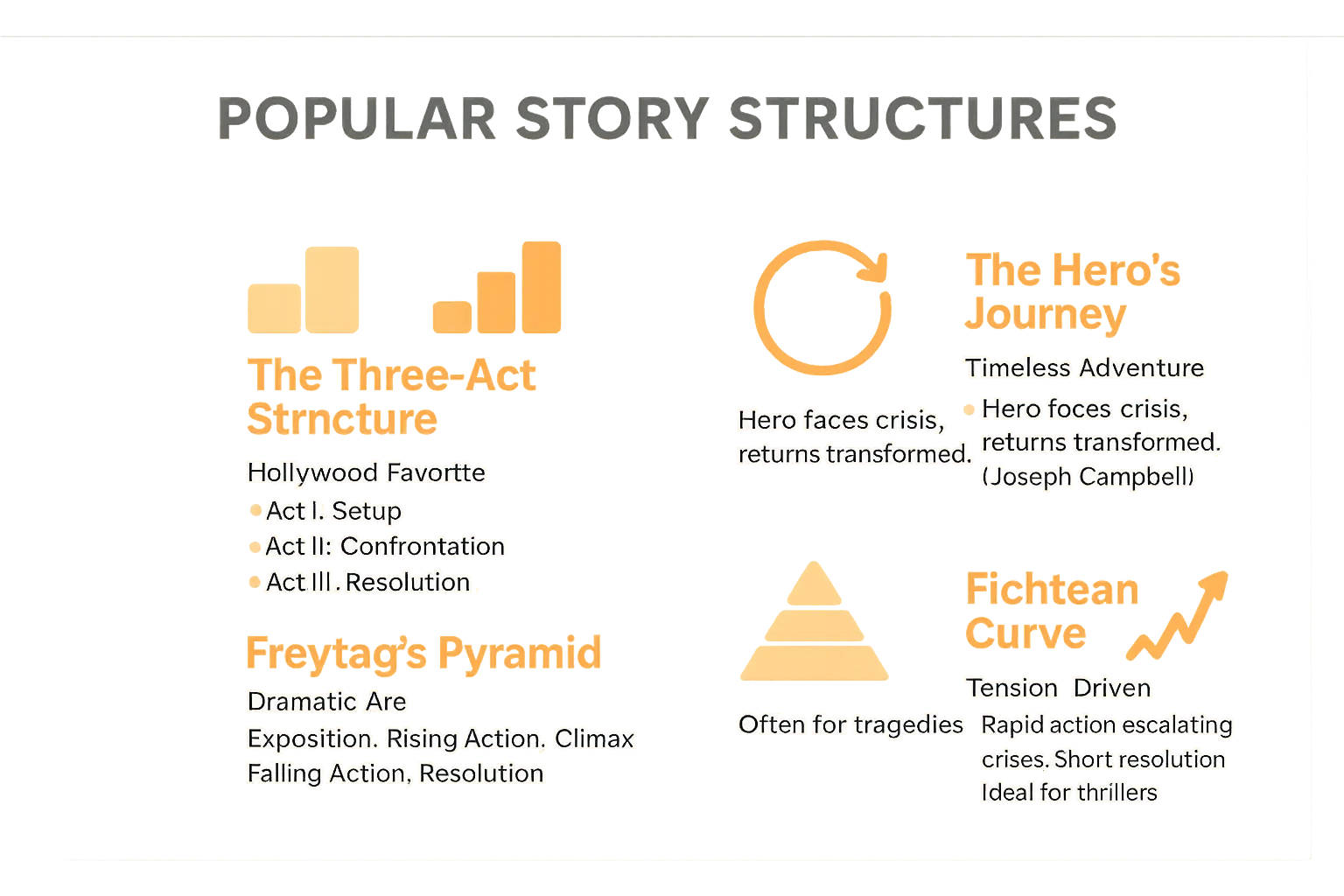 Visual guide to story structures” width=”600″ height=”400″>
The three-act structure: the hollywood favorite
Think of your favorite movie. Chances are, it follows the three-act structure. This framework splits stories into setup, confrontation, and resolution. Act I introduces characters—like Luke Skywalker’s Tatooine life. Act II builds tension with obstacles (hello, Death Star!). Act III resolves everything, like Frodo destroying the ring. Simple, right? That’s why Hollywood loves it. It’s flexible enough for any genre—from rom-coms to space operas. Here’s the secret: the midpoint twist keeps readers hooked. Think Titanic—act two ends with the ship hitting the iceberg. Why does this work? Because our brains crave a clear beginning, middle, and end. Just storytelling magic.
The hero’s journey: a timeless adventure
Ever noticed how Luke Skywalker and Frodo Baggins follow the same path? Thank Joseph Campbell’s Hero’s Journey. A hero leaves home (hello, Shire!), faces challenges (ring addiction, anyone?), and returns transformed. This structure taps into universal themes—growth, sacrifice, rebirth. It’s perfect for fantasy or coming-of-age tales. But here’s the kicker: you don’t need dragons or lightsabers. Modern stories use this for everyday heroes too! Think The Hunger Games: Katniss leaves District 12, fights for survival, and comes back haunted yet resilient. Why does this resonate? Because everyone loves a transformation arc. Use this structure to make readers root for your characters—even if they’re not saving the galaxy.
Freytag’s pyramid: the dramatic arc
Let’s talk drama—literally. Freytag’s Pyramid breaks stories into five steps: setup (introduce characters), rising action (conflicts pile up), climax (the breaking point), falling action (consequences), and resolution (happy or tragic ending). Originally for tragedies like Macbeth, it’s now used in novels and Netflix series. The magic? Tension peaks at the top, then crashes. Ever cried at a twist? That’s the climax hitting hard. Why does this matter? Because it teaches pacing. Spoiler: Readers won’t forget a well-timed disaster. Take Romeo and Juliet—the climax is Tybalt’s murder, not the lovers’ death. Master this, and you’ll control your audience’s heartbeat.
Fichtean curve: all about tension
Need instant impact? The Fichtean Curve starts in medias res—right in the action. No slow intros here! It piles crises until the climax explodes. Think Jaws—the shark attacks start immediately. Here’s the pro tip: Each crisis escalates stakes. First, your hero loses their map. Then, a storm hits. Finally, the treasure chest is empty. Why use it? Because who doesn’t crave drama? Fun fact: Many frameworks are variations of the seven basic story types, which helps understand patterns. Warning: Don’t overdo it. Balance action with emotional beats—readers need moments to breathe.
Each structure shapes stories like a skeleton shapes a body. Pick one, twist it, and watch your tale come alive. Got questions? Drop a voice note on WhatsApp—we’ll craft your next plot together. 💬
Choosing The Right Structure For Your Story
So, how do you pick the right blueprint for your story? 🤔
Your choice depends on three key factors:
- Type of story you want to tell
- Pacing you need (fast vs. slow build-up)
- Emotion you want to create (hope, tension, transformation)
Let’s break down popular structures with this quick comparison table ⬇️
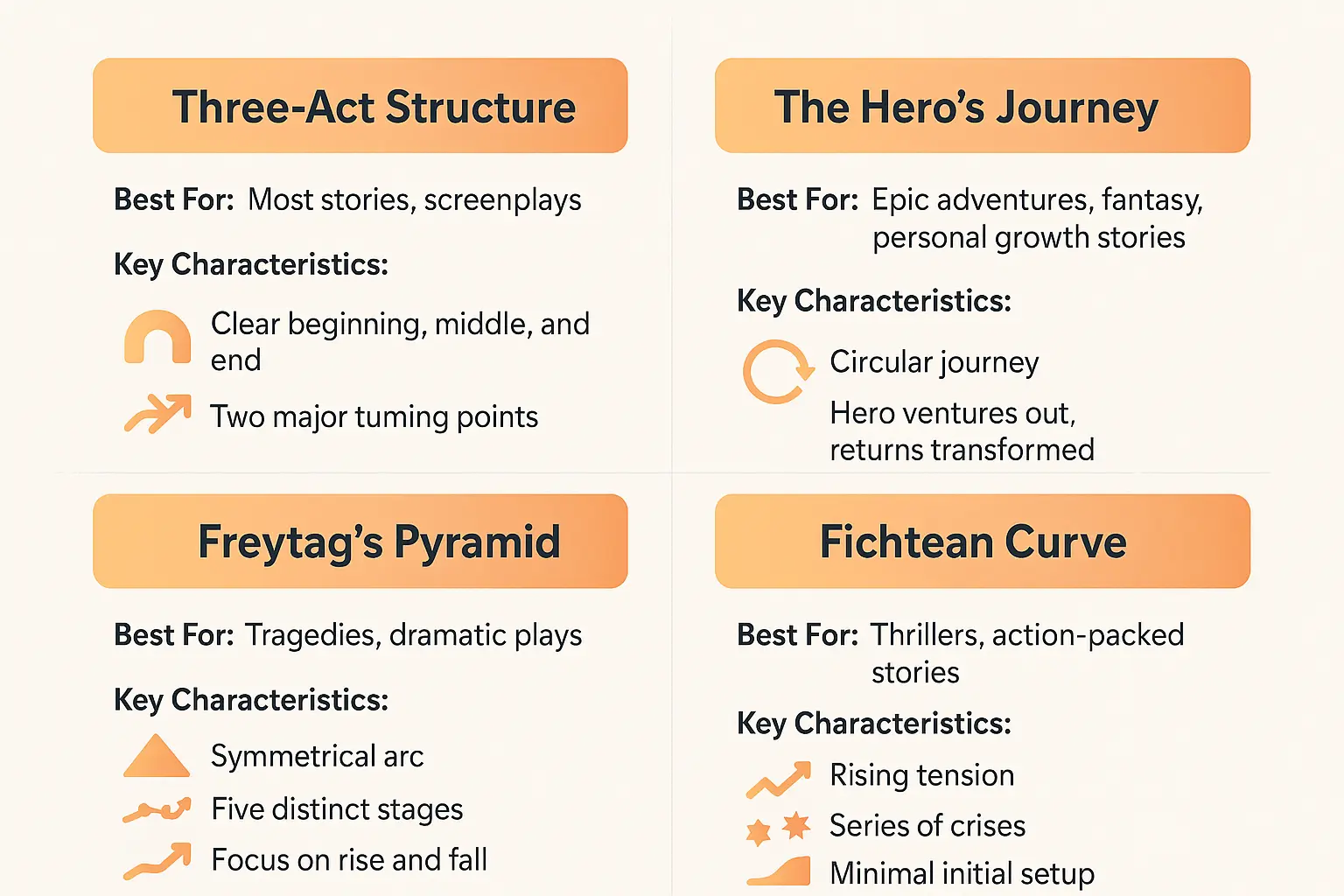
| Structure | Best For | Key Characteristics |
|---|---|---|
| Three-Act Structure | Most stories, especially screenplays | A clear beginning, middle, and end with two major turning points |
| The Hero’s Journey | Epic adventures, fantasy, personal growth stories | A circular journey where the hero ventures out and returns transformed |
| Freytag’s Pyramid | Tragedies and dramatic plays | A symmetrical arc with five distinct stages, focusing on the rise and fall of the protagonist |
| Fichtean Curve | Thrillers and action-packed stories | Focuses on rising tension through a series of crises, with minimal initial setup |
Each structure excels in specific situations:
- Three-Act works for classic storytelling (think Disney or Marvel films)
- Hero’s Journey shines in fantasy worlds (perfect for bedtime adventures with dragons 🐉)
- Freytag’s Pyramid builds dramatic arcs for classical tales (ideal for teaching life lessons)
- Fichtean Curve grips readers with urgency (keeps kids’ attention during storytime)
Want to test these formats with your kids? Remember: Tellmestories lets you create personalized adventures via WhatsApp in seconds 🚀
Pro tip: Mix formats! Start with Fichtean Curve’s urgency, then pivot to Hero’s Journey for deeper character growth. The flexibility lets you craft stories that evolve naturally while keeping little ones hooked! 💡
From structure to form: different ways to tell a story
Story structure is like a skeleton—essential but invisible. Story form is the personality you see, shaping how readers experience the narrative. This distinction matters: the same plot outline becomes wildly different tales depending on genre. Imagine a cake recipe transforming into chocolate or vanilla based on simple additions!
Take two stories following the three-act structure: one about pirates chasing treasure, another about a detective solving cybercrime. Same framework, different feels. That’s the magic of narrative forms—same recipe, different flavors. Tellmestories leverages this principle, turning basic elements into personalized adventures where kids become the heroes of their own tales.
Let’s explore popular story formats and their unique traits:
- Adventure: Fast-paced tales set in exotic locations, featuring physical challenges. Pirates, explorers, or survivalists face obstacles in uncharted territories. Common themes include bravery, friendship, and overcoming danger.
- Detective/Mystery: Suspenseful puzzles solved through clues. Engages readers who love solving mysteries alongside characters. Classic examples include Sherlock Holmes or modern twists like digital forensics in cybercrime stories.
- Fantasy: Magical worlds with mythical creatures and alternate realities. Perfect for escapism while exploring universal themes like courage or morality through imaginative scenarios.
- Science Fiction: Built on scientific speculation, from space exploration to AI ethics. Asks “what if?” about our future—think time travel, dystopian societies, or ethical dilemmas with technology.
- Historical Fiction: Merges facts with fictional narratives. Makes history come alive through personal stories—imagine walking with knights in medieval times or exploring ancient civilizations through a child’s eyes.
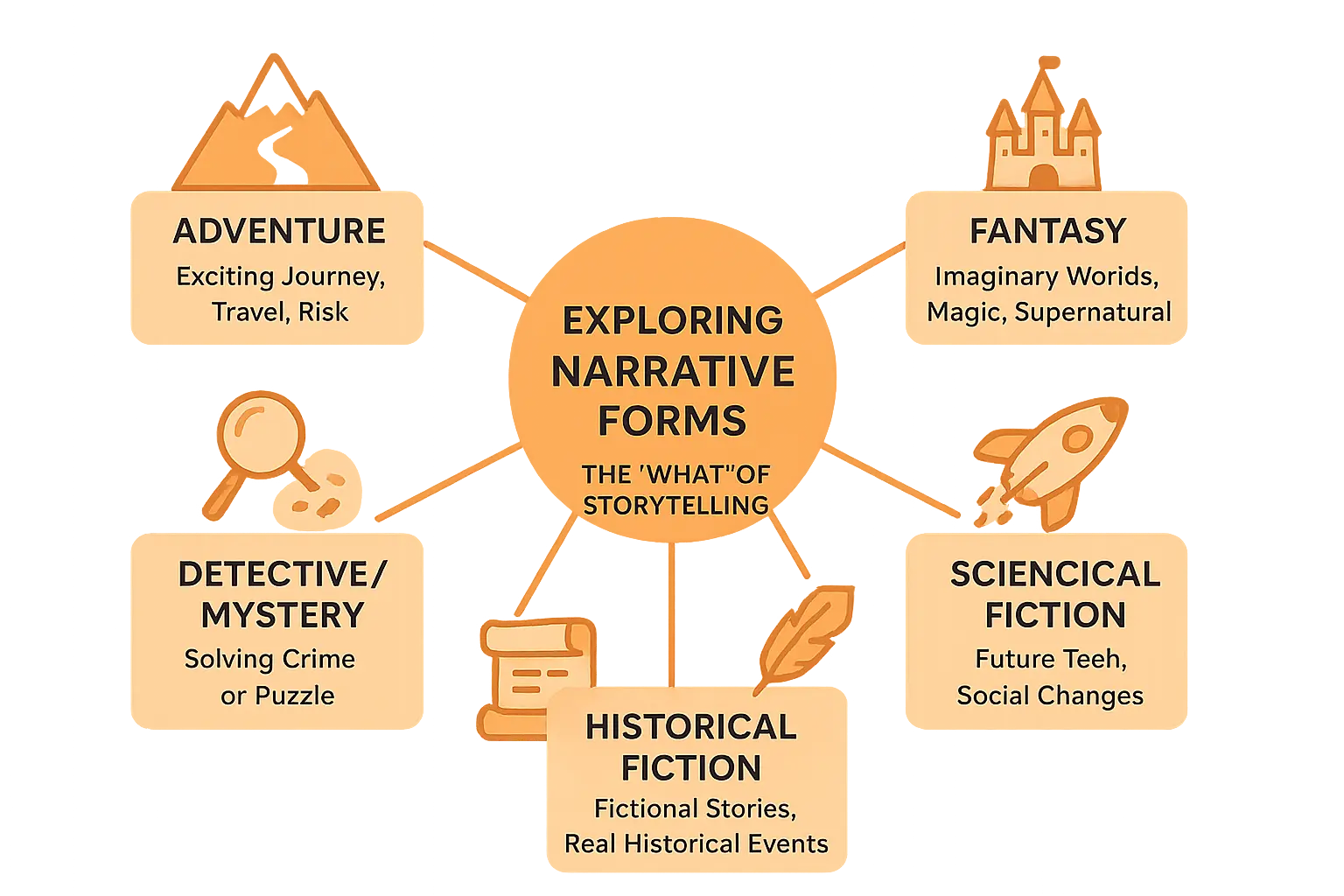
Each format shapes stories uniquely, like cookie cutters for ideas. Detective adds suspense, adventure brings action, fantasy creates wonder, and sci-fi sparks curiosity. Historical fiction bridges past and present. For personalized storytelling that captivates children, Tellmestories combines these formats into magical journeys where kids live their own tales.
How technology is shaping new story formats
From campfire tales to digital adventures, storytelling has always evolved with technology. 🌟 Today, we’re witnessing a revolution in how stories are created and experienced, blending tradition with innovation in ways that captivate young minds. The shift from static pages to dynamic experiences is transforming how children engage with narratives.
Modern tech opens doors to interactive fiction – the digital heir to “choose your own adventure” books. These stories let kids shape narratives, making them active participants rather than passive listeners. Services like Tellmestories transform voice notes into magical adventures, creating instant stories from simple ideas. Just speak into your phone, and – voilà – your child becomes the hero of their own quest!
Digital storytelling weaves text, audio, and visuals together. 🎧✨ Imagine bedtime stories with surround sound effects or fantasy tales where dragons roar from all directions. Stories can adapt visuals based on your child’s reactions, turning shy giggles into gentle forest scenes! This isn’t just storytelling – it’s story-experiencing!
What makes this magical? The personalization. 🤖✨ Services use AI to remember preferences, ensuring stories grow with children. Photo-to-character tools let kids become heroes of their own adventures, while educational elements like life lessons naturally integrate with fairy tales.
“As technology evolves, so do our methods of telling stories. The future lies in formats that are more personal, interactive, and immersive than ever before.”
Major outlets experiment with new digital story formats to engage audiences. Voice-controlled tales and emotion-adaptive AI stories show endless possibilities for personalized, interactive storytelling.
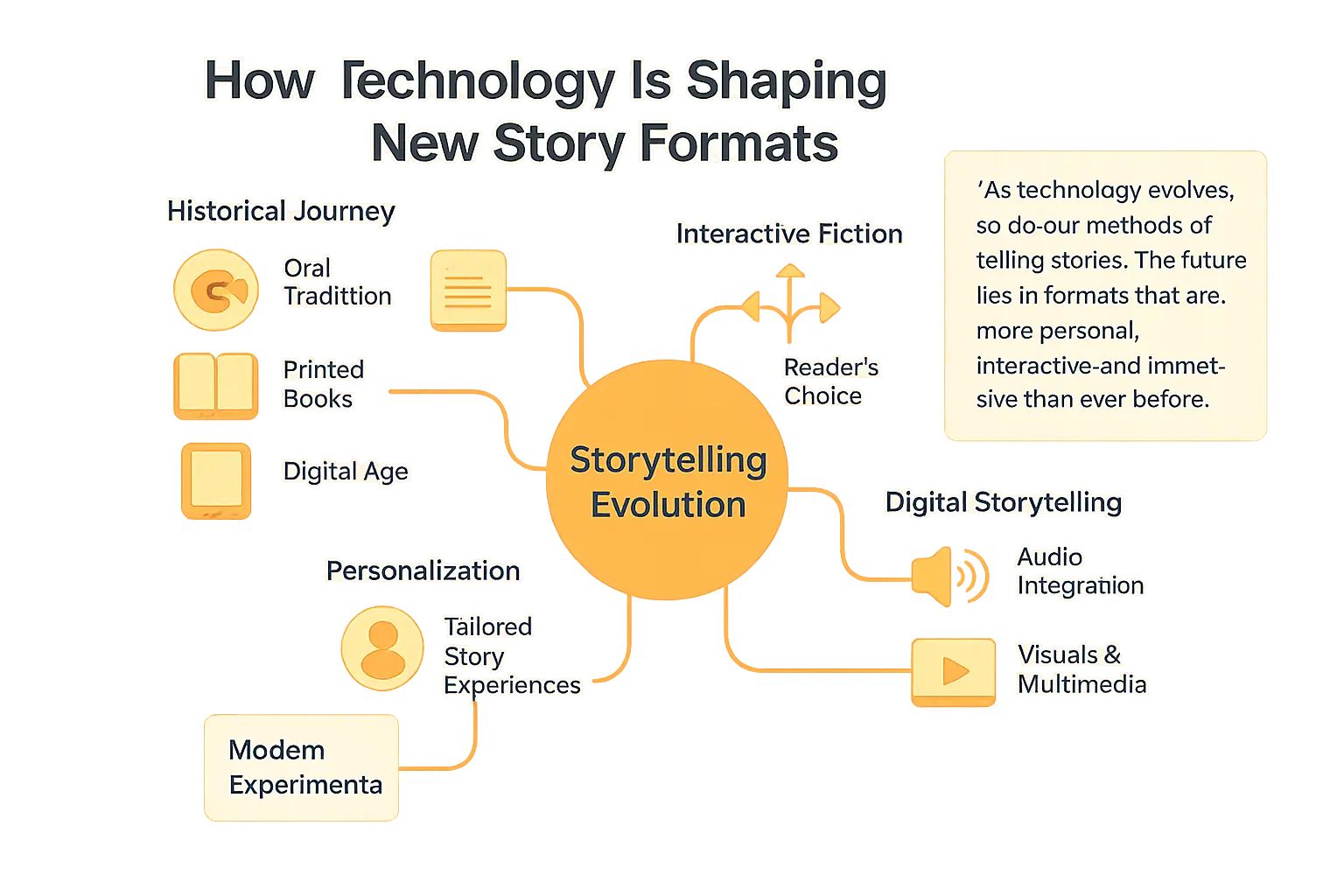 Evolution of storytelling formats through technology” width=”600″ height=”400″ />
Ready to create your own story?
Got a budding adventurer or curious detective at home? 🌟 Understanding story formats isn’t just for writers—it’s your secret weapon to spark creativity in kids! Whether it’s a twisty mystery or a dragon-filled quest, these formats give you the tools to craft tales that captivate.
Feeling inspired? 🤔 Imagine weaving a story where your child isn’t just listening—they’re steering the plot! With Tellmestories, you turn bedtime into a magical co-creation. Just send a voice note on WhatsApp, and watch their name, hobbies, and dreams morph into a custom adventure.
Why stick to generic tales when you can build stories that teach resilience, kindness, or even potty-training hacks? 🎓 Our AI remembers your child’s favorite characters and lessons, making every story a personalized learning journey. Think of it as Lego for imagination—just snap together plot structures and watch creativity soar.
Ready to rewrite the script? 🎬 Craft a tale where your little hero saves the day, then hit “play” on audio mode for a lullaby of their very own legend. Or flip through a printed book where every page whispers, “This is your world.”
Start now. No apps, no stress. Just stories that grow with them. Turn bedtime into storytime—where every ending is a new beginning. 🌈
Your child’s next favorite story is just a voice note away. What will their adventure look like? 🎧✨
Story formats aren’t just rules—they’re creative shortcuts waiting to spark your next great idea! From three-act thrillers to interactive digital tales, mastering these frameworks helps your stories shine. Why not try building one yourself? Turn bedtime into an adventure with personalized books where your child becomes the hero. Start crafting their unique story today at