The key takeaway: 📚 Choosing age-appropriate stories isn’t just fun—it’s foundational. Common Sense Media’s “50 books every child should read before 12” and Scholastic’s expert picks help parents align stories with developmental stages. This sparks engagement, boosts skills (cognitive, emotional, linguistic), and turns reading into a tailored journey—no more trial-and-error bedtime battles!
Ever wondered why some stories captivate kids while others fall flat? 🤔 The secret often lies in choosing the right stories by age! This guide reveals how matching tales to your child’s developmental stage boosts engagement, sparks imagination, and supports their child’s development—from first picture books to epic adventures. Dive into expert-backed tips from platforms like Scholastic and Common Sense Media, tailored for toddlers, curious 5-year-olds, and pre-teens alike. Discover why perfect stories aren’t just entertaining—they shape how kids see the world. Ready to transform bedtime into a magical learning moment?
Finding the perfect story: your ultimate guide to stories by age 📖
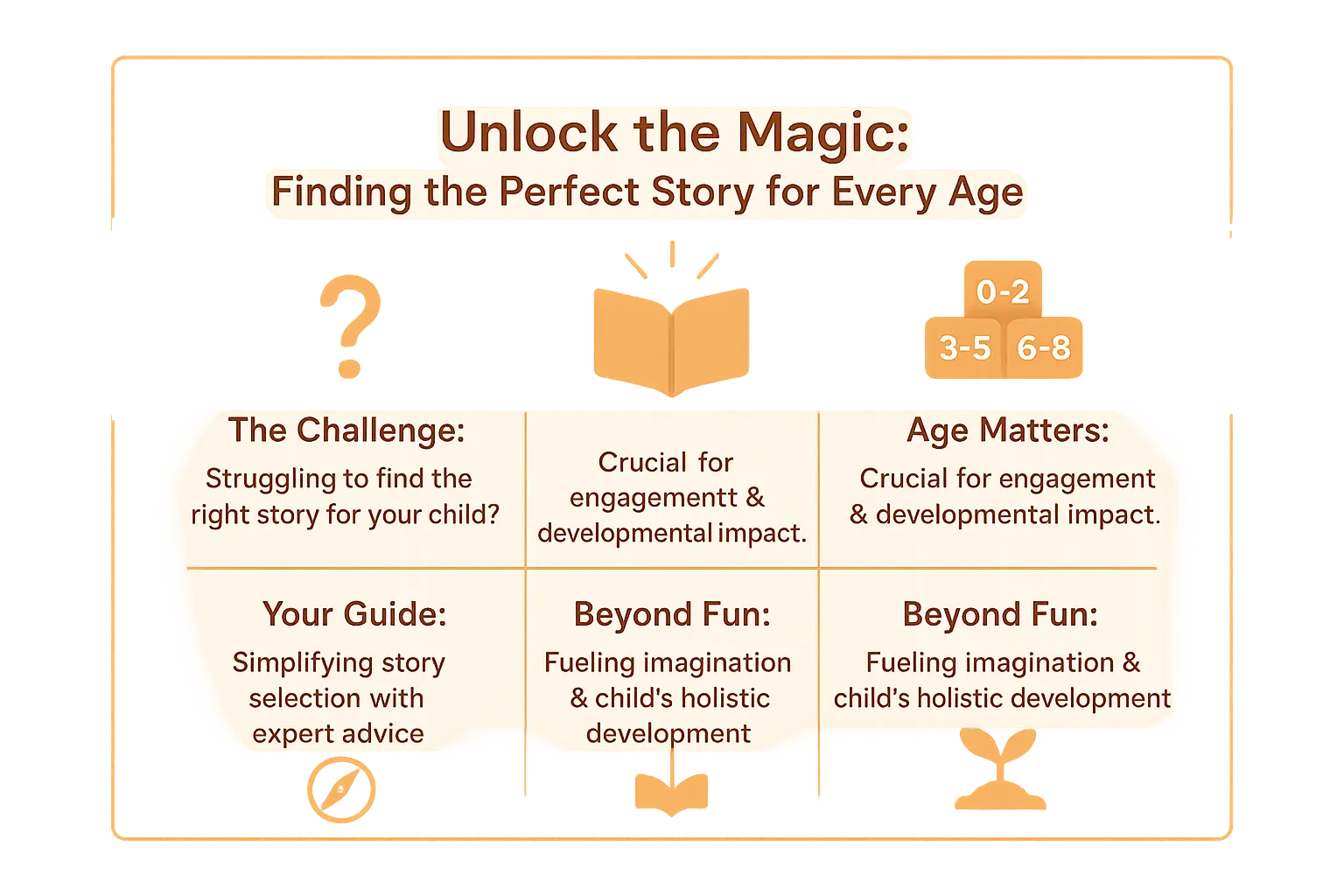
Why age matters in storytelling
Ever wondered why 3-year-olds love potty-training tales but zone out during complex plots? Stories by age aren’t just about connection—they shape learning, imagination, and emotional growth. Tellmestories crafts tales that grow with your child, turning bedtime into a learning journey.
How age shapes story elements
Stories adapt to developmental phases:
- 0-2: Tactile elements and high-contrast visuals for sensory development.
- 3-4: Repetitive rhymes and relatable themes build vocabulary.
- 5-7: Short chapters spark curiosity and problem-solving.
- 8-10: Layered plots and diverse characters nurture critical thinking and empathy.
Tellmestories: Your age-specific solution
Tellmestories’ AI adapts stories to your child’s stage—audio for toddlers, printed books for older kids.
Need a quick guide?
| Age | Prioritize | Tellmestories |
|---|---|---|
| 0-2 | Sensory engagement | Voice notes + photo characters |
| 3-4 | Life lessons | Memory feature for themes |
| 5-7 | Imagination + independence | Instant PDFs for reading |
| 8-10 | Critical thinking | Printed books for collectors |
Ready to start?
Stories by age shape development. Tellmestories turns voice notes into personalized tales in seconds. Unlock your child’s growth! 🚀
Why choosing stories by age is a game changer for your child
What makes a story truly “age-appropriate”? It’s not just about shorter sentences or cuter pictures. At Tellmestories, we’ve solved the puzzle to match stories with your child’s exact developmental stage – here’s why it matters.
Our WhatsApp-powered service uses AI to create tales that grow with your child. Picture personalized adventures where your little one becomes the hero – language, themes, and character arcs tuned to their cognitive abilities and emotional maturity. This is the magic of age-specific storytelling.
The link between stories and development
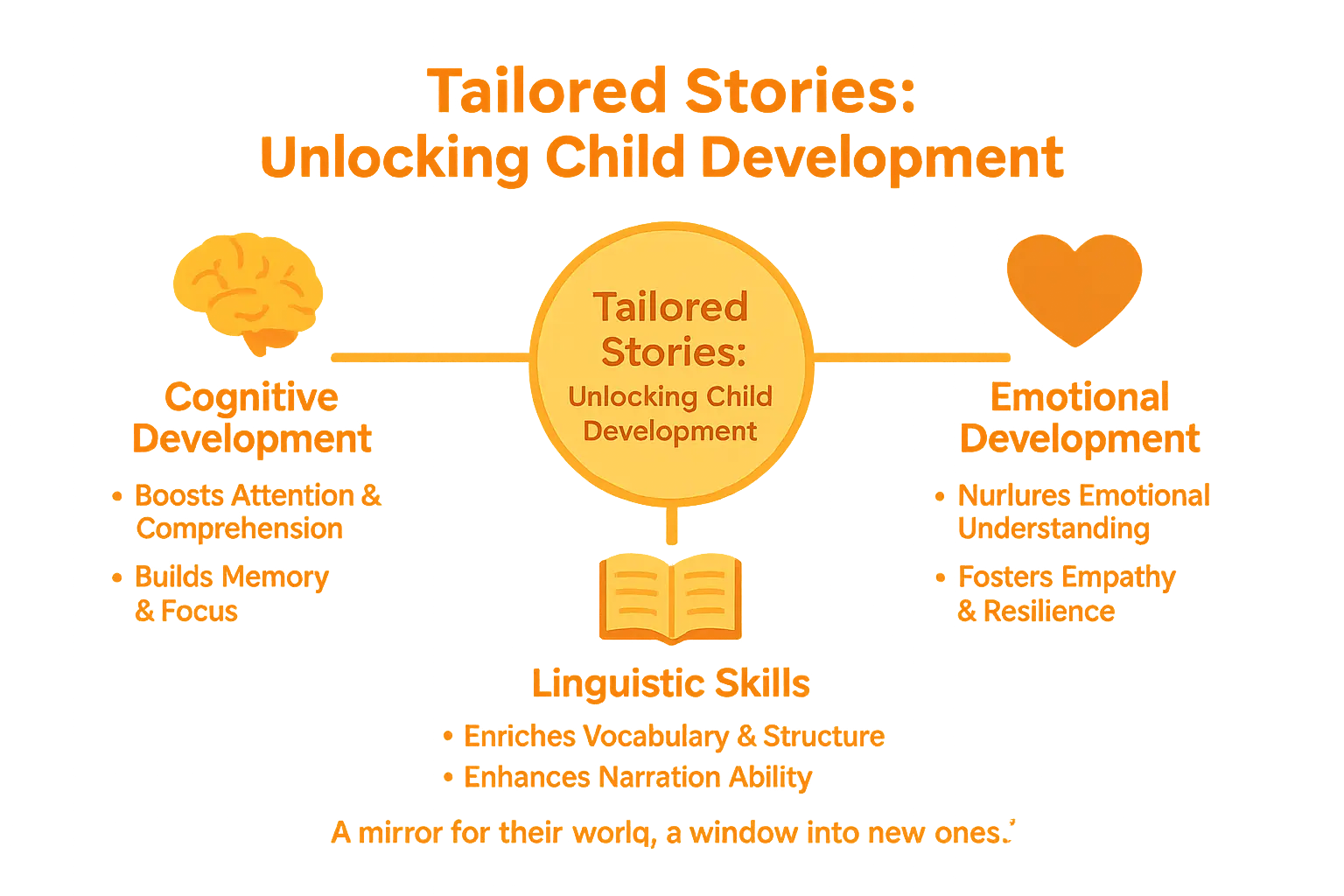
Here’s what happens when stories align with your child’s growth:
- Cognitive boost: Repetitive phrases build memory for 2-4-year-olds. By 5-7, layered plots teach logical sequencing. Older kids tackle moral dilemmas that stretch critical thinking.
- Emotional scaffolding: Toddlers learn “big feelings” through animal characters. School-age readers explore friendship struggles in relatable scenarios. Preteens tackle identity questions through protagonists their age.
- Language ladder: We start with descriptive words (“sparkly”) for babies, progress to compound sentences for 4-5-year-olds, and introduce metaphors for 8-10-year-old readers.
“Choosing the right story at the right time isn’t just about entertainment; it’s about providing a mirror for their world and a window into new ones.”
How does this work? Our smart memory feature remembers your child’s preferences – from favorite animals to emotions they’re experiencing. When you send a voice note, our AI crafts a tale that builds on their current stage, adding just enough new vocabulary or complexity to stretch abilities without frustration.
This isn’t guesswork. Common Sense Media found children engage 3x more with age-matched content. Scholastic’s research shows plot complexity must evolve – from simple cause-effect stories for preschoolers to multi-layered adventures for pre-teens.
Your go-to guide for stories, from toddlers to pre-teens
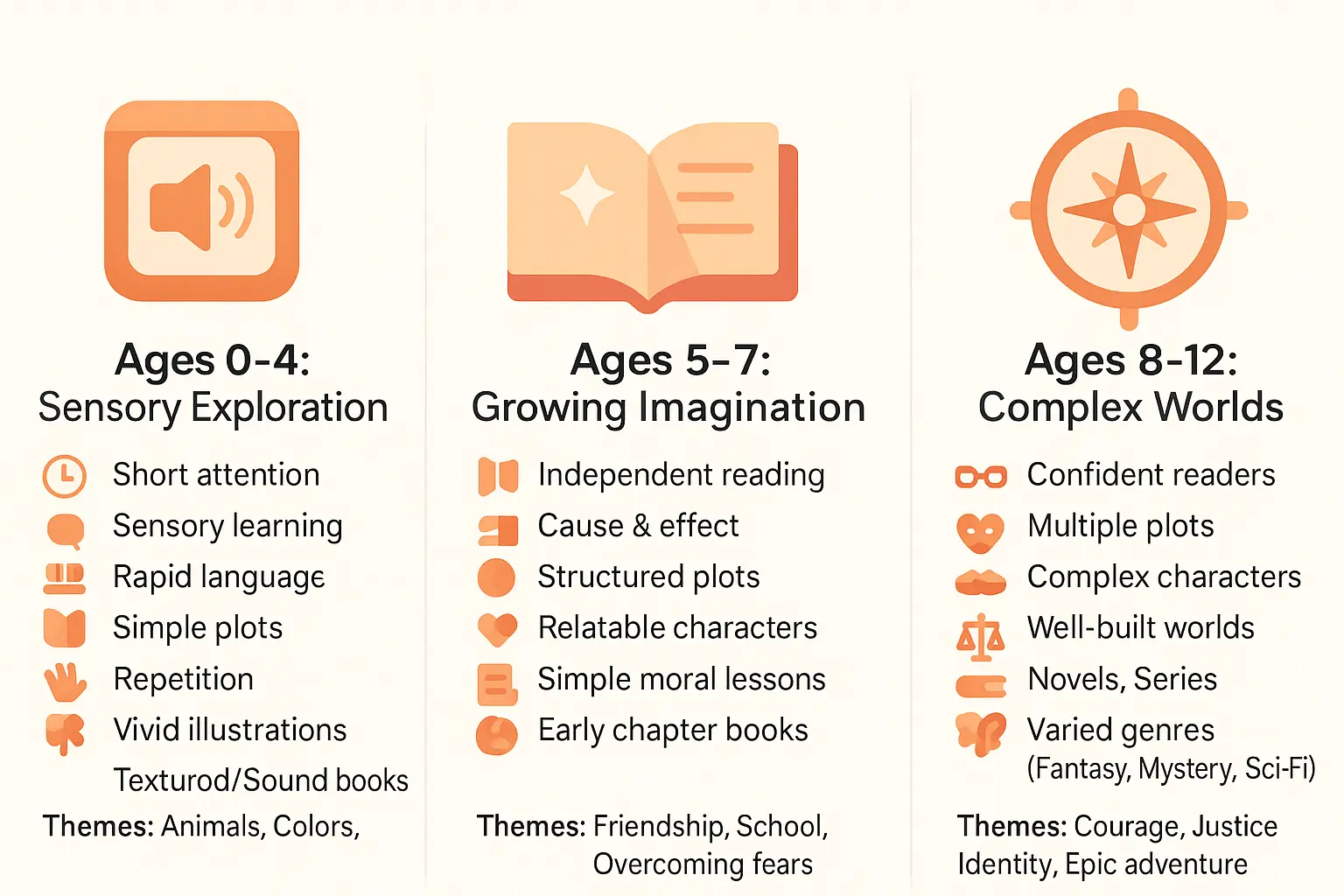
Ages 0-4: The world of sounds and colors 🎨
For babies and toddlers, stories focus on sensory engagement. Short attention spans mean simple plots with vivid visuals and repetition work best. Think bright illustrations, tactile elements, and rhymes that build language skills. Interactive features like flaps or textured pages turn stories into hands-on experiences, keeping little ones hooked.
Themes center on daily routines, colors, and animals. Characters mirror their world—think friendly farm animals or adventurous bugs. At this stage, repetition isn’t just fun—it’s crucial for learning. For instance, sending a voice note about “bedtime adventures” to stories for 2-year-olds creates tales where routines become playful rituals, blending comfort with curiosity.
Ages 5-7: The age of growing imagination ✨
As kids start reading independently, stories evolve. Plots with clear beginnings, middles, and ends help them grasp cause-and-effect. Characters should reflect relatable challenges—like making friends or facing fears. This is where moral frameworks subtly emerge. A story about sharing toys might feature a lovable dinosaur learning to play fair, making abstract concepts tangible.
Themes like school life or overcoming obstacles align with their social growth. Genres such as early chapter books introduce episodic storytelling, ideal for building reading stamina. For example, stories for 5-year-olds blend whimsy with subtle teachings, turning fears into adventures they can navigate. Imagine a tale where a shy character finds courage—readers see themselves in the hero’s journey.
Ages 8-12: Diving into complex worlds 🗺️
Older kids crave depth. They seek stories with layered characters facing tough choices. Genres like fantasy or historical fiction let them explore identity and justice through heroes who aren’t perfect. Think of a pirate protagonist learning honesty or a time-traveler confronting ethical dilemmas—these narratives mirror real-life complexities.
Themes tackle courage, fairness, and complex relationships. Series or chapter books keep them hooked, offering continuity and character growth. For example, stories for kids aged 9-12 create immersive worlds where they become the protagonist, solving mysteries or navigating moral dilemmas. These tales often incorporate educational twists, like teaching historical events through a character’s journey or embedding science facts in sci-fi plots.
At this stage, personalization matters. Letting kids pick story elements—like choosing a dragon’s color or a spaceship’s name—fosters ownership. Combined with audio narration, these stories cater to diverse learning styles, ensuring even reluctant readers stay engaged. The result? A bridge between entertainment and growth, tailored to their evolving minds.
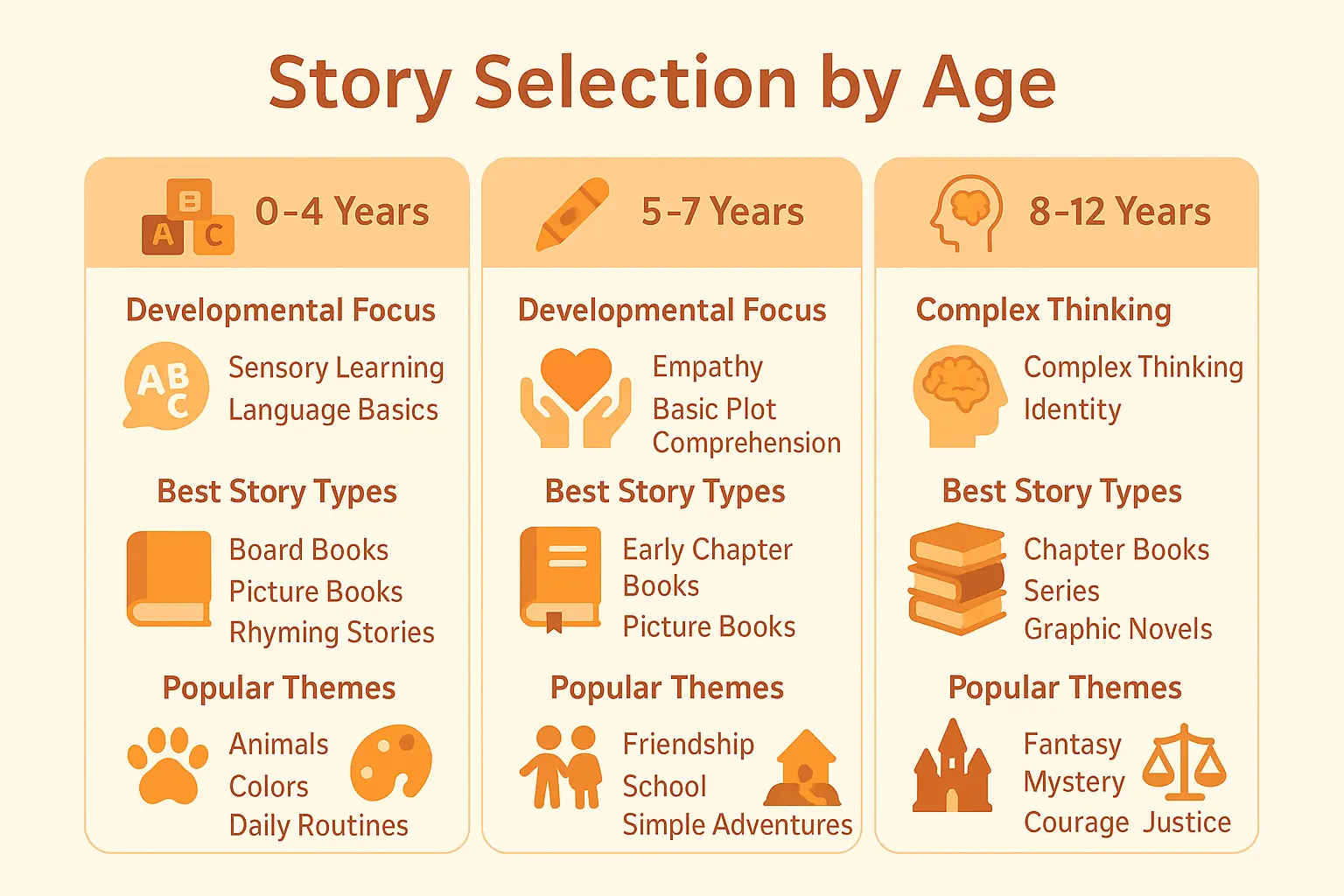
Story selection cheat sheet: a summary by age
Want to pick the perfect story for your child’s age? 🚀 This quick guide breaks down age-specific storytelling essentials so you can make smart choices in seconds. Let’s dive in!
| Age Group | Developmental Focus | Best Story Types | Popular Themes |
|---|---|---|---|
| 0-4 years | Sensory learning, language basics | Board books, picture books, rhyming stories | Animals, colors, daily routines |
| 5-7 years | Empathy, basic plot comprehension | Early chapter books, picture books with plots | Friendship, school, simple adventures |
| 8-12 years | Complex thinking, identity | Chapter books, series, graphic novels | Fantasy, mystery, courage, justice |
💡 Why this cheat sheet works: Each column matches how kids grow! Little ones (0-4) need simple rhymes with bright visuals – think interactive books where they press textures of animal fur or hear sound effects. Early readers (5-7) thrive on relatable characters like classroom friends or adventurous siblings. Older kids (8-12) crave layered plots where they become the heroes – like choosing their own adventure endings in fantasy worlds.
📚 Tellmestories makes it effortless: Our WhatsApp-powered AI crafts custom tales fitting these age groups instantly. Just send a voice note describing your child’s interests and watch the magic unfold through text, audio, printable PDFs, or even real physical books they can hold!
Beyond the age label: tuning into your unique child
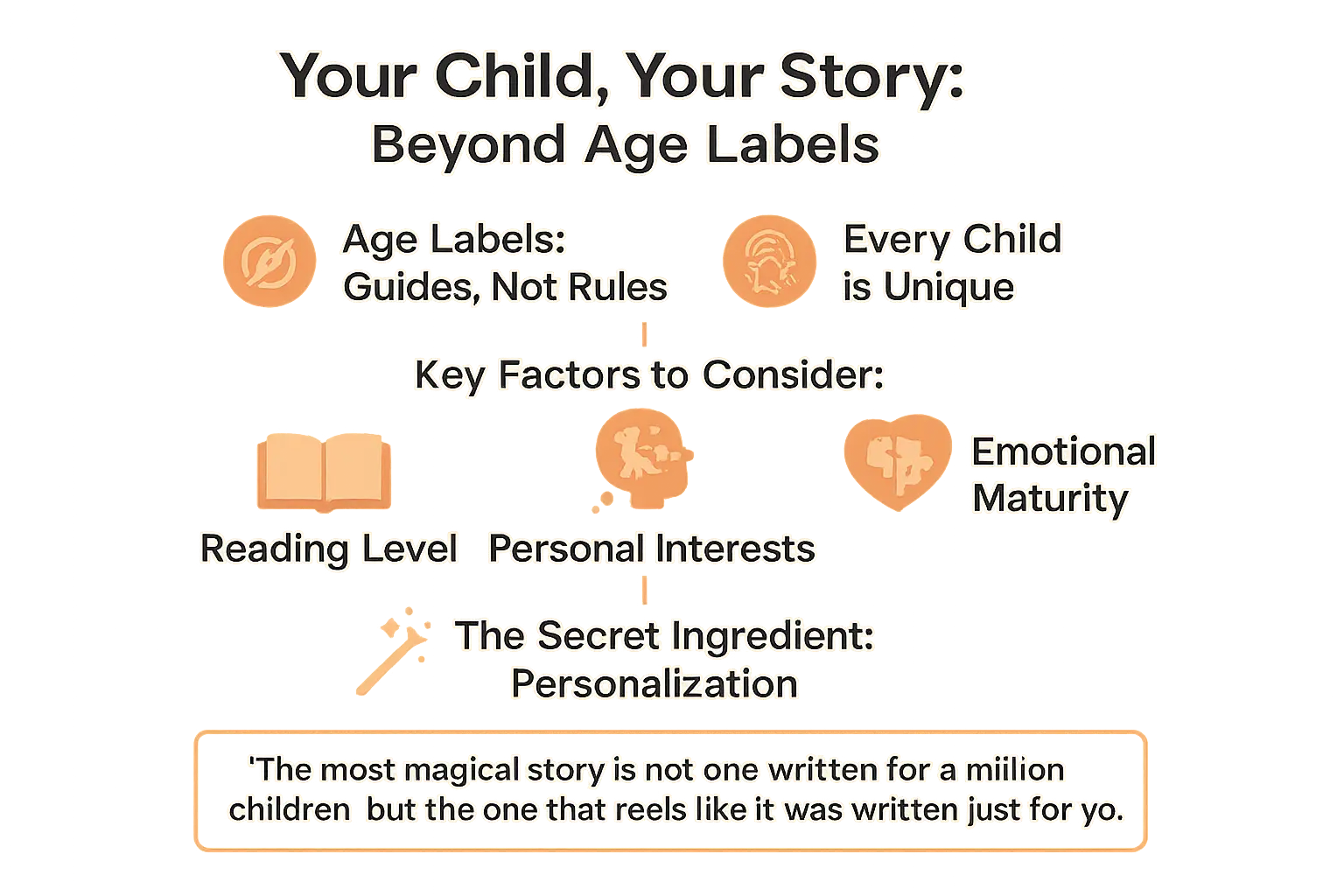
Age ranges are helpful guides, not strict boundaries. 🌟 Every child develops at their own pace, with interests and emotional needs as unique as their fingerprints. A 5-year-old might devour fairy tales while their sibling prefers space adventures – and that’s perfectly normal.
Looking beyond age labels opens doors to stories that truly resonate. Let’s explore what matters most:
- Reading level: Is your child reading ahead or needing a bit more support?
- Personal interests: Are they obsessed with dinosaurs, space, or magic? Lean into it!
- Emotional maturity: Are they ready for themes like loss or more complex social conflicts?
Imagine stories that grow with your child – where their name appears on every page, their favorite hobbies shape the plot, and life lessons feel like natural adventures. What if bedtime could feel like a personalized journey?
“The most magical story is not one written for a million children, but the one that feels like it was written just for yours.”
Platforms like Common Sense Media and Scholastic offer excellent age-based recommendations. But true connection happens when stories live in your child’s world – turning their fears into courage quests, their passions into epic missions, and their bedtime struggles into peaceful endings.
 personalized storybook where they’re the hero“>
So, how do you find stories that tick all these boxes? The secret ingredient is personalization – creating adventures that speak directly to your child’s heart. No two journeys should be exactly alike, and that’s where the real magic begins. 🎨✨
Answering your top questions about stories and age
When do kids start making up their own stories?
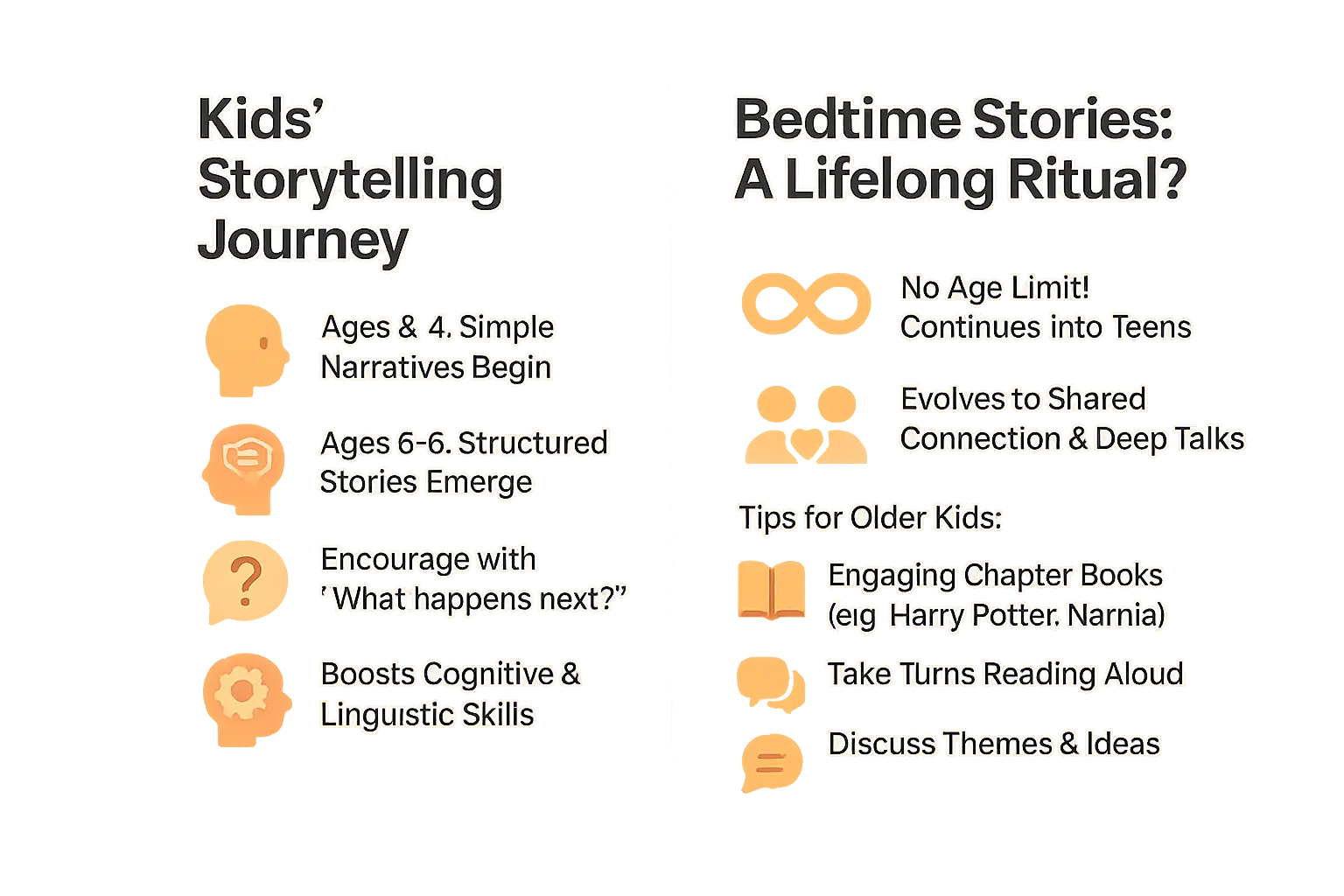
Most children begin crafting simple narratives around 3-4 years old. At this stage, stories often sound like “And then the dog ran!” — short, playful, and bursting with imagination. 🎨 These early tales focus on familiar settings (home, playground) and repetitive actions, reflecting their developing grasp of cause-and-effect.
By 4.5-5 years old, storytelling gains structure: characters, cause-effect sequences, and basic emotions emerge. Did you know? Kids this age create “primitive narratives” where problems get solved through simple actions. 🧠 Encourage creativity by asking, “What happens next?” during car rides or playtime. This sparks their ability to organize ideas and explore solutions.
By age 6+, children master full narratives with clear plots. This phase aligns with improved memory and social understanding. 🌟 They craft tales with multiple characters and moral lessons, showing growing ability to explore complex themes. A 7-year-old might invent a story about a shy unicorn learning friendship — revealing their emotional intelligence.
What age do you stop reading bedtime stories?
Surprise — there’s no final bedtime story age! 🌙 While many parents stop at 6-7 years old, families keep this bonding ritual alive well into adolescence. As one parent noted: “My 13-year-old pretends to protest but secretly waits for our nightly chapters!”
As kids grow, stories evolve from picture books to chapter adventures. Here’s how to keep the magic alive:
- Choose engaging books: Try fantasy series like Harry Potter or adventure tales — Scholastic’s age-based picks help find perfect matches.
- Take turns reading: Build confidence through collaborative storytelling — let teens pick the book and parents read dramatic dialogues.
- Discuss themes: Connect story conflicts to real-life situations, like a character overcoming fear sparking talks about school presentations.
Shared reading transforms into meaningful conversations about life choices. Research from Common Sense Media shows tweens who keep bedtime stories develop stronger empathy and critical thinking. 📚 As one parent shared: “My 12-year-old still asks, ‘Just one more chapter?’ — it’s our special time to connect.”
Pro tip: Let older kids choose stories. This builds independence while keeping reading fun! 📖 For reluctant readers, try graphic novels — Scholastic’s curated lists make finding the perfect match easy. The key? Keep the ritual joyful, not academic — laughter over vocabulary drills! 😊
The next chapter: embracing the power of storytelling
Did you know 90% of a child’s brain develops before kindergarten? 🤯 The stories we share today shape tomorrow’s thinkers, dreamers, and leaders. Tailoring tales to developmental stages isn’t just smart—it’s essential. Let’s break down why age-specific storytelling matters and how it sparks magic in everyday moments.
Age-guided stories aren’t a luxury—they’re a learning supercharger. Preschoolers thrive on vibrant visuals and rhythm, while school-agers dive into problem-solving plots and moral lessons. Tweens crave complex narratives that mirror their evolving world. Miss these windows? You’ll leave curiosity on the table. 💡 But get it right, and you’ll unlock language growth, emotional resilience, and a lifelong love for books.
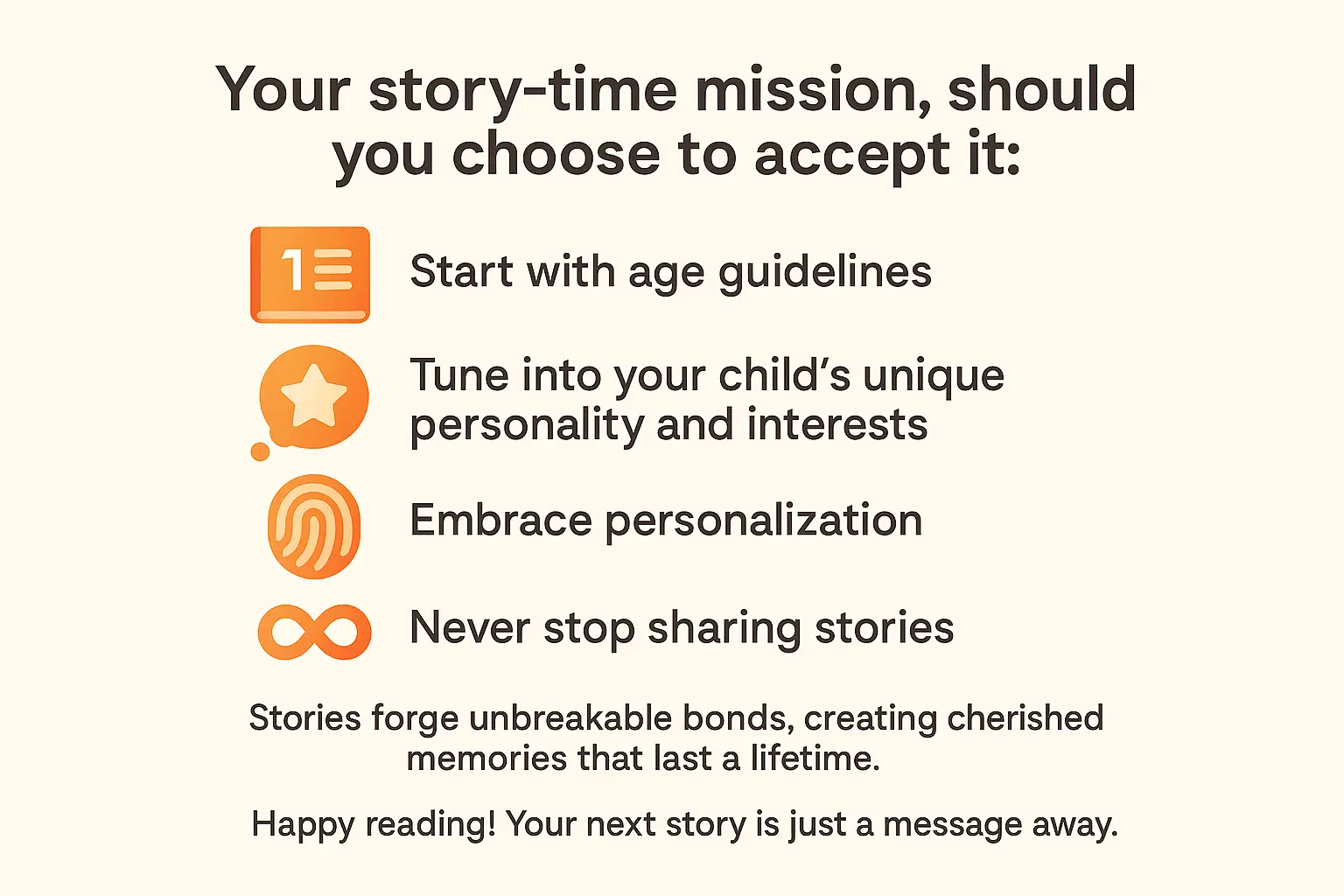
Your story-time mission, should you choose to accept it:
- Start with age guidelines to find a good starting point
- Always tune into your child’s unique personality and interests
- Embrace personalization to make stories truly unforgettable
- Never stop sharing stories, no matter how old they get
Every bedtime tale is a building block for empathy, critical thinking, and connection. With tools like WhatsApp-based storytelling, creating these moments takes just a voice note. Imagine stories where your child stars as the hero, growing smarter and kinder with every page. 🌟
Happy reading! May your next story be just a message away.
“Choosing age-appropriate stories nurtures development with tailored adventures. From sensory tales for toddlers to epic quests for pre-teens, aligning stories with their stage sparks growth and connection. The perfect story combines age guidance, passions, and a touch of magic. Ready to create lifelong memories through stories? Happy reading! 📚✨”
FAQ
What are the reading levels by age?
Understanding reading levels by age helps you pick stories that match your child’s development. For 0-4 years, focus on sensory books with bright visuals and simple language (think stories for 2-year-olds). By 5-7 years, early chapter books work best—they’re short, structured, and tie into themes like friendship. For 8-12 years, dive into complex worlds with chapter books and series (like stories for kids aged 9-12). Platforms like Common Sense Media and Scholastic offer age-filtered lists to simplify choices—perfect for finding stories that align with child’s development!
Is it normal for a 2-year-old to make up stories?
Yes! This is a key part of cognitive growth. At 2, kids start with “heaps”—random ideas like “Doggy sleep! Car go!” By 3, they create “sequences” (e.g., “Cat eat cookie. Cat drink milk.”). These stories are super simple but show they’re exploring language and imagination. 🧠✨ Encourage it by asking, “What happens next?” or adding your own lines to their tales. It’s all about nurturing communication skills!
Should a 4-year-old be able to tell a story?
Absolutely! By 4, kids enter the “primitive narratives” stage. Their stories might look like: “Mama cry. Baby sad. Doggy hug!” 🐶😢 This shows emerging plot structure and emotional awareness. Boost their skills by reading interactive books like The Very Hungry Caterpillar or creating stories together. Scholastic’s expert-vetted lists (like stories for 5-year-olds) are gold for finding age-appropriate picks that build storytelling confidence.
What is the best story for a 7-year-old?
Look for “focused chains” stories—clear plots with cause-effect flow! For 7-year-olds, early chapter books like Magic Tree House or Junie B. Jones are ideal. They balance text and visuals, tackle relatable themes (school, friendship), and support reading independence. Check out Common Sense Media’s 5-7 year old recommendations for curated lists. These stories help kids practice reading fluency while sparking curiosity!
What grade level is Harry Potter?
Harry Potter suits 3rd grade and up (ages 8+), but many 7-year-olds devour it! The series has rich vocabulary and complex plots, making it perfect for 8-12-year-olds in the “true narratives” stage (who crave character arcs and problem-solving). Scholastic notes it’s a top pick for pre-teens—just be ready to explain deeper themes like loss. 📚✨
What level reading should a 7-year-old be on?
At 7, kids are in the “focused chains” phase—think structured plots and basic cause-effect. They’ll handle early chapter books (like Pete the Cat) and enjoy stories with a clear beginning, middle, and end. Aim for books with manageable text-blocks and some illustrations. Common Sense Media’s 5-7 year old guides are great for finding perfect story matches. Keep it engaging—no dry textbooks!
What is Hyperlexia in a 2-year-old?
Hyperlexia means advanced reading skills at a young age—like recognizing words way before average peers. A 2-year-old might read street signs or memorize favorite books. It’s often linked to strong visual learners and can coexist with neurodivergences like autism. While impressive, balance it with interactive play and consult a professional if you have questions. Early reading is cool, but emotional connection matters most!
Do ADHD kids make up stories?
They might! Kids with ADHD often use storytelling as a creativity outlet or to process emotions. Their tales could be super detailed (epic dragon battles!) or repetitive as they work through thoughts. The key? Celebrate their imagination but set gentle boundaries if stories blur reality. If it’s causing social issues, seek guidance—but remember, a vivid inner world is a superpower 🌈.
At what age do toddlers tell stories?
As early as 2-3 years! They start with “sequences” (e.g., “Bear run. Bear sleep.”). By 4, stories get characters, settings, and simple conflicts. Foster storytelling with open-ended prompts like, “What if the duckling got lost?” or books that ask them to guess what happens next. It’s all part of mastering narrative skills—a building block for reading and social understanding!