Not enough time to read everything? Character customization in RPGs isn’t just about looks—it’s crafting a unique identity that shapes gameplay, story, and emotional bonds. By choosing traits or classes, players influence quests, battles, and world interactions. Studies link this personalization to deeper immersion, proving your choices don’t just define your avatar—they redefine your entire adventure. 🎮
Ever felt paralyzed by endless character customization sliders, unsure where to start? 🎮 That first hour in an RPG shouldn’t feel like solving a puzzle. We’ve all been there—toggling between hairstyles, stats, and backstories, wishing for a guide. This deep dive unpacks the psychological power of crafting your avatar, from player agency to self-expression through sliders, presets, and skill trees. Discover how choices ripple through quests, dialogue options, and rejouabilité, ensuring your unique identity shapes every battle, story twist, and gameplay experience. No more overwhelm—just actionable tips to build a hero that feels truly yours. 🌟
What is character customization in RPGs?
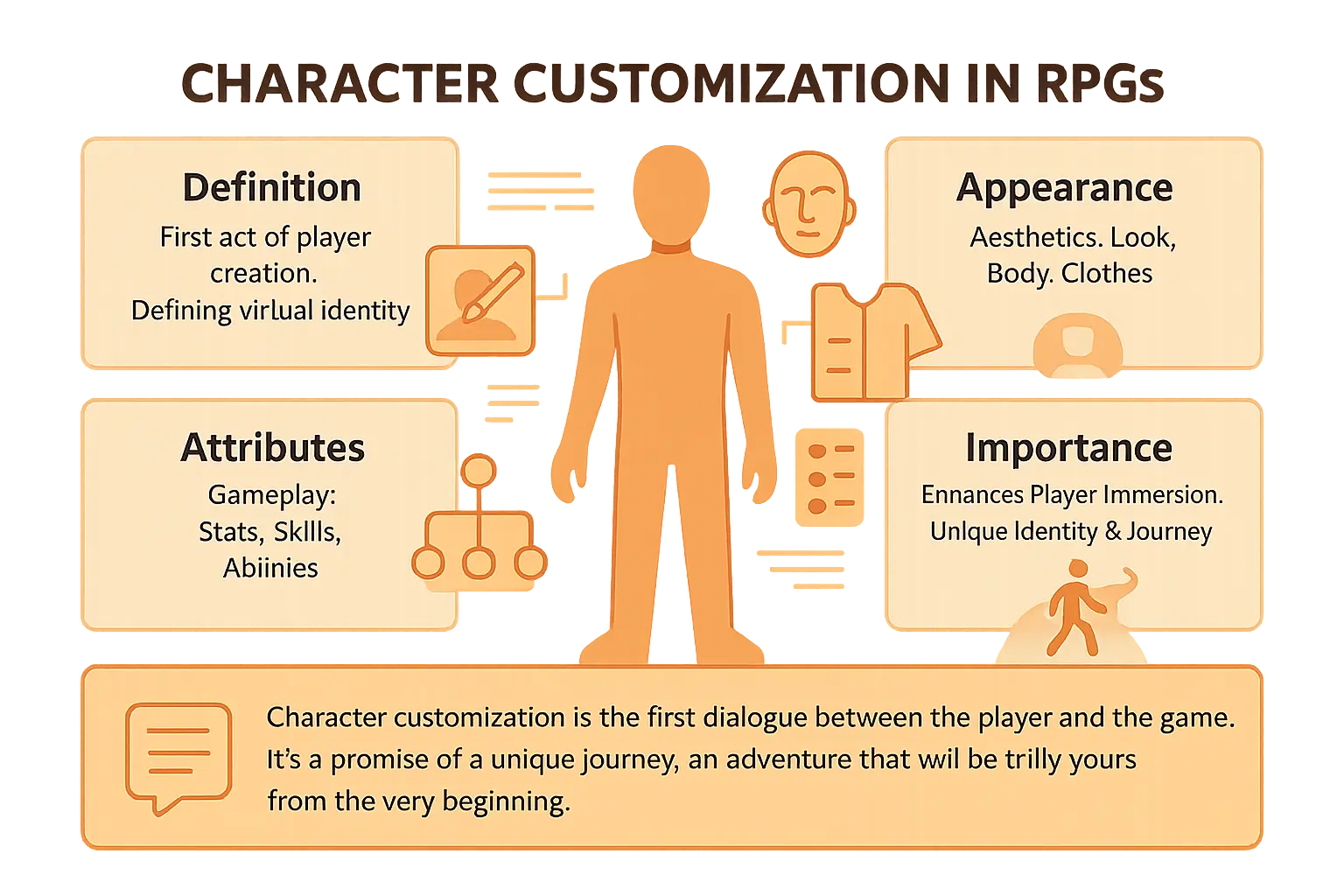
Ever tweaked your RPG character’s eye color instead of fighting monsters? 🎮 Character customization isn’t just looks—it’s blending creativity and strategy to craft a unique identity that defines your gameplay experience. Two layers: aesthetics (looks, armor) and gameplay mechanics (stats like strength or magic). It’s building both the “face” and “soul” of your character. Aesthetics let you project your vision; stats define your strategy. Together, they turn a blank slate into a hero you’ll fight for.
Character customization is the first dialogue between the player and the game. It’s a promise of a unique journey, an adventure that will be truly yours from the very beginning.
Why does this matter? Octopath Traveler lets you mix classes (merchant + healer) for new story paths. In Disco Elysium, choosing “Thinker” over “Sensible” reshapes your inner monologue. These choices drive player immersion. Even Dark Souls, with minimal visuals, lets you craft a legend through playstyle—stealth, brute force, or agility. Your stats and gear become extensions of your strategy, making every victory feel earned.
Too many choices backfire. Ever felt overwhelmed by Skyrim’s eye shapes? That’s the paradox of choice—superficial tweaks dilute immersion. The key? Offer meaningful decisions, like sci-fi origins (military, hacker) that unlock skills and dialogues. Would you play a warrior the same way if they grew up in space? 🚀 Games like Mass Effect show how choices shape dialogue and endings, proving depth trumps quantity.
Whether distributing skill points or blending classes like in Final Fantasy V, customization isn’t power—it’s making the game yours. It transforms generic knights into Ser Edric, a fallen noble whose stats and backstory shape every quest. Ready to explore? 🧙♂️
More than a model: the psychological power of personalization
The hidden engine behind gaming’s deepest connections
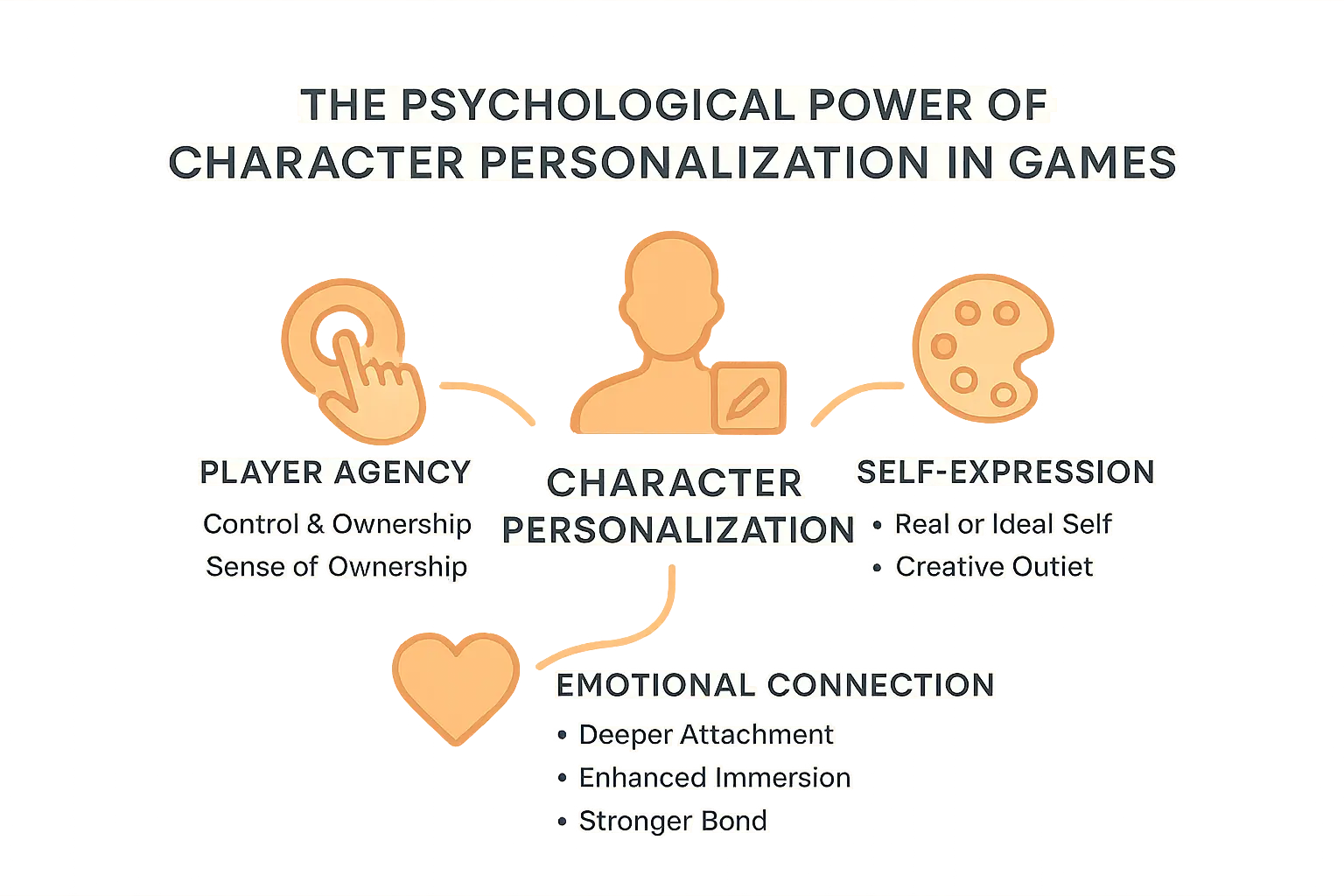
Ever wondered why 15 minutes of character creation feels more rewarding than 10 hours with a pre-made avatar? 🤔 It’s about three psychological superpowers activated by customization – key to connecting with virtual worlds. These mechanisms transform gaming from passive entertainment to personal storytelling.
Player agency: Your story, your rules
Shaping a character transforms you from spectator to co-author. This player agency makes every choice matter because it carries your personal touch. In Mass Effect, Shepard’s moral compass feels momentous because you shaped it. Mechanical decisions (rogue vs paladin) aren’t just playstyle – they’re identity projections creating feedback loops where choices reflect and reshape who you are. RPGs like Disco Elysium take this further: your character’s skills and flaws mirror your own risk-taking tendencies, making every dialogue choice feel like self-reflection.
Self-expression: Mirrors and masks
Customization becomes a psychological playground. Some create mirrors – avatars reflecting real selves. Others craft masks – idealized versions they aspire to be. This self-expression turns gaming into identity exploration. The The Sims phenomenon proves this: millions build digital doppelgängers to safely explore self-perception. Deep creators (like Dragon Age‘s romance system) create stronger bonds by letting choices reveal values and dreams through aesthetics. Even voice customization in Horizon Zero Dawn lets players imprint their personality through Aloy’s dialogue tones, making her feel like an extension of themselves.
Emotional connection: When pixels become people
Feeling gutted when your custom character dies? That’s emotional connection at work. Research shows custom avatars activate empathy-related neural pathways. In Fire Emblem, sacrificing a custom character hurts because you lose your creation, not just stats. Permadeath mechanics feel personal – like erasing part of yourself. Even Stardew Valley‘s marriage system makes relationships feel earned through avatar personality shaping. The payoff? Players report missing their custom farmers like real friends, with 67% in a Steam survey saying their in-game relationships influenced real-life social choices.
- Enhanced immersion: When your avatar’s struggles feel like your own adventures
- Stronger emotional bond: Making every victory sweeter and every loss harder
- Sense of ownership: No two players share the exact same journey
- Creative outlet: The thrill of shaping virtual beings from scratch
The creator’s toolbox: common customization methods in RPGs
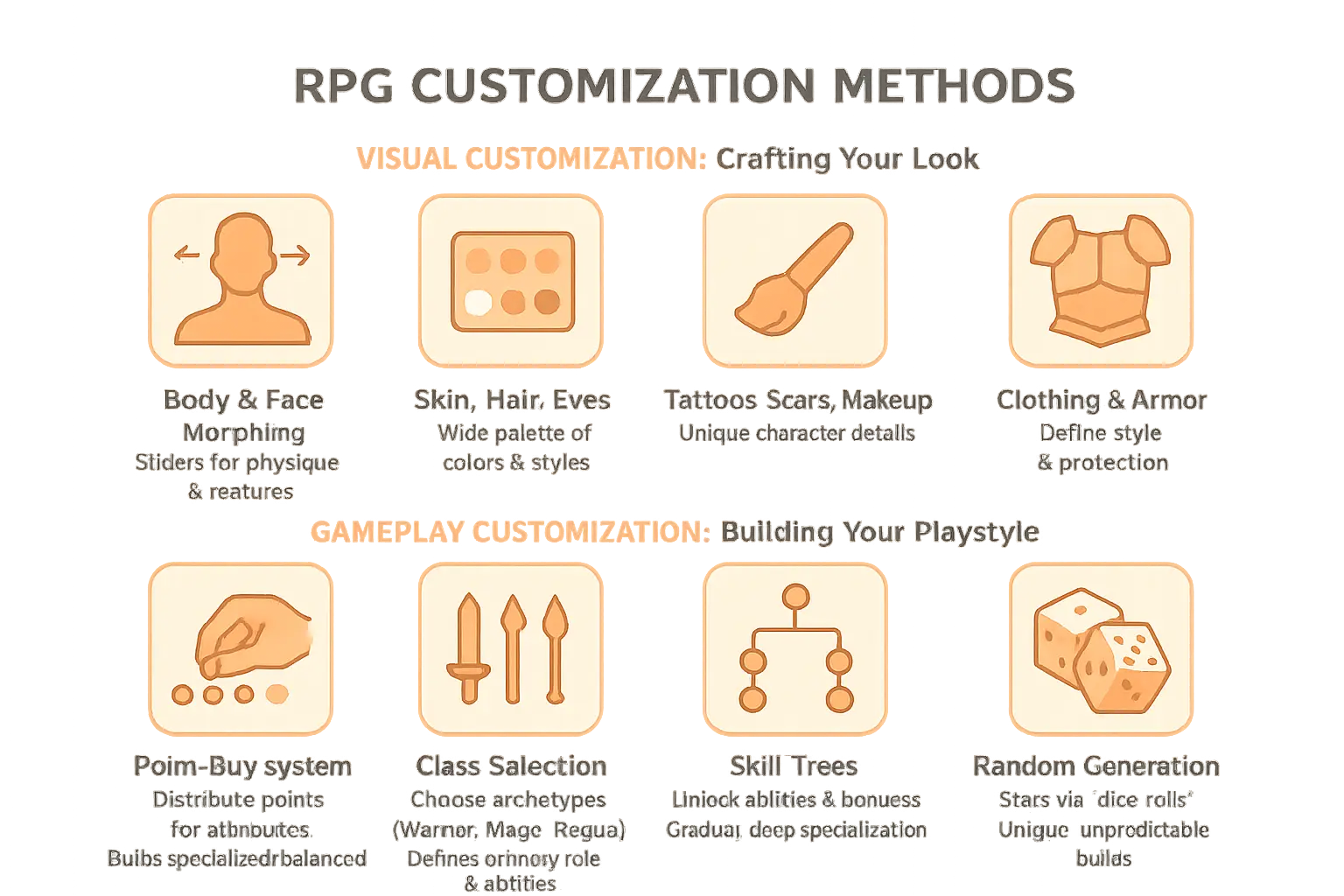
Visual customization: crafting your look
Modern RPGs give players powerful tools to create avatars that reflect their imagination. While some games like Baldur’s Gate 3 focus on deep visual options, others let you shape both appearance and abilities. Let’s explore the most common customization approaches.
When crafting your character’s appearance, you’ll typically find these options:
- Body and Face Morphing: Using sliders to change everything from height and build to cheekbone structure
- Skin Tone, Hair, and Eyes: A wide palette of colors and styles to choose from
- Tattoos, Scars, and Makeup: Adding unique details that tell a story
- Clothing and Armor: The gear that defines your character’s style and protection
Take The Elder Scrolls IV: Oblivion – its character system lets you adjust every facial feature through intuitive sliders. More recent games like Dragon Age: Inquisition offer presets for quick creation while maintaining detailed adjustment options. Developers use blendshapes to let you morph facial features seamlessly, allowing for subtle expressions that enhance immersion during dialogue sequences.
Gameplay customization: building your playstyle
What makes RPGs special is how customization affects gameplay. Unlike cosmetic changes alone, these systems shape how you interact with the game world. Here’s how different methods compare:
| Method | Description | Best For | In-Game Impact |
|---|---|---|---|
| Point-Buy System | Players distribute a set number of points into core attributes (Strength, Intelligence, etc.) | Creating a highly specialized or balanced build from scratch | Determines core strengths and weaknesses in combat and exploration |
| Class Selection | Choosing a pre-defined archetype (Warrior, Mage, Rogue) with a set of starting skills | Players who want a clear role and playstyle from the start | Defines the character’s primary abilities and role in a party |
| Skill Trees | Unlocking new abilities and passive bonuses by spending points earned through leveling up | Gradual and continuous character development throughout the game | Allows for deep specialization and adaptation as the game progresses |
| Random Generation | Character stats determined by a series of random “dice rolls” | Players who enjoy unpredictability and adapting to a challenge | Creates unique and sometimes unconventional character builds |
Games like Diablo 4 combine visual and gameplay systems, letting you create both appearance and abilities. While some players prefer the structure of class selection in World of Warcraft, others enjoy the freedom of point-buy systems in Mass Effect to create unique builds. Skill trees in Dark Souls let you evolve your character while maintaining challenge, and random generation in Vampire: The Masquerade – Bloodlines creates unexpected roleplay opportunities. The best RPGs let you mix different customization types for maximum flexibility.
How your choices shape the journey: customization and progression
From creation to consequences: the cause-effect cycle
Character sheets aren’t just paperwork – they’re blueprints for your entire journey. Every stat boost, skill pick, or background choice creates ripples that shape your path.
Think of it like planting a seed: high charisma might unlock diplomatic solutions, while maxed strength lets you bash through obstacles. These aren’t just numbers – they’re narrative tools rewriting how the game world reacts.
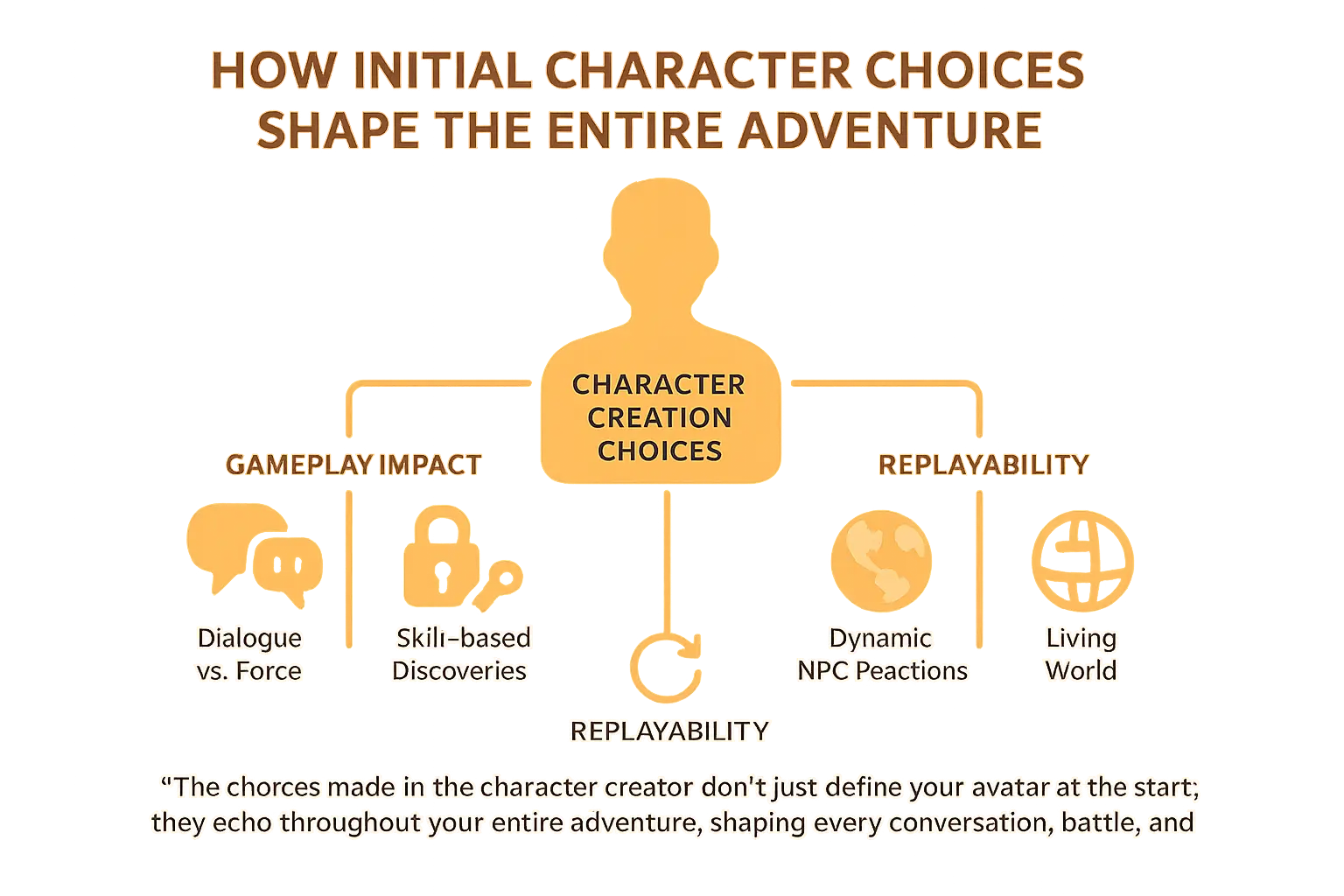
“The choices made in the character creator don’t just define your avatar at the start; they echo throughout your entire adventure, shaping every conversation, battle, and discovery.”
Gameplay: doors opened and closed
Ever felt stuck in a boss fight because you skipped lockpicking skills? That’s customization in action. Your build determines which paths stay open:
- High perception lets you spot hidden clues
- Combat perks grant special attack options
- Dialogue skills unlock unique quest resolutions
Like in Baldur’s Gate 3, picking elven ancestry might let you decode ancient runes no one else understands. Suddenly, you’re not just playing a character – you’re actively shaping possibilities.
Narrative: mirrors reflecting your decisions
Games like The Witcher 3 prove how race, class, or gender choices affect story threads. NPCs react differently to a noble-born mage versus a street-smart rogue. Ever had a questgiver refuse help because of your alignment? That’s the game acknowledging your character progression as part of its fabric.
These aren’t cosmetic changes. In Disco Elysium, investing in empathy changes how you interpret clues. Your gameplay choices become your character’s truth – and the world adapts accordingly.
Replayability: never the same story twice
Ever replayed a game as a rogue after completing it as a warrior? That’s the magic of deep customization. Each playthrough becomes a different story:
- A mage’s library access vs barbarian’s brute force
- Chaotic evil vs paladin alignments altering quest outcomes
- Companion relationships changing based on your ethics
This rejouabilité factor keeps players coming back, not just for new content, but to experience familiar worlds through fresh eyes. It’s not just replaying – it’s rediscovering.
Beyond the screen: the art of creating your hero
Ever wondered why players spend hours tweaking a character’s appearance or skills? It’s not just about looks. It’s about crafting a personal hero who mirrors their aspirations, fears, or quirks. This need to shape a protagonist isn’t limited to RPGs—it’s rooted in humanity’s love for storytelling. Whether in a game or a bedtime tale, seeing yourself in the hero’s shoes sparks connection. It’s no wonder 78% of parents say personalized stories boost their child’s imagination—because when kids recognize themselves in the narrative, they live the adventure. 🌟
Tellmestories taps into this instinct. Imagine creating a story where your child becomes the star. With tools like complete personalization, every detail—from their name to their favorite hobby—shapes the narrative. It’s not just a story; it’s their story. And with personalized books with photos, the character leaps off the screen into a physical book, bridging digital and real-world magic. Bonus? The AI remembers their preferences, so each tale evolves with their growth. Need a hero who’s a dragon-taming bookworm? Done. 📚🐉
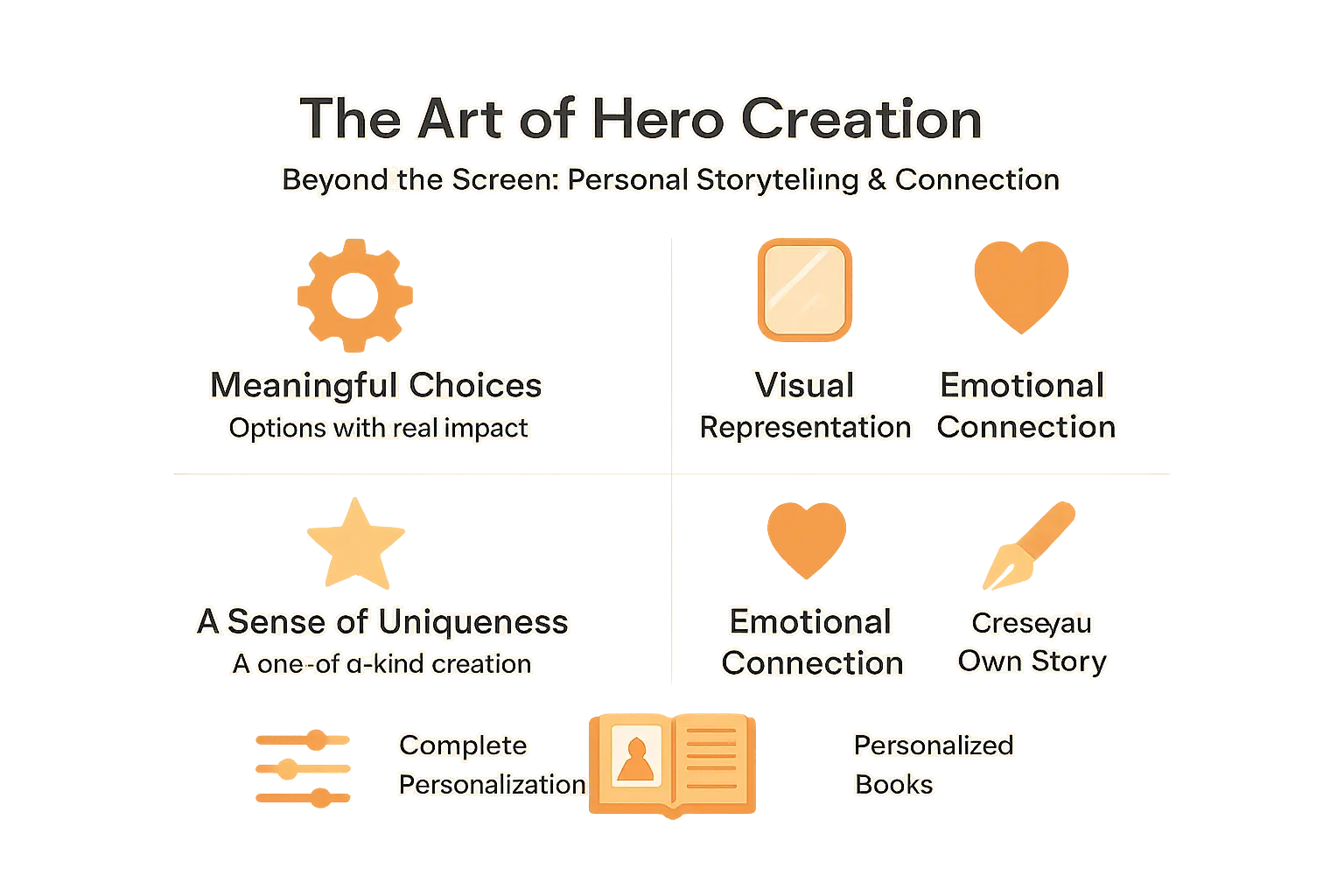
- Meaningful Choices: Options that have a real impact—like choosing a character’s skill that unlocks new plot twists.
- Visual Representation: The ability to see yourself in the hero, whether through custom traits or a photo that brings the character to life.
- A Sense of Uniqueness: Feeling that your creation is one-of-a-kind, shaped by your input and no one else’s.
- Emotional Connection: Building a bond with the character you’ve created, making every victory feel personal.
Ready to bring this magic to life? Create your own story—where every choice turns into an adventure. Because the best tales aren’t just read; they’re lived. 🚀
Your character, your legacy
Character customization isn’t just about picking a hairstyle or armor. It’s the bridge between your imagination and the game’s world. From choosing skills that shape your playstyle to crafting a hero that reflects your identity, every decision writes a new chapter of your story. Whether distributing points in a skill tree or creating a character via voice input, these choices define how you tackle quests, combat, and world interactions.
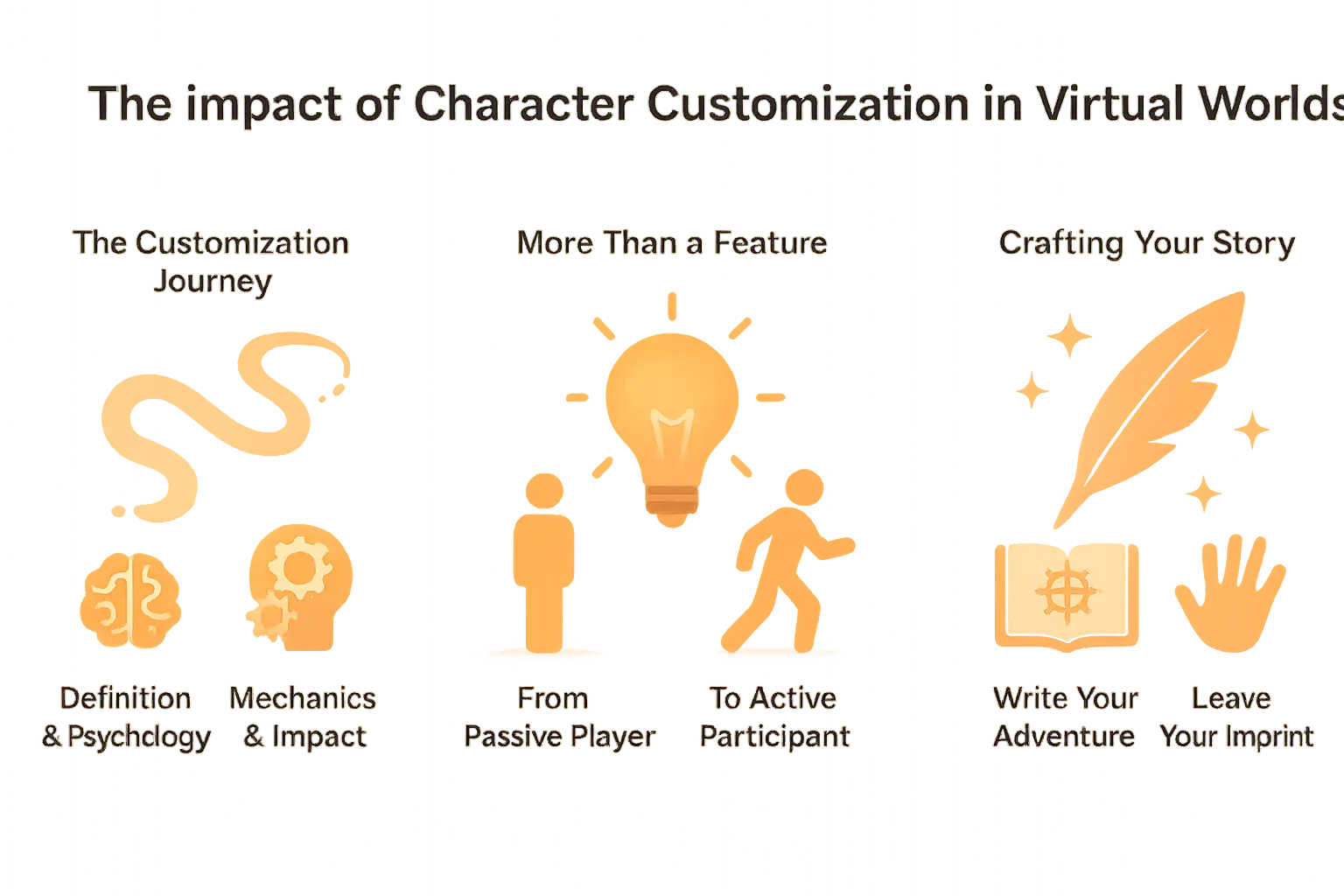
This feature transforms players from passive observers into active participants. Designing a character isn’t just tweaking sliders—it’s defining strengths, flaws, and life lessons. The RPG becomes a mirror of your choices, where progression feels earned, and every victory tastes personal. The game world remembers your decisions, shaping your journey through consequences tied to the identity you’ve crafted.
So next time you tweak a character’s eyes or select a class, remember: this is where your adventure begins. The game world waits—not just to be explored, but to be shaped by you. Whether you’re a warrior or a rogue, your choices matter. Make it count. Make it legendary. ✨
 Character customization legacy concept” />
Character customization isn’t just looks—it’s immersion in RPGs. Choices shape your journey, transforming you into an active participant. Through story or adventure, you leave a unique mark. Next time in the creator, remember: you’re crafting more than a hero. You’re building your legacy. Make it unforgettable. 🌟
FAQ
What’s the top tool for creating characters without spending a dime? 🎨
When it comes to free character creators, Picrew stands out as a go-to choice! It’s ideal for crafting everything from anime avatars to fantasy heroes. You can mix & match features like hairstyles, outfits, and accessories using intuitive sliders and presets. The catch? For commercial use, you’ll need to support them on Patreon. But for personal projects? Total freedom to design, download (SVG format), and tweak in free tools like Inkscape. Time to start building your hero! ⚔️
Can AI help me design a game character? 💡
Short answer: ChatGPT itself doesn’t create visual characters, but AI is supercharged for inspiration! Tools like Character.ai or AI art generators (MidJourney, DALL-E) can spark ideas for backstories, traits, or visuals. For example, prompt an AI for “a cyberpunk warrior with glowing tattoos” and use the concept in Picrew or game editors. Think of AI as your brainstorming buddy—helping shape quirks, skills, or even dialogue to flesh out your creation. You can’t export a full model, but you’ll get killer ideas! 💡
How do I build a custom character from scratch? 🛠️
Let’s break it down! First, pick your platform (Picrew for 2D, Skyrim’s editor for games). Then: 1. Define the basics: Gender, race, skin tone. 2. Tweak details: Use sliders for facial structure, height, scars, or tattoos. 3. Dress the part: Layer clothes, armor, or magical gear. 4. Gameplay traits: Assign stats (strength, charisma) or classes in RPGs. 5. Save & evolve: Export your design or refine it as the story unfolds. Bonus tip: In games like Baldur’s Gate 3, combine classes (Fighter + Rogue) for a playstyle that’s 100% you. Ready to craft your legend? 🎮
What’s the term for designing your own character? 🧠
It’s called character customization! This covers everything from tweaking a hero’s look (visual customization) to shaping their skills (gameplay mechanics). In RPGs, it’s your gateway to creating a unique identity—whether you’re fine-tuning a D&D elf’s bow skills or making a Fallout Vault Dweller with a cybernetic eye. The goal? A hero that feels like you—or the person you want to be. Like, literally, your avatar is the first step to owning your story. 🌟
Which game has the ultimate character creator? 🏆
For sheer depth, Skyrim and Persona 5 are legends. Skyrim’s system lets you sculpt every curve of your Nord hero, while Persona 5 dives into personality-driven choices that shape the narrative. Newcomers like God of War: Ragnarök now blend sliders with lore-rich backstories. If you’re into hyper-detailed faces, use Picrew—it’s a fan-favorite for its pixel-perfect control. For RPGs, look for games with point-buy systems (like D&D) that let you build skills and traits. Your perfect canvas awaits! 🎯
Is Picrew a free-to-use character generator? 🎁
Total yes—but with a small print! 📝 Picrew’s free for non-commercial projects, so your D&D avatar or fan art is all good. Want to sell your designs or use them in a game? Upgrade to their Patreon (from $5/month) for commercial rights. The SVG files you download are high-quality vectors, but you’ll need free tools like Inkscape to convert them to PNG/JPG. Bottom line: It’s a powerhouse if you’re a hobbyist or indie dev on a budget. 🎨
Can AI become my virtual partner? 🤖
Depends on what you mean! For romantic companionship, try Character.ai or Replika—they’re built for chat, not just looks. But if you’re asking about creating a romantic interest in a game, AI tools can help design their personality or story. Imagine an AI-generated quest where your knight-in-shining-armor has a tragic past—it’s all possible with a mix of AI creativity and game customization. Just remember: True love (or a compelling NPC romance) needs human touch to feel real. 💕
How do I make a character that feels truly real? 🫶
Realness comes from details that tell a story. Start with the basics: scars, a unique voice, or a signature weapon. Then dig deeper—give them flaws (e.g., “paranoid about magic”) or ties to the world (a lost sibling quest). In games, pair this with skill trees that reflect their growth: a thief who learns to negotiate instead of steal? That’s character evolution. For visual creators, add imperfections (a crooked smile, mismatched armor) to humanize them. And hey, use your own traits—players connect when they see a bit of themselves in the hero. 🎭
What extra features does Character AI+ offer? 🔥
Character AI+ (or similar premium tools) unlocks next-level customization. Think dynamic facial animations, voice modulation, or AI-driven interactions where your character responds to in-game events. Some platforms let you generate lore, skills, or branching dialogue trees with a click. For creators, it’s a way to add depth without coding—like a sidekick that adapts to your choices. If you’re serious about storytelling, the “+” is your cheat code for immersion. Just like upgrading from a sketch to a full-blown comic panel. 🎨✨