The key takeaway: A custom story theme isn’t just a topic—it’s the story’s heartbeat. Strong themes (like “love demands sacrifice” vs. generic “love”) connect plot, character growth, and emotional depth. Over 100+ themes exist to spark unique ideas, from identity to justice. Mastering this turns drafts into resonant, unforgettable narratives. Ready to write with purpose?
Ever feel like your story has a killer plot and unforgettable characters, but something’s missing? 🤔 That invisible glue holding everything together? Welcome to the world of custom story themes. This guide dives deep into crafting themes that aren’t just generic ideas but reflections of your unique voice and experiences. From uncovering hidden messages in your draft to mastering the thematic square (yes, it’s as powerful as it sounds), we’ll transform your story’s heartbeat into a pulse readers won’t forget. Ready to stop writing by accident and start building meaning on purpose? 💡
Unlock your story’s potential: a guide to crafting custom story themes
Ever feel your story has a killer plot and vivid characters but something’s… off? 🤔 That invisible thread? That’s your theme. Think of it as your story’s heartbeat—making readers think, “This gets me.”
A powerful theme isn’t just “love” or “power.” It’s the why behind the action. Resilience can be a child overcoming bullies (relatable) or a cyborg’s quest for humanity (fresh). Same theme, different resonance—customization.
Mine your instincts. Wrote a revenge plot where the hero ends up lonely? Your theme might be “vengeance isolates.” Themes should echo universally—your execution makes them unique. Check the 100+ themes (yes, “identity” and “justice” are clichés—until you twist them).
Respect genre DNA. A sci-fi theme about AI ethics won’t fly in a rom-com—unless the love interest is a sentient robot. Now the theme clashes with genre, creating tension. Let your theme challenge, not erase, expectations.
Balancing clues and clarity? Use the thematic square: Positive (e.g., courage), contradictory (cowardice), contrary (apathy), negation of the negation (self-sabotage). Let characters embody these—theme breathes organically.
Themes fuel character growth. A protagonist afraid of loss learns to let go when a storm destroys their home—theme “letting go enables growth” isn’t just told—it’s lived. Ask: What’s the emotional takeaway? If your story’s heart is beating, readers will feel it. 💬
What exactly is a story theme? (and what it’s not)
Beyond the one-word topic
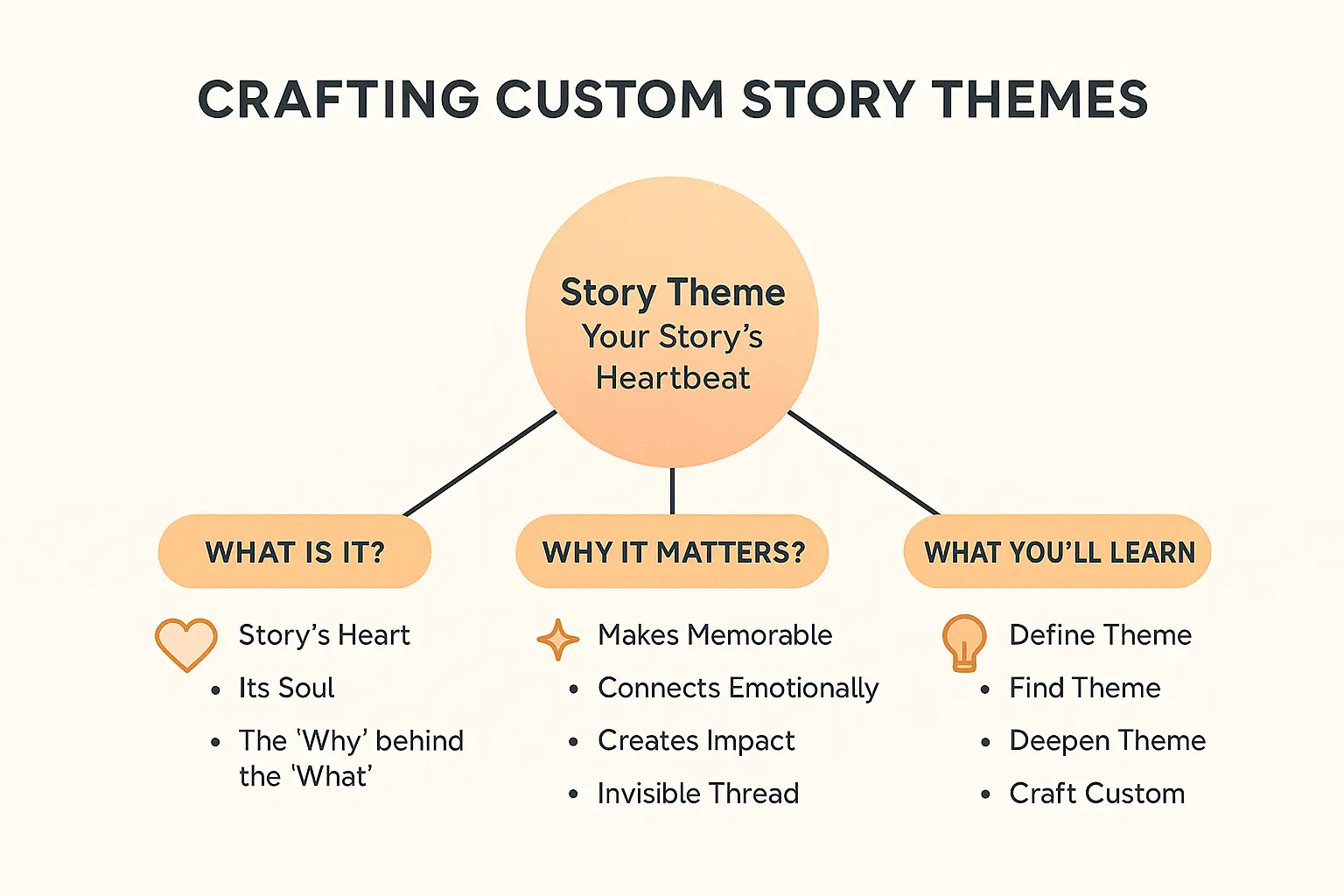
Let’s start with a common confusion: a topic isn’t a theme. A topic like “love” or “justice” is just a starting point. A real thematic concept turns that into a specific exploration. Think of it as asking: what about love? What about justice?
For example:
- Topic: Love → Theme: “Love requires letting go of the past”
- Topic: Justice → Theme: “Justice cannot be achieved without personal sacrifice”
This distinction creates custom story themes that resonate. A topic is a label. A theme is the thematic statement – the angle you’re exploring through your characters and plot.
Theme vs. message vs. moral
Here’s the thing: themes, messages, and morals aren’t the same. A theme is an open-ended question or exploration. A message or moral is a conclusion.
Think of it like this:
- Theme: “Power corrupts those who seek it”
- Message: “Power always corrupts”
- Moral: “Don’t seek power, or you’ll lose yourself”
A great story theme is an argument you have with yourself. The story is you exploring both sides, not preaching a conclusion you’ve already reached.
Strong themes don’t preach. They question. They make readers think. That’s what makes them custom story themes that stick.
How themes connect your plot and characters
A theme isn’t a label you stick on later. It’s the squelette de l’histoire – the skeleton that holds everything together. Your characters’ arcs and plot points are how you bring that skeleton to life.
Take Bilbo Baggins in The Hobbit. His character development isn’t random. It’s tied to the theme of courage. When he faces spiders alone, he’s not just surviving – he’s proving the theme that “courage grows through adversity.”
The plot is your tool to test this. Every event should challenge your characters and force them to confront the theme. If your theme is “power corrupts,” your plot should throw characters into situations where they gain power – and see what happens.
That’s how themes become more than ideas. They become the engine driving your story’s heart.
How To Find The Hidden Theme In Your Story
Did you know your draft might already contain secret themes? 🤫 Most writers accidentally embed universal ideas while writing. Our job? Dig them out and polish like gold. Let’s uncover your story’s heartbeat together 🔍
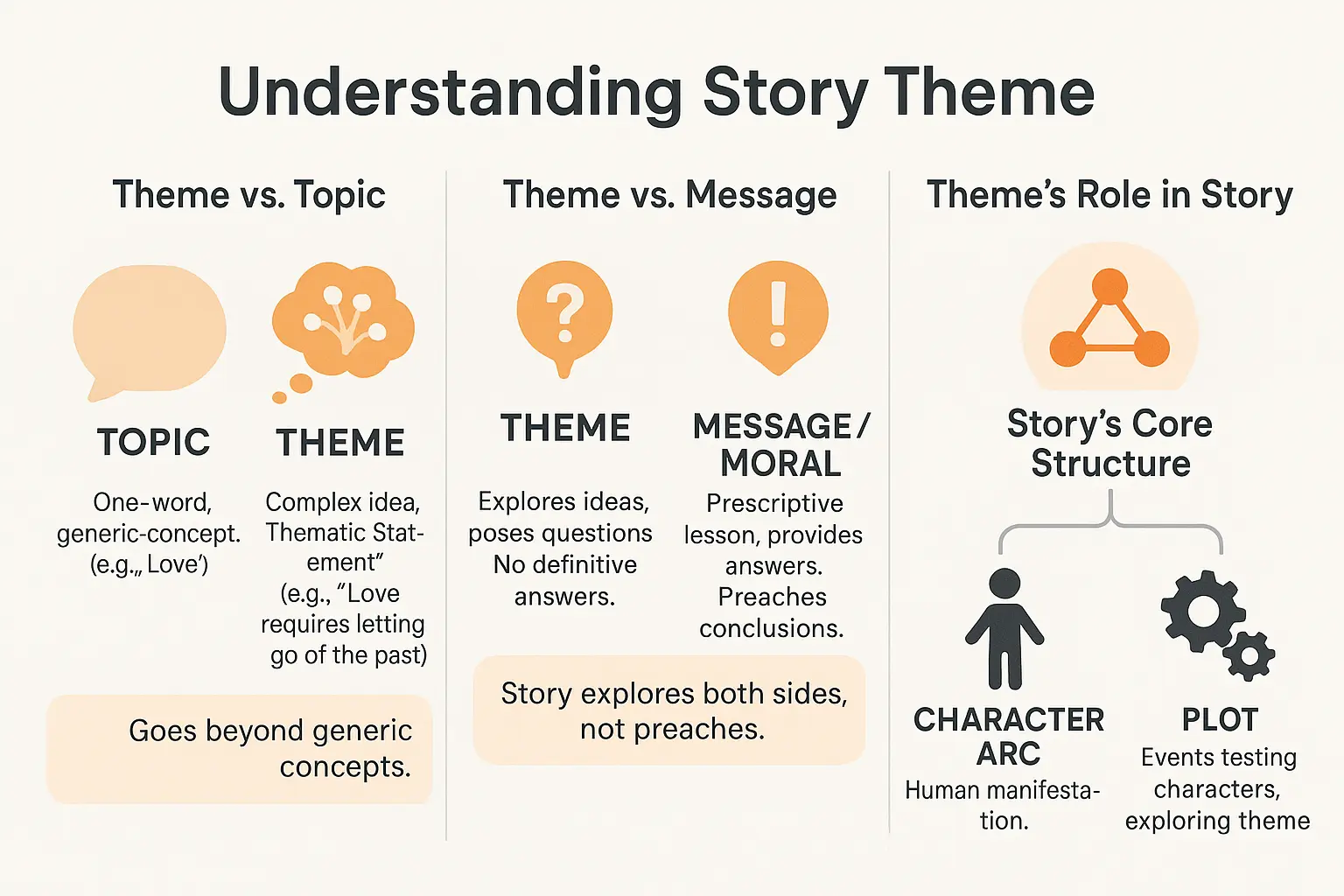
Ask The Right Questions
Start with these 5 game-changing prompts:
- What life lesson does your hero gain by the final chapter? (e.g., trust or sharing)
- What’s the real conflict beneath sword fights or romantic tension? (Power dynamics or belonging?)
- What impossible choice defines your character’s moral compass? (Sacrifice family or save friends?)
- Which symbols keep popping up like stubborn weeds? (Broken watch? Recurring storm?)
- If you had one sentence for your story’s message, what would it be? (“Kindness beats cruelty” or “Family comes in unexpected forms”)
These questions act like metal detectors for buried themes. Keep digging! 💎
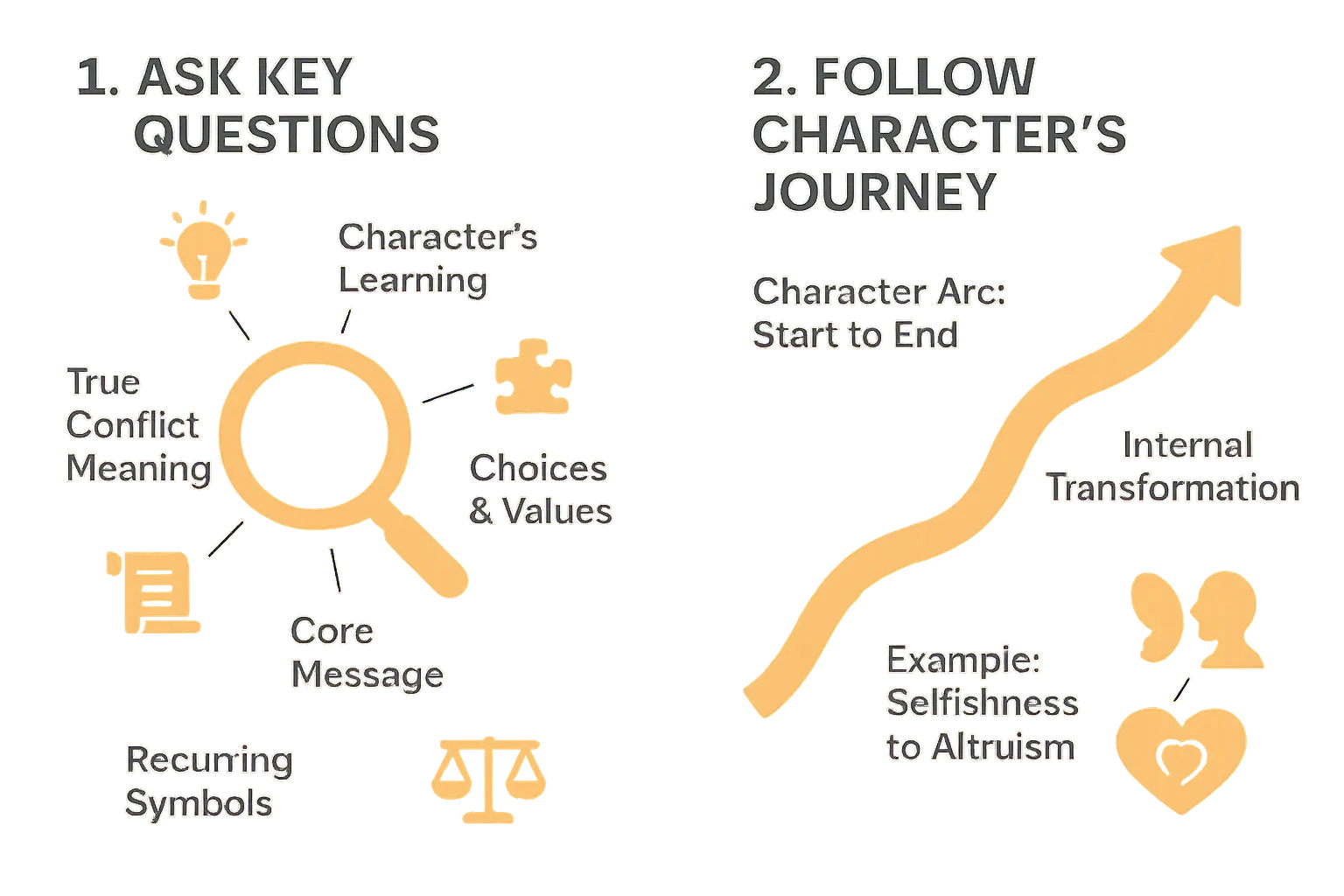
Let Your Character’s Journey Be Your Guide
Watch how your protagonist transforms. That journey is a character arc roadmap. Take a greedy CEO who becomes a philanthropist – instantly we’re talking internal transformation around greed vs generosity.
Check their starting point:
- What worldview did they enter with? (Money=happiness? Trust=weakness?)
- What flaws made life hard? (Stubbornness? Fear of connection?)
Then track their evolution:
- What changed in their life? (Child’s perspective? Near-death experience?)
- What values emerged stronger? (Compassion? Teamwork?)
That transformation arc? It’s your theme wearing hiking boots 🥾
Want to craft stories that make kids say “Mais c’est moi dans l’histoire!”?
Use Tellmestories to test themes with voice notes. Their AI remembers what resonates with your child’s personality while keeping data private 🔐
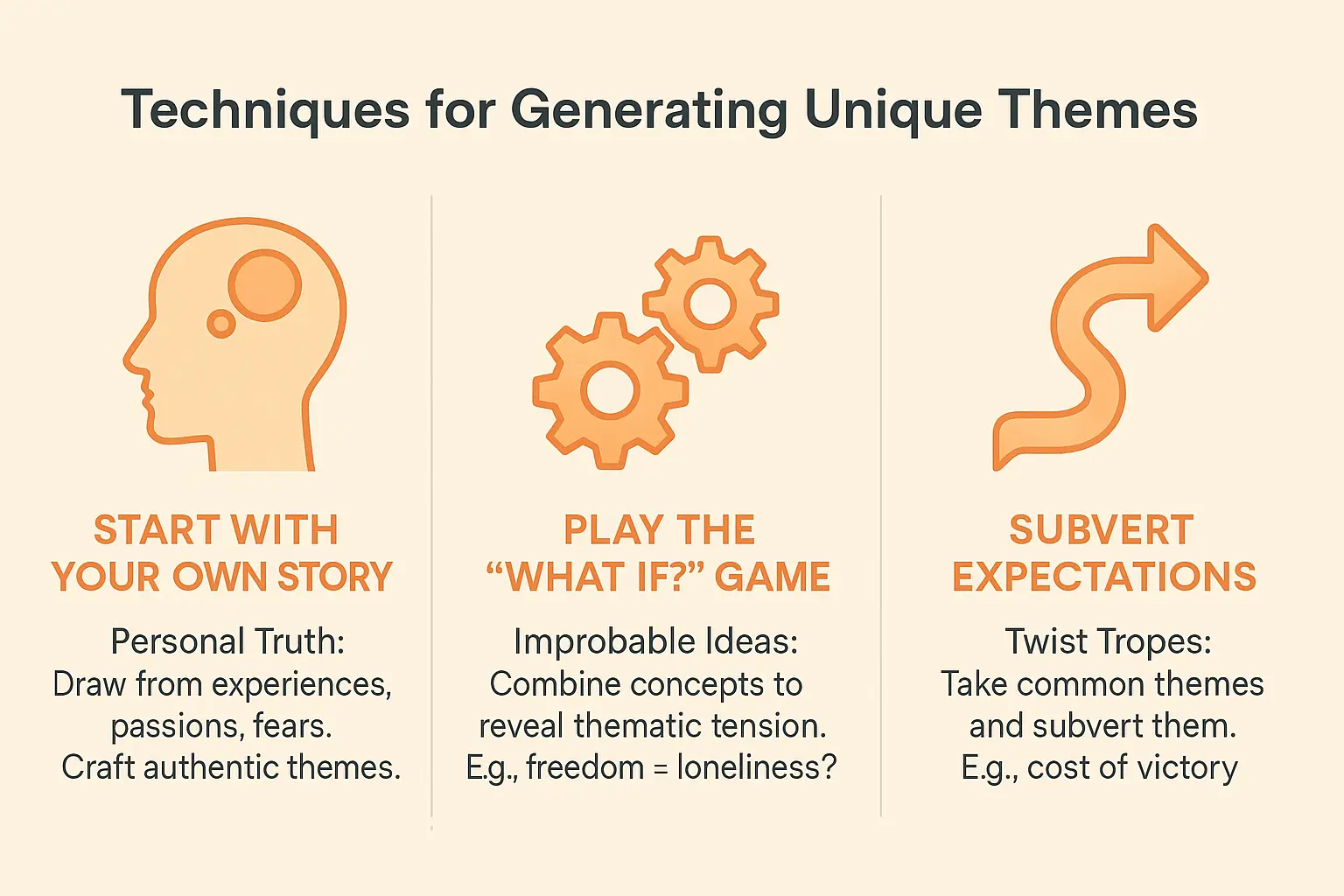
From generic to custom: techniques for truly unique themes
Start with your own story
Want to create stories that feel personal? Begin with your own life 🌟. Parents crafting tales for kids often draw from real moments – like bedtime struggles or first-day-of-school nerves. Your child’s dinosaur obsession could teach patience, or your own childhood fears might inspire a monster-chasing adventure with their name in every chapter.
Imagine creating a customized book where your child’s name appears in adventures shaped by your family’s values. The AI remembers their favorite characters and learning milestones, making each story relevant. Describe your morning routine and watch it become a toothbrush-wielding superhero’s daily quest!
This approach works because themes born from lived experience carry emotional truth. When building stories through WhatsApp voice notes, describe a challenge you’ve faced and let AI transform it into a magical adventure. Turn your family’s vacation mishaps into a treasure hunt story where even rainy days become clues.
Play the ‘what if?’ game
Challenge assumptions by asking “What if…?” 🔍 Twist ordinary ideas into surprising ones:
- What if bedtime stories actually kept monsters away?
- What if vegetables could talk and teach manners?
- What if clouds collected children’s worries instead of rain?
- What if their favorite toy came alive when adults left the room?
Combine unrelated concepts for fresh angles. Turn soccer practice into teamwork lessons, ballet into patience, or puzzle-building into perseverance. The voice-to-story technology lets you whisper your “what if” ideas and watch them materialize as personalized tales. Try mixing a hobby with a life lesson – like transforming LEGO building into understanding cooperation.
Subvert expectations
Flip familiar themes 🔄 Try these bravery story twists:
- Traditional: Hero defeats dragon
- Twisted: Hero befriends dragon by admitting fear
- Radical: Dragon becomes hero by protecting village from greedy king
- Unexpected: Knight learns courage means asking for help
Create potty training adventures where toilets become portals to imaginary worlds. Let monsters teach classroom rules through rhymes. When subverting themes, let the AI’s smart memory feature track which twists resonate best with your child’s developmental stage.
Subversion works best when grounded in reality. Generate instant stories through WhatsApp and test different approaches. The AI builds better stories over time by remembering what works – like how your child’s favorite animal became the perfect vehicle for teaching empathy.
Go deeper: exploring your theme’s complexity with the thematic square
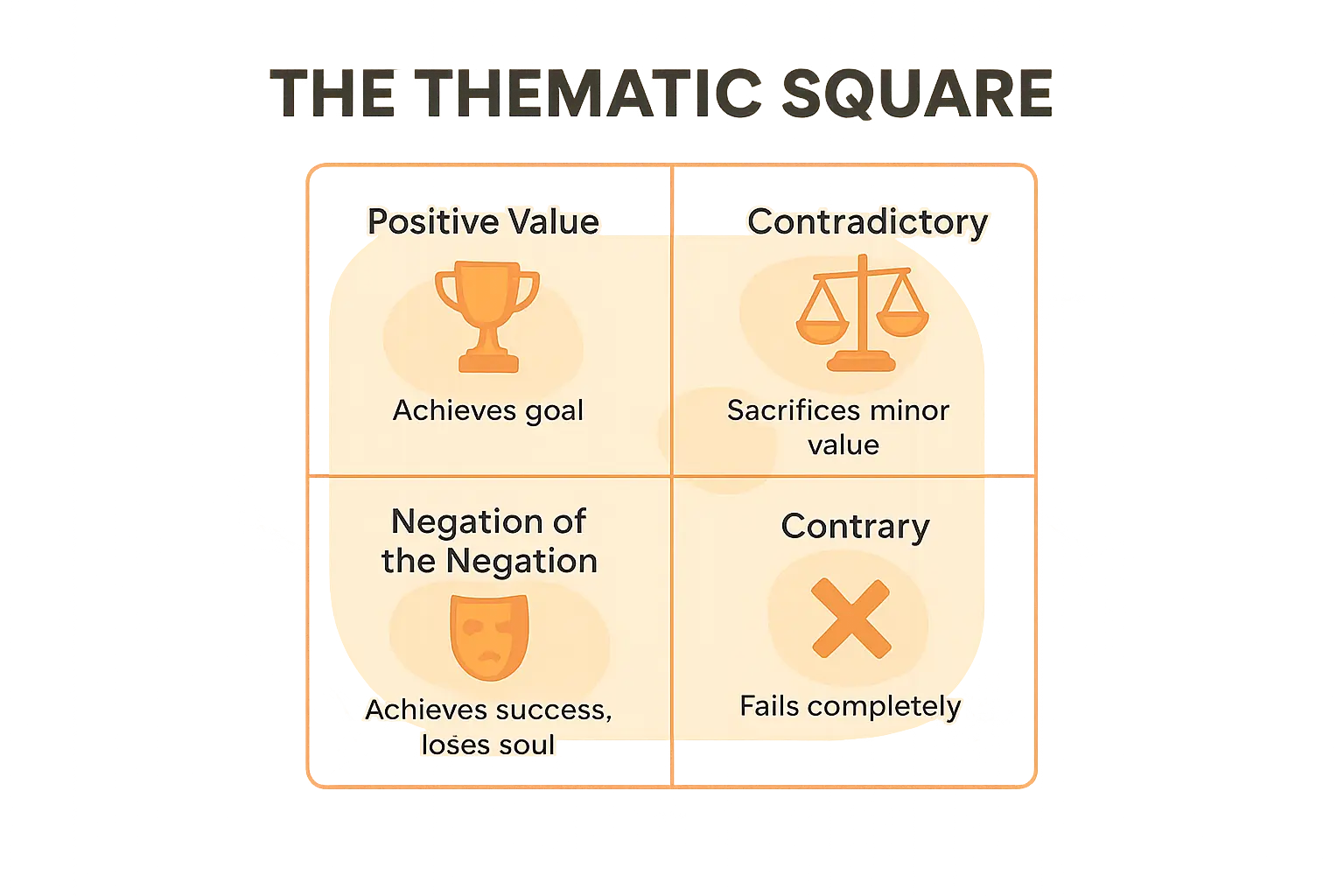
Moving beyond black and white
Stories thrive on nuance. Binary themes like “good vs evil” or “love vs hate” feel flat. Real life isn’t that simple—and neither should your narrative be. 🎯
Enter the Thematic Square, a tool from Robert McKee’s Story that maps your theme’s full spectrum. It’s not just about opposing ideas; it’s about exploring the shades of gray that make stories resonate. Most decisions involve subtle trade-offs, not clear right-or-wrong choices. This tool reflects that complexity.
How the thematic square works
Let’s break down the four corners using “Justice” as an example:
- Positive Value: Justice (protagonist’s goal, e.g., a detective seeking truth).
- Contradictory: Injustice (direct opposite, e.g., a corrupt judge).
- Contrary: Inequity (subtle flaws, e.g., biased legal systems that aren’t fully unjust).
- Negation of the Negation: Tyranny (justice twisted into oppression, e.g., “fair” laws that strip freedoms).
This framework forces you to ask: How far will your characters go to uphold—or destroy—the theme? 💡 It reveals how themes evolve under pressure. A system built on Justice might degrade into Tyranny when pushed to extremes, adding narrative inevitability.
Putting it into practice
| Corner | Thematic Value | In a Story… |
|---|---|---|
| Positive | Success | Hero achieves their goal (e.g., starting their dream business). |
| Contradictory | Compromise | Hero sacrifices ethics to win (e.g., cutting corners for profit). |
| Contrary | Failure | Hero’s plans collapse (e.g., bankruptcy after a risky investment). |
| Negation of the Negation | Selling Out | Hero wins but loses their identity (e.g., becoming the “villain” they once hated). |
Use these corners to shape your characters’ arcs. Let the antagonist embody tyranny, a mentor cling to compromise, and a sidekick represent pure success. This creates conflict that feels inevitable, not forced. For example, in The Hunger Games, Katniss’s transformation into a rebel symbol (Negation of the Negation) deepens the “Freedom vs Control” theme.
Stories like The Lord of the Rings show how navigating the thematic square creates resonant arcs. The hero’s journey isn’t about rejecting extremes—it’s about exploring all four corners to find what truly matters. 🌟 When characters confront every dimension of a theme, your story gains depth that lingers long after the final chapter.
Weaving your theme into the fabric of your story
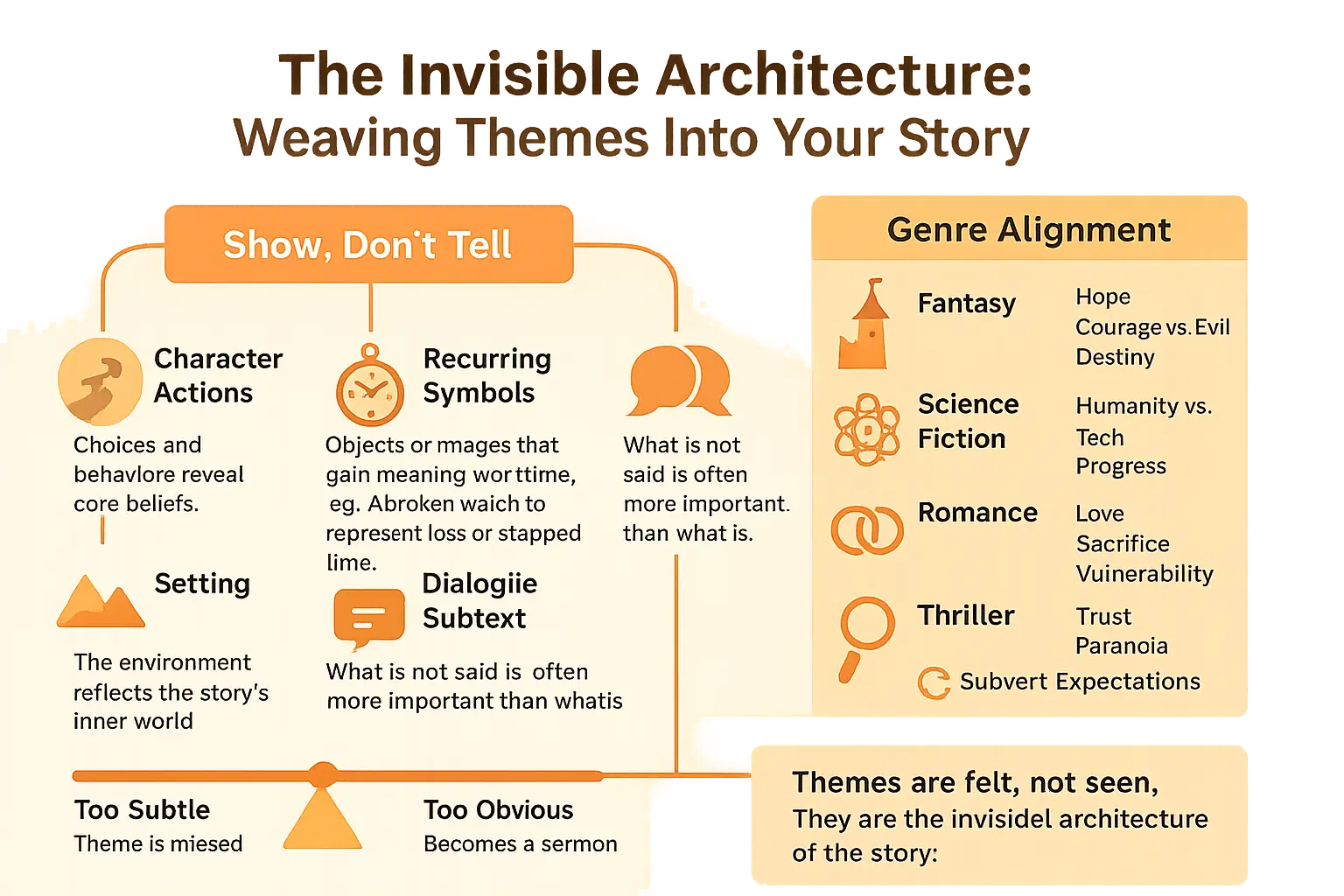
Show, don’t tell: the golden rule of theme
Themes resonate most when they’re felt, not stated. Imagine a child staring at a broken watch – this subtle detail subtly communicates grief better than any monologue. Through character choices, recurring symbols, and environmental cues, you embed meaning without spelling it out. Think of Chekhov’s famous advice: “Don’t tell us the moon is shining, show us light glinting off broken glass.”
Tellmestories’ AI-generated tales master this by turning personal details – like a child’s favorite toy – into narrative anchors. The magic lies in embodied storytelling: a scared character might fiddle with their shoelaces rather than declaring “I’m anxious.”
Aligning your theme with genre expectations
Genres act as thematic playgrounds with unwritten rules. Here’s how different genres naturally frame themes:
- Fantasy: Hope, courage vs. evil, and destiny
- Science Fiction: Humanity vs. technology, progress, and ethics
- Romance: Love, sacrifice, and vulnerability
- Thriller: Trust, paranoia, and justice vs. revenge
But don’t get trapped by conventions! The best stories subvert expectations – like a romance where independence becomes the true theme. Tellmestories’ WhatsApp-based approach exemplifies this by making personalized growth the hidden thread in every genre, whether a fairy tale or space adventure.
Finding the sweet spot between subtle and obvious
The best themes are felt, not seen. They are the invisible architecture that gives the story shape, leaving the reader with a profound feeling long after the last page.
Too cryptic? Readers might miss your message. Too blunt? You risk sounding preachy. Balance comes through emotional breadcrumbs: a character’s evolving relationship with their sibling might subtly explore reconciliation, while their struggle to fix a broken kite could symbolize resilience. Tellmestories nails this by weaving life lessons into bedtime stories – like potty training disguised as a pirate’s quest to find treasure. The trick? Let themes emerge organically from character journeys, not lectures.
Ready to write? bring your custom theme to life
Want to craft stories that stick with readers long after they turn the last page? 🎯 It all starts with a theme that resonates. Let’s break down how to transform a simple idea into a story’s heartbeat.
Themes aren’t rigid rules—they’re compasses. Use the thematic square to dig deeper. Start with your core value (like “courage”), then explore its opposite (cowardice), a nuanced alternative (prudence), and its darkest form (recklessness). This framework reveals layers even seasoned writers miss! 🌟 For example, a hesitant character choosing caution over impulsiveness adds depth to “bravery.”
Need inspiration? Check out Tellmestories’ story themes library—a goldmine trusted by 10,000+ parents. Why? Because 83% of personalized stories with layered themes keep kids engaged longer. 📚
- Find your core idea: Mine your story or life for universal truths.
- Make it custom: Twist it—what if bravery hides in fear?
- Go deeper: Use the thematic square to explore shadows and light.
- Weave it subtly: Let characters and symbols show the theme, not lectures.
You’ve got the tools. You’ve got the ideas. Time to start writing your story’s heart. ✨
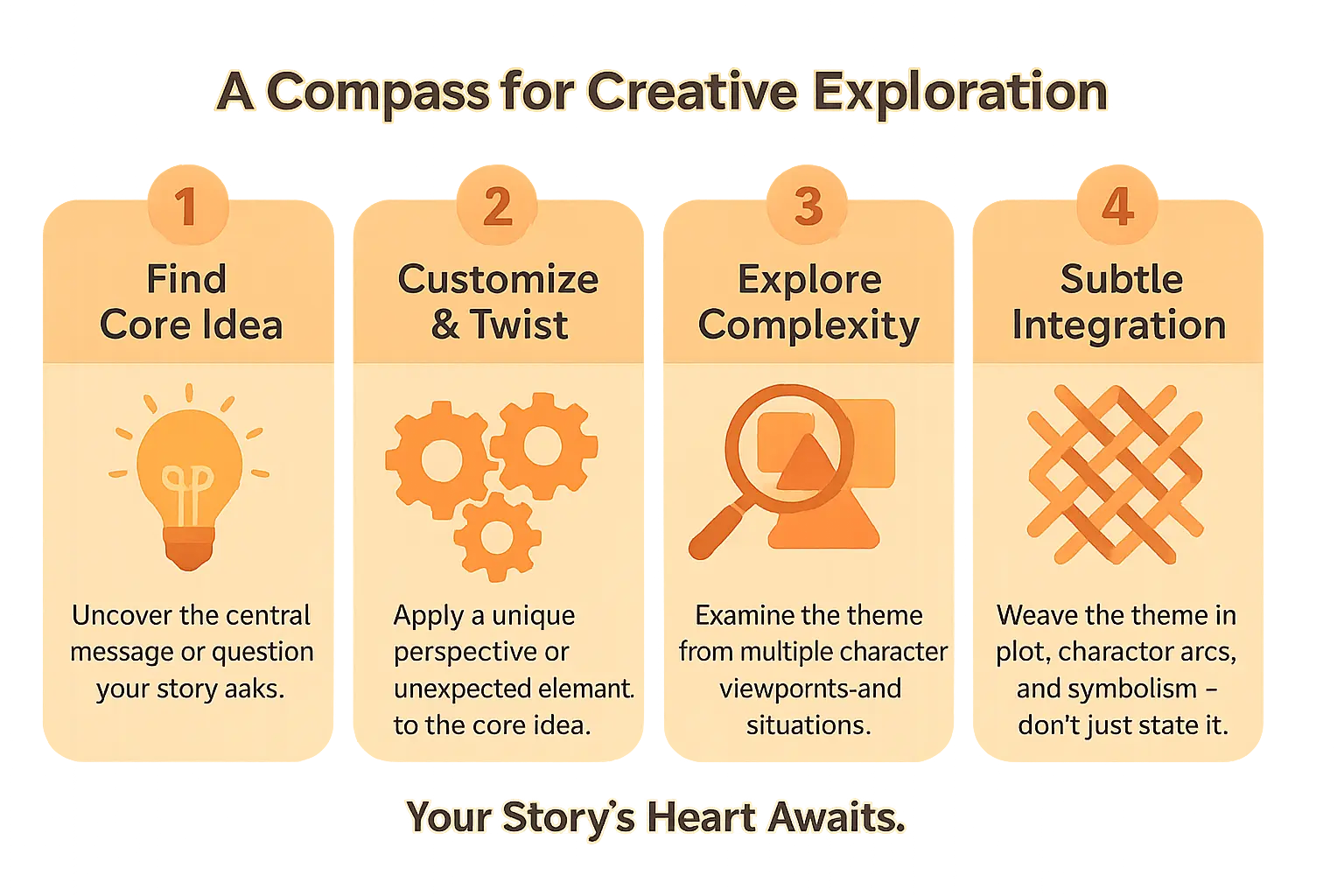
Your story’s theme is its heartbeat—turning plot into purpose, characters into reflections of humanity. Shape custom themes through arcs, twists, and the thematic square. Let your theme guide choices, symbols, emotions. Time to write. Your story’s soul is waiting. 🚀 Ready?
FAQ
How do I create a unique theme for my story?
Creating a unique story theme starts with digging into your characters’ journeys or personal experiences. Think about the core question you want to explore—like “Can freedom exist without responsibility?” or “Is loyalty always virtuous?” Use the thematic square to add depth: take your central idea, then twist it by exploring its contradictory (direct opposite), contrary (gray area), and negation (extreme form). For example, if your theme is “justice,” its negation might be “tyranny disguised as justice.” This creates rich layers that make your theme feel fresh and complex. Time to brainstorm! 🚀
What are some good topics for a story?
Good story topics often revolve around universal human experiences like identity, survival, or redemption. But here’s the twist: pair them with unexpected contexts! For example, “identity” could play out in a sci-fi world where clones question their purpose, or “redemption” might follow a villain who’s forced to confront their past. Check out categories like Health & Neurodiversity (e.g., “depression,” “autism”) or Society & Culture (e.g., “conformity,” “tradition”) for inspiration. The key? Make it personal—your story’s heartbeat should echo your own curiosities or dilemmas. 💡
What are themes for stories?
Themes are the “why” behind your story’s “what.” They’re not just one-word topics (like “love”) but deeper explorations—like “love requires sacrificing your past.” Stories can have multiple themes, and they often emerge organically. For example, a narrative about a hero’s quest might explore power, corruption, and redemption. Themes guide your plot and character arcs, making your story resonate. Think of them as the skeleton of your narrative—they’re invisible but hold everything up! 🦴
What’s a solid theme for a short story?
Short stories thrive on focused, punchy themes. Try “sacrifice” (e.g., a character gives up something to protect a stranger) or “dissillusion” (a character’s beliefs shatter in 48 hours). These themes let you dive deep without needing a 500-page arc. For a twist, subvert expectations: a story about hope could end with the protagonist failing but still choosing optimism. Need ideas? Browse categories like Forces of Nature (e.g., “time,” “death”) or Virtues & Vices (e.g., “courage,” “pride”). Keep it tight, keep it bold! 🎯
How do I brainstorm a theme?
Start with these 3 strategies: 1. Ask questions about your characters: What do they learn? What tough choices do they make? 2. Mine your own life: What’s a lesson you’ve learned that could fuel a story? 3. Play the “What if?” game: Twist tropes like “technology connects us” into “technology erodes empathy.” Pro tip: Use the thematic square to challenge your ideas. If your theme is “success,” explore its darker shades—like “selling out to win.” The goal? Turn generic concepts into something that feels uniquely yours. 🎲
What’s a simple theme example?
A simple theme answers: “What’s the story really about?” For example: – Topic: Friendship – Theme: “True friendship survives betrayal.” Themes like “loss,” “courage,” or “identity” work well when paired with specific stakes. A child’s story about loss might focus on “growing up means letting go of childhood magic.” Keep it clear but evocative—your theme should be a compass, not a lecture. 🧭
What should a 12-year-old write a story about?
Kids thrive on relatable, vivid ideas! Try themes like “overcoming adversity” (e.g., beating a fear of public speaking) or “friendship” (e.g., resolving a fight with a best friend). Use categories like Experiences (“growing up,” “discovery”) or Feelings (“loneliness,” “joy”) to spark ideas. Add a fun twist: What if a character’s imaginary friend teaches them about identity? Keep sentences short, themes bold, and let them run wild. 🧒✨
What are creative topics to explore?Creative topics blend the familiar with the unexpected. Try: – “Identity in a world where memories are currency” (mix Perception vs. Reality with Technology). – “Redemption for a time-traveler who keeps screwing up history” (pair Moral Ambiguity with Science Fiction). – “Survival in a forest where trees whisper secrets” (merge Nature with Mystery). Dip into categories like Religion & Philosophy (“free will”) or Health & Neurodiversity (“bipolar disorder”) to add nuance. The trick? Combine two genres or themes to make your idea pop. 🎨
What are catchy story title ideas?
Titles should tease your theme while hooking readers. Examples: – “The Clockmaker’s Lie” (hints at time and deception). – “Beneath the Neon Sky” (evokes urban isolation or hope). – “The Last Seedling” (suggests survival or hope). Use bold imagery (“neon sky”) or juxtapose opposites (“last seedling”). Check Forces of Nature (e.g., “nature vs. technology”) or Society & Culture (e.g., “tradition vs. progress”) for ideas. Keep it snappy—your title is your first and last impression. 🎯.