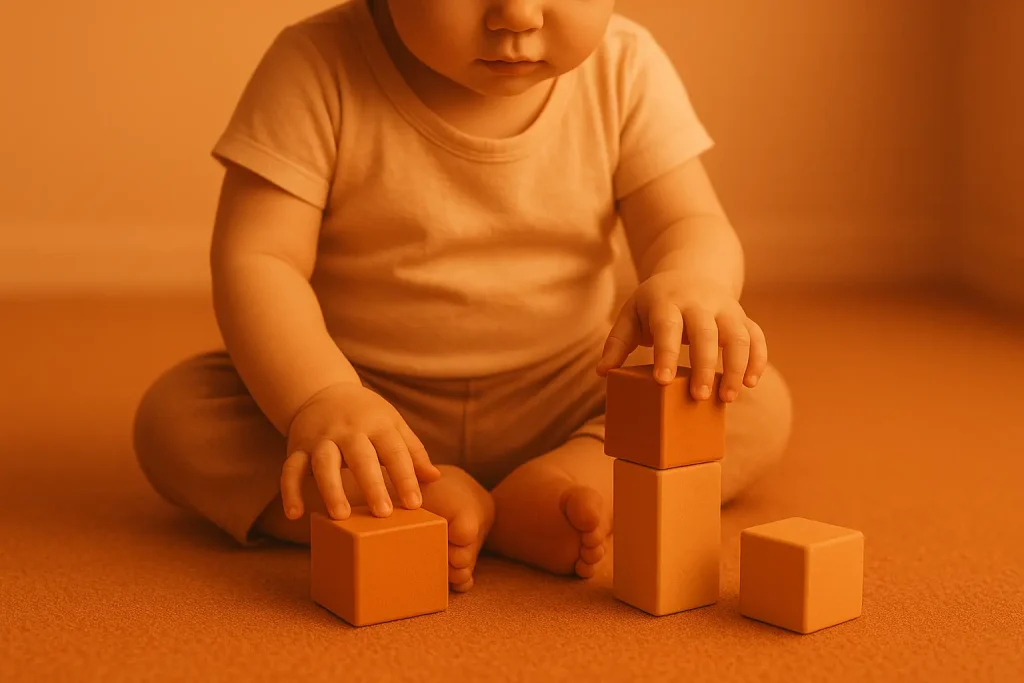
Short on time? 🌈 Teaching colors isn’t just memorization—it’s a brain booster for language, math prep, and observation! Start early with daily objects (no fancy tools needed!), mix play with learning, and watch their minds grow. 80% of toddlers grasp basics by 2.5 years—patience > perfection. Turn ordinary moments into vibrant adventures!
Ever felt stuck turning learning colors into a fun game instead of a boring quiz? 😅 Let’s face it: teaching red, blue, and yellow shouldn’t feel like pulling teeth! This guide spills the beans on how to make color recognition a breeze using everyday objects (yes, even that messy pile of Legos!). Spoiler: you’ll uncover why this cognitive milestone shapes language and math skills later on—and how simple tricks like squishing paint in a bag (no art skills required! 🎨) can turn chaos into learning magic. Ready to roll? 🎯
Ready to dive into the world of colors with your little one?
Ever wondered how to turn learning colors into playful bonding instead of a quiz? 🌈 For many parents, teaching colors feels tricky—but it’s simpler (and way more fun!) than you think.
Color recognition isn’t just naming a red apple or blue sky. It boosts vocabulary, early math skills, and emotional growth. Think of it as a superhero power for your child’s brain! 🦸♂️
Here’s the secret: no fancy gadgets or toys needed. Everyday moments—like picking socks or snack time—become magical color adventures. Let’s break it down:
- Why colors matter for growth
- When kids typically learn them (spoiler: earlier than you’d guess!)
- Easy, no-prep games to try today
Your time is gold, so all activities use stuff you already own. No complicated setups—just joyful, messy learning. 💡
Still unsure? Mixing play with learning cements skills faster. Plus, these moments create memories that outlast any toy. Ready to transform “What color is this?” into a daily adventure? Let’s roll! 🚀
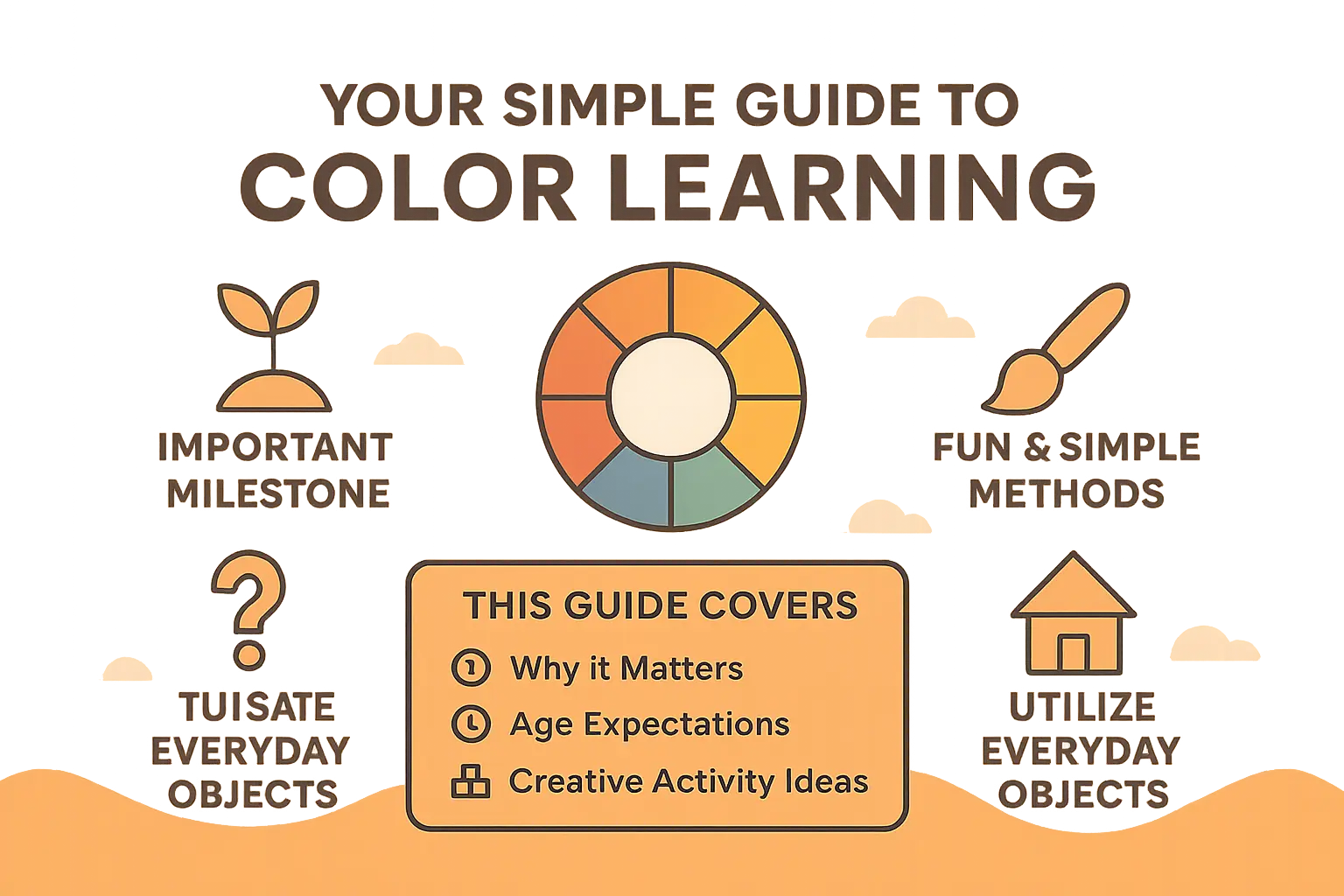
Quick preview: personalization is the secret sauce. Imagine stories where your child becomes a “Color Explorer” solving rainbow riddles! (We’ll dive deeper later.) For now, trust this fun and simple guide will surprise you with how much your toddler absorbs through play. 🎨
Why learning colors is more than just a game
Ever wondered why little ones get so excited about sorting red blocks from blue ones? 🎨 It’s not just playtime! Learning colors is like giving their brains a full workout. Let’s uncover what’s really happening here.
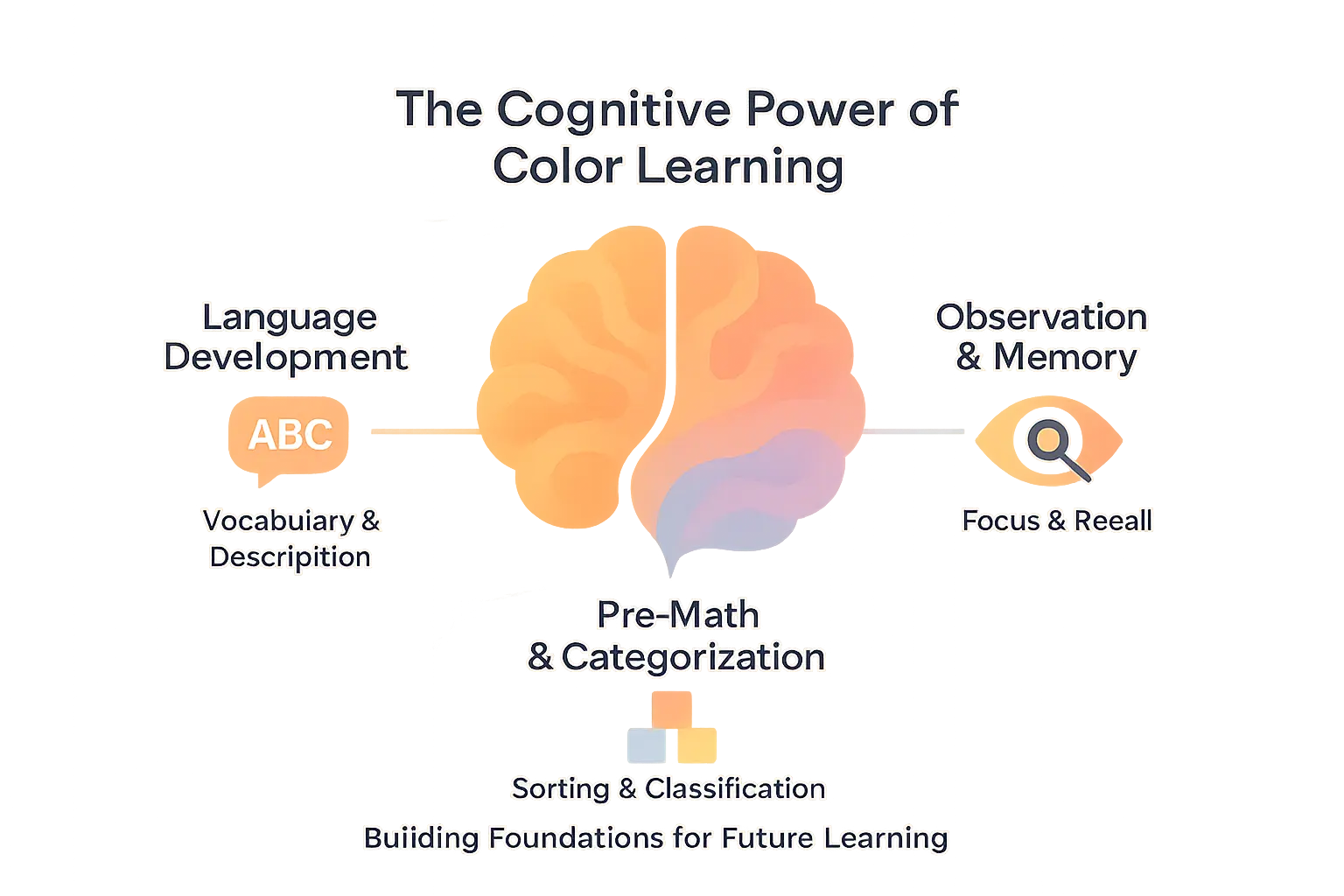
Learning to identify colors is a major cognitive step for a child. It helps them make connections between visual clues and words, building a foundation for future learning.
Here’s the thing: calling a ball “red” isn’t just memorization. It’s a mental adventure! Let’s break it down:
- Language boost 🗨️ – Suddenly, “red” isn’t just a concept. It becomes an adjective that describes a ball, a fire truck, or their favorite crayon. Their vocabulary gets a turbo boost!
- Math mind prep 🧮 – Sorting red buttons from green ones? That’s baby algebra! They’re learning to group things by attributes – the same skill they’ll use for sorting numbers later. Try sorting colorful cereal like Fruit Loops – they’ll be categorizing in no time!
- Memory magic 🧠 – Spotting that yellow duck in the bath? Remembering which drawer holds the purple socks? Their observation muscles are flexing!
Think of it as giving their brains super-powered glasses. Suddenly, the world isn’t just “things” – it’s a rainbow of details waiting to be explored. 🌈
And guess what? This isn’t just about naming colors. It’s teaching them to notice patterns, describe experiences, and connect ideas. Pretty cool for something that starts with a simple “Look! This is blue!”
This early color exploration lays the groundwork for reading, math, and emotional awareness – like connecting “blue” with calmness. Keep environments balanced: too many colors at once can overwhelm their senses, so mix vibrant hues with calming neutrals.
When Should My Child Know Their Colors? A Simple Timeline
So, what’s the “right” age for color learning? 🤔 Let’s break this down without the pressure.
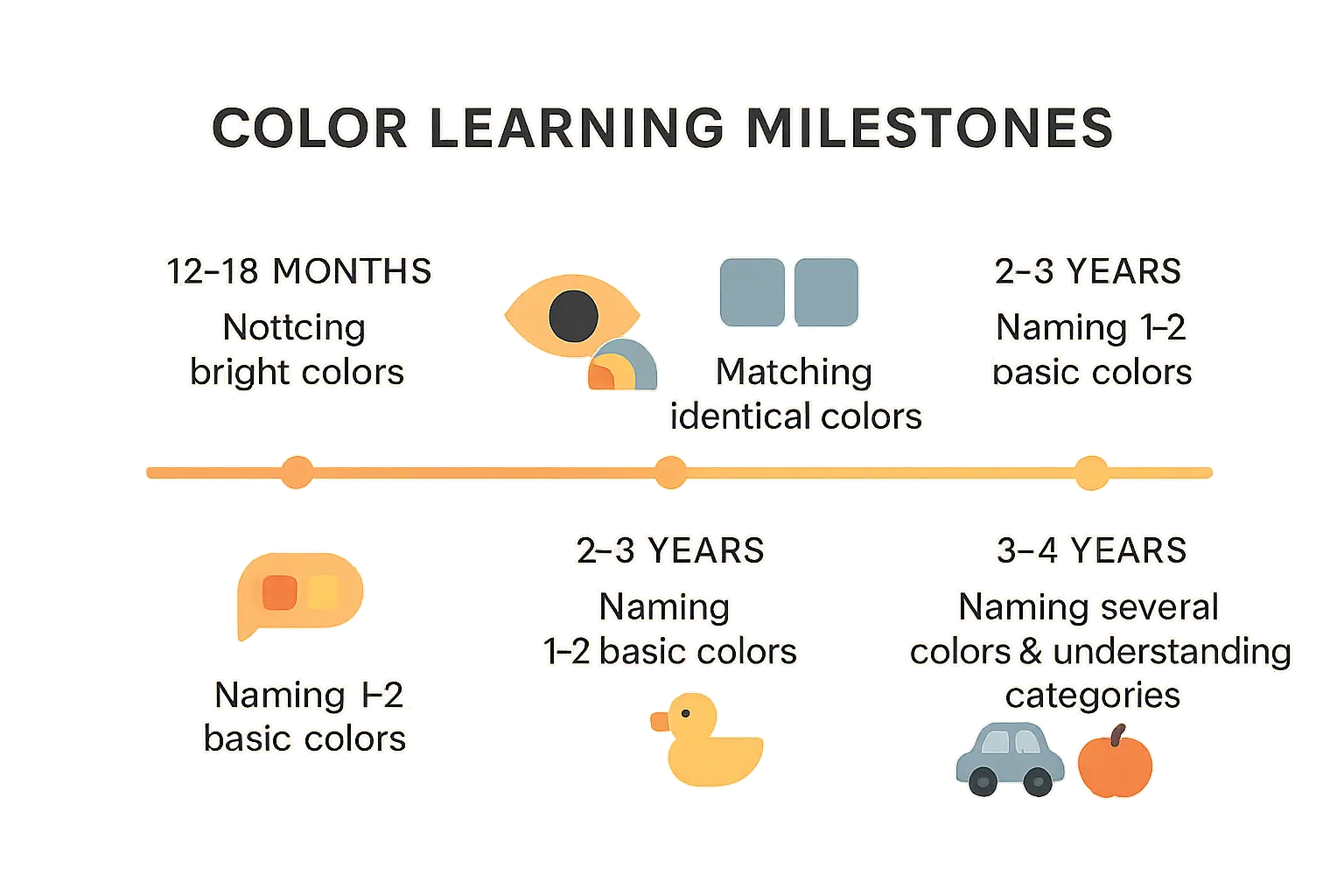
Every child learns at their own pace, but some general milestones exist. Studies and parenting experts suggest kids start noticing bright colors as early as 12 months. By 18 months, they can match identical ones – like picking a red block from a pair.
Teaching colors is an abstract concept. Unlike a “cup” which is always a cup, “red” can be a car, a fruit, or a crayon. It requires patience and creativity!
This is a key period for most toddlers, and you’ll see their curiosity explode. Between 2-3 years old, they’ll name 1-2 basic colors correctly (red or yellow often come first). By 3-4 years? 🎨 Most recognize multiple colors confidently.
| Age Range | What to Expect (The Skill) |
|---|---|
| 12-18 months | Starts to notice and show interest in bright colors. May not distinguish between them but is visually stimulated. |
| 18-24 months | Can start to match identical colors. If you give them a red block, they might be able to pick another red block from a pair. |
| 2-3 years | Begins to identify and name 1-2 basic colors correctly (often red or yellow). Can point to a color when asked. |
| 3-4 years | Can name several colors correctly and starts to understand that “blue” is a category that applies to many different objects. |
Remember: this timeline isn’t a race! The idea is to have fun while exploring. Try matching games with toys, color hunts during walks, or even sorting laundry together. Keep it light and playful – that’s how real learning happens! 🌈
Need a creative way to practice? Our personalized stories make colors come alive in adventures where your child stars as the hero. But more about that later!
Don’t stress if progress seems slow – even scientists acknowledge this takes time! The key? Make colors part of everyday fun rather than formal lessons.
Let’s play! fun and simple activities for learning colors

Ok, now for the fun part! Here are some of my favorite ways to teach colors without it feeling like a lesson. These ideas turn everyday moments into learning opportunities. Ready to dive in? 🌈 Colors aren’t just about naming red or blue—they’re gateways to math, creativity, and language. Let’s explore how to make learning feel like play!
Make it part of your day
Colors are everywhere! Turn routines into mini-lessons. Point to a yellow banana at breakfast or wear the blue socks they picked. Use simple questions like, “Can you pass me the green cup?” to spark recognition. Repetition is key—make it a game! Turn car rides into a “color hunt” (“Let’s spot 5 red things!”) or bath time into a blue towel ritual. Even bedtime can be a purple pajamas moment. The goal? Let colors blend naturally into their world.
Hands-on games and sorting
The idea is simple: one bowl per color, and we’re off! Sorting builds early math skills while mixing play and learning. Try these items for tactile fun:
- Pom-poms: Use different sizes. Add tweezers for fine motor practice.
- Building blocks or Lego bricks: Stack towers by color or create patterns (red, blue, red, blue!).
- Buttons: Sort by color and size. Bonus: string them into necklaces!
- Toy cars: Park them in “garages” (bowls) by hue or race green cars down a ramp.
- Fruit Loops cereal: Thread them into necklaces or count yellow loops for a snack-time boost.
Boost fine motor skills with tweezers. Ask, “Where does this red pom-pom go?” to keep the focus on colors and problem-solving. For a sensory twist, add colored rice or pasta to the bowls—sight and touch work together!
Get creative with arts and crafts
Art unlocks imagination! Try the color mixing in a bag trick: blend paint in a Ziploc bag. Predict what happens when blue and yellow squish together… and voilà, green! It’s magic you can touch. 🎨
These kinds of art activities are fantastic for exploring colors creatively. Try these ideas:
- Color mixing in a bag: Mix two primary colors of paint in a sealed Ziploc bag for mess-free fun.
- Rainbow collage: Cut colored paper pieces and glue them into a rainbow.
- Color-specific coloring pages: Focus on one color per day. Monday is red (fire engines!), Tuesday is blue (ocean scenes!).
Let creativity flow. Scribble, mix, and watch their eyes light up as they “discover” new shades. It’s science and art rolled into one! End with a mini “art show” where they explain their masterpiece du jour—language and pride included! 🎉
A quick look at the basic colors
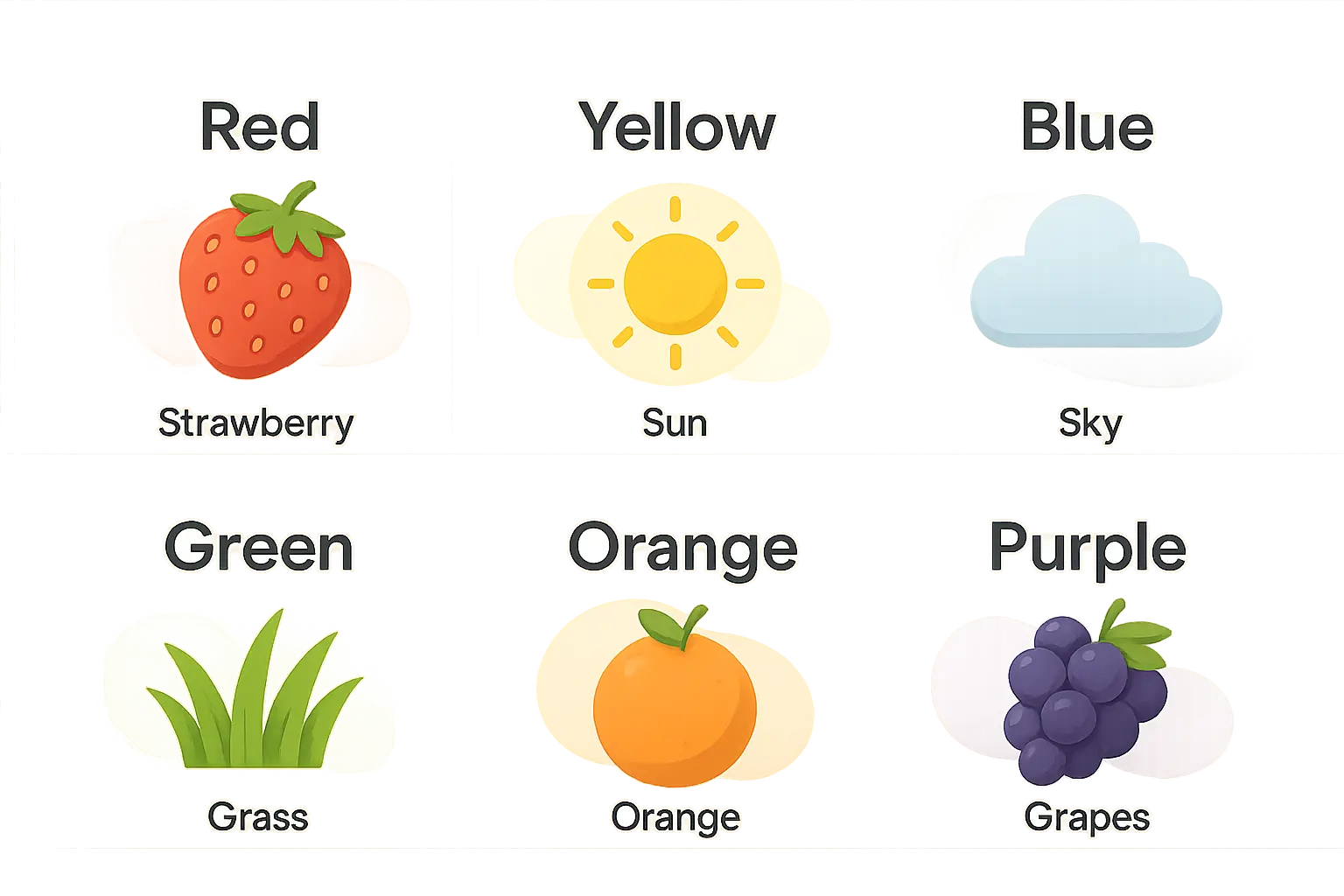
Let’s dive into the basics! 🌈 Linking colors to real-life objects makes learning easier for kids. The trick? Keep it simple, fun, and tangible. Kids don’t just memorize—they experience colors through stories and play. Ready? 🚀
- Red like a juicy strawberry 🍓 or a firetruck (vroom!).
- Yellow like the bright sun ☀️ or a banana.
- Blue like the endless sky ☁️ or the ocean.
- Green like grass 🌱 or a frog.
- Orange like a citrusy fruit 🍊 or a basketball hoop.
- Purple like a sweet grape 🍇 or a flower.
Each color turns into a mini-story! A firetruck isn’t just “red”—it’s vibrant and dynamic. A frog isn’t just “green”—it’s squishy and playful! 🐸
By connecting colors to vivid moments, kids don’t just recognize—they embrace them. This builds a base for complex shades (like turquoise) later. Let’s master the basics first! 💫
Making learning a daily adventure
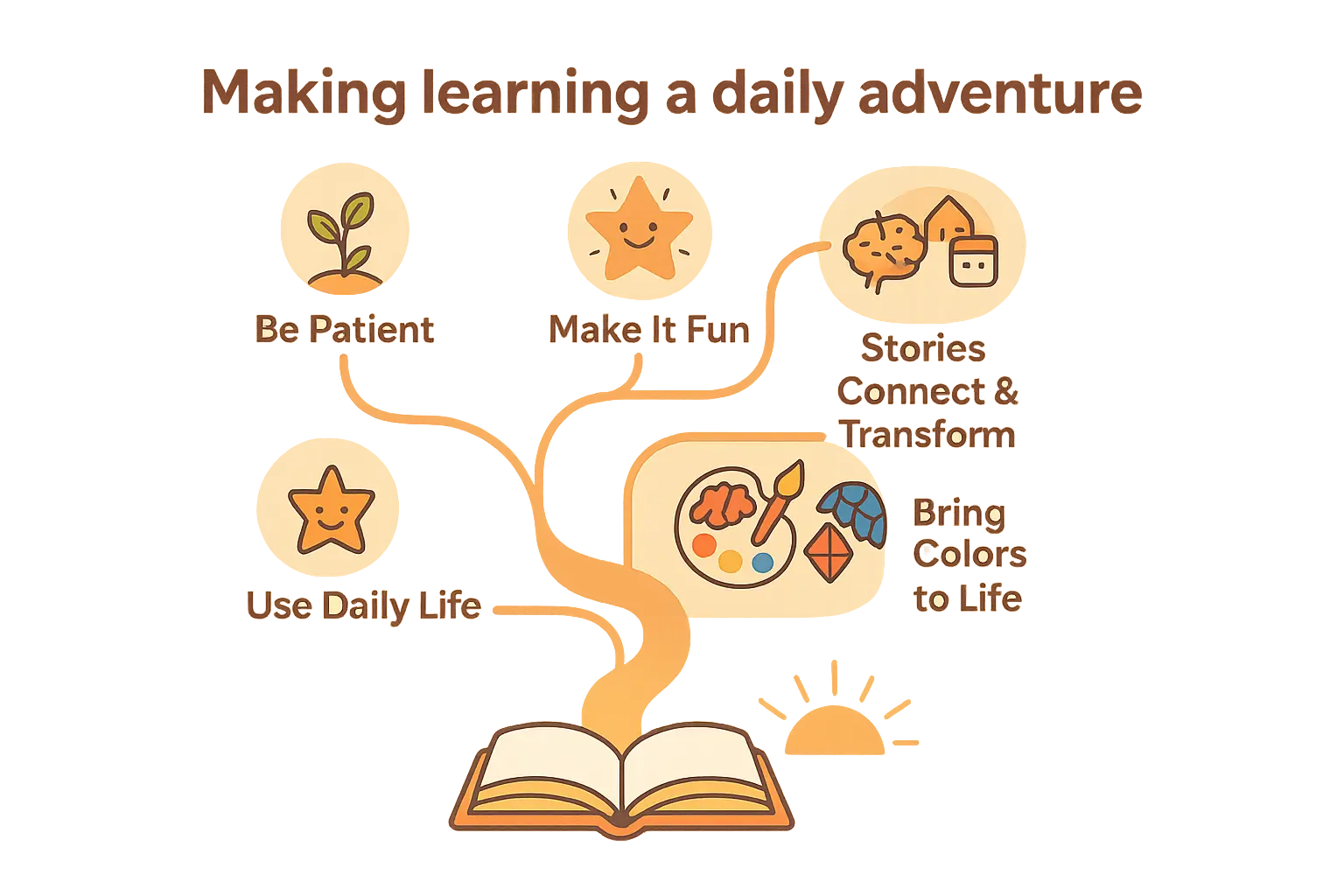
Here’s what it’s all about! Be patient, make it fun, and use daily moments as your best tools. Learning doesn’t need fancy toys or perfect conditions – it’s all about turning ordinary days into vibrant adventures. 🌟
Guess what? Stories are secret superpowers for learning. When a child hears about a red apple or a green frog, those colors stick better than just flashcards. The brain remembers colors when they’re part of a journey, like finding a blue treasure or helping a yellow sun wake up. 📚
This is exactly why blending stories into learning works so well. Imagine your kid not just naming colors, but living them through adventures. A tale about a purple dinosaur teaches colors and builds vocabulary. A mystery about orange butterflies sparks curiosity and memory skills. It’s learning that feels like playtime!
Remember – you don’t need special hours for this. During breakfast, ask “What color is your banana?” At bedtime, try “What color was the moon in our story?” These tiny moments create big connections. 🌈
You’re doing an amazing job! Keep turning everyday moments into colorful discoveries. Happy learning! 🌟
In short: be patient, keep it fun, use daily life. Secret? Stories! Picture a hero hunting red treasure or a blue dragon friend. Stories transform learning – turning colors into magical adventures. You’re doing great! Happy color exploring! 🌈
FAQ
What exactly does “learning colors” mean for kids?
Learning colors is all about helping little ones recognize and name different colors in their world 🌈. Think of it as a fun puzzle where they connect colors to objects – like knowing apples are red or the sky is blue! It’s not just about memorizing names; it’s a building block for bigger skills like language development and problem-solving. En bref, it’s like giving their brain a colorful workout!
Is my 2-year-old supposed to know their colors already?
Let’s get real – every child moves at their own pace! 👶 Around 18 months, they might start matching colors, but naming them consistently often kicks in closer to 2.5-3 years. If your 2-year-old points at a banana and says “yayow!” (close enough to yellow 😄), you’re on the right track. The key? Make it playful, not pressured!
How can I make color learning fun and easy for little ones?
Easy peasy! Start with everyday moments: “Hey, your socks are BLUE today!” 🎀 Or try these quickies:
- Sorting red pom-poms into a bowl
- Paint-mixing in ziploc bags (mess-free magic! 🎨)
- “I spy” games with colors around the room
Keep it light, short, and full of smiles – learning sneaks in when they’re having fun!
What kind of skill are we talking about with color learning?
Oh, it’s way more than naming! 🧠 Here’s the cool part:
- Language boost: They’re building adjectives (the “red” balloon!)
- Pre-math magic: Sorting colors = first steps in categorization
- Memory gym: Remembering “blue” applies to sky, socks, and crayons
It’s like a secret brain-training superpower!
Does learning colors actually help with math skills?
Oh yes! 🧮 Think of color sorting as their first math experiment. When they group red blocks or green pom-poms, they’re practicing classification – a key pre-math concept. Fun fact: This helps them understand sets and patterns later. On peut dire que it’s like sneaky math prep!
What’s the best color to start with for teaching kids?
Go bold! 🌟 Red, yellow, and blue are your BFFs because they’re:
- Super visible to little eyes
- Common in everyday objects (fire engines! bananas! skies!)
- Easier to distinguish from each other
Once they’ve got these, you can add cooler shades like purple (grape time! 🍇).
What does a “gifted” 2-year-old look like?
Giftedness can show up in surprising ways! 🌟 Some color clues:
- Matching colors early (18+ months)
- Correctly naming 3+ colors by 2
- Quickly connecting colors to abstract ideas (“the sad emoji is BLUE!”)
But remember: Every child’s timeline is unique. Focus on sparking curiosity, not comparing!
When should kids know their ABCs?
Color and letter timelines are BFFs! 📚 Most kids:
- Start recognizing 1-2 letters around 2
- Know most letters by 3-4
- Ready for full alphabet games at 4-5
Pro tip: Try color-themed letter practice, like “Find the red A!”
When do kids usually count to 10?
Counting to 10? That’s a 3-5 year adventure! 👩🎓 Most start:
- Saying numbers 1-10 by memory around 2-3
- Counting with understanding (1:1 matching) at 3
- Mastering 10 with objects by 4-5
Bonus: Color sorting (3 blue blocks!) secretly boosts counting skills too!