Pas le temps de tout lire ? Partager les moments mignons de vos enfants en ligne peut cacher des risques insoupçonnés ! Le “sharenting” crée une identité numérique sans leur accord, exposée au vol d’identité, cyberharcèlement. Tellmestories propose des récits privés 100% sécurisés via WhatsApp, préservant leur droit à une page blanche numérique. Leur avenir mérite mieux que des likes éphémères ! 🌟
Hey parents! Ever shared a toddler’s giggles or messy highchair chaos online? 📸 You’re not the only one — but those child privacy stories might come back to bite. Think of it like this: every post builds a “digital footprint” your kid never asked for. 🚨 Identity theft, cyberbullying, or even strangers using their pics — yep, that’s on the table. And let’s be real: “private” accounts don’t stop data leaks or future embarrassment. Stick around to unpack how those innocent posts could shadow your child’s adult life… and how to flip the script. 💡
Why your child’s cutest moments might be their biggest risk
What is ‘sharenting’ anyway?
Hey parents! Who hasn’t posted messy baby pics online? 😄 That’s sharenting – a mix of “sharing” and “parenting.” But here’s the catch: you’re building your child’s digital identity without their say. A 2023 French law even penalizes parents whose posts harm their child’s dignity. Ever heard of “digital kidnapping”? Strangers steal photos for fake profiles. Spooky, right? 🤯
Here’s the kicker: 75% of parents overshare, but only 25% ask permission. 🚨 By age 5, 90% of kids already have 1,300+ online posts about them. Those cute tantrums or potty-training fails? They’re part of a permanent record your child never chose. And guess what? Predators might exploit those innocent pool pics. The EU’s GDPR lets teens demand content removal, but once it’s out there… it’s like trying to un-bake a cake. 🎂💥
A story that could be anyone’s
Take Chloe, now 17. At 12, she discovered her parents had posted 2,000+ photos – including therapy sessions. When she applied to college, a professor recognized her from old pics. Her childhood anxiety? Suddenly public. A Barclays study predicts sharenting could fuel 66% of identity theft cases by 2030. That baby pic you shared? Fraudsters might reuse it for fake documents. And it’s not just privacy – think about emotional scars. Kids exposed to “cringe” posts often feel humiliated, like their lives are public property. 😳
Here’s the fix: Tellmestories lets you create private, password-protected storybooks via WhatsApp. No public posts. No oversharing. Just personalized bedtime tales – safe, secure, and 100% controlled by you. 🔐 Voice notes turn into adventures. No awkward reels. Just magic. Because every “aww” moment shouldn’t cost them their privacy tomorrow. 🧸✨

The hidden dangers of your child’s digital footprint
Okay, so beyond potential embarrassment, what are the actual risks we’re talking about? Let’s get real about how personal data shapes futures. 🤔
More than just data: real-world risks
Let’s unpack these threats with clear examples. Even “innocent” posts create long-term hazards:
- Identity theft: Criminals stitch together names, birthdays, and photos to open fake credit lines. Imagine your toddler having a loan in their name at 5!
- Online predators: Public posts reveal routines and locations. One mom’s viral “first day of school” pic accidentally showed their street number.
- Cyberbullying: That cute “potty training” story shared with 500 followers? Could become middle school meme material.
- Digital kidnapping: Creeps steal baby photos to create fake profiles. One case involved a mom discovering her child’s face on a Russian parenting blog.
- Future consequences: Colleges now screen applicants’ digital trails. A single questionable post dropped a Harvard admit in 2021.
Save the Children’s research shows these real dangers for children’s physical and mental health aren’t hypothetical – they’re happening now.
The institutional side of the coin
Platforms aren’t blameless. COPPA laws exist to protect kids under 13, but enforcement’s tricky. TikTok got nailed for this – and not just once. The FTC slapped them with a record $5.7 million fine after catching them knowingly collecting kids’ data.
The internet wasn’t designed with children’s safety in mind, and their rights are directly threatened online, despite protections offered by international laws.
Here’s the kicker: parents’ “sharing” lives in a legal gray zone. While COPPA covers sites targeting kids, your family vacation post technically doesn’t violate anything – even when it reveals your child’s school name and birthday.

These institutional loopholes create perfect storm conditions. While companies face fines for blatant violations, everyday parental sharing remains largely unregulated. The consequences? Permanent digital scars shaped by fleeting moments.
Whose story is it anyway? Your child’s right to a blank slate
Let’s start with a big question: can a toddler really consent to having their life broadcast online? 🤔
Every time we post a photo or share a milestone, we’re writing our child’s digital diary before they’ve even learned to write their name. This creates a conflict between a child’s privacy interests and a parent’s rights, as highlighted in this research paper.
Think of your child’s life as a blank book. By sharing their first steps, funny tantrums, or medical challenges online, we’re filling those pages with stories they never agreed to. The problem? This “sharenting” trend might be robbing them of their right to build their own narrative.
The consent dilemma
Here’s the thing: babies can’t sign consent forms, and toddlers don’t understand privacy policies. When parents share content about their kids, they’re making a decision that affects someone who can’t possibly grasp the consequences.
Imagine if your childhood diary was published online for everyone to see—including future employers, dates, and college roommates. That’s essentially what’s happening when we overshare today. And unlike a physical diary, these digital footprints rarely disappear completely.
Building an identity vs. having one imposed
We’re crafting our children’s digital identities long before they can even type their own name. It’s a huge responsibility we need to think about.
What happens when little Timmy grows up and realizes his entire childhood was documented online? Some teens already report feeling violated by parental oversharing. They describe a sense of identity theft—like their personal story was written by someone else.
This isn’t just about embarrassment. When we share medical challenges, behavioral issues, or family struggles, we’re creating digital shadows that might follow kids into adulthood. The irony? We do it out of love, but could end up causing pain later.
So what’s the solution? Start asking: “Would my child want this story shared?” Remember, you’re not just creating memories—you’re building the foundation of someone else’s digital legacy.

Finding the balance: privacy within your own home
Let’s talk about something most parents don’t consider: your child’s right to privacy starts at home. Yep, even for little ones. While we’re all about protection, there’s a fine line between care and control. Some experts feel parents are morally obligated to monitor online activity, but here’s the twist – crossing into surveillance territory might backfire. Imagine being tracked 24/7 by trusted adults. Creepy, right?
We’re not here to shame anyone. This is tricky! But Wired reports specialists argue constant monitoring creates “digital footprints” kids never consented to. Teens are already finding workarounds – 73% use secret accounts, studies show.
Even with good intentions, over-monitoring creates a “privacy paradox.” Kids who feel spied on are 2x more likely to hide risky behavior, say child psychologists. Remember sneaking candy as a kid? Same psychology applies here.
| Age Group | Healthy Monitoring 👍 | Invasive Spying 👎 |
|---|---|---|
| 5-8 years | Using parental controls for content filtering | Reading all private messages without reason |
| 9-12 years | Having open conversations about online friends | Using keyloggers to track every keystroke |
| 13+ years | Setting up devices in common areas | Tracking location 24/7 without knowledge |
Teaching privacy by respecting it
Want your kids to understand digital privacy? Start by respecting their personal space. You wouldn’t snoop through their diary, so why their phone? Knock on their bedroom door before entering? Same logic applies online.
Think of trust like a Wi-Fi signal – the more you block it, the weaker it gets. Respecting boundaries gives them a masterclass in self-respect. It’s how they’ll learn to protect their data later!
Kids aren’t “mini adults” – their brains process privacy differently. The UK’s Age Appropriate Design Code mandates tech companies to design for this nuance. Apply same thinking at home: teach phishing detection instead of tracking moves. Suddenly, you’re not “the cop” – you’re the security coach.
Need a starting point? Try these 3 steps: 1) Let them show their favorite app, 2) Ask what they think is safe/uncool online, and 3) Share your own digital “no-go zones.” No spyware required.
Your game plan for protecting your child’s digital world
Simple steps you can take today
Let’s get real: protecting your child’s digital footprint isn’t just about blocking apps. It’s about smart, actionable moves. Here’s your quick-fire checklist:
- Think before you post: Ask, “Would my child be embarrassed by this in 10 years?” If yes, skip it 🤔.
- Check your privacy settings: Lock down social media profiles—set to “private” or “friends only” 🔒.
- Avoid sharing personal details: Skip full names, birthdates, or school names to dodge identity risks 🚫.
- Ask for their permission: For older kids, make “Can I post this?” a rule. Builds their consent reflex 💬.
- Use nicknames: Swap real names for fun aliases online (e.g., “Captain Lulu” instead of “Lucy”) 🦸.
- Choose services wisely: Pick platforms like Tellmestories that prioritize child safety. Their AI minimizes data storage ⚡.
Have the talk
Privacy isn’t a one-time chat—it’s a running theme. Start early: for toddlers, say, “Let’s keep photos just for family.” For teens, explain why sharing location with strangers is risky 🤝.
Discuss safety during screen time or dinner. Use examples like data leaks to show why this matters. Make privacy a shared family value, not a chore.
Kids mimic your habits. If you’re careful with their data, they’ll follow. Using Tellmestories? Their WhatsApp-only setup avoids app downloads—less data floating around 📲.
By making these steps routine, you’re shielding their past and empowering their future. Now that’s a story worth telling 👨👧.
A new chapter: creating private stories that empower your child
So, how can we celebrate our children and create memories without exposing them online? Let me introduce you to Tellmestories, a service born from a real parenting moment. Alex and Julien, two dads, noticed how their daughter Anja fell asleep effortlessly when hearing personalized bedtime stories. They realized: what if every family could experience this magic? 🌟
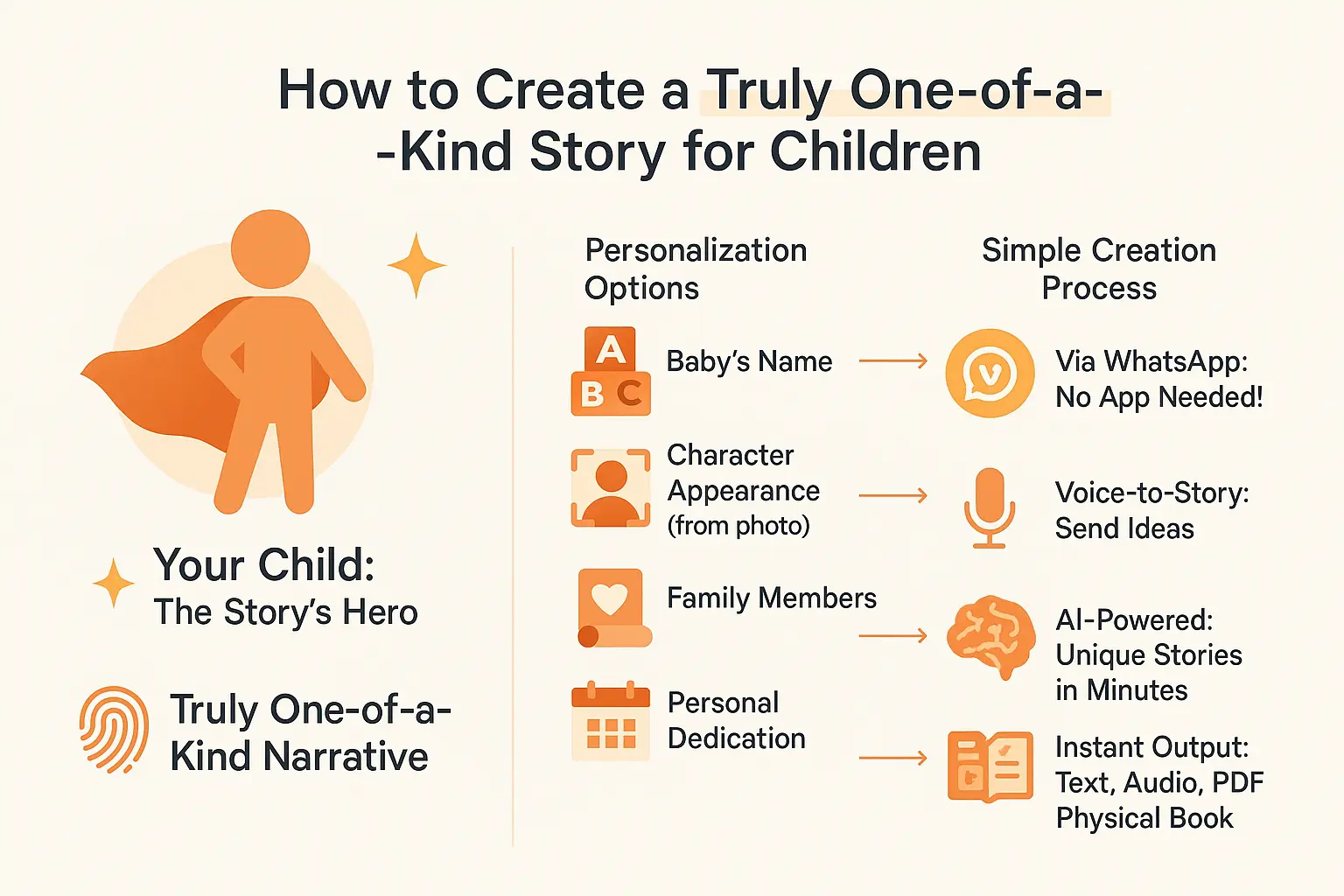
Here’s the twist: instead of sharing your child’s story with the world, Tellmestories lets you create private, personalized adventures where your child becomes the hero. No apps, no public profiles – just WhatsApp. The AI remembers your child’s preferences (like favorite animals or fears) and crafts tales that teach and inspire, all while keeping data secure. Curious? Let’s dive deeper. 👇
Your child as the hero of their own story
- It’s completely private: Stories live only in your WhatsApp chat. No profiles, no public sharing. 🔒
- It builds confidence: Hearing their name in a heroic role? Let’s just say their smile says it all. 😊
- It’s educational: Sneak in life lessons – like potty training or first-day-of-school jitters – without lectures. 🎒
- It’s a shared moment: Create a ritual that’s just yours, away from social media noise. 📲
Founded by parents who’ve been there (and still lose their kid’s socks), Tellmestories focuses on what matters: your child’s privacy and growth. Want proof? Check out their story or see how their AI tech works.
The future of family stories is private
Let’s stop writing our children’s stories for the world to see, and start creating magical stories just for them to hear. Their future selves will thank you.
This isn’t about avoiding tech – it’s about using it mindfully. With WhatsApp’s end-to-end encryption and AI that adapts without storing data, Tellmestories flips the script. Your child’s identity? Built by you, for them. No algorithms profiting from their innocence. Just bedtime magic, 100% secure. 🌙

So, parents, here’s the deal: sharing your child’s cute moments is human, but protecting their future is heroic. With tools like Tellmestories, you can create magical, private stories that empower—not expose—your child. 💡 It’s time to shift from oversharing to mindful storytelling. Ready to rewrite the rules? 🚀 Your child’s digital privacy starts now. (Word count: 47)
FAQ
Hey parents! Ever wondered how to check what your kid is up to online? 🤔
Let me break it down for you! You’ve got options like checking browser history (easy peasy!), using parental control apps (Google Family Link is my go-to), or even peeking at their device directly. But here’s the deal – the best approach? Have a chinwag with your child! Explain you’re not trying to be nosy, just want them safe. Apps like Norton Family or Kaspersky let you monitor without being creepy. Pro tip: Set up “private mode” on streaming services so you see what they watch. Remember, trust > sneaky tactics! 💬
At what age do kiddos start craving their own space? 🧒
Oh, this one hits home! Most experts say around 6-8 years old is when they start closing doors and hiding diaries. But real privacy cravings? That teenage tsunami hits around 13-15. You’ll notice them asking for “personal time” or getting grumpy when you enter their room. It’s not just rebellion – their brains are wiring for independence! Think of it like their digital training wheels coming off. Cool fact: Even toddlers as young as 3 might say “Don’t watch me!” while playing. It’s all part of their awesome growth journey! 🌱
Need discipline tips that don’t involve yelling? 🤫
Yelling’s exhausting, right? Let’s chat better ways! First up: Natural consequences. If they forget homework, let them face the music at school. Second: Time-in instead of time-out – sit together and talk feelings. Third: Use “I” statements like “I feel worried when you run off.” Fourth: Positive reinforcement – sticker charts work magic! And hey, model calm behavior – fake it ’til you make it! Oh, and try “When…then” phrases: “When you finish veggies, then dessert!” Works like magic without the drama. 🎯
How to stop copycat bad behavior from school? 🤳
Alright, so your kiddo’s copying that cheeky classmate? Don’t panic! First, play detective – figure out what they’re imitating. Is it funny accents? Silly dances? Then get playful! Use role-play: “Let’s pretend YOU’RE the teacher now!” Teaches judgment skills. Second, highlight positive role models – “Check how cool it is when Sam shares!” Third, praise good choices: “Love how you calmed down just like Mama!” And here’s a secret: Sometimes ignoring minor stuff works. Like magic, it fades away! ✨
Can moms & dads actually see search history? 🔍
Short answer? Yep, but with caveats! If their device isn’t password protected, you’re golden. Otherwise, family management settings on Google/Apple accounts show activity. Some apps (like OpenDNS) track everything. But here’s the twist: The best parents talk first! Try “Hey, wanna show me your favorite YouTube channel?” instead of sneaky checks. And remember – teens using incognito mode? That’s their digital “closed door.” Time for that big privacy chat we covered earlier! 🛑
What app lets me spy on text messages? 📱
Whoa there! Before downloading spyware, let’s talk. Apps like mSpy or FlexiSpy technically work, but… icky, right? It’s like reading their diary with invisible ink! Better idea: Teach privacy boundaries. Show them how to block unknowns and report bullies. Make your home a “no-judgment zone” for digital mishaps. If you’re really worried about safety? Try “Let’s agree on check-ins” instead of secret surveillance. Trust me, open convo > hidden cameras! 🤝
When should parents stop phone snooping? 🚫📱
Picture walking a privacy tightrope! For littles (5-8), checking is normal – like training wheels on bikes. Tweens (9-12)? Start negotiating: “We’ll check apps together once/week.” By 13+, it’s about earned trust. If they’ve shown responsibility? Back off! But keep communication open. Think of it like teaching swimming – you hold ’em tight at first, but eventually let go when they’re ready. Remember, it’s not about control – it’s about preparing them for solo dives into digital waters! 🌊
What’s this “helicopter parenting” buzz? 🚁
Imagine a parent hovering like a helicopter, right? It’s when we over-schedule playdates, fix every boo-boo before it happens, or check homework 10x/hour. While we’ve got good intentions (we LOVE our kids!), it’s like giving them a GPS for life – they never learn to navigate! Better approach? Be a “lighthouse parent” – shine steady guidance from afar. Let them trip sometimes. After all, how else will they learn to dance in the rain? 🌈
Why’s my teen a room-dwelling creature? 🚪
Classic teen behavior! They’re basically building their “emotional castle.” Blame biology – hormones are throwing a party in their brain! Their room becomes HQ for identity experiments (emo phase? Sure! Pop star dreams? Totally!). It’s also self-care time – think of it as their version of adult wine o’clock. Want to help? Knock first, respect their space, and leave snacks outside the door 😄. Pro tip: Schedule “no phones allowed” family hangouts for quality time without the interrogation!