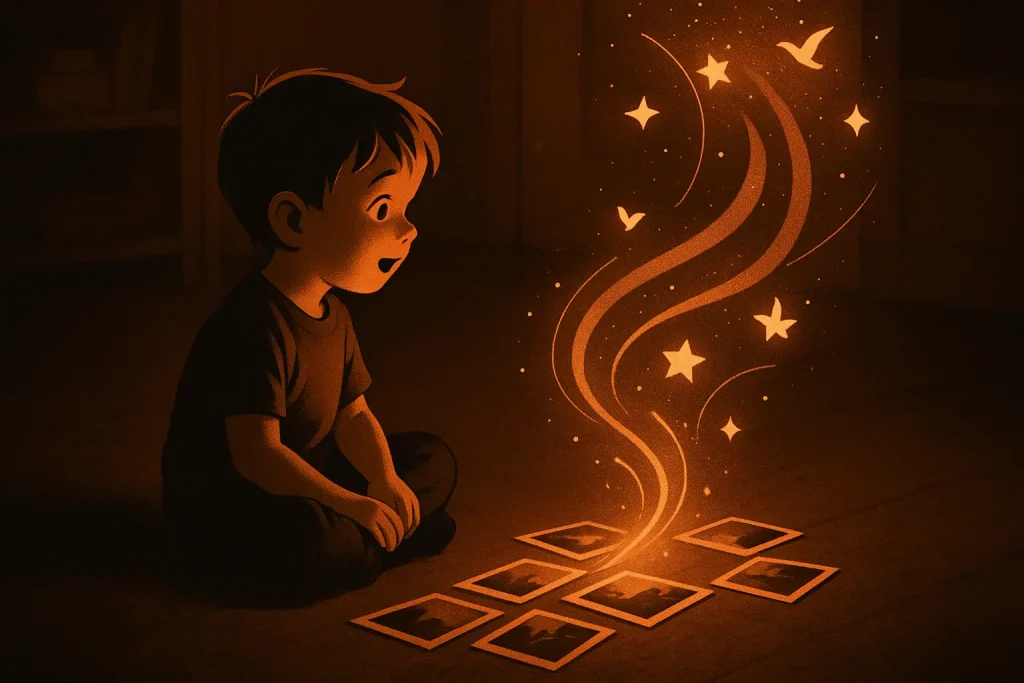
The essential takeaway: Picture stories intentionally blend images and text to craft emotional narratives, far beyond random photo collections. For kids, they boost creativity, emotional intelligence, and pre-reading skills. Unlike automated albums, these stories follow a classic structure (beginning, middle, end), turning children into active storytellers. A single cohesive visual journey can spark lifelong memories and connections, making them ideal for personalized storytelling.
Ever felt overwhelmed turning everyday moments into lasting memories? 🤯 Picture stories aren’t just random photo albums—they’re intentional visual storytelling that spark joy and connection. Whether it’s a toddler’s giggles or a teen’s travel snaps, these narratives blend images and words to boost emotional intelligence, creativity, and family bonding. 🎨 Dive into how wordless books empower kids to become storytellers, why narrative structure (yes, the classic beginning-middle-end!) matters, and how even non-artists can craft tales that feel personal. 📖 Perfect for parents craving screen-free moments that actually matter. Ready to transform chaos into clarity? 🚀
What are picture stories? A simple guide to visual storytelling
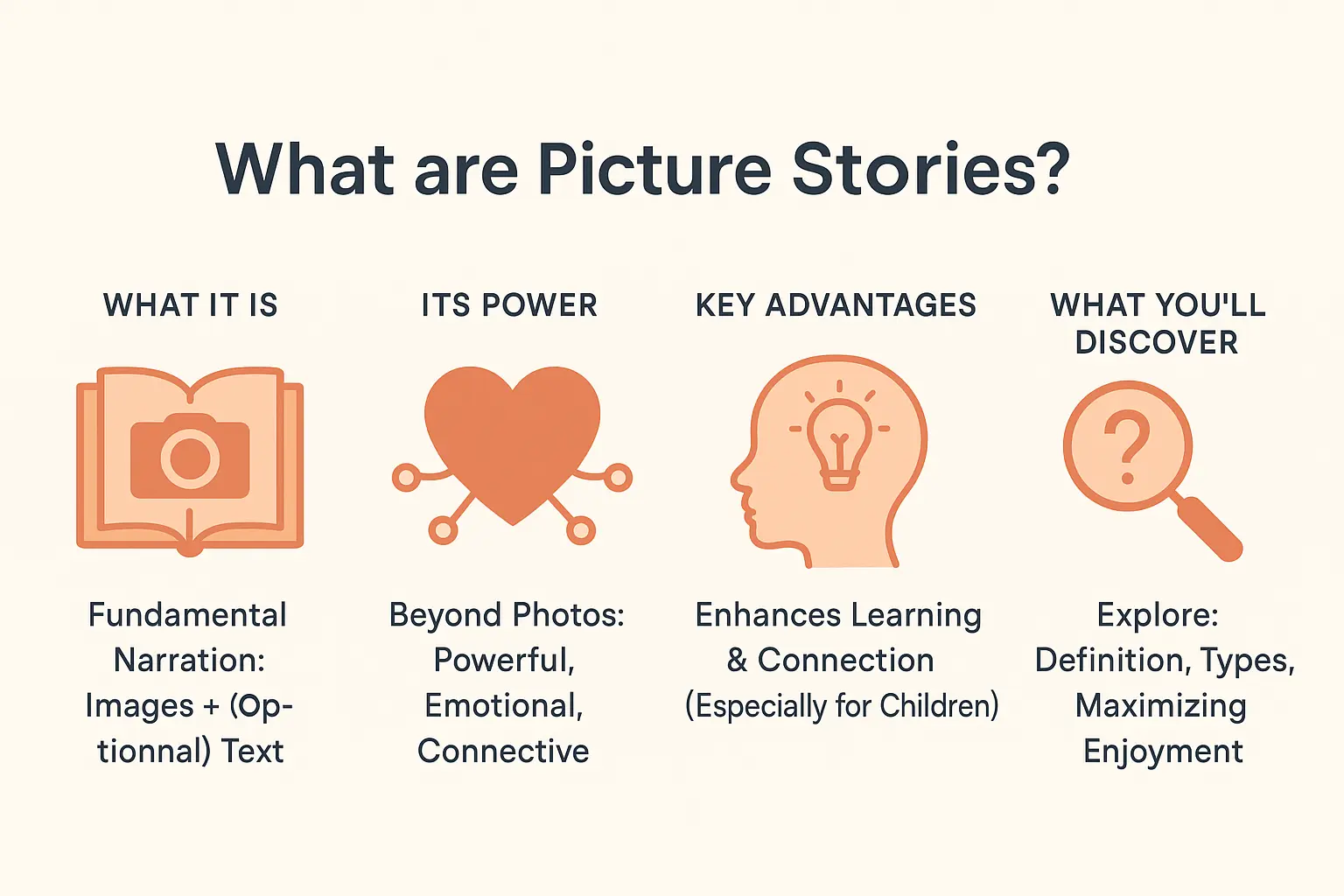
Have you ever noticed how toddlers lean in when you flip through a storybook compared to scrolling through random photos? Picture stories aren’t just picture books—they’re intentional sequences that make viewers feel something. Imagine a child recognizing their own bedroom in a story’s illustrations. That personal connection isn’t accidental; it’s visual storytelling at its best.
Real picture stories require three ingredients: images, narrative, and intention. Unlike digital albums automatically generated from photo libraries, these stories follow a beginning-middle-end structure. When done right, they help kids build cognitive skills by recognizing story patterns and emotional arcs.
On the program: How to create emotional impact through visual sequences, why journalists use photo essays, and what makes children’s book illustrations work. Spoiler alert: It’s all about the three-part structure we’ll break down next. Let’s dive deeper into the anatomy of picture stories. 🎥
Unpacking the magic: what exactly is a picture story?
The core principle: intentional storytelling
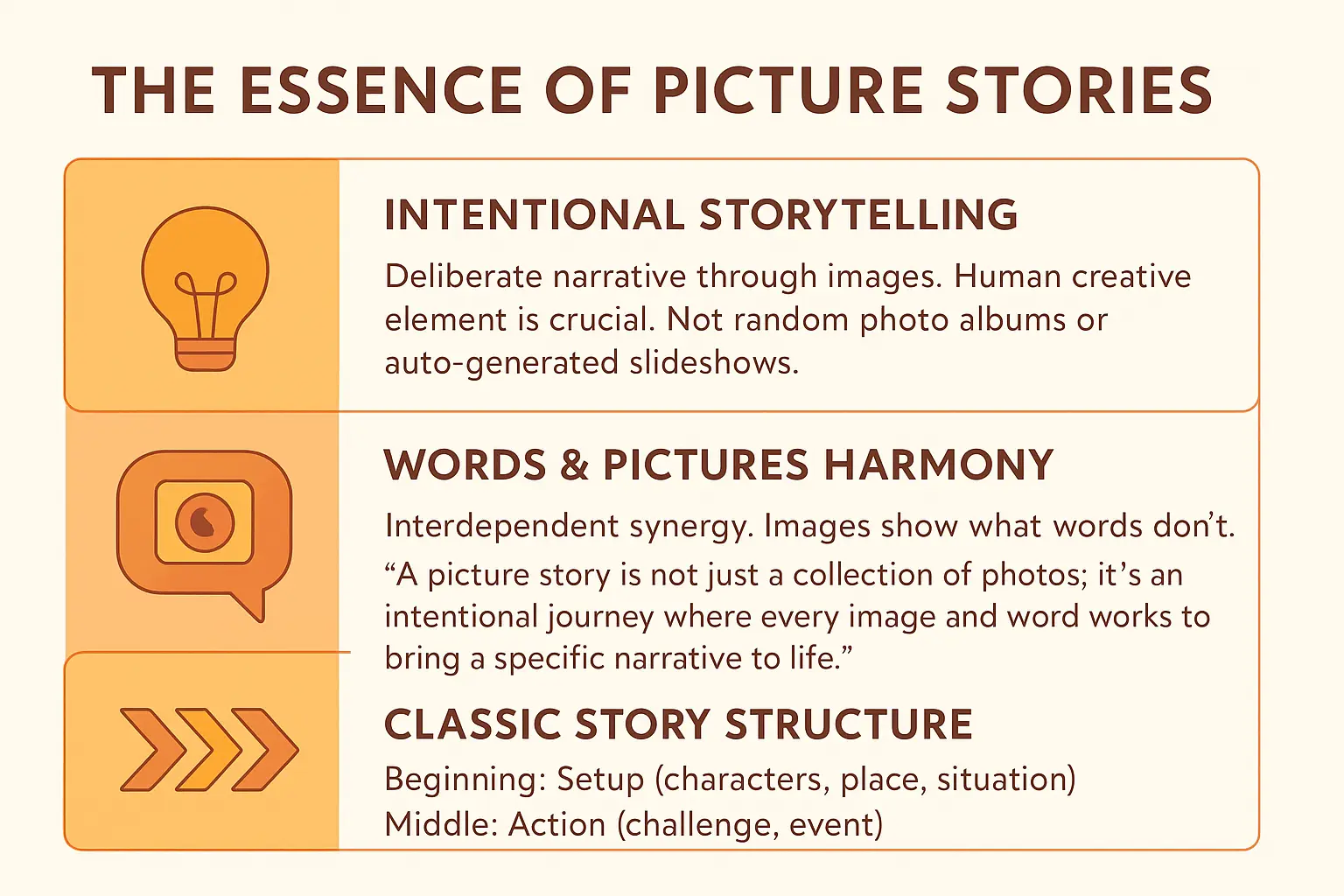
Picture stories center on intention—every image and word serves a purpose. They’re crafted visual journeys, not automated slideshows. Human creativity transforms moments into meaningful narratives by avoiding passive sharing (like endless Instagram grids) and prioritizing purposeful curation. This intentionality turns fleeting moments into stories that matter—whether a birthday party or historical event.
A family vacation becomes a curated tale of laughter, challenges, and discoveries. The focus shifts to “what should be remembered.”
Words and pictures in perfect harmony
“A picture story is not just a collection of photos; it’s an intentional journey where every image and word works together to bring a specific narrative to life.”
Visuals and text complement each other. A child’s messy art project paired with “First masterpiece at age 3!” blends emotion and clarity. An image of a stormy sky gains tension with “The calm before the chaos.” In journalism, a protestor’s photo gains power with “A voice for change.”
The simple structure of any good story
All picture stories follow a classic arc: beginning, middle, end. Example:
- Beginning: Introduce characters and setting, e.g., a child holding a map in their backyard.
- Middle: Develop the plot—digging for treasure, facing obstacles like rain.
- End: Resolve the journey—reveal the “treasure” (a toy dinosaur) and their smile.
This structure keeps stories digestible. A climate change documentary could start with melting glaciers (beginning), show scientists analyzing data (middle), and end with community action (end).
The building blocks of a great picture story
Finding the heart of the story
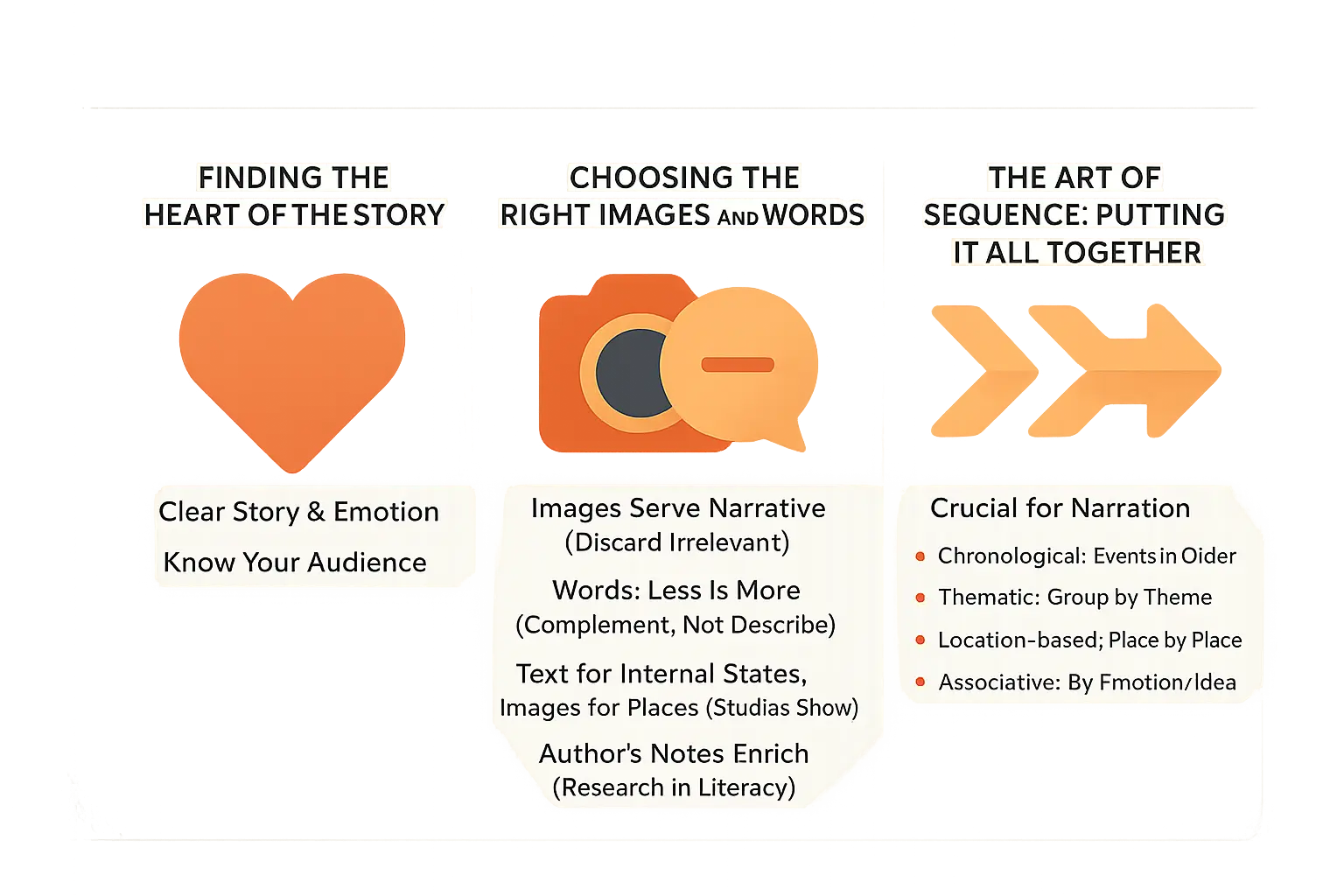
Every picture story starts with a clear narrative – a memory, milestone, or emotion. Focus on one message. Is the goal to make your child laugh? Capture a moment? Define this early to guide your choices. For example, a story about overcoming shyness might highlight a child’s nervous first day at school, a small victory during show-and-tell, and a proud final smile. 🌟
Audience matters. A toddler’s story needs fewer details than one for older kids. Tailor content to age and context. A 3-year-old’s bedtime story might focus on sensory details, while a 7-year-old’s adventure could include dialogue or problem-solving.
Choosing the right images and words
Images must serve the story. A beautiful sunset photo gets cut if it doesn’t advance the narrative. Research in literacy teaching shows text and visuals work best when they complement each other: text reveals inner thoughts, while images anchor us in the moment. For instance, a photo of a messy room paired with “After 10 minutes of chaos…” tells a story instantly. ✨
Keep text minimal but meaningful. Context-rich captions guide viewers without over-explaining. Example: A photo of a child with a trophy paired with “After 3 failed attempts…” tells a story instantly. For insights, see this study on text-image synergy.
The art of sequence: putting it all together
Sequence turns scattered photos into narrative flow. Here’s how to structure it:
- Chronological order: Best for events with a timeline, like a trip or party.
- Thematic order: Group by mood – silly faces, nature shots, or “moments that made us say ‘no way!’”
- Location-based order: Room-by-room renovation or city-by-city memories.
- Associative order: Link photos by color, emotion, or idea – like red tones in a love story.
Sequence creates rhythm. A chaotic pile of vacation photos becomes cohesive when ordered by theme or emotion. This is how you turn “look at these pics” into “remember when we…” moments. 🎶
Picture stories for kids: a world of benefits 🧒
Did you know that picture stories do way more than just fill bedtime? These visual tales shape how kids see the monde, spark creativity, and even help them sleep better! Let’s unpack why parents everywhere are turning to this simple yet powerful tool. Plus, they’re the perfect bridge between playtime and learning – all while keeping little eyes glued to the page! 📚✨
More than just a bedtime story
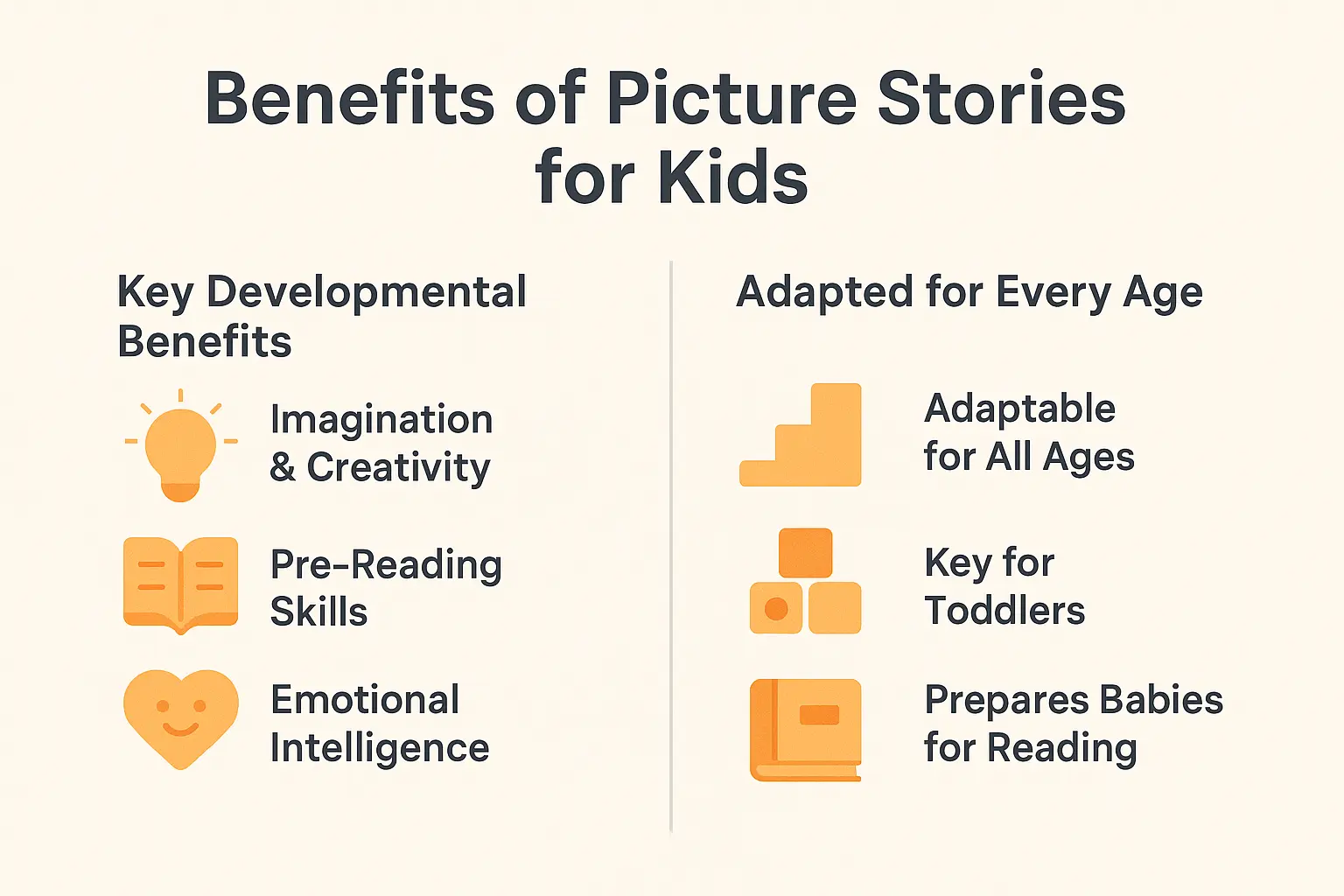
When you share a picture story, you’re building your child’s brain power. Here’s how:
- Boosting imagination: Visuals create mental playgrounds for new worlds and possibilities. A dragon wearing pajamas? A cat flying a rocket? Their creativity gets a serious workout!
- Developing pre-reading skills: Kids learn story patterns and prediction – training wheels for reading! Spotting “beginning-middle-end” in pictures sets the stage for future literacy.
- Building emotional intelligence: Discussing characters’ feelings helps them recognize their own emotions. Wondering why a character is sad? That’s a mini emotional masterclass for your little one.
- Strengthening bonds: Shared reading creates lifelong memories and reinforces safety. That 10-minute storytime? It’s your daily “I’m here for you” reminder.
Each story acts as mental exercise, strengthening neural connections for future learning. These moments often become cherished memories for both parent and child – trust us, they’ll remember those storytime giggles forever!
Adapted for every age
Picture stories grow with your child! Toddlers thrive on bold colors and simple shapes – think big red balls and smiling suns. By age 3, they connect images to narratives, pointing out “the lost puppy” in the illustrations. At 5, they spot background details like “The cat hiding behind the couch!”
This format works wonders for toddlers – explore toddler-friendly stories. Even babies benefit from high-contrast images that kickstart visual development. Board books with touch-and-feel textures build motor skills while teaching concepts like “soft vs. rough” – bonus points if they make crinkly sounds!
Start early! Early visual storytelling makes reading feel natural. Those black-and-white newborn books aren’t just trendy – they’re brain food for tiny eyes. And don’t forget lift-the-flap books for 2-year-olds – they combine storytelling with hands-on discovery!
A universe of tales: exploring different types of picture stories
Classic picture books vs. wordless wonders
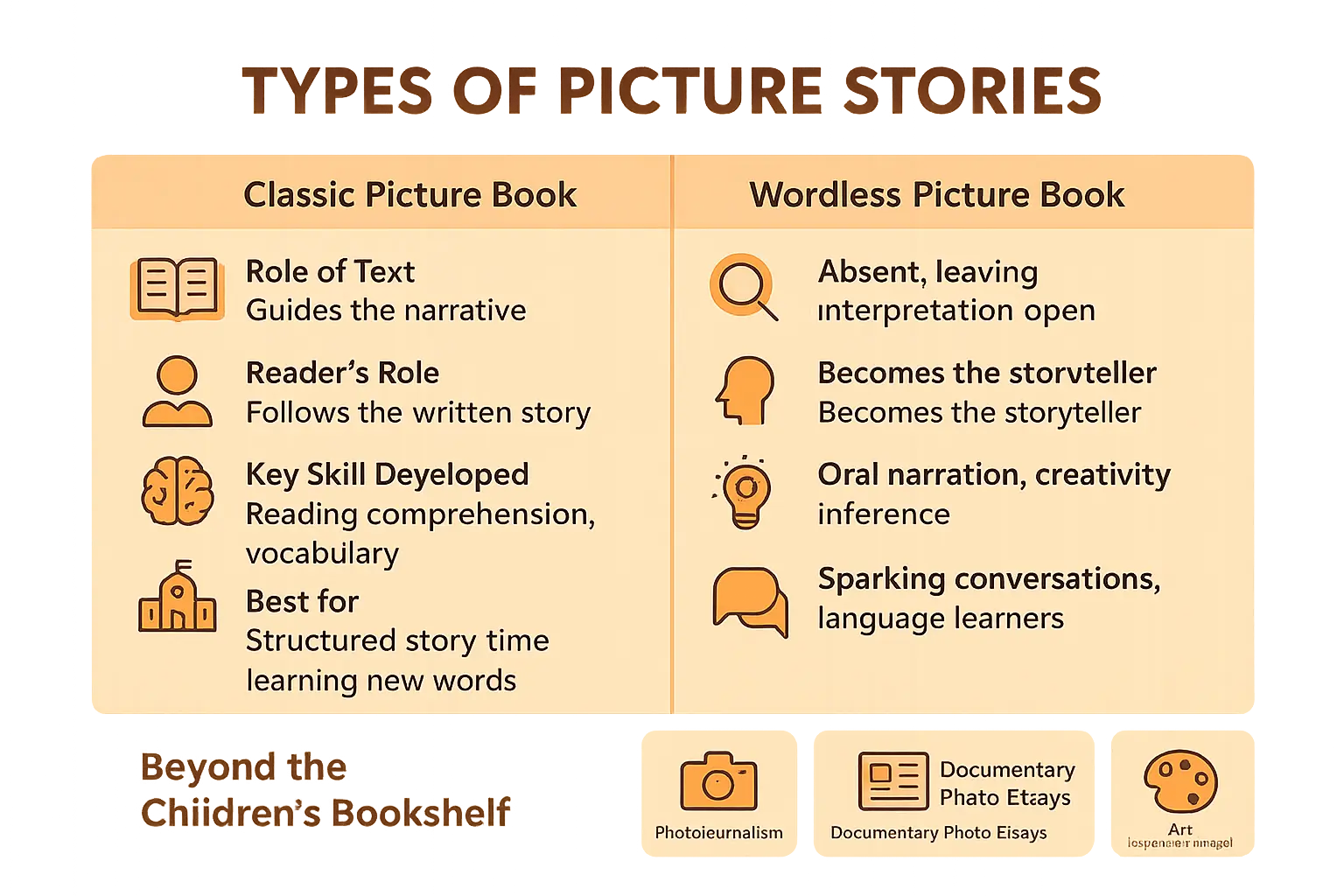
Picture stories come in many forms, but two main categories stand out: classic picture books and wordless wonders. Classic books blend text and visuals, while wordless stories rely solely on images to tell their tales. Let’s break down their unique traits:
| Feature | Classic Picture Book | Wordless Picture Book |
|---|---|---|
| Role of Text | Guides the narrative | Absent, leaving interpretation open |
| Reader’s Role | Follows the written story | Becomes the storyteller |
| Key Skill Developed | Reading comprehension, vocabulary | Oral narration, creativity, inference |
| Best for… | Structured story time, learning new words | Sparking conversations, language learners |
Wordless books turn kids into co-authors. Without text, children craft narratives using visual clues, building creativity and confidence. These stories spark rich dialogues — imagine a child inventing dialogue for a character’s expression or predicting plot twists from subtle illustrations.
Beyond the children’s bookshelf
Picture stories extend far beyond bedtime reading. In photojournalism, powerful image sequences capture real-life moments — like Emily Schiffer’s More Than A Year documenting pandemic family life or Takako Kido’s Skinship exploring parent-child bonds.
Artists also use visual storytelling to explore themes. Sequences of images can convey complex ideas without a single word. Want to see how this applies to personalized children’s tales? Exploring these different story formats reveals how visual narratives adapt across mediums.
How to “read” a picture story with your child
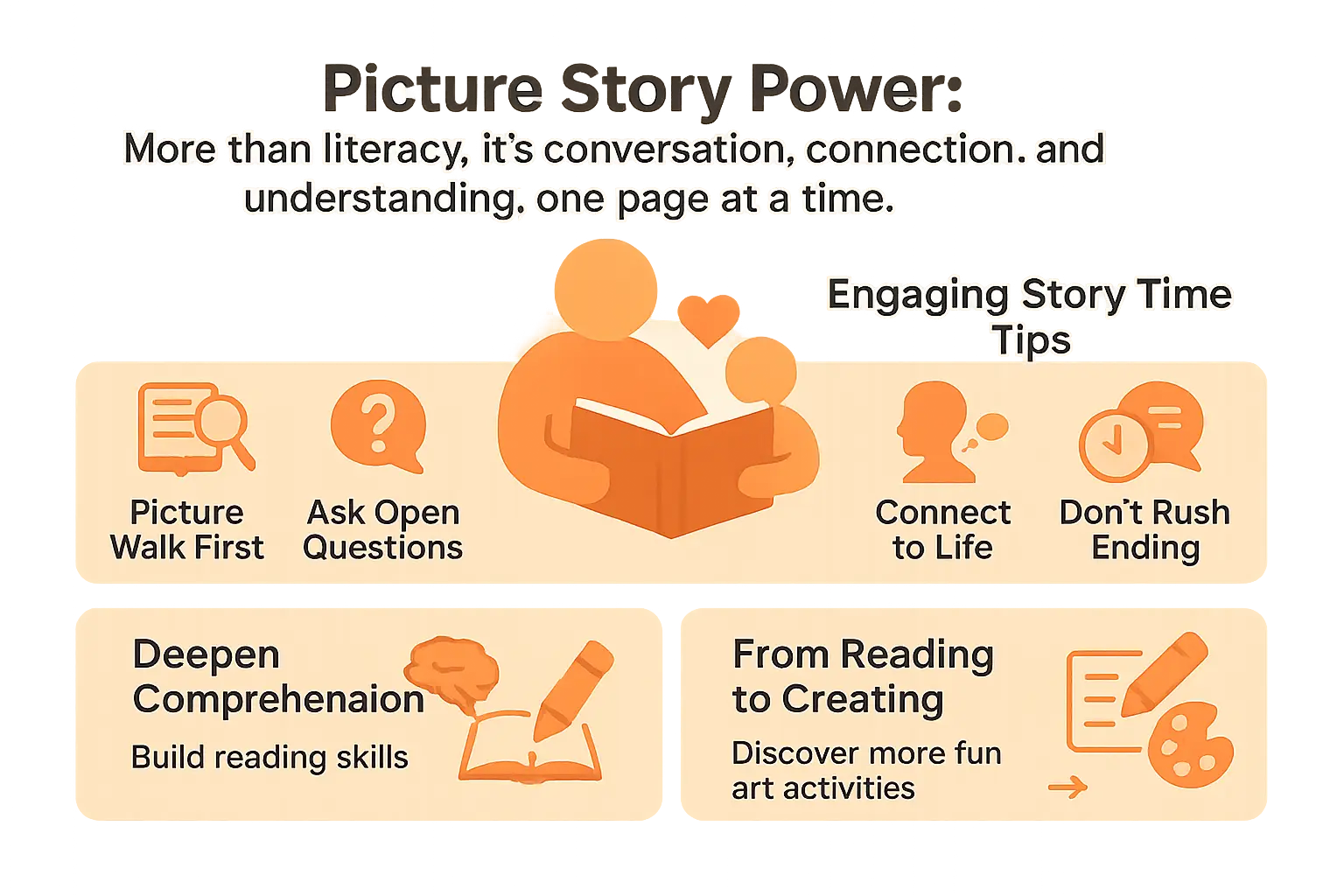
Reading a picture story together is more than just literacy; it’s a conversation, a moment of connection that builds memories and understanding, one page at a time.
Tips for an engaging story time
- Take a “picture walk” first: Flip through the book and look at the pictures before reading the words. Ask “What do you think this story is about?” This builds anticipation.
- Ask open-ended questions: Instead of “Do you see the dog?”, try “What do you think the dog is feeling right now?” These questions boost critical thinking.
- Connect to their life: Relate the story to your child’s own experiences. “This reminds me of when we went to the park!” Personal connections make stories relevant.
- Don’t rush the ending: Take time to talk about the story after it’s finished. What was their favorite part? This helps kids process the story’s resolution.
According to studies on reading comprehension, experienced readers naturally link images to the story’s broader context. Visual storytelling especially benefits early learners, as children process images 60,000x faster than text, making illustrations powerful tools for literacy development.
From reading to creating
Extend the experience by encouraging your child to craft their own mini “picture story” with drawings. This builds narrative skills while keeping the fun alive! Want to make storytelling even more creative? Turn story time into one of many fun art activities with tools that let kids design personalized tales. Visual storytelling improves comprehension, vocabulary, and creative confidence—skills that support reading fluency.
The future of stories is visual and personal
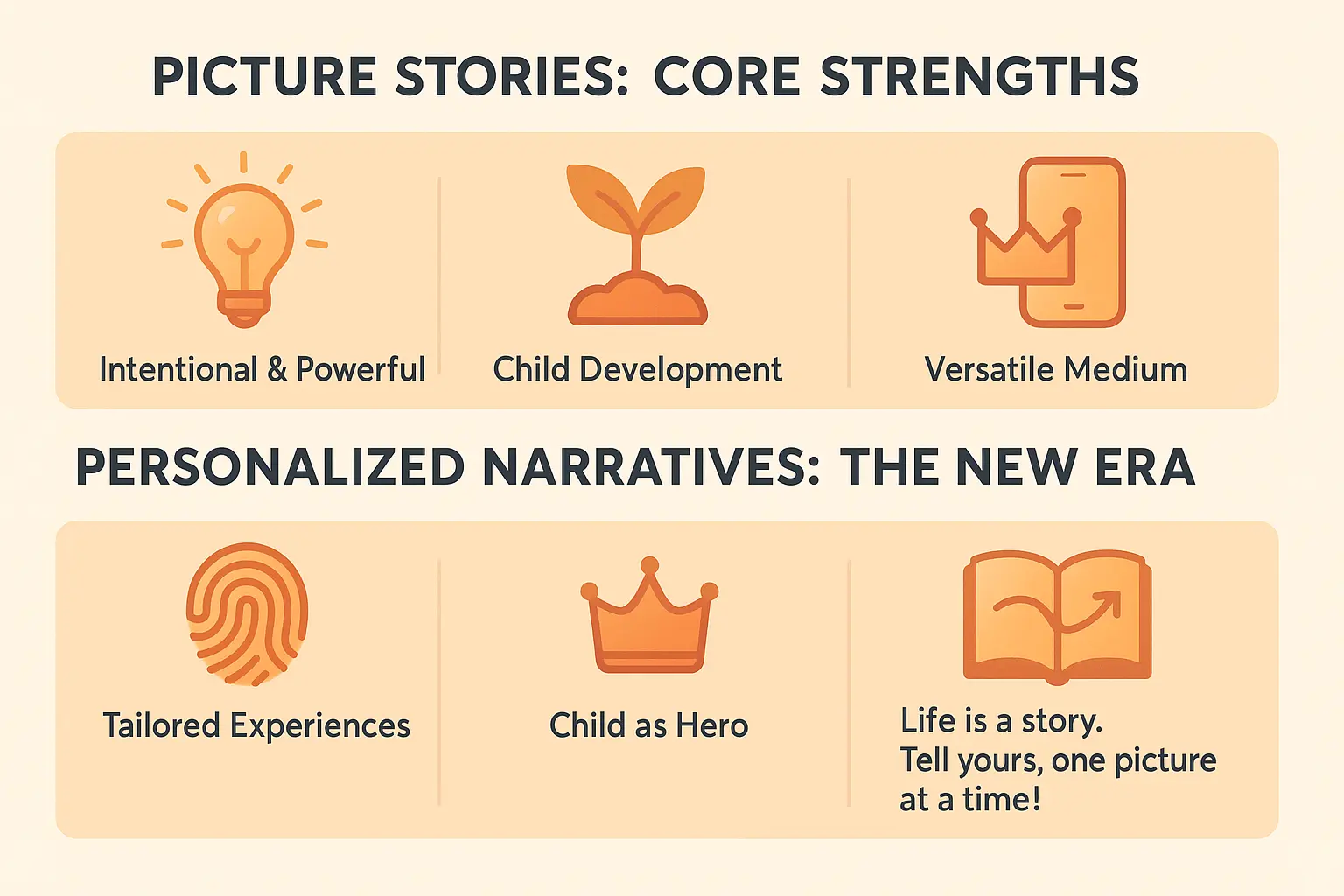
Picture stories aren’t just about pretty photos. They’re intentional narratives that blend images and words to spark curiosity, teach life lessons, and create emotional connections. From journalism to art, visual storytelling transforms raw moments into meaningful experiences. 📸✨
Modern tech is reshaping how we create these stories. Imagine your child’s name in a bedtime tale, their favorite hobbies shaping the plot, and their voice guiding the narrative—all generated in seconds. This isn’t sci-fi! AI and smart tools now let parents craft personalized adventures where kids become heroes, no app download needed. The magic? Stories adapt, remember preferences, and grow with them. 🌟
Ready to turn moments into memories? Whether it’s a bedtime routine, a learning milestone, or just a silly adventure, your family’s story deserves to be told. Start small. Pick a photo. Add a voice note. Watch the magic unfold. Because life’s most precious chapters shouldn’t stay in your phone—they belong in hearts. 🎨💬
Picture stories blend intentional visuals and narrative to create emotional journeys. They nurture creativity and comprehension in children while preserving memories. As technology advances, personalized storytelling lets families craft unique tales where they’re the heroes. Embrace this evolving art—your story, your way. ✨
FAQ
What’s a picture story, really? 📸
A picture story is more than just snapping photos—it’s an intentional journey where images and (sometimes) words team up to tell a story. Think of it as crafting a narrative that’s emotional, personal, and unforgettable. Unlike random photo albums or auto-generated slideshows, a picture story has a clear purpose: to guide the viewer through a beginning, middle, and end. Whether it’s a vacation, a family memory, or a made-up tale, every image has a role to play.
How do I create a picture story? 🎨
Time to start! Here’s the quick guide:
- Find your story: Ask, “What moment or emotion am I sharing?” Keep it simple—like a cozy weekend or a child’s laughter.
- Choose your visuals: Pick images that serve the plot. Skip the “pretty but irrelevant” shots.
- Add words (if needed): Use captions or short phrases to set context. Remember, less is more!
- Organize with purpose: Chronological? Thematic? Your choice shapes the flow.
You can use apps like Canva or Shutterfly to bring it all together. Even a printed scrapbook works!
What’s a story with pictures called? 🖼️
It goes by many names: photo story, visual narrative, or picture book. For adults, terms like graphic novel or visual memoir pop up. Kids’ versions? Think wordless books or board books. All of them use images as the main storyteller, with text (if any) playing a supporting role.
What’s an adult picture book called? 🧑
Adults love them too! They’re often called graphic novels (think Maus or Persepolis) or visual storytelling books. These tackle deep themes—from life journeys to social issues—with art that’s as expressive as the words. For a casual vibe, photo essays or documentary photobooks capture real-life stories without needing a single sentence.
What’s a photostory? 📷
A photostory is a digital or printed collection of images arranged to tell a tale. It’s like a dynamic scrapbook or multimedia journey. Think: a series of snapshots from a road trip, paired with short captions or voiceovers. The magic? It’s not just “what happened,” but “how it felt.” Tools like Adobe Spark or Instagram Stories can turn your snaps into a scrollable adventure!
How long should picture stories be? ⏳
Short and sweet! Most picture stories range from 10 to 30 pages, but it’s not a rule. Kids’ books often stick to 20–24 pages (perfect for bedtime), while adult photobooks might stretch longer. The key? Keep it focused. If your story can shine in 5 images, go for it! Quality > quantity, always.
How to make your own picture story book? 📖
Let’s DIY! Here’s your roadmap:
- Pick a theme: Family trips, a pet’s antics, or a fictional adventure—your call!
- Curate visuals: Mix photos, illustrations, or even doodles. Ditch the “meh” shots.
- Sketch the flow: Use sticky notes or a digital tool to map the story beats.
- Design & print: Apps like Book Creator or Blurb let you drag-and-drop pages into a polished book. Print or share online—it’s up to you!
How to start a photo story? 🚀
Start with why. Ask: “What’s the heart of this story?” Then:
- Plan your shots: Capture a mix of close-ups, wide angles, and candid moments.
- Think like a director: Frame scenes that show emotions—like a child’s grin at a birthday party or the quiet of a rainy day.
- Edit ruthlessly: Trim images that don’t add to the plot. A photo story is curated, not cluttered.
Need inspiration? Look at your favorite movies—how do they build tension or joy? Apply that to your frames!
How to make a picture story on iPhone? 📱
Your phone’s got superpowers! Use these tricks:
- Apps: Canva (for layouts), iMovie (for video photostories), or Book Creator (to build a digital book).
- Edit on the go: Use Lightroom or Snapseed to tweak lighting or crop for impact.
- Get creative: Add voiceovers in TikTok or Instagram Stories to turn static pics into a dynamic narrative.
Pro tip: Organize your photos in a dedicated album before diving in. Trust us, it saves time! 📁✨