The bottom line: Written stories preserve culture through universal plots like overcoming monsters or rags-to-riches, plus six core conflicts (Life vs Death, Love vs Hate). These frameworks help writers craft resonant tales while readers connect across time. Christopher Booker’s 7 basic plots reveal storytelling’s timeless power to shape understanding and empathy.
Ever felt stuck staring at a blank page, wondering how to turn your ideas into written stories that grab attention? 🤔 You’re not alone—but what if crafting compelling narratives could feel as natural as breathing? This guide spills the secrets behind stories that stick, blending timeless frameworks like Christopher Booker’s seven basic plots and core conflicts (think Life vs. Death in adventure tales or Maturity vs. Immaturity in coming-of-age arcs). Whether you’re a newbie or a seasoned writer, dive into how short stories sharpen your skills, bridge generations, and spark empathy—all while keeping your creativity on fire. Ready to make your words unforgettable? 💡
Why written stories are more than just words on a page
Imagine a world without stories. No bedtime tales for children. No historical novels preserving our memory. No personal narratives connecting generations. 📖
“Written stories are the bedrock of our collective memory, allowing us to walk in the shoes of our ancestors and pass on our wisdom to those who will follow.”
Written stories act as time capsules. They freeze human experience, preserving languages, traditions, and values. From cave-wall myths to modern novels, they form our cultural DNA – passing down survival strategies, morals, and art.
Consider how a single story shapes generations. Aesop’s fables taught morals. The Brothers Grimm preserved European rural life. Today, personalized stories help families share values – though we won’t name specific tools here 😉
Written stories impact us through 3 key mechanisms:
- Memory boost: Facts become 20x more memorable in stories
- Empathy engine: Reading activates brain regions tied to understanding others
- Safe learning: Explore complex situations without real risks
They’re psychological training grounds. When readers emotionally engage, they experience “transportation” – a mental state where empathy grows. This explains how stories help kids navigate life shifts like starting school or new routines.
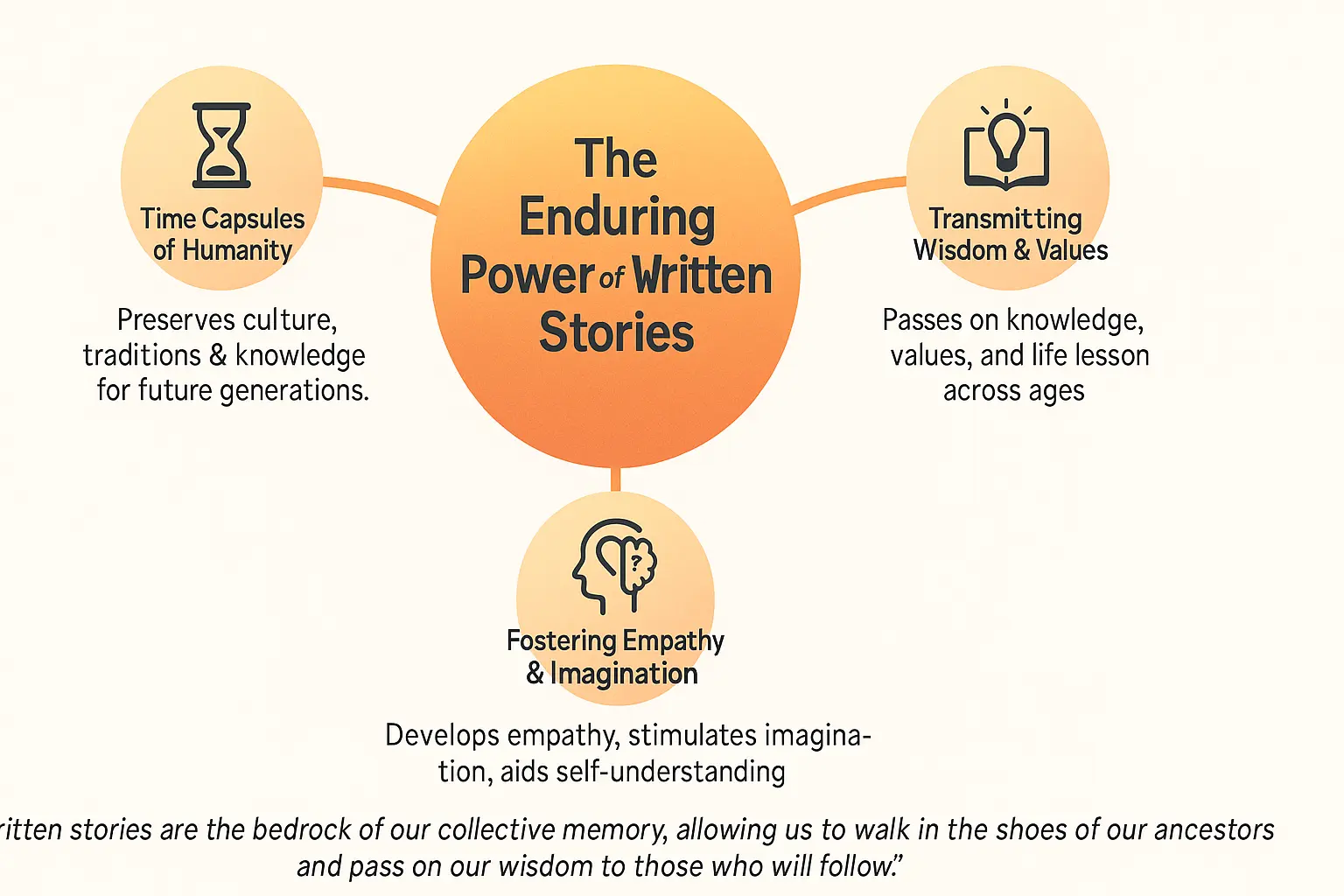
Through words, we transmit more than knowledge – we share our humanity. Stories teach courage through adventures, love through romances, and resilience through coming-of-age tales. They carry the heaviest human burden: our collective soul.
So what makes a story timeless? Let’s explore the elements turning words into cultural cornerstones…
What makes a written story, a story? 📖
At its core, a written story is more than ink on paper. It’s a crafted experience condensed into words, designed to spark imagination. While the term “written stories” includes everything from epics to bedtime tales, modern storytelling often focuses on short stories—compact narratives that deliver punchy, memorable moments.
The art of the short story
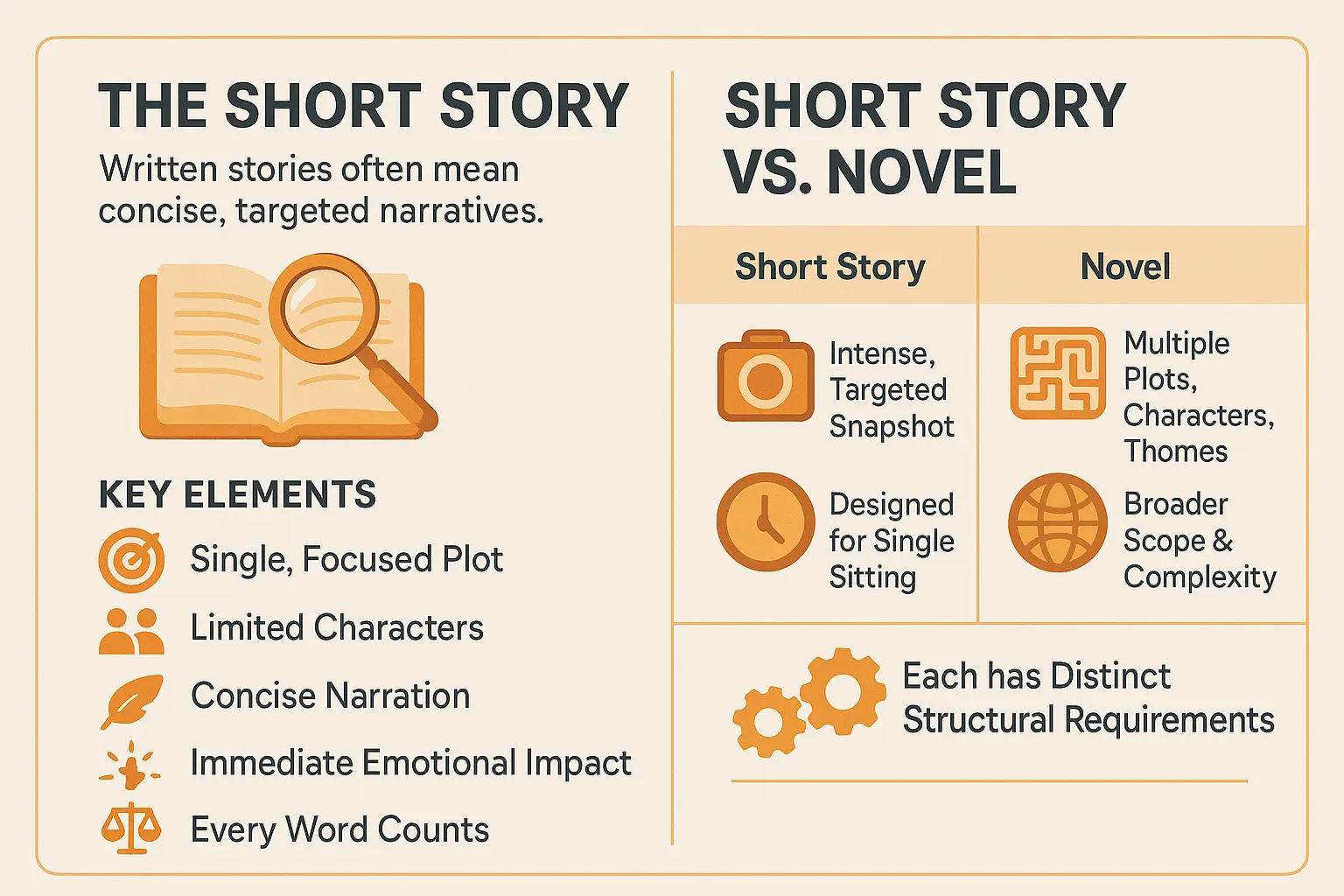
Short stories are literary sprints: fast, focused, and impactful. They zero in on a single event or character, using every word strategically to create a lasting emotional imprint. Unlike novels, they thrive on restraint—where a novel might spend chapters building tension, a short story must hook readers in seconds. Think of Hemingway’s famous six-word story: “For sale: baby shoes, never worn.” Just six words, but it conjures entire worlds of sorrow and imagination. That’s the magic of short fiction—it’s not about what’s said, but what’s implied.
Short story vs. novel: what’s the difference?
Short stories aren’t just “mini-novels”—they’re a distinct art form. While novels explore sprawling narratives with multiple subplots, short stories are snapshot moments that pack a punch. They demand precision over length, focusing on one conflict, a handful of characters, and a single, resonant theme. As writing.stackexchange.com explains, each format has its own distinct structural and narrative requirements. Novels let writers wander; short stories require surgical focus.
- A single, focused plot: Every scene exists to serve the central conflict. No subplots or tangents—just a direct path to the emotional core.
- Limited number of characters: 2-3 key players explored through sharp moments.
- Concise narration: No fluff—each line propels the story forward.
- Immediate emotional impact: Leaves readers thinking long after reaching the end.
Short stories thrive on immediacy. They start in media res (mid-action), skip elaborate backstories, and end at or immediately after the climax. They’re like literary fireworks—brief, brilliant, and unforgettable. The average word count ranges from 1,000 to 7,000 words, forcing writers to make every syllable count. This brevity makes them ideal for experimentation: fragmented narratives, second-person POV, or ambiguous endings that invite reader interpretation.
The Building Blocks: Exploring The Basic Plots Of Written Stories
Stories form the foundation of human connection. Christopher Booker’s research reveals seven universal plots that span cultures and generations. These archetypes explain why certain stories resonate deeply with audiences worldwide by tapping into shared emotional experiences. From ancient myths to modern streaming content, these structures continue shaping how we craft and consume narratives.
The Seven Basic Plots We All Recognize
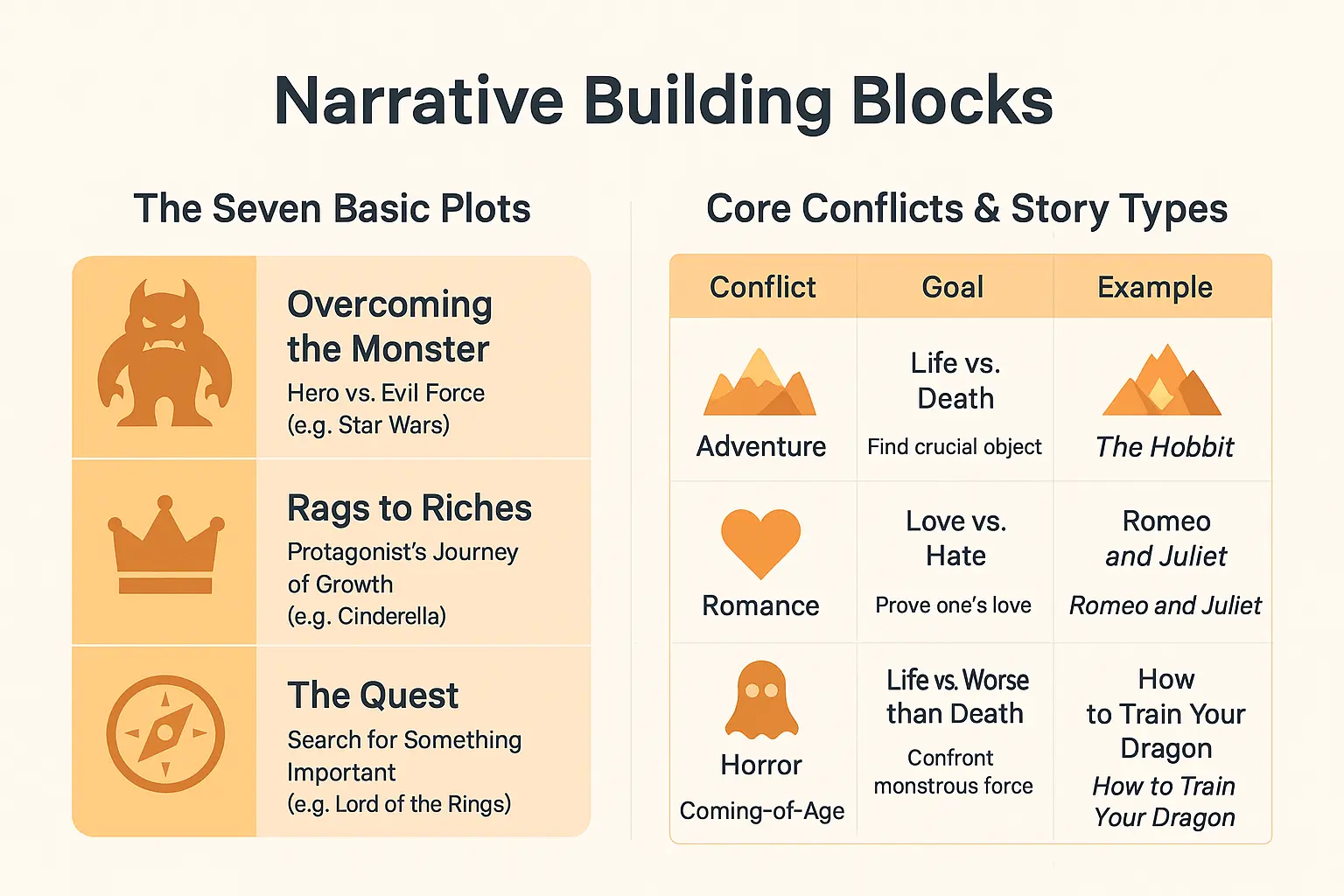
Booker’s framework offers a powerful lens for analyzing storytelling. Let’s examine three key archetypes:
- Overcoming The Monster – A hero confronts a destructive force threatening their world. This plot taps into our collective desire for safety and hope. The monster might be physical like Smaug in The Hobbit, symbolic like societal pressures in The Hunger Games, or psychological like the shark in Jaws. These stories often mirror real-life struggles against overwhelming odds.
- Rags To Riches – A character rises from obscurity to greatness, loses everything, then regains it through personal growth. Cinderella’s journey shows this timeless rise-fall-rise structure through wealth, maturity, or inner strength – seen in Aladdin, Jane Eyre, or Slumdog Millionaire. The pattern reflects our belief in second chances.
- The Quest – A group pursues a crucial object, facing trials along the way. The Lord of the Rings demonstrates natural tension and progression through companionship and perseverance – a structure seen from Homer’s Odyssey to modern adventures. This archetype emphasizes collective effort and growth through adversity.
Core Conflicts That Drive The Narrative
Stories gain emotional weight from fundamental human conflicts. These oppositions create tension that engages readers:
| Story Type | Core Conflict | Main Goal | Classic Example |
|---|---|---|---|
| Adventure | Life vs. Death | To find a crucial object (MacGuffin) | The Hobbit |
| Romance | Love vs. Hate | To prove one’s love for another | Romeo and Juliet |
| Horror | Life vs. A Fate Worse Than Death | To confront a monstrous force | The Shining |
| Coming-of-Age | Maturity vs. Immaturity | To achieve self-realization | How to Train Your Dragon |
These conflicts mirror real-life struggles. Exploring different story formats shows how patterns adapt across media while maintaining core essence. Whether through life-or-death stakes or internal growth, these frameworks help craft narratives that feel both familiar and fresh. In How to Train Your Dragon, the dragon-rider relationship symbolizes overcoming immature fears through empathy.
Recognizing these building blocks allows storytellers to create compelling narratives across generations. These archetypes provide scaffolding for tales that shape our collective imagination – proving storytelling’s heart remains timeless even as details evolve. Understanding these patterns helps craft stories that feel authentic to readers while offering new perspectives on age-old struggles.
Your turn to write: a simple guide to crafting your own story
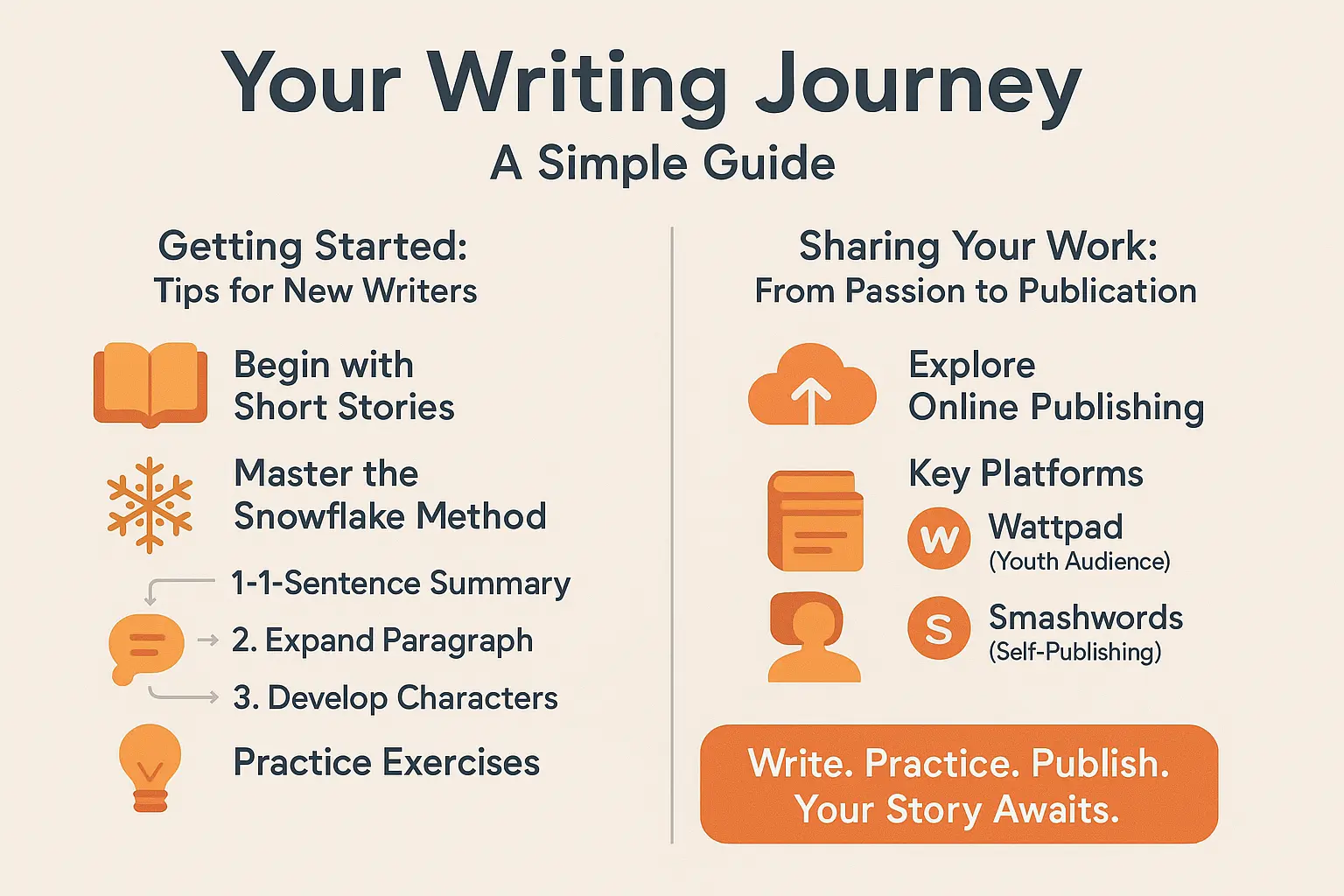
Feeling inspired? Time to start writing! ✍️ Whether you’re a beginner or looking to refine your craft, creating stories can be both fulfilling and impactful. Let’s break it down into actionable steps.
Getting started: tips for new writers
Begin with short stories to build confidence and experiment with ideas. As highlighted by writers on Writing Stack Exchange, short stories are perfect for mastering pacing and character development without overwhelming yourself.
- Start with one sentence: Define your story’s core idea in a single line.
- Expand to a paragraph: Outline the setup, conflicts, and resolution.
- Develop characters: Create brief profiles for main characters, including motivations.
- Plan scenes: List key events that drive the narrative forward.
Try practical exercises like describing a character from a photo or rewriting a scene from a movie. These practices sharpen your observational and descriptive skills. For structured guidance, the Snowflake Method offers a clear framework: start with a one-sentence summary, expand it into a paragraph, then flesh out characters and scenes. It’s a step-by-step way to turn abstract ideas into stories.
Sharing your work: from passion to publication
Ready to share? The internet offers tools to turn your passion into published work. Platforms like Wattpad let you connect with young readers, while Smashwords simplifies self-publishing eBooks. Both cater to different audiences and goals.
“The first step to becoming a writer is simply to write. Don’t aim for perfection, aim for completion. Your voice will emerge with practice and persistence.”
For a structured approach, follow these steps:
- One-sentence summary: Clarify your story’s essence.
- Full paragraph: Detail the plot, conflicts, and ending.
- Character development: Define personalities and arcs.
- Scene breakdown: Map out pivotal moments.
Explore resources like Medium for platforms that align with your goals. Whether you want instant feedback or monetization, options like Patreon (for subscription-based support) or Medium (for audience-driven earnings) can help you grow.
Writing isn’t just about storytelling—it’s a way to preserve culture and spark emotional connections. By sharing your voice, you contribute to a legacy that transcends generations. Let’s get started! 🚀
Unlocking imagination: the importance of written stories for children
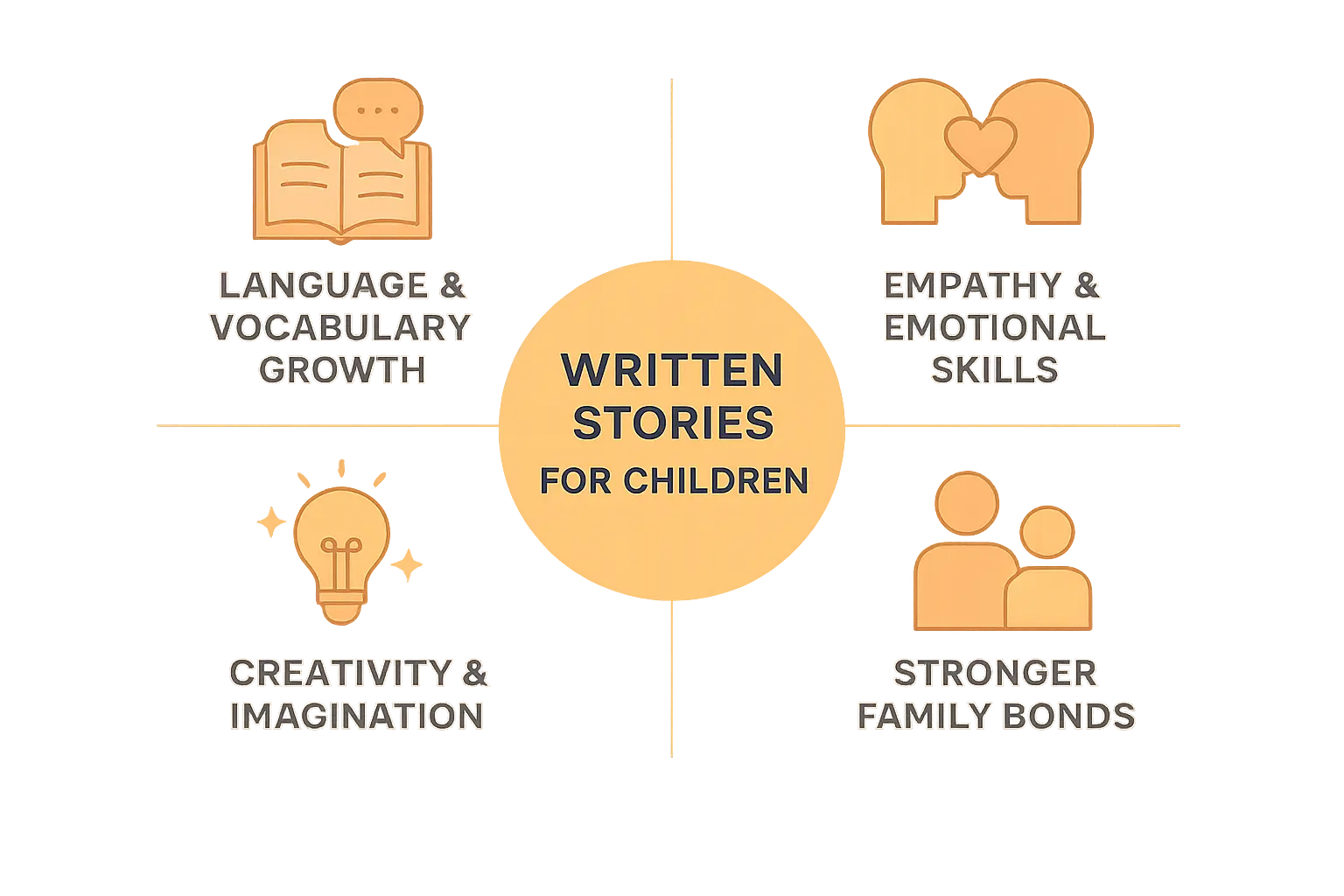
Have you ever noticed how a child’s eyes light up when they hear their name in a story? 🌟 Written stories aren’t just entertainment—they’re tools for growth. Tellmestories uses this magic to create personalized tales where kids become heroes of their adventures, all through WhatsApp. This personalization turns storytelling into a mirror of the child’s world, making learning feel like play.
- Boosts language and vocabulary skills: New words and sentence structures become second nature. A story about a “brave knight” teaches courage and complex phrases like “even though” or “because.”
- Develops empathy and emotional intelligence: Kids learn through characters’ perspectives. Seeing a hero comfort a friend helps them model similar behavior in real life.
- Sparks creativity and imagination: Endless worlds inspire young minds to dream. Today they’re space explorers; tomorrow, jungle adventurers—no limits!
- Strengthens parent-child bonds: Shared reading creates lasting connections. These moments also give parents insights into their child’s interests and feelings.
When stories boost the benefits of learning to read, magic happens. Children connect with characters, solve problems, and absorb lessons. Whether overcoming fears or learning patience, narratives become gentle teachers. Abstract concepts like kindness feel real through storytelling.
Personalized stories work because they speak directly to the child! 🎯 A 5-year-old seeing their name in a bravery tale, or a 6-year-old exploring space as the hero? Engagement soars. This is finding the perfect stories for children aged 5-6 years—where imagination meets personal relevance. At this stage, stories become frameworks for understanding the world.
Behind every tale lies a hidden superpower: transforming challenges into adventures. A child struggling with bedtime might become a sleepy dragon hero, learning calming techniques through play. A picky eater could follow a character discovering new foods. These aren’t just stories—they’re blueprints for real-life skills, wrapped in fun. 🎨
From ancient epics to bedtime tales, written stories have always carried our shared humanity. They preserve cultures, shape values, and spark connections that cross generations. Whether it’s a myth passed through centuries or a custom story for your child, every narrative follows timeless patterns—courage vs fear, love vs isolation—while inviting each of us to become readers, writers, or dreamers. 📖 Think of how Homer’s Iliad shaped Greek identity or how fairy tales like Cinderella reflect universal themes of resilience. These stories aren’t just relics; they’re blueprints for understanding ourselves and the world.
Now imagine crafting a tale that becomes your family’s legacy. With tools like Tellmestories, you can turn a voice note into an adventure where your child is the hero—bridging tradition and innovation. What lesson or dream will your story pass on? 🌟 
From preserving our heritage to sparking imaginations, written stories shape who we are. They follow timeless patterns, yet each voice brings something new. Whether you’re reading, writing, or sharing tales, remember: every story is a bridge between hearts and minds. Ready to start yours? 📚✨
FAQ
What’s the proper term for a written story?
A written story can have many names depending on its length and purpose! Short stories, novels, novellas, and fables all fall under this umbrella. Short stories (like Edgar Allan Poe’s The Tell-Tale Heart) pack a punch in limited words, while novels (think Pride and Prejudice) explore complex worlds over hundreds of pages. Fables (à la Aesop) teach moral lessons through animal tales. 🌟 Fun fact: The word “story” itself comes from the Latin historia, meaning “narrative” or “account.”
Which story has stood the test of time as the most iconic?
The title of “most famous” is hotly debated, but a few contenders rise to the top. Homer’s The Odyssey (8th century BCE) shaped Western literature with its epic hero’s journey. The Bible’s parables (like The Good Samaritan) influenced cultures and ethics for millennia. More modern picks? Don Quixote (1605), often called the first modern novel, or One Thousand and One Nights, a collection of folktales from the Islamic Golden Age. 🪶️ Pro tip: Stories that blend universal themes (love, power, survival) tend to outlive generations.
What are the 7 classic story types?
Christopher Booker’s The Seven Basic Plots (2004) breaks it down: 1. Overcoming the Monster (e.g., Beowulf) 2. Rags to Riches (e.g., Cinderella) 3. The Quest (e.g., The Lord of the Rings) 4. Voyage and Return (e.g., Alice in Wonderland) 5. Comedy (e.g., Pride and Prejudice) 6. Tragedy (e.g., Macbeth) 7. Rebirth (e.g., A Christmas Carol). 💡 These frameworks help writers tap into primal human experiences. Bonus: Most modern tales remix these plots with fresh twists!
What are the 10 greatest books ever written?
“The greatest” is subjective, but these classics keep readers hooked centuries later: 1. Don Quixote (Cervantes) – Satire meets chivalric romance. 2. The Brothers Karamazov (Dostoevsky) – A philosophical murder mystery. 3. Moby-Dick (Melville) – Obsession meets the sea. 4. Pride and Prejudice (Austen) – Wit and social critique. 5. In Search of Lost Time (Proust) – A deep dive into memory. 6. Ulysses (Joyce) – Revolutionary stream-of-consciousness. 7. Anna Karenina (Tolstoy) – Tragedy in Russian high society. 8. Crime and Punishment (Dostoevsky) – Guilt and redemption in St. Petersburg. 9. The Divine Comedy (Dante) – A journey through the afterlife. 10. The Great Gatsby (Fitzgerald) – Jazz Age decadence and disillusionment. 📖 Pro tip: These books aren’t just “old” – they tackle timeless human truths.
What are the 3 core types of story writing?
Think of story writing as a toolbox with three main categories: 1. Short stories: Bite-sized narratives (500–10,000 words) focusing on a single moment. Example: Shirley Jackson’s The Lottery. 2. Novels: Epic adventures (80,000+ words) with layered plots and characters. Example: 1984 (Orwell). 3. Creative nonfiction: True stories told with literary flair (memoirs, essays). Example: Educated (Westover). 🔍 Key difference? Short stories prioritize precision (every word counts!), while novels thrive on complexity. Nonfiction bridges authenticity and artistry.
Need a synonym for “story”? Here’s your list!
“Story” has synonyms for every vibe: – Tale (folky, timeless) – Narrative (structured, thematic) – Plot (action-driven) – Fable (moral-centered) – Anecdote (personal, conversational) – Fiction (general term for invented stories) – Chronicle (fact-based, linear) – Saga (epic, multi-generational) – Legend (partly true, exaggerated over time) – Parable (short, instructive). 💬 Use “tale” for fairy tales, “narrative” for deep dives, and “saga” for family epics. Words matter!
What are the 3 most-read books globally?
According to UNESCO’s Index Translationum, the podium goes to: 1. The Bible – Translated into ~3,300 languages, it’s a spiritual and cultural cornerstone. 2. The Little Prince (Saint-Exupéry) – A poetic fable about love and loss, read in ~300 languages. 3. Quotations from Chairman Mao Tse-tung – Over 900 million copies printed in China (1960s–70s). 📚 Runner-ups include Harry Potter (500M+ copies) and The Hobbit (150M+). Tip: Stories that bridge cultures (like The Little Prince) dominate global lists.
What’s the oldest written story we know?
Meet The Epic of Gilgamesh (2100 BCE), humanity’s OG blockbuster. 🏺 This Mesopotamian poem follows King Gilgamesh’s quest for immortality after his friend Enkidu dies. Themes like friendship, power, and mortality still resonate today. The story was carved on clay tablets in cuneiform script – talk about #shelfie goals! 🌍 Fun trivia: It even includes a flood myth predating the Biblical Noah.
What’s the one book everyone should read before dying?
If you could read only one, let it be The Alchemist (Coelho). 📖 Why? It’s a gateway to self-discovery, urging readers to chase their “Personal Legend.” Short enough to devour in a weekend, yet deep enough to spark life changes. Other must-reads? To Kill a Mockingbird (Lee) for empathy, Sapiens (Harari) for human history, and Man’s Search for Meaning (Frankl) for resilience. 🌟 Pro tip: Pair with The Midnight Library (Swinnerton) for a modern take on life choices.