The key takeaway: Stories aren’t just entertainment—they’re our brain’s favorite tool for connecting and understanding. Sharing authentic stories builds empathy, bridges divides (Harvard studies show personal narratives boost trust in science), and even sync memories across groups (Princeton research proves it!). For storytellers, it’s empowering—owning your narrative brings catharsis and genuine connection. Cool, right? 🧠✨
Ever wondered why some sharing stories make your heart race or eyes well up? 🤯 In a world swamped by digital chaos, stories are the lifelines that turn strangers into friends and noise into human connection. 💬 They’re not just fluff – these tales help us make sense of the world, build genuine connections, and even boost empathy like a mental muscle workout! We’ll unpack how authentic stories make us feel seen, why they’re the secret sauce for shared humanity, and drop simple tricks to make your next tale unforgettable. Ready to become a story wizard? 🌟
Why we’re hardwired for stories (and why it matters more than ever)
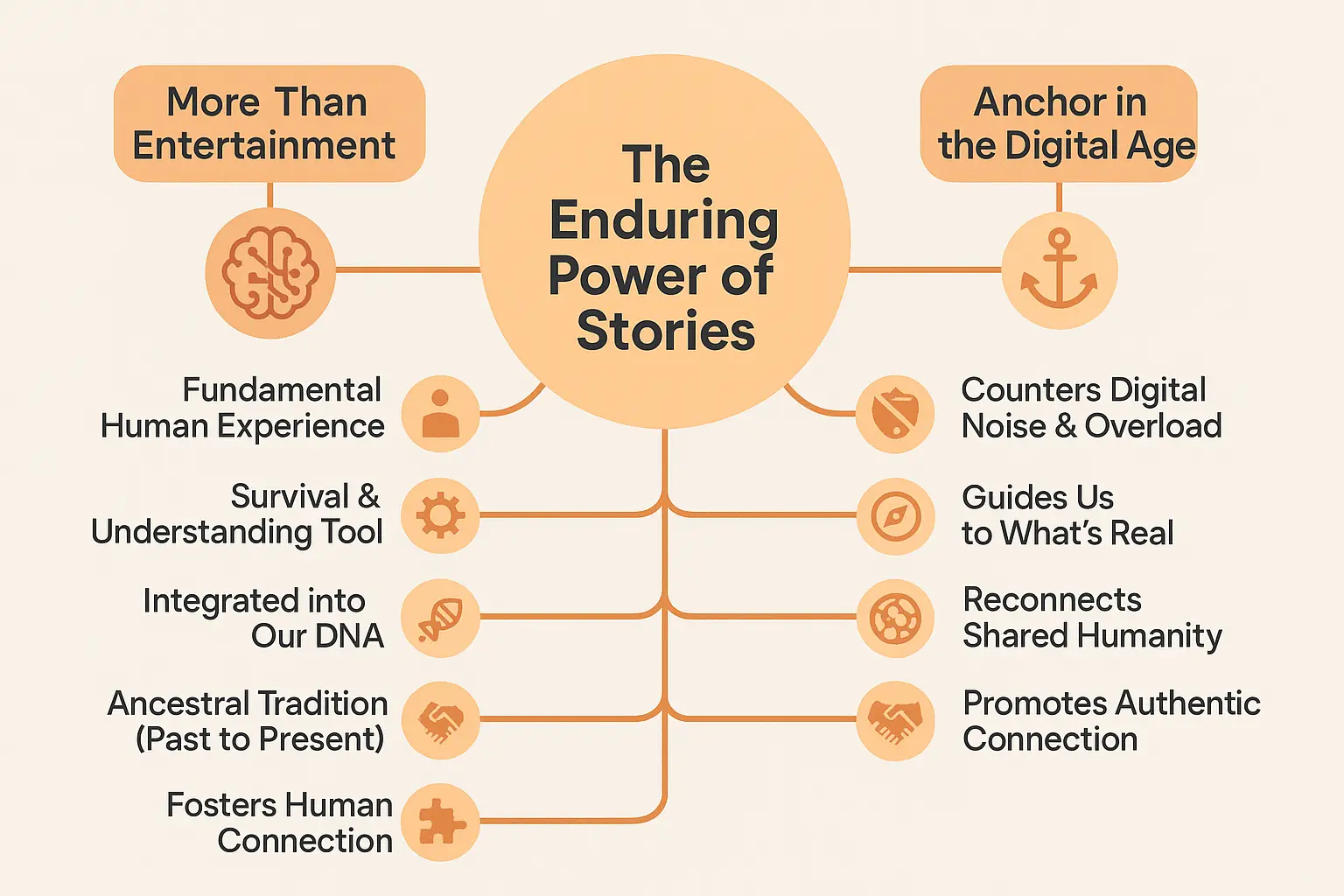
More than just entertainment
Ever had a story make you laugh out loud in public? Or feel chills down your spine? Sharing stories isn’t just a pastime—it’s in our DNA. We’re wired to connect through narratives. Think about it: from cave paintings to WhatsApp voice notes, stories have always been our secret sauce for human connection. They’re how we’ve made sense of the world long before smartphones existed. 🌟
Our brains crave stories like kids crave bedtime tales. They’re not just fun—they’re survival tools! Ancient humans used them to share warnings (“Beware the grumpy saber-tooth!”), pass down wisdom, and build communities. Today? They still help us bond, empathize, and feel part of something bigger. Pretty cool for something that started around campfires, right?
In a digital world, stories are our anchor
Let’s face it: digital life feels like drowning in a tsunami of emails, memes, and TikTok clips. 🌊 But stories? They’re our lifebuoys. When you read a authentic story about a kid conquering bedtime fears (or a parent creating one via WhatsApp), it’s like breathing fresh air. Suddenly, we’re not just data points—we’re humans again.
That’s why services like Tellmestories work magic. They tap into our craving for shared humanity while keeping up with modern life. Just imagine: you speak into WhatsApp, and boom—a custom tale stars your child as the hero. It’s storytelling meets AI, but still warm and personal. Who knew tech could feel this cozy? 💡
Stories: the ultimate bridge between people
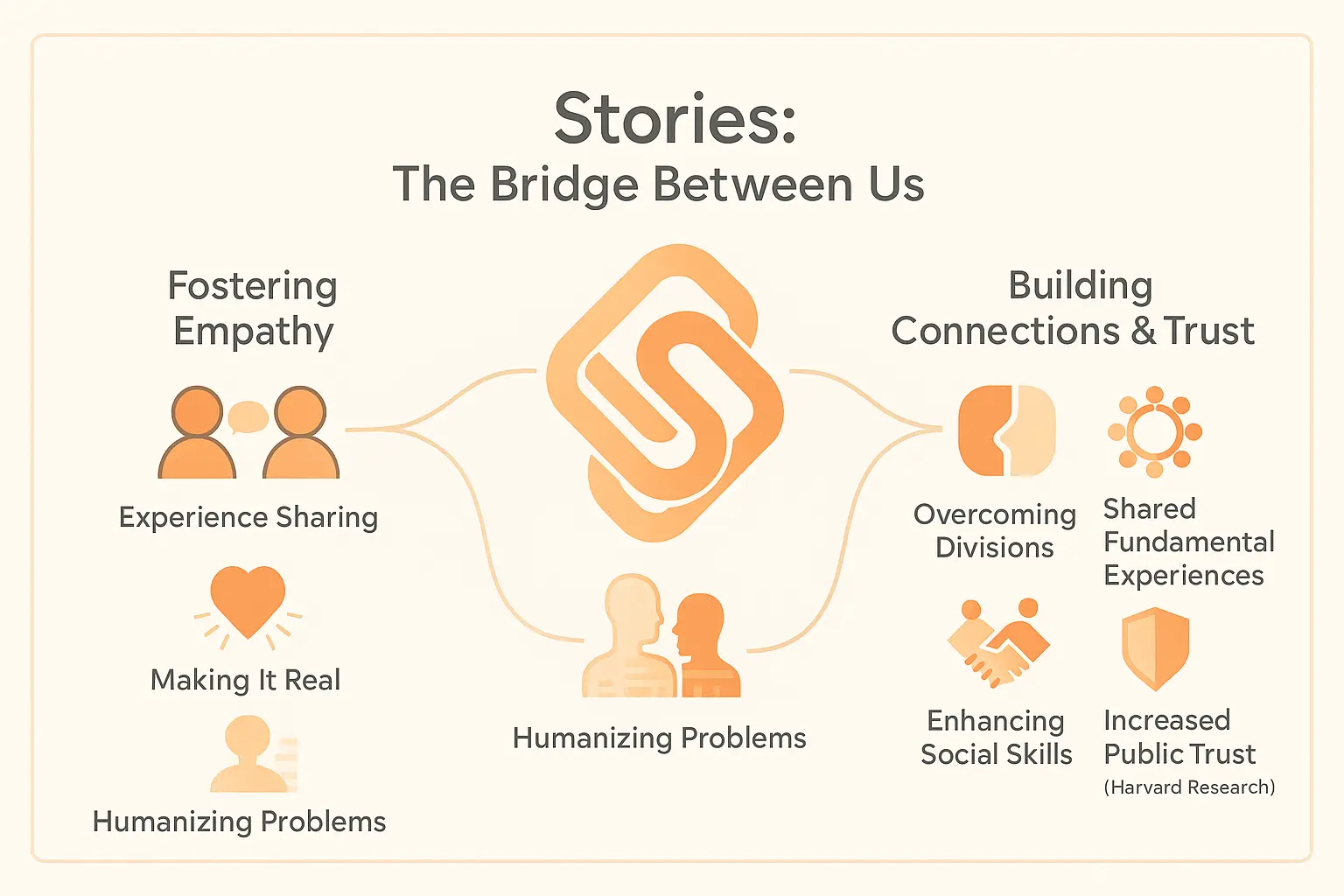
Let me explain: stories work like emotional glue connecting people. When you hear a story, your brain mirrors the storyteller’s neural patterns. This “neural coupling” makes you feel what they felt, living their experience without moving an inch. Your brain gets tricked into thinking it’s your own adventure!
“Stories humanize what can seem like abstract problems. They put a face and a heart to the numbers, making the experience relatable and unforgettable.”
Walking in someone else’s shoes
Think of it like a VR headset for emotions. While facts stay in your head, stories hit your heart. The science shows personal narratives trigger oxytocin release – the “cuddle hormone” that creates connection. This explains why we cry at sad parts or feel inspired after hearing triumphs. It’s about sharing emotions that feel personal.
It’s not just understanding – it’s feeling with. Ever noticed how one child’s story hits harder than millions in statistics? Our brains process it as our own experience. Like hearing about bedtime fears suddenly makes you remember your own childhood worries.
Breaking down walls, one story at a time
Stories connect individuals and build bridges between worlds. This is key to developing better social skills and understanding others. Imagine hearing a story from someone you’d usually disagree with. Suddenly, they’re not “the other side” – they’re a person whose experiences make sense.
In fact, research from Harvard’s School of Public Health shows scientists sharing personal values increases public trust. Storytelling breaks academic barriers to create human contact through real people sharing what matters.
Stories turn strangers into friends through mental doorways into other lives. This isn’t just warm feelings – it’s brain science creating stronger communities, one narrative at a time. Storytelling remains our most powerful tool for human connection.
The personal power of telling your own tale
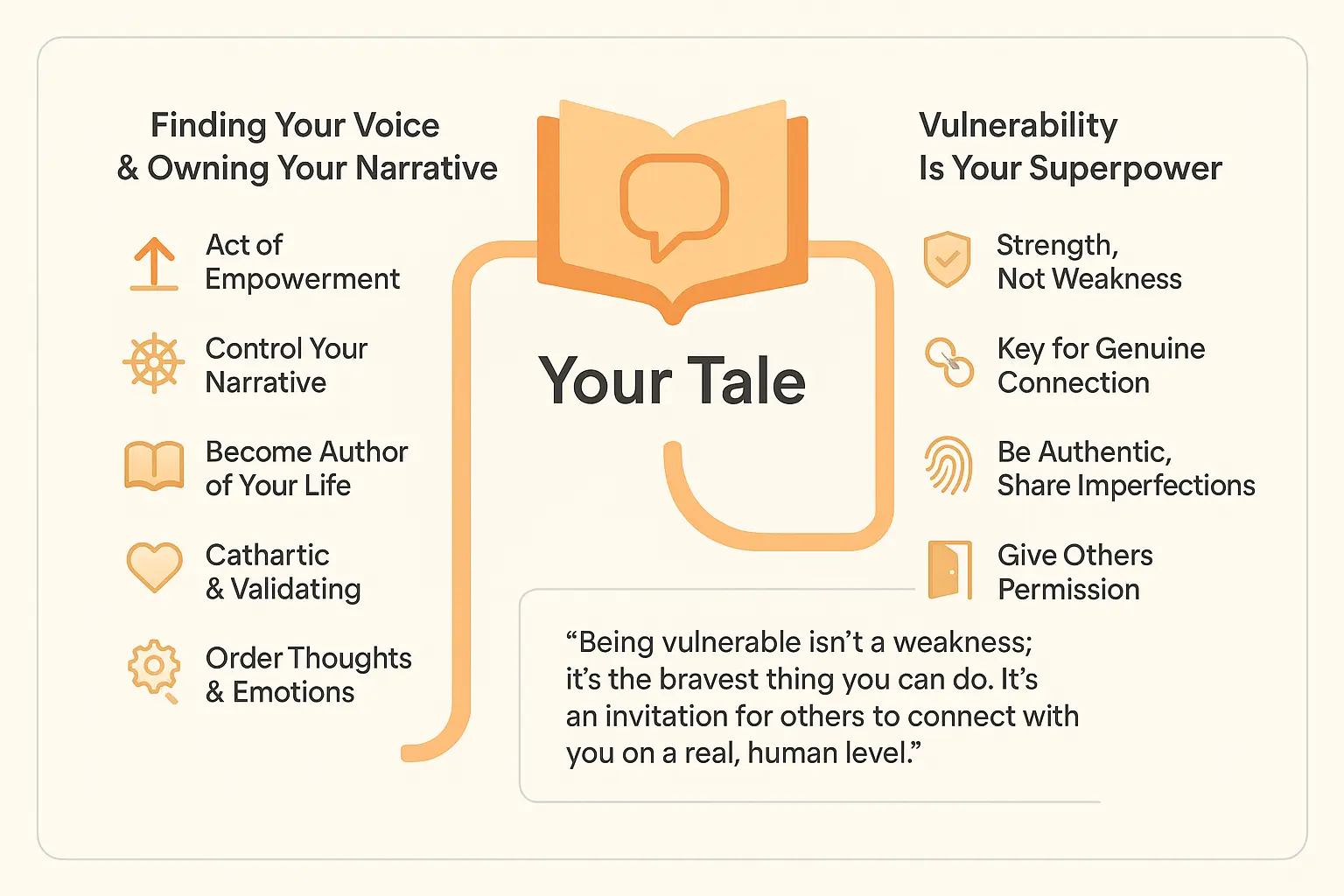
Finding your voice and owning your narrative
Imagine crafting stories where your child isn’t just the star – they’re the whole universe. 🌟 With Tellmestories, this happens in WhatsApp, no app needed. Why does this matter? Because when you create tales that mirror your family’s unique world, you’re doing more than bedtime stories – you’re building emotional bridges.
Think of it like this: every story you share becomes a mirror for your child’s experiences. Got a little astronaut obsessed with dinosaurs? That’s not just cute – it’s their reality, and now it’s their adventure. This isn’t random magic; it’s intentional storytelling that helps kids process their world while keeping you in control of their narrative.
Vulnerability is your superpower
“Being vulnerable isn’t a weakness; it’s the bravest thing you can do. It’s an invitation for others to connect with you on a real, human level.”
Here’s the truth: sharing bedtime stories through voice notes (yes, just talk into your phone!) might feel exposing. But guess what? That “imperfect” audio clip where your toddler interrupts? That’s gold. It’s real. It’s messy. It’s human. And that’s exactly what makes these moments unforgettable.
Let’s break this down:
- Send a voice note → Get a custom story back
- Watch your child recognize their own voice in the hero’s dialogue
- Notice how each story adapts to their evolving interests
Why does this work? Because when you let your guard down and share these tiny pieces of your family’s world, you’re modeling courage. Your child learns it’s okay to be themselves – flaws, quirks, and all. This isn’t just storytelling; it’s identity-building. And the best part? The AI remembers everything, so every story becomes part of their personal journey.
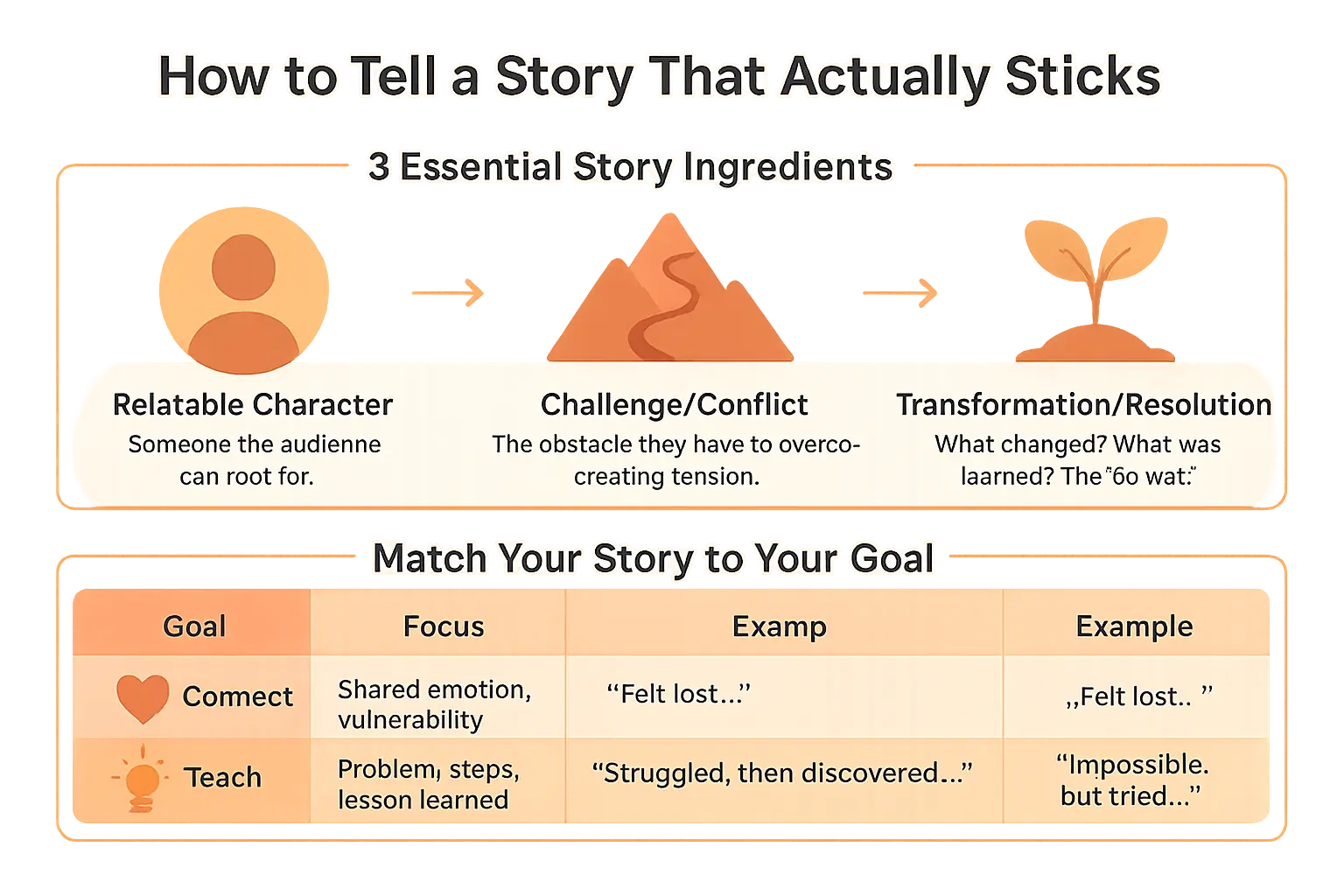
How To Tell A Story That Actually Sticks (A Simple Guide)
The 3 Essential Ingredients Of Any Great Story
Want to create stories that make your kids beg for more? Let me break it down super simply ⬇️
- A relatable character: Someone the audience can root for (this can be you!). The hero of the story.
- A challenge or conflict: The obstacle they have to overcome. This is what creates tension and makes us care.
- A transformation or resolution: What changed? What was learned? The ‘so what’ of the story.
Think of your child’s favorite bedtime story. You’ll notice these three elements always pop up! The magic happens when these components work together to create that “I want to hear this again!” moment.
Here’s the secret: when your child becomes the hero (yes, really!), suddenly the story isn’t just entertainment – it’s personal. This is why tools like Tellmestories let you create instant personalized tales where your little one stars as the main character. The AI remembers their favorite animals, colors, and bedtime quirks to make stories feel super special.
Matching Your Story To Your Goal
Here’s where many parents miss the mark. Let me show you how to match your storytelling with your purpose:
| Your Goal | Story Focus | Quick Example |
|---|---|---|
| To Connect | Focus on a shared emotion or universal experience. Be vulnerable. | “Let me tell you about a time I felt completely lost…” |
| To Teach | Highlight a clear problem, the steps taken, and the lesson learned. | “I used to struggle with this, but here’s the trick I discovered…” |
| To Inspire | Showcase a big challenge and the journey to overcome it against all odds. | “Everyone said it was impossible, but we decided to try anyway…” |
See how each approach changes the storytelling style? When you want connection, focus on emotions. For teaching, make it educational but fun. And when inspiration’s the goal, highlight those “against all odds” moments.
Pro tip: Don’t forget sensory details! Stories with smells, sounds, or textures stick better. Try adding how the hero felt butterflies before their big adventure or smelled chocolate chip cookies while solving the problem. These tiny touches make stories 22x more memorable!
Want to make this even easier? Check out how Tellmestories helps parents create personalized bedtime adventures through WhatsApp. Just send a voice note, and get an instant story where your child becomes the hero!
Stories that teach: passing on wisdom and building character
More than just “once upon a time”
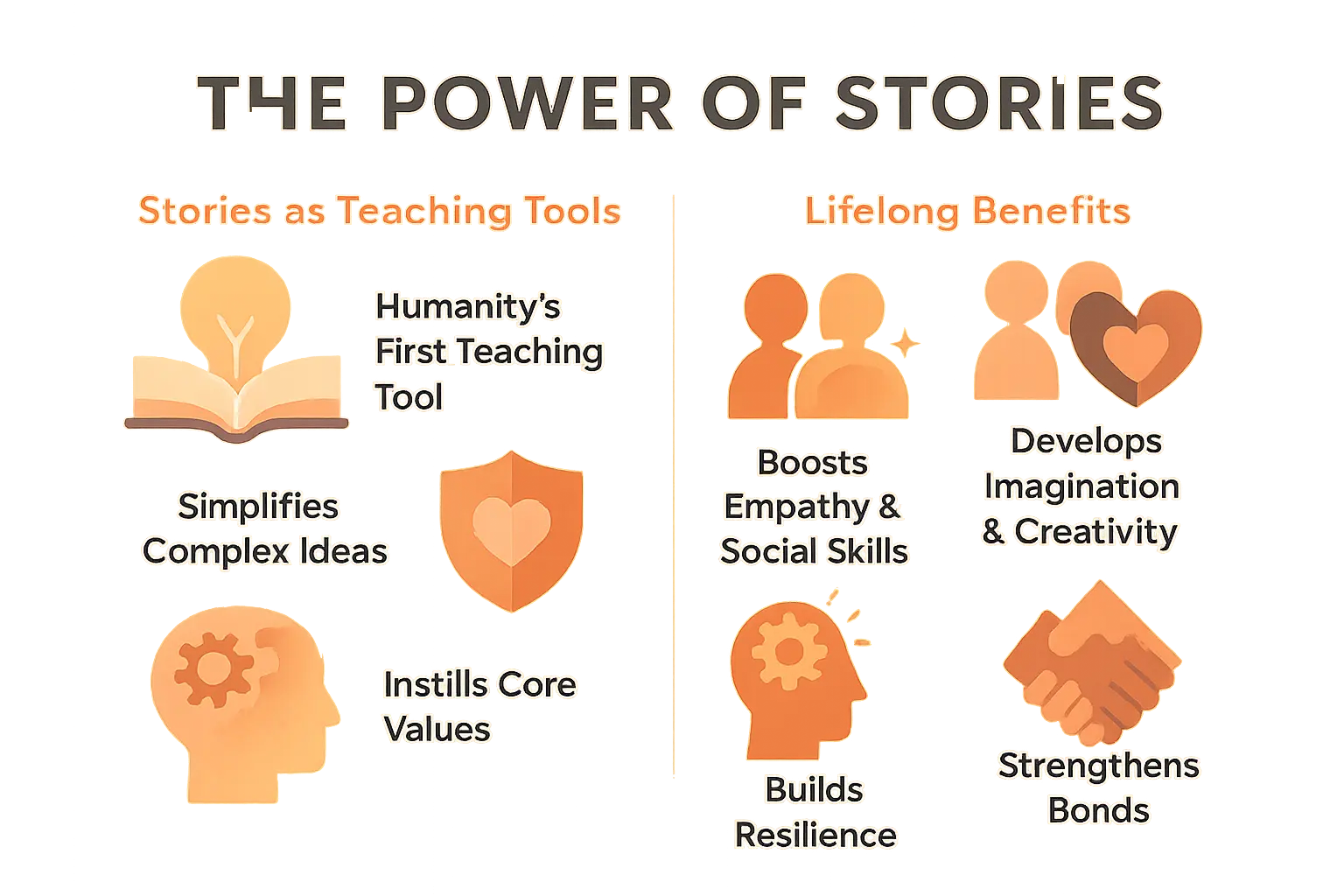
Let’s talk about stories – they’re not just bedtime distractions! 📖 They’re like secret superpowers for teaching kids what matters. Explaining “teamwork” to a 5-year-old? Tricky? Turn it into a tale where a shy turtle learns to trust friends, and boom – the lesson sticks! That’s the magic of personalized storytelling. When your child becomes the hero of their adventure, abstract ideas like courage suddenly feel real. They’re living it through characters they care about. Through stories, we can explore and instill important core values in a way that’s fun and engaging. With Tellmestories, you can even create stories from voice notes – just speak into your phone, and your child’s name, age, and interests shape the tale automatically. 🎤
The lifelong benefits of a childhood filled with stories
Want to give your little one superpowers? Here’s what happens when you fill their world with tales:
- Boosts empathy and social skills: Seeing the world through characters’ eyes 🧠. When kids follow a story about a nervous hedgehog making friends, they learn to understand peers who seem “different.”
- Develops imagination: It’s a workout for their brain! 🧩. Ever watched a child invent their own ending to a story? That’s creativity in action – and it starts with simple, relatable tales.
- Builds resilience: Characters overcoming challenges show them how to face their own. Picture a dragon scared of thunderstorms – your little hero will learn bravery through their journey!
And guess what? These stories aren’t just building better readers – they’re strengthening family bonds. Whether it’s magical tales of friendship or stories about overcoming fears, you’re creating moments that matter. With Tellmestories, you can even add photos of their friends to create custom characters – how cool is that? 📸 Just send a voice note through WhatsApp and let the AI craft adventures that teach values while making your child the child the star of their own show!
Your story matters: creating a space for everyone to share
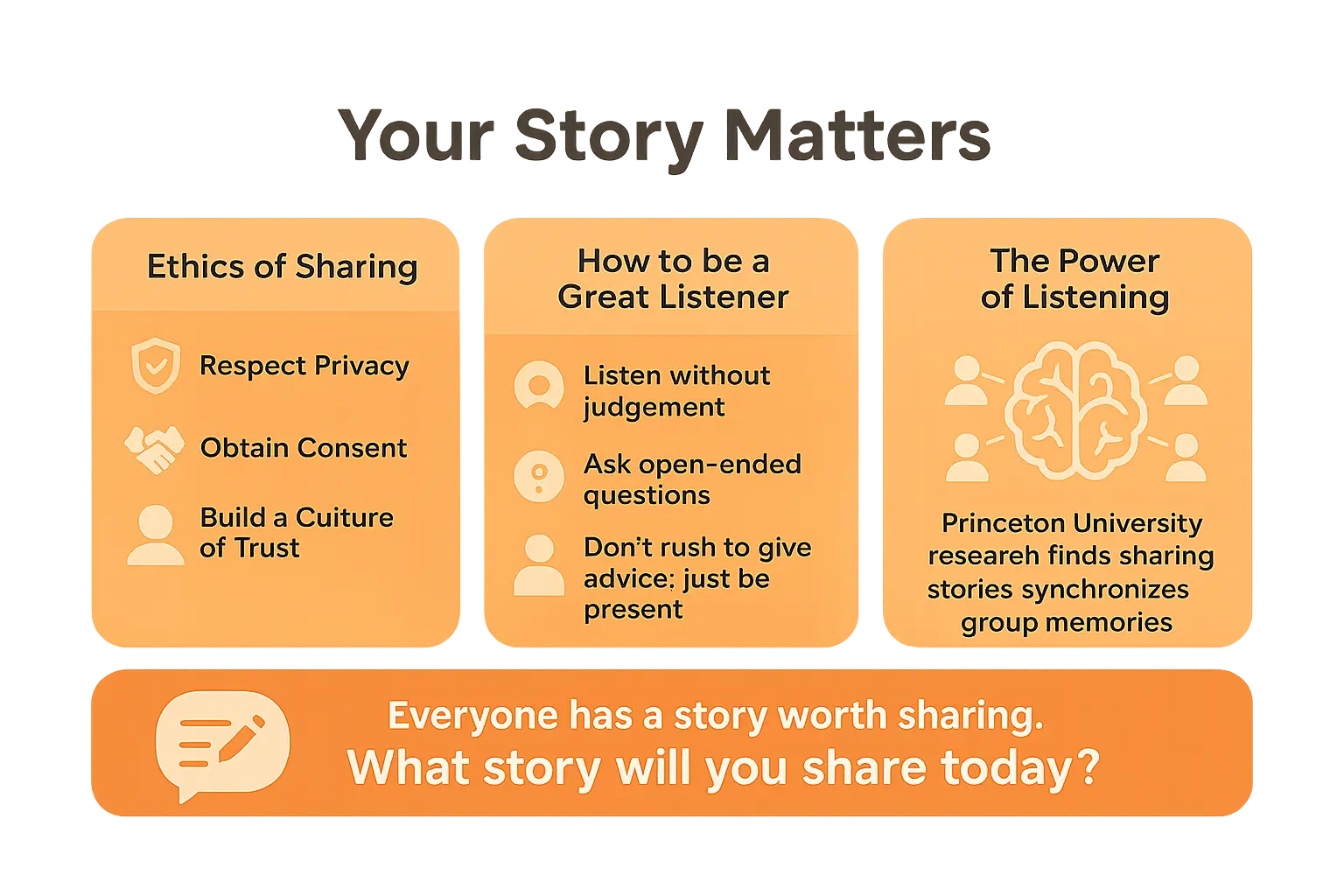
The ethics of sharing: consent and kindness
Before hitting “send” on that heartwarming memory, let’s pause. Sharing stories creates connection, but requires responsibility. Always ask permission when involving others – this builds trust and shows respect.
Imagine sharing a childhood tale without checking with family members first. Oops! That’s why Tellmestories’ AI remembers details only with user consent. It’s about creating safe spaces where everyone feels valued.
How to be a great listener
Being a good listener isn’t just about staying quiet – it’s about creating magic moments where the storyteller feels truly understood. Ready to become a listening wizard?
- Listen without judgment
- Ask open-ended questions
- Don’t rush to give advice; just be present
It’s so powerful that, as researchers at Princeton University found, it can actually cause groups of people to remember things in a similar way.
Now, it’s your turn
Every parent has those magical moments – the bedtime stories that make kids giggle, the voice notes that capture precious memories. Why keep them locked away? With WhatsApp-based storytelling, sharing becomes effortless.
Think about it – when you create personalized adventures for your little ones, you’re not just telling tales. You’re building traditions, teaching values, and creating legacies. The best part? Our AI remembers details so you can focus on connection.
So, what story will you start today? 📖 Your child’s next bedtime adventure could be just a voice note away. Let’s make storytelling matter! 🌟
Stories are the heartbeat of human connection — a bridge between hearts, minds, and experiences. They spark empathy, empower voices, and turn moments into meaning. But with great power comes responsibility: share with care, listen with openness. Ready to share your story? 💫
FAQ
What exactly does “sharing stories” mean?
Let me break this down for you! 😊 Sharing stories is when you tell someone about your experiences, feelings, or adventures—whether in person, online, or through writing. It’s like handing someone a little piece of your world. Imagine sitting around a campfire and swapping tales with friends… except now, it could be via Instagram, a book, or even a casual chat. The core idea? Connecting humans through what makes us unique yet relatable. Cool, right? 🌟
Why’s sharing stories such a big deal?
Oh, where do I start? 🤔 Stories are like magic glue—they stick people together! When you share a story, you’re not just dropping facts. You’re saying, “Hey, this happened to me, and I want you to feel it too.” Science even backs this up! Our brains sync up when we hear stories, making us empathize and remember better. Plus, stories turn dry data into something real and emotional. Think of it as a shortcut to saying, “I get you.”
What are the 5 C’s of storytelling?
Alright, grab your notepad! 📝 The 5 C’s are your secret sauce to crafting tales that stick:
- Character: Who’s the hero? Make ’em real, flaws and all. 🎭
- Conflict: What’s the hurdle? Tension = attention-grabber! 🔥
- Context: Set the stage! Where and when does this go down? 🌍
- Climax: The “OMG” moment. The turning point! 💥
- Conclusion: Wrap it up with a lesson or a punch. What’s the takeaway? 🎯
Stick to these, and you’ll have folks hanging on your words!
What does the Bible say about sharing stories?
Great question! 📖 The Bible’s basically a giant storybook, right? Think parables—Jesus used stories to teach big ideas in bite-sized, relatable ways. Like, “The Good Samaritan” wasn’t just a tale; it was a lesson on kindness. The message? Stories aren’t just for fun—they’re tools to pass on wisdom, values, and truths. It’s like God’s way of saying, “Let me explain this in a way you’ll get it.”
How do I turn story sharing on?
Simple answer: Start talking! 🎙️ But here’s the cheat code:
- Be real: Ditch the filters. People vibe with honesty.
- Pick your platform: Instagram, a podcast, or just coffee chat—your call!
- Hook ’em early: Open with something like, “You won’t believe what happened to me…”
And if you’re on social media? Check your privacy settings. Most apps let you toggle “story sharing” in the menu. Easy peasy!
Why’s it good to share stories?
Let me count the ways! 🤷♂️ First off, stories build bridges. They’re like saying, “Hey, I’ve been there” or “Wow, that’s wild!” They boost empathy, make you feel less alone, and even help you process your own emotions. For the listener? It’s a chance to learn without living the mess. For you? It’s therapy! Ever felt lighter after venting? Yep, that’s the magic.
Why do humans love sharing stories?
Oh, just because we’re wired for it! 🧠✨ Remember those campfire days? Stories kept us safe (like warning about predators) and close as a tribe. Today, it’s the same—we’re just using TikTok instead of torches. Sharing stories helps us bond, pass on lessons, and feel seen. It’s like our brain’s favorite app: social connection, upgraded!
Does someone get notified when they share my story?
Short answer: Nope! 🙅♂️ On most apps (like Instagram), people can share your story to their followers, but you won’t get a ping. It’s like them saying, “Yo, check this out!” without tagging you. That said, if you really don’t want your story shared, just tweak your settings. Privacy’s your bestie here. 🔒
What’s the quote about sharing your story?
You’re thinking of this gem: “The world needs your story. What if the thing you’re most afraid to share is exactly what someone else needs to heal?” Powerful, huh? It’s a reminder that your voice matters. Even the messy, awkward bits. Someone out there? They’re waiting for your words to feel less alone. 💙