The bottom line: 🌟 Outdoor play isn’t just fun—it’s essential for kids’ health, focus, and social skills. With 81% of adolescents globally inactive (WHO), daily adventures—like park walks, mud kitchens, or nature scavenger hunts—spark creativity, reduce stress, and build resilience. They nurture curiosity and emotional growth beyond physical benefits. Start today, one puddle at a time! 🎯
Feeling like your kids are more attached to screens than nature? 📵 It’s no surprise with rising screen time, but outdoor activities for kids offer a refreshing antidote—and you don’t need fancy gear or endless time. This guide reveals simple, fun ways to spark adventure, boost health, and build lifelong memories, whether you’ve got a backyard or just a local park. 🌳✨ From sensory play for toddlers to creativity-boosting scavenger hunts, discover how fresh air and unstructured playtime can transform your child’s energy into curiosity, confidence, and connection. Ready to swap “I’m bored” for “Let’s explore!”? 🚀
Why getting outside is a game-changer for your child
Today’s kids spend 35% less time outdoors than their parents did 🌍. With screens capturing more attention and urbanization limiting play spaces, childhood adventures are shrinking. But here’s the kicker: nature isn’t just fun – it’s fuel for growth.
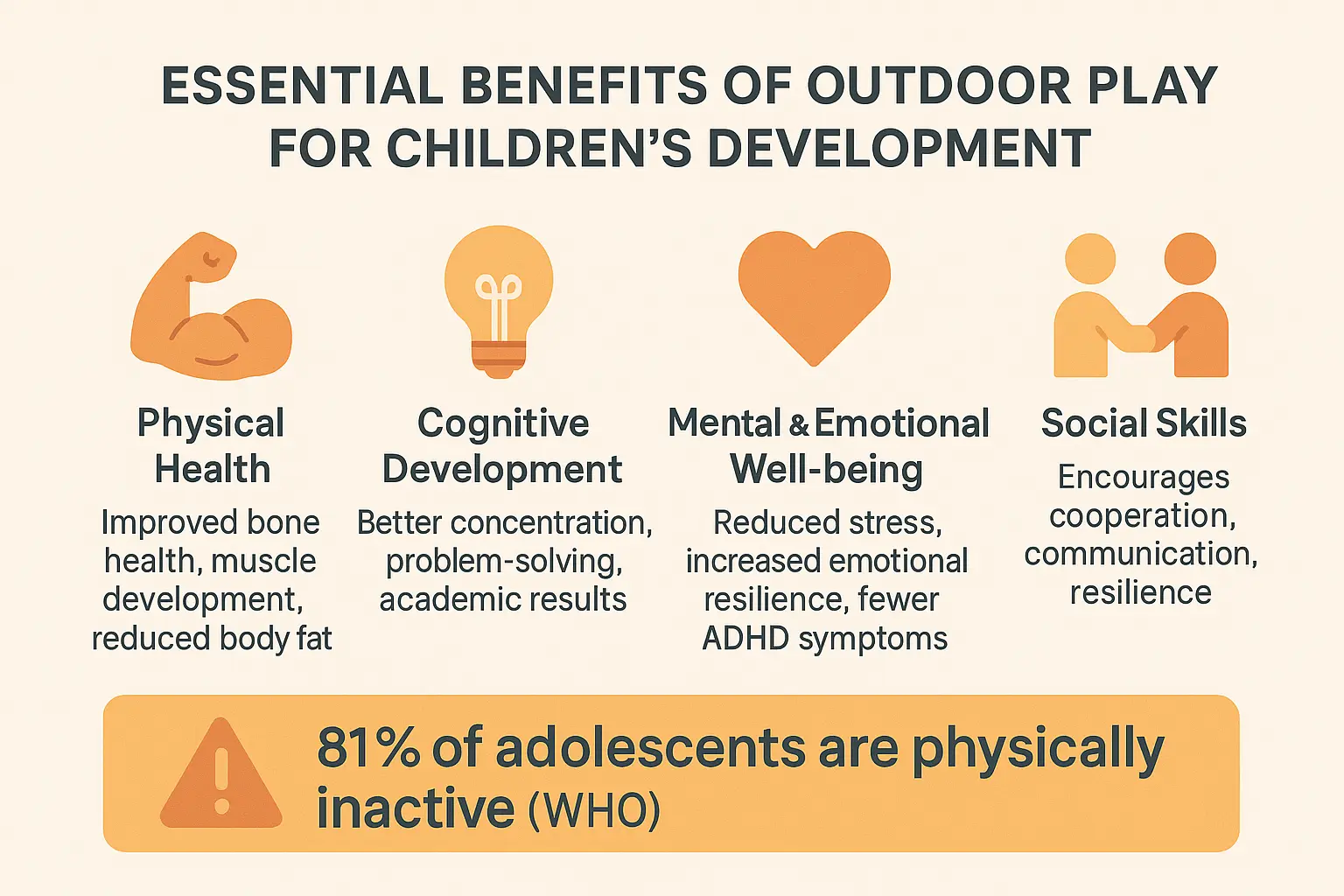
According to WHO research, 81% of adolescents worldwide fall short of daily movement guidelines. This isn’t just about exercise – it’s about missing out on critical developmental opportunities. Let’s break down why fresh air and open spaces matter:
- Physical health: Stronger bones, leaner muscles, and healthier weight management 🏃♂️
- Cognitive development: Sharper focus, better problem-solving, and improved school performance 🧠
- Mental well-being: Less stress, stronger emotional resilience, and reduced ADHD symptoms 🌈
- Social skills: Teamwork, communication, and conflict resolution through unstructured play 🤝
Remember those childhood days of building forts and chasing clouds? Modern kids experience 50% less unstructured outdoor time than previous generations. This isn’t just nostalgia – it’s a learning crisis. Natural environments boost executive function by 17% in preschoolers through risk assessment and creative thinking.
Outdoor play isn’t just about running around – it’s about developing life skills. When kids explore nature, they’re actually building neural pathways that improve their ability to concentrate. Children who play outside regularly show 23% better spatial awareness, which helps with math and science skills later. The social benefits? Kids who play outdoors together form 19% stronger social bonds and learn cooperation naturally.
The WHO’s warning about inactive teens isn’t just about fitness – it’s about cognitive potential slipping away. Without regular outdoor time, children miss chances to develop risk assessment skills, with studies showing a 30% gap in spatial reasoning abilities between kids who play indoors versus outdoors.
But here’s the good news: small changes create big impacts. Just 20 minutes of daily outdoor playtime can improve classroom behavior and test scores by 15%. Ready to turn this around? Let’s explore some genius hacks that blend nature with learning and laughter.
Easy ways to kickstart your outdoor adventures
Overcoming common hurdles
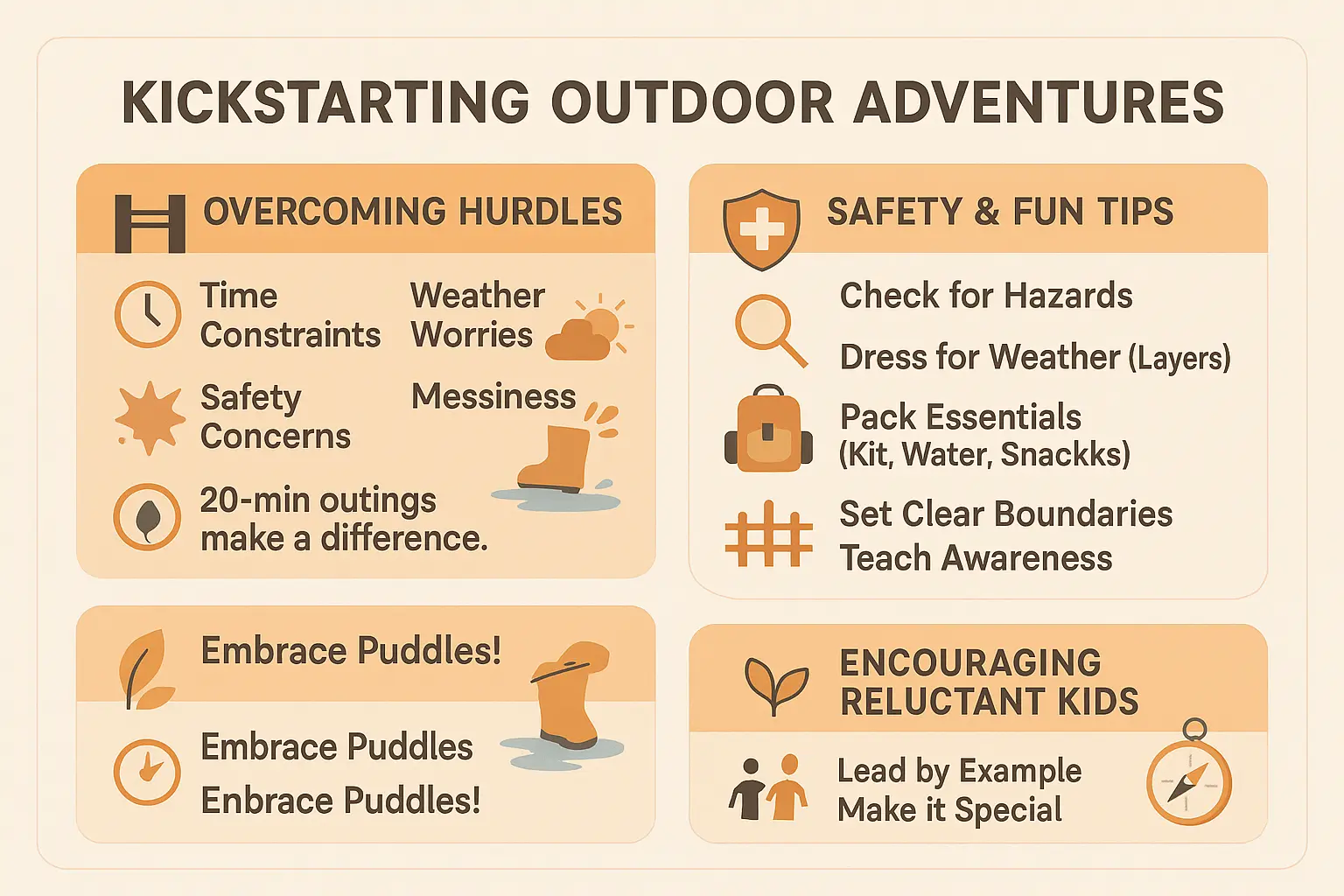
Worried about the rain? A little puddle-jumping never hurt anyone! 🌧️ Even short outings, like a 20-minute park stroll, boost kids’ well-being. UNICEF highlights that brief outdoor moments profoundly impact development, proving consistency matters more than duration. Don’t let busy schedules stop you—start small by turning your backyard into a treasure hunt zone for pinecones or acorns. Create a daily “fresh air challenge” with sticker rewards for completed activities. Remember, simple sidewalk chalk games or cloud-watching sessions work wonders for spontaneous play! For example, try “nature bingo” where kids tick off shapes (spirals, zigzags) or colors (sky blue, leaf green) during walks.
Safety first, but don’t forget the fun
Turn safety into a game! Use this checklist to keep kids protected:
- Check for hazards like broken glass or unstable rocks. 🛑
- Dress in layers for weather flexibility. 🌤️
- Carry water, snacks, and a first-aid kit. 🥤
- Define play boundaries using natural markers. 🌳
- Teach awareness of surroundings like traffic. 🕵️
View safety as freedom’s foundation. A sunscreen ritual or boundary-setting game empowers kids to own their preparation while ensuring carefree exploration. For example, let them choose which tree marks the play area or pick their favorite water bottle to pack.
Encouraging reluctant kids
The magic of outdoor play isn’t in structured schedules, but in the freedom to explore, imagine, and discover the world at one’s own pace.
Lead by example—kids mirror your enthusiasm! Turn “boredom” into creativity by challenging them to build forts from branches or create fairy houses from pebbles. For tech-savvy kids, blend screen time with movement via geocaching or nature apps. Need ideas? Explore simple outdoor play activities like “shadow tag” (chasing sunlight shadows) or “sensory scavenger hunts” (find textures or scents). These games balance learning and adventure while nurturing natural curiosity. Try “leaf races” by blowing fallen leaves along a path, or “mud kitchen” roleplay with sticks and stones. Remember, even reluctant kids become engaged when activities feel like adventures, not chores! 🌱
Awesome outdoor activities for every situation
In your own backyard 🏡
Transform your garden into an adventure zone! Build a fort with blankets using chairs and sheets – it becomes an instant castle or spaceship. Little scientists will love mixing mud kitchen potions with water, leaves, and flowers. No fancy tools needed – just recycled containers and natural ingredients.
Create instant obstacle courses using buckets, cushions, and ropes. This develops physical coordination while keeping kids laughing. For quiet moments, organize a backyard picnic with finger foods and storytime under trees. Pro tip: Turn storytelling into a nature-themed game – ask kids to invent tales using found objects like pinecones or feathers.
Want more ideas? Try sensory gardening with herbs or edible plants. Kids learn responsibility while watching plants grow. DIY a water play station with sprinklers and cups – perfect for hot days! Older children might enjoy DIY backyard ninja courses using ropes and tires for climbing challenges.
At the local park or forest 🌳
Let wild spaces spark imagination! Try a nature scavenger hunt where kids find specific colors or textures – it turns ordinary walks into treasure hunts. Classic games like hide-and-seek or tag teach social skills while burning energy. Climbing trees or playground structures builds confidence and gross motor skills.
Remember – no screens needed! Simple games where kids chase, hide, and explore create lasting memories. These timeless activities connect generations and develop spatial awareness naturally. Game twist: Try “shadow tag” where participants freeze when their shadow gets stepped on – teaches awareness and agility!
For deeper learning, organize bug hotels using sticks and pinecones – kids observe insects while building habitats. Stargazing becomes magical with DIY constellation viewers made from cardboard tubes. Older children love nature art – create mandalas from petals or leaf rubbings.
Activity inspiration table
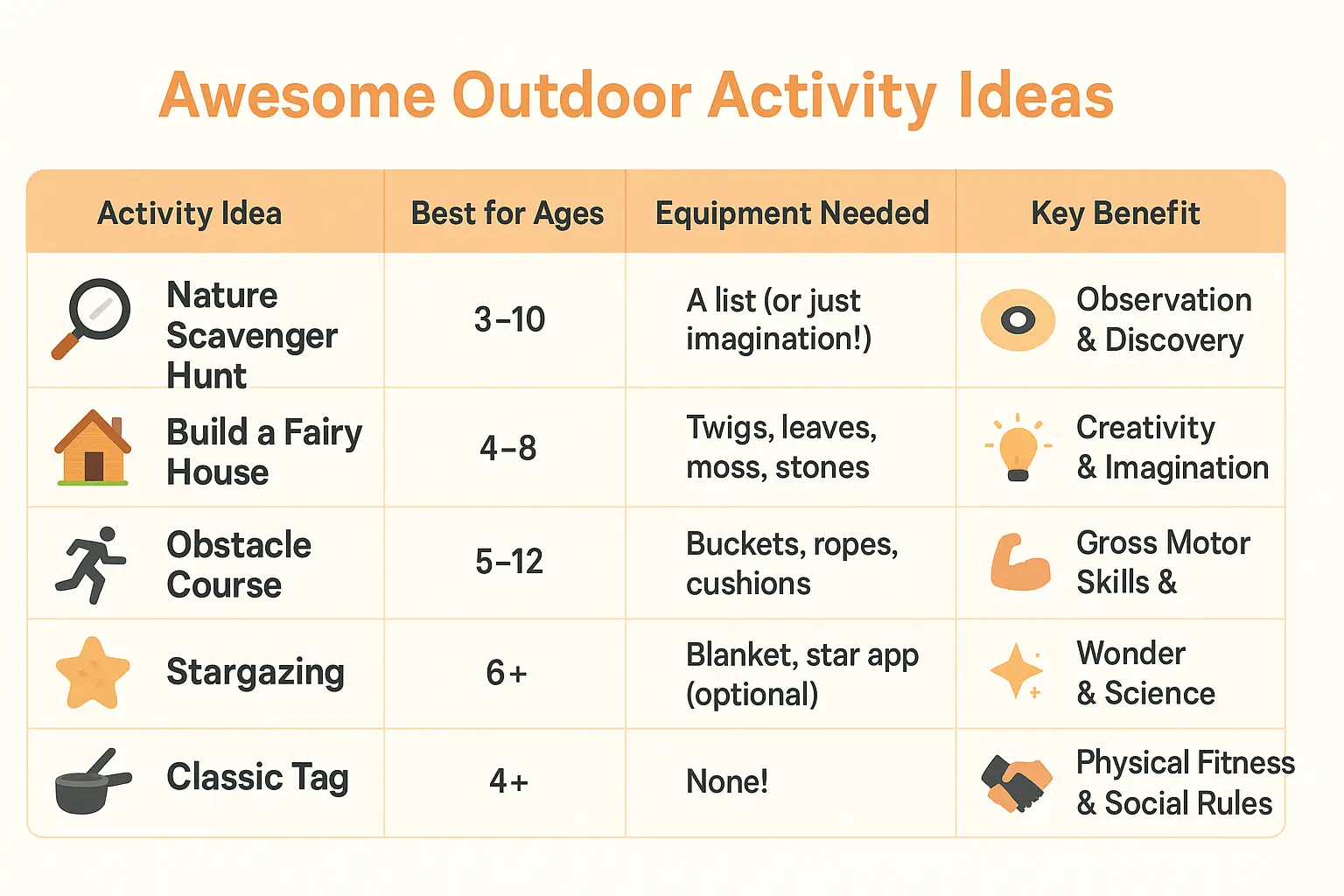
Need quick guidance? This table helps you discover the perfect match for your situation. Don’t miss these opportunities to combine learning with play!
| Activity Idea | Best for Ages | Equipment Needed | Key Benefit |
|---|---|---|---|
| Nature Scavenger Hunt | 3-10 | A list (or just imagination!) | Observation & Discovery |
| Build a Fairy House | 4-8 | Twigs, leaves, moss, stones | Creativity & Imagination |
| Obstacle Course | 5-12 | Buckets, ropes, cushions | Gross Motor Skills & Coordination |
| Stargazing | 6+ | Blanket, star app (optional) | Wonder & Science |
| Classic Tag | 4+ | None! | Physical Fitness & Social Rules |
| Mud Kitchen | 2-7 | Old pots, water, dirt | Sensory Play & Creativity |
Combine activities for maximum impact! Start with a nature walk collecting materials, then use findings for fairy house building. Follow with an obstacle course to burn energy, ending with stargazing and storytelling. This balanced approach ensures physical, cognitive, and social development while nurturing environmental awareness.
Remember: consistency matters. Regular outdoor time improves focus and reduces stress. Even 30 minutes daily makes a difference – watch your kids thrive through nature-connected adventures!
Tailoring fun for different age groups
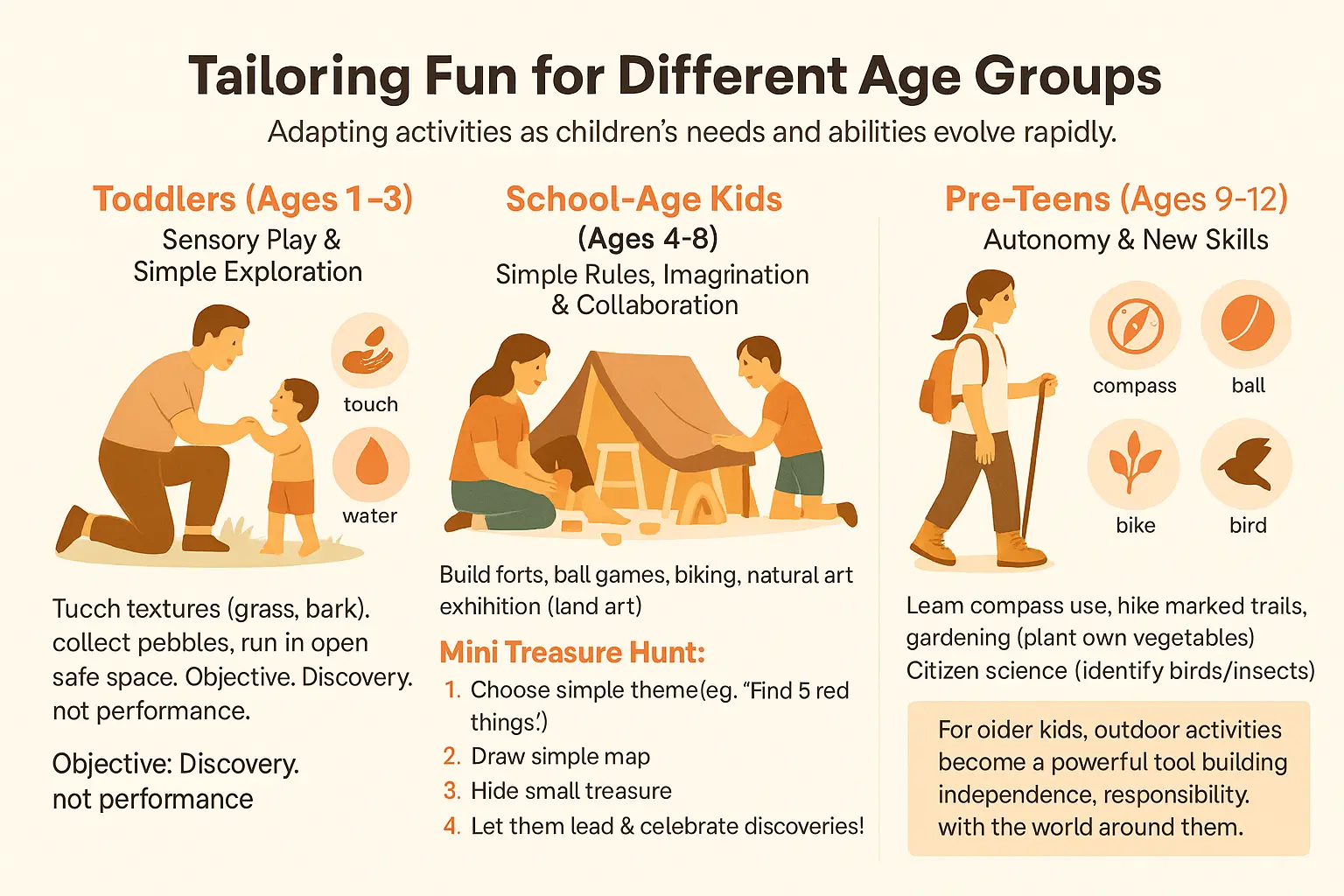
Every outdoor moment becomes a learning opportunity when activities match developmental stages. Toddlers absorb textures and sounds like sponges, school-age kids weave nature into imaginative narratives, while pre-teens transform play into real-world skills. Let’s explore age-specific adventures that grow with your child’s evolving mind 🌟
For toddlers (ages 1-3)
At this stage, the world exists to be touched, tasted, and stomped. Simple sensory interactions create neural pathways while building physical confidence. Watch their eyes light up discovering that mud squishes while dry leaves crunch! 🌿
Maximize sensory development with these adventures:
- Temperature treasure hunt – find warm rocks, cool grass, and shady spots
- Texture collage – gather soft moss, rough bark, and smooth pebbles
- Wobbly balance challenge – walk along garden edging or fallen branches
- Water temperature play – feel cold sprinklers vs warm puddles in sunlight
For school-age kids (ages 4-8)
This age thrives on magical thinking where sticks become wizard staffs and puddles turn into dragon moats. Physical play combined with storytelling creates powerful learning moments – they’re building fitness while developing creativity and social skills 🏰
Level up your backyard treasure hunt with these creative elements:
- Choose seasonal themes – “Find 3 autumn jewels” (crimson leaves, acorns)
- Sketch a map using landmarks – “Where the cat naps” or “By the cracked gnome”
- Add theatrical clues – “Seek where shadows dance at midday” for sunny spots
- Use natural treasures – swap plastic trinkets for pinecones, feathers, or pebble collections
For pre-teens (ages 9-12)
This age group seeks purpose and mastery. They’re ready for activities that feel like “real work” while developing critical thinking and environmental consciousness. Give them tools to document, analyze, and contribute beyond their immediate world 🌱
For older kids, outdoor activities become a powerful tool for building independence, responsibility, and a deeper connection with the world around them.
Try these science-powered adventures that feel like detective work:
- Track bird migrations using eBird – become citizen scientists documenting seasonal visitors
- Map local biodiversity with iNaturalist – document living things in your neighborhood
- Create nature journals – sketch plant cycles or record animal behaviors over weeks
- Build backyard weather stations – measure rainfall with recycled bottles and wind speed with streamers
These experiences grow with your child – from sensory splashes to scientific discoveries. Each activity plants seeds for lifelong skills while creating moments that make them say “This is the best day ever!” 🚀
Connecting With Nature For Lasting Benefits
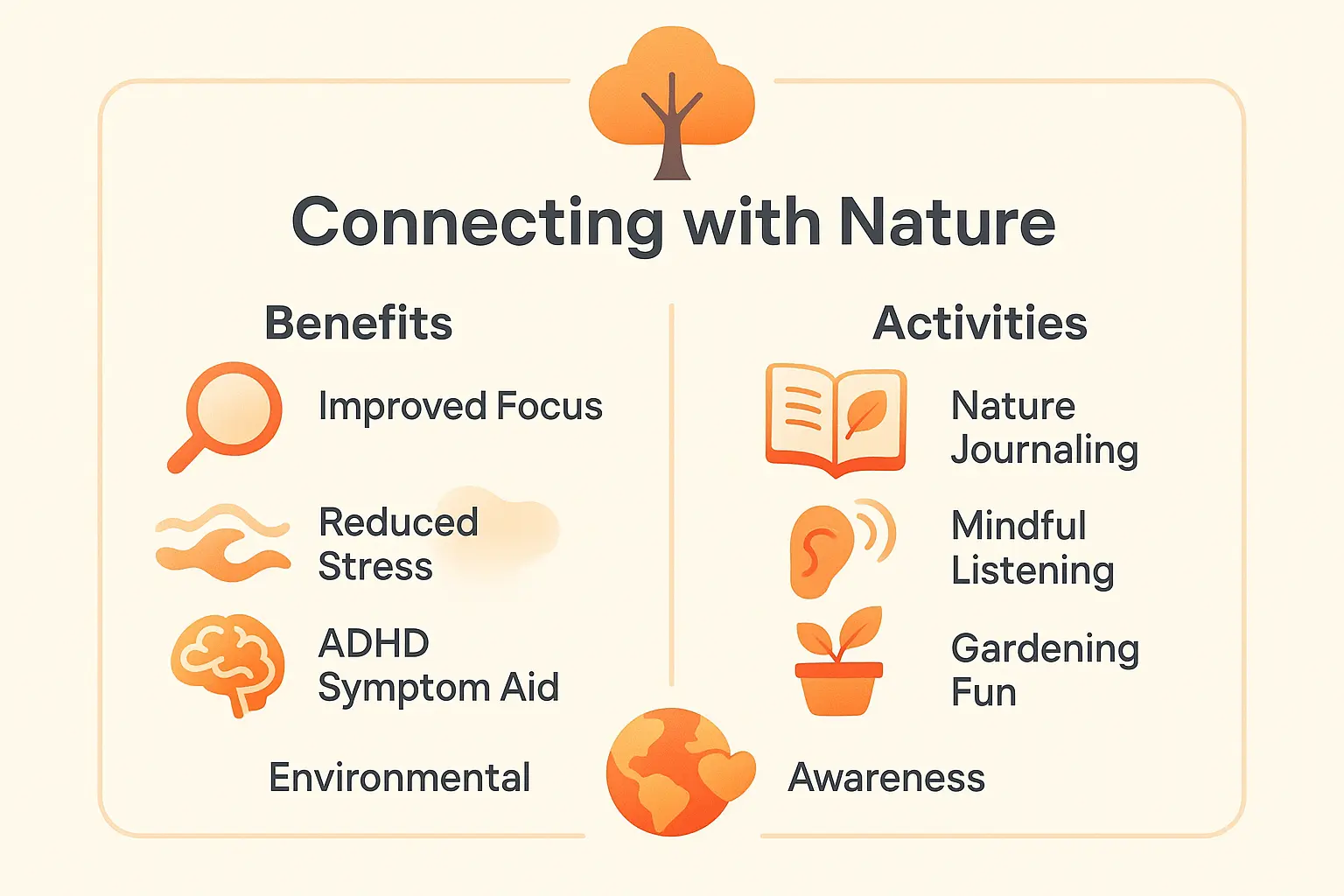
Did you know spending time outdoors can actually reshape children’s brains? 🌱 Research shows green spaces do more than just tire kids out – they’re proven to improve concentration and reduce stress symptoms by 23% according to UNICEF! Even cooler? These natural environments might help kids with ADHD focus better through “soft fascination”! 🧠
Why Nature Journals Matter
Grab a notebook and let creativity bloom! 📝
- Observe: Kids notice 27% more details when they document nature – compare observations before/after journaling!
- Remember: Drawing + writing boosts memory retention by 40% through multi-sensory learning
- Connect: 82% develop stronger environmental empathy by creating “nature friendships”
Try this: Ask “What patterns do you see in this leaf?” instead of just drawing it. Watch curiosity skyrocket! 🌿 Add weather notes to track seasons and create nature calendars.
Mindful Listening Adventures
Close your eyes – can you hear the world breathing? 🎧
- Start with 30-second “sound baths” using wind chimes (DIY with recycled materials!)
- Play “Sound Bingo” with nature sounds (bonus for woodpecker sounds!)
- Compare “noisy city” vs “quiet forest” – where do birdsong decibels differ most?
This builds attention muscles. Pro tip: Use nature fun series to create listening-themed stories – pair sounds with storytelling for double engagement. Try adding sound effects to your voice notes!
Gardening: The Ultimate Learning Lab
Even balcony pots become science playgrounds! 🌼
- Track bean growth with daily “plant selfies”
- Compost scraps – worms love peels!
- Plant “bug hotels” with bamboo to explore ecosystems
Did you know? Kids who garden eat 30% more veggies through “food curiosity”! Plus, 75% show improved social skills through shared projects. 🌈 Bonus: Digging and planting builds motor skills while connecting with soil life.
Transform outdoor time into nature magic! 🌎 Build lifelong stewards while boosting brain power. Create personalized stories – “The Day I Met a Sunflower” gets even better with custom audio narration about their discoveries! 🎙️
Your Next Adventure Is Just Outside Your Door
Outdoor play isn’t just about burning energy—it’s a powerhouse for growth. 🌱 Boosting physical health (climbing, balancing) and sparking curiosity through nature exploration (bug trails, cloud shapes), fresh air becomes a classroom. Social skills bloom as kids learn teamwork and problem-solving during games. Even sleep improves when days start with sunshine, regulating their internal clocks! 🌞
You don’t need fancy gear or miles of trails. 🌳 A backyard, sidewalk, or park works. Turn leaf piles into forts, pebbles into mosaics, or puddles into splash zones. Let kids lead—watching them invent games (“zombie tag”) or chase butterflies teaches resilience. Try a “rainbow hunt” for colorful flowers or craft creations with acorns. No equipment? No problem! Count birds, skip stones, or race paper boats in streams with imagination alone.
Ready to start? 🚀 What’s your child’s next “I did it!” moment? Climbing a tree? Building a mud kitchen? Every step outside stitches memories into their story. Create a “nature museum” with collected treasures—rocks or feathers—and turn them into storytelling prompts: “What’s this leaf’s superhero power?”
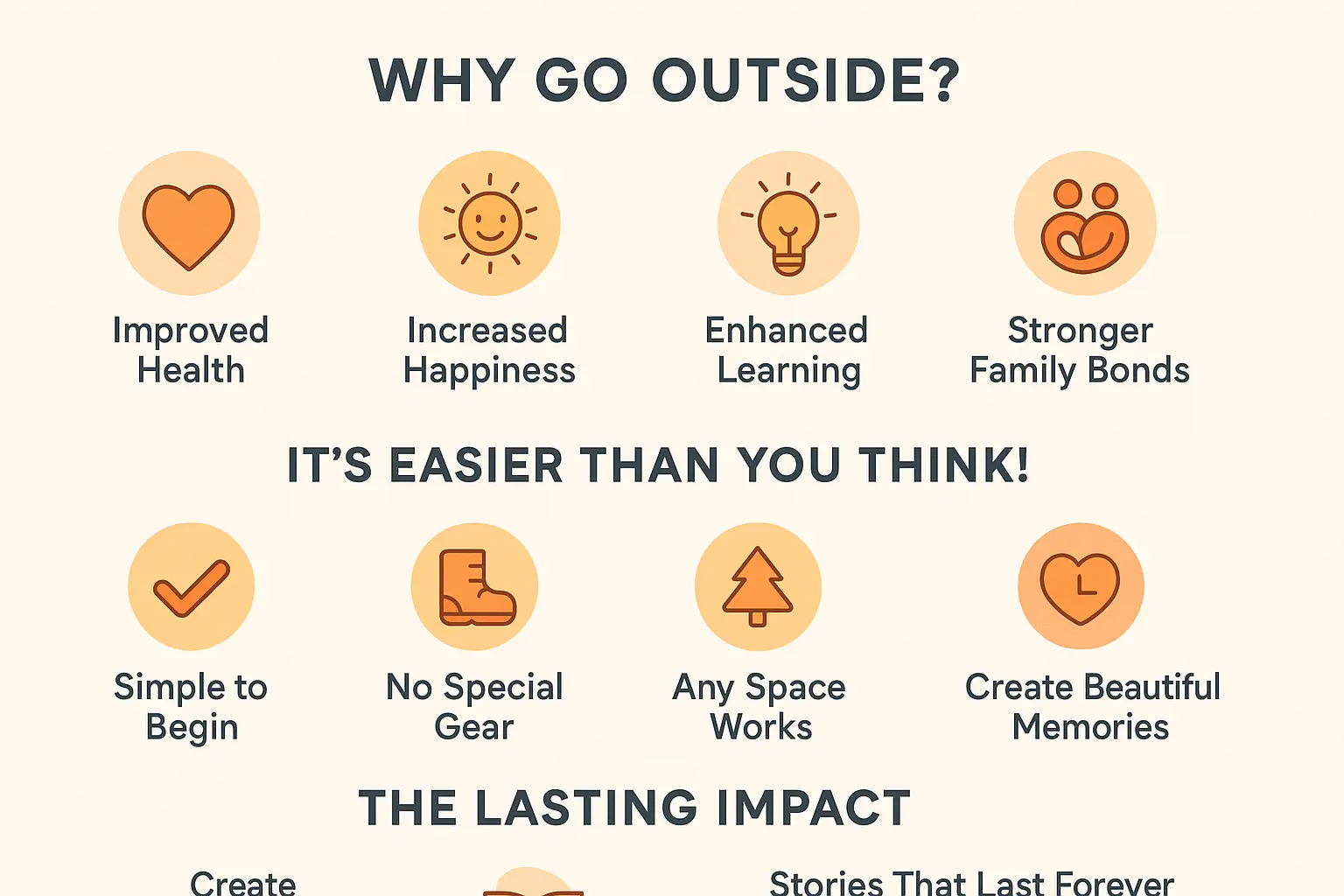
So, what adventure first? 🤸♀️ Whether a 10-minute scavenger hunt or sunset picnic, nature’s waiting. These magical moments will become tales whispered around campfires years from now. Every outdoor adventure, big or small, is a story in the making. 🌟
Outdoor play isn’t just fun—it’s foundational. Boosting health, creativity, and resilience, every adventure shapes your child’s world. Start small, embrace the mess, let curiosity lead. 🌿 Whether backyard forts or scavenger hunts, these moments become lifelong stories. Ready for your next chapter? The outdoors awaits. 🌟