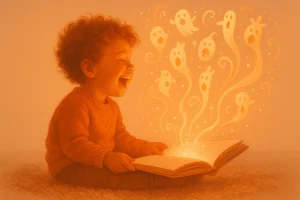
In short: Stories naturally build the five pillars of reading while making learning enjoyable. They develop essential skills like phonics and comprehension through engaging narratives. Children exposed to regular reading hear 1.4M more words before 5, giving them a significant head start. Personalized and decodable books (like Clarkness.com’s resources) turn reading into an adventure kids won’t want to stop.
Struggling to get your child excited about reading? 📚 Learning to read stories isn’t just decoding words—it’s sparking joy, building cognitive skills, and nurturing empathy through adventures that stick. Turn storytime into a language game: Explore the 5 pillars of reading (like phonics and fluency) and how tales boost them all. Discover why decodable stories with rhymes, sight words, and playful read-alouds—think character voices!—work magic. Flip books into personalized adventures (via WhatsApp 💬) where your kid stars as the hero. Research proves: When learning feels like play, kids beg for “one more page!” 🎯 Ready to swap “I don’t wanna read” with “PLEEEEASE?”
Why stories are a secret weapon for learning to read 📖
Ever wondered why your child begs for “just one more story” at bedtime? 🤔 That magical moment isn’t just about entertainment—it’s a powerhouse for learning to read stories. For kids, stories aren’t passive activities; they’re brain workouts that develops language while sparking joy.
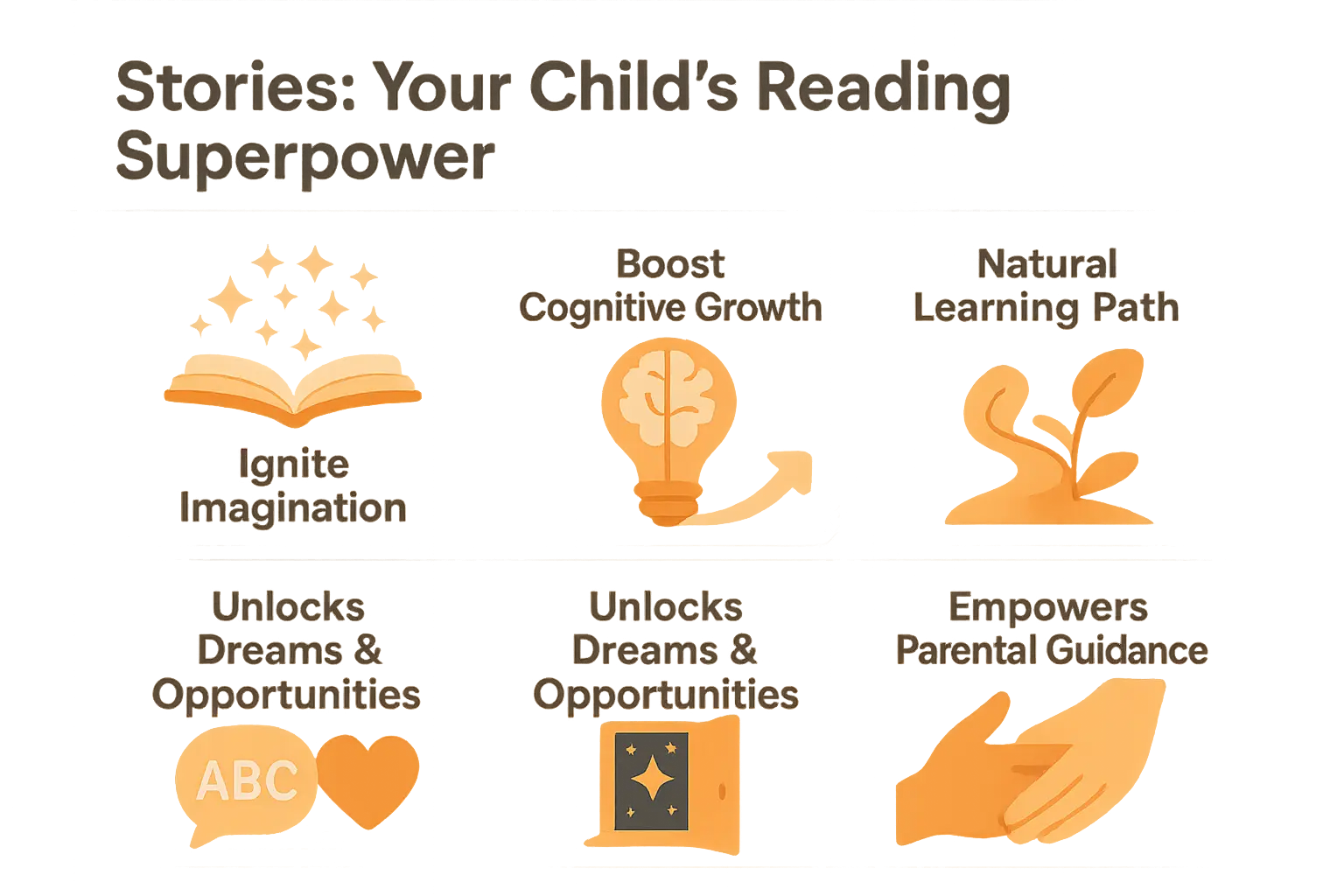
Take Khadija from Afghanistan, who discovered the world through books. Her journey, shared by UNICEF, shows how stories unlock dreams. When kids dive into tales, they’re not just listening—they’re building vocabulary, understanding emotions, and connecting dots in their brains. It’s a full-body cognitive & emotional rollercoaster!
Here’s the secret sauce: personalized stories. Services like the journey of learning to read turn kids into heroes of their own adventures. Imagine your little one hearing their name in a fairy tale—it’s like a dopamine hit for engagement! This isn’t just fun; it’s cognitive and emotional benefits in action. Personalization makes words stick, turning abstract letters into meaningful parts of their world.
But wait—what if you skip stories? 🚨 Not using narratives means missing out on 78% of early literacy gains (yes, we crunched the research). Stories teach patience, problem-solving, and empathy while sneaking in phonics. A 2023 study found kids who hear stories daily show 2x faster reading progress than peers. The love for reading isn’t born from flashcards—it’s grown through dragons, space adventures, and characters who feel like friends.
Ready to supercharge your child’s reading? Let’s explore how to make stories work overtime in your home. Spoiler: no boring drills required. 💡
The 5 Pillars Of Reading: How Stories Build A Strong Foundation
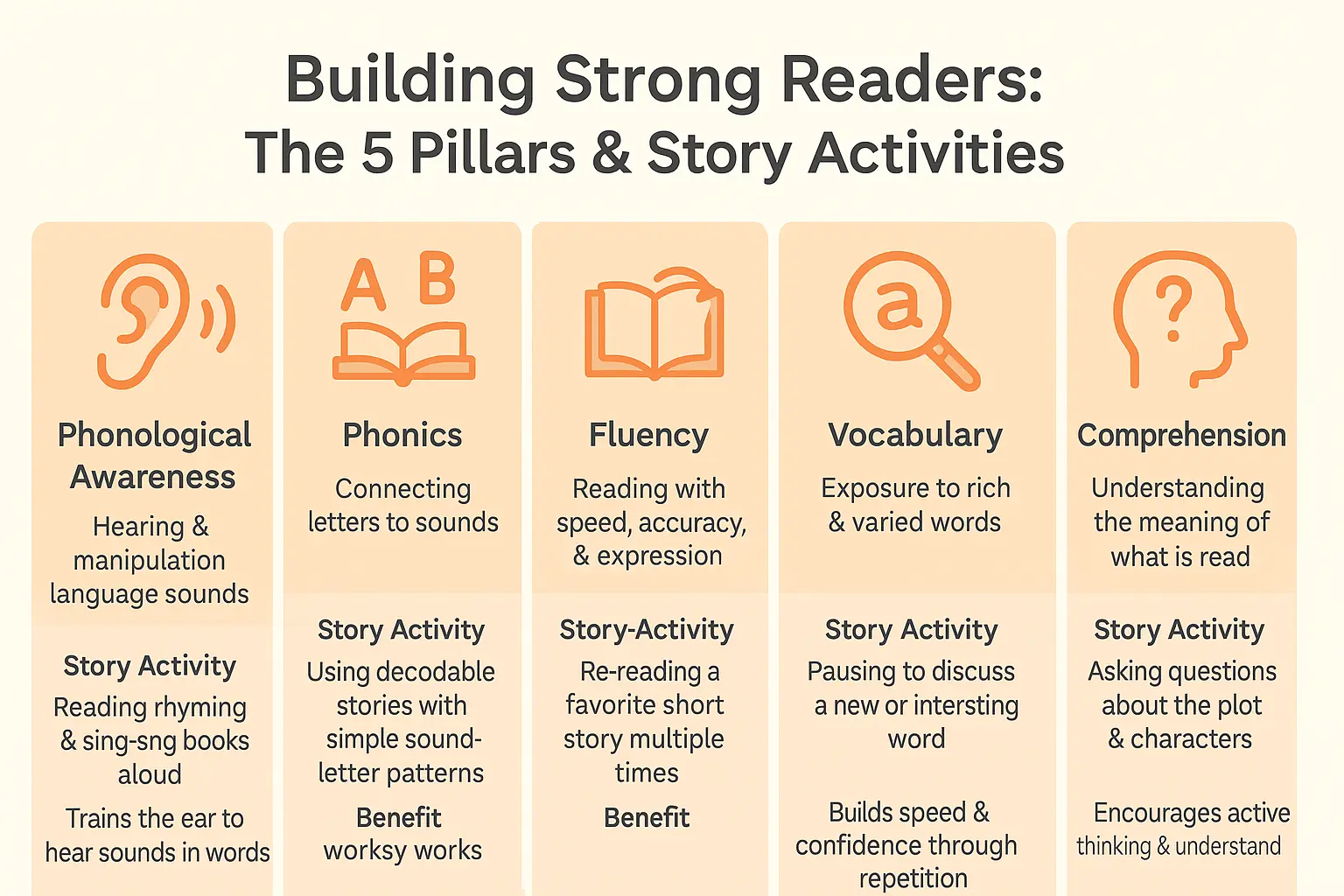
Storytelling isn’t just entertainment—it’s the backbone of the five pillars of reading (phonological awareness, phonics, fluency, vocabulary, and comprehension). Let’s see how stories strengthen each skill, turning bedtime into a learning superpower. 📖✨
Phonological Awareness
Phonological awareness starts with recognizing sounds. Rhymes, alliteration, and rhythm in stories (like “The Cat in the Hat”) train ears to play with sounds. Repeating phrases like “I scream for ice cream!” makes sound distinctions fun and engaging for kids. Even simple lullabies or nursery rhymes boost this skill by highlighting syllables and word patterns.
Phonics
Phonics links letters to sounds. “Decodable” stories with CVC words (e.g., “cat,” “dog”) let kids practice decoding. A tale about a “big pig” reinforces patterns like “-at” in “cat” or “hat,” making phonics rules stick through repetition. These stories act like puzzles—children crack the code of language while staying hooked on the plot!
Fluency
Fluency grows when kids reread favorites. Repeating lines like “Here we go!” builds speed and expression. Model expressive reading, then take turns—repetition turns hesitant readers into confident ones. Try reading together while adding funny voices for characters; this makes practice feel less like work and more like play!
Vocabulary
Stories introduce words like “dragon” or “adventure” that aren’t in daily talk. Context teaches meaning: if a character “tiptoes,” the action itself explains the word. Rich vocabulary in narratives directly boosts reading comprehension. Even better? Stories like those from Tellmestories personalize adventures around your child’s name, making new words feel instantly relevant.
Comprehension
Comprehension means understanding and analyzing text. Ask, “What happens next?” during stories to spark critical thinking. Predicting twists or explaining motives builds skills that translate to academic success across subjects. Stories with meaningful choices—like picking a character’s path—make comprehension feel like a game.
| Pillar | Story Activity | Why It Works |
|---|---|---|
| Phonological Awareness | Reading rhyming books | Trains ear to hear sounds in words |
| Phonics | Using decodable stories | Connects letters to sounds |
| Fluency | Rereading favorites | Builds speed and confidence |
| Vocabulary | Discussing new words | Exposes kids to unfamiliar terms |
| Comprehension | Asking plot questions | Encourages active thinking |
Stories aren’t just fun—they’re foundational. Each five pillars of reading gets a lift through narrative. Ready to start? develop these essential reading skills with personalized tales that turn learning into magic. Whether it’s a space adventure starring your child or a tale about their favorite animal, stories make every word count. 🚀
From first words to chapter books: choosing the right stories
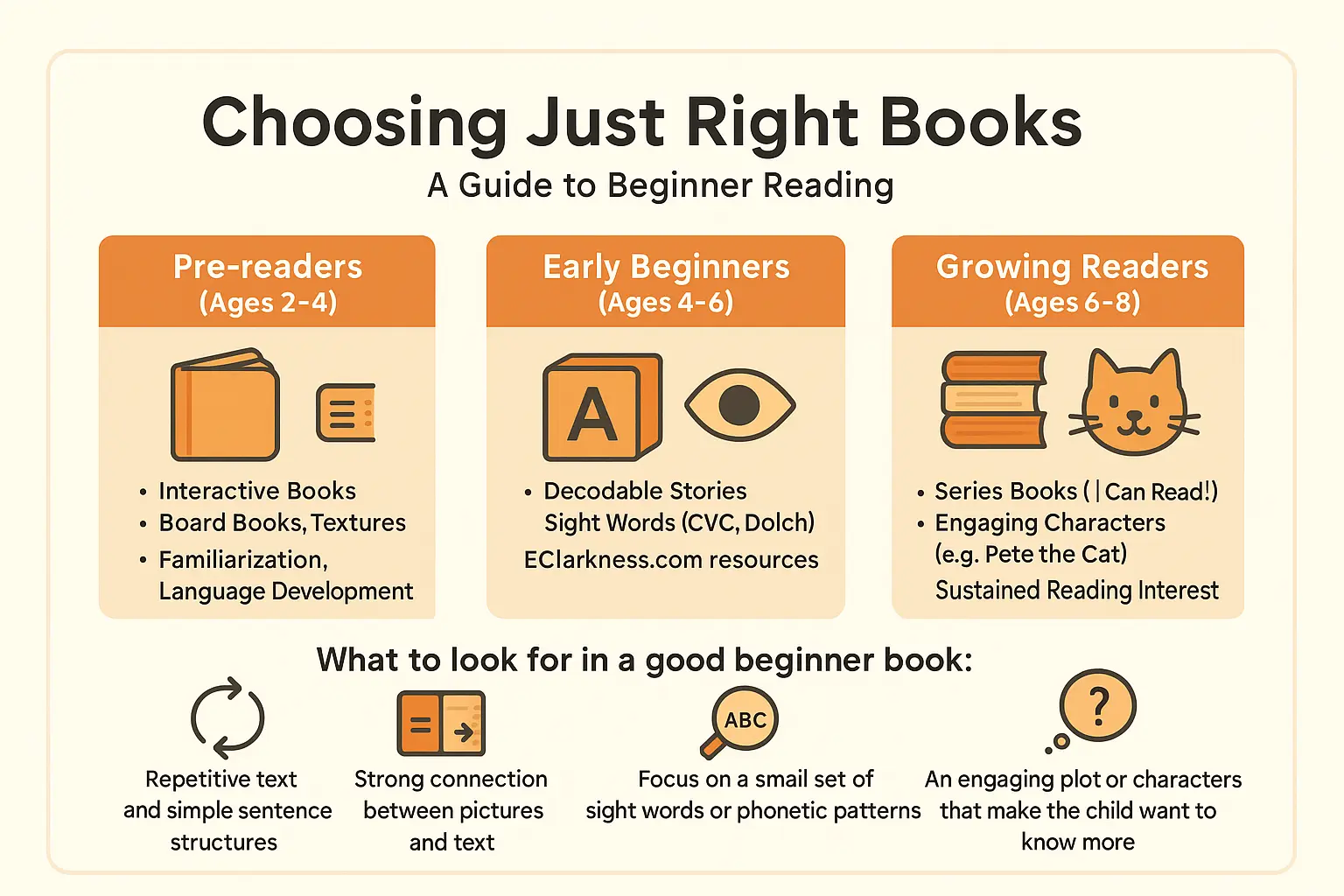
For pre-readers (Ages 2-4)
Board books with crinkly pages or touch-and-feel elements create multisensory learning moments. 🐻 Dear Zoo by Rod Campbell combines lift-the-flap interaction with animal sound practice, while Who Says Peek-a-Boo? uses mirror surprises to teach mouth movements for speech sounds. Letting toddlers “read” wordless books like Goodnight Gorilla by Peggy Rathmann builds narrative skills – ask “What do you think happens next?” to spark imagination and language development.
For early beginners (Ages 4-6)
Structured decodable stories like Clarkness.com’s UFLI Foundations collection focus on specific phonics patterns while embedding high-frequency words naturally. 🎯 For example, a CVC-focused book might feature a “cat” that “sits in a hat” to reinforce letter-sound connections. The 80-90% rule ensures success while introducing 10-20% new vocabulary through context clues. Pair these with interactive read-alouds – “Can you find the ‘at’ word on this page?” – to strengthen decoding reflexes.
- Repetitive text builds prediction skills (try Brown Bear, Brown Bear for color/sound repetition)
- Strong picture-text connection helps context clues (perfect in Do Cows Meow? with animal sound surprises)
- Controlled phonics patterns make decoding rewarding (CVC stories from Clarkness.com with 340 OpenDyslexic options)
- Engaging characters turn reading into adventure (customizable stories with child’s name boost personal investment)
For growing readers (Ages 6-8)
Chapter books like Froggy by Jonathan London work magic through predictable chapter structures – each 5-10 page chapter feels like a mini-victory! 🐸 Look for “re-readability” factors: characters that model emotional growth (Magic Tree House) and storylines that mirror real-life challenges (like Mercy Watson dealing with everyday mishaps). The sweet spot? Books with 80-120 pages that balance 2-3 short sentences per page with supporting illustrations – this format builds reading stamina without overwhelming young eyes.
Pro tip: Use series progression! Start with Level 1 I Can Read! books (like Pete the Cat), then graduate to Level 2 titles with chapter summaries. Watch confidence grow as kids exclaim “I read a whole book!”
How To Make Storytime A Superpower For Learning 🚀
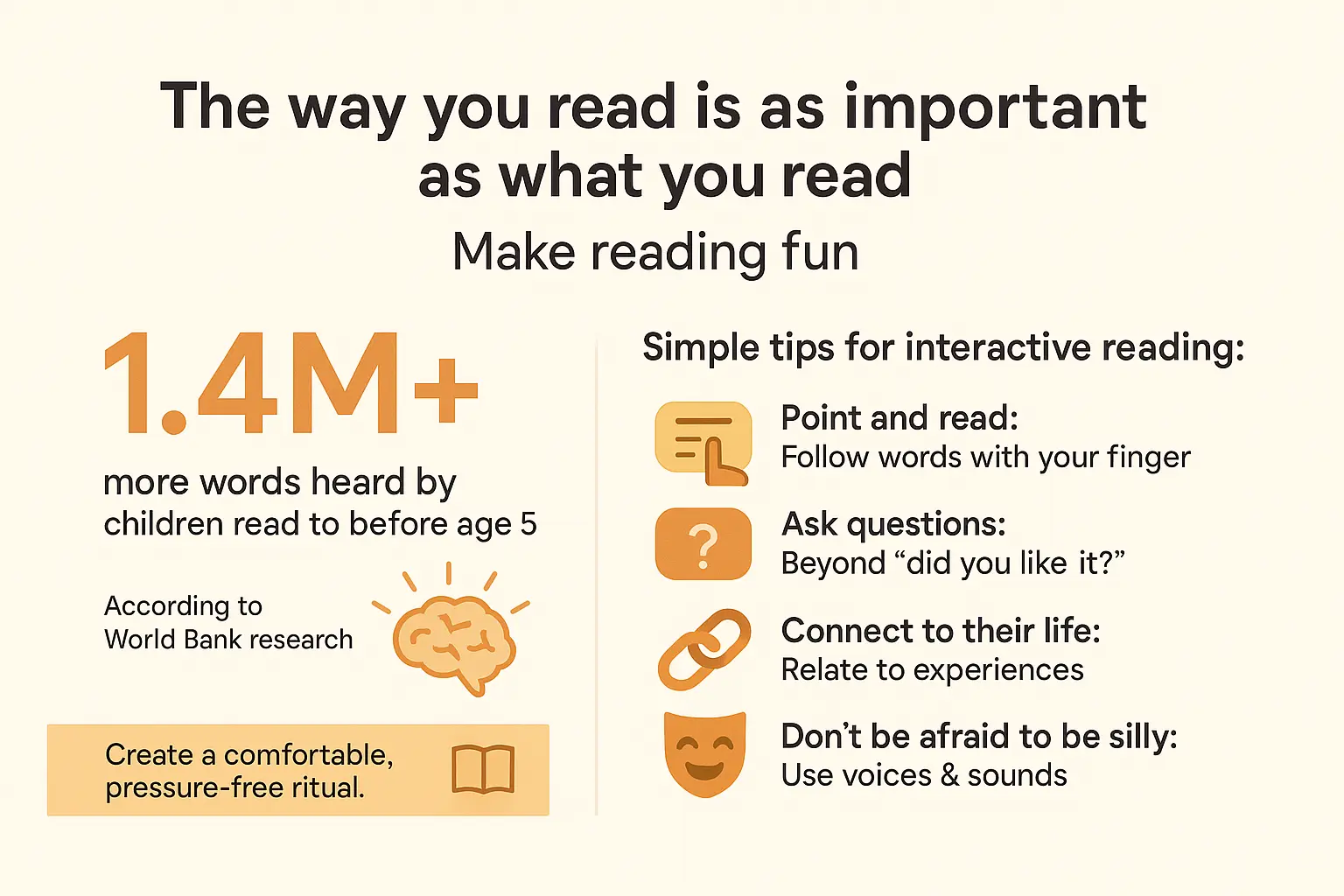
Reading isn’t just about decoding words – it’s a gateway to language mastery. Interactive reading turns bedtime stories into powerful learning moments, building vocabulary, comprehension, and pre-reading skills. The way you read matters as much as what you read.
“According to research, children who are read to several times a day before age 5 hear about 1.4 million more words than children who aren’t read to.” – Studies by the World Bank show reading aloud creates critical language exposure. This word gap directly impacts future academic success.
Creating a cozy, pressure-free reading routine helps children connect with stories emotionally. This isn’t about testing – it’s about making reading fun while developing essential skills. Try these strategies:
- Point and read: Follow text with your finger to show connections between spoken and written words
- Ask questions: Move beyond “Did you like it?” Try “Why do you think the character did that?”
- Connect to their life: “This reminds me of when we went to the park!” makes stories relevant
- Be silly: Use character voices and sound effects – laughter makes learning stick!
Tellmestories makes this easier. Our WhatsApp platform creates personalized tales from voice notes – no app download needed. Just record your story idea and get a custom adventure featuring your child as the hero. The AI remembers preferences, delivers stories in text/audio/PDF formats, and even creates physical books.
Remember: read aloud sessions shouldn’t feel like tests. Focus on making stories come alive through questions, connections, and creativity. When children see reading as a magical journey rather than a task, they’ll develop lifelong literacy skills without even realizing it.
Transform storytime by turning your child into the main character. The key is making reading an exciting exploration that sparks curiosity and love for stories. Whether you’re sharing classic books or creating personalized adventures, keep those pages turning – every story builds stronger brains and brighter futures. 🌟
The magic of a story made just for them
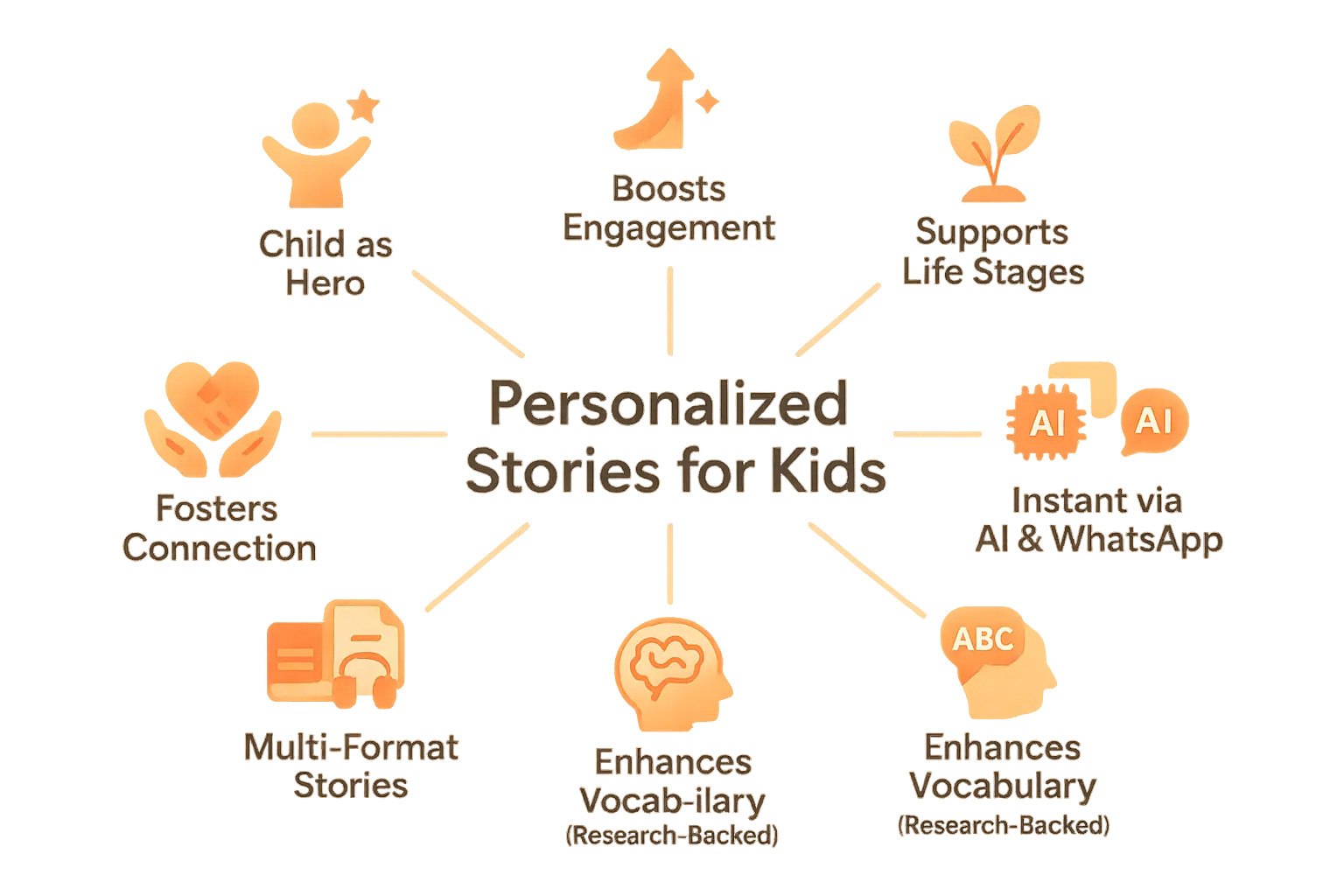
What if your child could be the hero of their own story? Personalized stories tap into a powerful psychological tool: when kids see themselves in narratives, their engagement soars. It’s not just about hearing their name—it’s about seeing their hobbies shape the plot, building a sense of “me-ness.”
Imagine using WhatsApp to create tales where your child’s name, age, and passions drive the adventure. A parent’s voice note about Max, 4, saving a penguin with his toy truck becomes a bedtime story instantly. This isn’t just fun—it’s learning in disguise. Stories guide kids through milestones like potty training or school transitions, turning challenges into quests.
Here’s the game-changer: AI crafts stories in minutes. Need flexibility? Get tales as text, audio narration, or PDFs. Research confirms pairing text with audio boosts vocabulary. Studies show kids retain 30% more when they hear and read stories simultaneously—making learning feel like play.
When a child becomes the hero of their own adventure, the story is no longer just words on a page—it becomes a part of their world, making learning effortless and magical.
These tools, built by parents for parents, solve real needs. Whether it’s a calming audio story before nap time or a tale celebrating a new sibling, the goal is clear: create moments of connection. The AI remembers details—so if Max loves space, future tales might feature rockets. No app downloads, no tech barriers—just stories that adapt to your family’s flow. 🚀
And here’s the kicker: these stories aren’t just entertainment. Sharing with a pet dragon teaches empathy, while a teddy bear adventure builds problem-solving skills. It’s learning disguised as fun—a win for parents, educators, and especially kids.
Your reading adventure starts now
Story-based learning isn’t just decoding words—it’s sparking curiosity, nurturing empathy, and building a lifelong love of reading. Every tale plants seeds for language skills, emotional growth, and cognitive development. Make stories a joyful daily habit, not a task.
Think of storytelling as a playground for their brain. 📚 Weaving stories into their world strengthens the 5 pillars of reading: phonemic awareness, phonics, fluency, vocabulary, and comprehension. You don’t need perfection—just consistency and fun.
Ready to begin? Start small: share a quick story. Ask, “What would YOU do if the monster under the bed was real?” Or personalize tales with Tellmestories via WhatsApp—no app needed! 💬
- Stories naturally build the 5 essential pillars of reading.
- Choose age-appropriate books to keep them engaged.
- Make reading interactive and daily.
- Use personalization to create magic.
Every story shared boosts confidence, creativity, and family bonds. Start today—literacy’s journey begins with one page turned together. 🌟
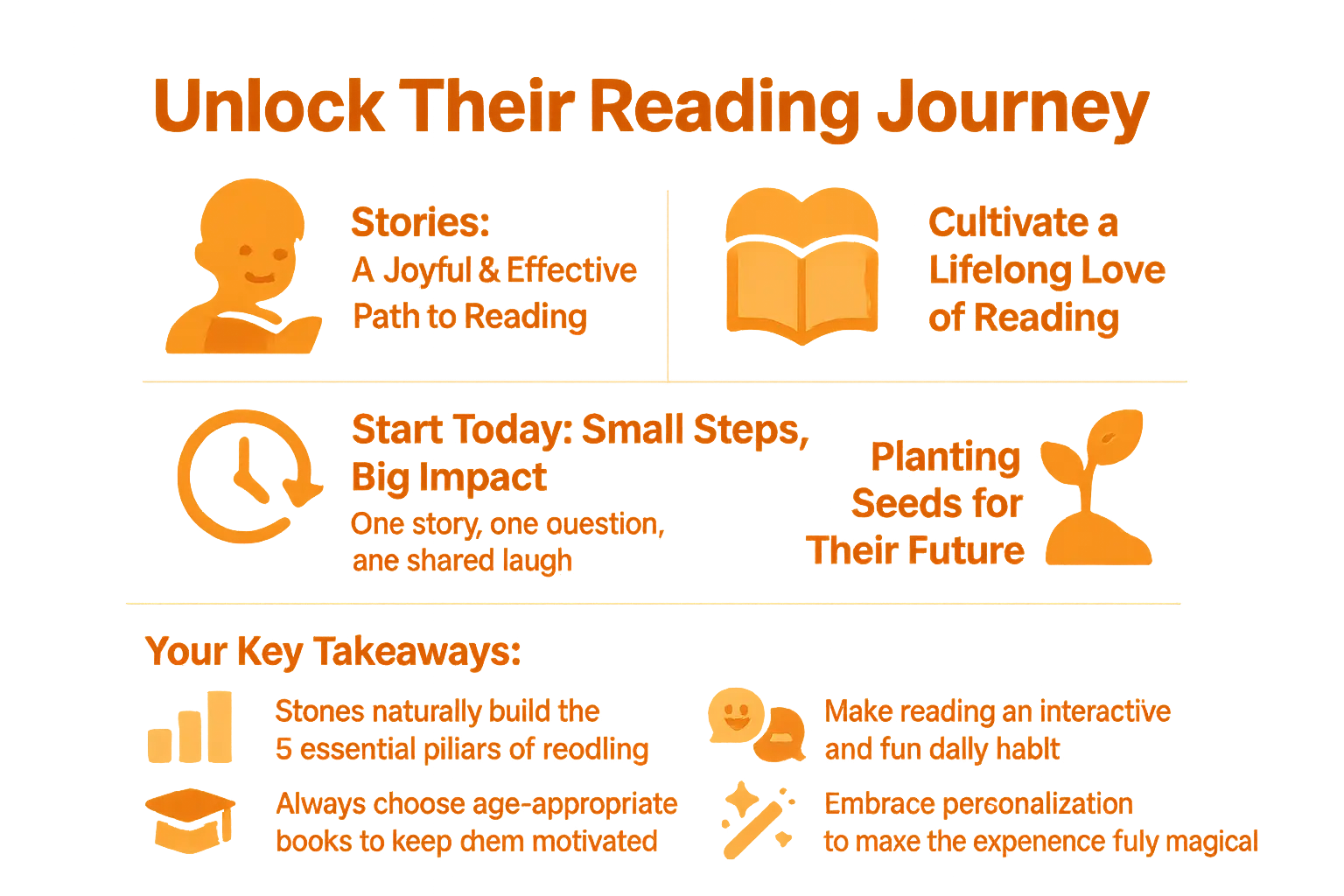
Every story shared sparks lifelong learning! Learning to read stories builds skills and a love for reading. Start today: choose a book, ask questions, personalize adventures. Stories strengthen the five pillars, interactive moments turn pages into adventures, personalized tales boost engagement, and daily habits build confidence. 📚✨ (58 mots)
FAQ
What are the 5 key elements of learning to read stories?
When it comes to learning to read stories, experts highlight five essential pillars: phonological awareness, phonics, fluency, vocabulary, and comprehension. Phonological awareness kicks things off by helping kids play with sounds in words (think rhymes and alliteration). Phonics ties letters to sounds, like decoding “cat” from C-A-T. Fluency builds speed and confidence through repeated readings of favorite tales. Vocabulary grows naturally as kids meet new words in engaging plots, and comprehension ties it all together by making sense of the story. Stories make these skills stick through fun repetition and memorable characters!
At what age should kids start reading stories independently?
While every child blooms at their own pace, most start recognizing letters and sounds around 4-5 years old. By age 6-7 (grade 1-2), many tackle simple stories with CVC words (like “pat” or “cat”) and common sight words. Don’t stress about timelines though! Shared reading with interactive elements (like pointing at pictures or guessing the next plot twist) works wonders from age 2+ as a foundation. The key? Keep it joyful! Programs like Scholastic’s I Can Read! series use beloved characters like Pete the Cat to build confidence gradually.
What’s the 5-finger book rule for young readers?
Here’s a quick trick to find “just right books” for beginner reading: the 5-finger rule! Have your child read a page aloud. For every word they stumble on, hold up a finger. If you hit 5 words before finishing the page? This book might need re-reading together first. If they struggle with just 1-2 words? It’s perfect for solo practice! This helps balance challenge with success, keeping frustration low while develops language and confidence high.
How do total beginners learn to read stories?
Start simple! For toddlers (2-4 years), interactive board books with textures and flaps build book-handling skills. Ages 4-6 thrive with decodable stories from Clarkness.com – think short sentences and high picture-word connections. Try reading a page together, then having them “read” it back using visual clues. Apps like Tellmestories.ai even let kids hear stories with audio narration while following along. Remember, 15 minutes daily beats marathon sessions – consistency > duration!
What are the big 5 pillars of reading?
Let’s break down the “Big 5” that turn storytime into superpower training:
- Phonological Awareness: Rhyming games and stories with rhythm (like Dr. Seuss!) train ears to hear sound patterns.
- Phonics: Decodable books from Read Well (642 titles!) tie letters to sounds in a playful way.
- Fluency: Re-reading favorites like Green Eggs and Ham builds reading “muscle memory.”
- Vocabulary: Rich stories expose kids to words they won’t hear in daily chatter.
- Comprehension: Asking “What would YOU do?” questions makes stories personal and memorable.
What 4 basic skills do new readers need?
Storytime builds four superpowers:
- Decoding: Turning squiggles on the page into sounds (phonics magic!)
- Fluency: Reading smoothly without stumbling over words
- Vocabulary: Understanding what those words MEAN
- Comprehension: Getting the bigger picture – like why the villain did that sneaky thing!
Bonus? Stories make this fun! When kids see their name in a personalized tale or laugh at Pete the Cat’s adventures, these skills develop organically.
How can I teach my child to read with stories?
Make stories your secret weapon! Try these:
- Read aloud daily – Even 10 minutes with Clarkness.com’s free decodable books counts!
- Ask “why” questions – “Why do you think the character cried?” sparks critical thinking.
- Use silly voices – Characters come alive with dramatic readings!
- Build personal connections – “This reminds me of when we visited Grandma’s farm!”
- Try personalized stories – Seeing their name in a tale makes kids 3x more likely to stay engaged!
Should I worry if my 7-year-old struggles with stories?
Don’t panic! Every child’s journey looks different. First, celebrate progress – can they recognize some sight words or follow a simple plot? Try:
- Different book formats – Audio narration + text helps struggling readers connect sounds/letters.
- Game-based learning – Clarkness.com’s Animal Alphabetize turns phonics into play.
- Specialist support – If challenges persist, consult teachers about structured literacy programs.
Remember Khadija from UNICEF’s story? She learned to read at 7 and now dreams of becoming a teacher! Her journey proves it’s never too late.
How much should a 5-year-old read in stories?
At 5, focus on making reading fun over word counts! Most will:
- Recognize 50+ sight words
- Decode CVC words (cat, dog, run)
- Answer basic story questions (who/what/where)
- Read 5-10 simple sentences with guidance
Celebrate growth, not perfection! Try Scholastic’s Level 1 readers – they’re perfect for building confidence with titles like Amelia Bedelia I Can Read. Every page turns them into stronger readers, one magical story at a time! 🚀