No time to read it all? Math stories turn abstract concepts into adventures, making learning fun and stress-free. By embedding math in engaging plots (like solving a treasure mystery or planning a giant party), kids grasp complex ideas through context, not rote memorization. Stanford researchers highlight their power in reducing anxiety and boosting problem-solving—turning numbers into narratives that stick. Ideal for grades 1st-7th.
Does the phrase “math homework” make your child (or you!) groan? 😩 What if equations could feel like adventures and fractions spark curiosity instead of frustration? Math stories are the secret sauce transforming abstract concepts into thrilling quests where numbers become tools for solving mysteries 🕵️♀️—imagine battling giants with multiplication or decoding treasure maps using geometry! In this article, we’ll crack how these engaging narratives turn math anxiety into high-fives, plus share wild examples (think: partying with dinosaurs, saving galaxies with percentages) that’ll make learning math feel like storytime magic ✨.
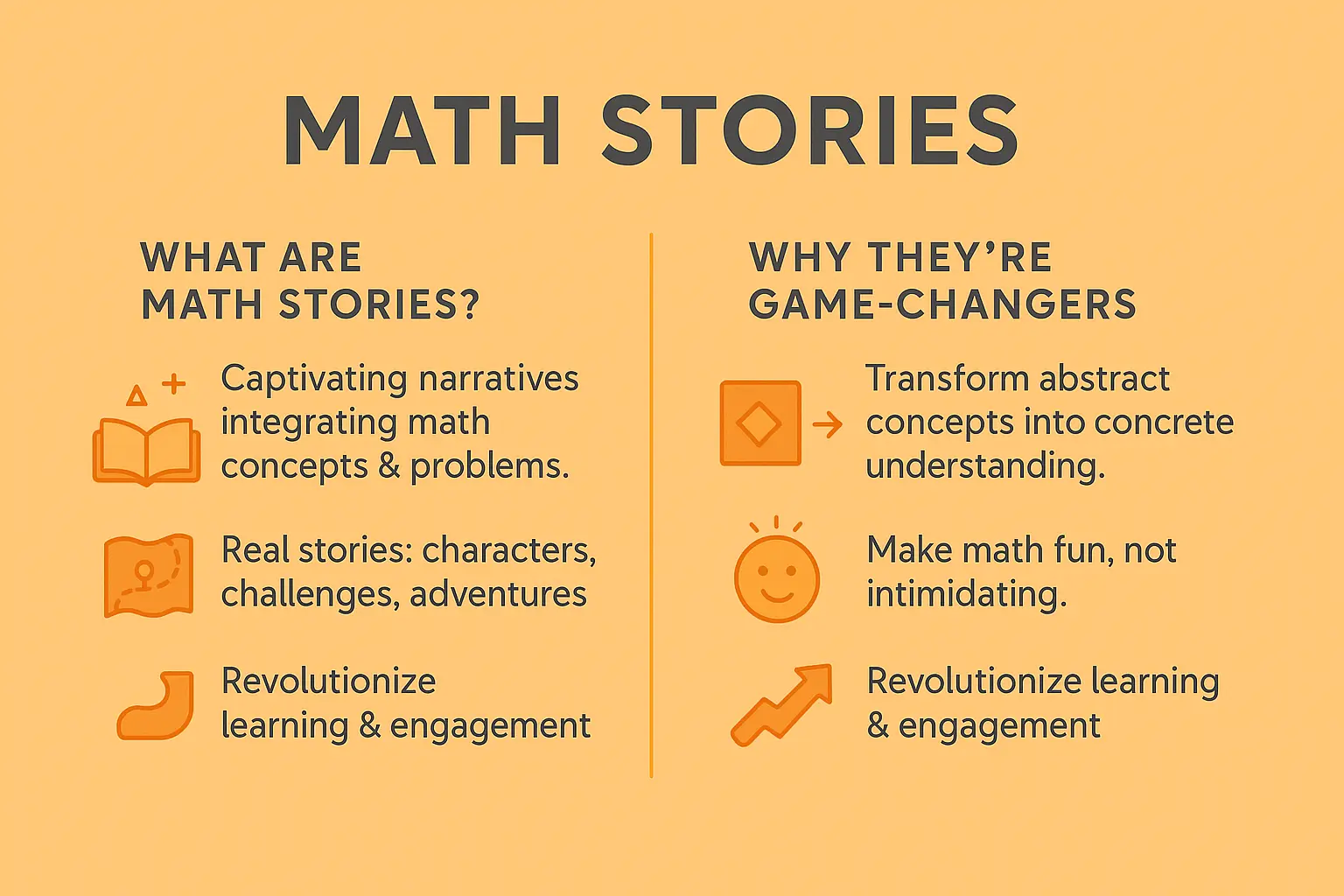
What are math stories? (and why they’re a game-changer 🤫)
Does the word “math homework” make your kids (or even you!) groan? 😩 It doesn’t have to be this way. Imagine turning fractions and geometry into thrilling adventures where kids solve mysteries with numbers. That’s the magic of math stories – narratives where abstract concepts become plot elements, not just problems on paper. 🚀
Forget boring equations. With math stories, subtraction becomes a quest to rescue stolen snacks 🍪 (The Snack-Witch: Subtraction), while multiplication transforms into a mission to share marshmallows among dragons 🐉 (The Cheese Incident). These aren’t just stories with numbers – they’re engaging narratives where kids learn math by solving plot-driven challenges.
Why does this work? Because stories tap into what kids love: characters, conflict, and curiosity. When a child helps a giant rabbit divide carrots 🥕 (Giant Rabbit Story) or teams with aliens to tackle elapsed time 🛸 (Field Trip to Mars), math stops feeling like a chore. It becomes an adventure. 🌟
Here’s the science: embedding math in stories builds concrete understanding. Instead of memorizing 8 – 3 = 5, kids visualize Sally sharing pears in an orchard. This bridges theory and reality, reducing anxiety and boosting retention. Studies show this approach activates memory and reasoning, making concepts stick. 💡
Want to try? Start with The Wishing Machine: Math Riddles for puzzles or Mr. Al Geebrah’s Fraction Story for complex fractions. Whether it’s rhyming poems or mysteries involving basketball 🏀 (Basketball on the Planet Zucchini), these stories make learning math feel like play. ✨
Ready to ditch the drills? Let’s explore how these stories turn “I can’t” into “I solved it!” 😎
The magic behind math stories: more than just numbers
Boosting understanding and retention
Math becomes less intimidating when wrapped in a story. Contextual learning helps kids grasp why numbers matter. A character sharing apples or dividing pies makes math tangible, turning symbols into meaningful actions. Pirates seeking treasure teach subtraction while keeping readers hooked on the plot. Stories turn retention into a natural outcome of engagement, anchoring concepts through narrative.
Reducing math anxiety
Math anxiety affects 1 in 4 students globally. Stories transform stress into curiosity. Kids focus on solving problems to help characters, making numbers feel like puzzle pieces, not pressure points. A child guiding a lost robot through shape-based clues learns geometry without realizing they’re “doing math.” Parents notice reduced stress during homework with story-based math, as complex topics like fractions become low-pressure environment challenges when presented through relatable characters.
Math stories shift the focus from performance pressure to narrative curiosity, creating a positive and relaxed environment for learning and exploring numbers without fear.
Developing critical thinking and problem-solving
Math stories aren’t just calculation exercises. They train kids to analyze situations. A detective decoding number patterns teaches critical thinking through plot progression. Research shows problem-solving skills improve with “Numberless Math Stories.” These stories remove numbers first, letting kids focus on narratives before tackling calculations. They learn to ask, “What’s the problem?” before seeking answers.
- Stories require identifying relevant information – like choosing clues in a mystery
- Characters face multi-step challenges – crop planning teaches geometry and multiplication
- Plots evolve with cause-effect math – elapsed time becomes a journey decision
This mirrors real-world math use. Whether splitting pizza or planning travel, the problem-solving skills developed through stories prepare kids for daily decisions beyond classrooms.
A universe of math stories: examples for every concept
Ready to turn abstract numbers into epic adventures? Math stories transform addition and subtraction, multiplication and division, and even fractions into thrilling journeys. Whether your child is discovering basic concepts or diving into real-world scenarios, these narratives make learning stick through unforgettable characters and challenges. Let’s break down how each concept comes alive through storytelling!
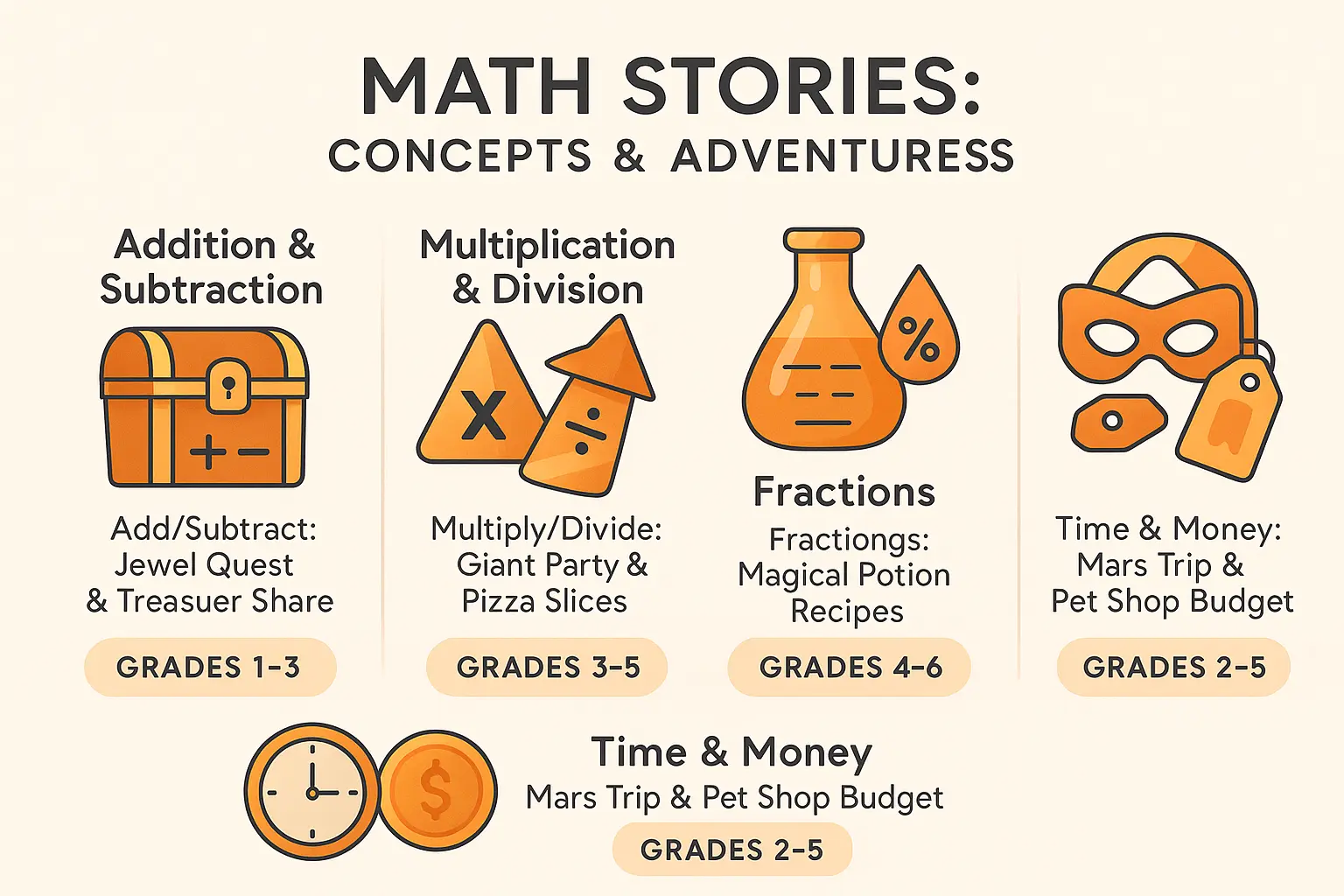
| Math Concept | Story Idea / Theme | Target Grades |
|---|---|---|
| Addition & Subtraction | A quest to find missing jewels (addition) or share treasure (subtraction) | 1st – 3rd Grade |
| Multiplication & Division | Planning a party for a group of giants (multiplication) or dividing pizza slices fairly (division) | 3rd – 5th Grade |
| Fractions | A magical potion recipe that requires precise measurements | 4th – 6th Grade |
| Percentages | A superhero saving a city where everything is 25% off | 5th – 7th Grade |
| Time & Money | A trip to Mars with a strict schedule (elapsed time) or managing a budget for a fantasy pet shop | 2nd – 5th Grade |
Let’s dive deeper! For addition and subtraction, imagine your child solving puzzles to recover stolen jewels. Each solved problem unlocks a magical chest, teaching number bonds and regrouping. In the multiplication and division adventure, your child might calculate how many cakes to bake for 10 giants with 3 forks each—turning abstract equations into practical party planning.
When tackling fractions, the potion recipe becomes a high-stakes experiment: “Pour 3/4 cup of dragon dust or the spell fails!” This teaches fraction equivalence and mixed numbers. Percentages? Picture a superhero calculating 25% off discounts to save citizens—suddenly, math is a superpower! And with time and money, a Mars mission’s strict schedule teaches elapsed time, while managing a pet shop budget introduces decimals and financial literacy.
From counting enchanted forest creatures to splitting enchanted pies with dragons, the possibilities are endless! These stories don’t just teach math—they build problem-solving superpowers. As recommended by educational researchers, integrating math into narratives creates “aha!” moments that textbooks alone can’t match. Did you know? Stories with 4-17 pages of interactive challenges keep kids engaged longer, blending humor with learning.
Want to explore number tales that feel like bedtime stories? Check out our collection of imaginative number tales where math becomes magic. Each story adapts to your child’s learning stage, turning homework into heroics! 🌟 With voice note integration and memory features, every adventure grows with your child, making math feel personal and purposeful.
Your turn to be the storyteller: how to use and create math stories
Tips for parents and teachers
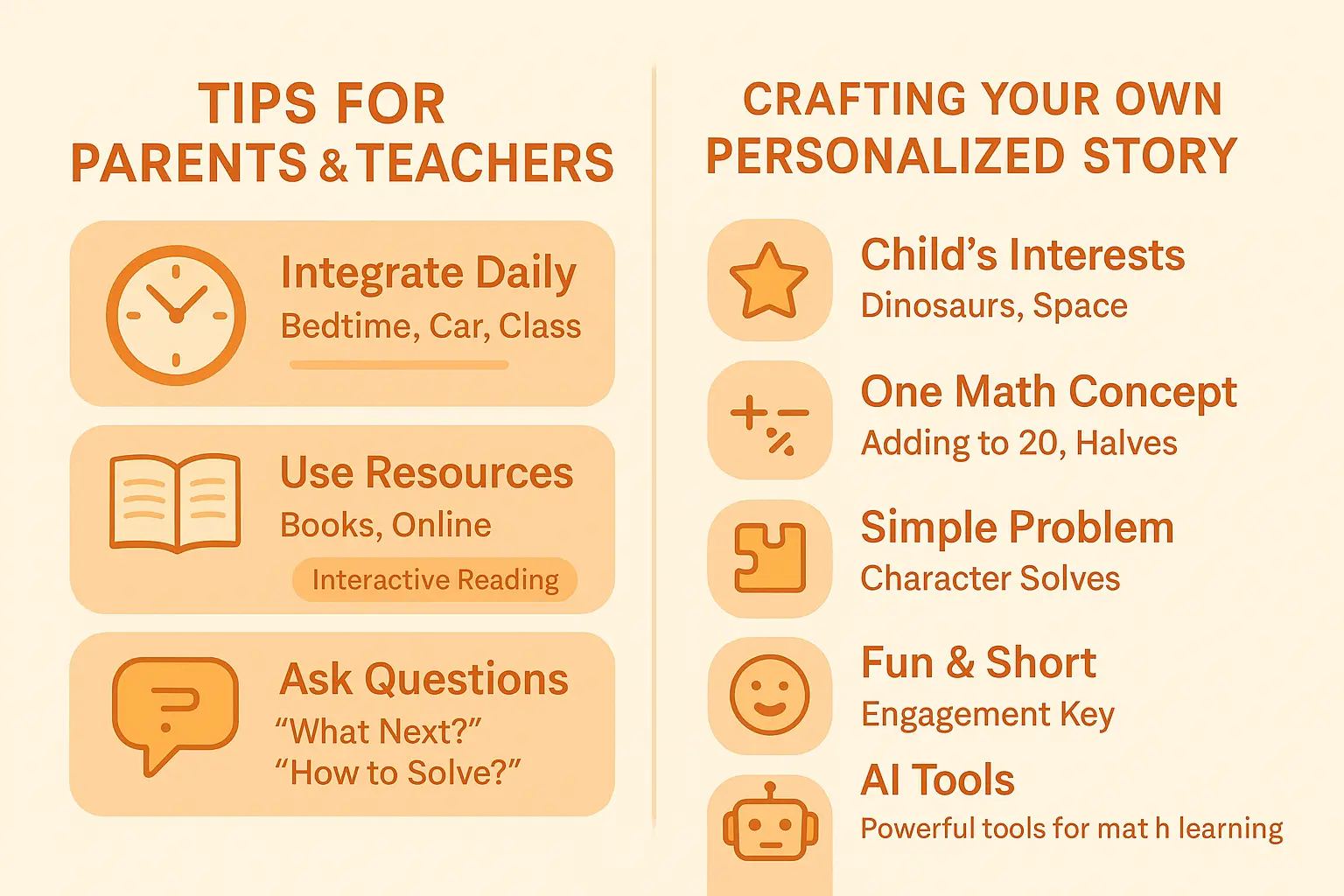
Turn math into bedtime magic! 🌟 Use interactive reading during nightly stories. Ask questions like, “What happens if the dinosaur eats two berries?” or “How many monsters are left in the cave?” Let their imagination run wild while practicing math skills. This method turns abstract concepts into playful challenges.
Try these ideas:
- Read during car rides, snack time, or bath time. Count rubber ducks or cookies to make math tangible. 🍪 Add context: “How many ducks remain if one sinks?”
- Start with classics like “The Greedy Triangle” or “One Hundred Hungry Ants”. Ask, “If 3 ants leave, how many share the food?” to bridge storytelling and problem-solving. This builds both math and prediction skills.
- Ask questions like “How would you solve this?” or “Spot shapes in the art?” to make math feel like a game. Boost critical thinking and engagement.
Keep it playful! Even 10 minutes daily can spark a love for problem-solving. Mix printed books with audio stories for variety. 🎧 Use sound effects in voice notes to bring characters to life!
Crafting your own personalized story
Ready to create custom tales? Here’s your quick guide:
- Start with your child’s interests: Dinosaurs? Space? Imagine a T-Rex counting bones or an astronaut dividing pizza with aliens! 🚀 Add a twist: “A spaceship crew needs 8 fuel cells to return home. They have 3—how many more to find?”
- Pick one math concept: Focus on adding up to 10 for beginners or fractions for older kids. Keep it simple and relatable. Example: “The dragon has 50 scales. If he loses 12, how many remain?”
- Create a simple problem: “The hero needs 7 stars to unlock the treasure. They found 3—how many more?” Use real-life scenarios too, like budgeting coins for a toy or calculating how many pencils each student gets when sharing a pack.
- Make it fun and keep it short: Avoid long tales! Aim for 5-10 minute stories with silly characters and happy endings. Add surprises—like a math-savvy cat who solves puzzles to rescue a friend!
Stuck? Tools like Powerful tools for math learning generate personalized story adventures in seconds. Share child’s interests and one math concept—the AI handles the rest! 🎉
Pro tip: Use voice notes or photos to make them the hero. Watch their eyes light up when their name appears! Bonus: Try themes like adventures (pirate treasure hunts), science (counting planets), sports (scoring goals with multiplication), or daily life (sharing cupcakes). 🌈
Remember: These moments create lasting memories where math becomes a tool for imagination. 🌟
Math Stories Aren’t Just For Kids: Tales From History And Real Life
The Epic Stories Of Mathematicians
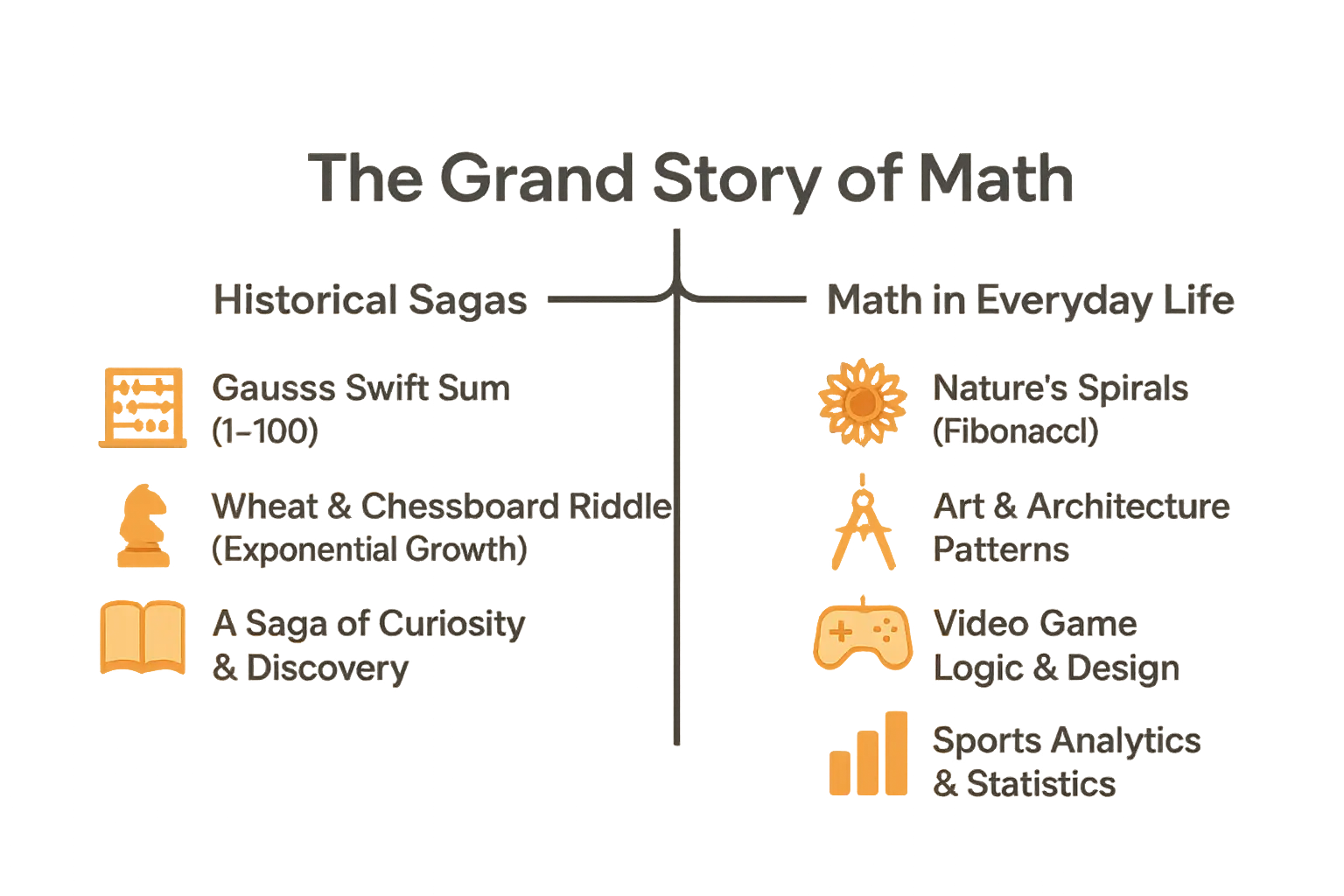
Let’s start with a classic tale. At 8 years old, Carl Friedrich Gauss stunned his teacher by instantly summing numbers from 1 to 100. He paired numbers (1+100, 2+99…) and multiplied the sum (101) by the number of pairs (50). Result? 5,050 in seconds ⏱️
The history of mathematics is not a collection of boring formulas, but a grand saga of human curiosity, brilliant discoveries, and mind-bending paradoxes waiting to be told.
Picture this as a personalized WhatsApp tale where your child becomes Gauss’ apprentice. Use voice notes to narrate the challenge—AI generates a version where your kid cracks the code first 🎙️
The wheat and chessboard problem? An inventor asked for rice grains doubling per square. The king laughed—until calculations showed 18 quintillion grains needed. These famous mathematicians stories prove math isn’t dry—it’s dramatic! 🎭
With Tellmestories, these tales evolve. Parents narrate a challenge, and the AI builds a plot where kids solve puzzles using math. A nature lover might decode Fibonacci patterns in a sunflower maze. A tech-savvy child could fix a video game glitch with probability. The smart memory feature ensures each story adapts to their evolving interests 🌟
Finding Math In The World Around Us
Think math lives only in textbooks? Let’s explore hidden numbers:
- Nature’s code: Sunflowers use Fibonacci sequences in seed spirals 🌻
- Art and architecture rely on geometric patterns from pyramids to skyscrapers 🎨
- Video game design uses probability for level mechanics 🎮
- Technology like sports analytics tracks performance with statistics ⚽
With Tellmestories, these become adventures! Imagine your child spotting Fibonacci patterns in a magical forest or solving a game glitch via probability. The AI adapts to interests, turning everyday life into math quests 🚀
A space-obsessed kid might calculate planetary distances (learning exponents). A sports fan could solve mysteries through stats. Even music streaming algorithms use probability—like AI recommending songs or personalized tales. Math isn’t about formulas—it’s the logic behind life’s wonders 🔍
These stories don’t just teach numbers—they build problem-solving skills. A child learning fractions through a baking-themed tale isn’t just measuring ingredients. They’re mastering ratios while helping a character avoid kitchen chaos 🍰
Ready to start your math adventure?
Math stories aren’t just bedtime tales—they’re powerful tools to transform your own math adventure. By weaving numbers into narratives, we turn abstract concepts into relatable challenges. 🚀
Imagine solving a mystery where each clue requires a multiplication. Or helping a character divide treasure equally among friends. These stories make math confidence feel like second nature. No more anxiety—just excitement! Take “The Cheese Incident” where multiplication saves a dairy farm, or Mr. Al Geebrah’s fraction challenges—every story makes complex ideas tangible through adventure.
Storytelling creates magical moments. When you read about a knight calculating castle defenses or a chef adjusting recipe portions, math becomes a living, breathing skill. These stories aren’t just educational—they’re memory-makers. 📚
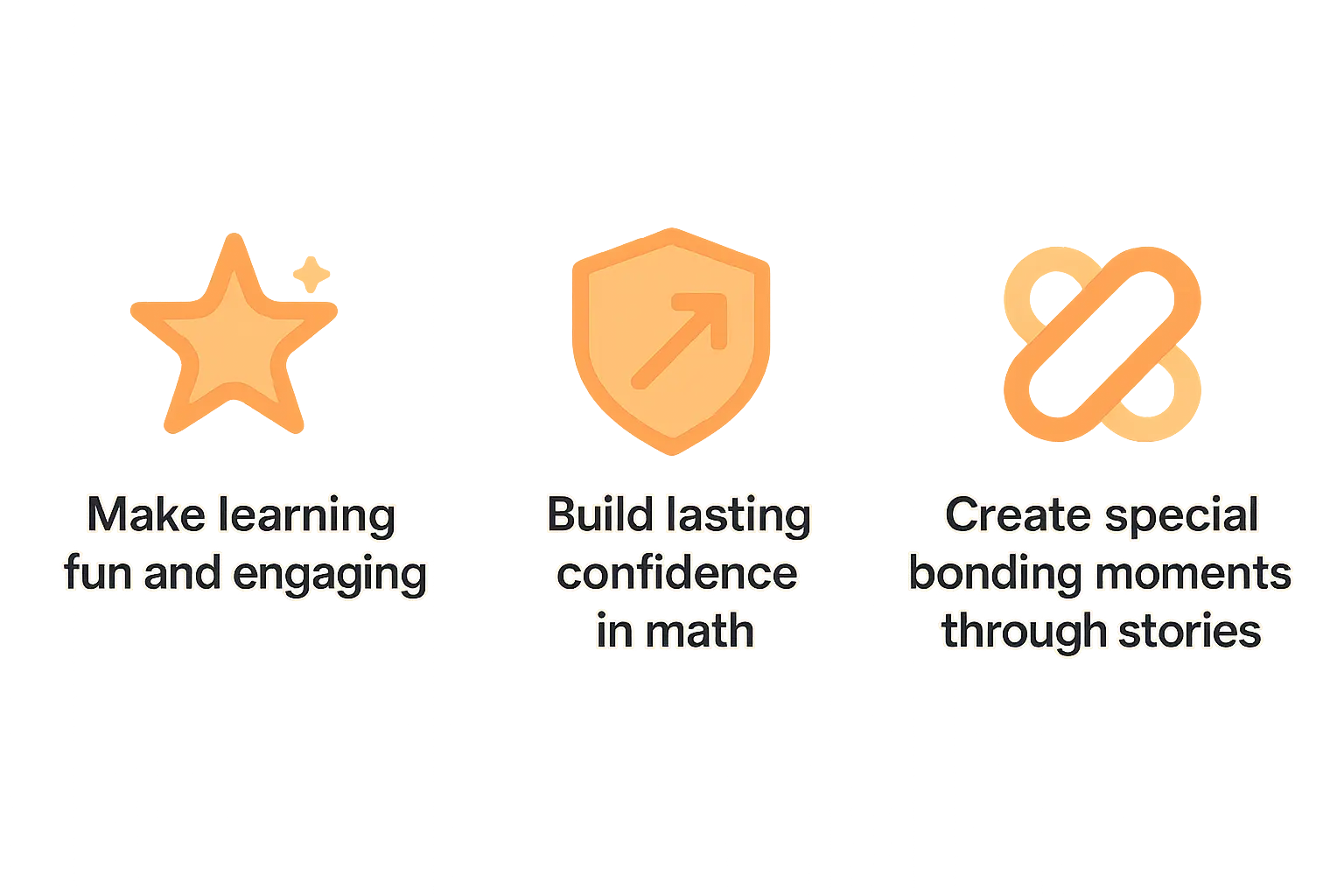
- Make learning fun and engaging
- Build lasting confidence in math
- Create special bonding moments through stories
Time to start! 🕒 Pick one story this week. Read it together. Watch eyes light up when they realize math isn’t homework—it’s a superpower. Whether counting dragon teeth, measuring spaceship fuel, or solving time-travel puzzles in “Field Trip to Mars,” every tale opens new mathematical worlds. 🌌
Remember: The best stories aren’t about getting it right the first time. They’re about curiosity, creativity, and connection. Your math adventure starts now—and it’s filled with wonder. 🔍
Ready to turn math into magic? 🌟 Math stories transform abstract concepts into thrilling adventures, blending critical thinking with fun. They build confidence, turning struggles into victories. From fractions to real-life puzzles, these tales prove math is everywhere. Craft stories, explore tools like Tellmestories.ai, and start your adventure today! 📚✨ (56 words)
FAQ
What’s a cool example of a math story? 🤓
Think of “The Snack-Witch: Subtraction” – imagine a mischievous witch who keeps stealing snacks from a village! Kids solve subtraction problems (like 17 cookies minus 9 stolen ones) to figure out how much is left. It’s not just numbers; it’s a fun, imaginative quest where math drives the plot. Perfect for 1st–3rd graders! 💡
So, what exactly are math stories? 🧐
They’re tales where math isn’t just tacked on – it’s the hero! 🦸♀️ Instead of dry problems like “5 + 3 = ?”, stories like “Ghosts & Stuffies: Addition” wrap concepts in adventures. Kids help a ghost count how many stuffed animals they’ve collected (addition!) or split treasures (division!). It turns abstract ideas into relatable challenges, making learning feel like play. 🎮
Who was that famous girl who adored math? 🌟
Meet Ada Lovelace, the 19th-century math whiz who wrote the world’s first computer program (yes, way before computers existed!). 🚀 She saw poetry in numbers and teamed up with inventor Charles Babbage to imagine machines that could create art or music. Talk about a math-rockstar! Her story shows how creativity and math can collide. 🎨
What’s the most mind-blowing math fact? 🤯
Ever noticed how sunflowers have spiral patterns? That’s the Fibonacci sequence in action! 🌻 Each spiral follows numbers like 1, 1, 2, 3, 5… where each number is the sum of the two before it. Nature’s basically a math genius. This sequence pops up in pinecones, galaxies, and even hurricane swirls. Math isn’t just in textbooks – it’s everywhere! 🌌
Got a real-life math story example? 🧾
Picture this: You’re planning a road trip with friends. 🚗 You’ve got for gas, but the map app says it’ll cost . How much will you save? That’s a real-world math story! It’s exactly like “Field Trip to Mars: Elapsed Time”, where kids calculate travel schedules. Real-life scenarios make math feel less like homework and more like a tool for everyday wins. 💡
What’s a word story in math? 📖
It’s like a mini-mystery where math solves the case! 🕵️♂️ For example: “A dragon has 12 gold coins. It gives 5 to a knight. How many are left?” Instead of “12-5=7”, the story adds drama. These tales build critical thinking by asking kids to decode the “what’s missing” in the plot before diving into equations. It’s math with a side of adventure! 🧩
What math do 11-year-olds tackle? 🎯
At 10–12 years old (5th–6th grade), they’re rocking fractions, decimals, and multi-digit multiplication/division. Think stories like “Mr. Al Geebrah’s Fraction Story” where kids split magical potion recipes. They also tackle word problems, geometry basics (area, volume), and start pre-algebra concepts. It’s all about making complex ideas feel like puzzles to solve, not drills. 🧮
How to weave storytelling into math? 📚
Start with what they love! 🎮 If they’re into space, create a story where astronauts need fractions to fix a spaceship. Use the “personalized story” method: pick a concept (e.g., division), build a plot around sharing alien slime among friends, then let them solve it. Tools like powerful tools for math learning can even auto-generate tales tailored to their passions. Storytelling = math magic. ✨
Any awesome math books for curious minds? 📚
Check out “The Number Devil” (a dream where a boy battles number monsters) or “Math Curse” (a hilarious day where everything becomes a math problem). Stanford researchers even have a recommended list for all ages! These books turn math into page-turners – perfect for bedtime or cozy reading corners. 📖