L’essentiel à retenir : Les « Social Stories » sont des récits structurés créés par le Watson Institute pour aider les enfants, initialement autistes, à comprendre les situations sociales. Aujourd’hui, elles bénéficient à tous les enfants en réduisant l’anxiété et en développant l’empathie. Leur secret ? Une approche personnalisée qui transforme les défis en apprentissages concrets, avec des exemples adaptés au quotidien de l’enfant.
Ever felt stuck trying to explain tricky situations to your child? 😩 Welcome to the world of behavior stories – your secret weapon for turning chaos into calm! 🌟 These structured narratives (think of them as “social scripts”) aren’t just for kids with special needs – they’re game-changers for ANY child navigating tough moments, from bedtime battles to first-day nerves. In this post, I’ll show you how these stories work like emotional GPS, helping kids understand their world while building skills like empathy and self-control. Ready to discover how personalized tales could become your parenting superpower? 🎯
So, what are behavior stories anyway?
Let’s get straight to the point
Ever wished you had a magic script to help your child handle tricky moments? Behavior stories are structured narratives guiding kids through social or emotional challenges. Think of them as a roadmap — no judgment, just clear explanations. The goal isn’t to “fix” kids but to prepare them. A story about sharing toys at school can turn a nerve-wracking playdate into a calm experience. Even routines like bedtime get easier with stories modeling the “how” and “why.”
You might know them as “social stories”
You’ve heard the term Social Stories™ before. Created by Carol Gray in the 1990s, they’re a go-to strategy for parents and educators. Originally for kids on the autism spectrum, they now help all children build constructive behaviors and social understanding. Organizations like The Watson Institute endorse them for teaching emotional regulation. For instance, a “waiting your turn” story might show how patience leads to fun — like taking turns on the swings. The key? Tailoring the narrative to your child’s needs, whether starting school or managing big feelings.
The main goal? Making the world a little less confusing
Life throws curveballs. Behavior stories act like a compass, breaking complex situations into chunks. Imagine explaining a fire drill — suddenly, the unknown becomes predictable. By focusing on positive outcomes, they reduce anxiety and build confidence. They include descriptive sentences about what’s happening, perspective lines showing others’ feelings, and affirmations like “I can do this!” to boost self-trust. They’re a flexible tool for modern families.

Who can benefit from these stories (and how)?
Let’s get real for a sec – life with kids can feel like herding cats sometimes 🐾. But what if a simple tool could turn chaos into calm? Behavior stories aren’hui just for kids with special needs – they’re for every family navigating life’s little (and big) challenges.
Not just for kids with special needs
Yeah, behavior stories started in special education circles, but guess what? They’re like training wheels for life situations! Whether your toddler’s battling bedtime monsters or your kindergartner’s anxious about their first school bus ride, these stories help. Imagine prepping your 5-year-old for their first dentist visit, easing a preschooler’s fear of thunderstorms, or preparing older kids for family vacations. No judgment here – we’ve all been there!
The concrete benefits you can expect
- Reducing anxiety: Picture explaining first-day-of-school jitters with a story that shows exactly what happens
- Improving emotional regulation: Teaching kids to name their feels – from mad-as-a-hornet days to super-excited moments
- Developing empathy: Helping little humans understand how others see the world
- Facilitating transitions: Making moves, new siblings, or class changes feel less icky
- Teaching social skills: From sharing toys to asking permission, it’s like friendship training wheels
A tool for empowerment, not control
The goal isn’t to create a perfectly behaved robot, but to give your child the confidence and tools to understand their world and react to it positively.
Think of these stories as secret sauce for building resilient kids. We’re not here to “fix” kids – we’re here to equip them! When your 6-year-old uses a story to calm themselves during thunderstorms, that’s not obedience – that’s self-mastery. These aren’hui about compliance; they’re about giving kids their own superpowers. 

Understanding the “why” behind the behavior
Behavior is a form of communication
Ever noticed how your toddler throws a tantrum when it’s time for bed? 🤯 That’s not just “being difficult” – it’s communication! Kids often lack the words to express their needs, so they use behavior instead. Think of it like this: when your child acts out, they’re saying “I need something!” without the vocabulary. Maybe they’re overwhelmed by bright lights, struggling to explain frustration, or just plain exhausted. The trick? Shift from asking “why is my kid misbehaving?” to “what are they trying to tell me?“
Remember the HALT acronym. Is your child Hungry, Angry, Lonely, or Tired? These basic needs often hide behind challenging behavior. A quick snack might calm the storm. Understanding these hidden needs helps you respond with empathy instead of frustration.
Looking for the root cause
Let’s break down what’s really going on behind those tricky moments:
- Sensory overload: That scratchy sweater or loud vacuum cleaner might be driving them crazy 😵
- Communication roadblock: They want to say “I’m hungry” but can’t find the words 🤐
- Emotional tsunami: Big feelings like jealousy or fear can feel like a hurricane inside 🌪️
This is where behavior stories shine! Imagine creating a story about “Why My Shirt Itches” or “What To Do When Mad Feelings Explode” – that’s exactly what recent studies have confirmed their effectiveness. These personalized tales help kids understand their world while teaching better ways to express themselves. With tools like Tellmestories, you can create these stories instantly via WhatsApp! Pretty cool, right? 😊
Concrete examples of behavior stories in action
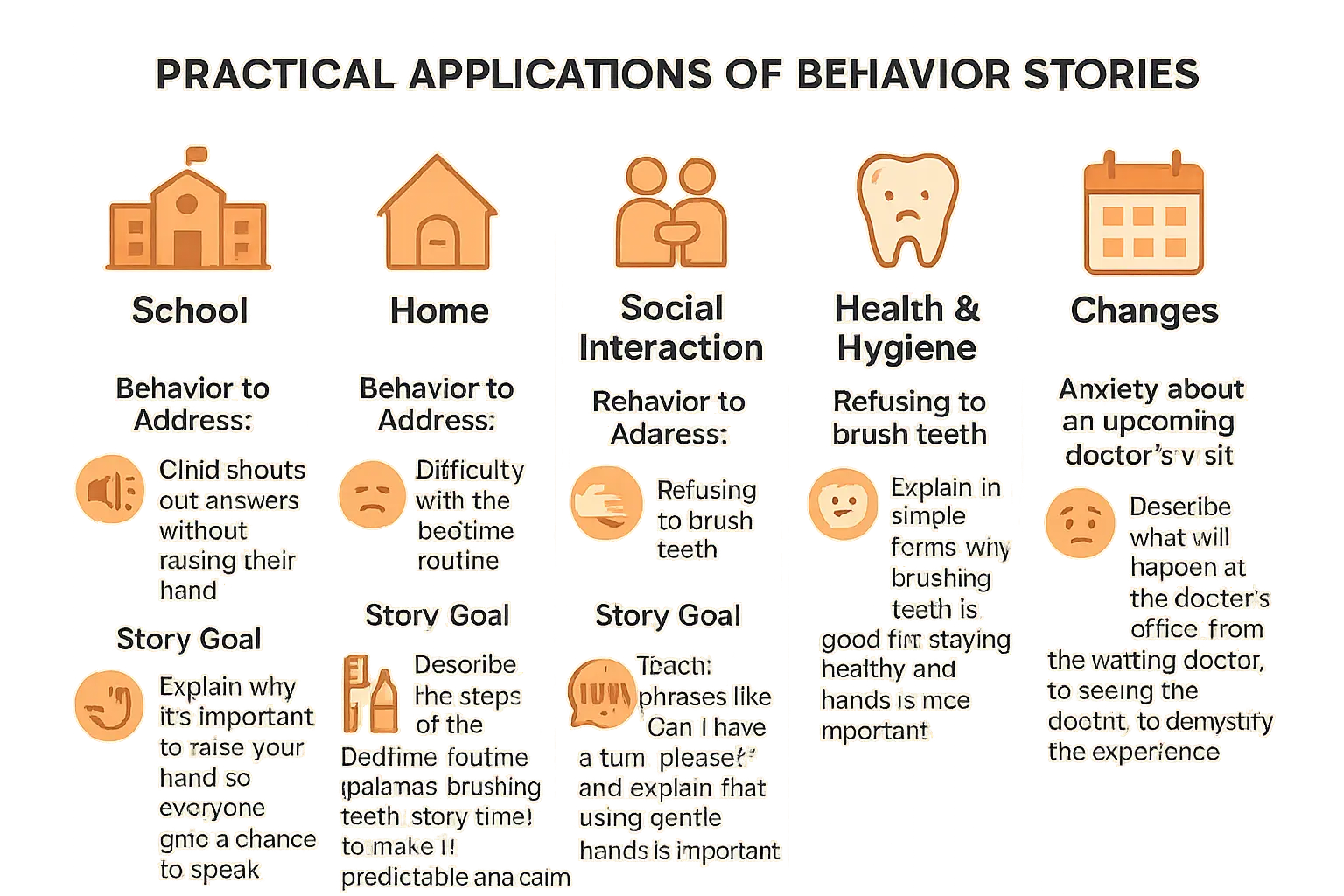
Let me show you how behavior stories work in real life! 🌟 These practical tools help kids handle everyday challenges—from sharing toys to doctor visits. The table below makes it simple to understand.
| Situation | Behavior to Address | Story Goal |
|---|---|---|
| School | Shouting out answers without raising hands | Explain why hand-raising ensures speaking turns |
| Home | Bedtime routine struggles | Outline steps (pajamas → teeth brushing → story time) |
| Social Interaction | Hitting when a toy is taken | Teach phrases like “Can I have a turn, please?” |
| Health & Hygiene | Refusing to brush teeth | Explain brushing keeps teeth healthy and smiles bright |
| Changes | Anxiety about doctor visits | Demystify steps from waiting room to doctor’s office |
From daily routines to big life events
These behavior stories adapt to any scenario! Whether it’s bedtime routines or big events like starting school, they turn the unknown into something familiar. Personalization is key 🎯—use your child’s name, favorite characters, or photos to create a relatable story. They act as a mental roadmap for tricky moments.
The structure is simple: describe the situation → explain the desired action → show positive outcomes. This framework works for bedtime battles, social challenges, or transitions. Short, visual, and effective!
 personalized storybook about bedtime routines“>
Your step-by-step guide to creating a powerful behavior story
You don’t need to be a professional writer!
Here’s the truth: you don’t need fancy words to create a behavior story. 🌟 Your secret weapon? Knowing your child better than anyone. Keep it simple, heartfelt, and real. They’ll connect with your love, not your grammar! The personal touch matters more than polished sentences.
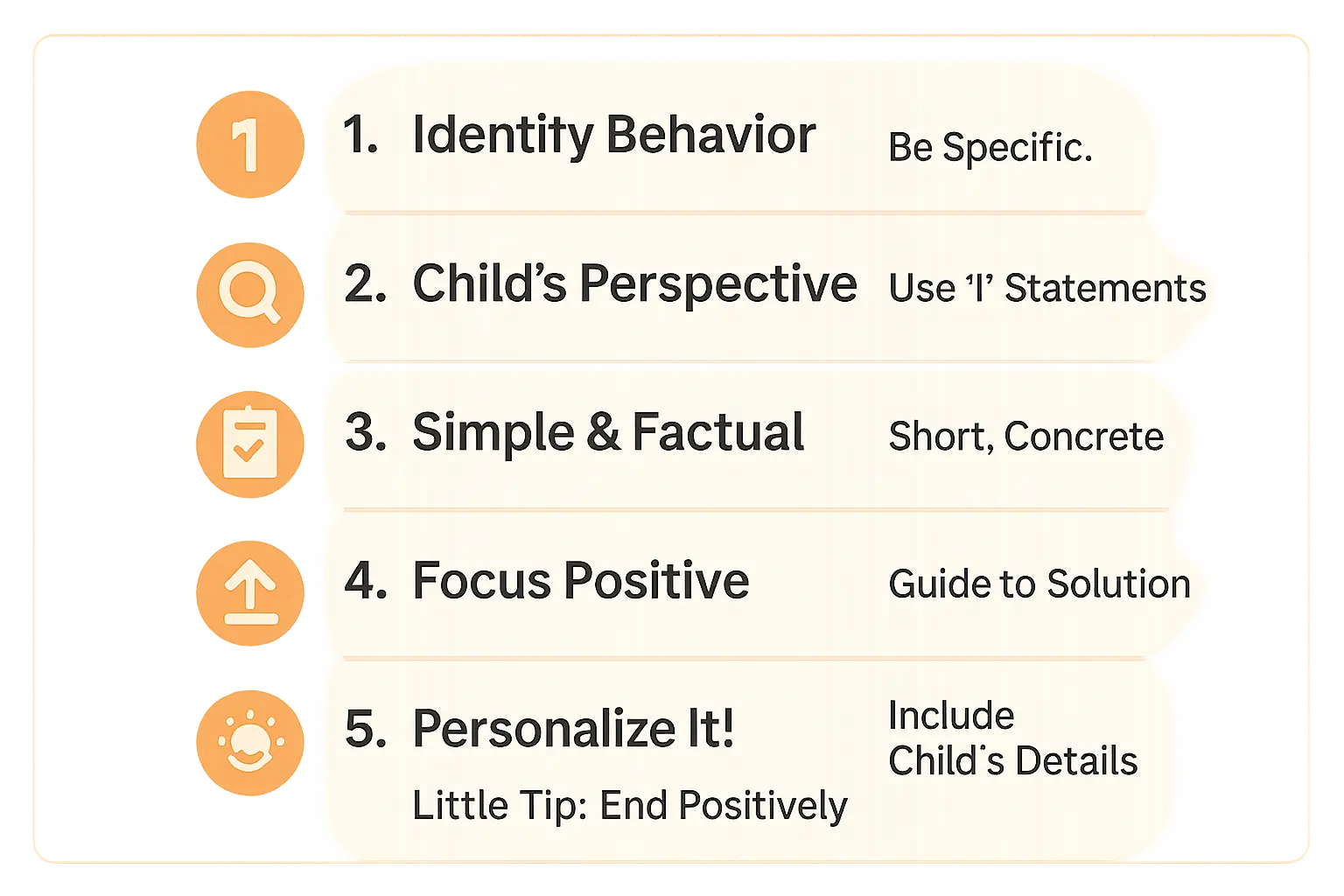
The 5 key steps to follow
- Identify the target behavior: Be super specific. Instead of “be good,” try “use gentle hands when sharing toys.” If they struggle with waiting turns, write about that exact scenario. Specificity makes solutions feel doable.
- Write from the child’s perspective: Use “I” statements like “Sometimes I feel mad when my sister won’t share.” Imagine your 4-year-old reading: “When my brother plays with my train, I feel sad. But I can ask him to take turns!” This helps them see their feelings reflected in the story.
- Keep it simple and factual: Short sentences, concrete language. Describe the situation (“Today we’re going to school”), the feeling (“I’m nervous”), and the solution (“My teacher will help me find cool things!”). Replace vague terms like “be patient” with concrete actions like “I can count to 10 while waiting.”
- Focus on the positive: Turn “Don’t scream” into “I can take deep breaths when I feel upset.” Guide toward solutions, not just rules. Shift from restriction to empowerment – e.g., “I’ll chew my teether when my teeth hurt” instead of “No biting.”
- Personalize it! 🎉 Add their name, favorite animal, or photos! With Tellmestories, upload pictures to create characters – your child becomes the hero! Use school routine details (e.g., “Ms. Anna helps me hang my coat”) for extra relevance.
A little tip from me
Always end on a warm, empowering note. Try: “Mommy helps me calm down, and that’s okay! I’m still a superhero!” 💫 Build confidence while teaching skills. Use voice notes via WhatsApp – no app downloads needed. Just speak your story, and the AI handles the rest. Bonus: The system remembers your child’s preferences, so future stories get even more personalized! 🦕
Pro tip: Share stories during calm moments, like bedtime. The goal isn’t to shame bad behavior but to practice better choices. Read them often – repetition builds habits!
Making the Story Stick: Tips for Success
It’s All About Timing and Repetition
Timing matters more than you might think. 🤔
Trying to teach bedtime routines during dinner chaos? Not ideal! Choose calm moments like mornings or bedtime. Read stories before the actual situation happens – this isn’t just practical, it builds anticipation. For example, reading a “first day of school” story during summer vacation helps kids visualize what’s coming without pressure.
Preparing for a dentist visit? Read days ahead. Planning a trip? Share the airport story early. Proactive storytelling reduces anxiety by making the unknown feel familiar. Think of it as a mental dress rehearsal for real life!
Reading a behavior story once is like planting a seed. Reading it regularly is like watering it, allowing positive behavior to grow and flourish.
Consistency is key. Daily practice sticks better than one-time reads. Make it routine – your child’s brain needs repetition to build neural pathways. Even 2-3 times weekly makes a difference, especially for complex topics like sharing toys or managing big emotions.
Make It a Positive and Interactive Moment
Storytime shouldn’t feel like a lecture. Keep it fun! 🎉
Try these tricks:
- Discuss the story: Ask “How does the character feel?” or “What would YOU do next?” Let them predict outcomes!
- Use a calm tone: Soft music or a favorite stuffed animal nearby can enhance this connection time.
- Role-play: Use action figures, dolls, or even your hands as “actors” – improvise simple scenes from the story.
- Praise efforts: Specific feedback like “You waited so patiently during dinner – just like the story!” reinforces the link between story and real life.
Turn it into interactive learning. Engaged kids remember better – and enjoy the process! 🌟 Bonus tip: Try using different voices for characters – it keeps little ones giggling and paying attention!
The magic of personalization in storytelling
Why a personalized story is a game-changer
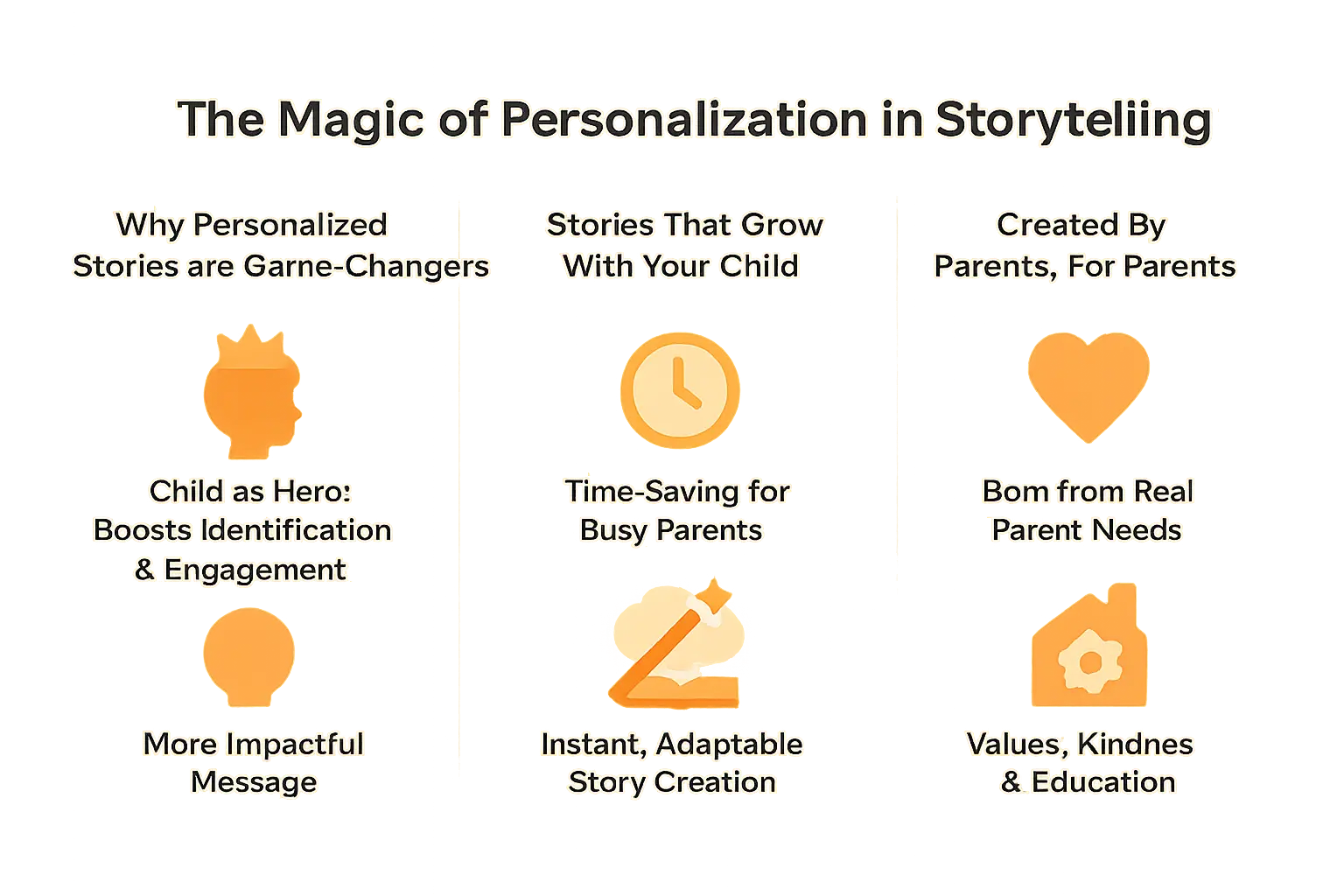
Imagine your child’s eyes lighting up when they see their name, face, or favorite toy in a magical adventure. 🌟 Personalization makes them the hero, boosting engagement and making lessons stick. Studies show personalized stories improve empathy and vocabulary by 40% in kids aged 9-10. A child might learn sharing during a pirate quest. Abstract concepts like kindness become tangible as their brain simulates the hero’s actions, building empathy and problem-solving skills.
Stories that grow with your child
We get it: time is short. Tools like developing social skills save the day. Send a voice note—boom, a bedtime story is ready. The AI remembers their fears, milestones, and interests, tackling potty training or school nerves. Need a physical copy? Print a book for their shelf. 📚 It adapts! Upload a photo to create a space explorer—no design skills needed!
Created by parents, for parents
Tellmestories was born from a dad’s struggle to help his daughter sleep. No jargon—just real parents solving real problems. Their solutions for modern families prioritize privacy and education, with kindness in every story. The AI adapts to your child’s age and obsessions—today’s dinosaur fan becomes tomorrow’s space explorer. 🚀 Founded by Alex and Julien, the platform evolves with your child’s growth. No apps—just WhatsApp. Need to boost confidence? A story where they lead a safari will do. 💬
Ready to turn life’s moments into stories your kid will love? Let’s go! The values behind this tool make it more than tech—it’s a bedtime companion built with love. 💙 Whether it’s overcoming fears or a silly adventure, you’re creating moments that spark growth.
Behavior stories turn challenges into growth moments by teaching social skills and emotional tools. 🌟 When personalized, your child becomes the hero of their own story! At Tellmestories.ai, we create tailored adventures that adapt to your child’s journey—making learning feel like magic. Explore our solutions and values to start empowering your little one today! 🚀 #ParentPower #SocialSkills
FAQ
Okay, so what’s the deal with ADHD and behavior issues?
ADHD can sometimes feel like your brain’s got its own Wi-Fi signal – it does its own thing! 🤯 Kids (or adults) with ADHD might struggle with focus, impulse control, or get super wiggly when they need to stay still. For example, they might blurt stuff out of turn or forget their homework… again. But here’s the cool part: these aren’t “bad” behaviors. It’s just their brain wiring! Think of it like a car with a supercharged engine but brakes that need tuning – with the right tools, it can still race smoothly 🚗💨.
What are the four types of behavior we usually talk about?
Let’s break it down simple! You’ve got four main behavior “flavors”:
- Prosocial – the “awesome sauce” like sharing and helping 🤝
- Antisocial – the “uh-oh” stuff like lying or fighting 🚫
- Assertive – standing up for yourself nicely 👍
- Aggressive – when assertiveness goes off the rails 💥
Think of it like ice cream: vanilla (prosocial) and chocolate (antisocial) are opposites, while rocky road (assertive) and triple fudge rage (aggressive) are different levels of… intensity 🍦
How do you tell someone their behavior’s not cool without being mean?
Imagine you’re a GPS giving turn-by-turn directions – “Recalculating!” but nicer 😊 Start with a smiley emoji in your voice 🌟 “Hey, I love you, and I need to share something important.” Then use “I” statements: “I feel worried when you interrupt because I miss what others say.” Offer a solution: “Can we try raising hands instead?” Keep it short, kind, and specific – like teaching a dance move: “Left foot first, then the right!” 💃
What if my kid’s behavior’s making me pull my hair out?
First off – high five for being a superhero parent! 🦸♀️ When behavior’s wild, think of it like a car alarm: it’s screaming “something’s wrong!” 🚗💨 Maybe they’re sensory-overloaded (like wearing sandpaper pajamas!), communication-frustrated, or emotion-confused. Try creating a “behavior story” – it’s like a choose-your-own-adventure book for real life! For example: “When my little brother takes my toy, I can say ‘Can I have a turn please?’” Pair it with visuals and practice it like a script for a play 🎭.
What’s this 30% rule for ADHD? Sounds like math class!
Oh, no calculators needed here! 🙌 The 30% rule is kinda like saying “half full” but for ADHD brains – it’s not a strict number, more of a vibe check! It’s the idea that folks with ADHD might need about 30% more mental energy to do “boring” stuff. Think of it like a phone battery: while others have 100% charge for focus, ADHD brains might start at 70% for the same task 🔋. The trick? Make things more interesting – add some glitter, turn chores into games, or use a 5-minute dance party break!
What do ADHD meltdowns look like? Are we talking volcano-level eruptions?
Yep, picture a volcano but with more tears than lava 😅 Meltdowns happen when the brain’s “stress cup” overflows. Signs? Screaming “no!” 100 times, slamming doors like they’re auditioning for a soap opera, or crying about… socks (?!). Important: it’s not tantrums – those are about getting something. Meltdowns are about being overwhelmed. Imagine wearing a 100-pound backpack all day – eventually you’d collapse too! 💥 The fix? Prevention (like behavior stories) and post-meltdown cuddles (if they’re up for it).
What are these mysterious 4 colors of behavior?
Think of this like a mood ring for behavior! 🌈
- Blue – calm and collected, like a zen garden 🌿
- Green – all systems go, ready to learn 🚀
- Yellow – starting to feel the wiggles, like coffee jitters ☕
- Red – full-on storm mode, time to hit pause 🚨
It’s called the “Zones of Regulation” – basically a weather report for your brain! Teach kiddos to check their internal forecast and use “umbrellas” (calming tricks) when storms come. Pro tip: turn it into a game where they earn “weather points” for checking their zone!
What are the red flags for abnormal behavior?
Let’s play “Is It A Big Deal?” Jeopardy! 🧐
- Is it happening daily for weeks?
- Does it cause real life problems at school/friends?
- Is it dangerous to them or others?
- Does it not match their age?
If you’re checking two or more boxes, time to call in the behavior detectives 🕵️♀️. For example, normal: 8-year-old throws a fit about bedtime. Red flag: 8-year-old throws lamps 🪑. Remember: it’s not about “good” or “bad” – it’s about “does this behavior need extra help?”
What’s “covert behavior” – is this spy stuff?
Kinda! Covert = “secret agent” behavior 🕶️ – the stuff you can’t see! Think thoughts, feelings, or internal monologues. Like when you’re screaming “I HATE THIS!” in your head during a meeting but smiling like everything’s fine 😊. In behavior stories, we can’t teach those hidden thoughts directly, but we CAN show the actions that follow. For example: “When I feel angry inside, I take deep breaths so my body stays calm.” It’s like teaching the visible tip of the iceberg, knowing there’s a whole world underneath.