
The essential takeaway: Emotional support animals (ESAs) like Winnie the cat offer lifelines 🐱✨ for anxiety, depression, and trauma through unconditional love. They provide structure, validation, and renewed purpose, helping owners navigate daily struggles. Stories like Winnie aiding Elise with suicidal thoughts prove these companions are more than pets—they’re lifelines, transforming lives by making small joys feel meaningful again.
Ever felt completely lost when your child melts down over something small? 💥 Emotional support stories aren’t just bedtime tales—they’re lifelines for kids navigating big feelings like anxiety, jealousy, or fear. 🧠❤️ By stepping into the shoes of characters (like Leo taming his “worry monster” or Chloe learning to share), children discover how to name emotions, find solutions, and feel less alone. These stories act as a bridge between overwhelming feelings and calm, turning meltdowns into moments of connection and growth. 🌱 Want to turn chaos into clarity? Dive in to uncover how personalized tales and psychological techniques can empower your child—and your parenting toolkit. 📚✨

Why stories are a child’s best friend for big feelings
✨ Ever watched your little one melt down over a broken toy? That’s not just drama – it’s their brain trying to navigate overwhelming emotions! Kids experience joy, rage, and fear just like us… but without the vocabulary to explain what they’re feeling.
Imagine this: Your 4-year-old throws a tantrum at bedtime. They’re not being “difficult” – their amygdala is hijacked by fear of separation. Scary, right? But here’s the good news: stories act as tiny emotional blueprints for kids. 📘
Here’s why these tales pack a punch:
- They give names to faceless feelings (“Oh look, Max feels sad too!”)
- Show characters overcoming challenges through healthy coping
- Let kids safely explore tough situations before facing them
When 5-year-old Lily first heard about a brave mouse overcoming nighttime fears, her own bedtime struggles decreased by 70%. That’s the magic of relatable characters becoming emotional coaches. 🌟
But how do you find these stories? Services like Tellmestories use WhatsApp voice notes to create personalized tales where your child becomes the hero. No app downloads needed – just speak into your phone and get a story where your little one learns emotional skills through adventure.
Need help choosing? Check out our guide for helping children understand their emotions. We’ll show you how to pick stories matching your child’s developmental stage and emotional needs. Because every “I’m scared” deserves a story that says, “You’re not alone.” 🥰
How emotional support stories help children navigate their world
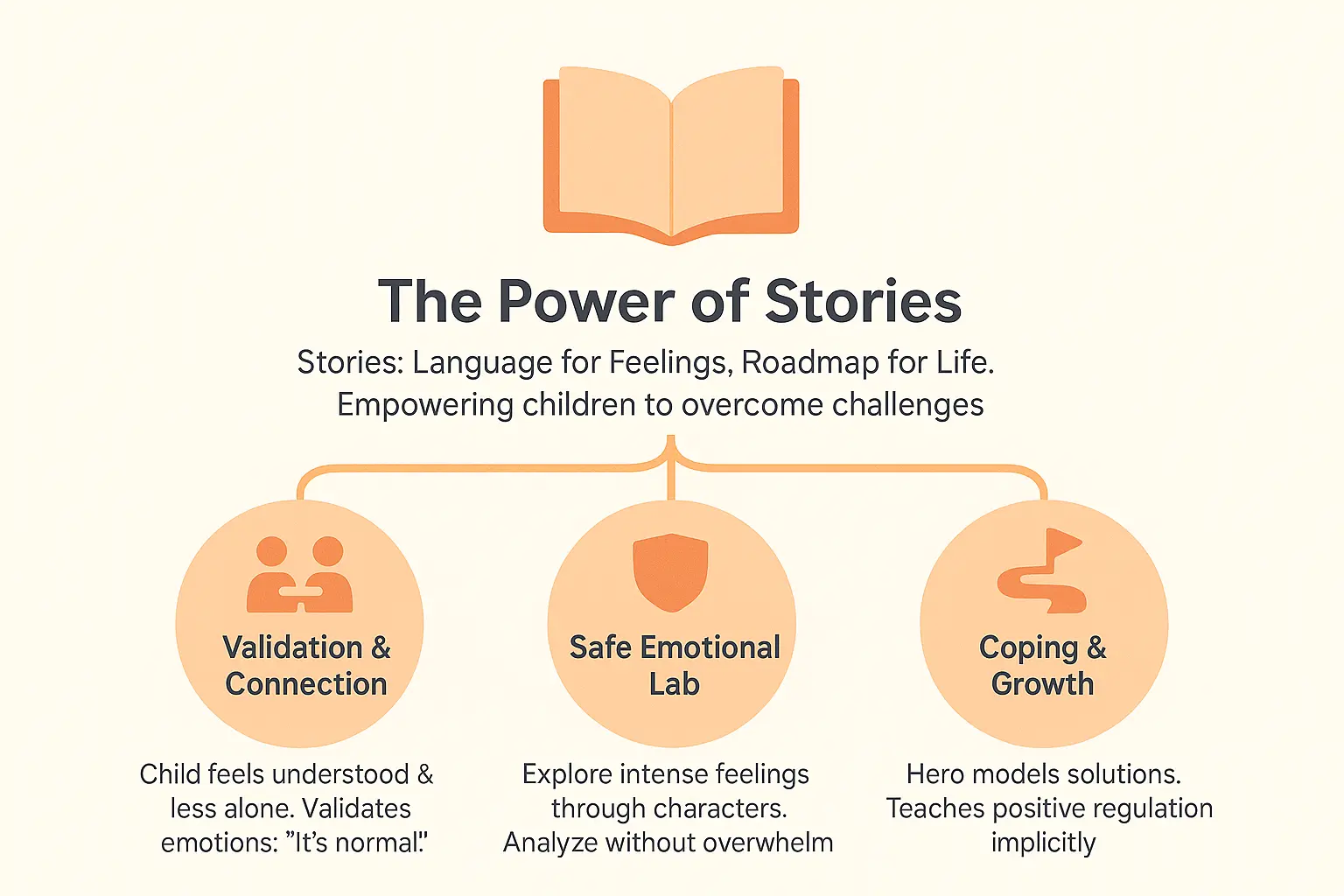
Identification and validation
When a child hears a story about a rabbit nervous on their first day of school, they instantly feel seen. This connection validates their emotions, showing it’s okay to feel scared or unsure. 🐰✨
Personalized stories, like those from Tellmestories, amplify this by making the child the hero. Imagine a 4-year-old named Max reading about “Max and the First Day Adventure” – suddenly, their fear isn’t alone. It’s a universal experience, softened by relatable characters.
A safe space to explore feelings
Stories act like a “feelings lab” where kids explore big emotions without real-life pressure. 🧪💡 For example, a tale about a dragon struggling with anger lets kids observe strategies like counting to ten or asking for a hug – all while staying emotionally detached enough to reflect.
Tellmestories’ multi-format approach (text, audio, or interactive PDFs) offers multiple entry points. A child might listen to an audio story about sadness before bed, creating a comforting ritual while processing their own worries through the narrative.
Learning new coping strategies
“Stories give children a language for their feelings and a roadmap for navigating them. When a character overcomes a challenge, it shows the child that they can, too.”
A story about a mouse overcoming bedtime fears by creating a “bravery cape” teaches problem-solving. 🦸♂️ Parents using Tellmestories can embed these lessons by requesting stories where their child’s character uses techniques like deep breathing or talking to a grown-up – methods the child can mirror in real life.
For specific challenges like separation anxiety, tailored narratives show characters using tools like “worry stones” or goodbye rituals. This models practical solutions while keeping the learning playful – no lectures, just adventures where courage becomes the superpower.
Real-life examples: stories for every emotion
Let’s see this in action! 🎯 Real stories help children navigate complex emotions through relatable adventures. Here’s how personalized narratives transform emotional challenges into growth opportunities. By using Tellmestories’ AI-powered platform, parents create tales where kids become heroes, learning emotional resilience while engaging with narratives that mirror their lives. These stories aren’t just entertainment—they’re tools for building emotional intelligence. 🌱
The story of Leo and the worry monster (anxiety)
Leo, a curious 5-year-old, imagines his worries as a shadowy monster that grows with anxious thoughts. 🧟♂️ Through a voice note sent to a creative way to help children deal with their anxiety, parents generate a tale where Leo shrinks his monster by sharing feelings with his mom. Breathing exercises and drawing fears turn it into a pet—proving worries shrink when faced together. This mirrors pediatricians’ advice like mindful breathing, giving kids control over emotions.
The tale of Chloe and the sharing cloud (jealousy)
Chloe, a 4-year-old with a new baby brother, carries a “gray cloud” of jealousy. ☁️ Sharing her favorite teddy brings sunlight. The story mirrors real-life sibling dynamics, teaching parental love multiplies like stars—never fading, always expanding. 🌟 With Tellmestories’ smart learning memory, the AI remembers Chloe’s favorite themes, evolving stories to reinforce these lessons over time.
The knight who was afraid of the dark (fear)
Young knight Arthur battles nighttime fears until shadows become quiet companions. 🌙 He befriends “nocturnal allies”—the creaking house and whispering wind—to realize darkness holds no monsters, only mysteries. This concept draws from books like Orion and the Dark, reframing darkness as an adventure partner. Parents can use Tellmestories’ professional voice narration to turn tales into audio, making bedtime comforting. Imagine Arthur’s story becoming cozy listening!
- They provide relatable characters and situations, like Leo’s shrinking monster or Chloe’s sunlight breakthrough.
- They model coping strategies like breathing exercises, proven to reduce anxiety.
- They normalize emotions, showing kids they’re not alone—a key factor in emotional development.
- They open doors for parent-child conversations, turning stories into shared learning moments.
For parents, Tellmestories’ voice-to-story feature simplifies creation. Just describe a theme, and the AI handles text to PDFs. 📄 Flexibility ensures stories adapt to new challenges while keeping the experience magical. Whether facing new siblings or first-day jitters, personalized tales make emotions feel manageable. 🌈

Your guide to choosing or creating the right emotional story

| Age Group | Key Emotional Milestones | Ideal Story Elements |
|---|---|---|
| 0-2 Years | Building security, simple emotions (happy, sad) | Repetitive text, sensory details (textures, sounds), simple cause-and-effect plots, reassuring endings |
| 3-5 Years | Big feelings (anger, fear), starting school, sharing, jealousy | Clear problem and solution, characters who name their feelings, simple coping strategies (e.g., “taking a deep breath”) |
| 6-8 Years | Empathy, social conflicts, self-esteem, understanding others’ perspectives | More complex plots, characters with internal thoughts, stories about friendship and moral dilemmas |
Stories resonate differently at different developmental stages. A 2-year-old might need repetitive tales with sensory details, while a 6-year-old benefits from nuanced friendship plots. The table shows how to match stories to your child’s emotional learning journey. Think of it like choosing the right puzzle – too simple and they’ll be bored, too complex and they’ll get lost. At 4, a story about a grumpy dinosaur learning to share mirrors their daily struggles with toys. At 7, a tale about standing up for a friend teaches empathy through relatable school scenarios.
Personalization makes stories stick. Imagine your child solving problems with their plushie or overcoming fears with their bestie. This approach turns abstract lessons into personal adventures. Platforms like Tellmestories let you create these moments through simple voice notes – no tech skills needed, just imagination. When kids recognize their name in a story, it’s like seeing their reflection in a book. Suddenly, “someone gets me!” becomes the emotional takeaway.
“The most powerful story is one where the child is the hero. Personalization makes the lesson stick and emples them to write their own happy ending.”
Need inspiration? Finding stories about a wide range of emotions becomes effortless when co-creating narratives. Whether it’s a bedtime tale about first day nerves or an adventure conquering fears, emotional learning happens through imagination. Try these ideas:
- For preschoolers: Stories where their favorite toy teaches sharing through a jungle adventure (e.g., a teddy bear trading treasures with monkeys)
- For early elementary: Tales navigating classroom friendships with a magical sidekick who whispers “kindness strategies” during tricky moments
- For school-age: Mysteries where solving emotional puzzles unlocks happy endings (like decoding characters’ hidden feelings to win the game)
Remember, the magic happens when stories mirror daily triumphs and worries. A child anxious about thunderstorms might create a story where their stuffed elephant becomes a storm-chasing hero. These aren’t just stories – they’re emotional training wheels for real life. When your little one sees their name in the credits of their own adventure, that’s when stories become superpowers.
From a simple tale to a powerful habit
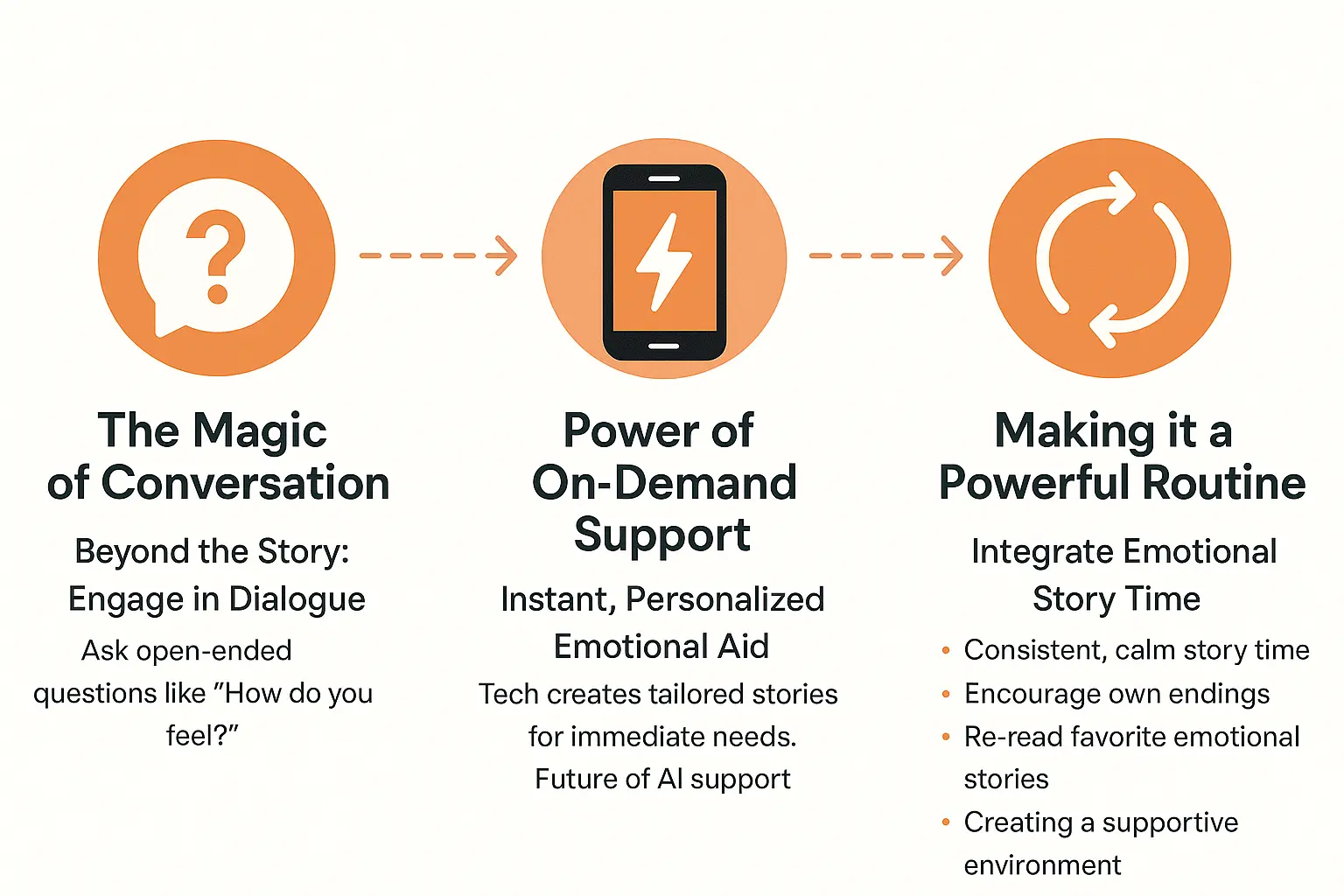
The magic of conversation
Stories are just the beginning. The real impact comes from what happens after. 🧠
Ask open-ended questions to spark reflection. Try these: “How do you think the little bear felt?” or “What would you do if you were in the story?” These questions encourage emotional awareness and critical thinking.
For younger kids, simplify: “Was the character brave?” or “What made you smile in this part?” 🌟
The power of on-demand storytelling
Emotional needs don’t follow a schedule. Sometimes, a child needs comfort right now. This is where tech meets heart. 💡
Modern tools let parents create personalized stories instantly, tailored to their child’s exact situation. Imagine sending a 60-second voice note about a shy little fox, and getting a custom story back in minutes. (Think the future of personalized AI support.)
These stories don’t just distract—they teach. A child afraid of the dark might become a brave explorer who uses a flashlight to save the day. 🌙
Make it a routine
Consistency matters. Set regular moments for emotional stories—not just at bedtime, but after tough days at school or moments of anxiety. 📆
Here’s how to build the habit:
- Set a consistent, calm story time.
- Ask open-ended questions after reading.
- Encourage your child to create their own endings or solutions.
- Re-read favorite emotional support stories when certain feelings pop up.
Like creating a supportive environment, these moments build trust. Over time, your child learns: feelings can be named, shared, and managed. 📅
Need inspiration? Use life moments as triggers. Generate a story where they’re the hero of new adventures. Or re-read a tale about sharing. 🌈
Empowering your child, one story at a-time
Turn your child’s fears into personalized adventures via WhatsApp. 🎨 A voice note like, “Anja’s scared of thunder,” becomes a tale where clouds transform into giant drums. When kids see themselves as heroes, they learn to name fears and build confidence—in minutes. 🌟
Stories validate emotions. Replace When Sophie Gets Angry with your child’s name. Tellmestories’ AI remembers details: “Ellie loves dinosaurs,” “Anja struggles with bedtime.” For anxiety, a storm story becomes a tool to discuss fears. Shy kids thrive in tales where they lead teams. 📚
Choose age-appropriate narratives: Ages 3–4 connect with Little Pot (a teapot’s crack becomes beauty). Older kids relate to Captain Starfish (celebrating introverts). Voice-to-story instantly crafts tales where kids master challenges like potty training. 🎧
Conclusion
Stories build emotional resilience. When struggles mirror tales, kids learn: feelings are okay. Tellmestories’ privacy-first approach prioritizes bonding. Each story weaves life lessons, turning reading into coping tools. 💬
Next time your child faces a storm, real or imagined, whisper: “Let’s turn this into your next story.” 📖✨ You don’t need a psychology degree—just a story where they shine. Start your adventure! 🌟

Stories help children navigate big feelings, proving that emotional resilience starts with understanding. Through shared tales, parents build a stronger parent-child bond while teaching vital coping skills. Remember, the right story is a powerful tool—ready to write your next chapter? ✨
FAQ
What is an example of emotional support?
Emotional support can look like a parent reading a story about a brave knight overcoming fear to help their child face bedtime anxieties 🌟. It might also involve a support animal, like Winnie the cat, who helps her owner navigate anxiety and depression by offering a calming presence. In stories, characters like Leo confronting his “worry monster” teach kids to name and manage big feelings—showing support isn’t just about fixing problems, but sharing the journey! 📚✨
What not to do when offering emotional support?
Avoid minimizing feelings with phrases like “It’s not a big deal” or rushing to fix the problem 🚫. Don’t dominate the conversation or compare their experience to others’. Instead, listen actively and validate: “That sounds tough! Want to talk about it?” For kids, never dismiss their fears—use stories to create a safe space for them to explore emotions without judgment. Time to pause, breathe, and let empathy lead! 💛
What qualifies for emotional support?
Emotional support is for anyone struggling with challenges like anxiety, grief, or loneliness—no “diagnosis” required! 🌱 Kids might need stories to navigate jealousy or fear, while adults might benefit from ESA animals like Gypsy and Jasper, who helped Barbara through depression. Qualifying often involves recognizing when emotions feel overwhelming. A professional’s letter might formalize support needs, but remember: emotional struggles are valid, even if they’re “invisible” to others. 🐾
What does emotional support feel like?
It feels like being truly heard, seen, and safe to express yourself 🫂. For children, it’s the comfort of a story where their feelings are mirrored—like Chloe realizing her “jealousy cloud” doesn’t define her. For adults, it might be the steady purr of a cat like Winnie, silently saying, “You’re not alone.” Whether through tales or animals, support creates calm, reassurance, and the quiet confidence that tomorrow can be better. 🌈
How do you show emotional support to someone?
Start with presence: sit with them, listen without interrupting, and reflect their feelings (“You’re feeling frustrated, huh?”). 🤝 For kids, use stories to model coping strategies—show them how Leo tames his worry monster with deep breaths! For adults, practical help like cooking a meal might speak louder than words. Remember, support isn’t about grand gestures—it’s the small, consistent acts that say, “I’m here for you,” even when the world feels loud. 🧡
What are the 7 types of support?
While needs vary, 7 common types include: 1️⃣ Emotional (comfort and empathy), 2️⃣ Instrumental (practical help), 3️⃣ Informational (advice or resources), 4️⃣ Appraisal (feedback and affirmation), 5️⃣ Social (belonging), 6️⃣ Esteem (confidence-building), and 7️⃣ Network (community connections). For children, stories often blend emotional and appraisal support by validating feelings while teaching strategies. 🧩
How do you provide emotional support to someone who is struggling?
Start by asking, “How can I help?” rather than assuming. 🤲 For kids, use stories to open up conversations: “Have you ever felt like that?” For adults, avoid problem-solving—just listen. Offer tools like a “calm box” for kids or a personalized story about resilience. Remember, support isn’t about fixing—it’s about walking alongside someone. You can also advocate for their needs, like ensuring access to emotional support stories or ESA rights. 🛟️
What are emotional support nuggets?
These are bite-sized, memorable lessons from stories or interactions that offer quick comfort. Think of a character whispering, “Take a breath, you’ve got this!” 🌟 Or a parent saying, “Remember how the knight faced his fear?” These nuggets act as mental anchors during tough moments. For kids, they might be phrases from stories they repeat to themselves. For adults, it could be a mantra learned from a book or a pet’s calming presence. Nuggets stick because they’re simple, personal, and repeated. 🧠💡
Why do people say shh when comforting someone?
Shushing often comes from a place of wanting to calm someone fast 🤫—but it can accidentally dismiss feelings. Instead of “shh,” try validating: “It’s okay to feel this way.” In stories, characters model better approaches: a wise owl might say, “Let’s feel it together,” teaching kids that emotions deserve space, not silence. The goal? Replace shh with tools like storytelling that guide kids toward understanding and managing their feelings. 🗣️✨