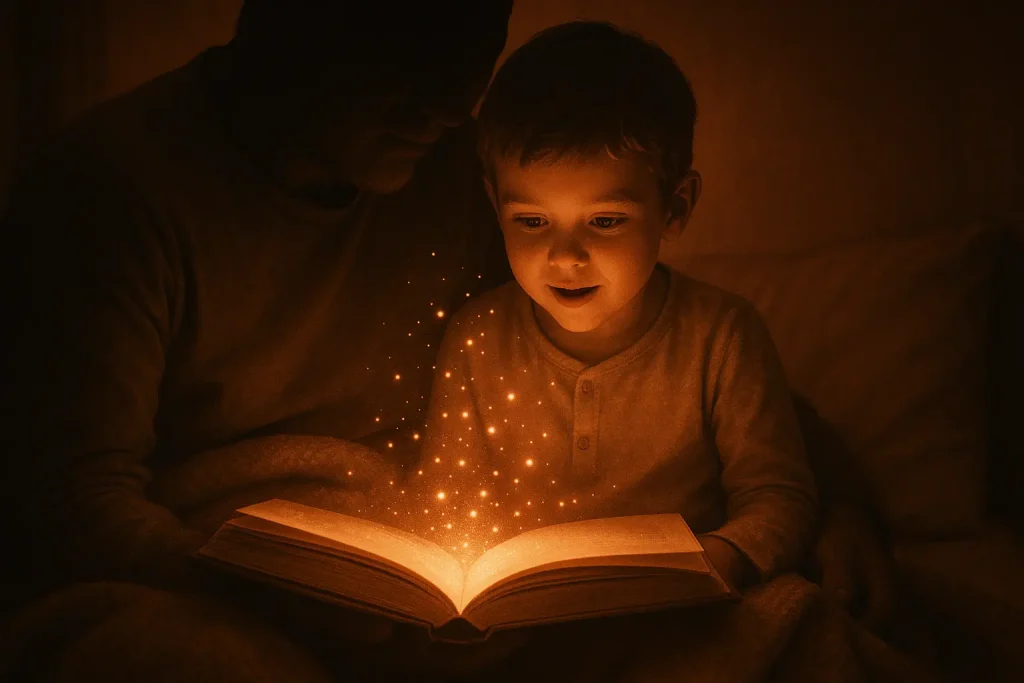
The bottom line is: Fairy tales are powerhouse tools for kids’ development. They boost language skills, teach morals through tales like Cinderella’s kindness, and help children process fears safely. Rooted in 4,000-year-old traditions, they blend ancient wisdom with modern twists (like Disney), sparking curiosity and empathy. More than bedtime stories, they’re brain-boosting cultural adventures.
Ever feel stuck in a bedtime story rut, scrolling endlessly for something both fairy tales for kids and actually meaningful? 🤔 Here’s the deal: these stories aren’t just magic-filled distractions—they’re secret weapons for growing brains! From sparking wild imagination (dragons, enchanted forests 🐉) to sneaking in life lessons about courage (Three Little Pigs = perseverance pros!) and kindness (Cinderella’s resilience), they’re a win for parents and kids. Plus, they’re a sneaky way to bond, tackle fears (even the Big Bad Wolf!), and create lasting memories. Ready to unlock the hidden superpowers of classic bedtime stories? 🌟
Why fairy tales for kids are more than just bedtime stories
Ever caught yourself smiling at memories of your child’s wide eyes asking, “Then what happened?” 🤔 Fairy tales aren’t just about castles and curses—they’re mental superfoods for your little one’s brain! 🧠✨ These stories stand the test of time, and their magic goes way beyond “happily ever after.” Let’s unpack why these tales are game-changers for families today.
What exactly makes a story a “fairy tale”?
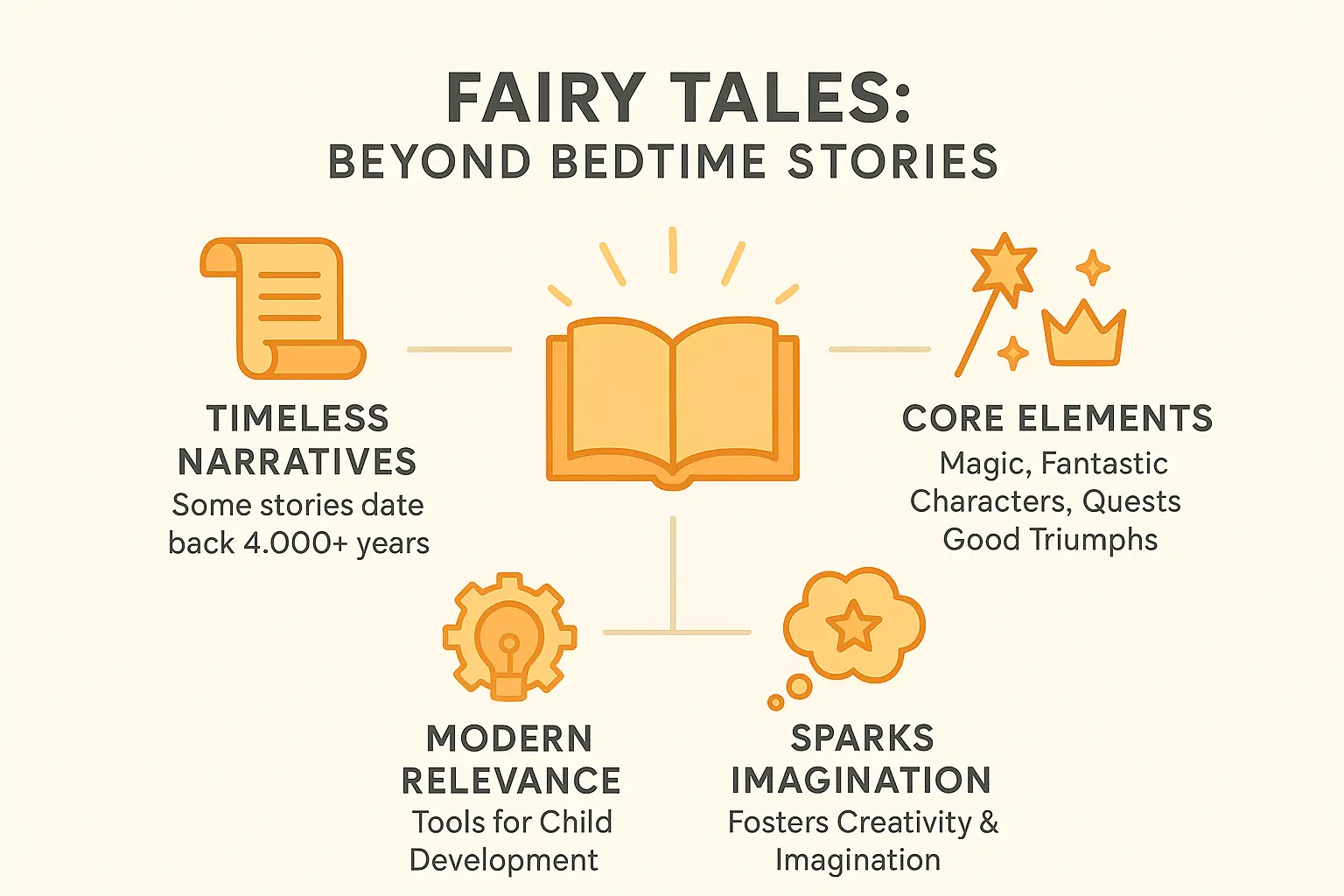
Imagine a story where good always wins, magic fixes problems, and talking animals drop wisdom. That’s the fairy tale vibe! 🌟 From The Ugly Duckling learning self-acceptance to The Three Little Pigs outsmarting a wolf, these stories blend clear heroes, villains, and life hacks. Oh, and they’re ancient! Some, like Jack and the Beanstalk, date back 5,000 years, as HowStuffWorks explains. They’ve been passed down through whispers and scrolls—no TikTok needed! 📜
More than just magic: their role in today’s world
In our screen-filled world, fairy tales still rule. Why? They’re secret language boosters! Kids learn words like “courage” while laughing at Goldilocks’s porridge tasting or “giant” when Jack climbs his beanstalk. Lessons? Huge. Little Red Riding Hood = stranger danger 101. The Ugly Duckling = embracing uniqueness. 🦆
They’re family glue too! Picture voice-acting the wolf in The Wolf and the Seven Little Kids, or debating Rapunzel’s hair adventures. When The Selfish Giant softens up, it’s a safe way for kids to explore feelings like loneliness or joy—no real-life drama needed. 💖
Bottom line? These stories are tiny classrooms wrapped in dragons and spells. Whether building vocabulary, teaching ethics, or snuggling up for storytime, fairy tales are OGs at making kids smarter, kinder, and ready for dreamland. 🌙
The amazing benefits of fairy tales for your child’s development
Boosting language and sparking imagination
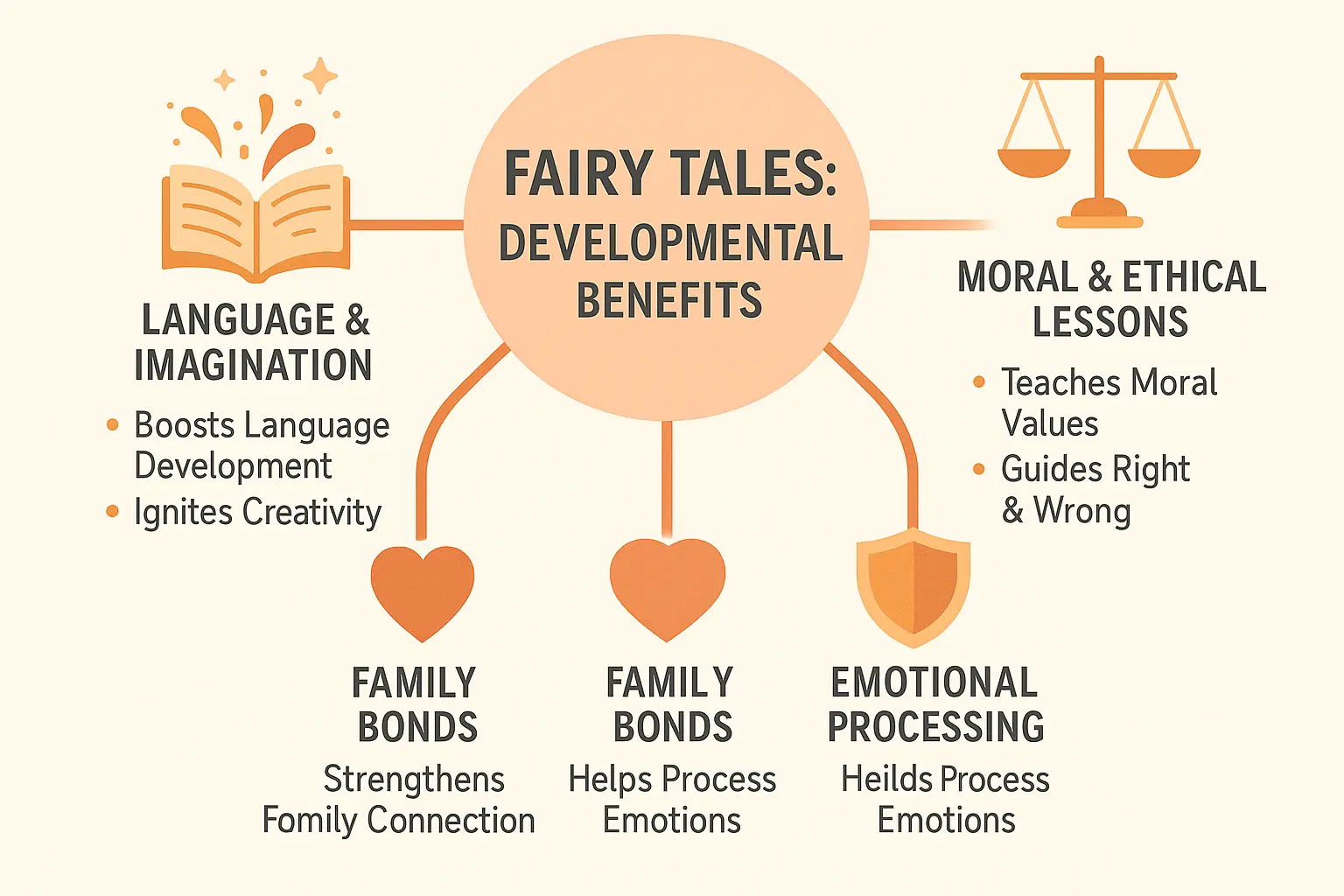
Ever wondered how “Once upon a time” opens such big doors? Fairy tales expose kids to rich vocabulary while keeping language simple. When you read “The Three Little Pigs” or “Cinderella,” your child hears complex sentence structures wrapped in magical adventures. This dual benefit helps them absorb new words naturally while building foundational literacy skills.
As children listen to stories filled with talking animals and enchanted forests, their brains light up with creative possibilities. This isn’t just daydreaming – research shows that exploring worlds filled with magic and wonder strengthens neural pathways for imaginative thinking. Pretty cool for a bedtime story, right?
Teaching life lessons and moral values
“Fairy tales are more than just stories; they are like a gentle compass, offering kids their first lessons in navigating the complexities of right and wrong.”
Take “The Three Little Pigs” – those little pigs teach perseverance. Cendrillon shows kindness under pressure. These aren’t random plot points – they’re life lessons wrapped in fur and fairy dust! The beauty? Kids absorb these values without feeling lectured. When your little one roots for the kind character who wins in the end, they’re building their own moral compass.
Modern storytelling platforms like Tellmestories take this further by letting parents create personalized tales that reinforce specific values. Want to highlight bravery? Make your child the hero who overcomes challenges through courage. It’s like custom-tailored life lessons!
Strengthening family bonds through storytelling
That 7-minute “Little Red Riding Hood” read isn’t just about wolves and grandmas. It’s your special time to connect. Here’s what makes these moments magical:
- It creates a predictable and calming bedtime routine
- It opens up opportunities for conversations about the story’s themes
- It provides a screen-free moment of focused family time
- It builds a shared library of stories and memories between you and your child
Think of it as digital detox with a purpose. No phones, no distractions – just your voice and their imagination. With services like Tellmestories, you can even record your own voice notes to create personalized bedtime stories. Imagine your child falling asleep hearing your voice, even when you’re away!
Helping kids process emotions and fears
Scary wolf in “Little Red Riding Hood”? Creepy witch in “Hansel and Gretel”? Surprisingly, these characters serve a purpose. According to psychologists, these elements help children develop emotional resilience. When they see characters overcoming fears, it teaches them: “Hey, I can handle my own monsters too!”
The predictable story structure – problem, struggle, happy ending – gives kids a safe framework to explore complex feelings. That’s why services like Tellmestories include educational stories about potty training or starting school. They transform real-life anxieties into digestible narratives, giving kids tools to process their world.
A journey through the most beloved classic fairy tales
Your guide to timeless tales
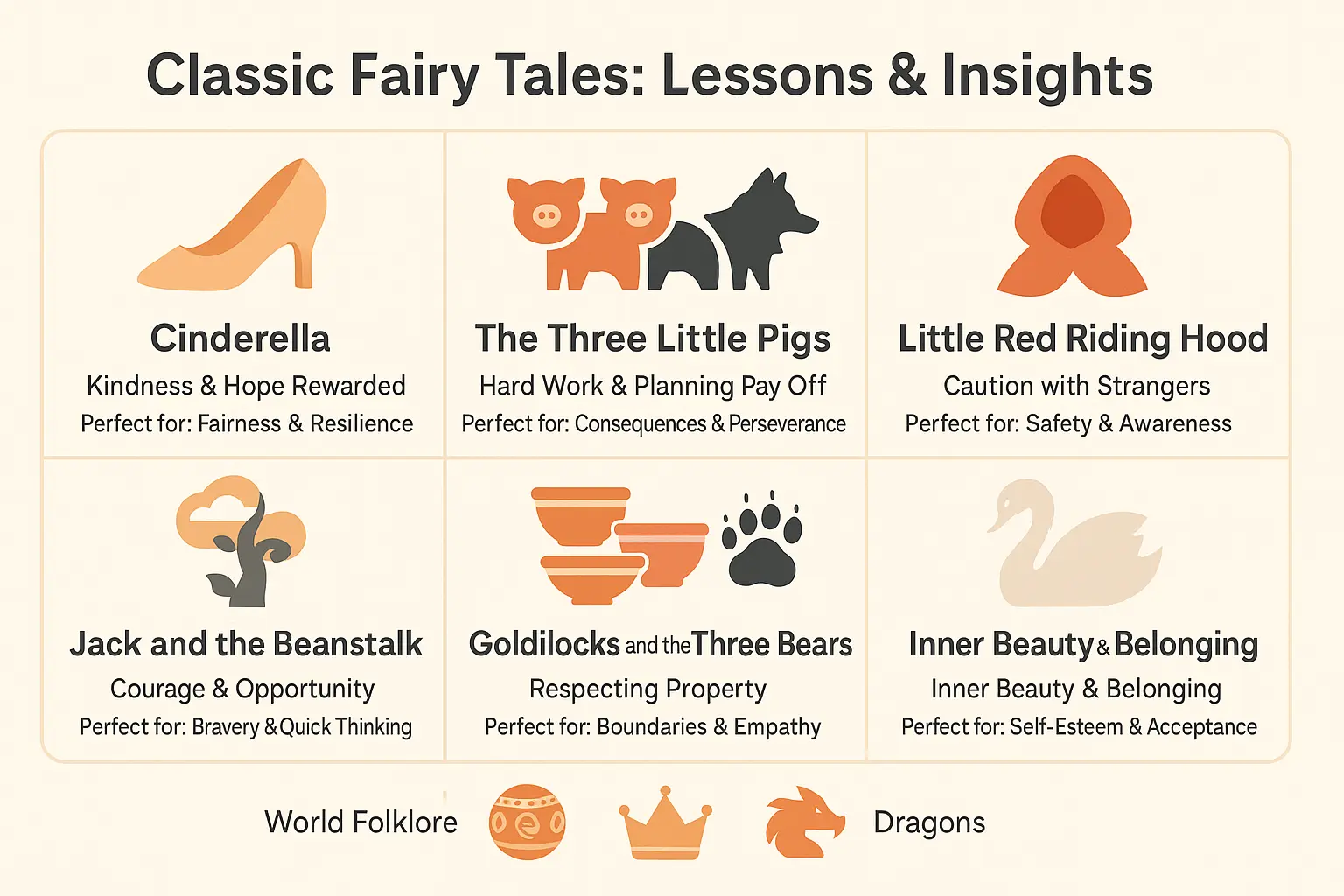
Ready to rediscover some classics? These stories have shaped childhoods for generations. Think of them as your cheat code for bedtime routines! 😉 Whether you’re after tales that teach resilience or spark imagination, this list has you covered.
| Fairy Tale | Main Characters | The Core Lesson | Perfect for… |
|---|---|---|---|
| Cinderella | Cinderella, the Stepmother, the Prince | Kindness and hope are rewarded. | Learning about fairness and resilience. |
| The Three Little Pigs | The three pigs, the Big Bad Wolf | Hard work and planning pay off. | Understanding consequences and perseverance. |
| Little Red Riding Hood | Little Red, the Grandmother, the Wolf | Be cautious with strangers and listen to your parents. | A first lesson in safety and awareness. |
| Jack and the Beanstalk | Jack, the Giant | Courage and taking opportunities can lead to great things. | Encouraging bravery and quick thinking. |
| Goldilocks and the Three Bears | Goldilocks, the Bear Family | Respecting others’ property and privacy. | Teaching about boundaries and empathy. |
| The Ugly Duckling | The little duckling | True beauty comes from within, and belonging takes time. | Building self-esteem and acceptance. |
These tales are just the tip of the iceberg! Want more timeless princess stories or epic tales with brave knights and dragons? The world of storytelling is endless 🌟 Use these classics as conversation starters! Ask, “What would you do if you met the Big Bad Wolf?” to boost critical thinking and creativity.
Beyond the classics: exploring world folklore
Fairy tales aren’t just European! From the Middle East to Asia, every culture has magical stories. Exploring how to introduce kids to a variety of cultures through folktales is like opening a window to the world 🌍
Think of these tales as cultural treasure chests! Whether it’s a West African trickster tale or a Japanese forest spirit legend, each story offers unique perspectives. The beauty? Shared themes—kindness, courage—while celebrating diversity. Realizing how shared human values cross borders? That’s storytelling gold.
Why stop at Cinderella’s ball or Jack’s beanstalk? Try the Inuit “The Two Sisters” or India’s “The Lion Who Shared His Food.” These stories turn bedtime into a passport-stamping adventure. They’re perfect for questions like, “Do kids in Japan love dragons?” Talk about family interaction made easy!
Repeating tales like “The Ugly Duckling” creates emotional comfort through ritual. Discussing choices (“Was stealing from the Giant right?”) subtly builds moral compasses. It’s storytelling with life skills—no extra words needed 🌟
From Grimm brothers to Disney movies: the evolution of fairy tales
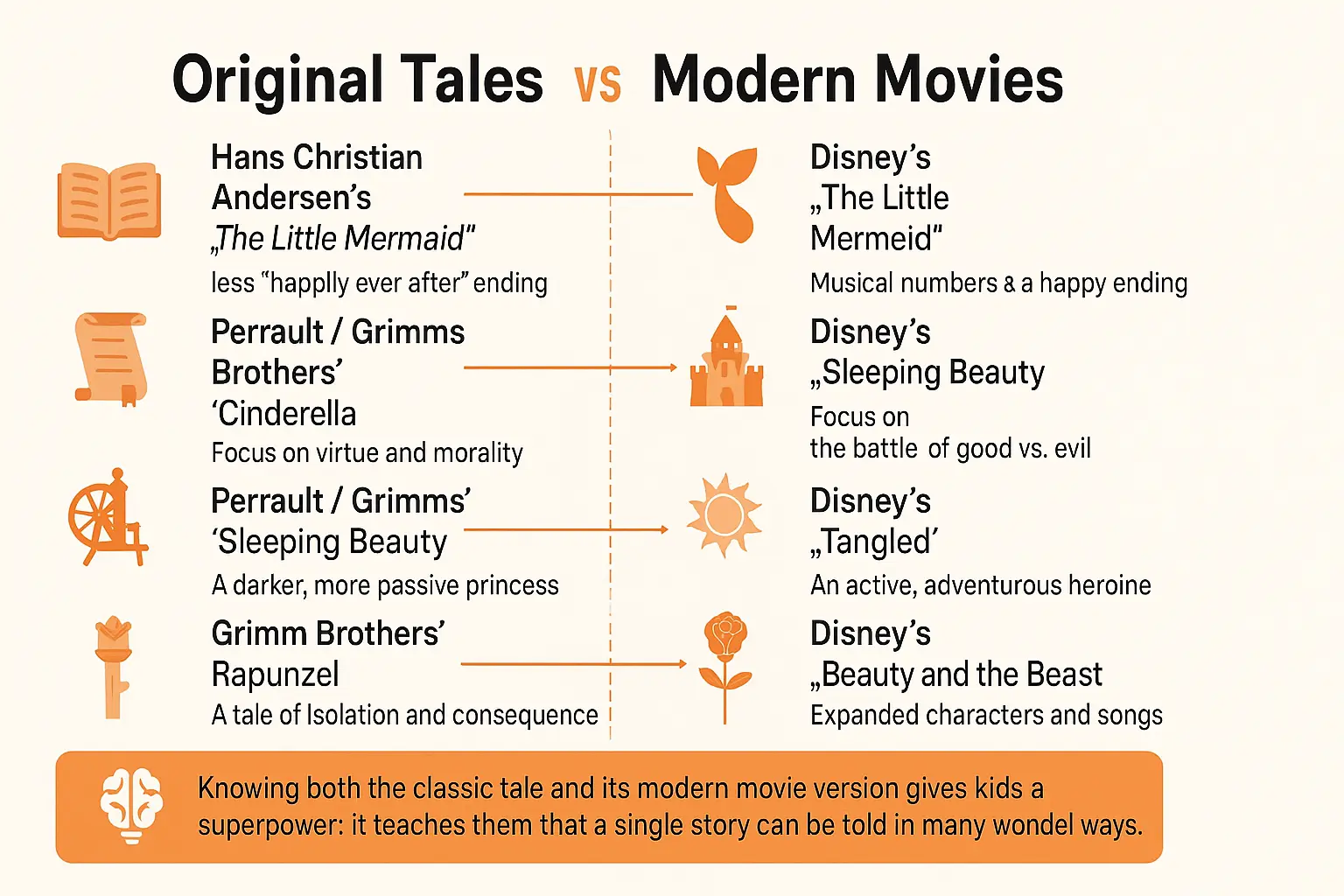
The original stories behind your kid’s favorite movies
Ever wondered where Disney got ideas for The Little Mermaid or Cinderella? Spoiler alert: they’re remixes of ancient tales! 🎬 Let’s dive into the OG versions that’ll make you say “Wait, what?!”
- The Little Mermaid: Andersen’s original? Super sad! She turns into sea foam after losing her prince. Disney gave her a happy ending with Ariel keeping her voice and the guy. 🐚
- Cinderella: The Grimm version, “Ashenputtel,” has stepsisters chopping off toes to fit the slipper. Disney kept the glass shoe but swapped bloodshed for sparkles. ✨
- Sleeping Beauty: Perrault’s 1697 tale? A king rapes the sleeping princess. Disney’s Aurora? Just a nap interrupted by a kiss. 🌹
- Rapunzel (Tangled): The Grimm story ends with her hair chopped off after getting preggo and exiled. Disney’s version? A road trip with Flynn and a happy reunion. 🏰
- Beauty and the Beast: The 1756 French tale has Belle’s sisters scheming to kill the Beast. Disney made them just plain jealous. 🐾
Why it’s cool to know both versions
Kids learning both versions? Total win! It’s like a storytelling superpower: they spot how stories evolve while keeping their core. 🧠
“Knowing both the classic tale and its modern movie version gives kids a superpower: it teaches them that a single story can be told in many wonderful ways.”
Try this at home: watch the Disney flick, read the OG story, then chat about the differences! It’s a brain workout for critical thinking and creativity. Ever tried asking, “Why did Disney change the ending?” or “Would you rewrite it differently?” 💬
Pro tip: Use Tellmestories to create personalized fairy tales via WhatsApp! 📱 Let your kids become the hero of their own adventure while learning how stories adapt across generations. (No glass slippers or sea foam required.)
Making Fairy Tales A Magical Part Of Your Family Life
Feeling inspired to bring more fairy tales into your home? Let’s turn storytime into a cherished ritual everyone looks forward to. Here’s how to make it special while nurturing language skills, family bonds, and those all-important bedtime giggles.
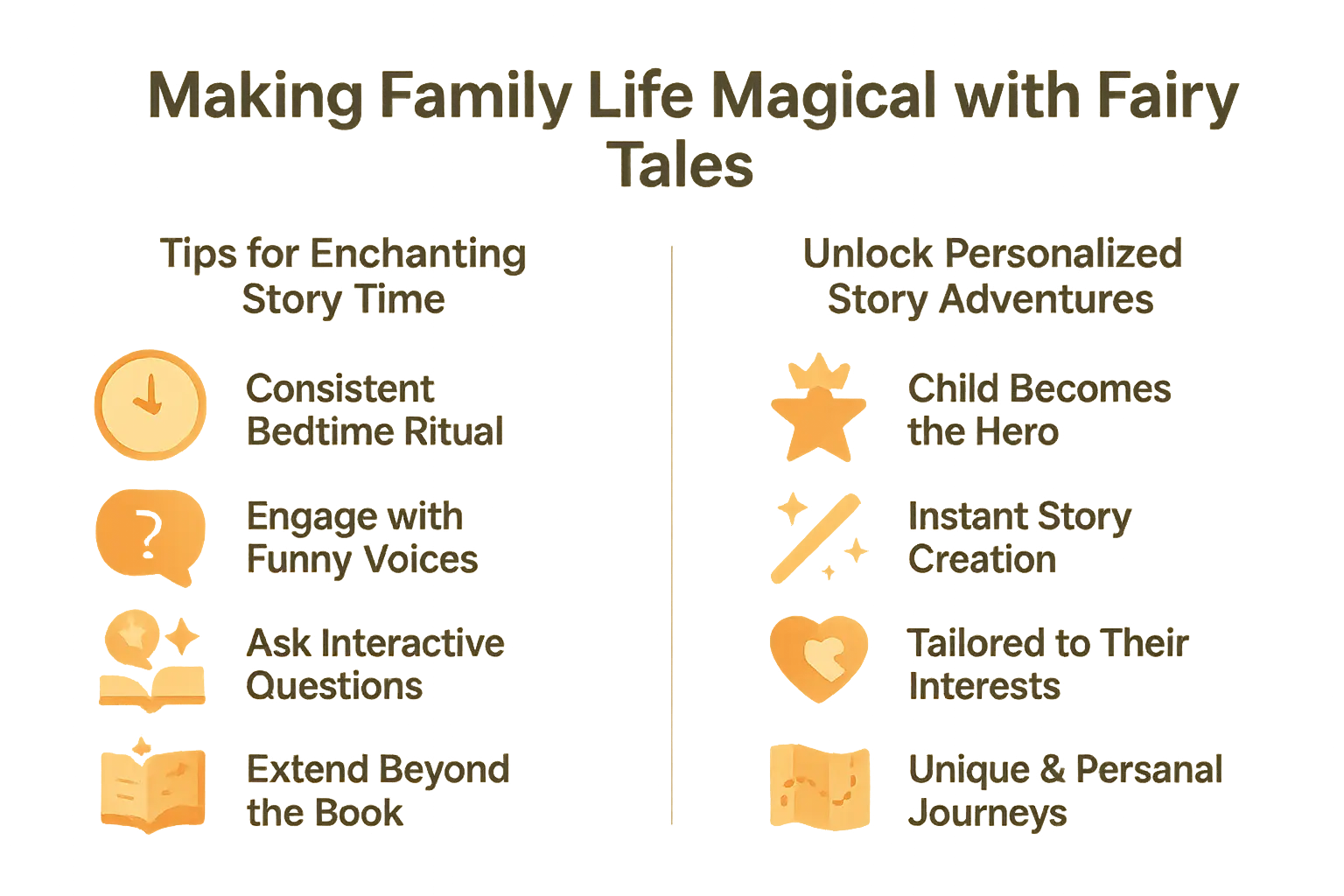
Tips For A Magical Story Time Ritual
- Set a consistent time: Bedtime works great! A predictable routine helps kids unwind and gives them something joyful to anticipate.
- Use funny voices: Try squeaky mouse or booming giant voices. Kids love the silly sounds that make stories come alive!
- Ask questions: Pause and ask, “What happens next?” or “Why do you think the character did that?” This sparks creativity and keeps minds engaged.
- Go beyond the book: Act out scenes with costumes, draw characters, or build a castle with cardboard boxes. Hands-on play turns stories into adventures they’ll act out all week!
What If Your Child Becomes The Hero?
Here’s a wild idea—what if your child became the main character? Imagine their eyes lighting up when they see their name in the story. Research shows kids who star in stories are 40% more likely to remember new words and three years ahead in reading by age 14. Pretty cool, right?
When kids become heroes, they build confidence and empathy. They learn to solve problems, which helps tackle real-life challenges. Stories about potty training or starting school make tricky topics feel like fun adventures. Plus, seeing themselves as the hero reinforces their unique strengths!
Technology makes this easy. Just send a voice note to create tales where your child’s interests shape the adventure. Busy parents love how this blends tradition with modern convenience. It’s like magic—but better.
Fairy tales aren’t just stories—they’re magic keys to imagination, courage, and connection. By sharing these tales, you’re giving your child timeless lessons, sparking curiosity, and building moments they’ll carry forever. Whether it’s a classic or a new adventure, every bedtime can be a journey. Ready to start? The magic is in the stories you share. 🌟
FAQ
Which 10 fairy tales should every kid know? 🌟
Alright, let’s dive into the top 10 classics that shaped storytelling! First up: Cinderella (with its glass slipper magic and lessons about kindness), The Three Little Pigs (a masterclass in hard work), and Little Red Riding Hood (stranger danger 101). Then we’ve got Jack and the Beanstalk for bravery, Goldilocks and the Three Bears teaching boundaries, and The Ugly Duckling about self-acceptance. Beauty and the Beast is all about seeing beyond appearances, Rapunzel shows clever problem-solving, Sleeping Beauty mixes magic and patience, and The Little Mermaid reminds us that not every story ends with “happily ever after.” These aren’t just stories—they’re life coaches in disguise! 😉
What’s the ultimate fairy tale BFF? 🏆
Hands down, Cinderella takes the crown! This rags-to-riches tale has everything: fairy godmothers, magical transformations, and that iconic shoe moment. Why’s it so popular? Well, who doesn’t love seeing good triumph over evil? Plus, Disney gave it that extra sparkle with their 1950 classic. But here’s the cool part: versions of this story pop up in over 500 different cultures! From China’s Yeh-Shen to Egypt’s Rodhin, this tale’s been around since ancient times. It’s basically the OG “girl power” story! 🤙
Best bedtime stories for cozy cuddles? 🌙
For those sleepy-time snuggle sessions, go for gentle adventures! The Ugly Duckling is perfect for teaching self-love without the scary bits. The Little Red Riding Hood works great if you emphasize the “listen to your parents” message over the wolf’s scariness. Goldilocks and the Three Bears is a fun game of “just right” porridge and beds. The Three Billy Goats Gruff gives a playful “problem-solving” vibe. And The Emperor’s New Clothes? It’s a hilarious lesson about honesty with zero nightmare fuel. Pro tip: Pair these with soft voices and extra blanket tucks for maximum dreamland effect! 🌟
Kids’ favorite story that’s basically a cultural icon? 🎬
Let me tell you—it’s Cinderella again! This story’s got more sequels than a Disney franchise. Why? Because it’s the ultimate “anyone can be a princess” fantasy! From rags to riches, magical transformations, and that iconic shoe fitting—kids eat this stuff up. Plus, it’s not just a fairy tale—it’s a multi-cultural phenomenon! Did you know? In Japan they’ve got Hanasaka Jiisan (The Flower-Speaking Elder), and in China, there’s Koholintzin? It’s basically the universal language of hope and happy endings. 🌈
What life hacks do fairy tales teach our mini-humans? 🧠
Oh, where do I start? These stories are like stealthy life coaches! Let’s break it down: Three Little Pigs = hard work pays off. Jack and the Beanstalk = courage + curiosity = epic adventures. Little Red Riding Hood = always talk to your parents before accepting snacks from wolves (obvi). The Ugly Duckling = self-love > perfection. And Cinderella? It’s not about waiting for a prince—it’s about staying kind even when life’s being a beast. The secret sauce? These lessons stick better than candy on little fingers because they’re wrapped in magic and adventure! 📚
What’s the OG fairy tale that started it all? ⏳
Hold up—this might surprise you! The oldest known fairy tale is “The Tale of the Two Brothers” from ancient Egypt (like 3,100 years old!). But here’s the twist: some scholars think “Beauty and the Beast” and “Rumpelstiltskin” are around 4,000 years old! 🤯 These stories started as verbal traditions before getting written down. Imagine sitting around a fire in 2000 BCE hearing about cursed rings and magical creatures! And guess what? These ancient tales? They’re not that different from today’s—still teaching lessons about greed, love, and making good choices. Talk about timeless wisdom!
Which fairy tale makes you go “awwwww”? 💖
Let’s talk “The Ugly Duckling”! This one hits different because it’s pure emotional rollercoaster with a heartwarming finish. Picture this: a little duckling gets made fun of for looking different, but guess what? It turns out to be a majestic swan! The best part? It’s not just about looks—it’s about discovering your true self. Kids connect with feeling “different,” and adults get all teary-eyed remembering their awkward phase. And here’s the cool twist: Hans Christian Andersen wrote it based on his own life! Talk about writing your story. 🖤🤍
Are Disney movies just fairy tale remixes? 🎬
Oh, you betcha! Disney’s basically the ultimate fairy tale DJ. Let me break it down: Cinderella? Straight from Perrault/Grimm Brothers. Beauty and the Beast? Originally a French story from 1740! Snow White = Grimm’s darkest fairy tale turned into a musical. Rapunzel? Disney’s Tangled is just a spicier version of the original where Rapunzel gets preggers by the prince! And here’s the kicker: Disney didn’t invent these—they just made them family-friendly. The OG versions had way more blood, less singing, and way harsher punishments. Like in original Cinderella, those evil stepsisters chopped off toes to fit the slipper! 😱
What’s that mysterious 13th fairy tale? 🧙
Ooooh, now you’re getting into fairy tale trivia! The “13th fairy” actually comes from Sleeping Beauty’s original version by Charles Perrault. Here’s the drama: 12 good fairies are invited to the royal baby shower, but the 13th isn’t on the guest list. Big mistake! She crashes the party and curses the baby to die by a spinning wheel. (Yikes!) Later versions softened it to a 100-year nap. The 13th fairy’s like the OG uninvited drama queen! 🥂 This story element got reused in Disney’s Maleficent too. Moral of the story? Always double-check that guest list, folks. It might save you a century-long nap!