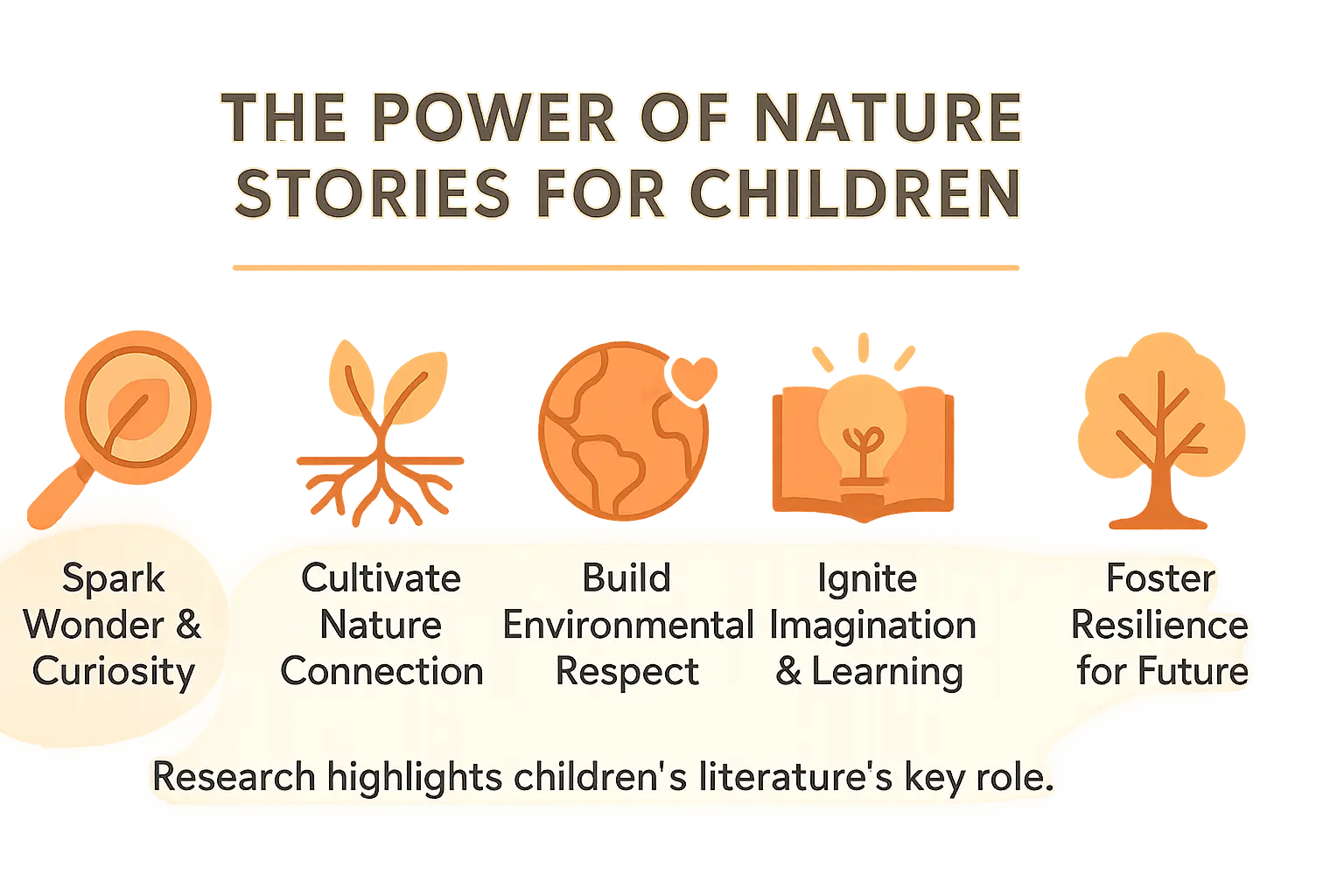
The key takeaway: Nature stories for kids are more than bedtime tales—they foster curiosity, empathy, and a lifelong connection with nature. By blending real science (life cycles, ecosystems) with relatable characters, they enhance learning and environmental awareness. Research shows they reveal nature’s resilience and beauty, shaping ecosystem appreciation. A single story ignites lasting love for Earth, bridging imagination and real-world action. 🌍
Ever wondered why your child can’t stop asking about birds, bugs, or the next thunderstorm? 🌧️ nature stories for kids are more than bedtime tales—they’re magic portals to curiosity, empathy, and a lifelong connection with the natural world. In this guide, we’ll show you how these stories turn leafy adventures into learning moments, making topics like seasons, environmental awareness, and even fungi (yes, mushrooms!) unforgettable. Pair reading with hands-on activities like themed nature walks or crafting with leaves to bridge the gap between pages and puddles 🌿. From choosing age-perfect tales to sparking real-world explorations, you’ll discover how storytelling plants seeds of wonder—and environmental consciousness—that grow forever. 🌱
Why every child needs a nature story 📖
Ever watched a child’s eyes light up spotting a ladybug? 🌿 That wonder is exactly what nature stories for kids capture. They turn casual discoveries—like collecting leaves or spotting insects—into lasting curiosity. Imagine stories that transform ordinary moments into lifelong passions. 🌟
These tales are more than bedtime rituals. They build connection with the natural world, teaching kids to see trees as living beings and bugs as ecological heroes. Through narratives, we nurture environmental awareness early. Stories like “Little Dandelion Seeds the World” blend science and imagination, making concepts like seed dispersal feel magical. Others, like “Grow”, simplify gardening basics while celebrating plant life cycles.
Research shows that children’s literature shapes eco-friendly mindsets. Stories boost creativity, teach resilience, and help kids grasp climate change gently. Take “Why do we need bees?”—it explains pollination without overwhelming young minds. Books like “The Rescuer of Tiny Creatures” reframe insects as allies, not pests. These narratives don’t just inform—they inspire action, nudging kids toward recycling or planting gardens. 🌍
What are nature stories, really?
They’re any tales where nature takes center stage—realistic forest walks, ocean adventures, or even poems about rain. The magic? Making the natural world feel alive. 🌸 Whether it’s a lyrical dive into fungi ecosystems or a guide to bird songs, these stories bridge imagination and reality. They’re not just books—they’re windows into a world where kids realize they’re part of something bigger. 🌱
The secret ingredients of a captivating nature story
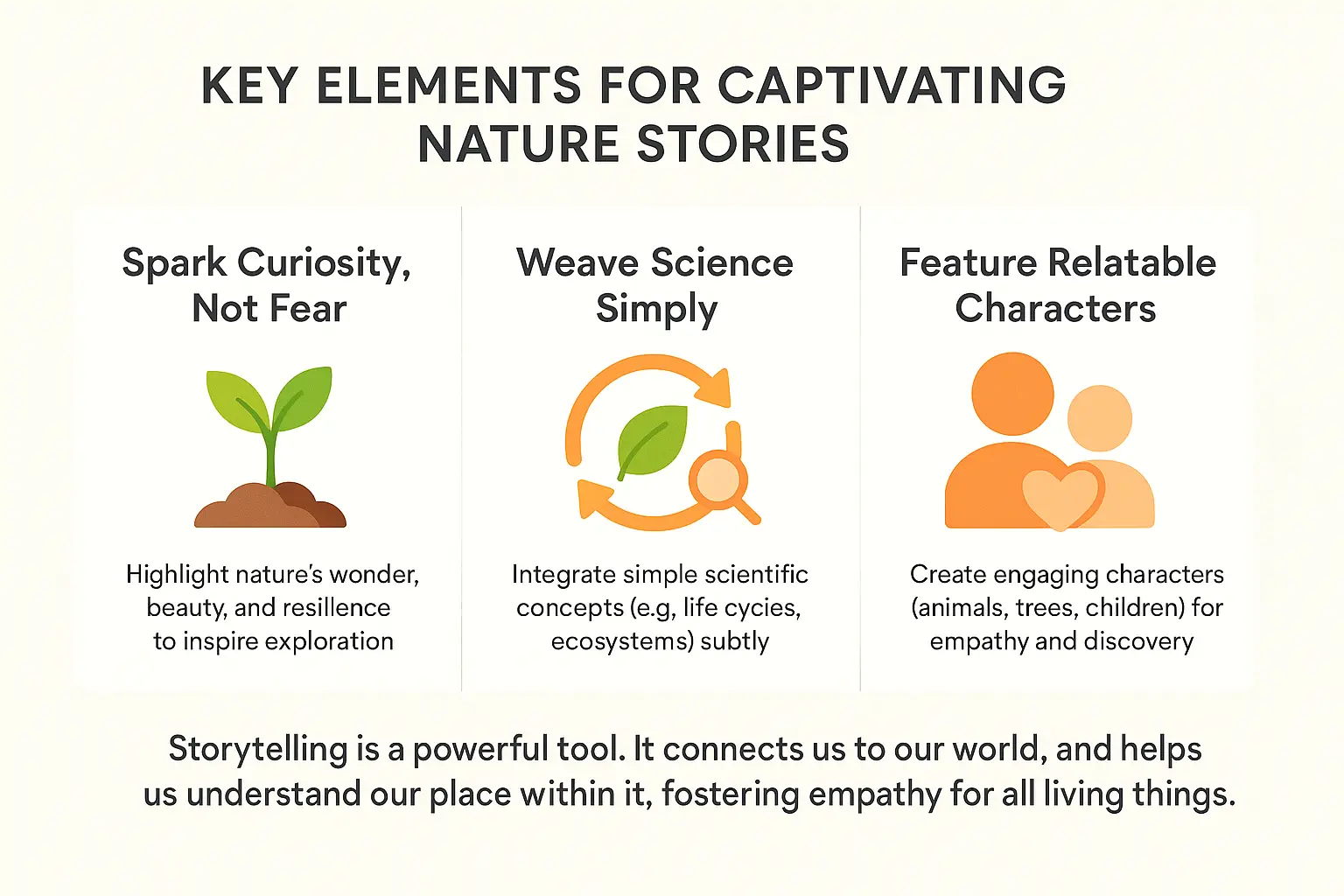
It sparks curiosity, not fear
Great nature stories for kids turn ordinary moments into extraordinary discoveries. Imagine a child watching a seed sprout through concrete—this tiny act of resilience becomes a metaphor for perseverance. Books like Slow down and The Rescuer of Tiny Creatures show how curiosity beats fear. Instead of scary climate facts, focus on the wonder of a frog’s metamorphosis or the hidden world under a rock. 🌱
When crafting tales, highlight nature’s magic: the way moss clings to stones or how birds adapt to seasons. Let kids feel like explorers, not saviors. Stories should whisper, “Look closer—there’s a whole universe here.”
It weaves in real-world science simply
Science sneaks into stories through everyday adventures. A tale about a squirrel preparing for winter becomes a lesson in food chains. A bedtime story about stars? Suddenly, astronomy feels like a lullaby. Use the educational science stories approach: let kids absorb facts as they follow a bee’s pollen journey or a tadpole’s growth.
Think small, not lectures. When a character plants seeds, show roots spreading underground. When they chase fireflies, explain bioluminescence through their awe. This method mirrors the Backpack Explorer series, where kids spot patterns in leaf veins or track animal footprints without realizing they’re learning biology.
It features characters we can root for
Storytelling is a powerful tool. It connects us to our world, and helps us understand our place within it, fostering empathy for all living things.
Storytelling is a powerful tool. It connects us to our world, and helps us understand our place within it, fostering empathy for all living things.
Children need heroes who reflect their own experiences. Maybe the main character is a shy kid who befriends a tree, or a stubborn penguin chick learning to swim. The Little Dandelion Seeds the World uses repetition to show how plants colonize new spaces—turning science into a relatable journey.
Personalization matters. With platforms like Tellmestories, kids become the protagonist—climbing trees with owls or solving mysteries with ants. The result? A child who sees themselves as part of nature’s grand story, not just a passive listener.
Finding the perfect tale: nature stories by age group
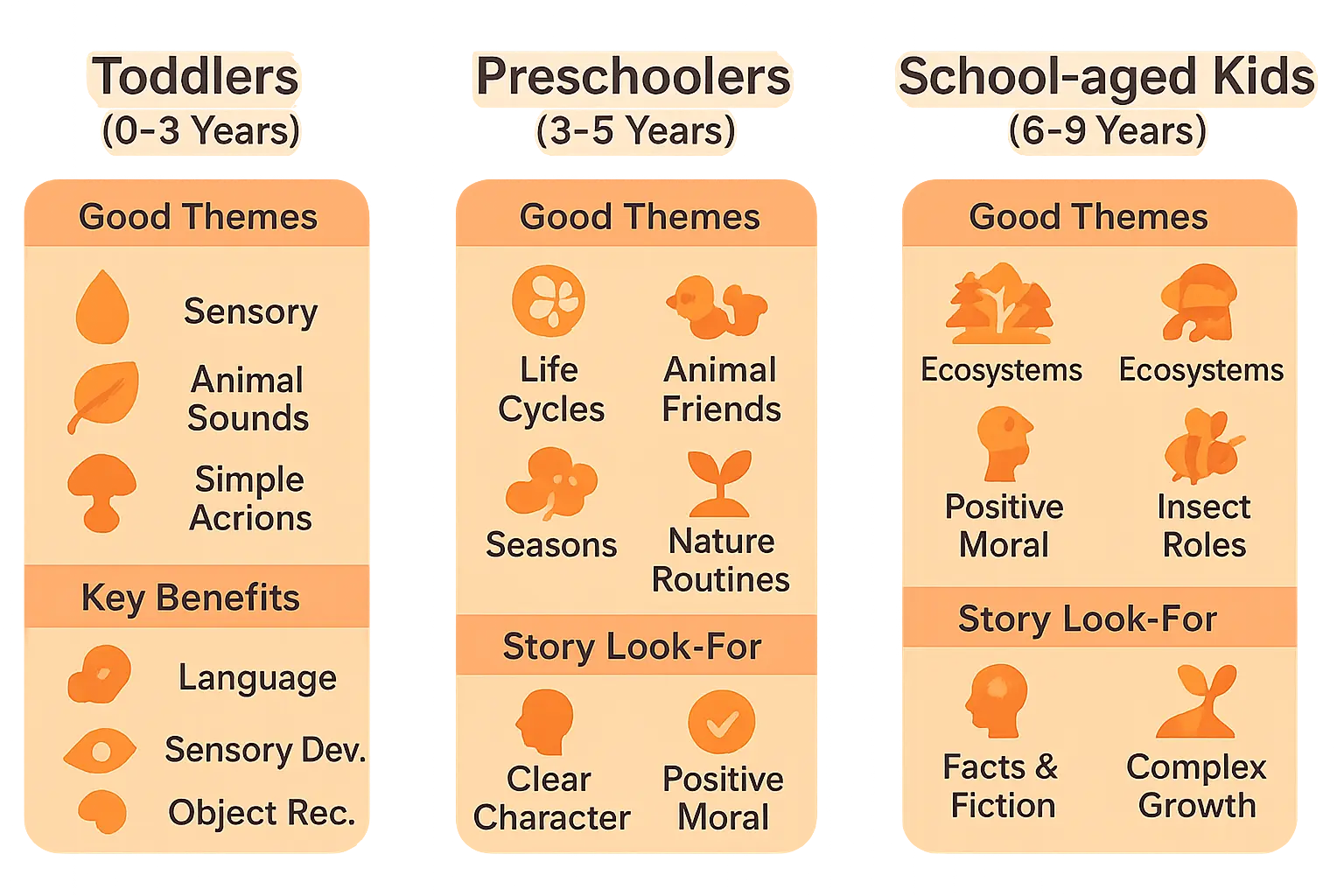
Just like shoes need the perfect fit, stories should match your child’s developmental stage 🌟 Toddlers, preschoolers, and school-aged kids each engage with nature tales differently. Let’s explore what makes stories truly magical for every age!
| Age Group | Good Themes & Concepts | Key Developmental Benefits | Example Story Ideas |
|---|---|---|---|
| Toddlers (0-3 years) | Sensory experiences (rain sounds, leaf textures), animal noises, simple actions (growing, flying) | Language acquisition, sensory development, object recognition | A baby bird learning to sing, a raindrop’s journey to the soil |
| Preschoolers (3-5 years) | Life cycles (caterpillar to butterfly), animal friendships, seasonal changes | Cause-effect understanding, empathy development, routine learning | Grumpy bear sharing berries, a seed’s search for the perfect growing spot |
| School-aged Kids (6-9 years) | Simple ecosystems (forest floor, coral reefs), animal migration, insect roles | Systems thinking, problem-solving, environmental awareness | Salmon’s upstream adventure, garden bee mystery investigation |
For the youngest explorers 🍼, rhythm and repetition work magic! Toddlers thrive on predictable patterns that help them anticipate what comes next. Think “The Very Hungry Caterpillar” – its simple repetition teaches days of the week while exploring metamorphosis 🐛→🦋.
Older children crave real-world connections 🧠 School-aged readers love stories where characters solve environmental mysteries. Imagine discovering why frogs vanish from a pond or tracking a turtle’s migration path across oceans. These tales build critical thinking without sacrificing wonder.
- What to look for in a toddler story: Bright, clear illustrations; simple, repetitive text; tactile elements or sounds
- What to look for in a preschooler story: Clear main character with simple problem; positive moral; opportunities to ask “what happens next?”
- What to look for in a school-aged child story: Fun facts mixed with fiction; complex plot with challenges; characters showing growth
Want to supercharge learning? Combine stories with hands-on activities! Read about bees then create a pollinator garden. Explore “A Seed Grows” then plant beans in jars to watch sprout 🌱 This “read-do” approach sticks in young minds.
Need inspiration? Many books bring these principles to life without screen time. From Whalefall for ocean lovers to The Curious Garden for urban nature explorers, there’s something for every young eco-guardian.

A universe of themes to explore in nature 🌳
Did you know walks inspire bedtime stories about talking trees? Nature lets parents create tales where ladybugs teach kindness or mountains learn patience. From curious squirrels discovering seasons to brave seeds growing into forest giants, these stories make learning magical. Ready to explore themes?
The secret lives of animals and insects
Kids love animal stories where creatures solve mysteries! Turn pets into hero adventures or let wild animals share wisdom. Even tiny insects have epic tales – imagine ladybugs journeying across flower kingdoms or shy snails teaching “slow-and-steady” lessons.
Explore animal stories – from frogs learning forest rules to bees explaining pollination. Books like “Tad” (tadpole metamorphosis) show small creatures deserve big adventures.
Adventures in the deep green forest
Forests make perfect story stages where trunks whisper secrets! Check forest tales – like the giving tree sharing leaves or owls teaching survival skills. Even fallen leaves might hide adventures!
Books like “The Great Kapok Tree” show how one tree shelters entire ecosystems. For magical twists, try “The Story of Fish & Snail” where forest creatures team up for unexpected friendship. Remember: every rustling branch could hide a hidden adventure!
The magic of plants, gardens, and seasons
Plants teach life lessons through growth. Create stories where sunflowers track the sun or dandelions fly on the wind. Turn gardening into adventures – what happens when transforming a grey balcony into a green paradise? 🌱
- Stories about plants: Follow a dandelion seed’s journey.
- Stories about gardening: A child’s balcony transformation.
- Stories about seasons: Squirrel explaining leaf color changes.
- Stories about weather: Snowflake’s cloud-to-ground voyage.
Books like “Grow” (garden guide) or “Little Dandelion Seeds” combine education with adventure. Seasonal classics like “Fall is Not Easy” show trees finding autumn colors through funny struggles.
Beyond the book: how to bring nature stories to life
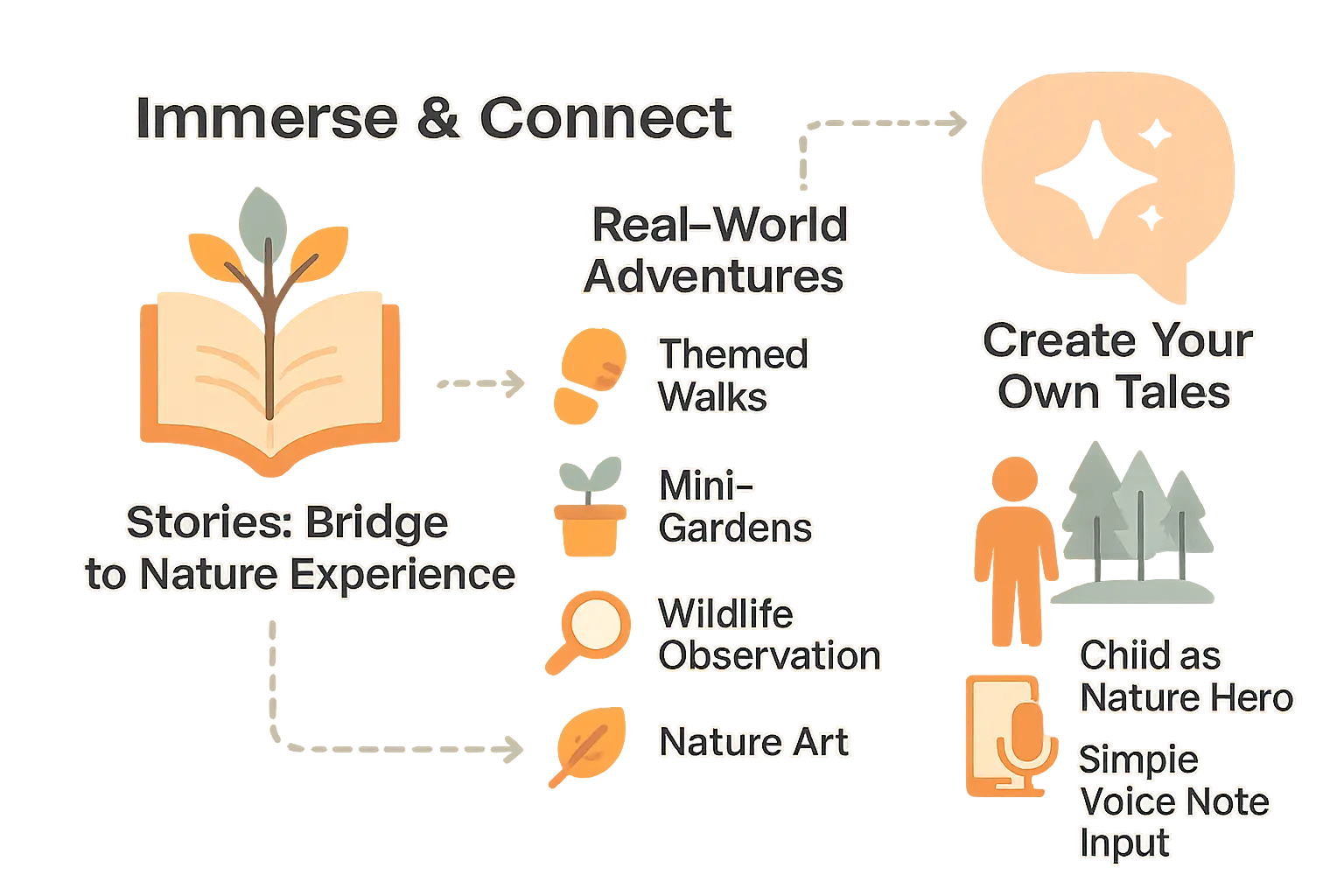
The magic of nature stories doesn’t end when you close the book 🌿. Turn tales into hands-on adventures that make kids eager to explore the real world. This is where imagination meets reality – and where you’ll see those “aha!” moments unfold.
“Children develop a deeper connection to nature not just by hearing about it, but by experiencing it. Stories can be the perfect bridge to that experience.”
From story to real-world adventure
Ready to transform pages into playgrounds? Here’s how to make nature stories stick through active discovery:
- Go on a themed walk: After a story about mushrooms, visit a park to spot real fungi (no touching!)
- Start a mini-garden: Inspired by a seed’s journey? Plant cress or a bean in a jar
- Become a wildlife detective: Use bird sounds from a story to play “who’s that bird?” outside
- Create nature art: Use leaves and flowers from a walk to build collages inspired by story characters
These activities boost attention spans while teaching ecological concepts through play 🌱. Kids remember stories better when they act them out – like finding real mushrooms after reading about forest adventures.
Create your very own nature story
Why not let kids become the heroes of their own eco-adventures? Personalized stories where your child saves the day with talking trees or rainbow butterflies create magical learning moments.
Here’s the cool part: create your own nature stories using voice notes! Just say “Tell me a story about my son Leo befriending a fox family in the woods” and get a personalized story in minutes. No app downloads – just use WhatsApp, the same way you message friends. The AI remembers Leo’s love for hedgehogs to make future stories even more relevant.
Imagine bedtime stories that teach forest safety, pollination, or weather patterns – all through adventures your child stars in. It’s educational storytelling that feels like pure fun 📲. Perfect for busy parents who want quality time that actually grows little minds.
Time to start weaving your family’s unique stories. With tools that make personalized stories easy, you’ll turn curious kids into lifelong nature lovers – one adventure at a time 🌍.
Start the adventure: your turn to tell the story
Stories about nature aren’t just bedtime tales—they’re gateways to curiosity, empathy, and a lifelong bond with the planet. 🌍 When kids hear stories about trees, animals, or seasons, they learn to care. Curiosity grows into respect, and respect becomes action.
You don’t need to be a writer to spark this magic. A simple walk in the park can inspire a tale about a brave squirrel or a singing river. Use your phone’s camera to capture details—moss on a rock, a butterfly’s wings—and turn them into characters or adventures. It’s not about perfection; it’s about connection. ✨
“Connecting with the natural world is more than a pastime; some even argue it should be considered a fundamental human right for every child.”
This idea, highlighted by MIT Press research, reflects how deeply nature impacts development. Children who engage with outdoor stories show improved focus, creativity, and emotional resilience—skills that matter in a fast-paced, screen-heavy world.
So, what story will you create tonight? Whether it’s a journey through a leafy forest or a chat with the moon, your voice can light up a child’s world. The adventure starts here. 🌟
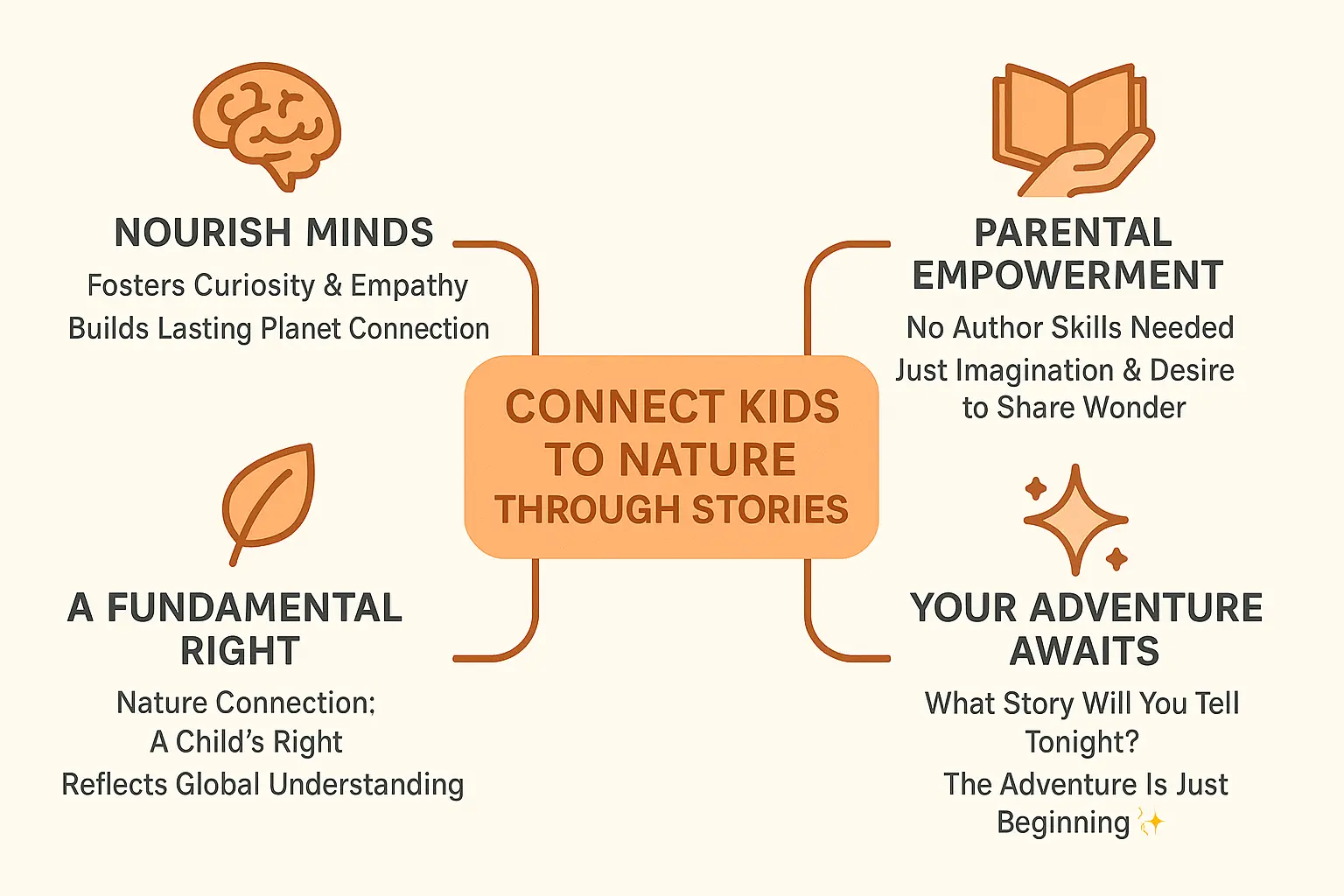
Nature stories for kids spark curiosity, empathy, and a lasting connection to nature. Blending wonder with environmental awareness, they inspire planetary care. Research confirms their role in childhood growth. Ready to create? Whether books or personalized tales, every story plants seeds of change. 🌱✨ (Word count: 40)
FAQ
What are some nature stories for kids?
Nature stories for kids often blend imagination with real-world science! Think of tales like “The Rescuer of Tiny Creatures” (where insects become heroes) or “Tad” (a frog’s life cycle). For older kids, mysteries like “Why bees matter” mix fun with facts. Stories about seasons, like a squirrel preparing for winter, or magical mushroom adventures (like “Mushroom Rain”) are perfect for sparking curiosity.
What’s a super short story for little explorers?
For tiny adventurers, brevity is magic! Try “Slow Down” by Rachel Williams—a poetic journey through nature’s quiet moments. Or go ultra-short with 6-word stories like: “Tiny seed. Big tree. 🌱✨” For toddlers, board books with simple rhymes (e.g., a raindrop’s adventure) work wonders. These stories focus on sensory details: sounds, textures, and colors!
What should kids learn about nature through stories?
Stories teach kids to see nature as a living, breathing friend! Key lessons include resilience (like a seedling pushing through soil), interconnectedness (how bees help flowers), and empathy (a grumpy bear sharing berries). Use tales to inspire outdoor exploration—like tracking animal footprints or planting a windowsill herb garden. Remember: stories are bridges between books and real-world wonder 🌿.
What are the best nature-themed books for children?
For toddlers: “Bird Sounds” with tactile pages. Preschoolers love “The Very Hungry Caterpillar” (life cycles!) and “Finn’s Garden Friends” (urban green spaces). Older kids thrive on deeper reads like “Grow” (gardening basics) or “Ribbit! The Truth About Frogs” (science meets humor). Don’t miss “I Am the Seed That Grew the Tree”—a poem-a-day journey through the seasons!
What are popular nature-based fairy tales?
Classic tales like “The Gruffalo” (a mouse outsmarts forest creatures) or “The Lorax” (speaking for trees) blend fantasy with environmental themes. Modern picks include “Kew’s Lift and Look: Flowers and Plants” (interactive discoveries) and “A Walk in the Forest” (a timeless ode to woodland adventures). These stories often feature talking animals or magical ecosystems—perfect for sparking “what if?” moments 🌲.
How do you create a nature story kids will love?
Start with a relatable character—maybe a curious squirrel or a brave seed. Add real science subtly: “Bees carry pollen like tiny backpacks!” Then, sprinkle in interactive elements: textures to touch, sounds to mimic (wind whooshes, bird chirps), or a “guess the animal” game in the illustrations. For older kids, tie in problem-solving—like a salmon navigating obstacles upstream. Keep the tone warm, the sentences snappy, and let the natural world feel like a playground of discovery 🌿.
What’s the most-loved kids’ story about nature?
Timeless favorites include “The Very Hungry Caterpillar” (metamorphosis made playful) and “The Lorax” (a call to protect trees). Newer hits like “The Grumpy Gardener” (city greenery) and “Mushroom Rain” (fungi facts) are rising stars. Popularity often comes from a mix of vivid art, simple truths, and characters kids cheer for!
What’s the shortest 6-word nature story?
The legendary “For sale: Baby shoes. Never worn” isn’t nature-themed, but we can adapt! Try: “Tiny acorn. Mighty tree. 🌳” or “Rainbow puddle. Dragonfly dances. 🌈” These micro-stories use imagery to spark imagination. For kids, pair them with prompts like, “What happens next?” to ignite storytelling!
What’s the moral of a short nature tale?
Simple stories pack powerful lessons! A tale about a salmon swimming upstream teaches perseverance. A dandelion seed’s journey highlights adaptability. Even “Slow Down” whispers: “Noticing small wonders brings peace.” The best morals aren’t preachy—they’re woven into the adventure, leaving kids with a warm “I get it!” moment 🌟.