The key takeaway: Superhero stories use classic structures (origin, challenge, comeback) to highlight human strengths like resilience. Perfect for ages 3-12, they blend creativity with lessons on teamwork and empathy. Platforms like Tellmestories let parents create personalized adventures via WhatsApp—making storytelling both fun and meaningful through customized, instant tales.
Ever wondered why superhero stories hook us like a villain’s plot twist? 💥 They’re not just good vs. evil showdowns—they’re mirrors of our struggles, wrapped in capes and superpowers. Think of tales like “Laughter Saves the Day!” where a giggling hero stops chaos with joy, or how Blooming Heroes turns eco-activism into a kids’ quest. We’ll unpack their secret sauce (narrative structure, moral dilemmas, and human qualities), then show you how to spin your own tale—where your kid becomes the hero, battles quirky villains (like a spaghetti-spewing nemesis 🍝), and learns perseverance through pure fun. Ready to level up your story game? 🌟
What are superhero stories anyway? 🤔
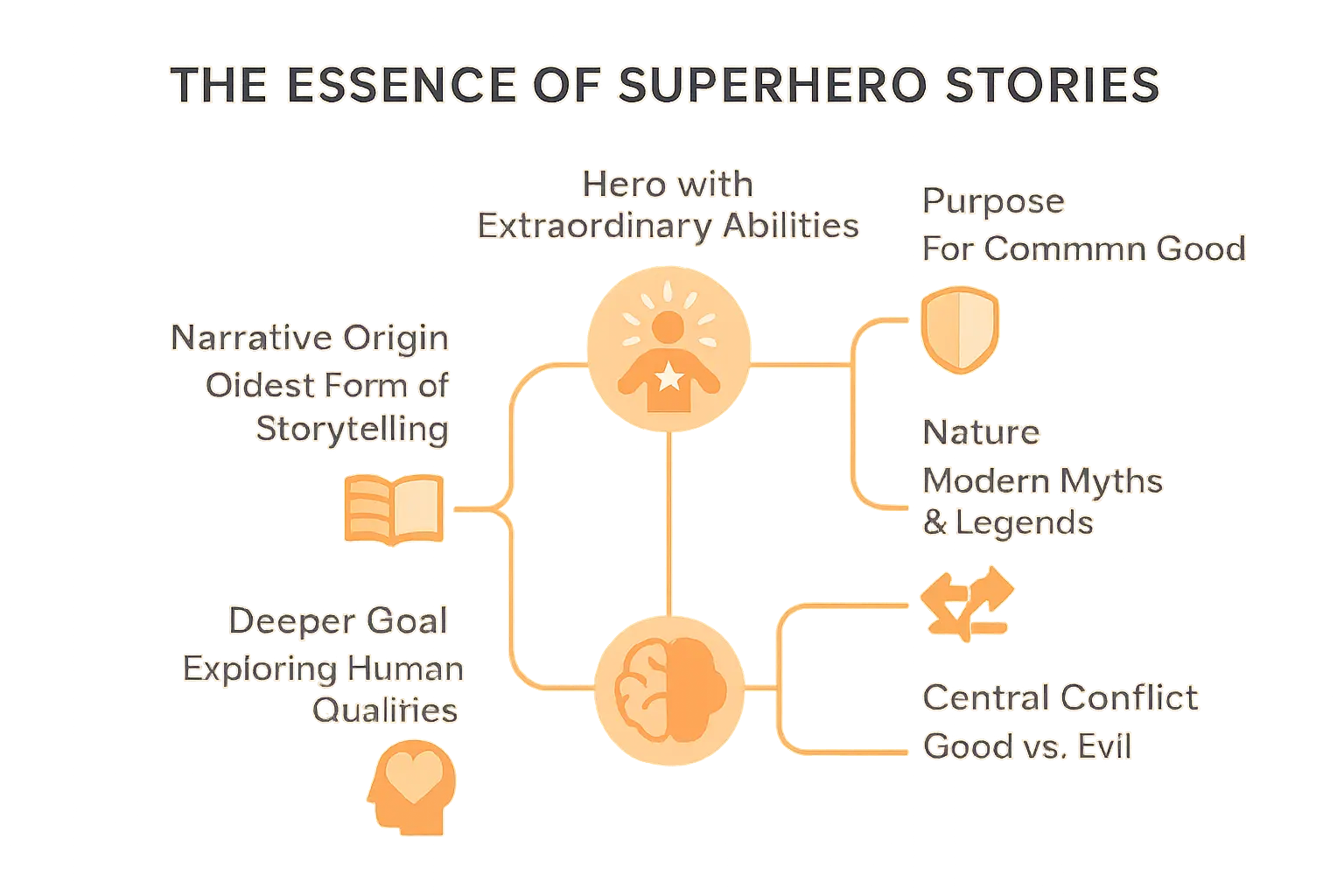
Ever wondered why superhero tales grab our attention so effortlessly? 💡 A superhero story typically follows a character with extraordinary abilities who uses these powers for the greater good. These narratives aren’t just about epic battles or flashy costumes—they reflect timeless struggles between good versus evil, making them universally relatable.
At their core, these stories explore human qualities through fantastical scenarios. They borrow from ancient mythologies, recasting heroes like Hercules or Thor into modern archetypes. The core conflict—a hero facing moral dilemmas—resonates because it mirrors real-life choices we all make. Whether it’s choosing courage over fear or responsibility over selfishness, these tales help us examine our own values.
More than just capes and tights
Superhero narratives tap into something primal in storytelling. As noted by Alec Chen, these tales might represent “the oldest form of storytelling” by combining mythical elements with contemporary issues. Think about it: just like ancient myths explained natural phenomena, today’s superhero sagas tackle societal challenges through their unique lens.
These stories create bridges between our ordinary lives and extraordinary possibilities. When a character balances superhero duties with personal struggles, we see reflections of our own balancing acts. The tension between secret identities and public personas mirrors modern identity questions—how we present ourselves versus who we truly are. By wrapping profound themes in action-packed formats, superhero tales make complex ideas accessible without losing depth. 🌟
The anatomy of a hero: more than just strength
The ordinary person behind the mask
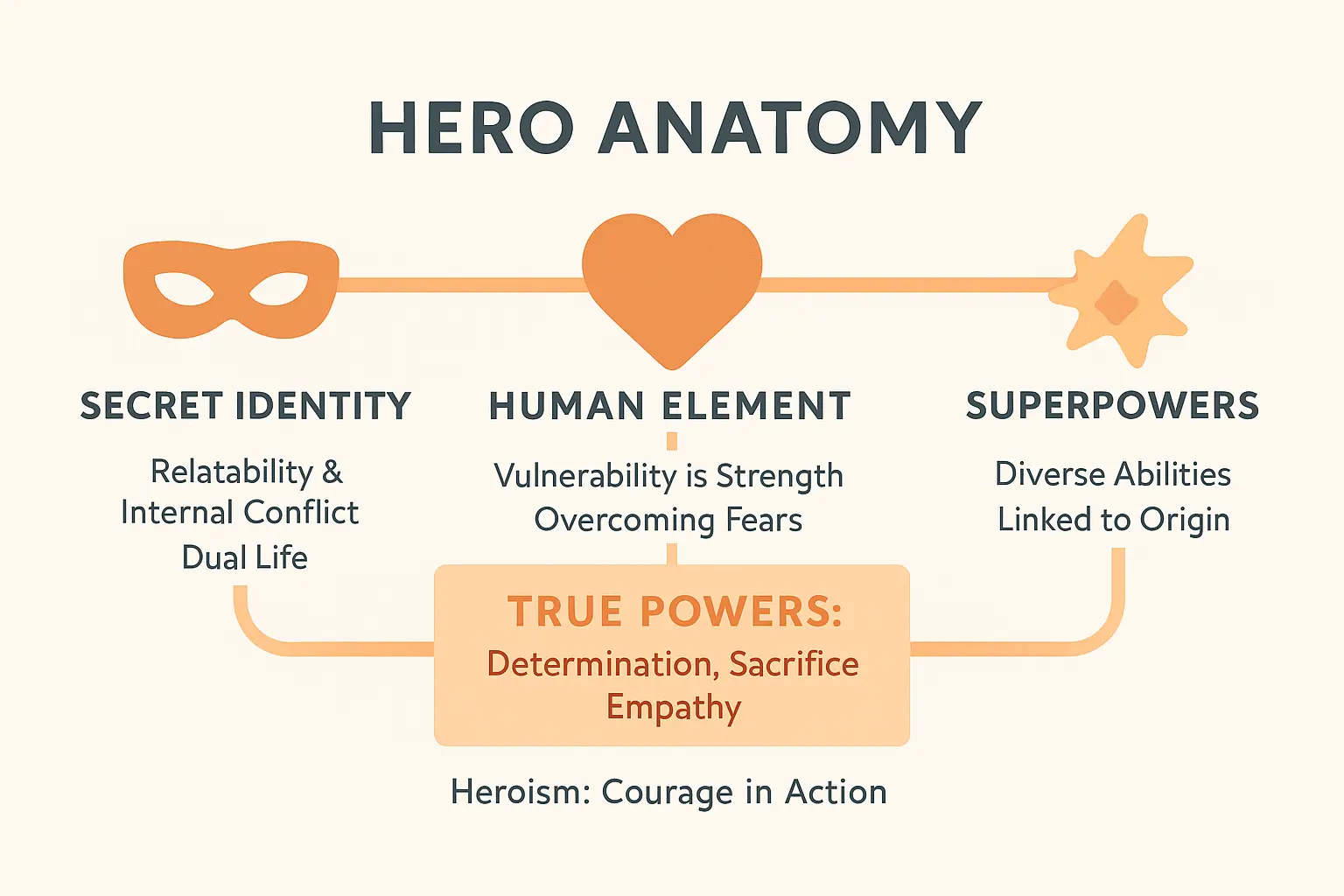
What makes a hero truly relatable? 🤔 Their hidden secret identity! This narrative device creates instant tension by showing two contrasting lives. Take Captain Wobblebottom from “Laughter Saves the Day!” – by day he’s a clumsy inventor, but when danger strikes, his humor becomes his greatest weapon. Ever tried balancing school projects with saving the city? That’s the daily grind for heroes.
The mask isn’t just a disguise – it’s a storytelling goldmine. It lets us explore human struggles beneath the cape. This duality makes their victories feel earned, not just superhuman.
The source of their abilities
Superpowers come in wild varieties – from classic flight to creating chocolate storms 🍫! But the most memorable superpowers always connect to their origin story. A hero who gained abilities from a science experiment might channel their curiosity into heroism.
Want to explore different kinds of special powers? Discover how unique abilities shape storytelling at Tellmestories. After all, what’s a hero without their signature move?
The human element is key
Here’s the real secret sauce – vulnerability! 💥 Audiences are often more receptive to vulnerable heroes because flaws make bravery count. A hero who trembles but still stands tall? That’s inspiring!
True heroism isn’t about being invincible; it’s about facing real danger and choosing to act anyway, showing courage when it matters most.
What really powers these heroes? Determination to keep going after setbacks, sacrifice of personal comfort for others, and empathy that connects them to everyone they protect. These aren’t just traits – they’re the heart of every great hero story. Because at the end of the day, the best heroes aren’t defined by what they can do, but by why they choose to do it.
The blueprint of a superhero story
From ancient myths to modern comics
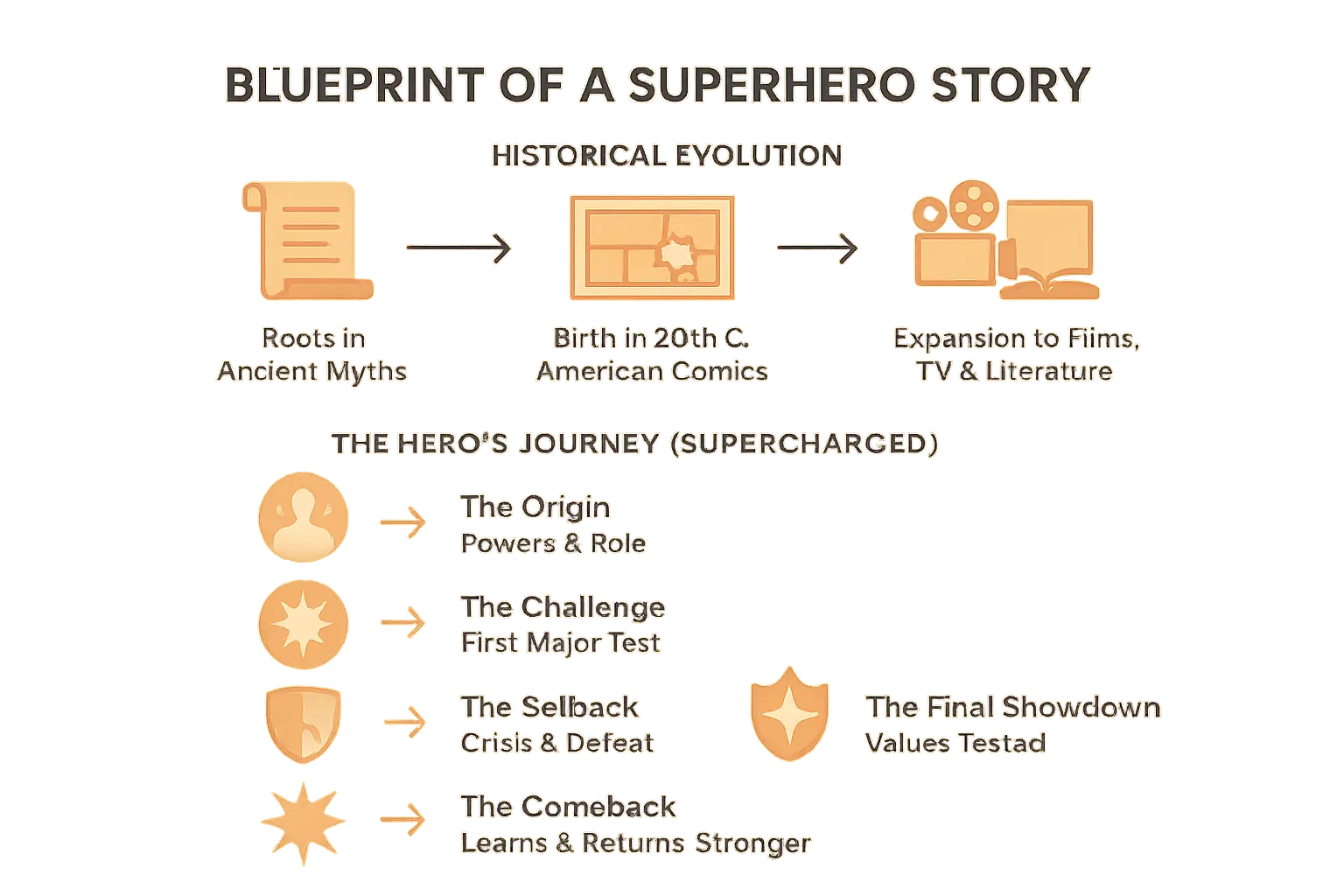
Superhero stories didn’t start with spandex or comic books. 🚀 They’re modern echoes of ancient myths—tales of Heracles’ strength or Gilgamesh’s quest. These stories directly parallels ancient legends, blending moral lessons with epic struggles. 1938 marked a turning point: American comics gave these archetypes a new stage. Superman’s debut in Action Comics #1 wasn’t just a character—it was a template for decades of heroes who’d balance extraordinary powers with relatable struggles.
The Golden Age (1938-1956) birthed icons like Superman, a symbol of hope during WWII. His origin—a refugee fleeing a dying planet—mirrored the era’s refugee crises. The Silver Age (1956-1970) added sci-fi twists—radioactive spider bites, cosmic rays—to mirror Cold War anxieties. Marvel’s Fantastic Four redefined the genre by giving heroes interpersonal conflicts. By the Bronze Age (1970-1985), comics tackled racism (Green Lantern/Green Arrow) and addiction (Amazing Spider-Man), proving films and television would later amplify these themes globally. 📺
The hero’s journey, supercharged
Most superhero tales follow a secret formula: the “hero’s journey” on steroids. 🦸♂️ This narrative structure remixes Joseph Campbell’s monomyth, spiced up with radioactive frogs and billionaire playboys in armor. Whether a teen gains powers through a lab accident or a genius builds armor after a near-death experience, the arc stays universal: the self must evolve to save the world.
- The Origin: A life-altering event—bite, explosion, or experiment—sparks the transformation. Think of a scientist gaining abilities they can’t control or a teen discovering strength after a lab mishap.
- The Challenge: The villain mirrors the hero’s flaws, often a dark reflection of their potential. A tech mogul might face a rival with the same genius but darker ethics, or a hero battles someone who made the “wrong” choice at the same crossroads.
- The Setback: Failure forces growth—losing a mentor, a loved one, or one’s ego. For a brooding vigilante, this moment isn’t just a parent’s death—it’s repeated failures to “save” their city, pushing them to become more than human.
- The Comeback: The hero evolves, gaining wisdom beyond physical upgrades. It’s not just stronger armor; it’s understanding responsibility. A tech genius’s device evolves from a survival tool to a symbol of global duty.
- The Final Showdown: Victory proves inner growth—it’s not just defeating evil, but embodying a lesson. For a web-slinger, it’s accepting loss meant embracing “with great power…” in every action.
This framework follows the ‘story circle’, turning personal growth into public spectacle. From ancient myths to modern streaming series, the stakes stay the same: saving the world while wrestling with humanity’s messiest parts. 🌍
Not just for kids: superhero stories for a mature audience
What’s the difference?
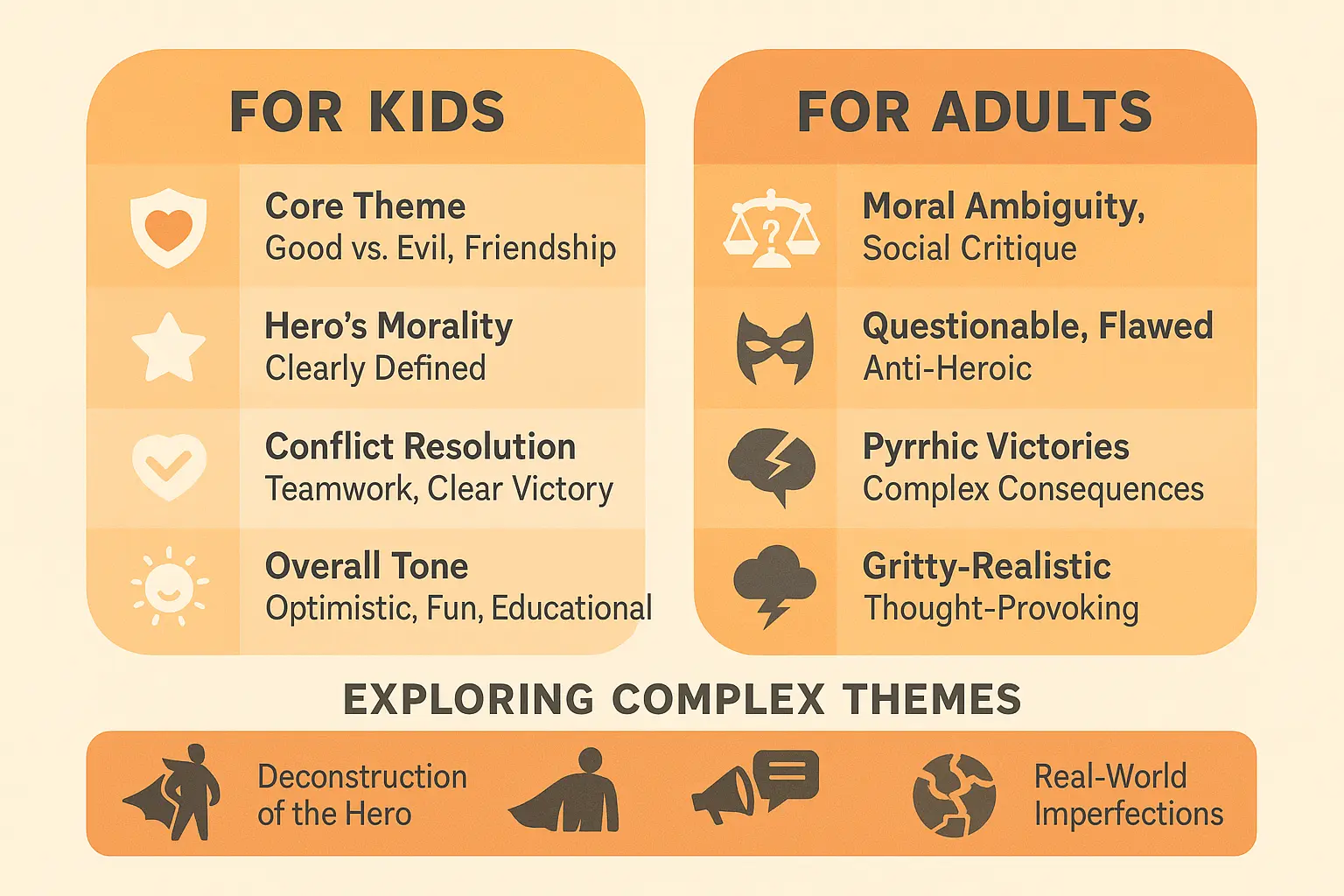
Superhero stories have evolved dramatically. For children, they often focus on clear moral lessons like friendship and courage. For adults, complexity reigns. Let’s break it down.
| Feature | Stories for Kids | Stories for Adults |
|---|---|---|
| Core Theme | Good vs. Evil, Friendship | Moral Ambiguity, Social Critique |
| Hero’s Morality | Clearly defined, always good | Questionable, flawed, anti-heroic |
| Conflict Resolution | Teamwork, cleverness, clear victory | Pyrrhic victories, complex consequences |
| Overall Tone | Optimistic, fun, educational | Gritty, realistic, thought-provoking |
Exploring complex themes
Modern tales for mature audience dive into moral ambiguity. Think Watchmen or The Boys – where heroes are flawed, corrupt, or even villains. These stories ask: What if superpowers existed in our broken world? 💥
The deconstruction of the hero challenges the “perfect savior” trope. Characters like Punisher blur lines between justice and violence. Anti-heroes like Magneto question who defines “good” – especially when survival demands extreme actions. Even Wolverine’s raw brutality or Black Widow’s shadowy past show how gray the line can be.
Some narratives use satire to critique society. For example, Empire explores whether superhumans would exploit their powers for profit. Others, like Sans retour – Irrécupérable, analyze what drives a hero to villainy – and how to stop it. 🧠
These stories resonate because they mirror real-world dilemmas. They’re not just action-packed – they’re thought-provoking reflections of our fears, ethics, and gray areas. From comics like Batman: The Dark Knight Returns to TV adaptations, the genre now mirrors our darkest questions. ⚖️
The cultural impact of superhero stories
A mirror to our society
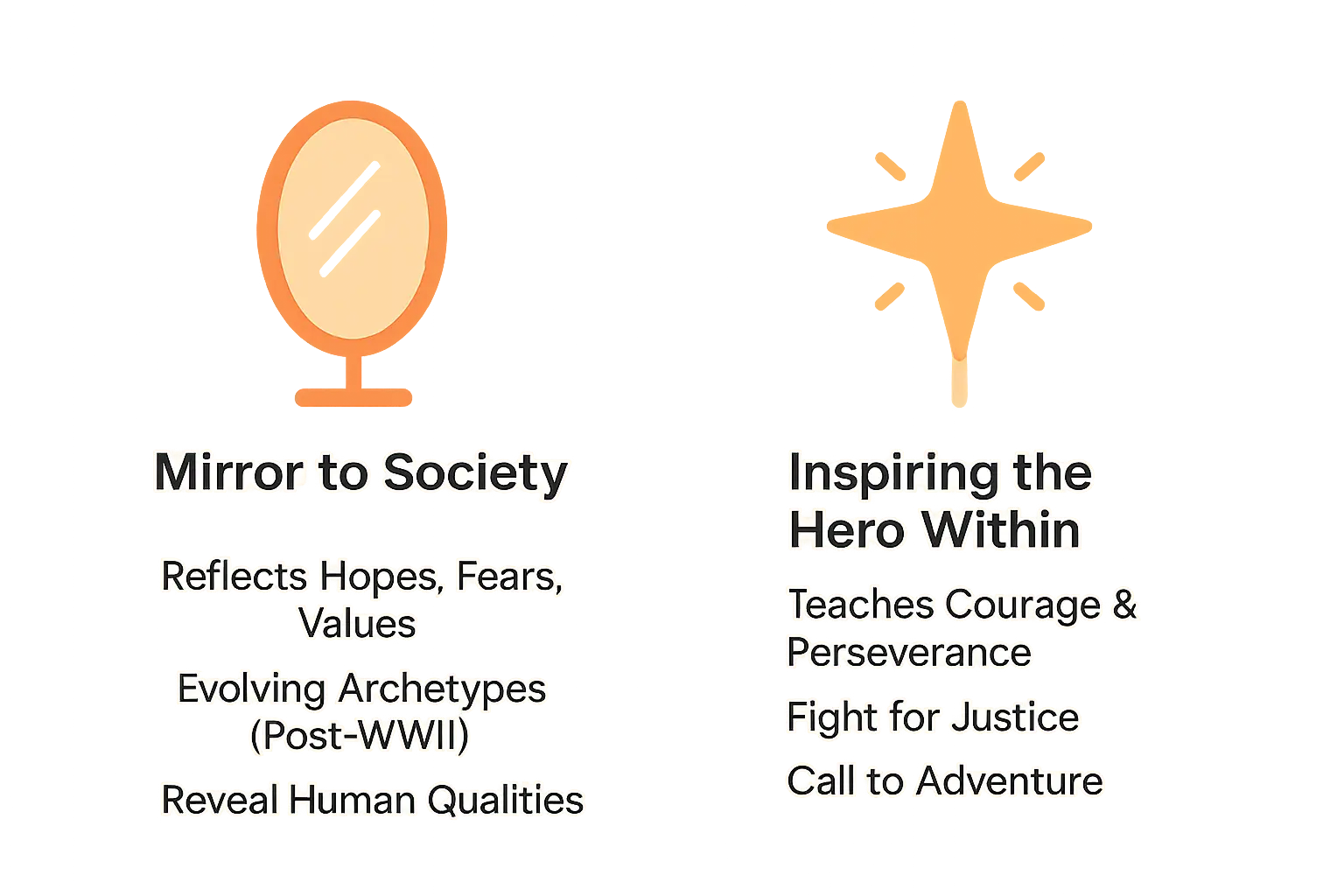
Superhero stories act as a cultural mirror, reflecting the hopes, fears, and values of their time. They’ve evolved from simple good-vs-evil tales to complex narratives addressing societal issues like justice, inequality, and identity. For instance, post-WWII, characters like Captain America became symbols of American ideals, while modern heroes tackle themes like environmentalism and inclusivity.
Superhero stories serve a powerful purpose: they use fantastic situations and extreme circumstances to shine a light on our own human qualities and deepest aspirations.
These stories adapt to mirror shifting societal norms. Early heroes embodied unshakable morality, but today’s characters grapple with ethical gray areas, mental health, and the weight of power. This evolution shows how superhero narratives stay relevant by addressing contemporary challenges, from climate change to social justice, making them timeless guides for moral reflection.
Inspiring the hero in all of us
At their core, superhero stories teach universal lessons: courage to face adversity, perseverance to overcome setbacks, and the importance of fighting for what’s right. They remind us that heroism isn’t about capes or powers—it’s about choices. Whether it’s a child battling bedtime or a parent navigating daily chaos, these stories make the the call to a great adventure feel within reach.
Their cultural impact lies in their ability to inspire action. By showcasing characters who rise above hardship, they encourage resilience and empathy. Think of tales where laughter saves the day or friends unite to protect a garden—their message is clear: ordinary traits like kindness or creativity can spark extraordinary change. Through this lens, courage and perseverance become tools for everyday life.
Time to create your own superhero story! 🚀
You are the storyteller
What if your child could be the hero of their own adventure? 🦸♂️🦸♀️ What powers would they have? Would they fly, turn invisible, or speak every animal’s language? Creating a superhero story together isn’t just fun – it’s a chance to bond, spark imagination, and let your child lead the narrative.
Try this: Ask, “What if your pet could talk? What would they say?” or “How would you design a superhero cape?” These questions make storytelling collaborative. Need inspiration? A fantastic way to encourage hero play is to let their personality shine through the hero’s traits. Shy? Their hero could discover courage. Loves art? Their powers might create vibrant masterpieces!
Bringing your hero to life in minutes
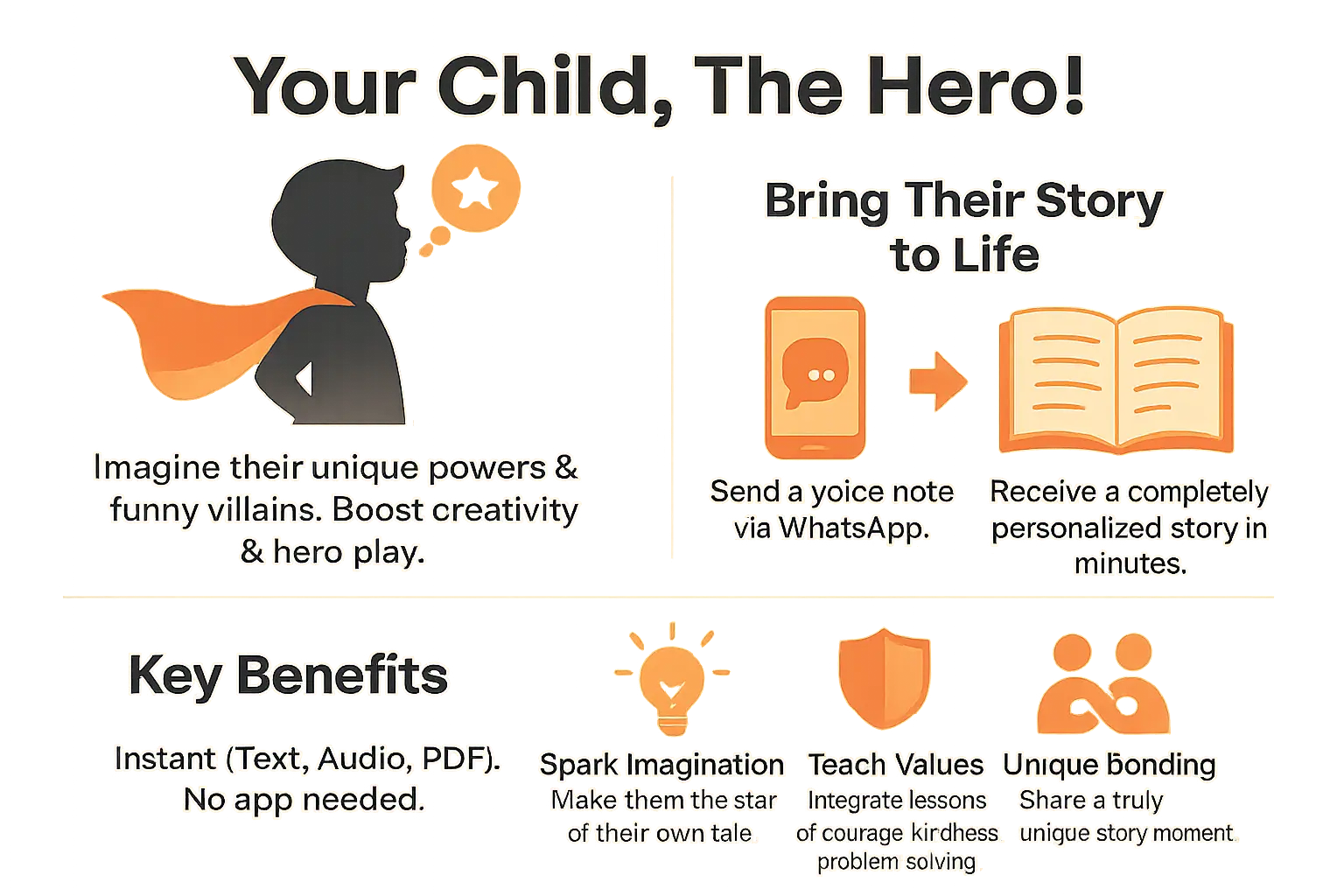
Here’s the magic: What if you could create your own superhero story by simply sending a voice note on WhatsApp? No app downloads – just talk, and get a completely personalized story where your child saves the day, learns kindness, or solves a mystery.
Tellmestories, built by parents who know bedtime chaos, turns your ideas into tales with your child as the star. Stories arrive in text, audio, or PDF – and yes, even printed books! Here’s how it helps:
- Spark your child’s imagination: Make them the star of their very own tale.
- Teach important values: Integrate lessons about courage, kindness, and problem-solving.
- Create a unique bonding moment: Share a story that is truly yours.
Time to start? Just imagine: your child giggling as their hero defeats a tickle monster, or learns to share with a shy sidekick. Ready to write the next chapter? 🎉
Superhero stories transcend superpowers—they’re timeless tales of good vs. evil, celebrating courage and sacrifice. They mirror our hopes and fears, resonating with kids learning values and mature audiences. Ready to craft your own adventure? 🚀 Let Tellmestories help you define the hero, challenge, and victory! 🌟
FAQ
Who makes the ultimate top 10 superhero list? 🎯
While opinions vary, iconic names like Superman (truth & justice icon), Batman (dark knight vigilante), Spider-Man (relatable everyman hero), Wonder Woman (feminist icon), Iron Man (genius billionaire), Captain America (patriotic symbol), Black Panther (tech king), Flash (speed force legend), Thor (mythical god), and Wolverine (rugged anti-hero) dominate rankings. Their lasting legacies, cultural impact, and adaptations across media give them eternal spotlight status!
Which caped crusader serves the best story arcs? 📚
Spider-Man’s coming-of-age journey (with great power…) and Batman’s gritty Gotham noir tales consistently top lists. Marvel’s Black Panther redefines Afro-futurism while Wonder Woman bridges mythology and modern warfare. For mature themes, Watchmen’s deconstruction of heroism and The Dark Knight’s moral dilemmas prove superhero stories evolve beyond simple good vs evil.
Who holds the #1 hero throne globally? 👑
Superman and Spider-Man battle for this title! Superman (1938 origin story) remains the blueprint for all heroes with 90+ years of pop culture dominance. Spider-Man (1962) connects through Peter Parker’s relatable struggles. Wonder Woman’s recent film surge and Black Panther’s cultural moment prove the crown shifts with generations!
What graphic novels should comic newbies read? 📖
- The Dark Knight Returns (Batman’s comeback story)
- Watchmen (deconstructed heroes)
- Ms. Marvel Vol.1 (fresh Muslim-American perspective)
- Black Panther: A Nation Under Our Feet (political sci-fi)
- Spider-Verse (multiverse adventure)
Which hero spreads the most kindness vibes? 💖
Shy Peter Parker (Spider-Man) always helps neighbors. Ms. Marvel’s Kamala Khan radiates positivity. Wonder Woman combines compassion with strength. But honorable mentions go to Blue Beetle (funny team player) and She-Hulk (lawyer fighting for justice) – proving heroism shines through empathy!
Who started the superhero revolution? 💥
The first modern superhero? Superman in 1938’s Action Comics #1! Before him: The Phantom (1936) wore the first superhero costume, while 1930s pulp characters like The Shadow inspired early tropes. But Superman’s cape + powers combo created the template all others follow!
Who dominates superhero popularity today? 📈
Marvel’s Spider-Man (Tom Holland’s MCU version) and Black Panther (Chadwick Boseman’s legacy) rule current charts. Wonder Woman and The Flash gain traction through streaming. New heroes like Ms. Marvel and She-Hulk rise fast though – the game changes quickly when Netflix drops new seasons or Disney+ debuts fresh content!
Is Sailor Moon a superhero sister? 🌙
You bet! While different from Batman or Superman, Sailor Moon (1991) fits the mold: ordinary teen with secret identity, magical powers, team dynamics, and world-saving missions. She redefined “girl power” in the 90s, blending magical girl tropes with classic superhero elements. Capes not required!
Who packs the ultimate power punch? 💥
Meet DC’s The Spectre (divine wrath incarnate) and Marvel’s Scarlet Witch (reality-warping chaos magic). Silver Surfer’s cosmic power and Doctor Strange’s mystic arts compete too. But One Above All (Marvel’s godlike entity) and The Presence (DC’s divine force) exist beyond competition – their powers literally shape universes!