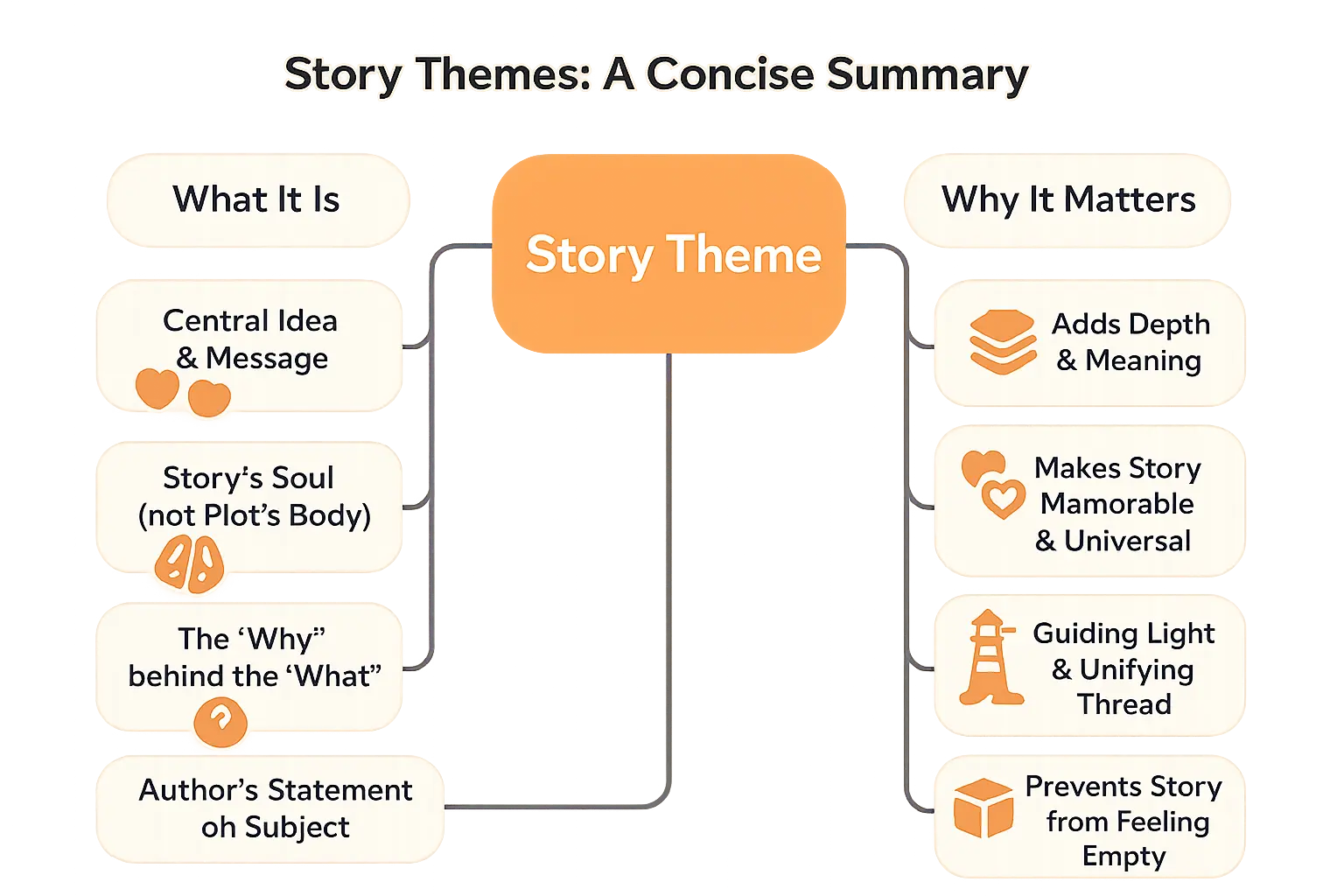
The essential takeaway: A story theme isn’t just a plot—it’s the soul of your tale, the “why” behind the “what.” Think of it as the emotional core that turns events into meaning, like how The Lord of the Rings uses “even the smallest person can change the future” to make war feel universal. Mastering this, as [Kristen Kieffer explains](https://medium.com/@kristen_kieffer), transforms empty narratives into unforgettable journeys!
Ever felt like your story was just a bunch of events without deeper meaning? 💡 That’s where story themes come in—they’re the secret sauce that turns plots into unforgettable journeys. In this post, we’ll break down what makes themes tick (spoiler: they’re the “soul” of your narrative 💥) and why even small characters or epic battles need one. Think “love conquers all”, “good vs. evil”, or “courage in adversity”—yep, we’ve got actionable examples to spark your next idea. Ready to stop writing events and start crafting stories that stick? Let’s dive in. 🚀
So, what’s the big deal with story themes?
Let’s get on the same page: what is a story theme?
Ever finish a story and think, “That really stuck with me”? 🤔 That lingering feeling? Yep, that’s the story theme at work.
Story themes are the “why” behind the “what.” Imagine your plot as the car’s engine—actions, twists, events. The theme? That’s the GPS. It’s the big idea, the emotional core guiding every turn. As some writers put it, a theme is the author’s unspoken message about life, love, or courage. (Want deeper insights? Check out this breakdown.)
Quick note: Themes aren’t the plot. The plot says, “Here’s what happens.” The theme whispers, “Here’s what it means.” Got it? Good. Let’s roll. Think of it like a cupcake: the plot’s the frosting, but the theme’s the creamy filling—the hidden part that makes it unforgettable. 🧁
Why your story absolutely needs a theme
Honestly, a story without a theme feels like… well, a sandwich without filling. 🍔 It’s the glue holding characters, scenes, and emotions together. Think of the big idea as your compass—it points every moment toward something meaningful.
Need an analogy? Here’s one: Themes are like the wind in your story’s sails. They keep you moving toward a purpose. Ever noticed how Harry Potter isn’t just about wizards? It’s about fighting systemic injustice—something we all relate to. That’s theme magic.
“A story without a theme can feel like just a string of words. It’s the unifying thread that gives the narrative purpose and makes it resonate with readers.”
Themes hit harder than a plot twist. They’re the “aha!” moment readers carry home—like courage matters (even in Seul sur Mars) or love conquers all (à la Romeo and Juliet). They’re the reason tales stick around for generations. Pretty cool, right? 😎
And here’s the kicker: themes don’t shout their message. They whisper it through choices. Like how Les Misérables whispers redemption through Jean Valjean’s journey. Or how Of Mice and Men quietly explores isolation through George and Lennie’s bond. That’s the power of subtle, theme-driven storytelling.
Spot the difference: theme, subject, and motif
Getting the terms right (it’s easier than it sounds!)
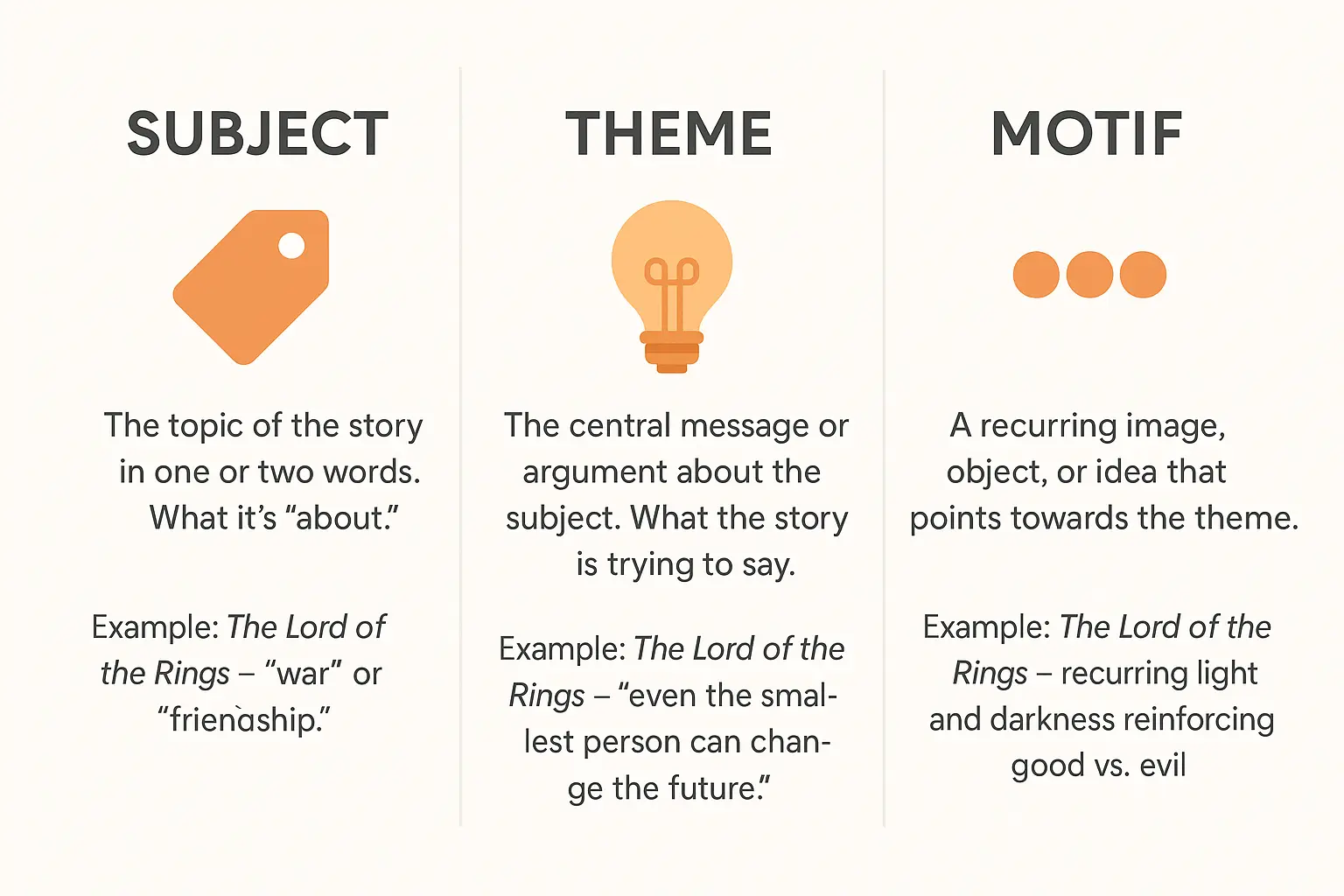
Ever mixed up “theme,” “subject,” and “motif” while creating stories for kids? Let’s break it down! These concepts aren’t just academic jargon—they’re your secret weapons for crafting magical tales with tools like Tellmestories. Think of them as your storytelling GPS 🧭
Need a quick visual guide? Here’s your cheat sheet:
| Concept | Simple Definition | Quick Example (from a famous story) |
|---|---|---|
| Subject | The core topic in 1-2 words | “War” in The Lord of the Rings |
| Theme | Central message about the subject | “Even small people can change the world” in LOTR |
| Motif | Recurring element highlighting the theme | Light/dark imagery in LOTR for good vs. evil |
Let’s make it stick: the subject is your story’s destination, the theme is its message, and the motif is the repeating compass that guides readers there. Simple, right?
With Tellmostories, this framework becomes pure magic ✨ Imagine crafting bedtime stories where your child isn’t just hearing about dragons 🐉—they’re learning about courage (theme) through glowing stones (motif) that appear every time their character overcomes a challenge. The AI even remembers these details for future tales!
Example time: Record a voice note saying, “A story about kindness with forest animals.” The AI creates: – Subject: Kindness – Theme: Small acts matter – Motif: Repeated food-sharing moments 🍎
But wait—there’s more! Motifs aren’t just visuals. They could be sounds (like a character’s catchphrase), weather patterns (storms during conflicts), or even smells (a flower representing hope). The possibilities are endless when you understand how these three elements work together.
A big list of common story themes to inspire you
Universal ideas that speak to everyone
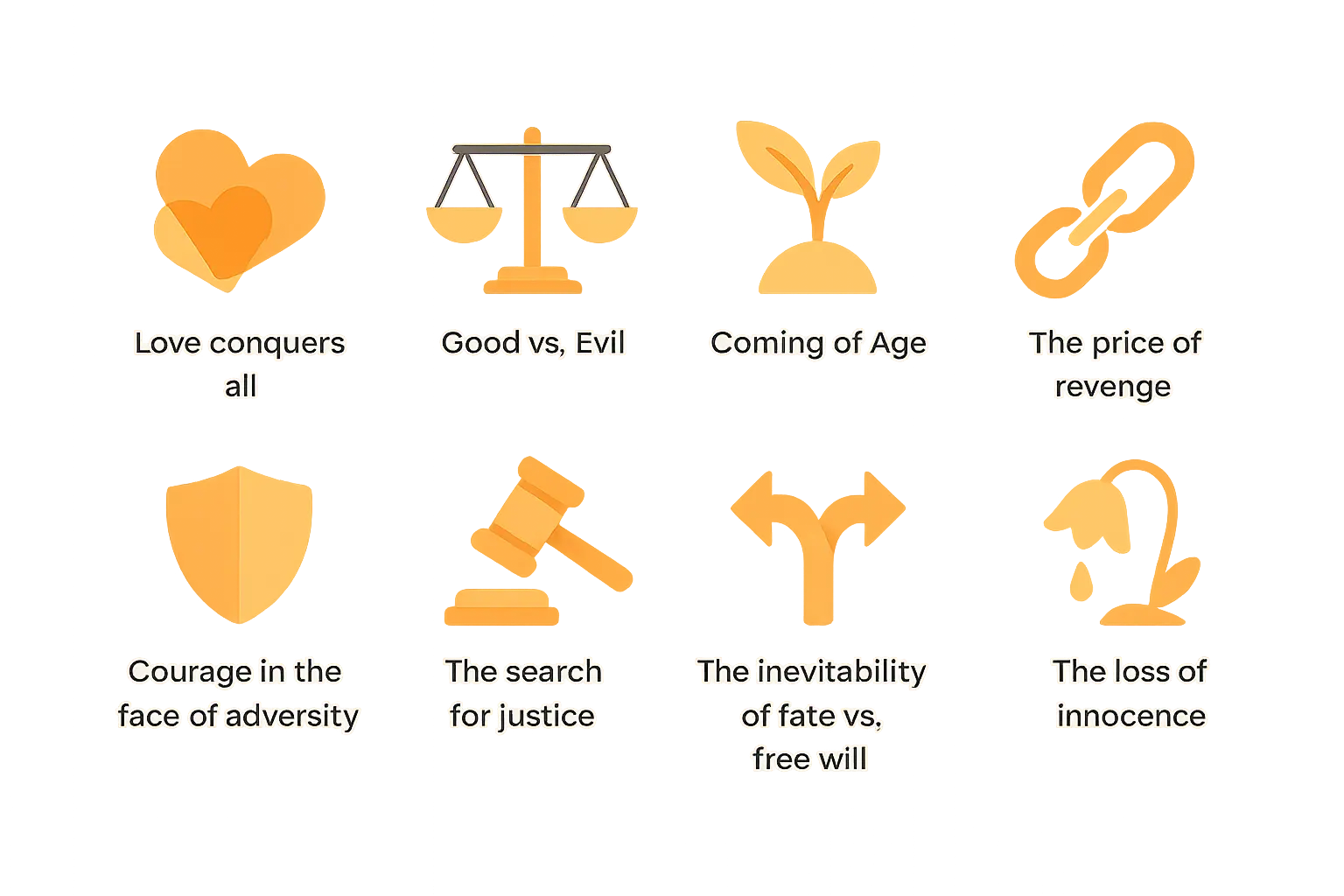
Stuck on story ideas? Here’s a quick list of timeless themes shaping narratives! These aren’t random—they’re blueprints for human experiences. Think of them as story DNA: they guide character choices and plot twists while letting readers see their own lives reflected.
- Love conquers all: Parental sacrifices or loyal friendships show love overcoming obstacles. Classic examples? Yep, this theme’s got you covered.
- Good vs. Evil: Explores blurred lines between good and evil, where heroes/villains aren’t always clear-cut.
- Coming of age: Tracks characters shedding innocence—like first heartbreaks or life-altering lessons. Think: “Oh no, the world’s complicated” journeys.
- The price of revenge: Shows how revenge spirals destroy characters. Spoiler: rarely ends well. The more they chase payback, the more they lose themselves.
- Courage in adversity: Ordinary folks doing extraordinary things—like a kid facing a bully. Highlights hidden strength.
- Search for justice: When systems fail, characters fight for fairness. Think beyond courtrooms—this theme’s about battling unfair odds.
- Fate vs. free will: Characters question whether choices matter or if everything’s predetermined. Are we puppets or puppeteers?
- Loss of innocence: Captures the gut-punch when reality shatters childhood illusions. That “wait, the world’s not what I thought” moment?
These themes resonate because they mirror real-life struggles. When characters tackle them, readers think: “That’s my story too.” The twist? Add unique settings, quirky characters, or unexpected stakes. Suddenly, “love conquers all” isn’t a cliché—it’s your kid’s bedtime story where they’re the hero.
How to actually use a theme in your story (the fun part!)
Don’t just state it, show it!
Here’s the secret: your theme should feel like a hidden gem readers discover through the journey. 🕵️♀️
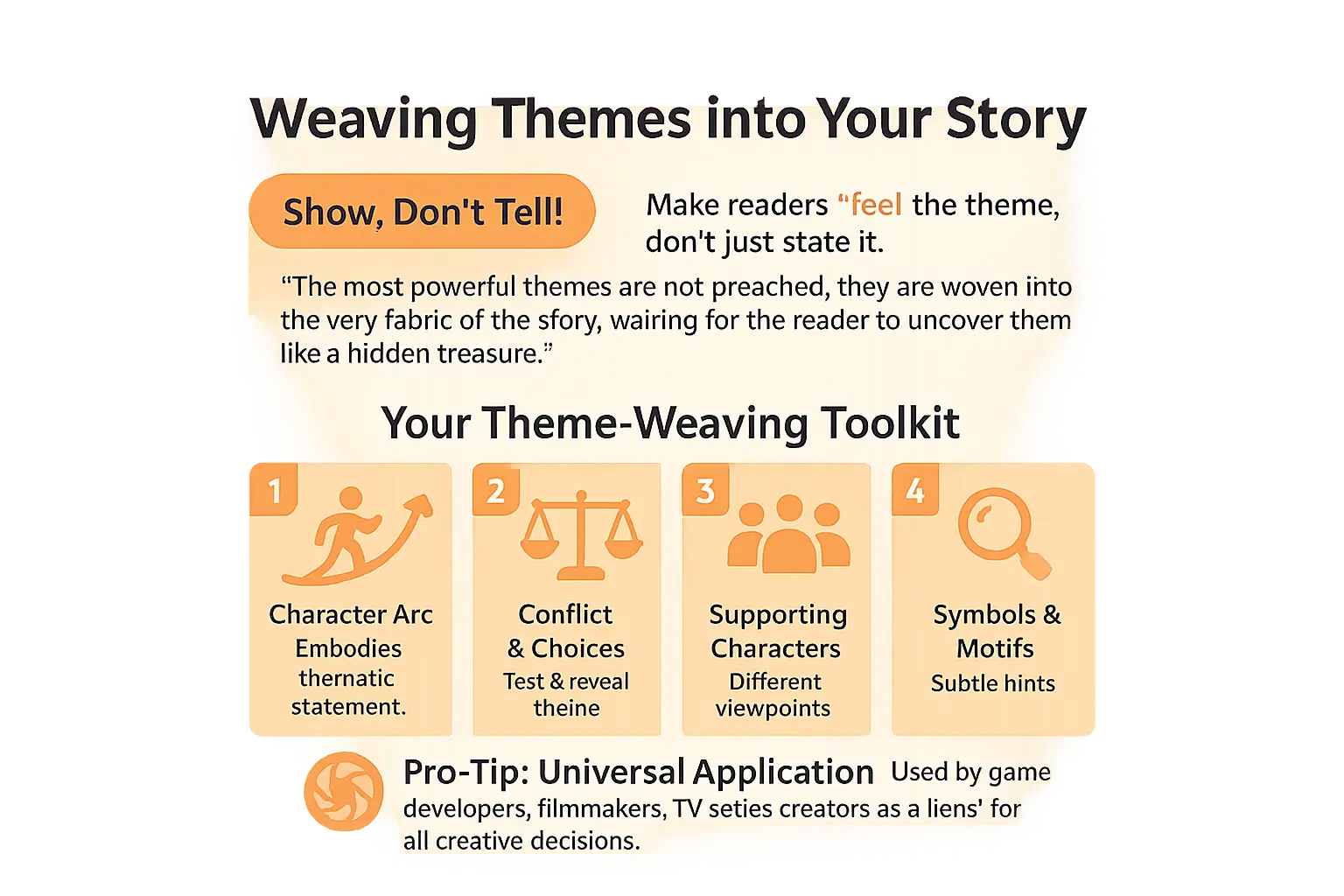
“The most powerful themes are not preached, they are woven into the very fabric of the story, waiting for the reader to uncover them like a hidden treasure.”
Think of your theme as a scent in the air – present, but not slapped on the page. Use character choices, symbols, or recurring moments to let readers piece it together themselves. This makes your story way more memorable than just stating, “Hey, this is about courage!”
Take To Kill a Mockingbird – it never says “racial injustice is wrong” outright. But every decision Atticus makes, every lesson he teaches his kids? They scream it. That’s the magic! The theme becomes personal because readers feel it, not just read it.
Your theme-weaving toolkit
- Through the character arc: Let your main character’s growth scream the theme. If your theme is “trust matters,” show how their ability to trust evolves (or doesn’t). Does your protagonist start as a loner but learn to rely on their team? That’s theme gold! 💡
- Through conflict and choices: Pit characters against dilemmas testing your theme. A theme like “sacrifice for truth”? Make them choose between saving a friend or exposing a lie. Make the reader feel the weight of that choice.
- Through supporting characters: Use side characters to mirror or oppose your theme. A friend who lies vs. a villain who’s brutally honest? Now you’ve got a debate! Side characters can represent different shades of “loyalty” without heavy-handed dialogue.
- Through symbols and motifs: Repeat objects, colors, or phrases that subtly scream your theme. Think of green lights in The Great Gatsby whispering “unreachable dreams” without a single lecture. Or how cold in Game of Thrones doesn’t just chill – it means something bigger.
A pro-tip from other creators
This isn’t just for novelists – game developers use the same trick! 🎮 Themes act as a “lens” to shape every choice. Ever noticed how The Last of Us uses its apocalypse to scream “hope survives”? The way characters share food or protect kids? All fueled by that “hope” engine. The theme isn’t told – it’s lived through decisions.
Finding the right theme for your audience
Choosing the perfect story theme might feel tricky, but here’s the secret: it’s all about connecting with what matters most to your child. 🧠✨ At Tell Me Stories, we’ve made this process super simple – and super fun! Whether your little one loves daring adventures or cozy life lessons, we’ve got themes that’ll make their eyes light up.
Themes for the little ones
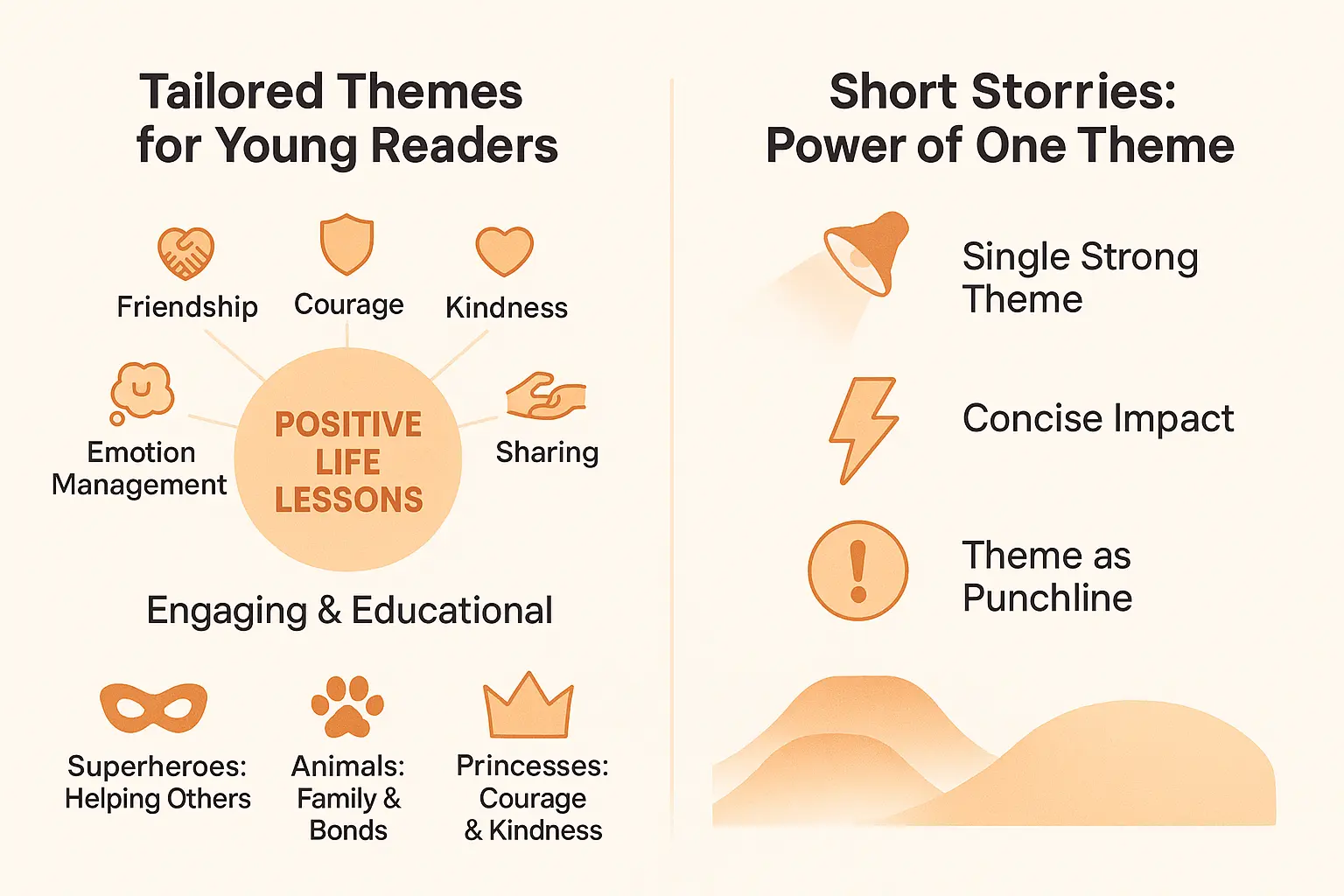
For kids under 10, themes work best when they’re simple, positive, and packed with heart. Think of these as your parenting superpowers – sneaky ways to teach important stuff while they’re busy having fun! 🦸♂️
Popular themes include:
- Friendship magic
- Brave hearts
- Kindness power-ups
- Emotion superheroes
Here’s the cool part: our AI remembers these themes automatically! So when you create a story today about helping others, your child might get a surprise follow-up adventure tomorrow. You’ll love how these lessons stick naturally. 🎯
Want to try it yourself? For instance, you can explore the theme of helping others with a fun story about brave superheroes, discuss the meaning of family with charming animal characters, or redefine courage and kindness with a modern princess tale. Each theme becomes your child’s personal adventure!
What about short stories?
Short stories? Think of them as theme laser beams! 🔥 With less time to shine, they need one powerful message that hits hard. You don’t have 300 pages – you’ve got 5 minutes to make that theme unforgettable.
Our WhatsApp stories work like this:
- You record a voice note
- We create the tale
- Theme magic happens instantly
You’ll love how these bite-sized adventures deliver big lessons. The theme becomes the whole point – that “Aha!” moment when everything clicks into place. It’s storytelling wizardry that fits perfectly into your busy day! ⏱️
 Story themes for kids” />
Ready to create your own themed story?
A quick recap
So, in a nutshell: Themes are your story’s DNA 🧬. They’re the invisible glue holding plots together and making characters feel real. Think of them as the “why” behind every brave knight or curious explorer. Whether it’s “sharing makes adventures sweeter” 🍭 or “bravery starts with a tiny step” 🦸♀️, these ideas shape how little heroes grow. Remember how friendship themes shine through pirate adventures? Yep – that’s theme magic at work! 🌟
Your turn to be the storyteller
Feeling inspired? What if you could craft a tale where your child learns kindness through a talking dinosaur? 🦕❤️ Our AI story generator turns bedtime ideas into magical adventures in seconds – no writing skills needed! Over 10,000 families use Tell Me Stories monthly to make learning feel like play. Just whisper your idea in a voice note and watch the magic happen 🌟
Pro tip: The AI remembers your child’s favorite characters! 🧠✨ Create a potty-training panda story today, and next week a school-starting sloth adventure appears. All stories include audio narration and physical book options for hands-on readers. 📚
Why wait? Try our free story demo and see how easy it is to make your child the star of their own journey. Who knows? You might discover your inner storyteller! 🎤✨
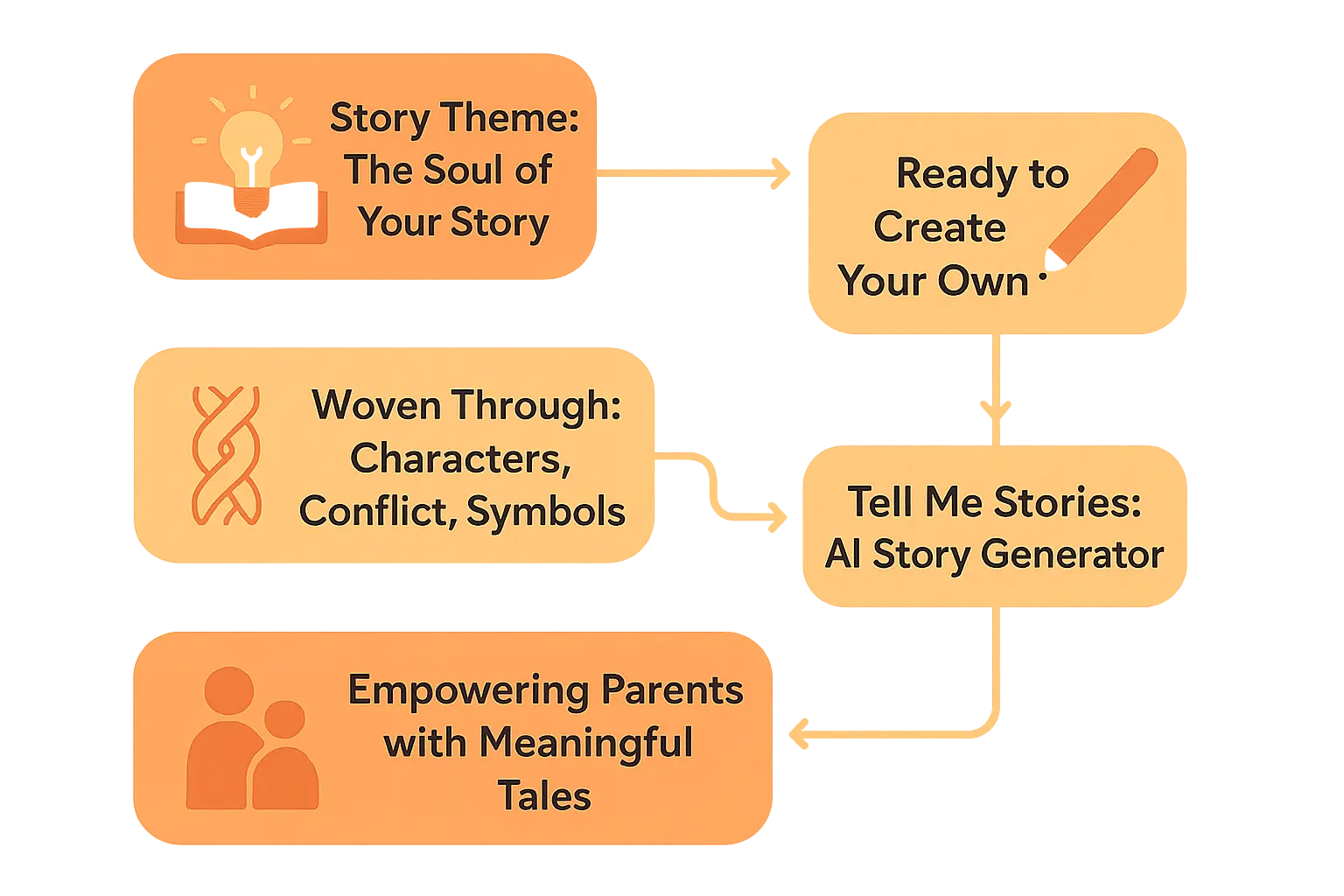
Now that you’ve uncovered the soul of storytelling, it’s time to bring your theme to life! 🚀 Whether it’s a tale about bravery, kindness, or wild adventures, a strong theme turns simple plots into unforgettable journeys. Ready to craft your own? Click [here](https://tellmestories.ai/story-generator) to start—no writing skills needed! Let’s make your story mean something. 🌟 [Tell Me Stories](https://tellmestories.ai/) is waiting!
FAQ
What are the themes in a story?
Themes are like the heartbeat of any story – they’re the big ideas or messages that tie everything together. Think of them as the “why” behind the “what.” While the plot is what happens, the theme is the deeper meaning or lesson. For example, a story might explore themes like love, power, or identity to make readers go “Oh, I get it now!” 🤯 They’re not shouted out but woven into characters, conflicts, and symbols to create that “aha” moment.
What were the major themes?
Major themes are the heavy hitters that shape a story’s soul. Some classics include:
- 🔥 Survival (like in dystopian tales where characters fight against the odds)
- 💔 Love vs. Duty (choosing between heart and responsibility)
- 🛡️ Power Corrupts (think evil empires or twisted ambitions)
- 🧠 Identity (characters figuring out who they are)
- ⚖️ Justice (righting wrongs or challenging unfair systems)
- 🌌 Fate vs. Free Will (are we in control or just rolling dice?)
- 🌱 Coming of Age (growing up and finding your place)
- 👻 Guilt/Redemption (fixing past mistakes or living with them)
These aren’t just random – they’re the emotional glue that makes stories stick in our minds! 💡
What’s a good theme for a short story?
Short stories need punchy themes that hit fast! Try these:
- 🌟 Kindness Wins (like a kid helping a stranger change their day)
- 🦸 Bravery in Small Moments (overcoming fears, even if it’s just talking to a new friend)
- 🐾 Respecting Nature (an animal adventure teaching eco-awareness)
- 📚 Learning Matters (a character solving a problem through smarts)
- 🤝 Teamwork (characters realizing they’re stronger together)
Bonus tip: Pair these with Tell Me Stories’ superhero themes or animal adventures to make them extra engaging for younger readers! 📚✨
What are 8 major themes in YA Lit?
Young adult stories thrive on themes that hit close to home! Check these 8 YA faves:
- Self-Discovery – Teens figuring out who they are (hello, Eleanor & Park).
- Identity & Belonging – Finding your tribe or embracing your uniqueness 🌈.
- Love & Heartbreak – First crushes, toxic relationships, you name it 💔.
- Survival – Whether it’s dystopias or mental health struggles 💪.
- Rebellion – Fighting oppressive systems (like in The Hunger Games).
- Family Drama – Messy parents, sibling rivalry, or found families 🧒.
- Justice – Calling out unfairness in schools, governments, or society ⚖️.
- Friendship – Loyalty, betrayal, and ride-or-die moments 🤝.
These aren’t just trends – they’re the stuff real teens live through every day! 🎯
What is a universal theme?
Universal themes are the “everyone gets this” club of storytelling! They’re ideas that cross cultures and eras, like:
- ❤️ Love – In all its messy forms
- 💀 Life & Death – What makes us tick (or stop ticking)
- 🧠 Human Nature – Are we born good/bad or is it learned?
- ⚡ Freedom – From cages, expectations, or inner demons
- 🌟 Hope – Light in the darkest tunnels 🌈
They’re like emotional cheat codes – no matter where you’re from, you’ll feel these themes. Even aliens would probably get them! 👽
Can hope be a theme?
You bet! Hope is one of the most powerful themes out there. It’s the spark that keeps characters going through hell – think of a hero clinging to hope when everything’s falling apart 🌟. It works because:
- It’s relatable (we all need hope sometimes)
- It creates emotional stakes (will they pull through?)
- It’s action-driven (hope makes characters DO stuff)
Like in Life of Pi, where hope keeps the protagonist alive at sea. Even in dark stories, a hint of hope hooks readers – it’s like saying, “Hey, maybe things’ll work out!” 🙌
What are three examples of a theme?
Let’s keep it real simple with three common ones:
- Power Corrupts – Ever seen a villain start as “good”? That’s this theme in action 🐍.
- Freedom – Whether it’s escaping slavery or a boring job, this hits hard 💥.
- Identity – Like a character realizing they’re not who they thought they were 🎭.
These aren’t just for novels – try them in your next bedtime story or princess tale to make it more meaningful! 👑
Is guilt a theme?
Oh, absolutely! Guilt’s a goldmine for drama. It’s all about:
- Characters wrestling with past choices 🤯
- Decisions haunting them like a horror movie 🎭
- Making the story feel real because, hey, we’ve all felt guilty!
Take Macbeth – guilt literally drives Lady Macbeth nuts! In modern stories, it could be a character hiding a secret or regretting a mistake. It adds depth and makes you root for redemption (or fear the consequences) 🔥.
What are specific themes?
Specific themes zoom in on unique angles of universal ideas! Here’s how they work:
- Universal: Family → Specific: Grandparent-Grandchild Bonds 🧓
- Universal: Justice → Specific: Reforming School Punishment Systems 📚
- Universal: Power → Specific: Teens vs. Controlling Social Media Algorithms 📱
They’re like taking a broad concept and making it hyper-relevant to your story’s world. Perfect for creating fresh twists on timeless ideas! 🎯