The essential takeaway: Educational games turn study time into adventure, blending fun with skill-building. Designed by experts, they use challenges and offer instant feedback in safe trial-and-error spaces. 866+ games cover math, coding, critical thinking—from preschool basics to middle-school complexity. They boost lifelong learning for adults too. Think of them as Trojan horses: the fun sneaks in the knowledge.
Tired of endless screen time battles? 🎮 What if that time could transform into a treasure trove of learning? Educational games aren’t just flashy distractions—they’re brain-boosting adventures crafted by teachers, designed to turn “I’m bored” into “I get it!” 🚀 From mastering fractions to cracking coding basics, this guide spills the secrets of games that make learning goals feel like winning a level-up, all while leveraging gamification to fuel motivation. Explore titles that build problem-solving skills, resilience, and curiosity—where non-cognitive skills like patience grow alongside academic wins. Ready to game-ify your child’s education? Let’s play!
What are educational games, really? 🤔
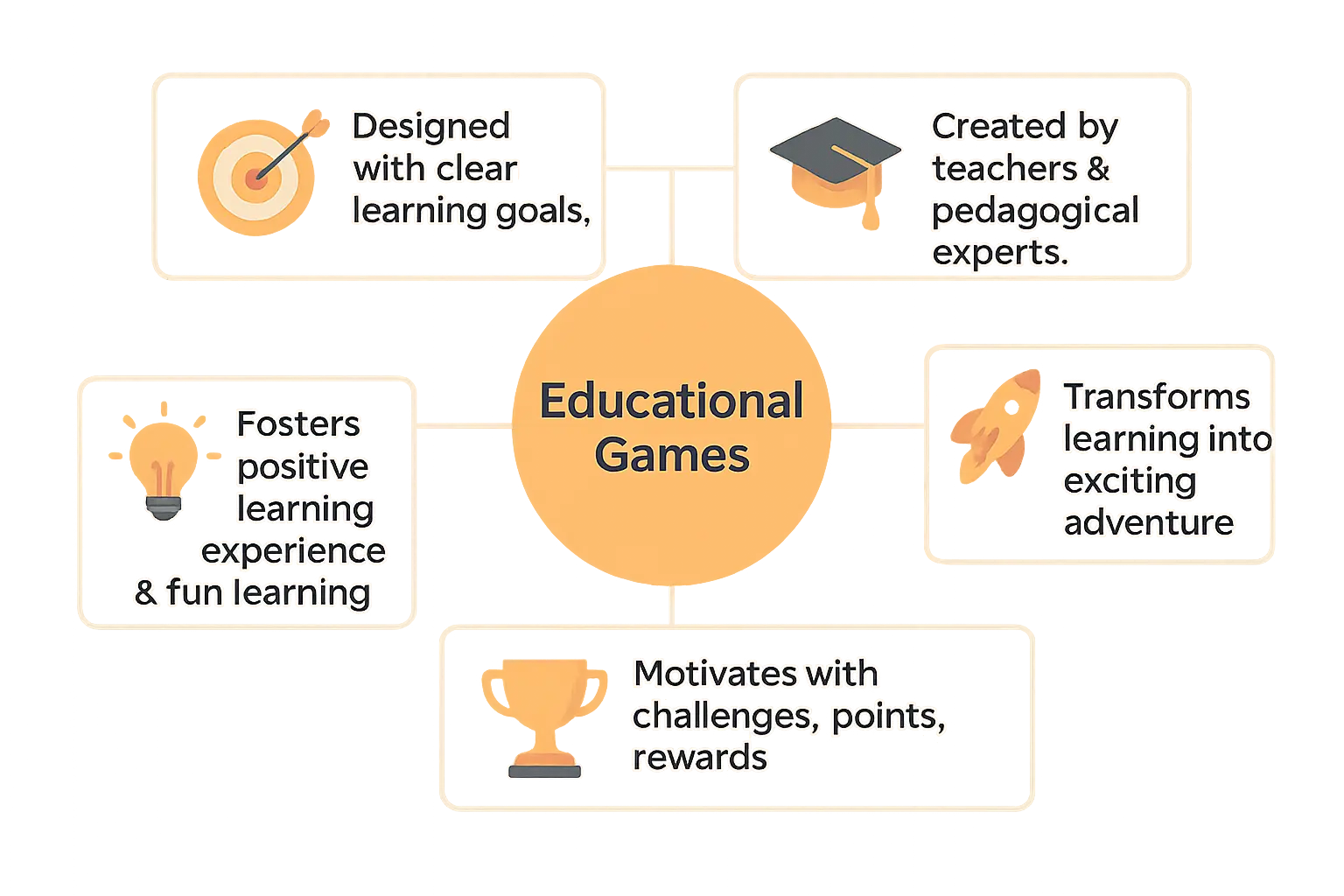
Tired of the screen time battle? What if that screen time could be smart time? 🎮💡 Educational games are the secret sauce turning “boring” learning into epic adventures. They’re not just flashy distractions—they’re learning goals wrapped in interactivity, designed by teachers to make knowledge stick without kids realizing it!
Think of educational games as stealth teachers. Imagine math problems hidden in treasure hunts or spelling lessons baked into space missions. Even coding basics can hide inside pixel-art puzzles! These games transform passive scrolling into active brainpower, blending challenges with positive learning experiences. It’s not homework in disguise—it’s adventure with purpose. 🐴✨
Why do they work? Three reasons:
- Instant rewards (think digital badges, progress bars, or unlocking new characters)
- Story-driven missions (saving a kingdom = mastering fractions!)
- Adaptive learning (games evolve with your child’s skills, like a personalized tutor)
Here’s the magic trick: they turn mistakes into stepping stones. When a child fails a level, they don’t quit—they try again, tweak strategies, and conquer challenges. This builds resilience while secretly teaching critical thinking. 🤫
And here’s where it gets even cooler: these games aren’t one-size-fits-all. For preschoolers, they build letter recognition and counting. For older kids, they tackle coding basics or complex storytelling. The best part? Over 800+ games exist, offering choices for every age and learning style—whether your child thrives on competition or creative play.
Want to see how this works? The goal is to blend education with fun learning, creating an experience kids actually want to repeat. Spoiler alert: it involves turning “I’m booooored” into “Let’s play again!” 🚀
The secret sauce: why games make learning stick
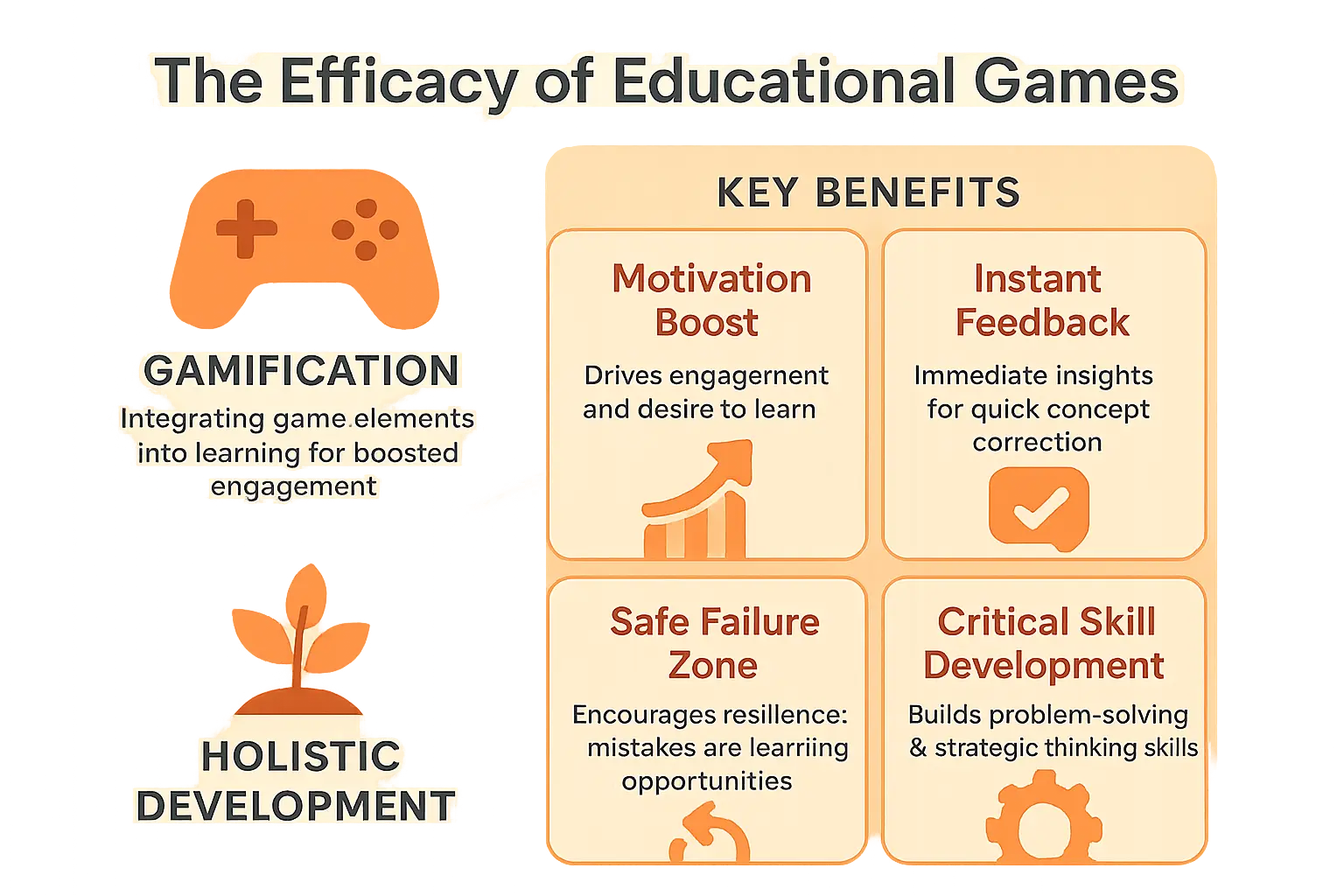
Games aren’t just about fun – they’re powerful tools for learning. By blending gamification with education, they tap into how our brains naturally absorb information. Let’s break down why this works.
Here’s the magic mix that turns games into learning powerhouses:
- Boosted Motivation: Kids are driven to play and win, which means they’re driven to learn. A child racing to solve math problems unlocks rewards, turning learning into a quest.
- Immediate Feedback: Games provide instant responses, helping children correct mistakes on the spot. Errors become quick lessons.
- Safe Environment for Failure: Mistakes become stepping stones, encouraging resilience. In a puzzle game, a wrong move is a clue, not a setback.
- Development of Critical Skills: Beyond academics, games build problem-solving skills and strategic thinking. Navigating a virtual ecosystem teaches cause-and-effect dynamics subtly.
Educational games transform study time into an adventure, making learning an exciting and positive experience that children willingly embrace.
When kids play, they’re not just memorizing facts. They’re learning to try again after setbacks – a mindset that builds grit. This “productive failure” lets them experiment freely, as shown in studies on gamification in education. Think of it as a playground for the mind, where errors are lessons in disguise. A child struggling with fractions in a game might try multiple approaches through trial and error – building math skills and perseverance.
Games also sharpen skills beyond the classroom. From patience to decision-making, these non-cognitive skills are game-changers. As experts from Stanford University explain, mastering these traits is as vital as academic knowledge. A child learning to wait their turn in a multiplayer game builds patience for future teamwork.
Beyond just facts and figures, educational games are highly effective at developing non-cognitive skills like patience and discipline, which are fundamental for success in learning.
What makes games unique? Their immediate feedback. A child instantly sees what worked or flopped, turning every click into a learning moment. Platforms like Duolingo and Kahoot! report up to 34% better retention rates thanks to this real-time guidance.
At their core, games teach kids to embrace challenges. Whether solving a puzzle or navigating a virtual world, they’re building mental resilience for real-life problem-solving. With progress bars or achievement badges, they’re always motivated to level up – both in the game and in life.
Finding the perfect game for every age and subject 🎯
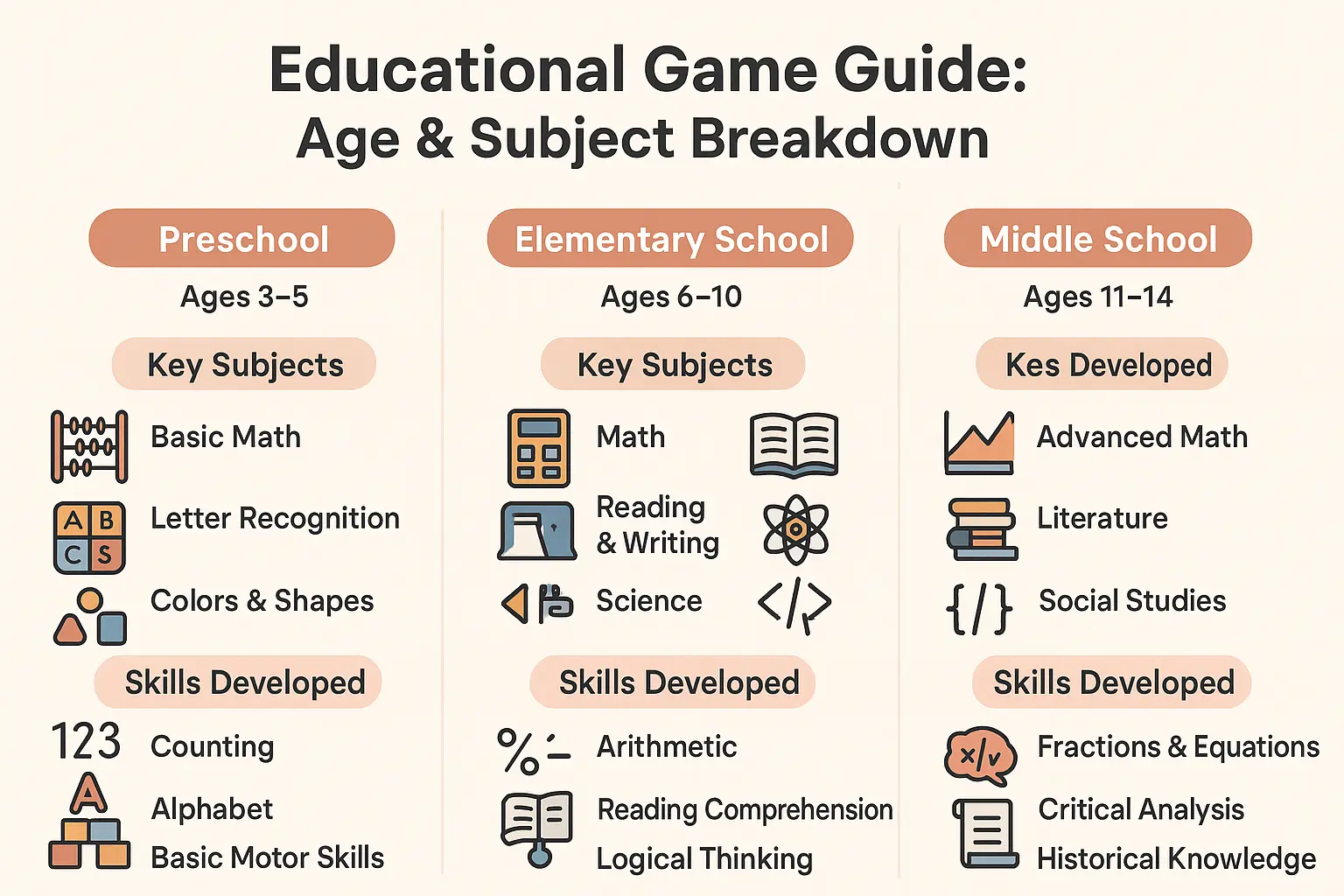
Looking for by grade level or by subject learning tools? Educational games offer targeted skill-building adventures for kids at every stage. Let’s break down what makes these games so effective – and how they turn “screen time” into “smart time”! 🌟
Preschool (Ages 3-5) games focus on core skills like counting, color recognition, and creativity. Think shape-sorting apps or interactive storybooks where kids tap to animate characters. These tools make early learning feel like play while building motor skills and curiosity. 🎨 Try color-matching puzzles or singing alphabet games for engaged learning moments. Apps like ABCya! even turn letter recognition into dance parties – no flashcards needed!
Elementary (Ages 06-10 learners thrive with games blending math, science, and reading. Virtual labs spark scientific thinking, while drag-and-drop coding teaches logic. Curriculum-aligned platforms transform tricky topics like fractions into puzzle-solving missions – no textbook required! 🔬 Did you know? Studies show 78% of teachers report improved engagement when using games like Starfall, where 700+ activities align with school standards.
Middle School (Ages 11-14) games tackle advanced concepts. Master fractions through pizza simulations, analyze history via time-travel quests, or practice real-world coding languages. Research shows students using structured games twice weekly see significant improvements – like 23% higher test scores! 💻 Platforms like Legends of Learning even track progress, letting parents see exactly how those gaming hours translate to grade-level gains. 📈
| Age Group | Key Subjects | Skills Developed |
|---|---|---|
| Preschool (Ages 3-5) | Basic Math, Letter Recognition, Colors & Shapes, Arts | Counting, Alphabet, Basic motor skills, Creativity |
| Elementary School (Ages 6-10) | Math, Reading & Writing, Science, Basic Coding, Typing | Arithmetic, Reading comprehension, Scientific curiosity, Logical thinking |
| Middle School (Ages 11-14) | Advanced Math, Literature, Social Studies, Coding, Digital Literacy | Fractions & Equations, Critical analysis, Historical knowledge, Programming basics |
Ready to level up? This table is a great starting point, but don’t hesitate to explore the wide world of learning games to find the perfect fit for your child’s unique learning journey. 🎮 Pro tip: Alternate math apps with storytelling games – mixing genres keeps challenges fresh and skills balanced! 🔄
Learning games beyond the browser
Think educational games are just for computers and tablets? Think again! 🎮 Consoles and adult-focused games are redefining skill development and lifelong learning, blending education with adaptable real-world learning.
Educational games on consoles
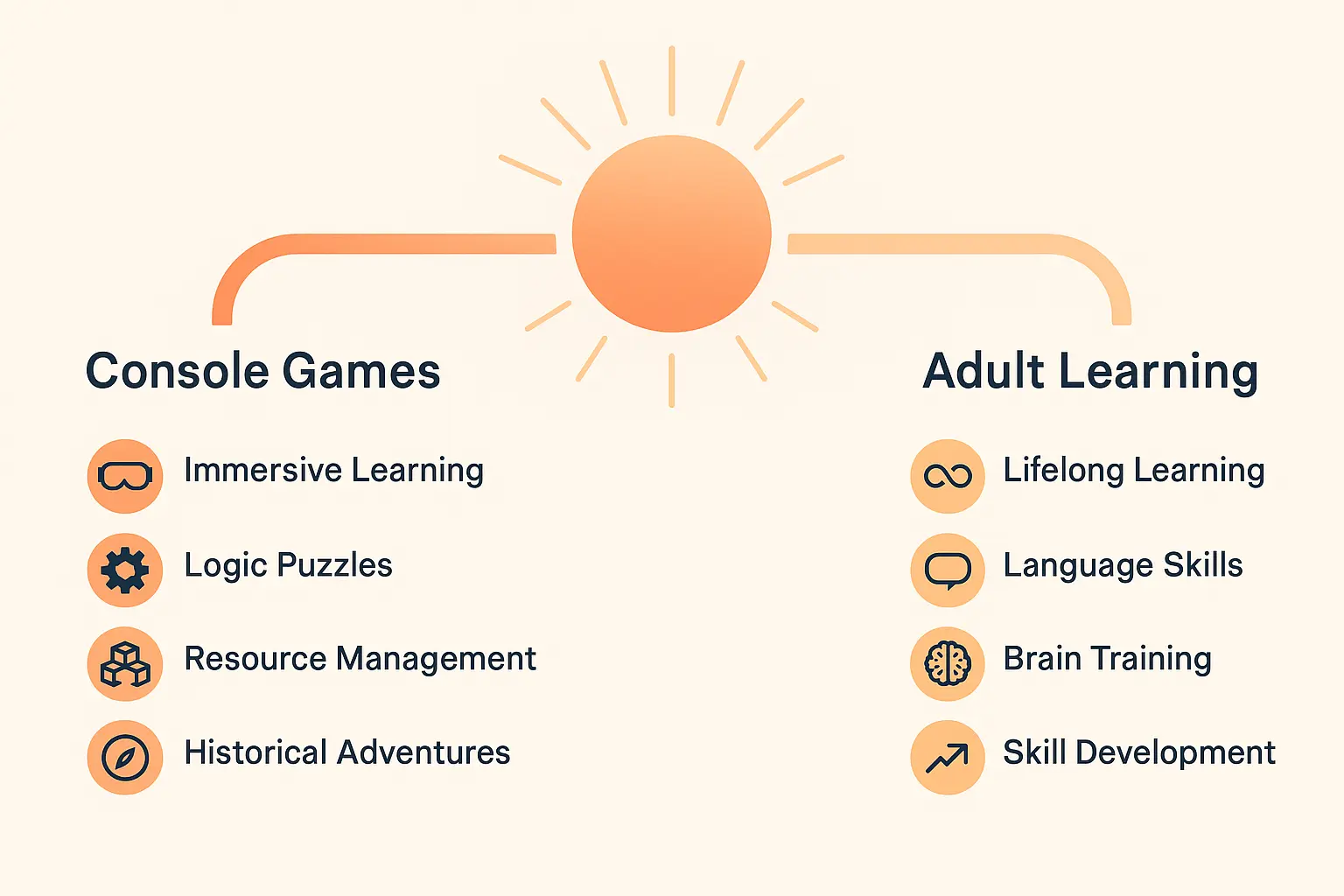
Modern consoles like Nintendo Switch and PlayStation aren’t just for action adventures. They’re powerful tools for immersive learning. Puzzle games sharpen logic, simulation titles teach resource management, and historically inspired adventures make cultural lessons unforgettable. Games like Climate Station (PS5) transform environmental science into interactive challenges, while Shashingo (Switch) teaches Japanese vocabulary through playful exploration.
- Problem-solving: Puzzle games foster analytical thinking via challenges like decoding patterns.
- Historical context: Adventure games make history relatable via storytelling, like navigating ancient civilizations.
- Resource management: Simulation games mirror real-life decisions, such as balancing virtual budgets.
These games prove skill development can coexist with fun, turning complex concepts into engaging challenges.
Brain-boosting games for adults
Education doesn’t stop at childhood. Lifelong learning thrives through games for grown-ups. Language apps, brain-training puzzles, and simulators keep minds sharp. Titles like Kerbal Space Program 2 let adults practice engineering risk-free, while adaptive tools like Tell Me More offer personalized brain training.
- Cognitive resilience: Brain-training games maintain mental agility with age.
- Professional growth: Simulators let adults apply knowledge in safe environments, from coding to physics.
- Stress relief: Puzzle games balance relaxation with skill development.
These games boost dopamine, enhancing motivation and focus. Whether mastering Japanese through Shashingo or tackling strategy, adults gain knowledge and mental agility—all while having fun 🧠
A parent’s guide to smart gaming ✅
Smart games can boost learning, but how do you choose wisely? Let’s tackle two big questions parents face when balancing fun and education.
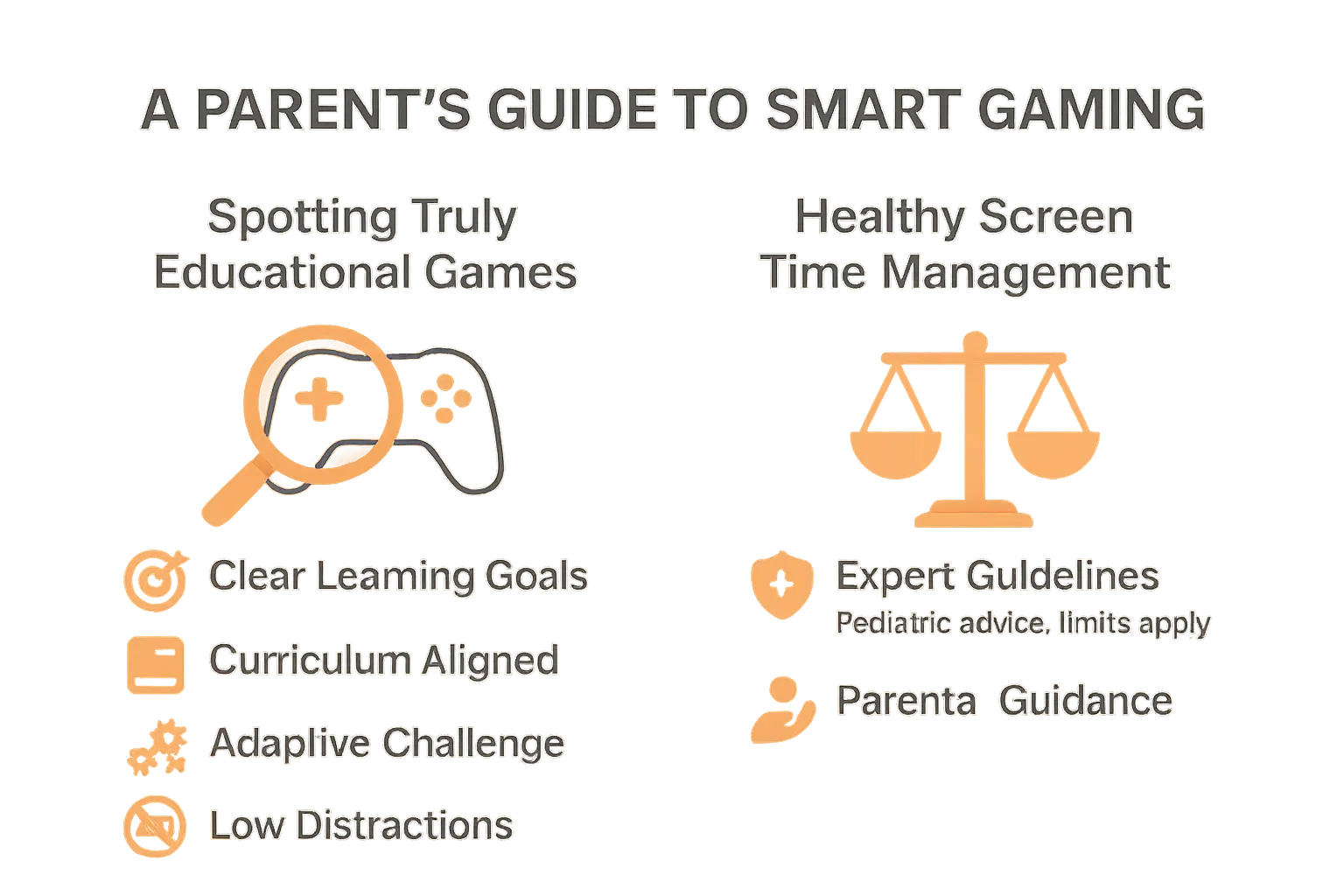
How to spot a truly educational game
Not all “educational” games deliver real learning. 🕵️ Here’s your quick checklist:
- Clear Learning Objectives: Does the game clearly state skills it builds? Look for specifics like “teaches basic coding” rather than vague claims.
- Curriculum-Aligned: Does content match school topics? Math games should reinforce classroom concepts like fractions, while reading apps might focus on phonics.
- Adaptive Difficulty: Does it adjust challenges as your child improves? Games that “grow” with users keep learning effective long-term.
- Low in Distractions: Avoid games overflowing with ads or non-educational extras. These often steal focus from actual learning.
Look for games that turn specific skills into adventures. A math game should make fractions feel like treasure hunts, not worksheets. Reading apps become powerful when they help kids recognize letters through interactive stories featuring their favorite characters.
Managing screen time (the healthy way)
Even truly educational games need limits. 🕒 Let’s find that healthy balance:
- 2–5 years: Max 1 hour daily
- 5–17 years: Under 2 hours for leisure
Remember: parenting experts and pediatric guidelines warn that “educational” ≠ “unlimited”. Too much screen time can lead to sleep issues or reduced physical activity. Balance is key.
Pro tip: Use screen time as a family activity. Discuss what your child learns during/after playing. This doubles the learning power while keeping connections strong 💬
Smart strategy: Combine digital learning with physical play. After a math game, practice counting toys together. Turn story apps into bedtime reading sessions. This creates natural screen breaks while reinforcing concepts.
Watch for warning signs: Crises when ending screen time? Secretive usage? These might indicate unhealthy habits. The World Health Organization recommends 60 minutes of physical activity daily – use tech to support, not replace, active play.
Ready to level up your child’s learning?
Think of educational games as powerful tools that turn learning into an adventure. They’re not just about memorizing facts—they’re about sparking curiosity, building confidence, and making knowledge stick through play. Whether solving puzzles, exploring virtual worlds, or creating digital stories, kids master math, reading, or coding while staying engaged. For example, Prodigy Math blends role-playing with arithmetic, transforming homework into a quest.
When kids play, they’re developing skills that matter. Problem-solving, critical thinking, and creativity thrive in game-based environments where trial and error are part of the journey. Platforms often adapt to a child’s progress, ensuring challenges stay just right. This personalization makes learning feel truly personal, meeting kids where they are and growing with them. Younger learners might practice letter recognition, while older kids tackle coding basics through games like Tynker, which turns complex logic into playful challenges.
Imagine your child diving into adventures that match their passions—space exploration, storytelling, or building virtual robots. This is how learning becomes a lifelong love of learning. By embracing these tools, you’re not just helping with homework; you’re helping build a lifelong love of learning by making it engaging, exciting, and truly personal. The right game can transform a hesitant learner into a confident enthusiast, one adventure at a time.
Educational games are powerful tools, turning learning into adventure. They blend challenges with skills, nurturing curiosity and a lifelong love of learning. The magic? Finding games that match your child’s passions, making learning engaging and personal. Ready to transform “screen time” into a journey of discovery? 🎮✨ (Word count: 44)
FAQ
What are the different types of educational games? 🎲
Educational games come in many flavors! Think math challenges where you solve puzzles to unlock rewards, reading adventures that turn stories into interactive quests, or science simulations where you play “mad scientist” with virtual experiments. There are also brain-training games for memory boost, coding games where you feel like a tech wizard, and even physical games that get kids moving while learning. The best part? They’re designed to teach core skills while feeling like pure fun. On the hunt for a specific subject? Most platforms let you filter by math, reading, science, or even typing practice!
Are there free learning games that actually work? 💰
Yes—and they’re everywhere! Sites like ABCya! and Hot Potatoes offer tons of free options for ages 3-14. Looking for math drills? Try Prodigy. Want to teach coding basics? Scratch is a free platform with a whole creative community. Even apps like Duolingo start free for language learners! Just watch out for ads or limited features in free versions. Pro tip: Check if your child’s school has subscriptions to premium tools like Khan Academy—they often do!
What old-school board games are still classroom heroes? 🎲
Timeless classics never die! Guess Who? builds deduction skills, while Scrabble turns vocabulary into a battle royale. Sequence mixes strategy with teamwork, and Guess Who? teaches kids to ask smart questions. For math, Monopoly is a money masterclass. Even Life sparks money management chats. Teachers love Taboo for explaining complex ideas simply. Pro tip: Dust off The Oregon Trail for a retro history lesson—just don’t let dysentery win!
How does the 123 game work? 🔢
Super simple math magic! One player writes a number 1-9 secretly. Others guess numbers, but here’s the twist: after each wrong guess, the next player says “Too high!” or “Too low!” and does a fun action (jumping jacks, silly dance). The goal? Crack the number while getting physical! For advanced players, add a second digit or negative numbers. Perfect for car rides or classroom brain breaks. You can even play with whiteboards for instant math practice!
What are the 4 main game categories? 🧠
Think of them as learning superpowers! 1. Cognitive: Boost memory and logic (think Lumosity-style puzzles). 2. Collaborative: Teamwork makes the dream work—like escape rooms where you solve riddles together. 3. Competitive
: Leaderboards and rewards drive engagement (Quizlet Live is a fave!). 4. Simulative: Virtual labs for science or budgeting games for economics. Each type builds different problem-solving skills, so mix it up for maximum learning power!
What’s the funnest school game ever? 🏫
Kids scream for Kahoot! quizzes where they race to answer questions with smartphones. Teachers love Jeopardy! for review sessions—it’s trivia with bragging rights! For movement, try Math Bingo with physical challenges between numbers. The OG? Hot Potato with a twist: when the music stops, the student holds a “question potato” and must answer fast! For tech lovers, Minecraft: Education Edition lets them build ancient civilizations or solve coding challenges in 3D worlds.
Can I get free brain-training games? 🧠
Free brain workouts? Absolutely! Brain training sites like Lumosity (free tier) and CogniFit let you sharpen memory, attention, and logic. For kids, ABCya!’s “Matching” games build pattern recognition. Try Elevate’s free app for daily 10-minute exercises to boost reading speed or math reflexes. Even classic games like Sudoku and crosswords count! Pro tip: Pair free apps with family game nights using Sequence or Guess Who?—old-school brain boosts that cost nothing but laughter.
How to play the ABC game? 🧠
Perfect for early readers! One player picks a theme (animals, foods, etc.). Take turns naming things in that category starting with A, B, C—super easy for preschoolers. For older kids, add rules: no repeating letters or categories must relate to school subjects (science, geography). Variations include writing answers on paper for handwriting practice or racing to say all 26 letters. Use it for vocabulary review too—”Name a country starting with N” becomes a geography warm-up. Bonus: It’s screen-free and adaptable for any age!
How to play hot potatoes? 🥔
Hot Potatoes isn’t just a tater—it’s a game show! Teachers create quiz questions (multiple choice, short answer) using the free software. Students buzz in with answers, racing against the “hot potato” timer. Wrong answers? The screen lights up like a game show failure bell! Right answers? Celebratory animations! Perfect for classroom tournaments or virtual learning—students just click through the web-based quizzes. Pro tip: Use it for non-cognitive skills like public speaking by having kids explain their answers to the class!