For anxious little minds, stories are more than just bedtime tales—they’re lifelines. When kids see their fears mirrored in characters, they learn to name emotions and build resilience. The magic? It’s a tool you already have: storytelling! 78% of parents notice calmer kids after storytime rituals. Try Tellmestories 💬 to craft personalized tales that turn “worry monsters” into manageable buddies—no books required, just WhatsApp.
Ever felt totally helpless when your little one’s swallowed by worries? 😩 That’s where stories for anxious kids step in—not just tales, but lifelines helping them face thunderstorms, school jitters, or bedtime fears with a brave face. These aren’t your average bedtime reads; they’re science-backed tools that teach coping skills, turn monsters into metaphors, and make anxiety feel less scary. Stick around and you’ll uncover how relatable characters normalize big feelings, how interactive storytelling sparks courage, and why personalized tales (yes, even about fear of the dark!) create calm rituals. Ready to transform storytime into your secret weapon? 🌟
Why Stories Are a Superpower for Anxious Little Minds
Ever watched your child wrestle with bedtime worries or cling to you at the park? I’ve been there. One night, my daughter whispered, “What if a thunderstorm makes all my toys vanish?” Childhood anxiety isn’t rare—it’s like invisible “worry monsters” tagging along. But here’s the twist: stories for anxious kids aren’t just bedtime fluff. They’re secret weapons.
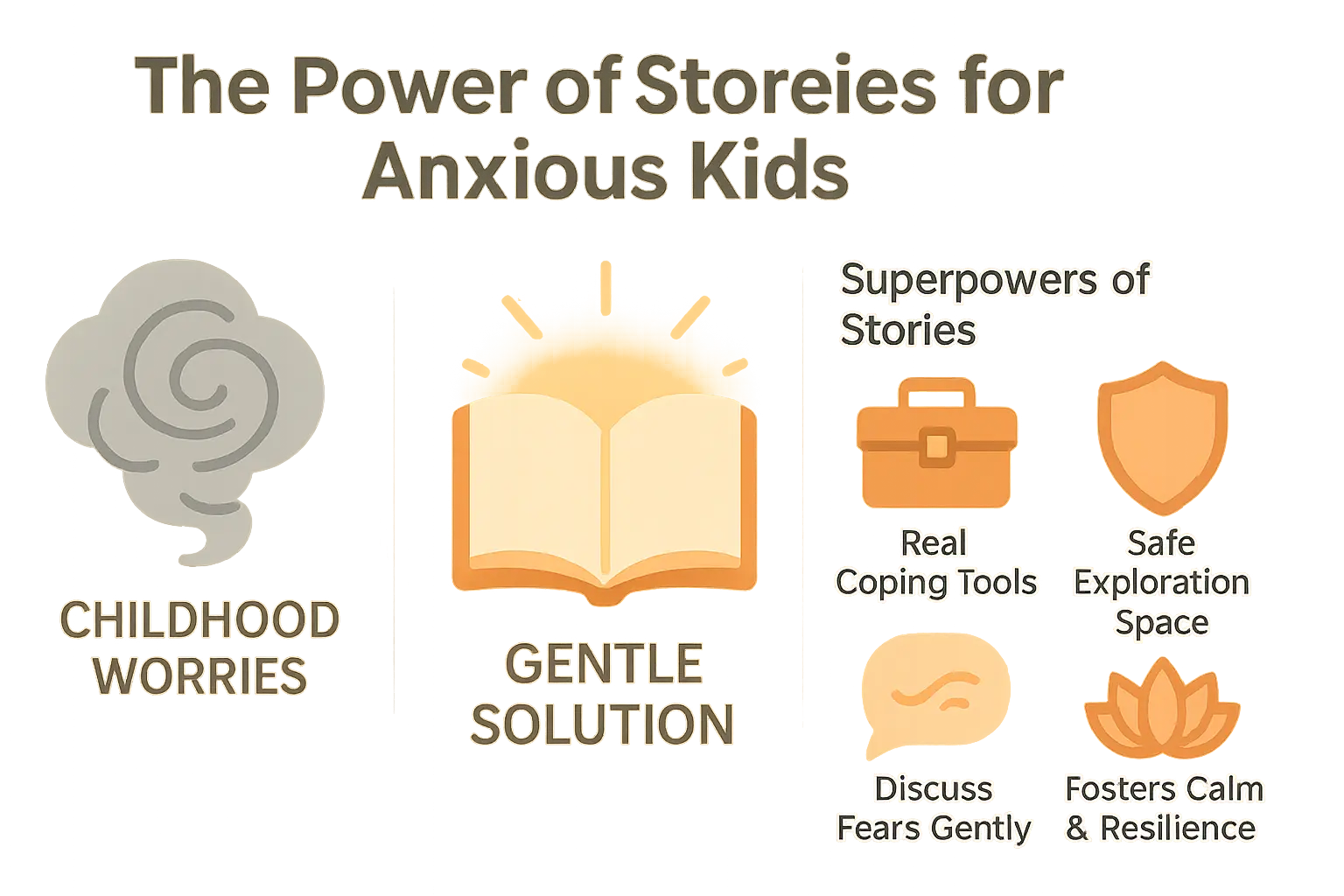
Think of stories as a cozy blanket for the brain. When kids see characters face fears—like a shy bunny learning to speak up—they realize, “Hey, I’m not alone.” This emotional mirroring normalizes big feelings. No lectures, no stress. Just relatable adventures where little heroes learn coping skills. Picture your child laughing at a boy who turns worries into doodles. Suddenly, their own “butterflies” feel less scary.
How does this magic work? Stories create a safe space for trial runs. A child might avoid talking about school jitters but happily discuss a squirrel scared to climb trees. It’s like sneaky parenting: teaching resilience without eye-rolls. Reading together also builds emotional vocabulary—kids start naming feelings instead of bottling them up.
Here’s the kicker: the right story plants seeds for lifelong coping skills. Tales with gentle solutions (deep breathing, asking for help) give kids concrete tools. Repetition reinforces ideas without feeling pushy. Kids might demand the same book nightly? They’re rewiring their brains while you sip lukewarm coffee. Win-win.
 stories for anxious kids” />
Ready to turn storytime into a calm-down superpower? Let’s dive into picking tales that resonate. Spoiler: it’s all about matching the story to their tiny (but mighty) struggles. 💤
How stories work their magic on anxiety
Putting a name on the “worry monster”
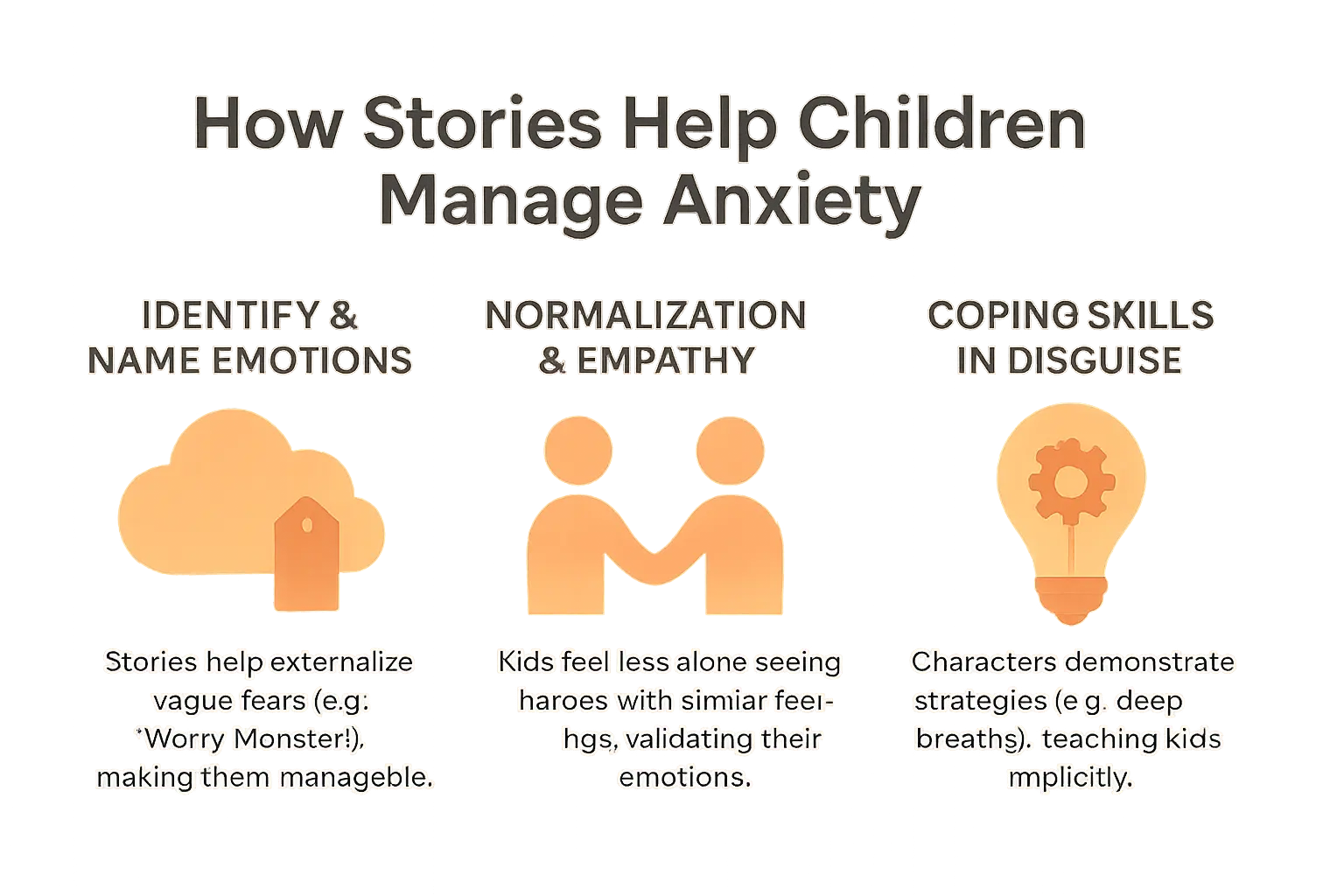
Ever noticed how naming something makes it feel smaller? 🌟 Stories help kids label their anxiety as a “Worry Monster” or “Grey Cloud”. This externalization trick lets them think: “That monster’s the problem, not me!” Instead of being trapped in their head, they’re explorers mapping uncharted territory.
Helping them with learning about their emotions becomes an adventure! When kids see anxiety as a tangible thing – like a clingy shadow – they stop feeling like it’s part of who they are. The founders of Tellmestories, Alex and Julien, discovered this magic when creating bedtime stories for their anxious daughter. By turning her fears into playful characters, they made worries feel… well, less scary! Their AI now remembers your child’s favorite characters, so future stories naturally revisit these lessons – because repetition is how little brains learn. 🚀
“You’re not alone!” – normalization and empathy
Stories show kids that their feelings are valid and that many others feel the same way. It’s a powerful reminder that being anxious doesn’t mean you’re alone.
When Captain Luna gets shaky hands before space missions, or Max the Mouse feels queasy during hide-and-seek, your child realizes: “Wait – even heroes get nervous?!” This normalization dissolves shame. Suddenly, anxiety’s not a weird flaw – it’s a universal experience everyone navigates. And when characters like Luna use belly breaths to steady themselves? Your kid’s learning that courage isn’t about being fearless – it’s about feeling scared and doing the thing anyway. 🌟
Learning new tricks: coping skills in disguise
Story characters don’t just worry – they fight back! 🦸♀️ They blow out “dragon breaths” to calm down, or build “bravery shields” in their imagination. These aren’t just plot points – they’re stealthy lessons. And the best part? Kids absorb these skills while laughing at jokes about talking animals!
Take Luna’s “cloud-blowing” technique: she teaches kids to imagine blowing bubbles that carry worries away. Or the “worry jar” method where characters collect fears in sparkly bottles. These strategies mirror real techniques therapists use, but here’s the secret sauce – kids don’t realize they’re learning! They’re too busy having fun with stories that arrive straight on WhatsApp. And with Tellmestories’ voice feature, parents can add their own calming phrases – like Max the Mouse hearing Papa’s voice say “Let’s count to five together”. Suddenly, bedtime stories become personalized therapy disguised as fun. 🌙✨
Our handpicked story themes to calm anxious hearts
Ever feel stuck when your child’s worries feel too big to handle? 🌟 Personalized stories might be your unsung hero! Let me show you how to pick tales matching their exact fears and age – no generic books needed. These aren’t just bedtime stories; they’re emotional guides for their personal adventures.
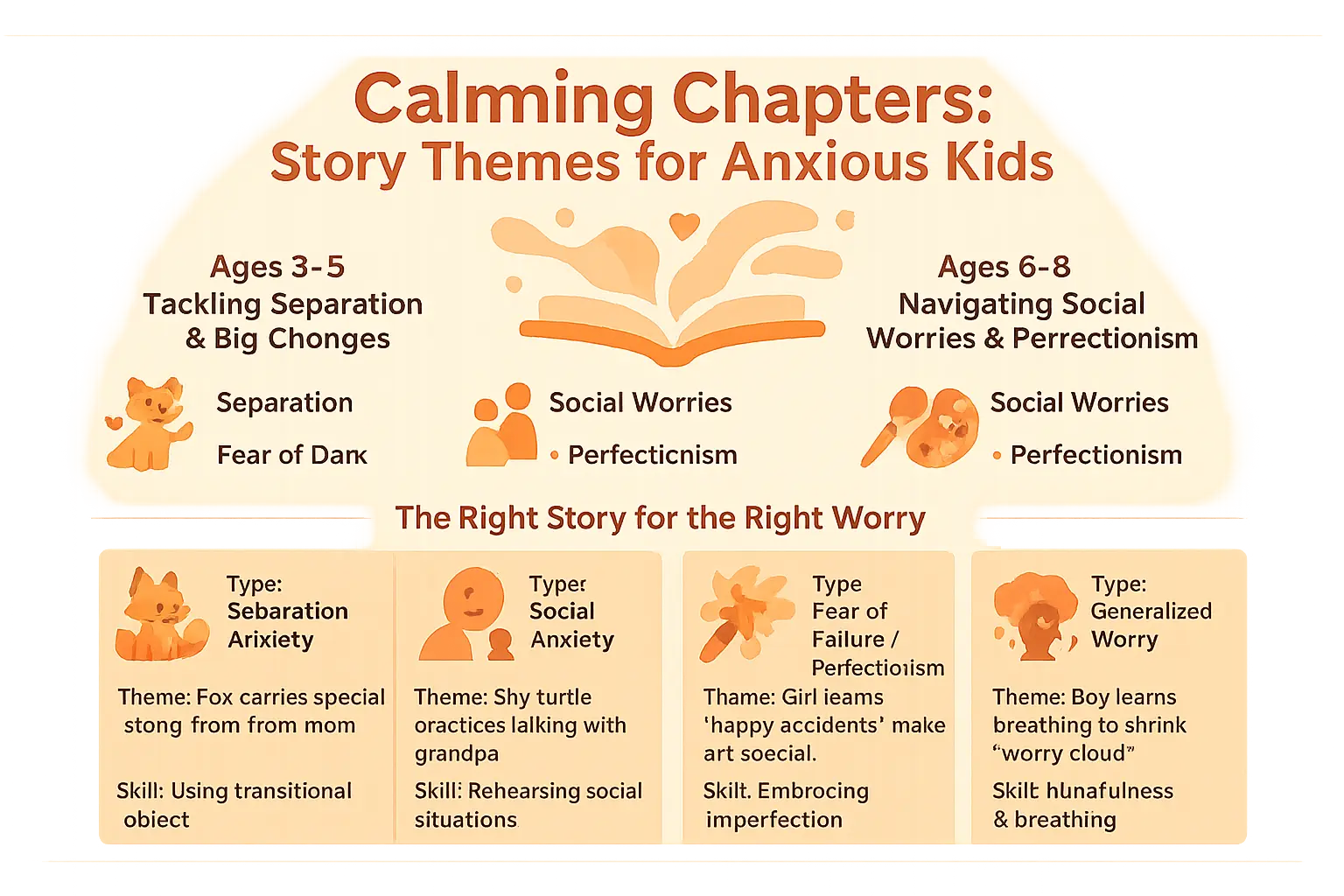
For the little ones (ages 3-5): tackling separation and big changes
When tiny humans face bedtime changes or first-day jitters, keep it simple! 🐻 A baby elephant clutching a special leaf during school drop-off. A timid owl learning stars are “sky friends” watching at night. These stories work by:
- Using comforting sensory details (special objects, familiar sounds)
- Creating reassurance rituals like “goodbye stones” or “brave songs”
- Keeping language repetitive and rhythmic for easy memorization
Think of these as emotional training wheels – concrete tools for abstract fears. 🛟️ The structure mirrors real-life routines, helping little ones absorb the message. Even that “magic stone” becomes a comfort object they can reference when anxious.
For school-aged kids (ages 6-8): navigating social worries and perfectionism
When kids hesitate to speak up or erase drawings anxiously, nuanced stories help. 🐢 A shy turtle practicing greetings with her grandpa’s “hello game” or a girl finding “happy accidents” in messy art. These tales work by:
- Modeling problem-solving steps (practicing lines, reframing mistakes)
- Using relatable peer examples – not just adult advice
- Validating feelings before offering solutions
Try these courage-building stories for kids needing social confidence. These stories normalize struggle while showing growth – like that painter who learns smudges can become butterflies. It’s about progress through play, not perfection.
The right story for the right worry
Need quick guidance? Here’s your story cheat sheet for different anxieties:
| Type of Anxiety | Story Theme Example | Coping Skill Learned |
|---|---|---|
| Separation Anxiety | A little fox carries his mom’s stone on forest school’s first day. | Using transitional objects |
| Social Anxiety | A shy turtle practices playground greetings with her grandpa’s “hello game”. | Rehearsing social situations, asking for help |
| Fear of Failure / Perfectionism | A girl learns “happy accidents” make her art more special after messy attempts. | Cognitive reframing, embracing imperfection |
| Generalized Worry | A boy shrinks his “worry cloud” through magic breathing exercises. | Mindfulness and breathing techniques |
Think of this as your story roadmap – no more guesswork. Custom tales can speak directly to your child’s challenges, turning worry into wonder. 📖✨ You’re not just teaching coping skills – you’re showing through adventures where they’re the brave hero.
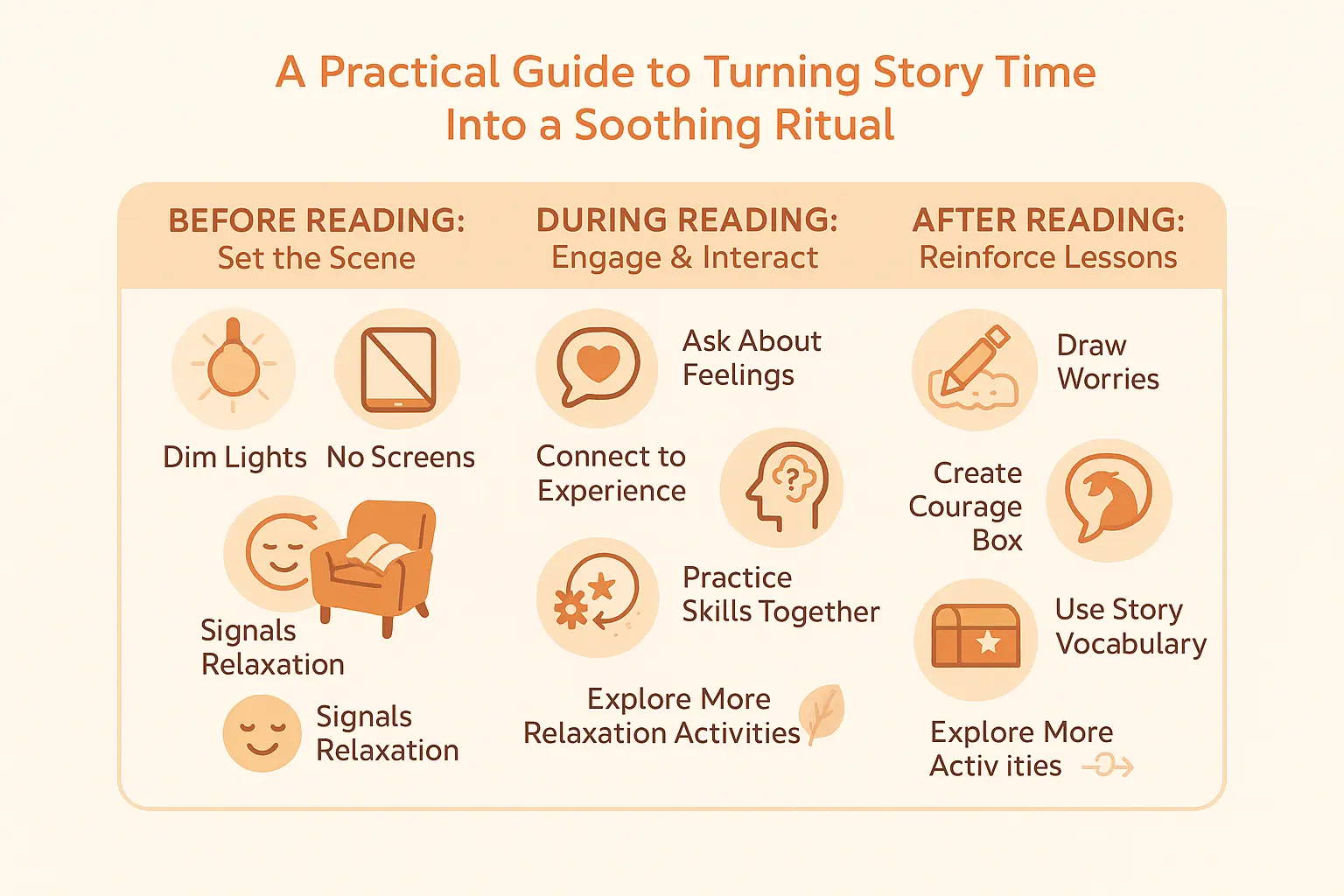
Your practical guide: turning story time into a soothing ritual
Before you even start reading
Let’s set the stage for calmness. Turn off screens, dim the lights, and pick a cozy nook with soft blankets or pillows. Add a nightlight or stuffed animal buddy—predictability comforts anxious minds. Keep it consistent: same corner, same rug, same plushie friend. Why? Repetition tells their brain, “This space = safety.”
Think of it like a movie theater: dimmed lights signal “showtime,” while quiet surroundings tell kids “it’s safe to relax.” Play nature sounds at low volume to block sudden noises. For extra calm, let them choose a “storytime comfort item” like a fuzzy sock puppet or weighted lap pad. This isn’t just routine—it’s emotional groundwork.
Reading together: make it an interactive conversation
Storytime isn’t one-way! Try these questions:
- “How does [character] feel?” Link body language to emotions: “Is their tummy fluttering like yours?” This helps kids name what they physically feel.
- “Did you feel this worry monster too?” Share your own small fears: “I had butterflies before soccer games!” Personal stories build connection without lecturing.
- “What could they try next?” Let kids brainstorm—even “magic spray!” builds creativity. No “That’s silly!” here. Validation > correction.
- “Breathe with them!” In for 3… out for 5… bonus points for silly ‘whoooosh’ sounds! Make it a dance move or a secret code for calming down.
This teaches emotional vocabulary and trust. You’re saying: “Your feelings matter, and you’re not alone.” Pro tip: Repeat key phrases like “dragon breath” during real moments of stress—like tantrums or bedtime resistance.
After the story ends: bring the lessons to life
Try these takeaways:
- Draw a “worry monster” and name it silly—“Wiggly Wally” becomes a fun challenge. Bonus: Draw solutions for taming it too!
- Build a “courage box” with sparkly rocks (for tactile calm), a superhero badge (confidence boost), or a family photo (emotional anchoring). Add a “calm card” with your child’s favorite breathing instructions.
- Play “dragon breath” games! Place a toy on their belly to watch it rise and fall. Turn it into a competition: “Can we make Mr. Bear bounce higher?”
For ideas, check these easy at-home relaxation activities. Revisit the courage box during stressful moments like school drop-off or thunderstorms. Remember: practice beats perfection—one page at a time. The goal? Turn stories into tools they carry beyond bedtime.
Bedtime, social situations, and the magic of personalization
The power of a good bedtime story for anxiety
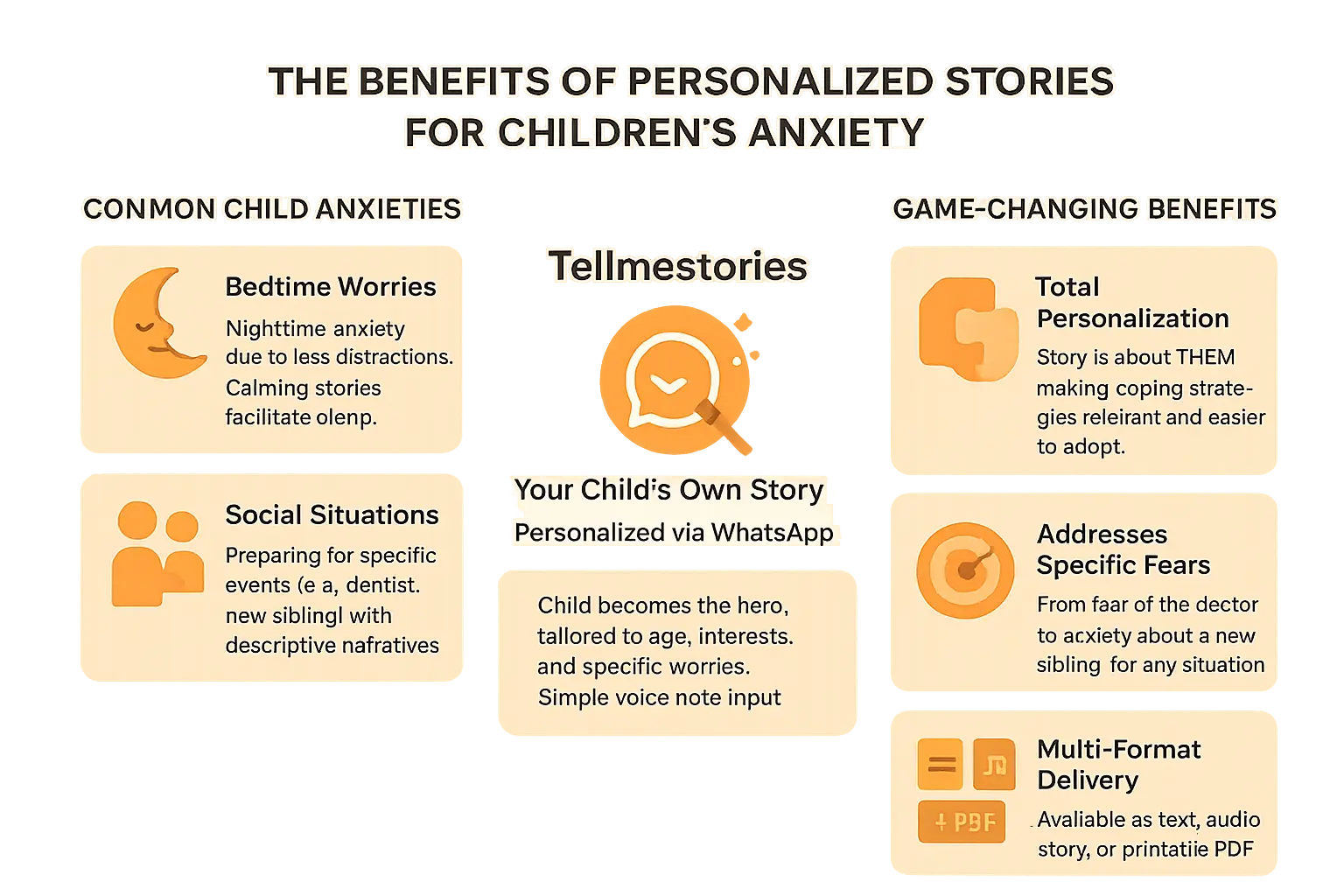
Ever noticed how nighttime feels scarier for kids? When the lights go out, their minds race with “what if” scenarios. This happens because nighttime removes distractions, making anxious thoughts louder. Here’s the good news: storytelling creates a cozy distraction shield 🛡️.
Science confirms this! A study in the Journal of Anxiety Disorders shows audiobooks are an effective non-pharmacological distraction technique to reduce anxiety. Think of it like mental noise-canceling headphones – the story becomes the main show, pushing worries to the background.
When you read aloud, your voice becomes a soothing anchor. The rhythm of narration synchronizes with their breathing, slowing everything down. Plus, choosing stories with brave characters facing fears makes kids feel less alone in their worries. It’s like whispering, “Hey, I see you, and you’ve got this.”
What about social stories for specific events?
Imagine preparing your child for their first haircut like a movie trailer. That’s what social stories do! These short, descriptive narratives (like the resources for specific fears from Stanford Medicine) walk kids through upcoming events step-by-step.
Picture this: Your kid’s first dental checkup. A social story shows them wearing the bib, hearing the tooth counter’s sound, even getting a sticker at the end. This mental rehearsal builds familiarity, turning scary unknowns into predictable knowns. It’s like test-driving courage in a safe space.
These stories work for all sorts of transitions – from meeting new siblings to starting preschool. The key? Keep sentences simple, visuals clear, and repeat often. Think of it as anxiety vaccination – small exposures build big confidence.
The ultimate tool: creating your child’s very own story
Finding the perfect book is great. But what if you could create one? That’s where personalized stories shine. Meet Tellmestories – your WhatsApp-powered imagination machine. Just send a voice note saying, “Make a story about my daughter Anja who’s scared of thunderstorms,” and watch the magic unfold.
Created by real parents (Alex and Julien), this tool gets what busy families need. Their AI remembers your child’s details, so stories evolve with them. Here’s why this changes the game:
- Total Personalization: When your child becomes the hero, coping strategies stick better. It’s not just a story – it’s their story.
- Instant & On-Demand: New worry pops up at 9 PM? No problem. Get a custom bedtime tale in minutes, straight from WhatsApp.
- Addresses Specific Fears: Thunderstorms? First day of school? The AI crafts solutions for any anxiety monster.
- Multi-Format: Want bedtime audio? PDF for daytime practice? They’ve got you covered. Even physical books for keepsake moments!
Building A Library Of Calm, One Story At A Time
Let’s recap: stories aren’t just for bedtime. They’re bridges connecting your child’s heart to yours. 🌟 When they see themselves in characters like Tommy the Turtle, they realize, “Hey, I’m not alone in feeling this way!” It’s like handing them a flashlight for their worries. Cool, right?
Here’s the magic breakdown:
- They normalize big feelings (yes, even the wobbly ones!)
- They teach coping strategies through adventures (no boring lectures!)
- They strengthen that precious parent-child bond (hello, cozy moments!).
Every story you share is more than just a story; it’s a conversation, a lesson in resilience, and a building block for your child’s emotional wellness.
You don’t need a mountain of books. Start with one tale about a brave little turtle, a curious fox, or a shy cloud. The key? Let the story open the door to questions like, “When did you feel like hiding in your shell?” or “What helped Tommy take that next step?”
Think of this as investing in your child’s long-term emotional wellness. Just like planting seeds in a garden, these stories grow skills they’ll carry forever. And hey, you’ll both laugh, learn, and maybe even discover new things about each other along the way. Win-win! 🌱
Ready to craft that first, perfect story? Let’s create an adventure that soothes their worries and sparks their imagination. ✨
In short, stories normalize emotions, teach coping skills, and strengthen bonds.
Every story is a conversation, a resilience lesson, and a step toward emotional wellness.
A single story can spark change. Start now—turn worries into adventures with tales tailored to your child. ✨ (58 words)
FAQ
What is the 3-3-3 rule for anxiety children?
Let me break this down! The 3-3-3 rule is a grounding trick that helps kids (and adults!) anchor themselves when worries go haywire. Here’s how it works: 🌟 3 things they can see, 3 things they can hear, and 3 things they can touch. It’s like a “reset button” for overwhelmed brains! For example, a child might say, “I see the blue sky, my teddy bear, and the bookshelf. I hear birds, the clock ticking, and my own breath. I can touch my arms, the floor, and this squishy ball.” This pulls them out of their heads and back into the moment. Cool, right? 🌬️
How to calm a child’s anxiety?
First, breathe with them! 💨 When a child’s anxiety kicks in, their body’s in “fight or flight” mode. By staying calm and inviting them to match your breath, you help their nervous system relax. Try “dragon breaths” – big inhales through the nose, slow exhales through the mouth. Pair it with a story where a character faces a fear, like a little fox scared of the dark. Stories create a safe space to explore feelings without pressure. And hey, don’t forget to validate their emotions: “I see you’re feeling wobbly right now. Let’s figure this out together.”
What are the 8 things to say to an anxious child?
Let’s get real – words matter! 🗨️ Here are 8 phrases that work like magic: 1. “I’m here with you. You’re not alone.” 2. “This feeling is strong, but it’ll pass.” 3. “Let’s name your worry. Is it a ‘wobble’ or a ‘storm’?” 4. “What’s one tiny step we can take?” 5. “I’m proud of you for trying.” 6. “Let’s imagine a calm place. What colors do you see?” 7. “You don’t have to fix this right now.” 8. “Your heart’s racing because it wants to keep you safe. Let’s slow it down together.” These phrases build trust and show them you get it. ❤️
What is the book for anxiety for 7-year-olds?
Great question! For 7-year-olds, look for stories where characters face fears in relatable ways. Think: a shy turtle learning to ask friends to play, or a girl painting “happy accidents” to beat perfectionism. 📚 These stories show worries aren’t scary monsters – they’re normal! Check out books where characters use “dragon breaths” or carry “courage stones” (shoutout to our story themes earlier!). The key? The hero grows by trying small steps, not instant fixes. That’s how kids learn: “If they can do it, maybe I can too!”
How to discipline a high anxiety child?
Okay, here’s the deal: Discipline ≠ punishment. 🚫 For anxious kids, it’s about teaching, not scolding. If they meltdown over homework, try: “I get it. This feels heavy. Let’s break it into 5-minute chunks and take silly breath breaks!” Use stories to model solutions – like a character who gets frustrated but tries again. Praise effort, not just outcomes: “Wow, you kept going even when it felt icky! That’s huge.” And hey, consistency matters, but flexibility wins. Adjust expectations based on their emotional tank.
What are the three C’s of anxiety?
Let’s unpack this! The 3 C’s are: Control, Choice, and Courage. 🌟 – Control: Teach kids what they can control (their breath, their next small step) vs. things they can’t (what others think). – Choice: “Right now, you can choose to squeeze my hand or take a walk. What feels better?” Giving options empowers them. – Courage: Not being fearless – it’s doing something hard while scared. Like a story character who says, “My heart’s thumping, but I’ll try anyway.” Pair this with breathing exercises or a story where the hero uses these C’s. Boom – anxiety gets a little quieter.
What activities help kids with anxiety?
So many options! 🎨 Let’s keep it fun: 1. Storytime: Create personalized stories where they’re the brave main character. 2. Worry Sculpting: Mold “anxiety monsters” with clay, then squish them! 3. Emotion Charades: Act out feelings – it’s silly but teaches emotional literacy. 4. Calm Box: Fill a box with sensory tools (fidgets, glitter jars) to grab when overwhelmed. 5. Breathe & Draw: Practice “dragon breaths” while doodling calm scenes. These activities make anxiety tangible and manageable, not some invisible cloud following them around.
Did I cause my child’s anxiety?
Whoa, let’s pause here. 💔 Parents often ask this, but here’s the truth: Anxiety is a mix of genetics, brain chemistry, life experiences, and environment. You didn’t “cause” it, just like you wouldn’t blame yourself for a child’s allergies. What matters is how you respond now. Using stories to talk about feelings, creating safe spaces, and modeling calm behaviors? That’s where you can make a difference. You’re not the problem – you’re part of the solution. 💛
What supplements are good for children’s anxiety?
Quick heads-up: Always chat with a pediatrician before adding supplements. 🩺 But here’s the gist – lifestyle comes first! Stories, movement, and sleep work like superheroes for anxious minds. If you’re curious about supplements, omega-3s (found in fish oil) and magnesium (like leafy greens) are often studied. But remember: A 5-minute “mindfulness story” before bed or a “courage chart” where they track small wins? Those are free, safe, and build lifelong skills. Supplements might help some, but stories? They’re a tool you’ve got right now. 📖