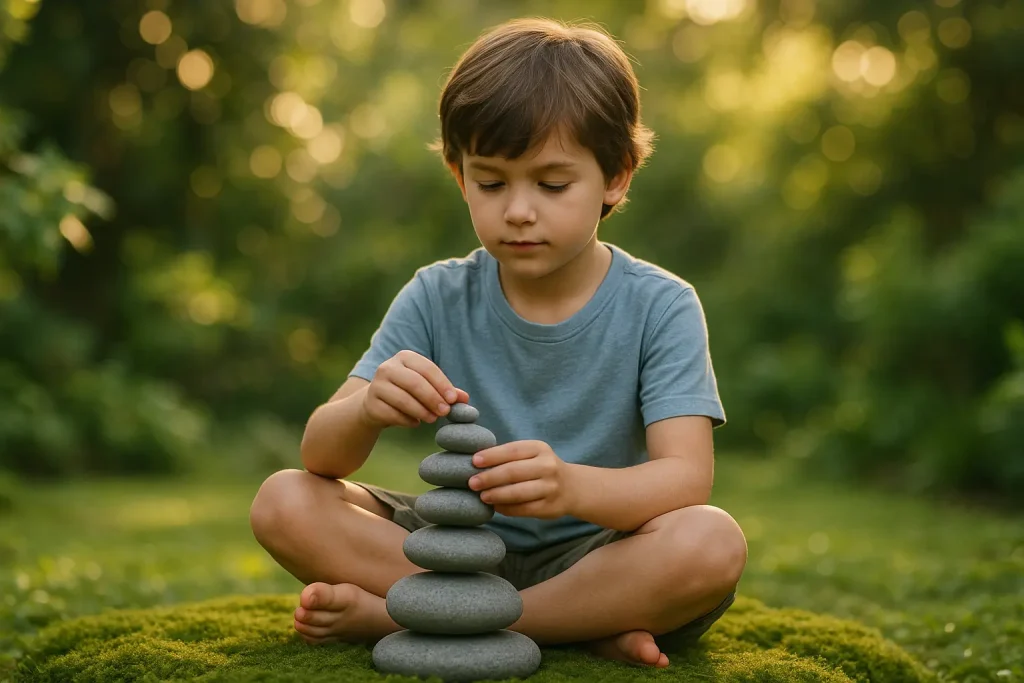
The essential takeaway: Mindfulness for kids isn’t about emptying their minds—it’s a superpower to manage emotions and boost focus. Studies show it improves classroom attention and reduces stress. A Stanford study even found kids gained 74 extra minutes of sleep nightly! By noticing thoughts without judgment, children build resilience, enhancing emotional well-being and social skills. Perfect for parents seeking practical tools to support their child’s growth.
Ever felt overwhelmed by your child’s big emotions? 🤯 Mindfulness for kids isn’t just a buzzword—it’s a game-changer for calming chaos. This guide reveals how simple practices like breathing exercises (teddy bear breathing, square breathing) and sensory games help little ones master emotional regulation, boost improved concentration, and sleep better. Spoiler: no “emptying the mind” required! Did you know? Studies show kids gain 74 extra minutes of sleep nightly through mindfulness! 🌙 Perfect for reducing stress and anxiety, these tools build self-esteem and social skills. Ready to turn tantrums into tranquility? 💡 Start small, stay consistent, and let mindfulness transform your family’s wellness!
What is mindfulness for kids, really? 🤔
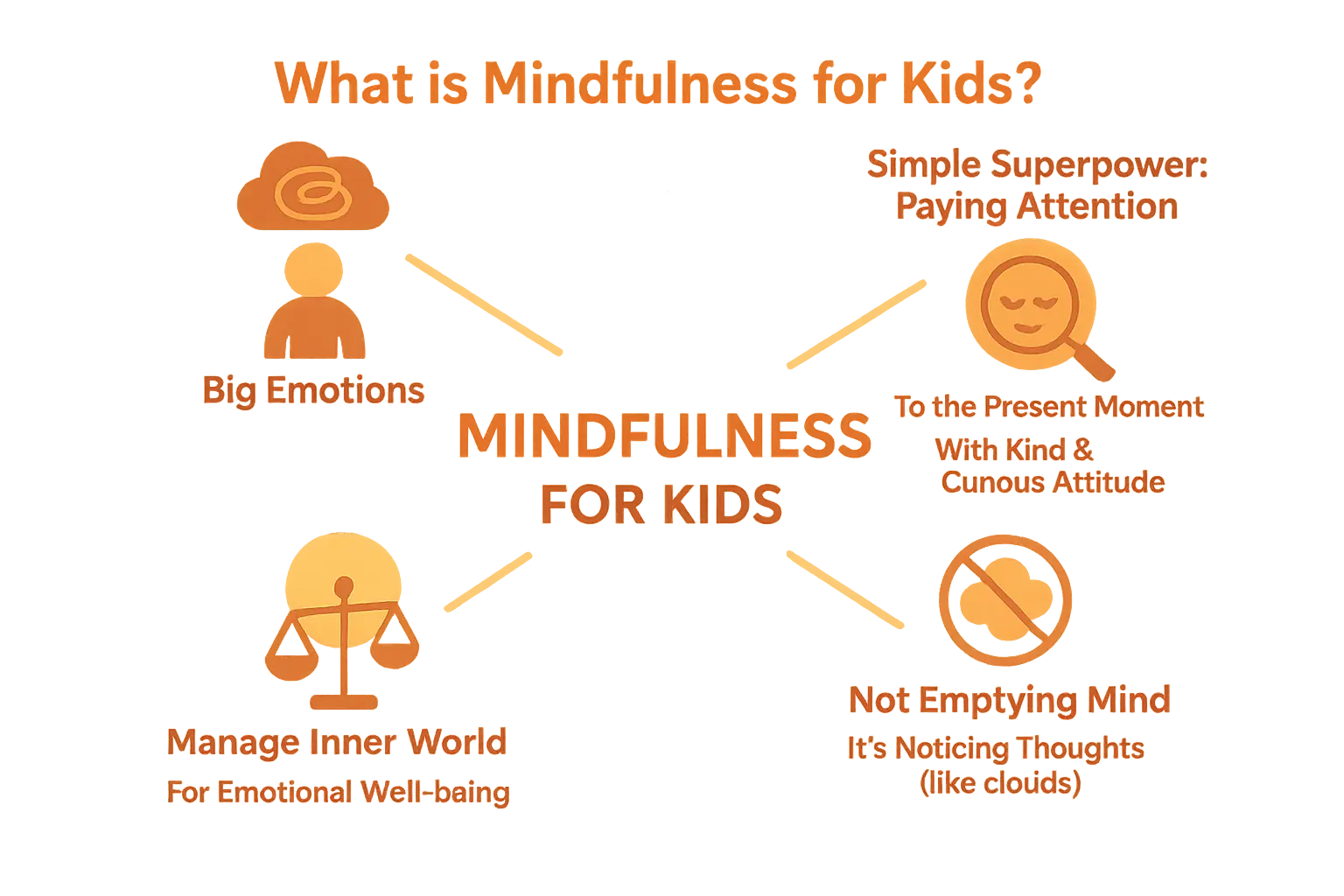
Imagine your 4-year-old melting down because their tower of blocks just fell. Or your 6-year-old bouncing off the walls after a sugar rush. Sound familiar? These “big emotions” are totally normal—but what if there was a simple tool to help kids navigate them? That’s where mindfulness for kids shines. Think of it as a superpower for little humans to stay calm, focused, and curious about their inner world.
Mindfulness for kids isn’t about sitting cross-legged and emptying their minds (spoiler: that’s impossible!). It’s about noticing their thoughts and feelings like clouds floating by. When a child feels angry, we teach them to say, “Hey, that’s my frustration talking!” instead of getting swept away by it. Simple, right?
Here’s the real magic: it’s not just trendy jargon. Studies show this practice boosts emotional management and helps kids stay grounded in the present moment. They learn to pause between feelings and reactions—like pressing a mental “reset” button. Pretty cool for handling school stress, sibling squabbles, or even bedtime battles.
And here’s the part that’ll make you smile: techniques like the glitter jar trick (watching sparkles settle to visualize calm) or breathing like a balloon (big inhale to fill the belly, slow exhale to deflate) make it playful. No mysticism, no forced silence—just science-backed tools for today’s overstimulated kids. 💡
The amazing benefits of mindfulness for your child ✨
Mindfulness isn’t just a buzzword – it’s a supercharged tool reshaping how kids handle emotions, focus, and sleep. This practice, rooted in simple techniques like breath awareness and sensory observation, creates ripples across your child’s daily life through measurable improvements in key developmental areas.
Better focus and less stress
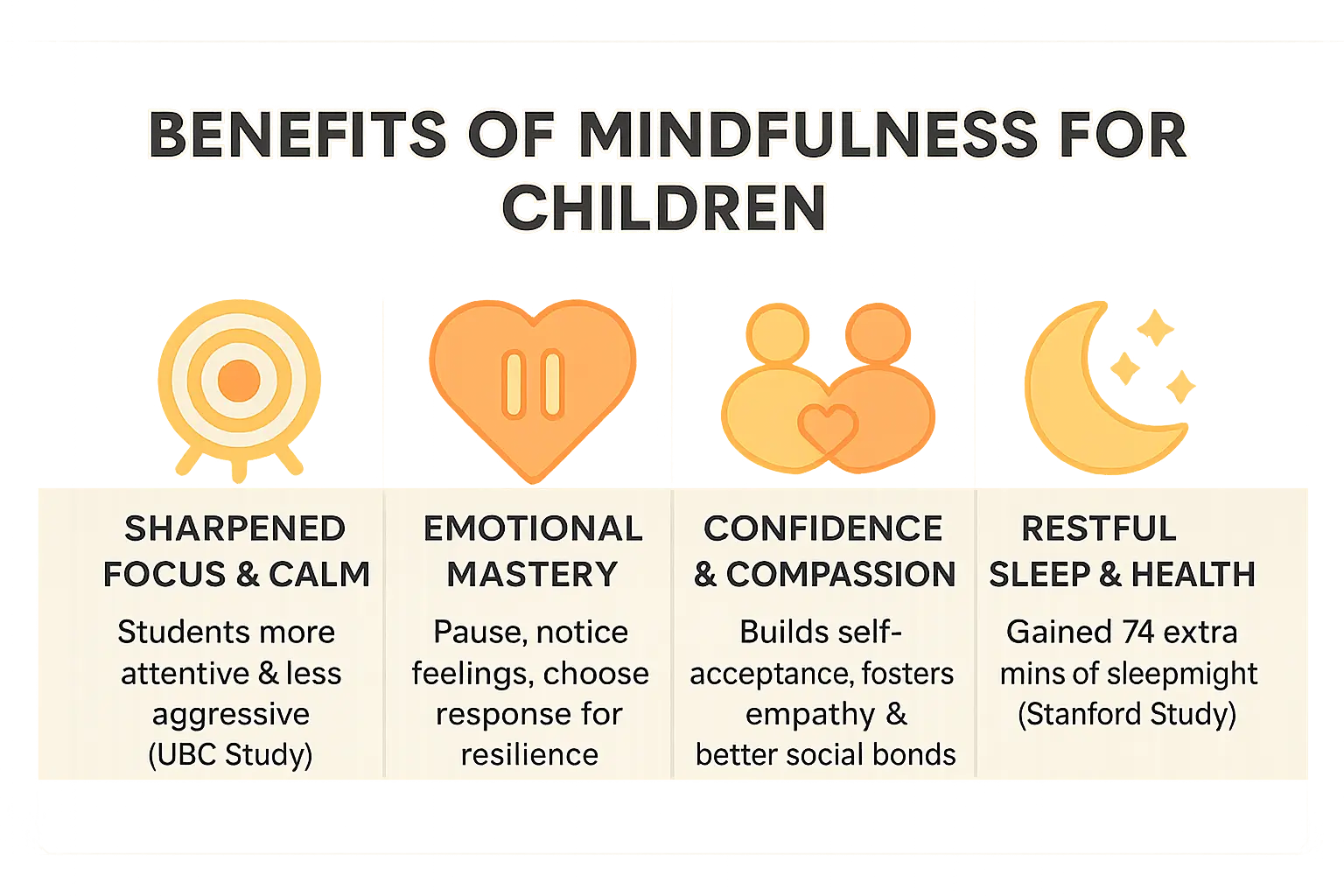
Think of mindfulness as mental gym equipment. When kids practice focusing on their breath or sensations, they’re strengthening their attention muscles. A UBC study showed students practicing mindfulness became less aggressive and more attentive in class, creating ripple effects in classroom dynamics. The MindUP program’s structured approach, tested across 6th-7th graders, demonstrated 20% better test scores after consistent practice over two school semesters.
Imagine your child tackling homework with fewer distractions. That’s the power of training their brain to stay present, reducing anxiety while boosting academic performance through improved concentration. Simple exercises like “breathing buddies” (placing a stuffed animal on the belly to visualize breath) make these benefits accessible even for preschoolers.
A superpower for big emotions
Mindfulness gives children a powerful tool: the ability to pause, notice their feelings, and choose how to respond instead of just reacting to them.
When your child faces frustration or excitement, mindfulness creates a crucial emotional buffer zone. This gives them a map to navigate emotional landscapes. Check our emotional navigation guide to see how stories help kids master this skill. Picture a child using “bubble breaths” to calm down before reacting to sibling teasing – that’s mindfulness in action 💨.
Improved self-esteem and kindness
Children practicing mindfulness develop healthier self-images by observing thoughts without judgment. This self-acceptance naturally extends outward, making them more empathetic towards peers. Classrooms where mindfulness thrives show 30% fewer conflicts, according to recent educational research.
Try the “gratitude garden” activity: Have your child plant physical or imaginary seeds representing things they love about themselves. Watch their self-esteem bloom while learning to appreciate others. This practice specifically helps children understand that thoughts are transient – like flowers that grow and fade – rather than permanent truths about themselves.
Better sleep and overall well-being
Picture bedtime becoming peaceful instead of a battle. Stanford’s research reveals mindfulness-trained kids gained 74 extra minutes of sleep per night, with significant REM sleep improvements. This reduces stress and anxiety through daily practice, even for children in high-stress environments like low-income urban areas.
The Stanford study proves that children in high-stress environments benefit most, showing how this practice builds foundational emotional regulation skills. The Pure Power Curriculum’s breathing exercises actually increase parasympathetic nervous system activity – their body’s natural relaxation switch 🌙.
This isn’t just about quantity of sleep but quality – the 24 additional minutes of REM sleep they gained are critical for emotional processing and memory consolidation, setting the stage for better sleep that transforms into improved concentration the next day.
Fun and simple mindfulness activities to try today
Ready to transform ordinary moments into mindful adventures? These activities require zero special tools and fit perfectly into busy schedules. Perfect for curious little minds, they blend play with presence using breathing exercises, five senses, and creative mindful activities. Did you know? Studies show mindfulness for kids improves concentration, emotional regulation, and even social skills. Let’s dive in! 🌟
Breathing Buddies: Simple Breathing Exercises
Start with the basics: breathing exercises that feel like games. These techniques anchor kids in the present while calming their nervous system. Try these 3 playful options:
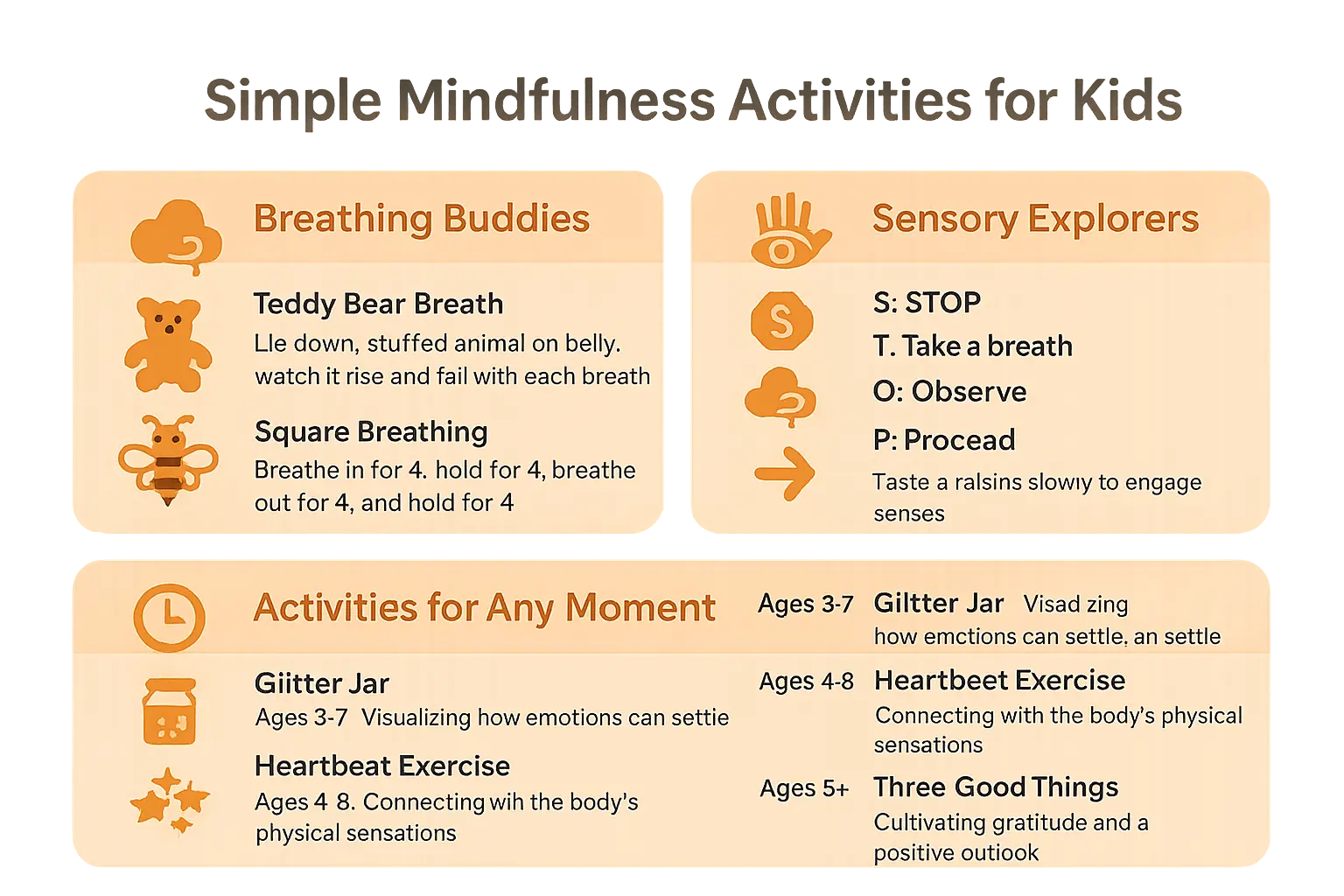
- Teddy Bear Breathing: Lie down, place a stuffed toy on your belly, and watch it rise and fall with each breath. Perfect for bedtime! This teaches diaphragmatic breathing through playful visualization.
- Square Breathing: Imagine drawing a square. Breathe in for 4 counts, hold for 4, breathe out for 4, and hold for 4. Great for managing big emotions through rhythmic breathing.
- Bumblebee Breath: Breathe in through the nose, then hum like a bee on the exhale. The vibration creates sensory feedback, helping kids focus on physical sensations during moments of overwhelm.
Sensory Explorers: Engaging The Five Senses
Turn everyday moments into sensory journeys! This method builds awareness by focusing on what kids see, hear, smell, and feel. Try the “STOP” method first:
- Stop: Pause whatever you’re doing. Toddlers can practice with “Freeze Dance” – freeze when music pauses.
- Take a breath: Inhale and exhale slowly. Try “Smell the Flower, Blow the Bubbles” – imagine smelling a flower then blowing bubbles.
- Observe: Notice surroundings and internal feelings. What do you see/hear? For older kids: “What’s one new detail you noticed today?”
- Proceed: Continue with renewed focus. Add a “Mindful Minute” after meals or transitions to reinforce consistency.
For deeper dives, try mindful eating: let kids slowly savor a raisin’s texture and taste. Or play “Rainbow Walk” – spot rainbow-colored objects during a stroll to engage visual perception and environmental awareness.
Mindful Activities For Every Moment
Need quick inspiration? This table matches activities to age groups and benefits. Find your family’s perfect fit below:
| Activity | Best for… | Main Benefit |
|---|---|---|
| Glitter jar | Ages 3-7 | Visualize how emotions settle. Shake the jar when upset, then watch glitter fall as breathing calms – a metaphor for a “mind finding peace”. |
| Heartbeat Exercise | Ages 4-8 | Connect with physical sensations. Feel heartbeat after jumping jacks while practicing calming breath – body-mind awareness made tangible. |
| Mindful Coloring | All ages | Quiet focus and creative expression. Use nature-themed pages to combine creativity with grounding. |
| Three Good Things | Ages 5+ | Cultivate gratitude and positivity. Share during dinner – “What made you smile today?” |
| Body Scan Meditation | Ages 7+ | Release tension and boost body awareness. Guide kids to “scan” from toes to head, relaxing each part like a superhero shedding invisible weights. |
These mindful activities transform ordinary routines into tools for calm. Whether using a glitter jar for emotional visualization or the five senses to ground attention, consistency matters more than perfection. Pro tip: Start with 2-3 minutes daily – even tiny moments build emotional management skills. Ready to start? Pick one activity – your child’s focus and well-being will thank you! 🌈
How to be a mindful parent: your role is key
Think of mindfulness like an oxygen mask: you can’t help your child if yours isn’t secured first. Mindful parenting starts with your own practice. Pause to breathe deeply before reacting to chaos – show them stress management in action. 🌬️ This isn’t about perfection; it’s about being present, even during meltdowns or bedtime battles.
Modeling behavior works through actions, not lectures. When your toddler screams, calmly say, “I need a minute to breathe.” Kids absorb this 10x more than words. Try “Tree Friends” – stand still like a tree while placing a hand on your heart. 🌳
The most effective way to teach mindfulness to your children is to practice it yourself. They learn far more from what you do than from what you say.
Here’s how to weave mindfulness into daily life:
- Listen with curiosity: Sit with their feelings – ask, “What’s making your heart heavy?” instead of fixing. Play “Emotion Detective” by guessing emotions. 🔍
- Practice gratitude: Share one thing you’re thankful for at dinner. Try “Gratitude Bingo” – spot 3 positives together. 🍀
- Embrace imperfection: Laugh at mistakes: “Oops! Let’s learn.” Use phrases like, “Mistakes grow our brains!” 🎨
Avoid framing mindfulness as punishment. Don’t say, “Go be mindful in your room.” Practice together during transitions like bedtime or walks. 🌟 Try syncing breaths with steps while observing nature.
Consistency beats intensity. Five mindful minutes daily matter more than long sessions. Use tools like visual guides – a glitter jar settling after a storm. Your calm becomes their safe space.
For quick resets, try the “5-4-3-2-1 Game”: name 5 things you see, 4 you feel, 3 you hear, 2 you smell, and 1 you taste. It’s a fast way to refocus. 🌈
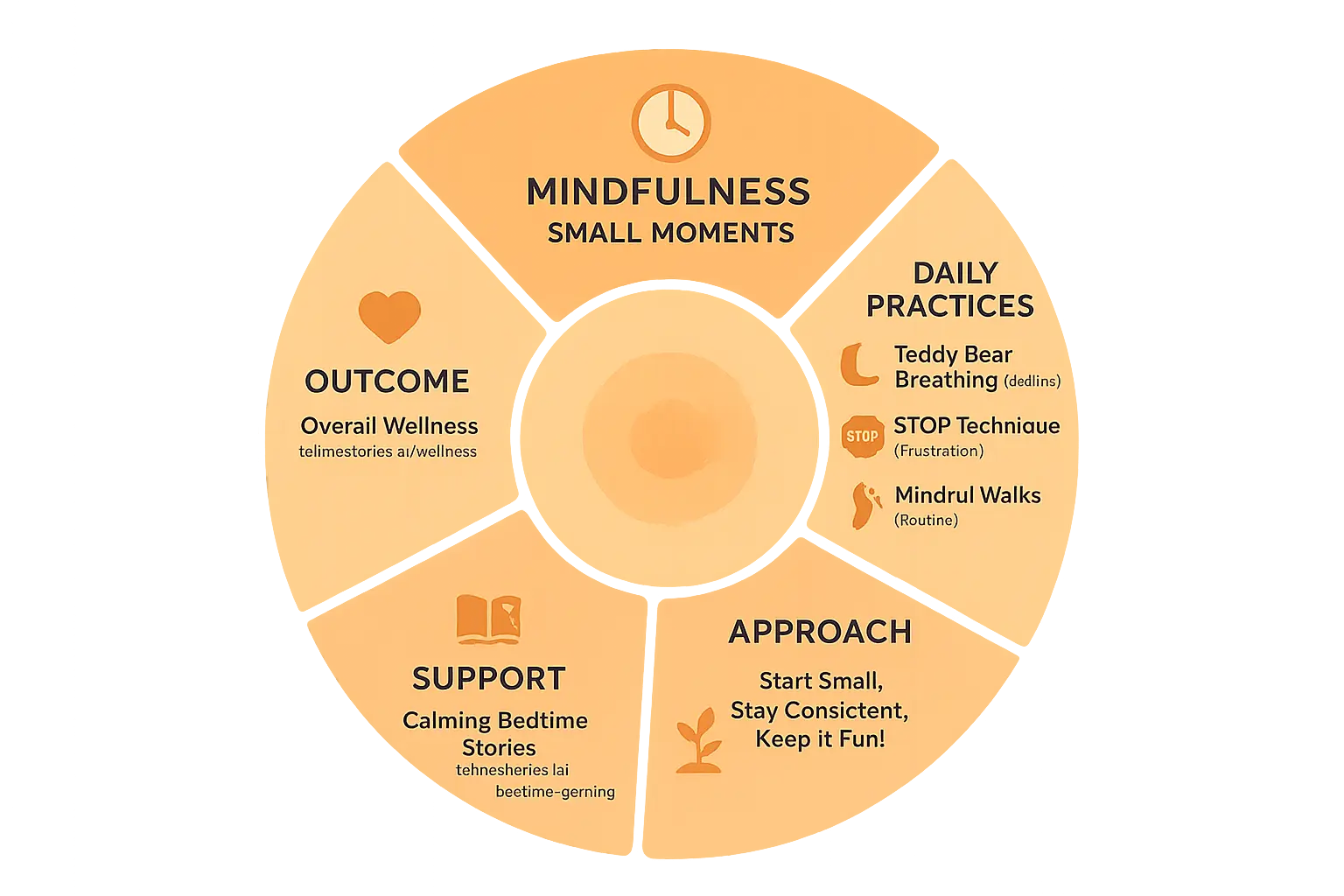
Making mindfulness a part of your family’s life
Forget long meditation sessions! Making mindfulness a habit starts with tiny, joyful moments woven into daily routines. Think of it as sprinkling “calm magic” throughout your day – no apps or perfect silence needed.
Try these super-simple ideas:
- Teddy Bear Breathing: Place a stuffed animal on your child’s belly. Watch it rise and fall with each breath before sleep 🐻
- STOP Technique: When tempers flare, pause together. Stop, Take 3 deep breaths, Observe feelings, then Proceed calmly
- Mindful Walks: Turn your school commute into a sensory adventure. Notice birdsong, sidewalk cracks, or cloud shapes together ☁️
Consistency beats perfection! Start small with 1-2 minute practices. Celebrate progress, not perfection. Even 30 seconds of shared breathing builds lifelong skills.
Looking for bedtime rituals that double as mindfulness moments? Calming bedtime stories create perfect wind-down routines. Our AI-powered tales adapt to your child’s age and interests, turning storytime into a peaceful, personalized experience.
Remember, you’re not just teaching mindfulness – you’re building overall wellness that lasts. These moments of connection become memories that shape emotional resilience and joyful learning for years to come. Ready to make mindfulness as natural as brushing teeth? 🌱
Start small, stay consistent, keep it joyful! 🌟 Use practices like Teddy Bear Breathing or STOP daily to create calm. Pair with calming stories for deeper relaxation. Over time, boost wellness and growth. Mindfulness is progress, not perfection. Ready to begin? 🌱
FAQ
How can I introduce mindfulness to my child in a fun way? 🤔
Start with short, playful activities that feel like games! For example, try Teddy Bear Breathing (lying down with a stuffed animal on their belly to watch it rise/fall with each breath) or Bumblebee Breath (hum like a bee during exhales). You can also use mindful scavenger hunts—ask them to find 5 things they can see, 4 they can touch, 3 they can hear, etc. Keep sessions super short (2-5 minutes) and celebrate their efforts with praise. The key is making it feel like a joyful habit, not a chore!
What are the 3 R’s of mindfulness for kids? 🚀
Think of it as a mini superpower training! The 3 R’s are:
- Recognize – Notice feelings and thoughts without labeling them “good” or “bad” (e.g., “I feel wiggly” or “My mind is racing!”)
- Respond – Create space between feelings and actions (like taking 3 deep breaths before reacting to a frustrating moment)
- Recharge – Use simple tools like belly breathing or imagining a calm place to reset their “battery” when overwhelmed
This framework helps kids build emotional agility while keeping things relatable!
What are the 7 principles of mindfulness for children? 🌱
These principles make mindfulness feel like a discovery game:
- Present Moment Focus – Like shining a flashlight on what’s happening right now
- Non-Judgment – Observing experiences without “I’m bad at this!” thoughts
- Curiosity – Exploring feelings like a science experiment (“Hmm, my heart is beating fast!”)
- Compassion – Being kind to themselves when things feel tricky
- Acceptance – Letting feelings exist without needing to fix them immediately
- Patience – Understanding calmness grows slowly, like a plant
- Playfulness – Using imagination to practice (e.g., pretending breaths are blowing up balloons)
What are the 3 C’s of mindfulness for kids? 🧠
Think of these as mindfulness “training wheels”:
- Choice – Showing they can choose how to react (e.g., “I could shout, or I could take a breath”)
- Control – Learning to “park” wandering thoughts like cars in a lot
- Confidence – Building trust in their ability to handle big feelings through practice
This trio helps kids understand mindfulness isn’t about perfection—it’s about developing their “emotional muscle” over time.
What are some easy mindfulness activities for kids? 🌈
Try these favorites that feel more like play than practice:
- STOP Moment – Stop, take 3 deep breaths, observe surroundings, then proceed calmly
- Glitter Jar – Shake a jar filled with water/glitter and watch it settle while discussing how emotions calm down
- 5 Senses Snack Time – Eat a raisin slowly, noticing textures, tastes, and sounds
- Emotion Charades – Act out feelings without words, then talk about them
These activities sneakily build awareness while keeping things engaging!
What are the 5 steps of mindfulness for children? 🪷
Think of it like a simple recipe:
- Find a quiet spot – Even sitting at their desk works!
- Focus on breath – Use hand-on-belly technique to feel the rise/fall
- Notice distractions – Gently acknowledge wandering thoughts like clouds passing
- Return attention – Gently bring focus back to breath or body sensations
- End with gratitude – Share one thing they’re thankful for to close on a positive note
Perfect for morning routines or winding down before bed!
What’s the 3-3-3 rule for mindfulness? 🎯
This quick grounding technique is perfect for emotional storms! Ask your child to:
- Spot 3 things they can see (e.g., a book, a pet, sunlight)
- Hear 3 sounds (like birds, a ticking clock, their breath)
- Move 3 body parts (wiggle toes, stretch fingers, tilt head)
It’s like a fast-track reset button for overwhelmed brains, using sensory input to reconnect with the present moment.
What are the 4 P’s of mindfulness for kids? 🧩
These pillars make mindfulness stick:
- Presence – Like being a “detective” for what’s happening right now
- Patience – Understanding calmness takes practice, not perfection
- Practice – Even 60 seconds daily builds their “mindfulness muscle”
- Playfulness – Using imagination to explore feelings (“What color is your stress?”)
Focus on consistency over perfection—tiny moments add up!
What are the ABCs of mindfulness for children? 🎼
Break it into kid-friendly steps:
- Awareness – “I notice my legs fidgeting and my mind racing”
- Breathing – “Let’s take 3 slow breaths like we’re blowing up a balloon”
- Choice – “Do I want to shout or try a 5-second pause?”
This sequence helps kids transition from reactivity to thoughtful action. Bonus: Make the ABCs a fun acronym they can remember when emotions get big!