The key takeaway: “Counting stories” aren’t just for bedtime! 💡 In education, they turn abstract numbers into playful adventures for kids. In Agile, they simplify project planning by focusing on task quantity over complexity. Both? They’re about breaking big goals into manageable bits—whether for little learners or tech teams! 🚀
Ever felt stuck making math fun for your kid or guessing your team’s workload? 🧠💡 That’s where “counting stories” shine—but here’s the twist! This clever concept works double duty: it’s a playful way to teach numbers through tales AND a tech-world trick for simplifying project planning. In this post, we’ll explore both. You’ll see why counting stories build a strong foundation for early math skills and how developers use them to keep projects on track. Ready for two surprisingly different (yet smart) ways to turn numbers into engaging narratives that actually work for both kids and teams? 📚🚀
What On Earth Are “Counting Stories”? (Hint: There Are Two Answers!)
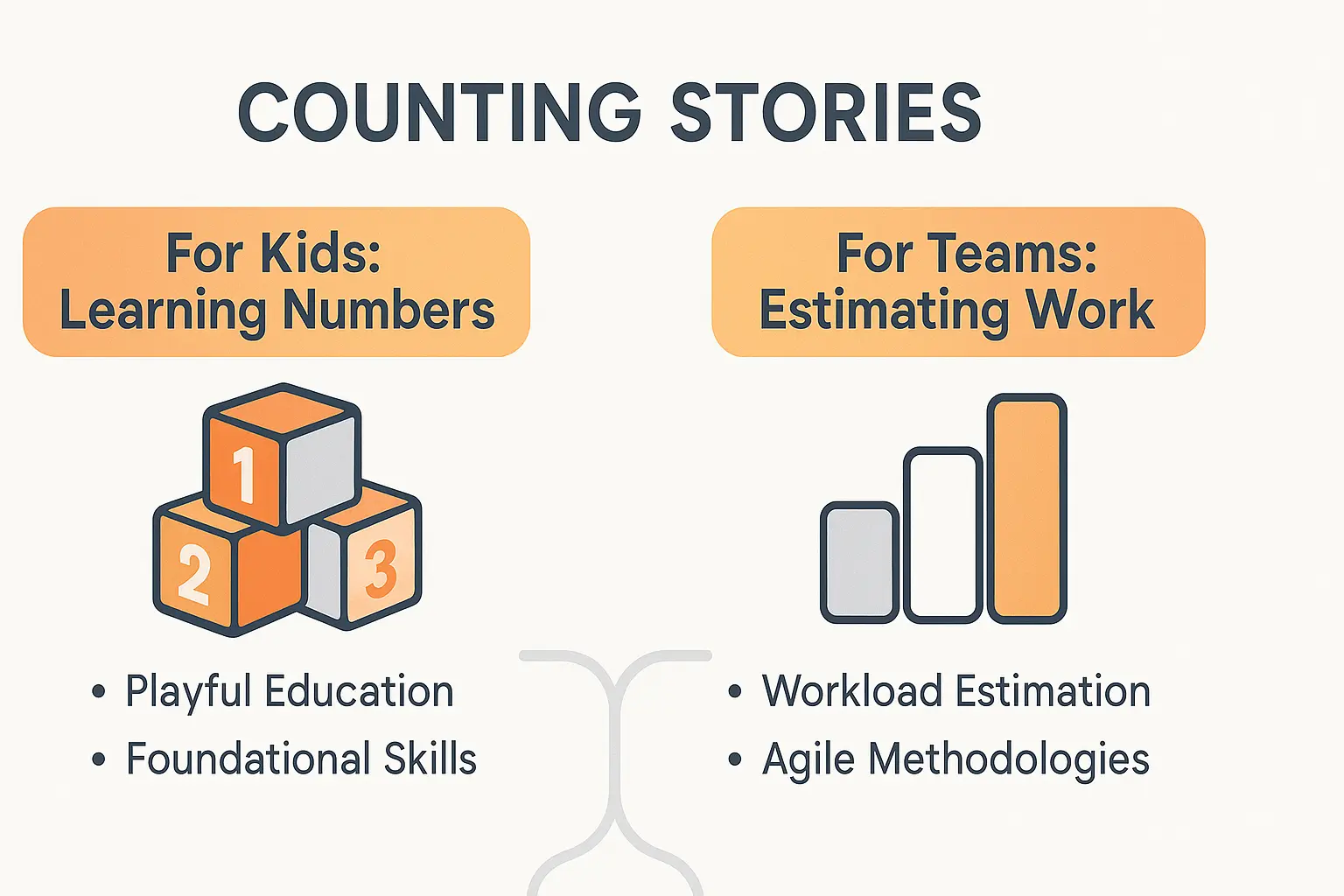
When you hear “counting stories,” what comes to mind? 🤔 A toddler learning numbers through tales or developers estimating tasks? You’re right! The term works in early math learning and project management. Let’s dissect both!
In education, counting stories transform math into playful adventures. Picture a child solving “3 + 2 = 5” by creating a story about welcoming guests. 🧒✨ They make abstract numbers tangible by blending creativity and logic.
Switching gears, tech teams use counting stories to estimate workloads by tallying “user stories” instead of complex “story points.” Teams track completed stories per sprint, assuming size variations balance out. It’s like saying, “We’ll tackle 10 stories this week—no need to overcomplicate!”
Ready to explore further? Let’s dive into both worlds—starting with bedtime tales, then the tech side. 🛠️📚
Counting stories for kids: making math a magical adventure
So, what are we talking about exactly?
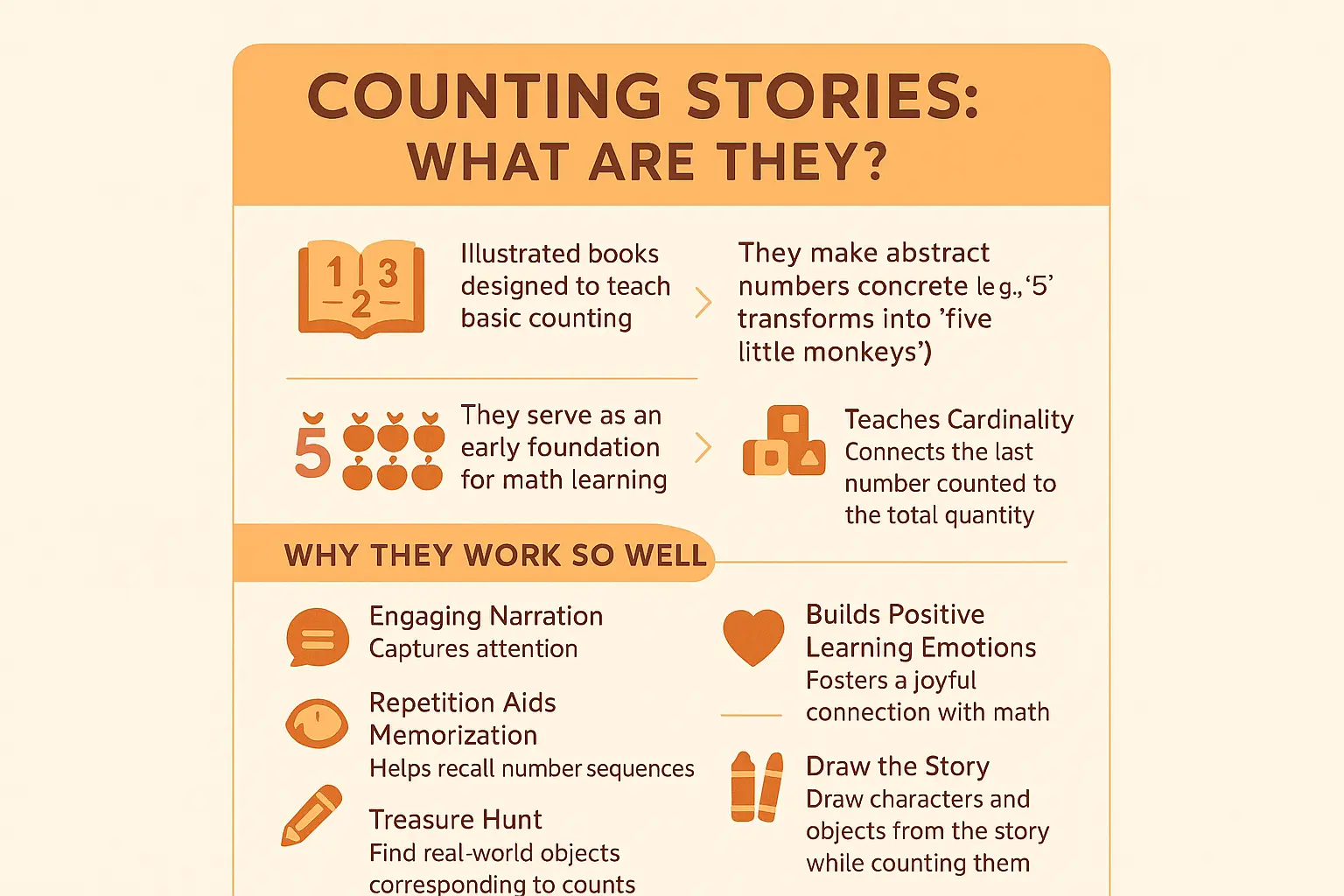
Let’s break it down! 🚀 Counting stories aren’t just bedtime tales—they’re clever tools that turn numbers into adventures. Think of it as math with magic! Instead of just seeing “5,” your child visualizes “five little monkeys jumping on the bed.”
These stories live in picture books where numbers become characters in playful journeys. According to Stanford’s research, they’re a child’s first dance with abstract concepts made tangible. Whether through counting books or learning numbers, they bridge imagination and arithmetic. Some even hide fun “mistakes” to spark curiosity about “one more” or “one less”! 🥕
The secret sauce: why they work so well
Why do these stories stick? Let’s talk magic tricks! 🎩✨
“By linking numbers to a fun story, you’re not just teaching math; you’re building positive emotions around learning and creating a special moment with your child.”
Here’s the real deal: – Narration immersion grabs attention like a pirate’s treasure map. – Repetition etches number sequences into memory—like song lyrics with numbers! 🎵 – Vivid illustrations transform “three” into three bouncing kittens. – They sneakily teach cardinality—the idea that “5” means five objects, not just the word.
Ready to play? fun activities with counting stories
Let’s get hands-on! 🤸♂️ Here’s how to turn pages into playtime:
- Become the author: After reading “2 + 1 = 3,” ask: “Can you invent a story about two cats and one more joining? 🐱🐱🐱” Maybe they’ll say, “Two kittens plus one mommy cat makes 3!”
- Go on a treasure hunt: Pause at “3 red balloons” and shout: “Let’s find 3 red things in this room! 🔍” (Pro tip: Hide a red crayon, apple, and sock for an easy win!)
- Draw the story: Grab crayons and sketch characters while counting together. Bonus points for messy masterpieces! 🖍️ Turn “five birds” into a flock of scribbles and giggles.
These aren’t just games—they’re brain-boosters! For more ideas, check out how educational stories can level up learning. Perfect for 3-year-olds who think math is “boring.” (Spoiler: It’s not!)
Let’s switch gears: “counting stories” in the tech world
Ever heard of story counting? In Agile, “stories” aren’t fairy tales—they’re bite-sized tasks or features teams tackle during sprints. Let’s unpack how counting these stories streamlines planning 🛠️
Story counting for agile teams: a simple way to plan
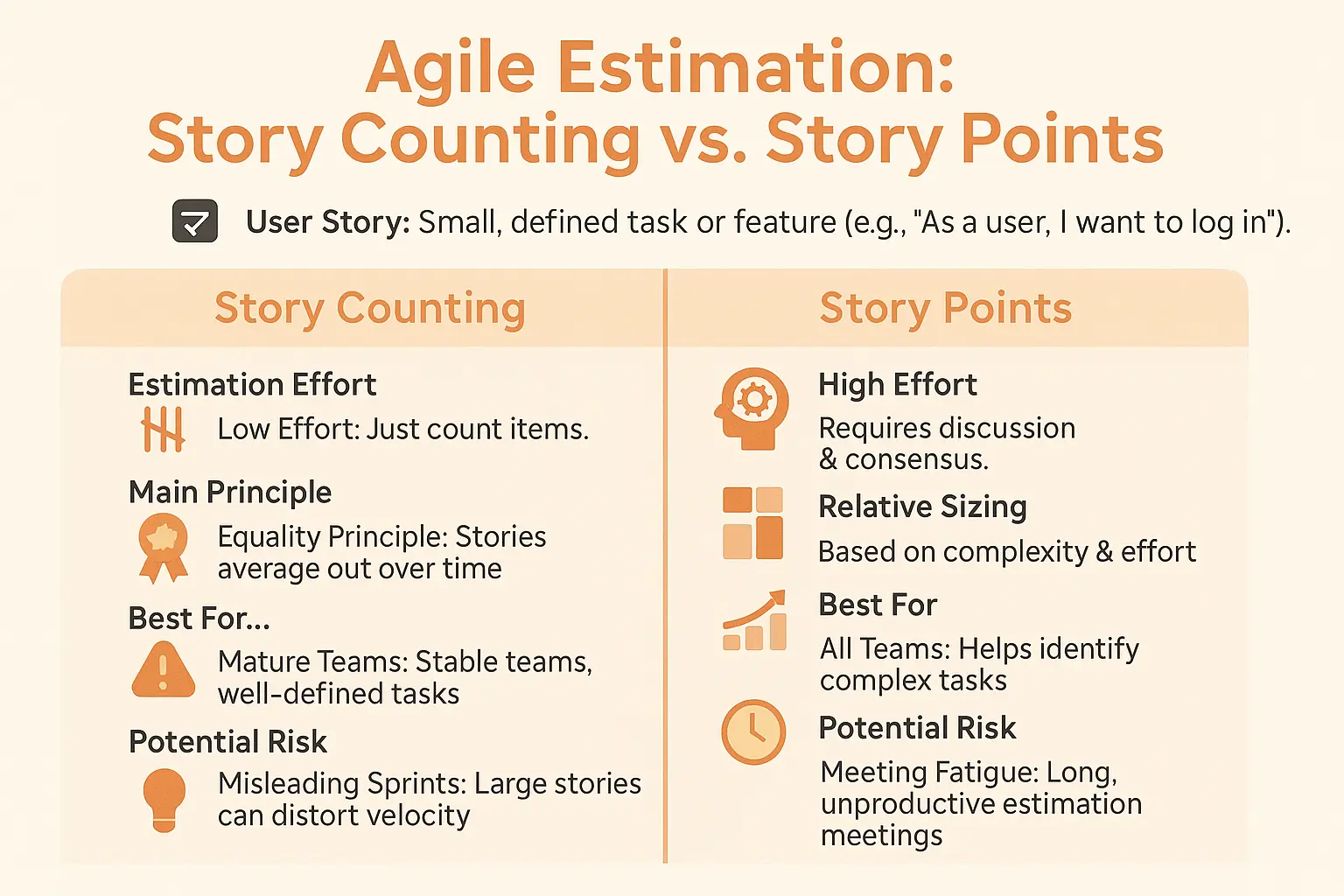
Your team needs sprint estimates? Skip complexity debates—just count user stories. Story counting treats tasks as roughly equal over time. Big and small stories balance out, so why overcomplicate it? For example: “As a user, I want to log in with my email.” Whether it takes 2 or 5 hours, the story counts as one. Over time, sizes even out. No more endless Planning Poker sessions! 🎲
Compare it to Story Points, a popular alternative. Story Points rate complexity (think “This is a 5-pointer!”). Story counting skips the drama: “We’ll finish 10 stories this week—no need to size them!”
Story counting vs. story points: what’s the difference?
| Feature | Story Counting | Story Points |
|---|---|---|
| Estimation Effort | Low (just count the items) | High (requires discussion) |
| Main Principle | All stories balance over time | Size stories relative to complexity |
| Best For… | Mature teams with stable tasks | All teams, spot complex tasks |
| Potential Risk | Large stories skew sprint accuracy | Long, unproductive meetings |
Is it a good fit for your team?
Agile on a diet—skip debates, track velocity. Story counting works for teams skilled in splitting tasks evenly. But beware: finishing tiny stories first can fake your speed. Yep, the “small-story trap” is real. It’s like eating snacks before dinner—you think you’re full, but the real work’s still there. 🍔
“Story counting bets on simplicity. Time saved debating estimates is time building products—a mindset top teams love.”
It’s not foolproof. Backlog mix-ups (epics + micro-tasks) can backfire. Pro tip: Use “T-shirt sizing” (S/M/L) to fix imbalances. Newer teams might prefer Story Points—they flag tricky tasks early. But if your crew’s got the chops, story counting saves hours.
So, which “counting story” is right for you?
For parents: choosing the best books and stories
Choosing counting books? Think of it like picking a recipe — the right mix matters! 🌟 Here’s what to prioritize:
- Clear visuals: The number “4” should match exactly four visible objects. No extras, no missing ones. Books like Ten Black Dots excel here, transforming each number into playful visual puzzles.
- Engaging narrative: A fun story turns math into playtime, not work. Look for rhythmic patterns like in Chicka Chicka 1, 2, 3, where rhymes make counting feel like a game.
- Go off-script: Ask questions like, “How many cookies are left if we eat one?” Use random arrangements in books (like 90% of titles) to teach careful counting — “Let’s count the ducks again — did we miss one?”
Need inspiration? Try math-focused stories — designed to make learning feel effortless. These tools often let you customize stories with your child’s name or interests, turning abstract numbers into personal adventures. Research shows interactive reading matters most. As this study notes, the magic is in how parents and kids engage, not just the book itself. Turn page flips into conversations!
A final thought for everyone
Whether teaching a child to count or planning a project, both use the same principle: breaking down goals into smaller steps makes challenges feel achievable. 🚀 In project management, teams use “story counting” to estimate workloads — like counting small tasks instead of complex points. For kids, stories turn “3+2” into a tale about family dinners or toy collections. Both approaches rely on breaking down goals into bite-sized pieces.
So, whether you’re building software or a love for math, remember — take it one story at a time. It’s a simple idea that truly counts! 😉
So, “counting stories” might sound quirky, but both versions share a clever truth: breaking big ideas into smaller pieces makes them manageable. Whether it’s a toddler learning numbers or a team tackling a project, the magic lies in taking it one story at a time. Keep counting, keep building—because even the longest journey starts with a single step! 🚀
FAQ
What Are the 5 Basic Rules of Counting?
Alright, let’s break down the basics! 🧠 The five golden rules of counting are: 1. One-to-one correspondence (each object gets one number), 2. Stable order (numbers always follow the same sequence), 3. Cardinality (the last number you say equals the total), 4. Abstraction (you can count anything, not just toys!), 5. Order irrelevance (start counting from anywhere on the table—it still works!). These rules are like your math GPS 🧭, helping kids connect numbers to real stuff. Got it? Cool. 😎
How Do You Teach Counting in a Fun Way?
Okay, let’s get playful! 🎨 Here’s the secret sauce: – Draw the story: Let them sketch 3 flowers + 2 butterflies as you count together. – Be a math detective: Hide numbers around the room and shout “Found #7 behind the couch!” 🕵️ – Sing it loud: Jazz up counting with songs like “Five Little Monkeys” (bonus points for jumping like monkeys! 🐒). – Build a number zoo: Use blocks or Legos to create “5-tall giraffes” or “3-block turtles.” When you make counting feel like a game, your kid’s brain goes “Wait, math is fun?!” 🤯
What Are Counting Books?
Picture books that are secretly math ninjas! 📚 Examples like The Very Hungry Caterpillar or Chicka Chicka 1, 2, 3 sneak numbers into stories. The magic? They turn “4 apples” into a narrative where a hungry caterpillar eats 1, 2, 3… up to 5. Kids don’t just memorize—they live the numbers! Bonus: Look for books with lift-the-flap elements or textures to touch. Why? Because 3D counting = double the brain power! 🌟
What’s the Ending Point of Counting?
Great question! 🤔 In early math, the ending point is the cardinal number—fancy talk for “how many things are there?” Like when you count “1, 2, 3” dinosaurs and yell “3 T-Rexes!” 🦖 That final number is the big reveal! In Agile? It’s when the team says “Done!” on all user stories for a sprint. Same idea: You’re not done till you’ve reached the final number. 🎯
What Are the 3 Basic Counting Techniques?
Three keys to unlock the number kingdom: 1. One-to-one matching: Touch each object once—no double-dipping! 🖐️ 2. Stable order: Numbers in the right sequence, always (no random “5, 2, 7!” chaos!). 3. Cardinality: Knowing the last number = total. Pro tip: Use toys to practice! Line up 4 cars and say, “1… 2… 3… 4! We’ve got FOUR racecars ready to zoom!” 🏎️
What’s the First Rule of Counting?
The OG rule is one-to-one correspondence—matching each object to a number word. Think of it as a “touch-and-count” dance 🕺: Fingers tap a block, you say “one!” Another block? “Two!” No skipping, no repeats! This rule is the bedrock—without it, counting’s just random shouting. 😅
What Age Should a Child Count to 100?
Most kids nail 1–10 by age 3, 11–20 by 4, and hit 100 around 5–6 years old. 🧒 But hey, every child’s timeline is different! If your 5-year-old is still at 50, no stress. Focus on meaning, not speed—like counting their 12 crayons or 5 goldfish crackers. 🐠 Numbers stick when they’re connected to their world!
How Does Montessori Teach Counting?
Montessori’s all about “touch to learn” magic! ✨ Key tools: – Sandpaper numbers: Trace “3” while saying “three” (sensory learning!). – Golden beads: Feel the weight of 1 bead vs. 10 vs. 100. – Number rods: Visually compare lengths of 1–10. The idea? Let kids do math, not just memorize it. It’s like learning to ride a bike by pedaling—not just watching someone else! 🚲
How to Teach a 7-Year-Old to Count Money?
Time to play shopkeeper! 💰 1. Start with coins: “This shiny penny is 1 cent, the bigger one is 5!” 2. Price tags everywhere: Label toys with $0.10, $0.25—let them “buy” a racecar for 3 nickels. 3. Real-life math: At the store, say, “We need $1. Can you pick coins that add up?” 4. Use a piggy bank: Count savings weekly. “Whoa, $2.50? That’s halfway to your new robot!” 🤖 Keep it hands-on, and suddenly money math feels less like homework and more like a treasure hunt. 🏆