The essential takeaway: Early reading skills like phonics and fluency are key to lifelong learning. The World Bank reports 70% of 10-year-olds globally struggle with basic reading, underscoring the need for early support. Building decoding, vocabulary, and comprehension step-by-step ignites imagination, empathy, and critical thinking. Start small, stay consistent: every sound learned and story shared builds a confident reader.
Feeling stuck with learning to read? You’re not alone – 70% of 10-year-olds globally struggle to read simple texts, says the World Bank. 🌍 But here’s the good news: with the right tools, it’s totally achievable! This guide mixes playful, research-based strategies (think Starfall’s CVC word games with Zac the Rat and Peg the Hen) and phonological awareness activities to build skills step-by-step. We’ll cover decoding basics, fluency hacks, and how to turn frustration into “Aha!” moments. Spoiler alert: it’s not just about letters and sounds – it’s about sparking a lifelong love for stories. Let’s turn pages into adventures! 📚✨
Your guide to the magical journey of learning to read ✨
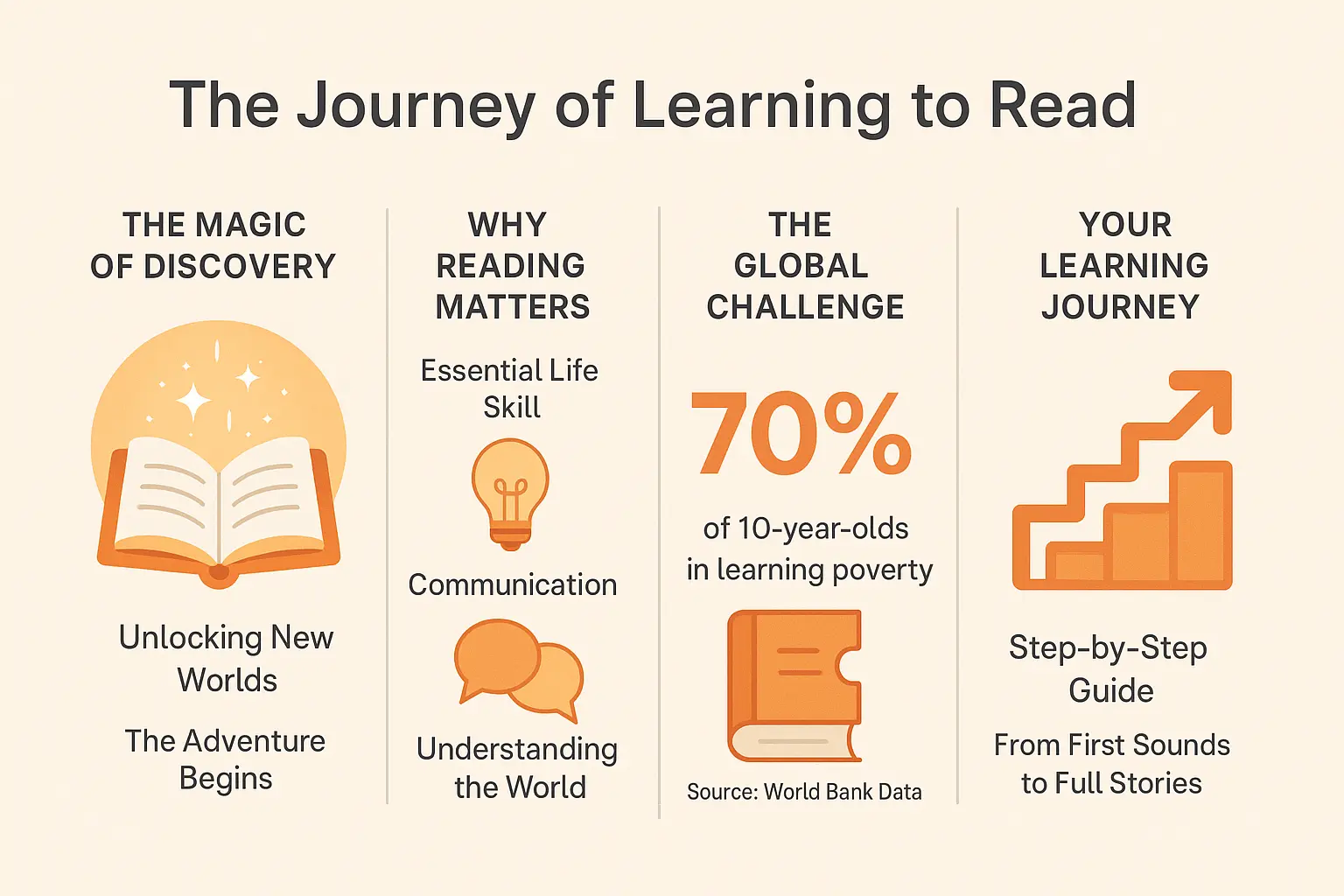
Remember that spark in a child’s eyes when they read their first word? 🌟 That moment isn’t just cute—it’s a gateway to a universe of possibilities. Learning to read unlocks imagination, builds confidence, and shapes how kids connect with the world. But how do we make this journey smooth and joyful? Let’s explore the steps that turn those tiny “aha!” moments into lifelong adventures.
Reading isn’t just about decoding letters. It’s a lifelong love for reading that fuels curiosity, empathy, and critical thinking. From recognizing sounds to understanding complex stories, this essential life skill lays the foundation for academic success and emotional growth. Parents play a key role—no magic wand needed, just patience and the right tools! Even simple routines, like bedtime stories or shared reading sessions, create a nurturing environment for budding readers.
Globally, ensuring children can read is a major focus. In fact, recent data shows the challenge is significant: 70% of 10-year-olds in low-income countries can’t read a simple text. This “learning poverty” highlights why supporting early reading matters. The good news? With the right strategies—like personalized stories or interactive tools—every child can thrive. Early intervention isn’t just about literacy; it’s about giving kids the keys to a brighter future.
On the program: we’ll break down the journey step-by-step, from the very first sounds to reading full stories. Ready? Let’s go! 🚀
The building blocks: cracking the code of reading
What is phonological awareness?
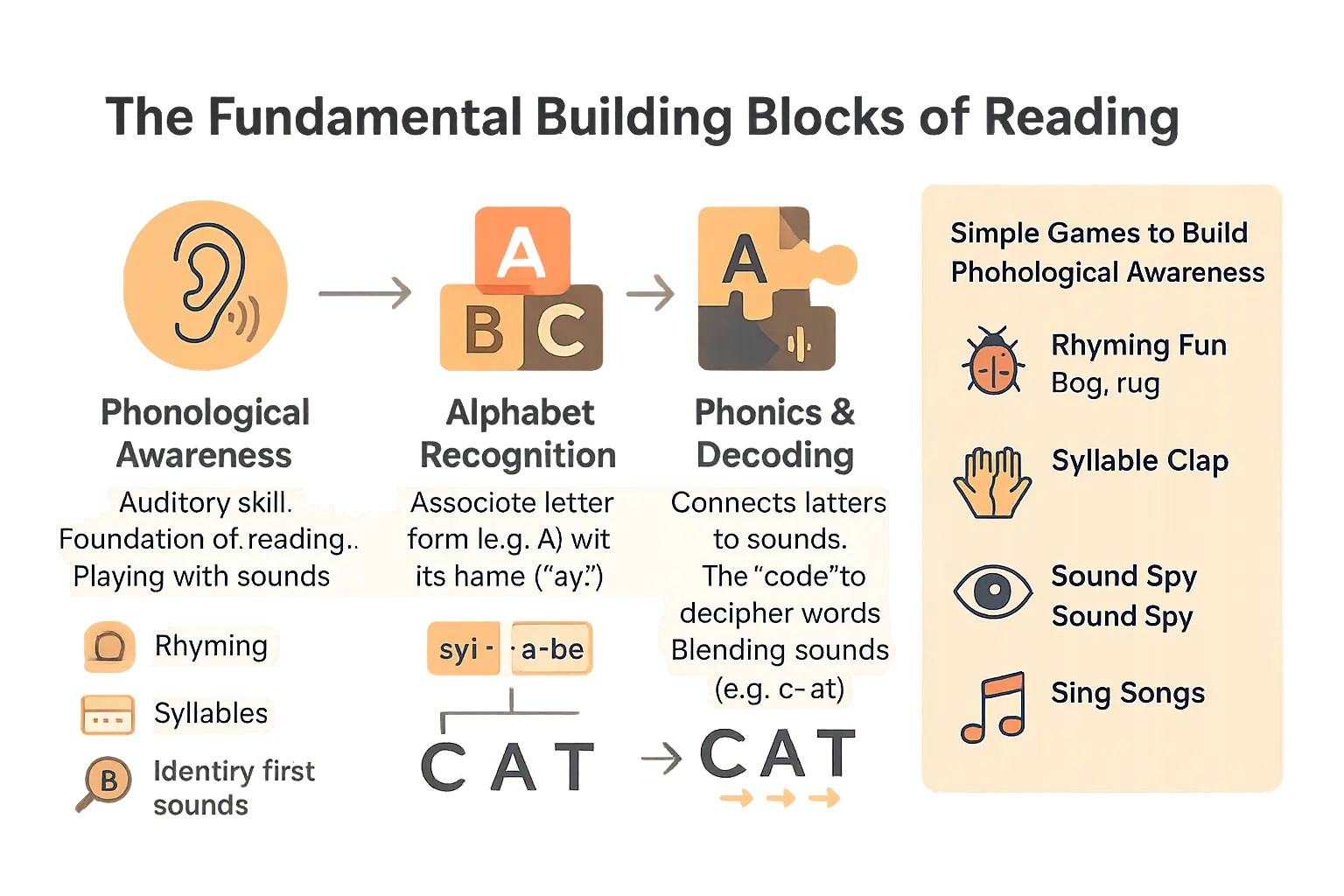
Imagine hearing the rhythm in “cat” and “hat” before seeing letters. That’s phonological awareness! 🎵 It’s the brain’s ability to play with sounds in spoken language, like spotting rhymes or clapping syllables in “watermelon.” This skill lives purely in our ears – no letters needed yet!
Babies start here, recognizing sound patterns in songs. By age 3-4, kids might sort words by beginning sounds (“bus” vs “duck”) or break “apple” into “ap-ple.” These games build reading foundations. Did you know 80% of preschoolers recognize letters in their names first? Personalization creates powerful learning moments. 📖
Getting to know the alphabet
Now we add shapes to sounds! 🔤 Letter recognition means instantly recognizing “A” as “ay” and “B” as “bee.” Think of it as learning secret code symbols for spoken sounds. Watch for tricky letters: “b/d” confusion happens because their shapes mirror each other. Practice makes perfect!
Researchers find letter knowledge predicts reading success better than vocabulary or IQ. For educators: start with letters from children’s names – they recognize these faster. Remember, “q” and “b” share similar shapes – use tactile tracing to teach differences. Did you know? The letter “a” is mastered by 100% of preschoolers, while “q” remains the most challenging. 🎯
The power of phonics: connecting letters to sounds
Time to crack the code! 🧩 Phonics teaches how letters (graphemes) represent sounds (phonemes). Decoding means sounding out “c-a-t” to say “cat.” This systematic approach turns scribbles into speech! Try blending sounds: /d/-/i/-/d/ becomes “did”!
Start with CVC words (consonant-vowel-consonant) like “dog” before longer words. Starfall’s Zac the Rat helps kids master this through playful learning. For parents: say sounds slowly, then speed up – “ssssaaaat” becomes “sat”! Remember: 78% of early readers improve faster with structured phonics practice (National Early Literacy Panel, 2012).
- Rhyming fun: “What rhymes with ‘bug’?” (rug, hug, mug)
- Syllable clap: Clap “Jes-si-ca” together
- Sound spy: “I spy something starting with /s/…”
- Sing-along: Nurture rhythm with nursery rhymes
Pro tip: Combine phonics with real books – decode “cat” in “Green Eggs and Ham” to show reading’s purpose! 💡
From sounding out words to understanding stories
Building reading fluency
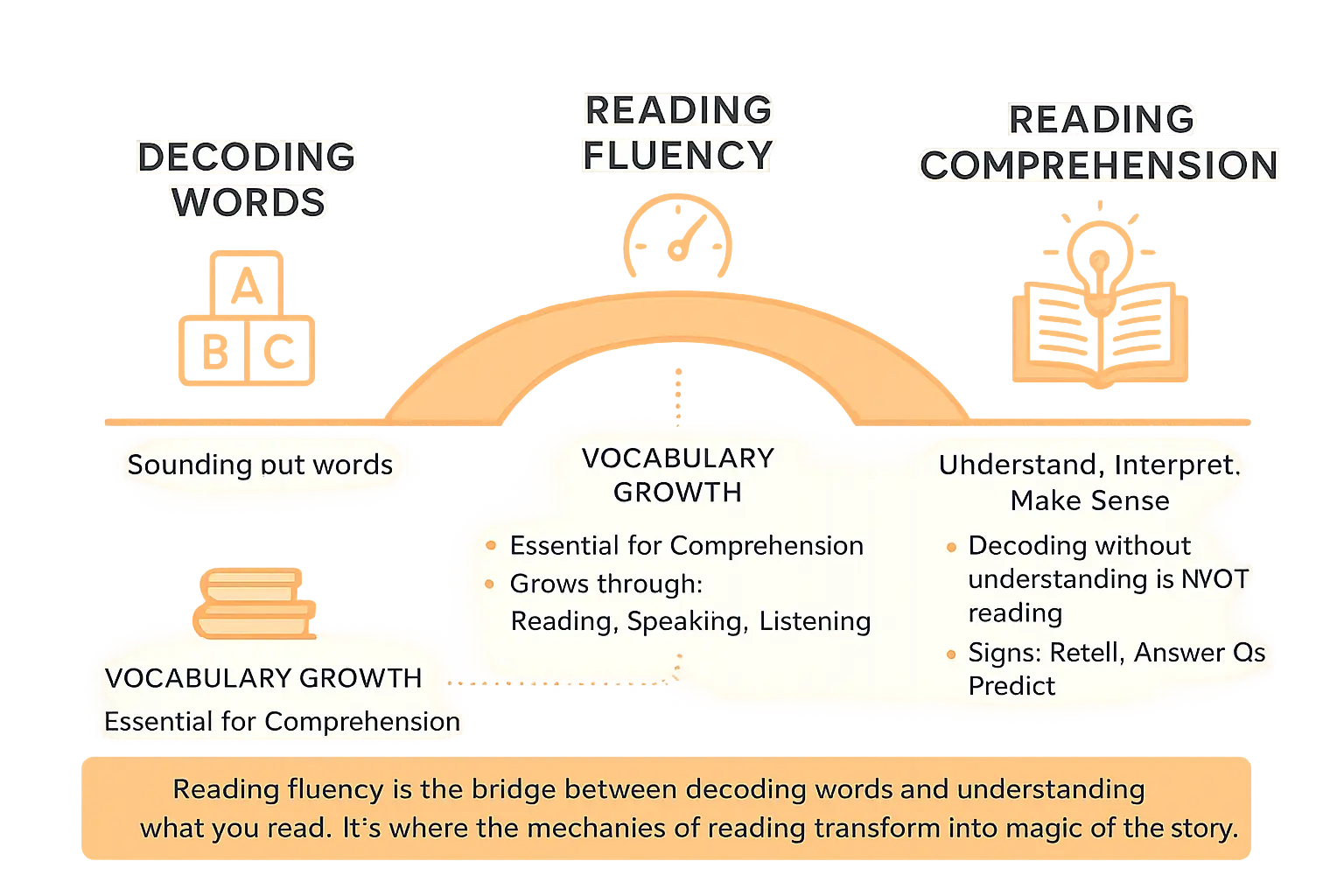
Reading fluency isn’t just about speed. It combines accuracy, speed, and expression. Think of it like learning to ride a bike: once balanced, you focus on the scenery instead of pedaling. Prosody matters—changing pitch for questions, pausing at punctuation helps readers sound natural.
When kids read fluently, their brains shift focus from decoding words to understanding meaning. A simple way to build this? Repeating short, familiar texts. This trains their eyes to move smoothly across sentences while building confidence through repetition.
The ultimate goal: reading comprehension
Comprehension is where the magic happens. Decoding without understanding isn’t reading – it’s just vocalizing symbols. True reading means making sense of stories, connecting events, and predicting outcomes.
How do you recognize comprehension? Watch for:
- Retelling plots in their own words with key details
- Predicting story outcomes using clues
- Answering questions about characters’ motivations
These actions show children aren’t just reading words – they’re connecting with meaning and building mental story maps.
Growing their vocabulary
Words are building blocks. When kids don’t understand most vocabulary in a text, comprehension crumbles. But here’s the good news: vocabulary grows through both direct teaching and natural exposure during personalized reading moments.
“Reading fluency is the bridge between decoding words and understanding what you read. It’s where the mechanics of reading transform into the magic of the story.”
Personalized storytelling apps like Tellmestories create powerful vocabulary moments. When children become heroes of their own tales, new words stick instantly. Imagine hearing “dragon” while seeing your own picture in the story! Context makes definitions memorable.
Why personalization matters
Traditional methods work, but personalized content supercharges learning. When kids encounter their name, family photos, and favorite topics in stories, they:
- Pay closer attention to details
- Remember vocabulary better through emotional connection
- Develop stronger reading habits when stories match their interests
This isn’t just theory – parents worldwide see results when using WhatsApp-based platforms that adapt stories to each child’s learning pace and evolving preferences.
A roadmap for parents: reading milestones by age 🗺️
Every child’s reading journey is unique, but it can be helpful to have a general map of the road ahead. Remember, these are just signposts, not deadlines! Recent research from Harvard highlights that reading skills manifest earlier than previously thought, underscoring the importance of early language exposure. This early foundation shapes how kids connect sounds, letters, and meaning – even before they recognize their first word.
| Age Group | Typical Milestones | Fun & Simple Activities |
|---|---|---|
| Toddlers 1-3 years | Enjoys being read to, points to pictures in books, can name familiar objects, starts handling books correctly. | Read colorful board books daily, sing alphabet songs with gestures. Try “sound hunts” around the house and make sensory books with textured materials for tactile learning. |
| Preschoolers 3-4 years | Knows some letters, shows interest in rhyming and sounds, can retell familiar stories, pretends to read. | Play “I spy” with letter sounds, read rhyming books, visit libraries. Create story jars with random items for silly tales and use sidewalk chalk for letter practice during outdoor play. |
| Early Readers 5-6 years | Recognizes sight words, decodes simple CVC words, connects letters and sounds, writes their name independently. | Spot environmental words (signs, cereal boxes), use fridge magnets for word games, explore personalized 5-year-old stories to blend learning with play. Try “grocery list adventures” to practice reading while shopping. |
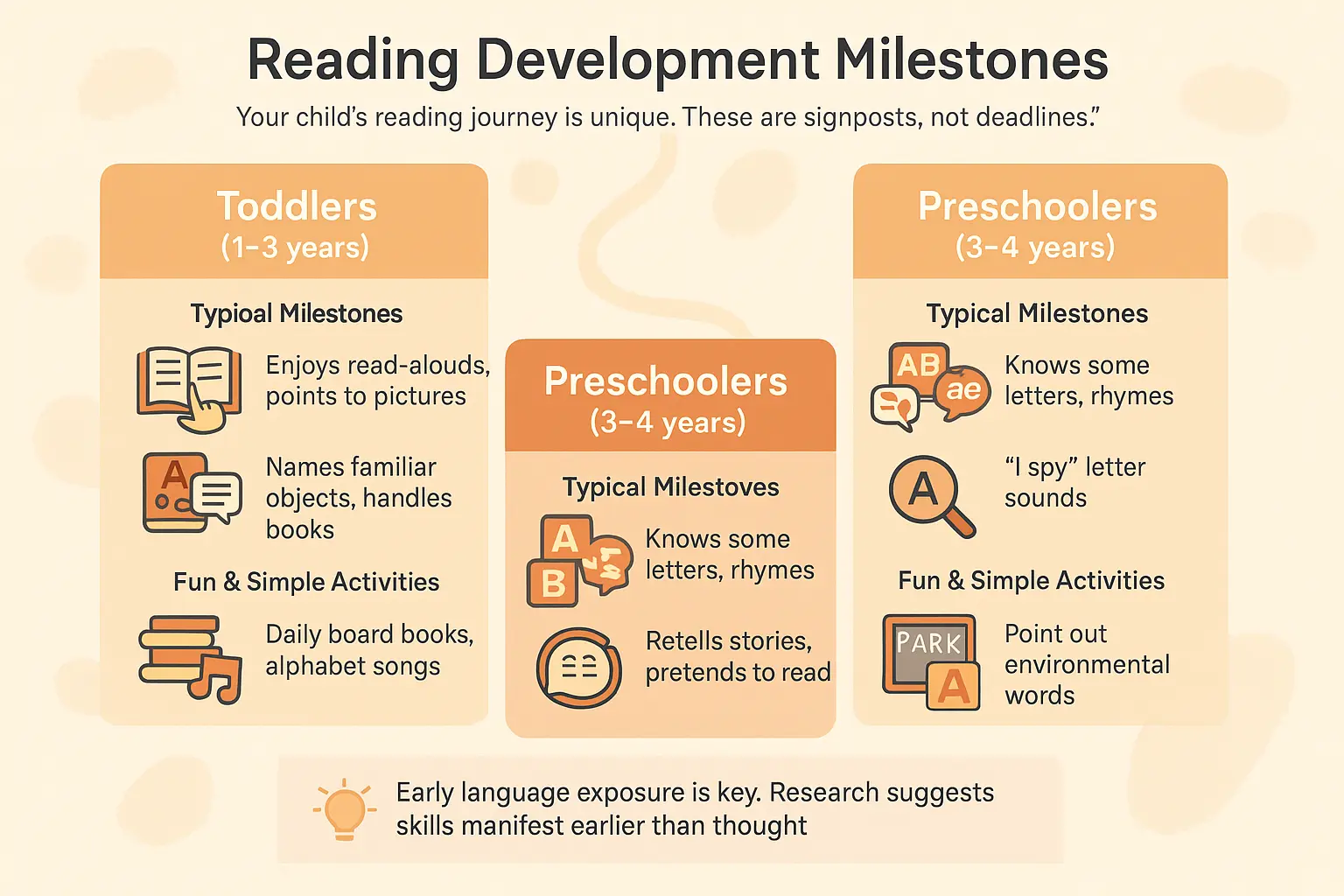
Skills build gradually: Toddlers develop book-handling basics before preschoolers explore letter sounds. By 5-6 years, kids decode words through real-world reading like street signs. The personalized stories make practice feel magical – imagine your child starring in adventures that reinforce letter patterns! For example, a story where they solve a mystery using rhyming words aligns perfectly with 5-year-old milestones.
Notice how stages overlap. A preschooler loving “I spy” might become a word-savvy 5-year-old. When progress feels slow, tools like voice-activated storytelling apps provide gentle support – just speak into WhatsApp to create stories starring your child! Keep reading joyful by integrating practice into routines: spot cereal box letters at breakfast or build words with magnetic letters during snack time. These small moments create big leaps in comprehension and confidence.
What if my child is struggling with reading?
Feeling worried is natural when your child faces reading challenges. Every child develops at their own pace – early struggles don’t predict future success. Focus on creating a joyful environment where letters feel like playful puzzles rather than pressure. Even 10 minutes daily can build confidence gradually. 🌟 Early intervention matters, but progress happens through consistency, not perfection.
How to spot the signs
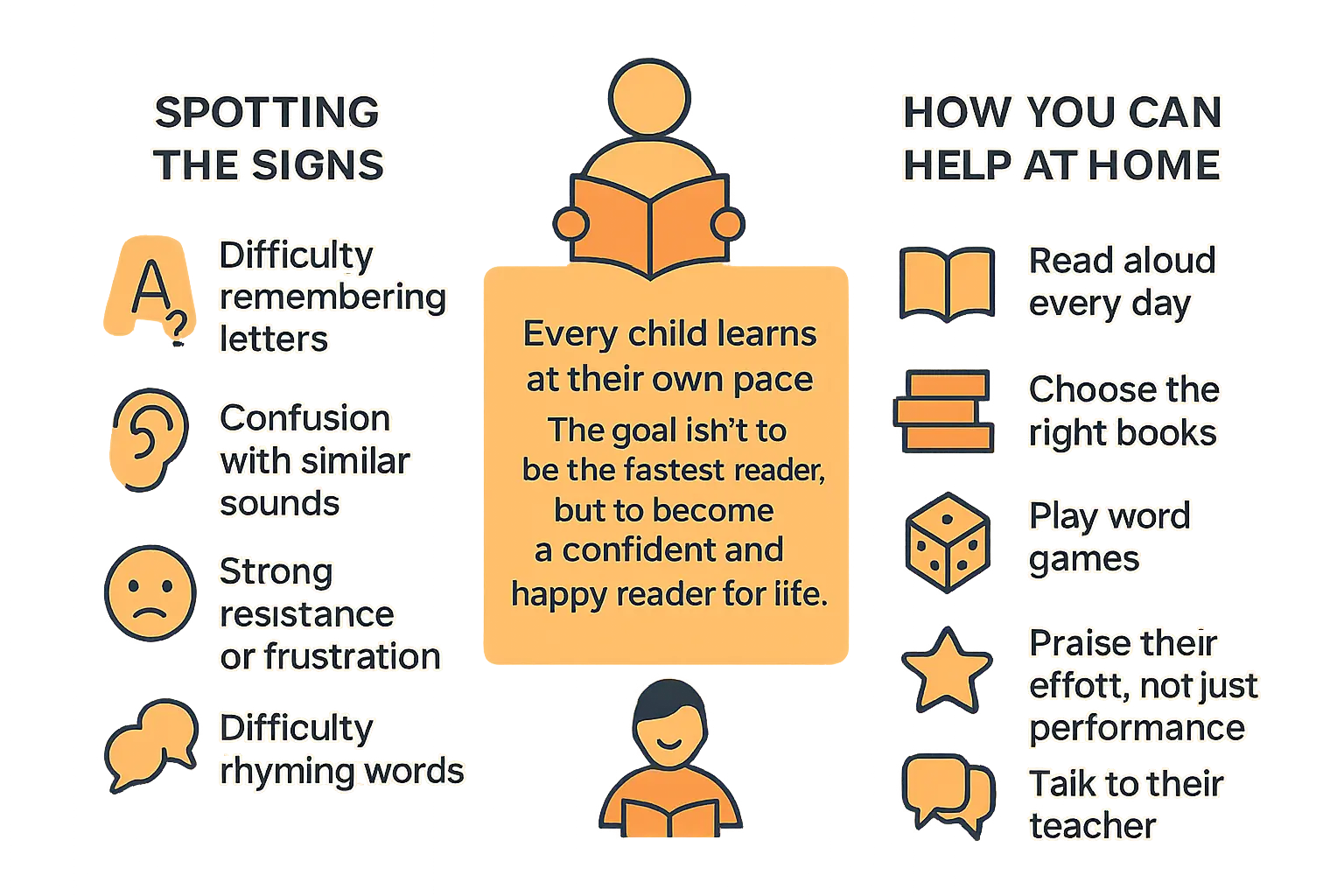
Notice these subtle clues without alarm: difficulty recognizing letters/sounds, resistance to rhyming games (“cat…hat?”), confusion between similar words (“pat” vs “bat”), or frustration during reading time. These aren’t red flags – just opportunities for creative solutions. A child who avoids songs with repetition or can’t break “dog” into /d/ /o/ /g/ might benefit from alternative approaches. For example, trouble identifying the first sound in “apple” (the /a/ sound) suggests foundational skills needing reinforcement through playful activities.
Practical strategies to provide support
Simple tactics that make reading engaging:
- Read aloud daily. Build vocabulary and joy. Alternate reading sentences to keep it interactive. Try using different voices for characters to make it memorable.
- Choose interest-led books. Dinosaur obsessions? Use themed stories! Relevance > complexity. A space-obsessed child might connect better with rocket-shaped letter cards than traditional flashcards.
- Play sound games. Try “I Spy” (“I spy something starting with /m/…”) to strengthen phonemic awareness. Apps like Starfall’s phonics games turn abstract concepts into interactive adventures.
- Celebrate effort, not just outcomes. Praise persistence: “I love how you figured out the /sh/ sound in ‘shark’!” Specific feedback makes progress feel tangible.
- Partner with teachers. Share specific observations. Ask: “What can we practice together that matches classroom methods?” Collaborating ensures consistency between home and school.
Explore learning resources that adapt to their style. Remember:
Every child learns at their own pace. The goal isn’t speed, but building a confident, happy reader for life.
Visual tools like Starfall’s Free Phonics Printouts make abstract sounds concrete. Their method starts with CVC words like “cat” to build foundational skills through play, not pressure. Their systematic approach (progressing from single sounds to full words) creates clear stepping stones.
Your calm, curious support matters most. 💙 For reluctant readers, becoming the hero of their own story through Tellmestories can transform letters into personal magic – imagine their excitement when “Leo the Lion” in a book actually looks like them!
Let’s Make Reading An Adventure, Not A Chore
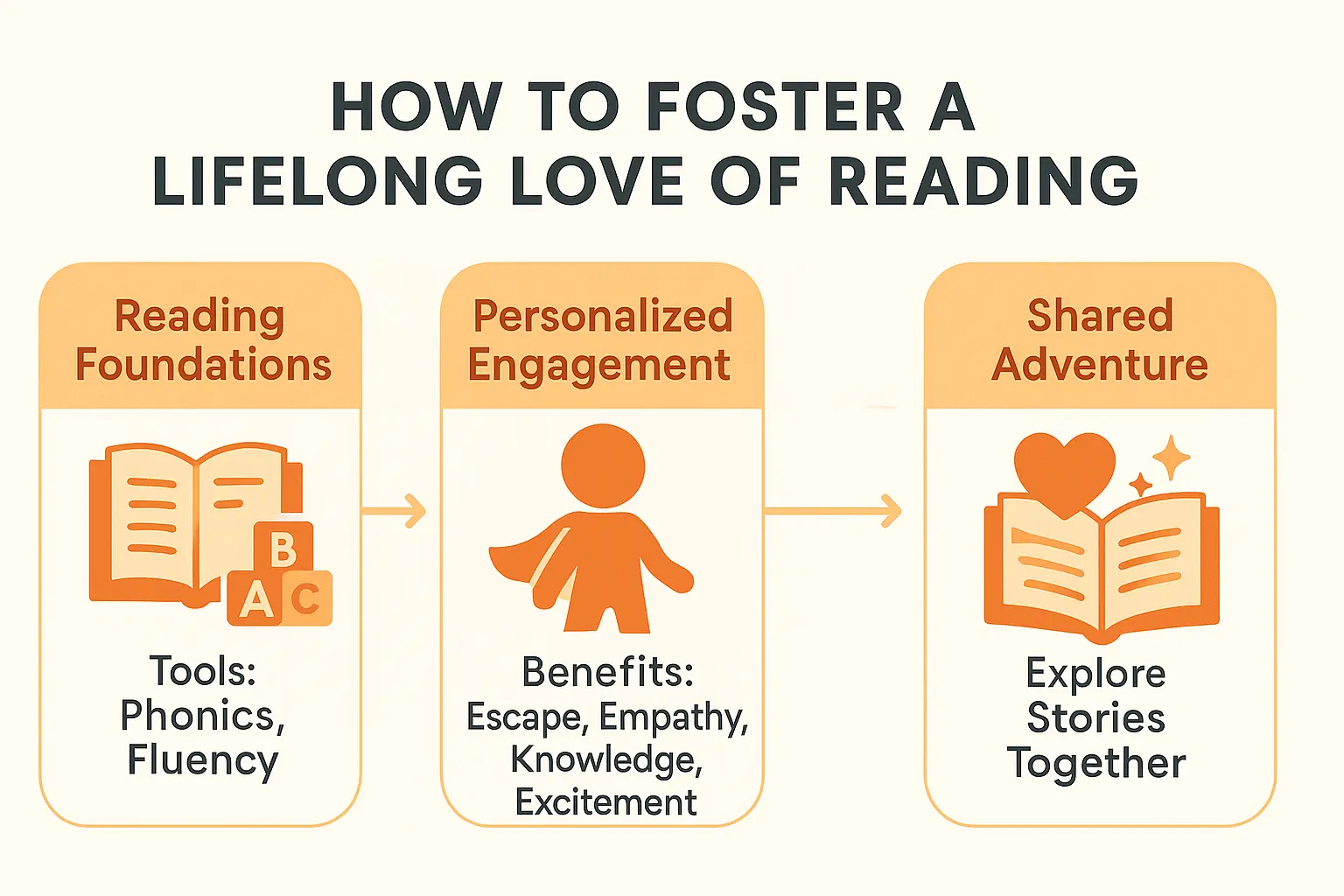
Reading isn’t just about decoding letters – it’s about opening doors to new worlds. While phonics and fluency build the technical foundation, the real magic happens when books spark curiosity and emotional connections. Studies show children who associate reading with joy develop stronger neural pathways for language and empathy, turning stories into gateways for creativity and understanding. 🌍✨ Did you know? Kids exposed to daily reading hear 30 million more words before kindergarten, boosting their vocabulary and cognitive development!
Personalized stories supercharge this effect. When kids see themselves as heroes, reading becomes a thrilling quest, not homework. Research highlights that children who engage with tailored tales show 3 years’ reading advantage by age 14. These stories boost confidence, normalize big emotions, and make vocabulary stick – imagine your child solving mysteries as the main character! 🦸♂️💡 Plus, customized tales bridge diversity gaps: skin tone options, family structures, and cultural references let every child feel seen and valued.
Ready to transform bedtime into a storytelling adventure? Explore educational reading stories that adapt to your child’s name, voice, and interests – no app downloads required. Watch their eyes light up when they hear their own voice shaping the plot! 🎧✨ Bonus: The AI remembers their favorite themes, creating a library that grows with them – perfect for busy parents seeking practical solutions.
Happy reading! 💖
From decoding letters to diving into stories, learning to read is a lifelong adventure filled with small wins and big discoveries. Celebrate every milestone, keep it playful, and remember—tools like phonics, patience, and personalized stories (yes, like those from Starfall’s research-backed approach 🌟) turn challenges into confidence. Ready to unlock worlds? Your child’s reading journey starts now. 📚✨
FAQ
What’s the best way to learn to read?
Think of reading like a superpower 🦸♂️! The best method combines five key ingredients: phonological awareness (playing with sounds), phonics (connecting letters to sounds), fluency (reading smoothly), vocabulary (knowing word meanings), and comprehension (getting the story). Starfall’s method nails this combo by starting with fun phonics games and building up to real stories. Pro tip: Make it playful! Kids learn better when they’re giggling through CVC words like “cat” or “dog”.
When should kids start learning to read?
Little learners start their reading adventure way earlier than you’d think! 📚 Toddlers (1-3) love pointing at book pictures. By preschool (3-4), they’ll spot rhymes and maybe “read” their favorite stories. Age 5-6 is when magic happens – they decode words like “sat” or “jam”! Research from Harvard shows early language exposure matters most. Don’t stress about timelines – every kid’s pace is valid. Some walk at 10 months, others at 18… same with reading!
What are the 5 reading superpowers?
Five powers make reading possible: 1. Phonemic awareness – hearing sounds in words (like spotting the /b/ in “bug”) 2. Phonics – matching letters to sounds (B = /b/) 3. Fluency – reading smoothly, not robot-style 4. Vocabulary – knowing what words mean 5. Comprehension – getting the story’s message
It’s like building a treehouse – you need all beams (skills) strong! Starfall’s alphabet games cover them all while keeping things fun 🎯.
How do I start learning to read?
Baby steps only! 👣 First, play sound games: “What rhymes with ‘hat’?” (cat! pat! splat!). Next, practice letter shapes with fridge magnets or sidewalk chalk. Then try blending – stretch out “c-a-t” slowly until it becomes “cat”! Try interactive stories where kids become the hero. Pro tip: Make reading time snuggle time – 15 minutes daily beats 90 minutes once a week!
What’s the speediest way to teach reading?
Think “systematic” not “speedy”! ⚡ Start with CVC words (cat, hop) using Starfall’s Free Phonics Printouts. Practice 10 minutes daily with blending drills: “Let’s stretch ‘b-a-g’ together!” Use multisensory tricks – write letters in shaving cream, hop while saying sounds, or sing vowel songs. Keep it playful – kids learn lightning-fast when they’re laughing at “silly billy” rhymes or chasing letter shapes with toy cars!
Why do some kids struggle with reading?
Brains work differently – and that’s okay! 🧠 Dyslexia affects how we process language sounds, making “cat” vs “act” tricky. It’s genetic (like curly hair or freckles!), not caused by bad teaching or eye problems. 15-20% of people have it, including Einstein and Spielberg! The key? Early support – think of it as special reading glasses for the brain. Programs like Starfall’s systematic phonics help rewire those sound connections.
My 7-year-old can’t read – what now?
Deep breath! 🌬️ Many kids need extra help – 70% of 10-year-olds globally struggle with basic reading (World Bank data). First, get a screening – could be vision/hearing issues or needing more phonics practice. Then try targeted games: Sound sorting (put buttons in “/b/” and “/d/” bins) or Letter Hunt (find “B” on cereal boxes). Need ideas? Check learning resources that make practice feel like playtime!
What are the first reading steps?
Pre-reader superstars do these 3 things: 1. Letter hunters – Spot letters in logos or license plates 2. Sound detectives – “What starts with /m/? Moo-cow! Milk! Mom!” 3. Storytelling – Pretend-read books using pictures
Try the “Read, Talk, Play” routine: Read a book together, talk about the pictures, then act out the story with toys. It’s like sneaky learning – they’re just having fun while building brain muscles!
Does screen time help or hurt reading?
It’s a balancing act 🤹! Passive scrolling? Not so great. But interactive apps that teach letter sounds? Gold! The key is 2D vs 3D time: For every screen hour, add 2 hours of real-world reading fun – library visits, grocery store letter hunts, or storytelling with stuffed animals. Check Common Sense Media’s educational app guide for reading apps that actually teach skills. Remember: screens are sidekicks, not the superhero!