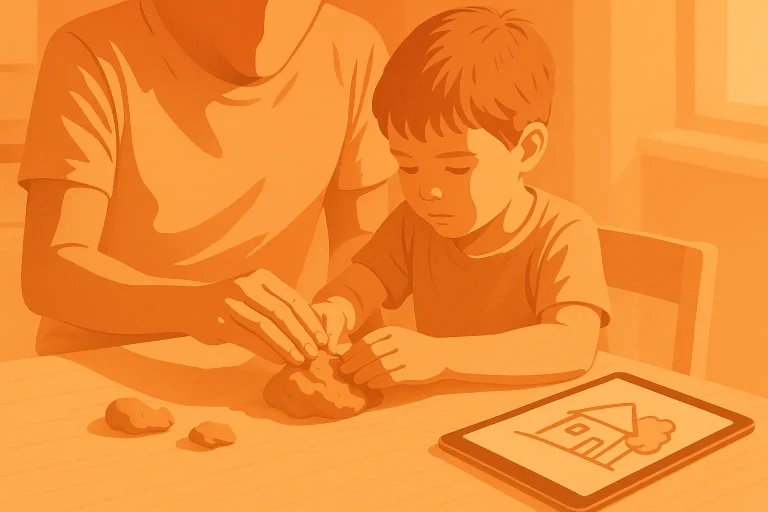
The key takeaway: Creating with your child isn’t just playtime—it’s a powerful mix of digital and hands-on activities that boost development, motor skills, and confidence. Purposeful bonding through digital stories or crafting with recycled materials nurtures creativity and emotional connection. Pro tip? Start small: 20 minutes daily using Google Family Link or a cardboard “treasure chest” builds skills. Simple messes create lasting memories!
Ever feel like you’re running out of ideas to keep your little one engaged? 🎨 Let’s be real: creating with your child isn’t just about avoiding screen time—it’s about sparking joy and learning in ways that matter. What if I told you that mixing glitter glue or coding a mini game together could boost creativity and strengthen your bond? Spoiler: this guide dives into genius hacks for safe digital play, mess-toy magic with recycled materials, and why both matter for your child’s growth. You’ll walk away with 20+ no-stress activities that turn “I’m bored” into “Look what we made!” Ready to unlock the secret sauce of parenting wins? 🚀
Why creating with your child is more than just fun and games
Ever run out of ideas to engage your little one? I get it! Modern parenting means balancing screen time, learning, and quality moments. The truth? Creating together isn’t just busy work – it builds skills, sparks joy, and strengthens your bond. What if I told you simple projects could boost motor skills, fuel creativity, and prepare your child for life? Let me show you how to make magic happen – both on-screen and off.
The challenge of modern parenting: more than just screen time
Screens are everywhere – no shame! The trick? Prioritize quality over quantity. Apps like Tellmestories let you co-create personalized WhatsApp stories in 2 minutes, making your child the hero of age-appropriate adventures. No downloads needed – just the app you already use. Better yet? They’re learning life lessons while having fun. Offline, try pasta necklaces or DIY instruments – both build motor skills. It’s about balance, not guilt. Keep it smart, keep it simple.
A journey into shared creation
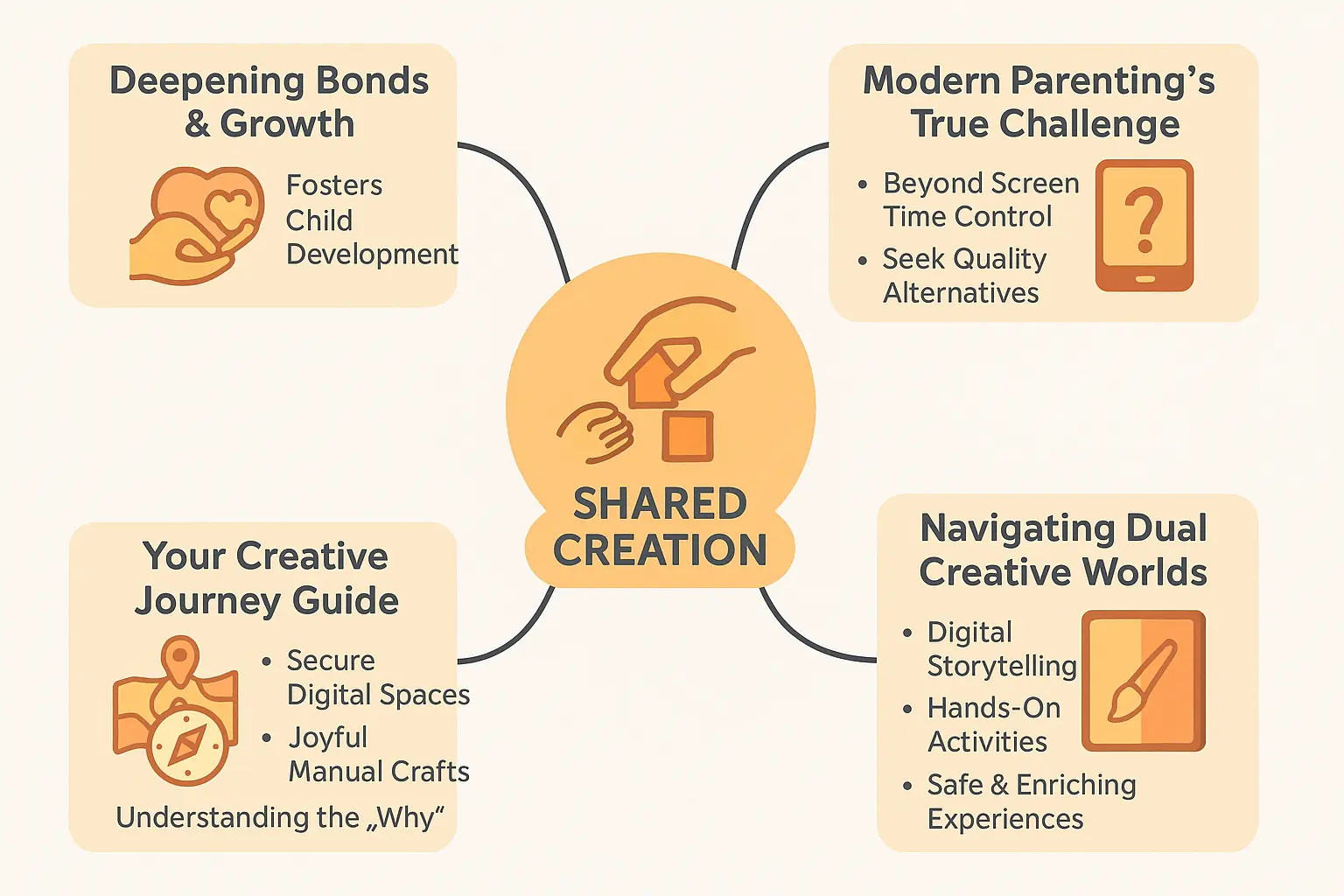
This guide shows how to create magic in digital and physical worlds. First, we’ll craft safe digital adventures using WhatsApp storytelling. Then explore tactile fun like mud painting or fort building. Spoiler: it’s about the journey, not the end result! And since I know you’re busy, everything here works with real life. Ready to turn ordinary moments into extraordinary connections? Let’s dive in!
Creating something together, whether it’s a digital story or a pasta necklace, isn’t about the final product. It’s about the shared moments and the little sparks of joy along the way.
Setting Up a Safe Digital Playground for Your Child
Let me walk you through creating a secure digital space for your little ones. Today’s tech isn’t just fun – it’s a powerful tool for learning. But safety first! 😊 Think of it as building a virtual playground with safety gates – you set the rules, they explore freely.
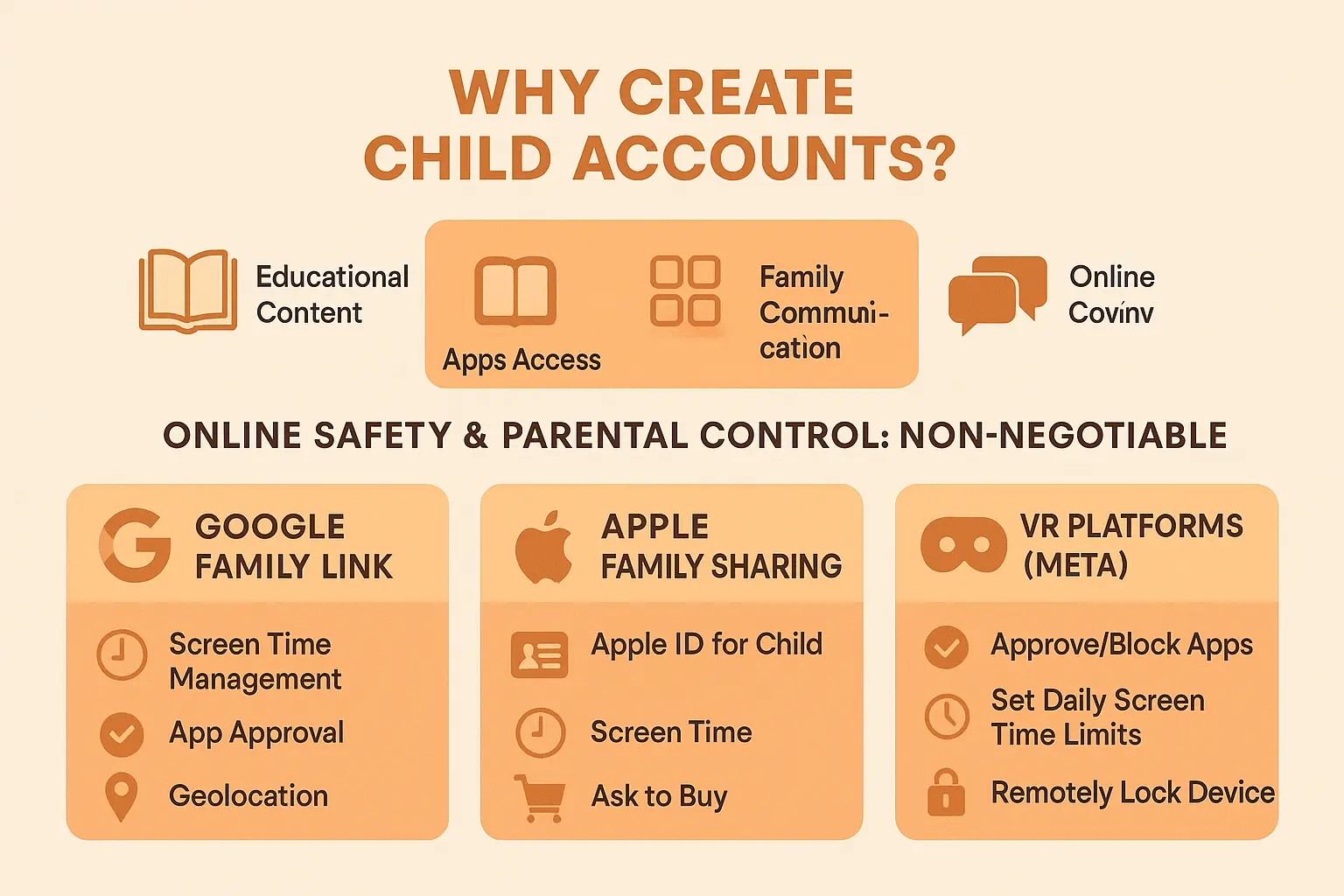
Your Guide to Google’s Family Link
Family Link is Google’s way to create child accounts (under 13) with built-in safety nets. Here’s how to set it up:
- Visit Google’s Family Link page and click “Create Account.”
- Input your child’s details (name, birthdate, etc.).
- Approve settings from your own Google account.
You control screen time, app downloads, and device location. For example, if your 7-year-old tries to access a game during homework time, you’ll get a real-time alert to block it. No app overload – just peace of mind. It’s easier than you think to let them explore safely while keeping their digital world kid-friendly!
Using Apple’s Family Sharing
Apple’s Family Sharing works like a charm for iOS users. Start by:
- Opening Settings on your iPhone and tapping “Family” (or “Partage familial”).
- Selecting “Add Family Member” > “Create Account for a Child.”
- Following prompts to set up their Apple ID and enable Screen Time.
Approve purchases, set bedtime limits, and block age-inappropriate content. Perfect for Apple families – no extra apps needed! Safari filters are automatically enabled for under-13s. Bonus: You can customize Screen Time schedules for weekdays vs weekends, so learning apps stay accessible while social media gets a time limit.
What About Other Platforms Like VR?
VR adventures? Meta’s got your back! Their kid-friendly controls for Quest headsets let parents:
- Approve or block apps they want to download
- Set daily screen time limits
- See how much time they spend on apps
- Remotely lock their device when it’s time for a break
- Manage privacy settings to block unknown contacts
Want specifics? Check Meta’s create and manage a Meta account for their child guide. Their Family Center makes it simple to supervise virtual worlds! Teens (13-17) get more freedom but still let you monitor purchases and restrict mature content.
Pro tip: Combine these tools with hands-on creativity! While tech helps, nothing replaces tactile activities like painting with vegetable stamps or building forts from cardboard boxes. Balance is key – digital safety opens doors to educational content (like interactive storytelling) while keeping your child’s data protected. 🌟 Think of it as a high-tech version of supervised playdates: you’re setting boundaries, but they’re free to explore within them!
Unleashing creativity: simple and fun hands-on activities
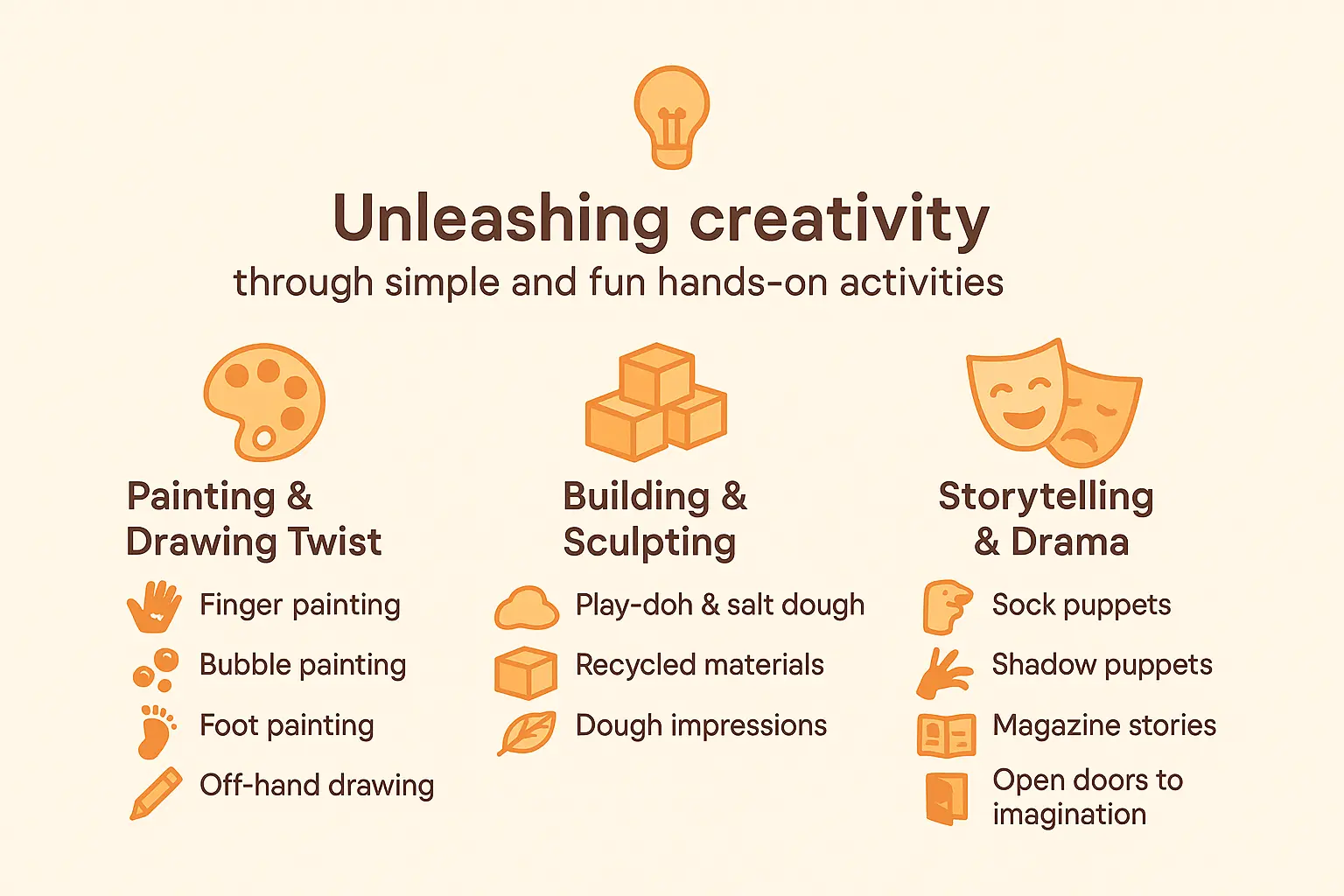
The classics revisited: painting and drawing with a twist 🎨
Ready to get your hands dirty? Let’s start with timeless favorites that blend creativity with motor skill development! These activities turn simple materials into sensory adventures.
- Finger painting: A sensory powerhouse! Let kids explore textures by mixing cornstarch for thicker paint or sand for rough surfaces. Pro tip: Challenge them to create “color mixing races” – blend red and yellow to make 10 shades of orange!
- Bubble painting: Blowing colored bubbles onto paper creates magical patterns. Pro tip: Freeze colored bubble mix in ice cube trays – watch colors melt into abstract art! Add leaves to wet paint for nature prints.
- Painting with feet: Lay paint on a large sheet for full-body art. Pro tip: Combine with music – “dance” across paper for rhythmic footprints! Try “footprint stories” – make animal trails across the canvas.
- Drawing with the other hand: A focus booster! Pro tip: Use both hands simultaneously for wild designs. Add glow sticks to the non-dominant hand for nighttime scribbling!
Building and sculpting: from play-doh to recycled treasures 📦
Transform everyday items into STEM-powered art! Start with homemade play-doh (flour, salt, water) – press shells or leaves for imprints. Pro tip: Add essential oils for scented creations – lavender for calm, peppermint for energy!
Turn cardboard tubes into rocket ships or bird feeders. Pro tip: Decorate with natural finds – glue on feathers or pasta shapes. Try “texture collages” using fabric scraps and bubble wrap. Pro tip: Use bottle caps for counting practice – “How many make a robot face?”
For extra fun, create a “recycled robot” using tissue boxes and bottle caps. Or build a cardboard tube village with tunnels and bridges. This **teaches resourcefulness while developing fine motor skills**.
“The best creative prompts don’t tell a child what to make. They open a door and invite the child’s unique imagination to explore what’s possible.”
Storytelling and drama: bringing imagination to life 🎭
Bring stories off the page! Make sock puppets with old socks and buttons. Tellmestories turns these into custom tales where your child becomes the hero!
Try shadow puppet theater with cardboard cutouts. Use painted rocks as story starters or create a “story jar” with random objects – pull 3 items and build a tale. Interactive formats let kids shape the plot – will the dragon be friendly or ticklish?
Describe puppet show adventures through WhatsApp using Tellmestories’ voice-to-story feature. The AI remembers favorite characters and interests for personalized books! For example: “Today’s adventure with Captain [Child’s Name] and the ticklish dragon” becomes a bedtime story in minutes.
For quick drama games, try “sound stories” – use only animal sounds or movements. Or create a “story walk” – during outdoor time, turn sticks into magic wands and rocks into treasure maps. Turn Tellmestories characters into backyard quests like “rescuing Princess Lily’s crown” using homemade traps!
The amazing benefits of creating together
Ever wondered why your toddler insists on “helping” you cook or scribble on every piece of paper they find? 🤔 Turns out, those messy moments build superpowers! Let me break down why creating together isn’t just fun – it’s future-proofing your child’s development.
Boosting brainpower and motor skills
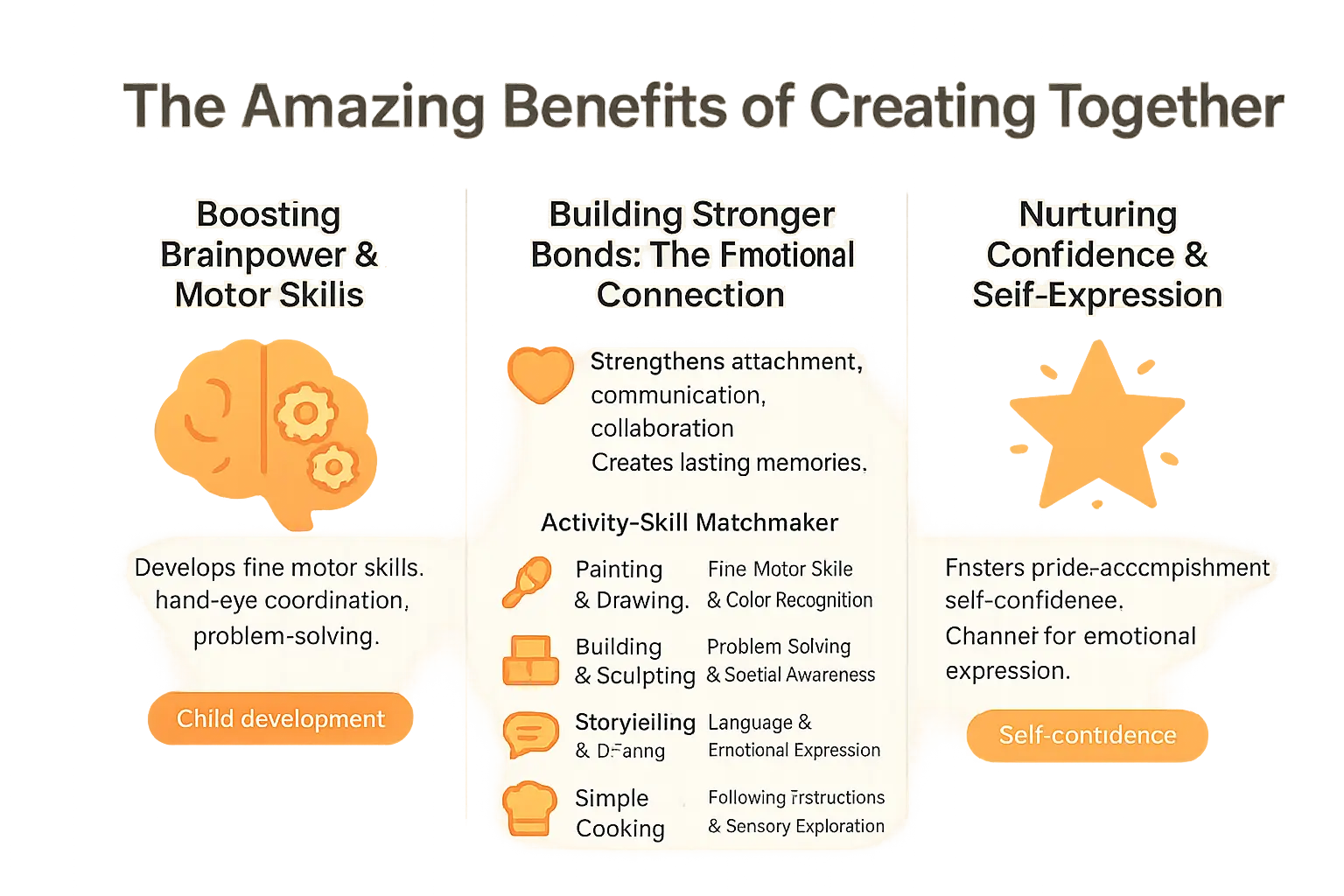
Think of fine motor skills as tiny muscle workouts for fingers! 🦵 When kids grip crayons, stack blocks, or glue glitter (yes, even that glitter mess!), they’re actually building neural pathways. Ever watched a 4-year-old conquer safety scissors? That’s their brain saying “Level up!”
Here’s the secret sauce behind common activities:
| Activity Type | Key Skill Developed | Bonus Benefit |
|---|---|---|
| Painting & Drawing | Fine Motor Skills & Color Recognition | Boosts self-expression |
| Building & Sculpting | Problem-Solving & Spatial Awareness | Encourages patience |
| Storytelling & Drama | Language & Emotional Expression | Develops empathy |
| Simple Cooking | Following Instructions & Sensory Exploration | Teaches life skills |
Building a stronger bond: the emotional connection
Remember that awkward phase when your 3-year-old suddenly wants to “do it myself”? 💁♀️ That’s their built-in learning moment! By joining their creative chaos (yes, even sidewalk chalk murals), you’re building what scientists call “emotional scaffolding.” It’s like relationship superglue – 10x stronger than helicopter parenting.
Pro tip: Next time they’re “helping” mix pancake batter, don’t correct their lumpy technique. Instead, say “Wow, you’re measuring ingredients like a real chef!” That tiny shift turns ordinary moments into memory gold.
Nurturing confidence and self-expression
Ever seen that look when they hold up a lopsided clay pot? 😍 That’s pure, unfiltered pride. Every “I did it!” moment is confidence being poured into their emotional bucket. And when they draw with closed eyes? That’s emotional expression 101 – better than any tantrum therapy!
Here’s the kicker: These creative bursts aren’t just cute moments. Research shows kids who create 3+ times weekly show 30% better problem-solving skills. 📈 So next time you’re up to your elbows in glue, remember – you’re not just making art. You’re building future-ready humans!
Making it happen: your practical toolkit for creative sessions
Setting the stage for creativity (without wrecking the maison!)
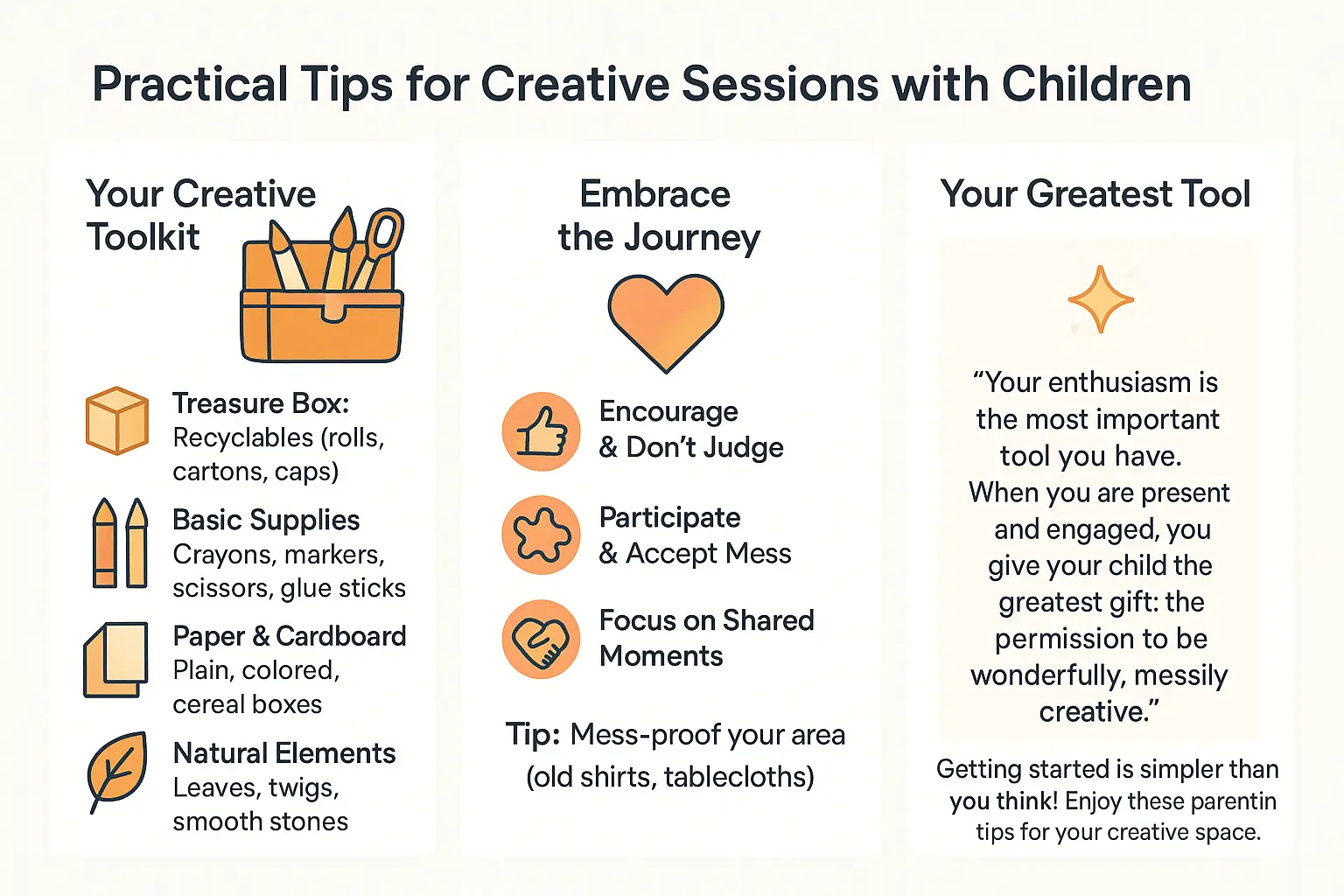
Let’s be real – creativity can be messy. But here’s the good news: you donesn’t need a Pinterest-perfect craft room to spark imagination. Start with a “Treasure Box” – a humble cardboard box stocked with toilet paper rolls, egg cartons, and bottle caps. This eco-friendly stash costs nothing and keeps little hands busy for hours 🌿. Add pasta shapes or fabric scraps for open-ended creations – think rocket ships from cereal boxes or fairy gardens from pinecones!
- A “Treasure Box”: Stockpile recyclables like toilet paper rolls, egg cartons, bottle caps, and cereal box cardboard
- Basic Supplies: Non-toxic crayons, washable markers, child-safe scissors, and glue sticks
- Paper & Cardboard: Stock plain paper, colored paper, and cereal boxes (flatten them for instant canvases!)
- Natural Elements: Leaves, twigs, smooth stones, and pinecones collected from walks
For messy projects, throw down a plastic tablecloth or take crafts outside. Trust me – painting with mud in the garden beats scrubbing kitchen tiles! 🌈 Try homemade playdough (flour + salt + water + food coloring) – it’s squishy and perfect for tiny hands.
It’s about the journey, not the destination
Your enthusiasm is the most important tool you have. When you are present and engaged, you give your child the greatest gift: the permission to be wonderfully, messily creative.
Remember how Alex and Julien started Tellmestories? They simply wanted to help their daughter Anja sleep better. Your creative sessions don’t need perfect outcomes – let the process shine! 🌟 Record a voice note about today’s craft and let Tellmestories turn it into a bedtime tale where your kid saves the day with their glittery dragon sculpture!
Want more inspiration? Explore creative activities that turn everyday moments into storytelling magic. The real win isn’t the glittery masterpiece on the fridge – it’s the laughter, learning, and memories made together.
Creating with your child isn’t about perfection—it’s about connection. Whether you’re navigating digital tools or crafting with recycled treasures, every messy masterpiece and shared laugh strengthens your bond. Embrace the chaos, celebrate small wins, and remember: your curiosity is their inspiration. Ready to start? Explore more creative adventures at Tellmestories—where imagination meets everyday moments. 🌟
FAQ
How Can I Build a Strong Bond with My Child?
Building a solid connection with your little one is all about shared moments and active participation! 🤝 Start by diving into creative activities together—think finger painting 🎨, building pillow fort castles, or making up silly stories. These moments aren’t just fun; they’re like glue that sticks you closer. Consistency matters too: regular reading sessions, silly dance breaks, or even cooking simple meals together create trust. Remember, it’s not about perfection—it’s about showing up with enthusiasm and letting them know you’re their biggest fan, mess and all!
What Triggers a Child’s “Flow” State?
Kids enter this magical “flow” zone when they’re super focused on something they love! 🧱✨ The key is finding activities that match their current interests—whether it’s building with magnetic tiles, creating stop-motion videos, or perfecting their cardboard rocket design. Remove distractions (yes, that means hiding your phone 😅), and let them lead the way. You’ll know they’re in flow when they lose track of time and keep saying “Just five more minutes!” Pro tip: Join in occasionally, but mostly act as their “tool provider” when they ask for stuff like “Mom, I need more tape!”
Why Do Kids Sometimes Shut Down Emotionally?
Let me break it down: kids might withdraw when they’re feeling overwhelmed, scared, or misunderstood. 😟 It could be big stuff like family changes, or smaller things like a tricky puzzle that won’t work. Imagine their brain getting “stuck” in protection mode—like when they’re super tired or facing too many choices. The good news? You can help by creating “emotional safe zones.” Try saying things like “I see you’re frustrated—want a big hug first or a break?” and offering simple choices. Bonus: Regular creative time helps them practice expressing feelings through art or play!
What Can Kids Actually Create?
Oh, the possibilities are endless! 🌟 From magical masterpieces using spaghetti art to engineering marvels built with toilet paper rolls. They can:
- Paint with veggies (zucchini “paintbrushes” are a blast! 🥒)
- Make shadow puppet theaters from cardboard boxes
- Create nature collages with leaves and rocks
- Design fashion lines using newspaper and tape
- Build robot buddies from recycled materials
The coolest part? Their creations don’t need to be perfect—they’re all about self-expression and that spark of “I made this!” pride! 💖
When Does Bonding Begin with a Child?
Here’s the sweet truth: bonding starts way earlier than you might think! 👶💬 Newborns already recognize your voice and smell, so skin-to-skin time and eye contact are like baby bonding 101. As they grow, it’s all about those daily rituals: silly face games, lullabies during diaper changes, or that special way you hold them during feedings. Pro tip: Even when they’re older, keep those traditions alive! Bedtime snuggles and “what did we learn today” chats are just as important at 5 as they were at 5 months.
How to Create a Secure Attachment with Your Kid?
Secure attachment is like creating a super-strong emotional Wi-Fi between you two! 📶 The secret sauce? Consistency and responsive care. Think of it as being their emotional home base: when they cry, you comfort; when they’re excited, you share their joy; when they’re scared, you’re their superhero. Build rituals like “goodbye hugs” that make separations easier, and “welcome back” dances that make reunions special. And hey, don’t stress about being perfect—just be “good enough” and present.
How to Use Parental Controls to Guide Tech Use?
Think of parental controls as your digital parenting superpower! 📱🔒 With Google Family Link or Apple’s Screen Time, you can:
- Approve apps before download
- Set daily screen time limits
- Remotely lock devices during family time
- See app usage reports
The cool part? It’s not about control—it’s about safe exploration. Like when they want to try VR, you can manage privacy settings and time limits using Meta’s parental guide. Just remember, tech time should feel like a special treat, not a daily habit. Balance it with hands-on creativity! ✂️
What’s a “Parent Flow” in Family Life?
It’s basically your parental rhythm—those daily patterns that make family life flow. 🔄 Imagine having:
- Morning rituals with silly wake-up songs
- After-school “decompression time” with snacks and storytelling
- Bedtime routines that make meltdowns rare
Think of it like choreographing family life: when they know what to expect, they can focus on being creative rather than stressed. Bonus tip: Let them help design these routines! When they choose the storytime music or design the chore chart, they’re more likely to follow along.
What Does “Multiplexing” Mean for Parents?
In parent lingo, it’s juggling multiple responsibilities at once—like helping with homework while planning dinner and remembering Aunt Karen’s birthday. 🧩 The trick isn’t trying to do everything perfectly, but creating systems that make it manageable. Try:
- Batch cooking with kid-friendly recipes
- Using family tech hubs (one tablet for shared shows)
- Setting “creative zones” where they can explore independently
And hey, it’s okay to drop a ball occasionally! The goal is connection, not perfection. Sometimes, “multiplexing” just means surviving snack time without anyone crying. We’ve all been there! 💪