The essential takeaway: Space adventures thrive on exploration, cutting-edge tech, and unforgettable crews, fueling imagination. Over 2,600 titles on Goodreads, including ‘The Martian’ (4.42★) and ‘Dune’, prove their lasting appeal. These stories don’t just entertain—they ignite curiosity about science and the cosmos, making them perfect for readers craving epic journeys among the stars. 🌌
Ever felt lost in the vast universe of space adventure stories? 🌌 With galaxies of options, choosing where to start can feel like navigating a black hole! This article is your cosmic compass, guiding you through timeless classics like Dune, binge-worthy adaptations like The Expanse, and gripping tales like The Martian. 🚀 Explore alien civilizations, speculative tech, and missions blending science with human drama—battling cosmic mysteries or surviving on distant planets. From epic battles to quiet discoveries, unlock secrets of the genre and even ignite your own space adventure. Ready to blast off? Let’s explore the final frontier of storytelling!
Ready for takeoff? Exploring the universe of space adventure stories 🚀
Ever wondered what lies beyond the glittering stars? 🌌 Space adventure stories let us pilot starships through cosmic storms, decode alien languages, and battle cosmic threats—all from our couches. These tales aren’t just escapism; they’re our cultural compass pointing toward the unknown. Ever tried imagining Mars colonization before reading Andy Weir’s Project Hail Mary? 🧪
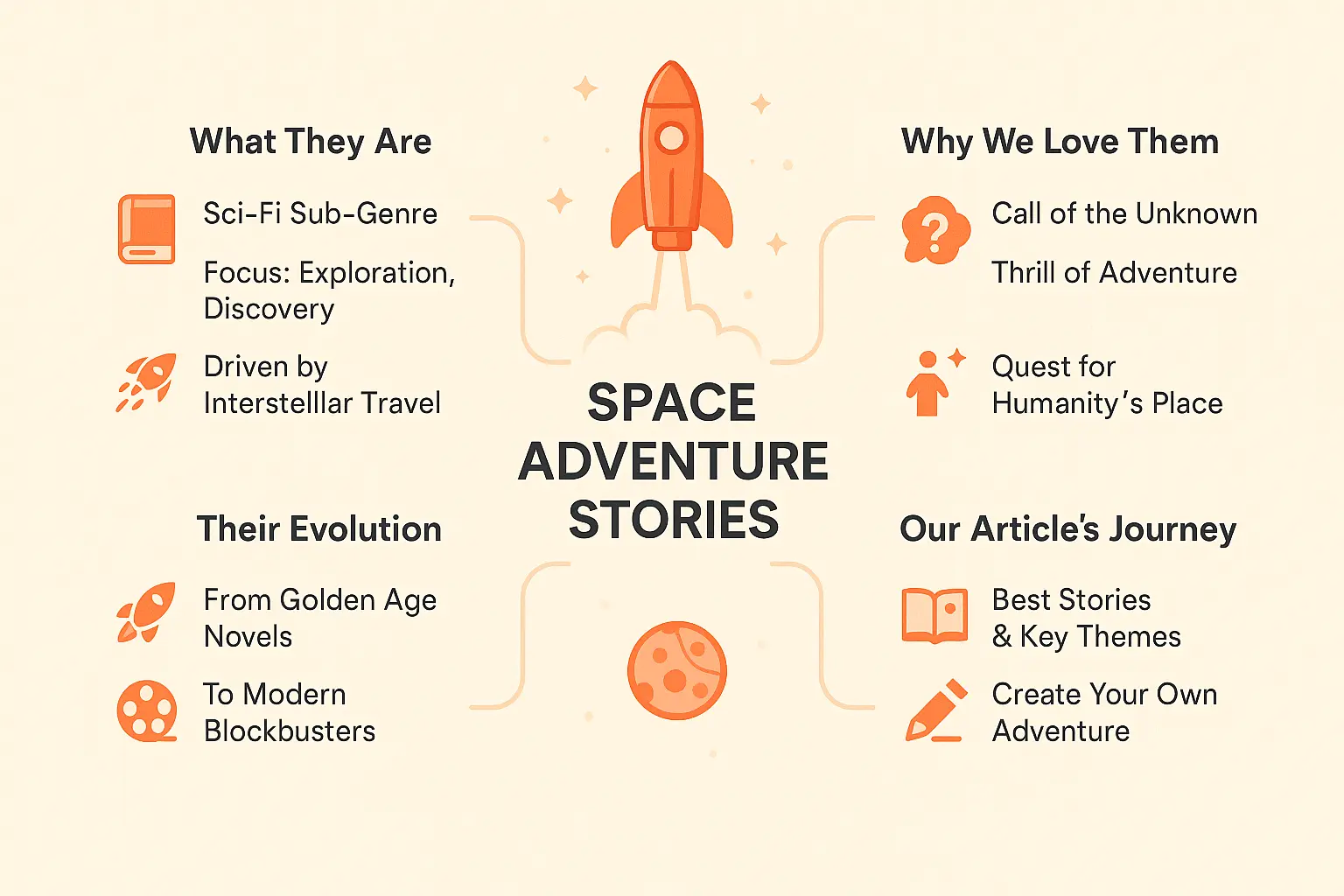
Space adventure stories blend exploration, discovery, and high-stakes drama across galaxies. Think interstellar travel through wormholes, first contact with AI civilizations, or saving Earth from asteroid Armageddon. They’re the literary equivalent of strapping into a rocket—equal parts thrilling and transformative. Ever felt chills reading about the Expanse crew’s gritty survival? 🌌
Why do we binge them? The universe’s infinite mystery makes these stories timeless. They mirror our real-world quest to understand dark matter, AI ethics, and space colonization. From Asimov’s robots to The Expanse’s political battles, they’ve evolved from pulp fiction to mind-bending philosophy. Did you know Star Trek inspired real-world communicators? 📱
This article dives into:
- How space sagas predicted Elon Musk’s Mars dreams 🚀
- Alien encounters revealing human biases 👽
- Crafting your own cosmic odyssey 📝
Ready to warp-speed into the unknown? Let’s blast off! 🌠
What makes a great space adventure story?
The core ingredients of cosmic tales
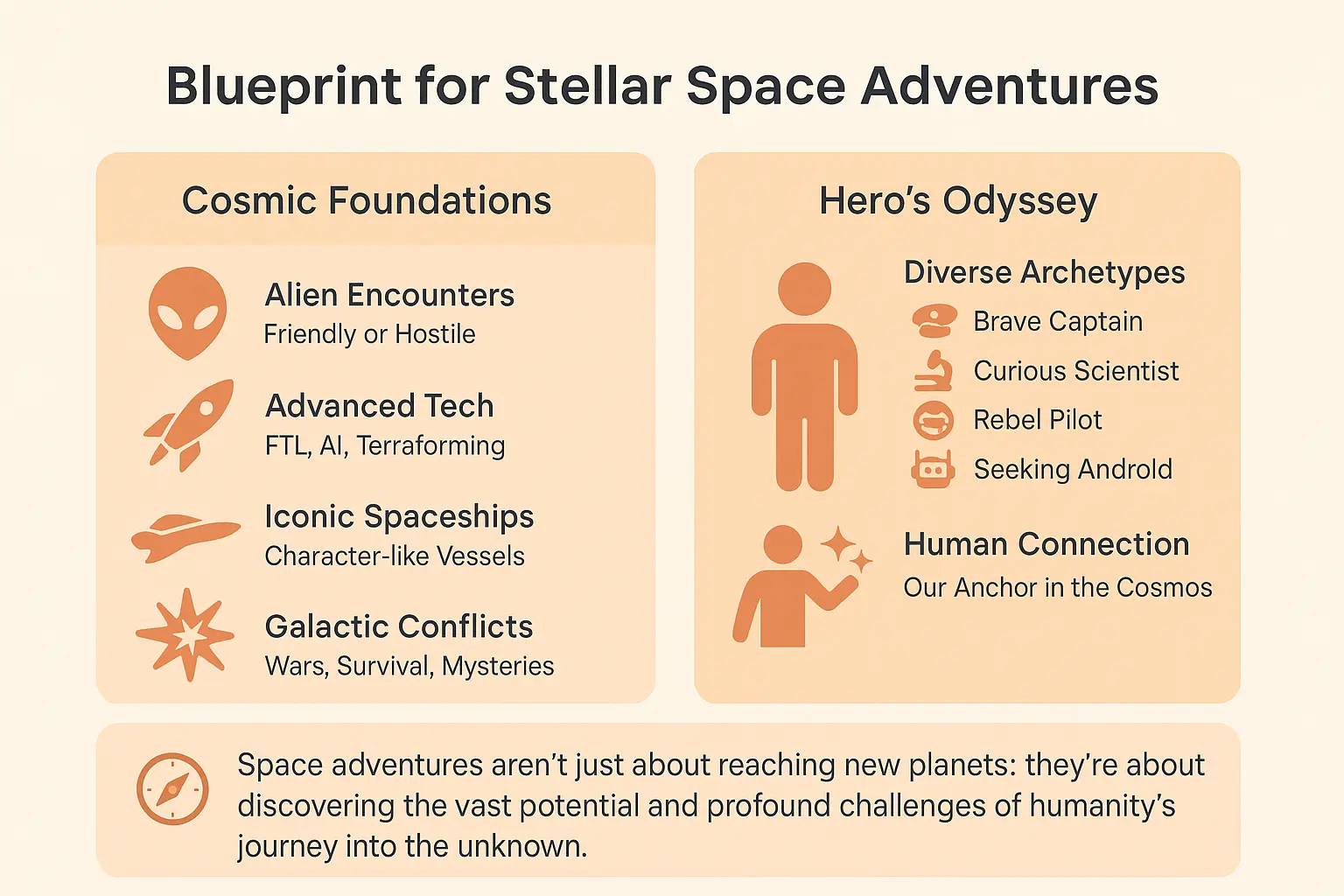
Space adventures thrive on a blend of epic scale and relatable human drama. At their heart, these stories feature encounters with alien civilizations — whether it’s the peaceful first contact in The Long Way to a Small, Angry Planet or the tense standoffs in The Expanse series. These interactions explore cultural clashes, alliances, and existential questions about humanity’s place in the universe.
Speculative technologies power the genre’s imagination. From faster-than-light (FTL) travel in Star Trek to sentient AI companions like Murderbot in Martha Wells’ series, these elements stretch scientific possibilities while grounding narratives in wonder. Even terraforming — transforming planets to sustain life — creates rich backdrops for conflicts, as seen in Kim Stanley Robinson’s Aurora.
The spaceship itself often becomes a character. Think of the Millennium Falcon’s quirks or the claustrophobic tension aboard the generation ships described in Pamela Sargent’s Earthseed. These vessels aren’t just transportation — they’re homes, battlegrounds, and sometimes even prisons.
The hero’s journey among the stars
Memorable space adventures hinge on compelling characters. You’ll often find the brave captain — like James Holden in The Expanse or Spock in Star Trek — balancing duty with moral dilemmas. The curious scientist archetype shines through characters like Mark Watney in The Martian, turning technical challenges into gripping survival stories.
Space adventures aren’t just about reaching new planets; they’re about discovering the vast potential and profound challenges of humanity’s journey into the unknown.
Don’t overlook the rogue pilot trope — characters like Han Solo or Amie Kaufman’s Nyx Llorana — who bring levity and unpredictability. Even androids seeking humanity, like Data from Star Trek or Murderbot, create emotional anchors in stories filled with cosmic stakes.
These archetypes ground us in stories that balance grandeur with intimacy. Whether it’s navigating political intrigue in Lois McMaster Bujold’s Vorkosigan Saga or surviving alien threats in The Murderbot Diaries, these characters make the impossible feel personal.
A galaxy of classics: must-read space adventure books
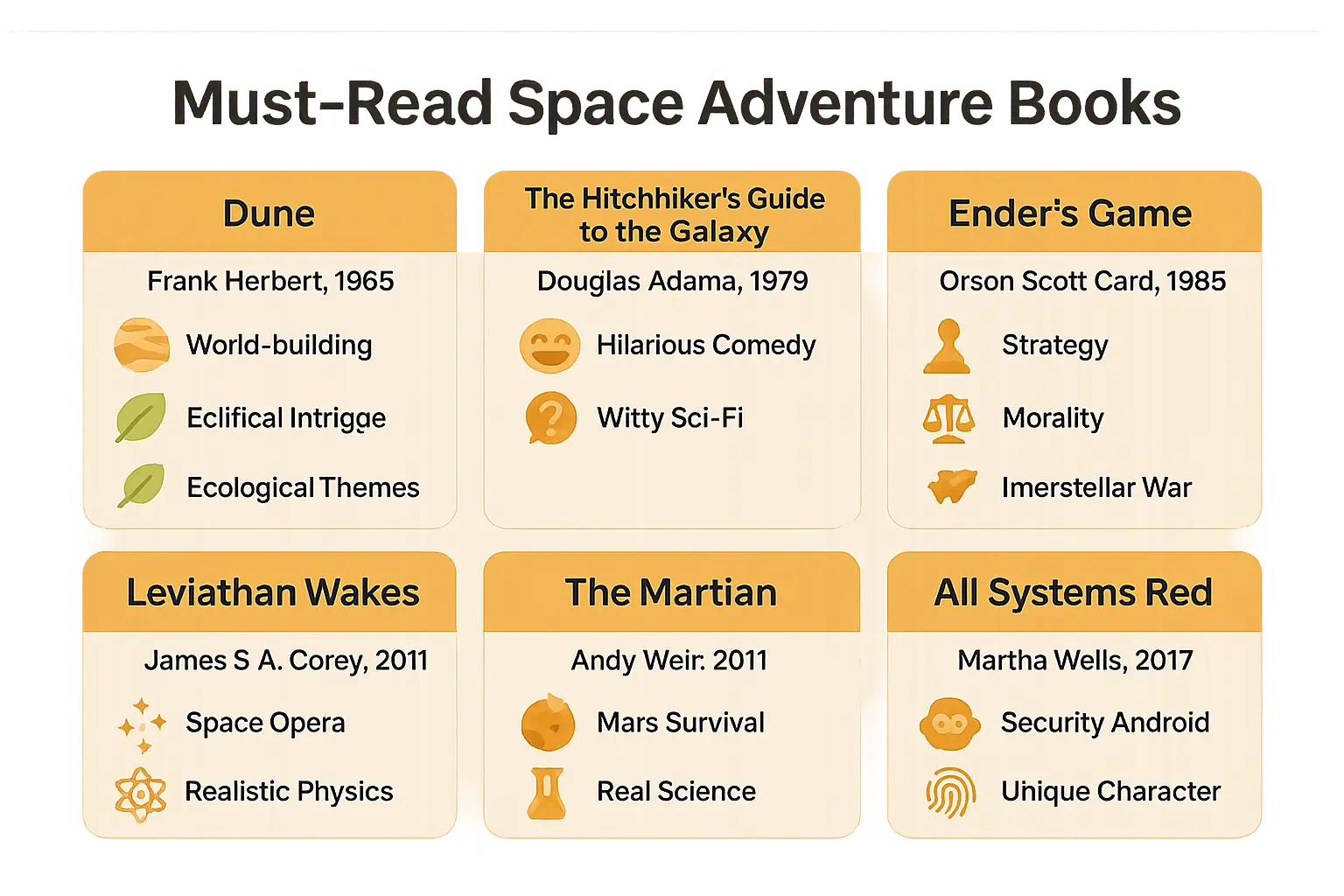
🚀 Space adventures didn’t start with movies. They began in books, showing how authors shaped humanity’s cosmic dreams. These six titles blend exploration, aliens, and tech. Let’s break down their lasting power. Each story here isn’t just entertainment—it’s a lens through which we examine human ambition, ethics, and our place in the universe.
| Title (Series) | Author | Year | Why it’s a must-read |
|---|---|---|---|
| Dune (Dune, #1) | Frank Herbert | 1965 | A masterclass in ecology-meets-empire-building. 🌍 |
| The Hitchhiker’s Guide to the Galaxy | Douglas Adams | 1979 | Reinvented space comedy with its iconic “42” answer. 🚀 |
| Ender’s Game (Ender’s Saga, #1) | Orson Scott Card | 1985 | Explores military ethics through child prodigies and alien wars. 💭 |
| Leviathan Wakes (The Expanse, #1) | James S.A. Corey | 2011 | Nails science, including asteroid mining’s future potential. 🚀 |
| The Martian | Andy Weir | 2011 | Turned math into gripping survival drama with real-world tech inspiration. 🧮 |
| All Systems Red (The Murderbot Diaries, #1) | Martha Wells | 2017 | Reimagines AI as introverts with relatable humor. 🤖 |
Dune isn’t just about sandworms and desert kingdoms. Its exploration of ecology, religion, and power dynamics influenced everything from Star Wars to modern climate fiction. 🌍
The Hitchhiker’s Guide made absurdity profound. Its “42” punchline masked sharp critiques of bureaucracy and cosmic insignificance. 🚀
Ender’s Game turned war games into philosophy. By placing a child in command, it questioned leadership, empathy, and the cost of victory. 💭
Leviathan Wakes grounded space epics in physics. Its Belters and Earth-Mars tensions mirrored real-world resource conflicts, while its rogue protomolecule kept pages turning. 🚀
The Martian proved science could save lives—and sell millions. Mark Watney’s humor under pressure turned equations into hope. 🧮
All Systems Red made AI relatable. Murderbot’s obsession with “soap operas” humanized machines, asking what freedom means in a programmed universe. 🤖
From Rendezvous with Rama to The Long Way to a Small, Angry Planet, this list barely grazes the Milky Way’s literary treasures. These six? Your launchpad into the genre. Ready for liftoff? The cosmos—and your next favorite book—waits for no one. 🌌
From books to blockbusters: space adventures on screen
Ever wondered how space adventure stories jumped from book pages to blockbuster screens? 🚀 Let’s unpack how cinema and TV gave these tales new life. From philosophical questions to explosive battles, adaptations prove storytelling evolves faster than a warp drive.
Cinematic journeys to the final frontier
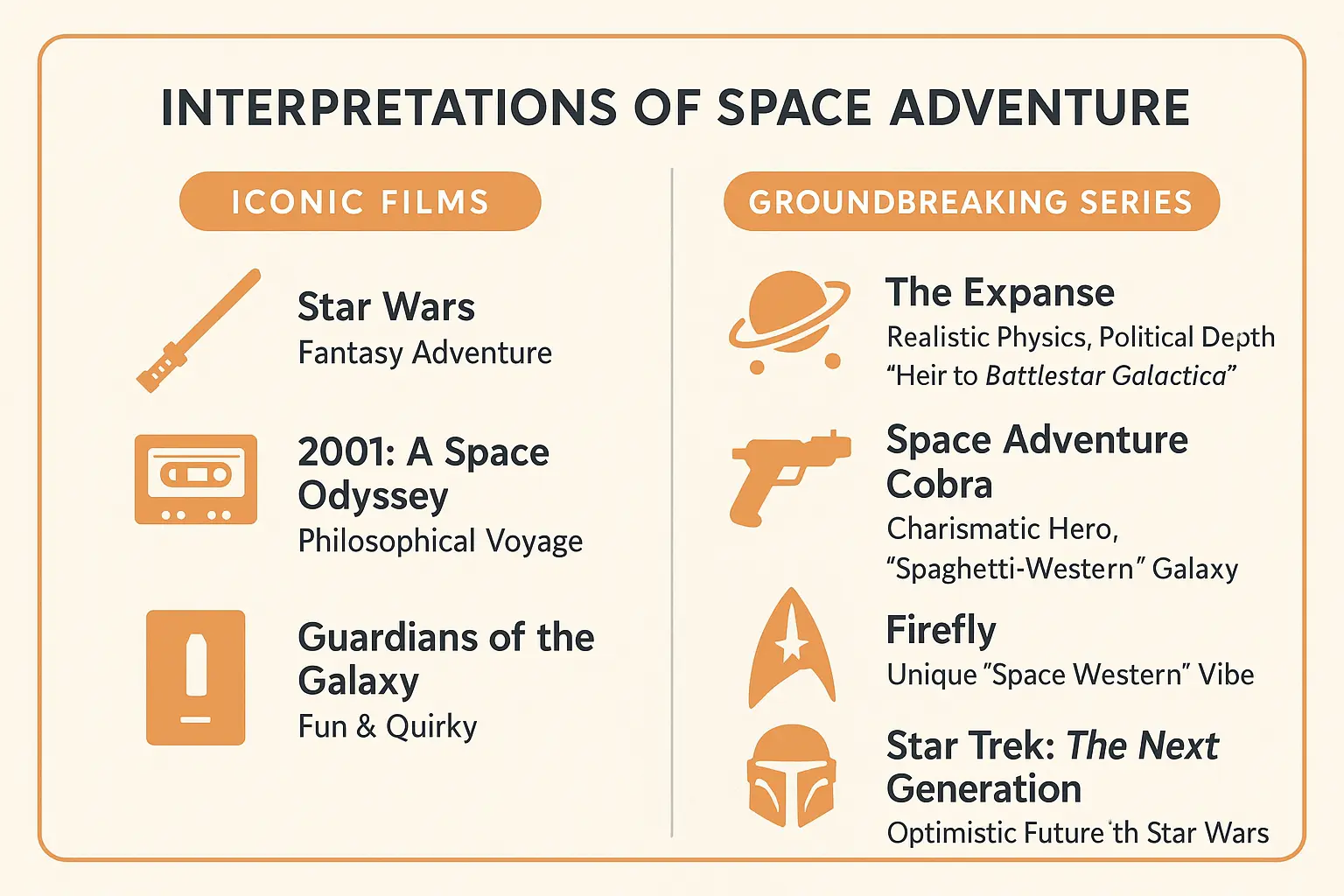
Space adventures hit different cinematic notes. 🎬 Star Wars blends fantasy with galactic politics, making lightsabers iconic while exploring found family dynamics. 2001: A Space Odyssey questions humanity’s cosmic role through AI and monoliths, asking existential “what-ifs”. Guardians of the Galaxy mixes retro tunes with chaotic humor, proving space adventures can be both hilarious and heartfelt. Each film redefines “space adventure.”
Binge-worthy series to explore
TV series stretch adventures across seasons. 📺 Firefly’s Mal Reynolds embodies “space western” grit—his crew survives through loyalty, not rules, mirroring frontier resilience. Star Trek: TNG champions ethical exploration, tackling dilemmas like the Borg’s individuality crisis in I, Borg, where compassion beats vengeance.
The Expanse stands as “natural heir to Battlestar Galactica,” described by critics for gritty realism. Earth’s bureaucratic power struggles with Mars’ military might and Belters’ fights over resources—like water becoming a currency—show how scarcity fuels conflict. The Epstein drive’s invention, costing its creator’s life, reflects real-world tech trade-offs.
Animation fans shouldn’t miss Space Adventure Cobra, a charismatic hero mixing retro style with cosmic stakes. His laser pistol duels and intergalactic heists keep viewers hooked, blending spaghetti-western flair with space opera.
- The Expanse: Realistic physics meet corporate conflicts (e.g., water wars).
- Firefly: “Space western” vibe through found family dynamics.
- Star Trek: TNG: Ethical exploration with moral dilemmas (Prime Directive debates).
- The Mandalorian: Western grit meets Star Wars legacy (armor symbolism).
These stories inspire tech debates! 🚨 The Expanse’s Epstein drive mirrors propulsion research. Star Trek’s transporters sparked quantum teleportation talks. Even Firefly’s terraforming concepts echo Mars colonization discussions. The protomolecule’s interstellar portals? Fueling today’s spacefaring “what-ifs.” Space adventures keep us dreaming—and maybe even building the future. 🌌
Your turn to be the captain: creating your own space adventure
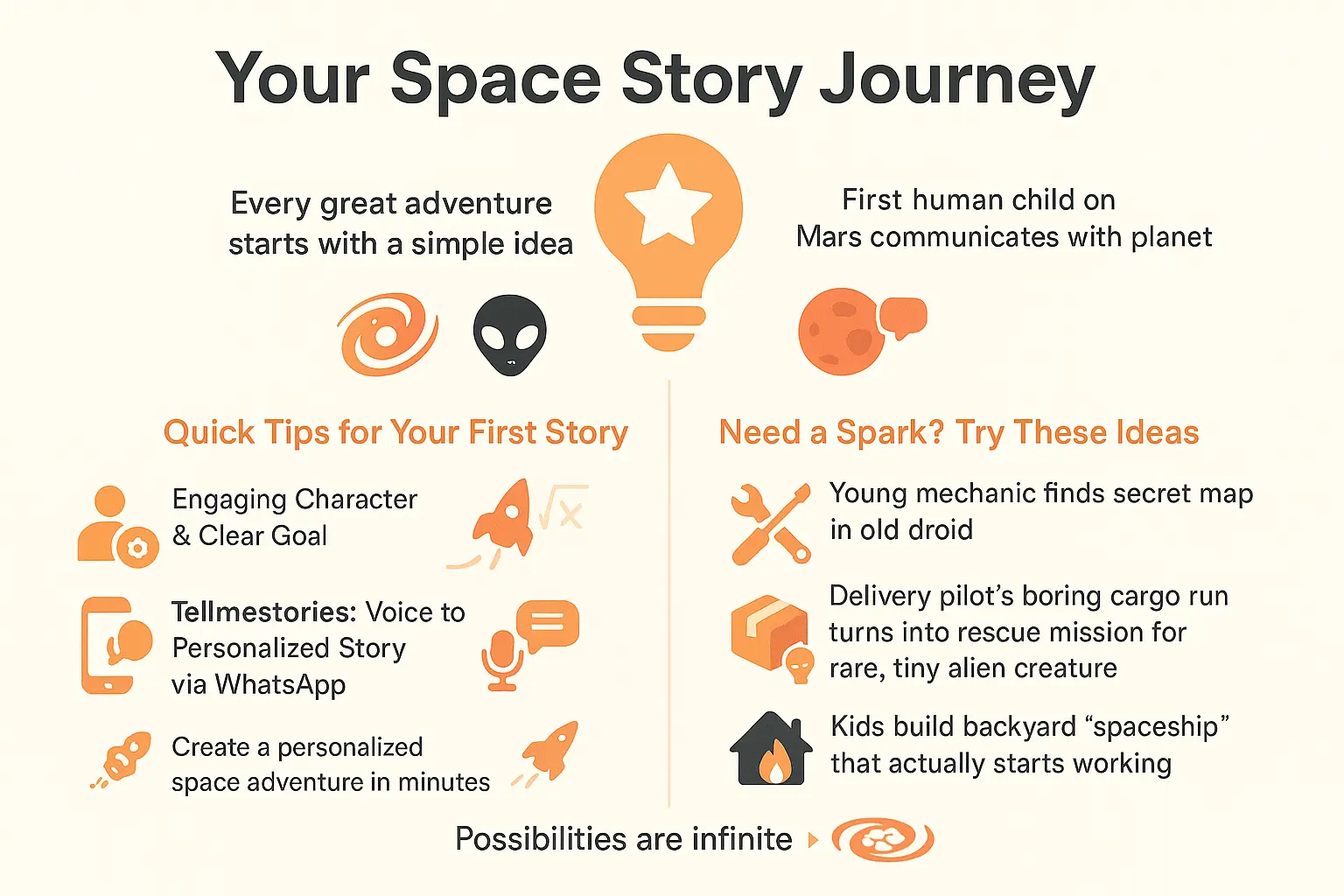
Every great adventure starts with a simple idea. What if you could explore a new galaxy, meet a friendly alien, or pilot your own starship?
Quick tips for your first story
Ready to launch your space saga? 🚀 Start by picking a relatable hero – think “young astronaut” or “robot mechanic.” Give them a clear mission like finding a lost spaceship or decoding alien messages. Don’t stress about technical details – focus on making the journey exciting! 🌟
Need help bringing stories to life? Tellmestories offers parents a magical solution. Just send a voice note through WhatsApp describing your child’s dream adventure. The AI-powered service instantly transforms your words into a personalized tale where your kid becomes the hero. Want photo-realistic characters? Upload family photos. Prefer audio narration? Professional voice actors bring tales to life. All formats – text, audio, and PDF – arrive in seconds. Ready to create a personalized space adventure in minutes?
Need a spark? try these story ideas
- A young mechanic finds a secret map hidden inside an old droid – leading to a time-warping mystery
- The first human child born on Mars discovers they can communicate with the planet itself
- A delivery pilot’s routine cargo run becomes a rescue mission for an alien creature holding intergalactic secrets
- Kids build a “spaceship” that actually works – but crash-lands on a hidden moon base
These hooks prove space adventures are limited only by imagination. Explore science-fiction themes like time distortion or alien cultures to add depth. What if characters encounter a black hole that shows alternate versions of themselves? Or discover planets where music bends physical laws? Remember – even wild ideas become amazing stories when focusing on emotional connections, whether your characters are humans, robots, or jellyfish from Neptune! 🛸
Struggling to visualize your universe? Consider floating cities with anti-gravity tech or space pirates riding solar winds. The best stories blend action with heart – like how Children of Time explored evolution or 2001: A Space Odyssey predicted tablets decades before reality. Let your imagination soar – your story might just predict tomorrow’s tech! 🚨
Inspiring young astronauts: space stories for kids
Space adventure stories light up kids’ imaginations like supernovas. 🌌 These tales don’t just entertain – they plant seeds for future scientists, engineers, and maybe even real astronauts! Let’s explore how cosmic adventures shape young minds while making learning feel like a rocket ride through the galaxy.
Did you know space stories for kids date back to the 1950s? Classic anthologies for young readers like _Teen-Age Science Fiction Stories_ sparked curiosity about the final frontier long before we had smartphones. 📱 These early stories laid groundwork for generations of space enthusiasts. Today, shows like modern shows like ‘Space Nova’ keep this tradition alive, blending rocket science with fun adventures. 🚀
Today’s bedtime story about a trip to Mars could inspire tomorrow’s real-life astronaut. The journey to the stars often begins with a single page.
Why do space stories matter? Let’s break it down:
- Sparks curiosity in STEM (Science, Technology, Engineering, and Math)
- Encourages imagination and problem-solving skills
- Teaches lessons about teamwork, courage, and exploring the unknown
Here’s the best part: educational science stories can make learning feel like play. 🎮 Imagine your child becoming the hero of their own space mission! They could navigate asteroid fields using math skills or solve alien encounters with logical thinking. Personalized storytelling helps children connect with scientific concepts through adventures that feel personal and exciting.
Want to make space education even more fun? NASA’s fun activities from NASA Space Place turn cosmic concepts into interactive adventures. 🧪 Kids can create their own star constellations, simulate planetary orbits with simple materials, or learn about black holes through engaging games. Who knew learning about gravity could be this entertaining? 🌠
For parents looking to combine education with imagination, space adventure stories offer perfect rocket fuel. Whether through traditional books, interactive apps, or AI-generated tales that make your child the story’s hero, these narratives help develop crucial skills while keeping kids engaged. 🧠
The final frontier is just the beginning
Space adventure stories have taken us from the pages of classic novels like The Martian and Dune to the screens of iconic films like Star Wars and Interstellar. These tales have evolved, blending futuristic tech with timeless human struggles, proving their lasting appeal. 🚀
What makes this genre thrive? It’s the mix of thrilling exploration and deeper questions. From Jules Verne’s scientific visions to modern AI-driven narratives, space stories mirror our curiosity. They’ve predicted real tech, like Mars missions and space stations, while pushing us to imagine what’s next. 🌌
Today, the genre expands beyond books. Games like Mass Effect, anime like Space Brothers, and even AI-generated tales keep the spirit alive. Whether it’s a child’s bedtime story or a blockbuster film, space adventures spark wonder—reminding us that the universe is a canvas waiting for our next chapter. 🌠
The stars aren’t the limit. As we decode exoplanets and dream of interstellar travel, one thing’s clear: the stories we tell shape the future we’ll build. Ready to write yours? 🚀
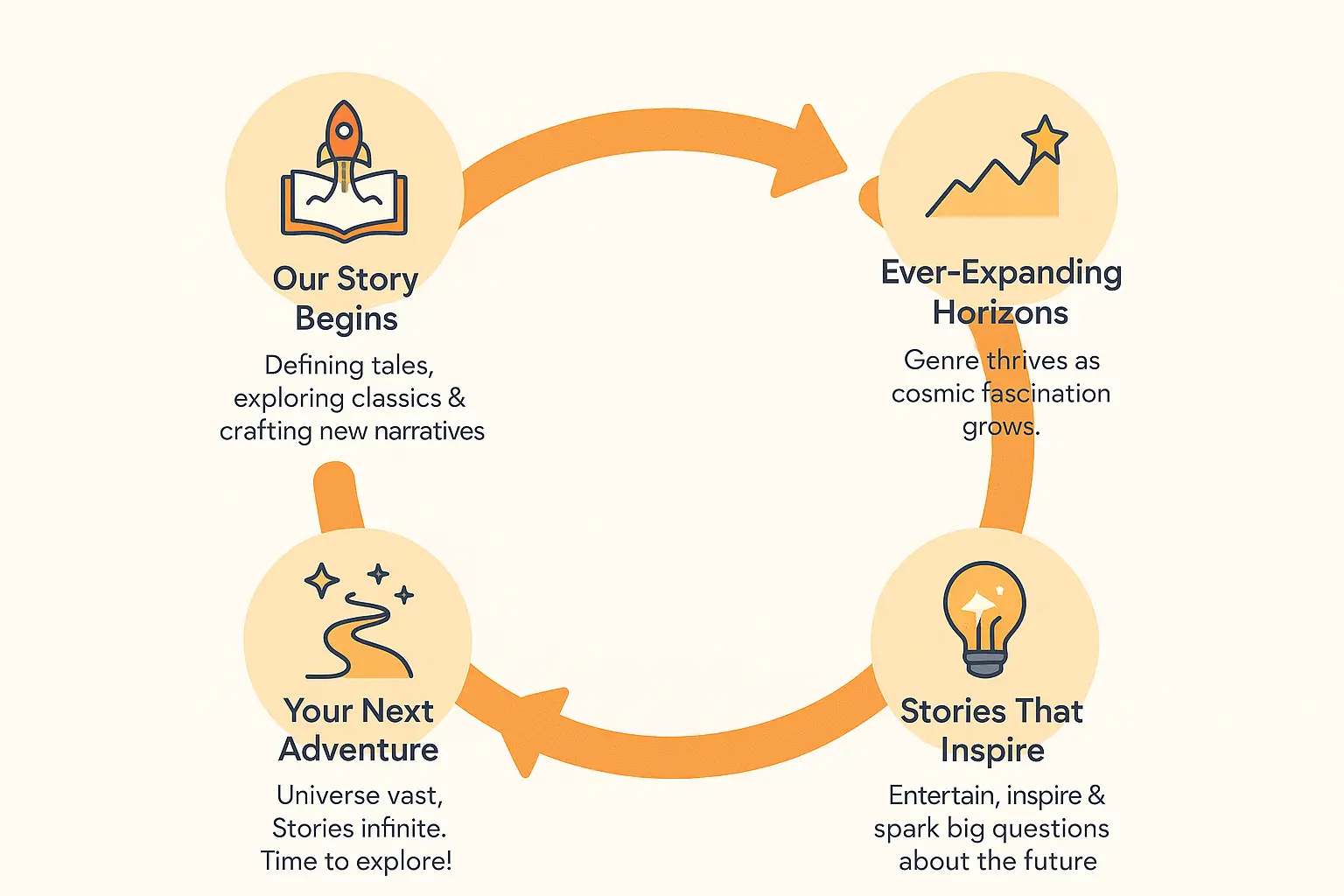
From epic sagas like Dune to screen adventures, space adventure stories fuel our cosmic curiosity 🌌. They mix exploration, discovery, and futuristic tech, proving the universe of tales is infinite. Ready to create your own odyssey or explore new worlds? The final frontier beckons!
FAQ
What’s the ultimate space adventure film to binge-watch? 🚀
Opinions vary, but cult classics like Star Wars (epic space operas with lightsabers and rebellion vibes), Interstellar (mind-bending wormholes and father-daughter feels), and Apollo 13 (real-life heroics) top the charts. For a fun twist, Guardians of the Galaxy mixes humor with cosmic visuals. Pro tip: If you crave realism, check out The Martian—science meets sarcasm!
Which sci-fi story is the GOAT (greatest of all time)? 🤔
This sparks debates! Dune (political intrigue meets desert planets) and 1984 (dystopian chills) are legends. For space opera fans, The Expanse books blend gritty realism and galactic drama. Newer hits like All Systems Red (a snarky robot’s adventures) are also trending. Bottom line: Dive into Goodreads’ “space adventure” lists to find your favorite!
What do you call tales about cosmic road trips? 🌌
These are dubbed space adventure or space opera! Think interstellar exploration, alien encounters, and tech like FTL (faster-than-light) drives. Subgenres include hard sci-fi (tech-heavy, e.g., The Martian) and planetary romance (alien worlds with drama, like Dune). Spoiler: These stories are all about the thrill of the unknown!
Looking for stellar space-themed books? Here are top picks! 📚
Start with these gems:
- Dune (Frank Herbert): Spice, sandworms, and power plays on Arrakis.
- The Hitchhiker’s Guide to the Galaxy (Douglas Adams): A comedic romp through the galaxy with a towel and pan-galactic gnutrition.
- Ender’s Game (Orson Scott Card): Kid genius trains for alien war—yep, intense!
- Leviathan Wakes (James S.A. Corey): Gritty politics and a murder mystery in our solar system.
- All Systems Red (Martha Wells): A robot with social anxiety saves humans while binge-watching soap operas. Relatable, right?
Bonus: The Vorkosigan Saga (Lois McMaster Bujold) mixes humor, tech, and heart across 17 books!
What’s the greatest space movie of all time? 🏆
Two titans clash: 2001: A Space Odyssey (trippy monoliths and AI gone rogue) and Star Wars (space fantasy with killer soundtracks). Why? 2001’s visuals still stun, while Star Wars built a universe. New contenders like Interstellar (science + tears) and Gravity (edge-of-your-seat survival) also shine. Fun fact: Apollo 13 proves reality can outpace fiction!
Is Apollo 13 based on real events? 🚀
100% yes! Apollo 13 (1995) dramatizes NASA’s 1970 “successful failure.” Tom Hanks as Jim Lovell, a damaged spacecraft, and teamwork under pressure—this film nails the “failure is not an option” spirit. Real talk: The crew’s “Houston, we have a problem” moment is pure history. Science? Check. Drama? Check. Inspiration? Major check.
What’s the oldest sci-fi story? 🕰️
Reach for Mary Shelley’s Frankenstein (1818)—a mad scientist’s monster explores tech’s dark side. But wait: Ancient roots exist! Lucian of Samosata’s A True Story (2nd century) features a moon voyage and space whales. Fun trivia: Shelley’s work birthed modern sci-fi, blending horror and “what if?” themes.
What genre does 1984 belong to? 🕵️
Dystopian, political sci-fi, and social science fiction! Orwell’s 1984 isn’t about spaceships—it’s a haunting look at surveillance, propaganda, and power. Why it’s iconic: It’s a “cautionary tale” for the digital age. Pair it with Brave New World for a full mind-melting session.
What’s the #1 sci-fi novel? 📈
It’s a tie! Dune (Frank Herbert) dominates with its desert epic and ecological themes. The Hitchhiker’s Guide (Douglas Adams) wins for quotable absurdity (“Don’t panic!”). Numbers don’t lie: Goodreads rates The Martian (Andy Weir) for science-meets-optimism. Pro tip: Explore lists like “Best Space Opera” for deeper dives!