In short 🎯: A story’s theme isn’t just a topic—it’s the invisible thread turning plot events into emotional journeys. While the “subject” (e.g., war) describes what happens, the theme (e.g., “war corrupts nobility”) explores why it matters. Experts stress: stories without themes are forgettable sequences. Use character flaws and thematic questions to craft resonant tales. 🔍
Ever stared at a blank page, wondering why your story feels flat? Without a clear story theme, even the wildest plot twists risk feeling… empty. Think of it as your narrative’s compass—it’s what turns events into meaning. This guide breaks down how to choose a story theme that resonates, from decoding universal truths (like redemption, survival, or justice) to weaving it through character arcs, symbols, or even sly dialogue. You’ll learn how themes like power corrupts or love vs. sacrifice can anchor your plot while letting your creativity run wild. Ready to craft a story readers won’t just read—but feel? 🚀
What is a story theme and why does it matter?
Beyond the plot: defining your story’s soul 📖
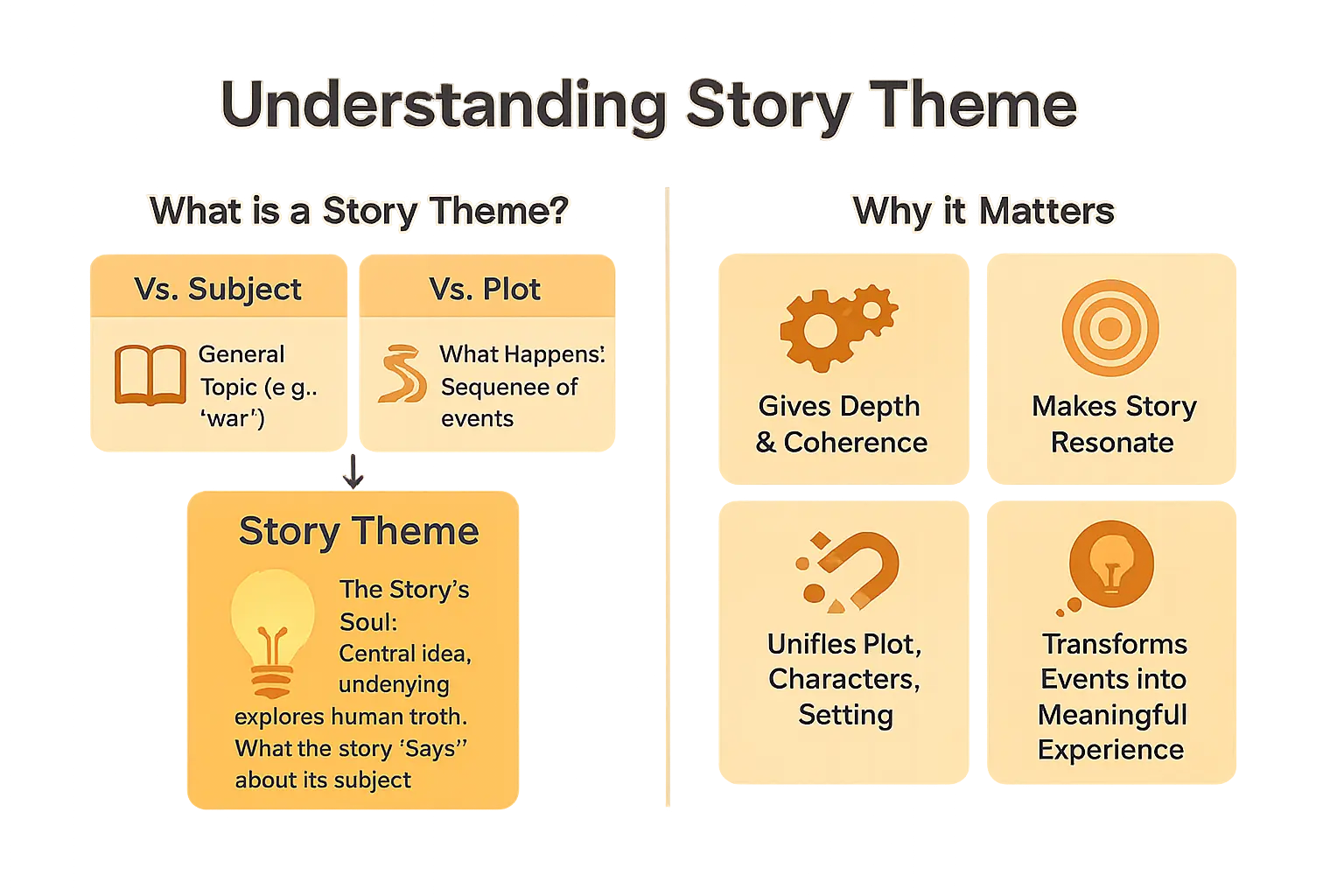
Ever wondered why stories stick? Spoiler: It’s not just what happens. The story theme is the hidden heartbeat of every great narrative — the universal message that makes characters and events feel deeply human.
Let’s break it down. The plot is the “what” (e.g., a hero’s journey). The subject is the topic (e.g., “war”). The theme? That’s the “why” — the truth your story reveals about life. A war subject might explore “power corrupts the virtuous” through its plot.
As explained in a literary work, themes aren’t slapped on top. They’re woven into choices and character arcs. Think of it as the lens through which your story’s world is viewed — invisible, yet essential.
The secret ingredient for a memorable story
A strong theme is the glue that turns scattered ideas into a cohesive masterpiece. Without it, even the most exciting plot feels hollow — like perfect frosting with no flavor. Themes create emotional resonance, making readers nod, cry, or gasp, “I’ve felt that too!”
A story without a theme is just a sequence of events. A theme gives it meaning, turning it into an experience that stays with the reader long after the last page.
Imagine a tale where characters chase a sword (plot) set in a medieval setting (subject). Add a theme like “greed blinds even the noblest,” and suddenly every decision carries weight. The theme is the story’s DNA, linking every element to universal truths.
Think of it as your narrative compass. It’s what makes a pirate adventure about loyalty or a sci-fi thriller about unchecked ambition. Ready to elevate? Let’s dig deeper. 🚀
How to choose a story theme that resonates
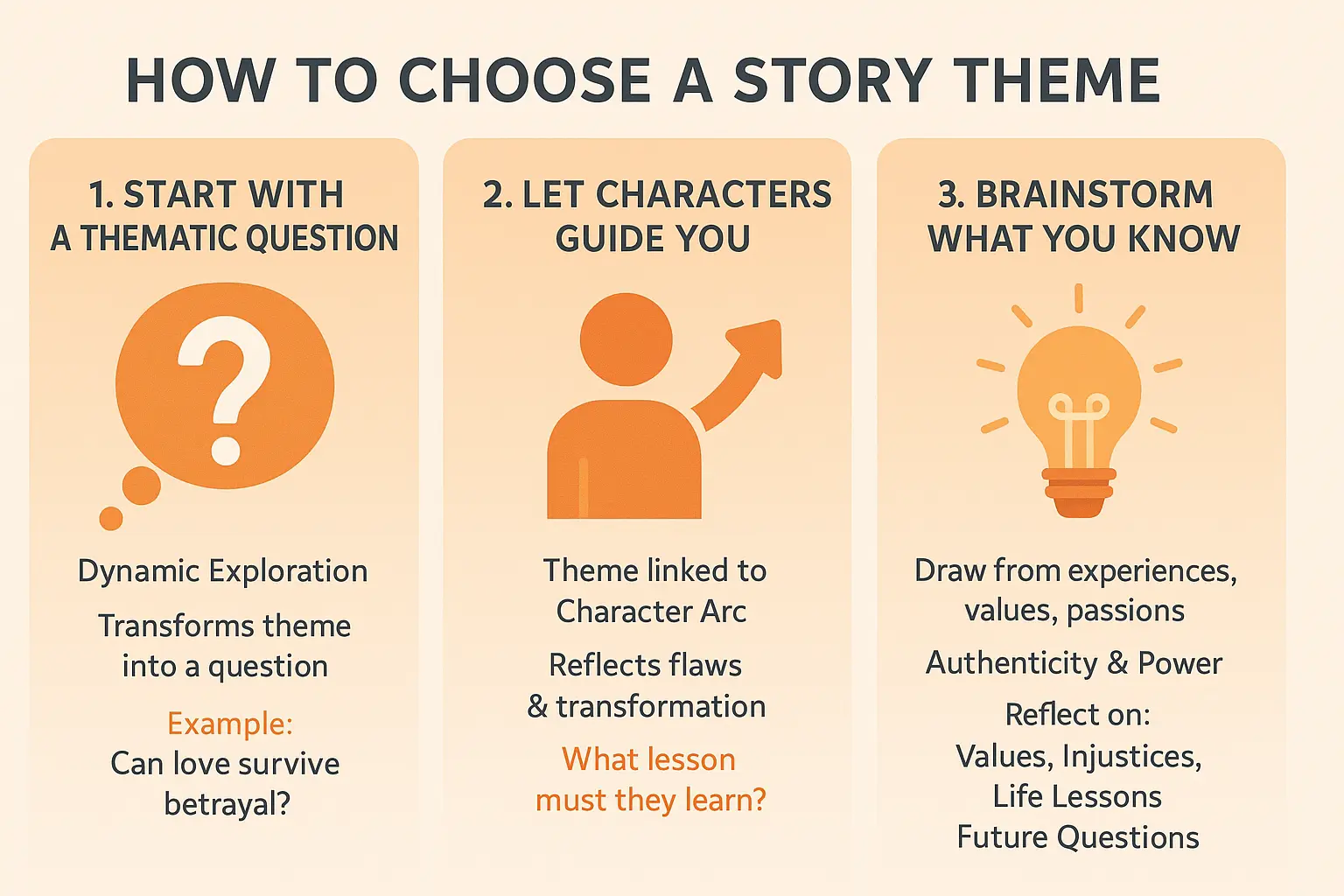
Start with a powerful thematic question
Transform simple topics into narrative engines by asking bold questions. Instead of “love,” ask thematic question like “Can love survive betrayal?” This creates built-in tension that drives plot development. For example:
- Topic: Justice → “Do ends justify means for justice?”
- Topic: Survival → “Is survival worth losing humanity?”
- Topic: Technology → “Can AI preserve human ethics?”
These questions create emotional stakes. The story’s resolution becomes the answer – sometimes “no,” which often makes for more compelling narratives. The Shawshank Redemption explores “Can hope survive darkness?” while Romeo and Juliet challenges “Does love conquer all?” with a tragic “no.”
Consider this twist: Stories asking unanswerable questions often resonate most. A romance might explore “Can love heal generational trauma?” while a dystopian thriller could ask “Is freedom possible in a monitored society?” The uncertainty keeps readers hooked until the final page. The key is choosing a question that challenges both characters and audience.
Let your characters guide you
Characters aren’t just vehicles for your theme – they’re its living embodiment. Take Bilbo Baggins: his journey from timid hobbit to courageous hero emerge naturally from the theme of courage. His arc shows courage isn’t about fearlessness, but action despite fear.
When developing characters:
- Identify their core flaw (e.g., cowardice, pride)
- Design challenges that force growth
- Make their transformation mirror your theme
This creates organic theme integration. In The Hobbit, Bilbo’s void of confidence becomes the crucible for the theme of courage. Every choice he makes either reinforces or challenges this central idea. Consider secondary characters too – each should reflect different perspectives on your theme. A story about “sacrifice” might show one character giving everything for love, another losing integrity for ambition, and a third finding middle ground.
Brainstorm from what you know and care about
Dig into your personal experiences to find authentic themes. Ask yourself:
- What ideas or values would you passionately defend?
- Which social injustices keep you awake at night?
- What hard-earned life lesson defines you?
- What existential questions haunt your thoughts?
This creates immediate thematic authenticity. A writer who’s overcome financial hardship might explore “Can integrity survive poverty?” through a character’s choices. Someone passionate about environmentalism could ask “Does progress require destruction?” through a scientist character’s dilemma.
Here’s the twist: The most powerful themes emerge from questions you’re still figuring out yourself. This creates narrative curiosity that keeps both you and readers engaged. Your personal connection becomes the story’s emotional compass, ensuring the theme resonates throughout the narrative. Try combining personal experiences with current events – a story about family loyalty could explore “Can traditions survive modern values?” through a multigenerational conflict you’ve personally navigated.
Storytèmes aren’t just abstract ideas—they’re the emotional heartbeat of your narrative. Whether you’re crafting bedtime tales for your little one or plotting a novel, choosing the right theme shapes every decision. Let’s explore how to find that perfect thematic fit without getting lost in the vast universe of possibilities 🚀
Common themes that captivate audiences
Some themes transcend time and culture because they tap into our shared human experience. Love, loss, identity, freedom—they’re the universal language connecting generations of storytellers and listeners. But here’s the secret sauce: you don’t need to invent a completely new theme. The magic lies in how you personalize it to your characters and plot.
Think of classic themes as blank canvases. When you add your unique brushstrokes—your child’s name, favorite animals, or specific life lessons—you create a masterpiece that’s 100% original. Ready to explore a wide range of story themes already waiting for your creative touch?
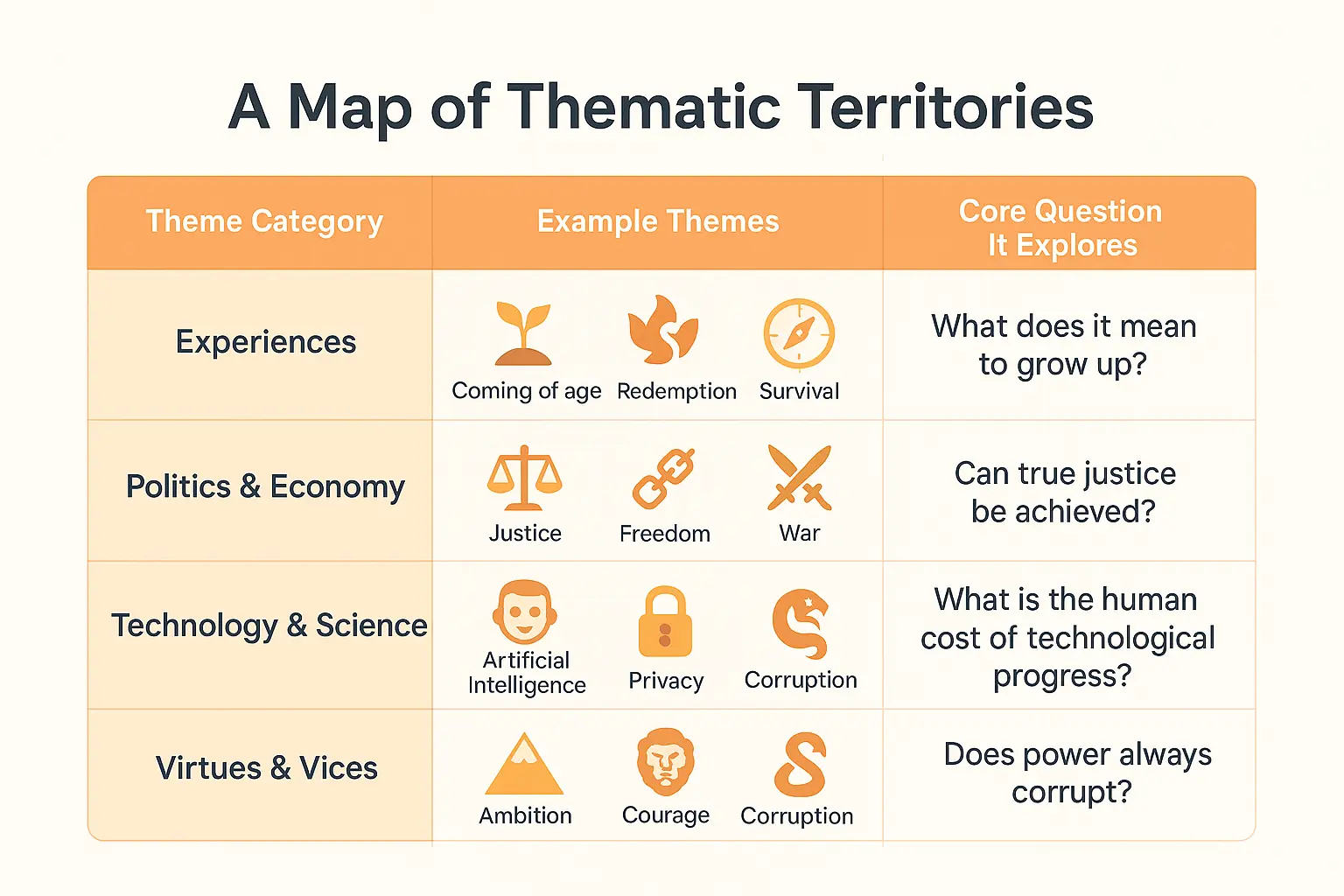
A map of thematic territories
| Theme Category | Example Themes | Core Question It Explores |
|---|---|---|
| Experiences | Coming of age, Redemption, Survival | What does it mean to grow up? |
| Politics & Economy | Justice, Freedom, War | Can true justice be achieved? |
| Technology & Science | Artificial Intelligence, Privacy | What is the human cost of technological progress? |
| Virtues & Vices | Ambition, Courage, Corruption | Does power always corrupt? |
This thematic roadmap helps you navigate different territories while maintaining narrative cohesion. Each category contains countless possibilities waiting to be personalized through your characters’ journeys.
Choosing a theme that fits your genre
Genre isn’t just about setting or plot mechanics—it’s a thematic playground. Adventure stories naturally lend themselves to courage and discovery, which is why our adventure theme makes bravery shine through every twist. Romance thrives on love’s complexities. Science fiction questions technology’s impact on humanity.
When selecting your thematic compass, consider these genre-specific anchors:
- Fantasy: Power dynamics & identity formation
- Historical Fiction: Legacy vs progress & cultural values
- Mystery: Truth vs perception & justice
- Dystopian: Control mechanisms & rebellion
Remember: Your chosen genre opens specific thematic doors. Step through them with intention to create stories that resonate while maintaining narrative unity.
Weaving your theme into the fabric of your story
Show, don’t tell: how to dramatize your theme
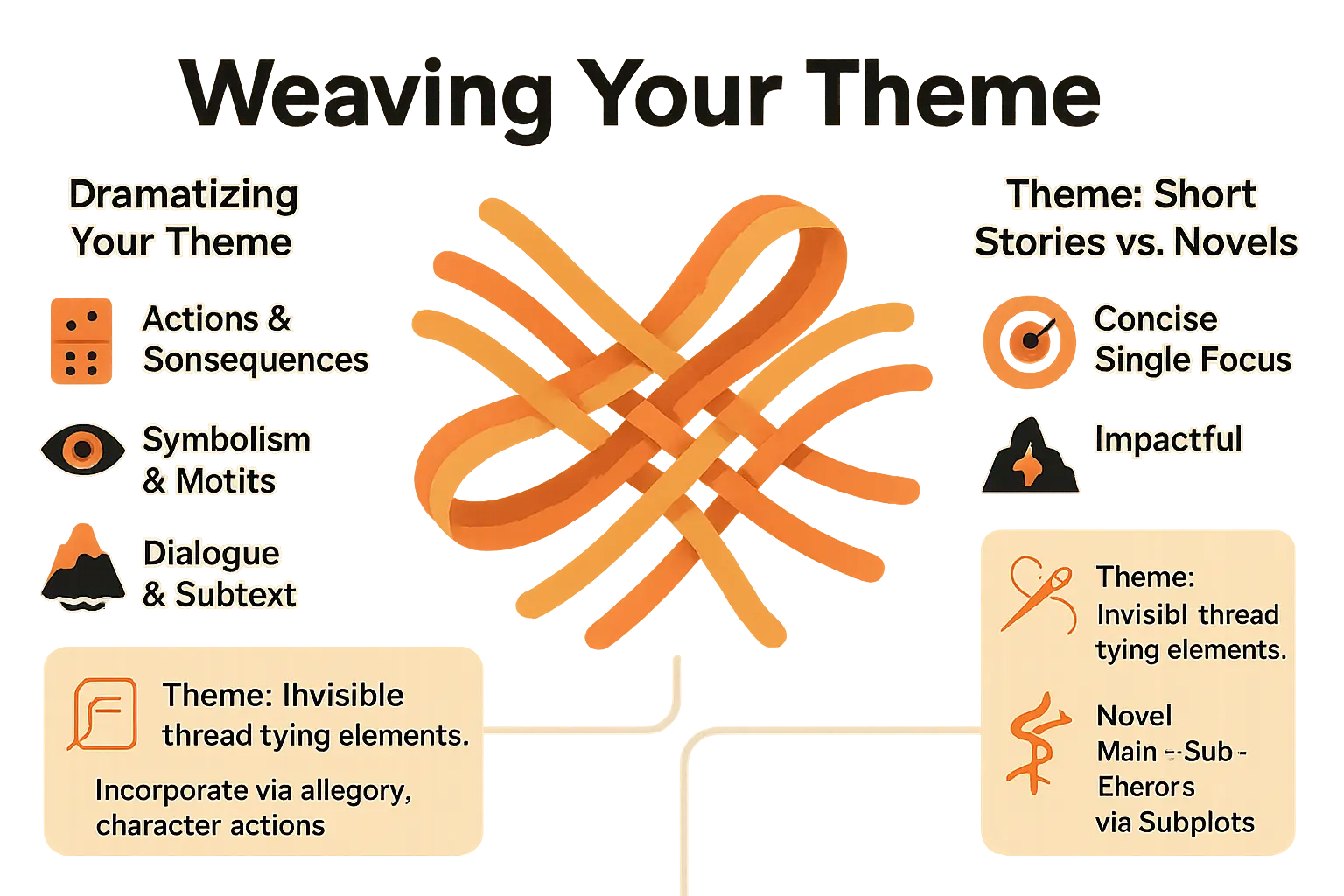
Want your story’s theme to resonate without preaching? Focus on actions and consequences. Let characters’ dilemmas prove your theme. In Tellmestories, a child learning kindness through hardship becomes tangible when sharing a cherished toy with a friend – growth shown through action, not words.
Use symbolism and motifs to dramatize themes. A favorite toy symbolizing resilience or weather patterns mirroring emotional states create subconscious connections. Symbols make themes feel earned rather than explained.
Your theme isn’t a lecture you give the reader. It’s the invisible thread that ties every character, plot point, and symbol together into a cohesive and meaningful whole.
Master dialogue and subtext. Let characters debate themes through interactions. A parent’s gentle reminder about sharing in a bedtime story subtly reinforces generosity. As this writing advice emphasizes, “incorporate it through allegory and character actions” for maximum impact.
Theme in short stories vs. novels
Short stories demand one core theme. A 5-minute bedtime story about overcoming fear might use a single symbolic object – like a nightlight – to represent safety and courage. Every word must serve your central idea for quick emotional payoff.
- Conciseness demands thematic purity
- Every element must serve the central idea
- Perfect for quick emotional payoff
Novels allow layered thematic exploration. While maintaining a primary theme like “resilience”, subplots could examine friendship or curiosity. Tellmestories’ AI-generated books weave educational themes into adventures while preserving narrative flow. A pirate tale might teach courage through the main plot while side characters demonstrate teamwork.
Short stories work like concentrated essence. Novels offer full-course meals. Both require thematic cohesion, but novels give room for nuanced exploration through multiple perspectives. Let your theme breathe through character decisions and symbolic details – readers will feel the message without hearing it spoken.
From Theme to Tale: Bringing Your Story to Life ✨
Your Theme Is Your Compass, Not Your Cage
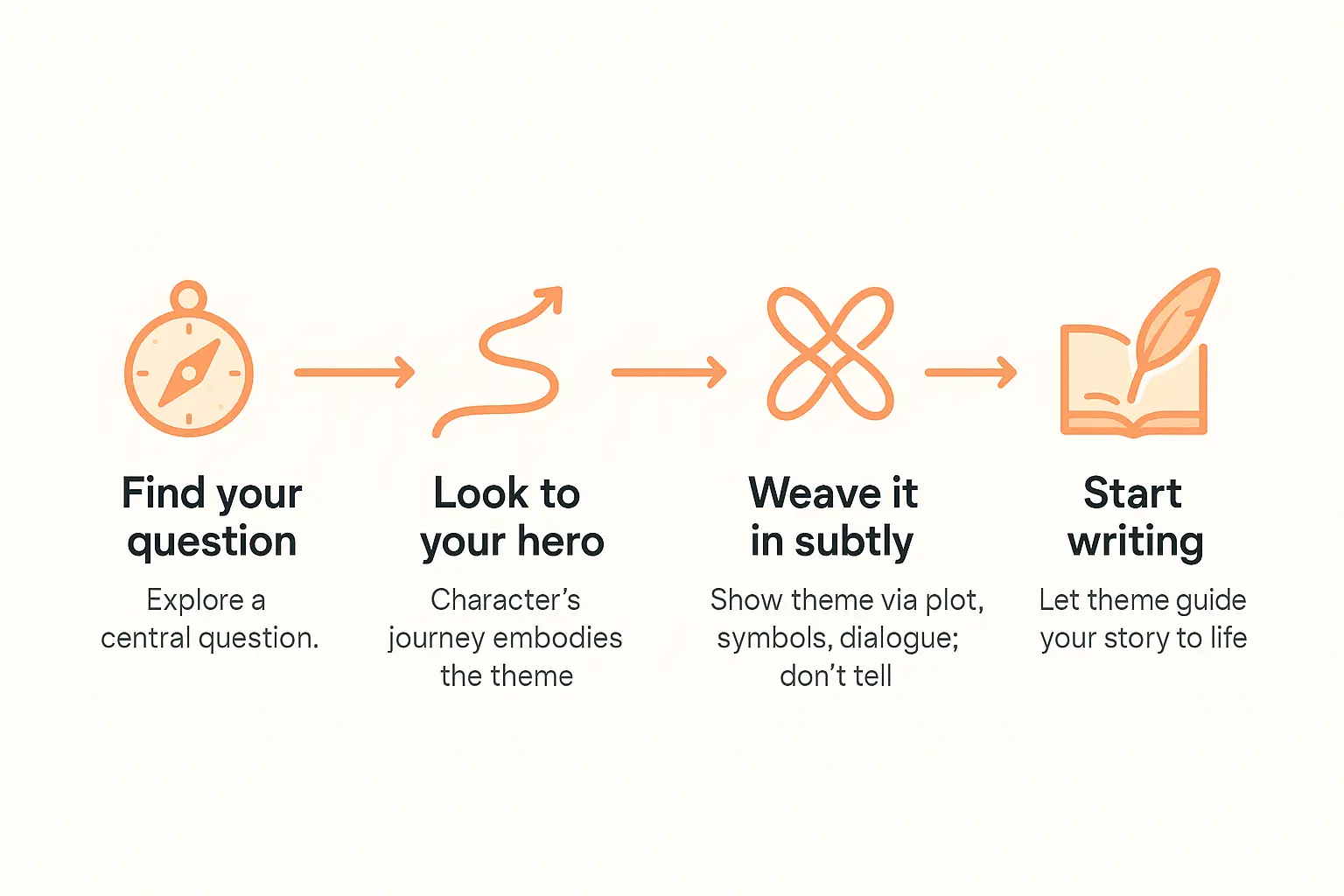
Themes aren’t rigid rules—they’re your creative GPS. Start with a question, let characters grow, and weave meaning through action. Here’s how:
- Find your question: Ask, “What do I want to explore?”
- Look to your hero: Let their journey reflect your theme.
- Weave it in subtly: Use symbols, dialogue, and plot twists.
- Start writing: Let your theme guide, not trap, you.
Ready to Write Your Own Adventure?
Why settle for generic tales when you can craft stories that mirror your child’s world? With Tellmestories, turn bedtime routines into magical quests where your kid stars as the hero 🌟.
Here’s the twist: Just send a voice note, and watch AI + WhatsApp collaborate to spin tales around their name, interests, and even potty-training challenges. No app downloads. No tech headaches. Just tap, talk, and let stories flow.
Think of it as a creativity shortcut:
- Smart memory learns your child’s favorites
- Audio narrations for sleepy-time listening
- PDFs you can print or frame digitally
Time to create your own personalized story and see your theme in action! 🚀
Your story theme is your compass, not a cage. Start with a question, let your character’s journey embody it, and weave it through symbols and choices. Ready to transform your theme into a tale? Time to create your own personalized story and see your theme come alive! ✨
FAQ
How to choose a story theme that sticks? 🎯
Start by asking yourself: “What question keeps me up at night?” Turn that into a thematic question (e.g., “Can love survive betrayal?”). Let your character’s struggles guide you – their flaws and growth often point to powerful themes. Finally, brainstorm what moves YOU – what makes you angry? Curious? Time to explore these angles using our thematic roadmap!
What makes a story theme work? 🧠
Think of themes as the invisible glue holding your story together! They’re universal ideas (like “justice” or “identity”) that get explored through your plot. Unlike the plot (what happens), themes answer why it matters. For example, a war story’s theme might be “power corrupts innocence” – that’s the deeper message readers will remember long after finishing your book.
How to pick a theme that shines? 💡
Three quick tips:
- Follow your passions and obsessions – write about what makes your heart race!
- Check our thematic playground for inspiration across genres
- Use symbolism – like recurring objects or colors – to weave themes naturally into your story
Remember: great themes feel fresh yet familiar, like a twist on “family loyalty” or “the cost of progress”.
What story topics connect with readers? 📚
Popular themes that never get old:
- Redemption (think “Les Misérables”)
- Identity crises (like “Fight Club”)
- Survival vs. morality (see “Lord of the Flies”)
- Love’s dark side (e.g., “Wuthering Heights”)
For short stories, focus on one tight theme – try our story generator to test ideas fast!
How to find your hidden theme? 🔍
Stuck? Let your characters do the work! Ask:
- What’s your hero’s biggest regret?
- What core belief changes by the end?
- What recurring conflict keeps happening?
Often, your theme emerges naturally from these elements. Still confused? Try this trick: “My story is about X, but really about Y” – like “The Hobbit” being about treasure hunting but really exploring courage.
What makes a short story theme special? 📖
Short stories need hyper-focused themes! Try:
- Time-limited dilemmas – “Can someone change in 24h?”
- Single pivotal moments – first love, final choices
- Extreme stakes – life/death, all-or-nothing situations
Check our adventure themes for punchy ideas that pack a punch in limited space.
3 theme examples to spark ideas 🌟
Real-world examples that work:
- “Power corrupts” – shown through a leader’s moral decay
- “Love requires sacrifice” – demonstrated by impossible choices
- “Identity is fluid” – revealed through a character’s transformations
See how each could branch into different genres? Now try combining two themes using our theme blender for fresh angles!
What makes love a theme? 💘
Love is more than a theme – it’s a universe of possibilities! Try exploring:
- Love vs. duty
- Forbidden affection
- Self-love struggles
- Love’s destructive side
The key? Don’t just show romance – make it question through characters’ actions. What if the lover’s obsession destroys what they cherish?
Can family be a theme? 🧬
Family is story gold! It works as a theme when you:
- Challenge traditions (“Romeo and Juliet”)
- Explore generational conflict
- Question loyalty vs. personal growth
Want to dig deeper? Our thematic explorer has family-centered templates that balance drama and depth perfectly.