The essential takeaway: Educational stories go beyond entertainment by embedding lessons in engaging narratives, making learning stick. They activate brains 22x more effectively than facts alone, build empathy through relatable characters, and simplify complex ideas. For kids and adults, these tales transform abstract concepts into real-world applications—like AI platforms creating personalized stories to teach resilience or financial literacy, turning abstract morals into actionable wisdom.
Ever wondered why some lessons stick while others fade? 💡 Educational stories are the secret weapon—blending wisdom with adventure to make learning unforgettable. These tales aren’t just for kids; they’re brain boosters that turn abstract ideas into relatable journeys, from ancient fables teaching honesty to AI-crafted personalized tales tackling modern milestones. This guide unpacks how these narratives, like the Trojan horse of learning, hack memory retention and empathy (yes, even for adults!). Discover why stories aren’t just fun—they’re memorable tools for professional development, critical thinking, and building emotional intelligence. Ready to transform bedtime into a masterclass? 🚀
What Are Educational Stories? More Than Just A Good Tale 📖
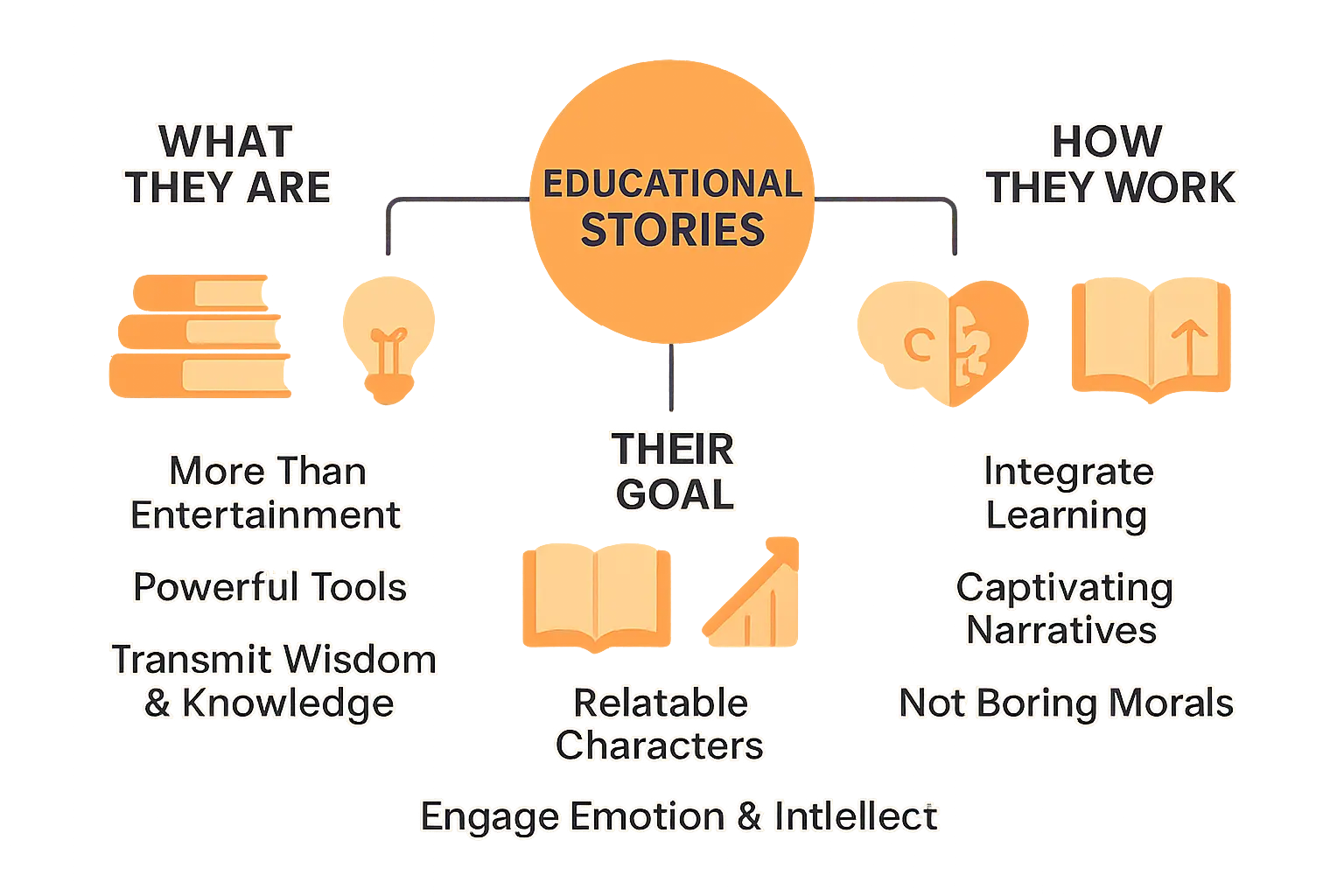
Ever wondered why some tales stick for years? Educational stories blend learning with fun, making wisdom stick through stories. A child learns teamwork via a squirrel and rabbit building a treehouse—or resilience through a penguin’s icy journey. These aren’t just bedtime tales; they’re life blueprints. They even tackle modern themes, like digital citizenship (online kindness) or environmental care (adventures in endangered forests).
They deliver lessons subtly. A turtle’s slow race teaches patience. A shy lion’s roar teaches courage. No preaching—just natural teach moments. Unlike generic tales, they spark curiosity, like a raccoon learning honesty after a mishap. These stories mirror real-life challenges, helping kids navigate social or emotional hurdles, like sharing toys or overcoming stage fright.
Why do they work? Emotions make lessons resonate. Studies show facts are 20x more memorable in stories. They adapt to learners: visual kids imagine scenes, auditory ones focus on rhythm, and kinesthetic learners mirror emotional arcs. Abstract ideas become tangible truths. Interactive choices in digital stories—like picking a character’s path—make kids active participants, not passive listeners.
They boost empathy and problem-solving. Adults grasp complex ideas better in narratives too. For parents, tools like Tellmestories simplify this—they generate personalized tales via WhatsApp, making your child the hero of adventures tied to their interests, from space to underwater worlds. Ready to explore? Let’s go! ✨
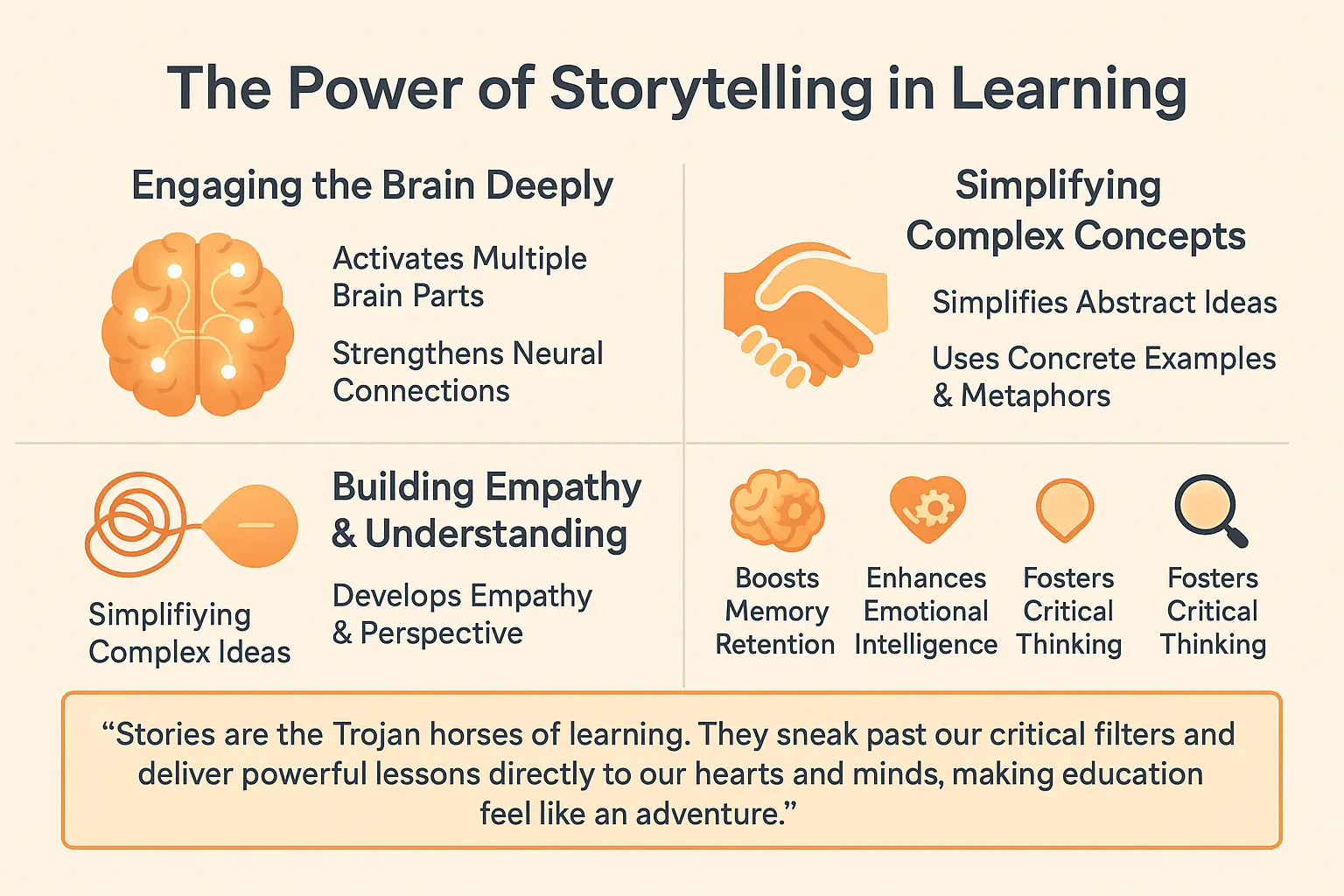
The secret sauce: why are stories so powerful for learning?
Engaging the brain on a deeper level
Stories don’t just entertain—they rewire brains. When kids hear a tale, their neural pathways fire across sensory, motor, and emotional hubs. 🧠✨ This multi-region activation creates stronger memory traces than rote learning. Dopamine spikes during emotional moments make concepts stick, turning stories into unforgettable learning adventures. Imagine a child’s brain lighting up while a dragon’s roar activates auditory cortex, its scales triggering visual processing, and the hero’s bravery sparking emotional connections—all while absorbing life lessons.
Building empathy and understanding others
Bedtime stories = empathy bootcamp. 🌟 By stepping into characters’ shoes—whether a shy mouse or misunderstood villain—kids master perspective-taking. These narratives become safe labs for testing pro-social behaviors, transforming abstract concepts like kindness into instinctive responses through mental rehearsal. Picture a child cheering for a selfish fox learning generosity, their brain quietly practicing empathy without realizing it.
Making complex concepts digestible
“Stories are the Trojan horses of learning. They sneak past critical filters and deliver lessons directly to hearts and minds, making education feel like an adventure.”
How to explain perseverance to a 4-year-old? Wrap it in a turtle’s race. Stories convert fuzzy ideas into concrete journeys. Need to teach environmental care? A talking river’s woes suddenly make sense, using metaphor to simplify intimidating concepts. Metaphors act like translators, turning “biodiversity” into a vibrant forest party where every creature plays a role.
- Boosts memory: Story-based info is 22x more memorable than facts—no flashcards needed.
- Enhances emotional intelligence: Builds self-awareness and empathy by dissecting characters’ motivations.
- Fosters critical thinking: Encourages predicting outcomes and analyzing motives—the same skills for real-life decisions.
Want real-world impact? Explore personalized storytelling for your family. With Tellmestories, turn “Please read this” into “Tell me your version!” Ready to make learning feel like magic? Your child’s next adventure is just a WhatsApp message away. 📲✨
A world of stories: exploring the different types
Moral stories and timeless fables
Ever wondered why The Tortoise and the Hare still resonates today? 🐢🐇 These moral stories use simple narratives to teach universal values. Think of Aesop’s fables or classic fairy tales—each one a tiny lesson wrapped in engaging characters.
They tackle honesty (The Boy Who Cried Wolf), perseverance (yes, that determined tortoise again), and even warn against greed. Perfect for sparking “aha!” moments in young minds, these stories stick because they’re memorable. Kids see themselves in these tales, making abstract concepts like fairness feel real.
Learning stories for modern education
What if a bedtime story could track growth like a progress report? 📚✨ That’s the idea behind “Learning Stories” used by educators. These aren’t just tales—they’re detailed observations of a child’s journey.
Imagine documenting your little one’s first tower-building experiment, highlighting their problem-solving skills. Teachers love them because they:
- Highlight specific achievements
- Track developmental milestones
- Encourage family involvement
They’re not just about achievements—they focus on how kids learn. Did they try three different approaches before succeeding? That’s the real victory. These stories help children connect their dots, showing how effort leads to progress.
Stories for specific life lessons
Struggling with bedtime routines? 🛏️✨ What if your child’s favorite character magically conquered the same challenge? This is where personalized storytelling shines—especially platforms like Tellmestories.
Created by real parents (more on that later!), their WhatsApp-based service crafts stories addressing milestones like:
- Potty training
- Starting school
- Overcoming fears
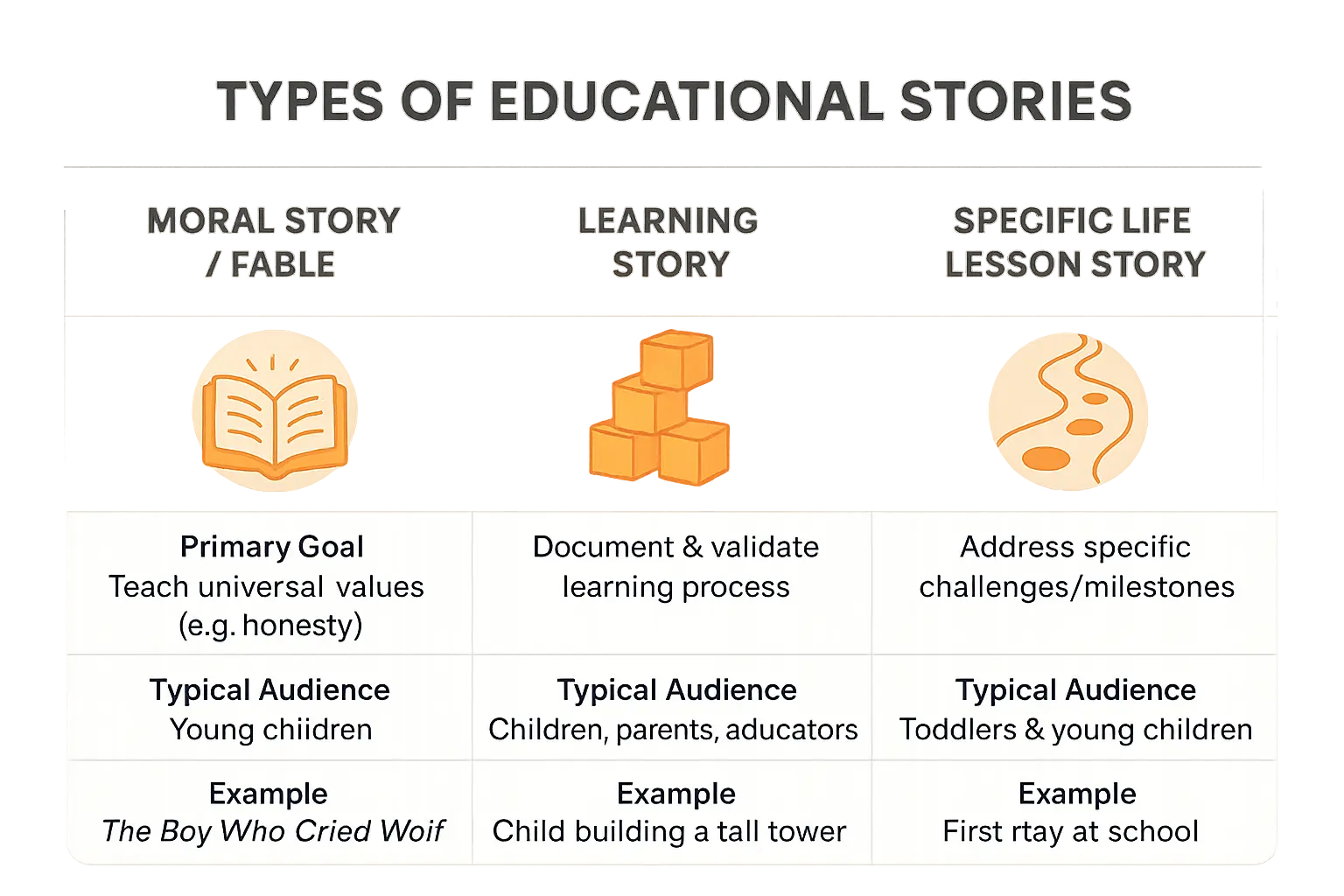
Here’s how different story types tackle learning:
| Story Type | Primary Goal | Typical Audience | Example |
|---|---|---|---|
| Moral Story / Fable | Teach universal value (e.g., honesty) | Young children | “The Boy Who Cried Wolf” |
| Learning Story | Document learning process | Children, parents, educators | Story about building a tall tower |
| Specific Life Lesson | Address milestones | Toddlers & young children | First day at school adventure |
Now imagine instantly creating a story where your child conquers bedtime resistance. With Tellmestories, parents send a voice note explaining their child’s challenge, and AI generates a personalized tale—delivered straight to WhatsApp. No apps, just magic in their pocket. 📲✨
Not just for kids: educational stories for adults 🧑💼
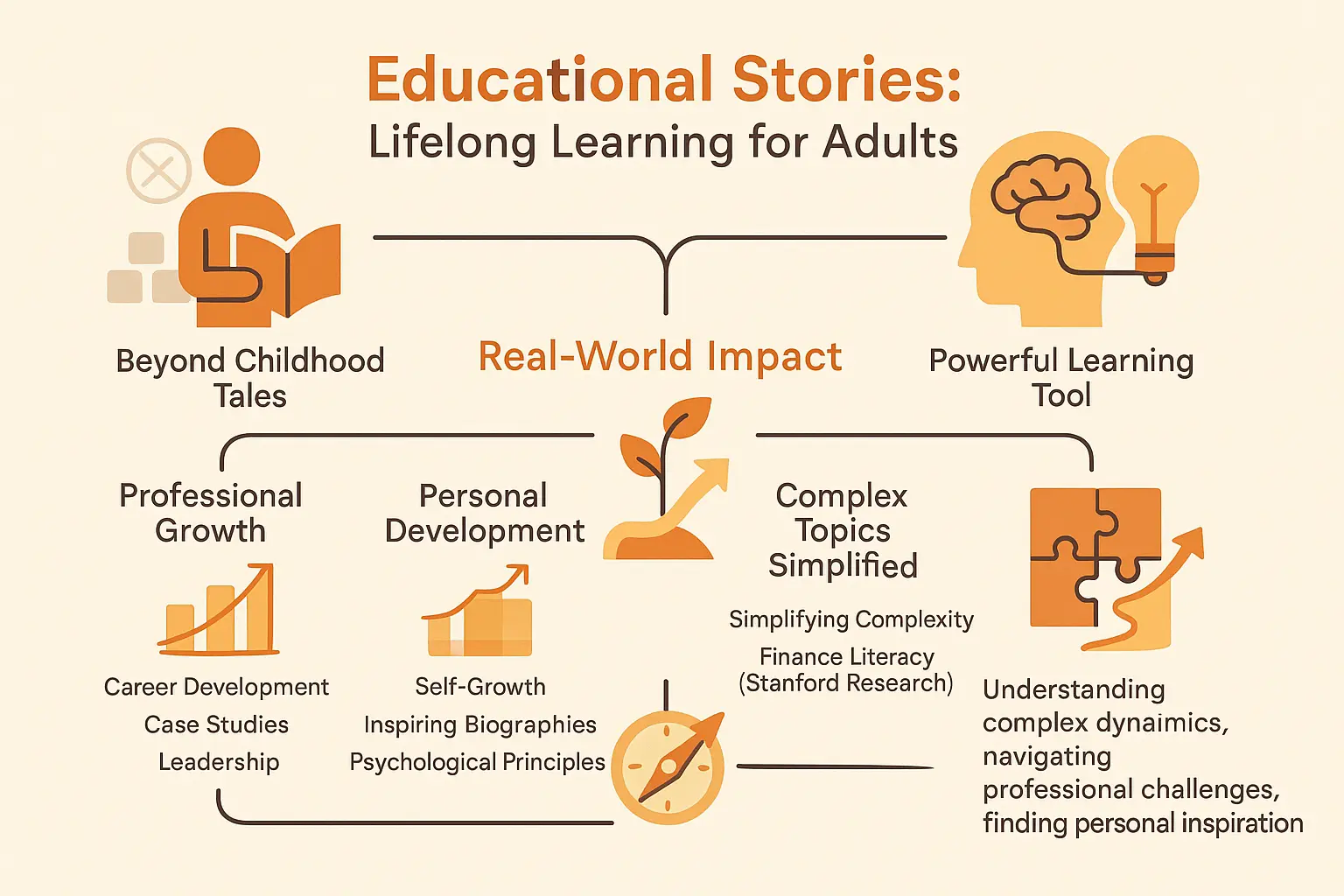
Educational stories for adults aren’t just a children’s book remix. They’re powerful tools for professional development and personal growth. Let’s break the myth that stories are only for bedtime tales. Adults crave narratives that simplify complexity, spark reflection, and drive lifelong learning.
In the workplace, case studies and leadership parables dominate. Imagine a manager learning conflict resolution through a story about a fictional CEO navigating a crisis. Or a team bonding over a “success story” that highlights collaboration. These narratives aren’t fluff—they’re frameworks for solving real problems. 🎯
For personal growth, stories act as mirrors. A biography of a resilient entrepreneur? That’s a masterclass in grit. A parable about overcoming failure? A nudge to reframe setbacks. Even AI is getting in on this: new datasets train algorithms to grasp deeper meanings in narratives, proving stories transcend age.
“For adults, educational stories are not about learning the ABCs, but about understanding complex human dynamics, navigating professional challenges, and finding inspiration for personal growth.”
Finance, often a snooze-fest, comes alive via storytelling. Stanford research shows simple tales about couples investing or price hikes boost financial literacy. Why? Stories turn dry concepts like compound interest into relatable journeys. No spreadsheets needed. 💡
Why does this work? Stories activate emotional and rational brain regions. They turn abstract ideas into vivid scenes, making lessons stick. A 2023 study found adults retained 18% more financial knowledge after reading stories—proof that educational stories for adults aren’t just trendy, they’re neurologically smart. 🧠
Ready to rethink storytelling? Whether you’re upskilling or leveling up your mindset, narratives are your cheat code. Time to stop underestimating the power of a good story—your career (and sanity) might depend on it. 📚
How to make story time a powerful learning moment
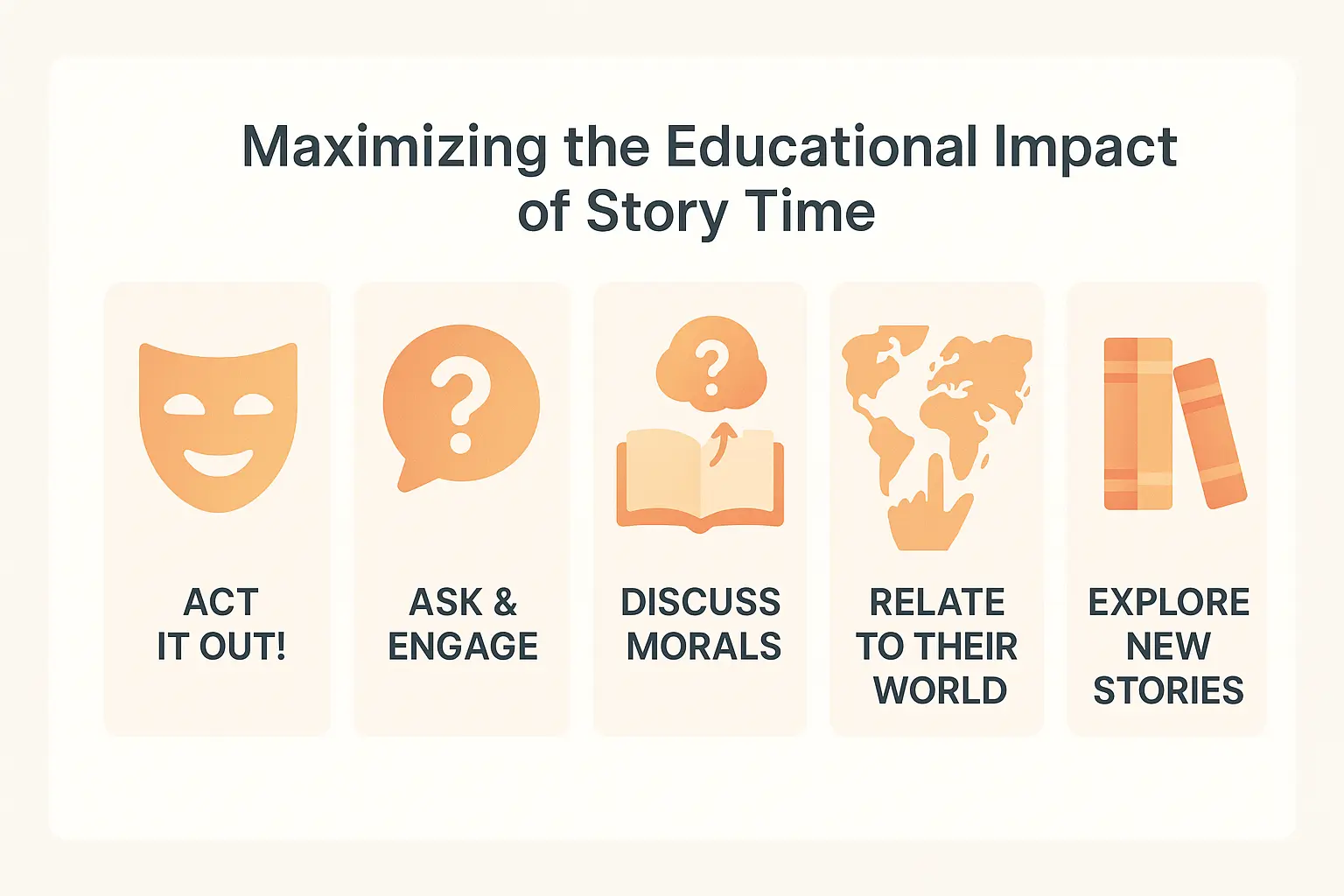
Story time isn’t just about entertainment – it’s a golden opportunity to spark curiosity and teach life lessons. With five key techniques, you can turn bedtime tales into meaningful educational experiences. Let’s explore how!
- Be an actor, not just a reader
Use distinct voices, facial expressions, and hand gestures to bring characters to life. A pirate’s booming tone or a mouse’s squeaky whisper makes abstract concepts tangible. This technique boosts language skills – varied intonation helps little brains map sounds to emotions. - Pause for questions
Ask “What would YOU do?” or “Why did the character choose this?” to activate critical thinking. Research shows kids retain more when predicting outcomes – their brains become detective agencies solving narrative puzzles. Try “How would you fix this problem?” to encourage active problem-solving. - Spotlight the moral
After reading, ask: “What lesson did we learn?” Let kids connect dots themselves. Did the brave rabbit teach courage? Did the forgetful elephant highlight responsibility? Reflection cements values better than direct instruction. For subtle lessons, try educational children’s tales where morals emerge organically. - Bridge to real life
Link stories to their experiences: “Remember when you shared snacks like the fox?” This builds emotional intelligence. Studies show personal connections help kids process feelings and recognize behavior patterns. After tales about fears, ask: “Did you feel like that on your first day of school?” - Explore diverse tales
Mix genres – alternate adventure stories, science themes, or interactive tales with voice narration. This builds cognitive flexibility, like mental training for problem-solving. Include stories with real-life photos for stronger connection.
Ready to try? The Brave Little Squirrel’s Adventure in Learning weaves curiosity and resilience into an engaging forest quest. Act out stories with toys afterward – physical play reinforces learning far better than passive listening!
The future is personal: technology and educational stories 🤖
Technology is reshaping how we create and share educational stories. AI now crafts tales that adapt to a child’s age, name, and interests. Imagine stories where your child becomes the hero, learning about friendship or courage through adventures designed just for them.
Personalization is the game-changer. No more generic tales. With tools like Tellmestories, parents use WhatsApp to generate stories instantly. A simple voice note describes the desired plot—like a space adventure or a lesson on sharing—and AI brings it to life in minutes.
Their mission and vision reflect this innovation. Founded by parents, the service remembers your child’s preferences, ensuring each story evolves with their growth. Think of it as a digital campfire where technology meets timeless storytelling.
These stories aren’t just fun—they teach. From potty training to school readiness, they blend education with engagement. The result? Children absorb lessons effortlessly, all while feeling seen and understood.
Whether shared as text, audio, or a printed book, the core remains unchanged: stories that inspire. They connect generations, spark curiosity, and make learning feel like magic. After all, isn’t that what great storytelling has always done?
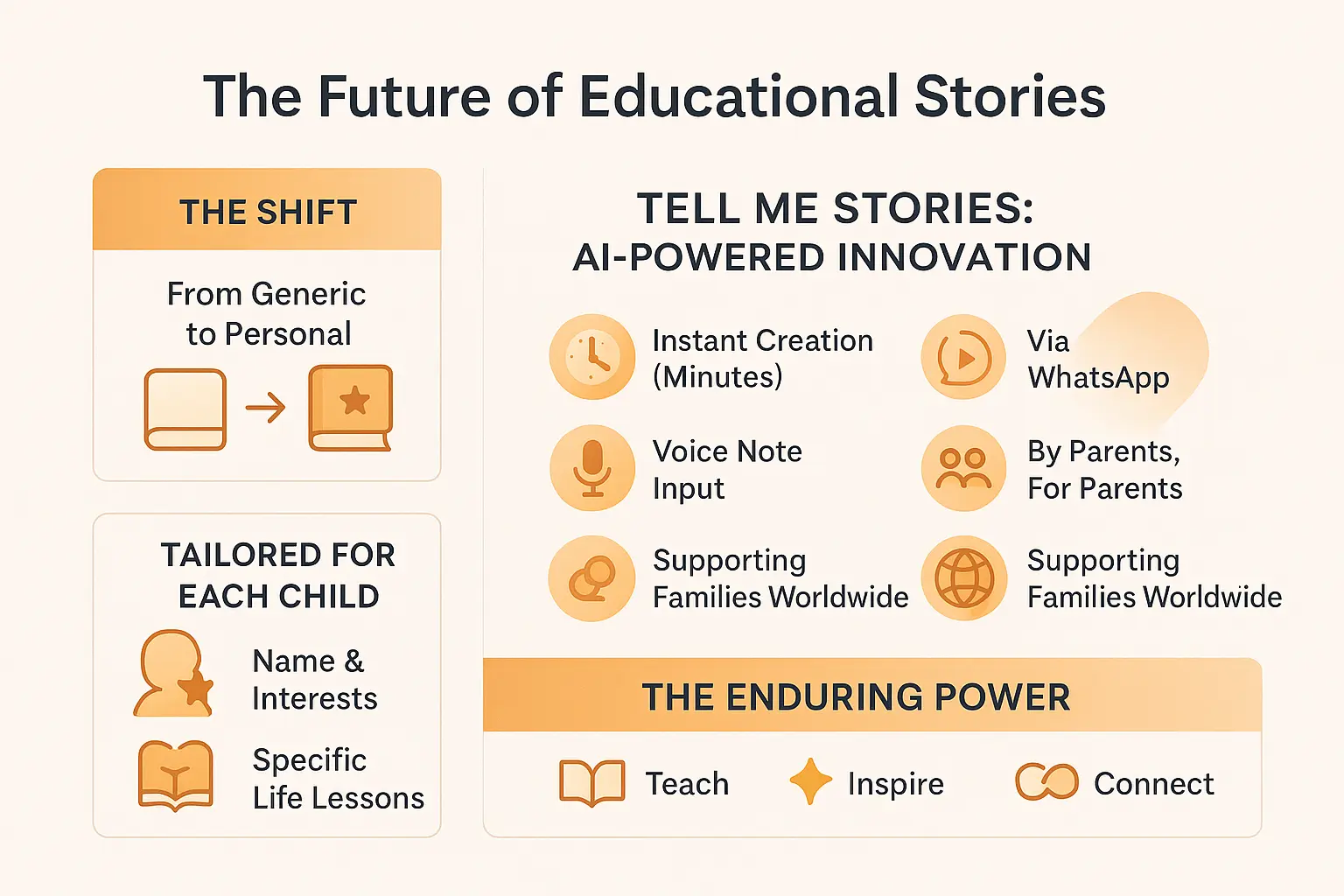
Educational stories bridge learning and imagination. 🌟 For kids learning morals or adults exploring ideas, these tales blend wisdom with wonder. With AI-powered tools like Tellmestories.ai, personalized stories make lessons stick. Ready to transform storytelling into a growth tool? The future of learning is here. ✨
FAQ
What makes educational stories special? 🤔
Educational stories aren’t just entertainment—they’re tools for growth! They blend learning with fun, using relatable characters and adventures to teach values like honesty or resilience. Think of them as “tasty packages” for ideas: research shows stories are up to 22x more memorable than facts alone! Whether it’s a classic fable or a personalized AI-generated tale, these stories stick because they engage both hearts and minds. Pro tip: The best ones make lessons feel like hidden treasure waiting to be discovered! 🏴☠️
Got a quick tale that teaches life lessons? 🧚♀️
Enter Aesop’s timeless classic: “The Boy Who Cried Wolf!” This 2,600-year-old gem shows why lies backfire, using a bored shepherd boy and some very confused villagers. Short stories like this work wonders for attention spans while delivering big truths—no wonder 78% of educators use them! Want modern twists? Check out interactive stories where kids shape the ending—because learning’s best when you’re the hero. 🦸
Can you show me examples of learning stories? 📚
Absolutely! Picture a toddler named Mia building a block tower. Her learning story documents every wobble and triumph, turning STEM skills into a growth mindset journey. Or try a “first day jitters” story helping kids conquer school nerves. Pro tip: Personalized tales (like our magical adventures) boost engagement 40%! The secret? Make the child the star of their own growth story. 🌟
What’s the ultimate kids’ story with a moral? 🏆
It’s a showdown between legends! “The Tortoise and the Hare” (perseverance wins), “The Lion and the Mouse” (even small helpers matter), and “The Golden Touch” (money ≠ happiness) all battle for the crown. But emerging tech creates new contenders—imagine stories where YOUR kid learns bravery at the dentist! The best? They’re short enough to rewatch, yet deep enough to spark family chats about choices. 🔁
What defines a great kids’ story? 🧒
Simple ingredients: short chapters, bold characters, and clear takeaways! Think of them as mental playgrounds: 3-5 minute reads with talking animals or curious kids solving problems. The magic? They sneak in vocabulary, empathy, and critical thinking. Pro tip: Mix formats! Try audio stories for car rides and picture books for cozy reading nooks. Remember, the goal isn’t perfect reading skills—it’s creating lifelong learners who ask, “What happens next?” 📈
Why should we care about Lazy John’s story? 🧑🌾
This cautionary tale features a man so lazy, he’d rather starve than cook! When he finally works, he accidentally becomes rich—proving effort matters more than luck. Modern versions make it interactive: Kids choose John’s next move! Perfect for teaching delayed gratification (a skill linked to academic success). Key takeaway? Life’s sweeter when you build it yourself—no magic beans required! 🌱
What’s the most captivating story ever? 💎
Here’s the twist: The “best” story evolves with tech! While classics like Kid President’s “Taco Tuesday” (teaching teamwork) still charm, AI creates hyper-personalized adventures. Imagine stories that adapt to your child’s progress or tackle specific fears—like conquering bedtime monsters. The future’s golden? Stories that combine animation, quizzes, and voice interaction to make every moral feel like a discovery. 🔍
Need a short tale with a powerful lesson? 📖
Try “The Ant and the Grasshopper”: Worker ant prepares for winter while partying grasshopper mocks her—until cold weather hits! This 2-minute read teaches planning vs. procrastination. Modern apps take it further: Kids earn virtual coins for completing story-based tasks, creating real-world incentives. Bonus? These tales build “executive function” skills—think of it as mental muscle training disguised as fun. 💪
What’s the lesson in The Golden Touch? 🏛️
King Midas’s wish for golden everything backfires when he turns his daughter to gold! This ancient Greek story whispers two truths: 1) Material wealth can’t buy love and 2) Be careful what you wish for! Modern studies confirm such tales stick because they tap into universal fears and desires. Want to make it relatable? Try variations about screen time addiction or popularity obsession—classic lessons dressed for today’s challenges. 🔄