Contents
Your preschooler sees a character cry and offers the toy they would want themselves. It is a small, caring response, but understanding what another person needs takes time.
Teaching empathy to preschoolers through stories and play can help you nurture that understanding, one shared moment at a time.
Why your child learns empathy gradually
Empathy grows step by step. First, your child sees how someone feels. Then they learn that another person may see things differently. In time, they learn how to respond with care.
Between ages 3 and 5, children get better at picturing another person’s thoughts, feelings or point of view. A 3-year-old might see tears and offer a toy they would like. By 4 or 5, many children start choosing help that better fits what someone else needs.
Choose a story for the situation
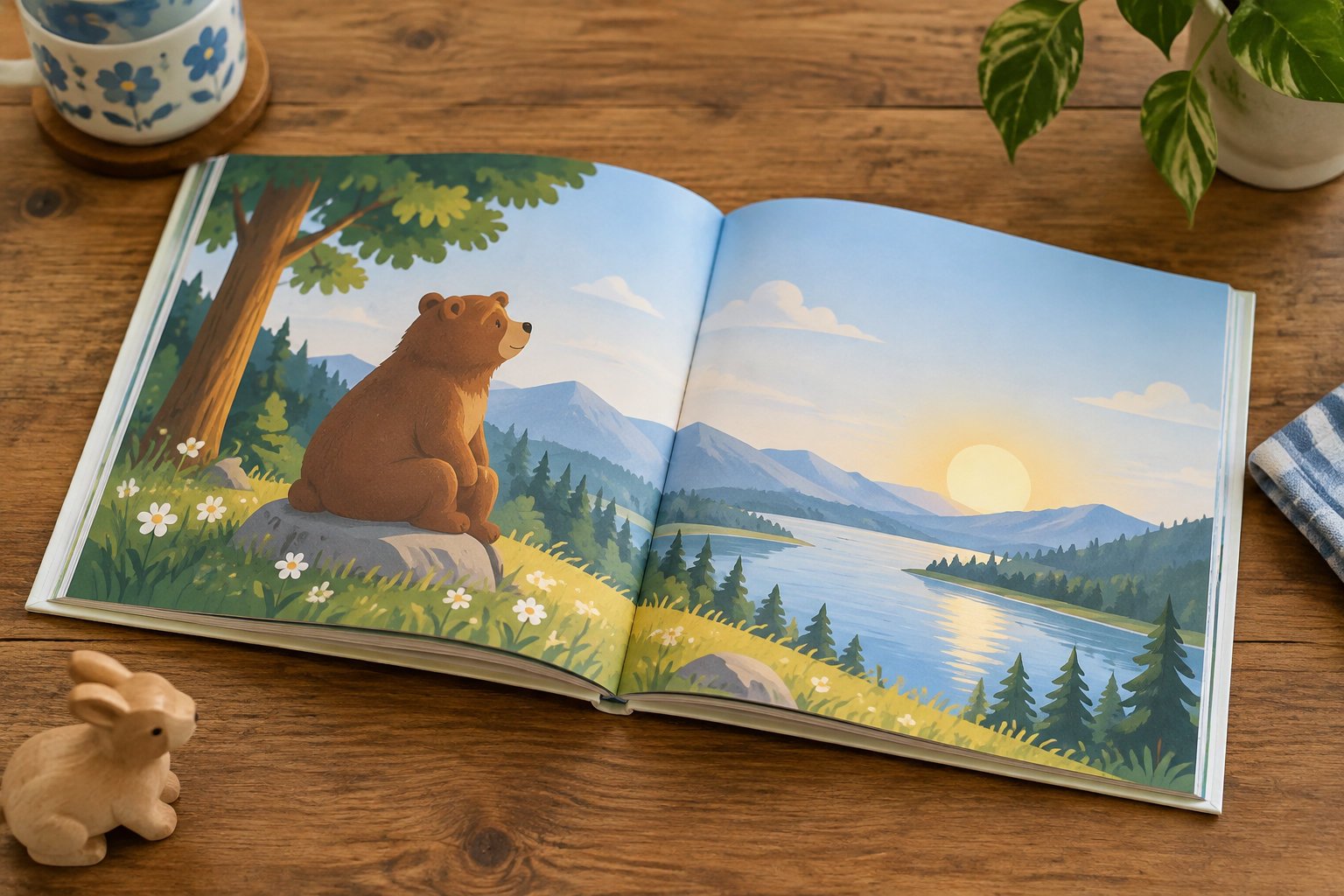
A book lets your child follow a character’s feelings without talking about their own. Choose a story with a feeling your child knows, a clear problem and pictures that give clues. A short picture book can leave more room to talk than a long one with many characters.
For a young preschooler facing sadness, disappointment or loss, The Rabbit Listened by Cori Doerrfeld is a gentle place to start. Taylor does not want advice or noise. The rabbit stays close and listens.
- Format: English picture book
- Age range: 3 to 5
- Length: 40 pages
You can pause along the way without rushing.
Read together to explore a character’s point of view
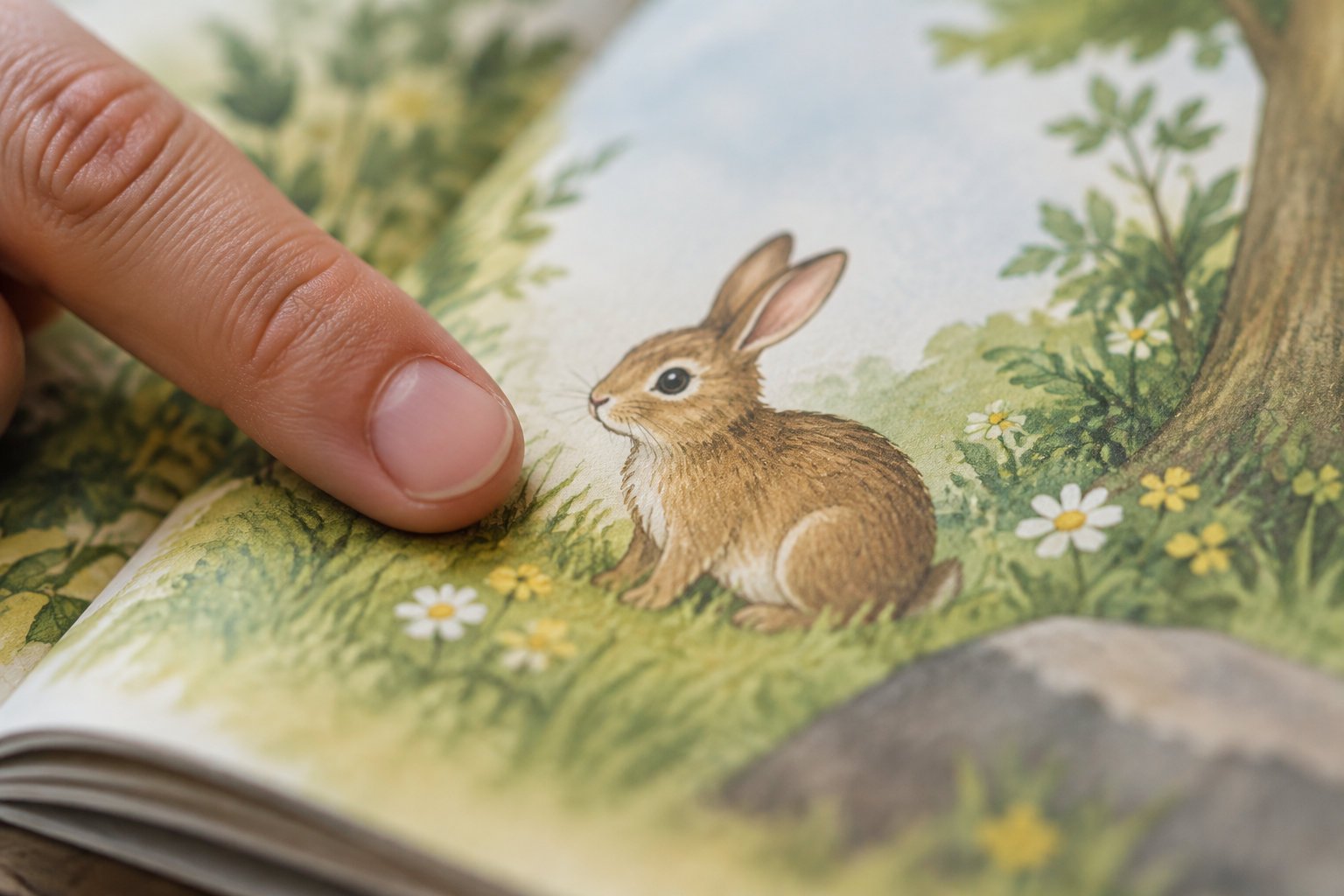
A story can help your child practise empathy. Let your child help work out what is happening.
Pause at a face, a gesture or a change in the scene. Ask one question, then give your child time to answer. A few quiet seconds can help the words come.
Questions about a character can help your child look for clues:
- “What might they be feeling?”
- “What in the picture gives you that idea?”
- “What might they be thinking?”
- “What could someone do to help?”
- “Would another character see it differently?”
There is no single answer you need to uncover.
Try simple empathy games at home
In pretend play, children can try another point of view. No real disagreement has to happen.
When that feels familiar, add a simple situation: “The tower fell.” “A friend arrived.” “The teddy cannot find its blanket.” Ask how someone might feel. Welcome different answers. One child may feel excited, while another feels scared.

Two puppets or soft toys can make an everyday problem easier to explore. One has the only red crayon, and the other wants it. Let your child decide what each character knows, wants and feels.
These phrases offer simple ways to respond:
- “We can find another one.”
- “I am going to listen.”
- “Would you like a hug or some space?”
When to ask for advice
When concerns may need attention
Children learn empathy at different speeds. If talking, making social bonds or showing feelings stays hard in different places, it is worth sharing your concerns. This may make nursery, play or family life hard for your child.
Where to seek advice in France
You can start with your child’s médecin traitant or paediatrician. If your child is under 6, a PMI centre can also help. It offers health checks, care to help prevent illness and guidance.
Your child’s school health visit at age 3 to 4 is a good time to share what you have noticed. Regular medical exams from ages 2 to 5 are also a chance to raise concerns.
Tonight, choose one short story that fits what your child is feeling. Pause at a face or gesture, ask what the character might need, and give your child time. One quiet moment of listening is enough to begin. Empathy can grow gently from there.
Frequently asked questions
Should I correct my child’s interpretation of a character?
Not straight away. Ask what your child noticed in the picture or story, and what led them to that interpretation.
What if my child laughs when a character is sad?
Stay calm and describe what you see: “The character is crying, and you are laughing.” Your child may feel nervous, notice something funny in the picture, or need more time to understand the emotion. Ask what the character might need, without shaming your child.
Can empathy grow without forcing my child to share?
Yes. Your child can practise empathy by listening, role-playing, helping a toy, waiting for a turn, or imagining another person’s experience. Respecting your child’s need for personal belongings and boundaries is part of practising care.