Contents
Children can follow a story through listening before they can read every word. Audio stories for kids can support language skills, but you may still wonder how much listening helps, especially at bedtime.
You’ll find a calm, practical sense of what listening can offer and how it might fit into your child’s day.
Benefits of audio stories for kids begin with richer language
Stories introduce new words before children can read
An audio story can bring new words into your child’s day. You may not use them in everyday conversation.
Your child hears clear verbs, vivid describing words, and sentence patterns. They may not be ready to read these on their own. This kind of language can help from preschool through primary school.
A narrator can show your child how speech sounds. Clear speech helps them hear each word. Pauses show where one thought ends and the next begins.
A shift in pitch or rhythm can signal a question, surprise, fear, or kindness. Over time, your child can grow familiar with the rhythm of fluent speech.
Repeated listening can reinforce new words
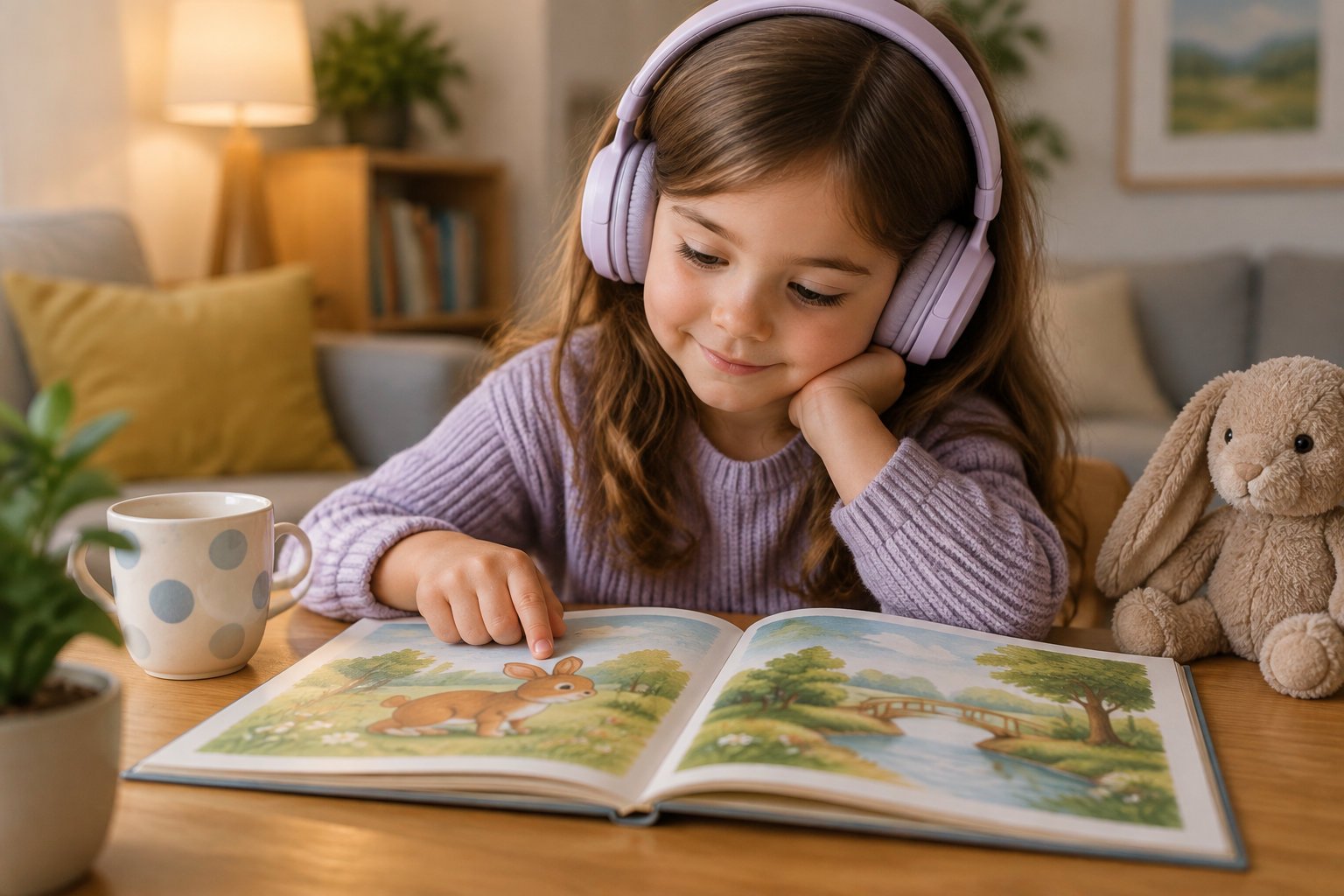
Children as young as four can learn by listening. Four- and six-year-olds can learn hard nouns, verbs, and describing words from stories. They understood these new words better than words they had not heard.
Hearing a word again can help your child remember it. Children who heard new words several times with age-appropriate meanings still understood the words at least two weeks later. One listen can introduce a word. Hearing the story again gives it more chances to stick.
Audio lets children enjoy stories beyond their reading level
Your child can follow a story before they can read every word. Listening lets them enjoy a fuller plot and meet new words. They can focus on the characters, not on sounding out each line.
This can ease the strain for a reluctant reader, a child still learning to read, or one who finds reading hard. As your child learns to turn print into spoken words, they can still enjoy stories and ideas with their classmates.
Print still matters for learning to read
As your child listens and follows the printed text, they see words and punctuation as they hear them. This links speech and print, though the benefit may be small.
Audio stories can strengthen comprehension, engagement and imagination
Understanding audio means making sense of spoken words. As you listen, your child follows the characters and remembers what has happened. They hear how events fit together and may guess what comes next. This skill helps with stories, science podcasts, history programmes, and everyday conversation.
For many primary-school children, listening can help them understand as well as print alone, and sometimes more. It depends on your child, how hard the story is, and whether you help them think about what they hear.

A screen shows faces, places, movement, and colour. With audio, your child can picture more of the story: the forest, the dragon, or a little boat crossing the sea. Many children say they use their imagination more with audio stories than with videos.
Shared listening and daily routines make audio stories accessible
Brief conversations help children learn from stories
You do not have to turn every story into a lesson. One gentle question can be enough. “What do you think will happen?” invites a guess. “Why did she hide?” helps your child link an action to a feeling.
Asking which word sounded new brings their attention back to language.
When a new word comes up, pause if it feels natural. Explain it in simple words, then use it in an everyday sentence. For “exhausted,” you might say, “That means very tired, like after a long walk.” A clear meaning and hearing the word again can help it stick.
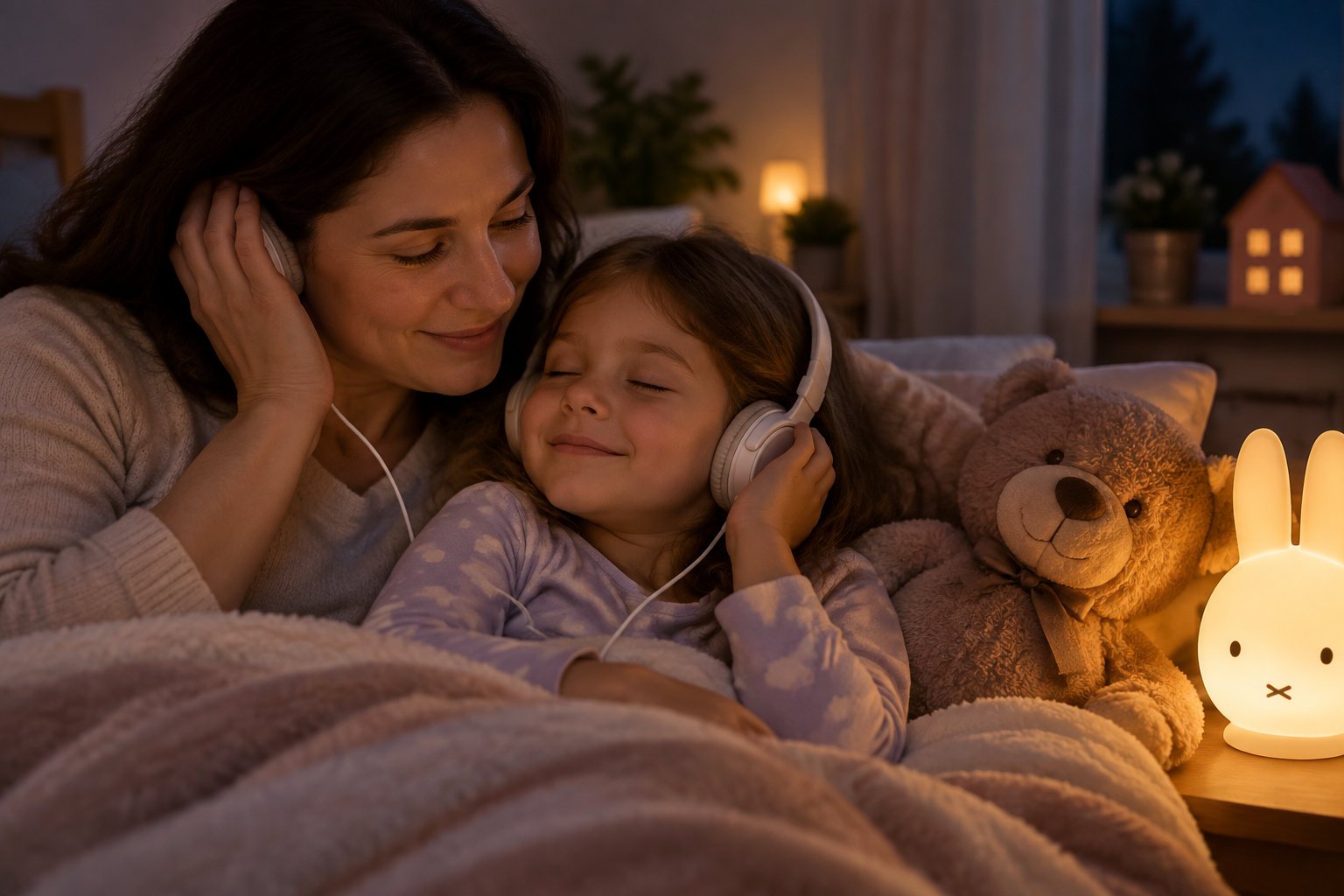
You may feel unsure about reading aloud in another language, or just tired at the end of the day. You can still cuddle, ask a question, and share your child’s reaction as the narrator tells the story.
Everyday family moments offer natural times to listen
Calm audio can fit into bath time. Keep the device well away from the water. In the car, a story that carries on can give a long trip a shared thread.
A personalised story may feel especially close when it includes your child’s name, favourite toy, or interests.
Choose one short, familiar audio story for tonight. Settle beside your child, keep the printed book nearby if they want to follow along, and let the story end with a cuddle and lights out. One calm, shared listen is enough to begin.
Frequently asked questions
Do audio stories count as reading?
Listening is a meaningful literacy experience, but it is not the same as reading printed words. Audio can build vocabulary and comprehension, while print gives your child practice decoding words.
Can children listen to stories in another language?
Yes, stories in another language can give your child more exposure to its sounds, rhythm, and everyday sentence patterns. Choose a story they can mostly follow, replay favourites, and talk briefly about new words; some French library services offer children’s audio in French and other languages.
Are audio stories useful for children with dyslexia?
Yes, they can make stories and school content easier to access when decoding is tiring. For added language support, combine listening with print when possible and talk briefly about words and meaning.
What should parents check before choosing an audio story?
Check that the recommended age, length, and emotional tone suit your child, and that the volume is comfortable. For bedtime, avoid sudden frightening sounds, then listen together sometimes and ask whether your child would like to hear it again or talk about a favourite moment.
Can an audio story replace a parent’s bedtime story?
An audio story can help on evenings when you are busy, ill, or not confident reading aloud, but it cannot fully replace the closeness and conversation of reading together. You can alternate: listen on some evenings and share a parent-read book on others.