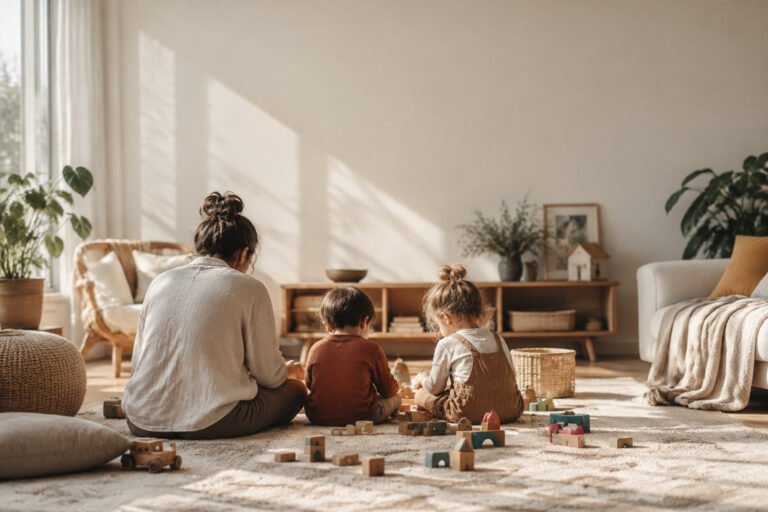
Some evenings, the tablet is the only thing that calms everyone down.
You are tired, and the screen is close. The screen free parenting philosophy offers a gentler path, one small step at a time.
Screen-free parenting philosophy: a gentle balance that fits your family
Age matters most for the youngest children
Let’s start with the simplest rule.
For children under three, the guidance in France is clear. No screens at all. That includes televisions, tablets, smartphones and computers. Keep every screen off in the background too.
Between three and six, screen use stays rare. When it happens, pick content that suits your child, watch together, and keep the setting calm.
Since 2025, childcare settings for children under three are not allowed to expose them to screens. Smartphones, tablets, computers and televisions are all covered.
In both cases, the aim is the same. Protect free play, real human contact, and the way young children learn through their five senses.
Screen-free parenting is about values, not perfection

Screen-free parenting means putting first what happens right there in the room with you. Play. Talk. Move. Imagine. Pay attention together.
The screen is not automatically the enemy. It just should not take the place of these everyday building blocks.
Some families keep a strictly screen-free home. Others allow a short, planned programme on certain days. Both come from the same care.
So what does a balanced approach look like? Often it starts with a few gentle questions:
- What is my child actually doing with the screen?
- What is it replacing?
- Am I nearby?
- Can we stop without turning bedtime into a battle?
Current guidance looks less at the clock and more at content, context and conversation.
Screen-free play gives young children room to explore and imagine
Everyday play supports movement and discovery
Young children need to move. And they need chances to do it throughout the day.
For babies and toddlers, movement can look like this:
- Interactive floor play
- Reaching for a soft toy
- Rolling and crawling
- Building
- Carrying
- Dancing
It does not need to look like a lesson. It only needs to invite the body in.
Free play also gives children time to follow their own curiosity.
A cardboard box can be a bus. A tea towel can be a cape. A bowl of water can keep a child busy all afternoon. Scooping, pouring, and watching what floats is enough.
Small alternatives can fill the quiet moments
When a screen usually shows up during a transition, prepare something that can wait nearby. You will have less to fight about.
A basket by the sofa might hold board books, chunky puzzles, crayons, stickers or a small box of cars.
Ideas that change with age
-
Babies
Floor play, songs, peekaboo, and simple back-and-forth sounds.
-
Toddlers
Blocks, posting games, water play, or moving objects from one basket to another.
-
Preschoolers
Pretend play, drawing, matching games and simple puzzles.
Reading and storytelling work especially well before sleep. Singing can fill the kitchen while dinner cooks.
A familiar bedtime story can be a soft bridge, and a calm screen-free evening starts right there. It carries you from the busy energy of the day into the slower rhythm of night.
Responsive exchanges support relationships and early learning
Everyday connection grows through serve-and-return
Your child’s sound, look, gesture or point is an invitation. You notice it, and you answer.
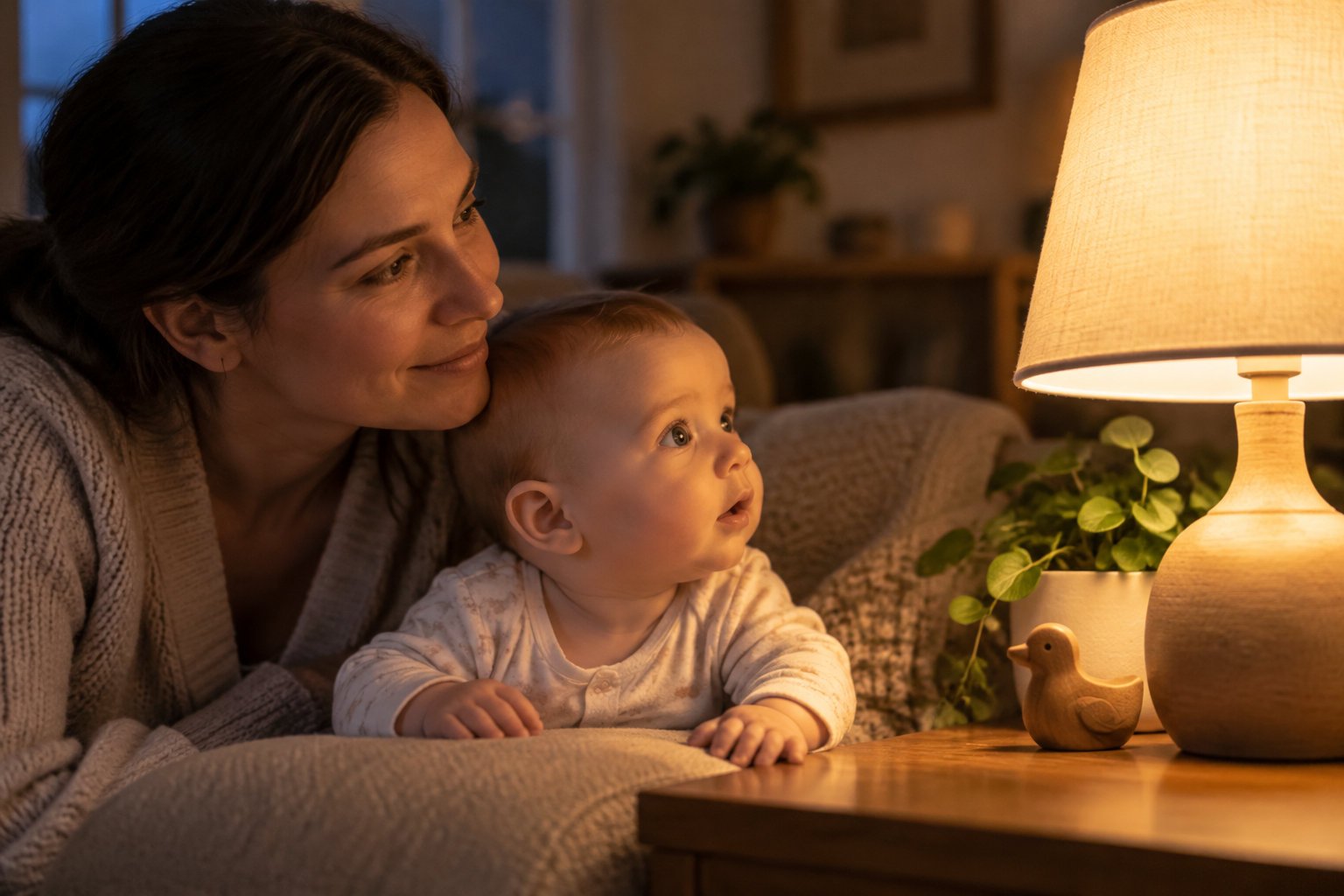
Your baby looks at the lamp. You look too, and say, “The light.” Your toddler hands you a block. You take it, name it, and wait.
The exchange can be very small:
- A smile in return
- Copying a sound
- Moving the toy closer
- Putting words to a feeling
Then leave a little space for your child to answer. That pause gives your child time to form an idea and take the next turn.
You already answer your child many times a day without noticing. Just wait one heartbeat longer before you move on.
Adult screen habits shape the space between you
When the TV runs in the background, adults often drift away from play and talk. Heavy phone use around children has also been linked to fewer verbal and non-verbal exchanges.
A phone-free meal, a floor-play period or a bedtime routine can protect a small pocket of attention.
Predictable screen-free routines make limits easier to keep
Simple rules help children aged three to six
French guidance suggests turning screens off one hour before bedtime. It also advises against using a tablet or smartphone to calm your child, help them fall asleep, or keep them busy at meals. Simple, steady rules like these make a big difference.
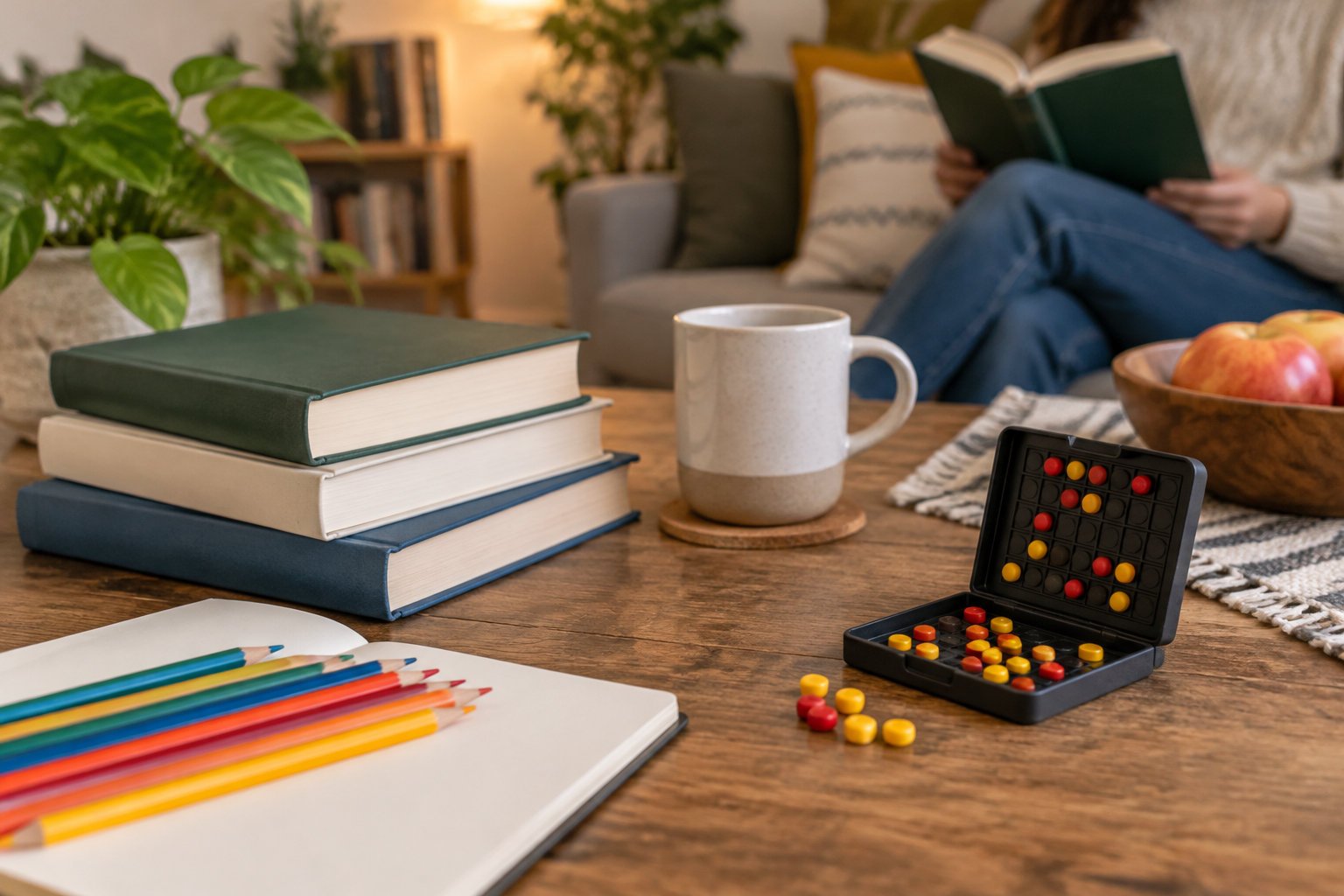
- Books, drawing materials or a small travel game can soften those moments instead.
- Keep them close, so the swap is ready before the screen would have been reached for.
The home environment can carry part of the rule
Try keeping background screens off while your child plays or eats. Put your own phone down when your child is most likely to look for you. Children learn the family rhythm by watching it.
Some days will drift from the plan. A sick child may watch more. A tired parent may need ten quiet minutes. That is normal.
You do not need to punish your child or give up the routine. Name the reset gently, switch the screen off when you can, and return to the next familiar step. Perhaps the bath, then a book, then bed.
You do not need to get everything right. Start small, and start tonight. Switch the screen off one hour before bed, then sit down with a book beside your child. Repeat this calm step night after night, and let the rhythm do the rest.
Frequently asked questions
Is screen-free parenting only for toddlers?
The strongest French limits focus on children under six, but the principle does not stop there. You can keep screen-free meals, bedrooms and bedtime routines for much longer. At any age, the goal stays the same: protect sleep, movement, play and time together.
What should I do if my child refuses every offline activity?
Stay close and start with something very small. Sit on the floor, offer two simple choices, and let your child watch before joining in. A slow return usually works better than presenting a whole afternoon of activities at once.
Should I ask for help if screens cause daily conflict?
Yes, it is worth raising it with your child’s doctor or paediatrician, especially if screens regularly affect sleep, meals, family life or your child’s mood. A health professional can look at the whole situation with you. They can also point you towards suitable support.