The key takeaway: Attention span stories are perfect for today’s shrinking focus. With the average attention span dropping from 12 to 8 seconds, these bite-sized tales (like Ray Bradbury’s sci-fi gems or the Manhattan Short Film Festival) retrain your brain through quick, satisfying reads—no marathon sessions required. Short stories make reading enjoyable again, one twist at a time. 📚
Ever feel like your brain has too many tabs open? 🧠 Tired of starting a story only to get lost in endless tabs? Attention span stories are here to rescue your reading mojo! ✨ These bite-sized narratives—think Ray Bradbury’s twisty sci-fi or personalized tales via WhatsApp—are engineered for our distraction-filled world. Spoiler: they’ll hook you in minutes, boost focus, and even sneak in a dopamine hit (finishing a story triggers your brain’s reward system!). With formats from Lucia Berlin’s gritty vignettes to the Manhattan Short Film Festival’s picks, there’s something for every restless reader. Ready to conquer a story before your next coffee sip? ☕ Let’s roll!
Can’t focus? Why attention span stories are your new best friend
Ever feel like your brain has too many tabs open? You start reading a story, but a notification pulls you away, and suddenly finishing a paragraph feels like climbing a mountain 🧠
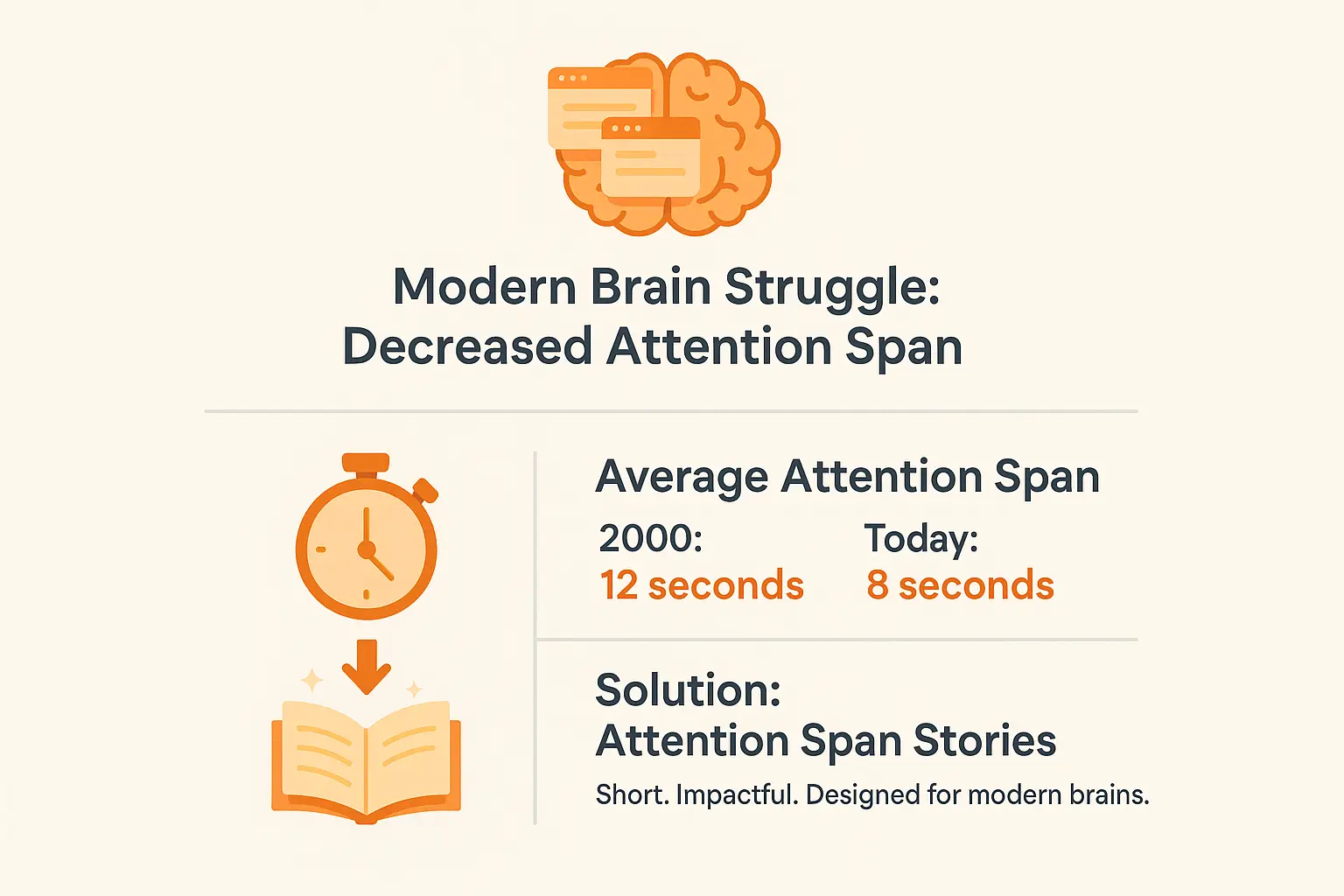
This struggle is real. Modern life constantly fights for your attention. Did you know the average human attention span dropped from 12 seconds in 2000 to 8 seconds today? Yep, we’re now outpaced by goldfish (9 seconds)! 🐠
Enter attention span stories – bite-sized tales designed for our distraction-filled world. These aren’t just short reads; they’re crafted to match how our brains consume content now. Perfect for:
- Parents juggling 58 daily phone checks 📱
- Kids raised on 15-second TikTok clips 🎬
- Families craving bedtime stories that don’t require a PhD in patience 📚
Think of WhatsApp stories that feel like magic ✨ – your child becomes the hero of 2-minute adventures. No app downloads, no tech headaches. Just send a voice note saying “Create a pirate story for my 4-year-old daughter, Luna” and boom! 🌊
Here’s the secret sauce:
- AI-powered storytelling that remembers your kid’s favorite characters 🧙
- Life lessons disguised as bedtime tales
- Instant audio/PDF delivery – perfect for spontaneous reading breaks 📄
Created by sleep-deprived dads who turned their 3-year-old’s bedtime routine into a global service, these stories aren’t just quick reads. They’re designed to:
- Hook short attention spans
- Teach values while sparking imagination
- Adapt to your child’s growth
Still skeptical? Consider this: 42% of users say their kids now beg for bedtime stories 📈. Ready to transform storytime from battles to bonding? Let’s explore how they work with your brain, not against it…
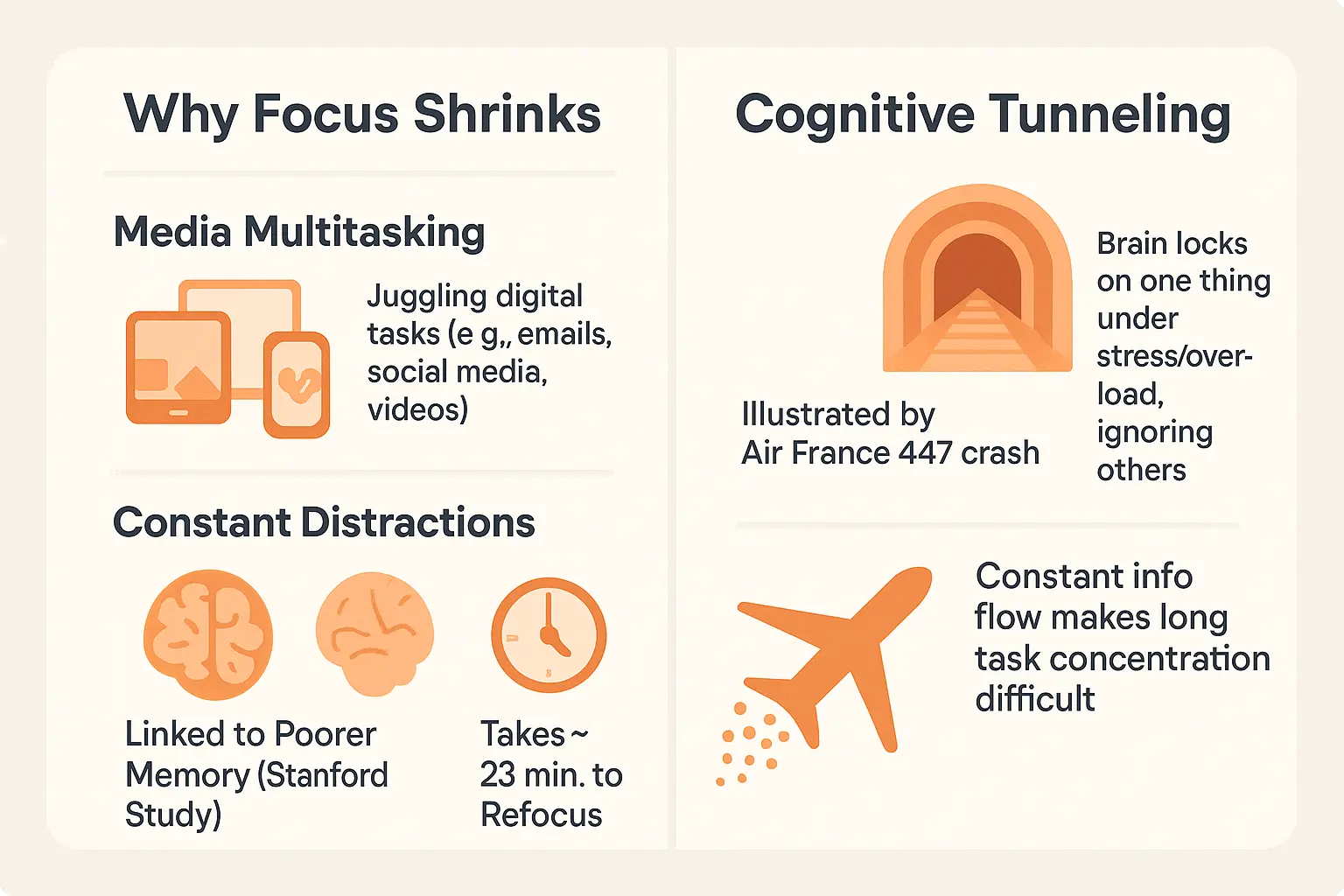
The science behind our shrinking focus
Why is it so hard to concentrate?
🧠 Ever felt like your brain’s on a never-ending treadmill? It’s not you—it’s the “always-on” digital world. Media multitasking (juggling emails, social feeds, videos) directly weakens memory retention, per Stanford research. 📉
💡 Distractions cost 23+ minutes of recovery time. With 50+ daily interruptions, we spend more time recovering than focusing. Science confirms: it takes over 23 minutes to regain focus after one notification. The stats get scarier: APA studies show chronic multitaskers make 50% more errors and process information 20% slower. It’s not laziness—it’s neural overload. 🧠
The “cognitive tunneling” trap
🔍 Air France 447 pilots focused on flashing lights while ignoring fuel levels. Wired calls this cognitive tunneling—hyper-focusing on immediate stimuli while missing critical context. ⚠️
📱 We repeat this daily: texting while cooking, doomscrolling during family time. 68% of parents miss milestones this way. The survival mechanism that saved us from predators now backfires—smartphones became modern sabers. 🦁
🎯 Ever perfected a PowerPoint slide while ignoring client needs? That’s task paralysis. Cognitive tunneling creates “micro-obsessions” that kill creativity. The brain’s survival mode clashes with modern productivity—where context-switching is required, not emergency responses. 🚫
⚡️ Micro-stories are the antidote. 90% of users engage longer with short-form content. Unlike endless scrolling, bite-sized narratives deliver condensed storytelling without cognitive fatigue. Platforms like TikTok (2.6B users) thrive by serving dopamine hits through snackable content. Your brain craves these quick wins—micro-stories deliver them. 📱
The power of short: why bite-sized stories work
Okay, so our attention is under attack. 📵 The good news? Short stories are the perfect counter-strategy. In a world where endless scrolling competes with focus, these tiny narratives pack a punch that longer formats often miss.
Bite-sized stories aren’t just “small novels” – they’re a unique format with superpowers. They’re like mental snacks: quick, satisfying, and perfect for our screen-saturated lives. Let’s unpack why they’re winning the attention game.
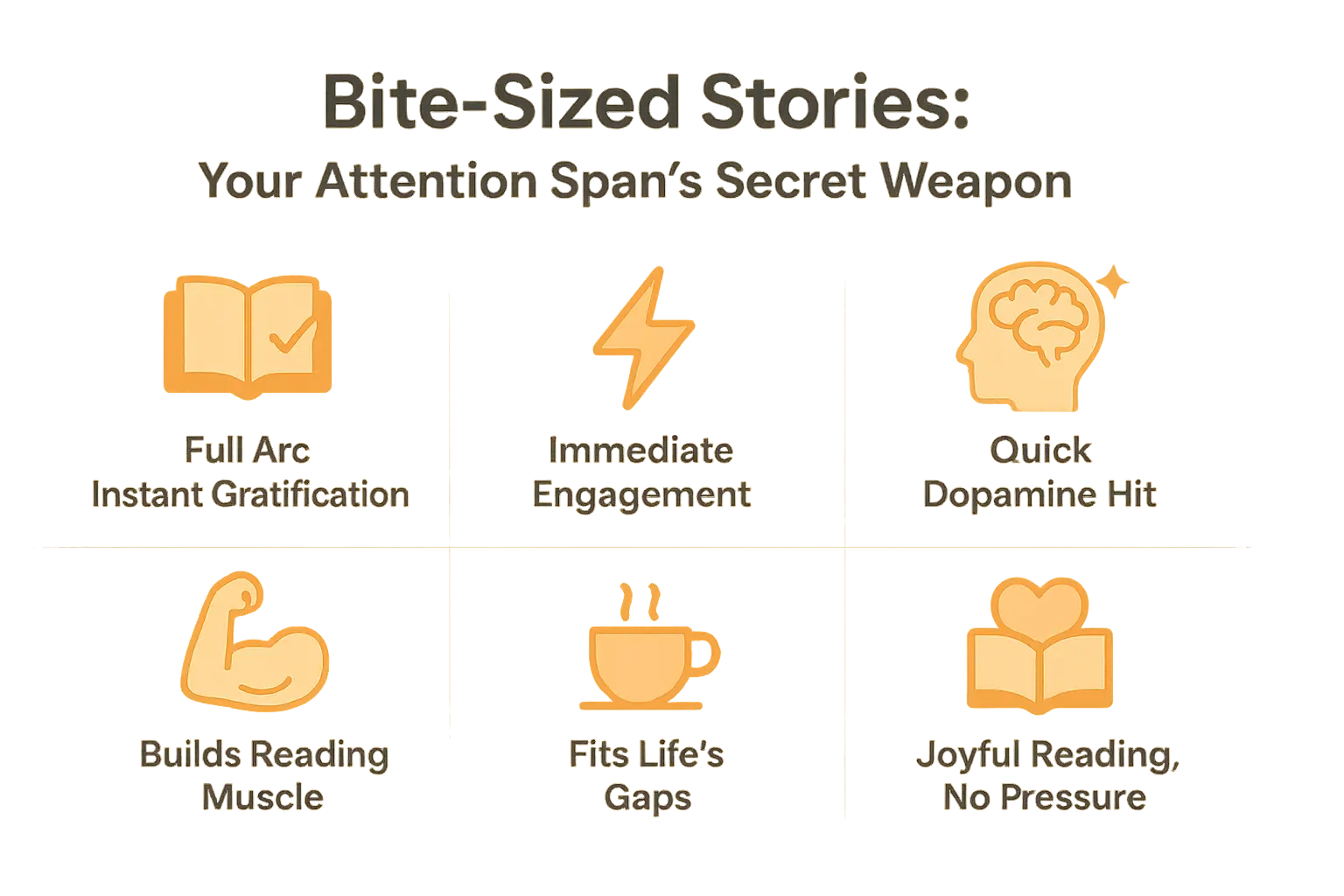
Bite-sized stories deliver a complete narrative arc—a beginning, middle, and end—in a single sitting, providing instant gratification and a powerful sense of accomplishment.
Here’s why they’re perfect for modern audiences:
- Immediate engagement: No slow starts – they hook you from the first sentence. Think of Ray Bradbury’s “The Pedestrian,” where a lone walker gets arrested in a dystopian future. No setup needed – just instant intrigue.
- Quick dopamine hits: Finishing a story triggers feel-good brain chemicals. Like reading Shirley Jackson’s twist-ending classic “The Lottery” – you’ll get that “aha!” rush in 10 minutes.
- Attention muscle training: Completing one story makes you crave another. It’s how Lucia Berlin’s “A Manual for Cleaning Women” hooked readers with gritty, slice-of-life tales that build reading stamina.
- Life-friendly timing: Read a full story during your commute or coffee break. No more losing track of 500-page plots! Perfect for fragmented schedules.
Here’s the secret sauce: short stories act as a bridge to longer reads. They’re like mental push-ups – building your re-train your brain capacity for deeper focus. Remember how you devoured Matsuda Aoko’s feminist fairy tale twists in “Where the Wild Ladies Are” in one sitting? That’s the gateway effect!
They’re scientifically smart too. When you read Poe’s “The Tell-Tale Heart,” your brain syncs with the narrative – that’s neural coupling. Add emotional stakes (like Harrison Bergeron rebelling against a dystopian society), and you get dopamine spikes that make stories stick.
So next time you’re scrolling instead of reading, remember: a 5-minute story isn’t “cheating.” It’s re-train your brain to love narratives again – no marathon sessions required. Ready to rediscover reading without the pressure? 📚✨
Our top picks: attention span stories you’ll actually finish
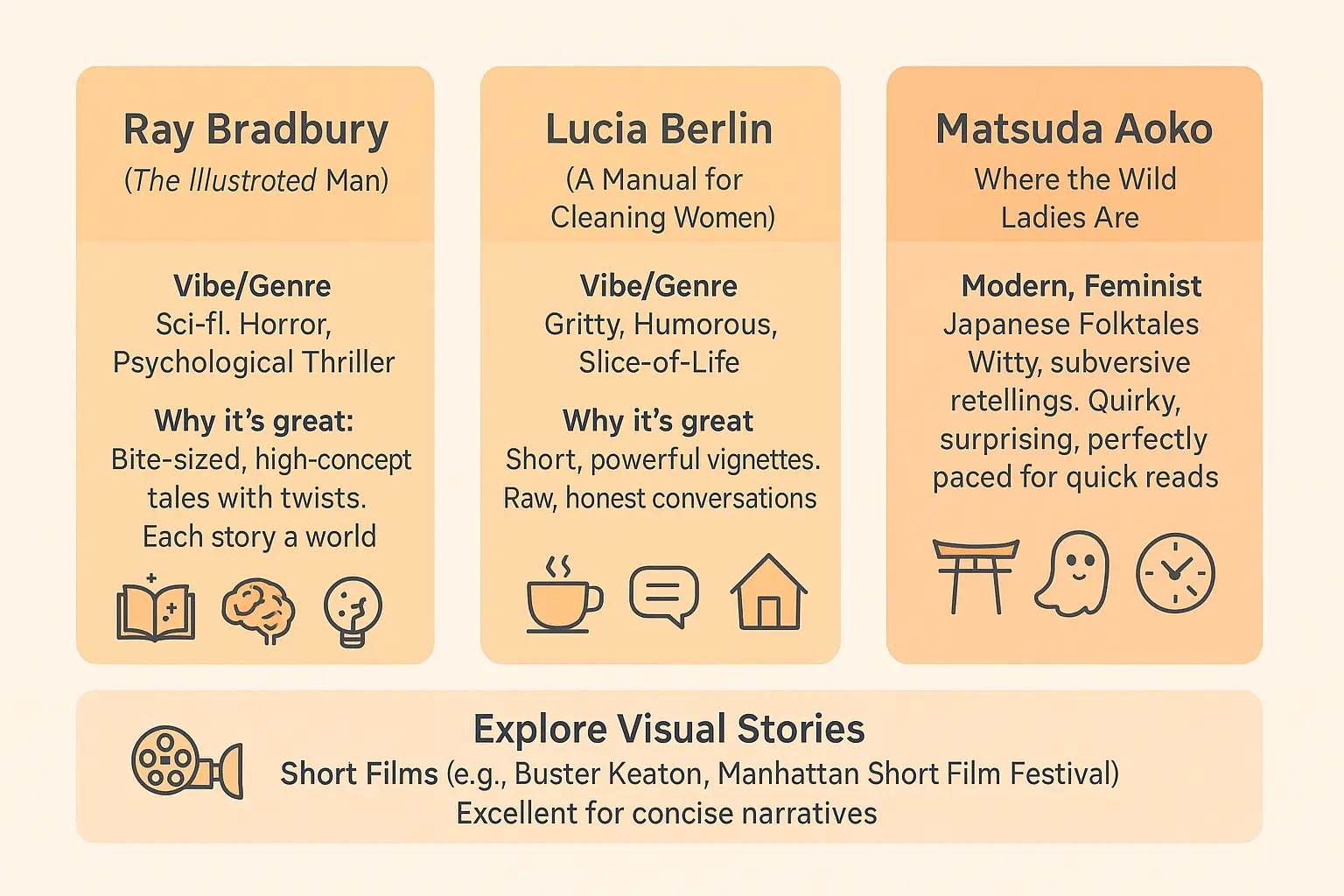
Ready to beat shrinking attention spans? Let’s cut to the chase 🎯 These modern short story collections deliver punchy narratives that stick—and you’ll actually finish them. Whether you’re into sci-fi twists or feminist folklore, we’ve got your next 10-minute read. With adult attention spans now under 8 seconds, these picks use sensory details, emotional hooks, and narrative compression to grab you fast.
| Author | Vibe / Genre | Why it’s great for short attention spans |
|---|---|---|
| Ray Bradbury | Sci-fi, horror, psychological thriller | His 600+ stories, like The Pedestrian (a dystopia where walking becomes a crime) or All the Summer in a Day (kids in a rainworld), pack full emotional arcs in 10 pages. Bonus: His twist endings deliver explosive payoffs in under 1,000 words. |
| Lucia Berlin | Gritty, humorous, slice-of-life | Her story Point of View turns a janitor’s night shift into a meditation on power dynamics. Jazz-inspired prose jumps timelines but never loses gritty charm—no wonder they feel raw and real. |
| Matsuda Aoko | Modern, feminist Japanese folktales | In The High-Flying Spirits of the Hair Removal Salon, a woman’s obsession with smooth skin becomes a supernatural quest. Her genius? Making yokai myths feel like your bestie’s wild weekend stories with hidden critiques of consumer culture. |
Need visual thrills? Short films are your secret weapon 🎥 Buster Keaton’s Cops (1922) delivers 20-minute slapstick avalanches of chaos. The Manhattan Short Film Festival lets you binge 10 global gems yearly, judged by your votes. Pro tip: Watch during your coffee break—you’ll finish most in one espresso.
Why waste time on stories that lose you halfway? These picks use condensed formats without sacrificing depth. Think storytelling sprints—not marathons. Ready for the next level? We’ll show how voice-controlled AI creates bedtime stories faster than “Once upon a time…”
The future of storytelling: personalized and on-demand
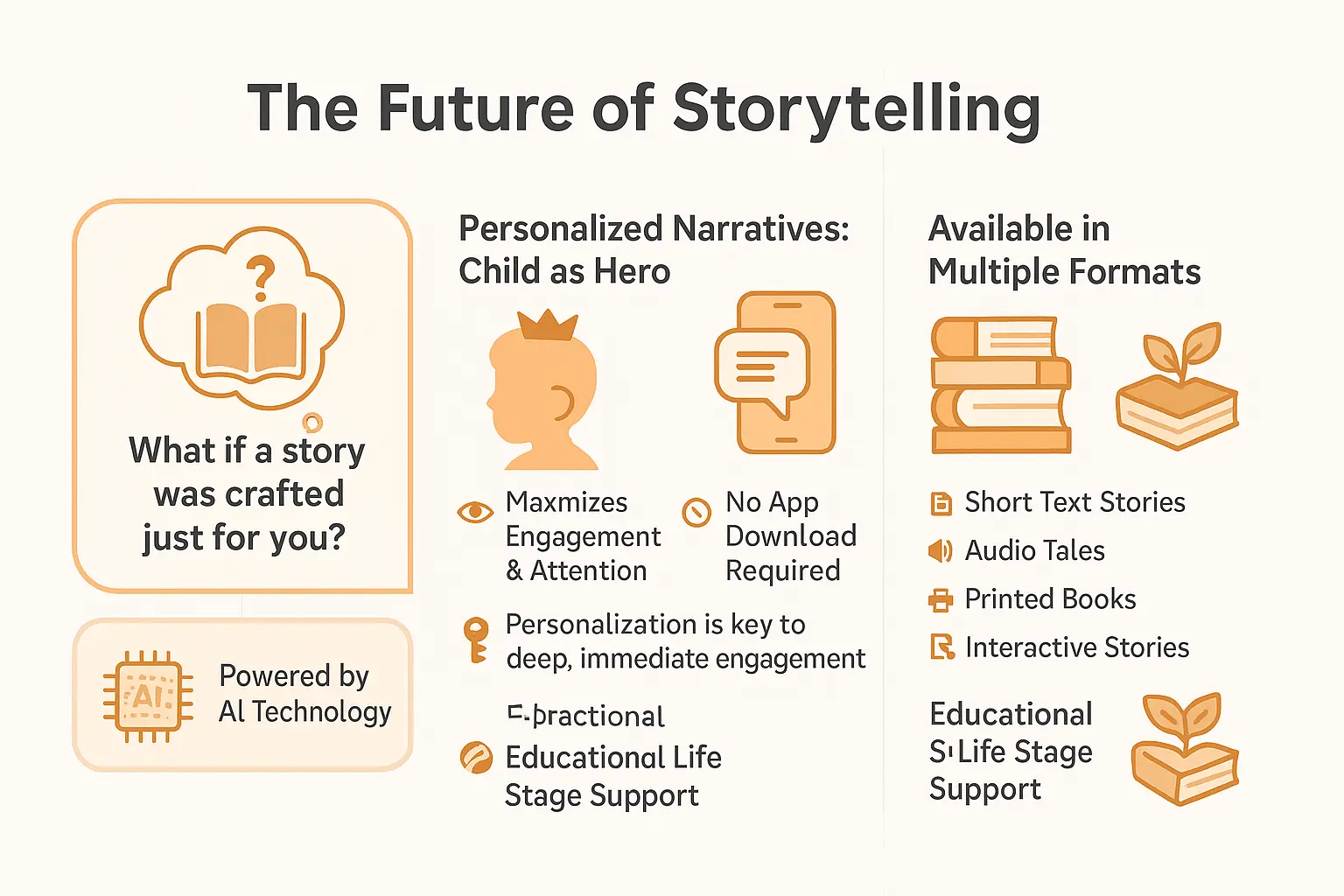
What if a story could be crafted just for you, or for your child, in minutes? 💡
Artificial intelligence is redefining how we engage with stories. No longer passive consumers, we now co-create narratives tailored to individual preferences. For young audiences, this means stories where they’re the hero – instantly generated, deeply personal, and designed to hold attention spans.
The ultimate attention span story is one you can’t put down because it’s about you. Personalization is the key to unlocking deep, immediate engagement.
Enter Tellmestories – a solution created by parents, for parents. Using WhatsApp as its platform, it crafts unique tales in seconds. No apps to download, no complex interfaces. Just send a voice note, and let AI transform bedtime routines into personalized adventures.
Why does this work? Because children don’t just listen – they live these stories. The AI remembers their favorite characters, hobbies, and even voice tones. Imagine stories that evolve with your child’s growth, reinforcing values like sharing or courage through short text stories or interactive formats that teach potty training through playful narratives.
Here’s what makes it stand out:
- 📸 Photo-to-Character – Transform family photos into story characters
- 🎙️ Voice-to-Story – Create tales using simple voice notes
- 📚 Real Books – Turn digital stories into physical keepsakes
Developed by Alex and Julien – fathers of two young girls – this service solves a real problem: making storytelling effortless for busy families. The AI doesn’t just generate stories; it remembers what resonates. A dinosaur-loving 5-year-old today might explore space adventures tomorrow, with the AI adapting to changing interests automatically.
Ready to revolutionize your child’s relationship with reading? Interactive stories await – where every tale is a mirror reflecting your child’s world. No subscription required. Just WhatsApp, creativity, and the magic of seeing “me” in every page. 📱✨
Ready to start reading again? Your action plan
Feeling inspired? Reconnecting with reading doesn’t have to feel like a chore. Bite-sized stories are your secret weapon for rebuilding focus in a distracted world. They’re not “lesser” reads—they’re smart shortcuts for modern brains. 🚀
Here’s how to dive in without overwhelm:
- Pick one collection: Don’t overthink it. Choose a personalized story for your child via WhatsApp—like Tellmestories’ AI-powered tales where they become the hero. Start with just one story. 🎯
- Set a tiny goal: Dedicate 10 minutes daily. Read during your coffee break or bedtime routine. Consistency beats duration every time. ⏱️
- Try a new format: Swap screens for something fresh! Tellmestories lets you receive stories as text, audio, or PDF—and even turn them into physical books. Bonus: Use voice notes to create stories effortlessly. 📱➡️📚
- Be kind to yourself: If your mind wanders, no stress. Life happens! Just pick up where you left off. The story’s always waiting. 🌟
Why this works? Short stories train your brain to stay present. They’re like mental push-ups for attention span. Plus, Tellmestories’ smart memory feature keeps track of your child’s preferences—no guesswork needed. (Founders Alex and Julien built this after seeing how personalized tales helped their own kids sleep better. 💡)
Ready to make reading fun again? Time to start—one magical, 2-minute story at a time. Your brain (and your kids) will thank you. 📚✨
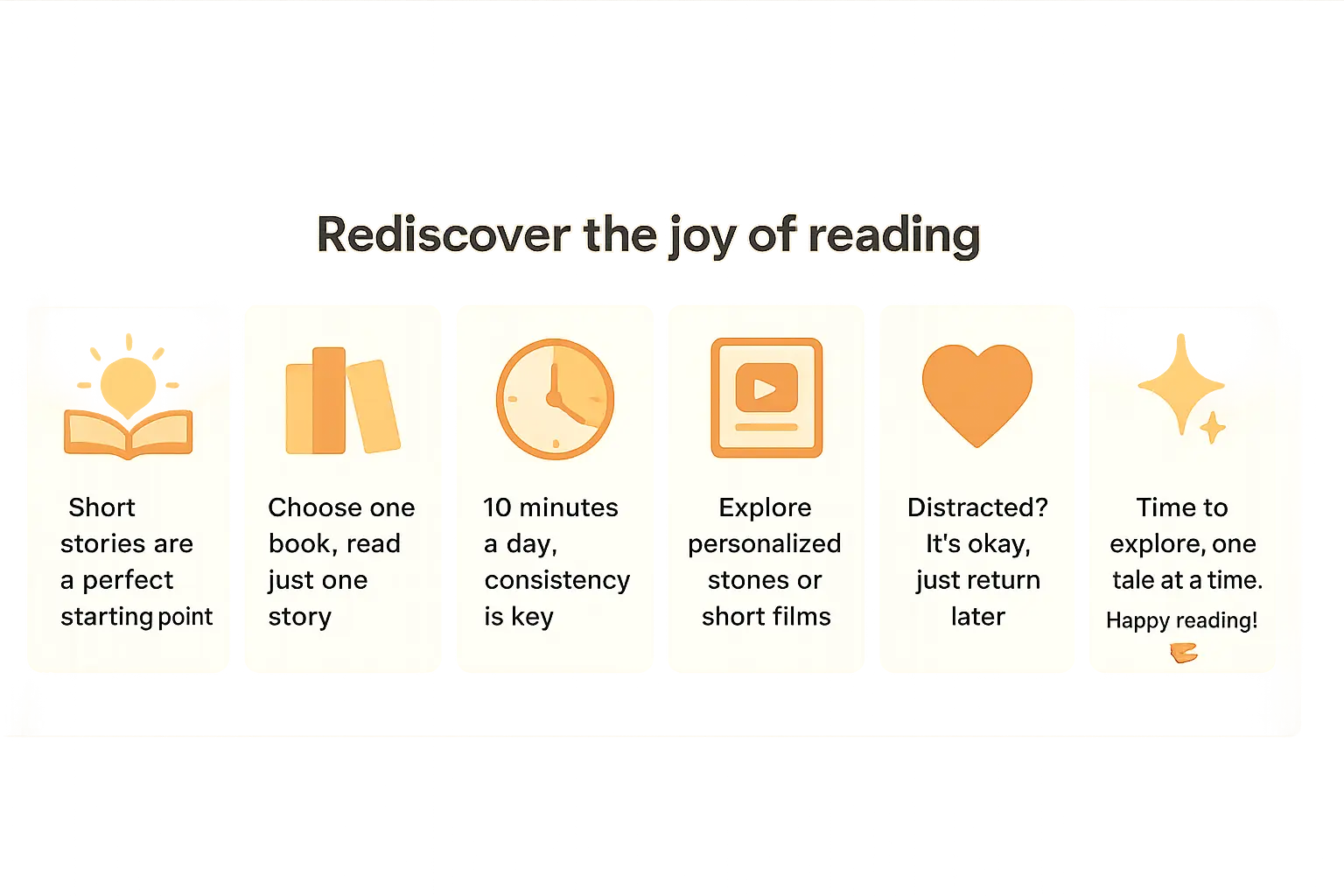
Feeling inspired? Short stories reignite your reading joy. Start small: pick one book, 10 minutes daily, or personalized tales. Consistency beats perfection. From Bradbury’s twists to AI adventures, stories wait for you. Time to dive in – one bite-sized tale at a time. 📚✨
FAQ
Just how short is Gen Z’s attention span? 🤔
Gen Z’s average attention span clocks in at around 8 seconds – yes, shorter than a goldfish! 🐠 This isn’t “laziness”; it’s science. Our brains are wired to react to constant digital stimulation, like endless scrolling or quick TikTok clips. Studies show we’re stuck in a loop of seeking instant dopamine hits, making it tough to focus on longer content. But hey, it’s not all bad! Short-form content (think bite-sized stories or micro-learning) actually plays to this superpower. 🧠💡
ADHD or just a short attention span? How to tell 🤷
Short attention isn’t automatically ADHD. 🚫 The key difference? Consistency. If your focus issues are lifelong, affect multiple areas (work, relationships, daily tasks), and include symptoms like impulsivity or hyperactivity, it might be ADHD. 💡 But if distractions come and go with your phone’s notification count? Probably just modern life! Wondering if you’re part of the 10% of teens with ADHD? A pro can help untangle that. 🧩
What’s the attention span for 13-year-olds? 🧒
At 13, focus lasts about 28-42 minutes – but here’s the twist: 50% of teens report feeling “addicted” to their devices. 📵 Distractions like social media slash attention spans by 27% during schoolwork. The sweet spot? Mix short tasks (20-min bursts) with zero-screen breaks. Pro tip: Apps like Forest or Pomodoro timers can turn “I can’t focus” into “I crushed this homework!” 🌳⏱️
What was attention span in 1980? 📆
Back in 1980, humans could focus for 12 seconds on average – double today’s 8.25 seconds! 📉 The nosedive started in the 2000s with smartphones. Fun fact: In 2004, we averaged 150 seconds of screen focus vs. 47 seconds now. 📱 The culprit? Tech overload and multitasking, which slash productivity by up to 40%. The good news? Short stories or 10-min learning chunks work way better for our rewired brains. 📖✨
Why does Gen Z age so fast? 🧓
Gen Z’s “fast-aging” isn’t physical – it’s mental. 🧠⚡ With 91% glued to phones, constant stress and screen time accelerate brain fatigue. Imagine your brain’s like a browser with 100 tabs open – no wonder we’re all crashing! 😅 This “cognitive overload” mimics aging symptoms (hello, brain fog!) in their 20s. The fix? Digital detoxes and micro-breaks. Your brain deserves to close some tabs! 🧘♂️
Why’s Gen Alpha’s attention span MIA? 🧒
Gen Alpha (born 2010-2025) is growing up in a world where 47% of attention dies within a minute of screen time. 📺 They’re digital natives on steroids – but their brains? Still developing. Overexposure to fast-paced content rewires their “focus muscle.” The upside? Early exposure to interactive stories or personalized learning (like Tellmestories’ AI tales) can turn this into a strength. 🎯 The trick? Balance TikTok with treasure hunts or 10-minute read-alouds. 📚
What’s the #1 ADHD red flag? 🚩
The biggest indicator? Hyperfocus… or its opposite. 🤯 Wait, what? If you can lose yourself in a video game for hours but forget your friend’s birthday? That’s ADHD’s Jekyll-and-Hyde. Other signs: losing keys daily, interrupting others, and feeling like your brain’s running a marathon at 3 a.m. 🏃♀️💨 Pro tip: The “quiet” type (inattentive ADHD) often flies under the radar – especially in girls. 🧠🔍
What kills attention span? 🔍
Short answer: Modern life. 📵 Here’s the cheat sheet:
- Multitasking madness – Switching apps? Costs 23 mins of focus per interruption! 🕰️
- Stress/sleep issues – Burnout and blue light = focus’s worst enemies 😴
- Screen overload – Scrolling 4+ hours/day shrinks attention worse than a wool sweater in hot water 🧺
- ADHD – 10% of teens battle this. Not a “phase” – a neurotype! 🧬
The antidote? Ditch the myth of “doing it all” and embrace bite-sized wins. 🎯
What’s “quiet” ADHD? 🤫
Ever heard of the “daydreamer type”? That’s ADHD’s inattentive presentation. 🌫️ Unlike hyperactive types, these folks seem “zoned out” – staring blankly, missing deadlines, or misplacing stuff daily. 📉 It’s sneaky because they’re not disruptive, so 75% go undiagnosed. 🙊 Key signs:
- Slow processing speed (think “buffering…” for tasks)
- Overwhelm from minor decisions (paper or digital notebook? 📓)
- Internal restlessness (legs still, but brain’s a tornado 🌪️)
If this sounds familiar, talk to a specialist. No shame in needing a focus reboot! 🔄