L’essentiel à retenir : Les histoires morales pour enfants ne se contentent pas de transmettre des valeurs : elles boostent l’imagination, renforcent l’intelligence émotionnelle et améliorent le vocabulaire. Ces récits courts deviennent des outils concrets pour développer l’empathie et la résolution de problèmes. Un parent sur deux constate que ses enfants comprennent mieux les conséquences de leurs actes après ces histoires.
Ever felt like your child’s attention slips away the moment you try to teach values? 😩 Moral stories for kids turn those tricky lessons into adventures they’ll beg to hear again. Imagine transforming The Boy Who Cried Wolf into a chat about trust or letting them star in tales where they choose courage over fear. We’ve got actionable tips, science-backed benefits like boosted emotional intelligence, and a treasure trove of narratives—from classic fables to personalized stories where honesty, kindness, and grit stick like glitter. No lectures required. Ready to make bedtime a brain-boosting, empathy-building superpower? 🧠✨
What are moral stories for kids, really?
A simple way to teach big lessons
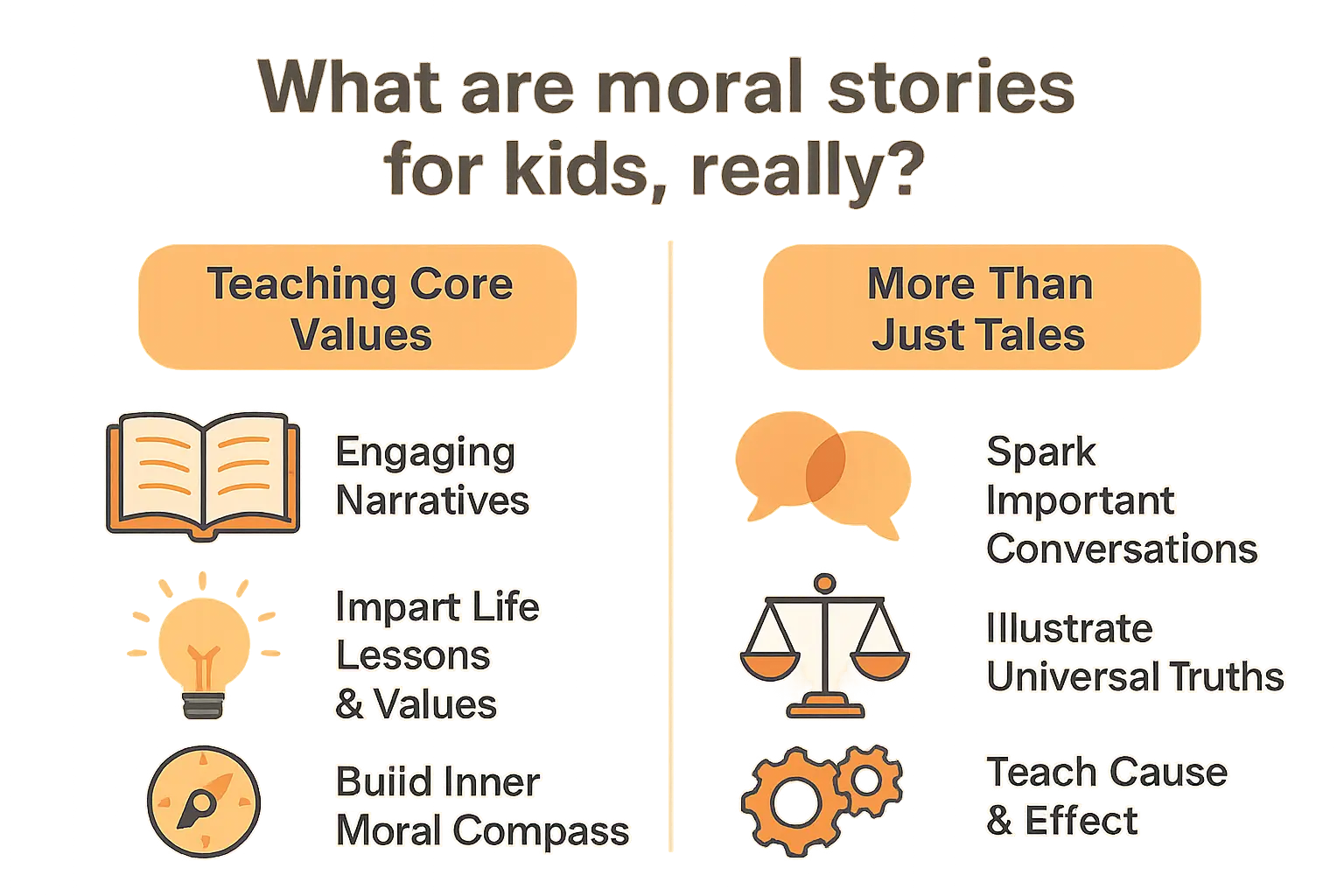
Ever wondered how to explain honesty or kindness to your little one without sounding preachy? Moral stories for kids are your secret weapon. 🌟 They’re short, engaging tales where characters face choices—good or bad—and experience consequences. Think of them as mini life lessons wrapped in adventures! The goal isn’t to lecture but to show how actions shape outcomes, helping kids build their internal “moral compass.”
More than just a bedtime story
Moral stories do way more than help kids drift off. 📚 They open doors to big conversations about right and wrong. By using ethical dilemmas (like sharing a toy or telling the truth), these tales make complex ideas relatable. Kids see how characters’ decisions ripple into rewards or setbacks—teaching cause-and-effect naturally. It’s not just about morals; it’s about shaping their worldview and sparking curiosity about values like fairness or courage.
Want to dive deeper? Here’s how these stories work magic:
- Turn abstract ideas into real-life scenarios (e.g., “Why lying hurts” in The Boy Who Cried Wolf).
- Use relatable characters to model empathy or resilience (like a brave mouse teaching kindness in The Lion and the Mouse).
- Highlight universal truths (e.g., “Teamwork wins” in The Ant and the Grasshopper).
Ready to turn storytime into a life lesson? Let’s explore how these tales make learning stick. 🚀
The amazing benefits of moral stories for child development
Boosting brainpower and creativity
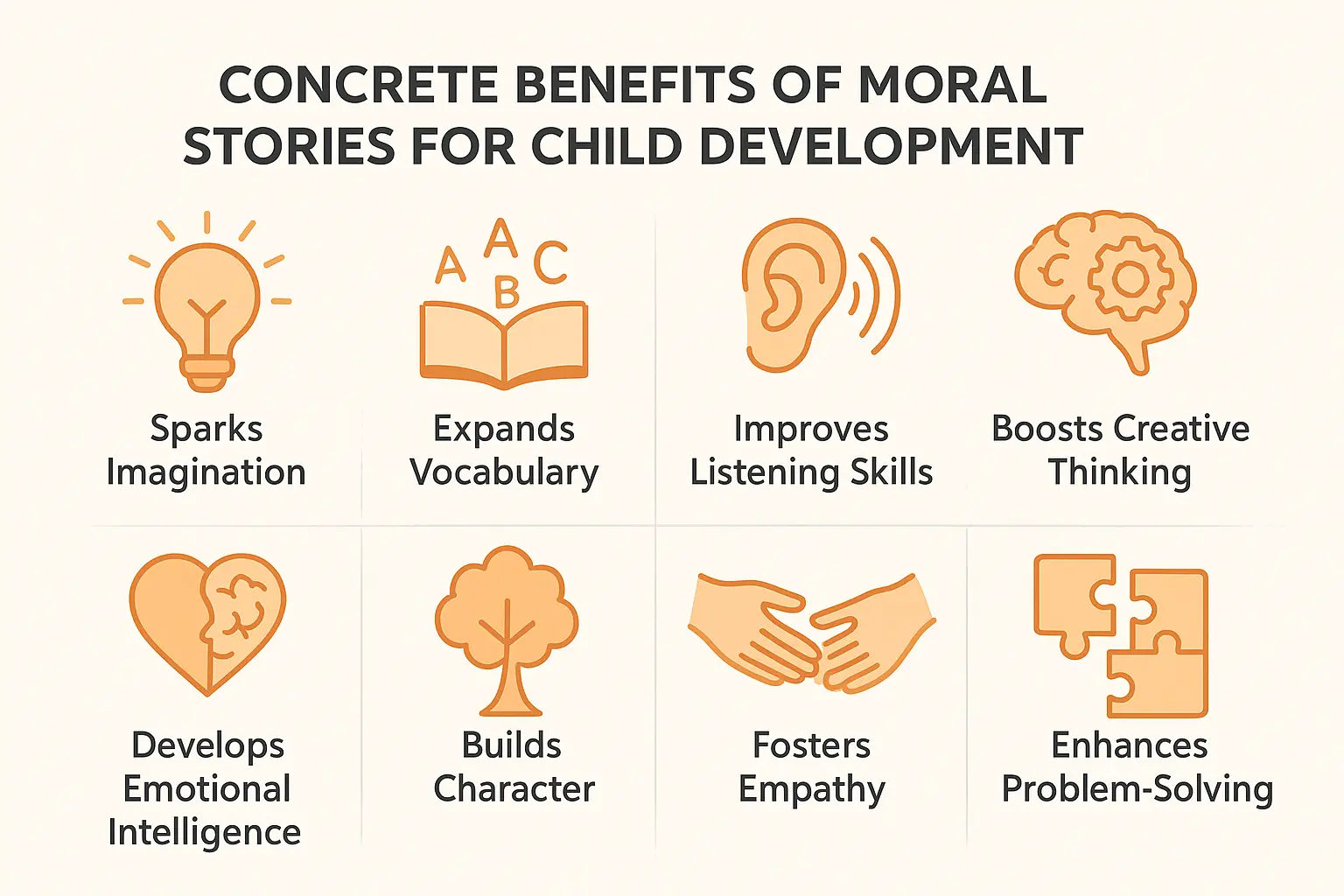
Want your child’s mind to shine? 🌟 Moral stories activate brain regions tied to creativity and problem-solving. When kids hear tales, their brains visualize scenes, boosting imagination and vocabulary. Research shows listening to stories enhances neural connections, making learning fun. For example, vivid descriptions of a forest or spaceship spark spatial reasoning skills, which later support math and science!
Developing emotional and social skills
Kids learn empathy by stepping into characters’ shoes! 🧠❤️ Stories teach them to recognize emotions, practice kindness, and handle conflicts. Personalized tales reinforce values like honesty and teamwork. Here’s why these stories matter:
- Builds character: Honesty and perseverance become second nature. Take The Boy Who Cried Wolf—a single lie shows trust is fragile.
- Enhances vocabulary: New words stick in story-driven contexts. A tale with “courage” makes abstract terms relatable through stories.
- Improves listening skills: Focus grows with every chapter. Kids learn to follow plots, sharpening concentration.
- Sparks imagination: Kids travel to magical worlds, solving riddles or helping heroes, boosting creative thinking.
- Develops emotional intelligence: Identifying emotions becomes intuitive. When a character feels sad, kids learn to manage their own feelings.
Why wait? 🚀 Moral stories aren’t just tales—they’re tools for life. Whether a fable or adventure, each shapes how kids understand their world. Ready to transform storytime into a superpower? With custom tales, your child becomes the hero of stories teaching resilience and cultural awareness—no app downloads needed! 📚✨
How to make story time a magical and meaningful moment ✨
Be more than a reader, be a storyteller
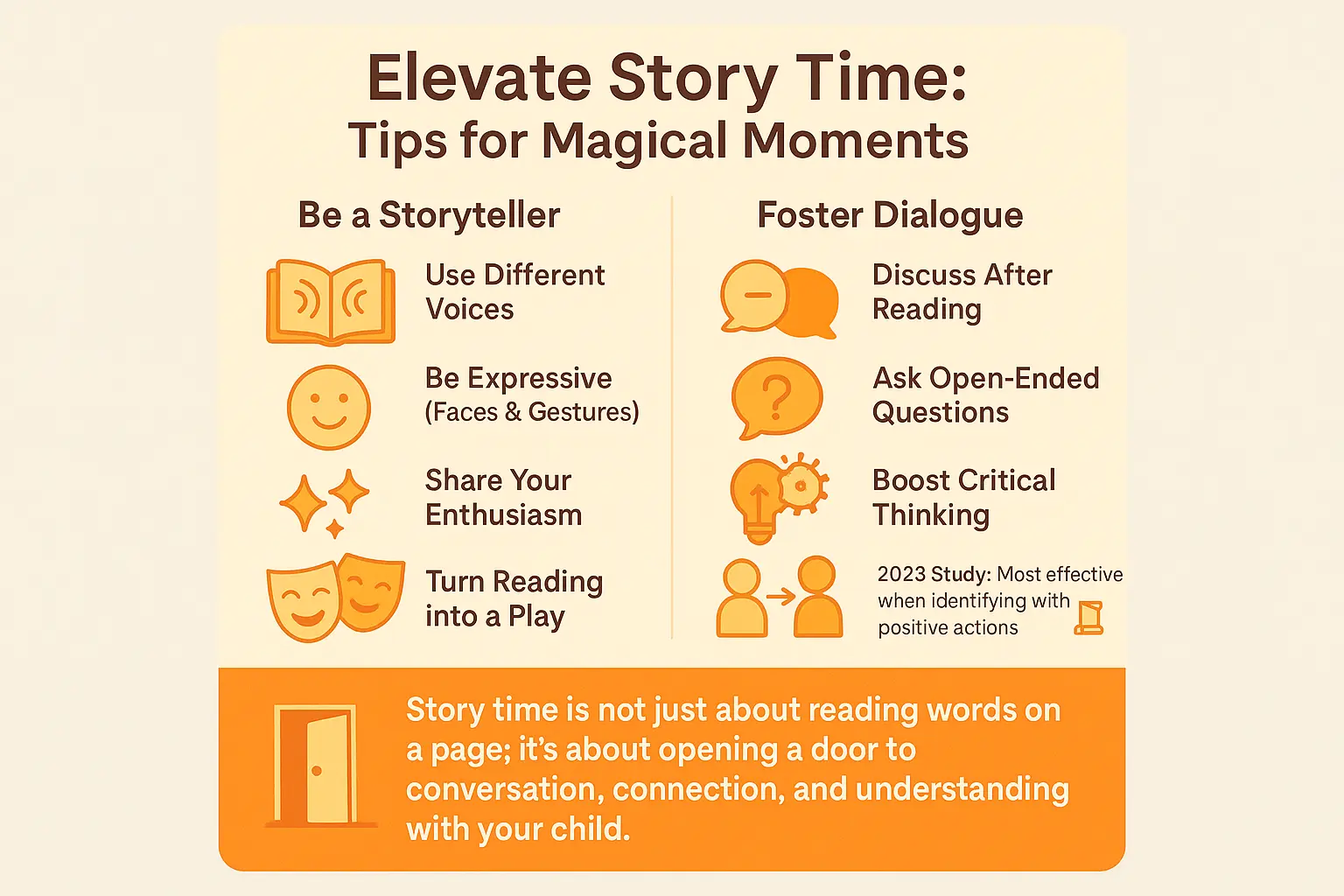
Story time isn’t just about reading words—it’s about creating an experience. Use different voices for characters to make them unforgettable. A squeaky voice for a mouse or a booming tone for a lion? Kids will love it! 🐾
Be expressive with your face and hands. Raise your eyebrows for suspense, gasp at surprises, and use your arms to mimic actions. Your enthusiasm acts as a mirror—the more animated you are, the more engaged they’ll be. 🎭
Try these techniques:
- Pause dramatically before a big plot twist
- Whisper secrets like it’s a real-life adventure
- Invite kids to mimic character gestures
Remember: your energy sets the stage for their imagination. 🌟
Make it an interactive dialogue
Don’t stop at “The End.” Turn story time into a conversation. Ask open-ended questions like:
- “What would you have done if you were the hero?”
- “Why do you think the character made that choice?”
This sparks critical thinking and helps them connect with the story. 🤔
“Story time is not just about reading words on a page; it’s about opening a door to conversation, connection, and understanding with your child.”
Go deeper by exploring moral dilemmas. For example:
- “Was it right for the fox to trick the rabbit? Why?”
- “How would you feel if you were the character who got hurt?”
These discussions help kids analyze choices and consequences. 🌱
Need science-backed proof? Research shows children learn best when they identify with protagonists’ positive actions. By asking “What would you do?” questions, you turn stories into life lessons. 💡
Wrap up by summarizing the moral together. Let them explain the lesson in their own words—this reinforces their understanding and memory. 🧠