How to explain potty training to a toddler effectively
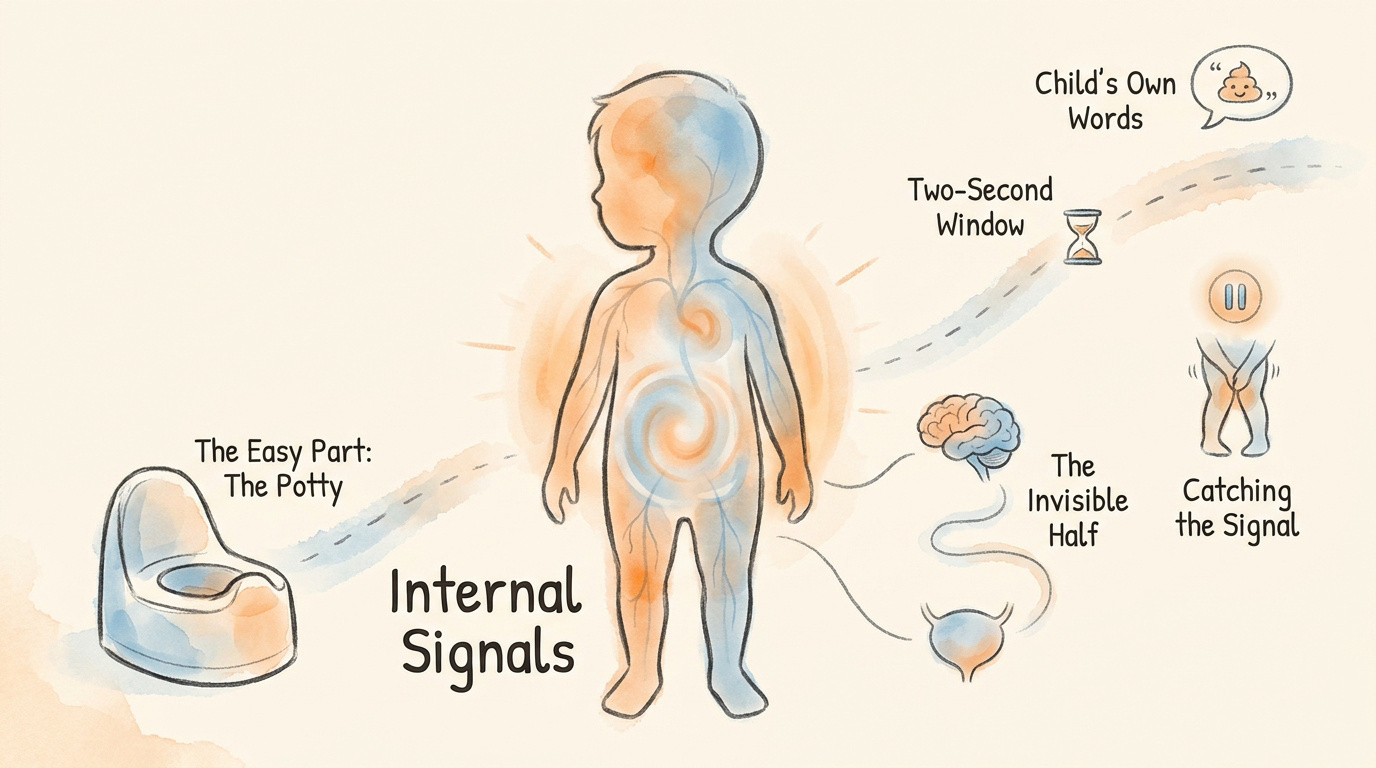
Explaining the potty is straightforward because you can point to it, but you cannot point to the invisible physical urge that precedes it. Success depends on bridging this gap by naming the internal signal the very second it happens, rather than relying on calm lectures that a toddler cannot apply in the heat of the moment.
Many parents find themselves searching for answers after weeks of explaining with no results. This guide helps you identify true readiness signs beyond mere age, addresses why children often hide behind curtains for privacy, and shows how a personalized story where your child is the hero can help them finally master their own body signals tonight.
- The Invisible Half of Potty Training Success
- Readiness Signs That Actually Matter
- Why Does Your Child Hide to Go?
- Building Ownership Through Personalized Storytelling
The Invisible Half of Potty Training Success
Success hinges on identifying internal body signals rather than age. Readiness involves staying dry for hour-long stretches and recognizing the physical urge. Our personalized stories help children narrate this sequence, bridging the gap between explanation and action.
The last sentence about bridging the gap leads directly into why verbal explanations alone often fail to trigger awareness.
Why Explaining the Potty Is the Easy Part
A potty chair is a tangible object you can point to. However, the internal urge to go remains entirely abstract. The chair is merely a tool, not the actual skill itself.
Long lectures usually fail because toddlers live strictly in the now. Calm discussions held hours later do not help during the actual urge. Real-time awareness is our true goal here.
Training requires mastering the invisible brain-body connection. This involves active sensing of physical sensations. It goes far beyond just a cognitive understanding of basic bathroom rules or instructions.
Name the signal within two seconds of it happening to create an immediate mental link. Let the child choose the vocabulary for the sensation.
Catching the Body Signal in Real Time
You must name the sensation exactly as it happens within a two-second window. This creates an immediate mental link for your child. It transforms a vague feeling into a concrete event.
- Sudden stillness or freezing in place.
- Clutching at clothes or diaper.
- Retreating to a corner or under a table.
- Specific facial expressions or straining.
Empower your child by letting them choose their own vocabulary. Let them name the feeling themselves. Using their own words increases their sense of control and recognition.
Practice naming the signal consistently whenever you spot these signs. Avoid pressure during these moments. Just focus on building the child’s internal awareness through gentle observation.
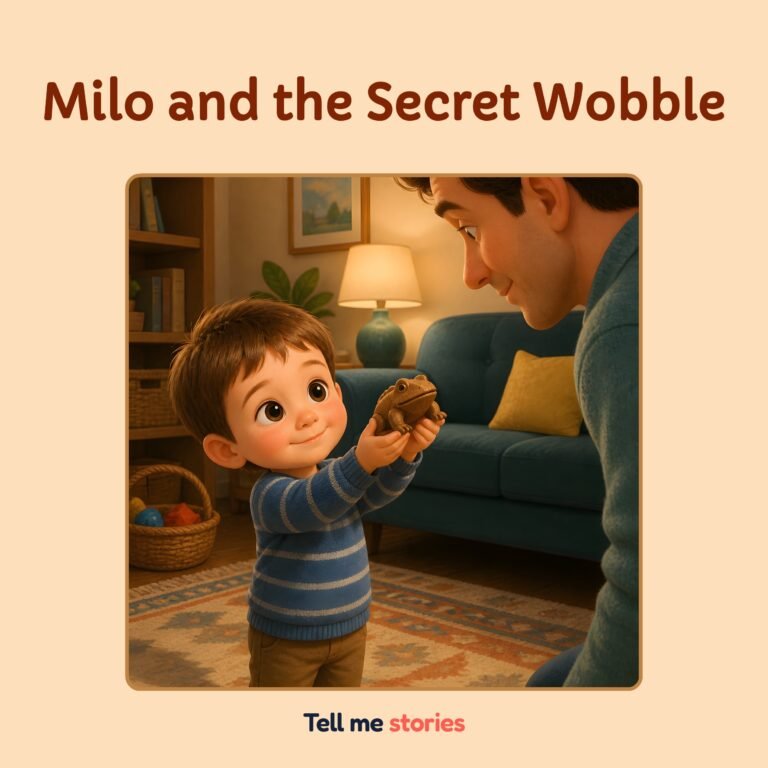
We wrote a book where your child is the hero. It exists in girl and boy versions. Explicitly try the example on this page to see how they narrate the sequence themselves.
Readiness Signs That Actually Matter
Moving from internal signals to outward behavior, we need to look for concrete physical indicators that show a child is truly prepared.
Physical Indicators vs Age Based Pressure
Focus on bladder capacity. Look for hour-long dry stretches. This matters more than chronological age.
Watch motor skills. The child should pull down pants alone. Independence in dressing signals real readiness.
Forget arbitrary milestones. Every child develops differently. Pressure based on age usually sparks unnecessary power struggles.
Staying dry for 2 hours and pulling down pants are the real signs to watch for.
Managing the Early Interest Phase at 18 Months
Handle curiosity with care. Toddlers often sit on the potty without understanding why. Use this for low-pressure exploration.
| Phase | Behavior | Parent’s Role |
|---|---|---|
| Exploration | Playing with potty. | Keep it fun. |
| Recognition | Naming the urge. | Link feelings to words. |
| Mastery | Independent use. | Let them lead. |
Build positive associations now. Keep the environment relaxed. This prevents avoidance when the real training begins later.
We wrote this book to help: it is our product, where your child is the hero. Toggle between versions in the example below and download the PDF. Try that example to see your child narrate their success tonight.
Why Does Your Child Hide to Go?
While physical readiness is one part of the puzzle, understanding emotional behaviors like hiding is equally vital for progress.
Privacy Seeking Behind Curtains and Tables
Reframe the act of hiding. It is not fear or shame. It is often a request for personal space during a vulnerable moment.
Hiding is a request for privacy and intimacy, not a sign of fear.
Offer alternatives to the curtain. Suggest using the bathroom with the door cracked. Create a secluded corner for the potty chair.
Stop the lectures during hiding. Respect their need for privacy. This builds trust and reduces the child’s need to hide away.
Constructive Responses to Post Event Announcements
React neutrally to accidents. When they tell you they went, stay calm. The goal is to keep communication open and honest.
Focus on the cleanup process. Involve the child in a helpful way. This teaches them the sequence without using any punishment.
Look forward rather than backward. Mention what to do next time. “Next time we will try the potty” is better than “Why did you do that?”
Our book turns this into a family adventure. The child becomes the hero, using their name and their own words for signals. Try the example on this page and download the PDF.
Building Ownership Through Personalized Storytelling
Beyond managing accidents, we can empower children by letting them take the lead in their own bathroom narrative.
Letting the Child Narrate the Sequence
Encourage the child to explain the steps. Let them tell you how to use the potty. This builds cognitive links and confidence.
Self-narration reinforces the routine. It helps the child internalize the habits. They become the director of their own physical progress.
- Feeling the urge
- Going to the bathroom
- Undressing
- Sitting down
- Wiping
- Flushing
- Washing hands
Interactive Story Tools for Your Family
We created a book where your child is the hero. It helps them visualize the process. Seeing themselves in the story builds excitement. It makes the journey feel personal.
Our tool features both girl and boy versions. You can toggle between them easily. This ensures the story reflects your child’s own experience.
Try the real example on this page. Download the PDF variant today. See how your child reacts to their own story.
Mastering potty training requires bridging the gap between the visible chair and invisible body signals. By naming sensations in real-time and using personalized storytelling, you empower your child to lead their own journey. Trust their unique pace and turn every small step into a shared family victory.
FAQ
How can I explain the potty to my toddler when they don’t seem to get it?
Explaining the potty is the easy half of the battle because you can point to the chair, but you cannot point to the internal feeling. A clear explanation covers the tool, but leaves your child to discover the invisible “body signal” on their own. Instead of long lectures at calm times, use one very short sentence at the exact moment the urge is happening.
Hearing the whole explanation repeated is often the least useful thing for a toddler. What actually shifts the needle is naming the body signal out loud in the two seconds it is occurring, letting your child give that feeling their own word, and then using that specific word yourself. Let them narrate the sequence back to you rather than listening to you talk about it again.
What does potty training readiness actually look like at 18 months?
Readiness is less about a specific age and more about physical signals. Look for hour-long dry stretches and an improved awareness of their own body, such as sudden stillness or clutching at clothes. An 18-month-old may be interested in the potty as an object without yet connecting it to the internal signal; this is a great time for low-pressure exploration without expecting immediate results.
True readiness means the child is starting to recognize the urge before or as it happens, rather than just noticing the discomfort of a wet diaper. If they can follow simple instructions and show interest in how adults use the bathroom, they are likely ready to begin the journey at their own pace.
Why does my child hide behind the curtain or under the table to go?
When a child hides to go, it is almost always a request for privacy rather than a sign of fear or shame. Going to the bathroom is a vulnerable moment, and your child is simply seeking a personal space to handle it. Reframe this behavior as a developmental milestone in self-awareness.
The best response is to offer a door or a secluded corner for the potty rather than giving a lecture. By respecting their need for a private space, you build trust and reduce their need to hide away in secret. This simple shift acknowledges their growing need for autonomy.
What should I say when my child announces an accident after it happened?
If your child announces they have gone from another room, stay calm and neutral. This announcement is actually a positive sign of awareness. There is no need for a lecture or an apology; simply focus on what happens next, such as “Okay, let’s go get cleaned up now.”
Involve the child in the cleanup process in a helpful, non-punitive way to teach them the natural sequence of events. By saying nothing about the accident beyond the immediate next steps, you keep communication open and keep the focus on future success rather than past mistakes.
How can a personalized story help us with potty training tonight?
A personalized story turns the potty routine into an adventure where your child is the hero. By using their name, their age, and describing their own bathroom, the process feels familiar and safe. It allows them to see themselves successfully navigating the “invisible” part of training.
When the story uses the word your child chose for their body signal and lets them be the one who tells the grown-ups what happens next, it builds immense ownership. This shifts the dynamic from you managing them to them directing their own physical progress, turning the journey into a positive family experience.
apprentissage-proprete
Milo had a secret place behind the heavy living room curtain.
Whenever that strange feeling started inside, Milo slipped away, all by himself. Can you spot the tiny yellow star sticker hidden right there on the fabric?
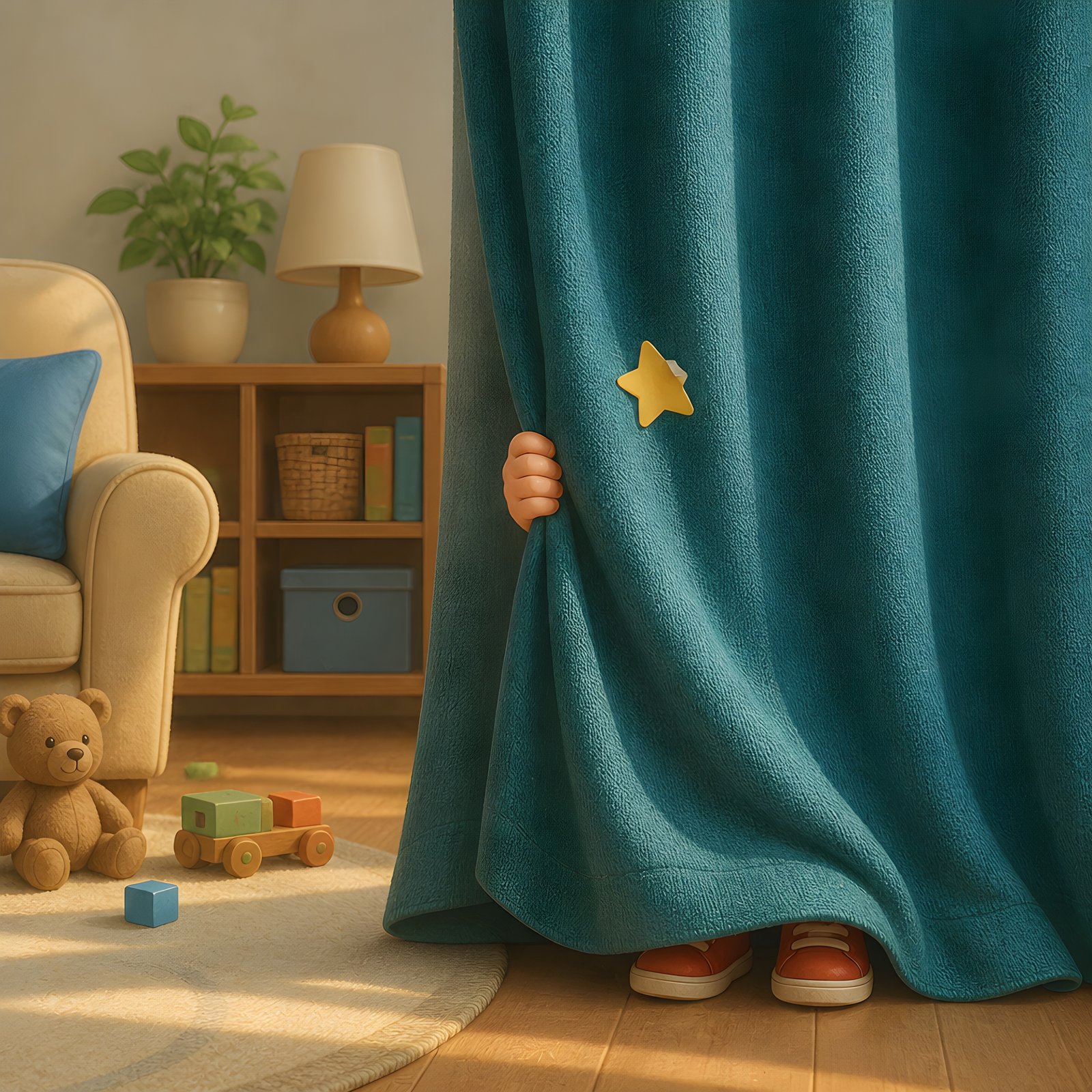
Outside the curtain, the grownups talked and talked about the potty. Every single explanation just slid straight off Milo’s ears.
Milo has a secret. He stayed tucked safely under the table with the long cloth.

Suddenly, plop! A small wooden frog dropped right onto the rug beside him. It was stiff, silent, and couldn’t feel a single thing.
Milo poked its wooden leg. Can you pretend to be stiff like the little wooden frog?
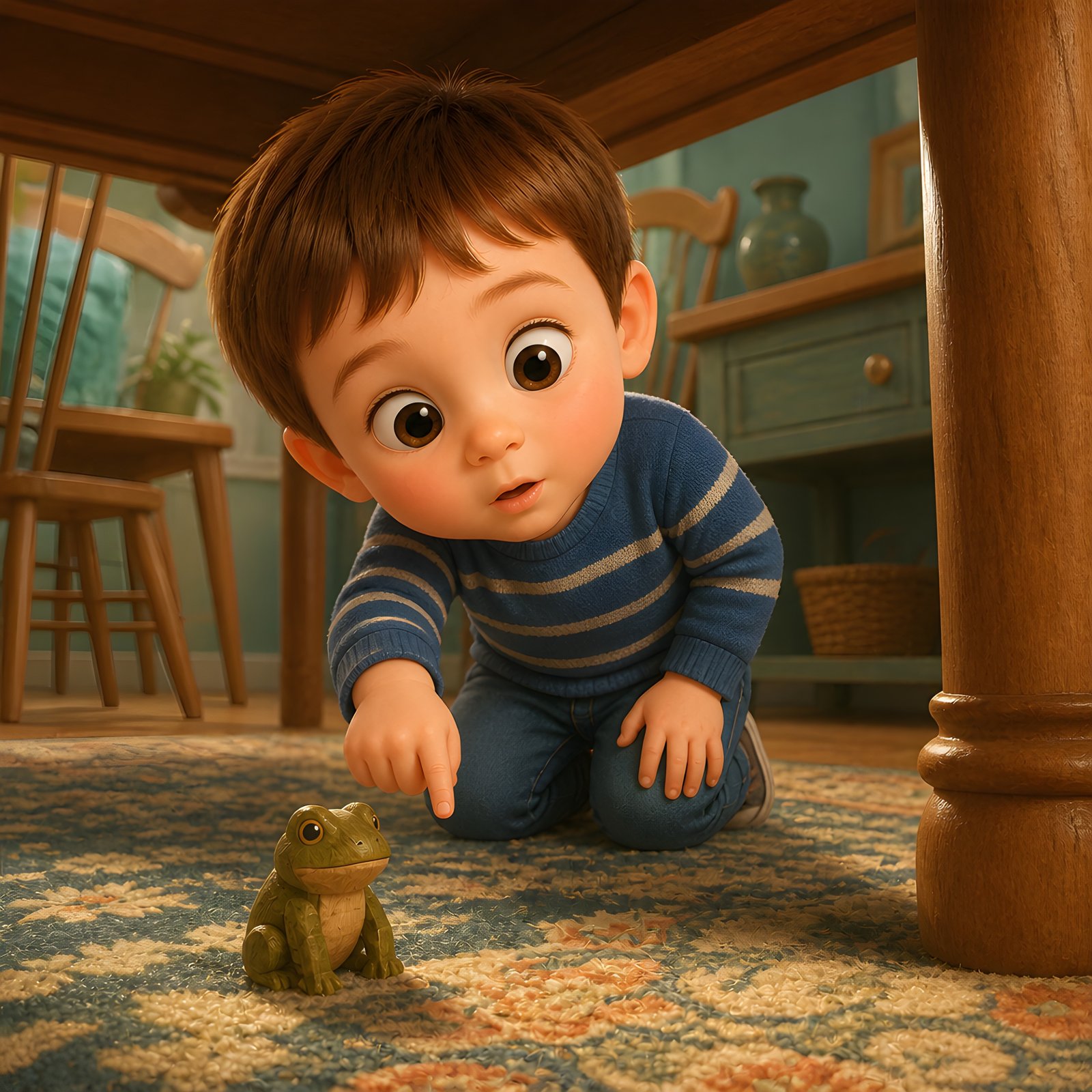
The little frog had no tummy noises at all. It didn’t know what was coming next.
Milo realized he would have to explain the invisible feeling to his new wooden friend.
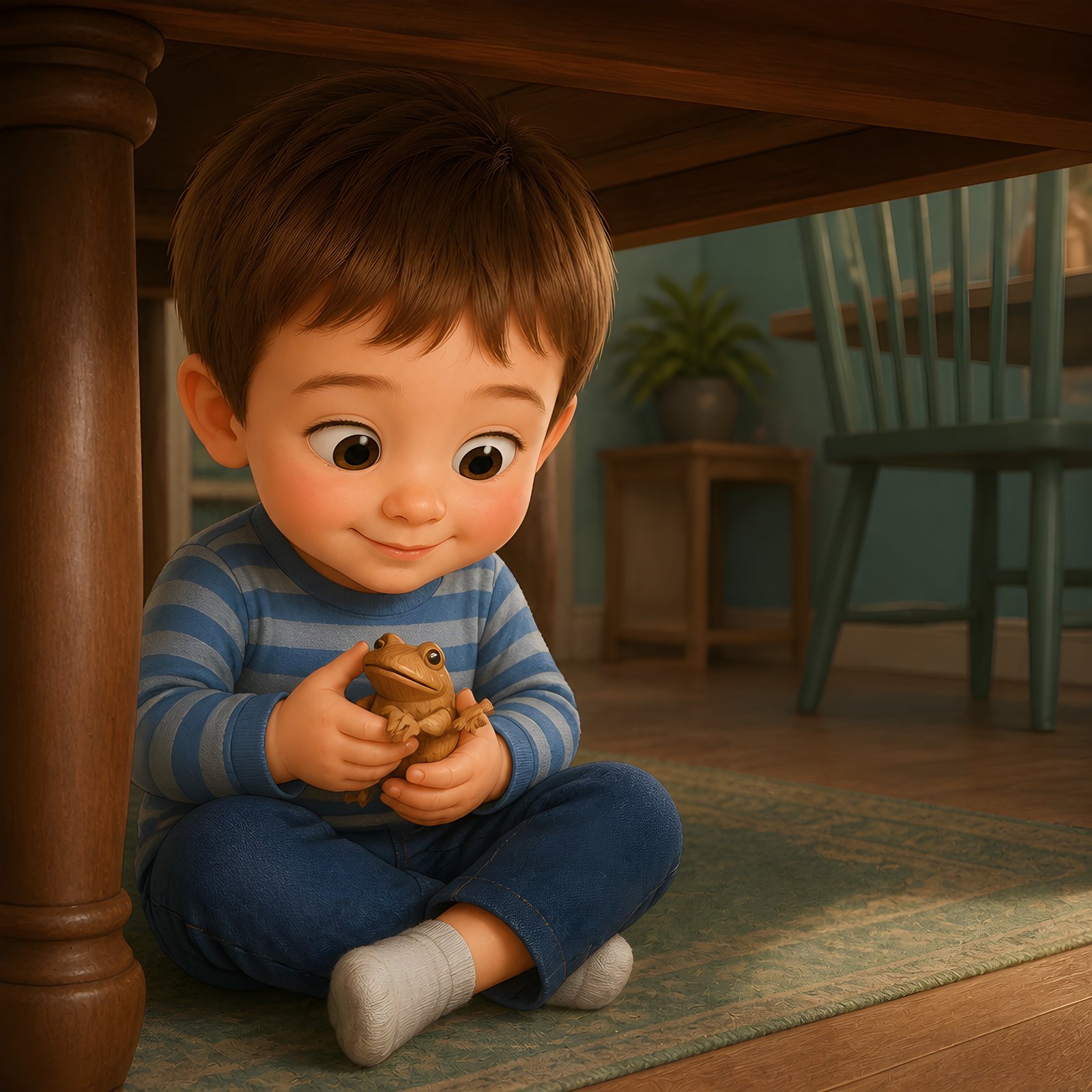
Milo leaned close to the wooden ear. “It is called the wobble,” he whispered proudly, inventing the words right on the spot.
Milo has a secret, the wobble arrives.
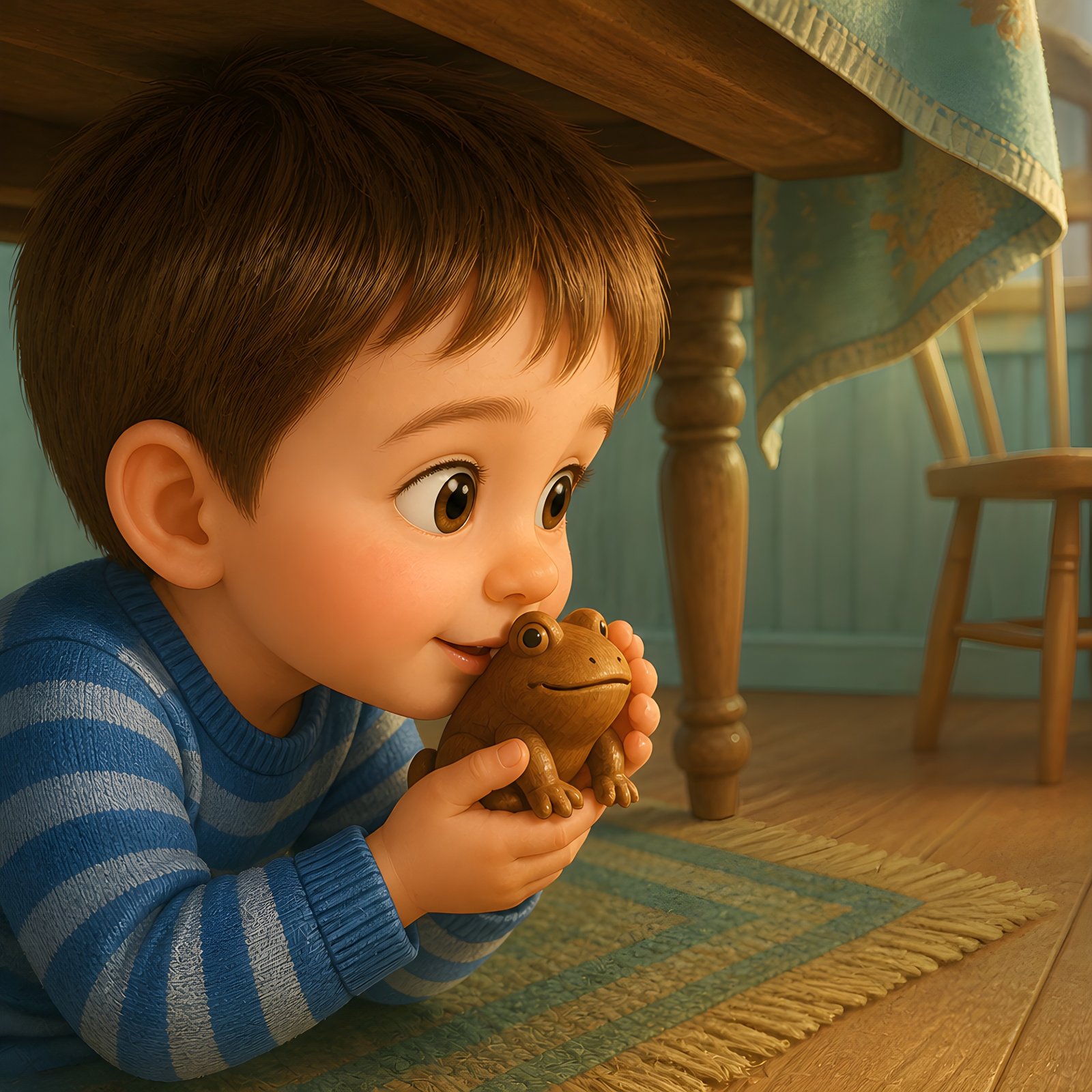
Behind the big sofa, it was even quieter. Milo whispered the new words again and again to his wooden companion.
His heart beat a tiny bit fast—what if the grownups found his hiding spot? But the frog didn’t mind at all.
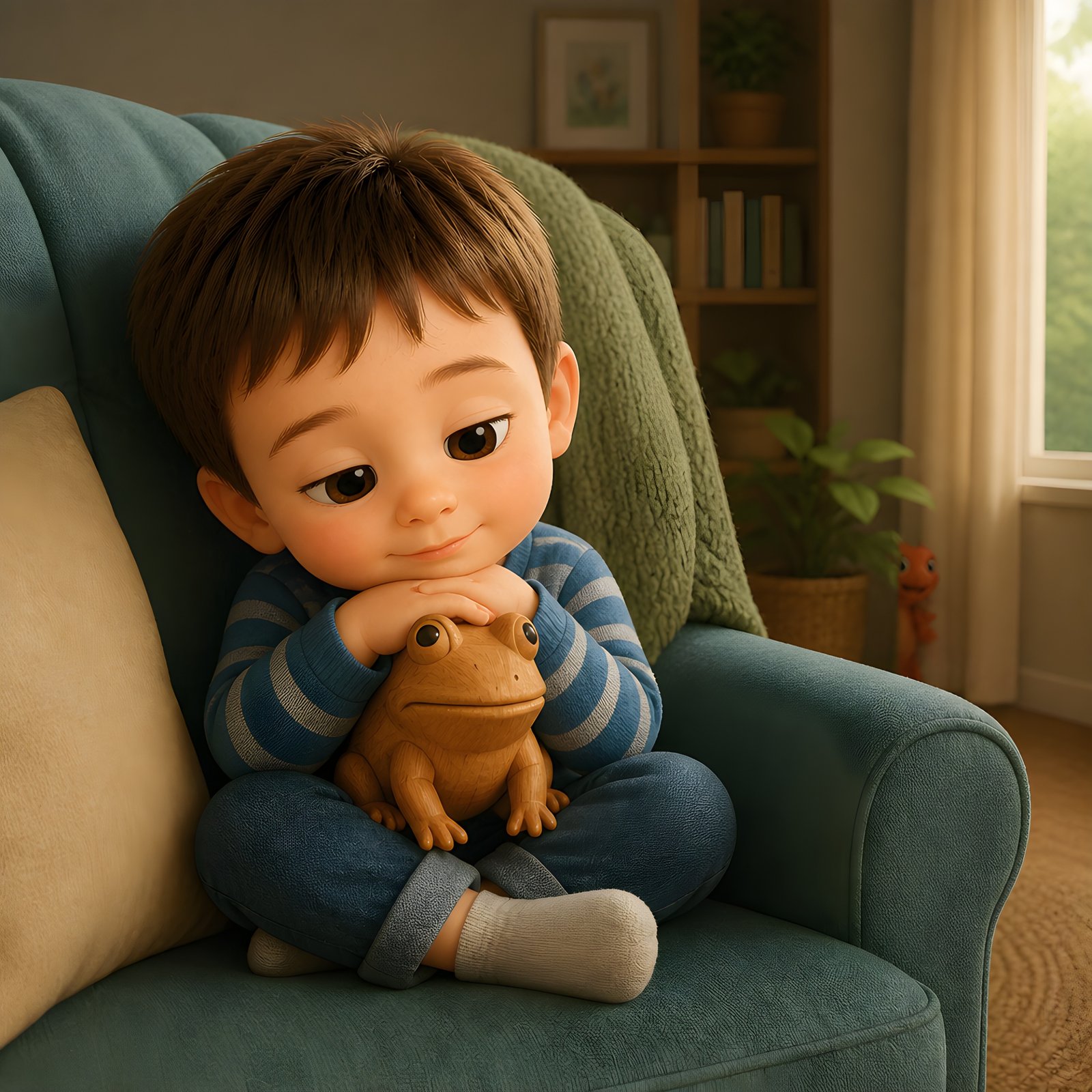
Footsteps creaked on the floorboards. An adult walked past, asking the usual question for the twentieth time.
Milo pressed his lips together and held his breath. They stayed wonderfully quiet together.
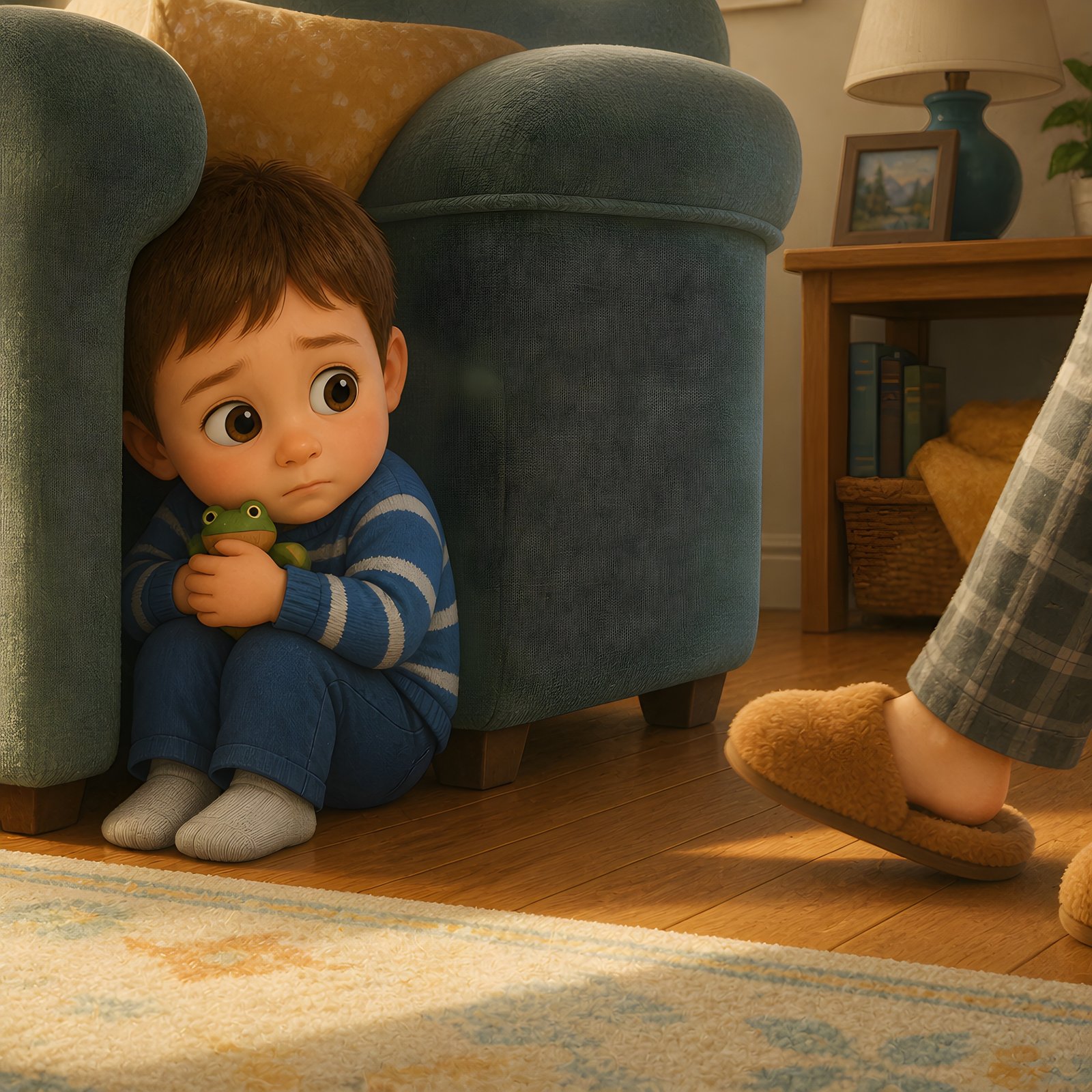
Then Milo added the second word. “And right after that, there is the two-second warning,” he explained seriously.
“When your tummy goes rumble-drum like a tiny drum.”
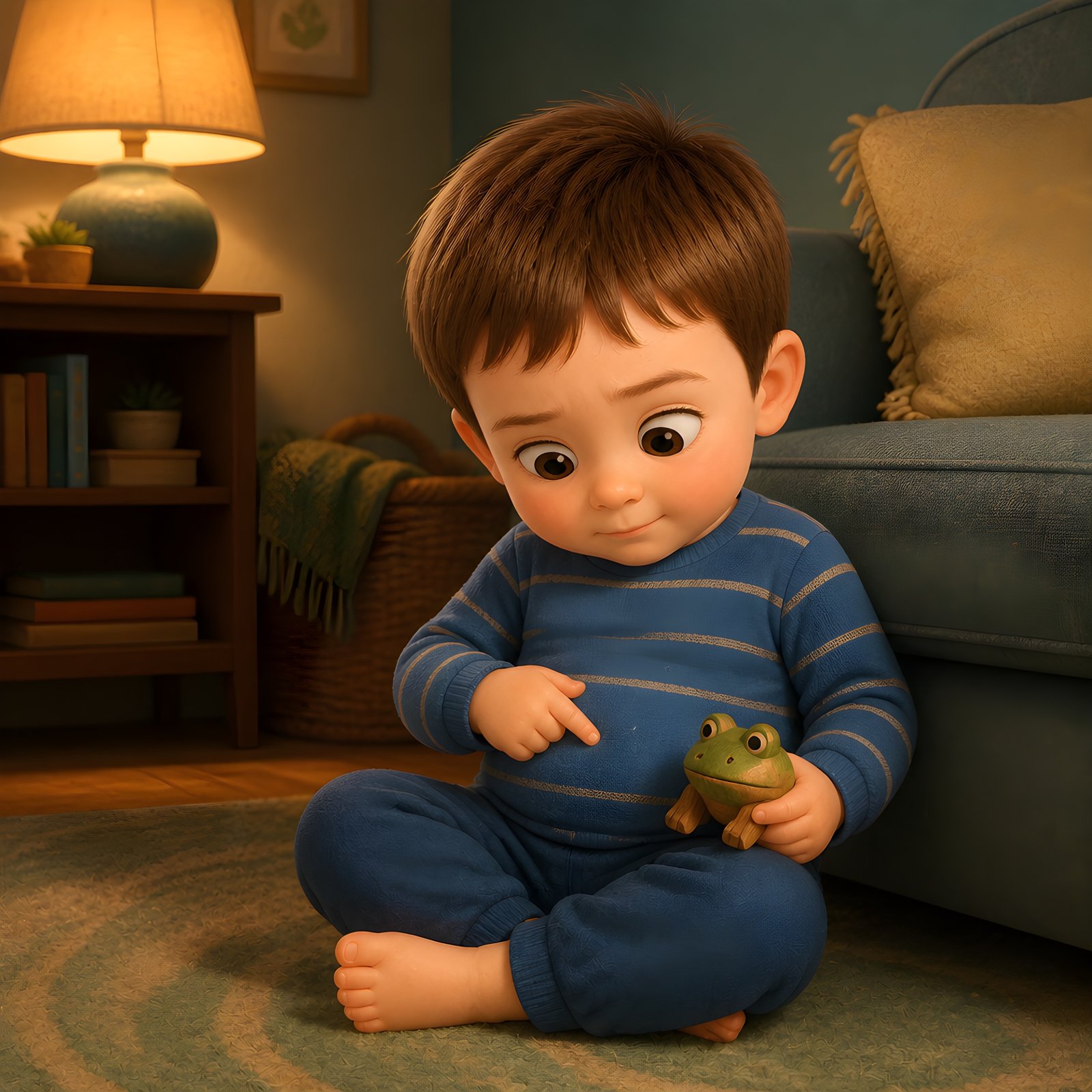
Milo didn’t want to wait to be asked anymore. He stood up tall on his own two feet.
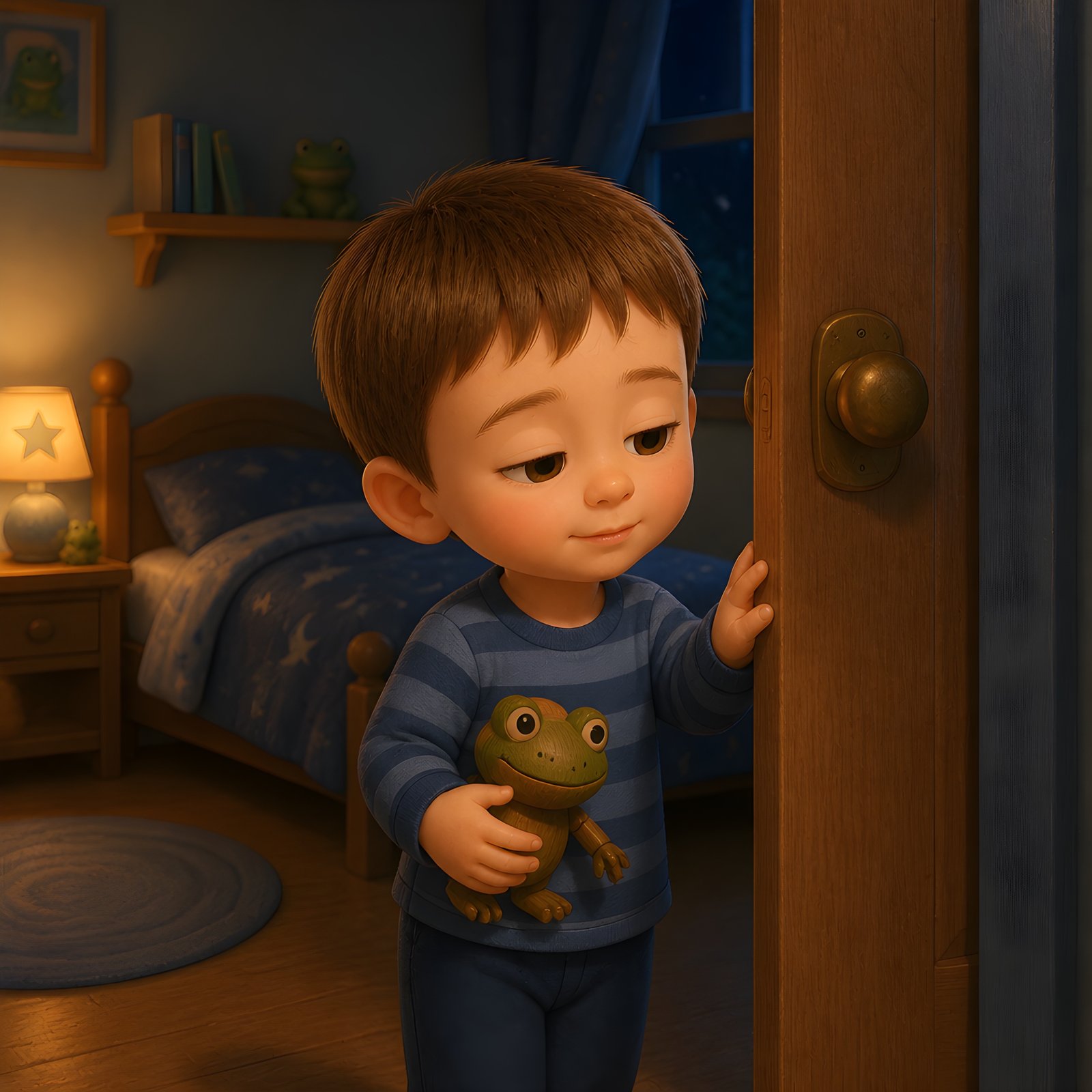
With a firm little nod, he reached out and gently clicked his own bedroom door shut.
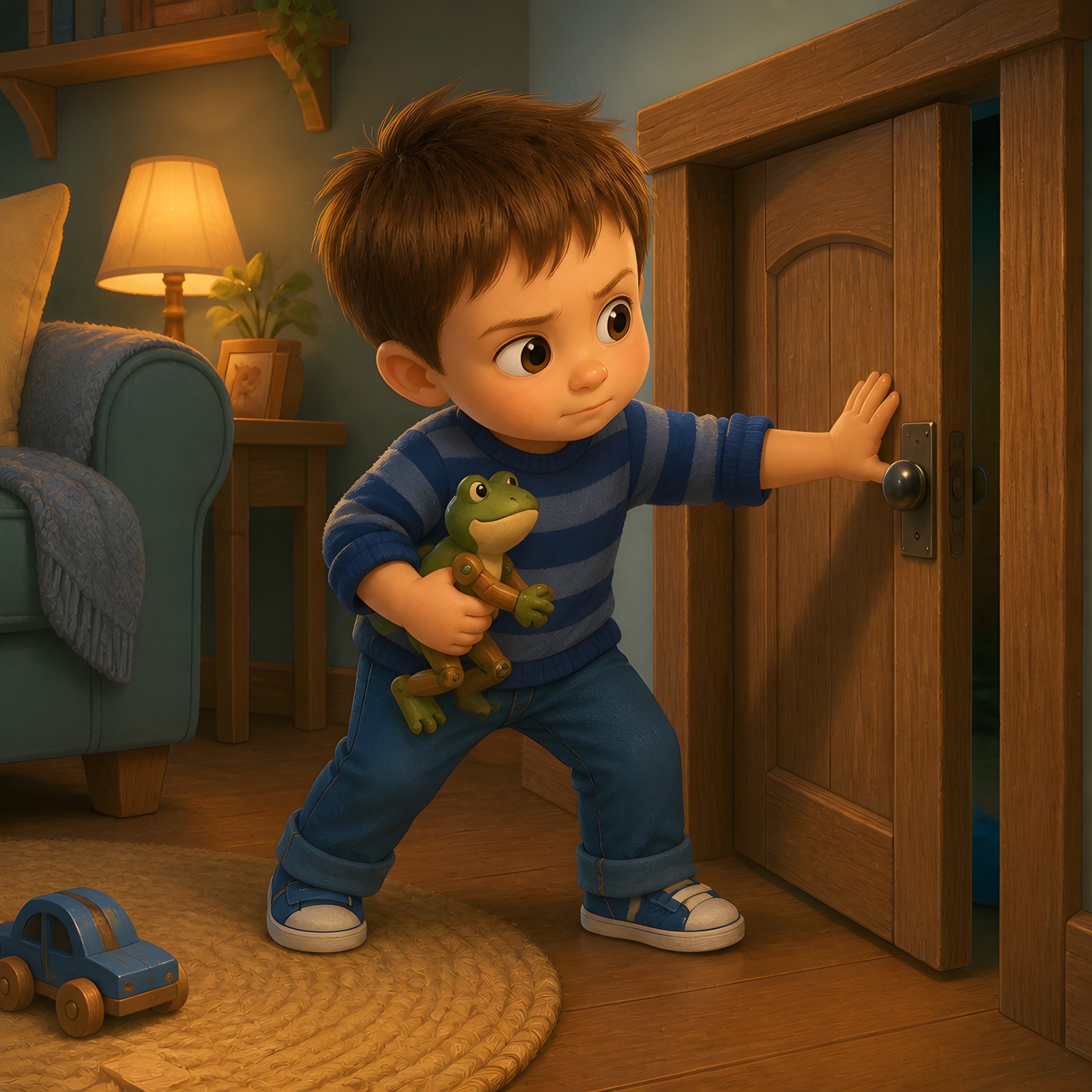
Milo walked right up to the grown-ups, holding his wooden frog high. “The wobble came!” he announced clearly.
Can you make the little drum sound with Milo? Rum-pum!
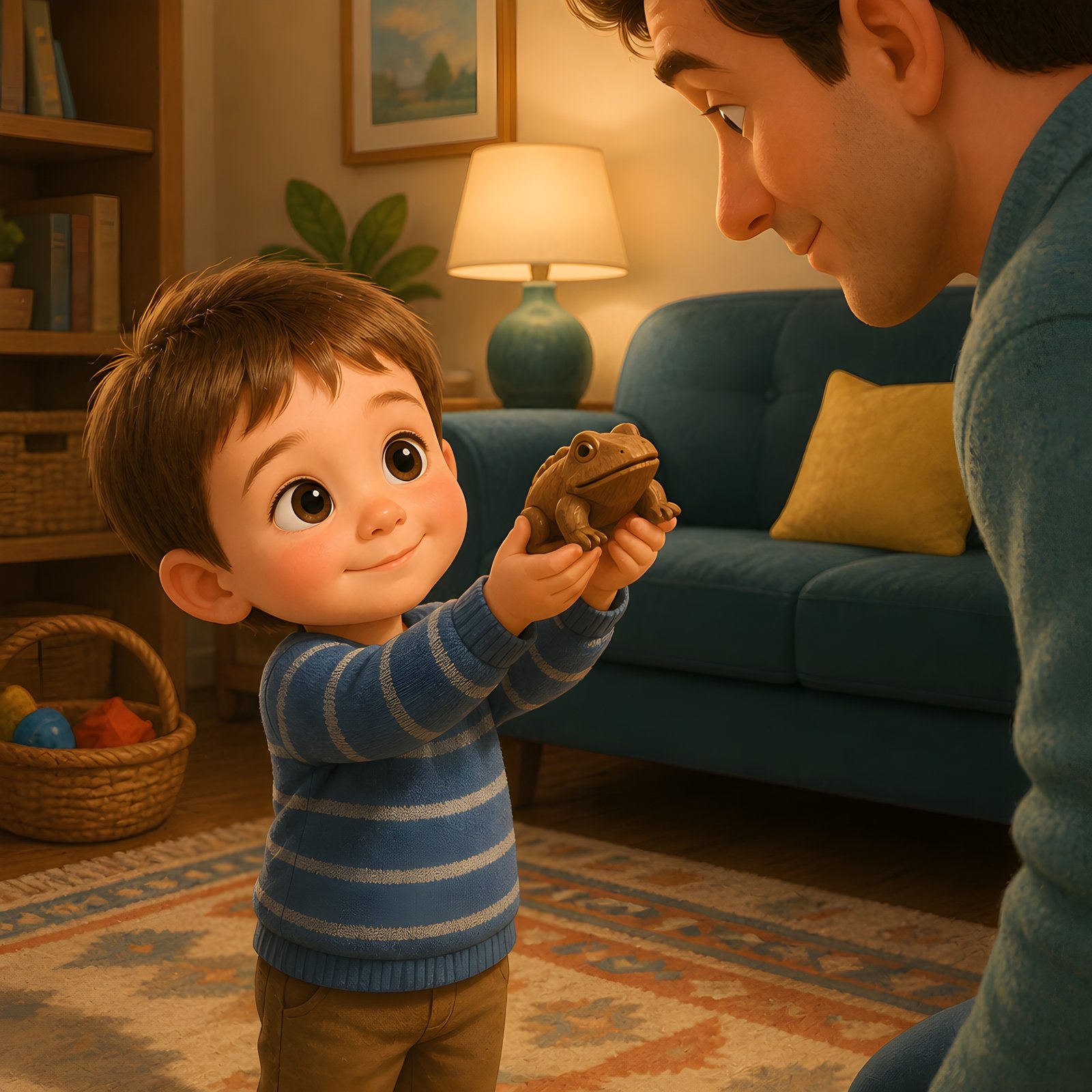
For the very first time, the growups understood every single word. The wooden frog had its special word for the feeling too.
Milo told his secret, the wobble was gone.
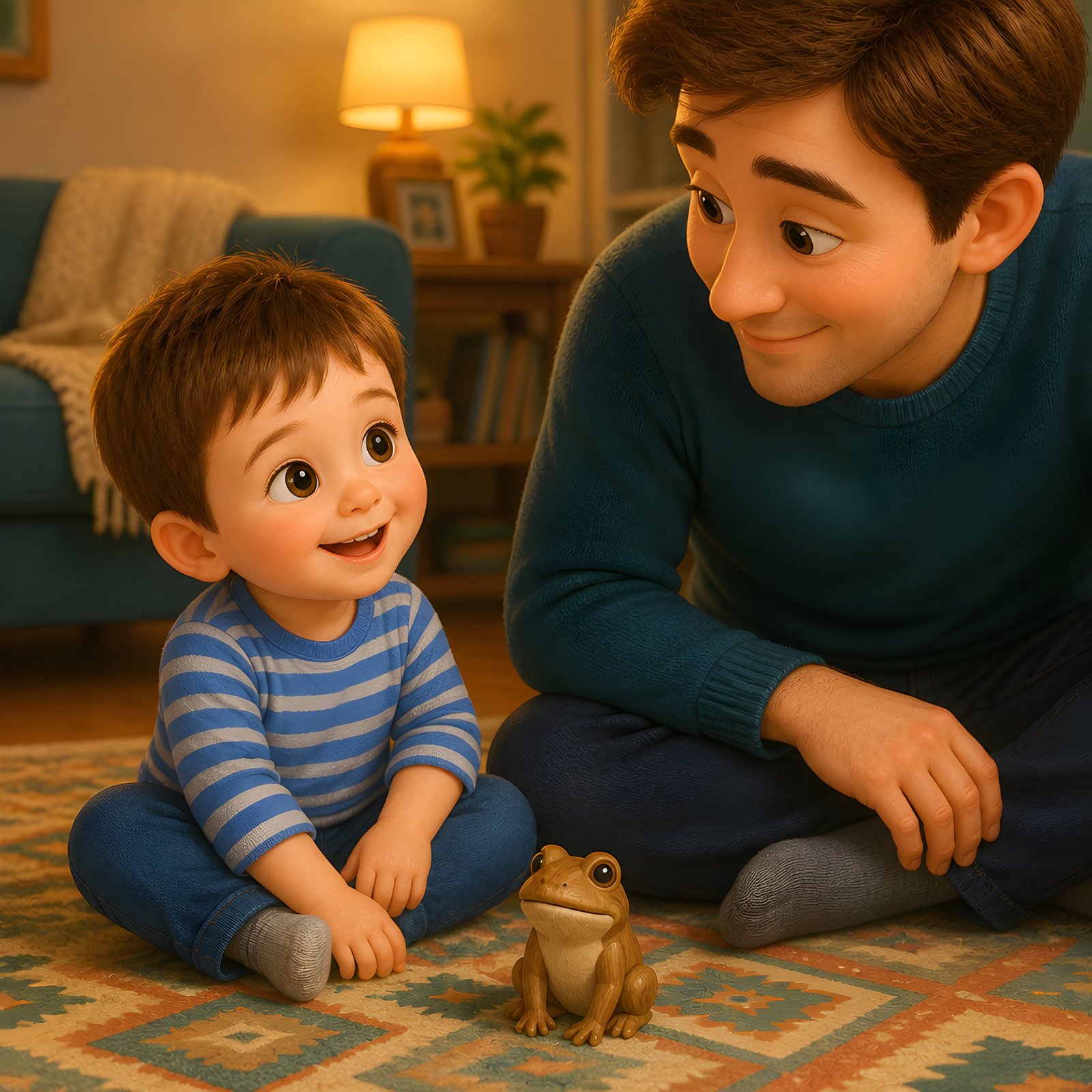
Nighttime fell softly over the house. Milo closed his bedroom door, not to hide from being watched, but to enjoy his own quiet corner.
And you, what is your quiet corner when the day grows sleepy? Fffouuu… Time to rest.
apprentissage-proprete
Derrière le grand rideau du salon, c’était le coin de Nina.
Dehors, on demandait pour la vingtième fois : « C’est le moment ? »
Chut, c’est le coin secret de Nina.
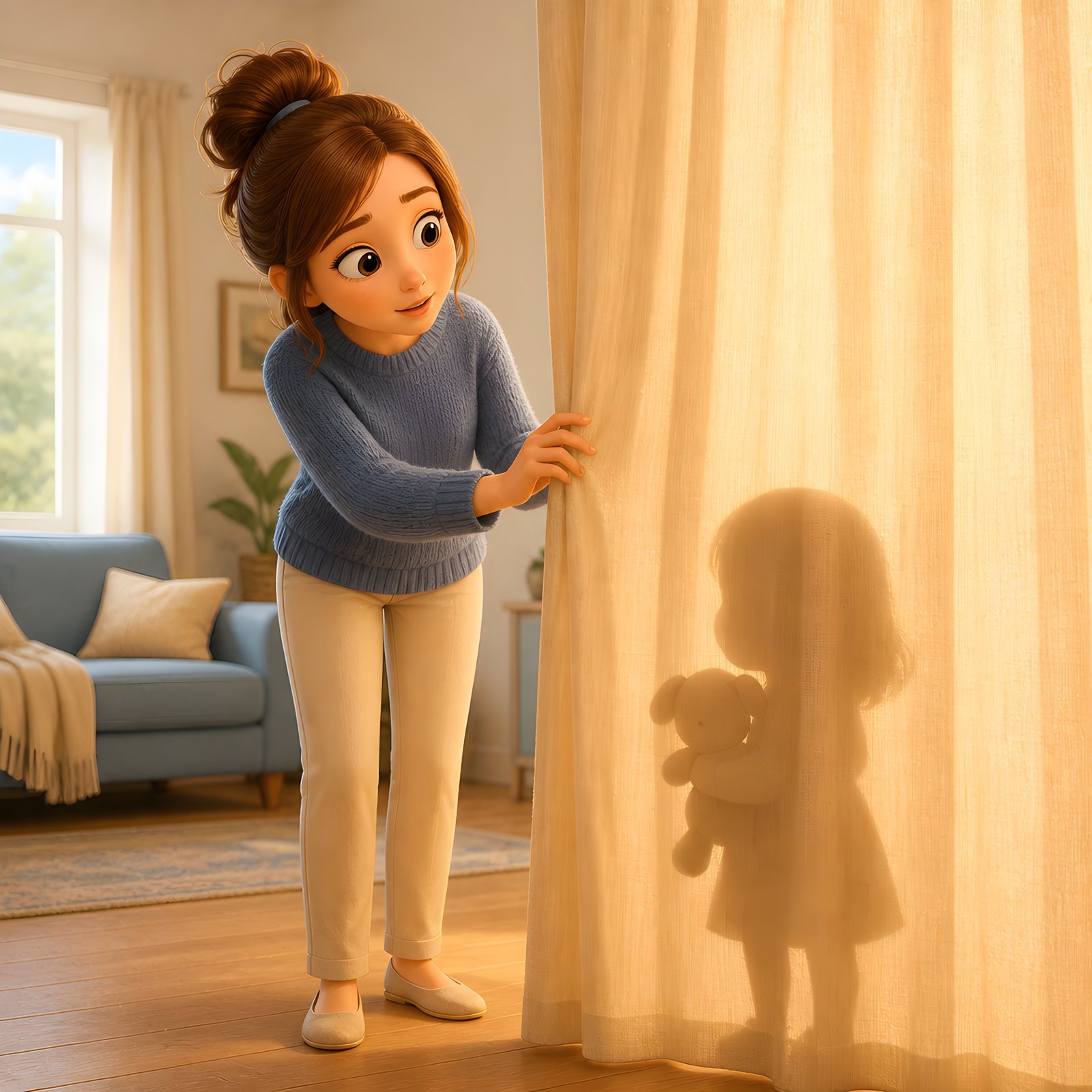
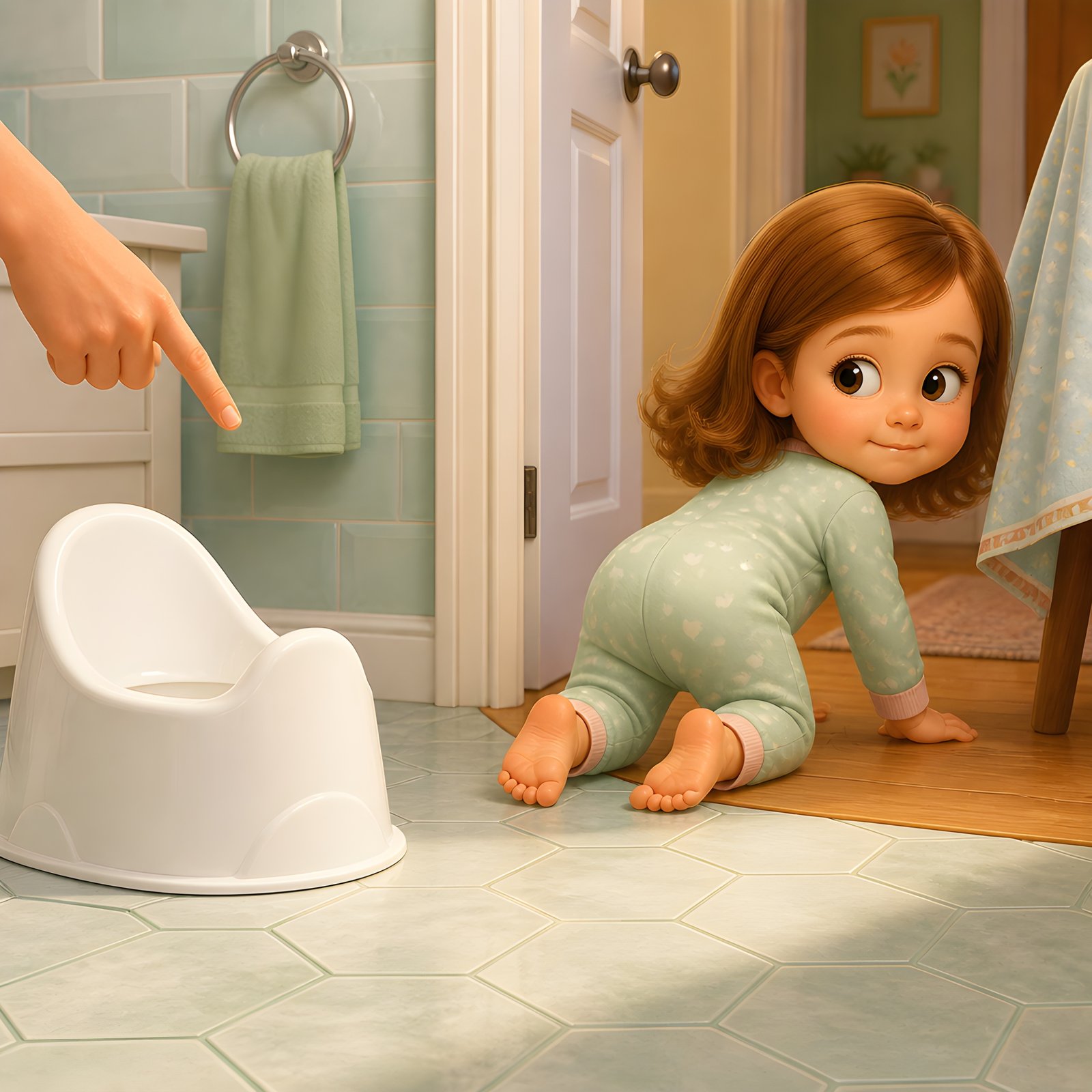
Dans la salle de bains, on montrait un pot tout brillant en expliquant de grands secrets.
Mais c’était bien trop compliqué. Nina filait vite se cacher sous la grande nappe de la table.
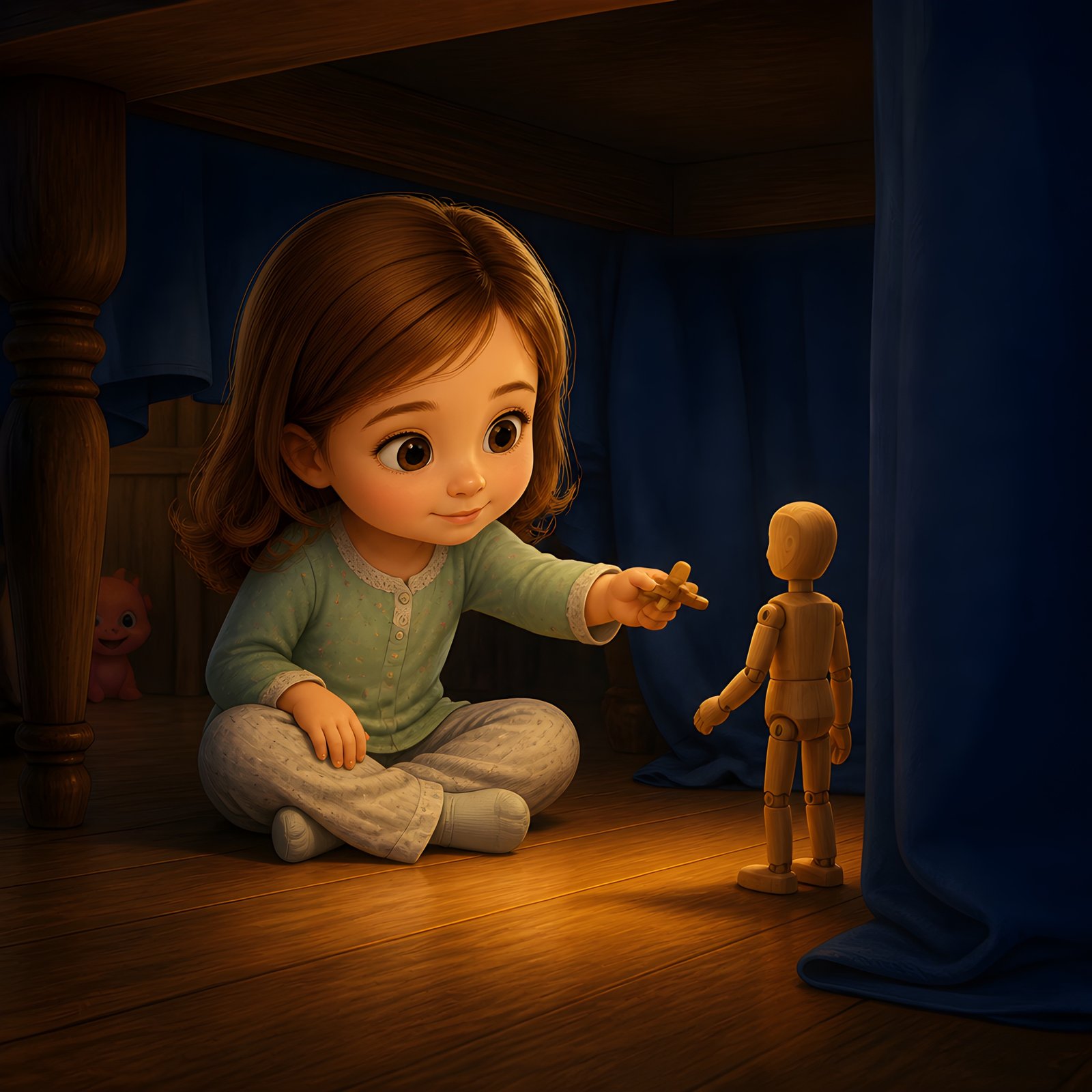
Sous la nappe, tout était calme. C’est là que Nina trouva un petit bonhomme en bois, raide et immobile.
Il ne savait rien de rien, et il la regardait sans cligner des yeux.
Le petit bonhomme ne savait pas ce que c’est que d’avoir un corps qui prévient.
Pour une fois, ce n’était pas Nina qu’on questionnait. C’était elle la savante !
Chut, c’est le coin secret de Nina.
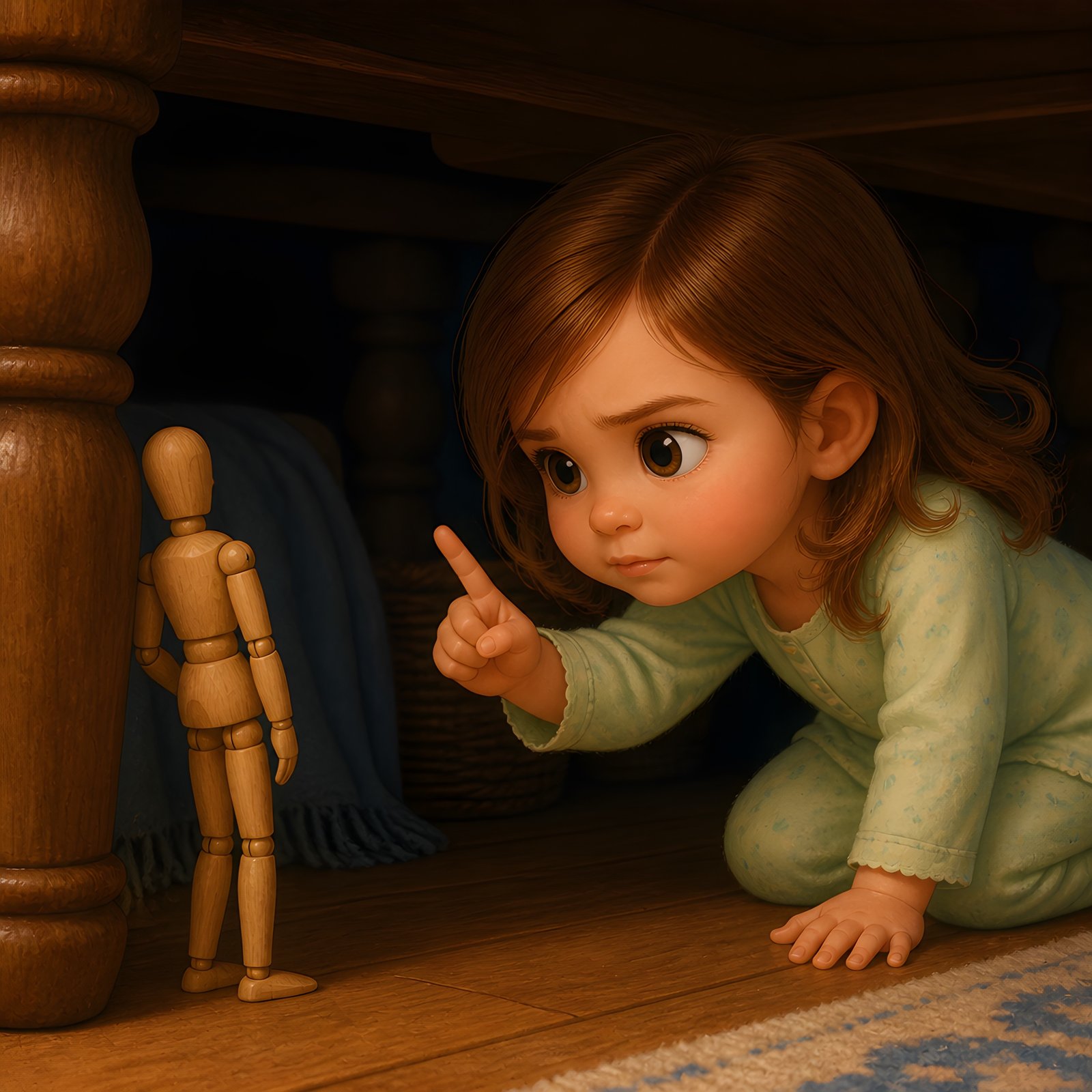
« D’abord, il y a le wobble », chuchota Nina.
Un tout petit tremblement au fond du ventre qui prévient avant le reste.
Son ventre fit un petit bruit discret : Gargouillis !

Derrière le canapé, c’était une autre cachette. Nina continua ses explications.
« Et après, il y a le deux secondes warning. C’est le moment où tout s’accélère ! »
Son cœur battait fort. Est-ce que le bonhomme comprenait vraiment ?
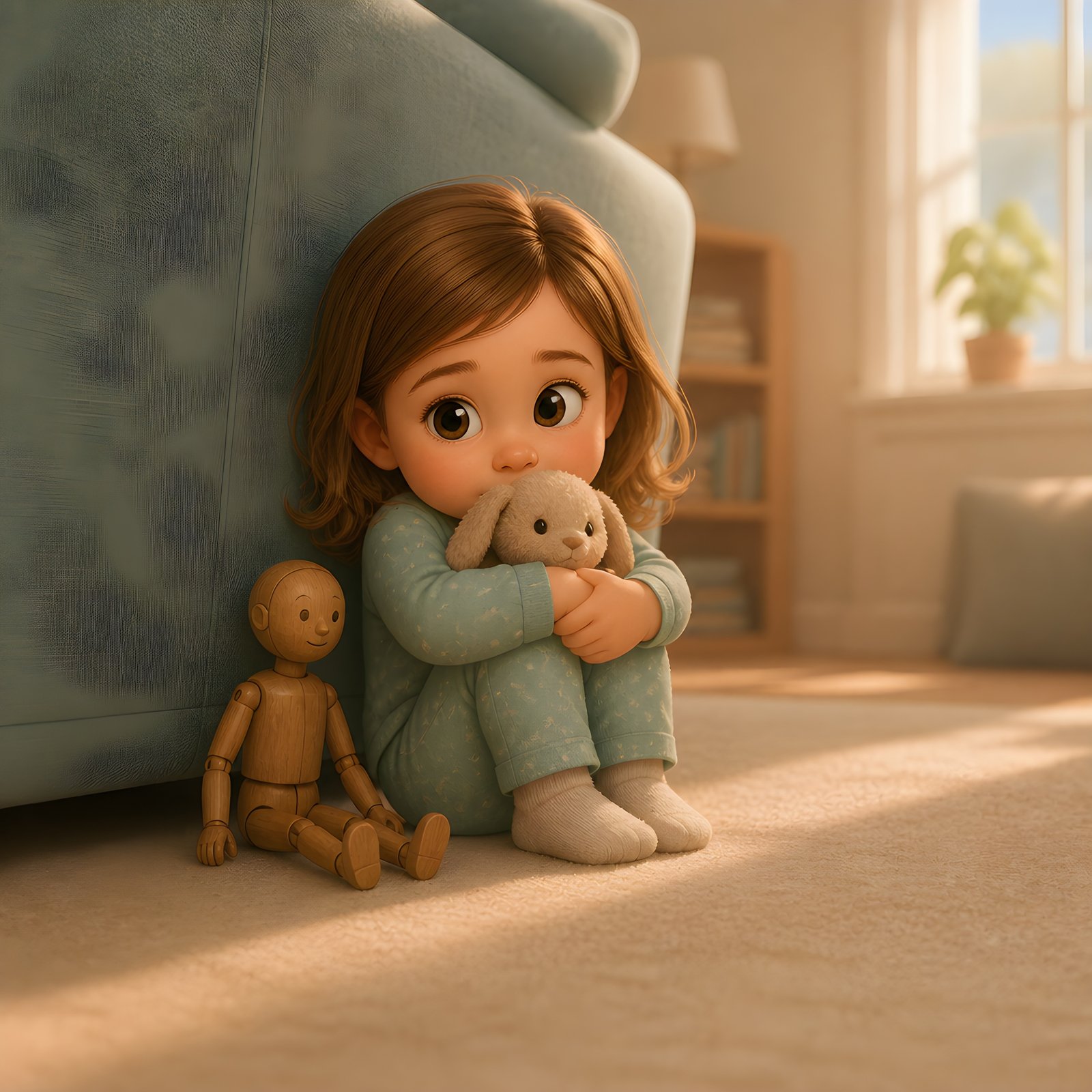
Accroupie dans sa cachette préférée, Nina trouva le mot de la fin.
« Le moment où le ventre devient tout bruyant et remue ! »
Le petit bonhomme en bois hocha enfin la tête. Ça y est, il savait.
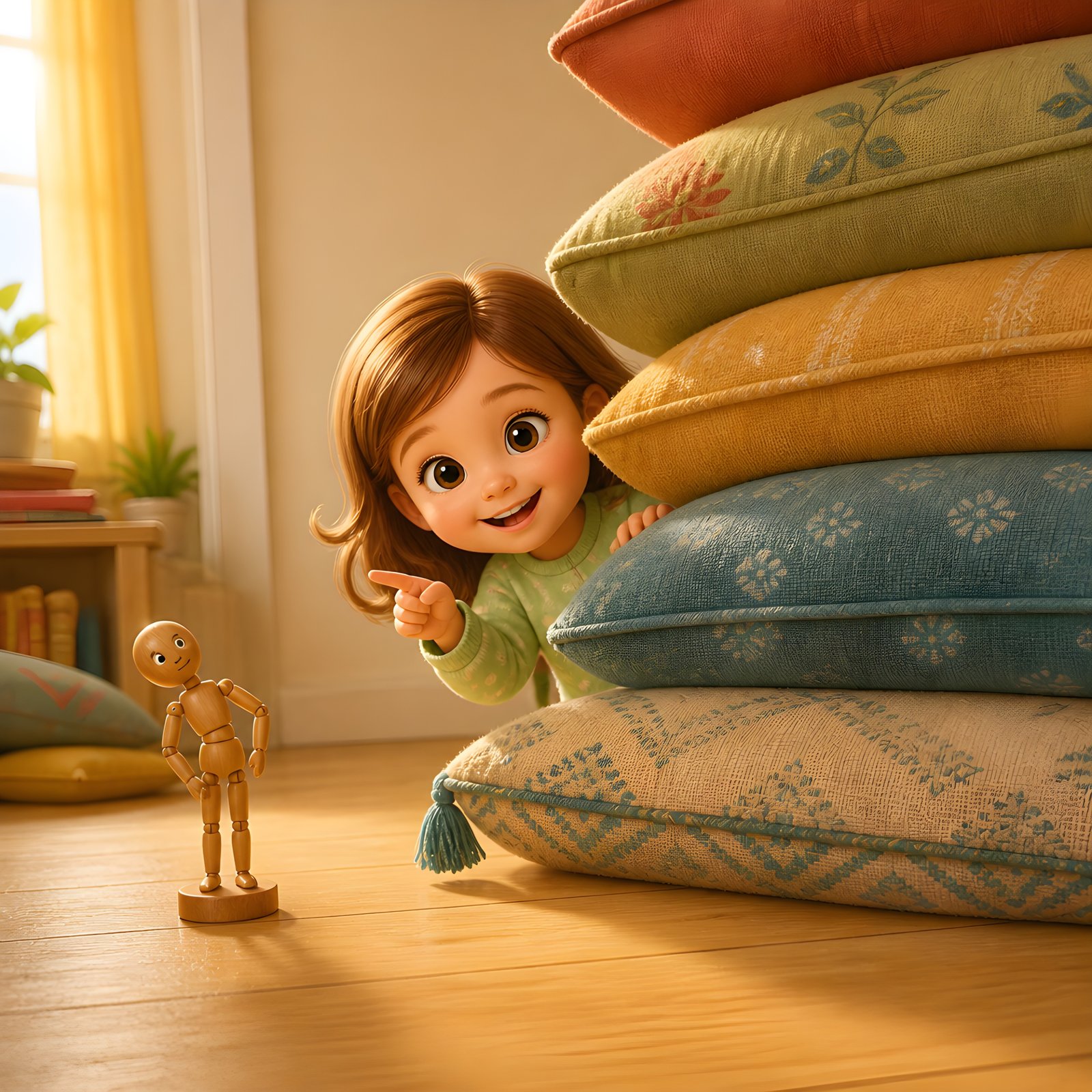
Le temps de fuir les grands était terminé. Nina n’avait plus besoin de se cacher pour avoir peur.
Sa main se posa sur la poignée de la porte. C’était elle qui décidait.
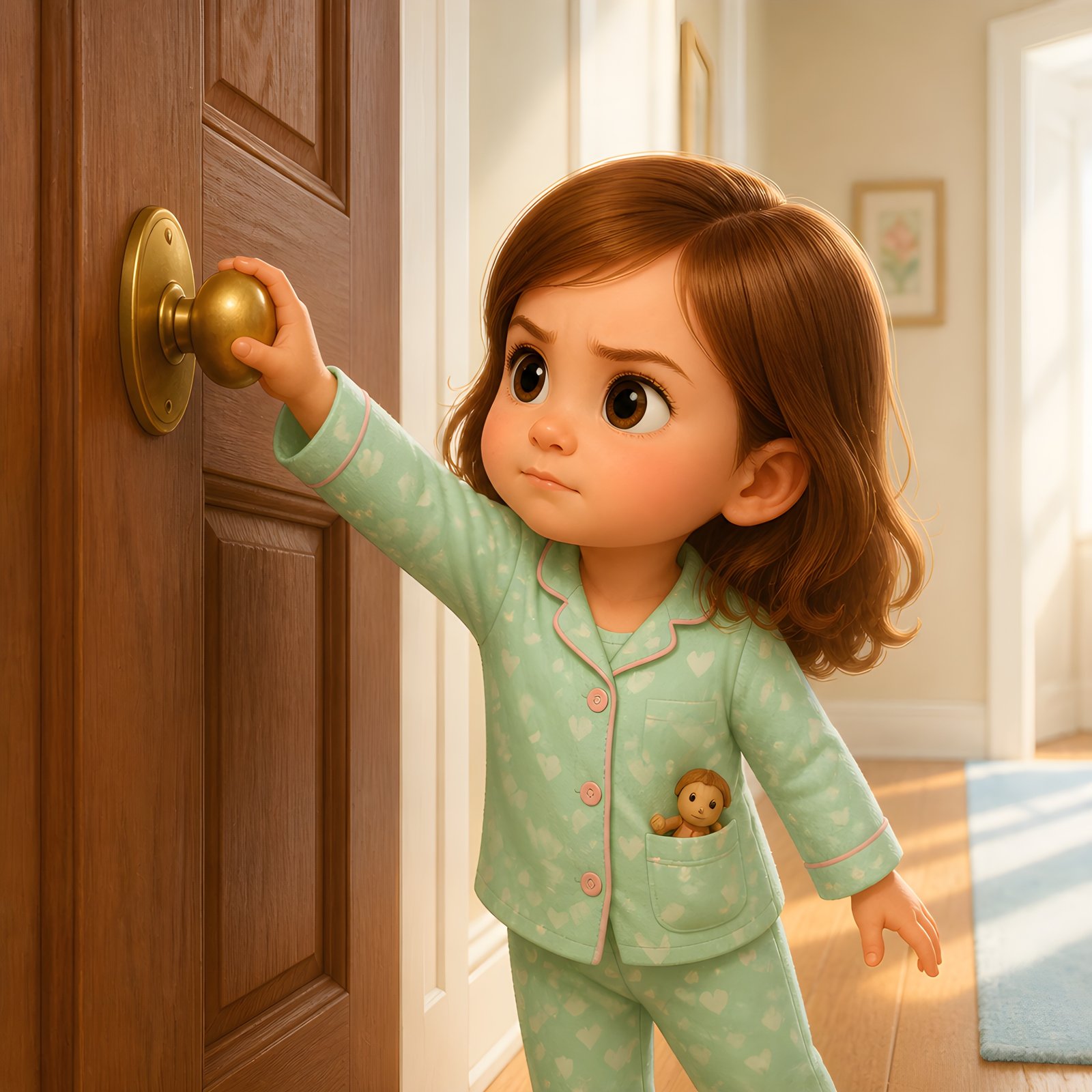
Guidée par ses propres mots, au tout premier signal du wobble, Nina fit ce qu’il fallait.
Toute seule, comme une grande, sans qu’on ne lui demande rien.
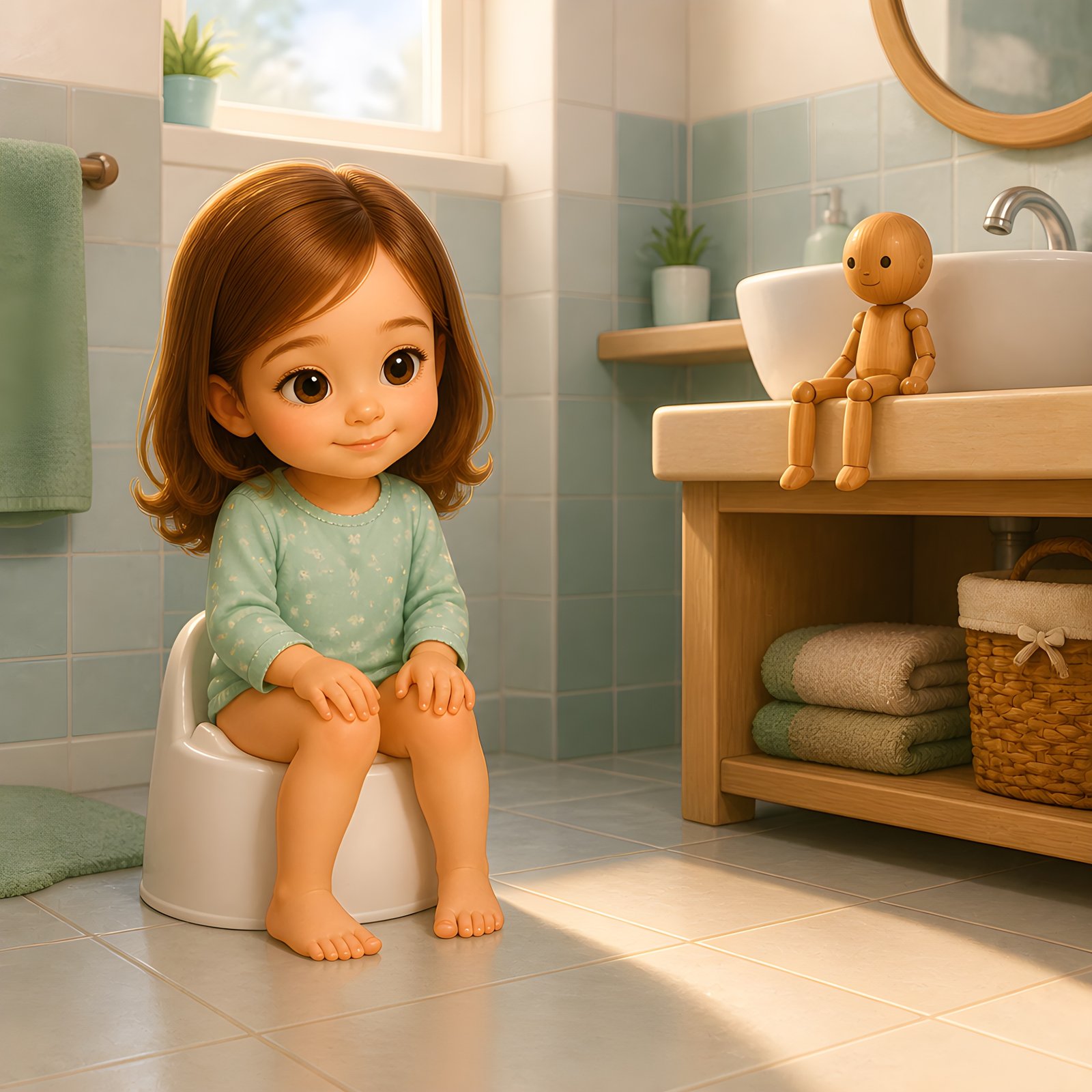
Au lieu d’attendre qu’on vienne l’interroger toutes les vingt minutes, Nina sortit d’un bond de sa cachette.
« C’est fait ! » annonça-t-elle avec un grand éclat de rire.
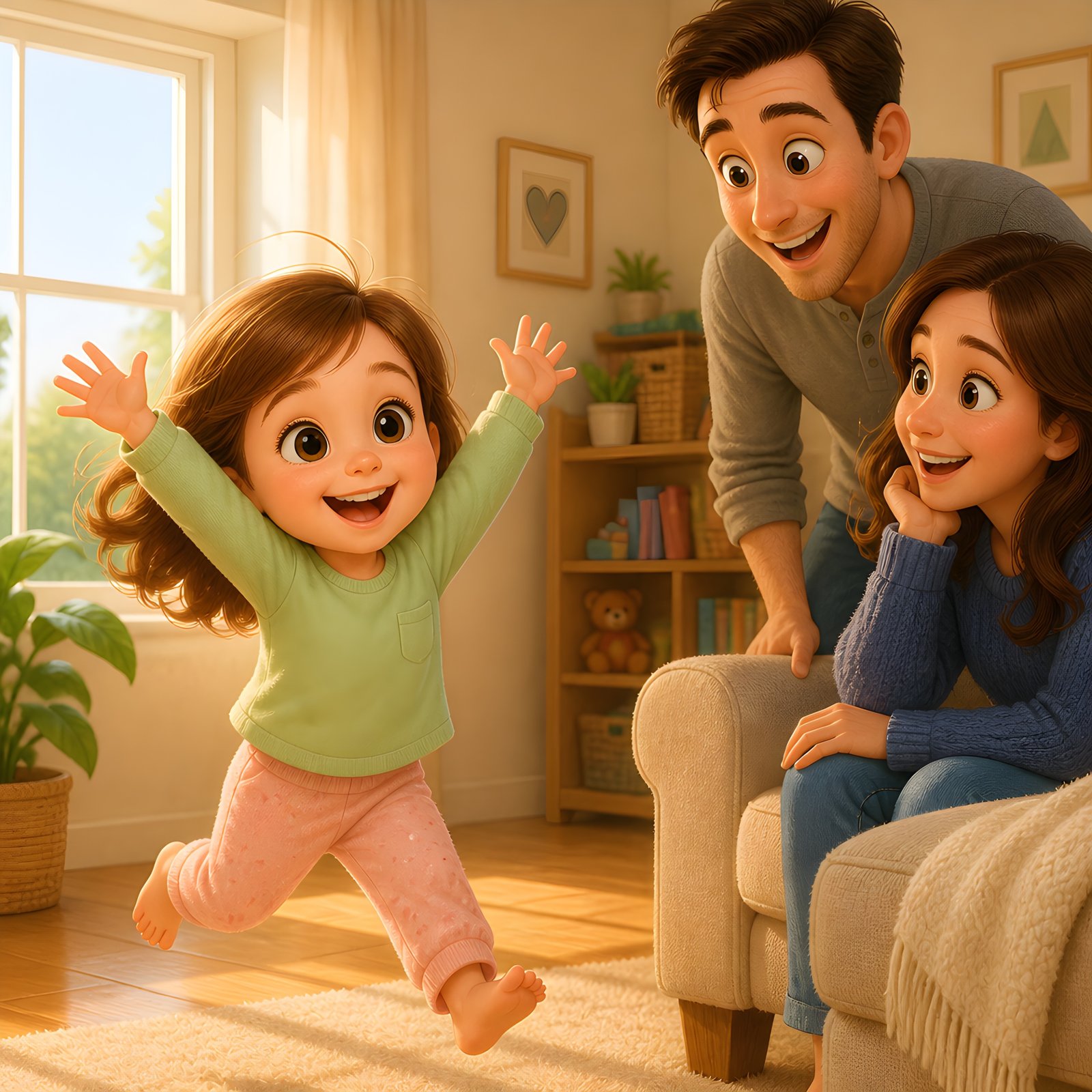
Maman comprit tout d’un coup. Nina n’avait pas besoin qu’on lui explique le monde.
Ce n’était plus le coin secret de Nina, c’était son grand secret à elle.
Le soir venu, dans sa petite tente de lit, Nina ferma les yeux en respirant tout doucement.
Elle savait écouter son corps, et elle était devenue une grande.
Et toi, est-ce que ton corps te prévient quand tu as besoin de souffler ou d’aller aux toilettes ?
Ferme les yeux, la nuit commence…