Why sharing is caring starts with feeling secure
At two years old, a child lacks the prefrontal cortex development necessary for impulse control, making their refusal to share a natural developmental milestone rather than a character flaw. For a toddler, a toy is a psychological extension of their own safety, meaning they must feel secure in ownership before they can ever truly lend an object to others.
It is exhausting to carry a screaming child away from the sandpit, but understanding that sharing is caring starts with patience and concrete tools like visual timers or narrated turns. We will explore how a personalized story, featuring your child as the hero who practices kindness, provides the perfect bedtime rehearsal for real world social success.
- Sharing Is Caring Starts With Feeling Secure In Ownership
- 3 Concrete Techniques To Manage Sandbox Standoffs
- How To Stay Calm During A Public Toddler Meltdown?
- Personalised Stories As A Rehearsal Tool For Social Success
Sharing Is Caring Starts With Feeling Secure In Ownership
Toddler sharing struggles stem from a lack of impulse control and a psychological need for ownership security. Effective strategies include narrating turns, using visual timers, and practicing social scenarios through personalized storytelling tools.
The area of the brain responsible for logic and impulse control, which is still ‘under construction’ in toddlers.
Why Toddlers View Objects As Extensions Of Themselves
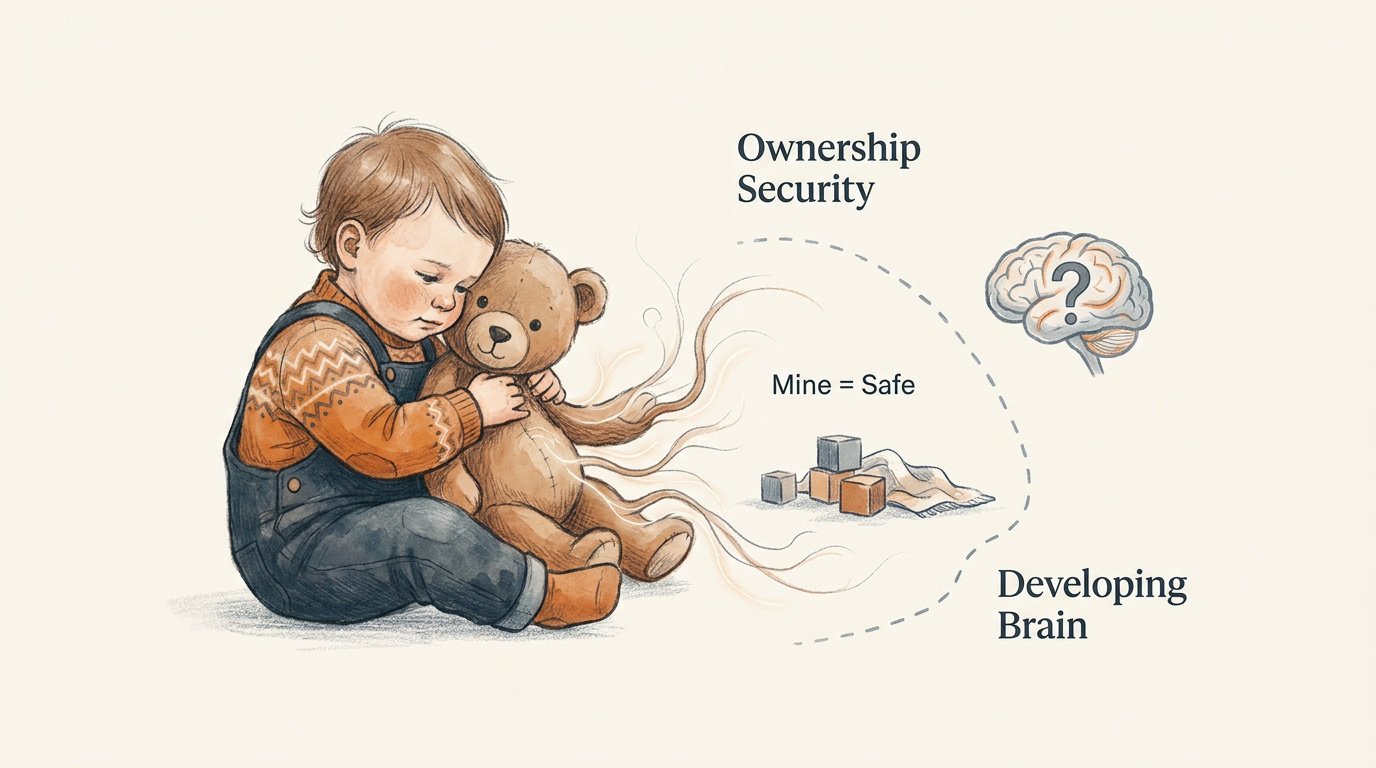
To your toddler, that red truck isn’t just plastic. It represents their personal boundary and safety. Taking it feels like losing a limb.
Possession equals security. Losing a toy triggers a primal fear response in their developing brain.
Respecting this “mine” phase is vital. It builds the foundation for later voluntary generosity.
The Developmental Reality Of Impulse Control At Two
The prefrontal cortex is still under construction at age two. This area governs impulse control and logic. When a child grabs, it is a reflex. They lack the biological brakes to stop themselves.
Grabbing is not a sign of a “bad” child. It is simply a brain that reacts before thinking.
Distinguishing Between Taking Turns And True Sharing
Sharing requires empathy, which toddlers haven’t mastered. Taking turns is a mechanical process focusing on action rather than feeling.
- Mechanical rotation vs emotional connection.
- Empathy is premature at age two.
We wrote this book: our product makes your child the hero.
3 Concrete Techniques To Manage Sandbox Standoffs
Understanding the brain is one thing, but managing the chaos of the sandbox requires a different set of hands-on tools.
Narrating Play Sequences To Build Social Predictability
Act like a sports commentator during play. Explain exactly what is happening right now. Say, “Leo has the truck, then it will be Sarah’s turn.“
This narration reduces anxiety by making the future predictable. Children feel safer knowing what comes next, replacing confusion with a clear plan.
Using Visual Timers To Make Waiting Visible
Time is abstract for a child. A visual timer makes it concrete as they see the red disappearing while their turn approaches.
Use a visual timer with a disappearing disc so the child can see the end of their wait approaching.
The timer becomes the “boss.” This removes the parent from the role of the bad guy during difficult transitions.
Creating A Safe Zone For Precious Toys Before Guests Arrive
Identify high-value items your child cannot bear to share. Put these special toys in a safe zone, like a high shelf.
| Toy Category | Action | Reason |
|---|---|---|
| Ultra-precious | Hide away | Avoids meltdown |
| General toys | Leave out | Practice turns |
| New gifts | Store | Emotional value |
| Sandbox tools | Share | Low stakes |
We wrote a book where your child is the hero to practice these moments. Please, try the example on this page.
How To Stay Calm During A Public Toddler Meltdown?
Even with the best preparation, meltdowns happen, and how you react in that public moment changes everything.
Co-Regulation Strategies For Stressed Parents In Public
Your child feeds off your energy. If you are embarrassed, they feel your stress. Take a deep breath to stabilize your own nervous system first.
Focus only on your child, not the watching crowd. Co-regulation means being the calm anchor in their storm. Your silence is often more powerful than words.
Why Forcing Apologies And Toy Handovers Backfires
Forcing a child to say “sorry” teaches them to perform, not to feel. It creates resentment rather than empathy. When we rip a toy away, we confirm their fear. They learn that their possessions are never safe.
Forcing a child to give up a toy or apologize creates resentment and fear rather than genuine empathy. It teaches performance over feeling.
Forced sharing is just compliance. It does not build the social skills needed for real life.
Scripted Dialogue For Advocating Without Shaming
Use scripts to set boundaries politely. Say, “He isn’t ready to finish his turn yet.” This validates your child while informing the other parent.
- It’s hard to wait, but it will be your turn soon.
- He is still playing with that; let’s find another toy.
- I see you’re upset, I’ll help you wait.
We wrote this book to give your family a concrete rehearsal. Our story makes your child the hero. Try the real example embedded on this page to see the girl and boy versions.
Personalised Stories As A Rehearsal Tool For Social Success
Beyond the heat of the moment, we can use storytelling to prepare our children for these social hurdles.
Personalization turns the story into a social rehearsal; when a child sees their own name, they internalize the hero’s generous actions.
How Becoming The Hero Helps Children Practice Sharing
We created this book to act as a social rehearsal. Your child is the hero of the story. They see themselves making kind choices in a safe environment.
Seeing their own name changes the impact. It makes the lesson personal and memorable for the toddler.
This mental rehearsal builds confidence. When they face a real playdate, they remember their hero persona. They feel empowered to try sharing because they have already “done” it in our book.
Try Our Interactive Story Example For Boys And Girls
We invite you to try the real example embedded on this page. It is the perfect way to test the story. You can see how the hero reacts.
Use the toggle to switch between variants. It works for every child in your family.
Download the PDF sample to read it together tonight. It is a practical tool for your parenting toolkit. See how a personalized story makes social learning much easier.
Developmental grabbing isn’t a flaw; it is a search for security. By narrating turns and using visual timers, you bridge the gap in impulse control until sharing is caring truly clicks. Try our personalized stories tonight to give your little hero a stress-free rehearsal for tomorrow’s social success.
FAQ
Is it normal for my two-year-old to refuse to share at the park?
Absolutely. At this age, grabbing, hoarding, and melting down over toys is a normal developmental stage, not a character flaw. Toddlers are just beginning to form their own identity and often view objects as physical extensions of themselves. Taking a toy away can feel like losing a part of their own body.
Before a child can truly lend something, they must first feel secure in owning it. Refusing to share is actually a sign that they are learning the concept of property. Because their impulse control is still under construction, they simply don’t have the “biological brakes” yet to stop themselves from grabbing what they want.
How can I help my toddler learn to take turns without a struggle?
One of the best tools is narrating the play out loud like a sports commentator. By saying, “Leo has the truck now, and then it will be your turn,” you make the social sequence predictable, which lowers their anxiety. Using a visual timer is also incredibly effective because time is an abstract concept for toddlers; seeing the red disappear gives the wait a visible end.
You can also create a “safe zone” at home by letting your child put away a few treasured toys before friends arrive. This gives them a sense of control and security, making them more willing to share the remaining toys. Always remember to praise spontaneous kindness when it happens, as these positive reinforcements are powerful teaching moments.
Should I force my child to apologize or give up a toy?
It is best to never force a handover or a forced apology. Ripping a toy away only confirms your child’s fear that their possessions are never safe, which can lead to more hoarding. Forced sharing is merely compliance; it doesn’t teach the empathy needed for real social growth.
Instead of forcing the issue, focus on co-regulation. Stay calm and be the “anchor” in their storm, even if other parents are watching. Use simple scripts like, “He isn’t ready to finish his turn yet,” to advocate for your child’s boundaries while teaching them how to navigate social interactions politely.
How can a personalized story help my child practice sharing?
Personalized stories act as a concrete “social rehearsal” for your little one. By creating a book where your child is the hero who chooses to offer a turn, you give them a safe space to practice these big emotions. Seeing their own name in the story makes the lesson personal, memorable, and much more impactful than a lecture.
Reading these stories at bedtime allows the family to rehearse social success in a warm, pressure-free environment. It builds your child’s confidence, so when they are back at the sandpit, they can remember their “hero persona” and feel empowered to try sharing for real.
partage-gentillesse
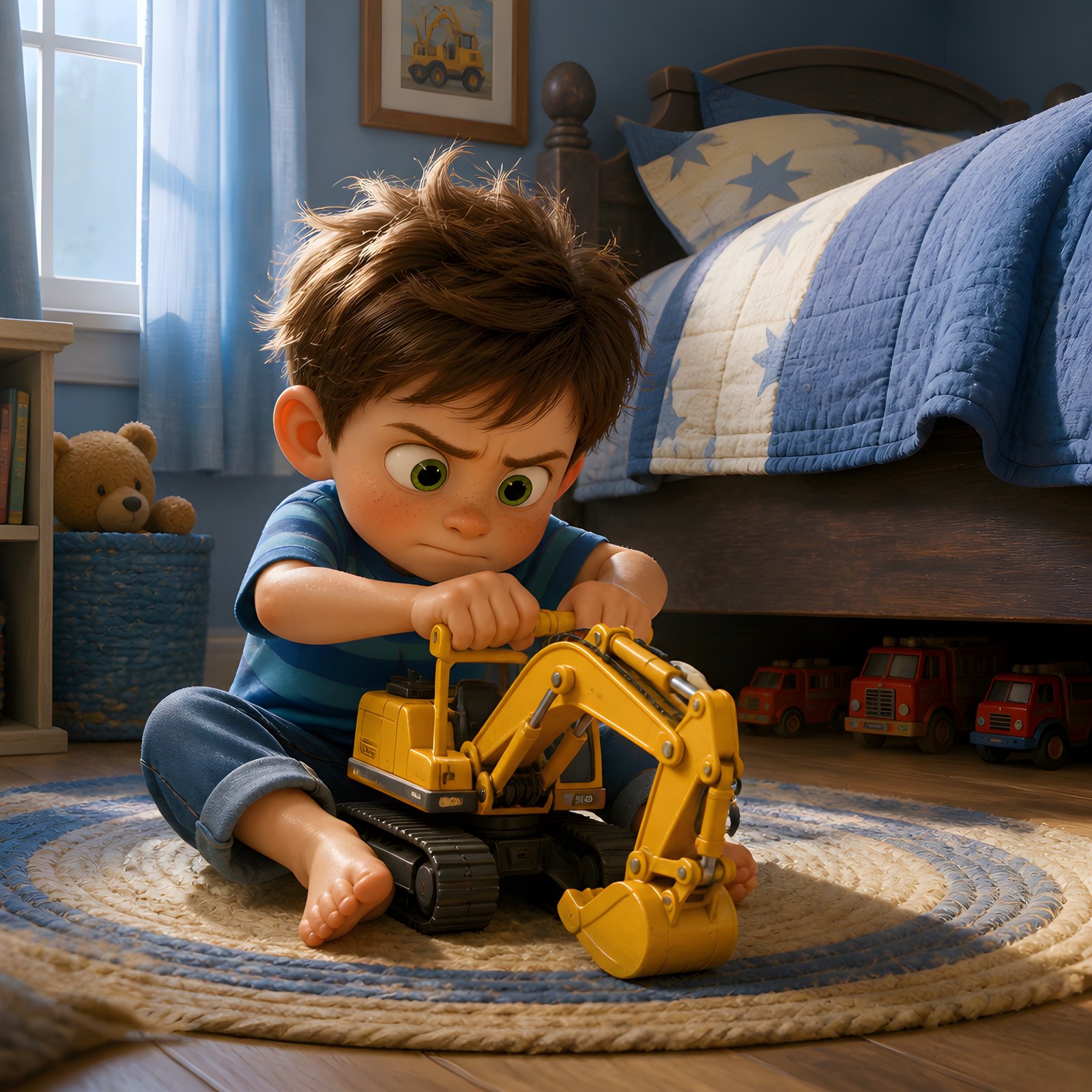
Milo aimait sa chambre. Il aimait par-dessus tout sa pelleteuse jaune, étincelante et toute propre.
Il la serrait fort contre lui. Tu le vois, le petit camion rouge caché sous le lit de Milo ?
Soudain, la porte s’ouvrit. Un petit copain entra en souriant, les bras ouverts. Coucou Milo !
Milo recula d’un pas et serra sa pelleteuse encore plus fort contre son ventre. Ses yeux devinrent tout ronds.
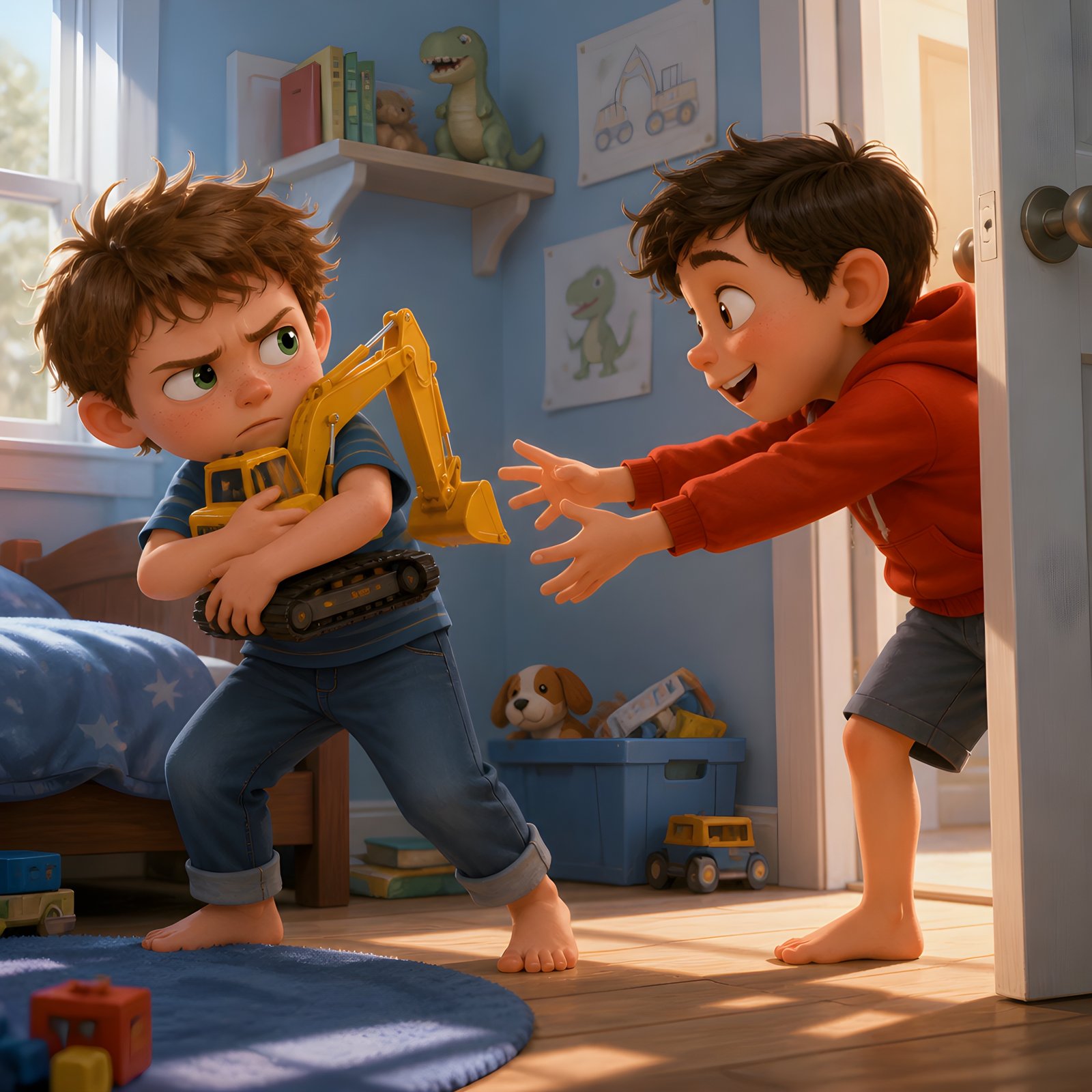
Il protégea ses cubes et cacha ses billes derrière son dos. Non, il ne prêterait rien du tout !
Milo secoua la tête et grommela : « À moi tout seul, ça roule mieux ! »
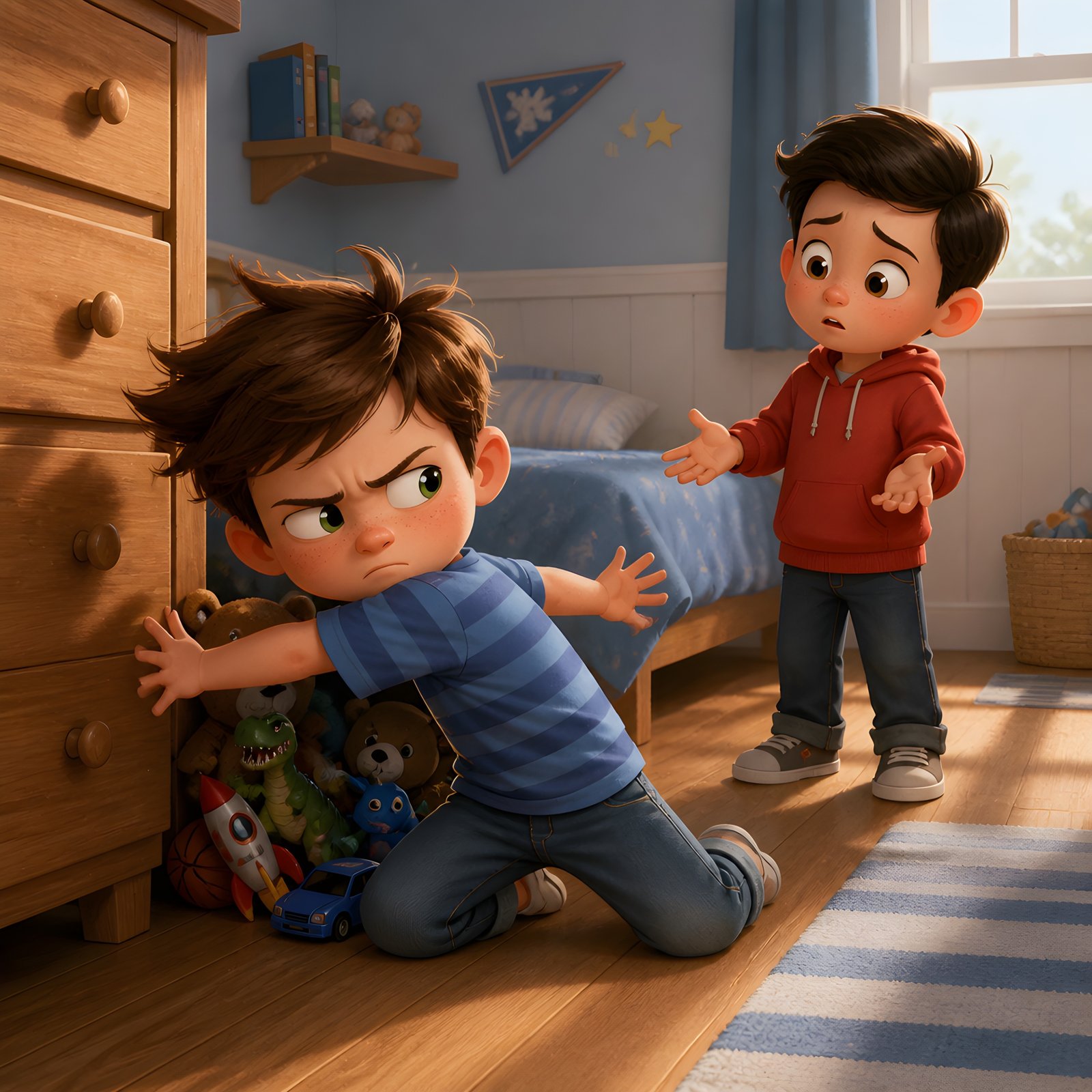
Milo voulut faire avancer son beau camion. Il tira de toutes ses forces sur le levier.
Vroum… vroum… La pelleteuse ne bougea pas d’un pouce. Elle était trop lourde toute seule ! Milo sentit ses épaules retomber.
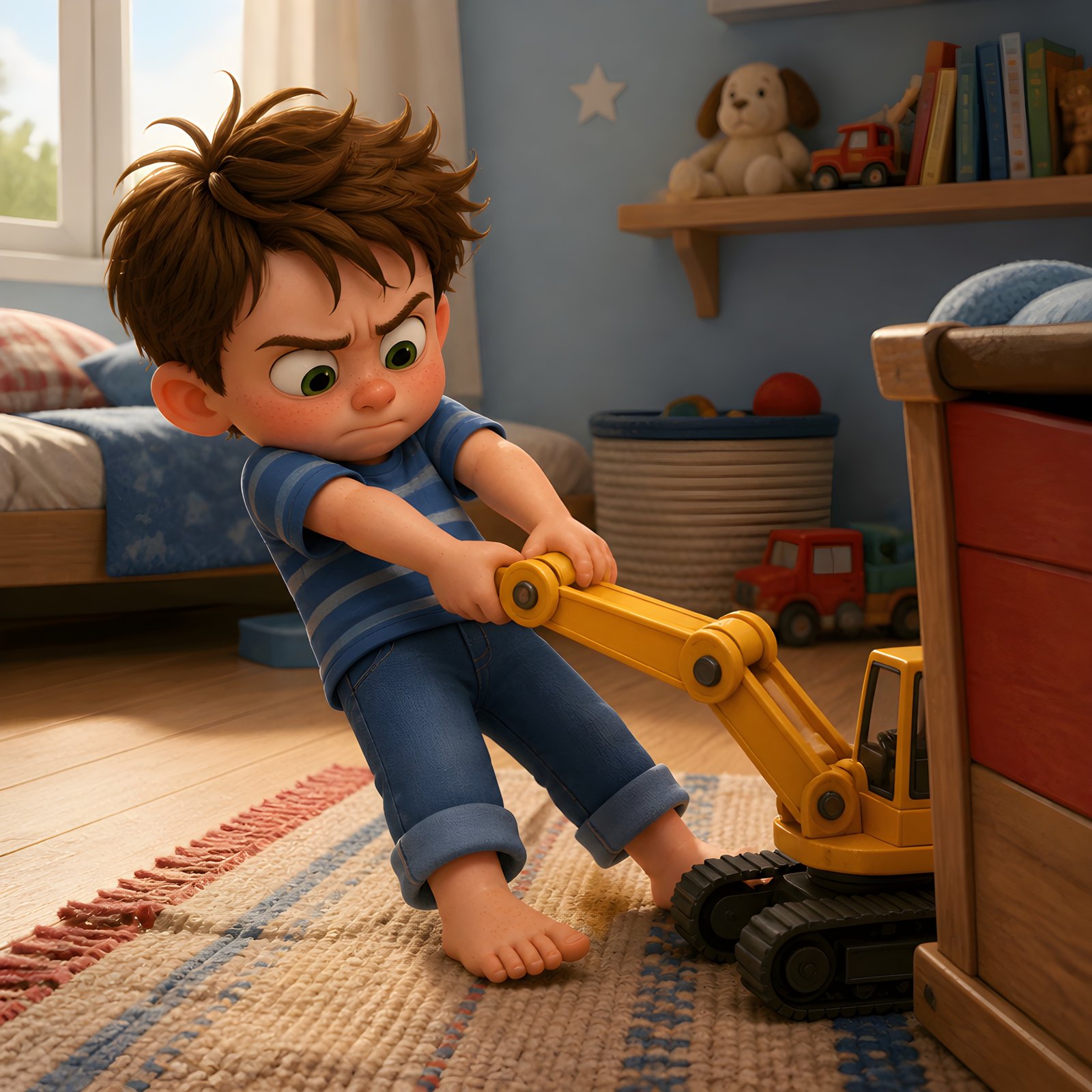
Son cœur battait fort. Il regarda son copain. Son copain regardait les deux petits sièges vides à l’avant de la cabine.
Milo hésita une seconde. Et si… et si l’engin avait besoin de deux conducteurs ?
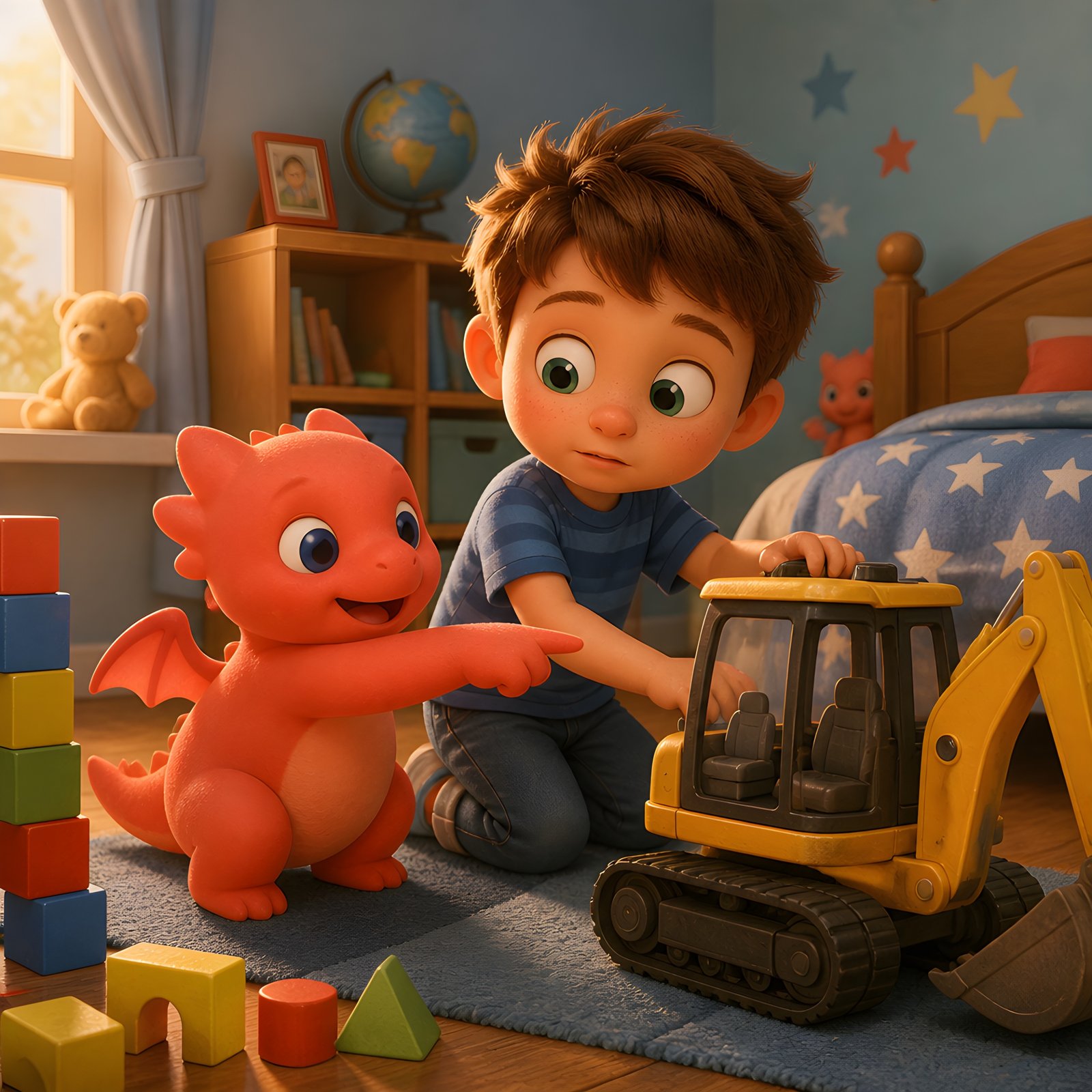
Milo tendit la main, prit une grande inspiration, et montra le siège vide à côté de lui.
Il murmura avec un sourire : « À deux conducteurs, ça roule bien meilleur ! »
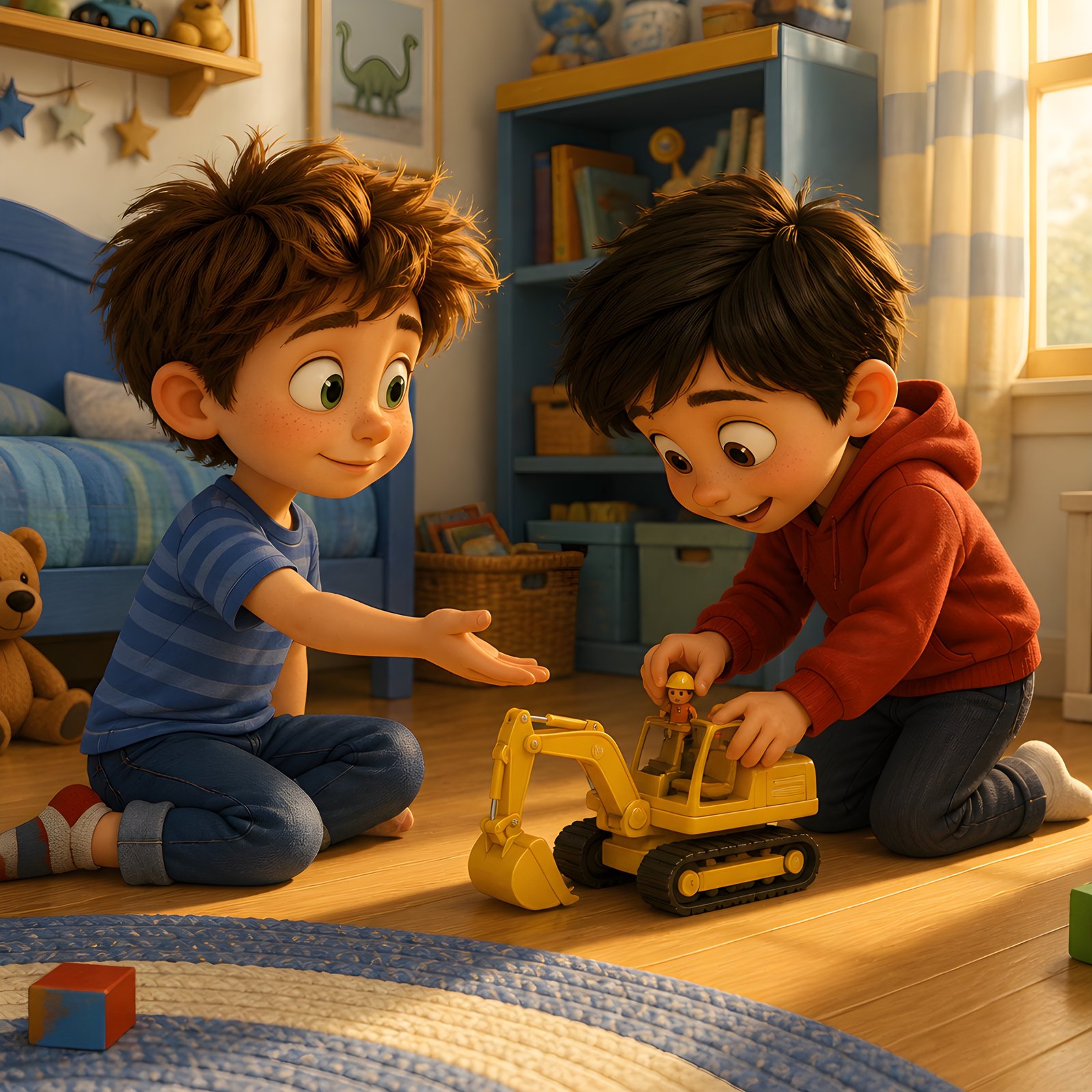
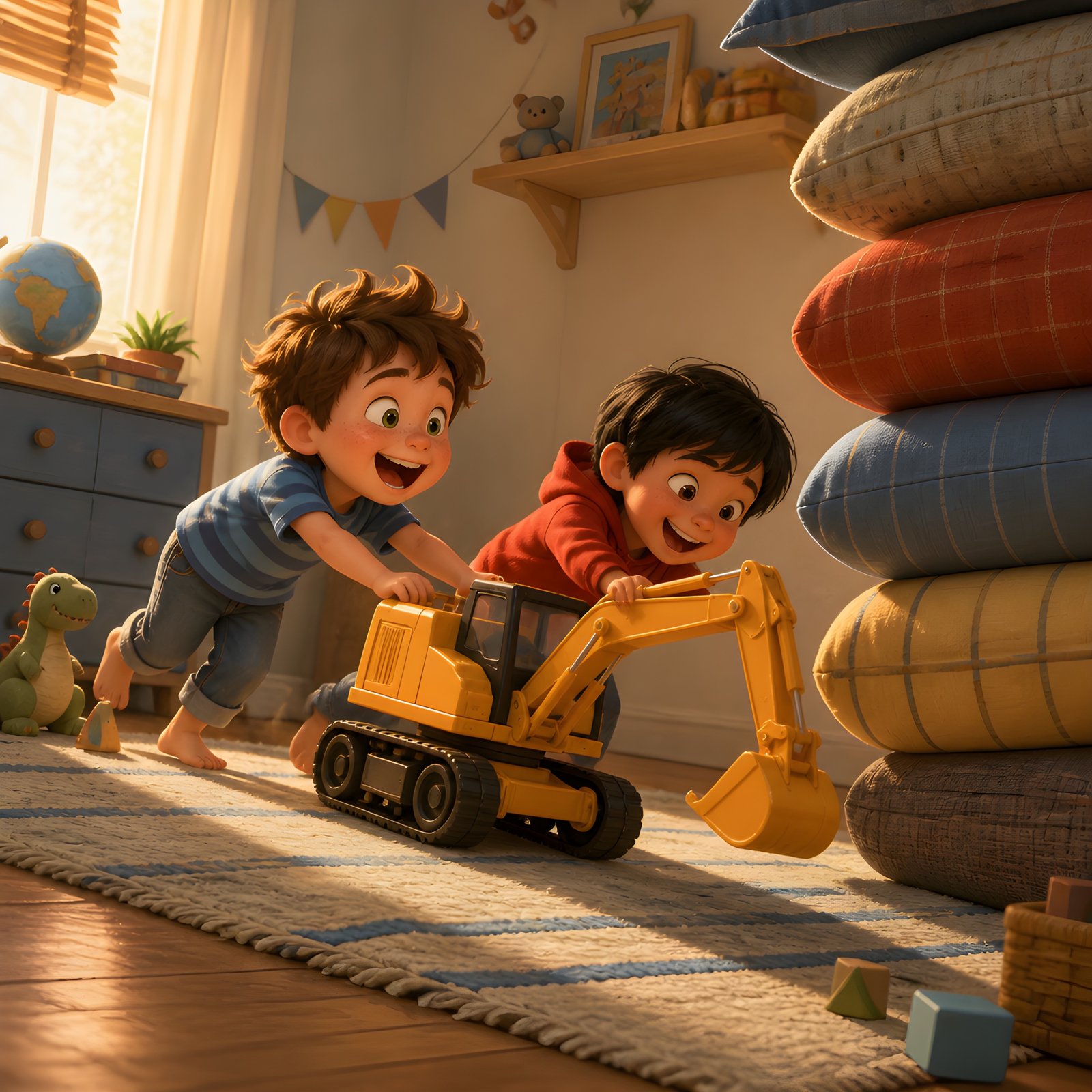
Ensemble, ils empoignèrent le guidon. Un, deux, trois, poussez ! La pelleteuse glissa sur le tapis comme sur une vraie route.
Elle filait droit vers la grande montagne de coussins du salon. Houra !
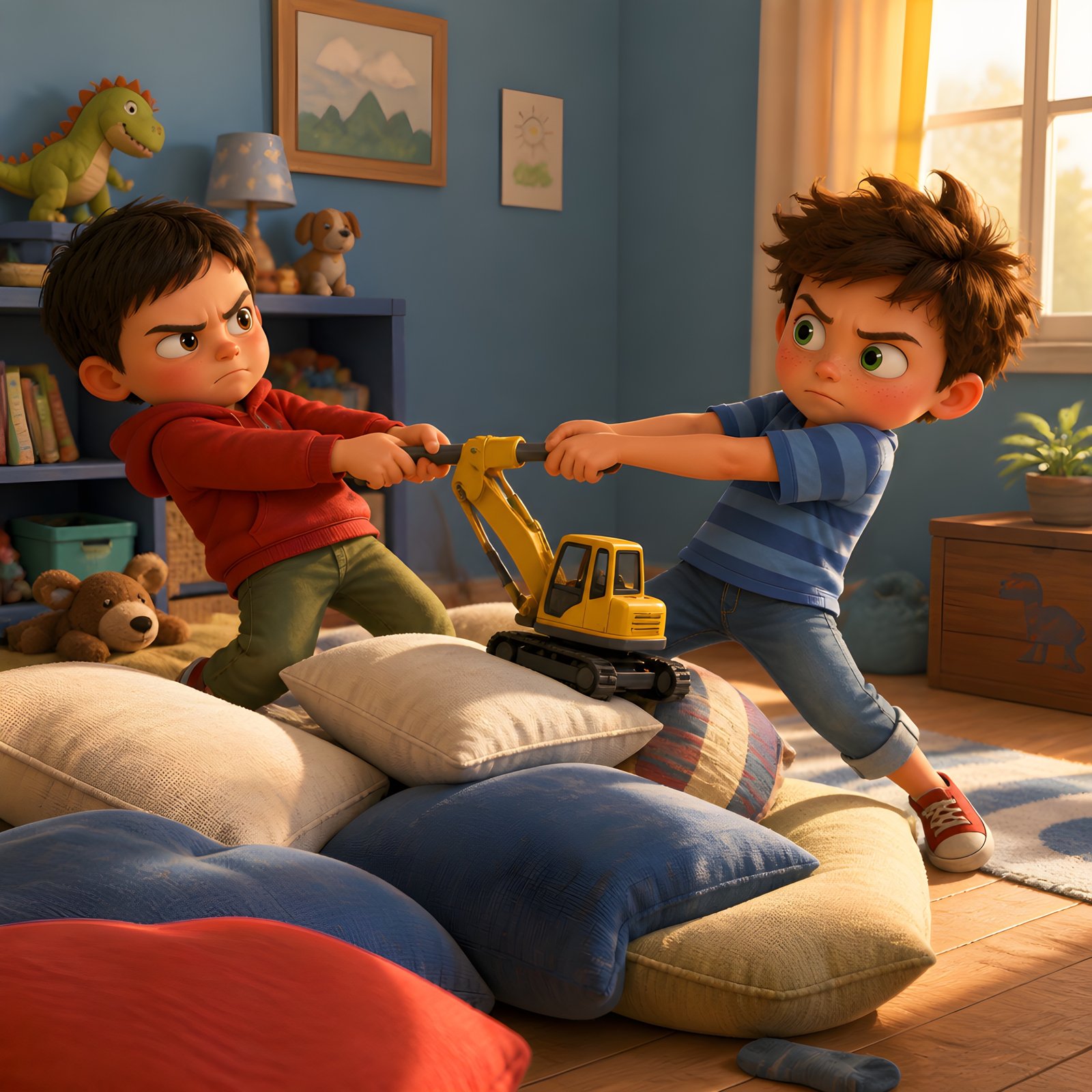
Aïe. Les deux copains voulurent tirer le levier en même temps. Chacun de son côté.
La pelleteuse s’arréts net. Crtout ! Le jeu était bloqué. Est-ce que tout allait s’arrêter là ?
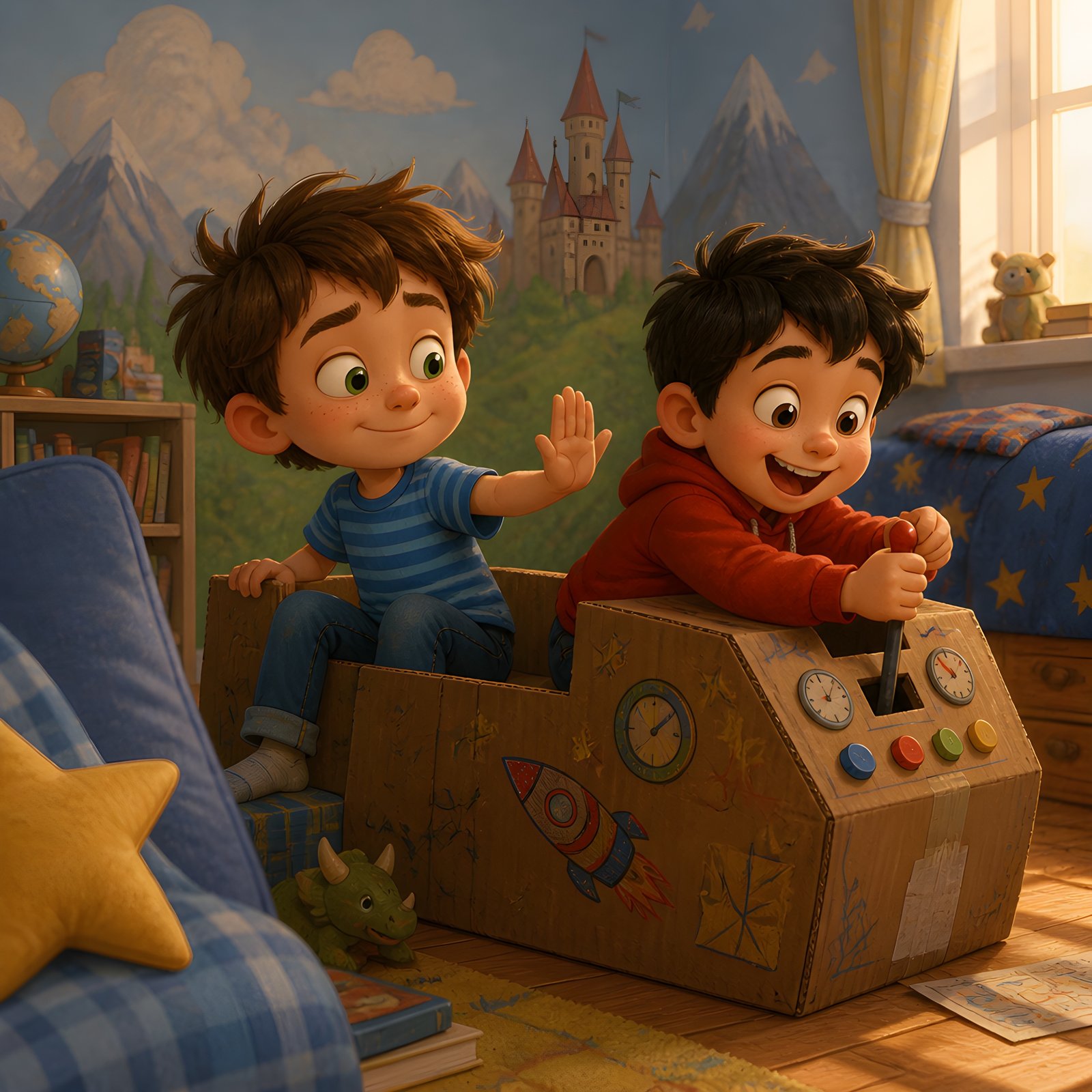
Milo souffla un grand coup. Il se rappela une chose magique : attendre son tour, c’était chouette aussi.
« À toi d’abord, et après à moi ! » dit Milo en croisant les bras sagement pour regarder son copain conduire.
La pelleteuse repartit de plus belle, pleine de blocs de construction colorés. Vroooom !
Ils crièrent tous les deux en chœur : « À deux conducteurs, ça roule bien meilleur ! »
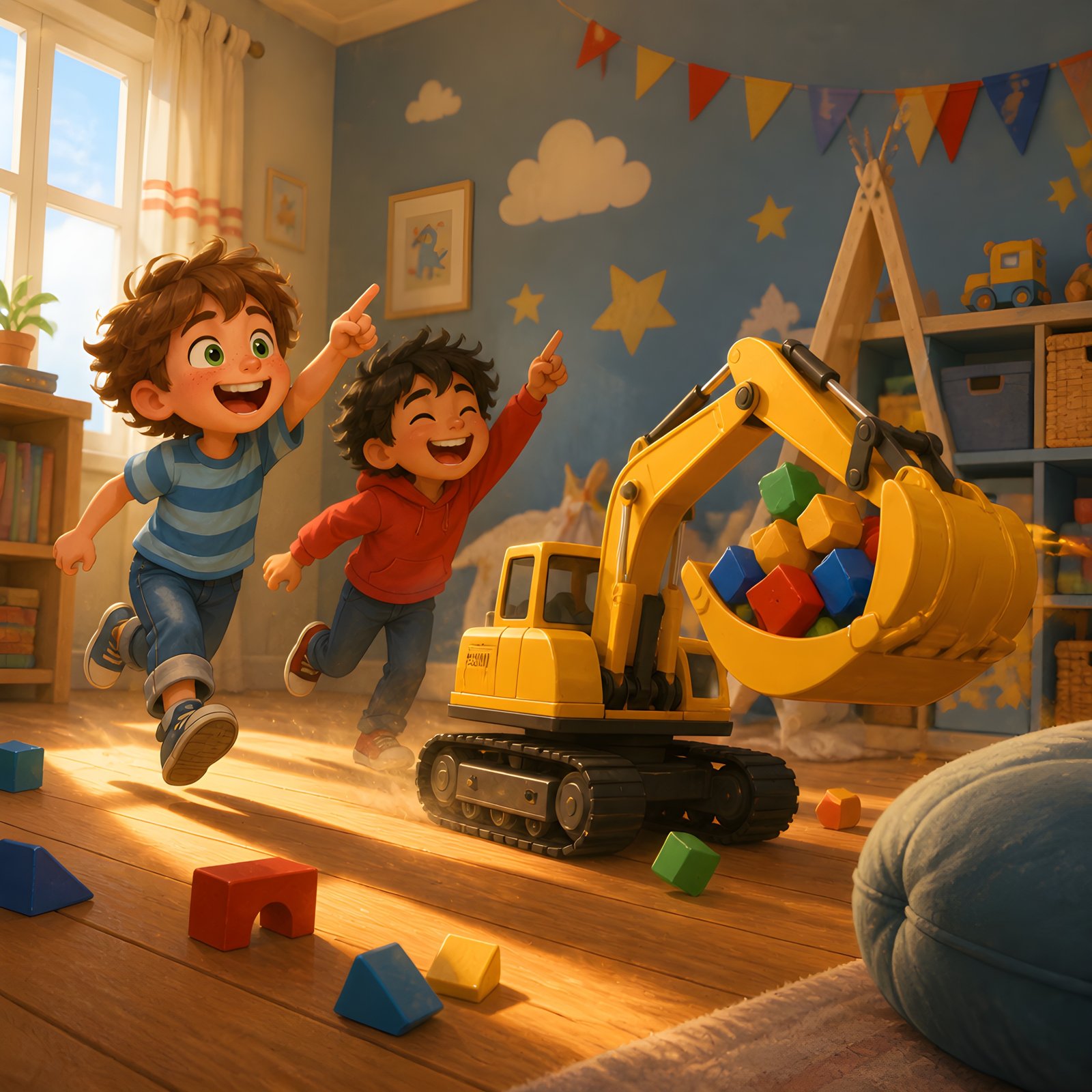
Les cubes volèrent, les rires résonnèrent dans toute la maison. Le jeu était deux fois plus long et deux fois plus rigolo.
Milo écarta les grands bras et fit un grand BOUH ! de joie avec son copain.
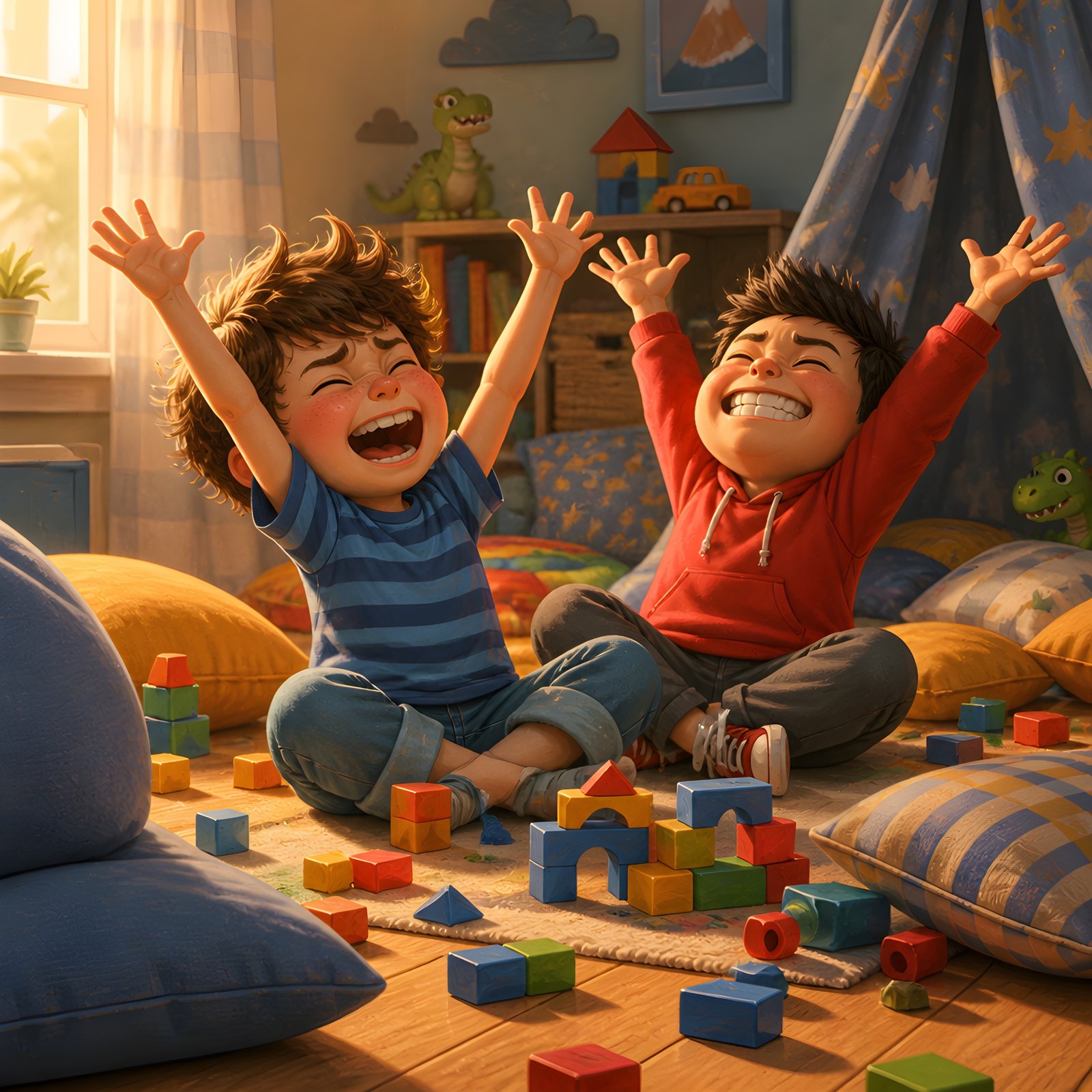
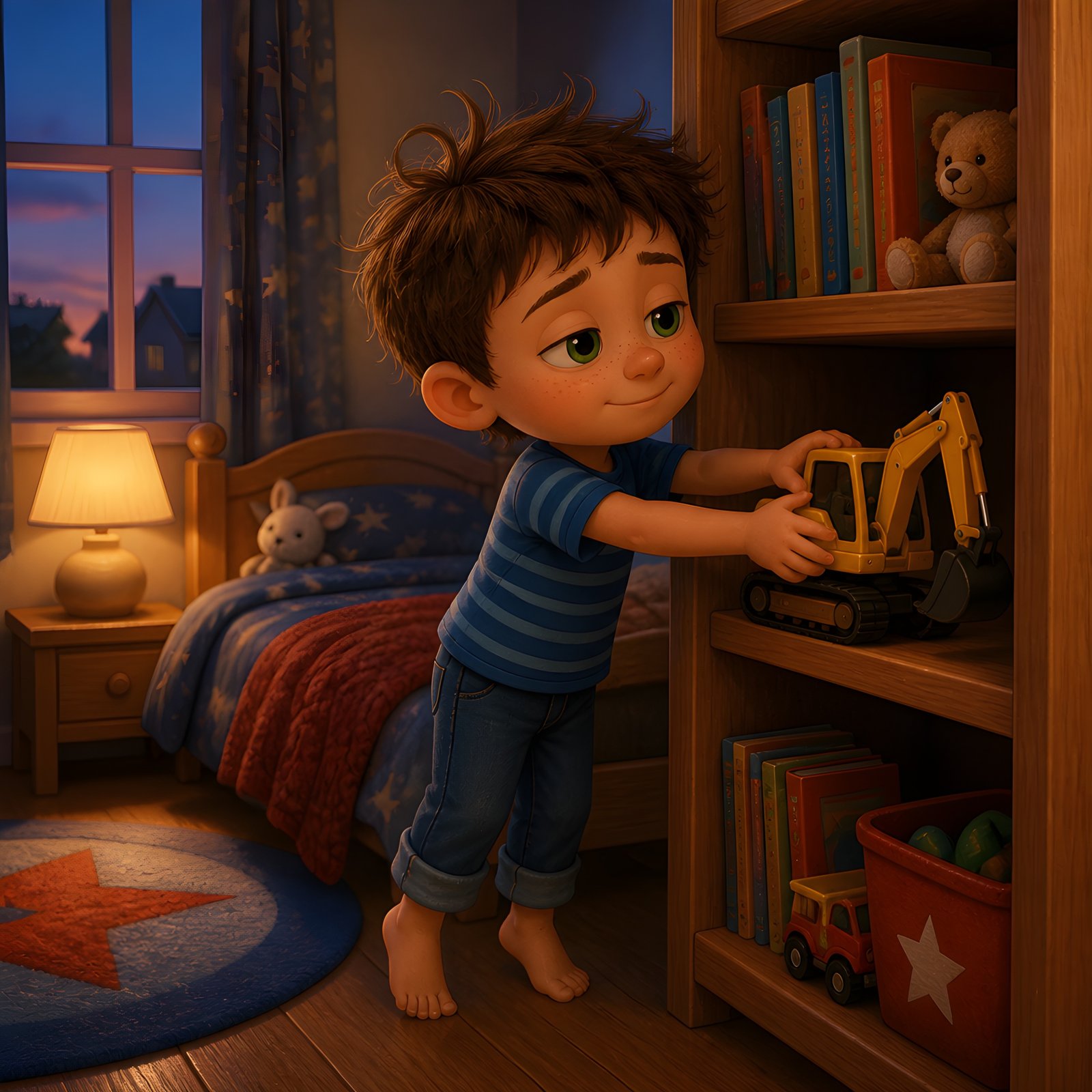
Le soir venu, Milo rangea la pelleteuse sur son étagère. Elle avait deux places bien douillettes, prêtes pour demain.
Et toi, quel jouet tu pourrais prêter à ton copain demain ?
Ferme les yeux, petit conducteur, la nuit tombe doucement…
partage-gentillesse
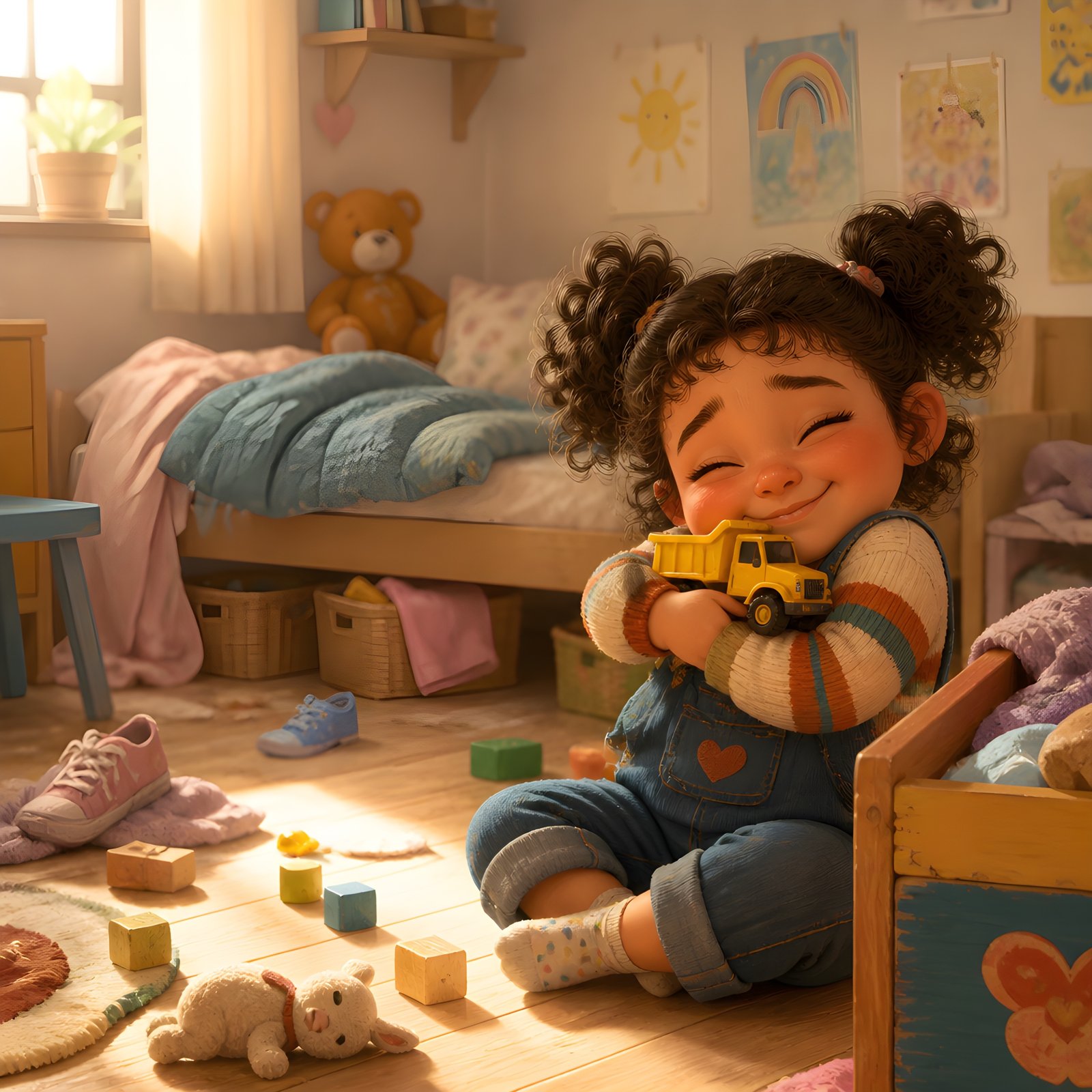
In her bright bedroom, Nina held her favourite toy with both hands.
It was a bright yellow digger, and it was her absolute treasure. “Mine!” she whispered, keeping it safe against her chest.
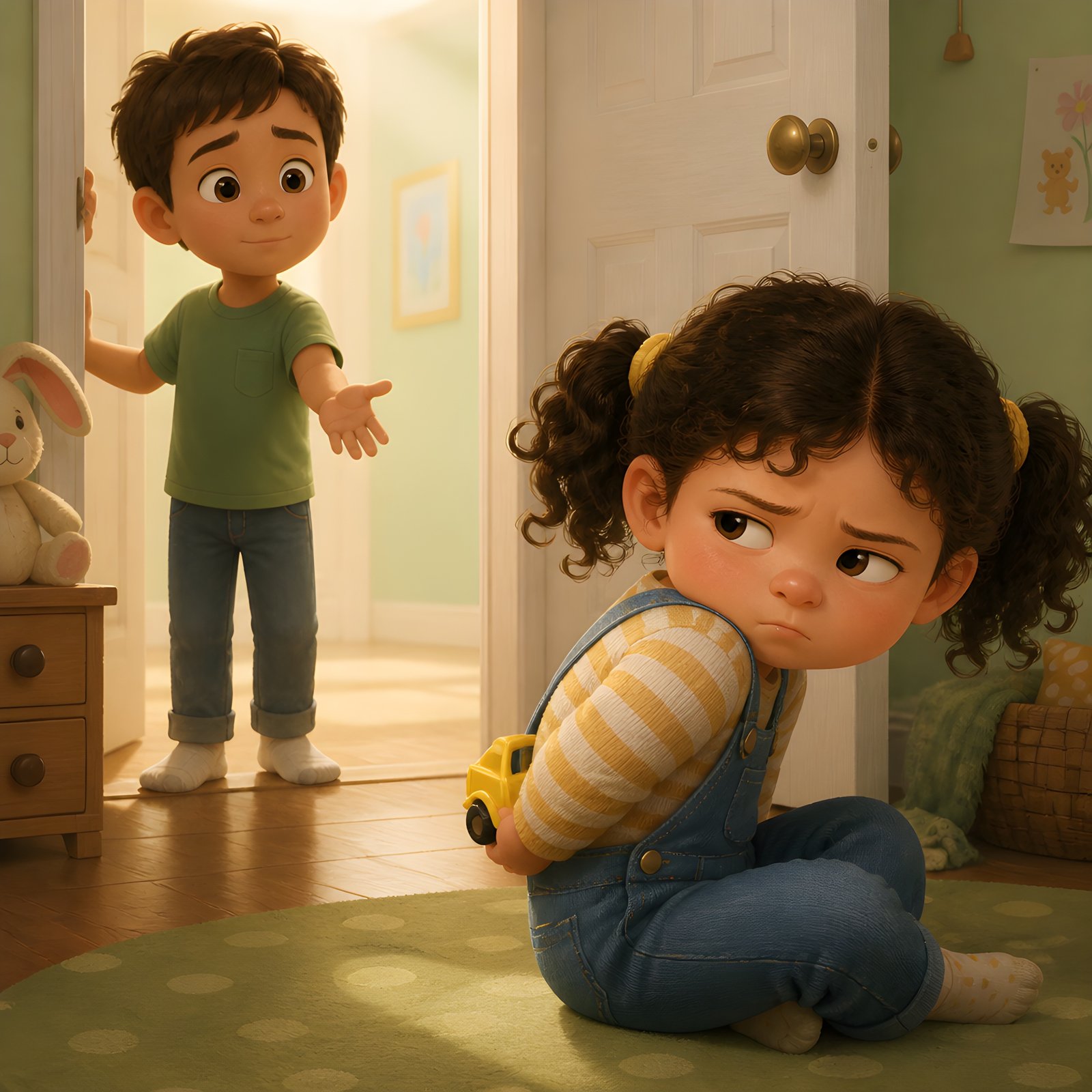
Leo arrived at the door to play together. Quick as a flash, Nina hid the digger right behind her back.
Can you spot the little yellow digger peeking out from under her arm? “The big construction site is my treasure!” she said.
Leo reached out to touch a red building block, but Nina shook her head very hard. “No, no, that’s mine too!” she said.
Leo sat all by himself on the rug, looking quite sad. Nina felt a funny little pinch in her tummy.
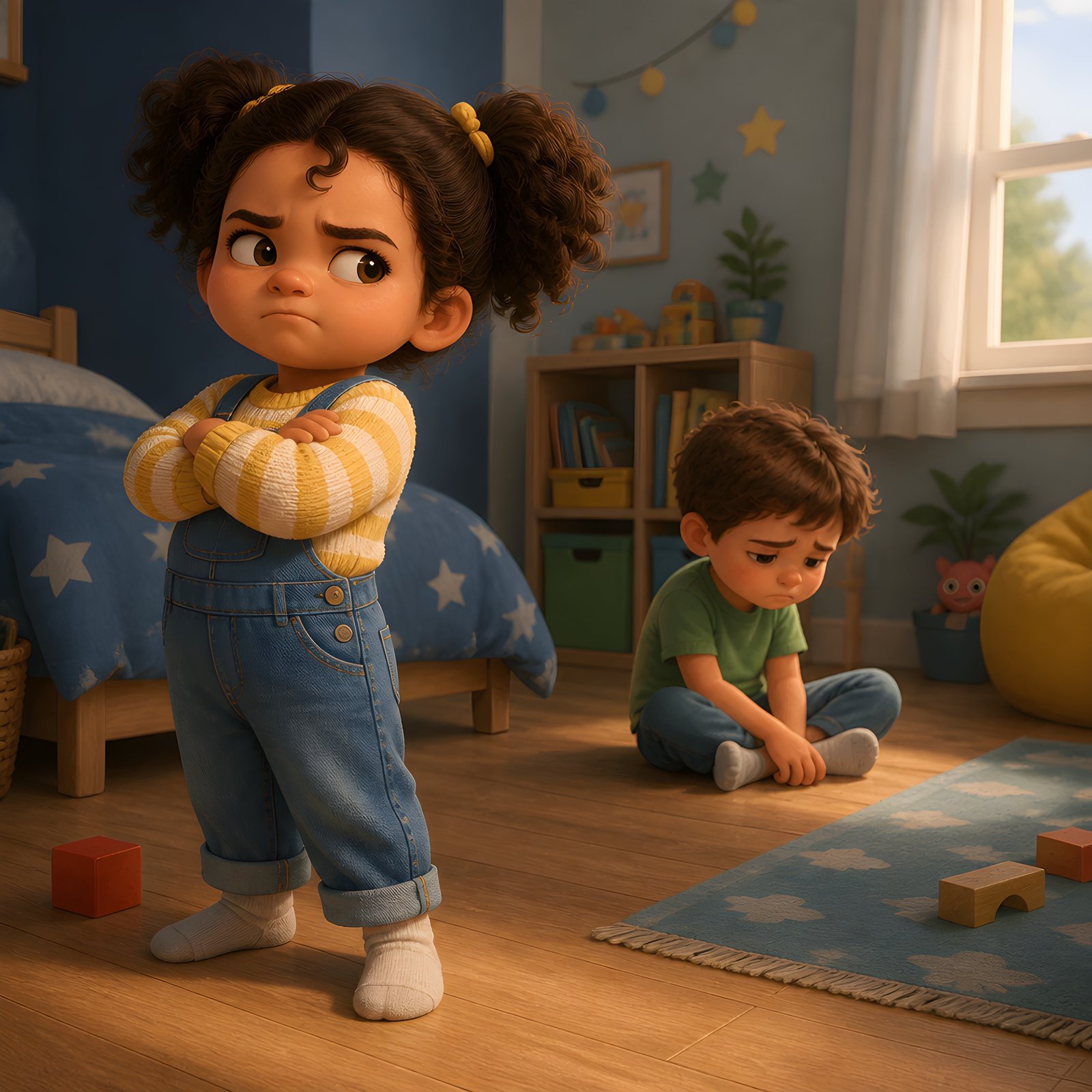
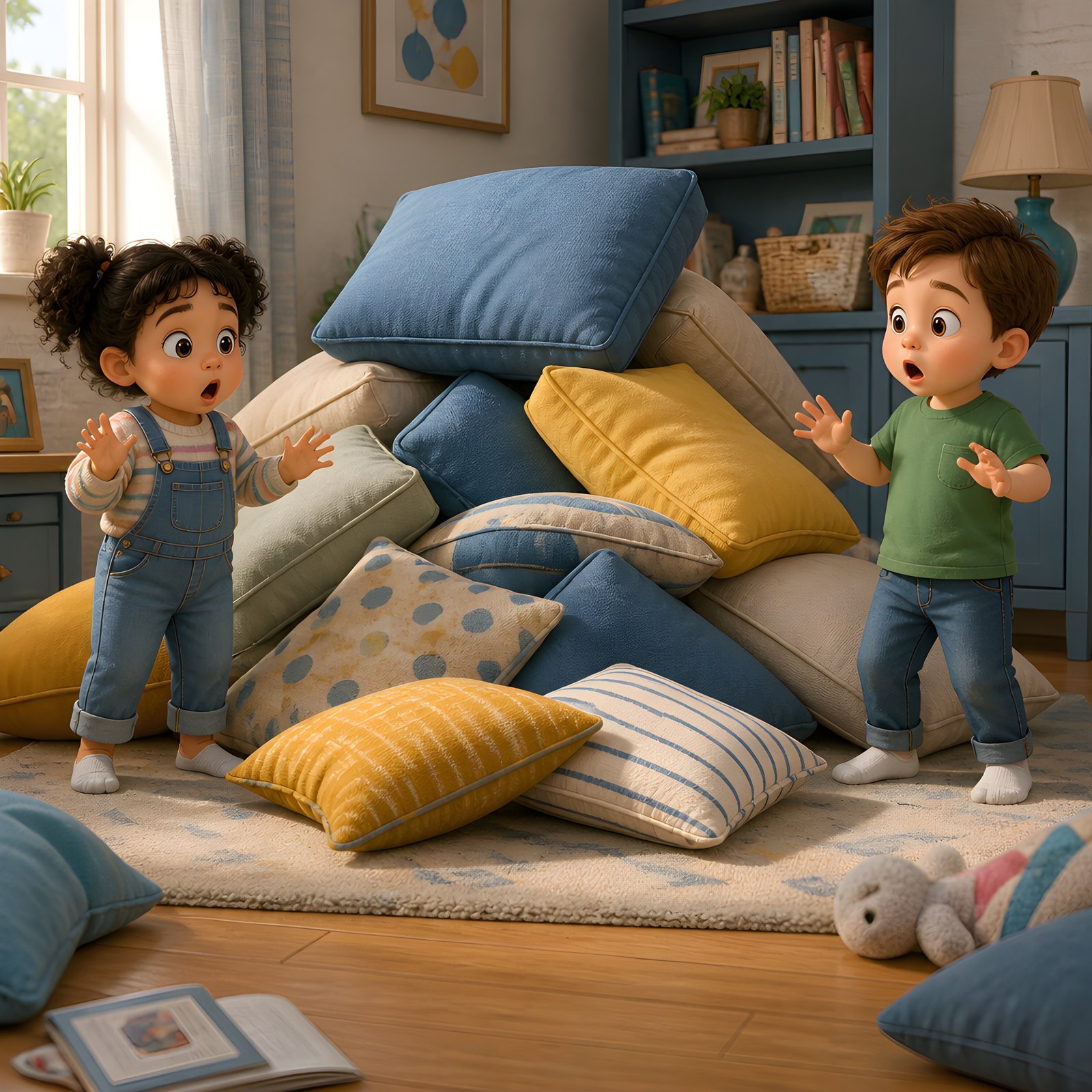
Suddenly, the stack of sofa cushions tumbled right into the middle of the room with a soft thud!
A giant mountain of pillows now blocked the way across the floor. How would they ever get past it?
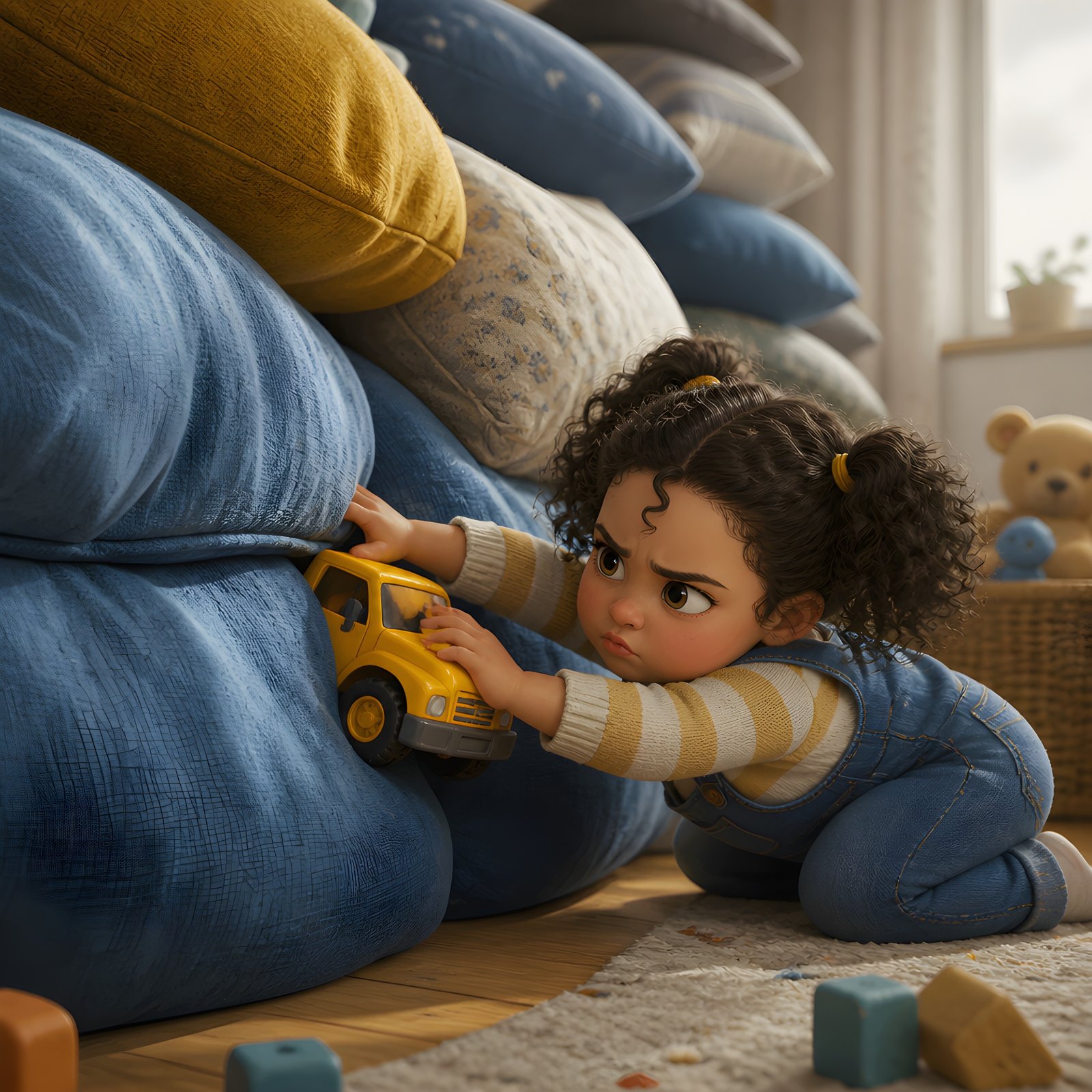
Nina tried to push her heavy yellow digger straight through the cushions, but the wheels got stuck.
Her heart went thump-thump. The digger was much too heavy to push all by herself. What if she needed help?
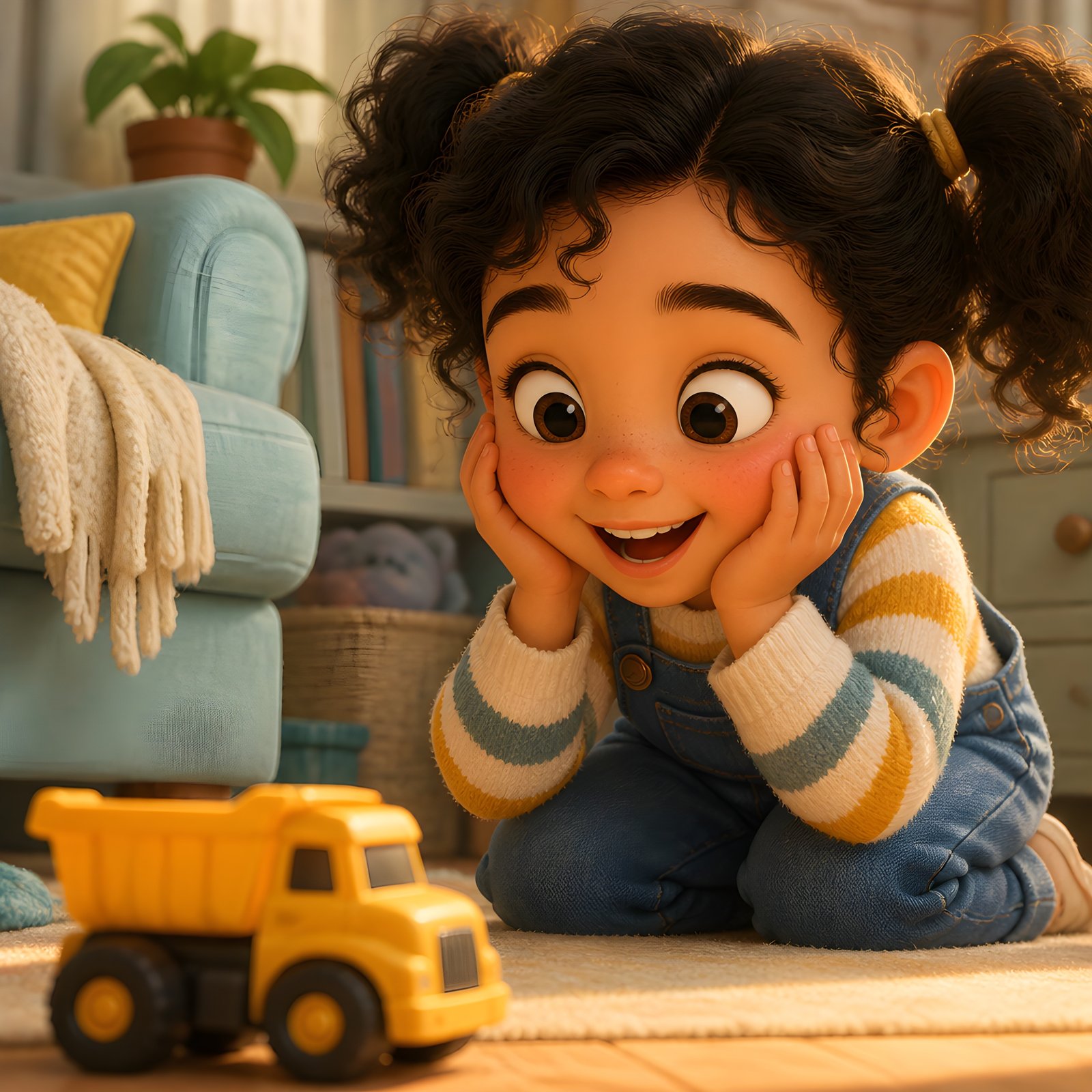
Then, Nina remembered the secret rule of the big engine. It needed two drivers to rumble properly!
“The big construction site needs two drivers!” she said out loud, her eyes sparkling.
Nina turned around and held her hand out to Leo. She nodded her head to invite him over.
Can you nod your head just like Nina? “Come on, let’s drive together!” she whispered.
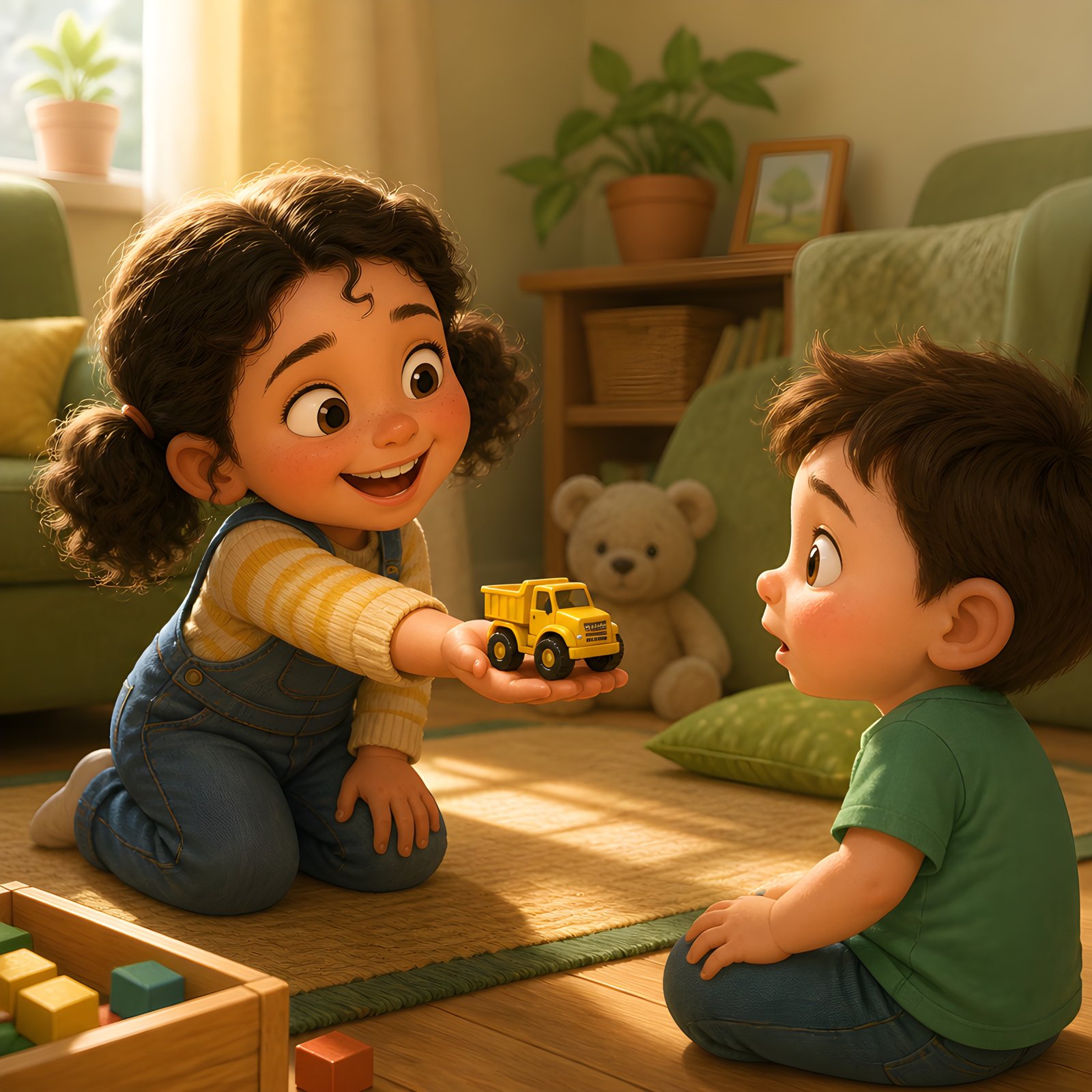
Leo pushed from behind while Nina steered right at the front. Vrouum… splatch!
Together, their wheels rolled right over the cushion mountain. They were a real team!
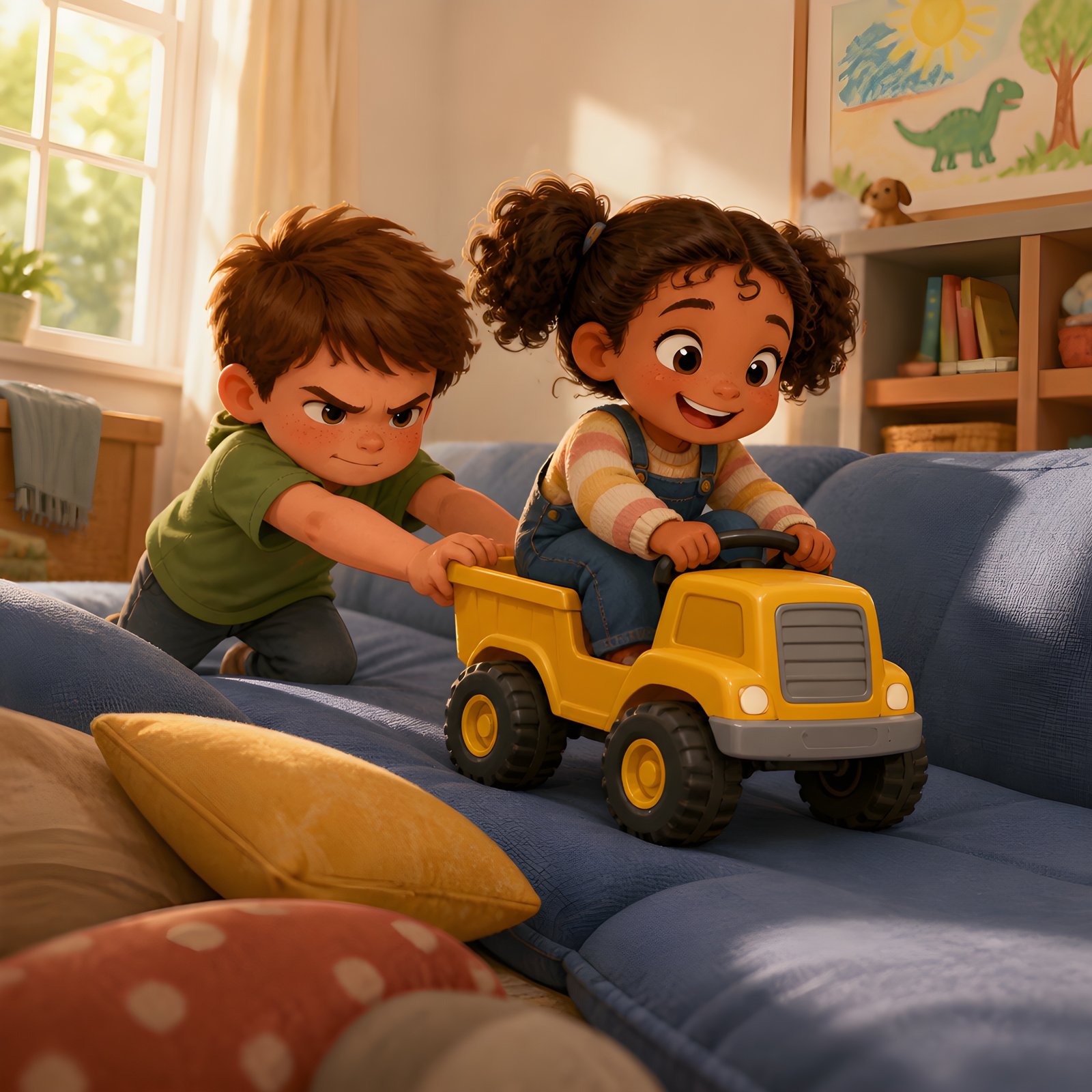
Now it was Leo’s turn to drive the digger across the book bridge. Nina waited patiently, counting softly.
Waiting for your turn was actually super fun when you watched your friend smile.
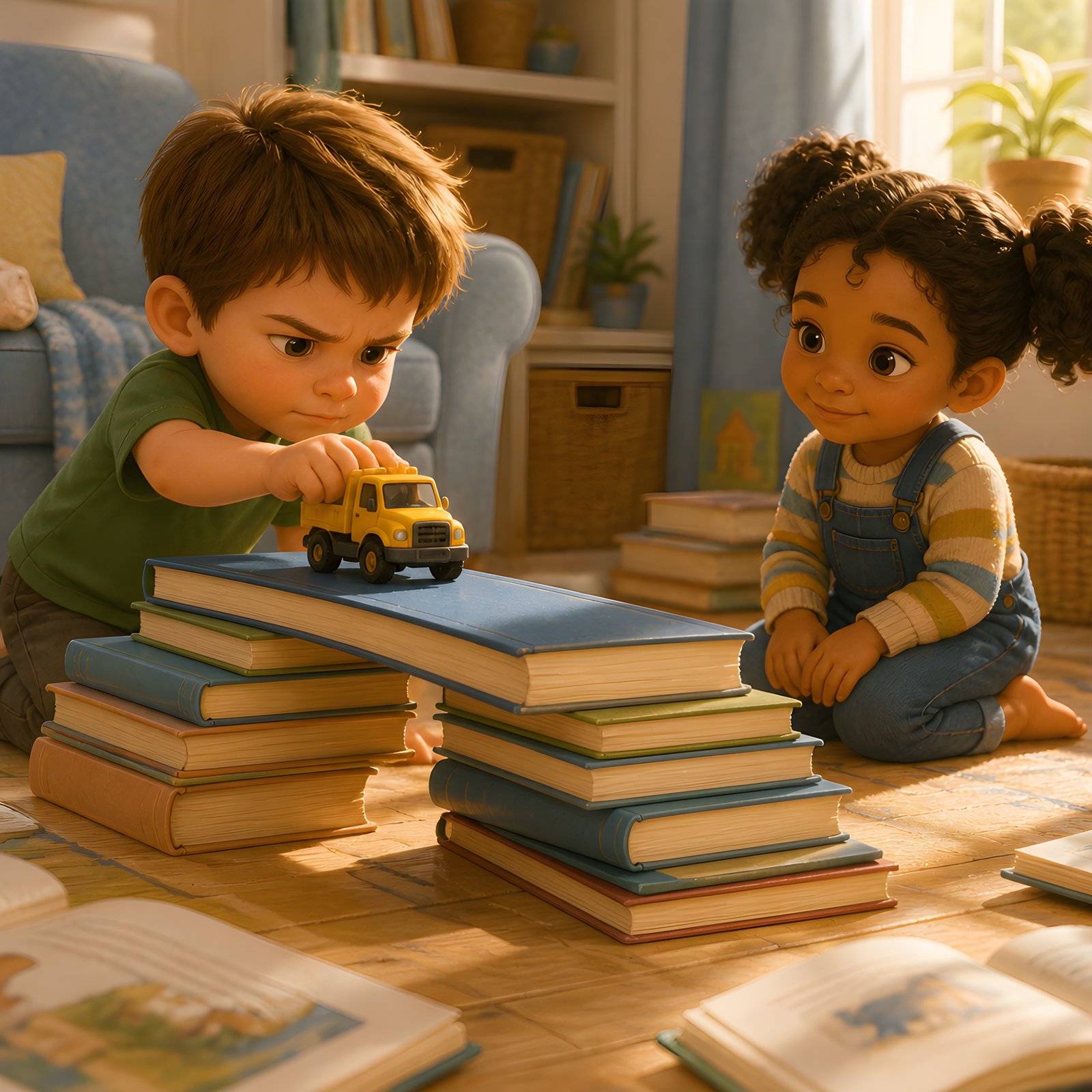
Working side by side, they built the tallest tower in the whole wide world using all their toys combined.
“The big construction site lasts twice as long together!” they cheered happily.
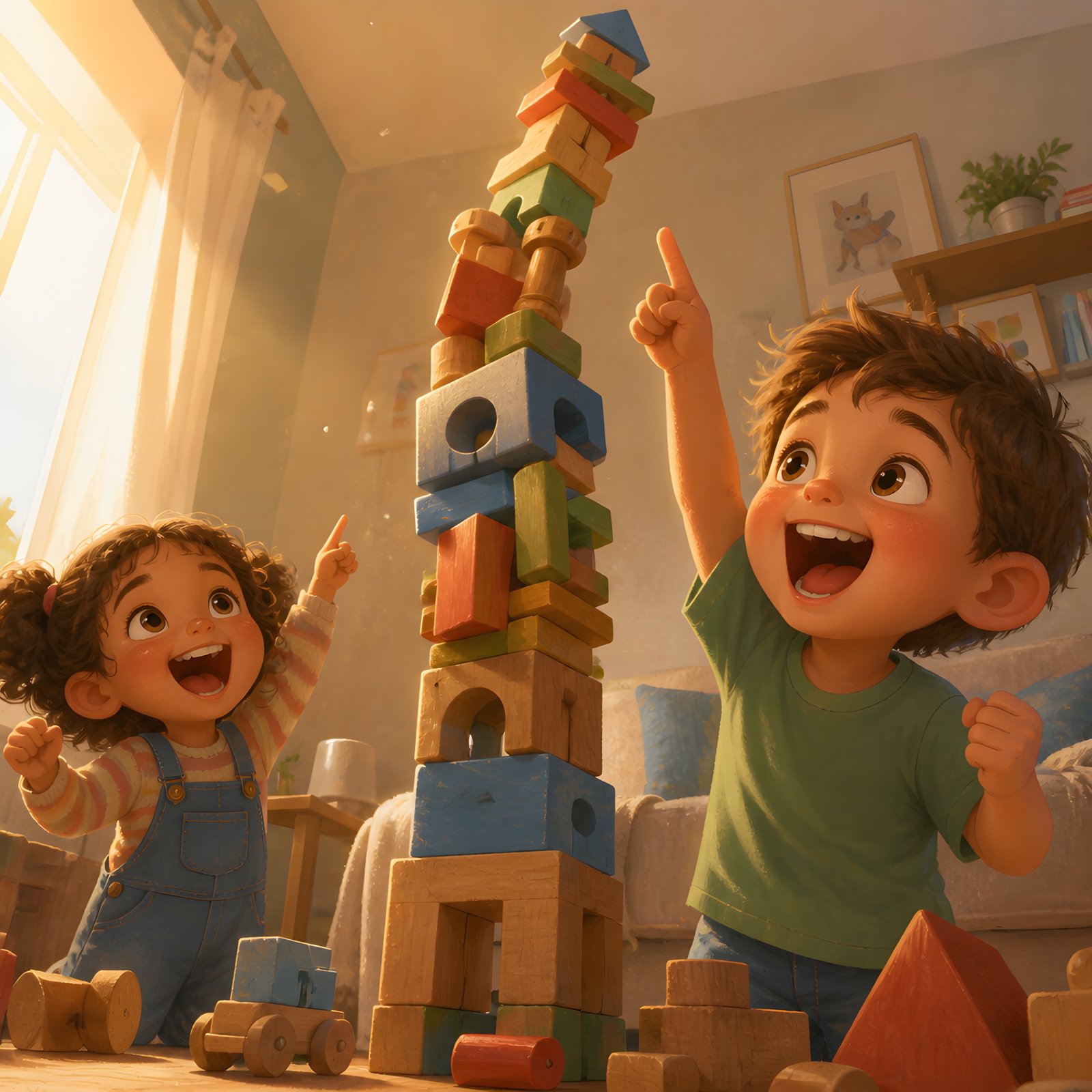
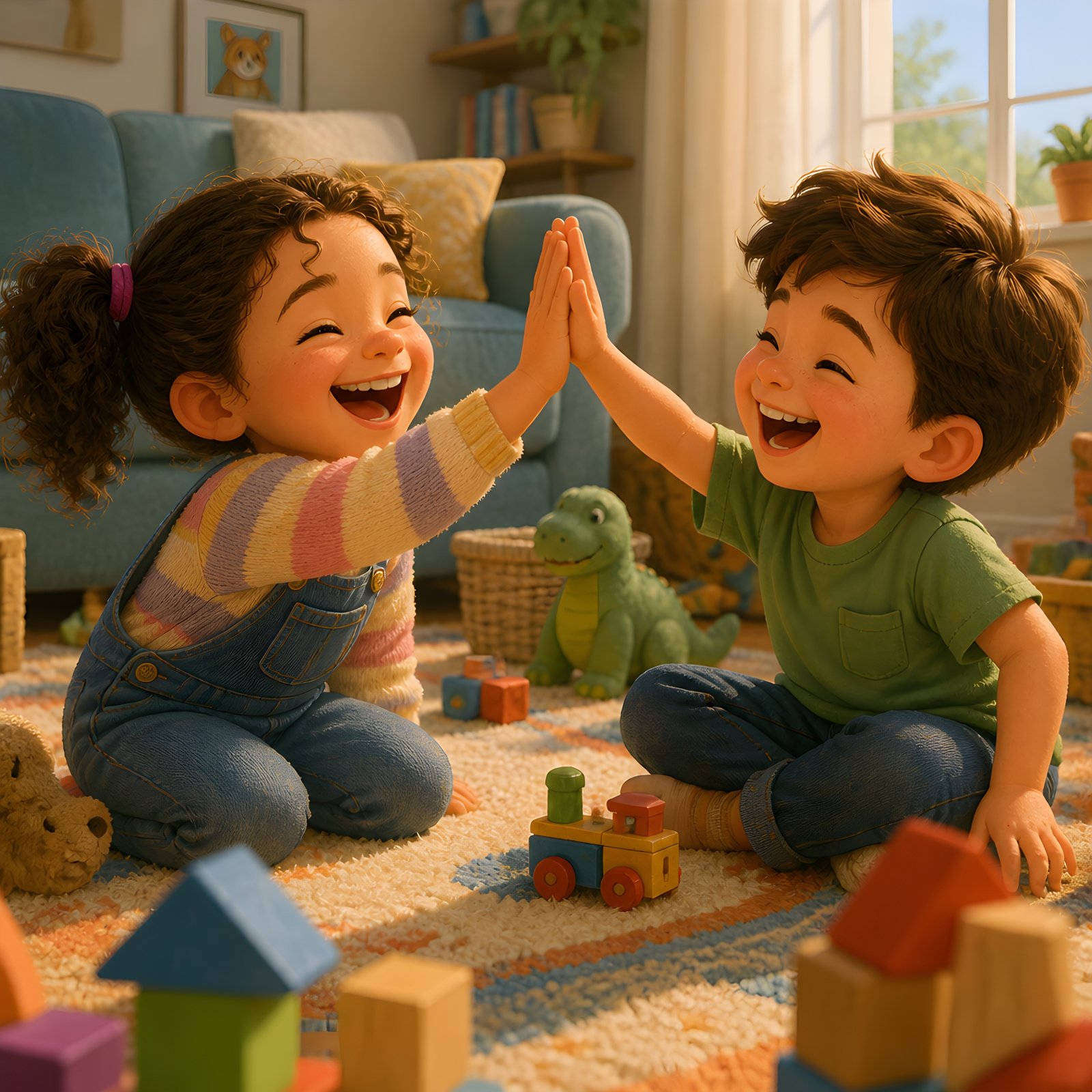
Leo looked at Nina with a huge grin and gave her a high-five. Slap!
They giggled out loud, sitting side by side. Sharing wasn’t losing anything at all; it was pure magic.
Nighttime fell softly over the bedroom. Tucked safely in her bed, Nina hugged her soft toy close.
And you, what toy do you feel like sharing tomorrow? Sleep tight, little builder… shhh…