My child is scared of the bath: why and how to help
Between the ages of two and four, many toddlers develop a sudden, intense fear of the bathtub that often stems from a leap in cognitive imagination rather than a specific traumatic event. You might find yourself standing over a cold tub at seven in the evening while your child screams at the mere sight of the taps or insists on standing in the kitchen sink to be washed.
If my child is scared of the bath, it is usually because their new ability to picture the unseen makes the drain look like a mouth and the rising water feel like a loss of control. This article explains how to validate these developmental fears and provides small, practical strategies to help your family reclaim a peaceful bedtime routine tonight.
- Why Your Toddler Is Suddenly Scared of the Bath
- Common Mistakes That Accidentally Fuel Anxiety
- Gentle Strategies to Restore a Sense of Control
- Ruling Out Physical Pain and Using Personalized Stories
Why Your Toddler Is Suddenly Scared of the Bath
Bath refusal peaks between ages 1 and 4 due to cognitive shifts like magical thinking. Toddlers fear disappearing down drains or losing control, requiring gentle validation and gradual re-exposure to water play.
The Explosion of Imagination and Magical Thinking
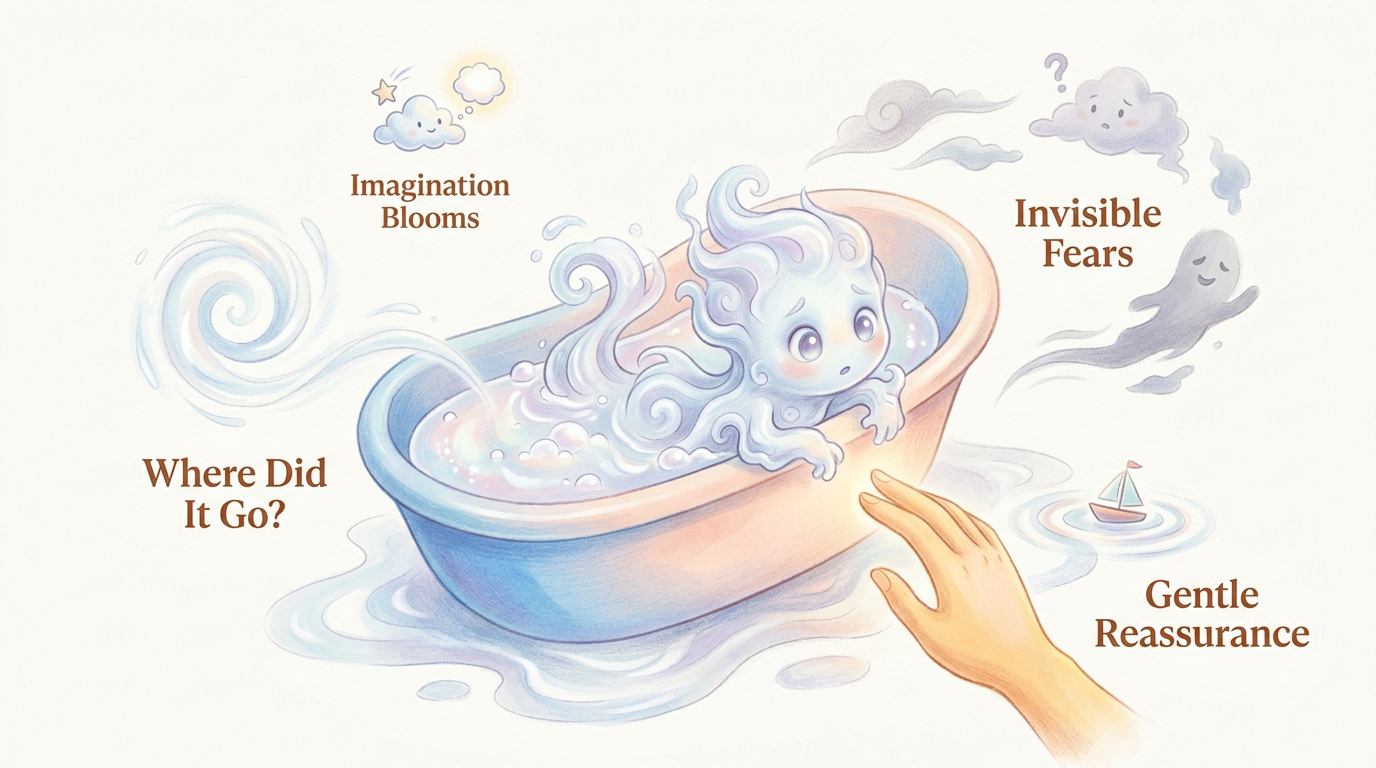
Between ages two and four, cognitive growth accelerates. Imagination develops faster than logic, creating fears of invisible bathroom monsters. These abstract threats feel entirely real to their developing brains.
Toddlers begin picturing things they cannot see, turning the room into a mystery. They lack the experience to dismiss these thoughts. Support and patience are the only ways forward.
Toddlers between 2 and 4 years old start mentally representing things they cannot see, leading to fears of invisible bathroom monsters.
Misjudging Scale and the Mystery of the Drain
Toddlers struggle to judge their size relative to the plughole. They watch water vanish and worry they might follow. This spatial confusion stems from a lack of scale understanding.
Water disappears into an unknown location without their consent. This loss of control triggers immediate panic. The drain represents a giant mouth, making small children feel physically vulnerable.
We wrote a book where your child is the hero. Toggle between versions here to see their name in the story. Try that example to help them reclaim their confidence.
Common Mistakes That Accidentally Fuel Anxiety
While these fears are natural, our initial parental reactions can sometimes make the situation more intense than it needs to be.
Why Forcing the Issue or Dismissing Feelings Backfires
Forcing a screaming child into water is counterproductive. It teaches them that bath time violates their safety. This breaks the trust between parent and child.
Telling a child there is nothing to fear is unhelpful. It invalidates their actual sensory experience. Their brain is signaling a real, physical danger.
- Breaks trust
- Increases cortisol
- Creates phobias
- Prevents regulation
The Hidden Cost of Skipping Baths for Weeks
Total avoidance removes the chance to unlearn fear. If the tub stays empty, the fear grows larger. We must maintain a gentle connection to the room.
Keep the bathroom in the daily routine for teeth brushing or hand washing. Familiarity reduces the perceived threat of the space while providing security.
Our personalized story lets your child decide the water depth. Try the example on this page; toggle between girl and boy versions now.
Gentle Strategies to Restore a Sense of Control
To bridge the gap between fear and fun, we need to hand the steering wheel back to the child through small, manageable choices.
Starting Small with Sink Washes and Low Water Levels
Use the kitchen sink for washing. It feels safer and less overwhelming than the tub. A few inches of water can rebuild lost confidence.
Let the child decide the water depth. Giving them this choice restores their sense of agency.
Control is the best antidote to anxiety. Small wins lead to big progress.
Changing the Timing of Taps and the Plug
Run the bath before the child enters. The sound of rushing water is often a trigger. Silence makes the room feel much calmer.
Pull the plug only when they leave. This prevents noise anxiety and the fear of the drain.
Simple environmental changes yield massive results. Respect their sensory boundaries every day.
Our personalized book makes your child the hero. Toggle between the girl and boy versions on this page to see them master the taps. Try the example and download the PDF.
Making Hair Rinsing a Predictable Event
Use a dry flannel over the eyes. A clear countdown gives the child agency. They know exactly when the water will start and stop. Predictability is key.
Rinse hair backwards to avoid water on the face. This prevents the sensation of losing air. Many toddlers fear the feeling of being smothered.
Ruling Out Physical Pain and Using Personalized Stories
Beyond psychology, we must ensure there are no physical barriers to comfort while finding creative ways to rewrite the narrative.
Distinguishing Between Behavioral Fear and Medical Discomfort
| Symptom | Possible Cause | Action Recommended |
|---|---|---|
| Stinging skin | Eczema flare-up | Check for dry patches and use emollients. |
| Crying during urination | UTI | Consult a doctor for a urine test. |
| Red eyes | Soap sensitivity | Switch to pH-neutral or tear-free wash. |
| Fear of noise | Sensory processing | Reduce bathroom echoes with rugs or towels. |
Consult a health visitor if pain is suspected. Sometimes the water actually hurts their skin. Medical issues require professional advice rather than behavioral tips.
Always check for rashes or infections. Physical comfort is the foundation of safety.
Turning Bath Time into a Personalized Hero Story
We wrote a book to help. It is our product, designed for this struggle. Your child becomes the hero of the story.
The book exists in both girl and boy versions. A real example is embedded on this page. You can toggle between variants to see the difference. Please download the PDF to try it at home.
Stories help children process their fears safely. Let them see themselves conquering the bathtub adventure.
If your child is scared of the bath, remember that this phase is a normal shift in imagination, not a parenting failure. By restoring their sense of control through low water levels and predictable routines, you turn fear into a shared adventure. Start tonight to reclaim a peaceful, tear-free bathroom experience.
FAQ
Why is my child suddenly afraid of the bath?
It is incredibly common for a bath fear to appear out of nowhere between the ages of two and four. This sudden shift usually isn’t caused by a single bad experience or a parental mistake; rather, it is a sign that your child’s imagination has developed faster than their logic. At this stage, they begin to picture threats they cannot see, turning a familiar routine into a source of mystery and anxiety.
The bathroom is a sensory-heavy environment where water arrives on its own, noises echo off hard tiles, and things disappear down a hole. To a toddler, these abstract changes feel very real. Understanding that their magical thinking is at work, rather than a specific trauma, can help you approach the situation with the patience and calm they need to feel safe again.
What if my baby is scared of the bath and screams before the water is even on?
When a child panics before the taps are even turned, they are reacting to the environment itself. The room holds several potentially frightening elements like the loud extractor fan, the flushing toilet, or the hard surfaces that amplify every sound. Forcing a screaming child into the tub only teaches them that the bath is something that “happens” to them, breaking trust and increasing their distress.
Instead of forcing the issue, keep the bathroom as part of the daily routine without the pressure of the tub. Try washing them at the kitchen sink or using a flannel while they stand on the mat. By maintaining a gentle connection to the room and allowing them to stay in control, you prevent the bathroom from becoming a forbidden “scary zone” while giving them the space to unlearn their fear.
Why does my child think they will go down the bathtub drain?
A child of three cannot reliably judge that they are much bigger than the plughole. They see a large volume of water vanishing into a small hole and, lacking a sense of scale, naturally worry they might follow. To them, the drain is a mysterious disappearance rather than a simple exit for water.
To help, use concrete demonstrations. Measure a favorite bath toy or even their own hand against the plughole to show them it simply won’t fit. Explain the water’s journey in plain words: it travels down a pipe and out of the house, rather than just vanishing. You can also wait to pull the plug until they are out of the room, dry and standing on the mat, so the loud, swirling part of the bath happens without them in it.
How can I make hair rinsing less scary for my toddler?
For many children, water over the face isn’t just a rinse; it feels like a few seconds with no air and no warning. To restore their sense of agency, try rinsing their hair backwards. Have your child hold a dry flannel over their own eyes to protect them from splashes and let them perform the countdown themselves.
Giving them the “steering wheel” by letting them decide when the water starts and stops makes the event predictable. When a child knows exactly what is coming, the sensation of losing control vanishes, turning a stressful moment into a manageable part of the routine.
When should I worry that my child’s bath fear is actually physical pain?
It is always worth ruling out medical discomfort, as a child avoiding pain looks exactly like a child being difficult. Conditions like eczema, a reaction to a new soap, or a urine infection can make contact with water genuinely sting. If the water hurts their skin, no amount of behavioral tips will help until the underlying cause is addressed.
Check for rashes, redness, or signs of discomfort during urination. If you suspect a physical cause, consult a doctor or health visitor. Once any potential pain is managed, you can return to working on the psychological side of their bath anxiety with a clean bill of health.
How can stories help my child overcome their fear of the bathroom?
Personalized stories turn a frightening situation into an adventure where the child is the hero. By using their own name and describing their specific bathroom, taps, and toys, you help them process their fears safely. In these stories, the child is the one who decides how deep the water goes and when the drain is allowed to open.
We have designed a special hero story to help families navigate this struggle. By seeing themselves conquer the “adventure” of bath time in a book, children can internalize that sense of control and carry it back into the real bathtub. You can download the PDF version to try this creative approach at home tonight.
peur-du-bain
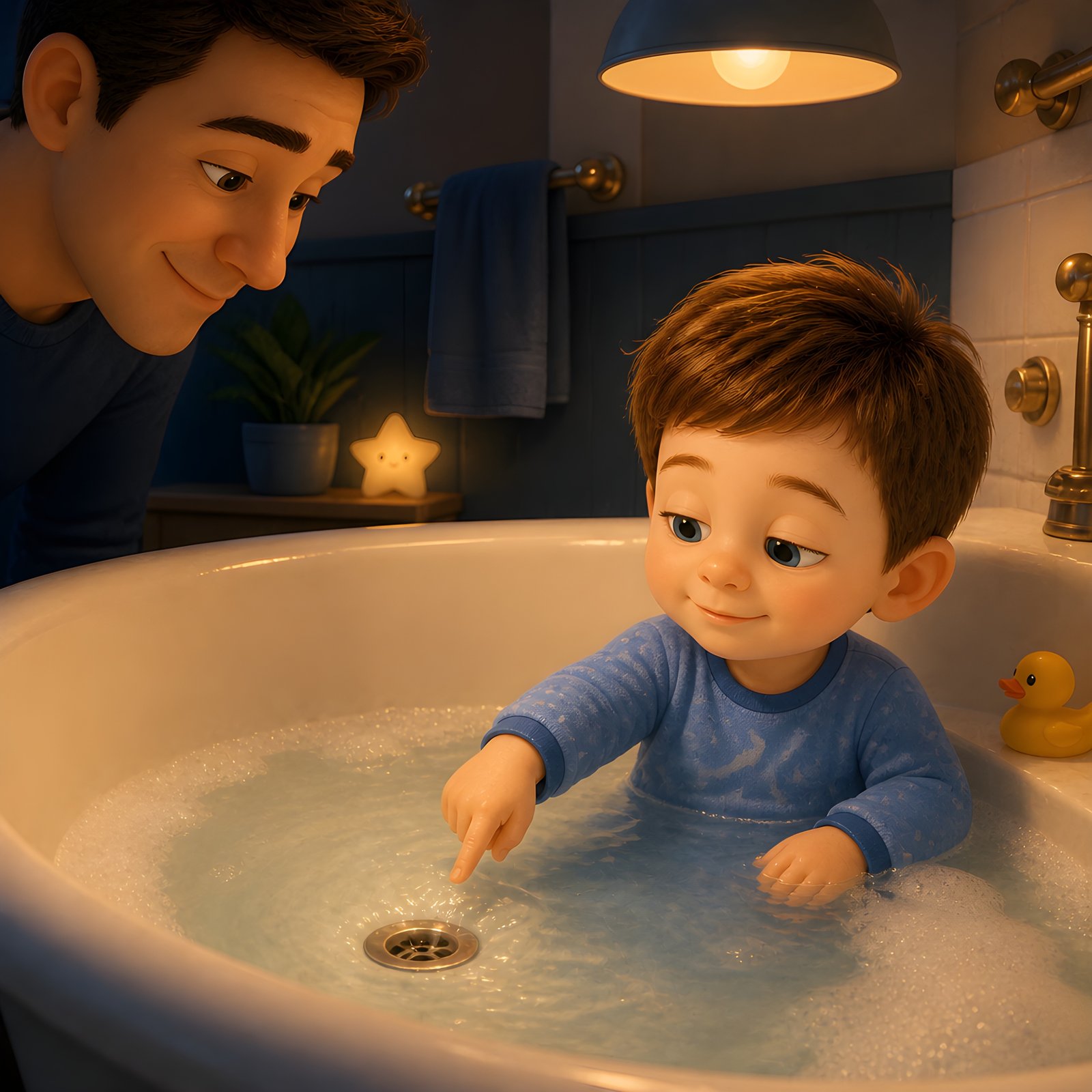
Milo lived in a house with a very nice, very white bathtub. He used to love it.
But today, before the taps were even turned on, Milo stopped at the edge of the mat and began to cry.
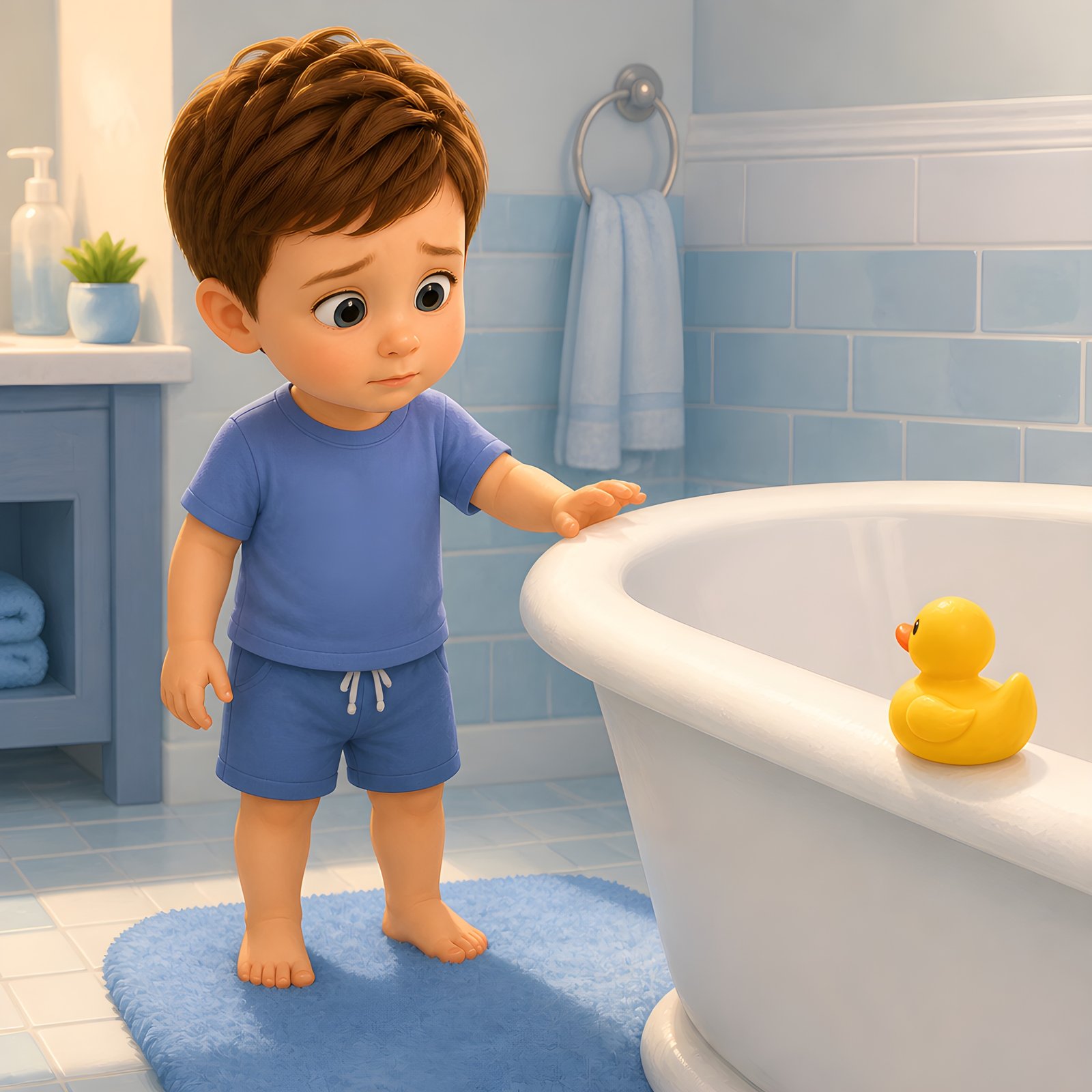
Nobody knew why. Nothing bad had happened.
Milo just sat on the mat, crossing his arms and keeping his heel pressed firmly against the floor. For him, the bath wasn’t just a tub. It had a secret, scary mouth.
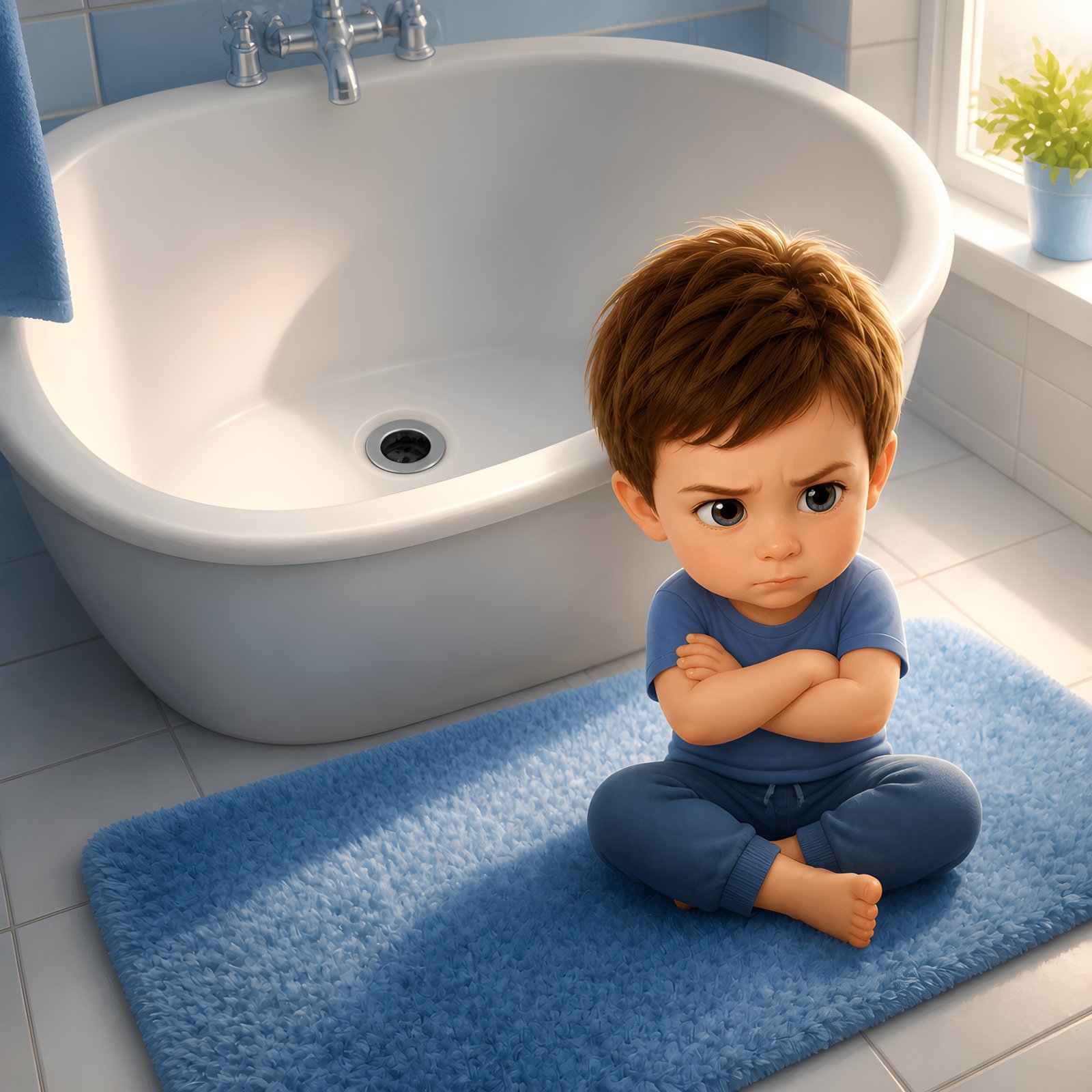
A grown-up sat quietly on the floor right beside him. Then, a little green frog toy hopped onto the edge of the bath, looking completely unbothered.
“The water goes away, but the water comes back!” whispered the frog.
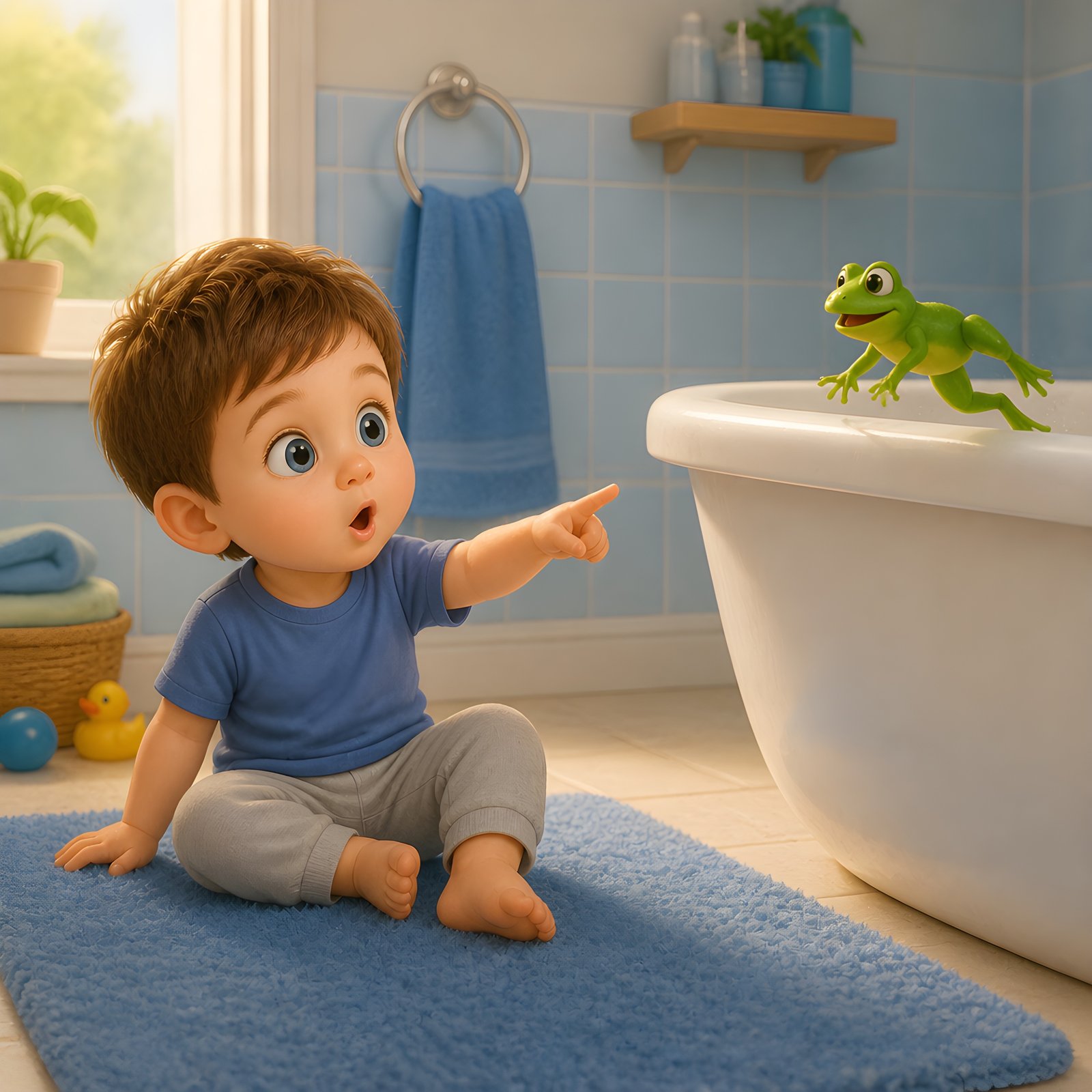
The frog knew exactly where the water went. It didn’t vanish forever.
It traveled down the plughole, through a long pipe under the garden, out to a big place to get cleaned, and came back one day as rain on his window. Fffouuu, blew the wind.
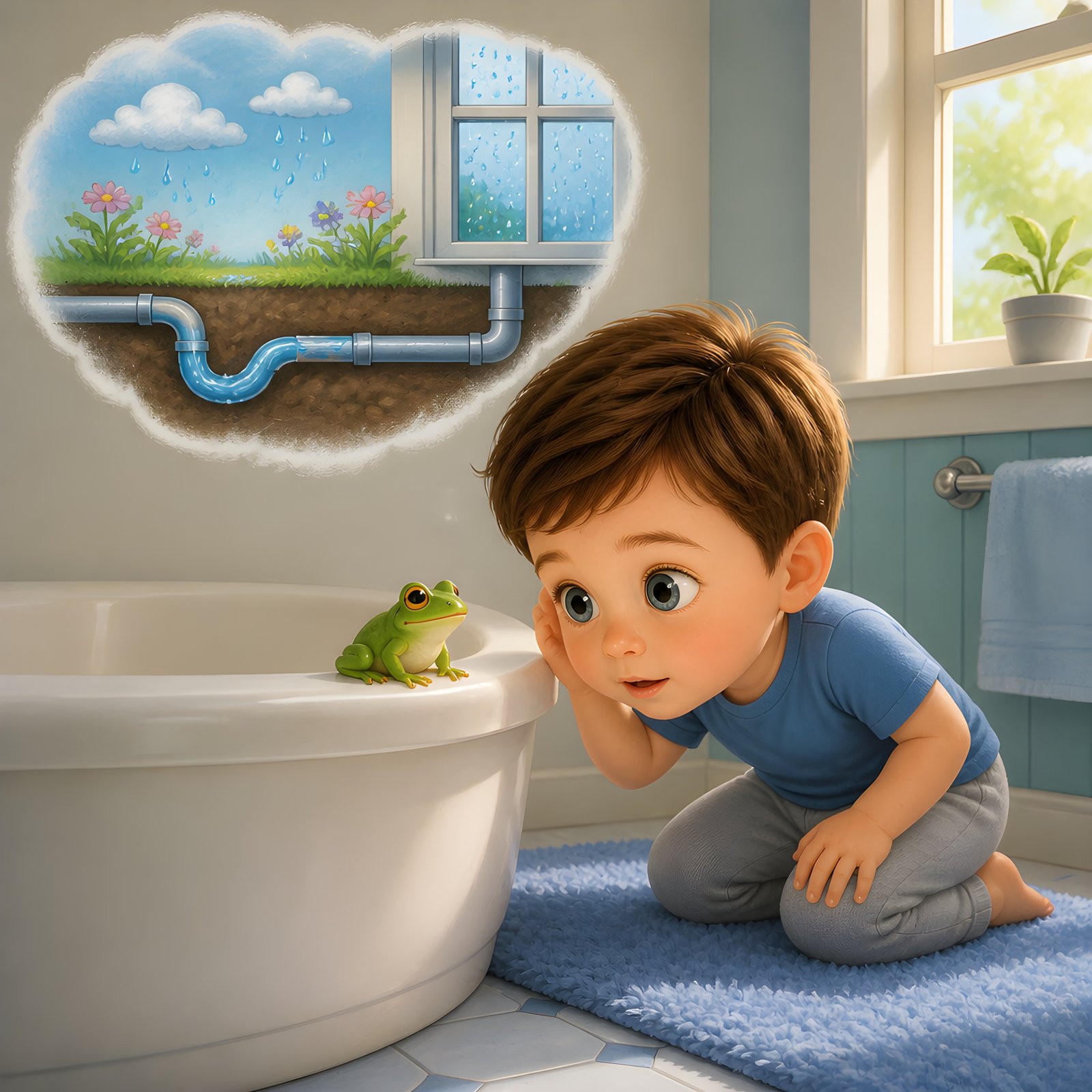
Milo climbed into the dry tub with his frog. With the grown-up right there, they tried a little experiment.
They held a toy next to the plughole. “Splash? No!” The toy was much too wide.
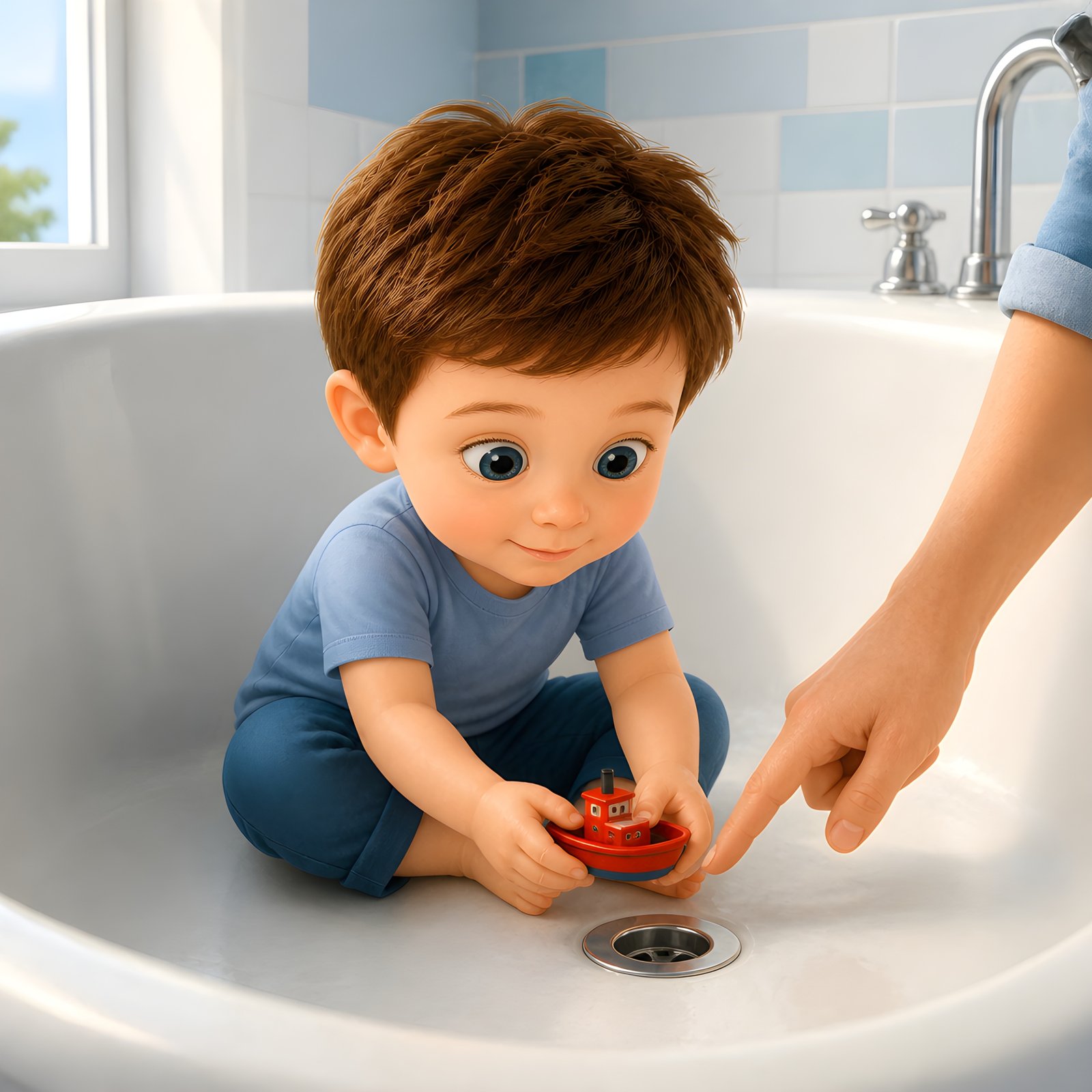
They tried a flannel. It wouldn’t fit either. Then Milo looked at his own hand right above the dark hole.
His heart beat a little fast. Thump, thump. What if the hole was too big after all?
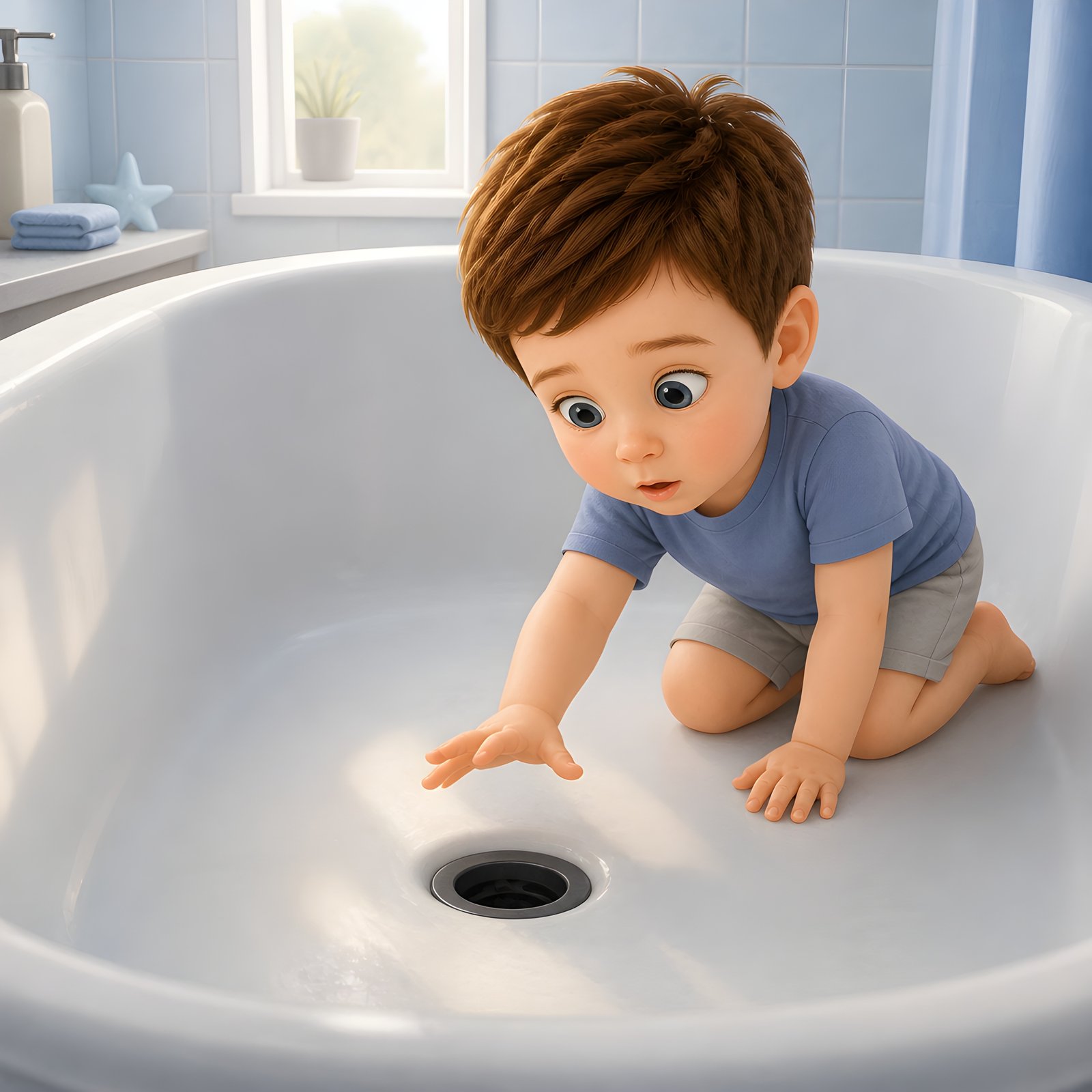
The grown-up smiled and gently touched his shoulder. “Look at you, Milo. You are so much bigger than that little hole.”
Milo looked down. It was true. He was huge!
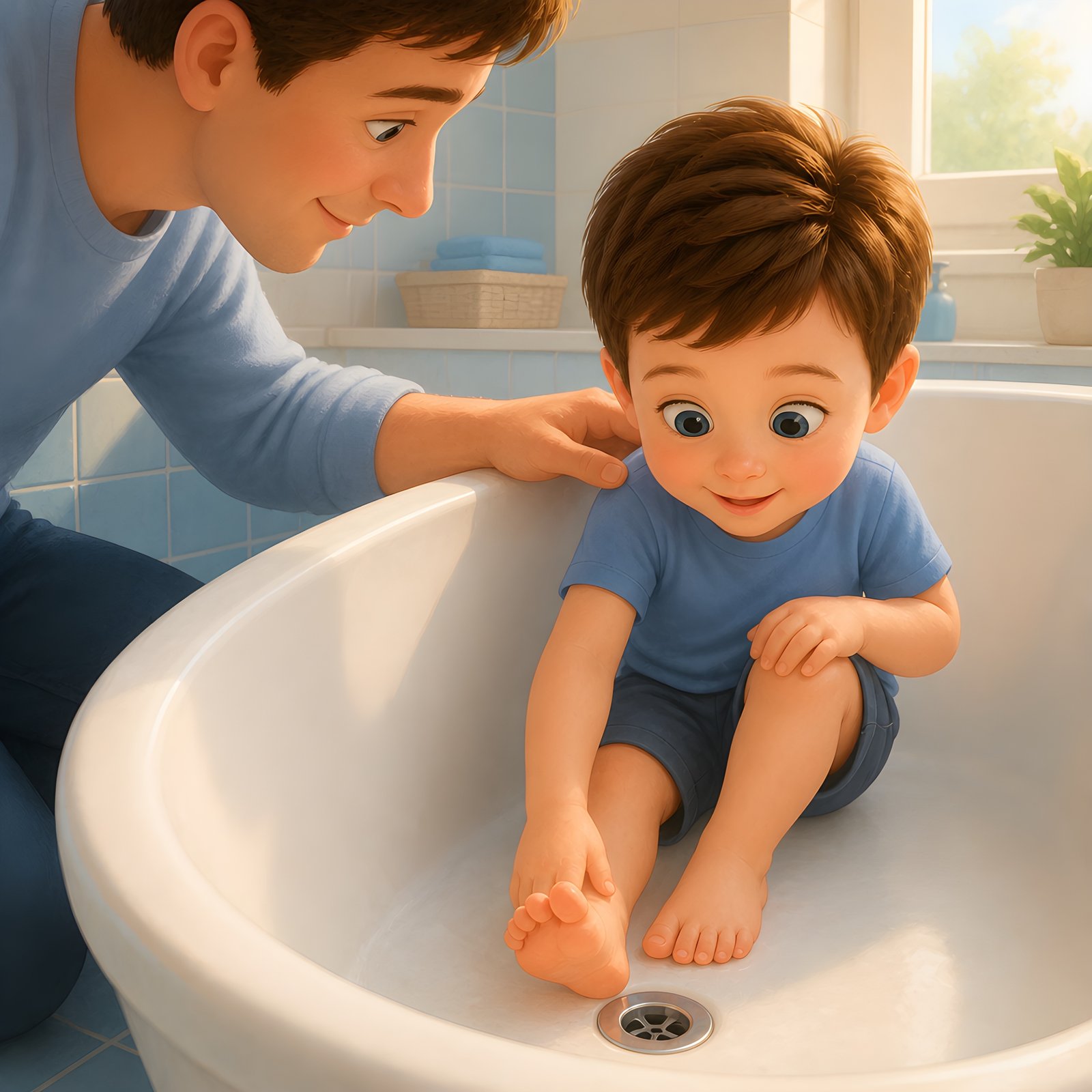
Milo took the controls. He reached out and told the taps exactly when to stop.
The water climbed up his legs, stopped right at his chosen line, and stayed there. “The water goes away, but the water comes back!” said Milo.
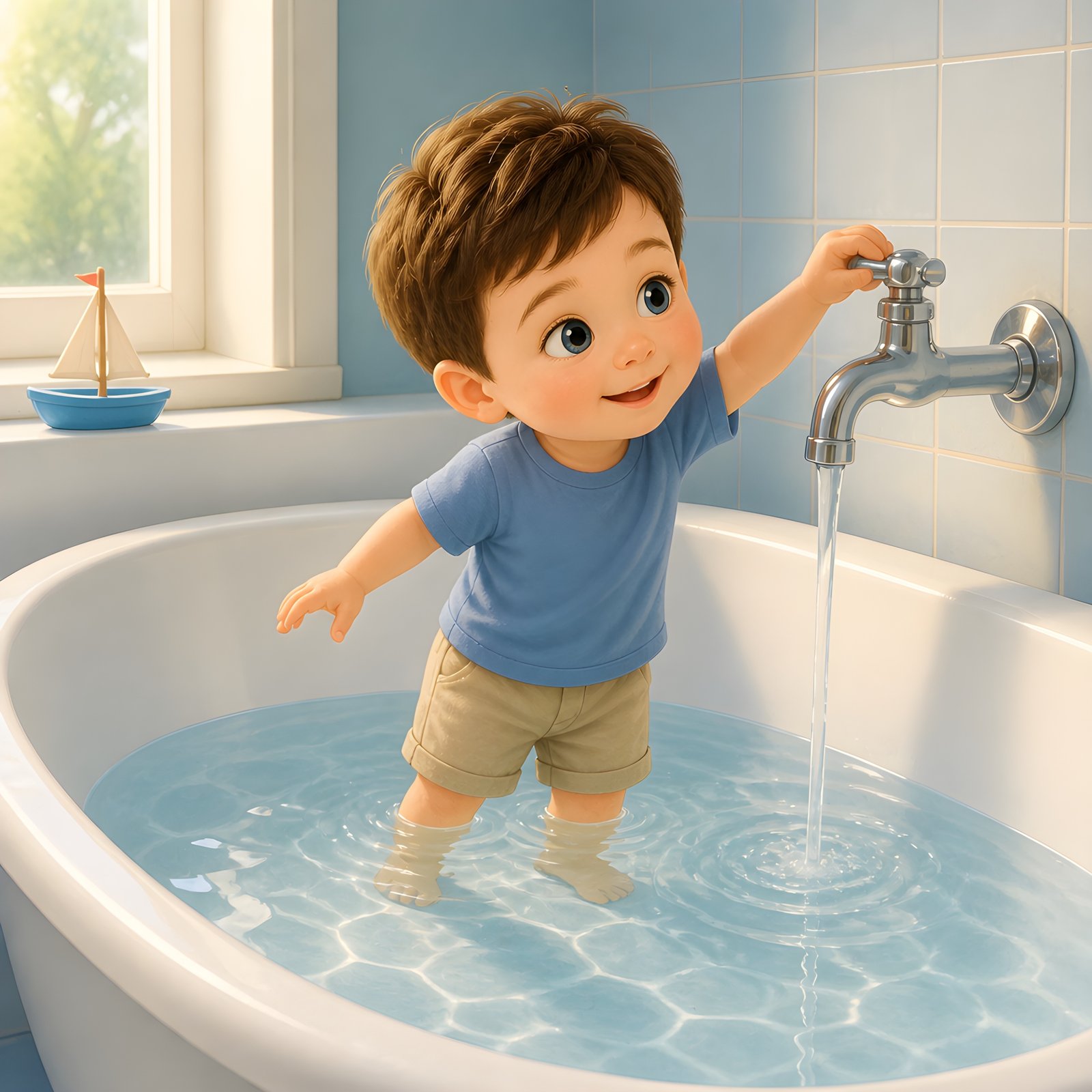
The bath was not a monster anymore; it was a swimming pool! Milo splashed and laughed with his frog.
Plip, plop, splash! He was the captain of the water, and the water only did what he wanted.
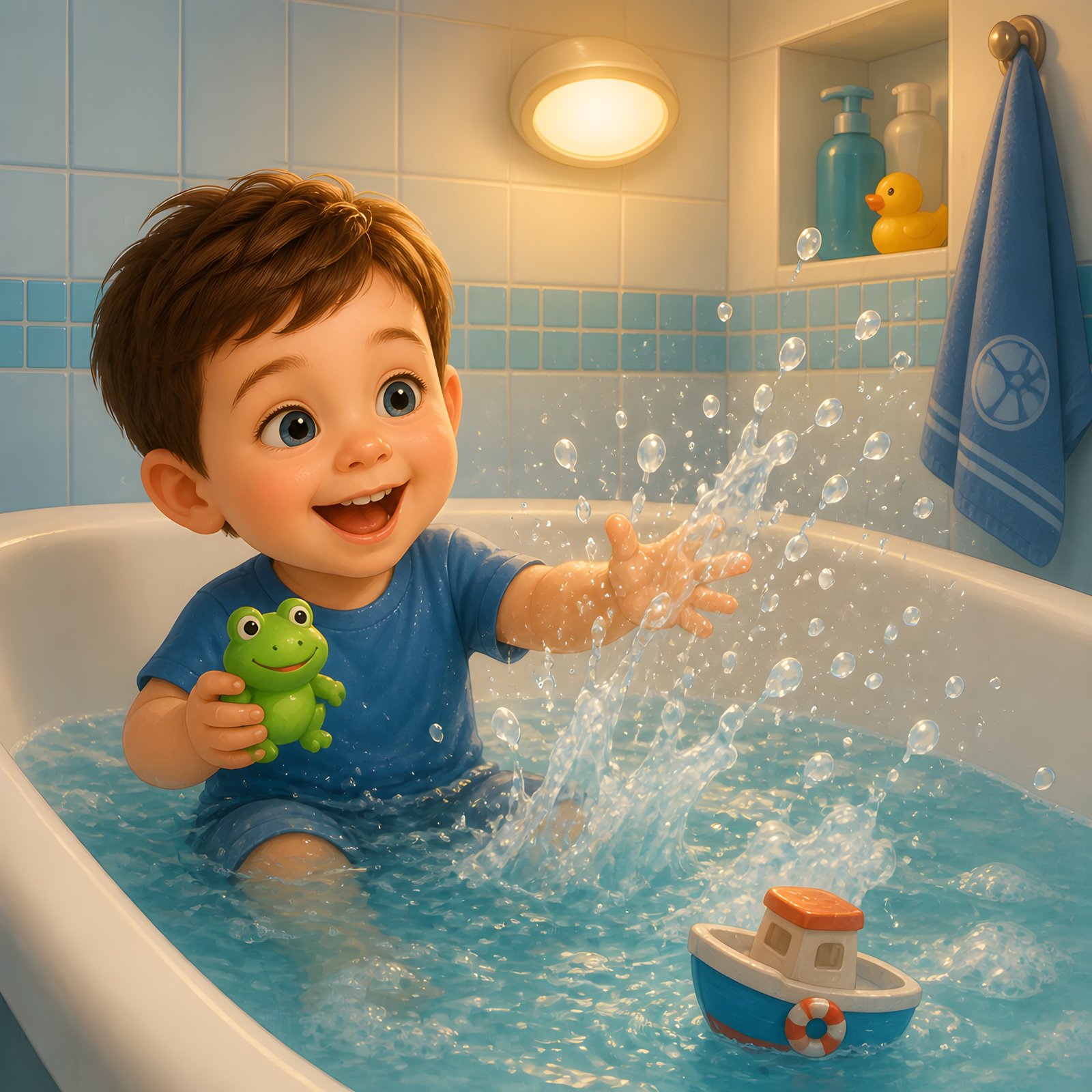
When it was time to get out, Milo stood safely on his mat, warm and dry. He was the one who pulled the plug.
Glou-glou-glou! went the water as it rushed down the pipe.
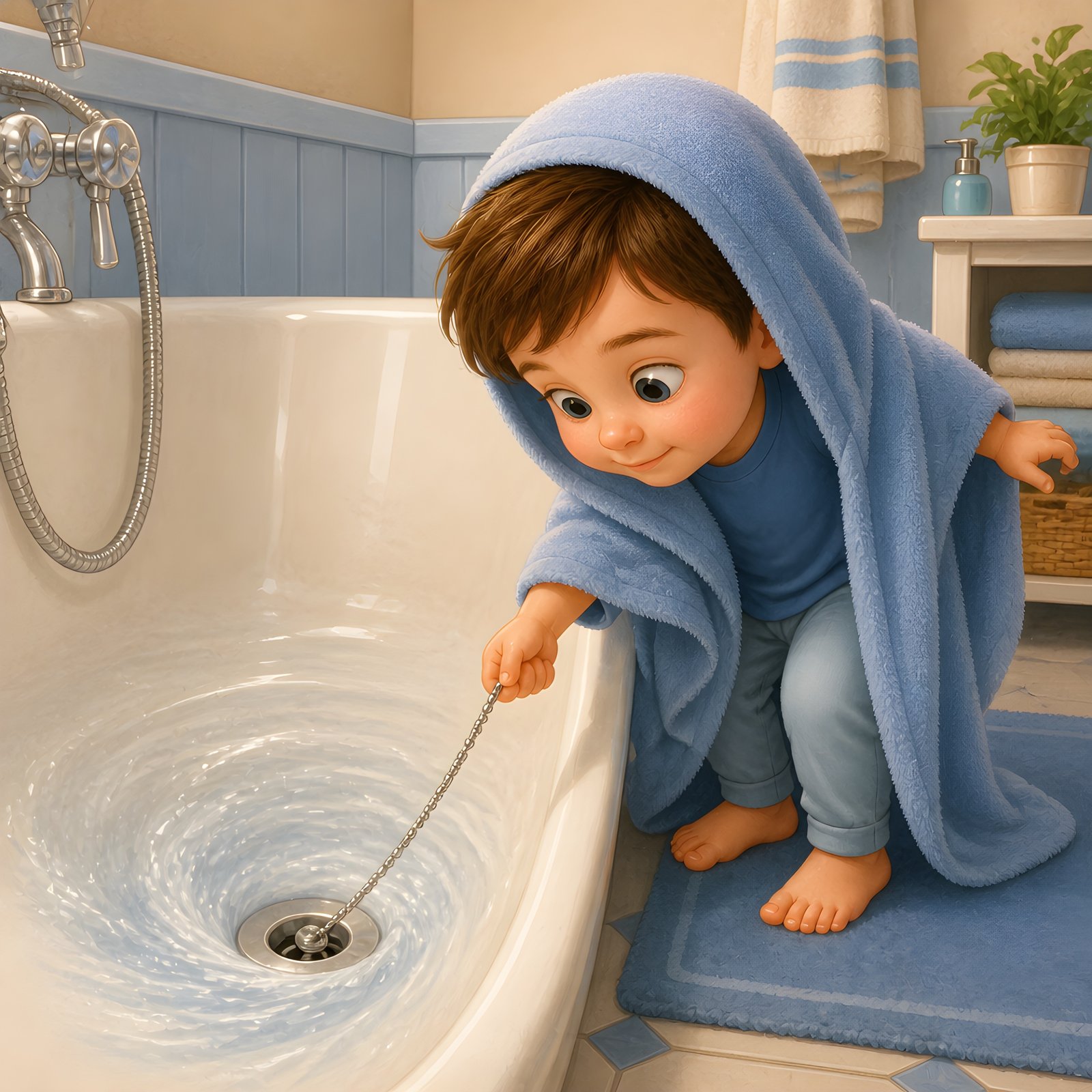
Milo pressed his ear to the wall to listen to the water traveling far away through the house.
“The water is gone on a little journey, and it will come back tomorrow!” whispered the grown-up, giving him a big hug.

The next evening, the taps started again. Milo didn’t cry at all. He explained to everyone where the water was going and why it was in no hurry.
And you, have you ever waved goodbye to the water in your bath? Close your eyes now. The water is resting, and so are you.
peur-du-bain
Once upon a time, little Nina loved her bath more than anything in the world. But tonight, as the water began to run far down the hall, she hugged her soft toy very tightly.
Splash, splash! The water was coming. Water arrives, water goes away, whispered Nina with a tiny frown.
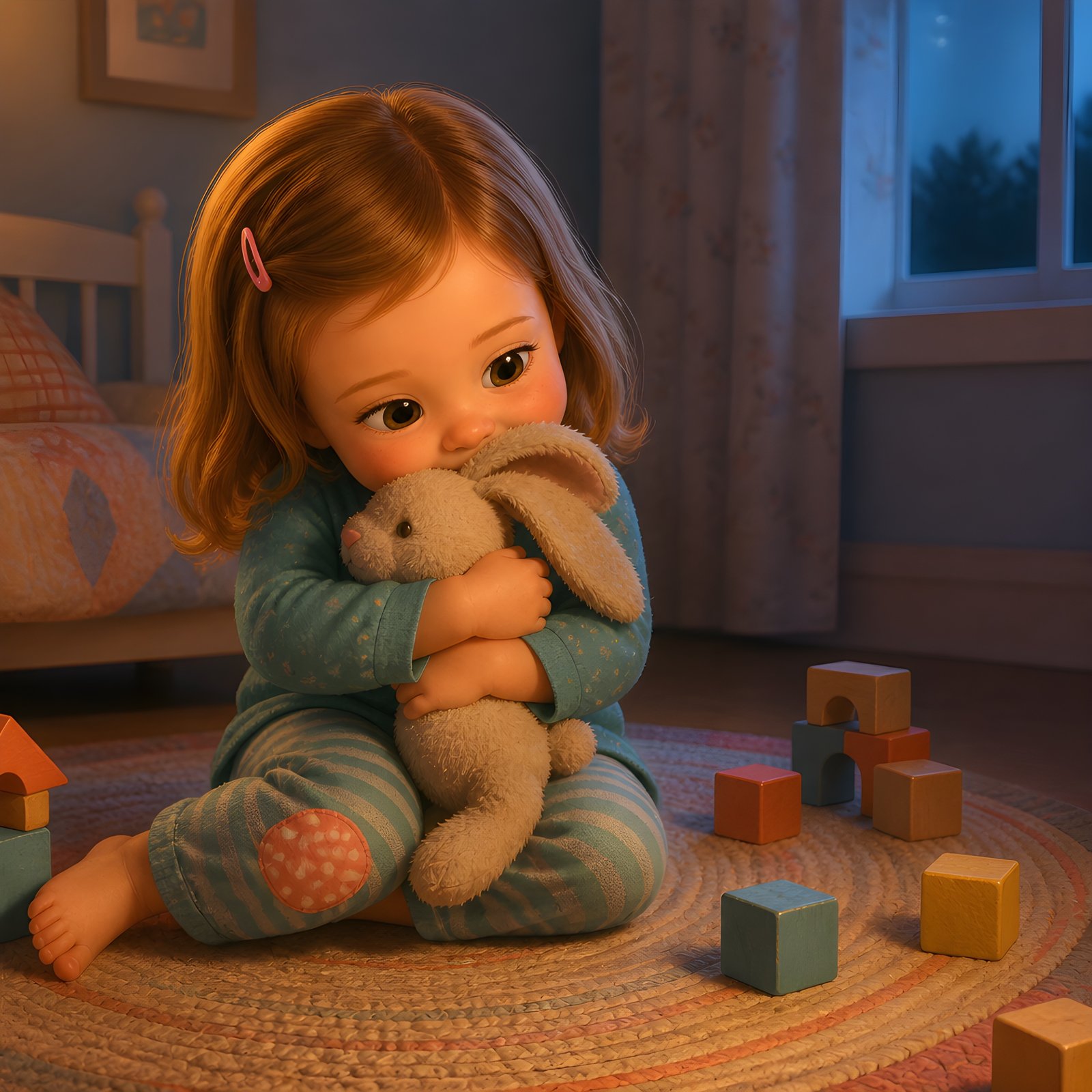
In the bathroom, the big white bath waited, completely empty.
Nina looked down at the dark, noisy hole at the very bottom. A hole that swallowed everything without asking.
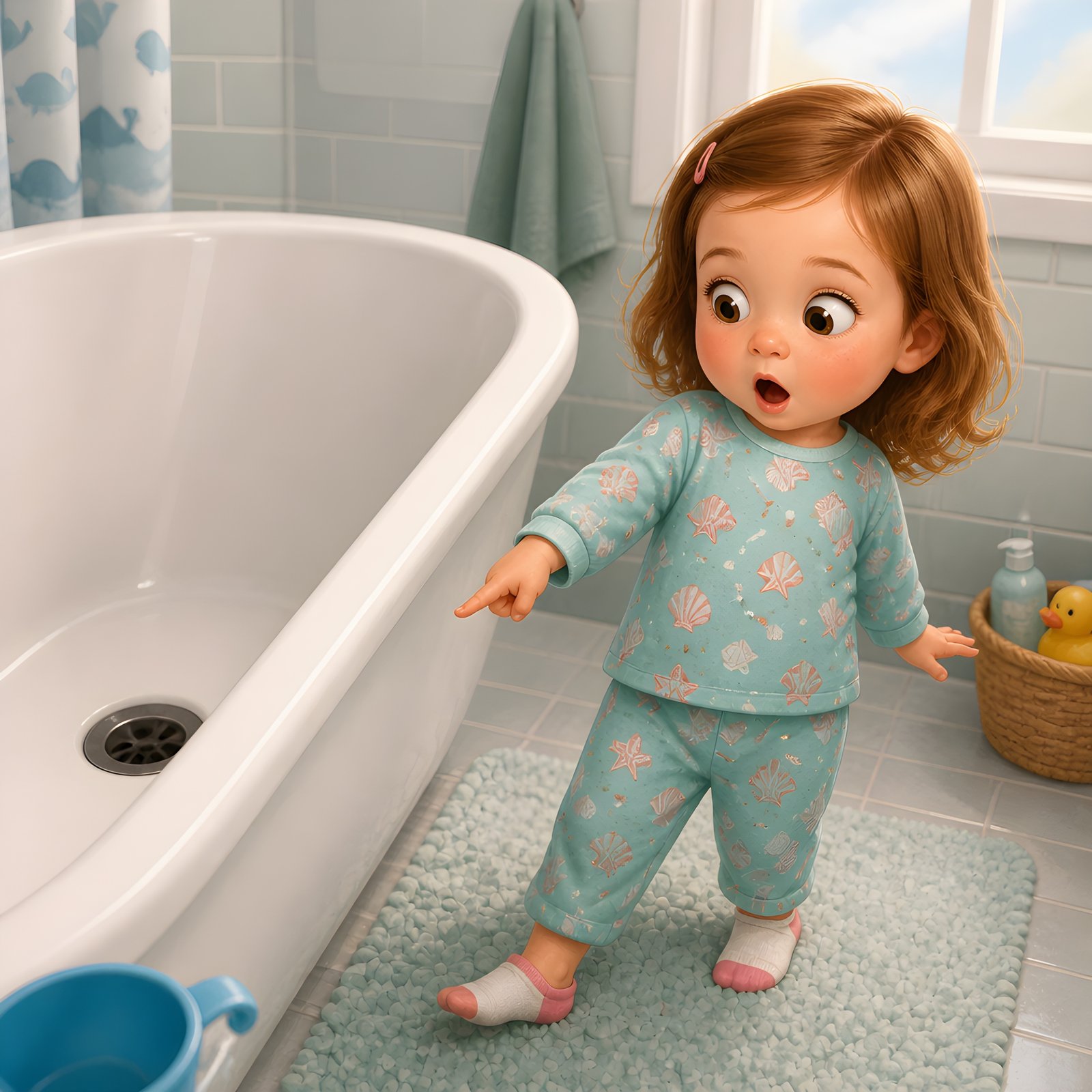
She sat as far away as she could, her knees tucked right up to her chin. She would not put her feet down for all the toys in the world.
Where does the water go when it disappears down there? she asked in a tiny voice.

Then a little yellow duck hopped up onto the edge of the bath. He looked completely unbothered.
He knew a secret. The water was not gone forever; it was just going on a very long journey.
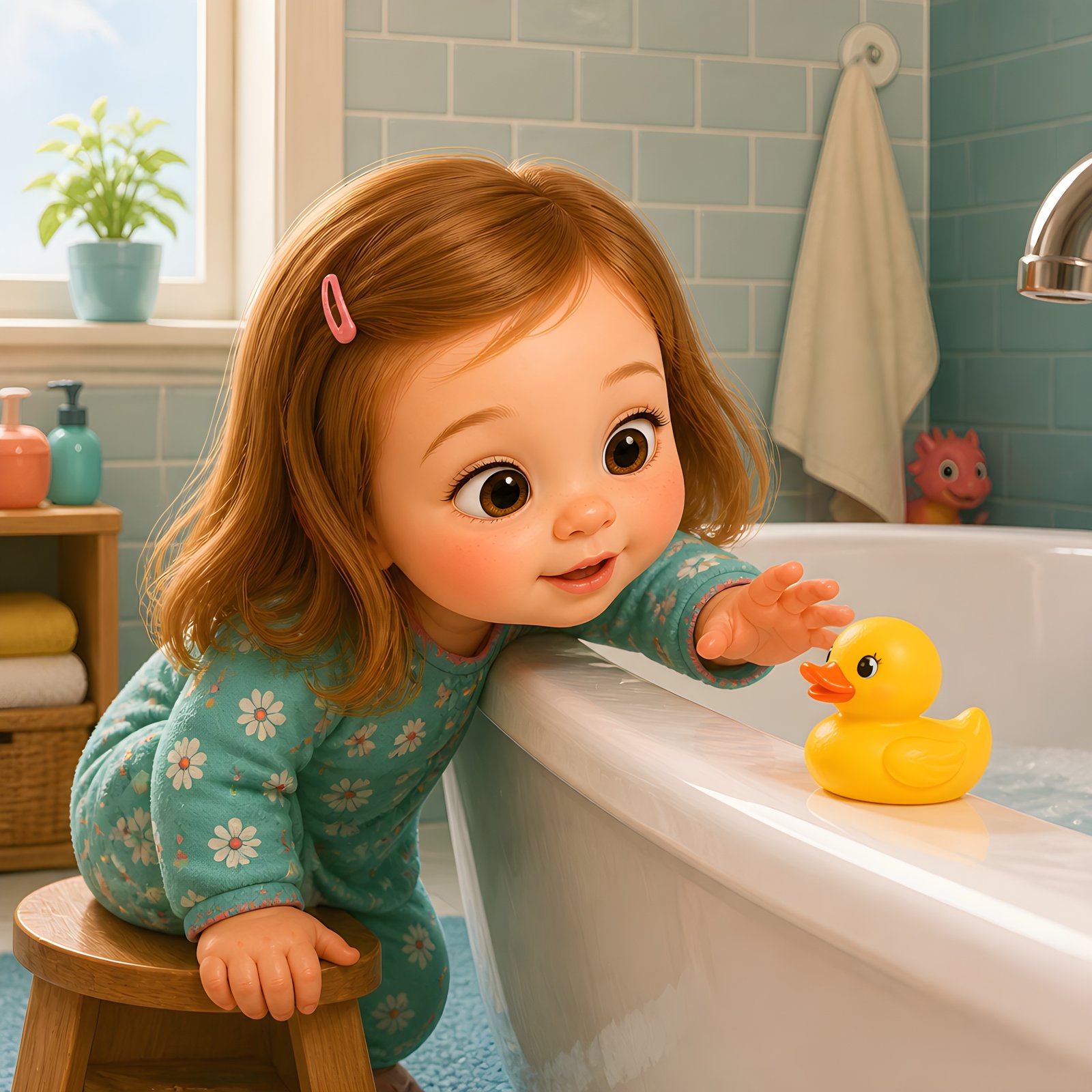
Together, they checked how big the hole really was. A toy would not fit. A flannel would not fit.
And Nina? Nina was much, much bigger than the hole.
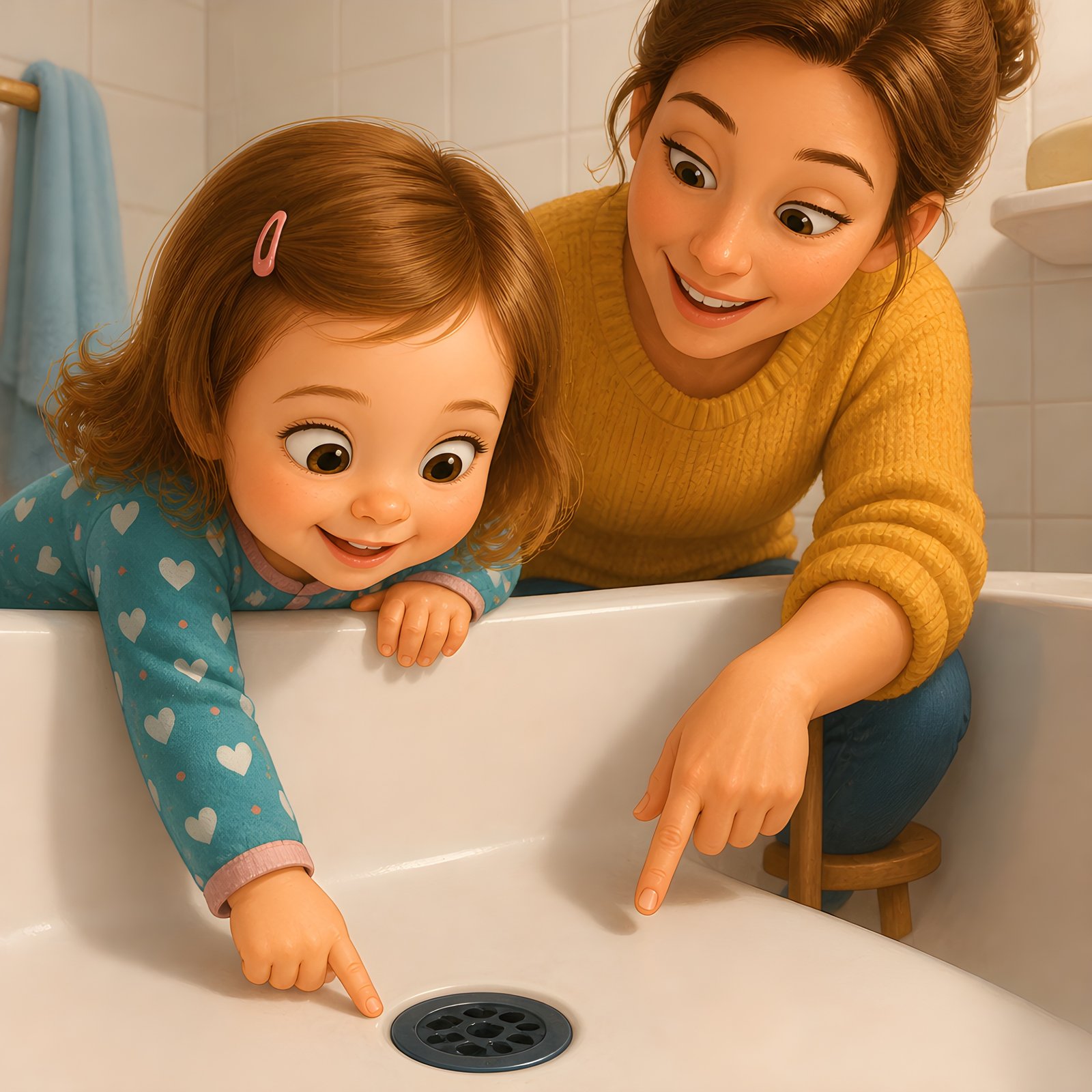
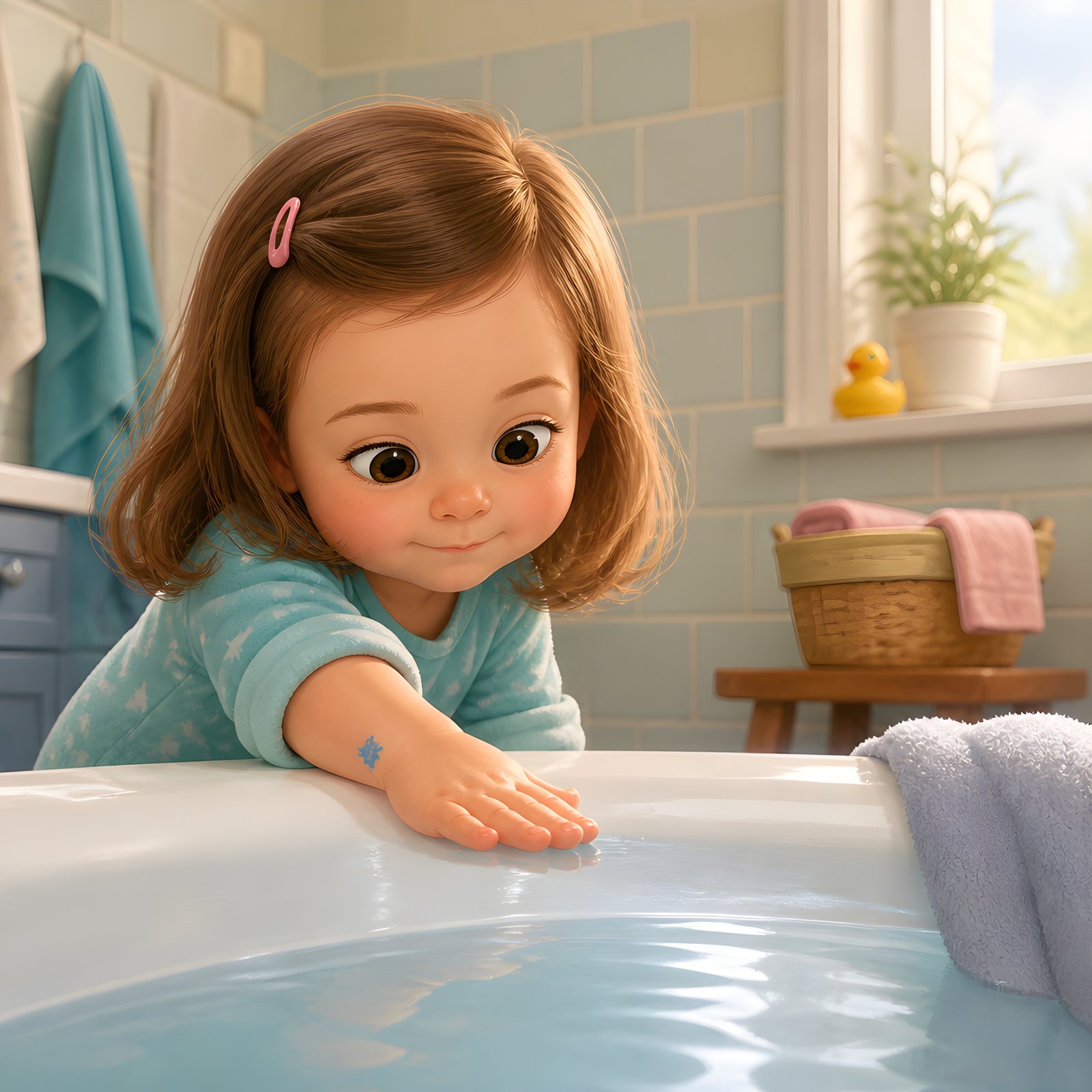
The tap turned. The water began to climb up her legs without asking first.
Nina held her breath. Her heart went thump, thump, thump against her ribs. Would it ever stop?
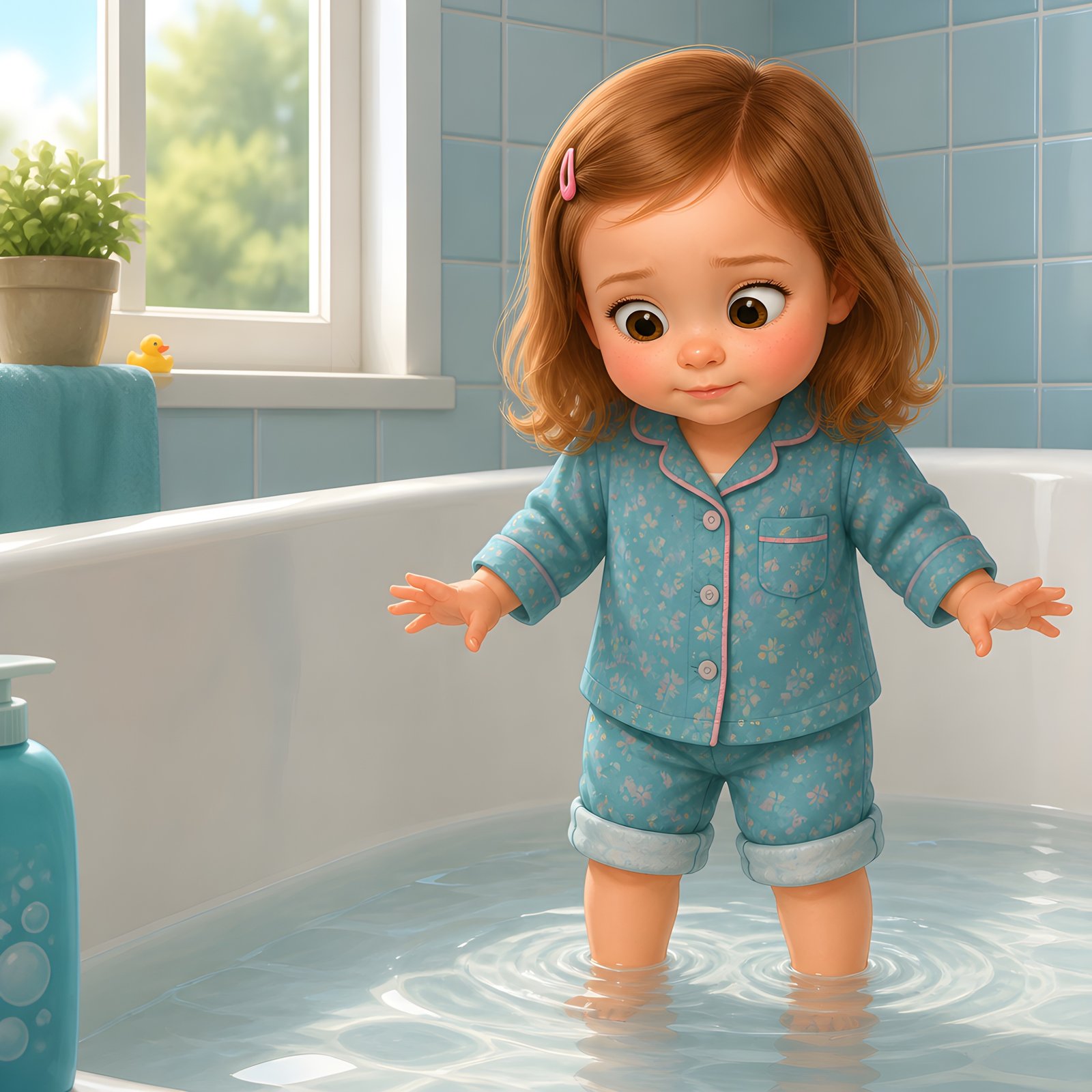
The little duck whispered the great secret right into her ear.
The water went down the pipe under the floor, under the garden, out to a big place to get cleaned, and then came back as rain on her window.
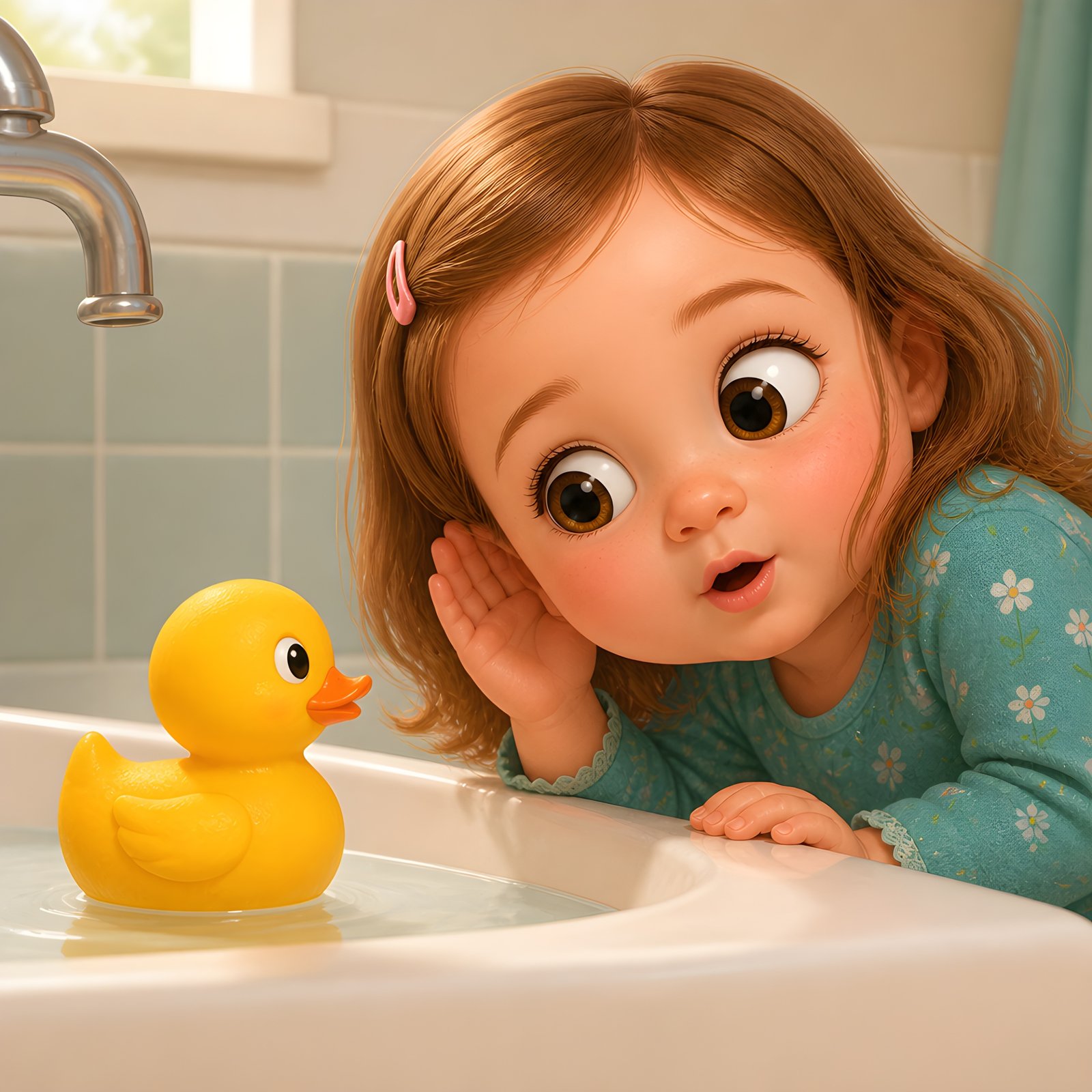
Then Nina decided it was time to take the controls. Stop right there! she said.
Water comes, water goes… but it was Nina who chose the line.
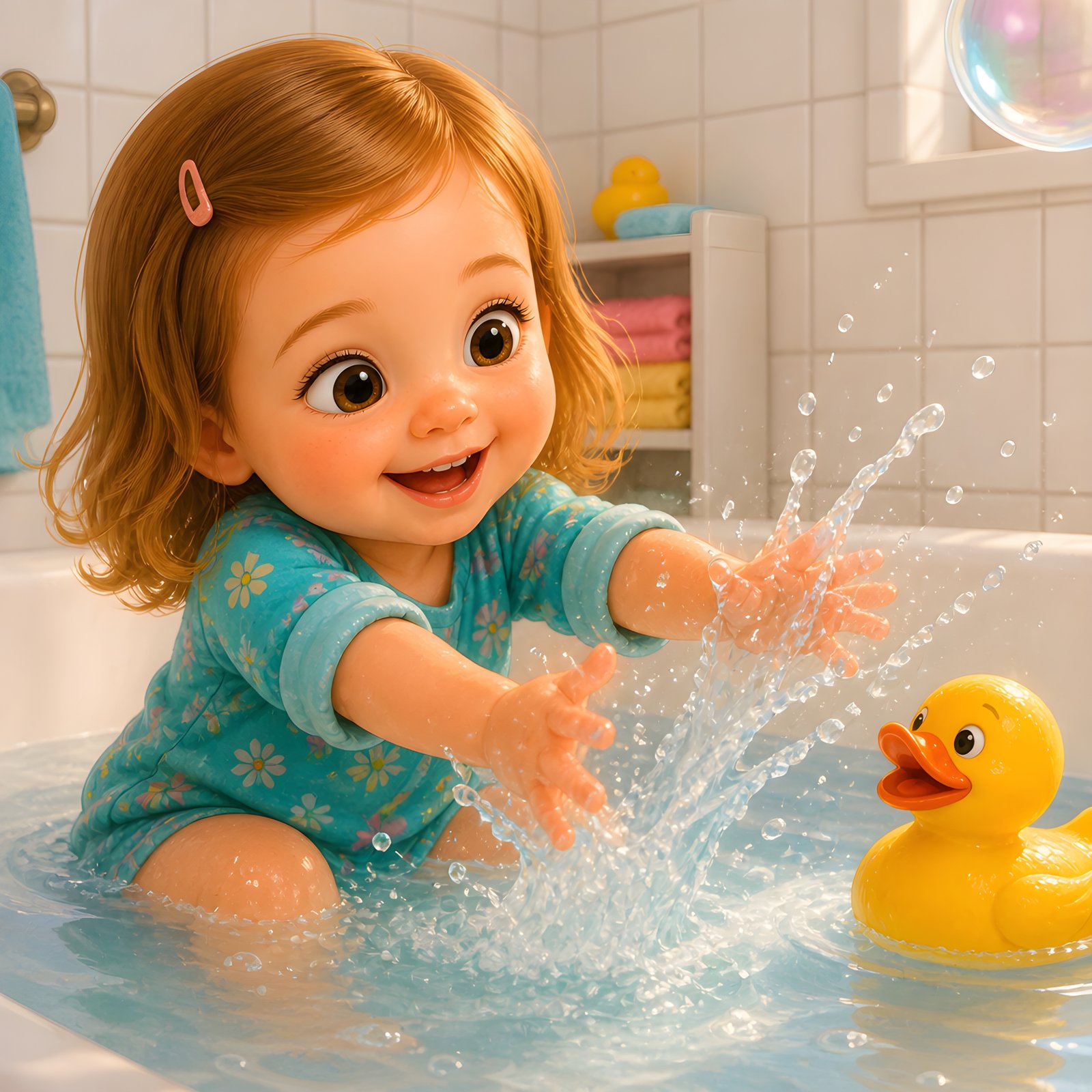
Splish, splash, splosh! Nina splashed the warm water without a single worry.
The hole at the bottom was no longer a monster at all. It was just the door to the great adventure.
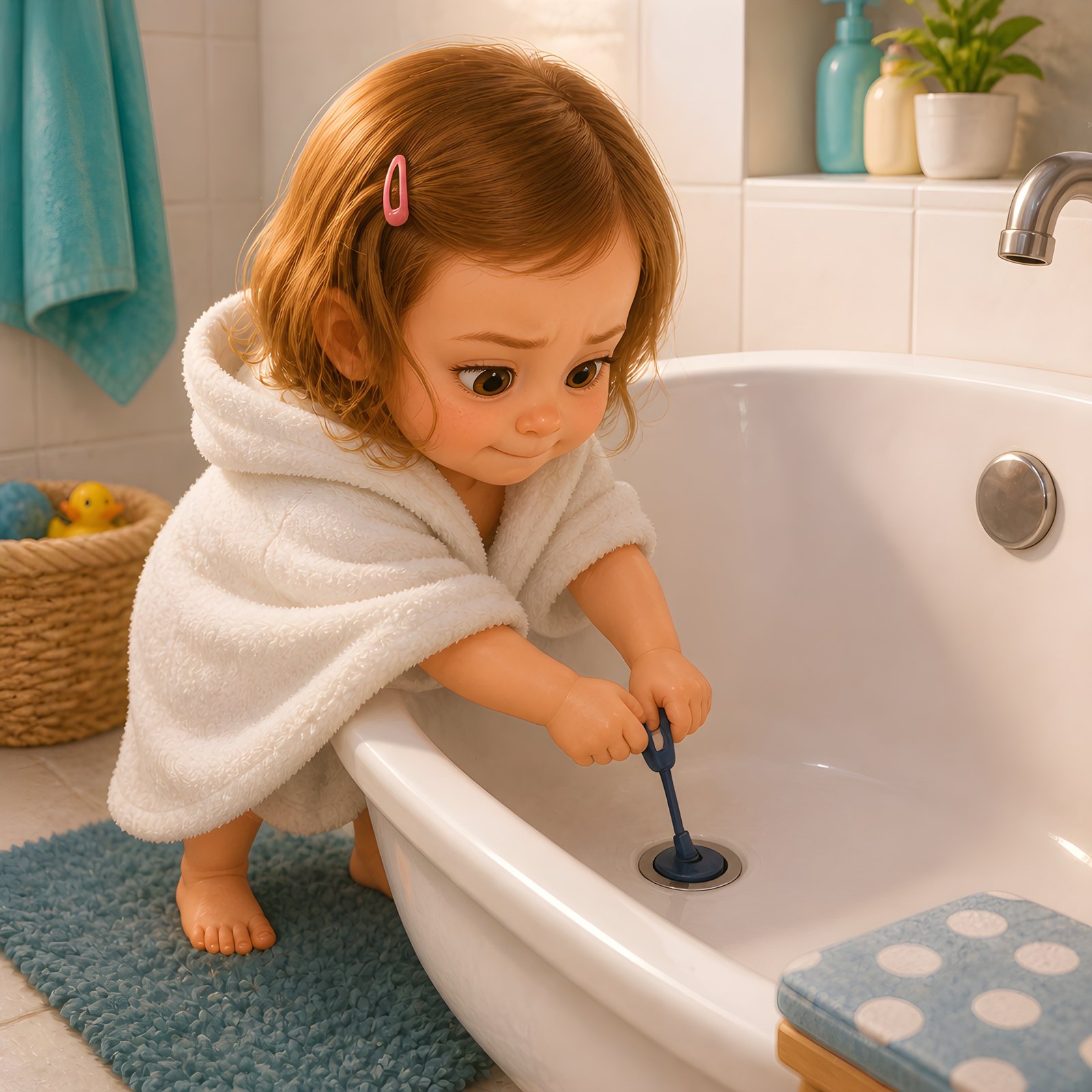
When washing time was done, Nina stood tall and dry on the fluffy bath mat.
With her own fingers, she pulled the plug right up.
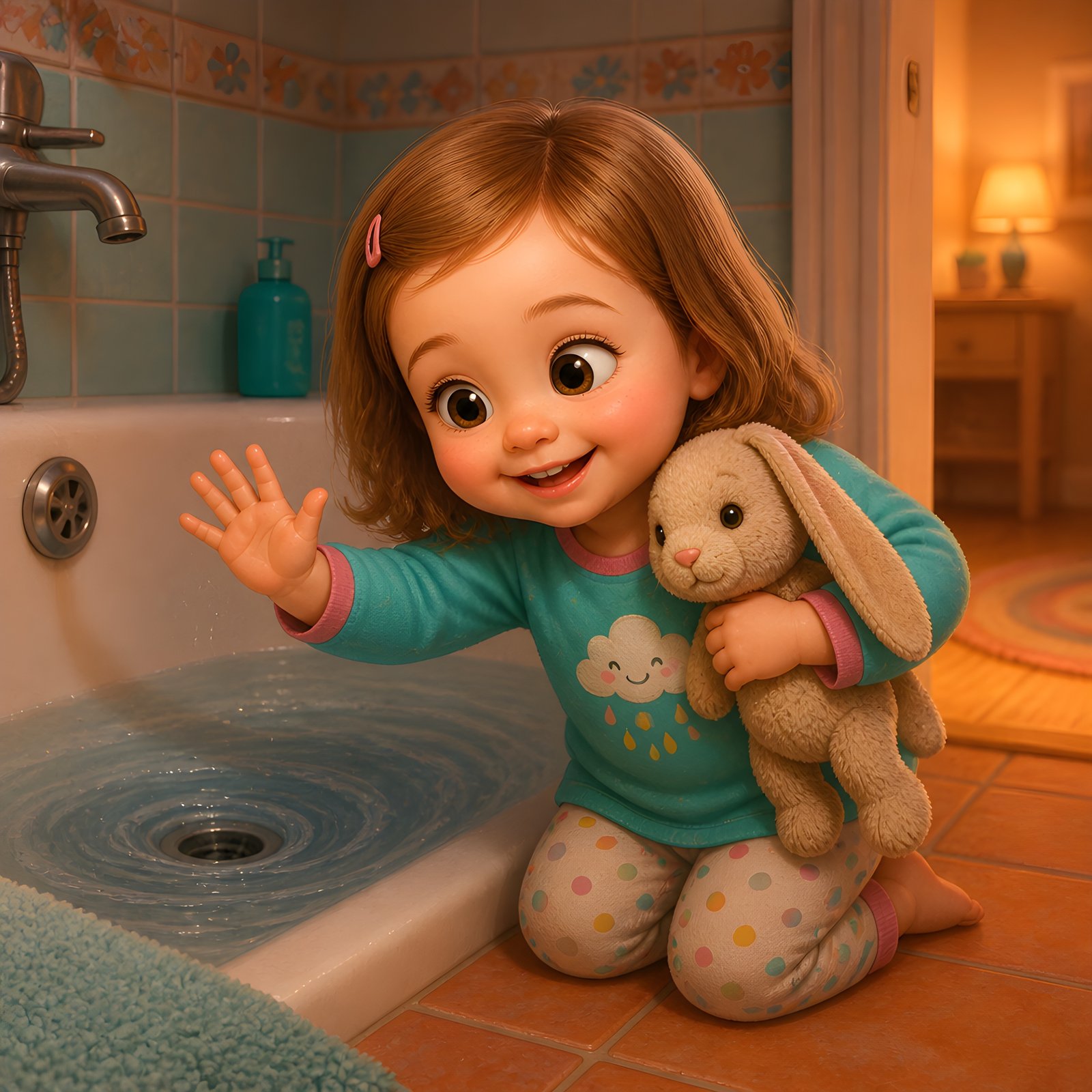
Glou, glou, glou! The water rushed down the pipe on its long trip away.
Nina waved goodbye. Safe journey, water! See you soon in the rain!
The next evening, Nina ran her bath all by herself, choosing the depth and placing her little duck just right.
And as she drifted off to sleep, she knew exactly where the water was sleeping too.