
Sommaire
You help a child with separation anxiety by keeping goodbyes short, staying consistent, and practicing separation in steps. This normal stage usually fades. You will find the rituals, techniques, and warning signs that tell you when to seek help.
Why your child clings at the door
Your child is crying at the classroom door. You feel like you did something wrong. You did not. These tears often target the parent a child sees most. That is a sign of attachment, not rejection.
Something big is happening in his head. He is discovering that you exist even when he cannot see you. Some children grasp this as early as 4 or 5 months. Most understand it around 9 months.
Separation anxiety is a normal stage. It begins around 8 months, peaks between 10 and 18 months, and fades by 24 months. It often feels worse when a child is hungry, tired, or unwell.
Many children show nothing in infancy, then start at 15 to 18 months. A move, an illness, or a change of childcare can set it off. Whatever the timing, these tears are not your fault.
At what age it comes, how long it lasts
Some children begin as early as 4 or 5 months, once they understand you exist even when out of sight. Most show it fully around 8 months.
The typical window runs from about 8 months up through 18 months. It peaks in intensity between 10 and 18 months, and generally fades on its own by 24 months as confidence grows.
Many toddlers skip the early phase and only begin at 15 to 18 months. From age 3 onward, about 4 percent of children experience the clingy phase, and it still counts as normal development.
Réponse courteMost children settle within 5 to 10 minutes once you leave.
That brief calm is the honest measure of a normal goodbye, wherever your child sits on this timeline.
What your child feels in that moment
It is not a trick. In that moment, your child is gripped by a real fear : that you might not come back.
This worry usually targets the parent he spends the most time with. That is why your goodbye feels so personal. Sometimes it reaches a grandparent or a sibling too.
A real event can plant the fear. An illness in the family, a move, a change of childcare, a long hospital stay. The world surprised him once ; he cannot be sure it will not again.
Most children settle within five to ten minutes. The one who keeps reliving the distress all day is beyond this stage.
Sheltering him from every goodbye makes the anxiety more limiting. He needs small doses of absence to learn that you always come back.
How to react at the moment of goodbye
Your instinct whispers : stay. But lingering rewinds the separation, and the tears begin again. A quick, gentle goodbye eases the transition far better than a drawn-out one.
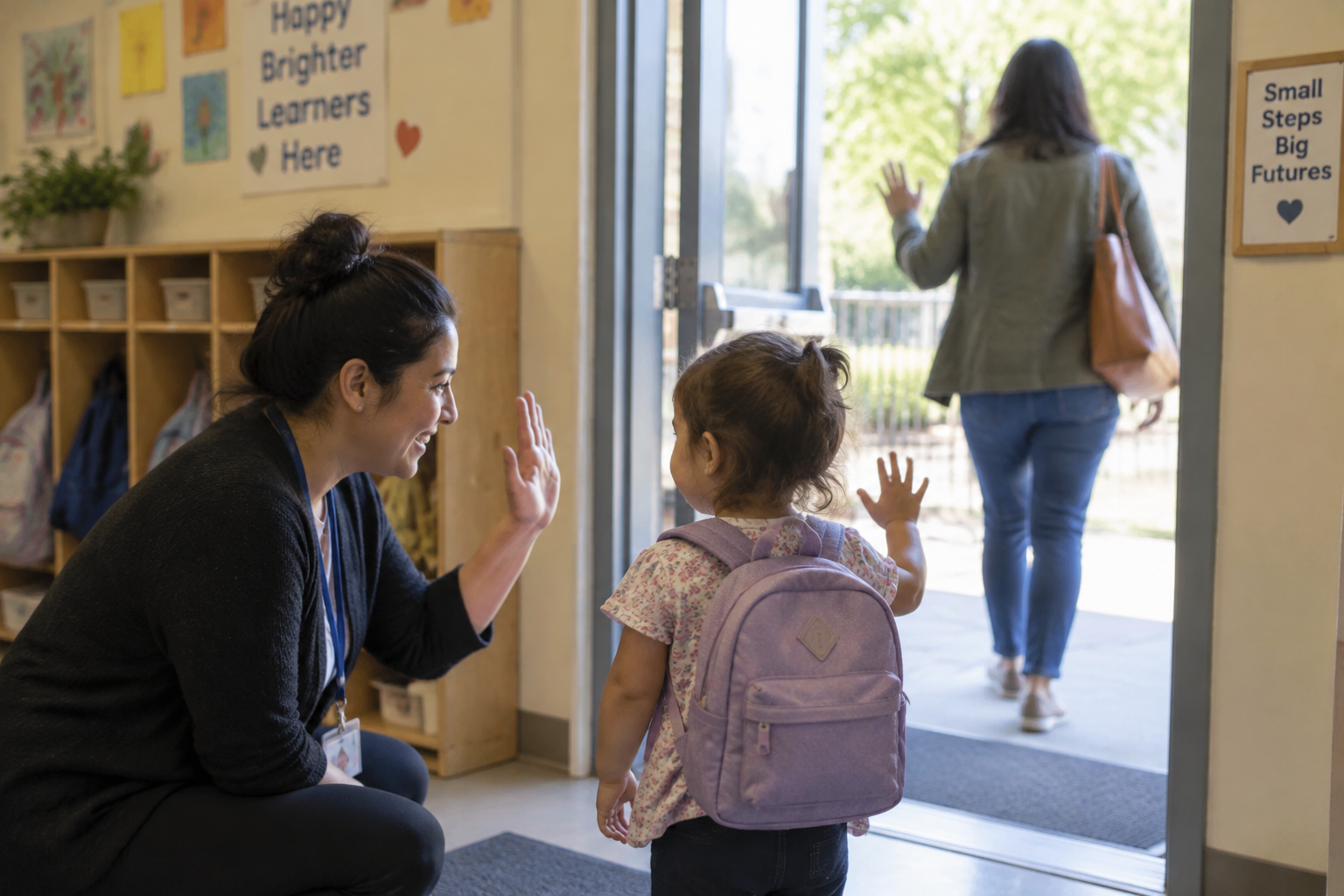
Same spot, same words, same gesture. The ritual becomes a promise your child learns to trust. Each day, that repeated goodbye builds their confidence and yours.
-
Arrive Together
Walk to the door holding hands. The calm of the walk sets the tone for what follows.
-
Say the Ritual
Your hug, your phrase, your kiss. Keep it under ten seconds. This is your shared moment.
-
Hand Over
Let the teacher take over. A small job or sticker awaits them right after goodbye.
-
Leave Once
Walk out and do not look back. No second wave, no quick return. Trust the moment.
A soft toy that smells like home offers comfort in your absence. At bedtime, keep the same routine across both parents, and resist the pleas. You are teaching them they are safe alone.
The phrases that soothe
“You' ;ll be fine” is your instinct. It rarely works. The promise is too vague to hold.
Name the return in the child’s time. “After nap time, before afternoon snack” is a time they can picture. “After 3 sleeps” for a business trip.
What you say
- You’ll be fine, I’ll be back soon.
- Don’t cry, it’s okay.
- I’ll be back this evening.
What calms
- I’ll be back after nap time, before afternoon snack.
- It sounds like you are worried, and you are really brave.
- I’ll be home after 3 sleeps.
Validate, don’t minimize. “It sounds like you are worried, and you are really brave.” For repeated questions, answer once, then gently remind : the answer was already given.
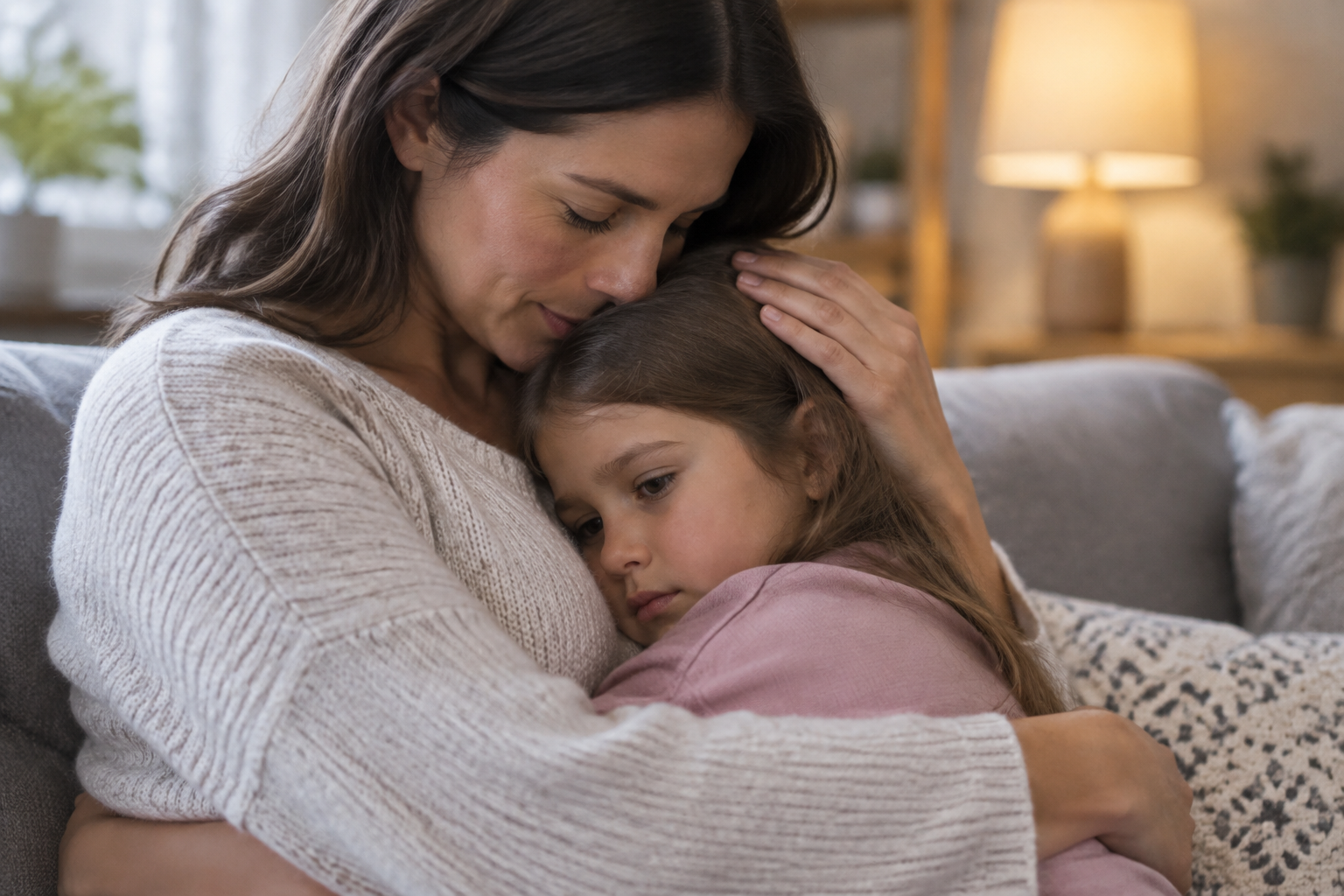
In the acute moment, the 3-3-3 rule helps : three things seen, three heard, three body parts moved. Slow breathing, in for three, out for three. First aid, not a treatment.
What to set up before the goodbye
The work starts weeks ahead, not at the classroom door. Short, practiced absences build the confidence that makes a calm goodbye possible.
Schedule brief runs with grandparents or friends. An hour apart, then two. Rehearse the school route and your goodbye ritual before the first day.
Build a ladder of small steps. Walk to the gate together, then to the door, then alone. A sticker for each brave step works wonders.
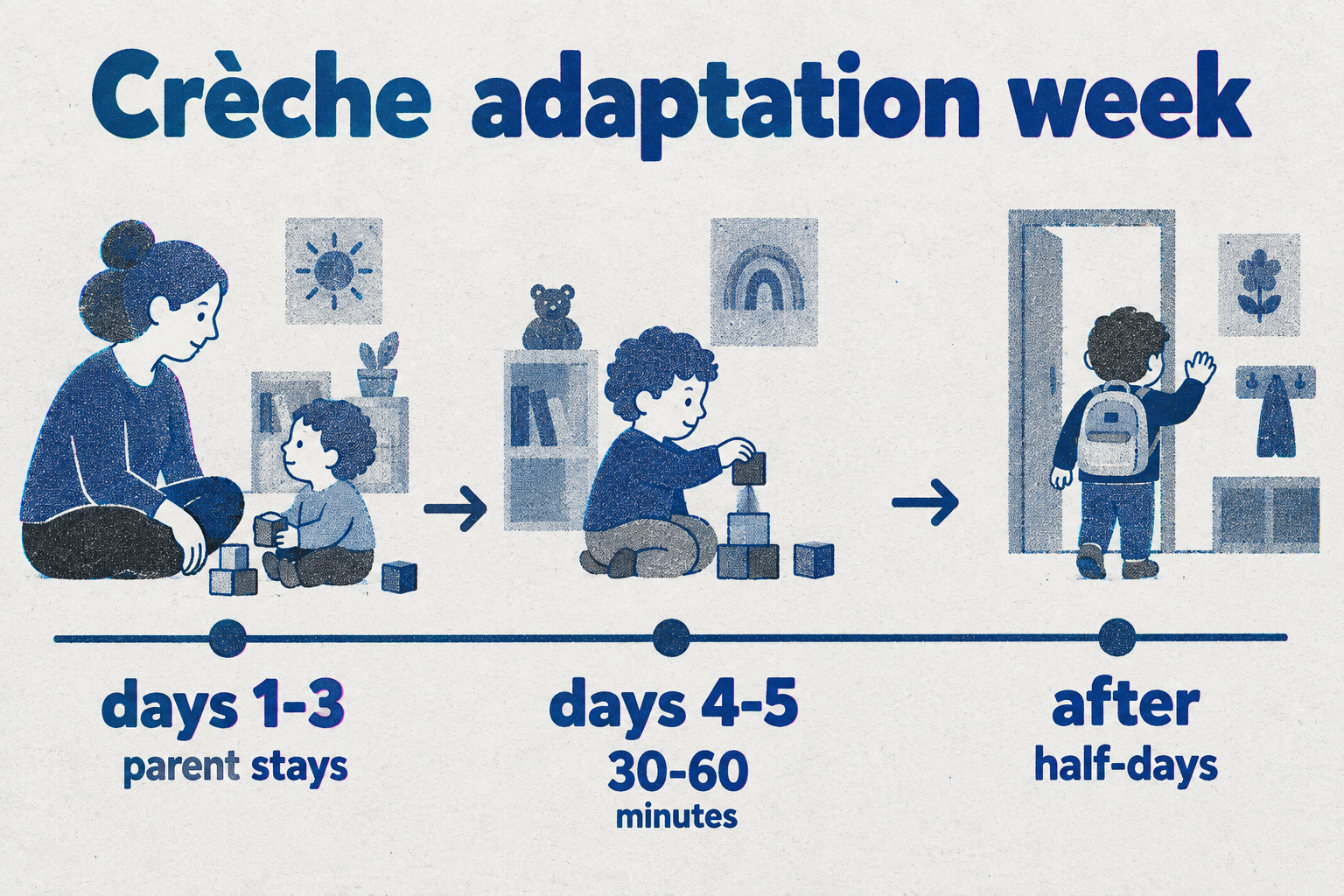
-
Day one
A discovery visit with you staying close.
-
Days two and three
You stay but withdraw gradually while your child gets used to the space.
-
Days four and five
The first real separation: 30 minutes to an hour.
-
After that
Half-days with a meal and a nap, then full days.
Bring a favorite soft toy that smells of home. Keep the same ritual each day and respect the promised pick-up time. A family photo or a calendar gives a visual anchor.
For acute anxiety, try the 3-3-3 rule : three things you see, three you hear, three body parts you move. Slow breathing and a worry box help too. Emotional support stories can model these rituals.
Sleep matters too. Bed-sharing is never recommended under 12 months. After that, experts advise moving toward independent sleep, since nightly co-sleeping is linked to separation anxiety.
Before the 1 September rentrée, visit the classroom and meet the teacher. Pick an outfit together and shop for supplies. On the first day, stay about ten minutes, then a little less each morning.
When to talk to a professional
Most tears at the door are not the disorder. Only 1 to 4 percent of children develop it. The line is four weeks of real distress.
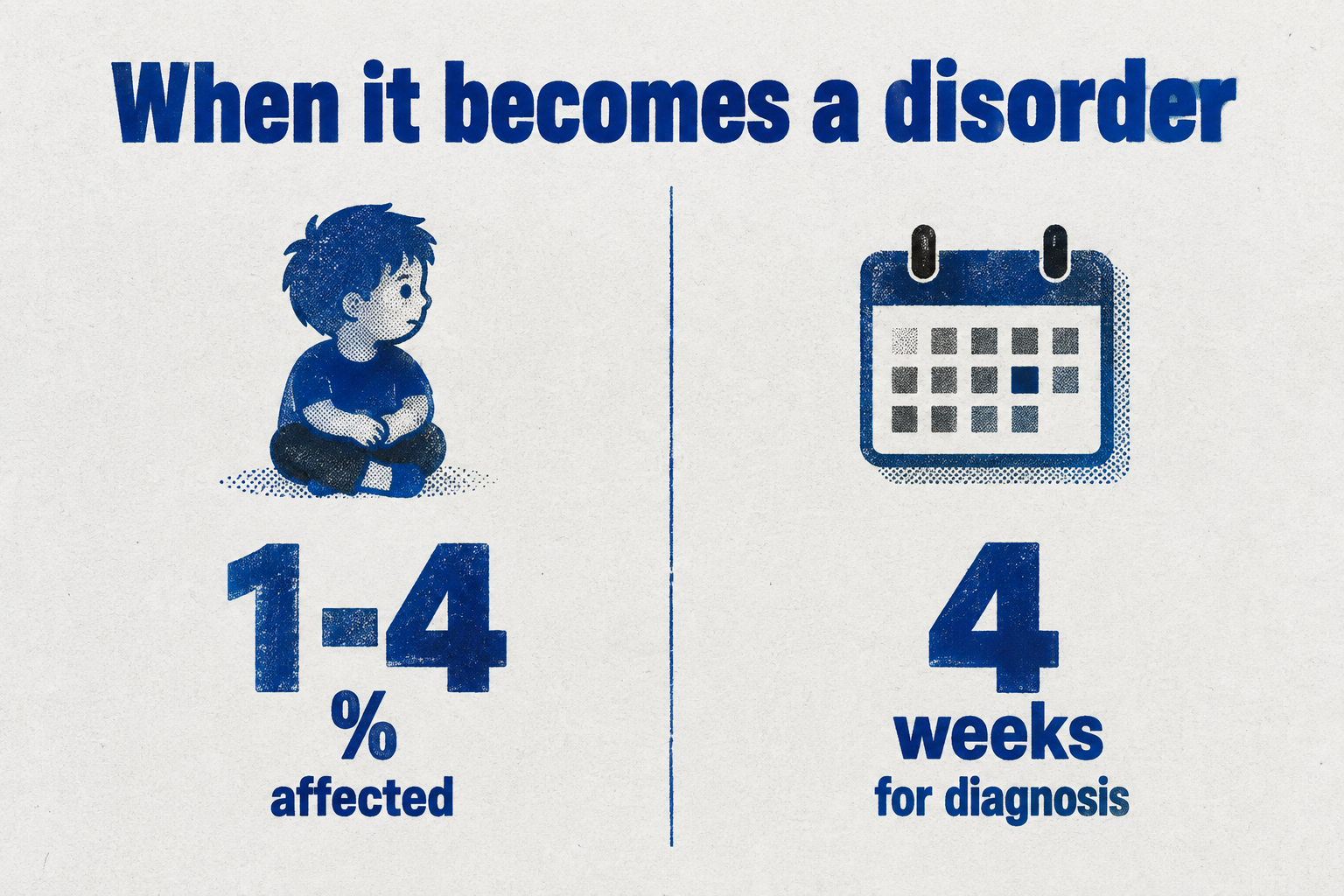
A diagnosis needs at least 3 of 8 symptoms for 4 weeks. Symptoms include :
- excessive distress at every separation
- refusal to sleep without you
- physical complaints like stomachaches
Still unsure ? Trust the pattern, not the single bad morning.
In France, start free. The PMI sees under-6s, and the school doctor checks every pupil at 6.
A pediatrician in secteur 1 charges 35 to 40 euros, 70 percent back, no referral under 16. Mon soutien psy covers 12 sessions a year from age 3, 50 euros each, 60 percent back.
This September, all 6-year-olds get a health analysis, up from about 20 percent. Urgent cases get a fast-track CMP appointment within 48 hours.
Foire aux questions
What are the symptoms of extreme separation anxiety in a 3-year-old child ?
For a 3-year-old, extreme separation anxiety shows as intense crying at every goodbye, a relentless worry you may not return, refusal to sleep alone, and physical complaints like stomachaches.
Does co-sleeping cause separation anxiety ?
Nightly bed-sharing is linked to separation anxiety, and a 2025 study found co-sleeping predicts more sleep anxiety as children grow. Experts advise helping the child sleep independently instead.
How do I stop my toddler’s separation anxiety at night ?
Keep the same bedtime routine with both parents, and offer a soft toy that smells like home. Do not return when your toddler pleads, and each steady night teaches them they are safe alone.
When do kids want to sleep alone ?
There is no fixed age in pediatrics. Doctors advise not starting co-sleeping and, once it is underway, moving the child to their own room as soon as possible.
Is it okay to co-sleep with a 7 year old ?
It is not medically contraindicated at that age. Still, pediatric experts advise having a 7-year-old sleep independently rather than in the parental bed.
Practice a short, sweet goodbye today, and always keep your promise to return. Start with small separations. If the anxiety persists beyond four weeks or disrupts school and sleep, the PMI, school doctor and Mon soutien psy await you, free or reimbursed.