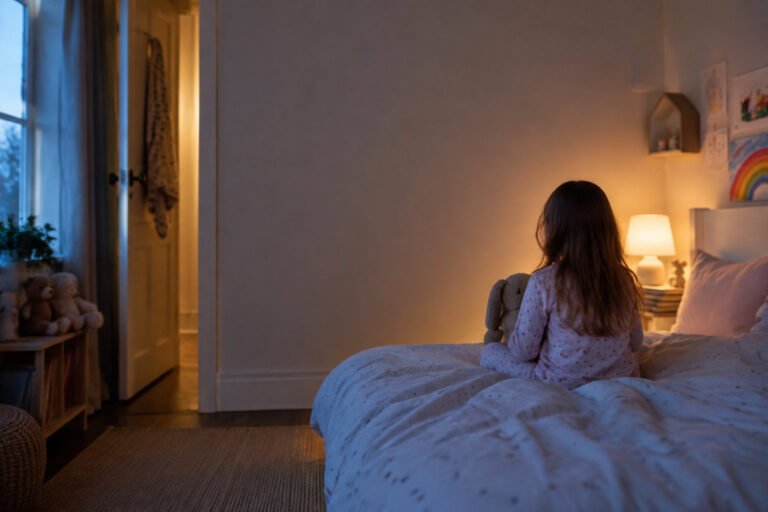
Bedtime can stretch on, even when you know how to get a 7 year old to sleep.
You may be tired of guessing what will help. A few gentle changes can make bedtime calmer and help your child settle on their own.
Why bedtime can feel difficult at seven
The day is over, but your child is still calling from their room. It can be tiring, and there may be a simple worry tucked beneath the delay.
What may be keeping your child awake
-
Worries from the day
Schoolwork, friendships, playground troubles, or changes at home can keep thoughts moving.
-
Fears at bedtime
Growing imaginations can also bring fears of the dark, monsters, nightmares, or sleeping alone.
-
A need for closeness
And sometimes, repeated calls are a quiet way of asking for more closeness.
What helps depends on what is underneath.
- A worried child may need a little time to talk.
- An overstimulated child may need a quieter end to the evening.
- A child looking for connection may settle more easily after a few calm minutes together earlier on.
How much sleep a 7-year-old needs

Bedtime can feel like one more thing to work out at the end of a long day. Children aged six to twelve generally need 9 to 12 hours of sleep in 24 hours. Your child may need any amount within that range. Their mood and energy during the day can help you see what suits them.
It may help to start with the morning. If your child needs to wake at 7:00, about 19:00 to 22:00 could fit the recommendation. The right time depends on your child’s needs. Settling takes time, so bedtime may need to begin before the time you hope they’ll fall asleep.
If your child lies awake happily for a long time and does not seem tired, bedtime may be too early. If they seem wired, tearful, clumsy, or irritable, they may be overtired. Unusually active behaviour can be another sign.
A simple sleep diary for two weeks can show a pattern more clearly than one hard night.
A steady routine and a calmer room
Make bedtime predictable

A familiar routine is like putting the house in order for the night. The same small steps help your child see that the busy part of the day is ending.
- Use the toilet
- Wash
- Put on pyjamas
- Brush teeth
- Read one story
- Have a cuddle
- Turn out the light
A routine that takes around 30 to 45 minutes may work for many families.
A clear ending can help too, such as the same goodnight words or one last kiss at the bedroom door.
Put screens away before bed
Phones, tablets, television, and games can keep the mind alert at bedtime. Turn them off at least 30 to 60 minutes before bed to leave a quieter stretch before sleep. Keeping devices out of the bedroom may make this easier.
Helping your child stay in bed and settle
Guide them back calmly
If your child gets up, guide them back in low light. Say “It is sleep time,” then leave quietly without starting a conversation.
Step back little by little
-
Sit beside the bed
-
Move your chair back
Move your chair farther away every few nights.
-
Step toward the door
Over time, sit by the door, then just outside it. If your child becomes more anxious, return to the previous step to keep things calm.
Notice the sleep pattern
A sleep diary can track lights-out, when your child seems to fall asleep, wake-ups, calls, and their morning mood. It may show links to late activities, worries, or irregular weekends. It can also help you spot small steps forward when you are tired.
Offer comfort for night fears

When fear comes at night, a dim light, a familiar object, and a short reminder that you are nearby may help. After a nightmare, reassure your child and help them return to bed. A longer talk can wait until morning, when the room is bright and everyone is more rested.
When to speak with a professional
A few hard nights can pass. If sleep problems go on, affect family life, or leave your child tired, irritable, inattentive, or struggling at school, you could talk with your child’s family doctor or paediatrician.
An appointment is also important if your child snores regularly, seems to stop breathing, gasps, breathes heavily, or wakes often while struggling for air. Snoring and pauses in breathing alongside poor sleep can be signs of sleep apnoea, which needs medical assessment.
Sleep may get unsettled after a separation, bereavement, move, conflict, or another big change at home. If anxiety stays strong or affects school, friendships, or family life, you could ask your doctor about psychological support for your child and family.
Tonight, you could choose a bedtime that allows time to wind down, then begin the same quiet routine. If sleep problems continue or affect your child’s day, note what you see and arrange an appointment with your child’s doctor.
FAQ
Can my seven year old take melatonin?
Melatonin should not be the first step for bedtime struggles. In France, some prescription forms are used only for specific situations, after other possible causes have been assessed and sleep measures have not been enough, so speak with your child’s doctor before giving it.
What is the difference between a nightmare and a night terror?
A nightmare usually wakes your child, who may remember the dream and accept comfort. During a night terror, your child may cry, move, or look frightened while still asleep; keep them safe and wait calmly, since trying to wake them can make them more upset.
What should I do if my child sleepwalks?
Keep the room and stairs safe, then guide your child gently away from danger without startling them. A short sleep diary may help you spot a pattern; speak with your child’s doctor if sleepwalking is frequent, causes an injury, or seriously disrupts sleep.