How to handle toddler tantrums at bedtime without the fight
A child’s brain at 9:00 PM consumes nearly double the energy of an adult’s, leaving the prefrontal cortex effectively offline and unable to process logical commands. When your toddler fights sleep, they aren’t choosing defiance; they are experiencing a neurological collapse where the ability to switch tasks has simply run out.
This biological wall often triggers a stress response, making toddler tantrums at bedtime a matter of cortisol surges rather than a discipline problem. We will explore how a fixed sequence, limited choices, and an earlier bedtime can bypass this chemical “second wind” to restore peace to your evenings.
- Why Toddler Tantrums at Bedtime Are Brain Failures Not Defiance
- The Biological Trap of the Second Wind
- Establishing a Predictable Sequence That Ends the Struggle
- Strategies for Handling Stalling and Night Wake-ups
- Common Mistakes That Accidentally Fuel the Fire
- Transforming the Wind-down with a Personalized Story
Why Toddler Tantrums at Bedtime Are Brain Failures Not Defiance
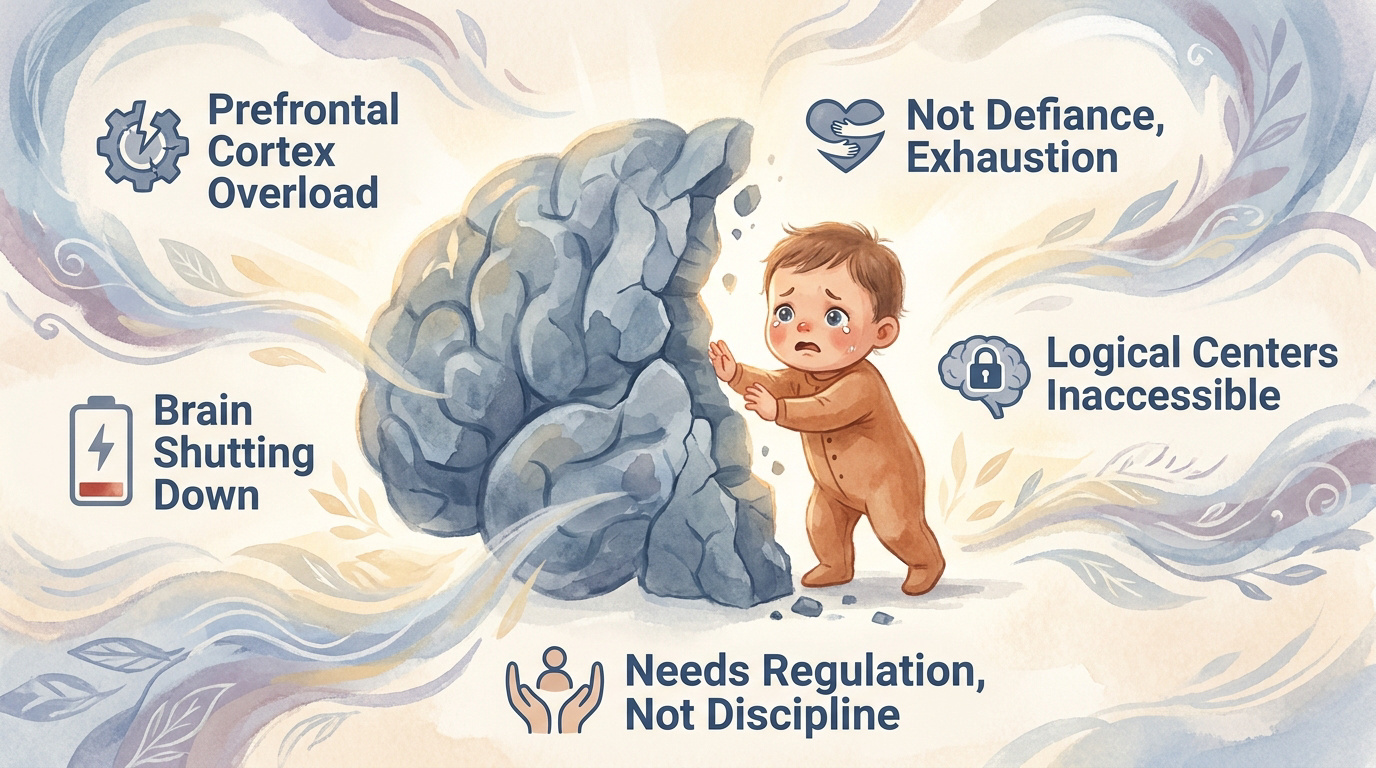
Bedtime meltdowns stem from neurological exhaustion in the prefrontal cortex, not willful defiance. High cortisol levels trigger a stress response, making task-switching impossible and requiring a consistent, low-stimulation evening sequence.
This neurological collapse explains why logical reasoning fails when the brain hits a literal wall during the late evening hours.
The brain’s control center responsible for impulse management and emotional regulation, which effectively ‘shuts down’ during extreme toddler fatigue.
The Neurological Wall of the Nine O’Clock Hour
The prefrontal cortex manages emotional regulation and impulses. When a toddler is overtired, this region effectively shuts down. The brain loses its ability to filter impulses. It cannot process complex commands anymore.
Fatigue often mimics defiance in young children. Your child is not choosing to be difficult. Their brain is simply incapable of accessing logical centers. They cannot comply with your requests right now.
This exhaustion is visceral and deeply physical. It represents a biological failure of the nervous system. It is not a personality flaw. It is certainly not a parenting mistake you made.
Discipline at this hour is entirely counterproductive. A lecture on behavior will not work. The brain needs external regulation. It does not need a lesson in obedience.
Why Task Switching Is a Herculean Feat for Toddlers
Transitioning from play to rest requires massive mental energy. Moving between activities is cognitively demanding. It is the hardest task for a developing brain. Fatigue makes this transition nearly impossible.
A “short circuit” occurs during these late transitions. When a child cannot disengage, they feel loss. This manifests as a physical meltdown. The brain simply cannot let go of the current task.
Naming the tiredness out loud helps significantly. Try saying, “Your body is working hard to stay awake.” This validates their internal state. It helps co-regulate their emotions through simple acknowledgment.
External regulation acts as a vital bridge. You provide the control their brain lacks. Calm consistency replaces their failing internal systems.
We created a personalized book where your child is the hero of the story. It exists in both girl and boy versions. You can toggle between variants and download a PDF example right here. We invite you to try this example to see how a repeatable story helps lead the wind-down before the fight starts.
The Biological Trap of the Second Wind
While the brain is failing, the body is busy pumping out chemicals that make the situation even more volatile.
Missing the sleep window triggers cortisol and adrenaline, putting the nervous system in ‘fight or flight’ mode rather than rest mode.
Cortisol Adrenaline and the Fight Against Sleep
Missing a sleep window triggers a stress response. The body releases cortisol and adrenaline to keep the child upright. This creates a “second wind” that looks like energy. It is actually a biological survival mechanism.
Children seem hyperactive when exhausted. This isn’t genuine vitality. It is a chemical state of “fight or flight.” This state is designed for survival, not sleep.
Calming down becomes physically harder once these hormones peak. The heart rate struggles to drop. Sleep cannot easily take over the body. The nervous system remains in high alert.
Once this chemical surge happens, the bedtime battle is already lost. Prevention is the only real cure. Reasoning with a stressed brain is impossible.
The Counter-Intuitive Benefit of an Earlier Bedtime
Move the clock back by 30 minutes. Catching the natural sleep window before the cortisol spike reduces resistance. This is the most effective way to prevent tantrums.
- Ear pulling or rubbing
- Glazed eyes or staring
- Sudden clumsiness
- Becoming overly clingy
Preventing the second wind makes falling asleep faster. A calm body accepts sleep readily. A stressed body fights it. Early bedtimes align with the natural melatonin peak.
Later never equals easier with toddlers. It only leads to more cortisol. Early bedtimes are a tool for parental sanity.
Our book helps your child lead the wind-down. You can try a full example on this page, toggle between the girl and boy versions, and download the PDF. It gives your family a concrete, repeatable gesture to use before the fight starts.
Establishing a Predictable Sequence That Ends the Struggle
To bypass the biological and neurological traps, we must build a routine that feels like a safe, inevitable slide toward sleep.
Creating an Immutable Routine That Builds Security
A short, fixed sequence is your best defense. The order of operations, bath, pajamas, book, should never change. This rhythm creates a predictable world for your child.
Predictability lowers evening anxiety. When a child knows what comes next, their brain stops scanning for opportunities to negotiate. The routine becomes a comfort, not a battle.
Always end the routine the same way. Whether it is a specific phrase or a song, that final anchor signal tells the brain to shut down. It marks the day’s end.
Consistency acts as a silent language. It communicates safety without the need for verbal back-and-forth, which usually just fuels more resistance.
Empowering Toddlers Through Real Limited Choices
Differentiate between negotiating bedtime itself and offering autonomy within it. Bedtime is non-negotiable, but how we get there can involve the child. This shifts focus from defiance to participation.
Give the child control over minor details to reduce power struggles.
- Which pajamas to wear
- Which book to read
- Which stuffed animal sleeps in the bed
- The order of the tuck-in
Giving control over small details prevents power struggles. By saying “yes” to small things, you make the sleep time easier to swallow. It satisfies their need for agency.
This strategy respects the toddler’s need for independence. It maintains your role as the leader while letting them lead their own evening.
We wrote this book to transform the wind-down. It exists in girl and boy versions. Try the real example on this page to see how it works.
Strategies for Handling Stalling and Night Wake-ups
Even with a perfect routine, toddlers will test the boundaries with stalling tactics or middle-of-the-night visits.
Answering the One More Thing Requests Calmly
Address requests for water or hugs exactly once. State clearly that this is the final request being granted. Then, stop the interaction for the night.
Staying brief and calm is vital. Frustration provides the subconscious stimulation a child seeks. This accidental engagement actually keeps their brain awake longer.
Never lengthen the routine as a reward for stalling. Adding just one more book teaches them that resistance works. This ensures they will try it again tomorrow.
Use a neutral voice. Lack of engagement makes stalling boring.
Maintaining the Low Stimulation Midnight Protocol
Use minimal light and whispered words during wake-ups. The interaction should be as uninteresting as possible. This discourages the child from fully waking up their brain.
Consistency is required at 2 AM just as much as 8 PM. The rules of the house do not change. The sun being down doesn’t shift the boundaries.
Return your child to their bed without any play. Avoid eye contact and long conversations during the walk back. Simply lead them and repeat your final sleep phrase.
Be a boring parent. It gets everyone back to sleep faster.
We wrote a specific tool to help you bridge this gap: the book where your child is the hero. It exists in both a girl and a boy version, allowing your little one to lead the wind-down process themselves. We invite you to try the real, complete example embedded on this page; you can toggle between the variants and download the PDF to see how it transforms the evening dynamic. Instead of a late-night fight, our story offers a concrete, repeatable gesture to be read on a calm evening, long before the first protest begins.
Common Mistakes That Accidentally Fuel the Fire
Many parents inadvertently sabotage their own efforts by trying to be “fair” in a situation that requires firm boundaries.
Why Bargaining and Lengthening the Routine Fails
Adding extra steps creates an unpredictable environment. If the routine constantly changes, your child spends all their energy testing it. They need to know exactly what comes next.
Negotiation signals that bedtime is actually optional. A toddler’s tired brain interprets “maybe” as an invitation. They will fight for a “yes” until they are completely exhausted.
Consistency acts as a boundary that makes children feel safe. Knowing the limit allows them to finally relax. They can let go only when the rules are firm.
Stop the “one more” cycle now. It only leads to more exhaustion for everyone. Break the pattern to reclaim your evenings.
The Counterproductive Nature of Anger and Punishment
Consequences attached to crying only increase internal stress. A child cannot learn a lesson during a nervous system panic. Their brain is simply not capable of processing discipline then.
A child’s brain cannot process logic or learn lessons while in a state of panic or chemical stress; focus on co-regulation and calm presence instead.
Sending a child to bed in anger is damaging. It associates their sleep space with isolation and fear. This makes future bedtimes even harder to manage for you.
Focus on being a calm, steady anchor. Your presence and steady breathing help them regulate. You must lead their racing heart and mind back to peace.
Co-regulation is the ultimate goal. Stay present, stay calm, and stay firm. Avoid the emotional heat to help them drift off safely.
Transforming the Wind-down with a Personalized Story
To make this transition even smoother, we developed a tool that turns the routine into an adventure where the child takes the lead.
How Being the Hero Helps a Child Lead the Way
We wrote this book where your child becomes the hero of their own wind-down. This narrative structure makes the routine feel personal and exciting rather than forced. It changes everything.
A story makes the routine concrete. When the character in the book follows the steps, the child naturally wants to mirror those actions. It provides a clear, visual roadmap for them.
We suggest reading the story during calm moments earlier in the day. This builds a positive association with the routine before the evening pressure starts. It prepares their brain for success.
It shifts the dynamic from “Parent vs. Child” to “Hero vs. Bedtime.” Cooperation becomes the natural choice for the child.
Trying the Interactive Girl and Boy Book Variants
You can explore the embedded example on this page right now. It allows you to see exactly how the personalization works to engage your little hero. Give it a try yourself.
The tool lets you toggle between the girl and boy versions. This ensures every child can see themselves reflected in the journey toward sleep. It makes the story truly theirs to own.
We encourage downloading the PDF to test this approach at home. Experience how a personalized narrative can change the energy of your evening tonight. It is a simple, effective starting point.
| Feature | Benefit for Toddler | Benefit for Parent |
|---|---|---|
| Personalized Name | Increased engagement | Higher attention span |
| Hero Narrative | Sense of autonomy | Less resistance |
| Fixed Sequence | Reduced anxiety | Clear structure |
| Visual Cues | Easier task switching | Faster wind-down |
Bedtime meltdowns are neurological failures, not defiance. By moving bedtime earlier and using a fixed, hero-led sequence, you stop the cortisol spike before it starts. Master these toddler tantrums at bedtime by swapping negotiation for calm, predictable boundaries. Consistency tonight builds a peaceful tomorrow for the whole family.
FAQ
Why does my child start fighting me the moment I say it’s bedtime?
It is important to understand that at 9:00 PM, your child isn’t being defiant; their brain has simply hit a neurological wall. The prefrontal cortex, which handles logic and task-switching, effectively shuts down when a toddler is overtired, making it biologically impossible for them to “choose” to cooperate or reason with you.
Why does my toddler seem more energetic when they are clearly exhausted?
This is the “second wind” trap, where the body compensates for exhaustion by pumping out stress hormones like cortisol and adrenaline. These chemicals trigger a fight-or-flight response that looks like hyperactivity but is actually a state of high-stress agitation that makes falling asleep significantly harder.
Is it true that putting my child to bed earlier will help stop the fighting?
Yes, moving bedtime earlier is often the most effective, albeit counter-intuitive, first step. By catching the “sleep window” before the cortisol spike occurs, you prevent the chemical surge that leads to resistance, allowing a calmer brain to accept sleep much more readily.
What is the best way to handle stalling and requests for “one more thing”?
Establish a short, immutable sequence, like bath, pajamas, and a story, that always ends the same way. Answer stalling requests for water or hugs exactly once, briefly and calmly, and never lengthen the routine as a reward for stalling, as this only teaches them that the battle is effective.
How should I manage middle-of-the-night wake-ups without starting a new fight?
Apply a “low stimulation” protocol: use the fewest words possible, keep the lights off or very dim, and avoid eye contact. By being a “boring” parent and maintaining the same firm boundaries at 2:00 AM as you do at 8:00 PM, you signal that the night is for sleeping, not interaction.
How can a personalized story help change our evening dynamic?
A personalized story where your child is the hero who leads their own wind-down gives the family a concrete, repeatable gesture to follow. Reading this narrative during calm moments earlier in the day builds a positive association with the routine, shifting the energy from a power struggle to a shared adventure before the pressure of bedtime even begins.
crise-du-coucher
La nuit tombait doucement sur la chambre. C’était l’heure d’aller se coucher.
Mais Milo ne voulait pas dormir. Il leva un grand doigt en l’air. « Attends ! » dit-il.
En route pour le pays des dodos. Il manquait une chaussette sous le lit ! Tu la vois, cachée là-bas ?

Le coucher commença à traîner en longueur. Un verre d’eau, puis une question très urgente, puis un autre câlin.
Milo se sentait tout agité, les yeux grands ouverts.
Et là, sous la commode, un petit bruit se fit entendre : Crrr…
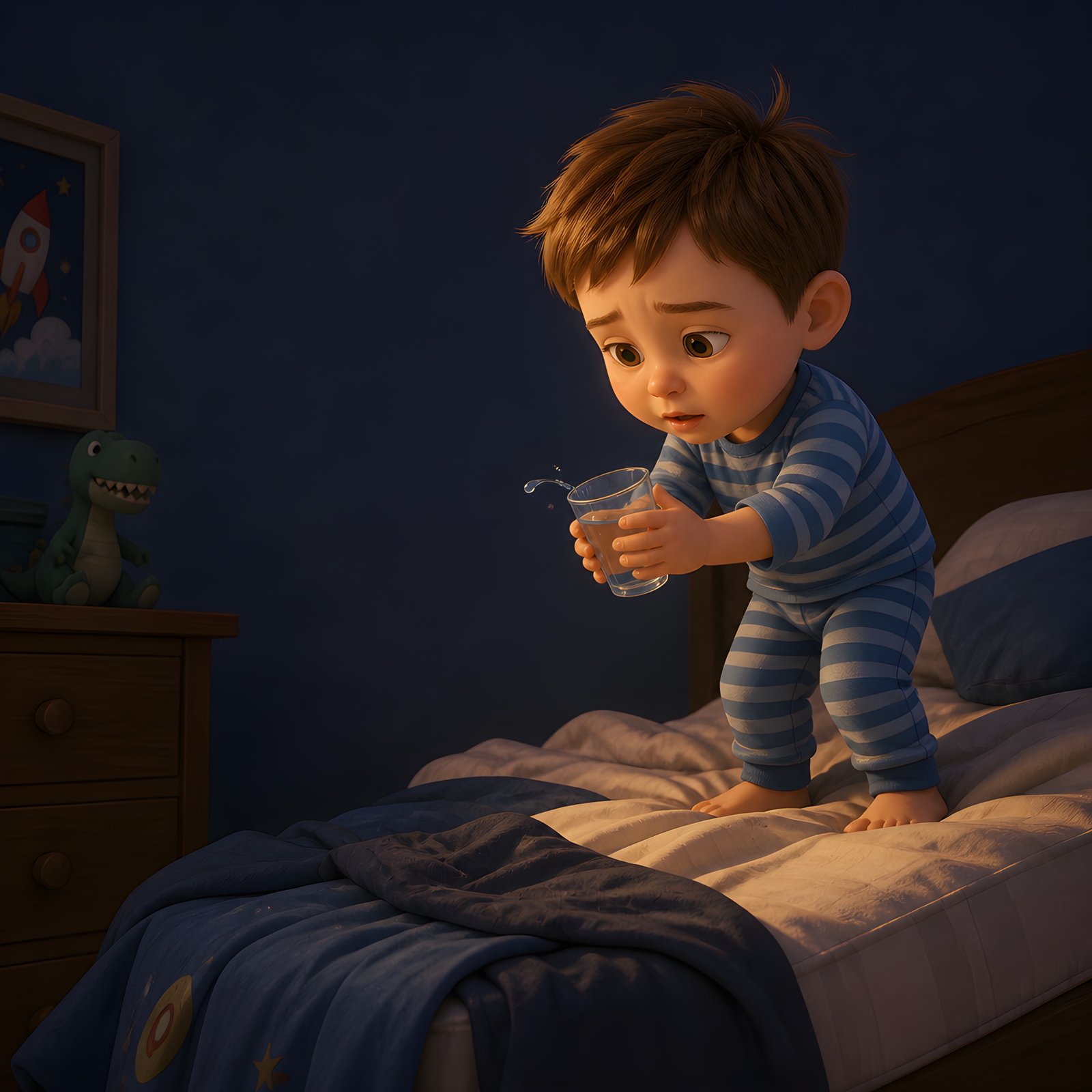
Le soir revint exactement pareil. Milo cligna des yeux. « C’est bizarre… j’ai déjà vécu ça ! »
Sur le bord du lit, un petit ours en bois copiait ses gestes et réclamait aussi mille choses. Fais chut avec ton doigt comme Milo : Chut !
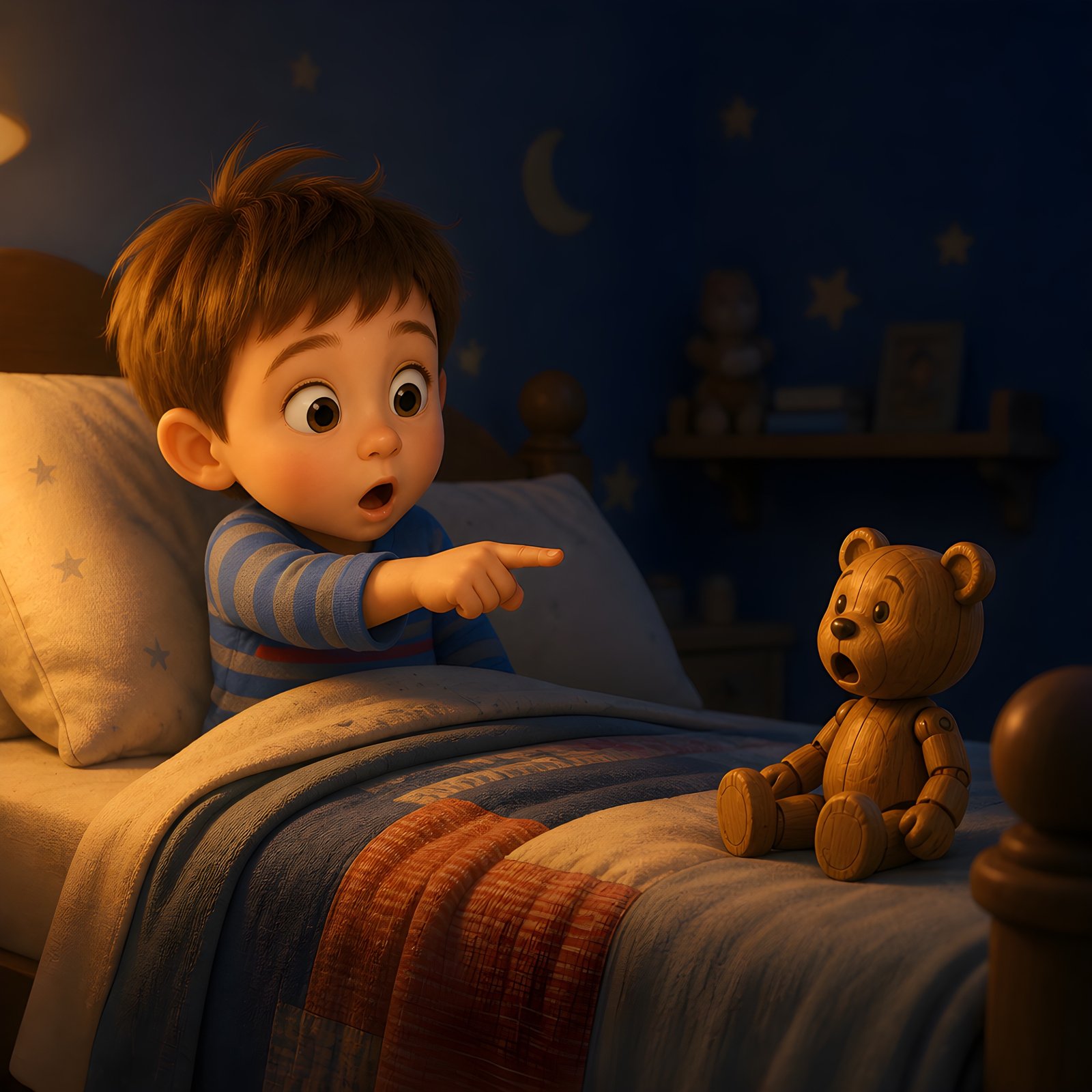
Milo recommença ses caprices exactement de la même façon. « Je veux encore un câlin ! »
Mais la pièce restait trop brillante, trop bruyante.
Son cœur battait fort. Milo se frotta les yeux, fatigué mais beaucoup trop excité.

La soirée recommença encore. Milo tapa du pied par terre. « Pourquoi cette histoire ne s’arrête jamais ?! »
En route pour le pays des dodos. Il décida de crier un bon coup pour forcer les choses, très en colère.

En voulant amasser encore plus d’objets, Milo fit crouler toute la pile de tasses et de jouets. Quel désastre !
Cette fois, le lit était complètement inaccessible. C’était encore pire que les autres fois.

Découragé, Milo s’assit par terre et, pour une fois, arrêta de s’agiter. Il regarda autour de lui.
Et là, il vit le petit ours qui bâillait, fermait doucement les yeux, et cherchait simplement un peu de repos.
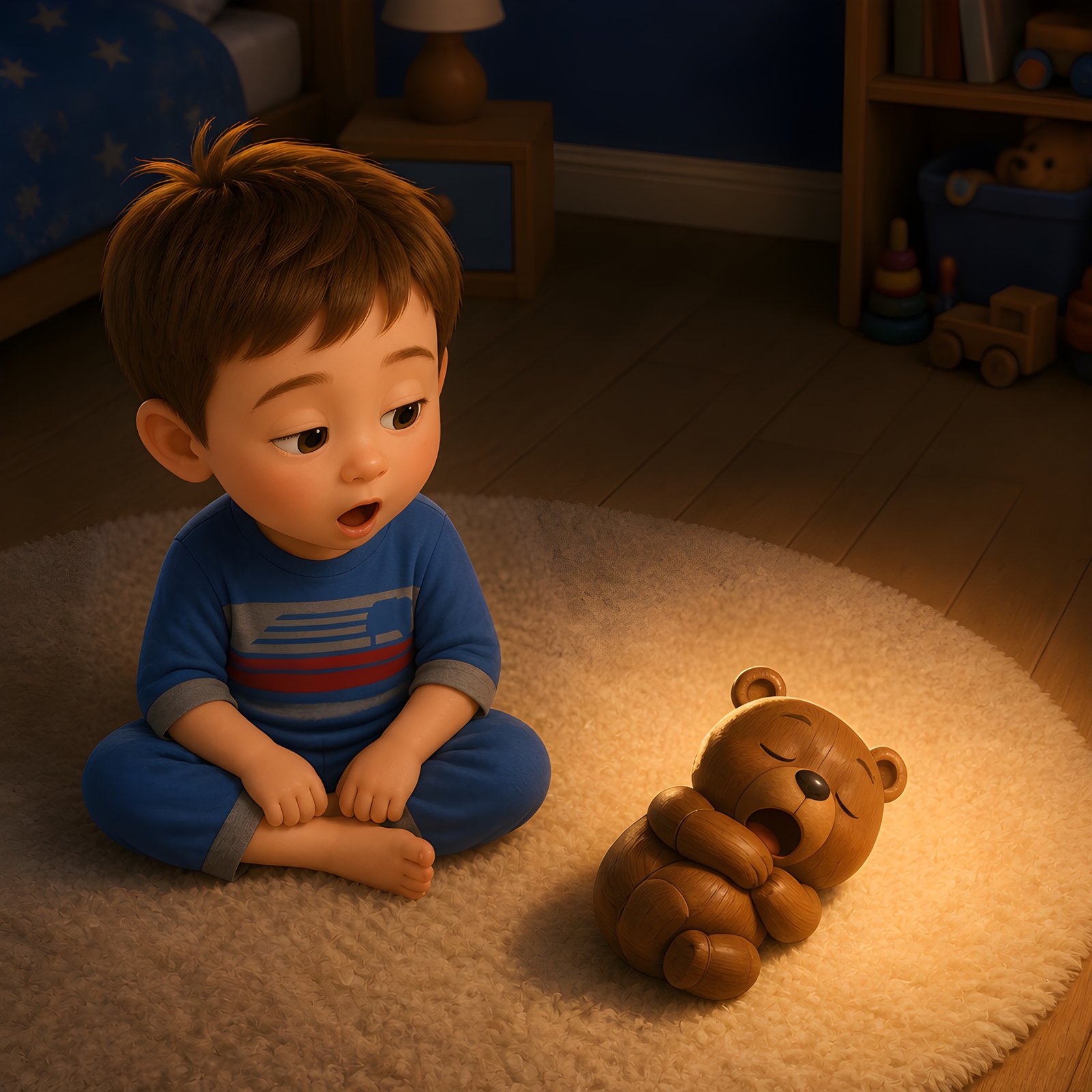
Milo comprit quelque chose. Le petit ours ne demandait pas mille objets : juste le calme, juste une douce sécurité.
« Et moi, je n’ai fait que tout compliquer… », réalisa-t-il tout doucement.

Alors Milo décida d’agir autrement. Il inventa un plan en trois gestes : ranger le dernier livre, border le petit ours…
… et prendre une grande inspiration : souffle avec Milo, fffouuu ! Le calme revenait.
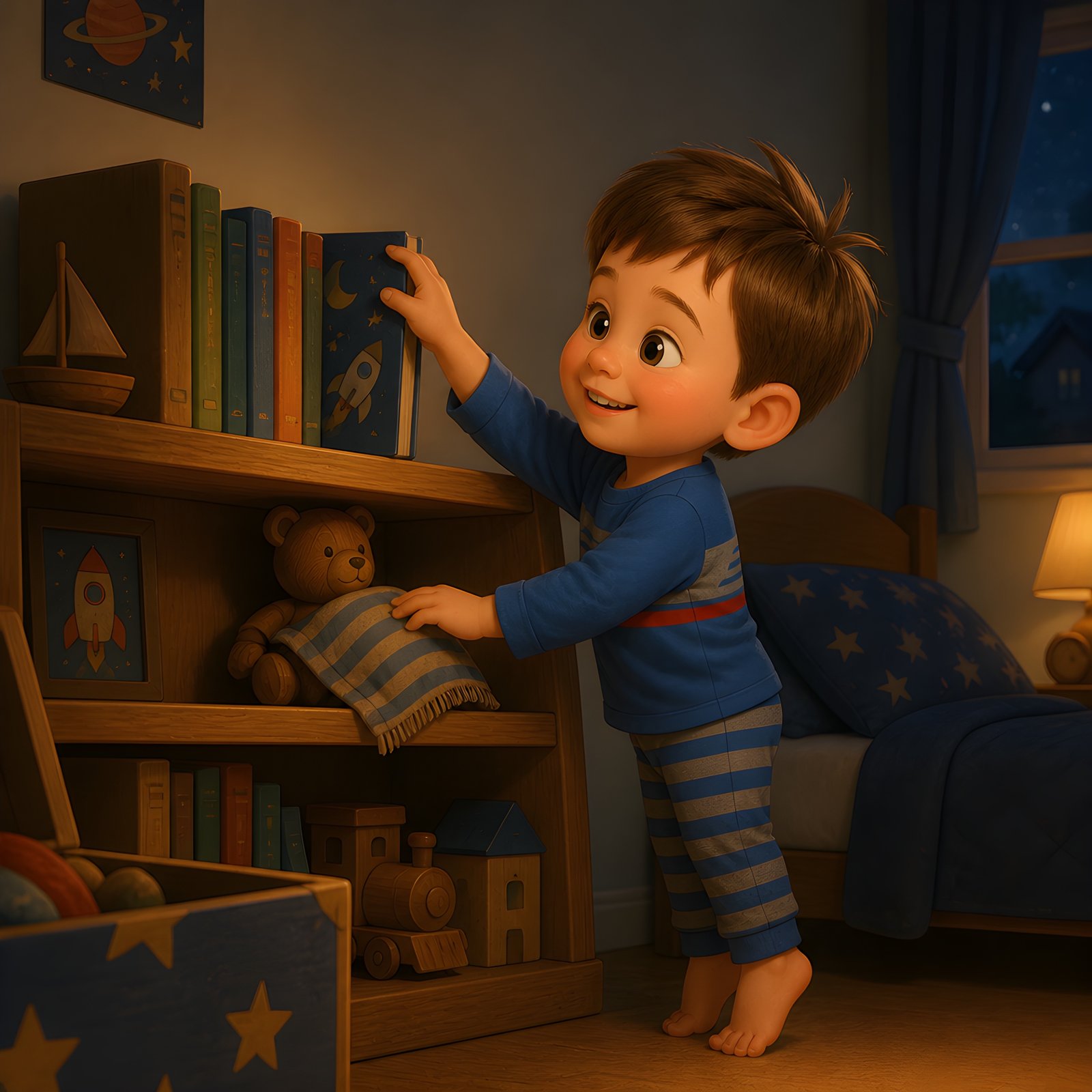
Ce petit ordre bienveillant changea tout. La chambre devint soudain un vrai cocon chaud et douillet.
La lumière de la lampe devint toute douce, enveloppant les murs d’une belle couleur ambrée.
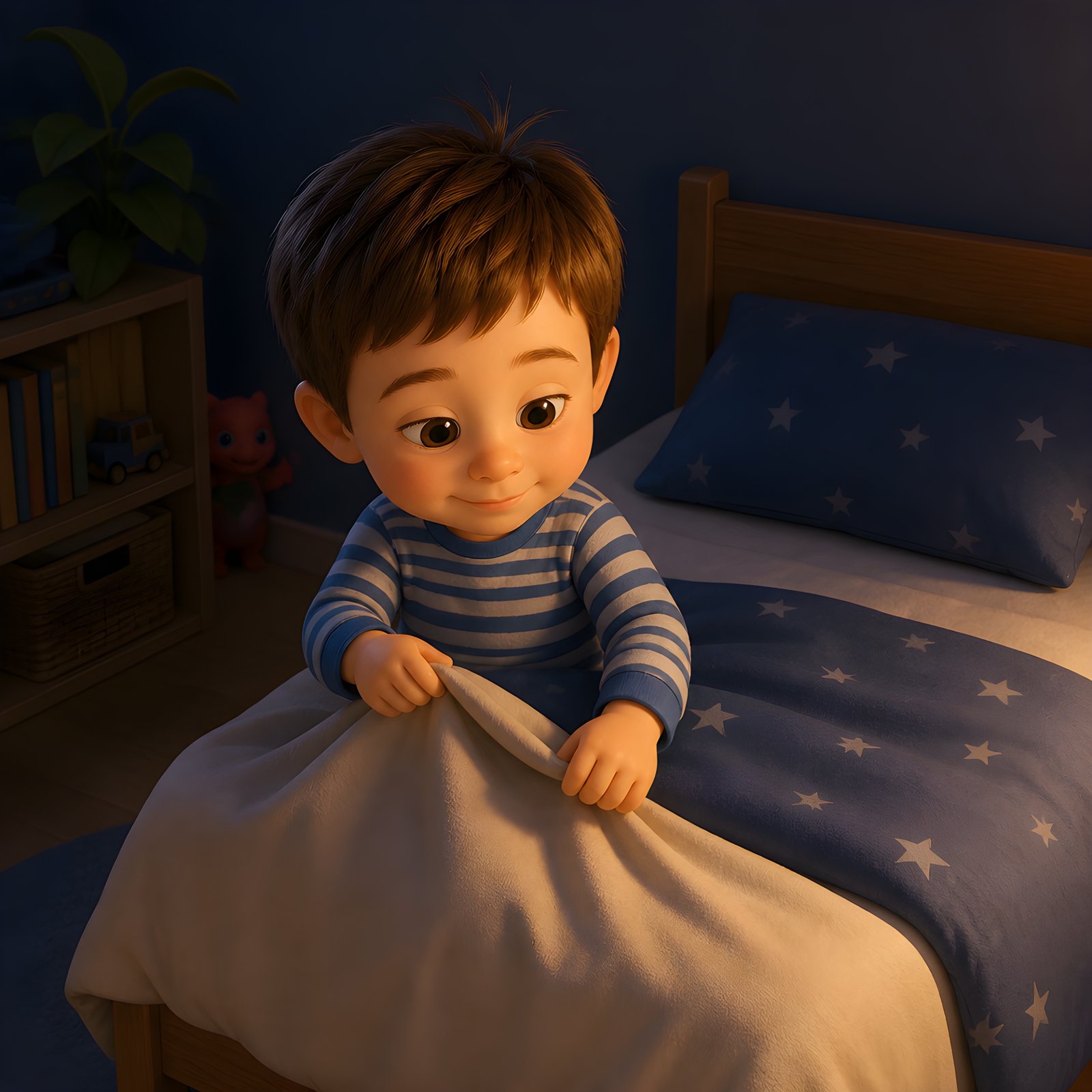
Milo mena tout le rituel du soir tout seul, comme un grand, et borda son petit compagnon.
Milo est le capitaine du dodo. La boucle était enfin brisée pour de bon.
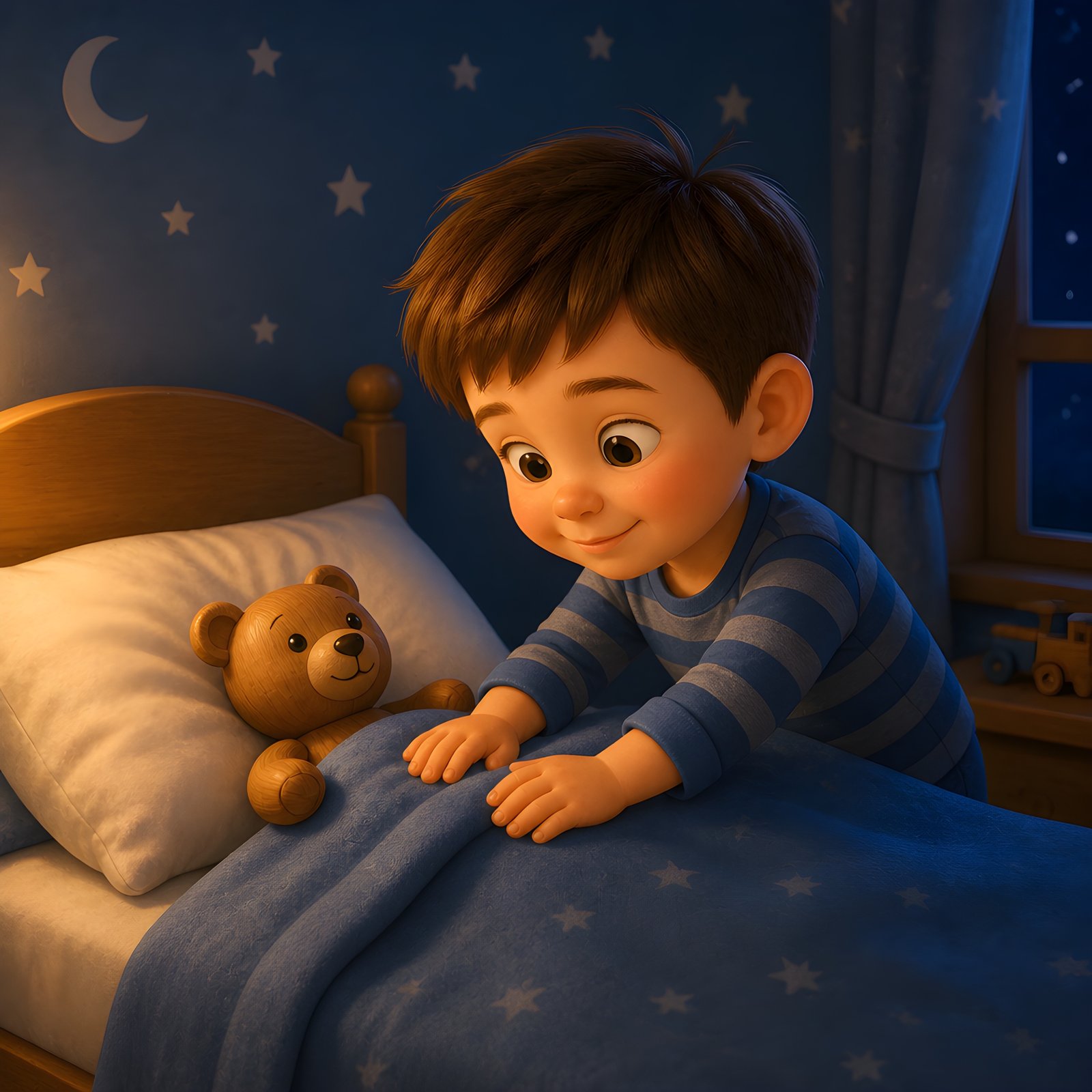
Depuis ce soir-là, Milo savait exactement comment retrouver le chemin du sommeil, sans bruit ni dispute.
Et toi, quel est ton petit rituel pour ce soir ?
Ferme les yeux, et laisse la nuit venir doucement…
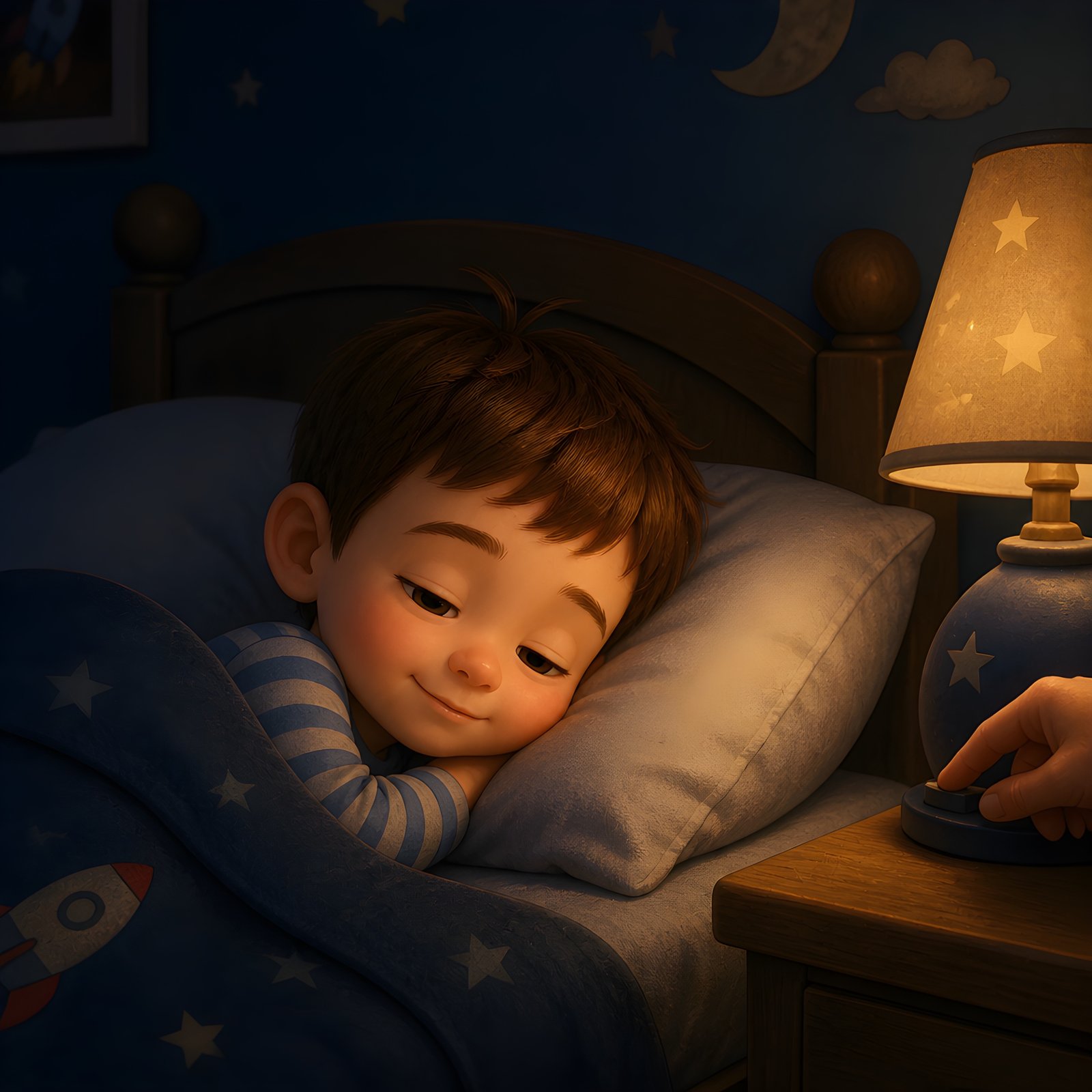
crise-du-coucher
Sunlight danced across the bedroom floor, but Nina shook her head very hard. Bedtime? No way!
She still had towers to build, and books to look at. ‘Each thing in its place, even the night’s sweet embrace.’
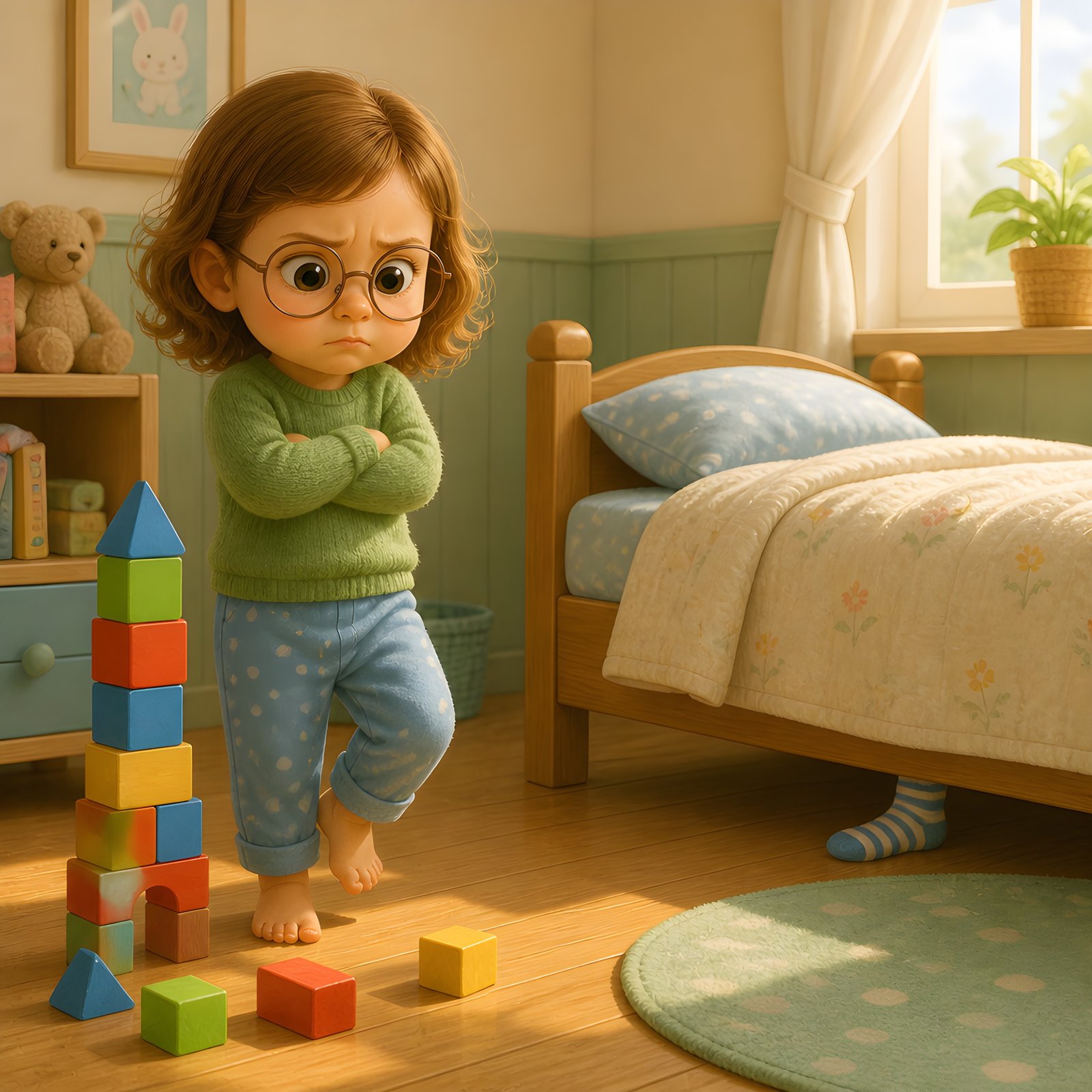
A chime rang out from the hallway clock. Nina paused.
In the dark corner by the wardrobe, something was twitching and sighing. A tiny plush hedgehog with no prickles was kicking its little legs, refusing to sleep.
Nina’s heart beat a little faster. Should she get closer?
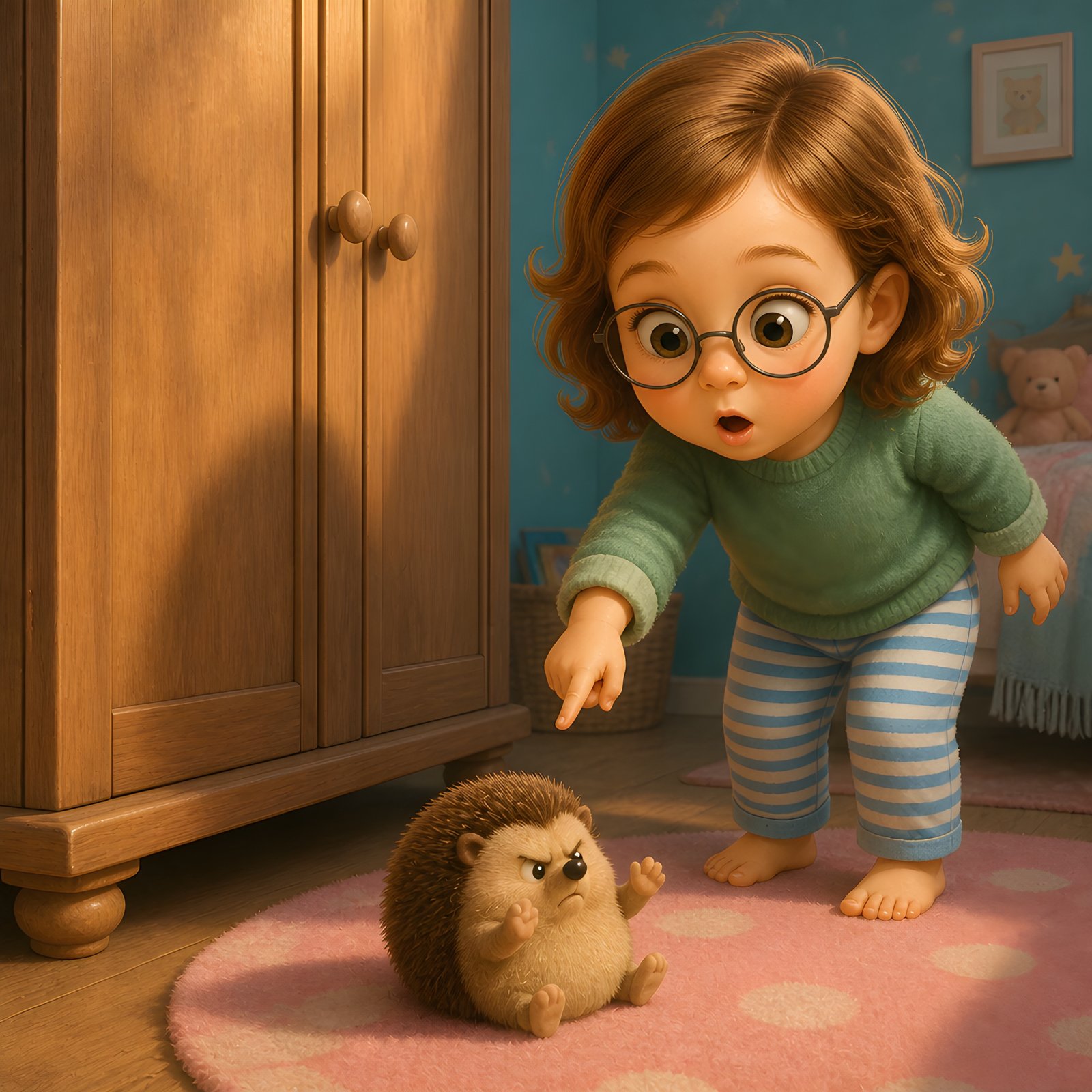
‘I need one more drink of water!’ declared Nina.
The little hedgehog squeaked and bounced across the rug like a tiny, spiky whirlwind, tossing cushions everywhere. Neither of them wanted to settle down!

The shadows grew very long against the wall. The room felt suddenly big and quiet.
Nina’s shoulders dropped. The hedgehog stopped bouncing and hugged its own tummy, looking worried.
A floorboard creaked in the hall. Crrr…
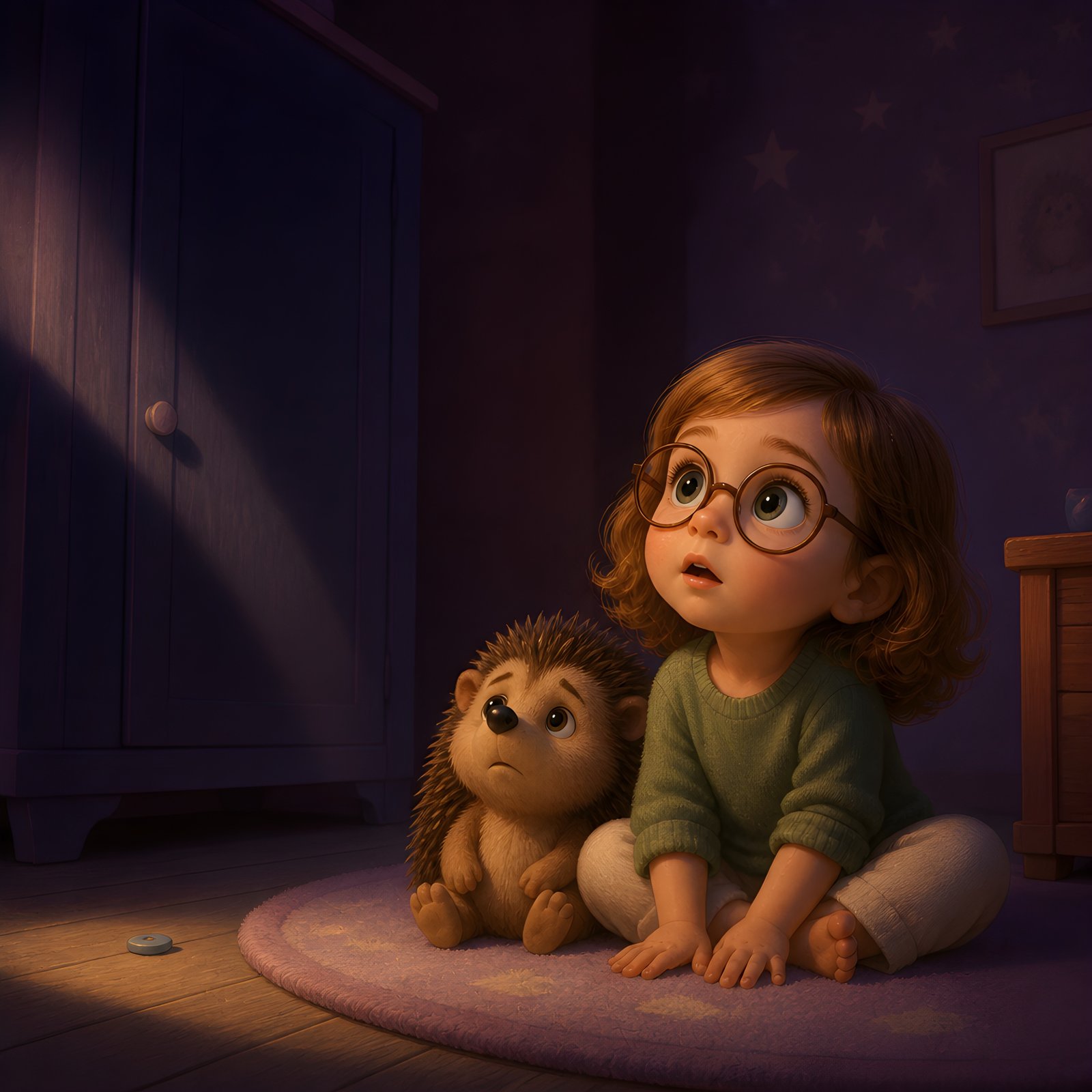
Nina took a deep breath, puffing out her cheeks like a sleepy dragon. ‘Fffouuu…’
The hedgehog watched, then blew a tiny breath onto its little acorn-shaped nightlight. It blinked on with a soft glow!
‘Each thing in its place, even the night’s sweet embrace.’

Sitting together on the warm rug, Nina found an old shoebox and lined it with a soft handkerchief.
She tucked the little hedgehog inside like a precious baby. ‘You’re safe here,’ she whispered softly.

The door creaked open a crack. A warm beam of light spilled across the floor.
Nina held her breath and pressed her finger to her lips. ‘Chut…’
Should she tell about her new friend?

Nina stood up straight, feeling very brave. She pointed right at the shoebox.
‘We are helping each other go to sleep,’ she whispered proudly. ‘He needs me to tuck him in.’
Her chest swelled with a warm, new feeling.

Now it was time to lead the way. Step one: put away the last block.
Step two: place the little box right beside the pillow.
Step three: ‘Each thing in its place, even the night’s sweet embrace.’
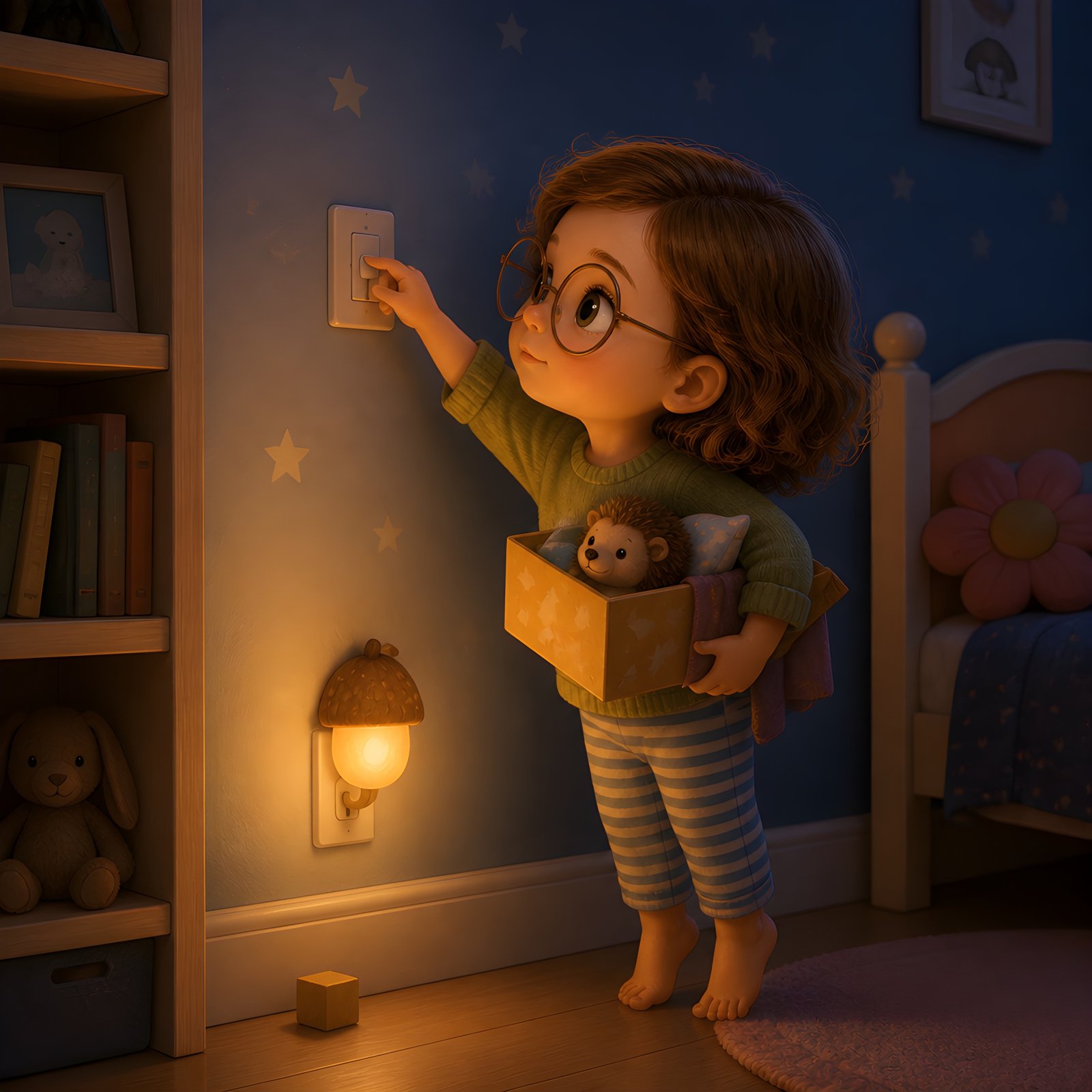
Inside the shoebox, the little hedgehog let out a long, quiet sigh. Its heavy eyelids fluttered once, twice…
And then, they closed tight. Zzz… He was fast asleep.

Nina slipped under her own soft blankets. She felt so tall, and so very proud of her evening.
Without waiting to be asked, she reached out her hand. ‘You can turn off the big lamp now, please,’ she whispered into the quiet room.
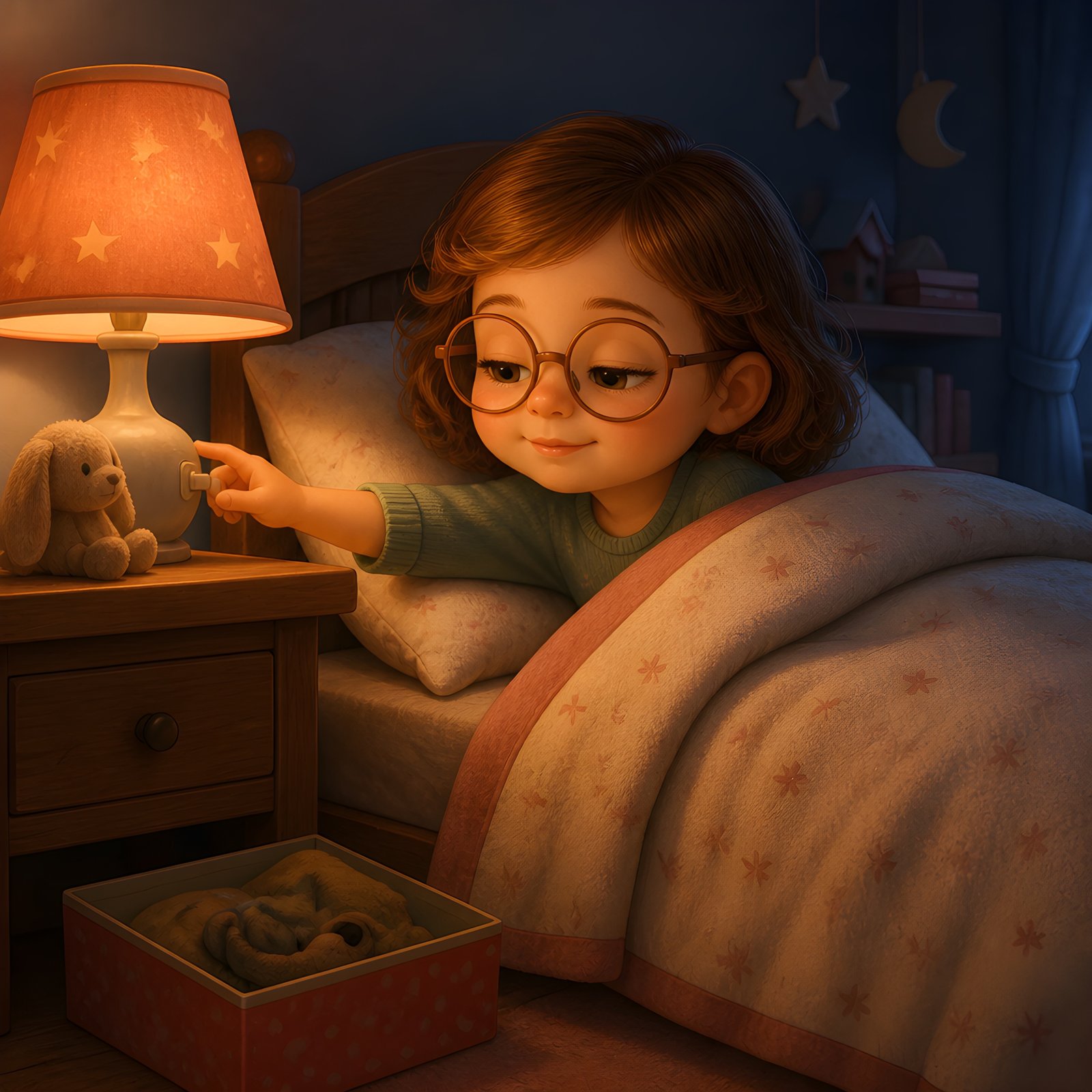
The room grew as quiet as a sleeping mouse, bathed in the warm, gentle glow of the acorn light.
Nina closed her eyes and drifted off to dreamland.
Can you close your eyes tight like Nina?