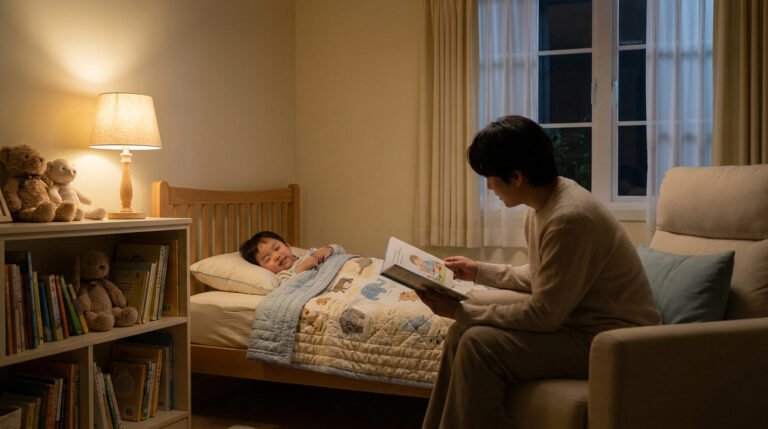
A consistent nightly sequence of just 15 to 30 minutes can significantly lower cortisol levels and stabilize a child’s circadian rhythm. Yet, many parents find themselves trapped in a cycle of endless requests and late-night power struggles that leave everyone exhausted.
Establishing a predictable routine is the most effective way to ensure your child feels safe enough to let go of the day. We will show you how to establish a bedtime routine for toddlers that transforms stressful evenings into a calm, bonding experience using simple sensory cues and visual tools.
- Why a Toddler Bedtime Routine Changes Everything
- 3 Steps to Build Your Nightly Sequence
- How Do You Handle Bedtime Stalling?
- Daily Habits That Fix Nighttime Struggles
Why a Toddler Bedtime Routine Changes Everything
A consistent 15, 30 minute nightly sequence lowers cortisol and stabilizes circadian rhythms. Key elements include sensory cues and a dark environment to trigger natural melatonin production. This prevents the dreaded overtiredness wall effectively.
The timing of this sequence is the first pillar of success, starting with the biological sleep window.
Finding the Sweet Spot for Timing
Aim for a duration between 15 and 30 minutes. Shorter routines feel rushed, while longer ones lead to stalling and exhaustion. Keep it focused and calm.
Target bedtime roughly 12 hours after waking. Watch for eye rubbing or yawning to catch the biological window. These cues signal the perfect moment for rest.
Starting too late triggers a second wind. This makes falling asleep much harder for everyone. Avoid delays to keep the evening peaceful.
The Magic of Repetition and Predictability
Consistent patterns lower cortisol levels. The brain recognizes the sequence and prepares for rest. Predictability is the strongest tool for emotional regulation in young children.
Consistency isn’t just about sleep; it’s about providing a secure emotional anchor that tells a child they are safe to let go of the day.
Skipping steps causes anxiety and resistance. Toddlers crave boundaries and structure. Stick to the plan to avoid unnecessary power struggles.
3 Steps to Build Your Nightly Sequence
Once the timing is set, the actual physical steps create the bridge from high energy to deep sleep.
- Warm bath.
- Teeth brushing.
- Pajamas and sensory cues.
- Quiet activity.
- Cuddles and kisses.
Sensory Cues from Bath to Pajamas
Warm water acts as a major physical transition marker. It signals the end of active play and starts relaxation.
Specific lavender scents or soft cotton textures help the brain associate smells with gentle skin care. Softness matters for comfort.
Dressing for sleep acts as a final daily boundary. It confirms that the day is officially over now.
Low-Energy Play and Reading
Replace active play with quiet puzzles or soft storytelling. Keep the environment calm and voices low using these tools:
- Soft board books
- Simple wooden puzzles
- Stuffed animal roleplay
- Calm coloring
Shared reading fosters intimacy and safety. It is the heart of the routine.
Harness the power of personalized stories for calm. These narratives soothe restless minds effectively.
Optimizing the Bedroom Environment
Keep the room cool and ensure darkness for melatonin production. Use blackout curtains to block street lights or early sun.
White noise creates a sound cocoon. This prevents sudden household noises from waking the child.
Ensure safe sleep practices. Remove large toys and keep the sleeping area clear and simple.
How Do You Handle Bedtime Stalling?
Even with a perfect environment, toddlers are masters of the “one more thing” technique to delay sleep.
Defusing the One More Thing Trap
Handle requests for water or extra stories with firm kindness. Use a script like “I hear you, but the kitchen is closed.” Acknowledge their feelings without changing the rules.
Set firm boundaries immediately. Consistency prevents the toddler from testing limits further. Stay calm but stay very resolute.
Use a check-in method for reassurance. Tell them you will return in five minutes. This reduces bedtime anxiety.
Use firm kindness: “I hear you, but the kitchen is closed.” A five-minute check-in reduces anxiety while maintaining the boundary.
Using Visual Charts for Toddler Autonomy
Routine charts empower toddlers to lead the process. They love checking off completed tasks. You can learn more about creating sustainable routines to keep the momentum going.
Involve the child in creating the chart. Let them choose stickers or colors. This increases their personal buy-in and cooperation.
“A visual schedule transforms a parent’s command into a shared mission, reducing friction and building confidence.”
Managing Separation Anxiety with Comfort
Identify signs of genuine distress versus simple stalling. Crying with tears is different from whining. Respond to real fear with extra comfort and physical presence.
Use transitional objects like stuffed animals. These provide security when you leave. They act as a bridge to independence.
Try a gradual withdrawal method. Move your chair further away each night. This builds trust slowly.

Daily Habits That Fix Nighttime Struggles
Success at 8 PM actually starts at 8 AM, as daytime habits dictate the quality of night rest.
Balancing Naps and Physical Activity
Daytime sunlight and exercise drive the sleep-wake cycle. Ensure your toddler gets outdoor time every morning. Physical activity burns off the energy needed for a deep rest.
Shorten naps to preserve nighttime sleep pressure. If they sleep too long by day, they won’t be tired. Monitor the total sleep hours.
Focus on the importance of daily movement for better rest. Active play builds healthy sleep. Every step counts today.
Cutting Blue Light for Natural Melatonin
Screens impact the developing brain by suppressing melatonin. This makes it harder for toddlers to feel sleepy. The blue light mimics morning sun, confusing their internal clock.
Set a digital curfew 60 minutes before the routine. Turn off all tablets and televisions. Focus on tactile toys instead.
| Activity | Effect on Melatonin | Recommended Timing |
|---|---|---|
| Screen time | High suppression | Avoid 1h before bed |
| Outdoor play | High boost | Morning/Afternoon |
| Warm bath | Moderate boost | Evening |
| Dim lighting | Low suppression | During routine |
Adapting Routines for Travel or Shifts
Maintain consistency while away from home by bringing familiar items. Pack the usual pajamas and sound machine. These cues signal “sleep” regardless of the location or time zone.
Adjust the schedule gradually for growth spurts. Shift times by 15 minutes every few days. This prevents sudden schedule shocks.

Keep core elements like the story and the kiss. These anchors provide stability during travel. They never change.
Establishing a consistent 15, 30 minute sequence lowers cortisol and signals safety. By combining sensory cues like warm baths with dim lighting, you help your child’s brain trigger natural melatonin. Start tonight to transform bedtime struggles into peaceful rest. A predictable night is the foundation for a brighter, happier tomorrow.
FAQ
Why is a consistent bedtime routine so important for my toddler?
Establishing a predictable nightly sequence is a game-changer for your child’s cognitive development and emotional mood. A steady routine helps lower cortisol levels, the “alertness” hormone, allowing their brain to recognize that it is time to transition from high energy to deep rest.
Beyond just sleep, these habits foster stronger parent-child bonds and improve long-term attention and school performance. By creating a secure emotional anchor, you help your toddler feel safe enough to let go of the day and drift off peacefully.
How does repetition help regulate my child’s stress hormones?
Repetition and predictability are the strongest tools for emotional regulation. When a toddler knows exactly what comes next, whether it is the bath, a story, or a cuddle, their nervous system relaxes, which facilitates a natural drop in cortisol and triggers melatonin production.
Without this consistency, toddlers often hit a “second wind.” This is actually a survival response where the brain releases adrenaline to counter exhaustion, making it much harder for them to settle down. A rhythmic routine prevents this hyper-arousal state entirely.
What is the best way to handle a toddler who keeps stalling at bedtime?
Toddlers are masters of the “one more thing” technique, but you can defuse this with firm kindness. Use clear boundaries and scripts like, “I hear you, but the kitchen is closed for water now.” Staying resolute while acknowledging their feelings prevents power struggles and reduces bedtime anxiety.
We also highly recommend using visual charts. These tools empower your toddler by letting them check off completed tasks, transforming your commands into a shared mission. This builds their autonomy and makes the transition to sleep feel like a win for them rather than a loss of control.
How does light exposure affect my toddler’s ability to fall asleep?
Light is a major biological signal. Blue light from screens mimics the morning sun, confusing the internal clock and suppressing melatonin. Even low levels of bright household light can keep a toddler’s cortisol levels too high for sleep.
To fix this, set a digital curfew at least 60 to 90 minutes before bed. Switch to dim, warm lighting or use a low-intensity red light for nighttime needs. Red light is the least likely to disrupt the circadian rhythm, ensuring your child stays in a sleepy state during diaper changes or quick check-ins.
When should I start a bedtime routine, and how long should it last?
It is never too early! While sleep patterns emerge around three months, a structured routine becomes vital as they grow. The ideal duration is between 15 and 30 minutes. Anything shorter feels rushed and stressful, while anything longer gives toddlers too much room to stall and become overtired.
Watch for biological sleep windows, such as eye rubbing or yawning, which usually occur about 12 hours after they wake up. Catching this window perfectly ensures they fall asleep while their body is naturally primed for rest, rather than fighting a second wind.
How can I manage my toddler’s separation anxiety during the night?
Distinguish between simple stalling and genuine distress. If your child is truly fearful, respond with extra physical presence and comfort. Using transitional objects like a favorite stuffed animal can provide a sense of security and act as a bridge to independence when you leave the room.
For a smoother transition, you can try a gradual withdrawal method. Move your chair slightly further from the bed each night. This builds trust slowly and helps your toddler feel safe in their environment without needing you right by their side to fall asleep.