Help your child overcome their fear of the rain
The fear of thunder and heavy rain is a standard developmental milestone, yet it frequently leads to cancelled plans and sleepless nights for the entire family. When my child is scared of the rain, the body’s primitive alarm system reacts to the sudden noise and lack of control long before logic can intervene.
Dismissing these feelings often backfires, so I will help you use concrete tools like sensory naming and personalized storytelling to transform your child from a frightened observer into the hero of the sky. We will explore why the backyard feels different than the bath and how to build lasting resilience before the next storm arrives.
- Understanding Why Your Child Is Scared of the Rain
- 3 Practical Tools to Use During a Thunderstorm
- Why Is My Child Fine in the Bath but Not in Rain?
- Making Your Child the Hero of the Sky
Understanding Why Your Child Is Scared of the Rain
Fear of rain stems from a biological startle reflex to thunder and a loss of environmental control. Children under five often lack the cognitive maturity to distinguish indoor safety from outdoor unpredictability, triggering a primitive survival response.
This survival response explains why the body reacts long before the mind can process the sudden biology of noise.
The Biology of a Sudden Loud Noise
The startle reflex is a biological shield. When thunder claps, the amygdala reacts instantly, triggering a nervous system spike. This protective mechanism is a normal developmental milestone for young children.
A protective survival mechanism triggered by the amygdala in response to sudden loud noises, prioritizing safety over logic.
Physical reactions like jumping or crying are involuntary. In these moments, the body simply prioritizes immediate survival over rational thinking.
The Impact of Losing Environmental Control
Children feel vulnerable because they cannot stop the clouds. They crave routine to feel safe, yet a sudden sky change disrupts their internal sense of order and predictability.
Not knowing when the next boom happens creates tension. This lack of agency causes anxiety to rise, contrasting sharply with their controlled indoor environment.
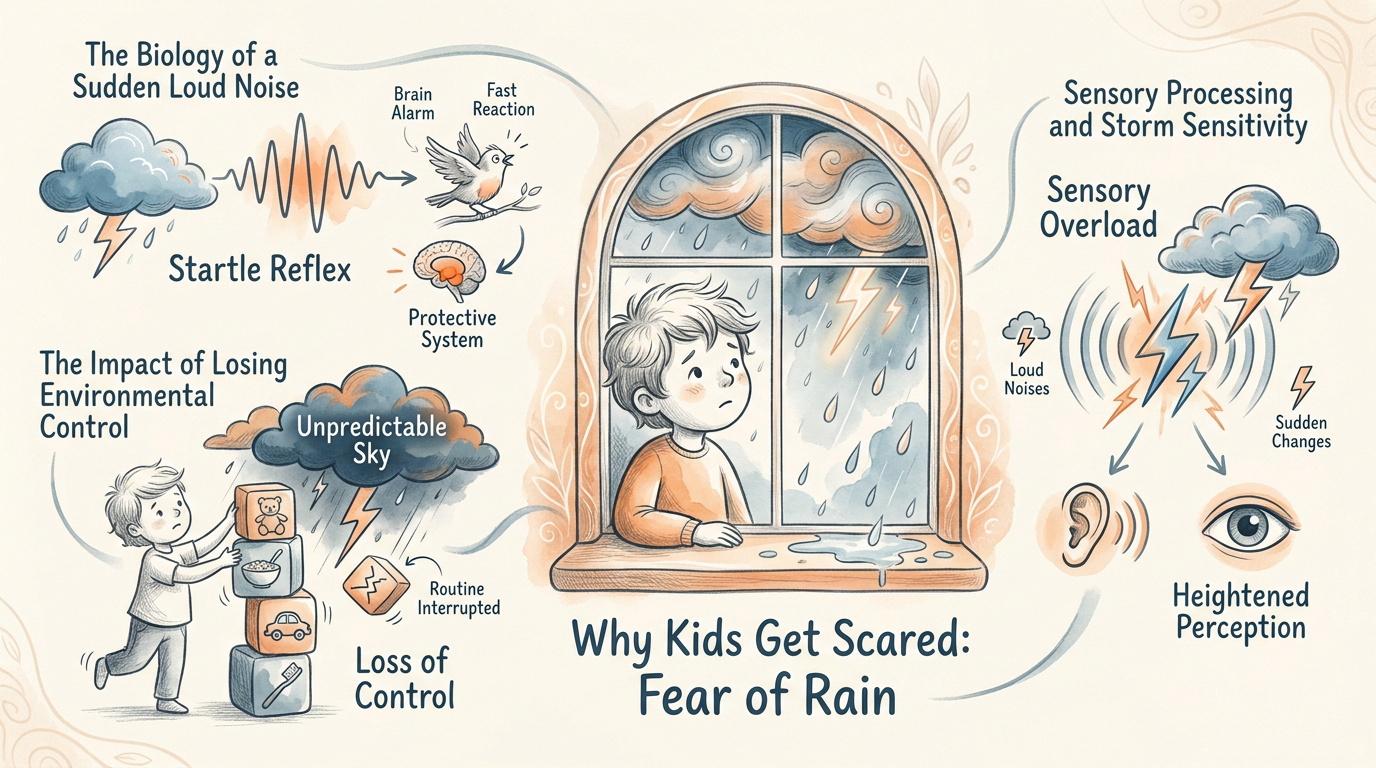
Sensory Processing and Storm Sensitivity
Bright flashes and booming sounds create sensory overload. Some children feel the physical vibration of thunder in their chests, making it more than just a sound.
Intense reactions are often biological rather than behavioral. We must validate their heightened perception of every storm to help them feel secure again.
We wrote a book where your child is the hero. Toggle between girl and boy variants and download the PDF. Try the example on this page!
3 Practical Tools to Use During a Thunderstorm
Understanding the “why” is the first step, but parents also need immediate actions to stabilize the situation when the clouds turn grey.
Naming the Feeling Before the Weather
I see you are scared, and I am here. Labeling the emotion calms the brain’s alarm center. Avoid dismissing the fear with “you’re fine.” Instead, validate what they feel to help them process the moment.
Your calm voice acts as an anchor. As a co-regulator, your steady presence provides safety. If you stay grounded, the child feels protected despite the sudden noise.
Ask your child about their ‘internal weather’: ‘The sky is loud, but how do you feel inside?‘
Measuring the Storm to Reduce Mystery
Try counting between the lightning and thunder. Numbers provide distance and control. This technique turns a scary event into a predictable, measurable game.
Explain that storms travel across the sky. Knowing it is moving away reduces the trapped feeling. It shows the weather is just passing through.
- 1. See the flash.
- 2. Count slowly.
- 3. Stop at the bang.
- 4. Higher numbers mean the storm is further away.
Observing the Sky From a Safe Window
Encourage watching the rain from a secure spot. Normalization builds confidence. Hiding under blankets can sometimes reinforce the idea of danger.
Suggest quiet activities like drawing clouds. Focus on the beauty of rain. Use sensory tools like headphones if the sound is too much. This creates a controlled experience.
We wrote a book where your child is the hero. Try the example on this page; toggle variants and download the PDF. It makes the words theirs before the next storm.
Why Is My Child Fine in the Bath but Not in Rain?
While these tools help during the event, many parents wonder why their water-loving toddler suddenly panics when the first raindrops fall outside.
The Difference Between Controlled and Wild Water
Bath time is warm and predictable. In the tub, your child chooses to splash. Outdoors, water falls without their permission or control.
Surprise and temperature trigger a stress response. Rain brings wind and sudden cold that a warm bath simply does not.
| Feature | Bath Time | Rain Shower |
|---|---|---|
| Temperature | Warm | Cold |
| Control | High | None |
| Sound | Splashing | Booming |
| Predictability | Scheduled | Sudden |
| Lighting | Constant | Flashing |
Debunking the Myth of Rain and Illness
Viruses cause colds, not water. Being wet is uncomfortable but not inherently dangerous. Parents often pass on anxiety by worrying about germ transmission.
Change clothes quickly after being outside. Warmth restores comfort and signals to the body that the sensory threat is over.
Playing in the rain builds resilience with the right gear. It is a healthy sensory experience for growing children.
Our personalized book features your child as the hero who understands the sky. Try the example on this page to toggle variants and download the PDF.
Making Your Child the Hero of the Sky
Beyond practical tips and science, storytelling offers a powerful way to reshape how a child perceives the world around them.
Building Resilience Through Personalized Storytelling
Our book places your child at the center of the narrative. Using their name and room makes the story deeply relatable. It transforms a scary sky into a personal adventure.
Reading about a storm when the sun is out builds mental muscles. It helps children rehearse bravery during calm evenings. The child learns to predict patterns through the hero’s journey.
This is “The book where your child is the hero.” It creates a safe space for exploration and growth.
Exploring the Interactive Hero Story Example
Try the real example embedded on this page. You can toggle between the girl and boy variants to see the hero change. This shows exactly how the customization works. It is our signature product designed for your family.
We encourage downloading the full PDF example provided. Seeing the complete story helps you understand the impact of personalized reassurance.
The child becomes the one who understands the sky. They move from fear to mastery through the power of words.
Empower your child by naming their fears and measuring the storm’s distance to restore a sense of control. When my child is scared of the rain, personalized storytelling transforms unpredictable weather into a heroic adventure. Start rehearsing these tools today to turn the next midnight storm into a calm, shared victory.
FAQ
Why is my child so afraid of the rain and loud storms all of a sudden?
It is important to remember that a fear of storms is a normal developmental response rather than a sign that anything has gone wrong. At this age, a storm is loud, sudden, and completely outside a small child’s control. Their biology reacts through a startle reflex, a primitive survival mechanism where the body responds to the booming sound before the reasoning mind can even process what is happening.
This fear often shows up in ways that disrupt daily life, such as plans being cancelled because of a grey sky or a child refusing to walk to nursery. Because they crave routine and predictability, the sky’s sudden change disrupts their sense of order, causing their nervous system to prioritize safety over logic.
Can my child actually get ill from playing outside in the rain?
The honest answer is that being wet and cold is certainly uncomfortable, but it is not the rain itself that causes sickness. Coughs and colds come from viruses rather than from water falling from the sky. While it is worth changing your child into warm, dry clothes quickly to restore their comfort, playing in the rain can actually be a healthy sensory experience that builds resilience.
Why is my child fine during bath time but terrified of rain outdoors?
The difference lies in control and sensory input. In a warm bath, the environment is predictable, the water is a pleasant temperature, and the child has a say in the splashing. Rain, by contrast, is “wild water”, it is often cold, accompanied by wind, and falls without their permission. The lack of agency combined with the surprise of the elements triggers a stress response that doesn’t exist in the safety of the tub.
What is the best way to calm my child down during a heavy thunderstorm?
Start by naming the feeling out loud before you even mention the weather; saying “I see you feel scared” validates their emotion rather than dismissing it. You can then use a simple counting method to measure the gap between the lightning flash and the thunder. This turns a mysterious, scary event into something measurable that the child can see is moving further away.
Instead of shutting the storm out, try watching it together from a safe window to normalize the observation. Most importantly, rehearse these tools when the sky is clear. Practicing bravery during a sunny afternoon is much more effective than trying to teach new coping skills at two in the morning when the thunder is at its loudest.
How can a personalized story help my child overcome their fear of the sky?
Storytelling allows a child to rehearse bravery in a safe, controlled space. By using a personalized story that features their own name, their own room, and their own street, the child stops being a victim of the weather and becomes the hero of the narrative. When they see themselves as the one who understands what the sky is doing, they gain a sense of mastery.
Reading such a story on a calm evening ensures that by the time the next storm arrives, the words of reassurance are already theirs. It transforms the unpredictable clouds into a personal adventure, helping the whole family move from arguing with the weather to enjoying the quiet moments of a rainy day.
peur-de-la-pluie
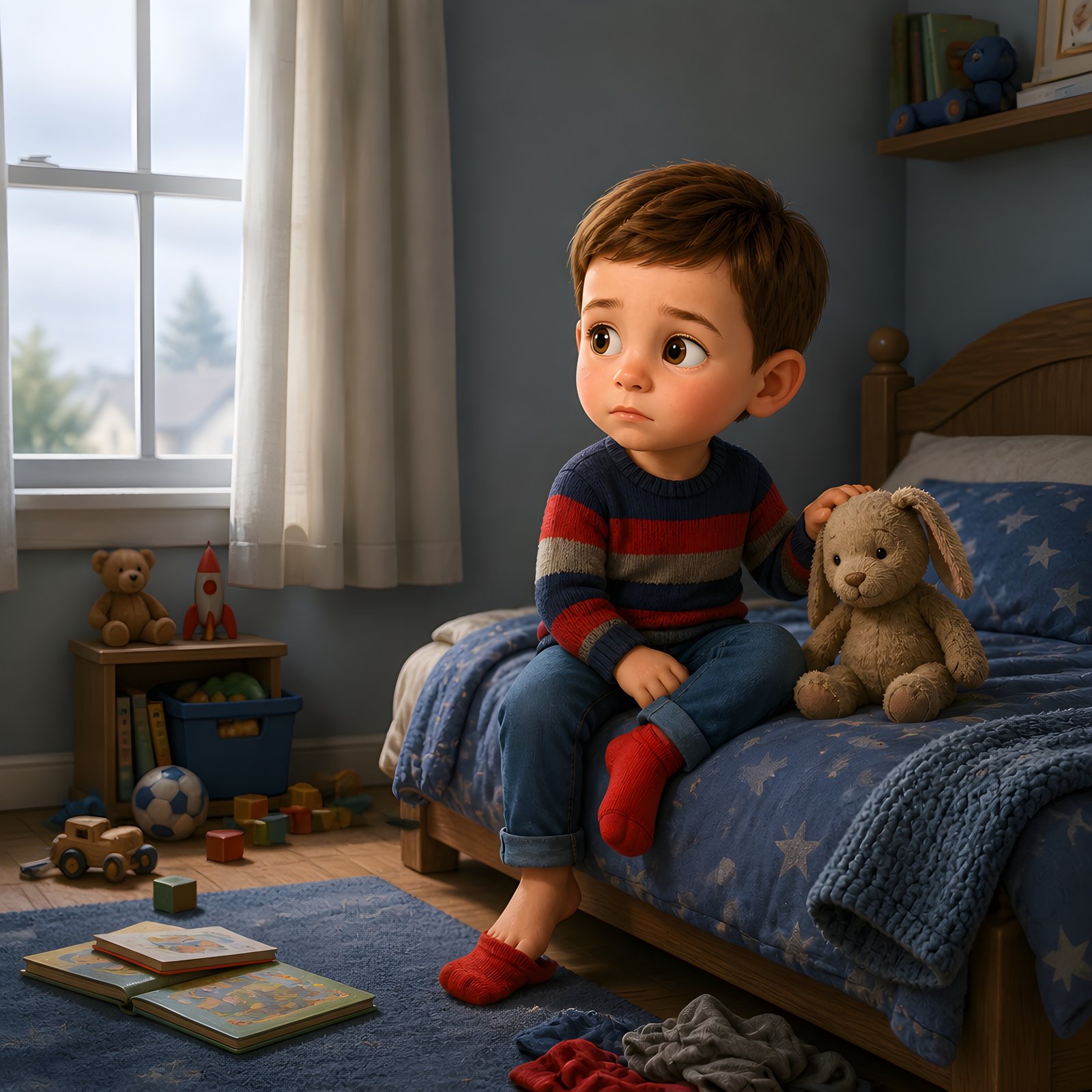
Milo was cozy in his room while the rain fell outside. He watched the dark clouds with deep worry.
Can you spot the little toy rabbit on Milo’s bed? Rumble, a distant growl suddenly made the windowpane vibrate.
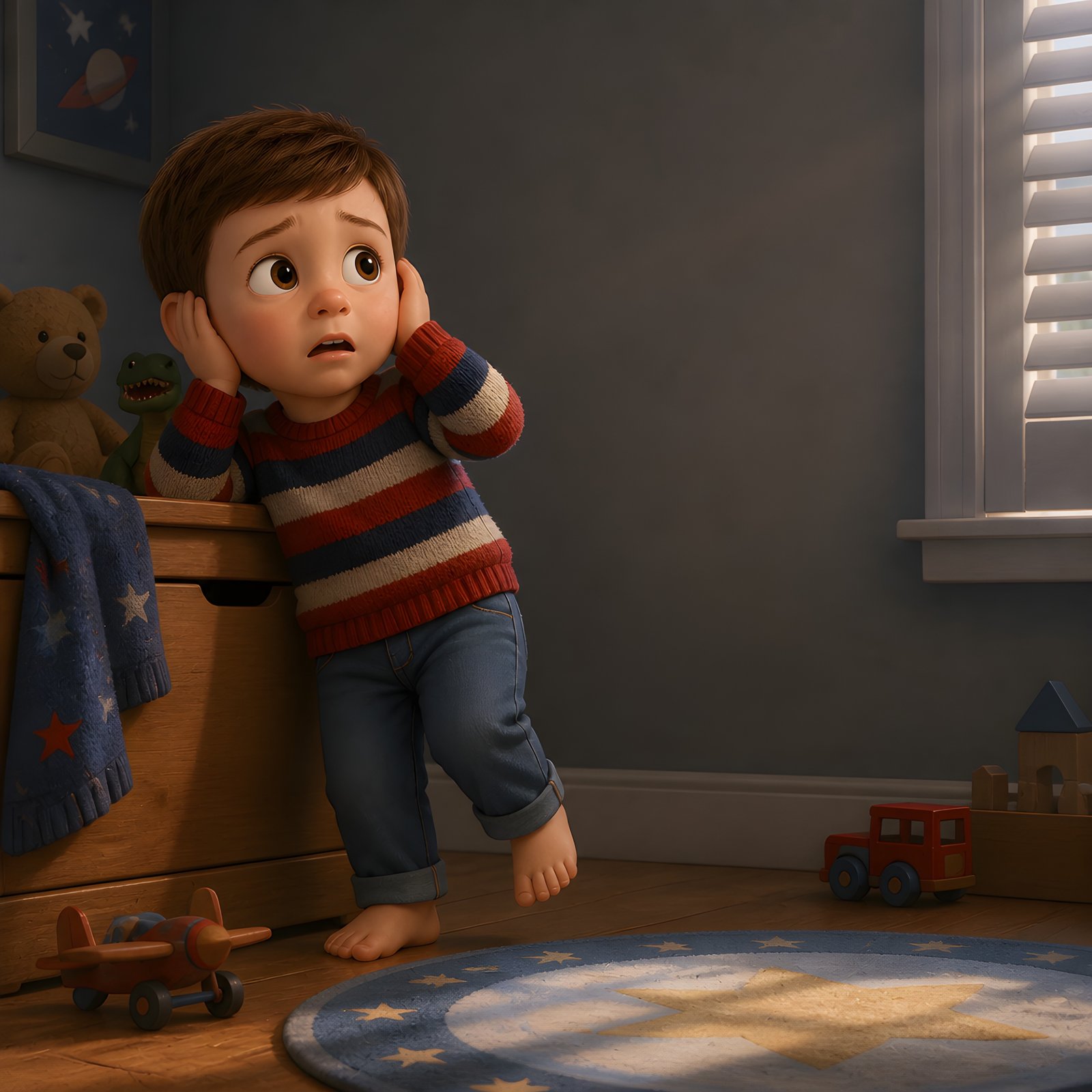
Boom! A loud crash of thunder echoed across the sky. Milo squeezed his hands over his ears.
He refused to stay in his bed and ran to find shelter. All through the house, everyone froze because of the frightening noise.
In the evening, while the rain was still falling, a tiny frog appeared on the window sill.
It was completely soaked, but wide open to the world and without a single shred of fear. Hop! Make the little frog jump with your fingers on the book!
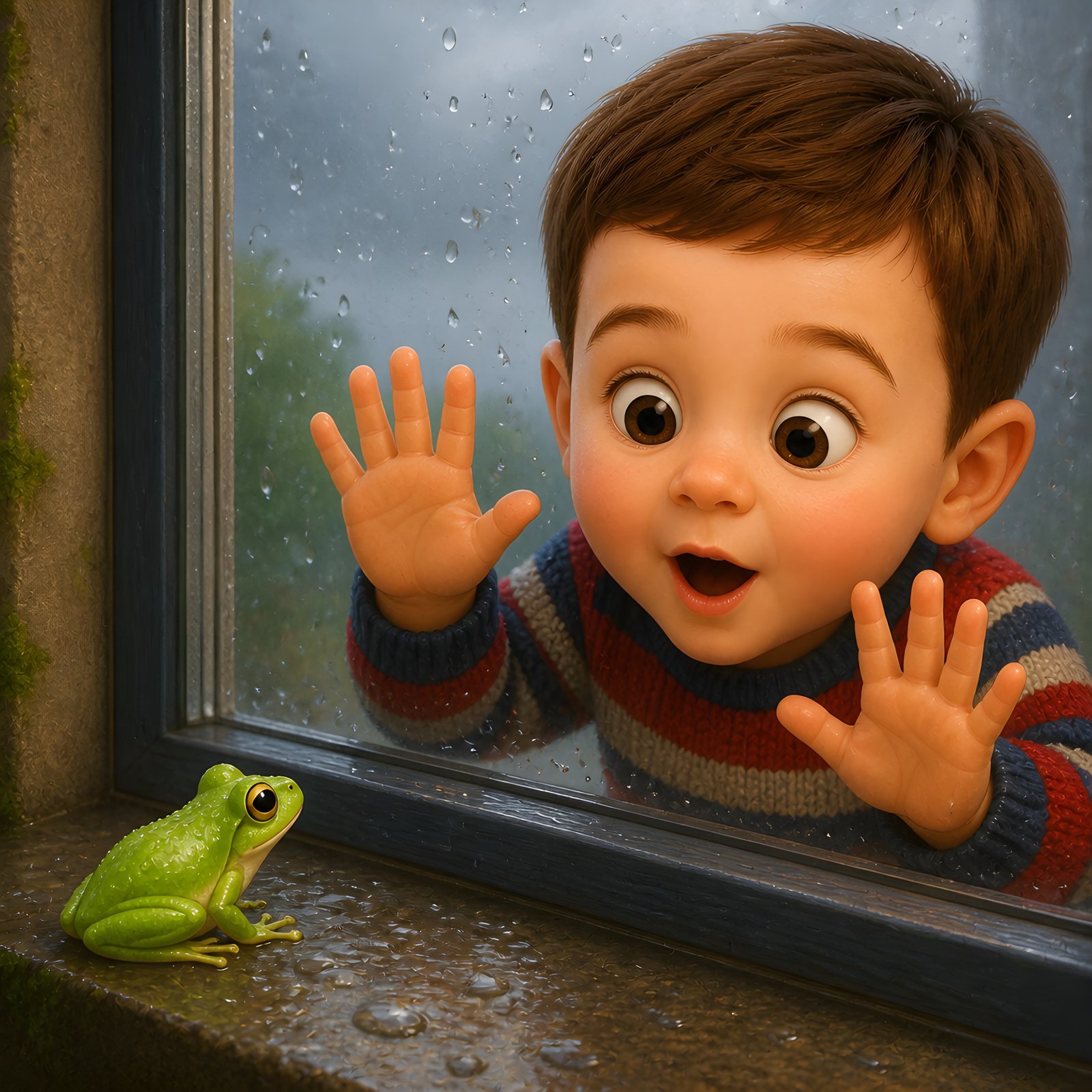
Milo was very surprised by this visitor who wasn’t shaking at all. The frog placed its tiny paws against the window.
It watched the uproar in the sky without any fear. “One, two, three, the sky takes a big, big step!” whispered Milo.
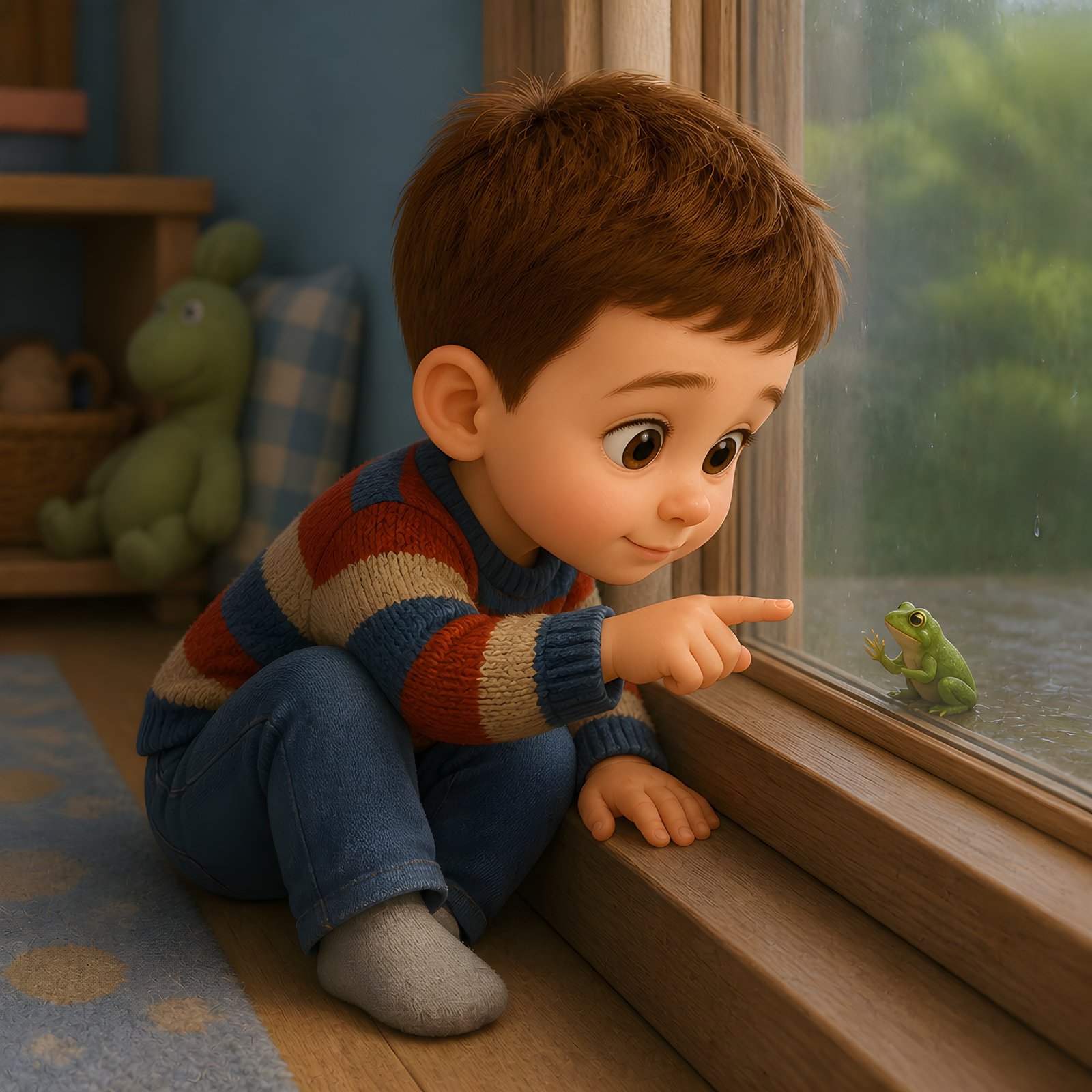
The frog pointed a finger at the heavy clouds, explaining that the sky was simply taking its big bath.
The sky was just cleaning its giant grey cotton sheets. Splash! It was the sky’s big bath, a lovely moment of calm after the storm.
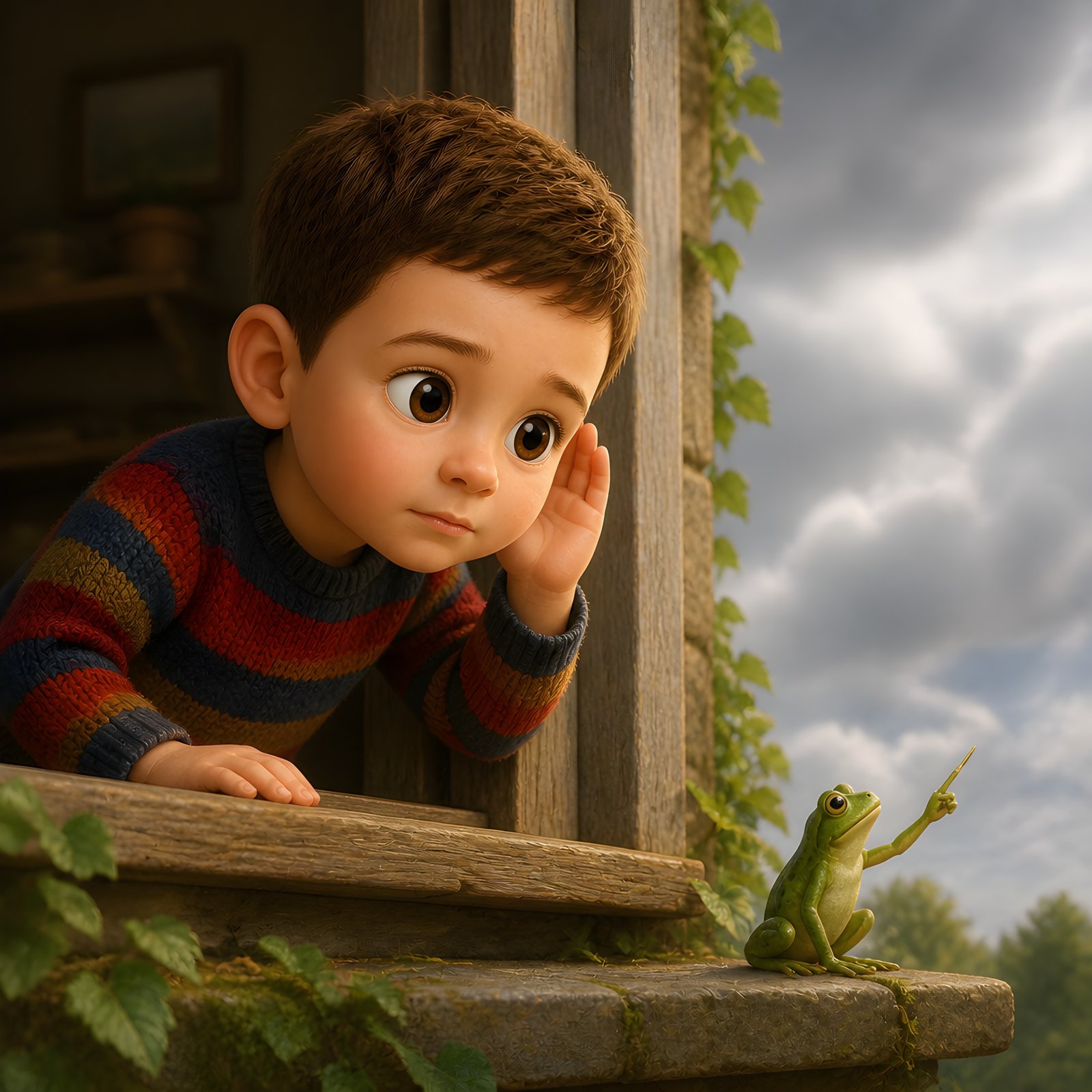
Zzz… flash! A new flash of lightning striped the sky. Milo’s heart beat a little faster.
But his green friend taught him the secret: light always arrives before sound, because it runs much faster.
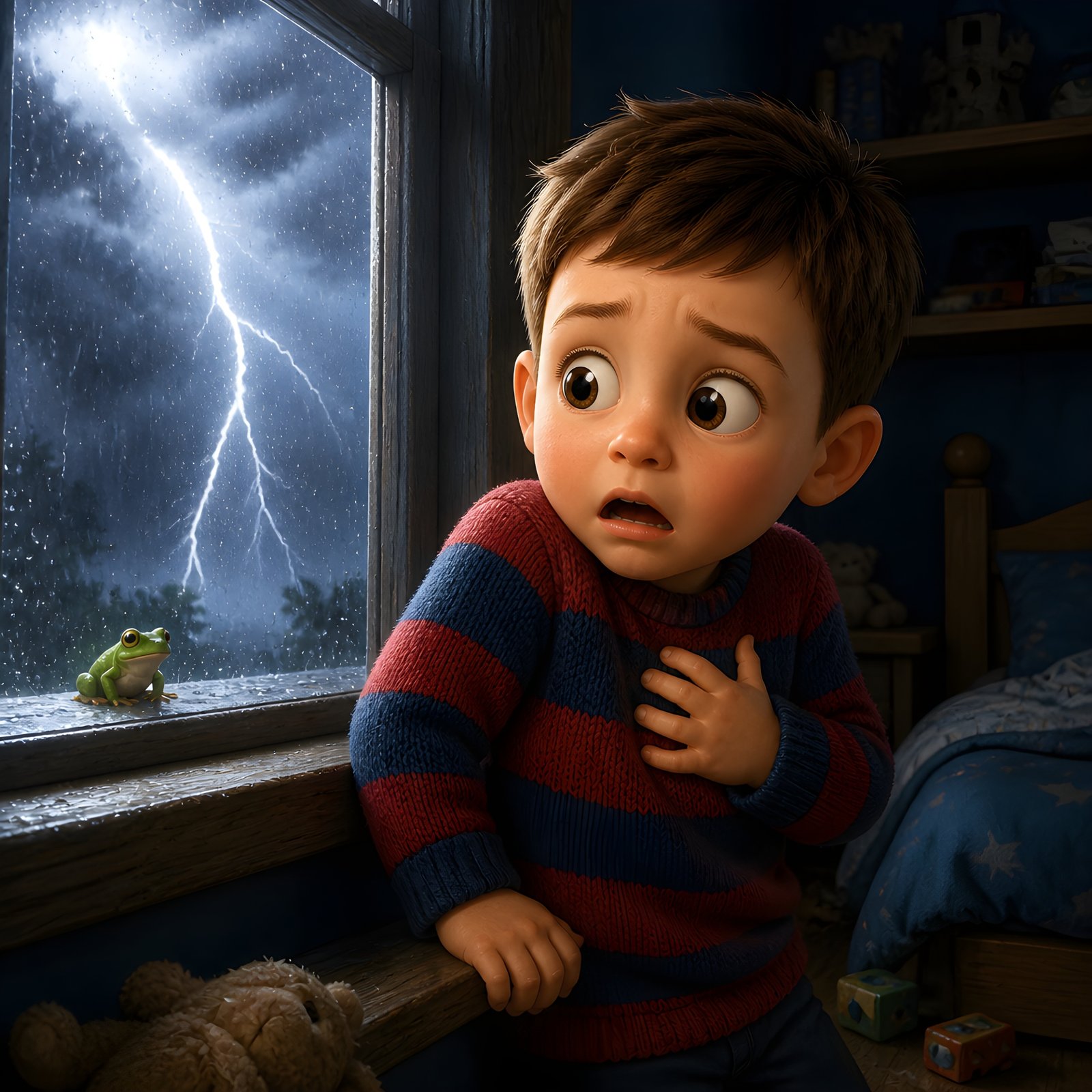
Together, safe and warm near the window, they started counting the seconds.
One… two… three… Four seconds passed before the big noise. The gap between the flash and the thunder grew wider and wider.
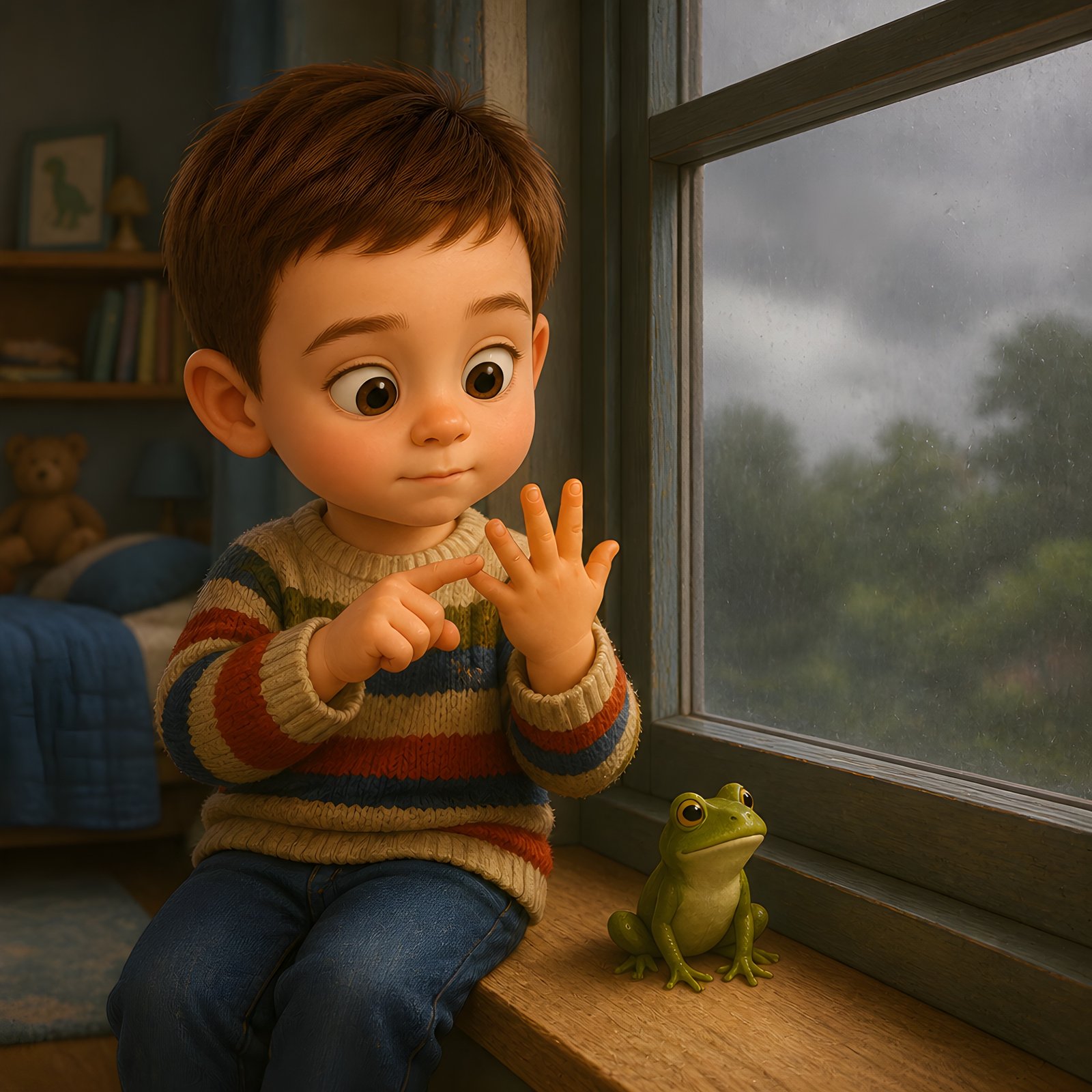
The count reached ten! The gap had grown so big that the storm had clearly gone off to bother someone else.
“One, two, three, the sky takes a big, big step!” repeated Milo with a laugh.
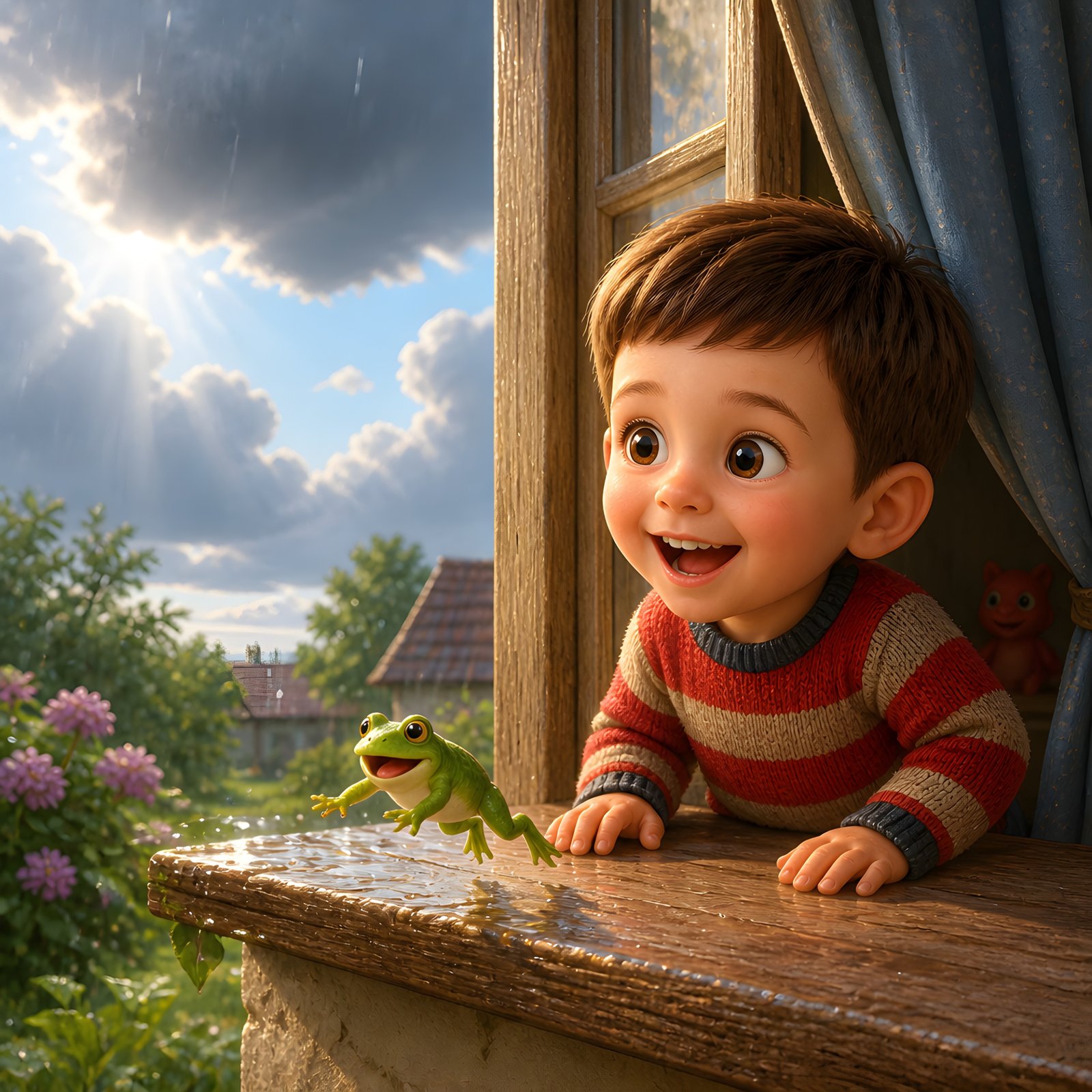
The thunder had completely faded away. Milo was fully relaxed in his bed.
The little frog kept a peaceful watch on the edge of the window in the quiet. Hush… Night could finally wrap its arms around the house.
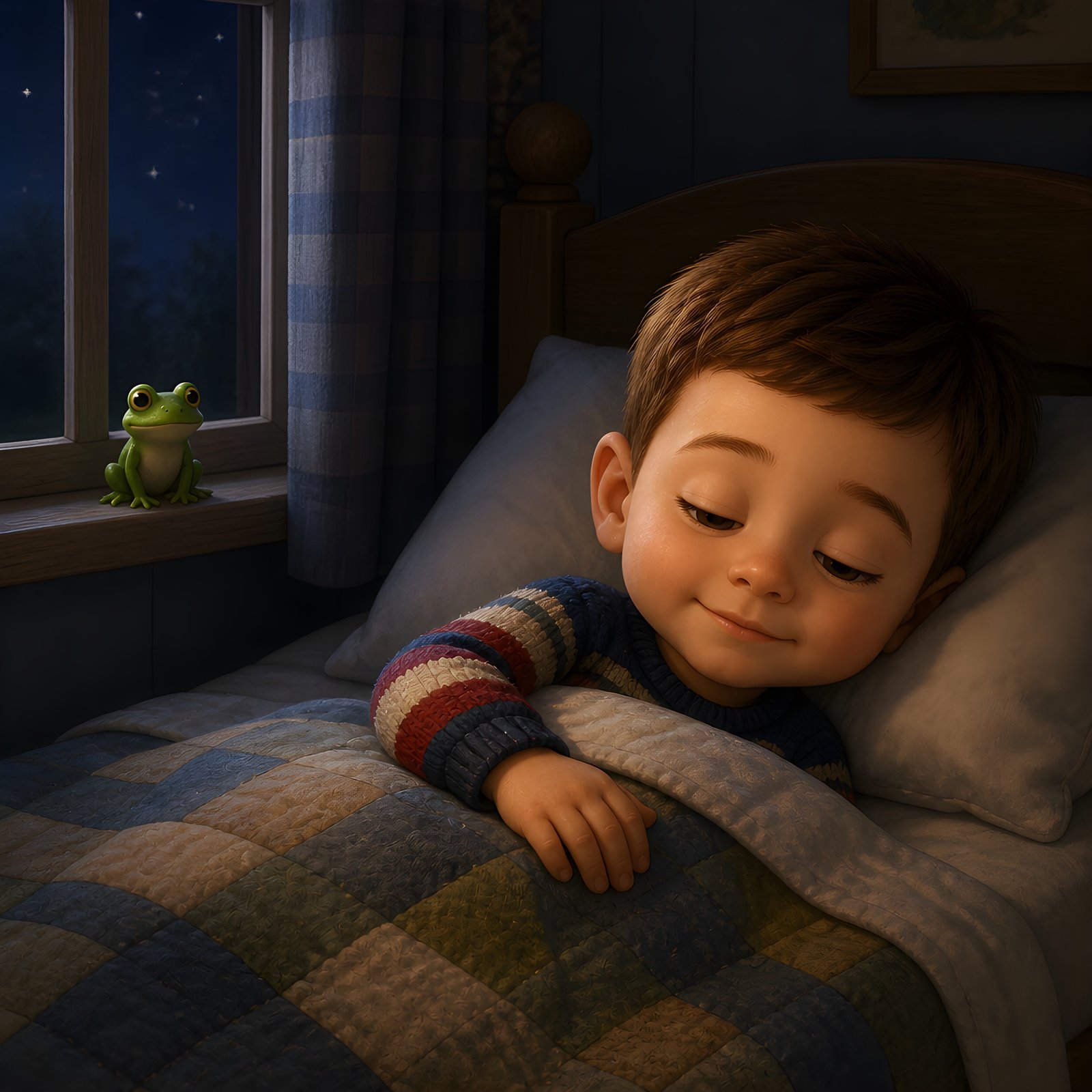
The next morning, Milo and his friend went out into the ordinary rain to see what the storm had left behind.
A big puddle at the end of the road, a lovely smell of wet earth, and a little earthworm that needed help getting back to the grass.
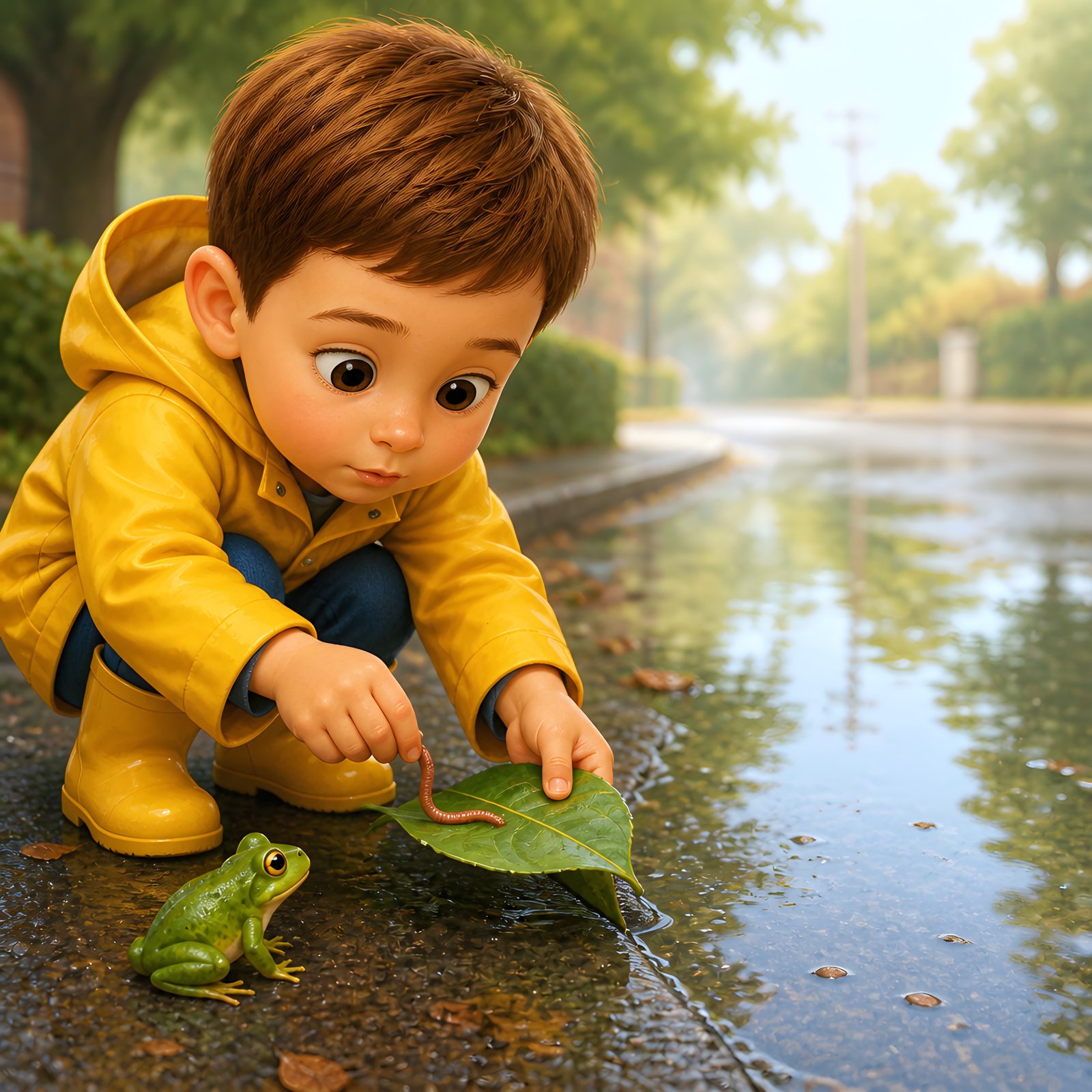
Back inside the house, Milo was the one explaining the mystery of the sky and the secret of counting.
He told the whole story in his own words, very proud of having understood the big rain game. “One, two, three, the sky came home with me!”
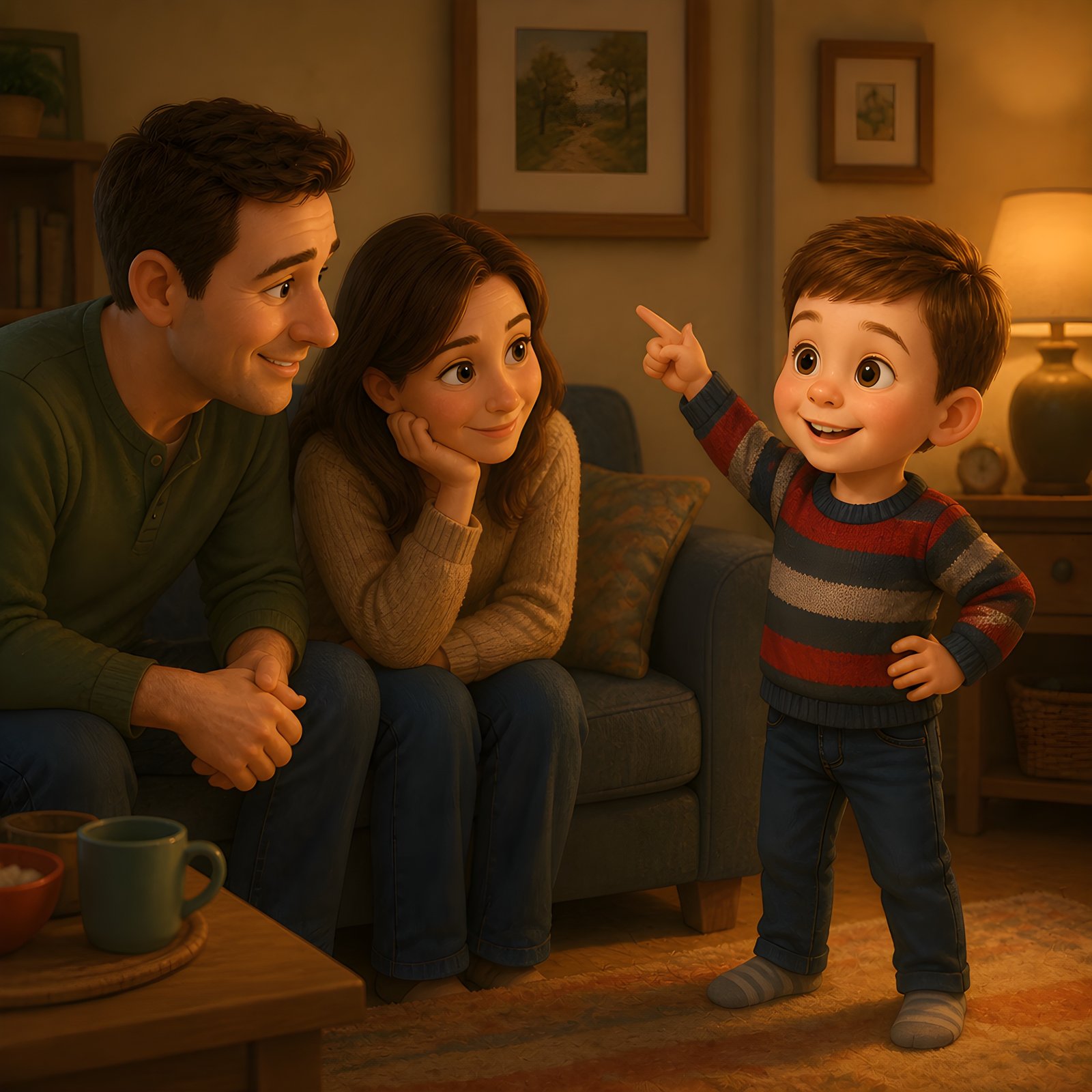
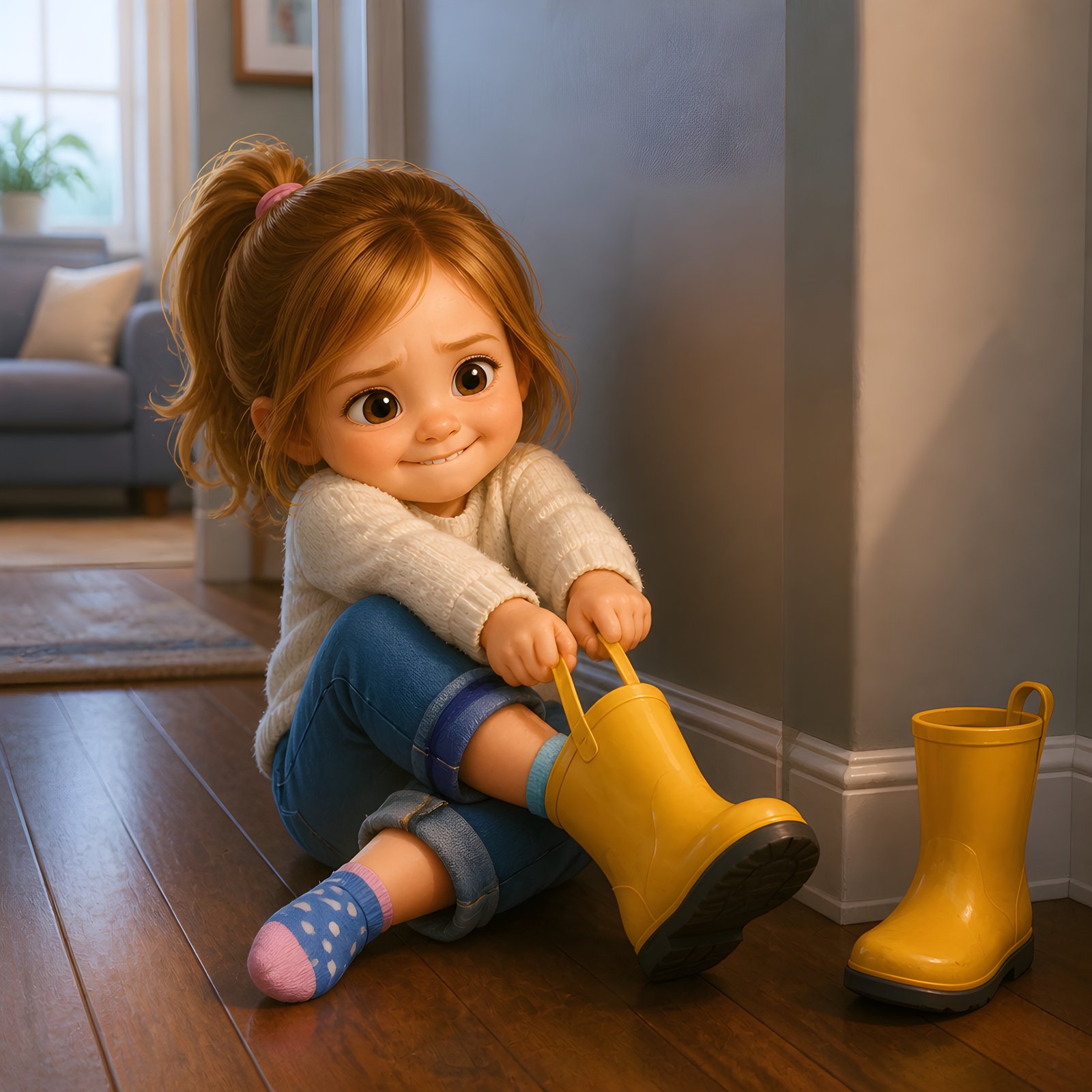
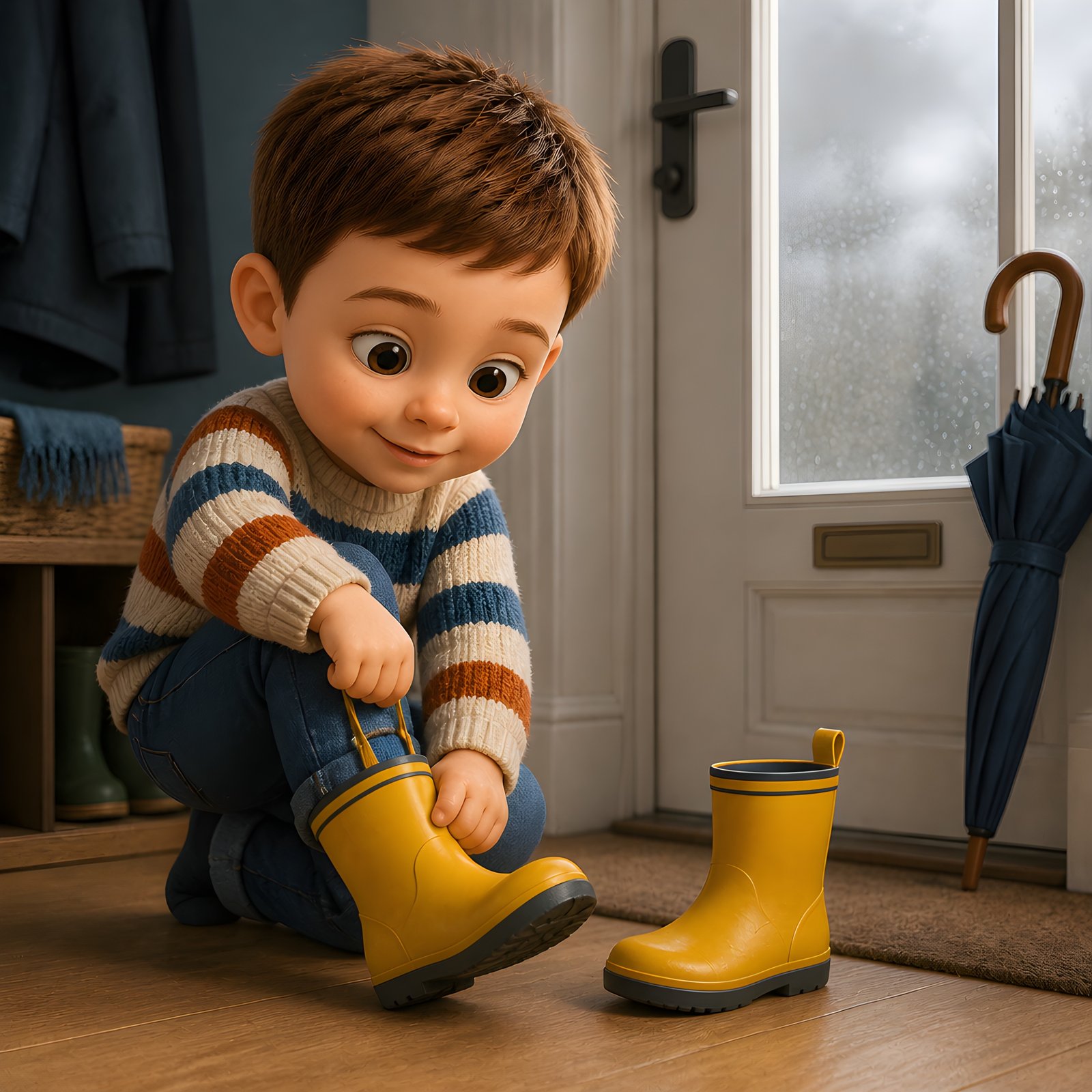
The next day, a new grey morning arrived. But this time, instead of hiding, Milo ran toward the hallway.
He immediately asked for his rain boots. And you, would you like to count the next storm with me tonight, softly, all cozy and warm?
peur-de-la-pluie
Outside, the sky turned a deep grey and began to rain hard. Then a heavy, rumbling sound shook the air.
Nina stopped playing with her blocks. The sky was making its big noise again, and nobody had ever given her a name for it.
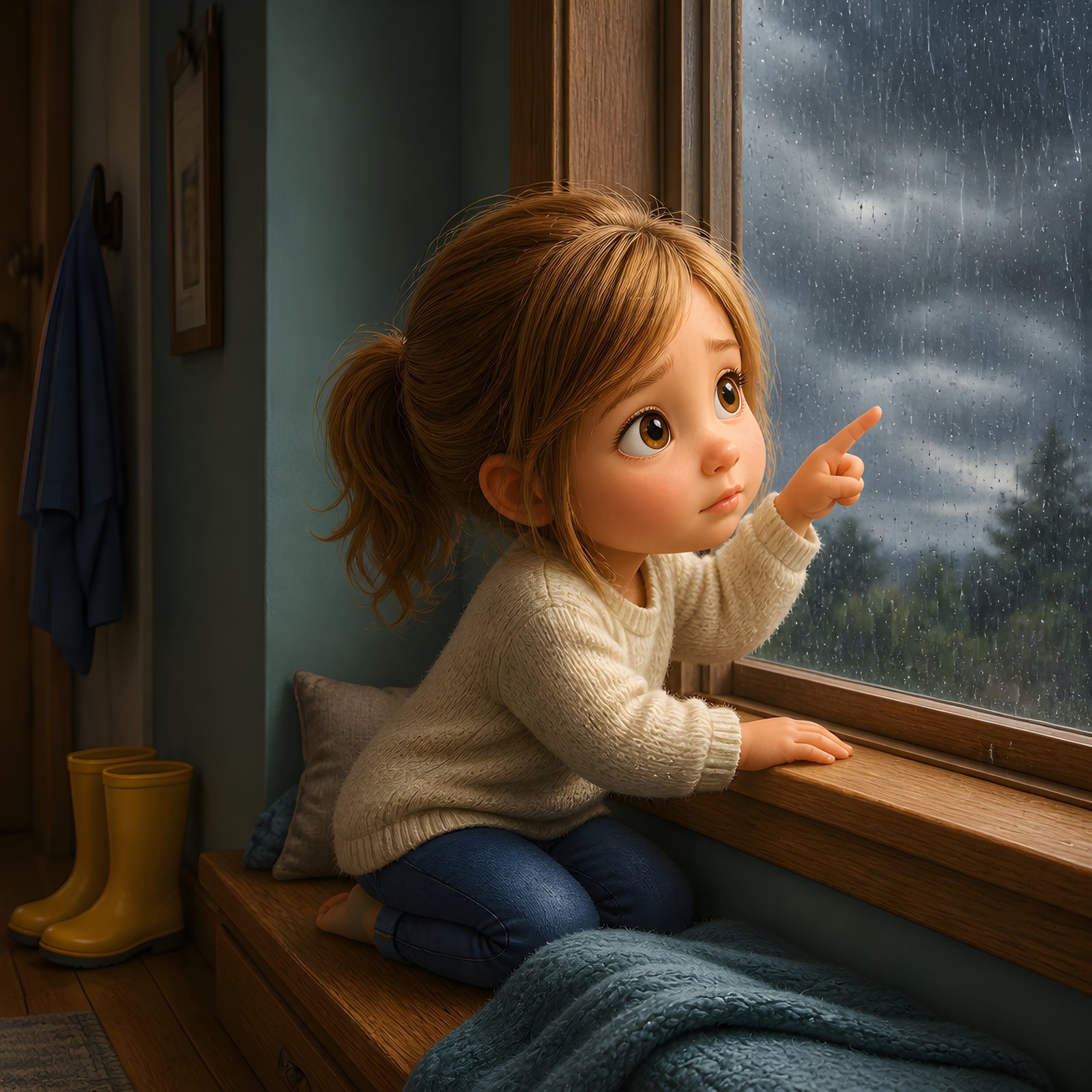
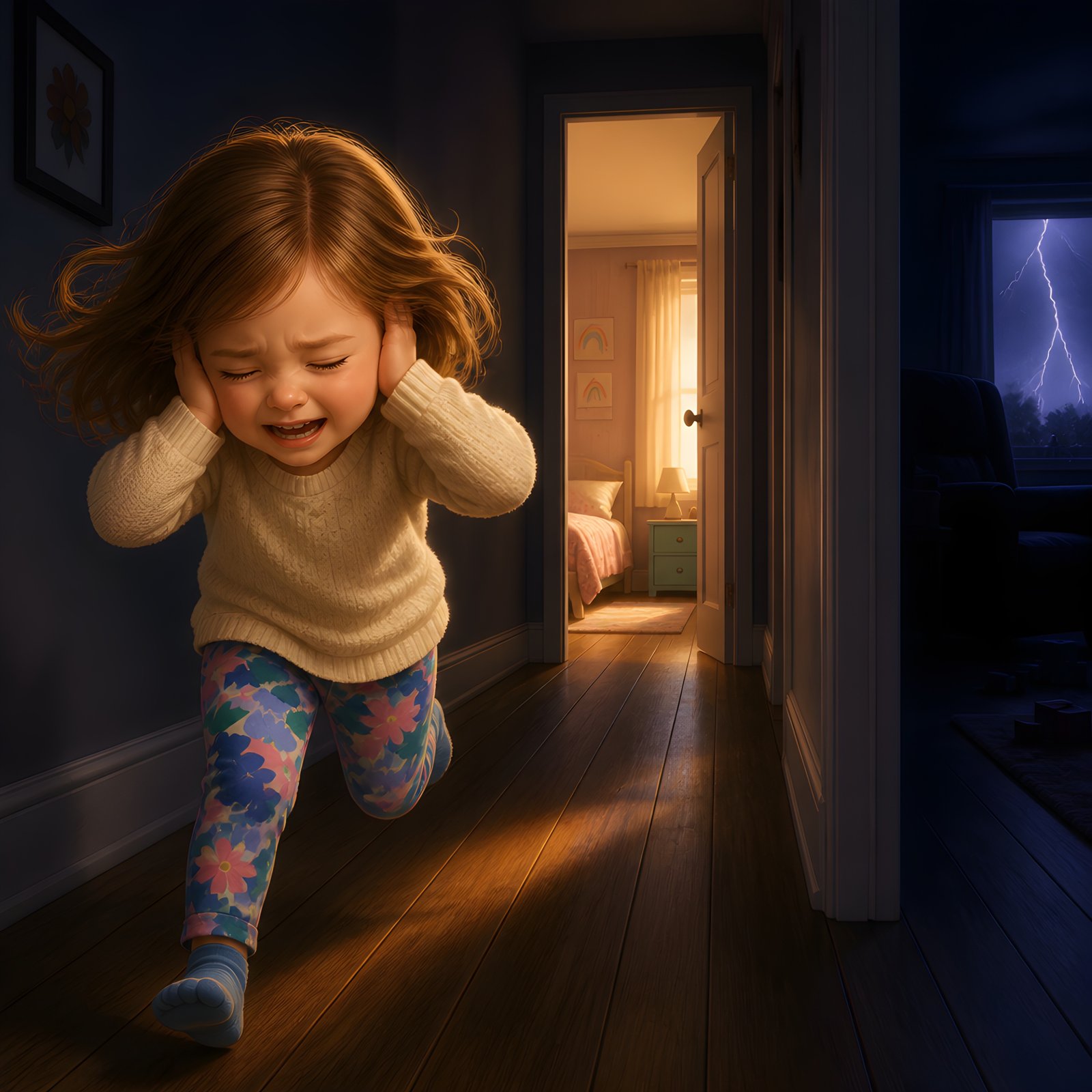
A bright flash lit up the room, followed by a loud, rattling BOOM!
Nina did not want to go near the window. She ran straight to the big bed and pulled the heavy covers right over her head.
Under the blankets, her heart went thump-thump. She peeked out toward the window sill.
Sitting right there on the glass was a tiny green frog. It was wide awake, completely dry-looking, and not trembling at all.
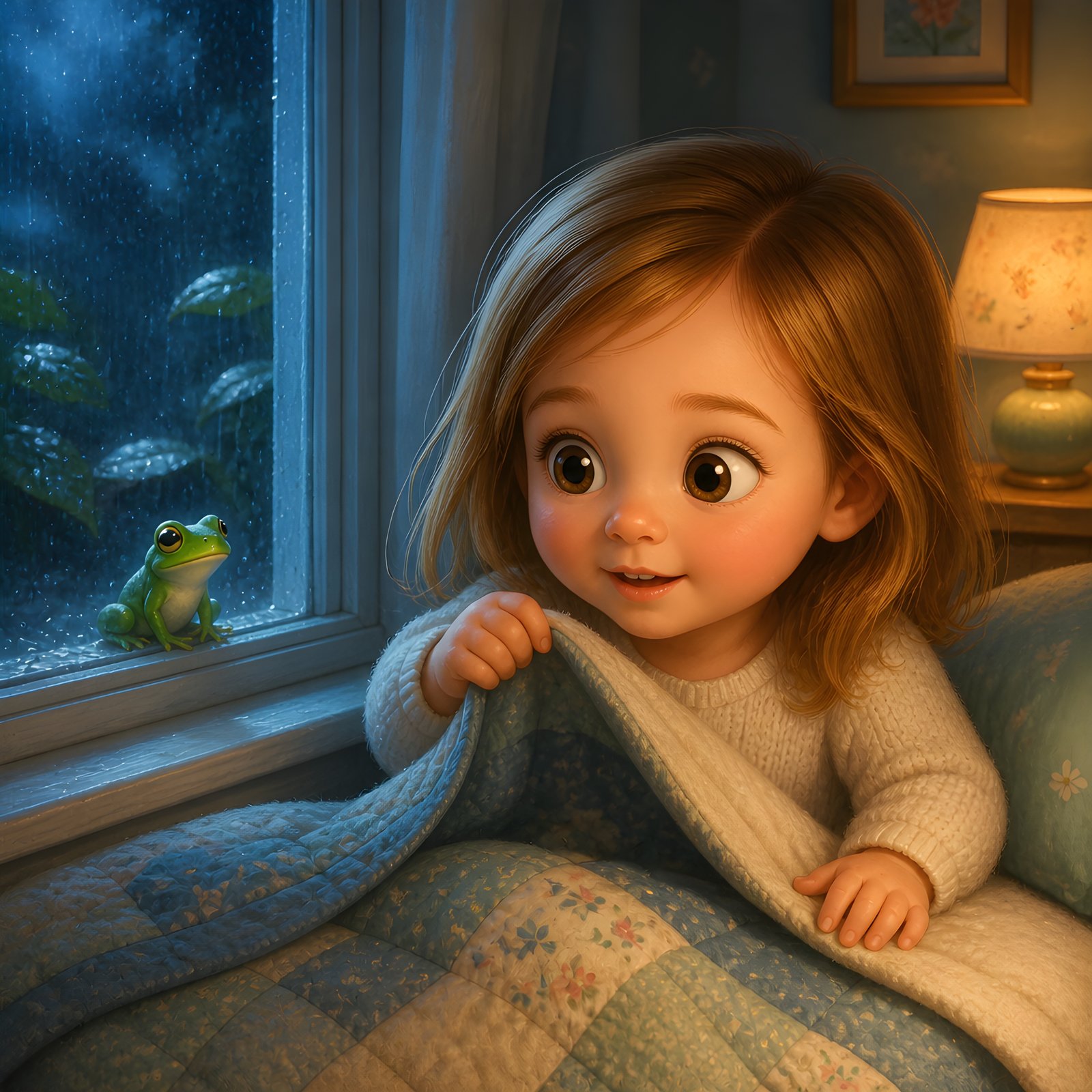
The frog blinked once. Then twice. It did not hide its eyes when the next flash crossed the sky.
It looked like it was watching a very interesting show. Nina slowly lowered her hands from her ears.
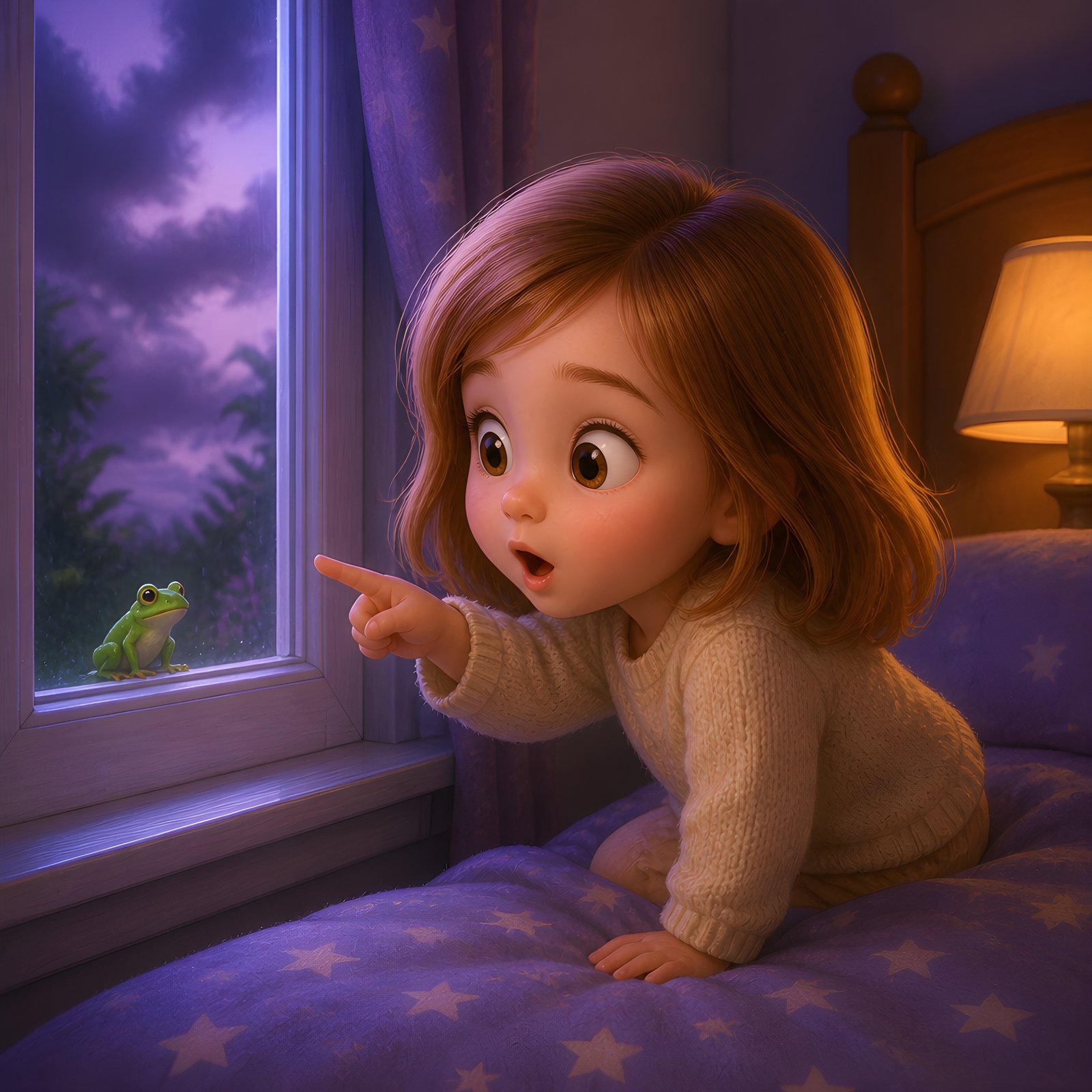
The light always comes first, racing across the clouds like a little flash-traveller. The sound has to walk slowly behind it.
The frog seemed to say: See? It is just taking its time.
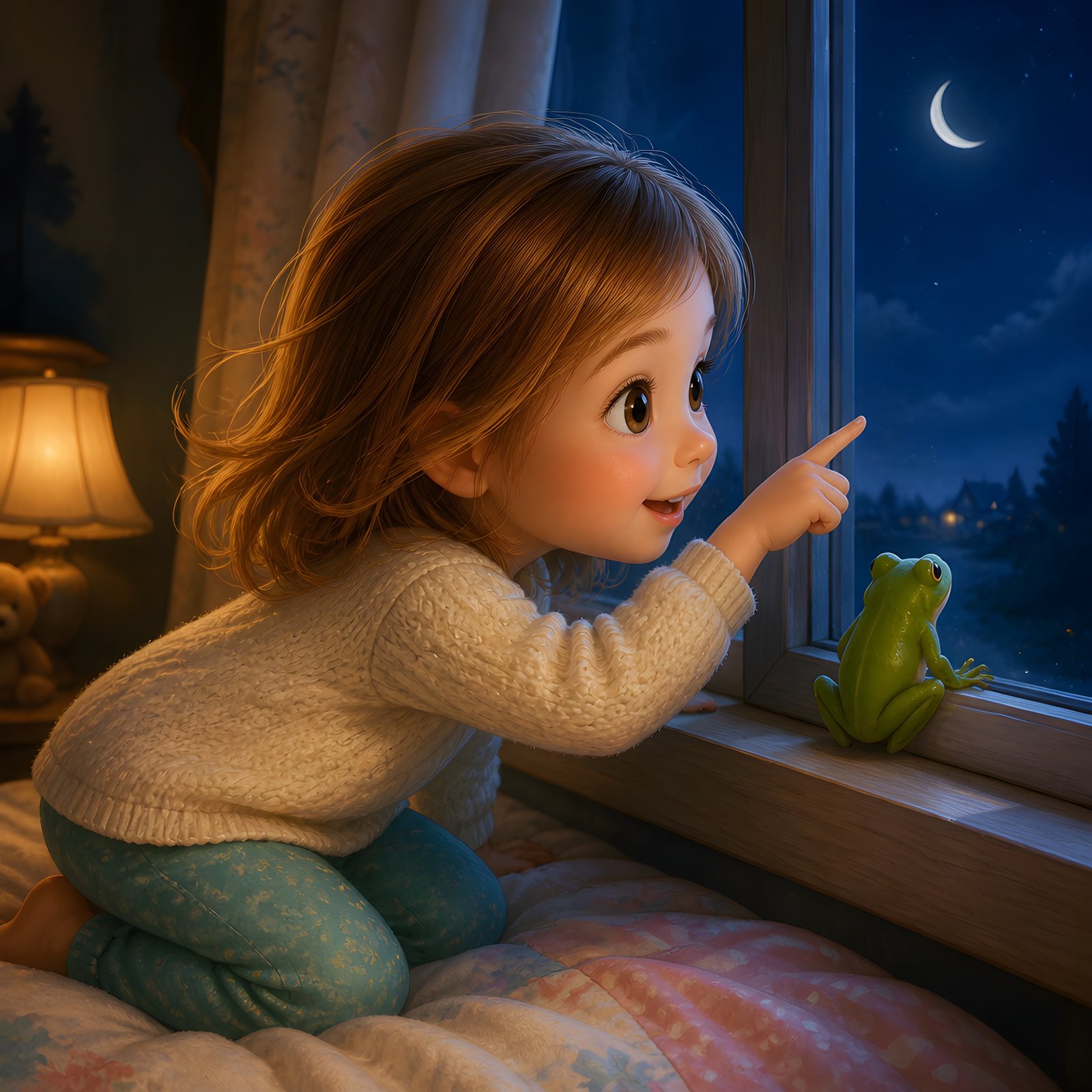
Let’s count together! One, two, three…
Before the loud rumble could catch up, another bright flash lit up the bedroom wall. How many seconds will they count this time?
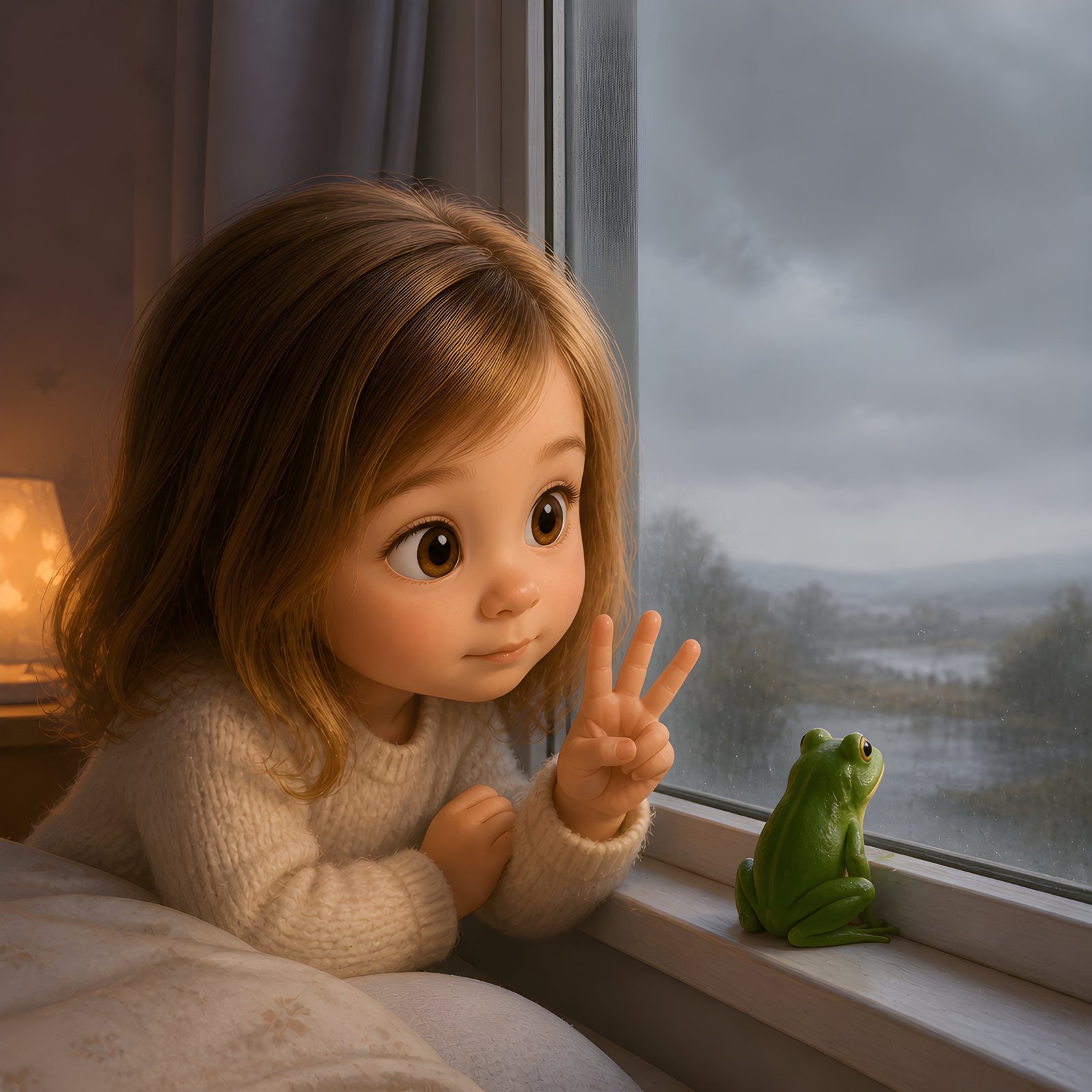
The sky made its big noise, but this time Nina did not run away.
She stood right by the glass and whispered proudly, “One, two, three, four!”

Five, six, seven…
The gap between the light and the sound was getting longer and longer. The storm was walking away to bother someone else’s street.
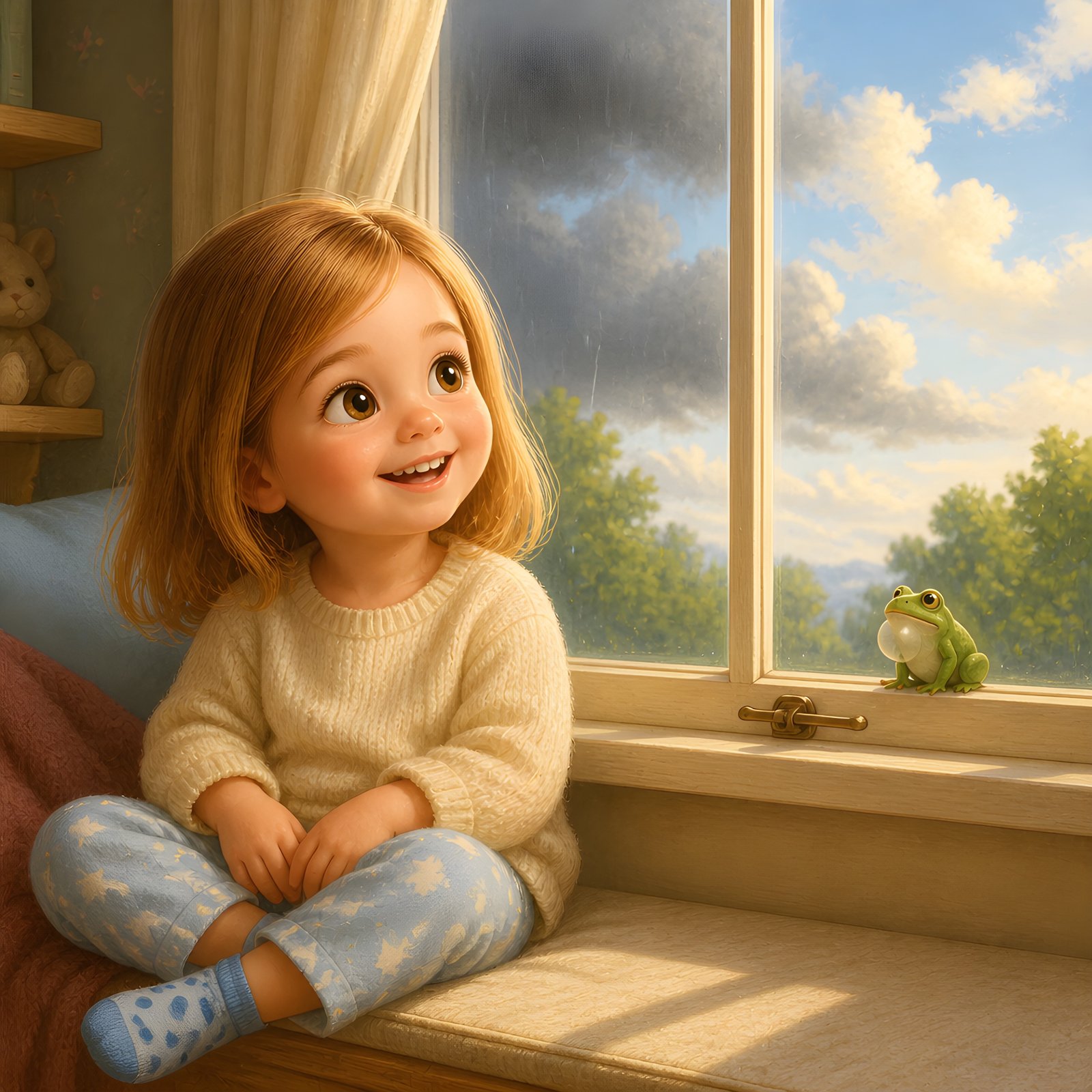
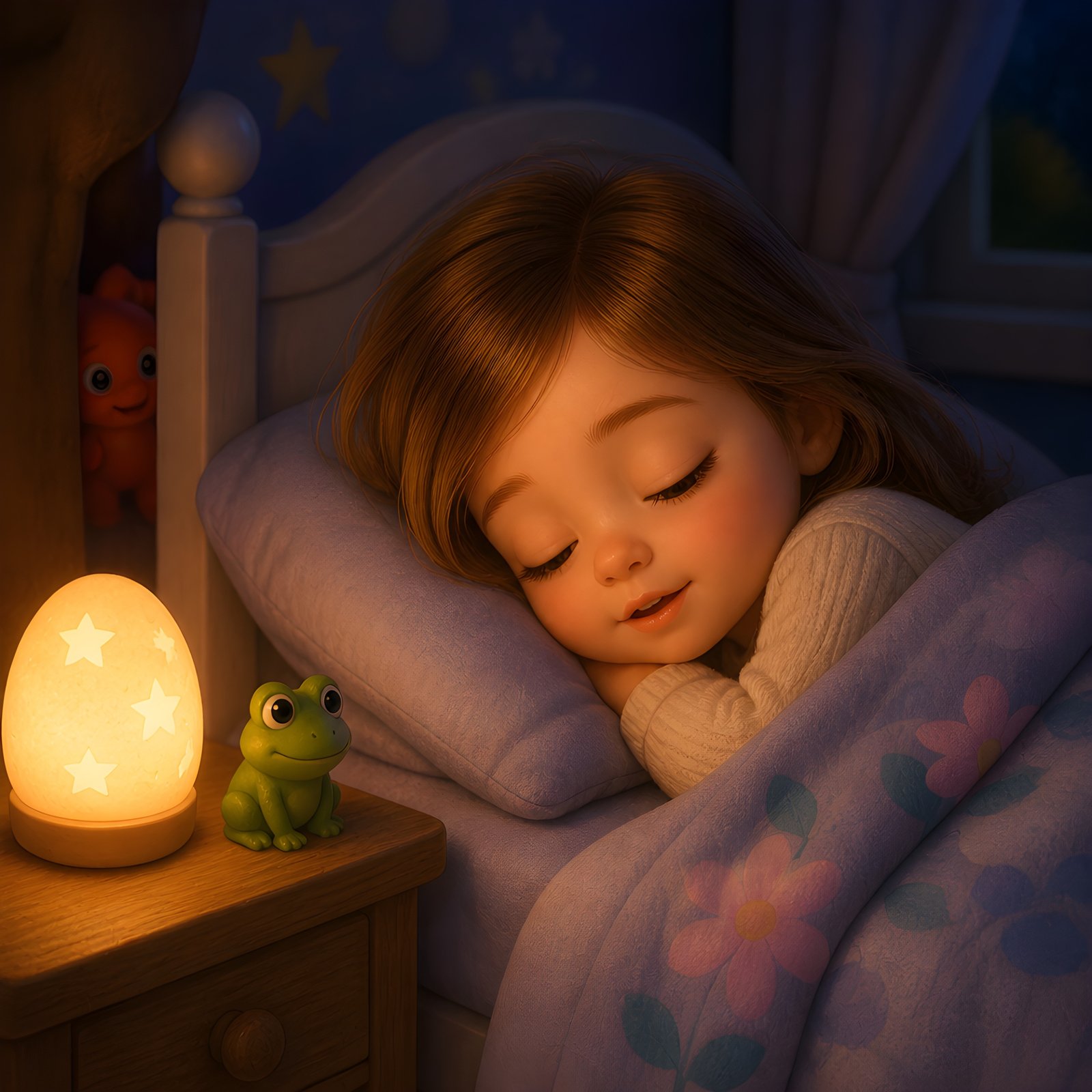
The room grew quiet and cozy. The rain tapped a gentle lullaby against the glass.
Nina climbed back into her very own bed, with a very brave little green friend keeping watch.
The next morning, the ordinary rain had stopped, leaving behind shiny puddles, a busy street drain, and the warm, clean smell of wet pavement.
Even the little green friend had hopped safely back to the grass.

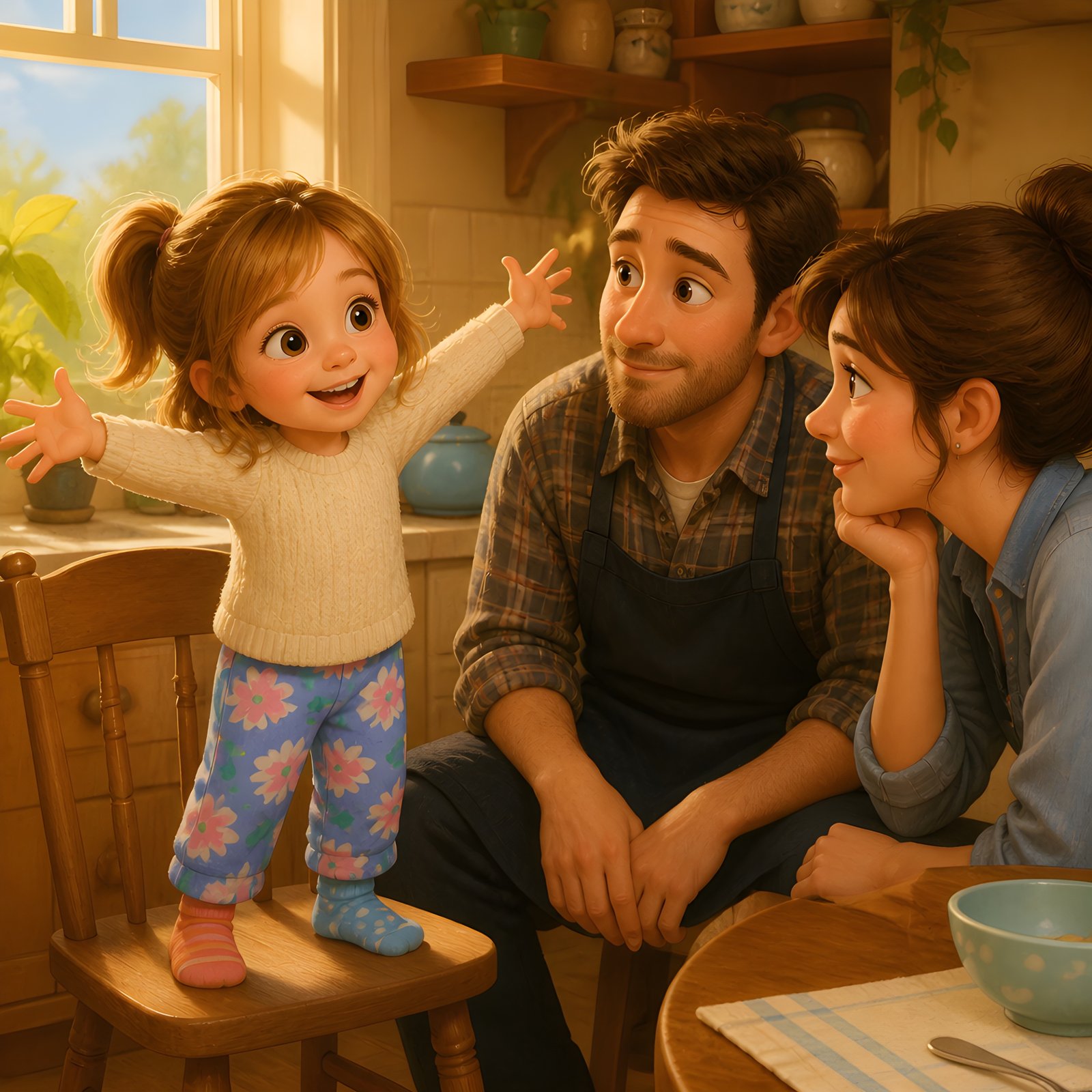
Back inside, Nina explained it all in her own special way.
The sky had made its big noise, but they had counted its secrets right out loud!
And what about you? What would you tell the storm if it came back tonight?
The next grey morning, when the drops began to fall again, Nina ran straight to the hall and asked for her boots.