
Sommaire
The best way to incorporate storytelling into your bedtime ritual is to anchor it in a short, consistent sequence that ends with the same cue every night. This repetition calms the mind and signals sleep is near. What follows covers the techniques, the benefits, and simple examples you can try tonight.
A night-time ritual is a soft landing for a busy day
The evening rush is loud. Toys, baths, and tired feelings pile on. But this chaos can become a soft landing.
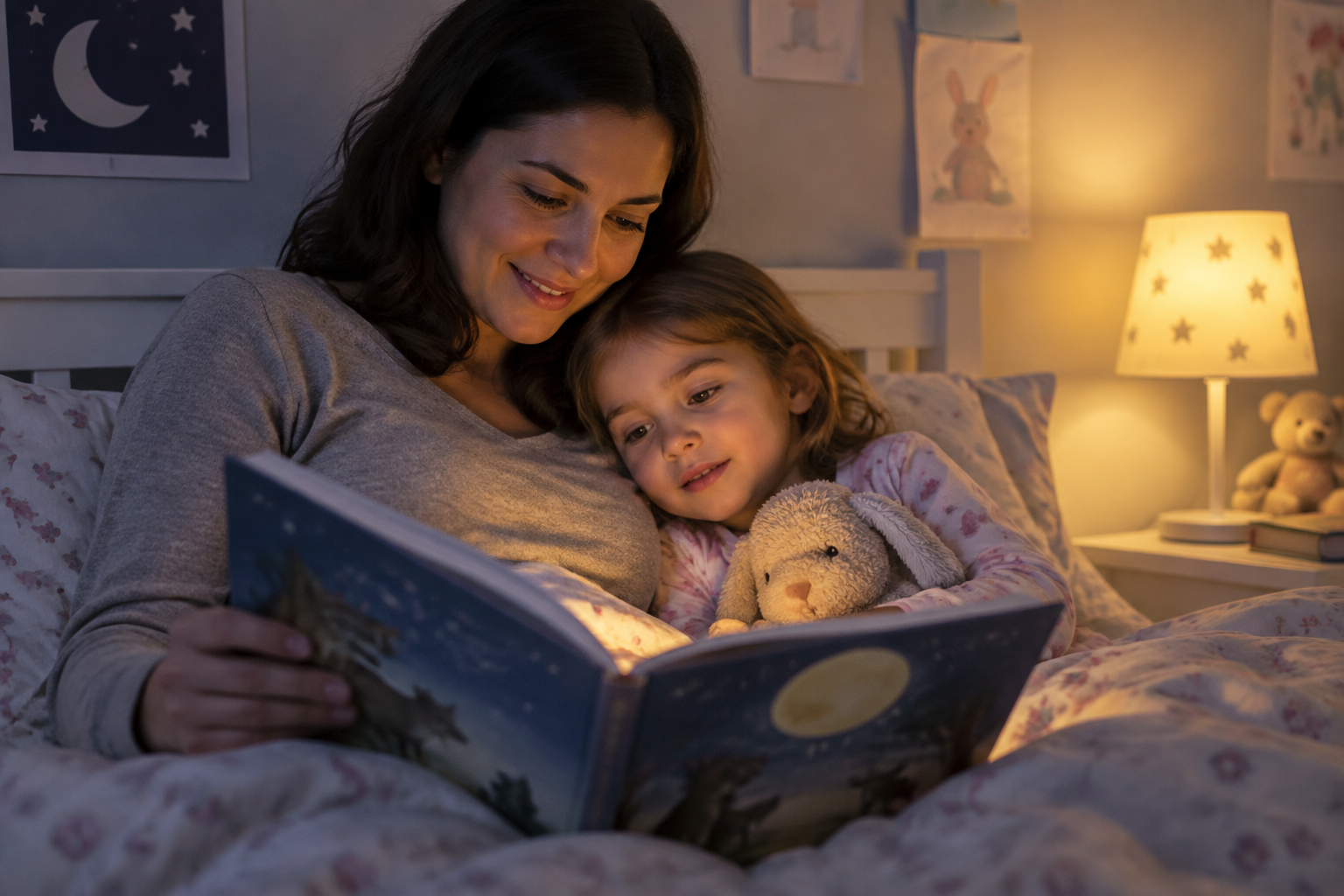
Réponse courteA bedtime story ritual is the same order of steps, repeated in a 15-to-20-minute window, anchored by cues rather than a strict clock.
You start with bath, teeth, and pajamas, then the story, then lights out. Repeat the same order each night. The signal matters more than the exact time.
Half an hour before bed, give a calm cue : a soft alarm, a dimmed light, or a gentle “story time in ten minutes”. Then finish the pre-story steps before you open the book.
Many families run the whole arc from 7 pm to 7:30 pm : brush, book, bed. Short. Soothing. Yours can match that.
Why the same story, read slowly, helps everyone let go
You might wonder if that same story, read again tonight, truly does anything. It does. The ritual works from the very first quiet page.
The numbers back this up. A 2021 study found routines from 3 months lead to fewer awakenings and longer sleep by age three. Regular nightly routines also help children fall asleep faster. One analysis showed over an hour more sleep.
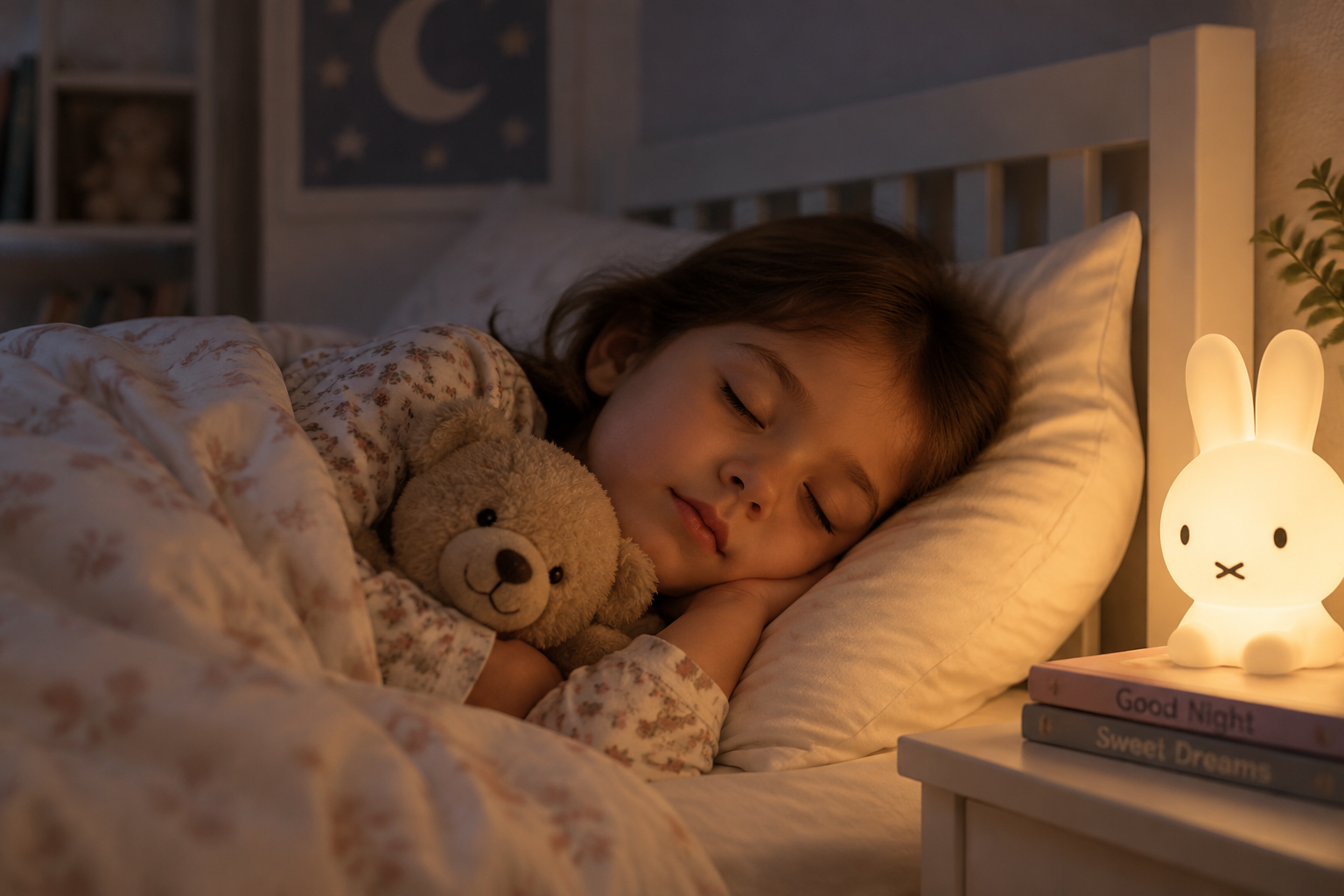
Réponse courteSix minutes of shared reading reduce stress by more than 60 percent.
The story lowers cortisol, the stress hormone, and releases oxytocin, the bonding hormone. Heart rate slows, breathing deepens, and the body shifts into rest mode. These moments build emotional regulation and language skills.
Gentle, slow pacing works best. Because this calm repeats each night, reading becomes a sleep cue. And unlike screens, paper books carry no blue light, so melatonin flows naturally. Try it tonight.
Pick your evening story : books, made-up tales, or audio
A book is not required. The most soothing tales are often invented on the spot. Start short, five to ten minutes, with a simple frame : character, problem, and solution. Ask your child to choose the direction.
Three paths fit a busy evening:
- Picture books, calm rhythms, gentle illustrations, room to imagine. Avoid yelling, chaos, or spooky moments.
- Made-up tales, five to ten minutes, with a character, a problem, and a solution. For younger children, stick to familiar settings and add gestures or call-and-response rhymes. Grow the length as they learn to listen.
- Audio, free podcasts like Get Sleepy offer slow, cozy tales for you. Nothing Much Happens has passed 180 million streams. Audible has 20-hour collections or short, boring ones.
Audio works for children too, and that is a relief when your voice is tired. A May 2026 study found parents see podcasts as a screen-free aid that improves sleep onset. Meta’s StoryKit app personalizes tales, but it is still a pilot in Mexico, so a familiar book remains your safest bet for tonight.

Your five-step roadmap to a calmer goodnight
Start short, and end with the same phrase each night. A five-to-ten-minute tale works, built on a character, a problem, and a solution. Repeat it for three nights, and it becomes a trusted cue.
The story is not the whole ritual. The calm cue and the quiet scene before it do the slow work. They settle your child into sleep, and tonight you can run the whole arc.

-
Set the calm cue
Dim the lights half an hour before bed. Say ‘story time in ten minutes’ or play a soft sound.
-
Prepare the scene
Turn screens off an hour earlier. Lower the lights, tidy toys, and put on comfortable pajamas.
-
Read with a soothing tone
Sit close and hold a hand. Keep your voice steady, and slow the pace as the tale ends.
-
Pause at a conflict point
Stop once to ask how the character feels. Then ask what was good today, what was hard, and what excites you tomorrow.
-
Tuck in and say good night
Tuck in, whisper the same good night, and keep the lights low. That sentence becomes the signal.
Three quick checks before the story starts
Run three quick checks in the time it takes to dim a lamp. They decide whether the ritual lands softly : your child’s state, the screens, the book.
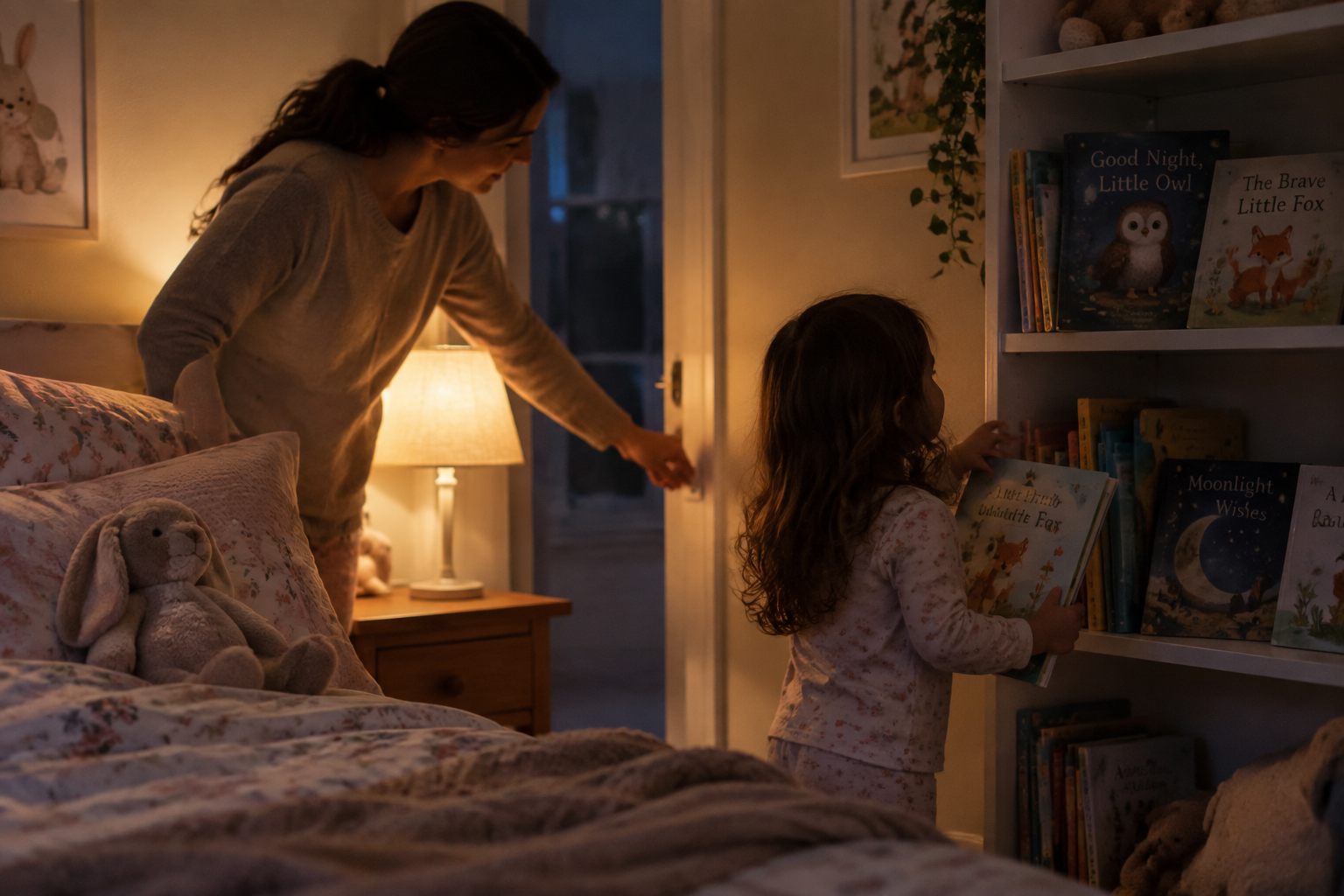
Three checks, thirty seconds:
- State: skip the story if your child is overtired, uninterested, or mid-play. Sit them comfortably, with a clear view of the illustrations.
- Screens: off for one hour before bed, at every age. The American Academy of Pediatrics recommends it; remove devices from the bedroom.
- The book: gentle rhythms and calm illustrations. Save the loud or spooky tales for the afternoon.
Then dim the lights and tidy the toys together. Slip into comfortable pajamas. Keep the whole routine between 15 and 20 minutes ; 30 minutes works for families who need a longer wind-down.
What quietly turns the ritual into a battle
You think the story is the problem ? Not usually. It’s the timing. The most costly mistake : starting when your child is bouncing, uninterested, or plainly overtired.
The book matters too. A loud or spooky story keeps your child alert. Save it for the afternoon. In the evening, choose calm.
Skipping the calm cue, thirty minutes ahead, leaves your child tense. And screens suppress melatonin. Turn them off.
Ce qui marche
Keep your voice soft, even through exciting parts.
À éviter
Don’t follow the book’s excitement.
Ce qui marche
Stop if the child is too tired.
À éviter
Don’t force the chapter to the end.
Hold your child’s hand. Limit interruptions. Slow down near the end.
Foire aux questions
What is the 3/2/1 bedtime rule ?
Stop food and alcohol three hours before bed, work or exercise two hours before, and screens one hour before. A specialist version advises no alcohol three hours before, no food two hours, and no fluids one hour before sleep.
What is the 3-3-3 rule for sleep ?
The 3-3-3 rule organizes a toddler’s day around sleep : nap three hours after waking, bed three hours after the nap ends, and no more than three hours of total nap time. It suits children still on a daytime nap.
Start tonight. Choose one short, gentle tale, dim the lights, and read in the same quiet spot. Repeat it tomorrow, the night after, and the night after that. Within a week, the story alone becomes the signal your child’s body knows means sleep.