
Contents
In France, a baby’s cot is recommended in the parents’ room for at least the first six months, when possible.
Moving on from co-sleeping can feel hard when your child is used to falling asleep beside you. A personalized story can help make the change easier to picture, while giving you gentle words to reassure your child as you find a steady way forward.
Why the change can feel so hard

Moving from sleeping together to sleeping apart can feel like leaving a safe harbour. Your bed, voice, scent, and touch may all help your child settle.
Protest does not always mean your child is being difficult. They may miss the familiar cues that helped them feel ready for sleep. Separation can feel harder when they are tired or unwell, or facing another change.
A major change can make the transition tougher:
- A move
- Starting a new school
- Illness
- Toilet training
- A new baby
- Another major change
Your child may talk about their new bed. They may manage brief separations during the day or want to help get the room ready.
There is no timetable for every child. Some settle in a few nights; others need a few weeks of the same gentle steps. You are not taking away closeness. You are bringing it into the bedtime routine, a shared story, and a safe sleep space.
When to change the sleep arrangement and keep babies safe
Babies and toddlers need their own safe sleep space
In France, place your baby on their back in their own cot. Use a flat surface, a firm mattress, and a fitted sheet.
A suitable sleeping bag can take the place of loose bedding. Keep pillows, duvets, blankets, cot bumpers, cushions, toys, and other soft items away from your baby’s face.
Sharing a room is not the same as sharing a bed. When possible, keep your baby’s cot in your room for at least six months. Adult beds, sofas, armchairs, and beanbags are not safe places for an infant to sleep.
If your baby is under six months, moving away from bed-sharing does not mean moving them to another room. Start with a cot beside your bed. Once it feels familiar, you can think about a separate room and keep the same bedtime routine.
Set up the new sleep space before night one
- For a baby, choose a cot with a firm, flat mattress.
- Do not add a second mattress to a travel cot.
- Keep the room at 18°C to 20°C.
- Leave your baby’s head uncovered.
- For an older child, secure the bed, rails, furniture, cords, and windows.
Prepare your child and the bedroom
Explain the change in simple, honest words
Before the first night, tell your child what to expect. Use words they can understand: “You’ll sleep in your bed. I’ll stay close, then sit a little farther away. I’ll come and check on you.” Don’t promise they won’t feel sad or wake up.
Offer two or three small choices. Your child could pick the sheets, choose a book, or decide where to put a night-light. They get a say, but the new plan is not optional.
Use the same simple words during the day and at bedtime. A short picture schedule can show each step: bath, pyjamas, story, cuddle, bed, then sleep.
Keep bedtime familiar and brief
A steady routine gives your child time to wind down. Try to follow the same order each night. Save lively play and screens for earlier in the evening.
Your routine might include:
- Toilet
- Wash
- Pyjamas
- Teeth
- One story
- Cuddle
- Bed
- The same goodnight words
Shape the routine to fit your family. A baby may need a feed and nappy change. An older child may need time to talk about the day. The order matters more than getting every step just right.
French guidance recommends these daily sleep totals, including naps:
- Birth to three months: 14 to 17 hours.
- Four to eleven months: 12 to 16 hours.
- One to five years: 11 to 14 hours.
Every child’s sleep needs are different.
Aim for a calm room, not a perfect one

Dim the lights before bed. Open the shutters or curtains in the morning. Keep the room comfortable, quiet, and free of bright screens. A soft night-light may help if your child fears the dark.
A comforter can bring a familiar touch to the new sleep setup. For a baby, follow safe-sleep guidance and keep loose items out of the cot. An older child may have a soft toy or blanket, as long as it is safe.
Choose a gradual or faster transition
Move your presence away a little at a time
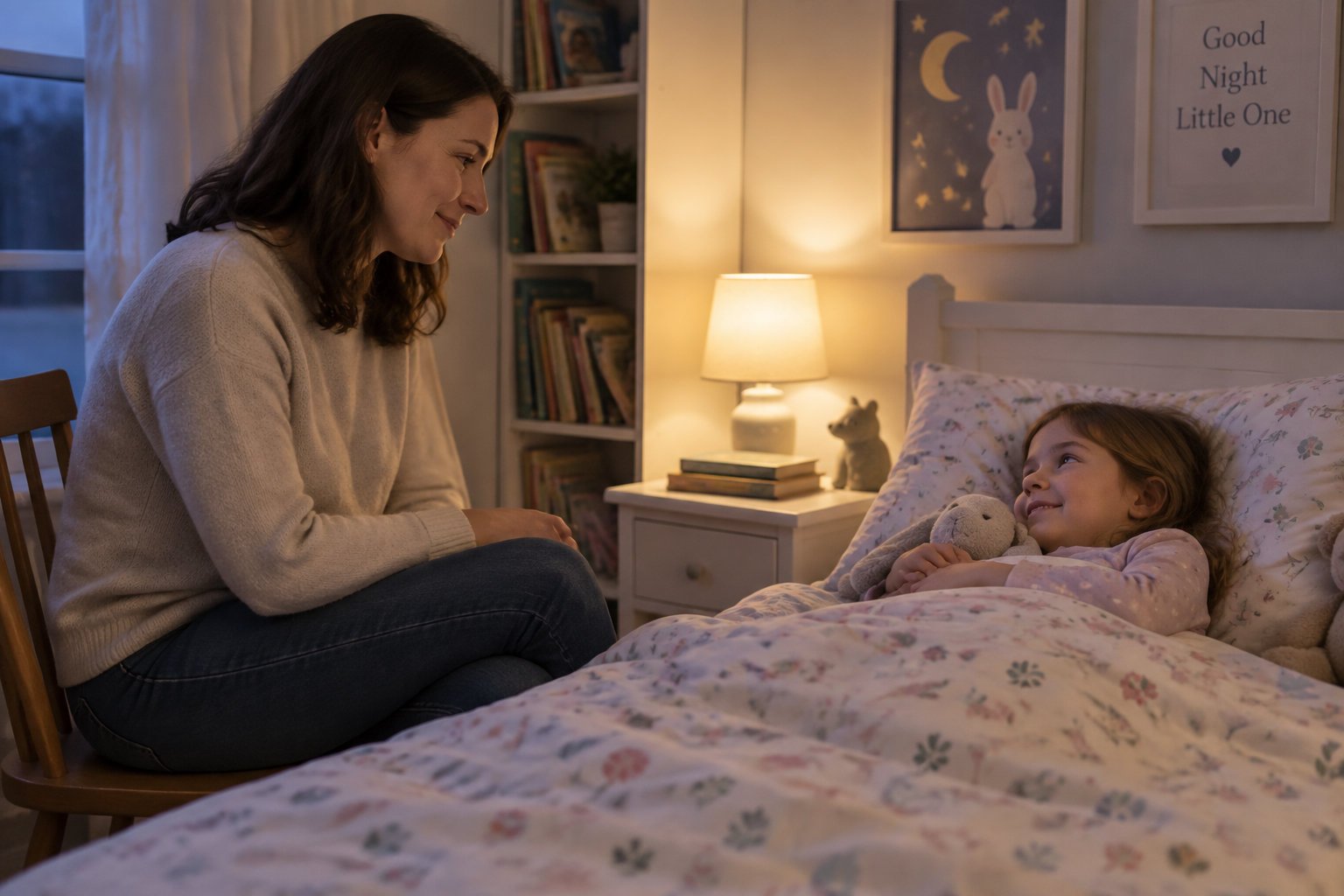
A gradual plan can help your family stay close as your child learns to sleep on their own.
For the first few nights, sit beside the bed instead of lying down with your child. Every few nights, move your chair a little farther away:
- Halfway to the door
- Near the door
- Outside the room
Stay quiet and speak softly. If your child calls, avoid games, snacks, or long talks. Your presence helps them feel safe. A calm, brief reply keeps sleep as the next step.
This path may take longer if your child has always needed you beside them to settle. Try the same approach at bedtime and after night waking. Going back to the old setup each night can make the new routine harder to learn.
A quicker plan keeps bedtime short. Put your child in bed awake, then step away from the first night. Return for brief check-ins at set times, with a calm phrase and little talk. Choose times your family can stick to without panic or anger.
A gradual change may feel right if your child feels very anxious, or if you need to stay close. A faster change may suit a child who handles short separations well, or a household that needs a clear change.
Use bedtime fading when the clock has become a struggle
With bedtime fading, start near the time your child usually falls asleep, not your hoped-for bedtime. After several nights of falling asleep quickly, move bedtime earlier in small steps, often about fifteen minutes at a time.
This may help if your child resists bedtime because they are not sleepy yet. Keep their morning wake-up time steady. Make sure they get naps that fit their age, and avoid moving bedtime back and forth.
Use the same approach for night waking as you do at bedtime. With a gradual plan, quietly return to your chair or your child’s bed. With check-ins, offer brief reassurance, then wait for the set time.
Use a story to help your child understand the change
Build the story from your child’s everyday life

A personalised story can show your child sleeping beside a parent. It can show them meeting their new bed and following familiar steps at bedtime. These steps help them feel close to you.
Use your child’s first name and real bedroom. Add their chosen comforter, night-light, and your family’s usual words for sleep. These details make the story feel familiar.
Include feelings, but keep them gentle. For example: “Sometimes Leo’s tummy feels tight when the room is quiet.” Show Leo noticing the feeling, breathing slowly, and holding his comforter. He can remember his parent’s words, too.
Add one small challenge, like calling once or seeing a strange shadow. Show the child follow the plan and settle again. The ending can feel safe without promising a perfect night: “Maya woke up and called once. Mum checked on her. Maya felt sad for a while, then held her rabbit and rested.”
Make the story part of the bedtime ritual
Try the story during the day at first. Then add it to the evening routine. Keep it short, so your child can finish before they get too tired.
After the story, ask one gentle question: “Which part felt like bedtime at our house?” If your child says, “I don’t want to sleep alone,” name and accept the feeling. Then calmly remind them what will happen.
What to say when your child protests or wakes
Your child may need to hear two things: “You’re safe,” and “The plan is staying the same.” Speak softly and use the same short words each time. Long talks can wake your child more and turn a protest into a chat.
- Words that may come out in the moment: “Stop crying. You’re a big child now.” A gentler response: “You want me close. I’m here, and your bed is where you sleep.” This meets the need without shame.
- Words that may come out in the moment: “Fine, just tonight, you can come into our bed.” A gentler response: “Tonight you’ll sleep in your bed. I’ll check on you after I tuck you in.” This keeps the limit clear.
- Words that may come out in the moment: “There is nothing to be scared of.” A gentler response: “The room feels worrying right now. Your night-light is on, and I’ll come back to check.” This lets your child share the feeling without making it bigger.
- Words that may come out in the moment: “I’ll stay until you fall asleep.” A gentler response: “I’ll sit here for two minutes, then move to the door.” This offers comfort and keeps the next step in place.
If your child gets out of bed, guide them back with little talk. Use the same words, calm steps, and place each time.

A night waking does not erase what your child has learned. Go back to the current step instead of straight to bed-sharing. Make time to connect during the day through play, cuddles, and calm talks.
If a night goes badly, it does not mean you have failed. You can say, “Last night was hard. We’ll try the same steps tonight.”
When to ask a professional for help

If sleep problems continue and affect your child’s mood, focus, learning, behaviour, growth, or family life, book a medical visit. Keep a sleep diary for two weeks. Note bedtimes, wake-up times, naps, night wakings, and what seems to help.
Ask for medical advice sooner if your child:
- snores often
- pauses or gasps while breathing
- seems to struggle to breathe
- is very sleepy during the day
Snoring with pauses can be a sign of sleep apnoea. This means breathing stops again and again during sleep.
Start with your médecin traitant, paediatrician, or your child’s médecin de PMI. They can check your child’s health and development. They can also look at breathing, pain, medication, and sleep problems before suggesting another service.
Begin by choosing a safe sleep space and one small step you can repeat calmly. Then write a short story with your child’s name and familiar bedtime details. Read it together during the day, and follow the same gentle plan at bedtime.
Frequently asked questions
Are babies who co-sleep happier?
Sleeping arrangement alone does not show whether a baby is happier. Babies need responsive care, feeding, comfort, and safe sleep, with their own cot in the parents’ room as the safest arrangement, especially during the first six months.
Does co-sleeping cause separation anxiety?
Co-sleeping by itself does not mean a child will develop separation anxiety. Separation worries can be part of normal development, and a predictable transition can preserve closeness while helping your child learn to sleep independently.
Is it normal for a 10-year-old to still co-sleep with parents?
Families differ, but regular co-sleeping at age ten is a reason to calmly discuss your child’s sleep, worries, health, and daytime life. Speak with your child’s doctor if it causes distress, exhaustion, school difficulties, or keeps anyone in the family from sleeping well.
Can a child move back to co-sleeping after making progress?
Yes, illness, travel, nightmares, or a family change can temporarily disrupt sleep. When things settle, return to the last step that worked, repeat the familiar story and routine, and build up again gradually.