Helping your child cope with the stress of moving house
A move is one of the most stressful life events for adults, but for a young child, it represents a complete loss of their physical safety anchors. While you measure a new home by its address, your toddler measures security by the exact distance between their bed and their toy box.
Seeing your child regress or wake up crying at night can make you feel like you have broken their sense of stability during this transition. This guide explains why moving house hits this age so hard and provides concrete strategies, from maintaining identical bedtime routines to using a personalized story, to help your family settle in without the panic.
- Understanding Why Moving House Affects Young Children So Deeply
- 3 Ways to Communicate the Change Without Causing Panic
- Making the New Bedroom a Safe Harbor Immediately
- Why the Emotional Wobble Happens After the Boxes Are Gone
- Empowering Your Child Through a Personalized Moving Story
Understanding Why Moving House Affects Young Children So Deeply
Toddlers anchor security in physical landmarks like bedroom layouts, not addresses. Parental stress creates a feedback loop of clinginess. Personalized stories and maintaining identical bedtime routines provide the visual permanence needed to prevent emotional regression.
Transitioning from a familiar home involves more than just cardboard boxes; it requires managing the fragile internal world of a child who feels their reality shifting.
Safety is Measured in Landmarks Rather Than Addresses
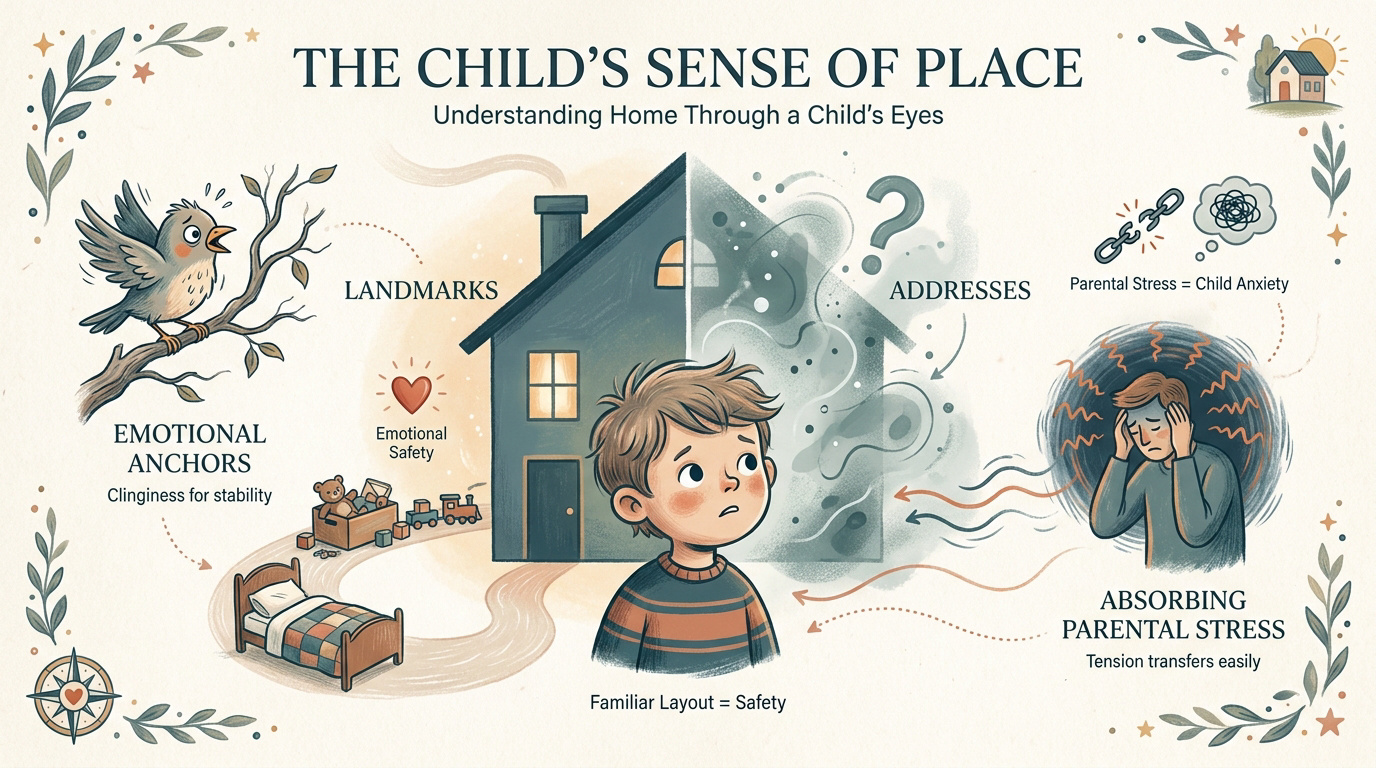
For a toddler, “home” isn’t a street name or a postal code. It is the specific distance between their bed and the toy box. Their brain relies on these static physical anchors to feel safe every single day.
Imagine the anxiety caused by an unseen future home. Adults use logic to understand property, but children only understand what they can see. Without visual proof, the new house feels like a terrifying void.
Adults focus on square footage and school districts. Meanwhile, the child needs visual permanence. They fear their entire world is simply disappearing into thin air.
Security for a young child is purely spatial. If the room changes, their sense of self feels threatened. It is that simple.
Physical layout equals emotional safety. This explains why they cling so desperately to specific corners.
The Invisible Impact of Absorbing Parental Stress
Children are emotional sponges who mirror your exhaustion. They read your tight jaw and rushed movements as signs of danger. This triggers their own survival instincts immediately.
Your child isn’t just watching you pack; they are absorbing your burnout. A tight jaw or rushed pace signals a threat to their tiny, observant world.
The feedback loop is real: your burnout fuels their clinginess. As you get more overwhelmed, they sense your distraction. They demand more attention just to feel secure again. It is an exhausting cycle.
Your feelings of guilt are valid, but unnecessary. Moving is a top stressor, and feeling drained is a natural response.
Your stress isn’t “breaking” them. It is simply a shared family transition. It just requires extra patience from everyone.
Staying calm is incredibly difficult. Your child’s behavior is just a reflection of the temporary chaos.
We wrote a book where your child is the hero leading the move. You can toggle between the girl and boy versions in the example on this page to see how it builds confidence. Try the example now!
3 Ways to Communicate the Change Without Causing Panic
Moving from the “why” to the “how,” we need practical ways to bridge the gap between their current world and the next.
Using Plain Words and Early Notification
Timing is everything when telling a toddler. Don’t announce it months in advance, as they have no concept of time. Two weeks is usually the sweet spot for preparation.
Use concrete language instead of abstract terms. Tell them their bed, their blue truck, and their favorite blanket are all coming along. Explicitly state that nothing important stays behind in the old house.
Two weeks is the sweet spot for toddlers. Use concrete language about items like the blue truck and favorite blanket.
Address the fear of abandonment. Reassure them that the family stays together, even if the walls change.
Keep the explanation short. Repetition of these simple facts builds a sense of predictability.
Focus on the essentials. Their toys are safe and moving with the family.
Visualizing the New Space Through Photos and Visits
Take photos of the new house and look at them daily. This creates a mental map before they even step inside. Familiarity breeds comfort in young minds.
Visit a nearby park or the exterior of the home. Let them touch the new gate or see the front door.
Visual aids make the transition real. Use these tools to anchor their expectations:
- Print a physical photo of their new room.
- Point out where the bed will go.
- Show them the new ‘playground’ nearby.
Repetition builds a mental bridge. The more they see the new place, the less scary it becomes.
Use these visuals as a daily ritual. It turns an abstract threat into a known destination.
Building Agency Through the Packing Process
Give your child their own box to decorate with stickers. This gives them a sense of control over the chaos. It becomes their personal “treasure chest” for the journey.
Let them choose which toys go in first. Labeling the box with their name reinforces that these items belong to them. It proves the toys aren’t just disappearing into brown cardboard voids.
Keep the “comfort objects” out until the very last second. The favorite teddy never goes in a sealed box.
Involvement reduces anxiety. A child with a job feels like a participant, not a victim.
Small tasks build big confidence. Packing their own bag creates a sense of agency.
We wrote a personalized story where your child is the hero leading the family home. Try the girl or boy example on this page now.
Making the New Bedroom a Safe Harbor Immediately
Once the keys are in hand, the priority shifts from talking about the move to establishing a new physical anchor.
Why the Child’s Room Must Be Unpacked First
Forget the kitchen or the living room for now. The child’s bedroom is the emotional heart of the new home. It must be functional within the first few hours.
Seeing familiar posters and toys in a new space acts as an immediate emotional anchor. It signals that the “rules” of their world still apply. A finished room provides a sanctuary from the surrounding boxes.
| Priority Item | Why it Matters | Unpacking Order |
|---|---|---|
| Bed/Crib | Functional necessity | Immediate |
| Favorite Toys | Emotional link | Immediate |
| Curtains/Blackout | Functional necessity | Hour 2 |
| Sound Machine | Emotional link | Hour 2 |
This “home base” allows them to explore the rest of the house safely. They know they have a retreat.
Prioritizing their space shows them they are the most important part of the move. It builds instant trust.
Maintaining an Identical Bedtime Routine
Keep the exact same sequence of bath, book, and bed. Change nothing about the ritual, even if you are exhausted. Consistency is the antidote to the new environment’s strangeness.
Avoid the temptation to buy new bedding or furniture for the move. Scent and sound consistency are vital for preventing night wakings. The old, familiar smell of their sheets provides immense comfort.
Use the same white noise or lullabies as before. Auditory landmarks are just as important as visual ones.
If the layout allows, mimic the old furniture placement. Familiarity helps their brain relax into deep sleep.
Bedtime is when anxiety peaks. Keeping the routine identical signals that night-time is still a safe period.
We wrote a book where your child is the hero leading the family home. Try the girl or boy version in the example below and download the PDF.
Why the Emotional Wobble Happens After the Boxes Are Gone
Even with perfect preparation, expect a period of adjustment where emotions run high and progress seems to stall. Moving house disrupts the very landmarks a child uses to feel safe.
Recognizing Signs of Regression and Delayed Stress
Regression is a normal response to major change. You might see bedwetting, thumb-sucking, or sudden tantrums. This isn’t a sign of failure, but a sign of processing.
The “wobble” often hits once the physical work is finished. When the adrenaline fades, the emotional reality of the change sinks in. Children finally feel safe enough to release their pent-up stress.
Look out for bedwetting, thumb-sucking, sudden tantrums, and increased clinginess as signs your child is processing the move.
Be patient with the extra clinginess. They are just checking that you are still there and available.
These reactions are temporary. With extra cuddles and time, they will return to their usual selves.
Stay steady during their storms. Your calm presence is their best anchor right now.
The Necessity of a Proper Goodbye Ritual
Closure is hard for toddlers to grasp without a physical act. Walk through the empty rooms one last time. Say a verbal “thank you” to each space together.
Take a final family photo in the empty hallway. This ritual helps the child process that the chapter is closing. It provides a definitive end point to their time in the old home.
- Say goodbye to the bedroom
- Wave to the kitchen
- Take a photo by the front door
Rituals turn scary transitions into manageable milestones. They give the child a sense of completion and respect.
Keep it light and positive. Focus on the memories made in those empty rooms.
We wrote a book where your child is the hero leading the family home. Try the girl or boy version embedded on this page to see how a personalized story helps them rehearse the move.
Empowering Your Child Through a Personalized Moving Story
Beyond rituals and routines, storytelling offers a powerful way for a child to see themselves as the hero of this transition.
Transforming the Move Into a Heroic Adventure
We created a personalized book where your child leads the family home. Seeing their own name and face builds massive confidence. The move becomes an adventure they control.
The story acts as a repeatable rehearsal for the actual move. By reading it daily, the child practices the transition in their mind. It replaces fear of the unknown with a familiar narrative.
The personalized story provides a repeatable rehearsal, replaces fear with a familiar narrative, and casts the child as the hero leading the family.
Being the hero changes their perspective. They aren’t just being moved; they are the ones leading the way.
This mental preparation is a game-changer. It turns a scary event into a proud, personal achievement.
A Concrete Tool for Car Rides and Bedtime
The physical book provides comfort during the actual travel day. It is a portable piece of home they can hold. We offer both girl and boy versions.
A real, complete example of the story is embedded right here on this page. You can toggle between the variants to see how the hero changes. We invite you to download the PDF.
- Toggle the hero gender
- Preview the full story
- Download the free PDF example to try it
Use this tool to bridge the gap. It is a concrete way to make the move feel real.
Try the example now. See how your child becomes the hero of their own move.
To ease the stress of moving house, prioritize visual landmarks and identical bedtime routines to anchor your child’s safety. By unpacking their room first and using a personalized hero story, you transform frightening change into a predictable adventure. Start your rehearsal tonight to turn this transition into a confident new beginning.
FAQ
Why is my child acting out or regressing during our move?
For a young child, “home” isn’t a postal code; it is a collection of physical landmarks like the distance from their bed to their toy box. When these anchors disappear, their sense of safety vanishes too. They cannot visualize a place they have never seen, so the upcoming move feels like their entire world is simply dissolving into a void.
Additionally, children are emotional sponges who mirror your own exhaustion. They read your tight jaw and rushed movements long before you say a word. This “wobble”, manifesting as clinginess, tantrums, or bedwetting, is a normal way of processing a transition that feels physically and emotionally overwhelming to their developing brains.
How can I explain the move to my toddler without causing more panic?
Timing and concrete language are your best tools. Avoid announcing the move months in advance, as toddlers have no real concept of time; two weeks is usually the sweet spot. Use plain words to reassure them that their bed, favorite blanket, and blue truck are all coming along. Explicitly tell them that nothing important stays behind.
To bridge the gap between the old and new, use visuals. Show them daily photos of their new room or visit a nearby playground. Letting them pack and label their own “treasure chest” of toys with stickers gives them a sense of agency, transforming them from a passive observer into an active participant in the family adventure.
What should I prioritize on moving day to help my child settle?
The child’s bedroom should be the very first room you unpack. While it is tempting to set up the kitchen, seeing familiar posters and toys in the new space acts as an immediate emotional anchor. This “home base” signals that the rules of their world still apply, providing a sanctuary from the chaos of surrounding boxes.
Maintain an identical bedtime routine from the very first night. Keep the exact same sequence of bath, book, and bed, and avoid buying new bedding right away. The familiar scent of their old sheets and the same white noise or lullabies provide vital sensory consistency that helps prevent night wakings and builds instant trust in the new environment.
Is it normal for my child to seem fine during the move but struggle afterward?
Yes, the “emotional wobble” often hits once the boxes are gone and the adrenaline fades. When the physical work is finished, the reality of the change finally sinks in. Children often wait until they feel truly safe in their new surroundings to release their pent-up stress through extra clinginess or delayed regression.
Performing a proper goodbye ritual can help provide closure. Walk through the empty rooms of your old house together, saying “thank you” to each space. Taking a final family photo at the front door helps the child process that one chapter is closing, making the transition feel like a manageable milestone rather than a scary disappearance.
How can a personalized story help my child through this transition?
A personalized book where your child is the hero who leads the family to their new home offers a concrete, repeatable rehearsal for the move. Seeing their own name and face in the story builds massive confidence and replaces the fear of the unknown with a familiar, positive narrative they can hold in their hands.
This book becomes a portable piece of home that travels in the car and sits on their nightstand. By reading it daily, the child stops feeling like they are being moved and starts feeling like the leader of an adventure. It is a powerful tool to bridge the gap between two homes, turning a stressful event into a proud personal achievement.
demenagement
Nina’s room was full of big brown boxes. Everything was disappearing inside them, even her toys.
« Where did my little rabbit go? » whispered Nina.
Can you spot the floppy ears hiding behind that box? Shh!
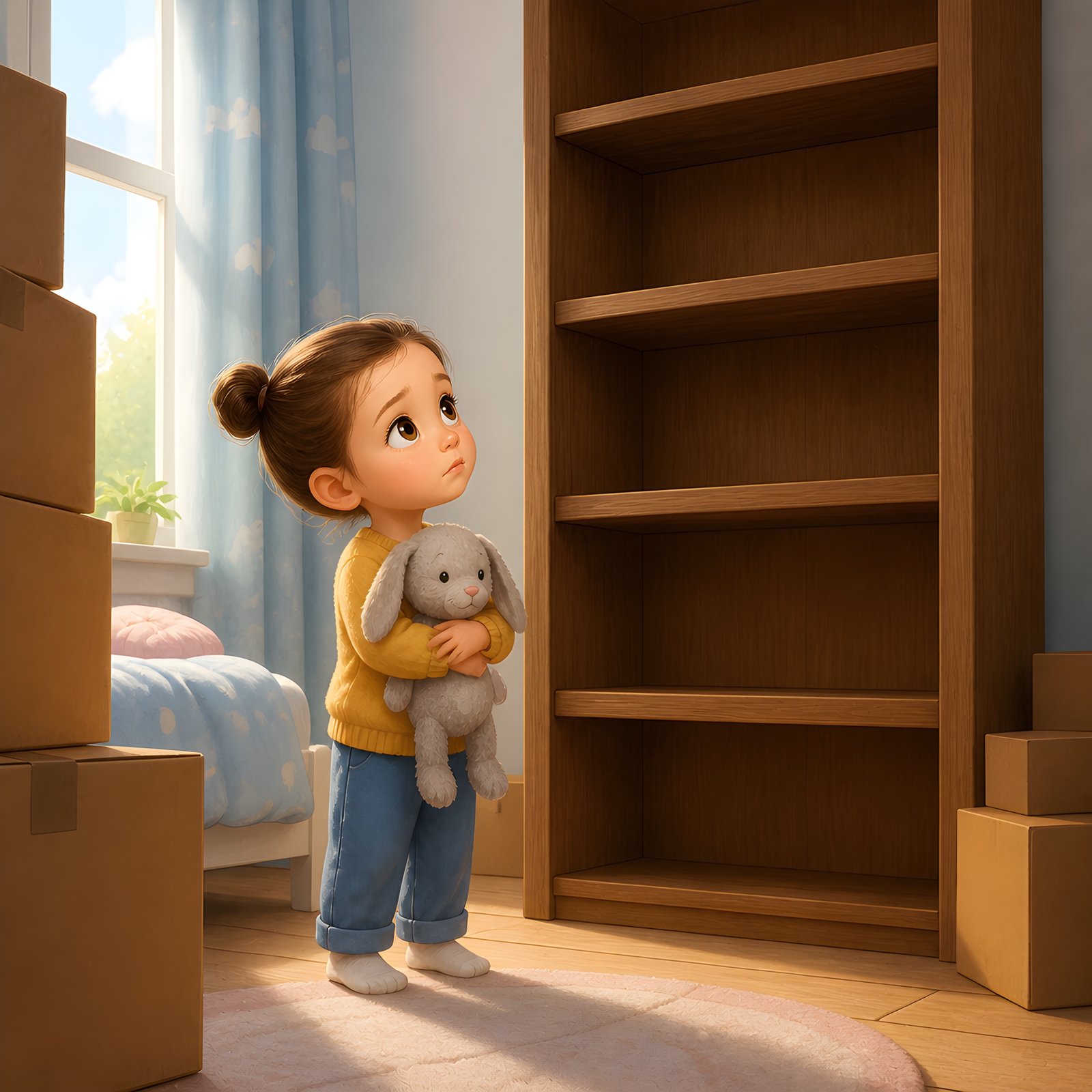
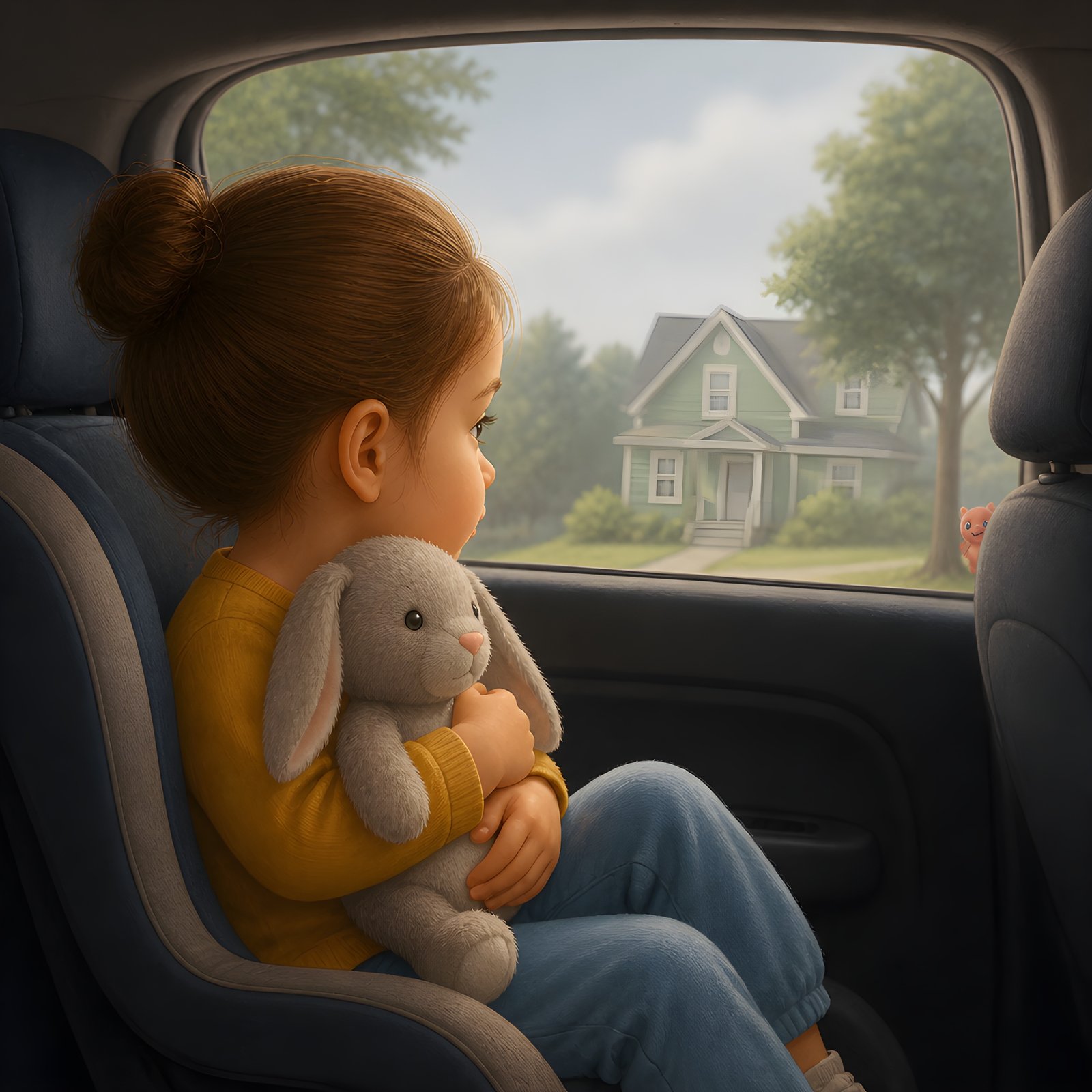
Then it was time to go. Nina climbed into the car and held her rabbit very, very tight.
Through the back window, the old house got smaller and smaller.
Where are we going? thought Nina.
Vroom-vroom! The car drove far away.
The car stopped in front of a big, new house. Inside, all the rooms were completely empty and very quiet.
Hello? said Nina’s voice, making a funny little echo in the hallway.
Her hands curled into tiny fists. Did this strange house even know who she was?
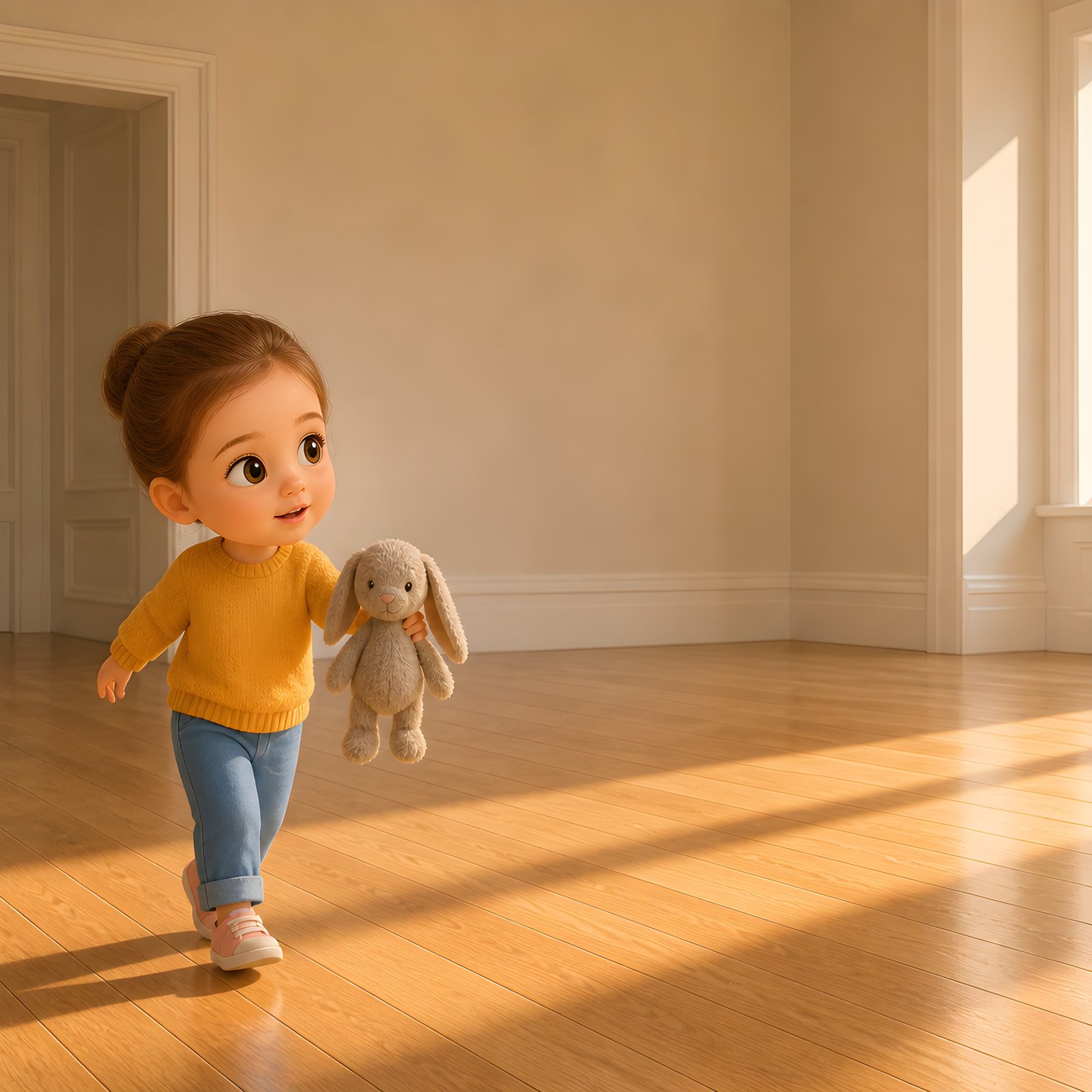
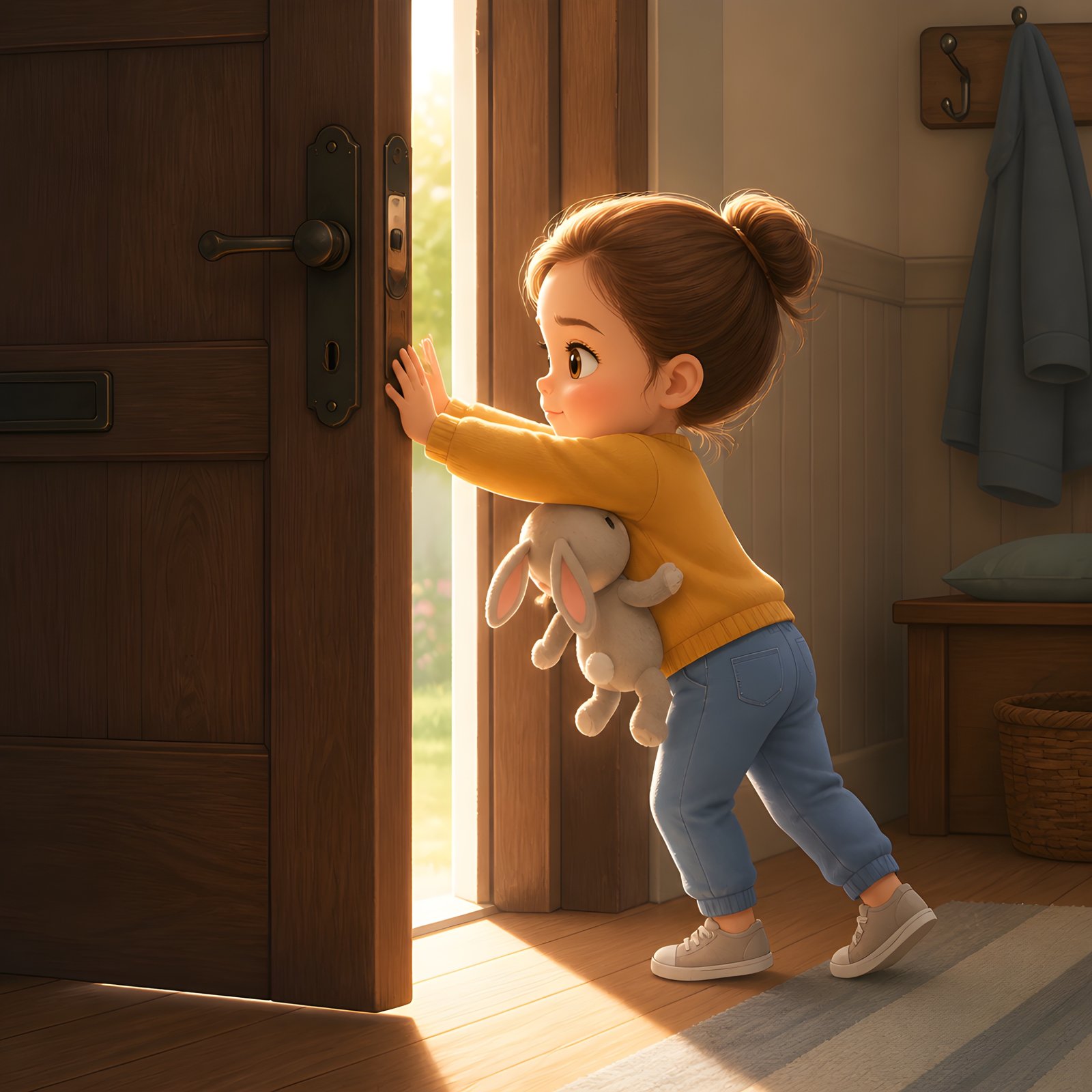
Nina took a deep breath. She decided she would be the leader today.
She reached up high and pushed the front door open wide.
CRIQUE-CRAQUE ! The door swung in, and sunlight poured across the floor.
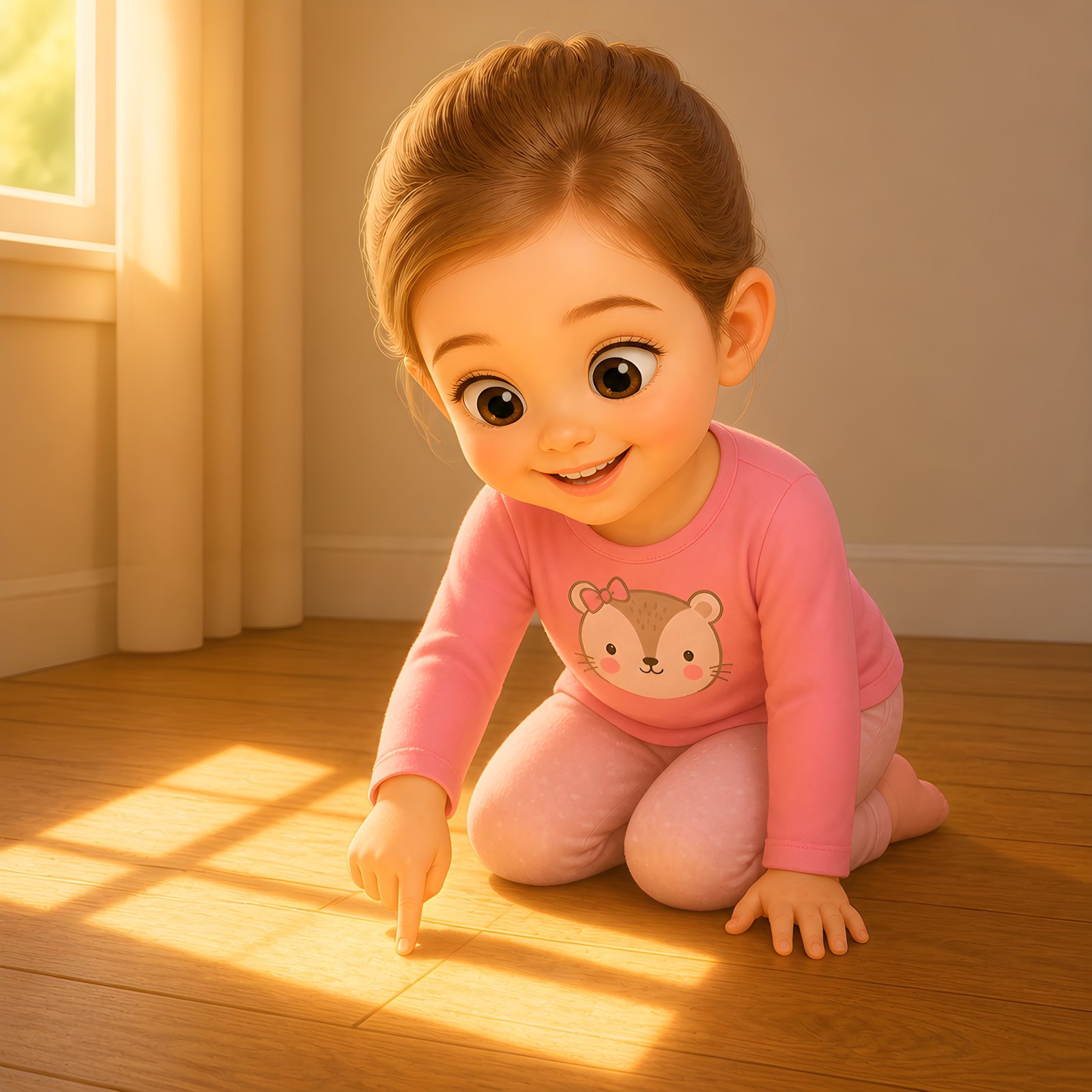
On the floor, a warm square of sunlight was waiting. It looked exactly like the one in her old bedroom.
Nina smiled and reached out to touch the warmth.
Put your hand out like Nina and catch the sunshine! Fffouuu, feel how warm it is.
Nighttime came quickly. The house made little creaking sounds in the dark.
Nina curled up on her mattress. Her shoulders felt heavy.
What if the stars don’t know me here? she wondered, her heart beating fast.
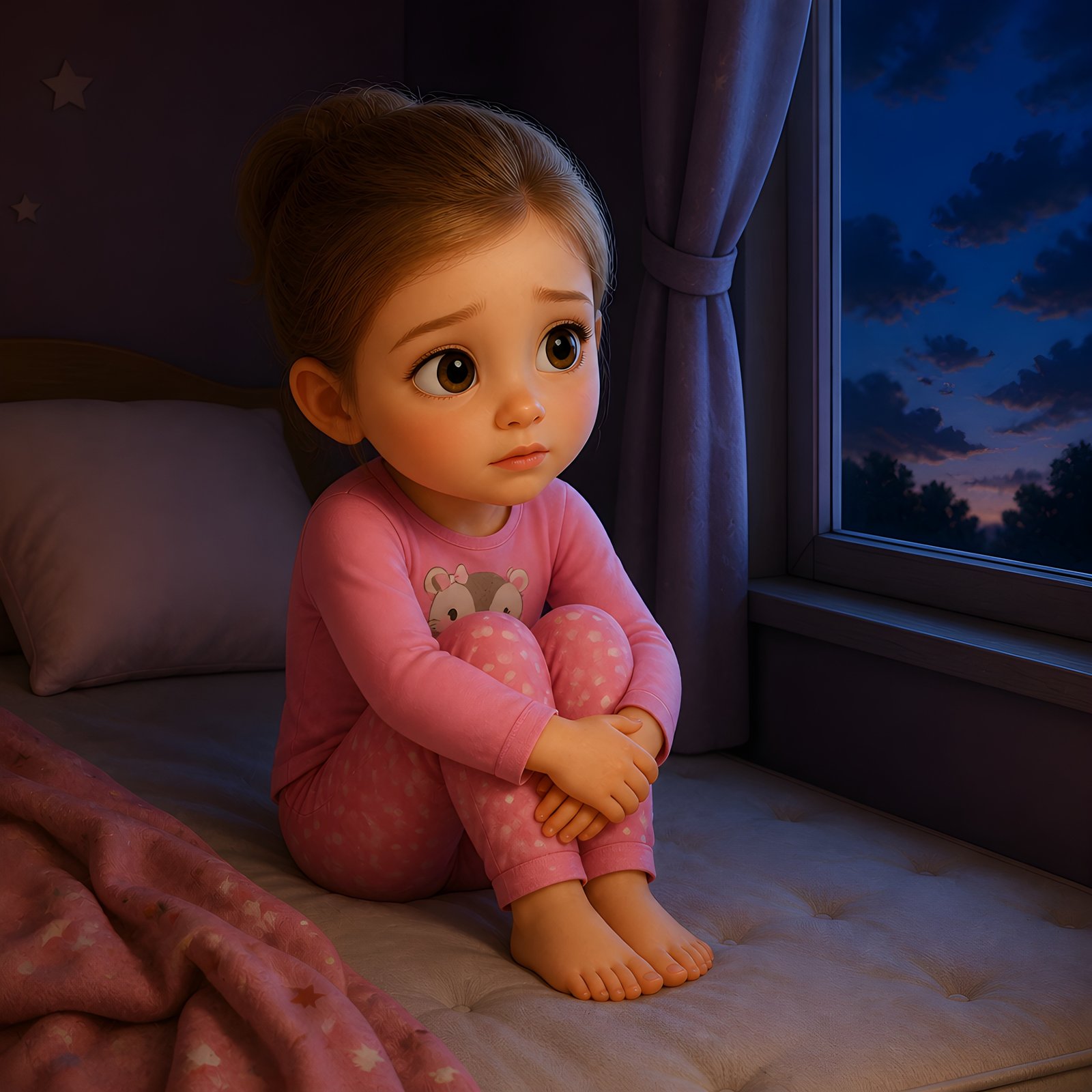
Footsteps came down the hall. A warm hand gently touched her shoulder.
« Do you want to check the sky with us? » whispered a gentle voice.
Nina nodded and stepped up to the wide-open window.

Nina looked up, and her eyes went wide.
« Look! » she gasped. « They are right here! »
Up in the deep blue sky, the exact same twinkling stars were watching over her new garden. Twinkle, twinkle! The doubt flew right away.

The next morning, the sun filled every corner. Nina knew exactly what to do.
« My bed goes right here! » she announced happily.
She opened her very first cardboard box and pulled out her favorite book.
Where we are, we are home.
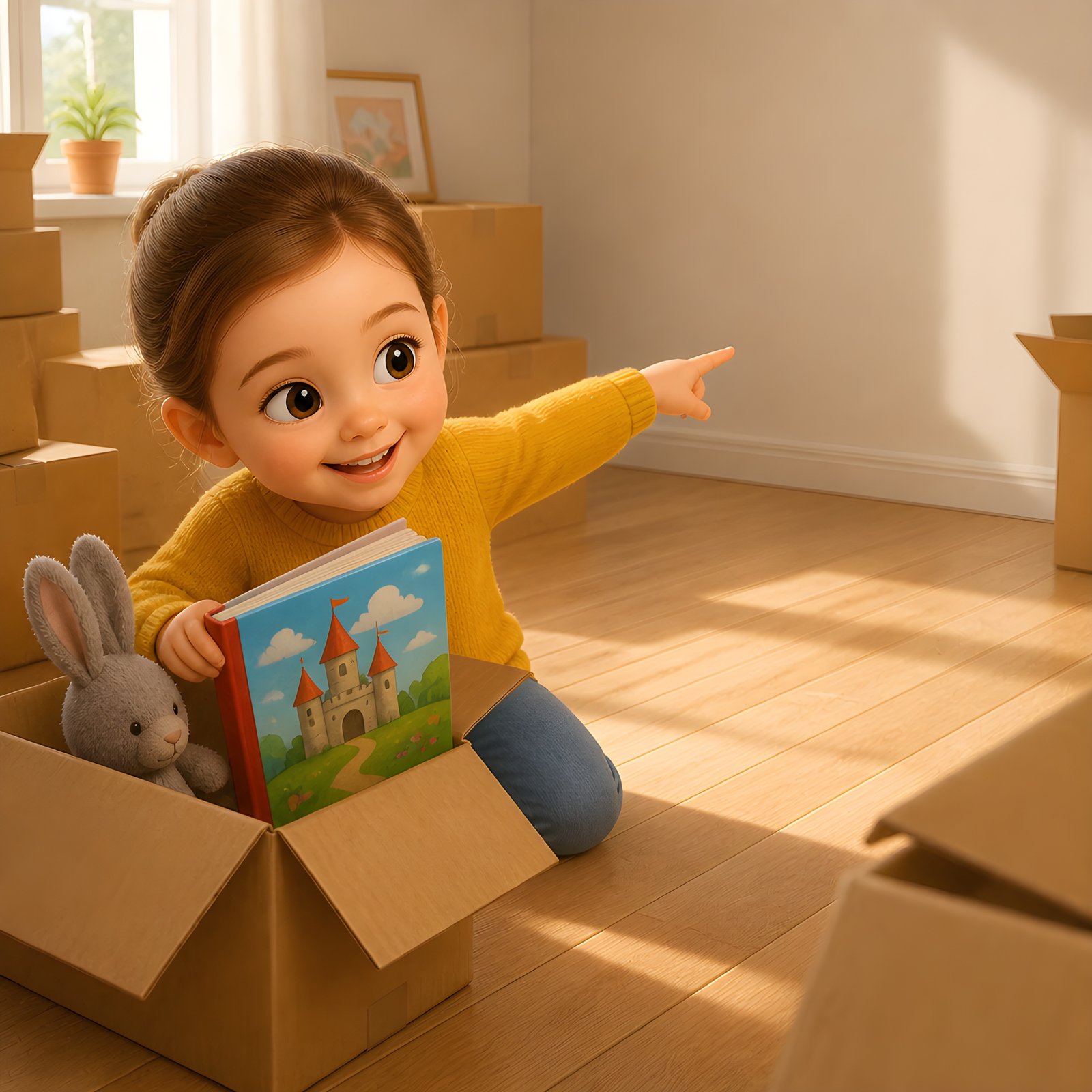
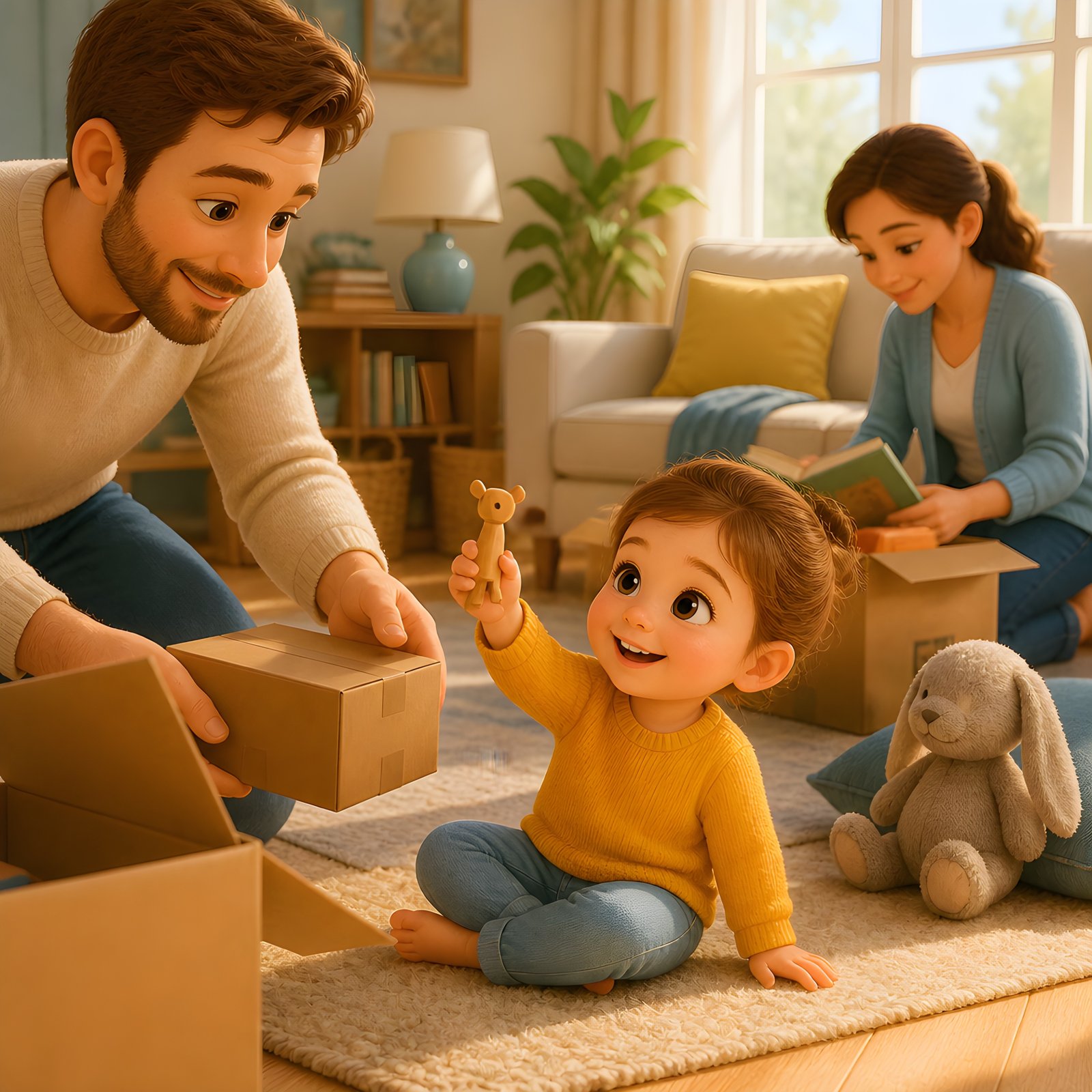
Soon, the rooms were filled with laughter and the cozy sounds of unpacking.
Books found a shelf, and pictures found a wall.
« Should we make a big snack in the new kitchen now? » asked Nina with a giggle.
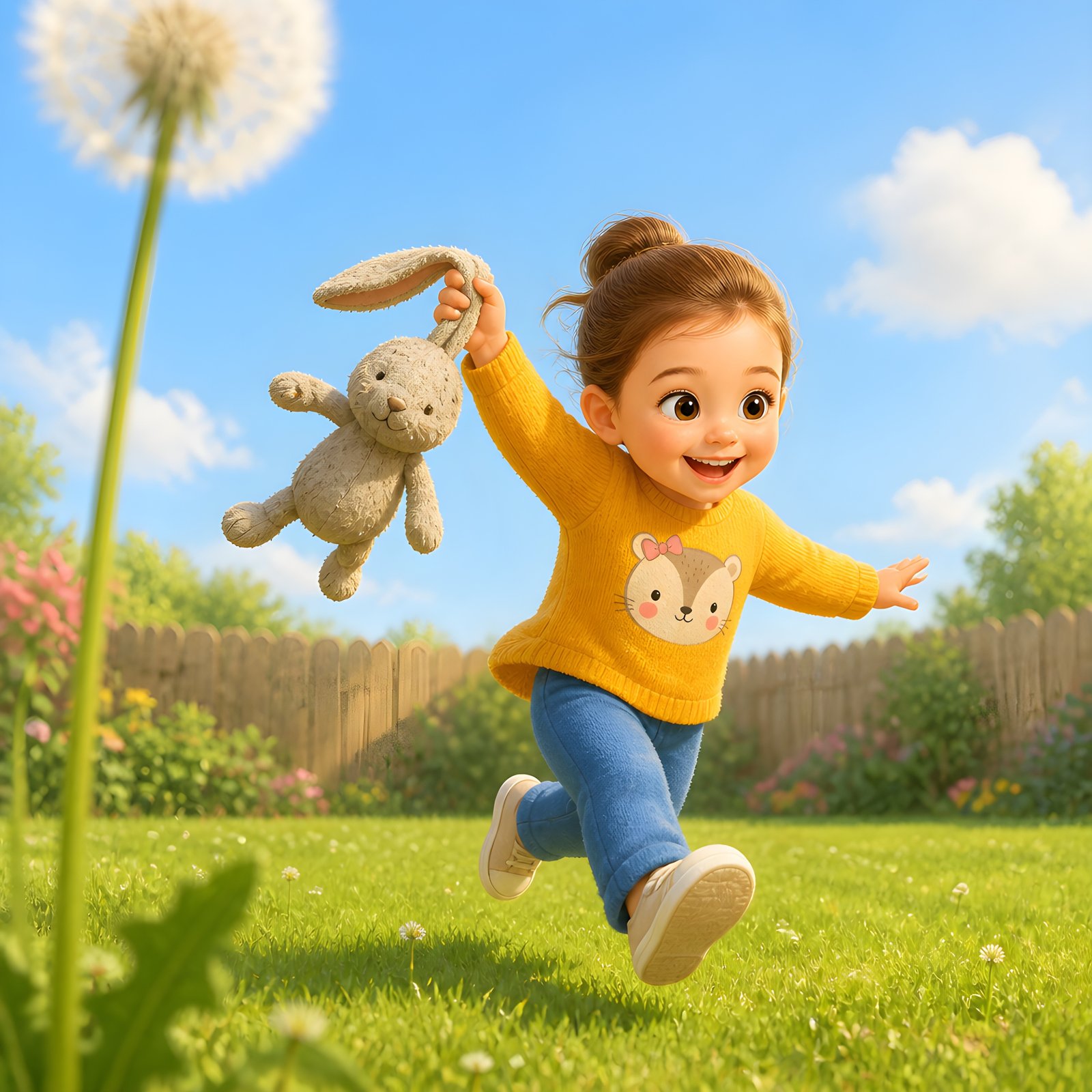
Nina ran across the green grass of the garden, holding her rabbit up to the wind.
She didn’t need to worry anymore. She finally understood that walls were just walls.
Everywhere they were together, they were home.
Night fell once more, quiet and soft.
Tucked into her very own bed, Nina closed her eyes as a gentle kiss landed on her forehead.
And you, little sleepyhead… if you had to pack one special treasure tonight, what would it be?
Sleep tight, little traveler.