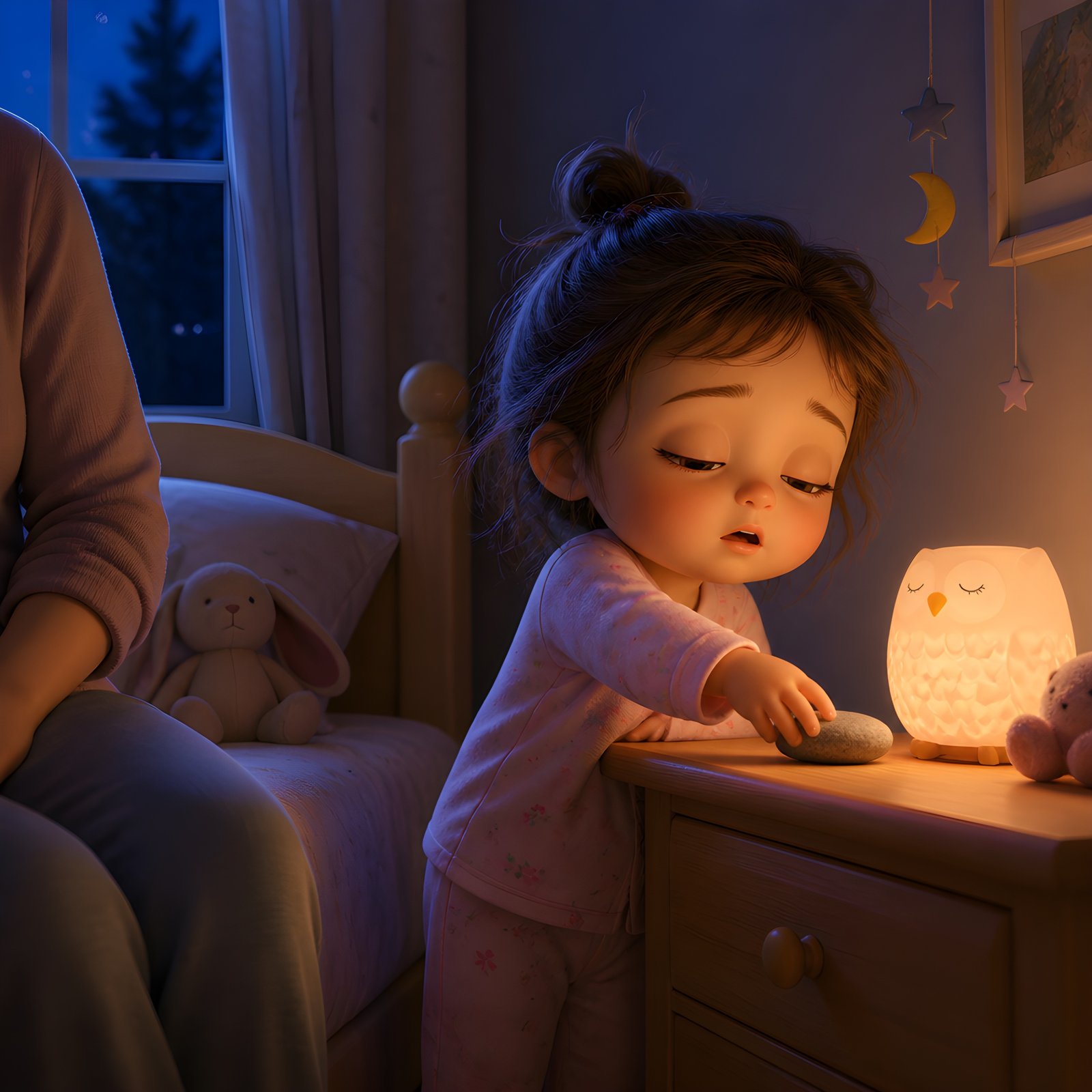
Easing separation anxiety in toddlers for calmer mornings
Nearly 80% of children experience a peak in separation anxiety in toddlers between 8 and 18 months as they develop the cognitive concept of object permanence. While those morning tears at the daycare door feel like a personal failure, they are actually a healthy sign that your child has formed a deep, secure attachment to you.
This article explains why this developmental milestone occurs and how you can transform your morning routine with simple rituals, transitional objects, and the power of personalized storytelling to build lasting confidence for both you and your hero.
- Understanding Separation Anxiety in Toddlers as a Healthy Milestone
- 3 Habits for a Smoother Morning Drop-Off
- How Can Transitional Objects Ease the Goodbye?
- Using Personalized Stories to Prepare for Tomorrow
Understanding Separation Anxiety in Toddlers as a Healthy Milestone
Separation anxiety peaks between 8 and 18 months as object permanence develops. Short goodbye rituals and transitional objects provide essential security, while personalized storytelling bridges the emotional gap until the evening reunion.
Crying and distress are signs of a strong, healthy attachment. Factors like moving, a new school, or family stress can naturally intensify these emotional reactions.
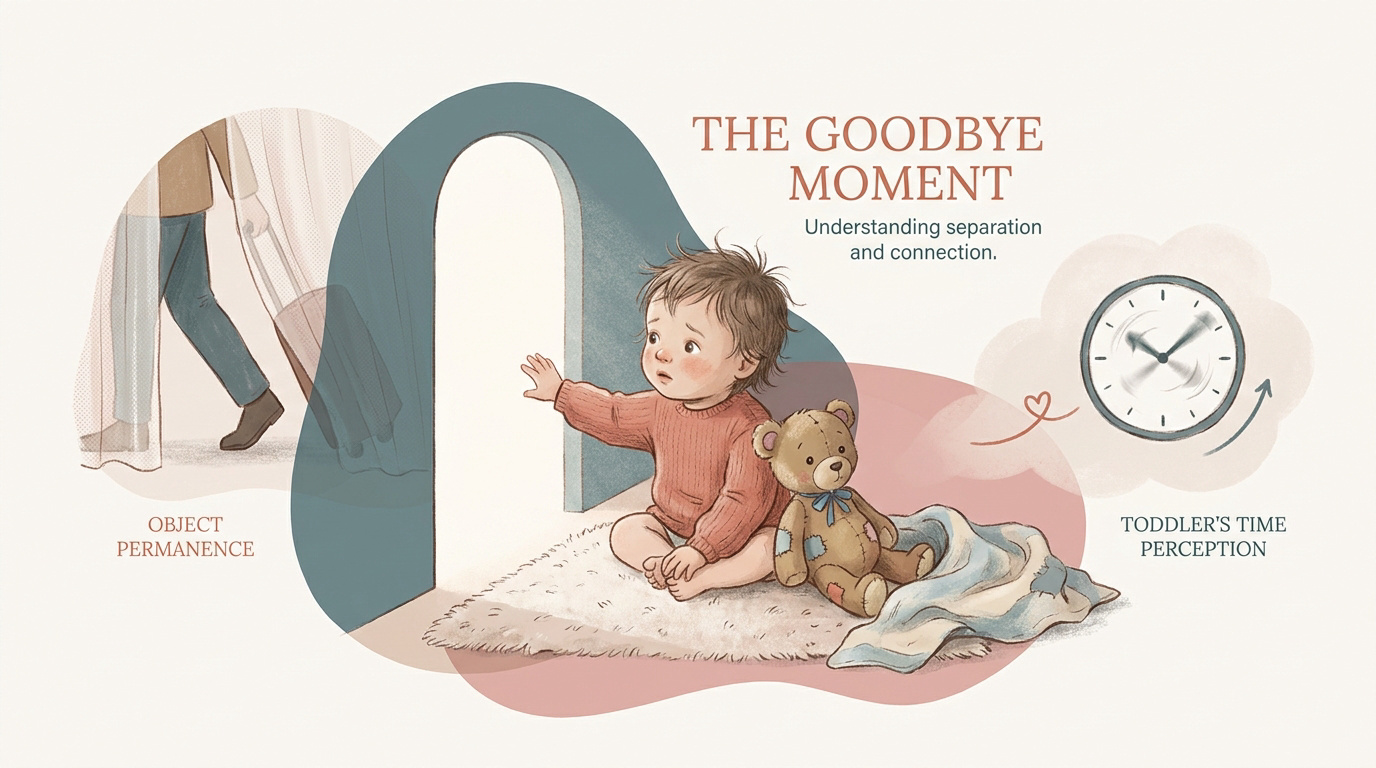
This shift in awareness is directly linked to how your child begins to perceive your presence and absence.
The Role of Object Permanence in Early Development
Your child now understands you exist even when you are gone. This cognitive leap creates the fear of being left behind indefinitely. They realize you are elsewhere.
Toddlers lack a sense of time perception. To them, five minutes and five hours feel identical. They cannot conceptualize your return without a concrete, reliable anchor.
This phase signals healthy brain growth. It proves a strong attachment exists.
An intense fear felt by young children when separated from caregivers, starting around 8 months. It is a normal developmental stage where they learn separation is temporary.
Differentiating Typical Anxiety From Clinical Disorders
Normal distress includes crying during drop-off that stops quickly. Contrast this with persistent impairment where teachers cannot soothe the child. Clinical issues often involve physical sickness or extreme phobias.
Tears at the door do not mean you are failing. Most children settle within minutes. Your child is simply expressing a deep preference for your company.
Consistency is your best tool here. Watching for long-term patterns helps distinguish normal phases from deeper struggles.
To ease mornings, we created a tool for the night before. Our personalized book makes your child the hero, helping them visualize the reunion. We invite you to try the example on this page, toggling between the girl and boy versions.
3 Habits for a Smoother Morning Drop-Off
While understanding the “why” helps your patience, implementing concrete daily habits is what actually changes the morning dynamic at the front door.
Why Short and Consistent Goodbyes Work Best
A swift departure ritual builds a clear boundary. A hug, a kiss, and a “see you later” sets a predictable end. It gives your child a firm sense of closure.
Lingering increases the child’s stress. If you stay, they think their crying might actually make you stay forever. It simply delays the transition.
Keep your body language calm. Your child mirrors your emotional state. Projecting confidence helps them feel safe and settle into the classroom faster.
The Psychological Cost of Sneaking Out
Disappearing without a word damages the child’s sense of trust. They learn you can vanish at any moment. This creates hyper-vigilance and future clinging.
Sneaking away is a short-term fix with a high emotional price tag. It builds long-term anxiety. Honesty is always better than a quick escape.
Always say goodbye. Even if they cry, they know you are being honest. This transparency is vital for their security and your bond.
Naming the Feeling to Validate Their Experience
Acknowledge the sadness without dismissing it. Use scripts like “I see you are sad because I am leaving.” This makes them feel understood.
Avoid saying “don’t be sad.” Validating the struggle helps the child move through the feeling much faster. Use these specific phrases for clarity:
- “I know it’s hard to say goodbye”
- “I will be back after your snack”
- “You are safe with your teacher”
Our book, The book where your child is the hero, offers a repeatable bedtime gesture. Try the example on this page to help them visualize their courage.
How Can Transitional Objects Ease the Goodbye?
Beyond words and rituals, a physical bridge to home can offer the tactile comfort a toddler needs when you aren’t there.
Choosing the Right Security Item for Daycare
Blankets or stuffed animals carry the scent of home. This physical presence helps the child self-soothe during quiet times or naps.
Ensure the daycare allows these items. A designated “school friend” toy makes the environment feel familiar and less threatening.
| Object Type | Benefit | Best For |
|---|---|---|
| Soft Blanket | Tactile comfort | Naps |
| Stuffed Animal | Emotional link | Socializing |
| Family Photo | Visual reminder | Anchoring |
Practicing Separation Through Play and Reunion Rituals
Use weekend games like hide-and-seek to normalize brief disappearances. This teaches the child that you always come back, lowering drop-off stakes.
Establish a celebratory reunion ritual. A specific handshake or big hug reinforces the bond and marks the successful completion of the separation.
Focus on the joy of returning. This helps your child associate the end of the day with safety and positive reinforcement.
We wrote this book to help families. Available in girl and boy versions, it lets your child become the hero. Try the example on this page or download the PDF.
Using Personalized Stories to Prepare for Tomorrow
While physical objects help during the day, the evening routine is where you can mentally prepare your child for the next morning’s success.
Building a Mental Bridge Between Home and School
Discussing the next day’s schedule during bedtime reduces morning friction. Visualization makes transitions feel less threatening. When a child knows exactly what to expect, their anxiety levels drop significantly. They can mentally rehearse the steps of the morning routine.
Use simple language to describe the sequence of events. Mention breakfast, the drive, and the teacher’s greeting. This creates a predictable roadmap for their young mind to follow.
Preparation is the key to peace. A calm night leads to a calmer morning.
How Our Hero-Based Story Transforms the Evening Routine
We created a book where your child is the hero of their own story. It helps them process their feelings about daycare or school through a personalized narrative journey.
You can see a full example right on this page. Toggle between the girl and boy versions to see how the story adapts. Download the PDF to try it tonight.
- Personalized hero name
- Choice of girl or boy variant
- Full digital preview available
- PDF download option
Mastering separation anxiety in toddlers requires predictable rituals, validated emotions, and comforting transitional objects. By using a personalized story tonight, you transform bedtime into a mental roadmap for tomorrow’s success. Take this concrete step now to replace morning tears with the quiet confidence of a little hero.
FAQ
Is it normal for my child to cry every time I drop them off at daycare?
Yes, this is a very common and healthy developmental milestone. Around 8 to 18 months, children develop “object permanence,” meaning they understand you still exist even when you are out of sight. Because they don’t yet have a sense of time, they don’t know when you will return, which triggers separation anxiety. It is actually a sign of a strong, secure attachment to you, not a failure of your parenting.
How can I make the morning goodbye easier for both of us?
The most effective strategy is a short and predictable ritual. Keep your goodbye brief, a consistent hug, a kiss, and a clear “I’ll be back after snack time” helps your child know what to expect. Lingering can actually increase their distress, as they may feel your own hesitation. Staying calm and confident shows them that their environment is safe and that you trust the person caring for them.
Should I sneak out while my child is distracted to avoid tears?
You should never slip away without saying goodbye. While it might seem easier in the moment to avoid a tantrum, sneaking out can damage your child’s sense of trust and make them more hyper-vigilant or clingy later on. Even if they are crying, a clear and honest goodbye reinforces the truth that you leave, but you always come back.
What can I do if my child seems overwhelmed by their sadness?
Instead of saying “don’t be sad,” try naming the feeling to validate their experience. Using simple phrases like “I see you are sad because I am leaving” helps them feel understood and safe. Validating their emotions actually allows them to process the feeling faster than if the emotion is denied or dismissed.
Can a “lovey” or a specific object really help with separation?
Absolutely. A transitional object, such as a favorite stuffed animal, a soft blanket, or even a family photo, acts as a physical bridge between home and school. These items carry a familiar scent and provide tactile comfort, helping your child self-soothe and feel a sense of continuity while you are apart.
How can a personalized story help prepare my child for the next day?
A personalized story where your child is the hero gives them a concrete way to visualize the transition before it happens. By reading about their own courage and the predictable routine of the morning, including your certain return, you create a repeatable, calming ritual the night before. This mental preparation reduces anxiety and transforms the evening routine into a moment of connection and reassurance.
angoisse-separation
Outside the nursery door, Milo clutched his mother’s coat very tightly. His tummy felt all knotted up.
“The morning, saying goodbye, is so hard,” whispered Milo.

Inside the playroom, Milo hid behind a stack of soft cushions. He held his little red toy truck close to his chest.
Can you spot his little red truck hidden in the room?
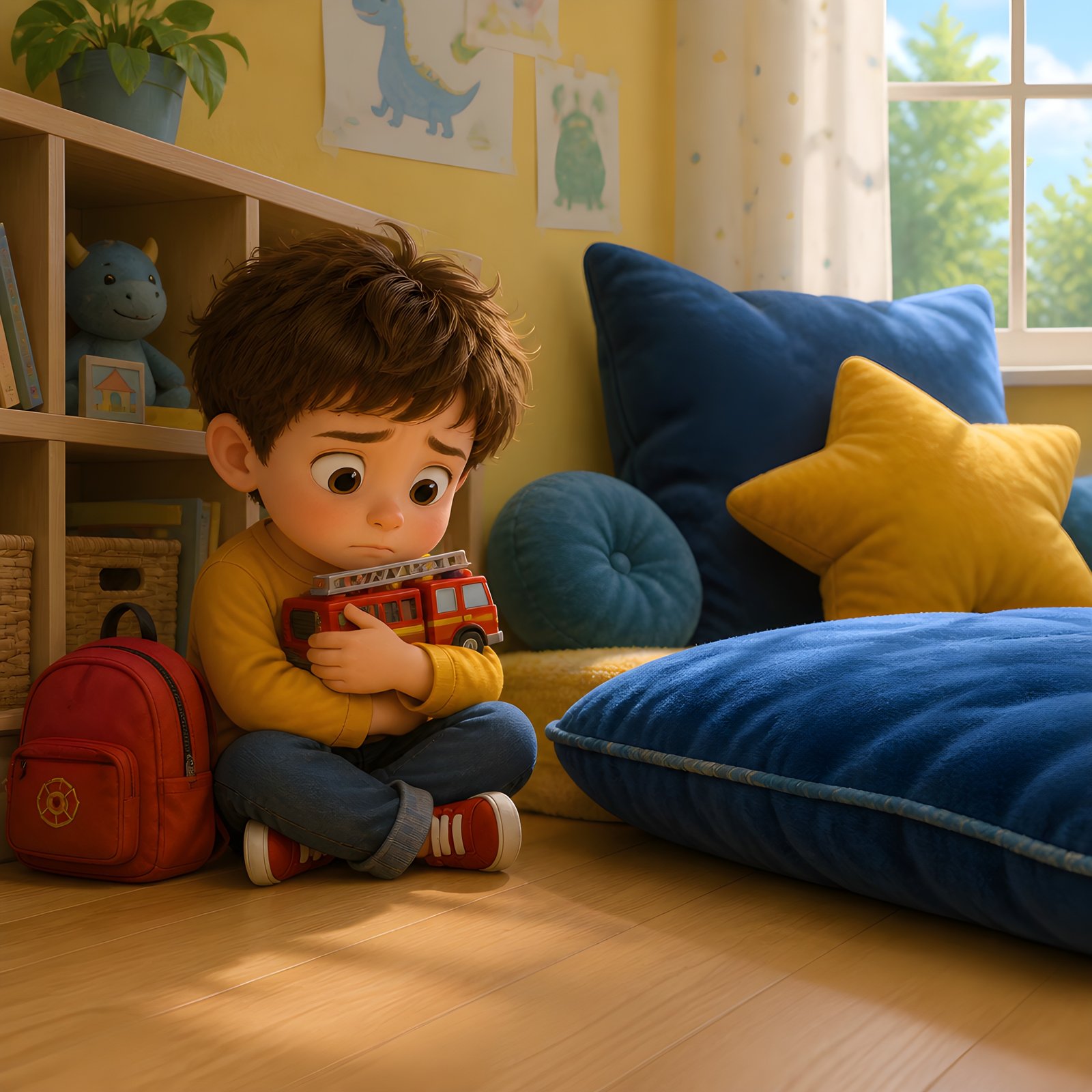
A little girl with funny pigtails named Zoé walked right up to his hiding spot.
“Look!” she said. She opened a little cardboard box filled with smooth, shiny pebbles from the garden.
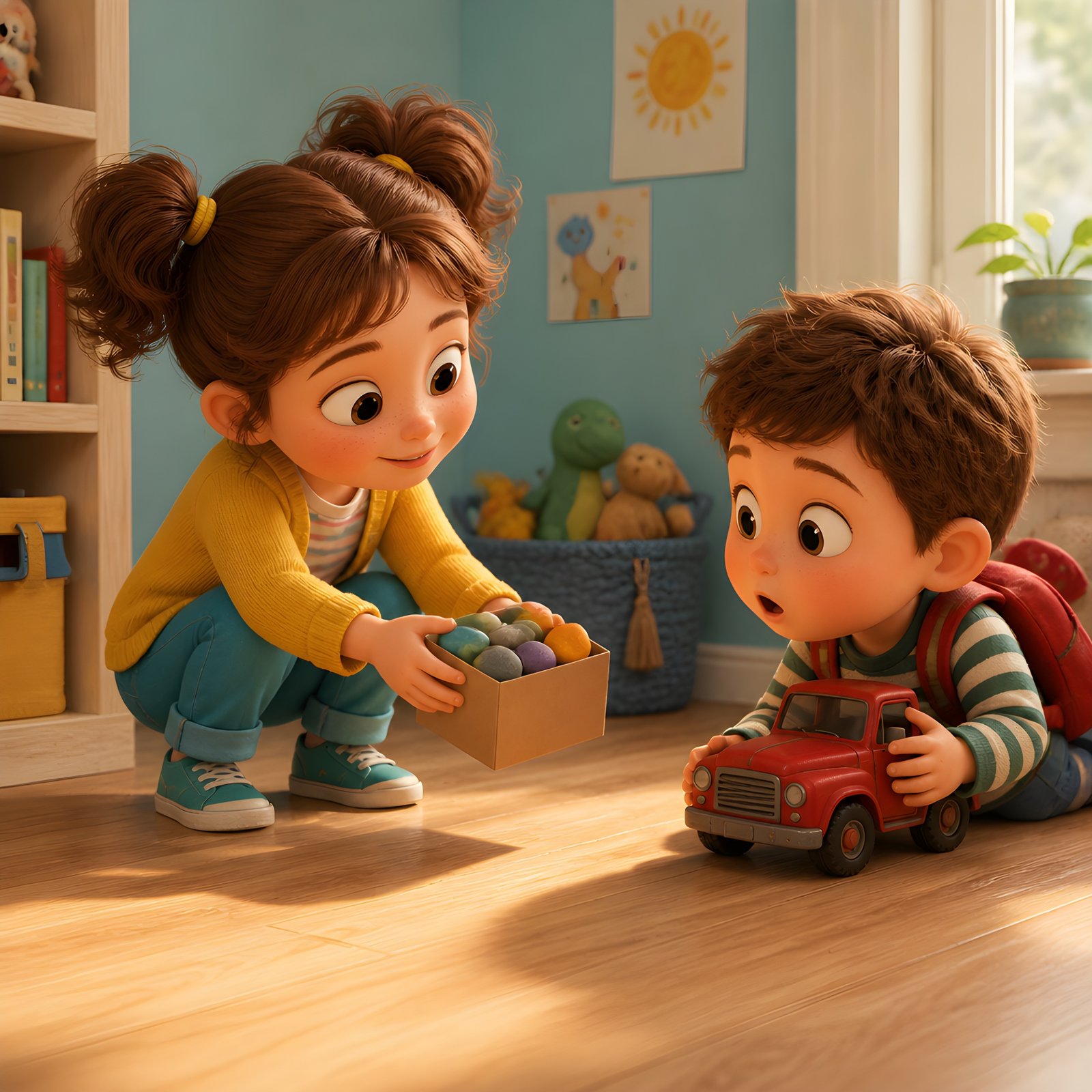
Milo shook his head and hugged his truck even tighter. What if his mother never came back?
His heart went thump-thump very fast inside his chest.
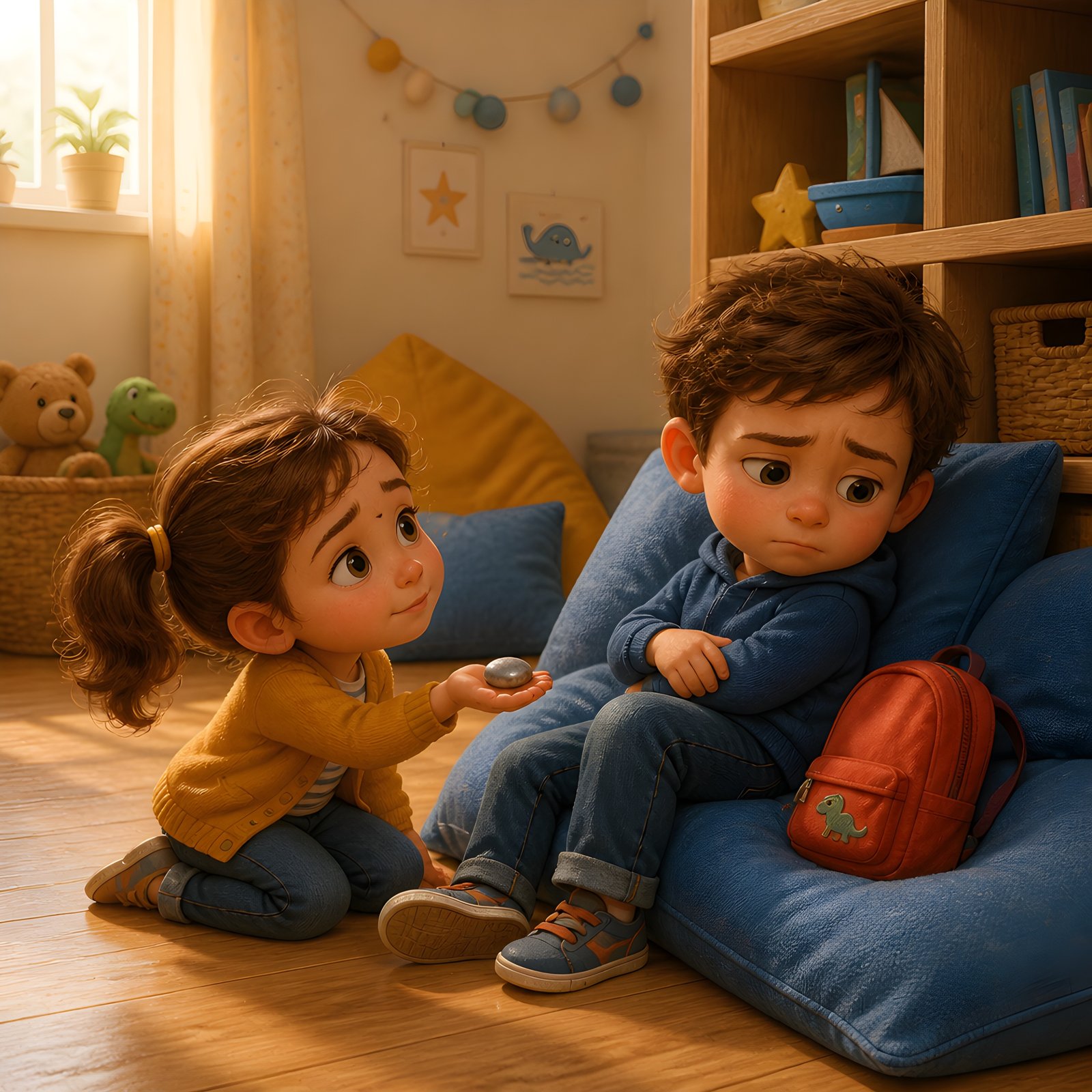
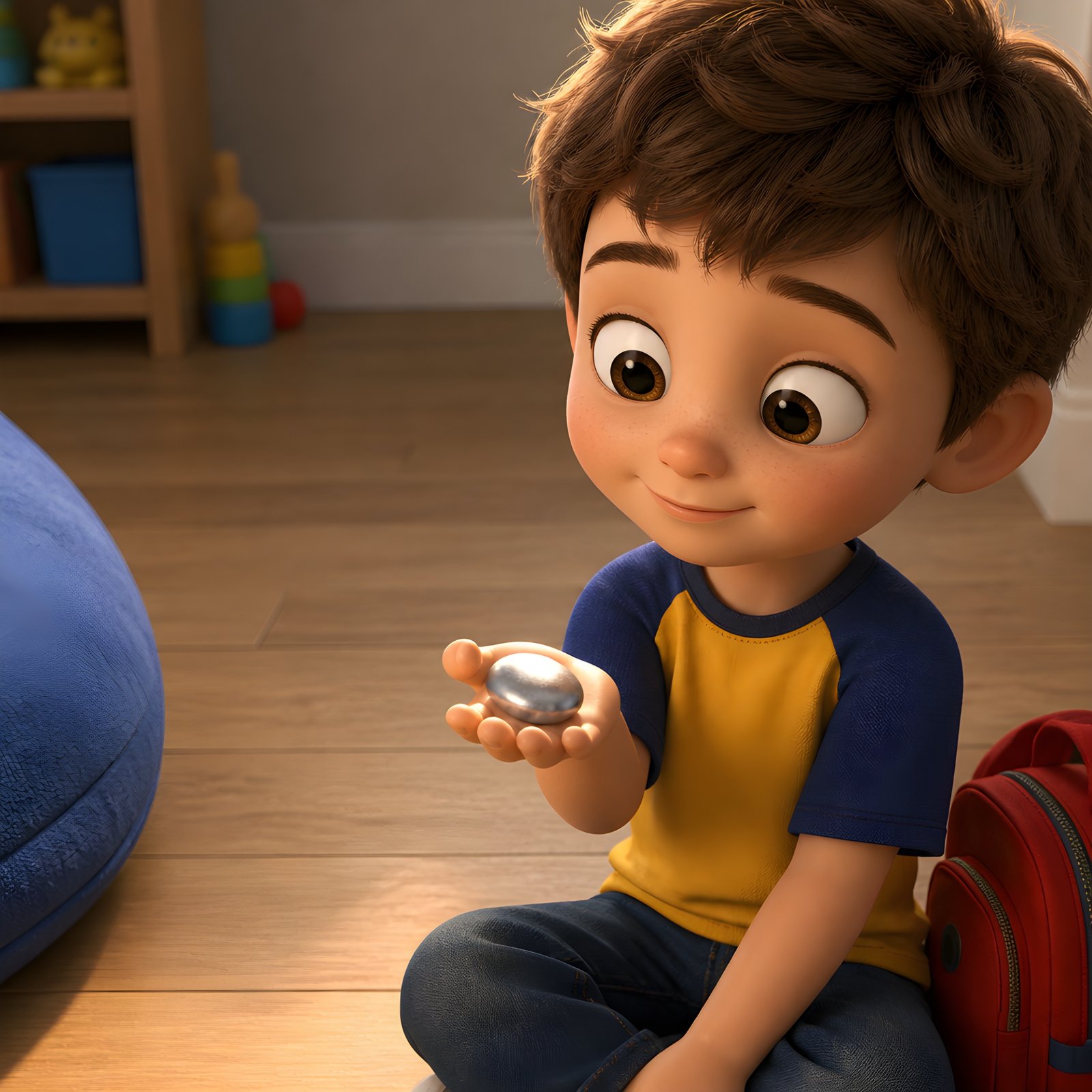
Zoé did not go away. She gently placed the pretty pebble right next to Milo’s wheels.
“Vroum-vroum!” she whispered with a little giggle, pretending to drive her finger over the stone.
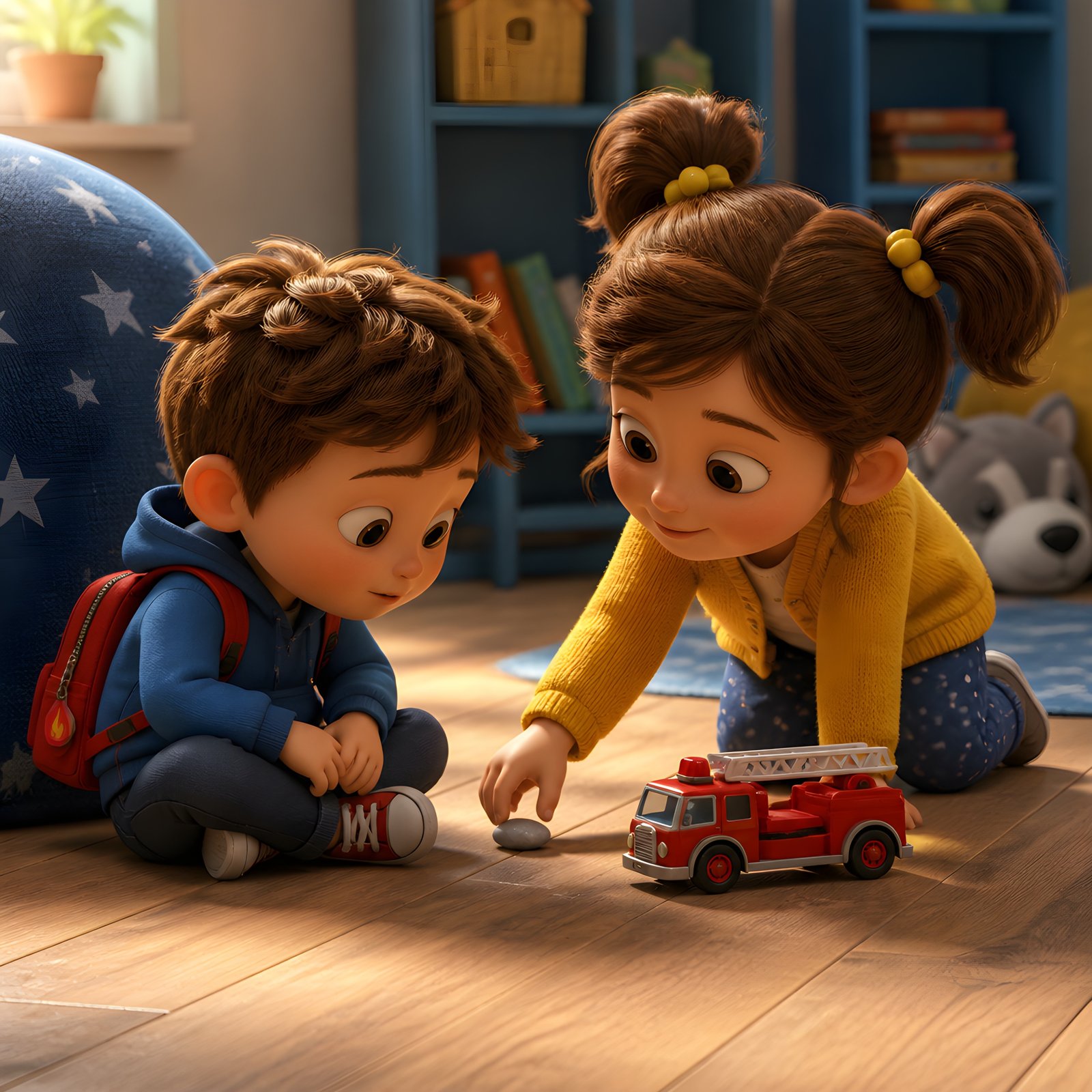
Then, a little smile appeared on Milo’s face. Together, they started building a giant tower with wooden blocks.
It went up, up, and up toward the ceiling!
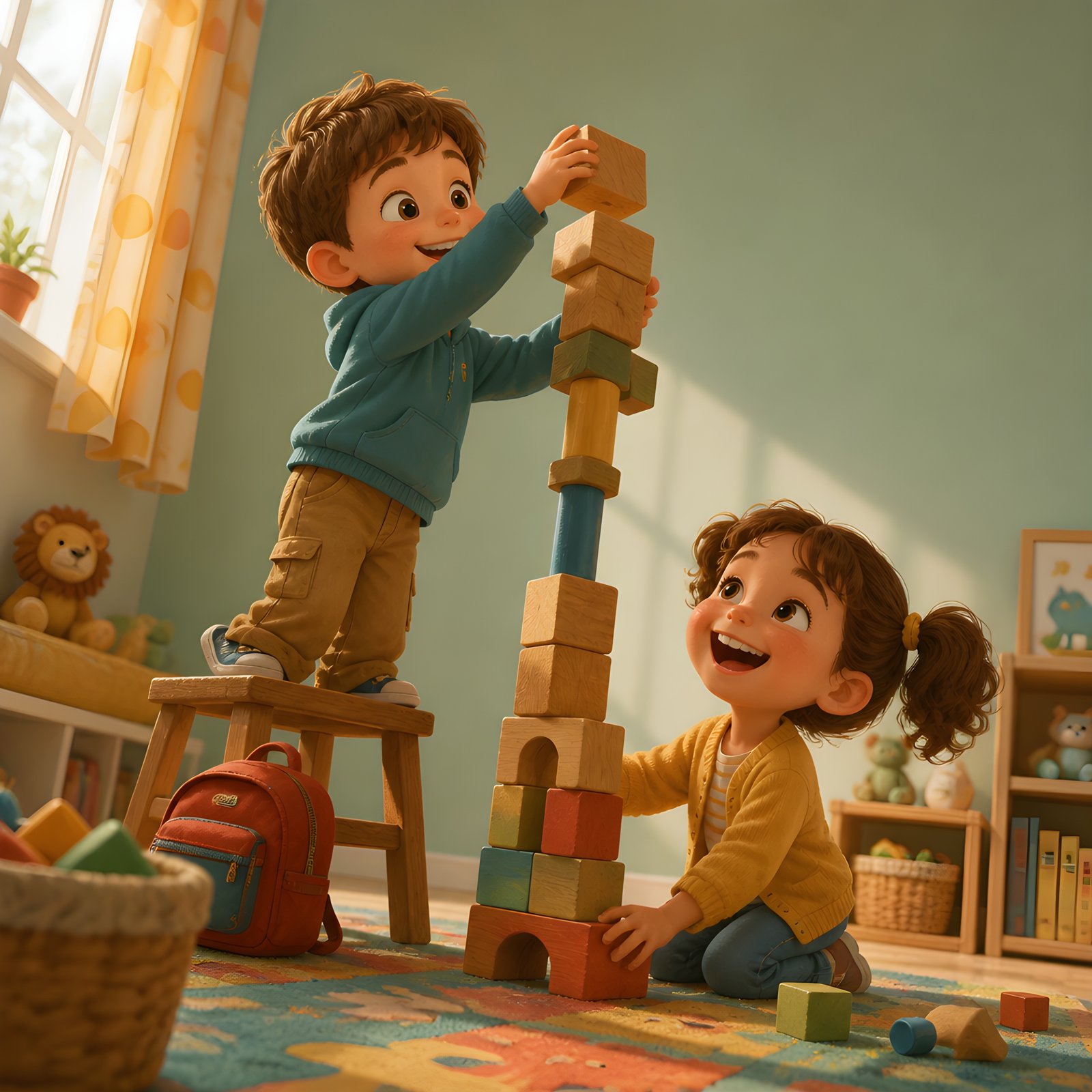
Crash! The tall tower tumbled down in a clatter of wood. Milo jumped and looked at the big clock on the wall.
“The morning, saying goodbye, is so hard,” he thought again, feeling his tummy wobble.
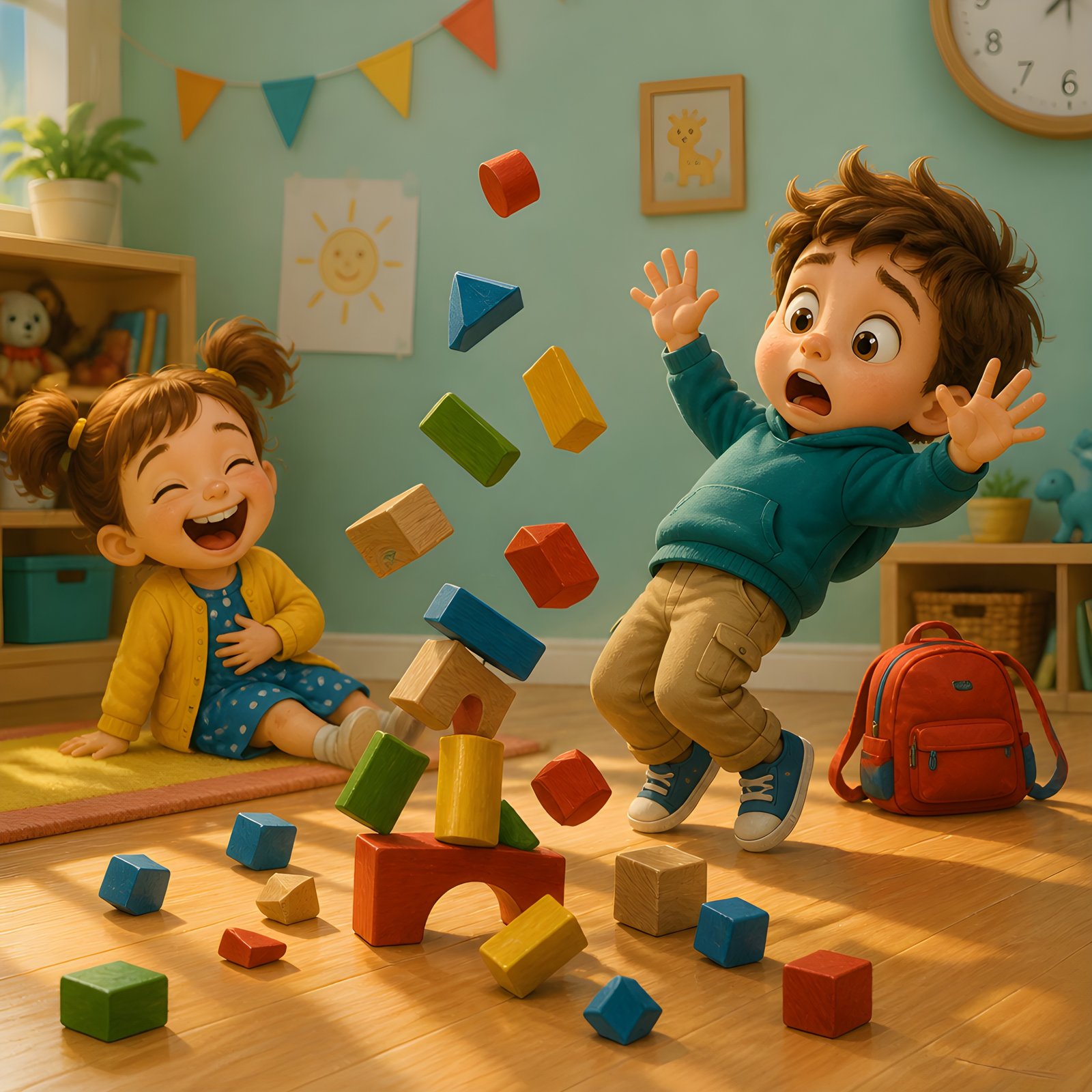
Milo wanted to crawl back into his dark corner. But Zoé gently caught his hand.
She leaned in close and whispered her secret for chasing the worries away.
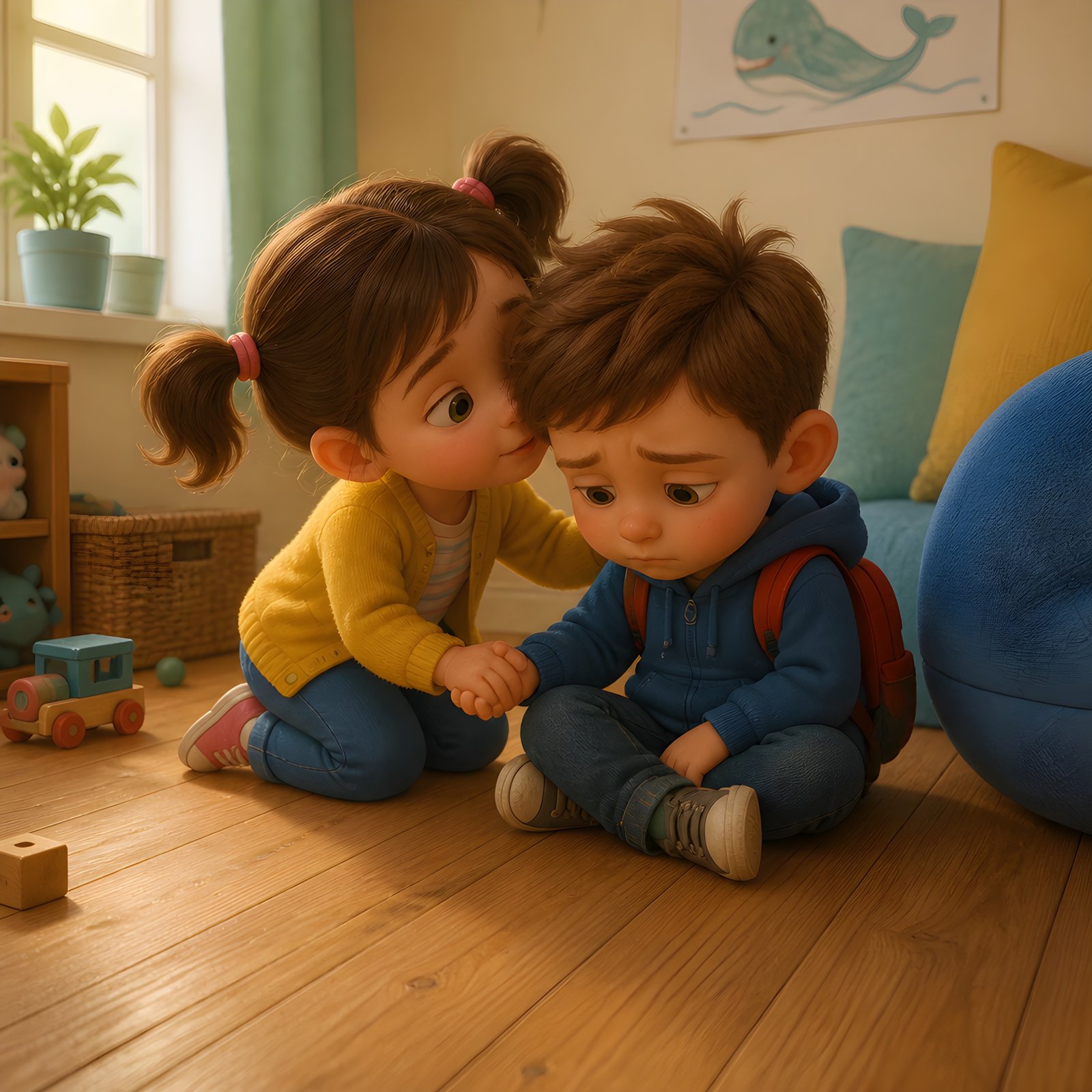
Milo listened very carefully. When his mother walked out the door, it wasn’t goodbye forever.
It was a promise. A promise that she would always come back for him.
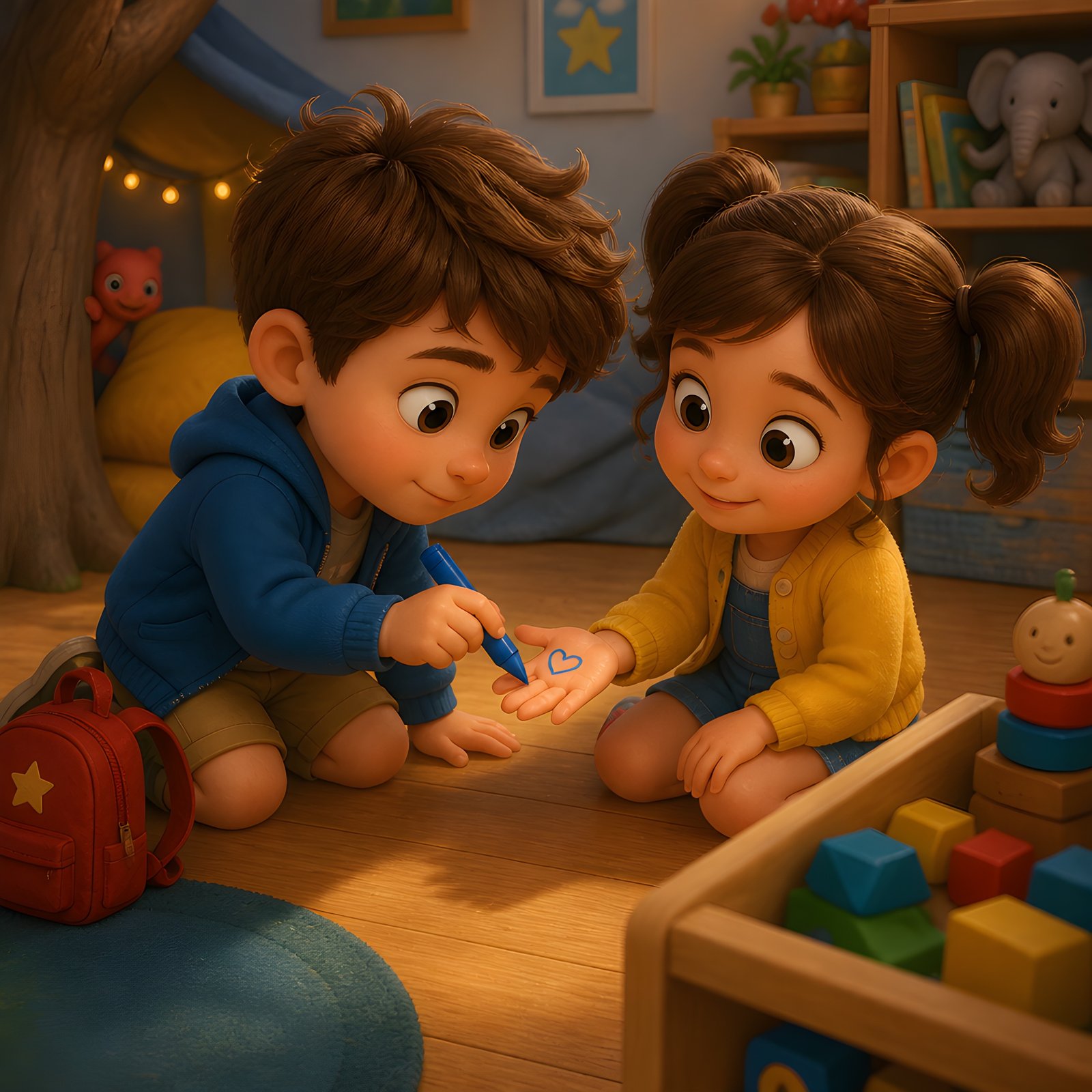
Then, Milo took a blue marker and drew a little heart right on Zoé’s palm.
He gave her a huge hug to say thank you for the wonderful secret.
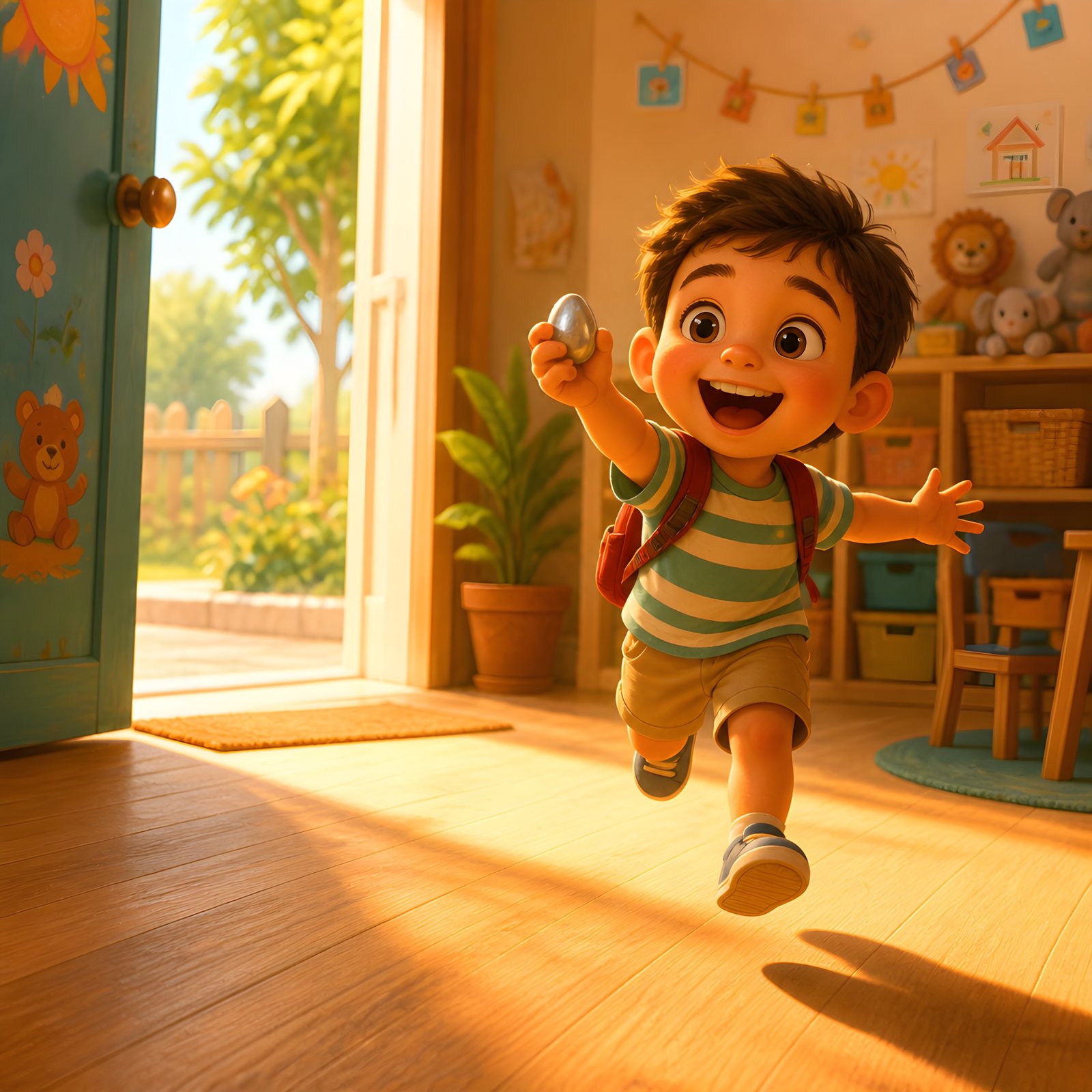
Ding-dong! The front door opened wide. It was time for pick-up!
“The morning, saying goodbye, is a secret to meet again!” cried Milo happily as he ran to his mother with his shiny pebble.
That night in his cozy bed, Milo held his smooth pebble tight and thought about his fun day.
And you, what little secret object would you like to put in your pocket tomorrow morning? Sleep tight, little Milo.

angoisse-separation
In her hallway at home, Nina clutched her small backpack very tightly.
She refused to put on her shoes. No way! She knew very well what came next, and she did not want to open that door.

Nina walked hand in hand toward the nursery, her heart beating fast. Thump, thump, thump.
The morning separation felt like a giant wall. Can you spot the little yellow leaf resting on the path near Nina’s boots?
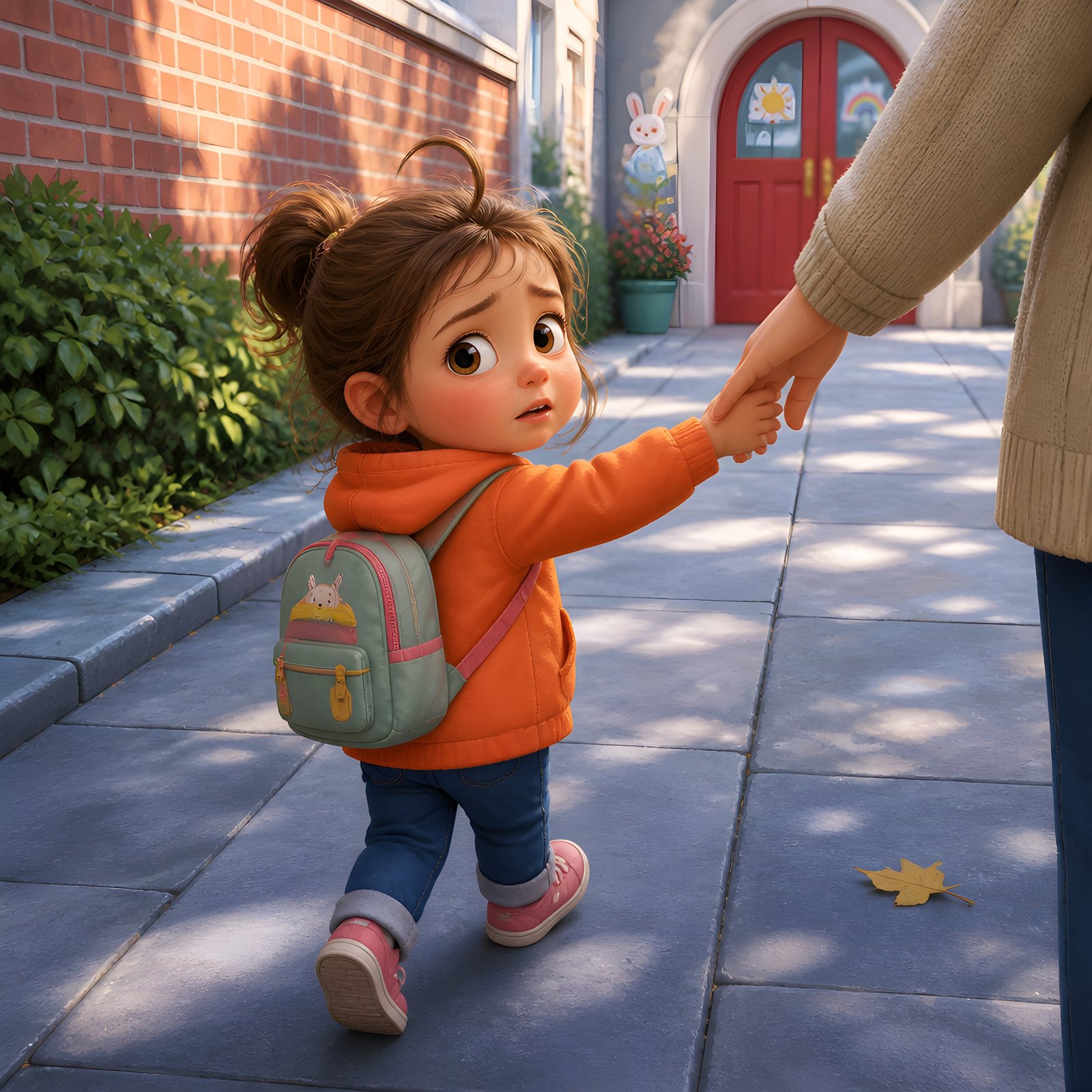
Right at the nursery entrance, a warm hand stopped her.
Inside Nina’s pocket rested her quiet protector: a smooth, cool grey pebble she had picked up yesterday. A very real, very solid little stone.
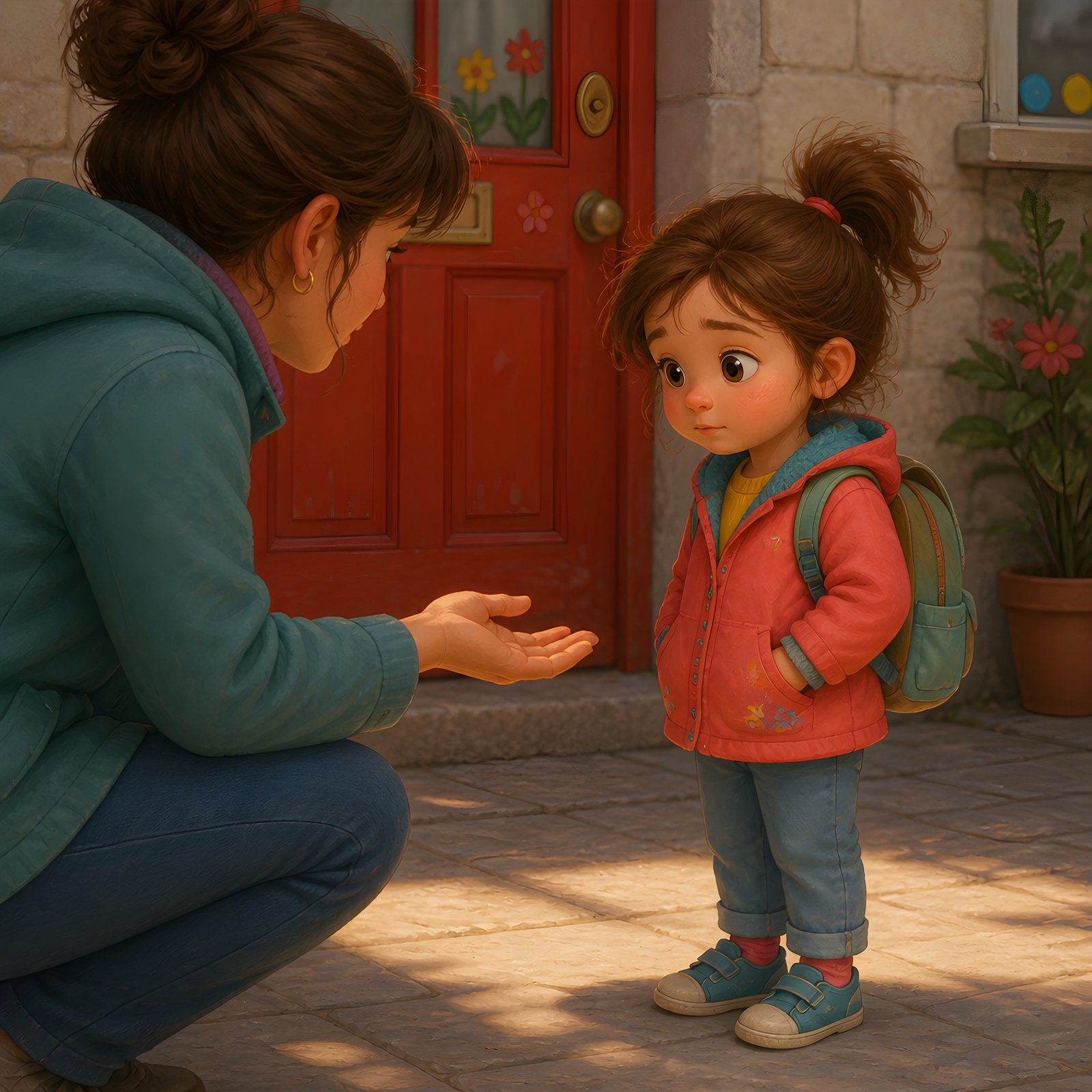
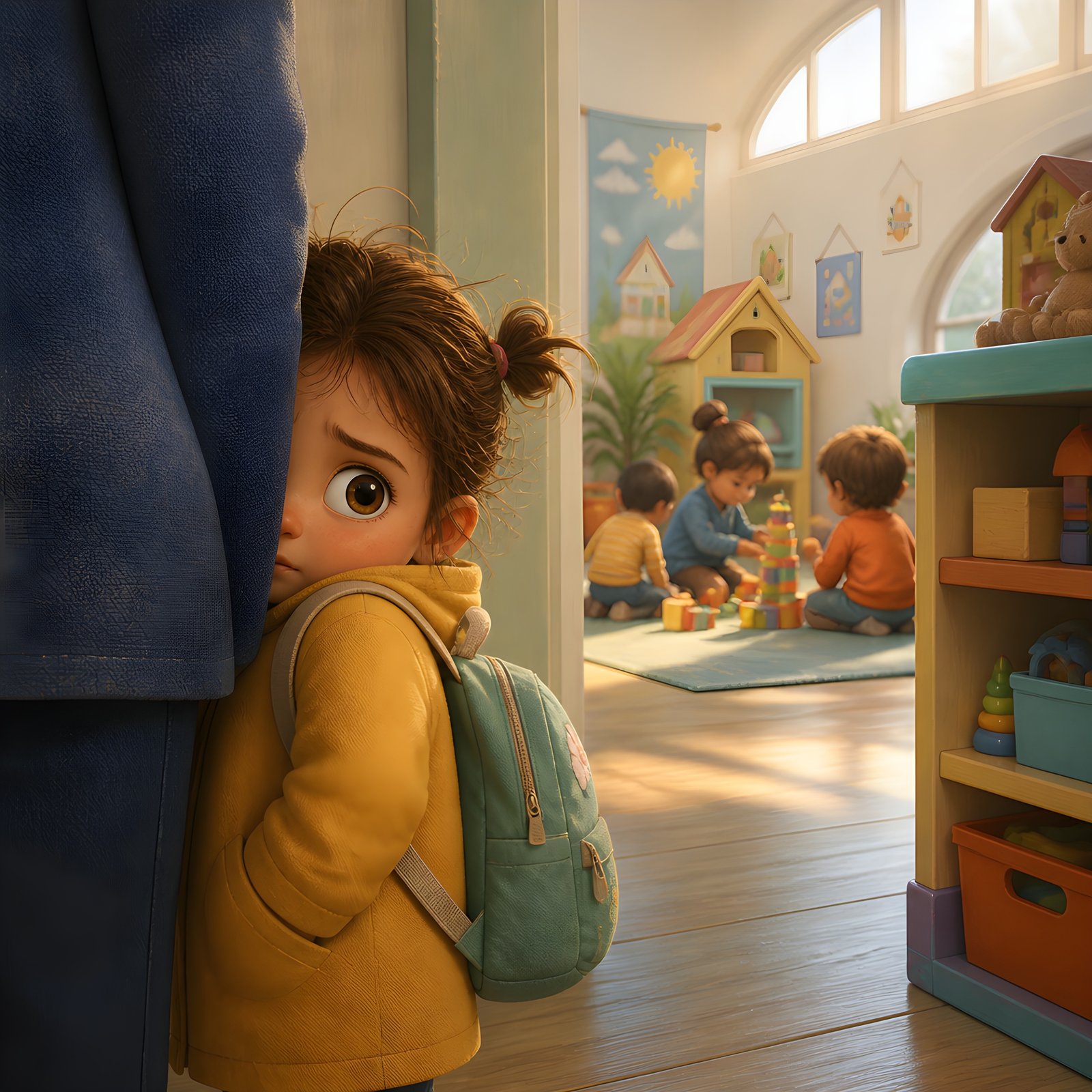
Inside, the other children played happily with wooden blocks.
But Nina’s hands stayed clenched in her pockets. She hid behind her parent’s jacket, unable to raise a single finger to wave goodbye. Brr…
Gently, the pebble was pulled from her pocket and placed right in her open palm.
Nina looked down at the cool stone. She felt its familiar, round shape. Crr… what a solid little friend.
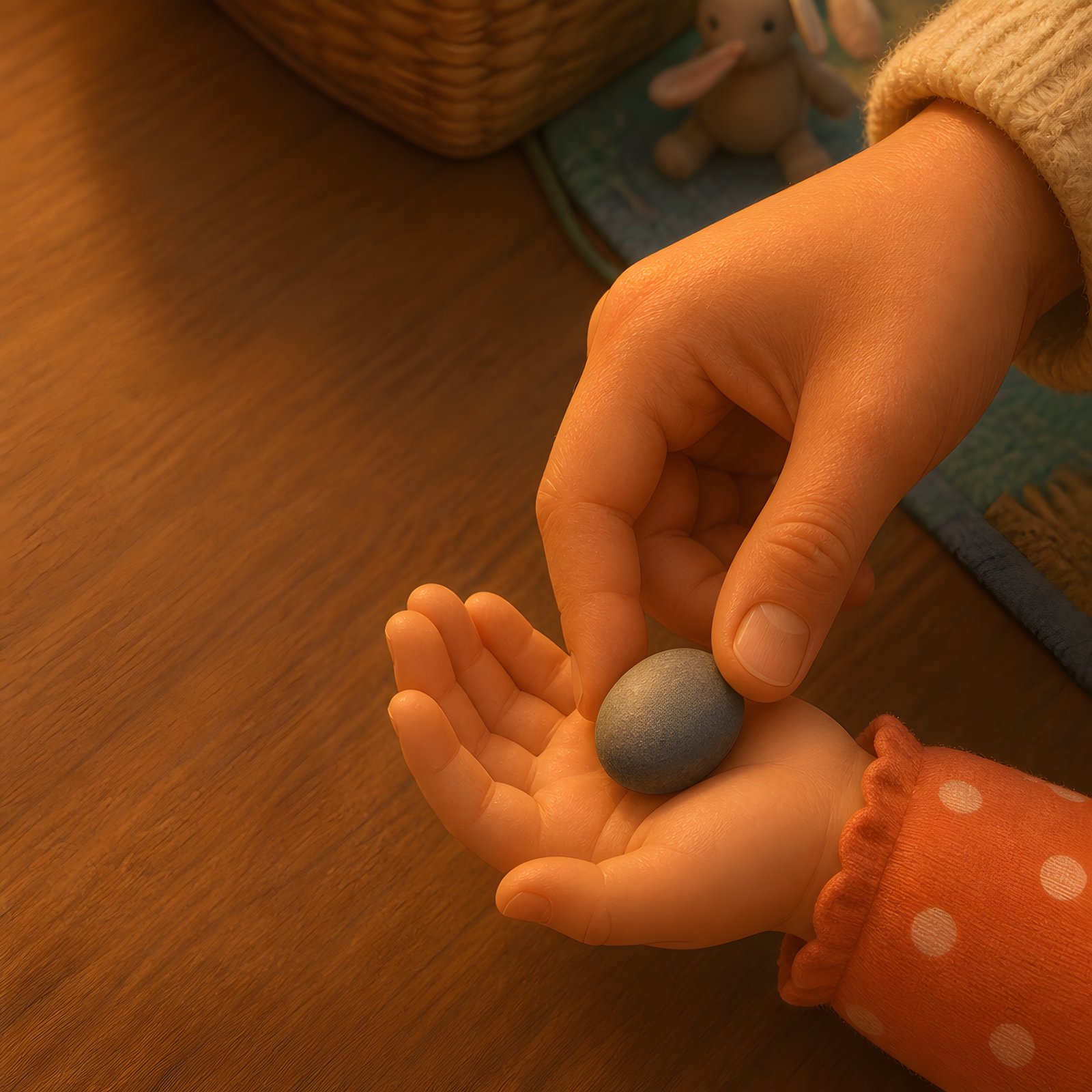
Nina held the pebble tightly in her fist. A soft whisper reached her ear.
“When you squeeze the stone three times, a warm greeting travels straight back to you.” Nina squeezed once, twice, three times.
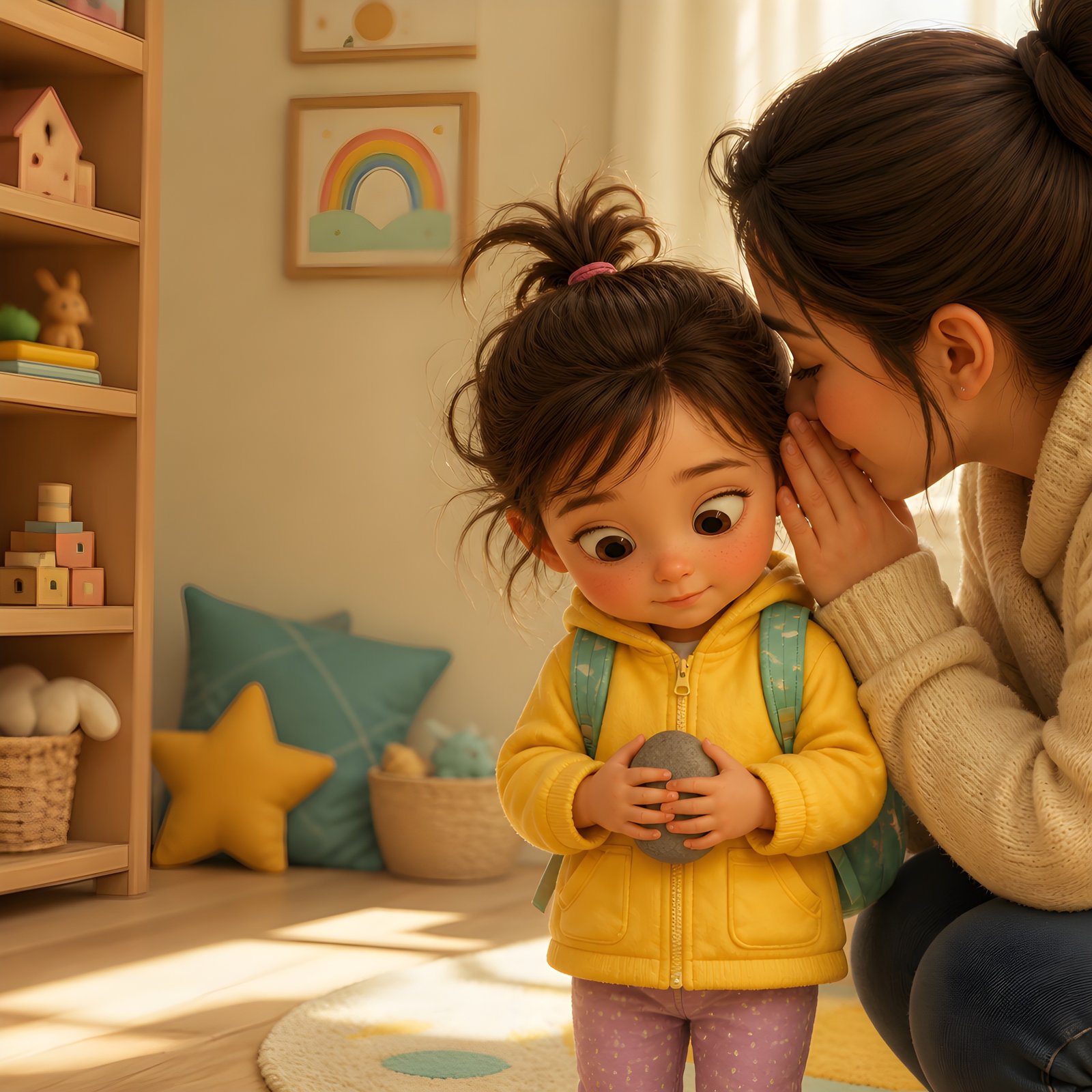
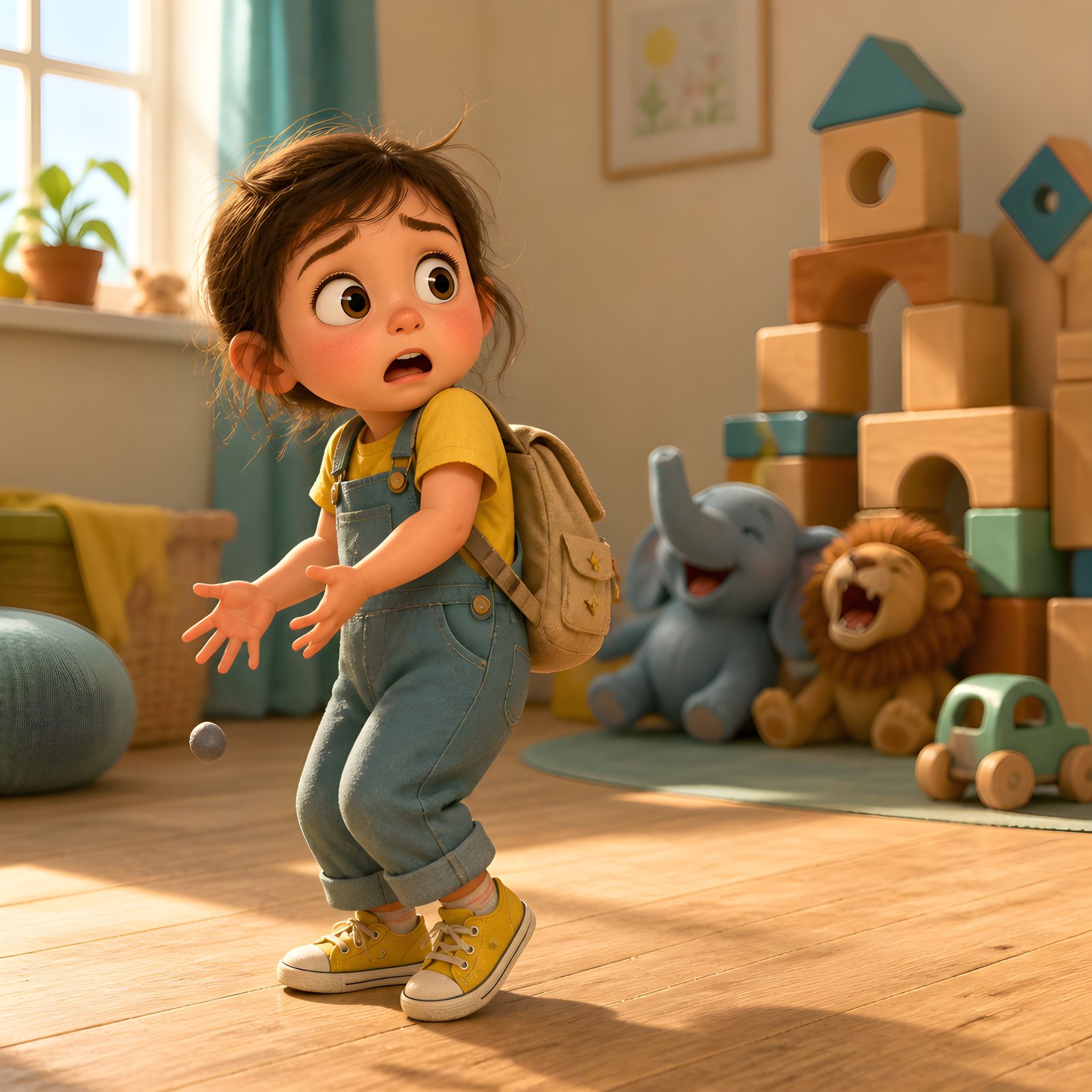
A sudden loud laugh from inside the playroom startled her.
For a second, the cold fear spiked back up. Her fingers almost let go of the stone. Oups !
Nina remembered her parent was right outside the big window.
She took a deep, slow breath—the slow dragon breath—to calm the flutter in her tummy. Fffouuu…
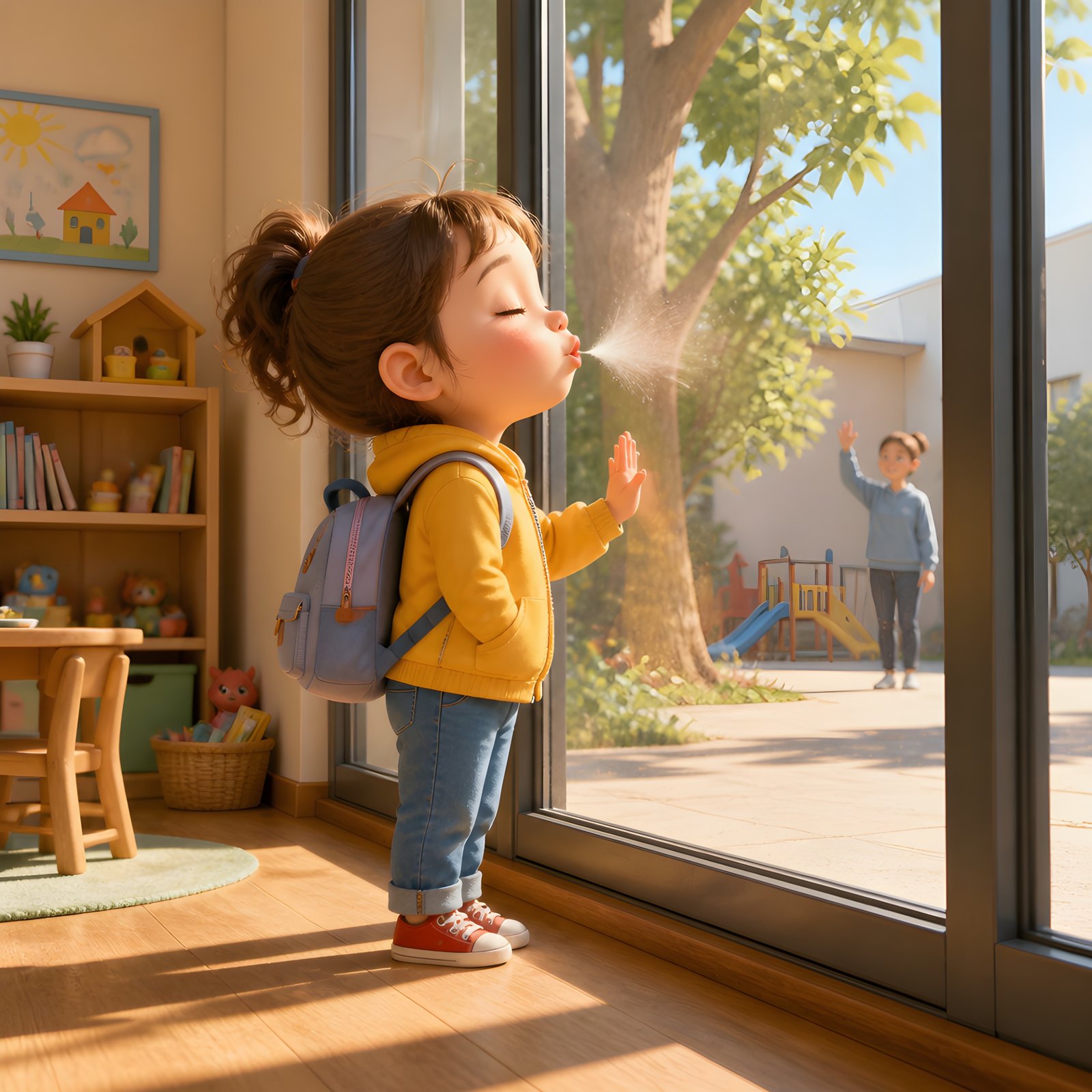
In that quiet second, a thought bloomed inside her head.
Saying goodbye wasn’t disappearing forever. It was just pressing pause until the afternoon reunion.
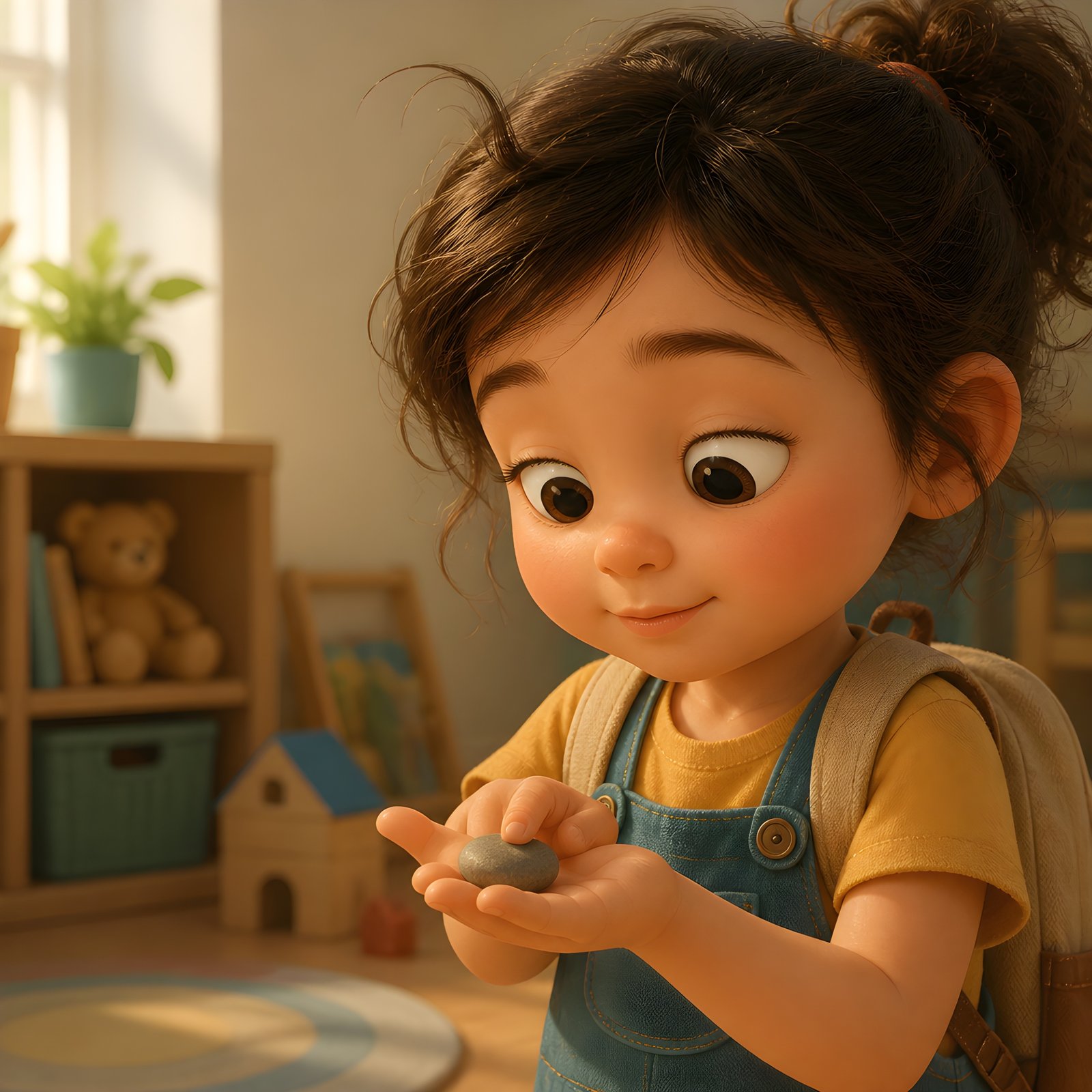
Nina turned around and gave a bright, wide wave through the glass.
She squeezed her pocket pebble three times. The travelling kiss was well on its way! Hop !
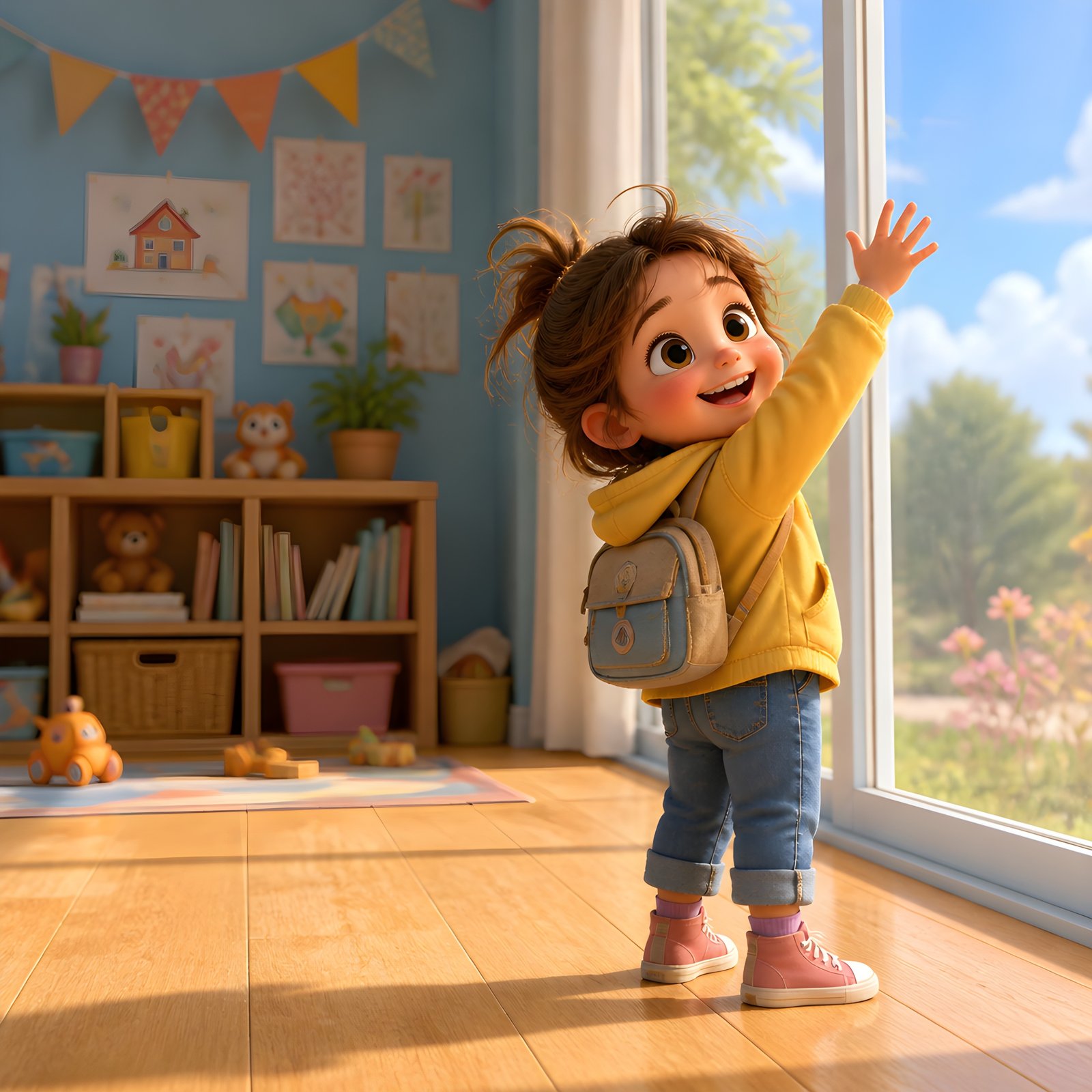
Nina stepped right inside the playroom and marched over to the block corner.
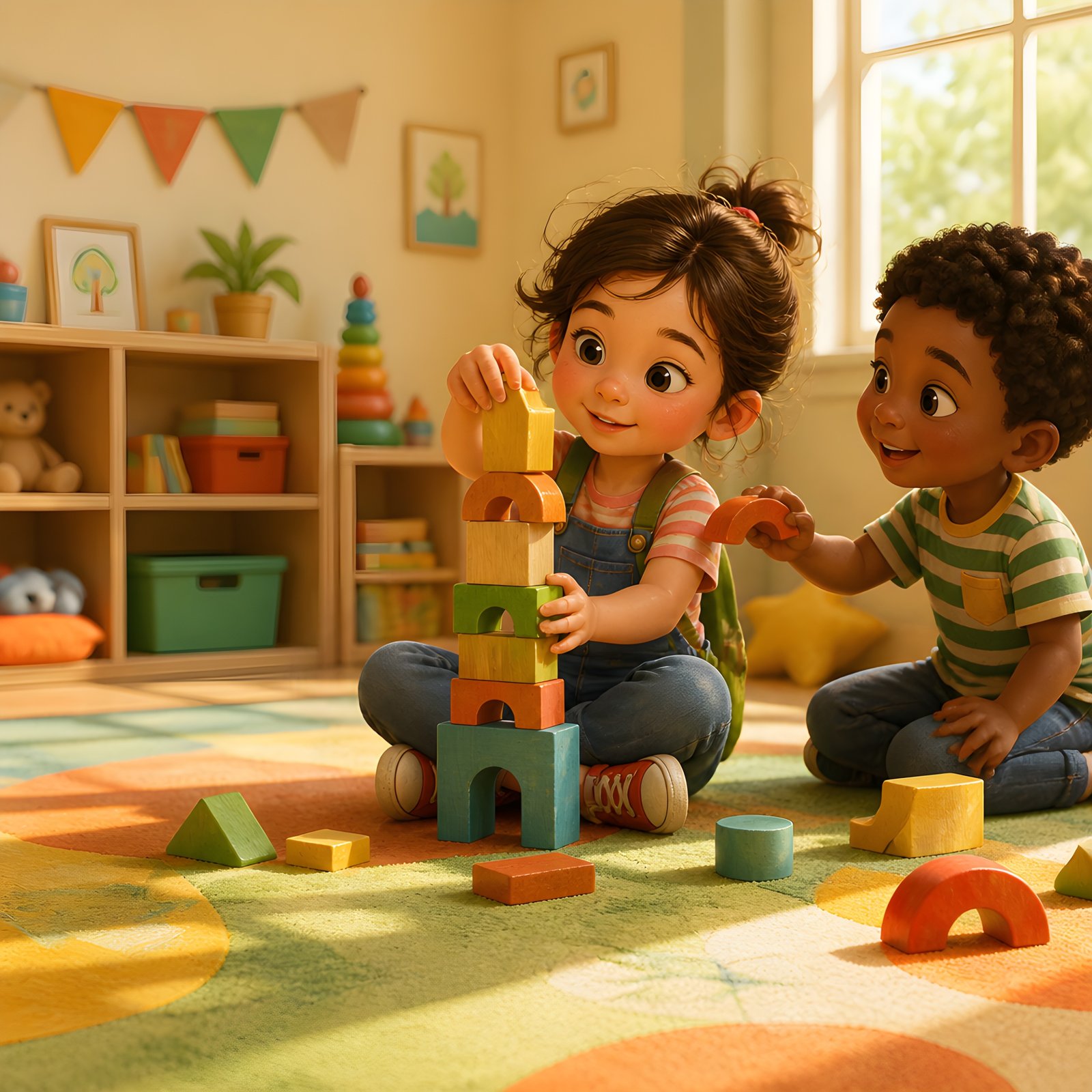
She sat down next to a classmate and helped place a big wooden roof on top of a towering castle. The heavy feeling in her chest was completely gone.
That evening at home, Nina placed her special pebble safely on her bedside table.
Ready for tomorrow, knowing every goodbye leads straight back to a hug.